




Abstract
The objective of this study is to toughen organically modified montmorillonite (OMMT)-filled polypropylene (PP) nanocomposites with epoxidized natural rubber (ENR). PP, ENR (10–20 wt%), OMMT (6 wt%) and maleated PP (PP-g-MA; 10 wt%) were melt blended using counterrotating twin extruder, followed by injection molding to prepare test samples. X-ray diffraction results revealed that the OMMT platelets in PP/OMMT nanocomposites were intercalated and the incorporation of ENR into the nanocomposites further increased the d-spacing of OMMT layers. The Fourier transform infrared spectra showed that the maleic anhydride group in PP-g-MA reacted in situ with the epoxy groups of ENR, which demonstrates the occurrence of grafting reaction. With slight decrease in stiffness and strength, the addition of 20 wt% ENR increased the impact strength of PP/ENR/OMMT nanocomposites by 521% compared to PP/OMMT nanocomposites. Scanning electron microscopy images revealed that the ENR particle size increased with increasing ENR contents in PP/ENR/OMMT nanocomposites. Differential scanning calorimetry results revealed that the presence of ENR and OMMT had slightly increased the crystallization temperature as well as the degree of crystallinity of PP. Thermogravimetric analysis showed that the blending of ENR decreased the thermal stability of PP/OMMT nanocomposites.
Introduction
In recent years, polymer nanocomposites based on layered silicates such as montmorillonite (MMT) have drawn significant attention from polymer engineers/scientists due to their academic and industrial importance. 1 With the aid of surface modification through the use of organic surfactant molecules to develop organically modified MMT (OMMT), the addition of small amounts (<5 wt%) of these high aspect ratio platelets into polymer matrix will result in large improvements in terms of mechanical, fire-retardant, rheological and gas barrier properties in comparison with the conventional microcomposites (>30 wt% of microfiller). Till date, various polymer/OMMT nanocomposite systems have been studied such as polyamide 6, 2 high-density polyethylene, 3 polyethylene, 4 polystyrene 5 and polycarbonate. 6 Among these, the development of polypropylene (PP)/OMMT nanocomposites had resulted in improved mechanical strength, thermal stability and low gas permeability, fulfilling extensive industrial needs such as automotive, barrier and packaging materials. 1
Due to the wide range of applications, great attentions have been paid to the development of PP/OMMT nanocomposites in the past decade. 7 –9 Kawasumi et al. 10 were the first to prepare PP/OMMT nanocomposites by direct melt compounding of PP with OMMT in the presence of maleated PP (PP-g-MA) as a compatibilizer. Regardless of the improvements achieved in the development of PP/OMMT nanocomposite, its low impact resistance (particularly at low temperature) limited its performance for high-end applications. 11 Therefore, the addition of a suitable elastomer to overcome this obstacle is vital.
Natural rubber (NR) has been used as an impact modifier in PP due to its low glass–rubber transition temperature (T g ) and the formation of a resulting PP/NR blend with high softening temperature (150°C). 12 Nevertheless, the development of epoxidized natural rubber (ENR) with improved oil resistance and lower gas permeability 13 compared to NR is foreseen to potentially substitute NR, leading to studies on PP/ENR blends. 14 –16 Although various attempts have been made on the use of elastomers such as maleated styrene–ethylene/butylene–styrene copolymer (mSEBS) 17,18 and polyethylene octane (POE) 11,19,20 in improving the toughness of PP/OMMT nanocomposites, the use of ENR as impact modifier in PP/OMMT nanocomposites is in need of further investigation. The exploration of ENR would widen its application in polymer nanocomposites and the use of renewable natural resources will be of assistance in cost reduction and sustainability.
In this study, an attempt was made to develop a novel ENR-toughened PP/OMMT nanocomposite. It has been established that the incorporation of OMMT will increase the strength and stiffness of PP. Previous studies 10,19 have also shown that the OMMT resulted in decreased toughness, thus the study to improve the toughness of polymer nanocomposites has been the focus of many current researches. Therefore, in the present study, ENR has been used to enhance the toughness of PP/OMMT nanocomposites. The current study uses 6 wt% of OMMT and 10 wt% of PP-g-MA in all PP/OMMT and PP/ENR/OMMT nanocomposites based on previous studies by our group. 19,20 The objective of this study is to determine the effects of various ENR contents on mechanical, thermal and morphological properties of PP/OMMT nanocomposites.
Experimental
Materials
PP was obtained from Titan Chemicals, Malaysia (product name SM-240), with a melt mass flow rate at 230°C and 2.16 kg load of 25 g/10 min and density of 0.96 g/cm3. ENR with 25 mol% epoxidation (grade EPOXYPRENE 25) was used as received from the Malaysian Rubber Board, Malaysia. The maleated PP (PP-g-MA) was Orevac CA 100 produced by ATOFINA, France. MMT, obtained from Nanocor Inc. Arlington Heights Illinois, USA (Nanomer 1.30P), was organically modified using octadecylamine with a mean dry particle size of 16–22 µm and an aspect ratio of 50–1000.
Compounding and test sample preparation
PP pellets were dried at 70°C for 24 h, while the OMMT was dried at 100°C for 1 h prior to compounding. ENR was cut into small pieces (∼3–5 cm in diameter). The formulations of PP/OMMT and PP/ENR/OMMT nanocomposites are shown in Table 1. All constituents were compounded by simultaneous addition to Brabender Plasticorder P2000 counterrotating twin-screw extruder with double round-shaped die. The barrel temperature profile adopted during compounding for all formulations was from 180°C at feed section, increasing to 230°C at the die head. The screw rotation speed was fixed at 50 r/min. The extruded materials were pelletized and injection molded into standard tensile, flexural and Izod impact specimens using a JSW (Muraron, Japan) Model NIOOB II injection-molding machine with a barrel temperature ranging from 180 to 230°C. All test specimens were kept under ambient conditions in desiccators for at least 24 h prior to testing.
Designation of samples and their compositions.
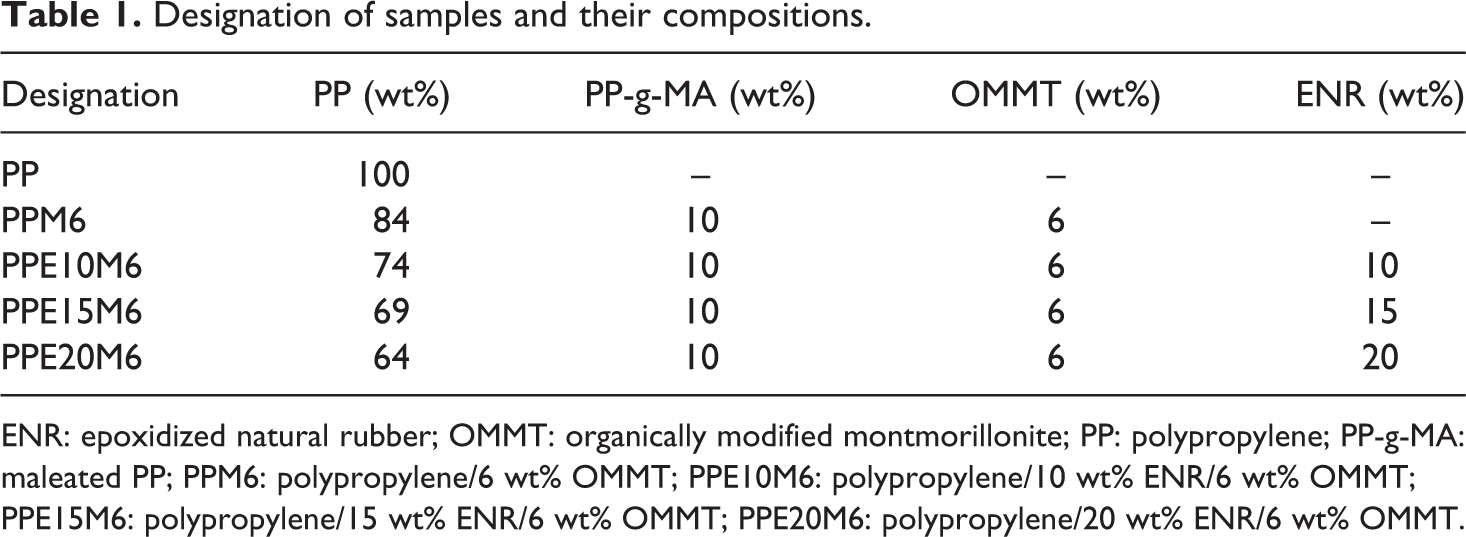
ENR: epoxidized natural rubber; OMMT: organically modified montmorillonite; PP: polypropylene; PP-g-MA: maleated PP; PPM6: polypropylene/6 wt% OMMT; PPE10M6: polypropylene/10 wt% ENR/6 wt% OMMT; PPE15M6: polypropylene/15 wt% ENR/6 wt% OMMT; PPE20M6: polypropylene/20 wt% ENR/6 wt% OMMT.
Mechanical analysis
Tensile test was carried out according to American Society for Testing and Materials (ASTM) D638 using an Instron (Bucks, UK) 5567 under ambient conditions with a crosshead speed of 50 mm/min. Flexural test was done according to ASTM D790 by Instron (Bucks, UK) 5567 under ambient conditions with the crosshead speed of 3 mm/min. Izod impact tests were carried out on notched impact specimens according to ASTM 256, using a Toyoseiki (Tokyo, Japan) impact testing machine under ambient conditions. Five specimens of each formulation were tested and the average values were reported.
X-ray diffraction analysis
X-ray diffraction (XRD) analysis was carried out on a Siemens (Berlin, Germany) D5000 X-ray diffractometer. The diffraction patterns were recorded with a step size of 0.02° from 2θ = 1.5 to 10.0°. The interlayer distances (d-spacing) of OMMT in the nanocomposites were derived from the peak positions (0 0 1 reflections) in the XRD scans using Bragg’s equation (1).
Morphological analysis
Philips ZL 40 scanning electron microscopy (SEM, Eindhoven, Netherlands) was used to observe the particle size of ENR in PP/ENR/OMMT nanocomposites. All the SEM samples were impact fractured perpendicular to the injection-molding direction. The samples were etched in xylene at 50°C for 1 h to extract the ENR phase and dried in oven at 40°C for 3 h. Samples were coated with a thin layer of platinum prior to examination under the electron beam. An operating voltage of 25 kV and magnification of ×3000 were used. The ENR particle size was calculated from the diameter of the particles which was approximated to spheres. More than 50 particles were used to measure the mean diameter and hence the mean size of the particles.
Chemical structure analysis
Fourier transform infrared (FTIR) spectra were recorded by a Perkin–Elmer FTIR spectrophotometer (Kuala Lumpur, Malaysia), with a resolution of 2 cm−1 for 16 scans in the wave number range of 3600–900 cm−1.
Thermal analysis
The melting and crystallization behavior of the nanocomposites were studied under nitrogen by differential scanning calorimetry (DSC; Perkin–Elmer DSC-6, Kuala Lumpur, Malaysia), using 5–10 mg sample sealed in aluminum pans. The temperature was raised from 30 to 250°C at a heating rate of 10°C/min; and after a period of 1 min, it was swept back at 10°C/min. The fusion enthalpy, ▵H
m (PP), was measured and the degree of crystallinity, X
c (PP), was calculated from equation (2)
19
:
Thermogravimetry analysis (TGA), on Perkin–Elmer TGA 7 (Kuala Lumpur, Malaysia) instrument, was performed at a rate of 10°C/min under nitrogen atmosphere in order to examine the thermal degradation behavior of the organic components in the nanocomposites.
Results and discussion
Mechanical analysis
Table 2 shows the mechanical properties of neat PP and PP/OMMT nanocomposite. It can be observed that the addition of 6 wt% OMMT improved the tensile and flexural modulus of PP nanocomposite by 26% and 39%, respectively. The incorporation of rigid OMMT platelets had restricted the movement of PP chains during deformation, making PP/OMMT nanocomposite stiffer. The finding of the present study is in agreement with the previous studies 19 –24 and 6 wt% OMMT was chosen based on the previous publications by our group. 19,20
Mechanical properties of neat PP and PP/OMMT nanocomposite.
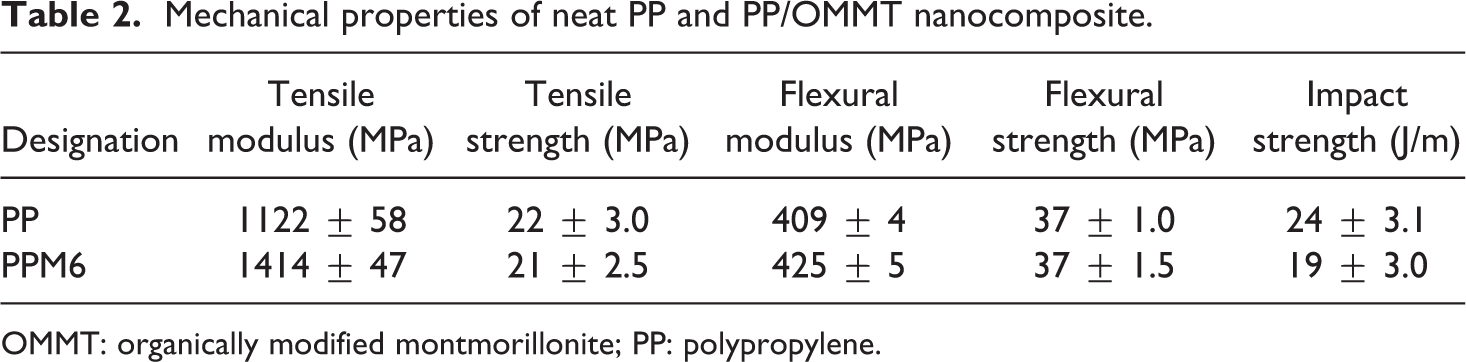
OMMT: organically modified montmorillonite; PP: polypropylene.
It can be noted that the addition of 6 wt% OMMT in PP/OMMT nanocomposite did not deteriorate the strength of the nanocomposite. Both tensile and flexural strength of PP/OMMT nanocomposite were maintained which may be attributed to the presence of PP-g-MA. The PP-g-MA performed a vital role as a compatibilizing agent to improve the compatibility of the polar OMMT platelets with hydrophobic PP. Figure 1 represents the proposed interaction between PP, PP-g-MA, the intercalant group in OMMT and MMT platelets. Previous study by Kawasumi et al. 10 proposed the presence of interactions in PP/OMMT nanocomposites. Based on their proposal, the presence of interactions in PP/OMMT and PP/ENR/OMMT nanocomposites is also being proposed in the present study. 10,19 The presence of maleic anhydride (MA) group in the system provides possibilities for interactions, which may improve the interfacial interaction between PP and OMMT platelets. Previous study by Garcia-Lopez et al. 25 stated that the OMMT dispersion and interfacial adhesion also were greatly affected by the degree of compatibility between the polymer matrix and OMMT. They found that the polarity of MA group in PP improved OMMT’s compatibility with PP in PP/OMMT nanocomposites. Lim et al., 19,20 Xu et al. 24 and Zhang et al. 26 also reported that the strength of PP/OMMT was sustained due to the compatibilization effect of PP-g-MA. The enhanced interaction of OMMT with PP may also have resulted in better degree of dispersion and increased crystallization. This will be discussed later in XRD and thermal analysis section.
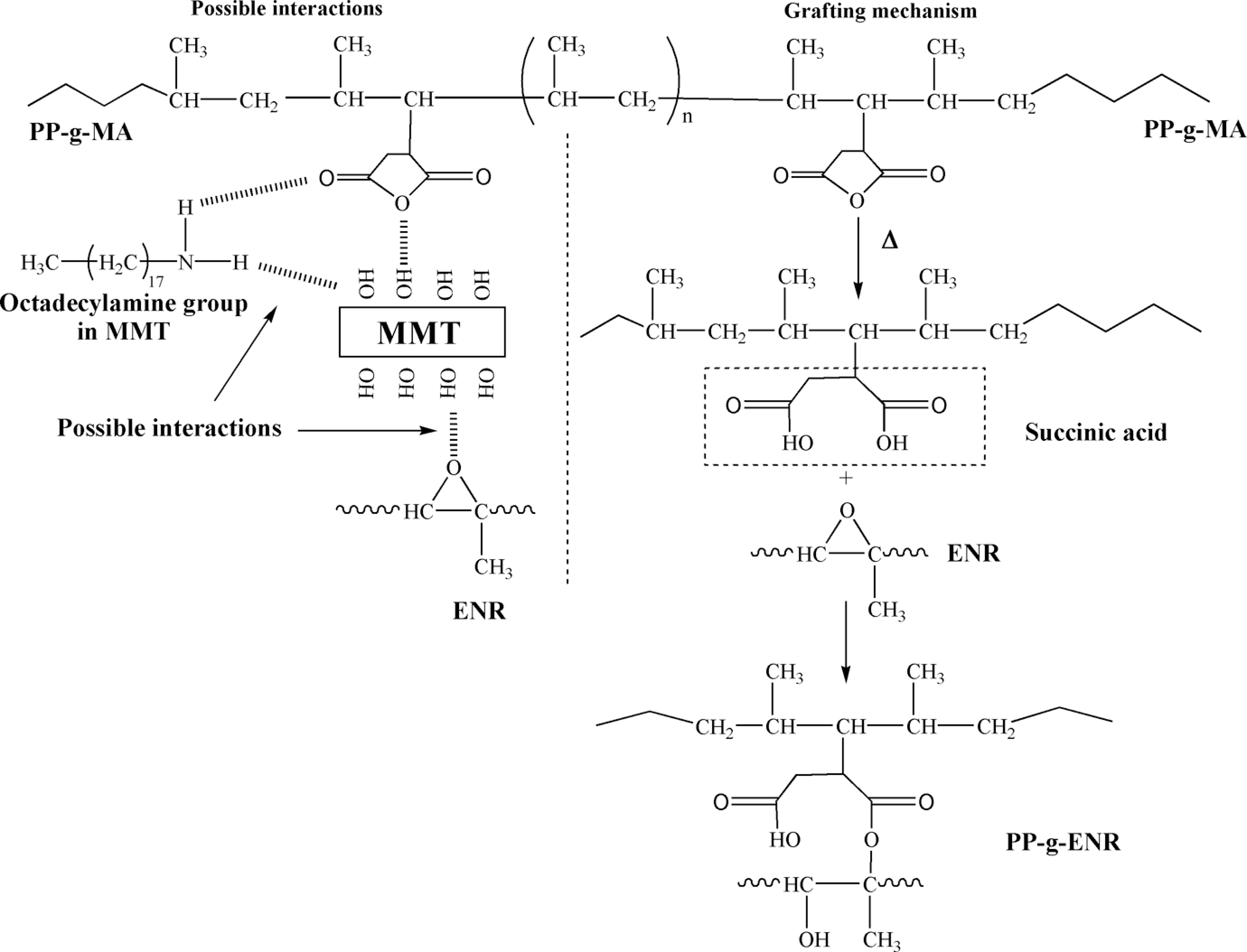
Proposed interactions and grafting mechanism in PP/ENR/OMMT nanocomposites. ENR: epoxidized natural rubber; OMMT: organically modified montmorillonite; PP: polypropylene.
The impact strength values reduced from 24 to 19 J/m with the addition of 6 wt% OMMT in PP (Table 2). It is well known that the OMMT platelets act as stress concentrators in the matrix to prohibit crack initiation that leads to a brittle failure. Similar findings were also reported by Lim et al., 19,20 Garcia-Lopez et al. 25 and Zhang et al., 26 and the researchers suggested that this drawback can be overcome by the introduction of a rubbery phase as an impact modifier in the system. Therefore, the subsequent step of our work has been directed toward improving the toughness of PP/OMMT nanocomposite using ENR as an impact modifier.
The effect of ENR addition on the impact strength of PP/OMMT nanocomposites are shown in Figure 2. The impact strength increased to 118 J/m, which is about 521% of the neat PP/OMMT nanocomposite, with the addition of 20 wt% ENR, indicating good compatibility with PP nanocomposites. Previous work by Lim et al. 20 and Lee et al. 27 reported improvements of 190% and 269%, respectively, with 20 wt% of POE in PP/OMMT nanocomposites. Another study by Tjong and his coworkers 18 also revealed an enhancement in the impact strength of 113%, with 20 wt% of mSEBS in 4 parts per hundred (phr) filled PA6/OMMT nanocomposites.
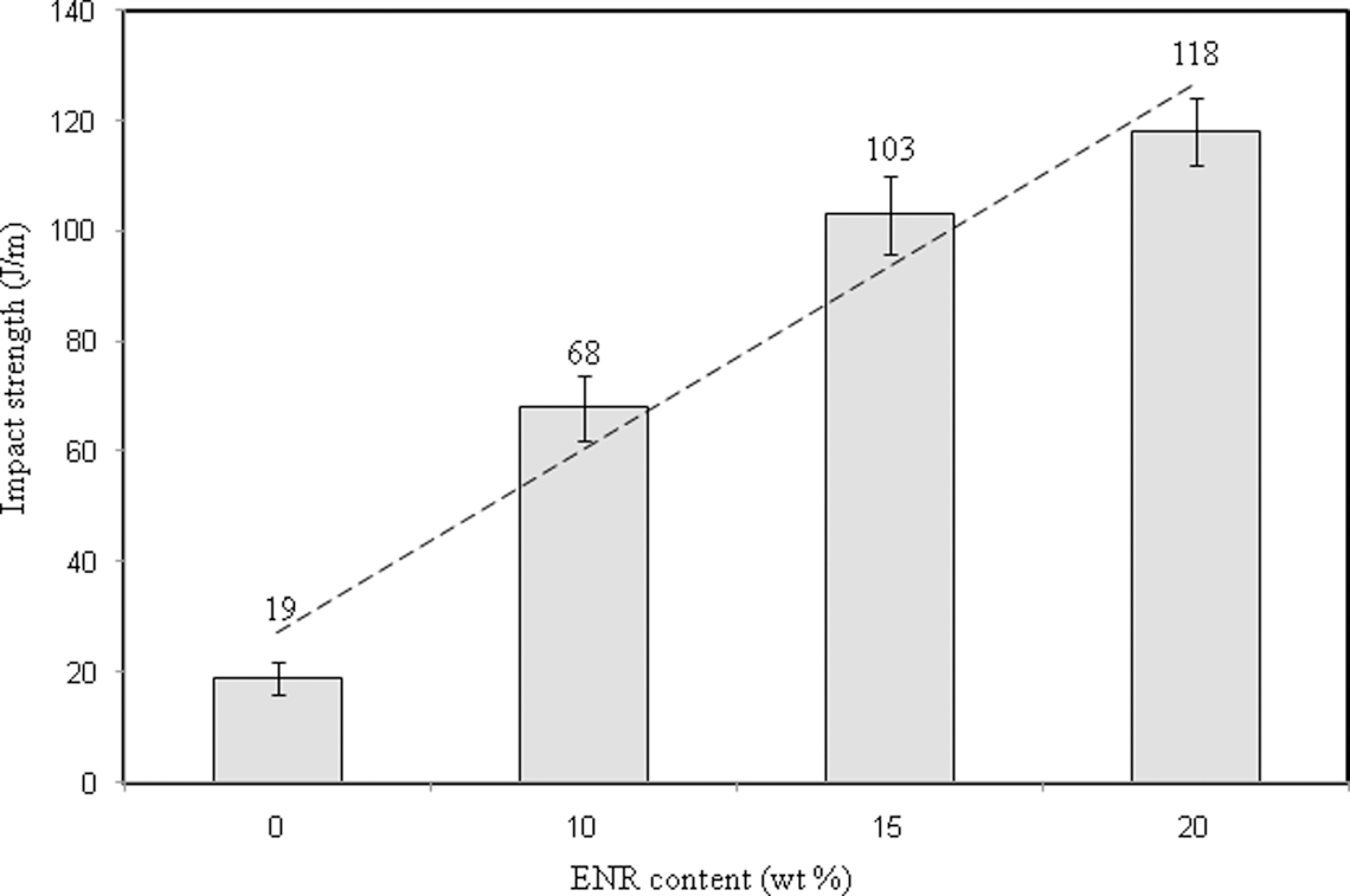
Impact strength values of PP/OMMT nanocomposites with various ENR contents. ENR: epoxidized natural rubber; OMMT: organically modified montmorillonite; PP: polypropylene.
Figure 1 also illustrates the possible interactions and chemical reactions that may take place in PP/ENR/OMMT nanocomposites. The MA group undergoes ring opening due to the presence of moisture during processing to produce succinic acid, which has the possibility to further react with epoxy groups in the ENR molecules. The PP backbone in the PP-g-MA is capable of compatibilizing with PP macromolecule chain in PP/ENR/OMMT nanocomposites. It is proposed that the possibility of chemical interactions increased with increasing ENR contents as there are more functional groups in the system. The significant improvement in impact strength achieved in the present study may also have been attributed to the chemical interaction that had taken place between MA group of PP-g-MA and epoxy groups of ENR during processing (see Figure 1).
Figures 3 and 4 show that the tensile and flexural properties of PP/ENR/OMMT nanocomposites decreased with increasing ENR contents, which is due to the softening effect of the elastomeric phase. The findings are in agreement with a previous study. 19 Lim et al. 19 and Lee et al. 27 also reported 29% and 27% decrement in tensile modulus, respectively, with the addition of 20 wt% POE in PP/OMMT nanocomposite, while a 22% decrease observed in our present study. This indicates that ENR is more flexible in comparison to POE. The 32% drop in tensile strength with 20 wt% ENR seen in our study, compared to 22% with 20 wt% POE, 20 may also be due to the same reason.
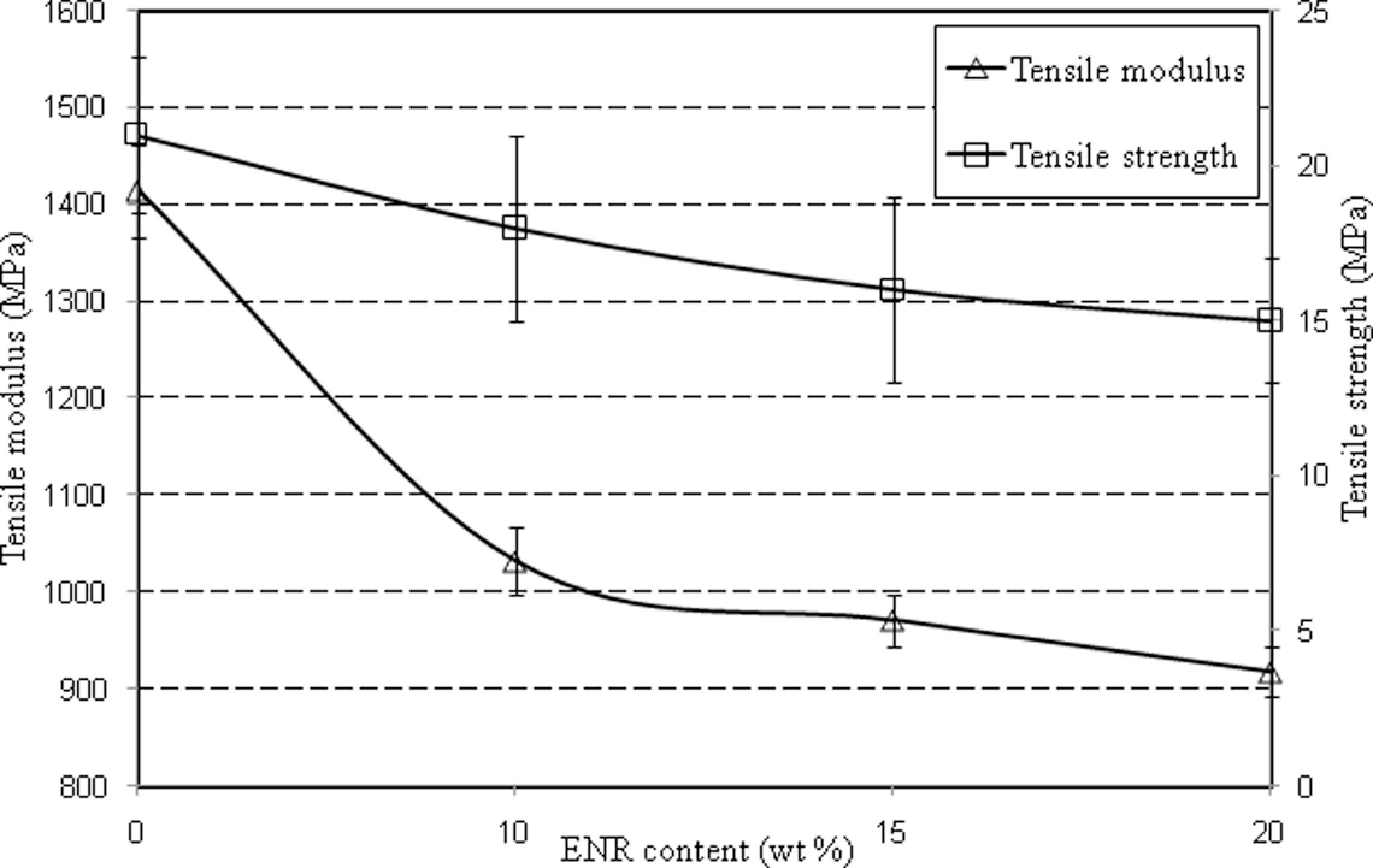
Tensile modulus and strength of PP/OMMT nanocomposites with various ENR contents. ENR: epoxidized natural rubber; OMMT: organically modified montmorillonite; PP: polypropylene.
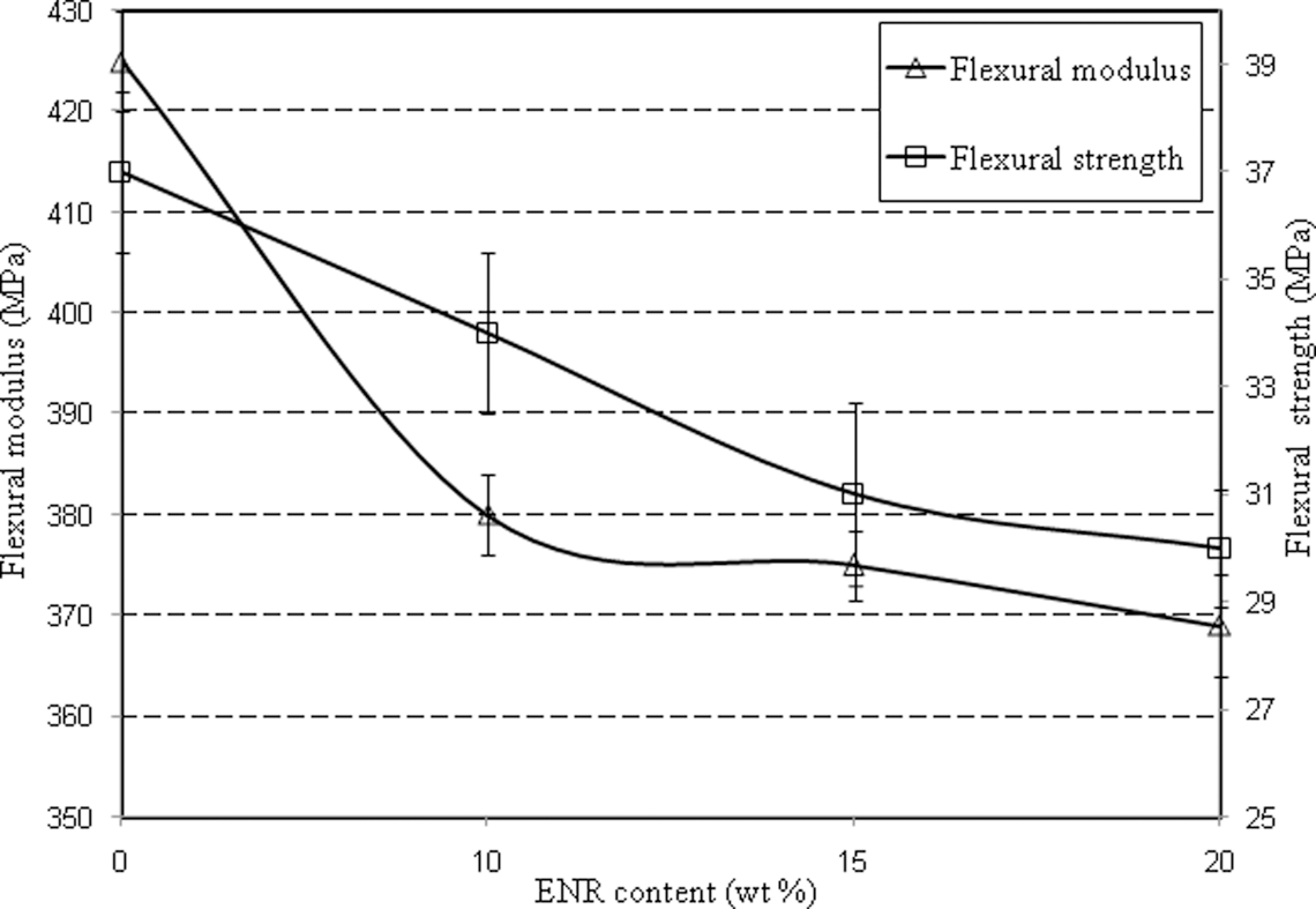
Flexural modulus and strength of PP/OMMT nanocomposites with various ENR contents. ENR: epoxidized natural rubber; OMMT: organically modified montmorillonite; PP: polypropylene.
Balanced mechanical properties
One of the most important aspects in thermoplastics engineering is to achieve a good combination of properties and processability at a moderate cost. As far as mechanical properties are concerned, the main target is to strike a balance between stiffness and toughness. Figure 5 shows the effect of ENR on stiffness and toughness of PP/OMMT nanocomposites. The presence of OMMT in PP improved its stiffness, while the addition of ENR enhanced the toughness of PP/OMMT nanocomposites. It can be observed that 15 wt% ENR toughened PP (P85E15M6) has the best balance of mechanical properties based on the impact strength and tensile modulus. The addition of 6 wt% OMMT and 15 wt% ENR improved the impact strength of neat PP by 329% with a slight loss in stiffness (14%). It is expected that ENR-toughened PP/OMMT nanocomposites will have a wider range of application due to its improved toughness. The comparison done in Figure 5 confirms that with simultaneous addition of OMMT and ENR, it is possible to produce a new material that has a better balance of mechanical properties than neat PP in terms of stiffness and toughness.
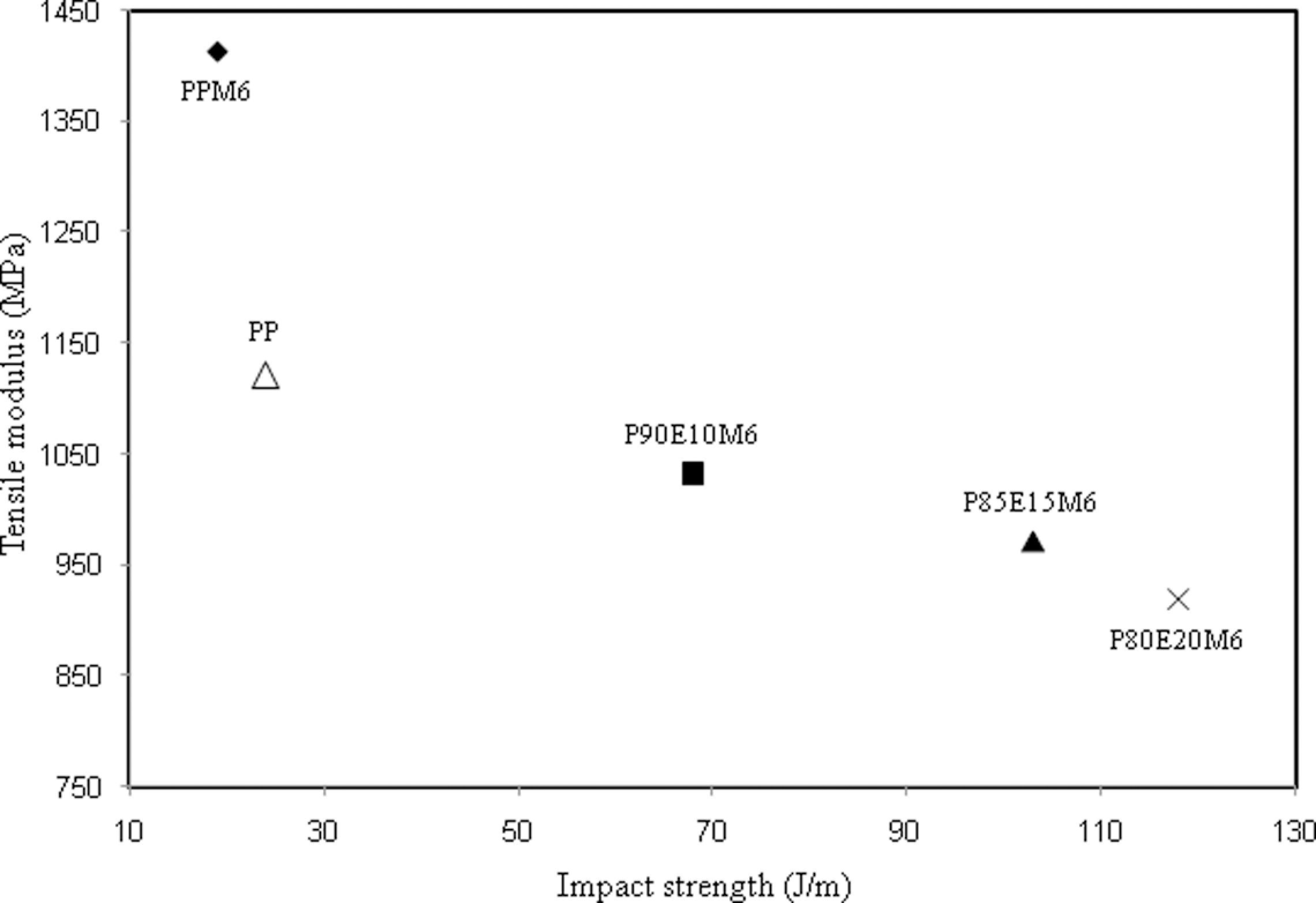
Balanced mechanical properties based on tensile modulus and impact strength.
Chemical structure analysis
FTIR
Figure 6 shows the FTIR spectra of PP, PP-g-MA, PPE20M6 and ENR. Generally, all the PP systems show similar characteristic bands. The bands at ∼2921 cm−1 (C–H stretching in CH3 ), ∼2850 cm−1 (C–H stretching in CH2 ), ∼1457 cm−1 (C–H bending in CH3 ) and ∼1375 cm−1 (C–H bending CH2 ) are the characteristic bands of PP. 28 The appearance of ∼1631 cm−1 (C=O anhydride) in PP-g-MA is believed to be due to the presence of MA group on PP backbone chain (Figure 1). 16
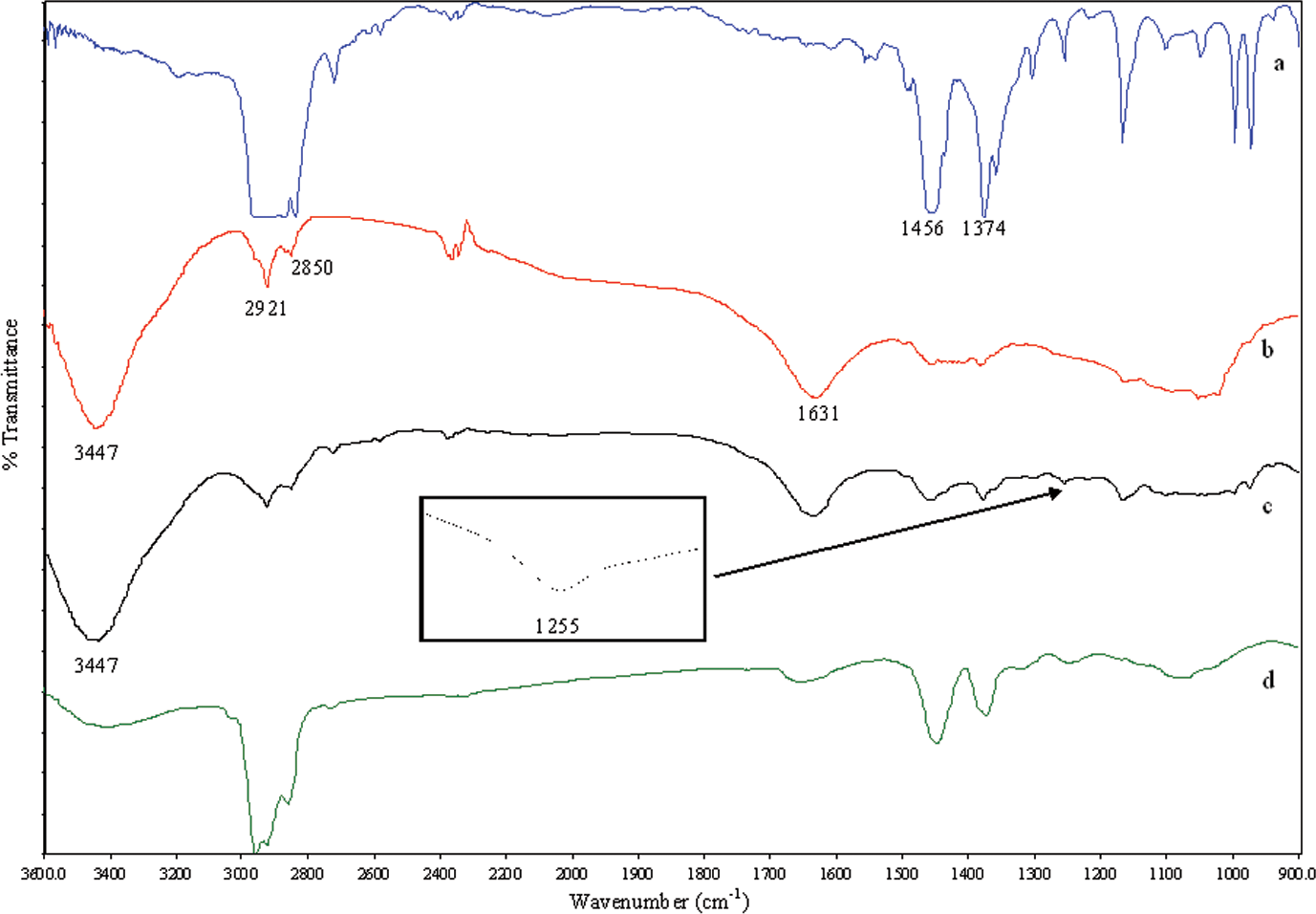
FTIR spectra of (a) PP, (b) PP-g-MA, (c) PPE20M6 and (d) ENR. ENR: epoxidized natural rubber; FTIR: Fourier transform infrared spectra; PP: polypropylene; PP-g-MA: maleated PP.
The slight difference which can be seen in the infrared spectra with blending of ENR in PPE20M6 is the appearance of C–O (ester) stretching band at ∼1255 cm−1, which indicates the presence of C–O ester bonds. This provides an evidence of the proposed reaction between MA group in PP-g-MA and epoxy group of ENR in PP/ENR/OMMT nanocomposites as shown in Figure 1. Similar observation was reported by Nakason and his coworkers in numerous publications. 16,29,30 The appearance of strong absorbance at 3447 cm−1 for PP-g-MA and PPE20M6 is also due to the formation of O–H functional groups in the system (Figure 1).
Therefore, under processing conditions, it can be concluded that the MA groups at the backbone of PP macromolecules in PP-g-MA could react in situ with the epoxy groups of ENR to form PP-g-ENR (see Figure 1). The formation of this bond improves the interfacial adhesion of ENR particles with PP matrix, which may lead to the significant improvement in toughness of PP/ENR/OMMT nanocomposites observed earlier in mechanical analysis (Figure 2).
Morphological analysis
XRD
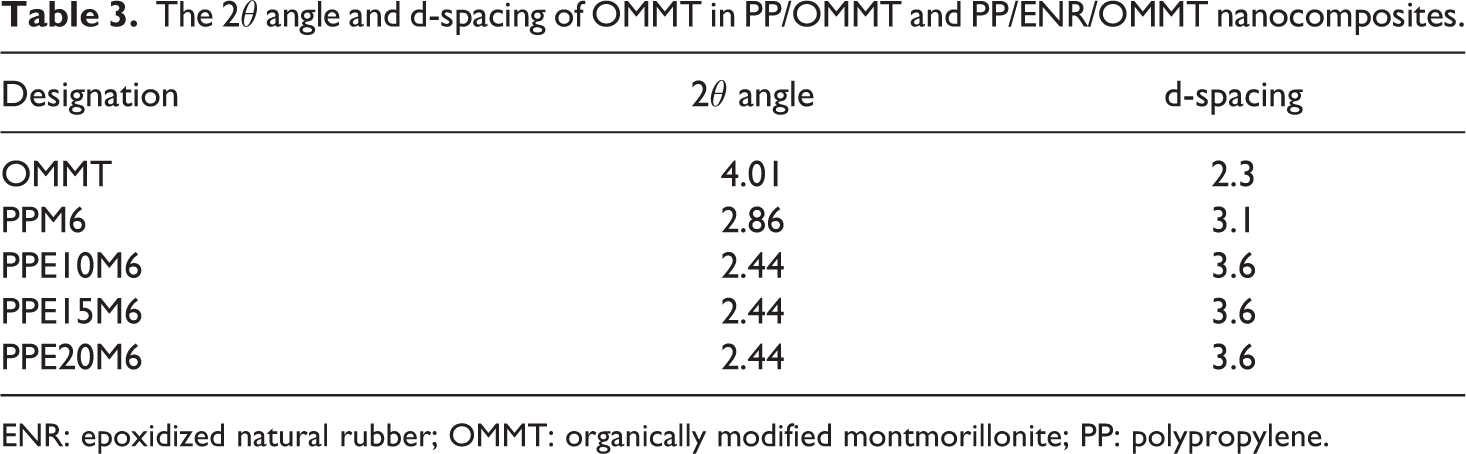
Figure 7 shows the XRD patterns of neat PP, OMMT, PP/OMMT and PP/ENR/OMMT nanocomposites over the range of 2θ from 2.0 to 8.0°. The (0 0 1) plane diffraction in neat OMMT was registered at 2θ = 4.01°, which corresponds to a d-spacing of 2.3 nm (d-spacing and diffraction angle θ are related through Bragg’s relation in equation (1)). The corresponding d-spacing of OMMT in PP/OMMT and PP/ENR/OMMT nanocomposites are tabulated in Table 3. As it can be observed from Figure 7, the (0 0 1) plane peak of OMMT at ca 2θ = 4.01° shifted to a lower angle of ca 2θ = 2.86° in PP/OMMT nanocomposite, implying that the interlayer distance of OMMT had increased from 2.3 to 3.1 nm. The increased d-spacing value is an evidence of intercalation of OMMT in the matrix. It is believed that the organic modification of OMMT provides the possibility for PP chains to diffuse in between OMMT layers during processing. 19,20 The diffusion of PP chains into OMMT layers reduces the electrostatic attraction between adjacent platelets, leading to an increase in intergallery distance.
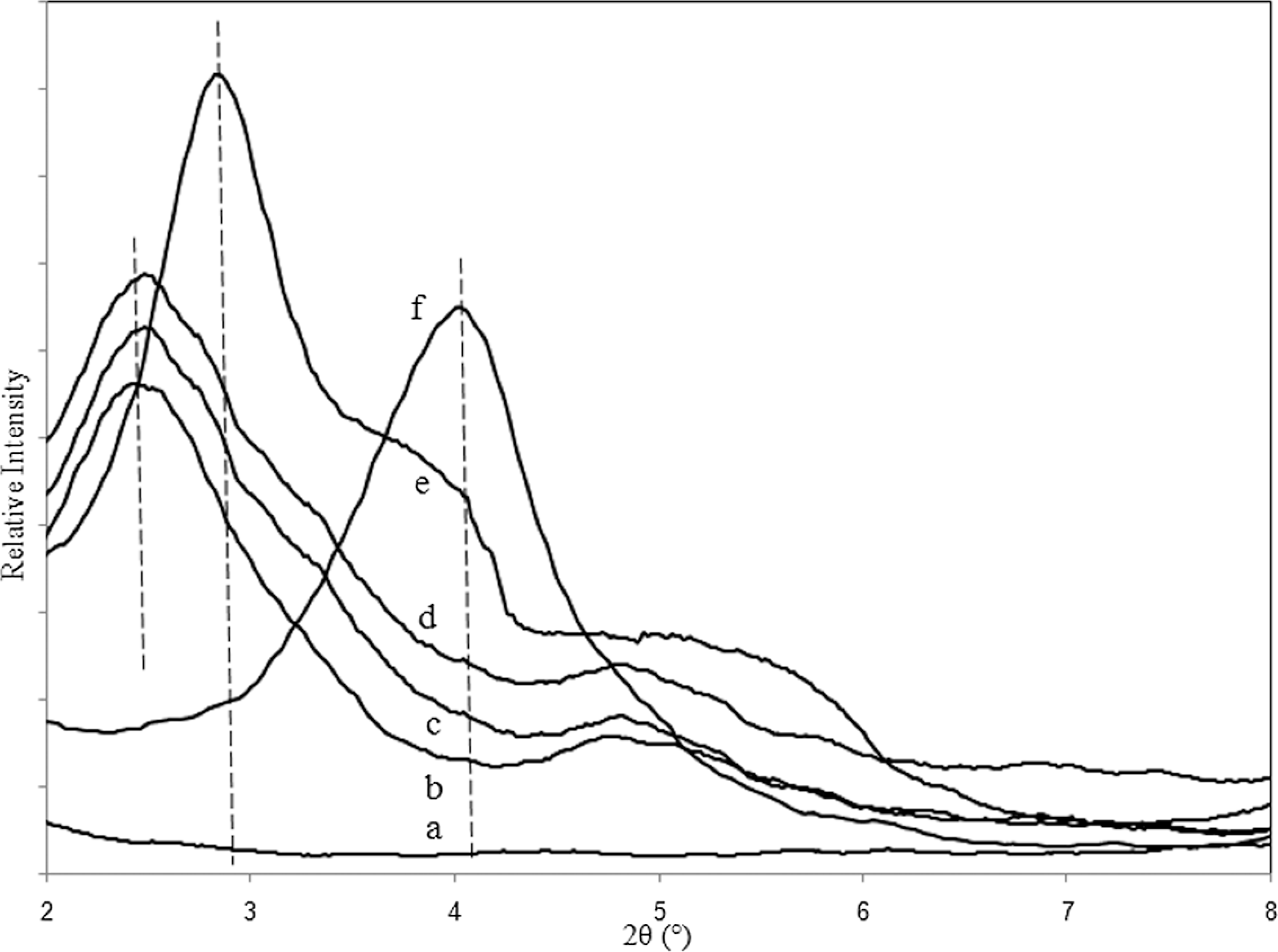
XRD patterns of (a) neat PP, (b) PPE10M6, (c) PPE15M6, (d) PPE20M6, (e) PPM6 and (f) OMMT. OMMT: organically modified montmorillonite; PP: polypropylene; XRD: X-ray diffraction.
The 2θ angle and d-spacing of OMMT in PP/OMMT and PP/ENR/OMMT nanocomposites.
ENR: epoxidized natural rubber; OMMT: organically modified montmorillonite; PP: polypropylene.
In addition, the shift of (0 0 1) peak to lower angle region is well documented in the literature. 17,19,20 Bao and Tjong 17 who investigated the dispersion of OMMT in mSEBS-toughened PP/OMMT nanocomposites suggested that the macromolecule chain of PP may also have intercalated into the gallery of OMMT due to the compatibilizing effect of MA in PP-g-MA. Since the nonpolar PP chains can hardly intercalate into the gallery of OMMT, the polar MA functional group in PP-g-MA would assist in the intercalation of PP chains in OMMT. It is thought that the interaction between the hydroxyl groups of MMT, ammonium group of intercalants and MA groups of PP-g-MA (shown in Figure 1) would also assist in a nanoscale dispersion of OMMT in PP. 17 It can be deduced that the enhanced dispersion of OMMT platelets in PP/OMMT nanocomposites resulted in improvements of mechanical properties, particularly in terms of stiffness of PP as discussed earlier in mechanical analysis. It is interesting to note that the (0 0 1) peak of OMMT in PP/OMMT nanocomposites has shifted to even lower angle at 2θ = 2.44, with the blending of ENR. The corresponding d-spacing of 3.6 nm (Table 3) shows that the presence of ENR had improved the dispersion of OMMT in PP/OMMT nanocomposites. However, the interlayer distance of OMMT remained constant with further increase in ENR content in PP/ENR/OMMT nanocomposites.
The chemical reactions and interactions in PP/ENR/OMMT nanocomposites (proposed in Figure 1) may have influenced the formation of intercalated OMMT layers as shown in XRD. Kim et al. 31 stated that the good interaction between rubber and OMMT platelets helps to increase OMMT interlayer spacing and thus a relatively better dispersion which is crucial to strengthen PP. On the contrary, a study by Lim et al. 20 found that the interlayer spacing of OMMT in PP/OMMT nanocomposites decreased with the addition of POE as an impact modifier. We believe that the polarity of rubber phase plays an important role in the dispersion of OMMT platelets and the poor dispersion with POE 20 is due to its nonpolar nature that has little interaction with OMMT despite its organic modification.
Scanning electron microscopy
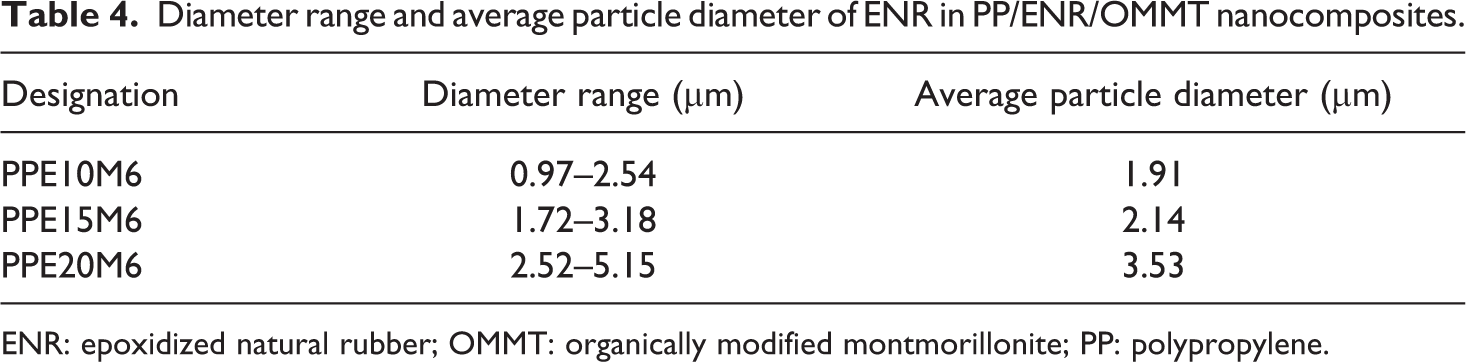
In general, the mechanical properties of blends and composites are very much dependent on the morphology and interfacial adhesion between the matrix and its components. 18 Figure 8 shows the SEM micrographs of PP/OMMT nanocomposites with various ENR contents (0–20 wt%) and the average particle size of ENR is shown in Table 4.
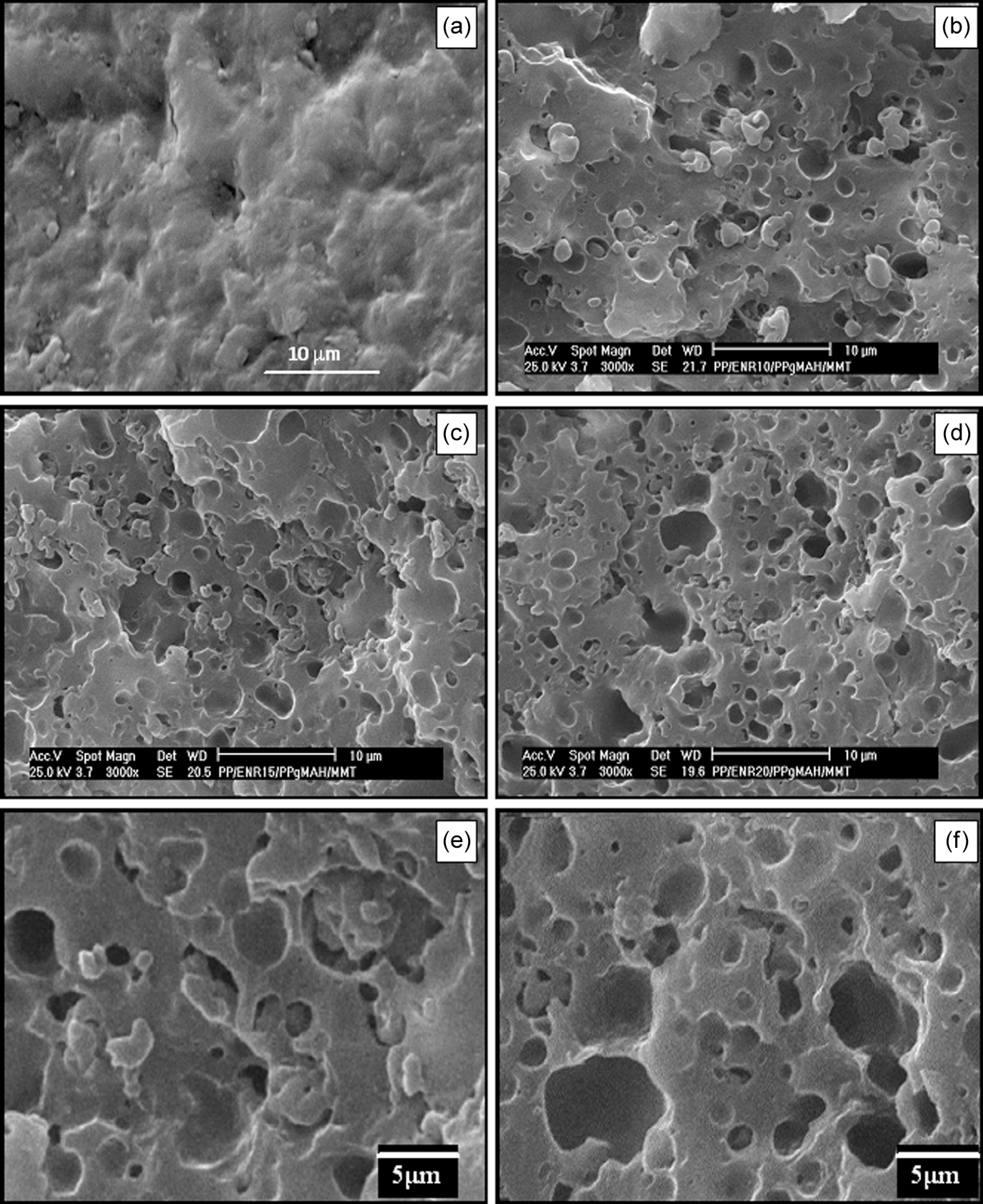
SEM images of etch-fractured surfaces of PP/OMMT nanocomposites with various ENR contents: (a) 0 wt%, (b) 10 wt%, (c) 15 wt%, (d) 20 wt%, (e) magnified 15 wt% and (f) magnified 20 wt%. ENR: epoxidized natural rubber; OMMT: organically modified montmorillonite; PP: polypropylene; SEM: scanning electron microscopy.
Diameter range and average particle diameter of ENR in PP/ENR/OMMT nanocomposites.
ENR: epoxidized natural rubber; OMMT: organically modified montmorillonite; PP: polypropylene.
From Figure 8(b–d), it can be observed that ENR-toughened PP/OMMT nanocomposites exhibited an inhomogeneous fracture surface with two-phase morphology where the holes and knobs on the fractured surface of the PP matrix reflect the presence of the dispersed ENR phase. In the present study, the ambiguous interfaces between ENR and PP (Figure 8(b–d)) indicate that a good compatibility has been developed between them. Magnified images of PPE15M6 and PPE20M6 are also shown in Figure 8(e) and (f). Previous study by Bao and Tjong 17 on maleated styrene-ethylene/butylene styrene copolymer (mSEBS)-toughened PP/OMMT nanocomposites also revealed that the increased compatibility through polarity of the rubber phase led to a nonhomogenous rubber–matrix interface. The improved interfacial adhesion between PP and ENR is again attributed to the chemical interactions proposed earlier in Figure 1.
The average particle size of ENR decreased with increasing ENR content in PP/ENR/OMMT nanocomposites as shown in Table 4. This finding of the present study is in agreement with the previous studies by Sun et al. 11 and Lim et al. 20 who reported larger rubber particle size in PP/OMMT nanocomposite systems with increasing rubber content. We believe that the increase in ENR particle size is due to agglomeration that took place at higher ENR content.
Thermal analysis
Thermogravimetric analysis
Figure 9 shows the TGA curves of PP, PP/OMMT and PP/ENR/OMMT nanocomposites with varying ENR content. It can be seen that all the samples displayed a single-step degradation. The initial thermal stabilities are characterized by the temperature when 10 wt% weight loss occurred, referred to as T 10% (Table 5). The T 10% for neat PP was 405°C, which increased significantly with the addition of 6 wt% OMMT (420°C). The enhancement in thermal stability is attributed to the presence of OMMT platelets, which hindered the out diffusion of volatile decomposition products from the matrix. Similar observation was reported by Lim et al. 19 and Li et al. 21 Subsequently, as tabulated in Table 5, the T 10% for PP/OMMT decreased with the addition of ENR. TGA curves displayed in Figure 9 also illustrates that the PP/ENR/OMMT nanocomposites decomposed earlier than PP/OMMT nanocomposites. The plausible reason is due to the blending of ENR which has a relatively lower T 10%. 32
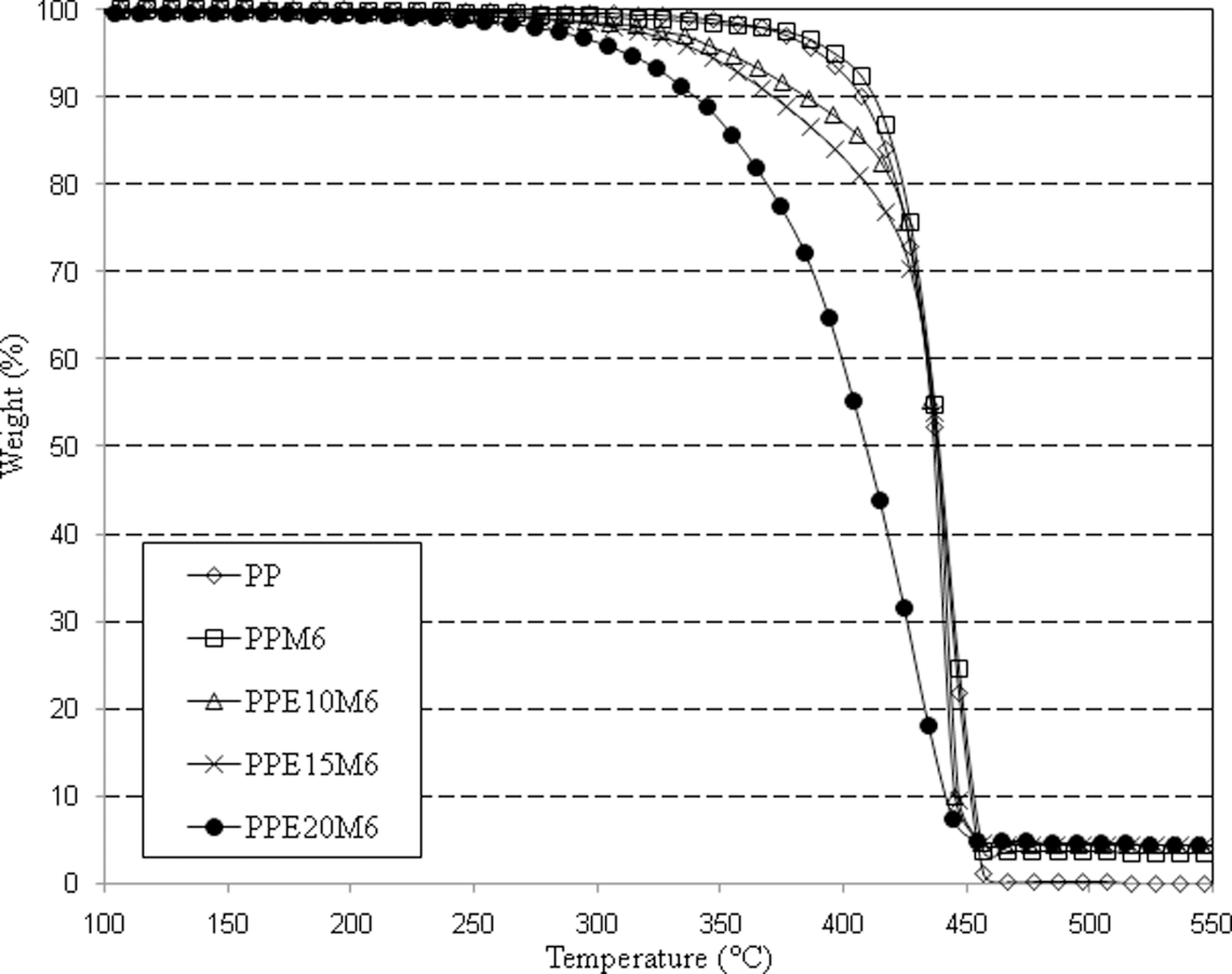
TGA curves of PP, PPM6 and PP/ENR/OMMT nanocomposites. ENR: epoxidized natural rubber; OMMT: organically modified montmorillonite; PP: polypropylene; TGA: thermogravimetric analysis.
DSC and TGA properties of PP, PPM6 and PP/ENR/OMMT nanocomposites.
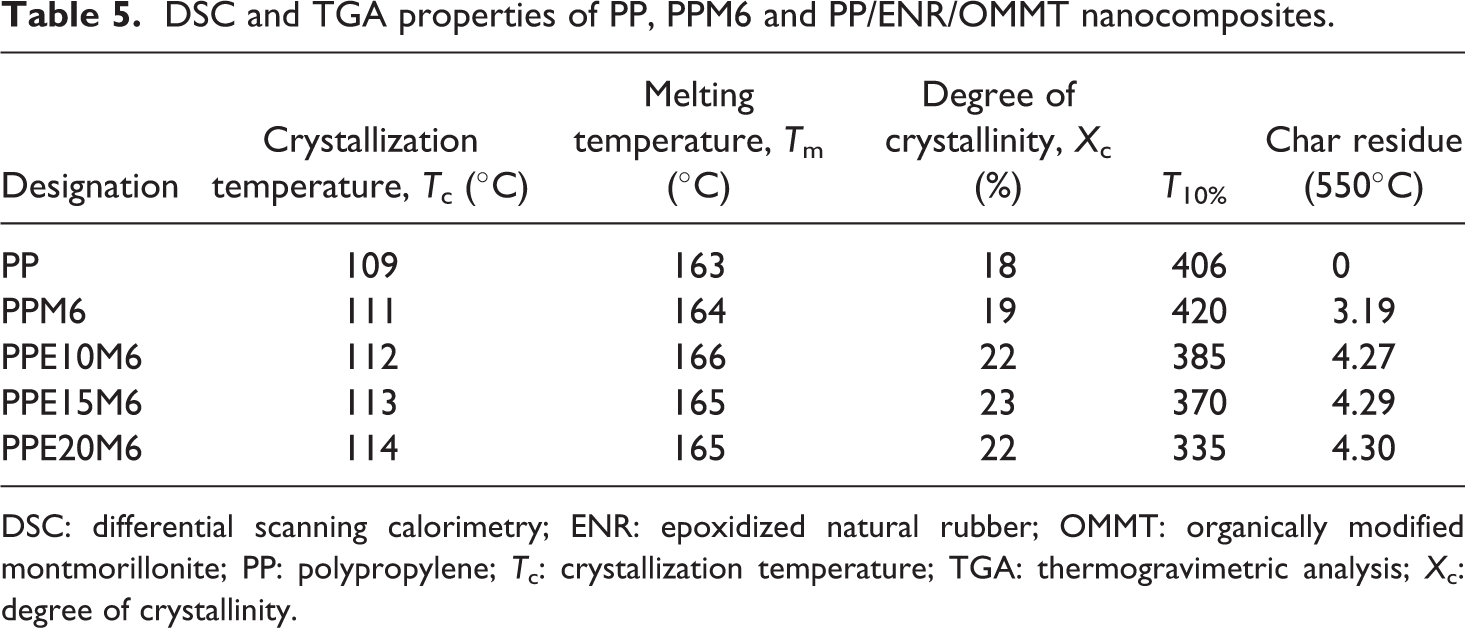
DSC: differential scanning calorimetry; ENR: epoxidized natural rubber; OMMT: organically modified montmorillonite; PP: polypropylene; T c: crystallization temperature; TGA: thermogravimetric analysis; X c: degree of crystallinity.
The fractions of nonvolatile material at 550°C, referred to as ‘char residues,’ for PP, PP/OMMT and PP/ENR/OMMT nanocomposites are also shown in Table 5. It can be observed that the residual weight percentage of PP/OMMT nanocomposite is lower compared to the actual weight percentage of OMMT added during processing. The weight loss could be attributed to the decomposition of octadecylamine which was intercalated into MMT ‘galleries’. The remaining ash attributed to the high stability of MMT. This result is in agreement with a previous study by Lim et al. 19 who also observed similar amount of char residue at 520°C for PP/OMMT nanocomposites. On the other hand, the blending of ENR also led to an increase in char residue of all the samples. Similar increase in char amount was also reported on the use of POE rubber in PP and its nanocomposites. 11
DSC. The crystallization temperature (T c ), melting temperature (T m ) and X c obtained by DSC analysis for PP, PP/OMMT and PA6/ENR/OMMT nanocomposites are shown in Table 5. The T m of PP remained almost unaltered, while T c and X c values increased slightly with the addition of OMMT and ENR. The presence of OMMT platelets enhanced the nucleation of PP resulting in the formation of crystallites. This finding is in agreement with a number of similar studies. 19,33 The increase in crystallite formation in PP with the incorporation of ENR is believed to be due to the flexibility of ENR, which facilitated the movement of PP chains during crystallization process. The decrease in tensile and flexural modulus also supports the claim.
Conclusions
The mechanical, thermal and morphological properties of ENR-toughened PP/OMMT nanocomposites have been investigated. XRD results indicated that the OMMT platelets in PP/OMMT nanocomposites were intercalated and the blending of ENR further increased the d-spacing of OMMT layers. The infrared spectra demonstrated that the MA groups in PP-g-MA chemically reacted in situ with the epoxy groups of ENR, indicating that grafting occurred during processing. The addition of 20 wt% ENR increased the impact strength of PP/OMMT nanocomposites by 521% at the expense of stiffness and strength. SEM images revealed well-dispersed ENR particles with increased particle size parallel to the ENR content in PP/OMMT nanocomposites. DSC results revealed that the ENR content had negligible effect on the T m melting point of PP while the T c and X c improved slightly. TGA results showed the thermal stability of PP/OMMT nanocomposite decreased with increasing ENR content.
Footnotes
Funding
This research received no specific grant from any funding agency in the public, commercial, or not-for-profit sectors.