




Abstract
In this study, the effect of γ-rays on the mechanical and thermal properties of polymer composites based on chlorinated isobutylene–isoprene rubber/chlorosulphonated polyethylene rubber blend with varying contents of carbon black (CB) filler was investigated. The samples were irradiated at ambient conditions with 100, 200 and 400 kGy radiation doses. Tensile strength and hardness are increasing with CB content and radiation dose is increasing, while elongation at break is decreasing. Loss of mass of 0.5, 10 and 30% was calculated for the samples from their respective thermogravimetric curves. The thermal stability of the nanocomposites was improved by both the degree of loading with filler and the cross-linking induced by γ-irradiation.
Introduction
Rubber compounds contain various ingredients in addition to the polymer. Each ingredient has a specific function during processing, vulcanization and in determining the properties depending on the end use of the product. 1 Isobutylene–isoprene rubber (chemically a copolymer of isobutylene and isoprene) has very good properties including low gas permeability, good thermal and oxidative stability and excellent moisture and chemical resistance. It has been used in a wide variety of tyre and nontyre applications such as inner tubes, tyre inner liners and tyre curing bladders due to its low unsaturation (generally less than 3%). 2 It is well known that chlorosulphonated polyethylene (CSM) is an important elastomer, which has been frequently used in many applications such as sheeting cable and geomembrane due to its outstanding resistance to deterioration by heat, oils, ozone and oxidation. 3
Polymer blends are defined as a mixture of two or more polymers or copolymers, and polymer blending was recognized in the last few decades as the most promising way to prepare new material with tailored individual properties. 4–6 Thus, newer application areas, design flexibility combined with less expense of energy and time, have made the blending technique a very popular method for the development of new materials. 7,8
Carbon black (CB) is generally supplied as pellets and has to be dispersed during mixing into smaller entities (such as agglomerates and aggregates). Large particle–particle interactions result in unhomogeneous dispersion and distribution of the filler, processing problems, poor appearance and inferior properties. This fact may emphasize the importance of the homogeneity of the mixes, where the increasing amount of undispersed CB pellet fragments and the agglomerates leads to a decrease in tensile properties of the cross-linked elastomeric nanocomposites. 9,10 Kotani et al. 11 studied the CB distribution ratio in polyisoprene/polybutadiene rubber blends by high-resolution solid-state 13 C NMR.
γ-Irradiation is known to have significant effects on properties of polymers and polymer-containing composites. Radiation-initiated reactions can be categorically classified as two types: (a) cross-linking and scission and (b) grafting and curing. Cross-linking is an intermolecular bond formation of polymer chains. The degree of cross-linking is proportional to the radiation dose. Cross-linking during irradiation does not require unsaturated or other more reactive groupings. 12 The mechanism of cross-linking generally varies with the polymers concerned. 13,14
In this study, the effect of γ-rays on the mechanical and thermal properties of polymer composites based on chlorinated isobutylene–isoprene rubber (CIIR)/CSM rubber blends reinforced by CB was studied. The samples were irradiated at ambient conditions with 100, 200 and 400 kGy radiation doses.
Experimental
Materials
CIIR, Chlorobutyl 1068 (Figure 1(a)), was supplied by Exxon Mobil (Southampton, England, UK; Mooney viscosity (ML (1 + 4) at 100°C is 38 and specific gravity 0.92 g/cm3). CSM (Figure 1(b)), Hypalon 40, was supplied by DuPont Co. (Wilmington, Delaware, USA; Mooney viscosity (ML (1 + 4) at 100°C is 63, contains 35% chlorine and 1% sulphur as sulphonyl chloride and specific gravity 1.18 g/cm3). The rubbers were used as delivered. Carbon black N550 (Figure 1(c); Degussa, Milan, Italy) with a high structure (Dibutyl phthalate (DBP) = 121 ml/100 g) and average size of primary particles (40–48 nm) was used as a filler. Tetramethylthiuram disulphide (TMTD; Bayer, Leverkusen, Germany; 2 parts per hundred rubber (phr)), mercaptobenzothiazole (MBT; Bayer, Leverkusen, Germany; 0.5 phr), magnesium oxide (MgO; Bayer, Leverkusen, Germany; 0.8 phr) and sulphur (Zorka, Šabac, Serbia; 1.5 phr) were used as a curing system for blends. The formulation of rubber nanocomposite is shown in Table 1.
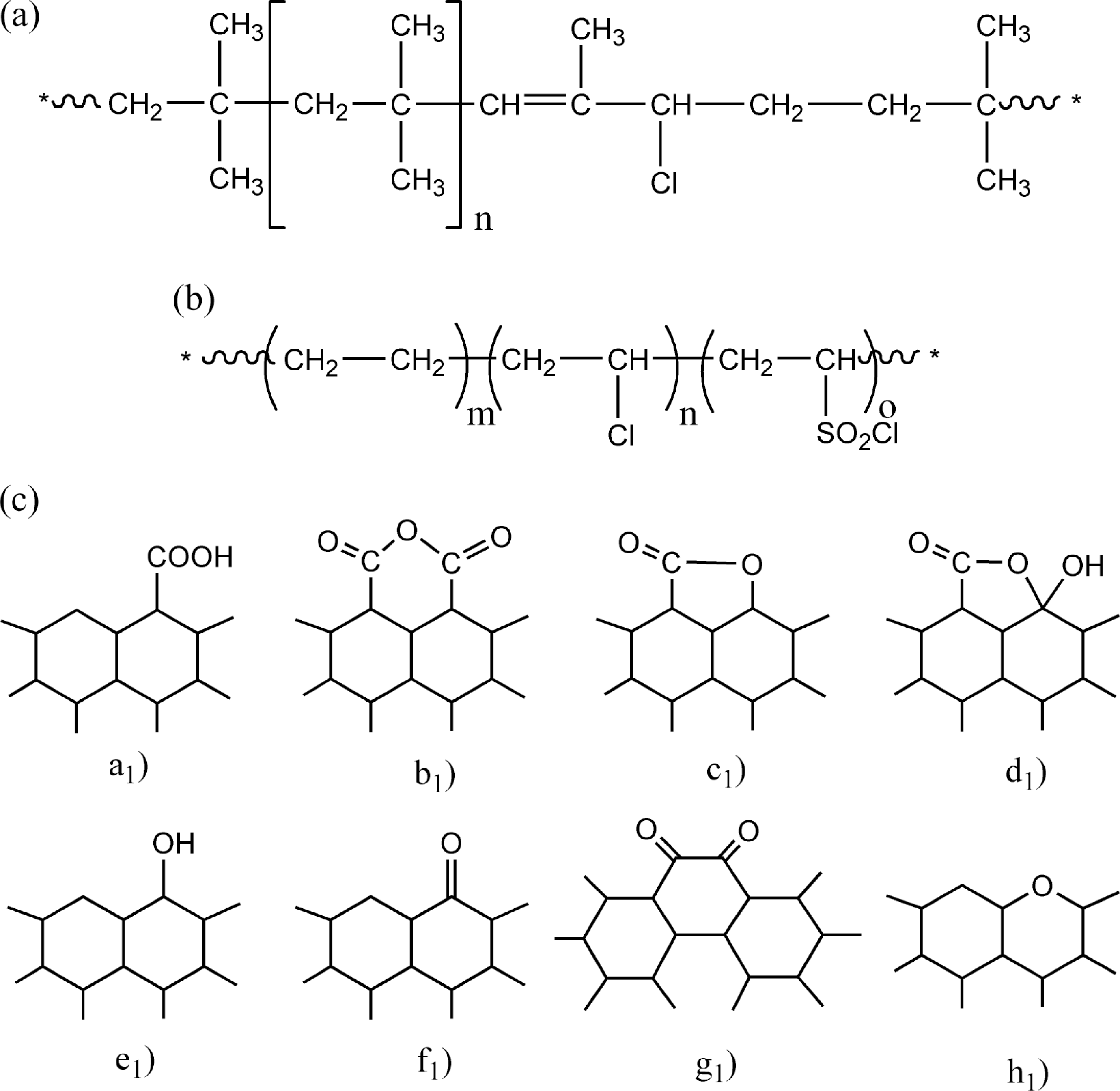
Structures of (a) chlorinated isobutylene–isoprene rubber, (b) chlorosulphonated polyethylene rubber and (c) carbon black surface: (a1) carboxylic, (b1) carboxyl anhydride, (c1) lactonic, (d1) lactolic, (e1) phenolic, (f1) carbonylic, (g1) quinonic and (h1) ether groups and others.
Formulation of CIIR/CSM rubber blends reinforced with CB.
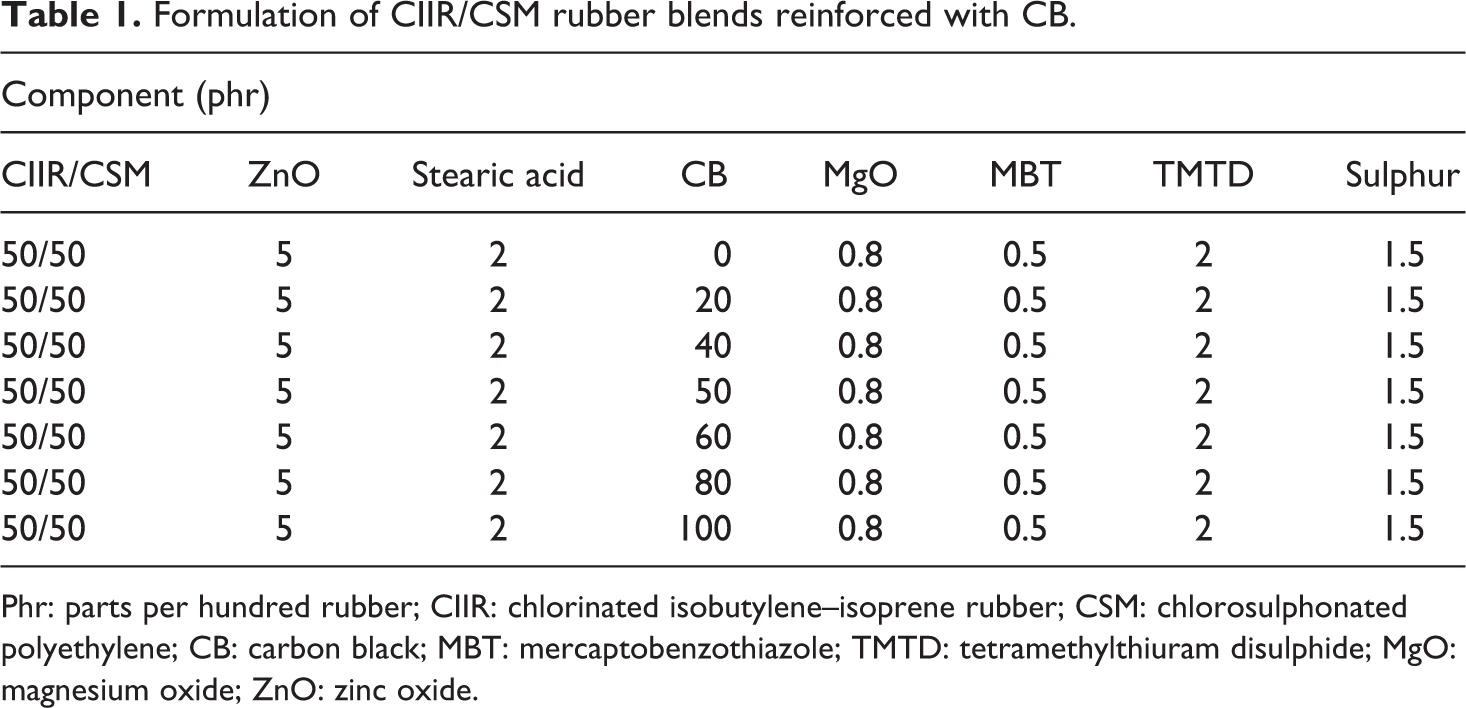
Phr: parts per hundred rubber; CIIR: chlorinated isobutylene–isoprene rubber; CSM: chlorosulphonated polyethylene; CB: carbon black; MBT: mercaptobenzothiazole; TMTD: tetramethylthiuram disulphide; MgO: magnesium oxide; ZnO: zinc oxide.
Compounding
The mixing of the rubber macromolecules and filler particles was performed on a two-roll mill at 50°C, according to the compounding procedure ASTM D3184-89. Compounds were conditioned at nearly 25°C for 24 h prior to the investigations. The vulcanization was carried out in an electrically heated laboratory hydraulic press under a pressure of about 4 MPa and 160°C (platen size 300 × 300 mm).
Sample characterizations
Tensile tests were performed on dumb-bell samples that were cut from a 2-mm thick molded rubber sheet. The tensile strength (TS) and elongation at break (E b) were determined at room temperature using a Zwick 1425 universal tensile testing machine. The tests were performed according to ASTM D412-98a. Samples of at least 0.12-mm thickness with flat surface were cut for hardness test. The measurement was carried out according to ASTM D 2240 using durometer of model 306L type A durometer.
γ-Irradiation
Irradiations have been performed in air in the Co-60 radiation sterilization unit at the Vinca Institute of Nuclear Sciences with the dose rate of 10 kGy h−1 and total absorbed dose of 100, 200 and 400 kGy. Irradiation dose of 400 kGy to which the samples were exposed can be considered as the relatively big dose, which many times exceeds the doses for degradation of radiation degradable polymers and is also above the typical doses used in practice for radiation modification of polymers and polymer-based products.
Thermogravimetric analysis
The measurements were made at a heating rate of 10°C min−1, at a temperature range of 0–1100°C, using Perkin Elmer TGS-2 Thermogravimetric system. The experiments were done in nitrogen atmosphere. About 5–8 mg of the sample was used for the analysis.
Results and discussion
Mechanical properties
The addition of fillers to polymeric materials leads to improvement in the mechanical properties of the polymer matrix. Chlorinated butyl rubber and CSM rubber are the principal commercially available halogen-containing rubbers. In these rubber compounds, carbon–halogen bonds are weaker than both carbon–carbon and carbon–hydrogen bonds, and the main effect of radiation is to break the carbon–halogen bond to give an organic free radical and a halogen radical. C–Cl bonds in both the rubbers were found to act both as radiation-sensitive groups and as radiation-reactive species in the radiation process. 15
The TS values for both nonirradiated and unloaded blend as well as corresponding loaded ones are given in Figure 2(a). It can be seen that these nonirradiated blend compositions have attained comparatively low TS values that extend over a limited range. On the other hand, the TS values attained for unloaded as well as loaded blends increased with irradiation dose reaching its maximum value at 200 kGy and then they decreased over any further increase in dose. Moreover, it may be observed that unloaded blend has attained the lowest TS value over the whole range of irradiation and that the values attained by loaded composites increase with the degree of filler loading. Besides, comparatively high TS values have been attained by composites loaded with 40 phr. These data indicate clearly that CB filler has acted effectively in raising up the TS value of irradiation of CIIR/CSM blends.
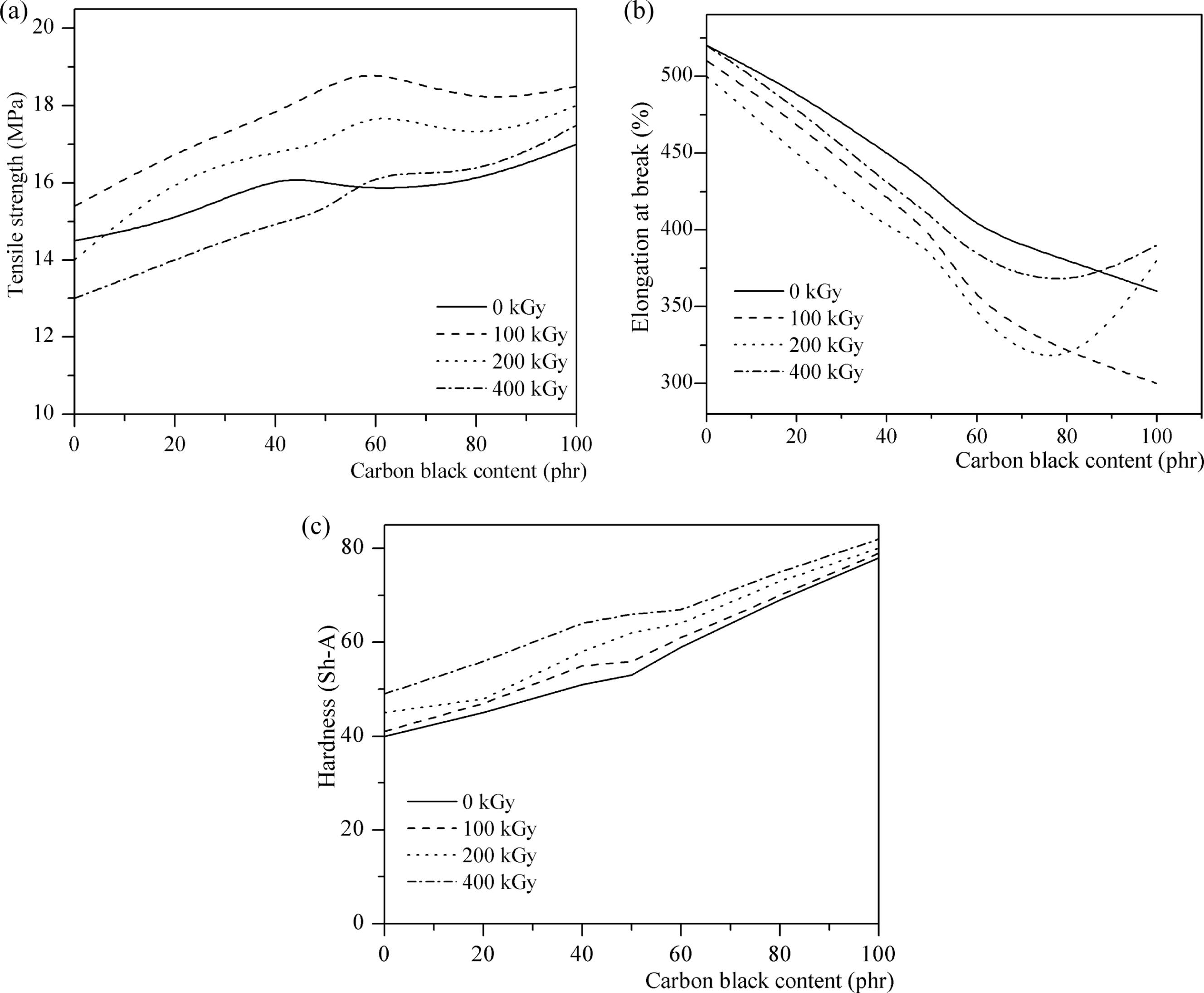
Variation in mechanical properties for CIIR/CSM/CB composites with different contents of CB as a function of irradiation dose: (a) tensile strength, (b) elongation at break and (c) hardness. CIIR: chlorinated isobutylene–isoprene rubber; CSM: chlorosulphonated polyethylene; CB: carbon black.
Both CIIR and CSM rubbers are categorized as predominantly radiation cross-linkable type of polymers, 12–15 which would account for the increase in TS values with radiation dose up to 200 kGy. This can be explained by two reasons: (a) a high-energy irradiation of polymers produced free radicals by the scission of the weakest bonds. These new entities react with each other or with molecular oxygen if the exposure environment contains it; (b) the presence of CB in the reclaim. The additives used produce free radicals on irradiation. These radicals might react with polymer radicals to enhance cross-linking and chain scission in polymer matrix. The enhanced cross-linking density may not necessarily increase the tensile properties of the polymer, because of the irradiation-induced scission of long polymer backbone chain as well as the brittleness of the polymer induced at higher irradiation doses. Apparently, degradation may then predominate, accompanied with restriction in reorientation, for doses higher than 200 kGy. 16
The values of E b (%) for reinforced blend decrease with increasing CB content and irradiation dose (Figure 2(b)). This systematic decrease in E b (%) values may be attributed to the induced cross-linking by γ-irradiation. On the other hand, a high reinforcement is generally observed in the rubber blend because of the smaller particle size (very high surface area) of the CB particles and the mechanical bonding that are formed due to some active groups, such as –CO, –COOH, –OH and =CHOH, which are present on the surface of the CB. 17
It may be observed that the values of hardness have increased effectively with increasing degree of loading with the filler and radiation doses (Figure 2(c)). These data indicate clearly that contribution to hardness values from radiation-induced cross-linking that has taken place in a totally amorphous polymer matrix of CIIR/CSM blend is a limited one. On the other hand, the main contribution to the hardness value is affiliated with the occurrence of the filler in its aggregated solid and distinct phase. 18
Thermogravimetric analysis
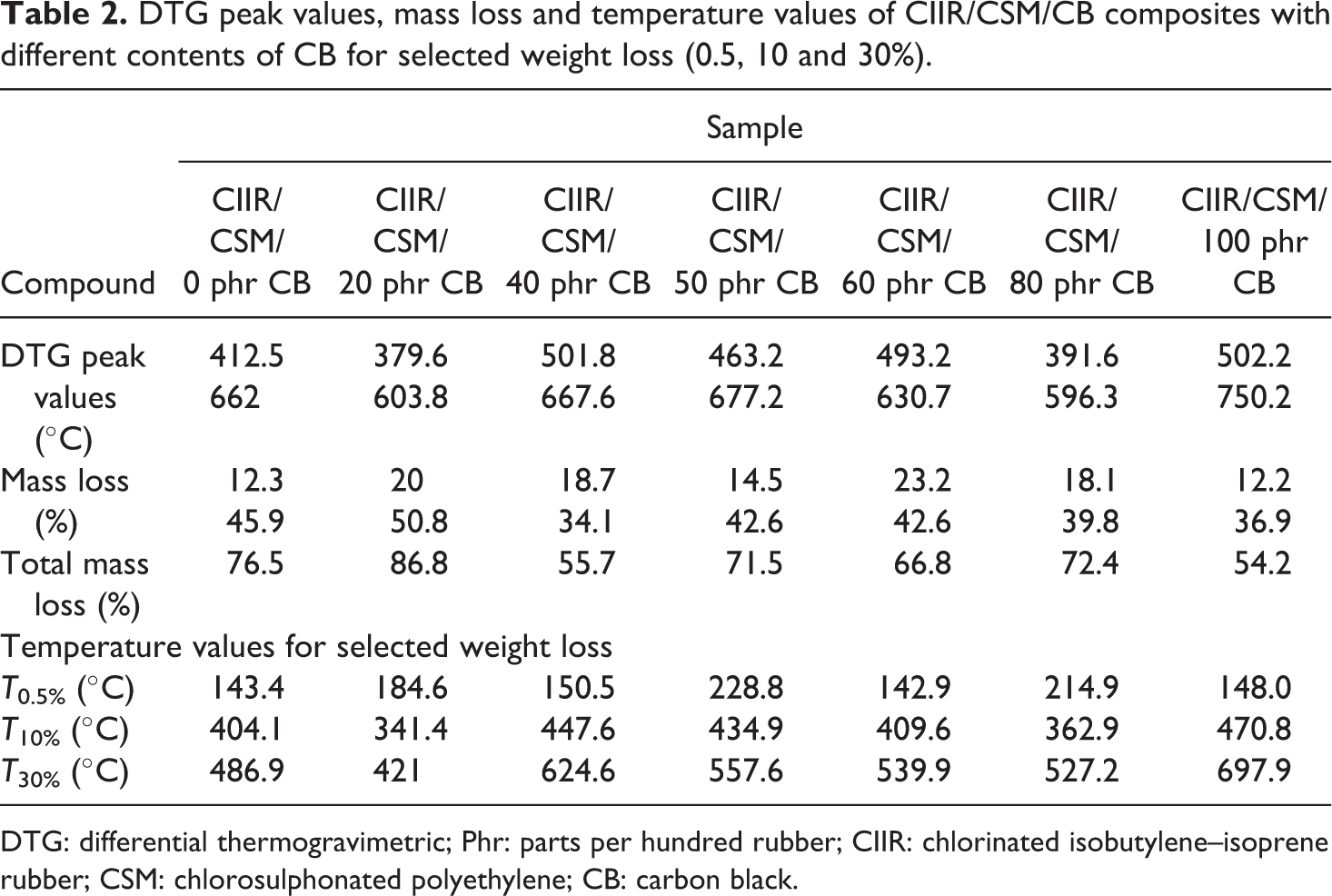
The thermal stability of the CIIR/CSM blend loaded with different contents of CB up to 100 phr was investigated using thermogravimetric analysis (TGA). Figure 3(a) and (b) shows the TGA and differential thermogravimetric (DTG) curves of CIIR/CSM (50/50 wt%) blends loaded with different concentration of CB. Table 2 shows detailed summary variation of 0.5% weight loss (T 0.5), 10% weight loss (T 10) and 30% weight loss (T 30) and the final decomposition temperature of CIIR/CSM (50/50 wt%) at different loading of CB.
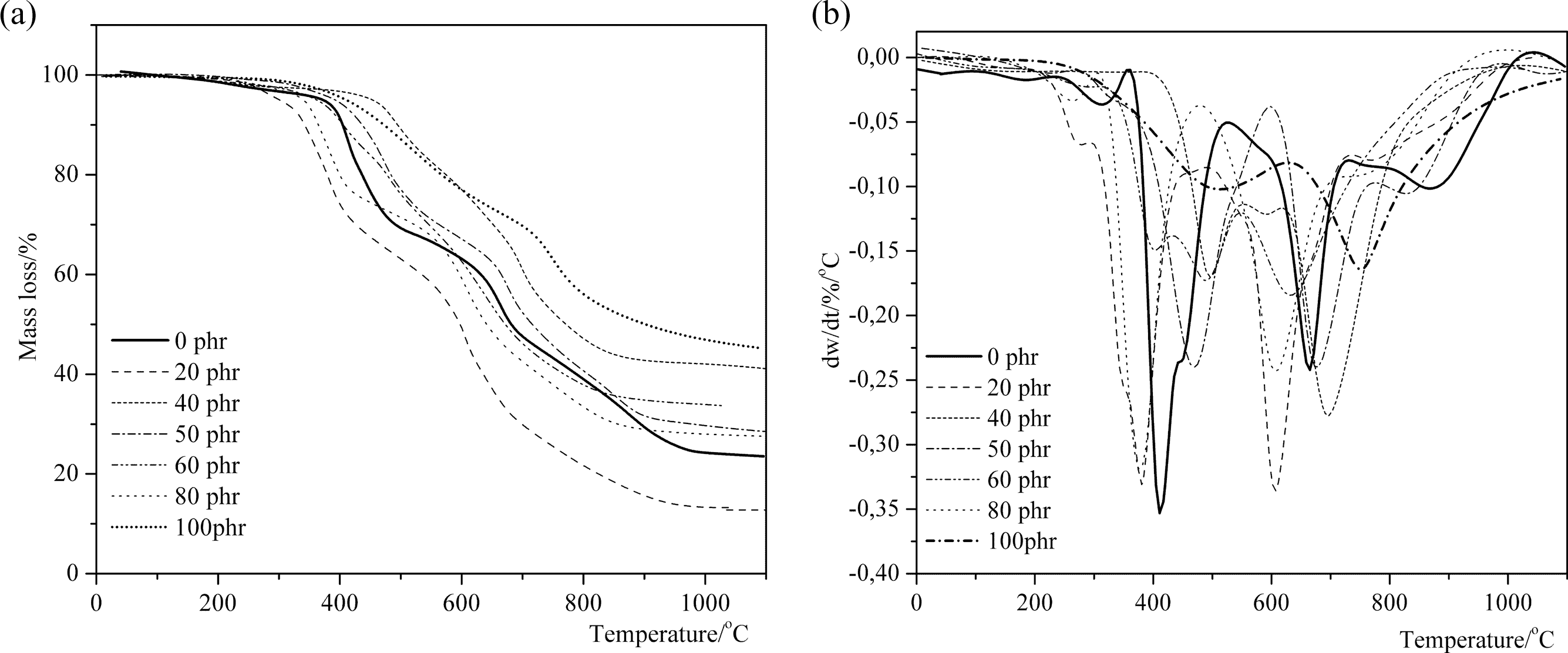
TG (a) and DTG (b) curves of CIIR/CSM/CB composites with different contents of CB. CIIR: chlorinated isobutylene–isoprene rubber; CSM: chlorosulphonated polyethylene; CB: carbon black; TG: thermogravimetric; DTG: differential thermogravimetric.
DTG peak values, mass loss and temperature values of CIIR/CSM/CB composites with different contents of CB for selected weight loss (0.5, 10 and 30%).
DTG: differential thermogravimetric; Phr: parts per hundred rubber; CIIR: chlorinated isobutylene–isoprene rubber; CSM: chlorosulphonated polyethylene; CB: carbon black.
T 0.5 indicates the initial thermal stability, whereas T 10 and T 30 show the higher degradation rate of the polymer nanocomposites. As shown in Table 2, the incorporation of the CB resulted in the improvement of thermal stability of all the samples. Ash residue content increased with higher CB loading. According to Kraus, 19 the higher content of ash residue in degradation process depends on the initial CB added experimentally. The results show that there is a slightly higher degradation temperature of CIIR/CSM (50/50 wt%) with CB, particularly at the higher filler loading. The degradation temperature can be related to the volatile material in the filler. The CB that has less volatile matter might enhance the degradation temperature of CIIR/CSM rubber blend (50/50 wt%). The enhancement of the thermal stability with increasing filler loading in polymer matrix has been reported by some researchers using different fillers. 20
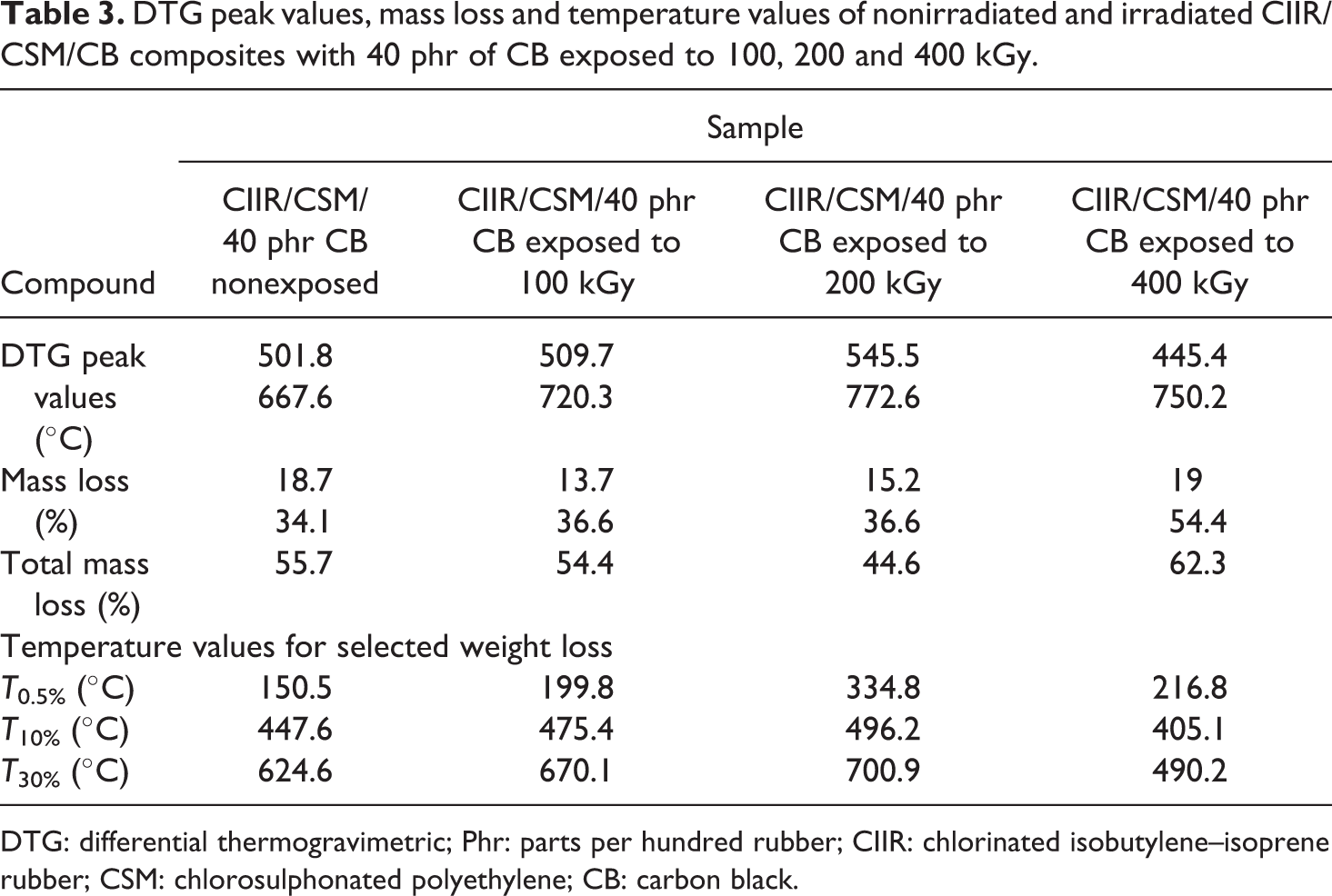
Figure 4(a) and (b) shows the thermogravimetric and DTG curves of CIIR/CSM (50/50 wt%) loaded with 40 phr of CB, exposed to 100, 200 and 400 kGy to investigate the effect of γ-irradiation on its thermal behaviour. Obtained results are given in Table 3.
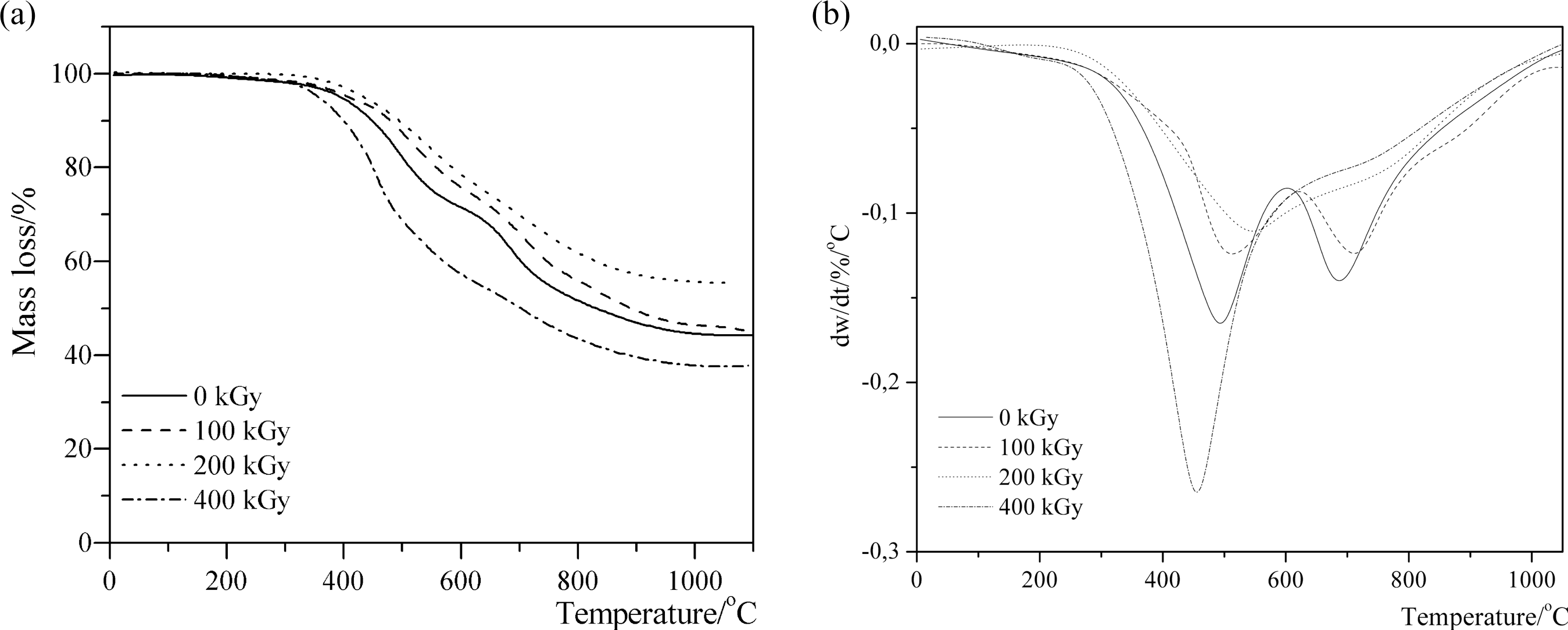
TG (a) and DTG (b) curves for CIIR/CSM/CB composites with 40 phr of CB at various irradiation doses. CIIR: chlorinated isobutylene–isoprene rubber; CSM: chlorosulphonated polyethylene; CB: carbon black; TG: thermogravimetric; DTG: differential thermogravimetric; phr: parts per hundred rubber.
DTG peak values, mass loss and temperature values of nonirradiated and irradiated CIIR/CSM/CB composites with 40 phr of CB exposed to 100, 200 and 400 kGy.
DTG: differential thermogravimetric; Phr: parts per hundred rubber; CIIR: chlorinated isobutylene–isoprene rubber; CSM: chlorosulphonated polyethylene; CB: carbon black.
The curves show that the thermal stability of polymer composites with CB increases with γ-irradiation up to 200 kGy after that it decreases. The above-mentioned results could be explained in the scope of the molecular structure of the polymeric matrix, which is directly related to its thermal stability. The decrement in the thermal stability of CIIR/CSM rubber blend (50/50 wt%) loaded with 40 phr of CB by exposure to irradiation presumably due to some random degradation of polymer chains leads to the reduction in its stability. On the other hand, the increase in the thermal stability of the polymer matrix may be due to the increase in the compatibility between CB and polymer phases due to the increased magnitude of interface linking, which made the composite of higher homogeneity and as a result its stability increases. The results show positive synergistic effect of radiation and the incorporation of CB on the thermal stability of CIIR/CSM (50/50 wt%) nanocomposites. This is because the effective filler–matrix interaction provides strength to the composites. 21
Conclusion
The effect of γ-rays on the mechanical and thermal properties of polymer composites based on CIIR/CSM rubber blend with varying contents of CB filler was investigated. The values of TS and hardness are increasing with irradiation doses and CB content is increasing, but elongation is decreasing. The thermal stability of the blend was improved by both degree of loading with CB and cross-linking induced by γ-irradiation. In general, prepared composites of CIIR/CSM loaded with CB may be suitable for industrial applications requiring materials of high strength and good thermal and radiation stability also. In CIIR/CSM rubber blends reinforced by 40 phr of CB, cross-linking predominates over scission up to a limiting dose of about 200 kGy. Above this dose, chain scission predominates.
Footnotes
Funding
This work was supported by the Ministry of Science of the Republic of Serbia (projects number 45022 and 45020).