




Abstract
Compared with the traditional composites, the incorporation of carbon nanotubes into polymeric matrices can generate materials with superior properties, especially thermal, electrical and tribological properties. The aim of this study was to study the polyamide 6.6/carbon nanotubes (PA 6.6/CNT) nanostructured composites crystallization kinetics. The solution mixing technique was used to obtain the nanostructured composites studied in this work. PA 6.6 films were produced with amounts of 0.1, 0.5, and 1.0 wt% (weight/weight) CNT. X-ray diffraction analyses were performed in order to determine the crystallographic properties of nanostructured composite. The nanostructured composites crystallization kinetic study was performed using the differential scanning calorimetry under isothermal and nonisothermal (dynamic) conditions. The results have shown addition of CNTs in the PA 6.6 reduces the Avrami exponent, affecting the crystallization process of the composite.
Introduction
The nanostructured materials have gained great prominence in the scientific community due to their inclusion in various scientific and technological fields, such as catalysis, biological sensors, optoelectronic materials and polymeric composites. Nowadays, the search demands to find methods of preparation, characterization and manipulation of nanostructures for a specific use, as in the case of nanotechnology related to composite materials. Recently, one of the most used materials in combination with polymeric matrices are carbon nanotubes (CNTs), forming the nanostructured composites. 1
CNTs show a unique combination of mechanical, electrical and thermal properties that make them excellent candidates to replace or supplement conventional loads used in the preparation of polymeric nanostructured composites. Single-wall carbon nanotubes (SWCNTs) may present metallic or semiconducting behavior, with Young’s modulus from 300 to 1000 GPa and tensile bond strength from 150 to 180 GPa. 2–4 Multiwall carbon nanotubes (MWCNTs) show electrical features between metal and semiconductor, with Young’s modulus from 270 to 950 GPa, tensile bond strength from 11 to 63 GPa. 5–7 Another important property, which is worth mentioning, is their high thermal conductivity along the longitudinal axis of the nanotubes. In this case, it is estimated that the values of around 6000 W m−1 K−1can be reached, which is much higher than the values found for copper (an average of 385 W m−1 K−1). When the CNTs are added into polymeric matrices, an increase in their thermal conductivity up to 125% can be observed. 8–11
The CNTs incorporation into polymers can result in materials with higher mechanical strength, 12 better thermal stability 13 or better optical and electrical properties. 2,14 Currently, a wide type of thermoplastic and thermoset matrices have been used for this purpose, however, few studies report the CNTs effect on the crystallization kinetics of the thermoplastic matrices with structural application.
Among the major thermoplastic matrices, polyamide 6.6 (PA 6.6) has been highlighted in several applications due to their good mechanical properties, high melting temperature (263°C), high impact and fatigue strength. When reinforced, the PA 6.6 can be used in a wide range of applications, especially in different sectors of industry including the automobile, electronics, aerospace, light and precision mechanical engineering. 15–18
Polymeric materials with similar chemical compositions may exhibit different properties, like toughness, elasticity, permeability and transparency. 19 These properties depend on the microstructure of the material which is determined by its thermal cycle processing. In the case of semicrystalline polymers, the solidification process is followed by crystallization in isothermal and nonisothermal conditions. The final product will depend on important factors such as physical dimensions (its crystal size distribution, its median crystal size, its purity and its crystal shape) and the cooling rates (the properties of the liquid and solid phases) which will be submitted to the polymer and the crystallization kinetic parameters (geometry and type of the crystallizer). 19–21
In the present work, the effect of adding different amounts of CNTs (0.1, 0.5 and 1.0 wt% CNT) on the crystallization kinetics of the PA 6.6 polymer matrix was studied. The nanostructured composites crystallization kinetic was performed using differential scanning calorimetry (DSC) in nonisothermal and isothermal conditions.
Theoretical considerations
Isothermal crystallization kinetics
The isothermal crystallization kinetics of polymeric materials is accomplished by the Avrami equation, 22–27 which estimates the crystalline fraction, X(t), depending on the analysis of time elapsed (equation (1); Avrami’s equation):

where k and n represent the Avrami’s kinetic constant (reaction rate constant) and Avrami’s exponent, respectively. The Avrami exponent n should be an integer number from 1 to 4, depending on the geometry of crystals growth and the nature of the primary nucleation.
The Avrami exponent n is indicative of the nucleation type (thermal or athermal). Athermal nucleation happens at a specific time and thermal nucleation happens on a time scale starting at t = 0. The n value may range from values less than 1 to greater than 4 but is independent of temperature. 28
Nonisothermal crystallization kinetics
For the study of nonisothermal crystallization kinetics, it should be assumed that with increasing temperature constant, the reaction rate constant, ‘k,’ can change with the time.
29,30
So, equation (1) can be rewritten as (equation (2)):


where E is the activation energy, R is the universal gases constant and T is the temperature. Therefore, the Avrami index n can be calculated by equation (4):

Equation (4) can be described from the derivative plot of the crystallized fraction, (dx/dt) p , the crystallization peak temperature, Tp , the heating/cooling rate, β and the activation energy, E. Thus, the Avrami exponent n for nonisothermal conditions can be determined with precision and accuracy. 31,32
Experimental
Materials
The polymer matrix used, for obtaining nanostructured composites, was PA 6.6, provided by Rhodia company (Brazil). MWCNTs used in this work were produced by chemical vapor deposition (CVD) technique and supplied by Bayer (Brazil), coded as 150 C Baytubes P. PA 6.6 was dissolved in a dispersion of CNTs and formic acid (CH2O2) 85%. The formic acid was supplied by the VETEC Química Fina LTDA (Brazil).
Obtaining of PA 6.6/CNT nanostructured composites. In this work, the technique employed for the preparation of PA 6.6/CNT nanostructured composites included the solution-mixing procedure, which is currently considered as the most used method especially when aggregated loads of very small dimensions are dispersed in polymer matrices. 33 The process to obtain nanostructured composites, using the solution mixing procedure, consists of three steps: (1) dispersion of nanotubes in formic acid; (2) mixture of PA 6.6 in this dispersion (1; room temperature) and (3) obtaining of nanostructured composite (PA 6.6/CNT) by solvent evaporation (casting). The CNT dispersion in formic acid was performed with the assistance of an ultrasonic probe (Sonics & Materials, Model VC 750, during 20 min). Using this methodology, the following films were produced in concentrations of CNT: 0.1, 0.5 and 1.0 wt% (denominated 0.1% CNT, 0.5% CNT and 1.0% CNT, respectively).
Morphological analyses
X-ray diffraction was performed in order to determine the crystallographic properties of the PA 6.6/CNT nanostructured composites. The tests were performed in a Philips Xpert 3060 PRO with 40 kV and 45 mA.
Thermal analysis
The crystallization kinetics study under isothermal and nonisothermal conditions was carried out using DSC PerkinElmer equipment model Pyris1 with cooling system called Intracooler 2. For nonisothermal conditions, the samples with approximately 6.0 mg were encapsulated in an aluminum standard sample pans and were initially heated from 160 to 290°C at 10°C min−1, leaving the samples for 1 min at this temperature to allow the complete melting of all PA 6.6 crystals, eliminating the remaining crystals that may act as germs during crystallization. Afterward, the samples were cooled at the cooling rates of 2.5, 5.0, 10, 20 and 50°C min−1 until 160°C, aiming the formation of exothermic peaks for determining the enthalpy crystallization.
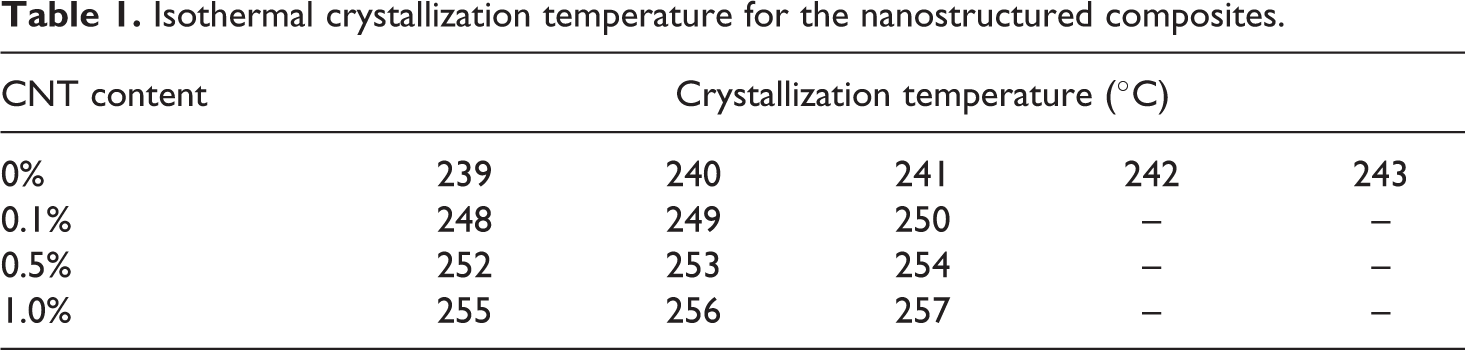
For isothermal conditions, initially, a dynamic analysis between 160 and 290°C at 10°C min−1 was performed to determine the melting and crystallization temperatures of the samples. The samples were heated again at 10°C min−1 from 160 to 290°C. However, in this second heating, the samples remained for 1 min at 290°C to allow complete melting of all crystals, eliminating its thermal history and avoiding the presence of the small crystals. Afterward, the samples were cooled at 100°C min−1 until the desired crystallization temperature isotherms (Table 1) and kept in isotherm condition until the formation of crystallization exothermic peak.
Isothermal crystallization temperature for the nanostructured composites.
Results and discussion
Morphological analyses
The X-ray diffraction is a method that has been widely used to obtain information about the interlayer spacing, structural strain and purity of the sample. Figure 1 shows the diffractograms obtained from the PA 6.6/CNT nanostructured composites. In this graphic, three distinct peaks can be observed at 2θ from 15° to 25° which are consistent with the crystal planes (002), (100) and (101), respectively. The presence of these peaks suggests the CNTs have been satisfactorily incorporated into the polymer matrix. Moreover, it was observed that (Figure 1) the increase in the CNT concentration in polymer matrix may enhance the intensity on the X-rays bands, leading to the gradual incorporation of CNTs in polymer matrix.
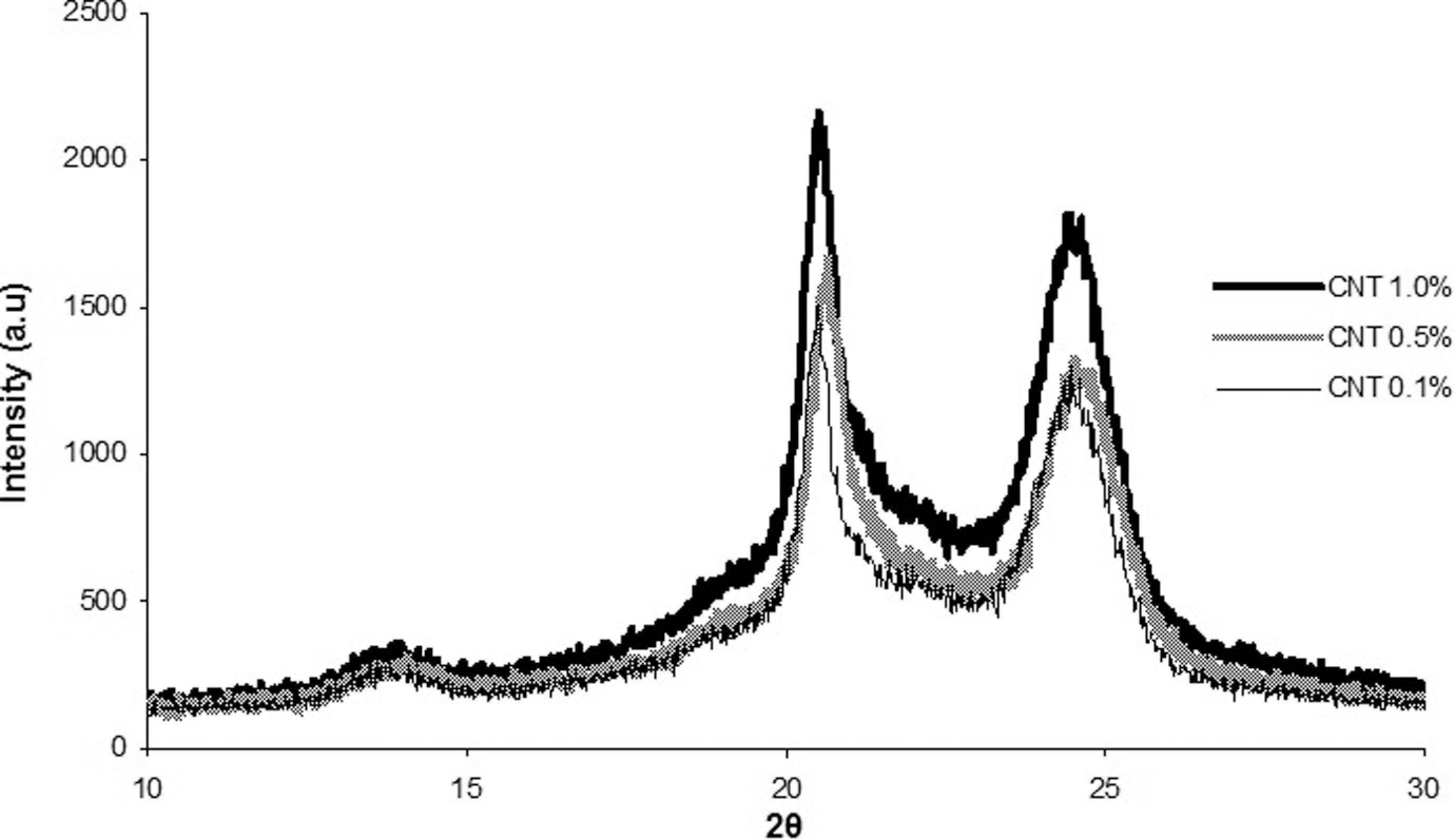
Diffractograms of polyamide 6.6/carbon nanotube (PA 6.6/CNT) nanostructured composites.
Thermal analysis
Isothermal crystallization kinetics The isothermal crystallization kinetic was evaluated by Avrami kinetic model, from equation (1). Figures 2 and 3 show, respectively, the DSC curves corresponding to the first cooling (crystallization) and the second heating, both under dynamic conditions at 10°C min−1 for all samples analyzed in this study.
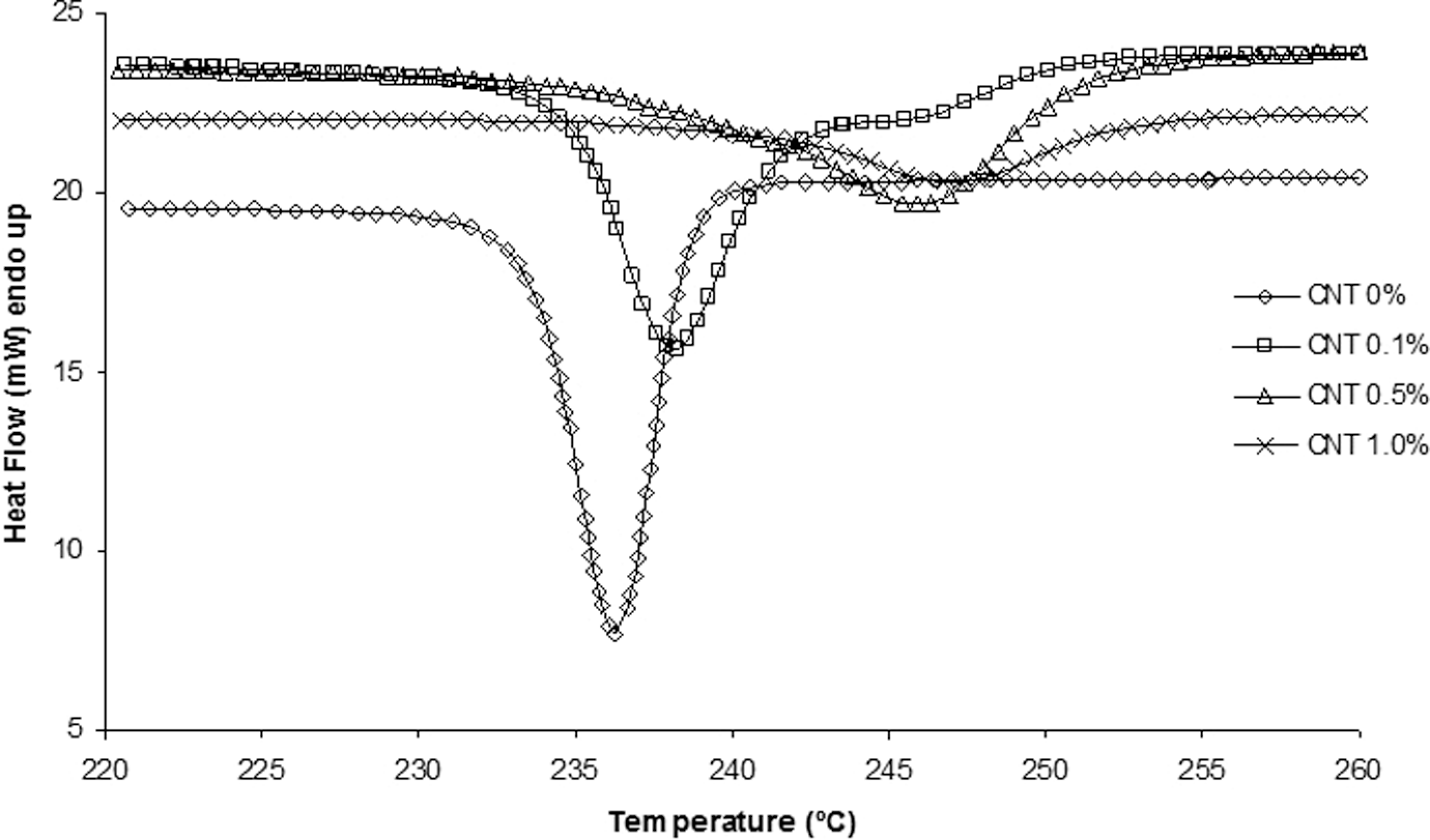
Isothermal crystallization curves for the neat polyamide 6.6 (PA 6.6) and its nanostructured composites.
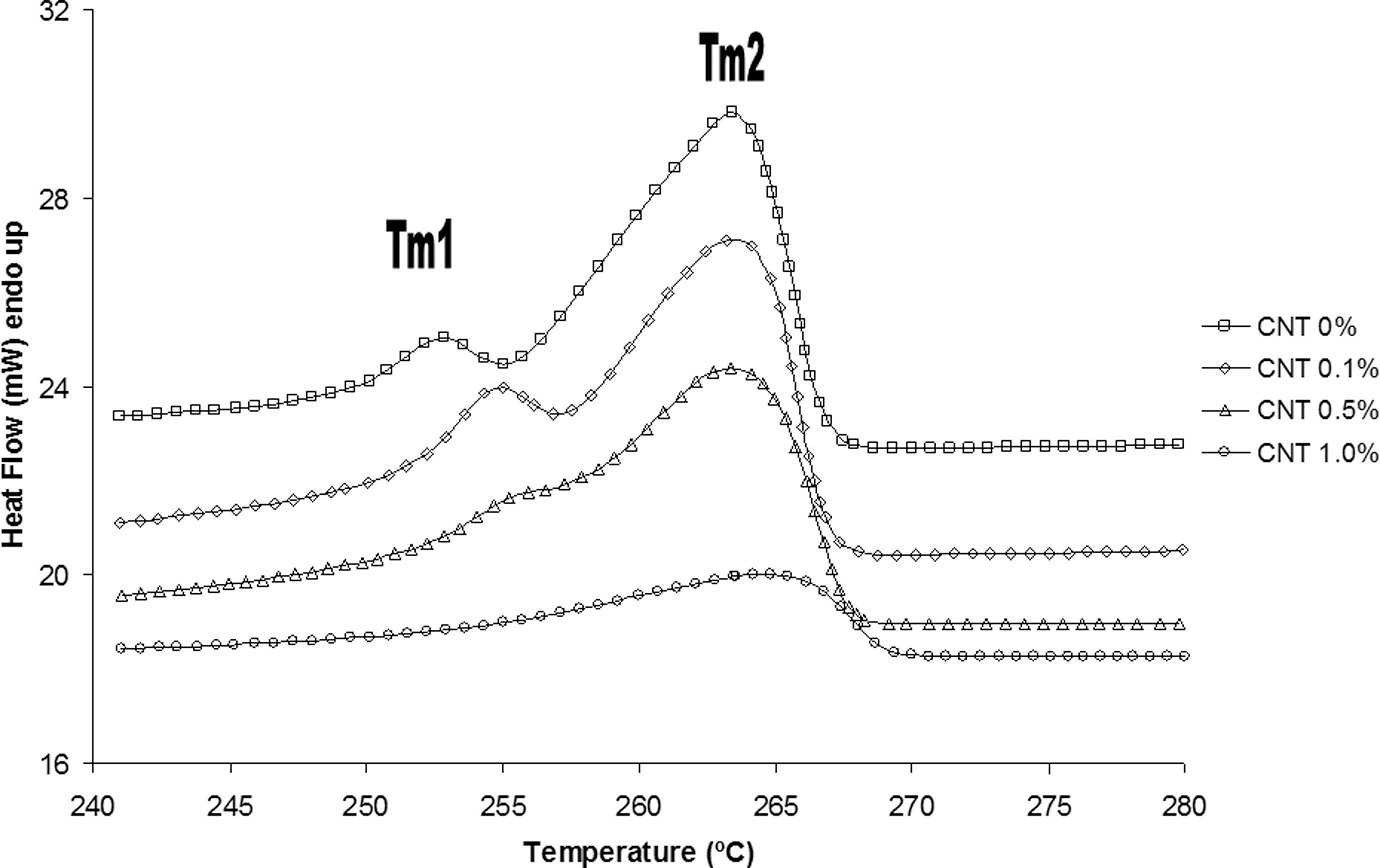
Nonisothermal melting curves for the neat polyamide 6.6 (PA 6.6) and its nanostructured composites.
It can be observed, from Figure 2, the crystallization peak temperature is 236°C for neat PA 6.6. The CNT addition in amounts from 0.1 to 1.0 wt% resulted in an increase in the crystallization peak temperature, but reducing its intensity (decrease the peak amplitude). This fact might be explained due to the presence of CNTs in PA 6.6, which generates active nucleus (germs) in the polymer matrix, advancing the crystallization process and, in turn, increasing the crystallization peak temperature and decreasing the crystallization peak amplitude, due to the disorder in the crystallization rate.
Figure 3 shows the results from DSC curve corresponding to the second heating for PA 6.6, indicating the polymeric matrix melting temperature occurs at 263°C (considering as the main peak of the higher intensity). According to the literature, 34 the PA 6.6 melting temperature is around 255–265°C. So, the temperature value found in the present work is within the range provided by the literature. 34 Besides that, the CNT addition does not change significantly the melting temperature of nanostructured composites, since the main melting peak remains within the range described in the literature. 34
Although the more representative melting peak of PA 6.6 occurs at 263°C (Tm2), the presence of two melting peaks called here Tm1 and Tm2 was observed (Figure 3). Tm1 was found at 253°C. According to the literature, 18,35 it is known that the PA 6.6 has different polymorphic phases, taking the dominant phase (α phase) melting temperature around 265°C and γ phase melting temperature in approximately 255°C. Thus, particular cooling rates lead to the formation of a variety of perfect or imperfect crystals. This effect of polymorphism might be seen on heating as the multiple melting peaks (Tm1 and Tm2 transitions) and, in this case, the last peak, more intense (higher amplitude), reflects the predominant crystal structure generated by the heat treatment applied. 36
Similar behavior is observed in the nanostructured composites when amounts up to 0.5 wt% of CNT were added into the polymeric matrix. Again, the presence of two melting peaks (Tm1 and Tm2) in the DSC curves may be observed for the nanostructured composites. However, the amount of CNT added in the nanostructured composite changes the form and intensity of the first melting peak (Tm1). The addition of 1.0 wt% of CNT in the PA 6.6 results in the extinction of this first melting peak (Tm1). Li and coworkers 34 also studied and discussed the behavior of multiple melting peaks for PA 6.6 and its nanostructure. According to the literature, 34 the occurrence of multiple peaks during the melting of nanostructure composites is due probably to the rearrangement of the crystalline lamellae PA 6.6. The first melting peak is also attributed to the thin lamellae formation that arises during the crystallization process, and Tm2 refers to the melting of crystalline structure achieved during the crystallization process. With the addition of CNT, a reduction in the melting peak area and, consequently, the melting enthalpy value were observed. In the present work, Tm1 disappears when amounts equal to or above 1.0 wt% CNT were used.
Figure 4 shows the curves of neat PA 6.6 and its nanostructured composites isothermal crystallization. These curves were used to study the PA 6.6 and its nanostructured composites isothermal kinetics. The CNT addition in polymer matrix, as previously discussed, increases the crystallization peak temperature, making it impossible to obtain isothermal temperatures equal for all nanostructured composites used in this study.
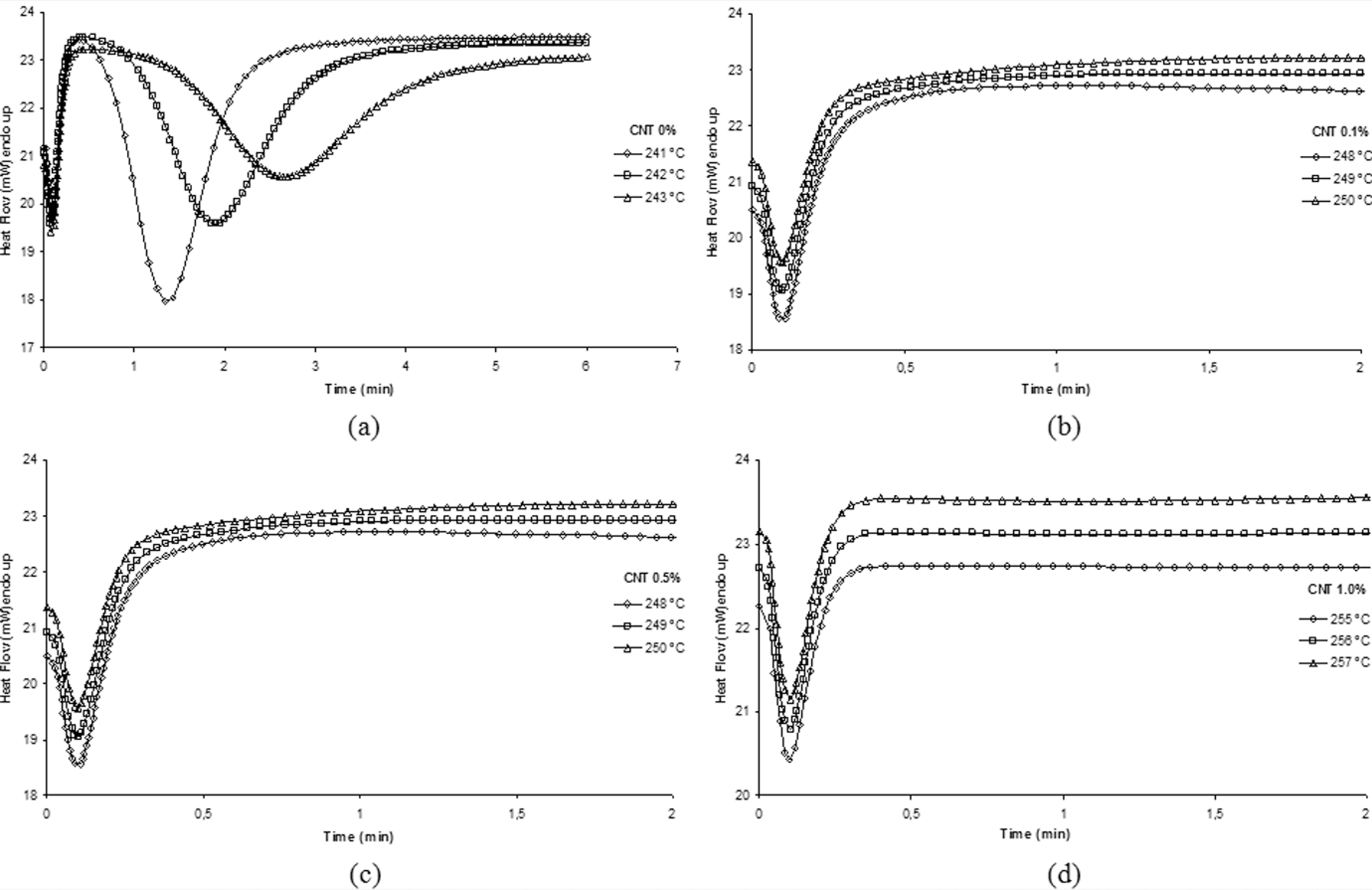
Isothermal crystallization curves for the neat polyamide 6.6 (PA 6.6) and its nanostructured composites: (a) 0 wt%, (b) 0.1 wt%, (c) 0.5 wt% and (d) 1.0 wt% carbon nanotube (CNT).
Figure 5 shows the curves of relative crystallinity (Xc ) as the function of the time. The curves in S have deformed shape, indicating that the first stage of crystallization process is very fast. The crystallization process becomes slower with increasing isothermal temperature. This same effect is observed with increasing CNT concentration in the PA 6.6 (it was proved by reducing the slope of the crystallized fraction; Figure 5(d)).
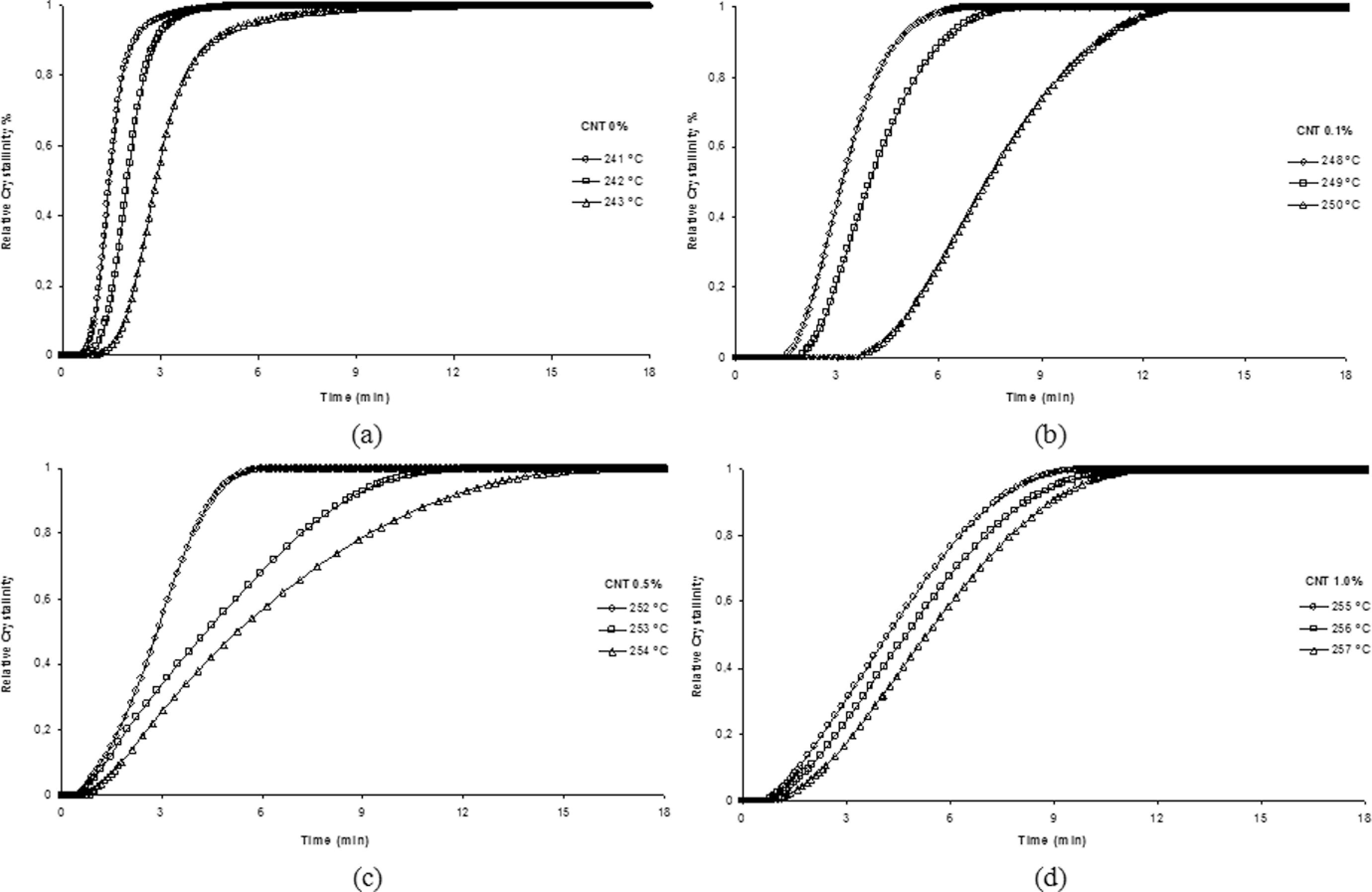
Relative crystallinity versus time at different isothermal crystallization for the neat polyamide 6.6 (PA 6.6) and its nanostructured composites: (a) 0%, (b) 0.1%, (c) 0.5% and (d) 1.0% carbon nanotube (CNT).
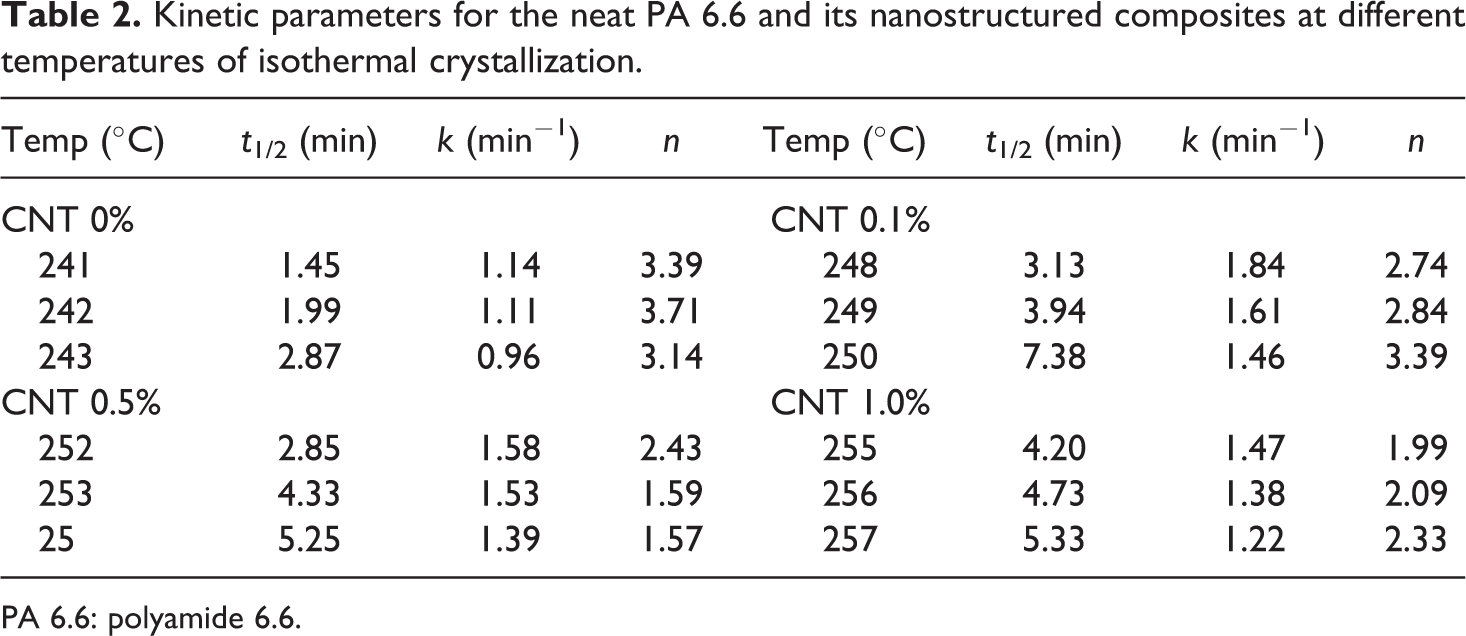
Table 2 provides the half-time life (t 1/2) and the n and k values determined from the linear region of the Avrami’s curves presented in Figure 6. The t 1/2 values increase proportionally with increase in isothermal crystallization temperature. It must be remembered that the crystallization process occurs from a higher temperature (usually 10°C above the onset melting temperature) to a lower temperature. In a DSC dynamic curve, the crystallization onset temperature is always higher than the crystallization peak temperature. Usually, the isothermal temperature, as chosen for the study of crystallization kinetics, is between the onset temperature and peak crystallization. Thus, in an isothermal experiment if the crystallization isotherm chosen for the study has a temperature closer to the crystallization onset temperature, the polymeric system will have more time to crystallize, generating more perfect crystals, thereby reducing the existence of polymorphic forms. On the other hand, isotherms with temperatures around the crystallization peak temperature will produce crystals with many defects and polymorphic structures due to the uncontrolled crystal growth.
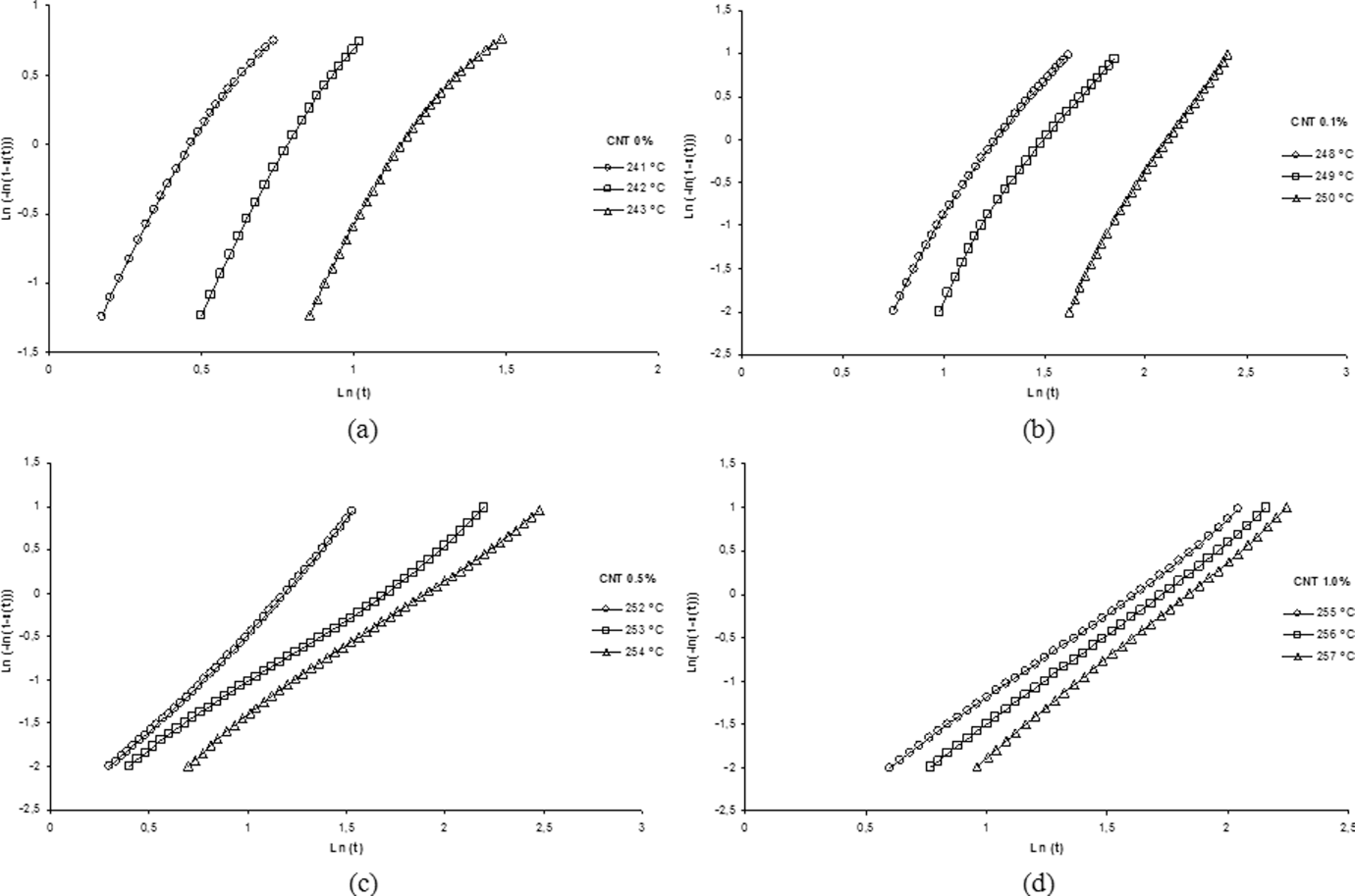
Avrami curves for isothermal crystallization of the neat polyamide 6.6 (PA 6.6) and its nanostructured composites: (a) 0%, (b) 0.1%, (c) 0.5% and (d) 1.0% carbon nanotube (CNT), with indicated temperatures.
Kinetic parameters for the neat PA 6.6 and its nanostructured composites at different temperatures of isothermal crystallization.
PA 6.6: polyamide 6.6.
Although the isothermal crystallization temperatures are different for each PA 6.6/CNT composite, it is observed (Table 2) that a tendency of t 1/2 increased with the addition of CNTs in polymer matrix. The k behavior is opposite from that found for t 1/2. An increase in temperature reduces the crystallization rate constant. This behavior was also observed by Li and coworkers, 34 which concluded that an increase in the crystallization temperature increases the t 1/2 and decreases the crystallization rate constant.
From Table 2 and Figure 6, it can be observed the Avrami exponent (n) varies from 1.57 to 3.71, indicating the spherulites growth do not follow the propagation spherulitic 3D. 34 Overall, the results show the n exponent decreases with increase in CNT in polymer matrix. The reduction in the n value is related to shrinking of spherulites, resulting from the addition of CNT. This effect (reduction of spherulites size) might occur due to the existence of dense nucleation that takes place on the surface of CNT. CNT acts as crystallization germs, competing with the PA 6.6 crystals formed, once the growth of the crystals is confined between the adjacent crystals, consequently reduces the size of spherulites.
Nonisothermal crystallization kinetics
In this study, PA 6.6 and its nanostructured composites were analyzed by DSC using different cooling rates, in order to investigate the crystallization kinetics under nonisothermal conditions. During this study, the crystallization kinetics of nonisothermal samples was performed using the Avrami kinetic model.
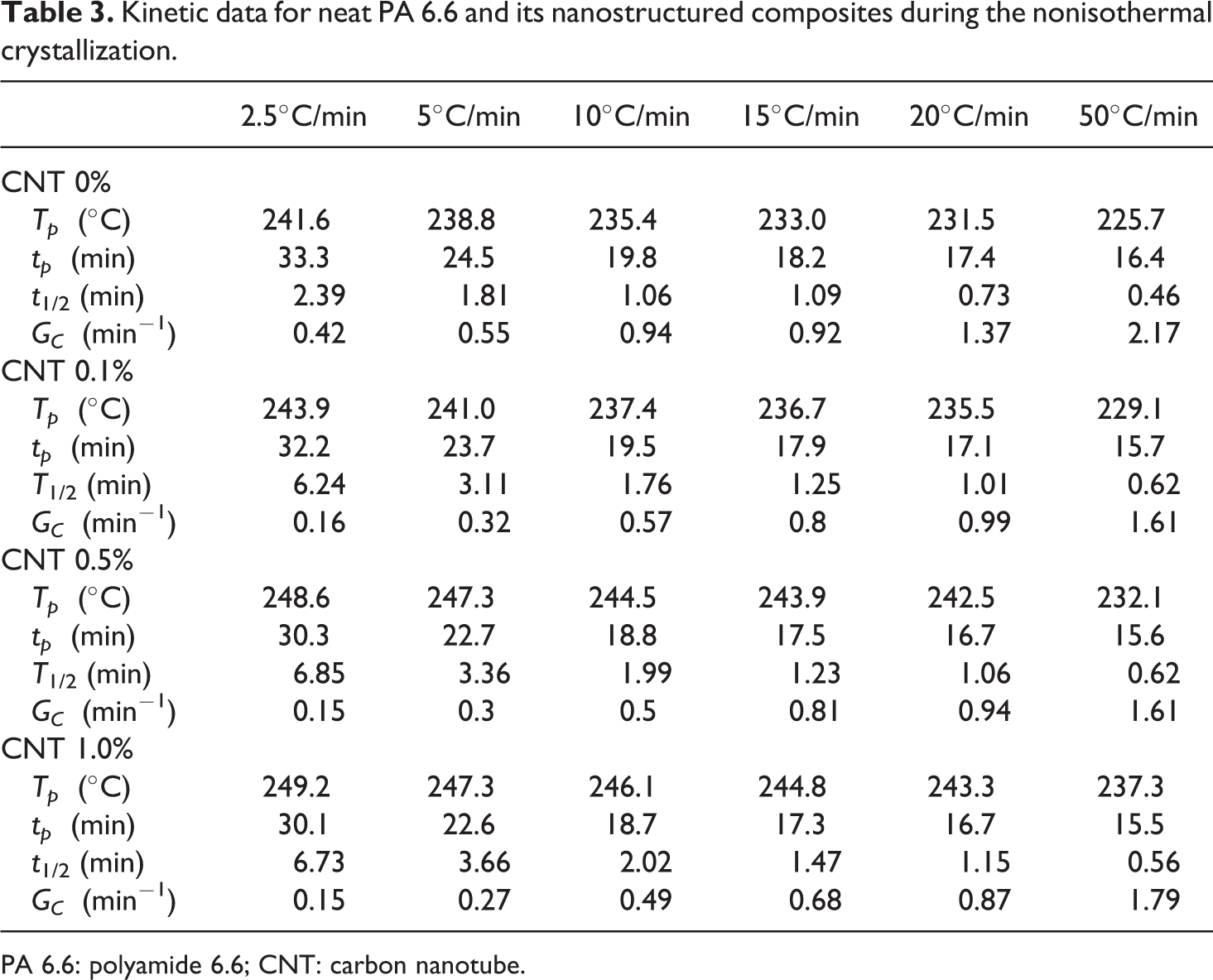
Figure 7 shows the DSC cooling curves obtained for the neat PA 6.6 and its nanostructured composites at several cooling rates from 2.5 to 50°C min−1. From the curves shown in this figure, the following can be obtained: the peak temperature (Tp ), which corresponds to a maximum crystallization; the time corresponding to this maximum (tp ); the half-life (t 1/2; time required for 50% of the crystallization occurs) and the crystallization rate (GC ; calculated from the inverse of t 1/2). These results are presented in Table 3.
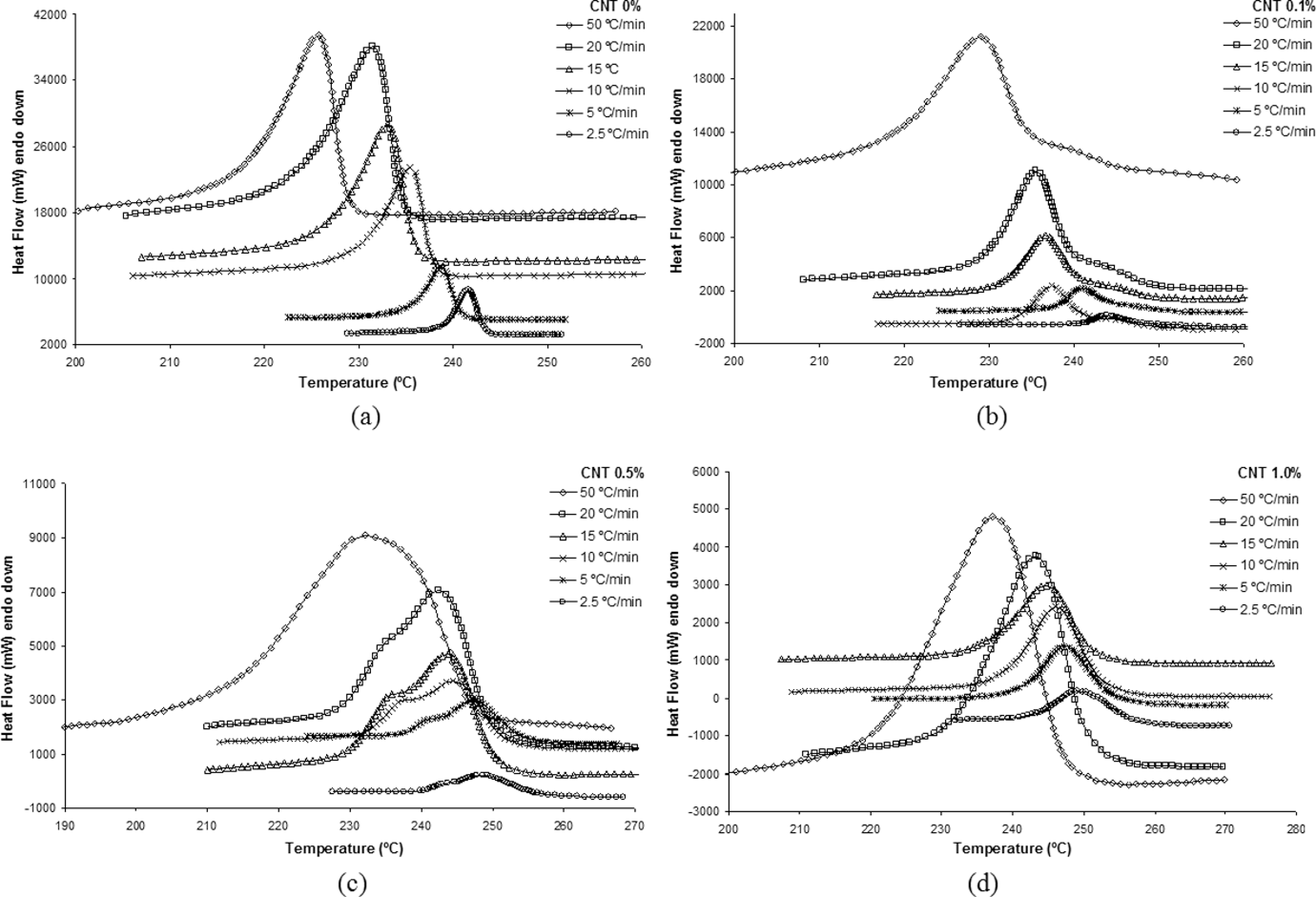
Differential scanning calorimetry (DSC) curves for the neat polyamide 6.6 (PA 6.6) and its nanostructured composites at different cooling rates: (a) 0%, (b) 0.1%, (c) 0.5% and (d) 1.0% carbon nanotube (CNT).
Kinetic data for neat PA 6.6 and its nanostructured composites during the nonisothermal crystallization.
PA 6.6: polyamide 6.6; CNT: carbon nanotube.
According to Figure 7 and Table 3, the crystallization process is affected by the cooling rate used and the CNTs concentration present in the polymeric matrix (especially when considered 0.5% wt). Tp both as tp increase with the decreasing of the cooling rate (β). This fact is due to the lower cooling rates, resulting in longer time to overcome the nucleation barrier, initiating the crystallization process at higher temperatures. As for the higher cooling rates the opposite occurs, i.e. the nucleation process takes place at lower temperatures. The presence of CNTs in PA 6.6 promotes the increase in Tp for all cooling rates. This fact can be explained by the presence of the CNTs in the PA 6.6, which leads to a great amount of active nuclei in the polymer matrix, advancing the crystallization process. 34
Similar to other parameters, the crystallization time (tp ) is also affected by cooling rate and the addition of CNTs into polymeric matrix. In this study, we observed the higher values of the crystallization time are related to lower cooling rates. For the same cooling rate, the addition of 0.5 wt% nanostructured reinforcements leads to a reduction in the crystallization time (tp ). It can also be seen that the crystallization time remains almost unchanged with the addition of 1.0 wt% CNT, suggesting the concentration of 0.5 wt% CNT is the limit to observe a time variation (tp ) of the nanostructured composites crystallization.
The Xc curves can be obtained from the integration of the exothermic peak during the crystallization process as a time function. Figure 8 shows the Xc(t) as function of time for the neat PA 6.6 and its nanostructured composites at different cooling rates.
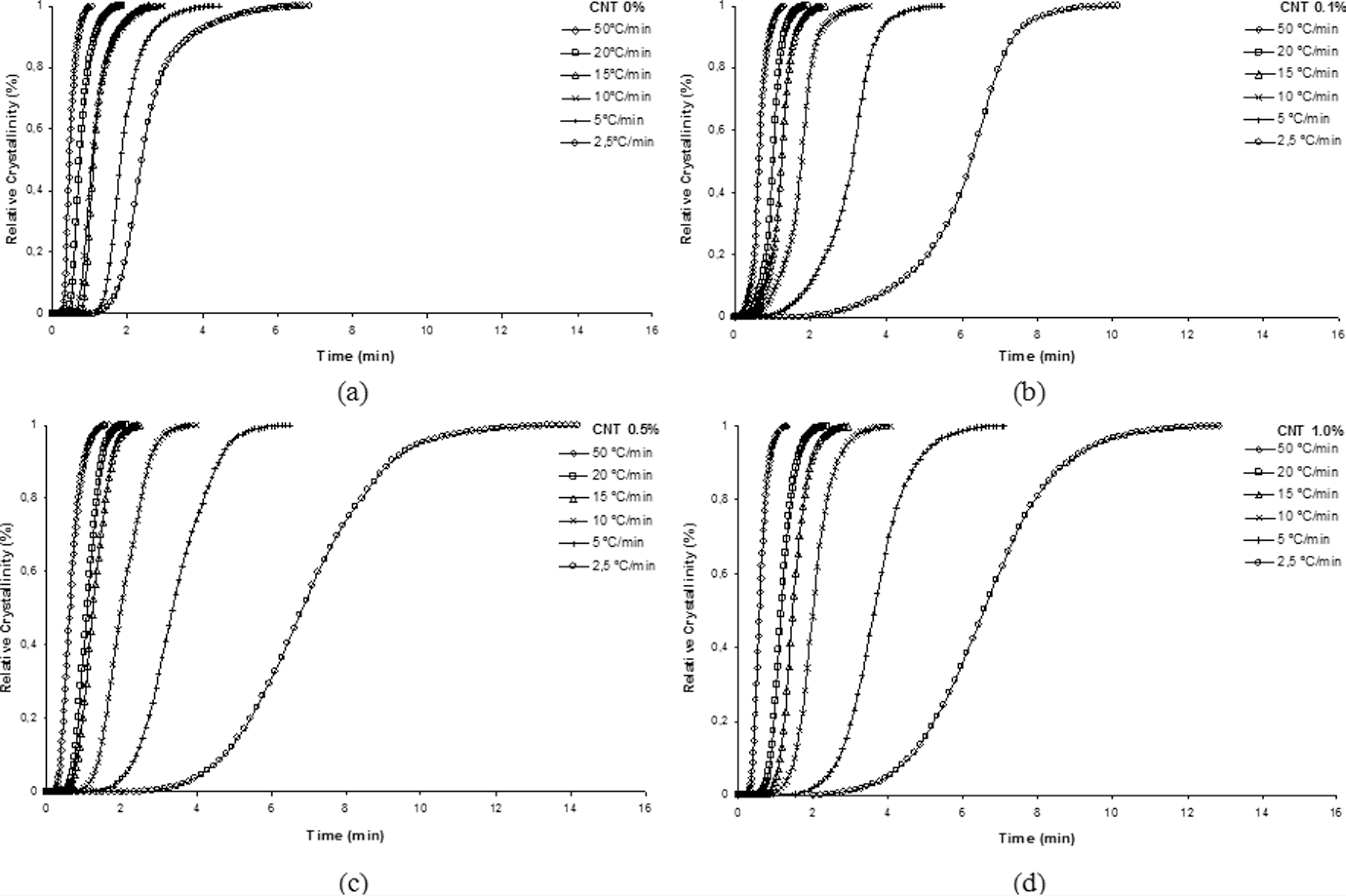
Crystallized fraction as function of time for the neat polyamide 6.6 and its nanostructured composites at different cooling rates: (a) 0%, (b) 0.1%, (c) 0.5% and (d) 1.0% carbon nanotube (CNT).
As can be seen from Figure 8, PA 6.6 and its nanostructured composites, when subjected to high cooling rates, crystallize in shorter times, so, the crystallization process becomes faster. This fact can be easily identified from the curves slope, where the increase in the slope means increasing the crystallization process rate. With increasing CNT concentration, it is observed that the crystallization process becomes slower, resulting in increased t 1/2 of nanostructured composites (Table 3). The ‘S’ curves become more defined with increasing CNT concentration for 1.0% wt. It may be noted that the increase in the CNTs amount in the polymeric matrix increases the nanostructured composite crystallization time. It takes almost 14 min (cooling rate of 2.5°C min−1) for the crystallization process to occur, for the nanostructured composite with 0.5 wt% CNT. This is the longest crystallization time found in the composites studied.
Figure 9 shows the curves from the crystallized fraction rate (dx/dt) measured as a time function. As can be seen, there is a similarity between these curves and the peak crystallization obtained by DSC. However, these curves represent the rate at which the crystallization is occurring, as a time function interval. In the crystallized fraction rates, due to the increased cooling rate, the peaks move to shorter times and its intensity increases, and then the process becomes faster. For the PA 6.6 nanostructured composites, the presence of the CNTs increases the time required for the liquid–solid physical transformation, making the process slower. When the peaks are evaluated, it is observed that their intensity decreases with increasing CNT concentration in the nanostructured material. These data are consistent with those found in Figure 6, such that, the CNT in this work reduced and made the crystallization of nanostructured composites difficult.
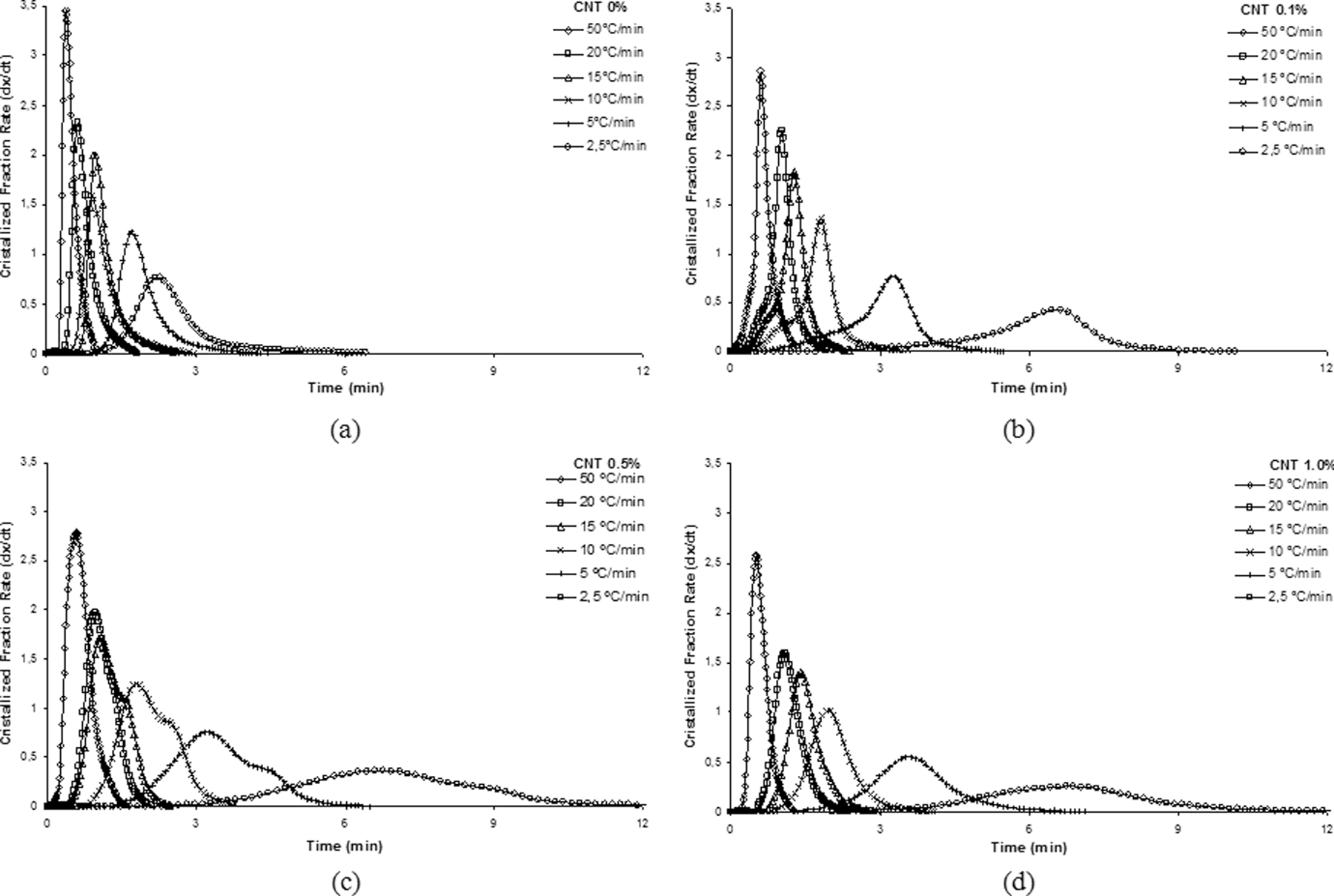
Crystallized fraction rate as function of time for polyamide 6.6 and its nanostructured composites at different cooling rates: (a) 0%, (b) 0.1%, (c) 0.5% and (d) 1.0% carbon nanotube (CNT).
Figure 10 shows the results from the curve
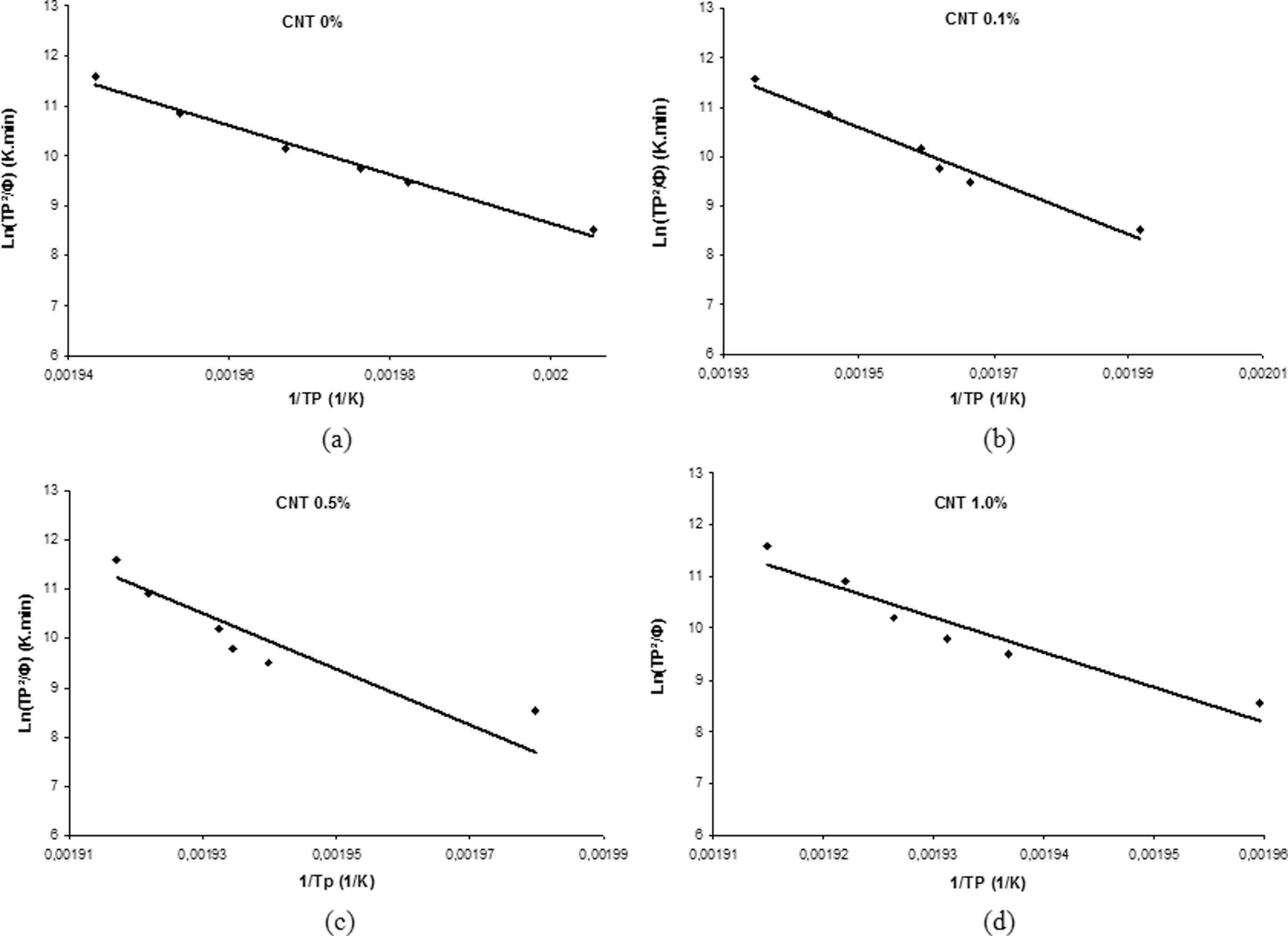
Kissinger plot for the neat polyamide 6.6 and its nanostructured composites: (a) 0%, (b) 0.1%, (c) 0.5% and (d) 1.0% carbon nanotube (CNT).
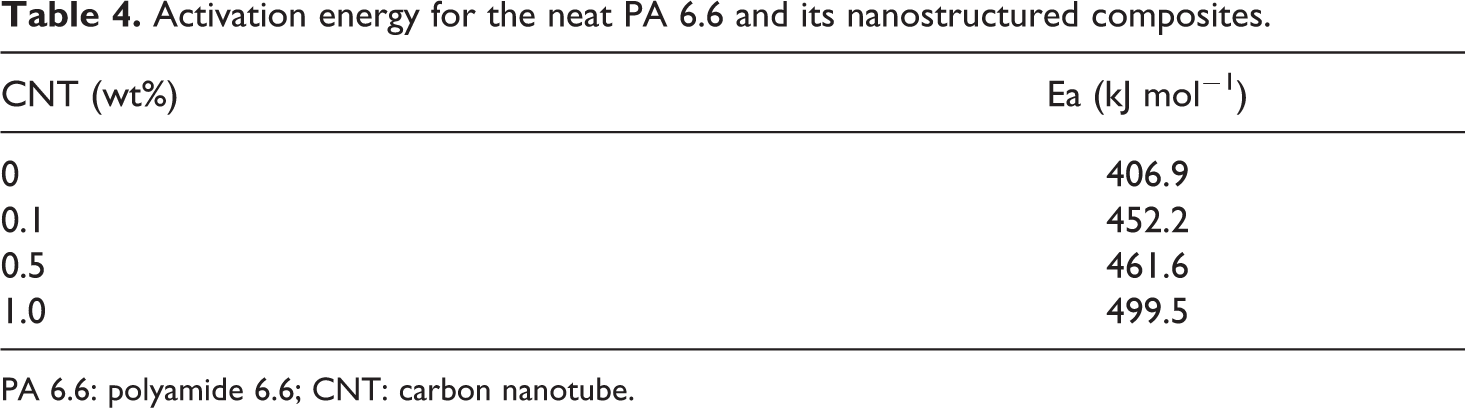
Activation energy for the neat PA 6.6 and its nanostructured composites.
PA 6.6: polyamide 6.6; CNT: carbon nanotube.
According to the literature 32 and from the kinetic point of view, the activation energy is related to the crystallization rate. The increase in the activation energy makes crystallization difficult, resulting in the drop in crystallization rate. This result should be a consequence of the CNT dual effect on crystallization, as reported by Li and coworkers. 34 On one hand, CNT can serve as heterogeneous nucleation points and encourage the growth of crystallization at the molecular interface of the nanostructured composites. On the other hand, CNTs can hinder the migration of macromolecular polymeric segments melting on its surface, which is the region where the crystal growth occurs. This occurs due to the weak interaction between CNT and the polymeric segments, leading to an increase in activation energy and, consequently, reducing the crystallization rate.
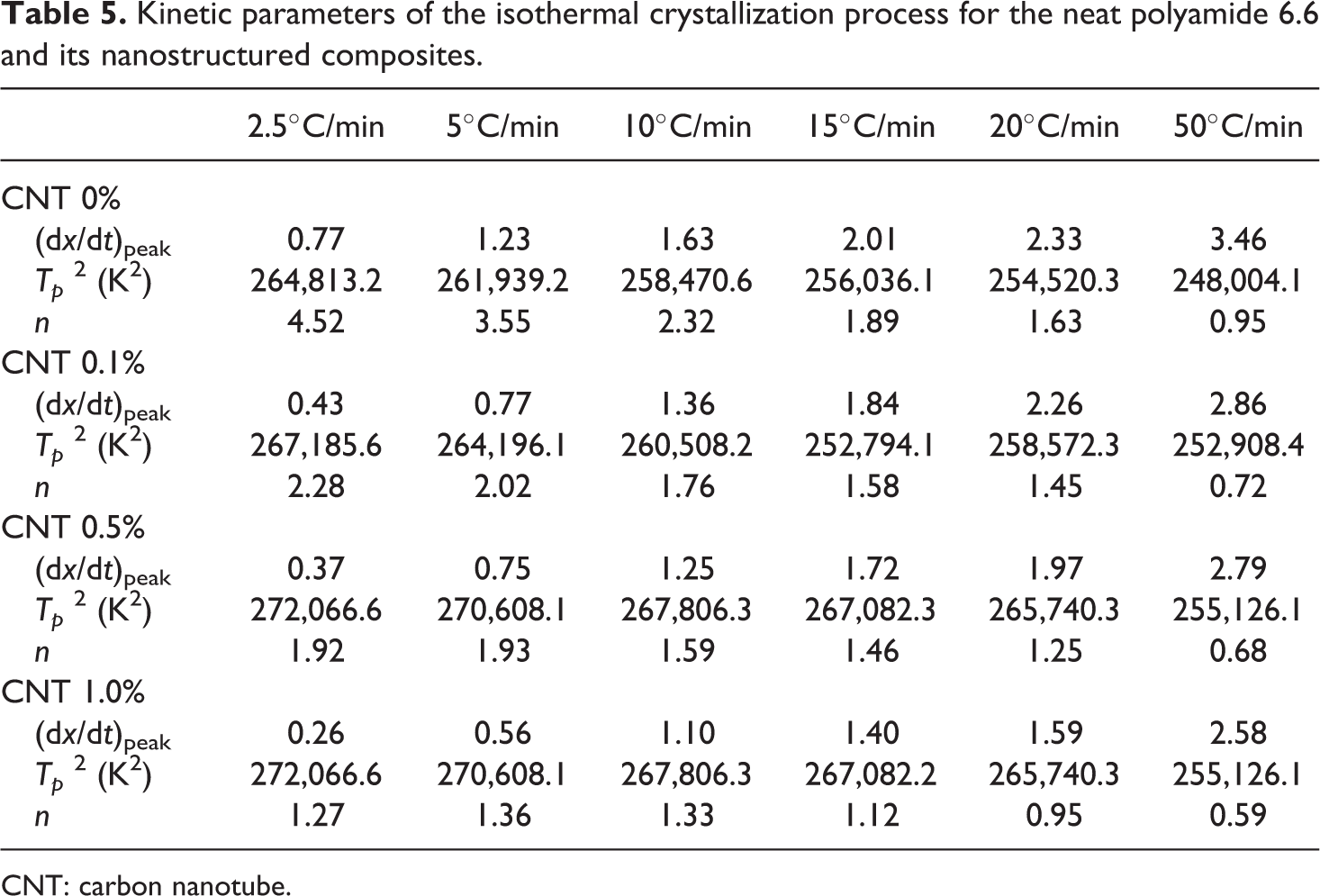
From equation (4) and the kinetic parameters obtained in this work, the Avrami exponent n for the neat PA 6.6 and its nanostructured composites at different cooling rates were determined, as shown in Table 5. The Avrami exponent, as shown, is an important parameter used in the crystallization kinetics study of the polymers to evaluate the main characteristics of the nucleation processes and crystal growth.
Kinetic parameters of the isothermal crystallization process for the neat polyamide 6.6 and its nanostructured composites.
CNT: carbon nanotube.
As can be seen, the n values show great variation (values less than 1 and higher than 4) for neat PA 6.6 when it was evaluated at different cooling rates, indicating the cooling rate variation leads to different types of nucleation mechanism and of geometries of crystals. This can be explained by the fact that nucleation can occur in two ways: thermal and athermal. Bernal et al. 28 report that the nucleation athermal occurs at a specific time and thermal nucleation occurs on a time scale starting at t = 0. The n value may vary from values less than 1 to higher than 4 but is independent of temperature.
However, the addition of CNTs in the polymeric matrix allows the beginning of nucleation at temperatures close to the melting temperature, or even inhibit the normal growth of the crystal, due to the short distance between the centers of nucleation, affecting the whole crystallization process. The addition of CNT in nanostructured composites provokes a reduction in the Avrami’s exponent values by changing the geometry of the crystals. 34 Thus, it can be concluded that both the cooling rate and the addition of CNTs in nanostructured composites affect the crystallization kinetics of the composites. For the same cooling rate, the CNT concentration in nanostructured composites reduces the Avrami exponent and consequently modifies the crystallization kinetics.
Conclusion
The PA 6.6 crystallization kinetic is influenced by the CNT addition. The presence of CNT in the polymeric matrix reduces the crystallization rate and the Avrami exponent, modifying the formation and growth of crystals in nanostructured composites. This effect is attributed to the formation of a greater number of crystallization nuclei.
From the crystallization kinetic study, under dynamic conditions of nanostructured composites concluded that both the rate of cooling and the addition of CNTs affect the crystallization kinetics of the system. For the same cooling rate, the concentration of CNTs in nanostructured composites reduces the Avrami exponent and consequently its crystallization kinetics. The crystallization time also remains virtually unchanged for the 1.0 wt% concentration, suggesting that the 0.5 wt% concentration is the limit for the variation in the crystallization time of the composite nanostructured.
The crystallization kinetic behavior under isothermal conditions showed the presence of two melting peaks called Tm1 and Tm2 . The addition of CNT in the polymer changed the format and intensity of the first melting peak (Tm1), and the addition of larger quantities of CNTs resulted in the extinction of this peak.
The deformed S-shaped curve format seen in the graph of the crystallization with the isothermal crystalline melt time indicates that the primary stage of crystallization is very fast, becoming slower with increasing isothermal temperature. This same effect is observed on the polymeric matrix with increase in CNT concentration (proved by reducing the slope of the crystallized fraction).
Footnotes
Funding
This research received the financial support from FAPESP (under grants 05/54358-7 and 08/00171-1), CAPES (0023/2008) and CNPq under grants 306053/2006-3 and 151154/2009-0.