




Abstract
This paper presents the results of a current study on the mechanical properties of a polypropylene matrix resin, enhanced using nanoclay filler with a special silane treatment. The study was centred on the effect of adding nanoclay and of water immersion on static and fatigue behaviour. Specimens filled up to 3% in weight were produced by an injection moulding process. The filler improved significantly bending quasi static and dynamic stiffness, and also marginally the bending strength. Surprisingly, the immersion in water for 40 days increases the bending stiffness and the bending strength. The addition of 3% w/w nanoclay promoted a negative effect in Gc. All material configurations exhibited a faster and intense stress release from the first cycles of fatigue. The 3% nano-enhanced composites exhibited higher fatigue strength than unfilled materials.
Introduction
Nanoclays are chemically modified clays which allow tiny nano level particles to disperse throughout a polymer matrix to give remarkable improvements in mechanical and physical properties even at low loading levels e.g. 1-6% w/w. 1 –6
Unfortunately, dispersion is not easily achieved and the benefits claimed in the literature are, disappointingly, not often realized. It is reported in literature that the key to successful reinforcement with nanoclays is to ensure they completely exfoliate. For this purpose special nanoclay treatments were developed which when used in gelcoats radically out-performed commercially available systems in terms of their blister resistance, hardness, stiffness, strength, toughness and fatigue life. Studies by Yoshida et al 7 describe the effectiveness of a silane coupling agent at the interface between silica particles and an epoxy resin. They found that coupling agents have the effect of reducing the degradation of mechanical properties and the adhesiveness of the interface between the resin and silica particle and was satisfactory even after water absorption due to the deformation of chemical bonds.
Recently, some researchers have explored new ways to improve composite performance, and particularly interlaminar shear strength, using nanoclays 8 –15 to reinforce the matrices. Also, progress has been made developing continuous fiber composites in which the matrix is a nanocomposite, being in many cases an epoxy–clay nanocomposite 8 –12 and in some other cases enhanced polyamide 6. 13 –15
As mentioned before, the performance of nano-enhanced composites increases with the better distribution of the clay in the polymer. For this reason it is not usual to combine polypropylene (PP) with nanoparticles, became of low dispersion. Normally PP exhibits low compatibility during mixing leading to poor distribution, but new materials and techniques have been developed to improve exfoliation.
This paper presents the results of a current study of the mechanical properties of a polypropylene binder resin enhanced using modified commercially available nanoclay reinforcement. The study was centred on the potential benefits obtained (by the addition of nanoclays) on the stiffness, static and fatigue strength and water absorption resistance. Elastic modulus E1 was obtained by dynamic mechanical analysis to compare the tendency observed with quasi static tests. Composites sheets were produced by injection moulding process with up to 3% w/w of nanoclay.
Materials processing and testing
Five material formulations were manufactured as summarized in Table 1. Specimens nominally with 60×10×4 mm3 were produced by an injection moulding process. Pure Borealis experimental PP resin, LK-PP-C commercially nanoclay and pure liquid paraffin (Boots Brand) were used in the present study. Liquid paraffin was added to PP powder along with up to 3% w/w of nanoclays and then stir mixed before injection moulding. Liquid paraffin was used here as a simple aid to mixing, dispersion and compatibilization during multistage process of melting, shearing and mixing prior to injection into the sample mould. The mixing required a high shear technique to obtain maximum dispersion prior to further particle distribution as part of the moulding process. The injection moulding was done using a single screw MCP machine model MTT 12/90 HSP, at 200 rpm and using a pressure of 750 bars. The injection time was 8 sec and the cooling time 99 sec. The temperature at screw was 210°C.
Composition of different series (w/w %).
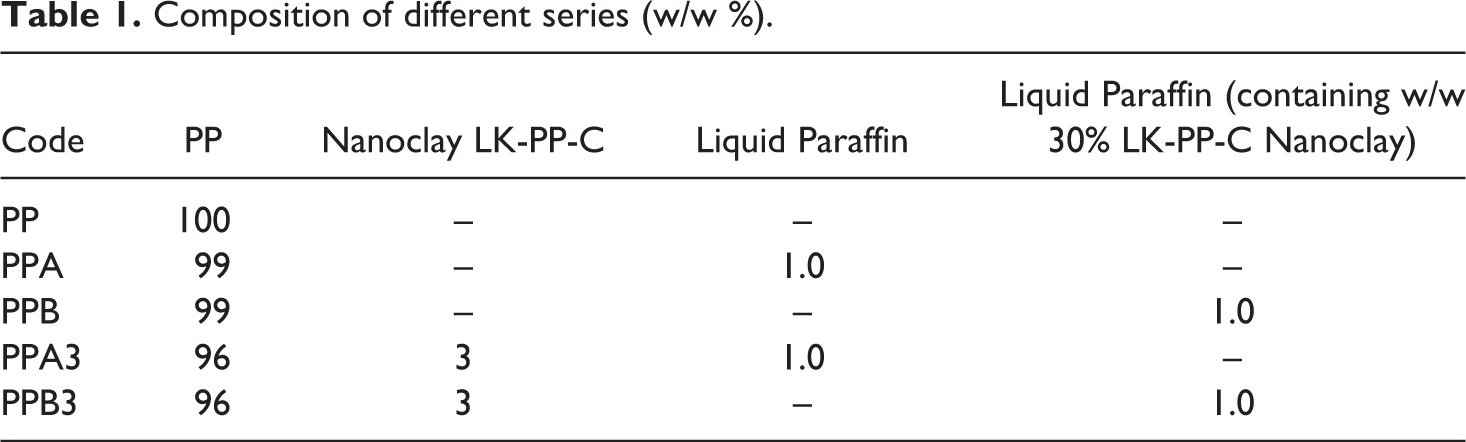
The particles size was measured by granulemetric laser scattering analysis using a Malvern Mastersizer 2000 equipment. The average clay size was 9.5 μm.
Fracture surfaces of the materials were observed by scanning electron microscopy (SEM) in order to obtain detailed information about the clays dispersion, size and adhesion. Figure 1 presents some of these pictures showing that the manufacture procedure is able to get a good dispersion and no significant agglomeration. Taking in mind to obtain more detailed information about the degree of exfoliation it was performed a X-ray diffraction (XRD) analysis on a Seifert 3000 XPS generator with Cu radiation. Figure 2 shows the XRD patterns of the nanoclay, PP and PPB3 composite varying 2θ from 1.5 to 10.5 degrees. PPB3 composite does not show any prominent peaks of nanoclay, neither remnant shoulders which suggest that good exfoliation occurred.
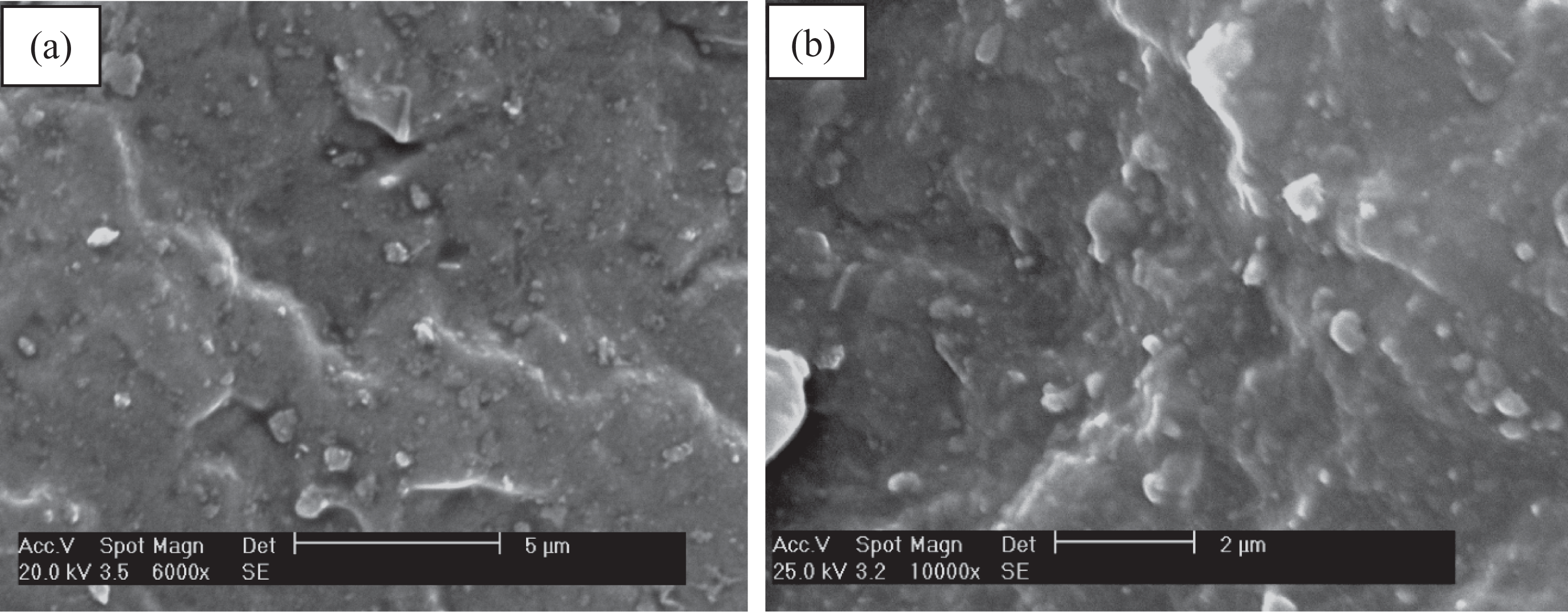
SEM observations of PPA3 specimens.
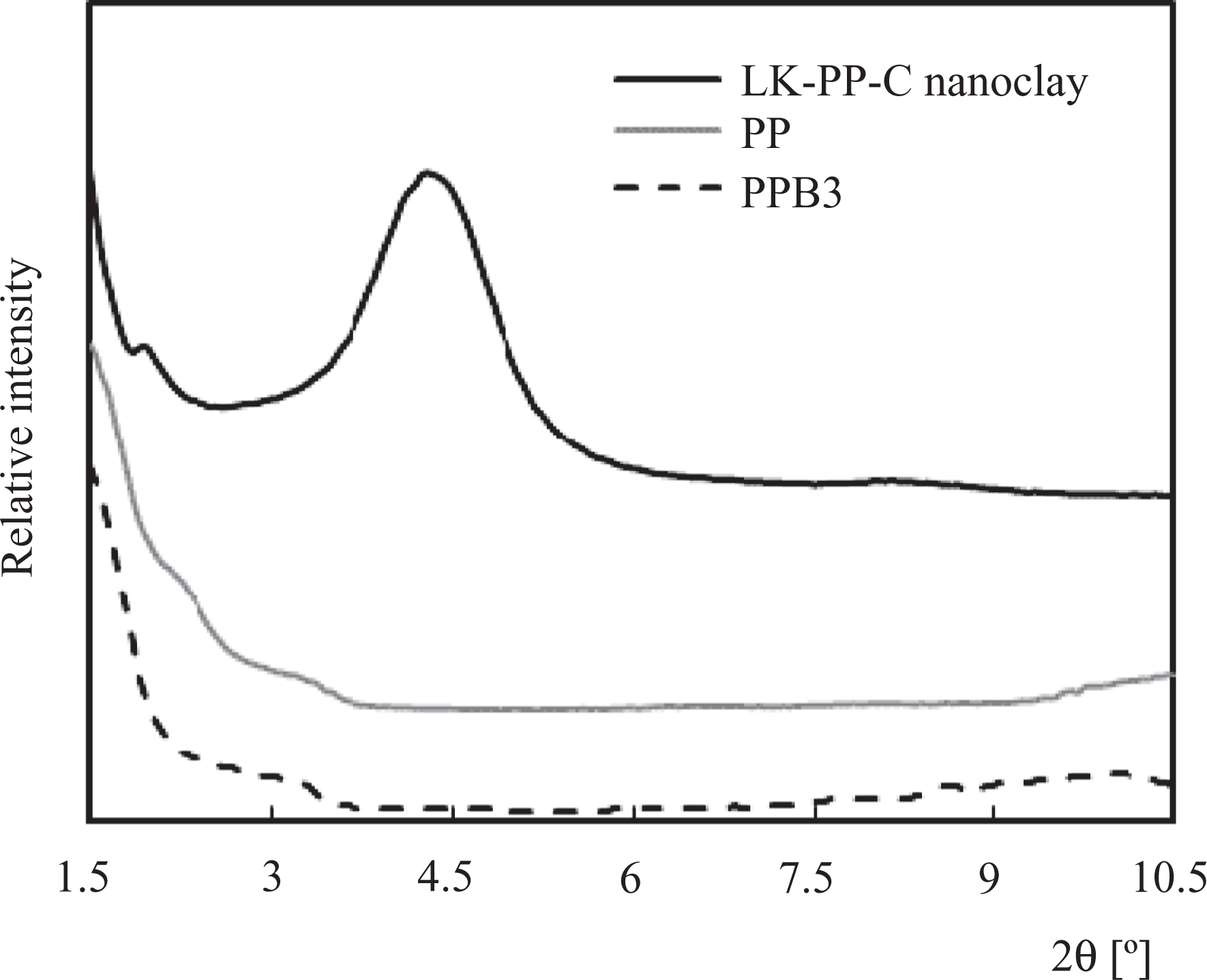
XRD diagrams.
The static bending tests and strain energy release rate tests were performed in three-point bend loading with a span of 40 mm, using a Shimadzu AG-10 universal testing machine equipped with a 5kN load cell and TRAPEZIUM software at a displacement rate of 1 mm/min. For the fracture tests the specimens were notched machined and pre-cracked by using a razor blade creating a crack tip to a 5 mm depth at mid span. The crack length was measured after the test using a microscope mounted on a X-Y sliding base. The crack length was measured at 3 points along the crack front, two border and centre points. An average value of pre-crack was used as the crack length.
Fatigue tests were performed in three points bending (3 PB) using an imposed displacement electromechanical machine at 10 Hz frequency and initial load ratio R = 0.1. All tests were carried out at room temperature.
Bending strength was calculated as the maximum stress at middle span section obtained using peak load of the load versus displacement curves. The stiffness modulus was calculated by the linear elastic bending beams theory relationship
The stiffness modulus was obtained by linear regression of the load-displacement curves considering several loading segments ranged from load zero and different defined displacement values. Taking in account the non-linearity of load-displacement curves the correlation coefficient of linear regression decreases when the segment size increases. The value of the stiffness considered in this work was that corresponding to a correlation coefficient of 0.998%.
Dynamic elastic modulus E1 was obtained by a dynamic mechanical analysis (DMA) method, widely used to determine relative stiffness and damping characteristics of polymeric and composite materials. 16,17 The 45×4×4 mm3 specimens were enclosed in a thermal chamber. Sinusoidal oscillatory three point bending (3 PB) load was applied to the specimen in a programmed temperature range, which generated a sinusoidal strain. Frequency, load amplitude, and a temperature range, appropriate for the tested material, were inputted. The viscous load lost in each oscillation was externally compensated every time. By measuring both the amplitude of the deformation at the peak of the sine wave and the lag between the stress and strain sine waves, quantities like the elastic and loss modules and the damping can be calculated. The tests were carried out in a Triton Technology TRITEC 2000 machine.
The strain energy release rate tests were carried out according to ASTM D 5045-96 standard. 18
Water absorption was obtained using the following procedure. The samples were placed in an oven at 80°C for 2 hours, then cooled and weighed in order to obtain the dry weight (DW). Afterwards, the samples were immersed in water and periodically weighted to obtain the current wet weight (CWW). The water absorption in weight percentage (W%) was calculated from equation (2)
Figure 3 shows the water absorption curves for three material configurations. All these configurations show very small water absorption up to 650 hours. However, for the paraffin additive containing materials (PPB) and the nanoclay filled configuration (PPB3) lower water absorption was obtained with a tendency for quickly stabilization.
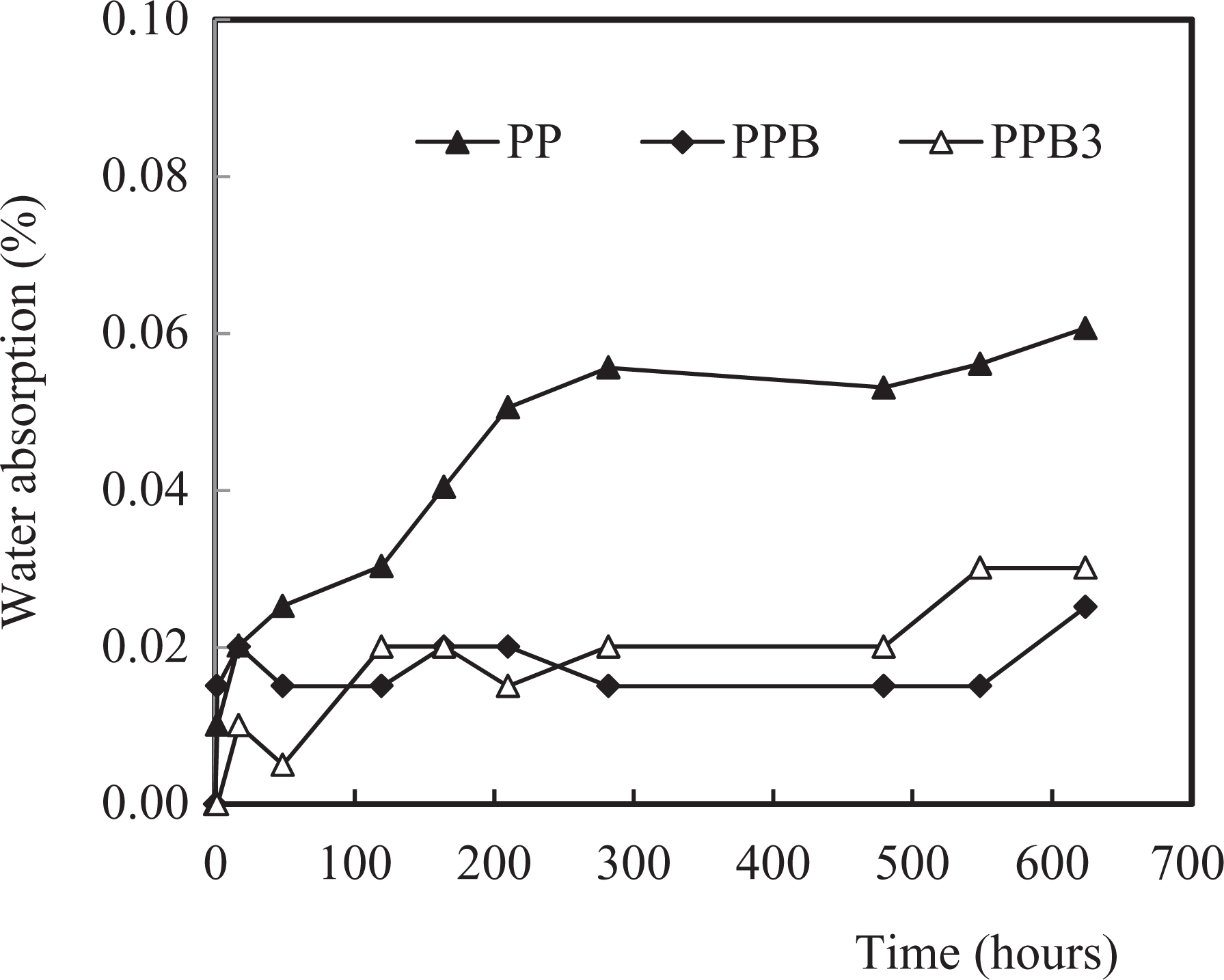
Water absorption curves.
Results and discussion
Bending tests
Figure 4 shows typical bending stress versus transversal displacement for three material compositions. The three curves are closed, pointing to a small influence of the filler and additive on stiffness and maximum stress, in spite of a tendency towards an improvement in both properties by nanoclay addition. All compositions exhibit a nonlinear behavior even for low stress levels with high plasticity.
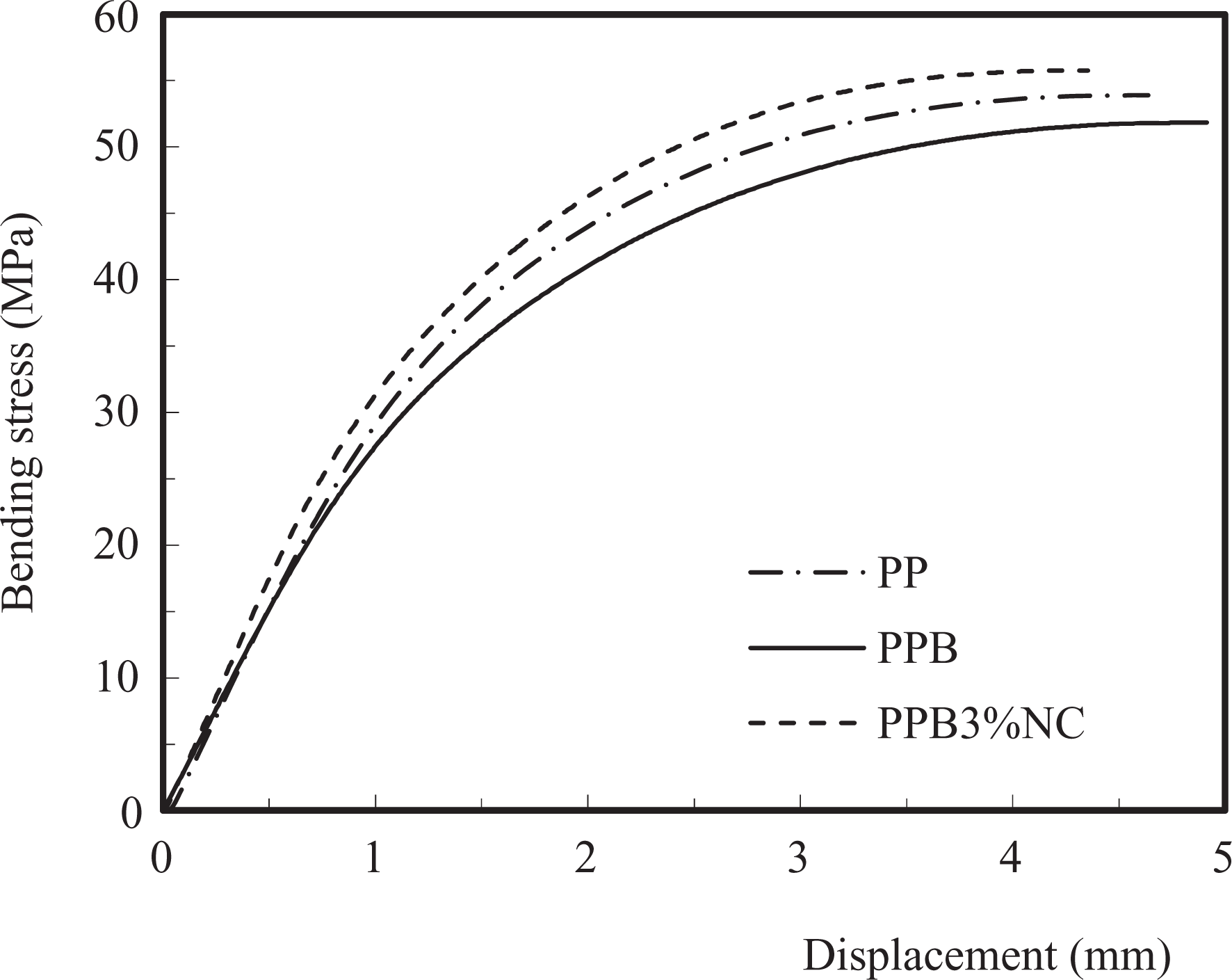
Comparison of stress-displacement curves.
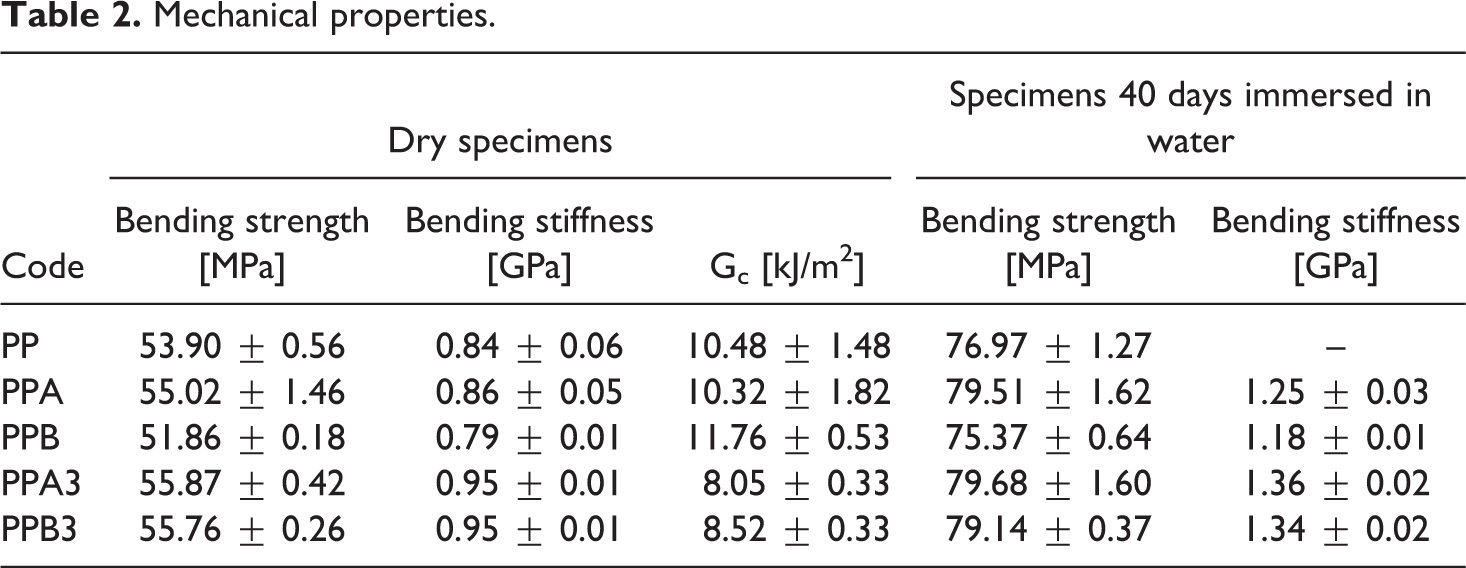
Tables 2 indicates the average values of the bending strength and associated standard deviation obtained for dry specimens and specimens immersed for 40 days in water at 20°C. Materials filled with nanoclays exhibit only a slight tendency towards increased bending strength. However, the immersion in water caused a beneficial effect on bending strength around 40%. Improvement on the stiffness and the strength were also obtained by Sobrinho et al, 19 in a vinyl ester resin system, that initially exhibited ductile behavior, became transitory brittle after 16 days of hygrothermal ageing at 60°C due to an increase crosslinking. This agrees also with the results obtained in this work for bending stiffness shown in Figure 5. However, crosslink cannot be the responsible mechanism on this case. In order to quantify the hydrophilic degree of the nanoclay the contact angle was measured using a DataPhysics OCA -15 plus goniometer. It was obtained a contact angle of 142±18° indicating to highly hydrophobic surfaces, which can justify the low water uptake. Although it was not possible to identify the precise mechanism involved, it is unequivocal that the immersion in water causes the embrittlement of the material which cannot be only a consequence of the hydrophobic behavior of the clays. This behavior is clear in Figure 6, which shows as examples two curves load - displacement in three point bending (3 PB) for PPB3. It is evident that after immersion in water the material has a stiffness and strength significantly increased, but has a much lower deformation at failure. It is accepted that holding at a temperature significantly above its Tg can lead to relaxation effects. However, in this case the samples were held at 20°C in the laboratory for more than 10 weeks prior to testing and in the case of the water conditioned samples they were immersed at the same temperature. Likewise it is accepted that injection moulding can lead to longitudinal increases in molecular orientation and as a consequence increases in crystallization and longitudinal stiffness and strength compared with unprocessed samples. However, in this case all samples were moulded under the same conditions and presumed to be similarly orientated and with the same crystalline content.
Mechanical properties.
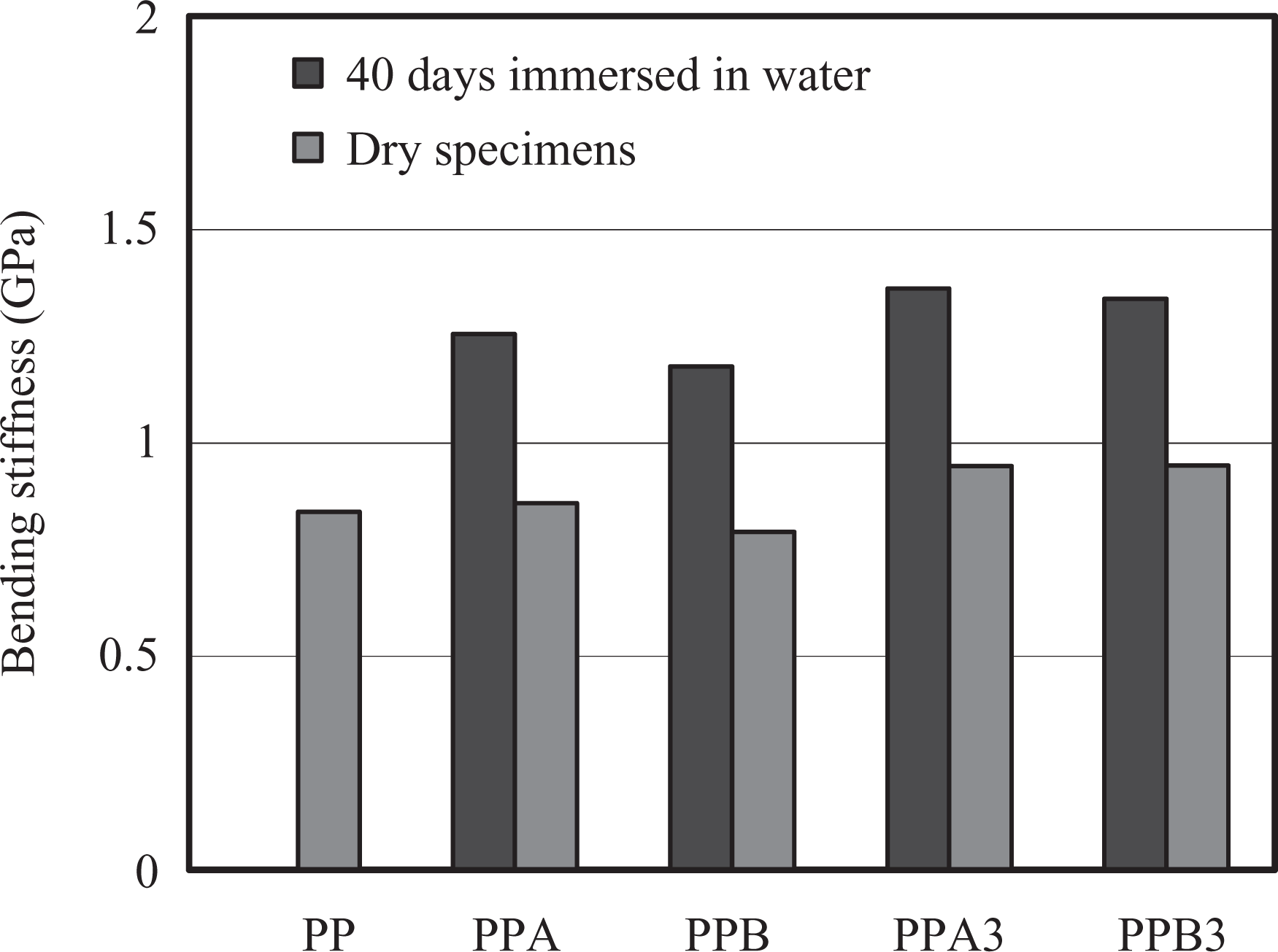
Average bending stiffness.
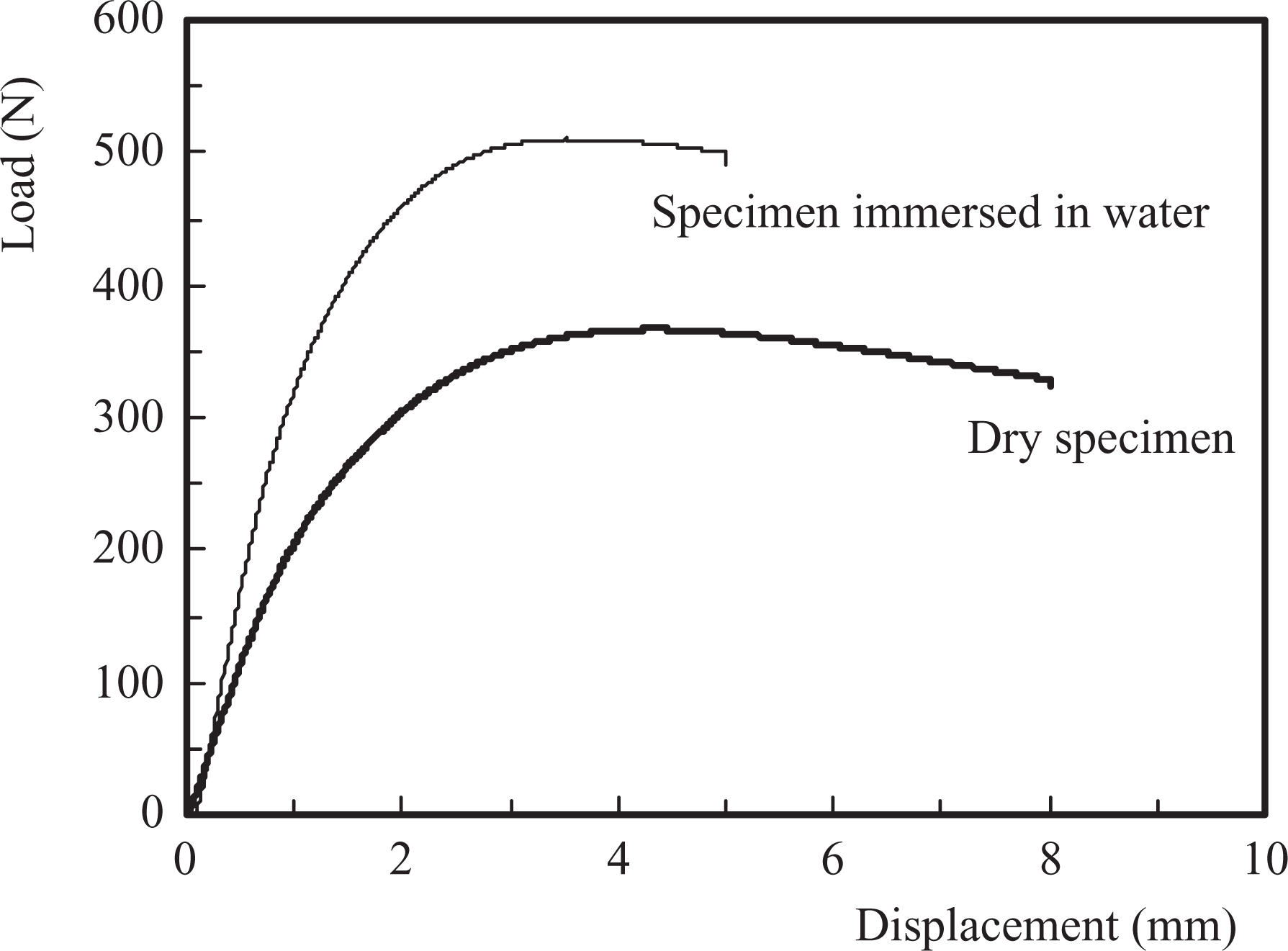
Typical 3 PB load-displacement curves.
Average values of the bending stiffness and associated standard deviation are also indicated in Tables 2. Materials filled by nanoclays exhibited bending stiffness of about 12% higher than for unfilled materials consequence of the good dispersion and no agglomeration observed in Figure 1. These improvements agree with that obtained by Ling Chen et al 20 for polypropylene filled with surface-modified montmorillonite using a twin-screw extruder. Immersion in water for 40 days increased the stiffness by at least 40% for all the filled materials.
DMA tests
Figure 7 shows DMA thermogram results for the five material compositions, tracking the dynamic elastic modulus against temperature from 20 to 80°C. This Figure presents the influence of the filler and paraffin. As was expected the materials exhibits much higher dynamic modulus than that obtained by low rate load quasi static tests, indicating polypropylene properties are highly dependent on loading rate. The results show a high decrease in elastic modulus when the temperature increases (within the tested range) as a consequence of the glass transition temperature of polypropylene (and filled composites) being below the minimum temperature tested (ambient temperature). Filling with nanoclays promotes a significant increase in dynamic elastic modulus, following the same trend, but much more pronounced than the quasi static results.
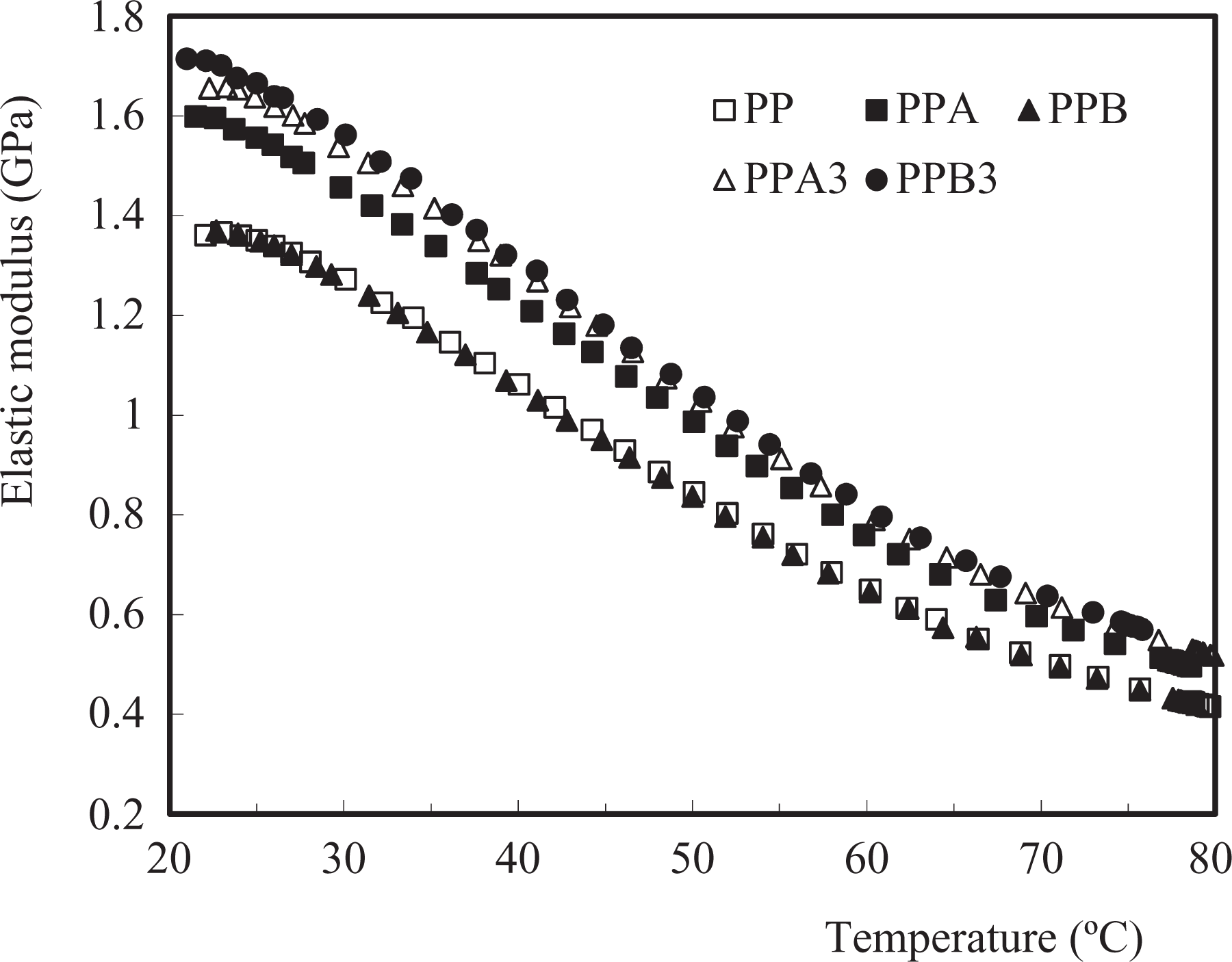
DMA thermograms.
Strain energy release rate results
The average values of the strain energy release obtained for dry specimens are also indicated in Tables 2. A negligible influence of paraffin addition was observed. However, the addition of 3% w/w of nanoclays promoted a negative effect that caused a decrease in Gc of about 20% in agreement with studies reported by Ling Chen et al 20 which conclude that occurs a fracture transition from ductile to brittle and consequent reducing of the J-integral fracture initiation toughness when the clay loading increases.
Fatigue tests
Bending fatigue tests at constant displacement amplitude were performed using the electromechanical, where: the displacement range is adjusted by an eccentric system, the median load is mechanically adjusted by a screw system and frequency is also controlled. The maximum load, minimum load were monitored at each cycle. Figures 8a) and b) show the evolution of the normalized stress amplitude versus the normalized number of cycles, where: ▵S is the current stress range, ▵Si is the initial stress range, N is the current number of cycles and Nref is the failure number of cycles corresponding to 50% decay in maximum stress.
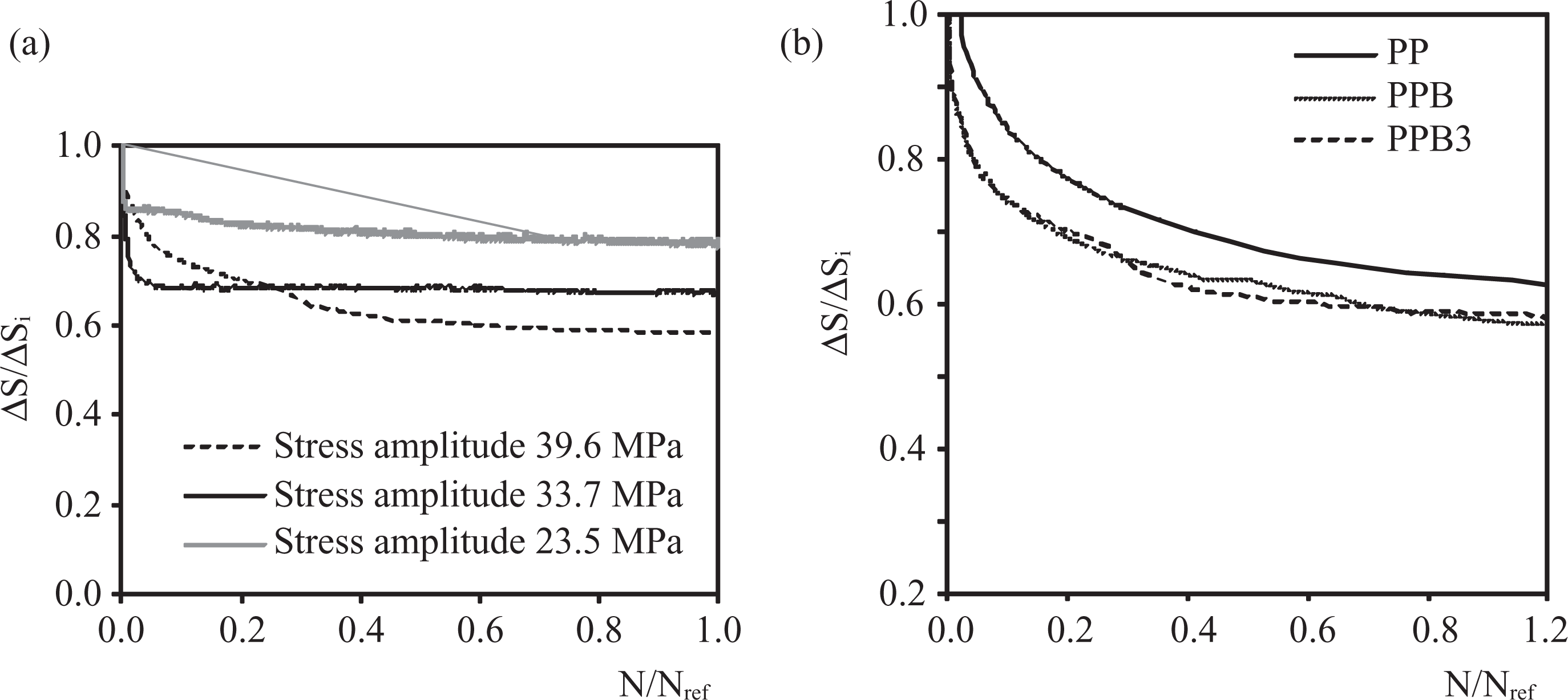
Normalized stress range versus the normalized number of cycles: a) PPB3 b) Tests with initial stress range 39.6 MPa.
Figure 8a) presents the influence of the stress level for PPB3 composite while Figure 8b) shows the influence of the material for 39.6 MPa initial stress range. Matrix resin, PP with paraffin and 3% w/w nanoclayed composite materials, exhibited high stress release caused by cyclic creep. The stress release is faster and more intense for higher initial stress levels and also for nanoclayed composites when compared with the matrix resin. The results obtained for the filled materials show significant decay on maximum stress, more than 30% for a low number of cycles even for relatively low stress level.
The performance of the materials in terms of fatigue strength is compared in Figure 9, where the initial stress amplitude is plotted against the number of cycles corresponding to 50% of decay on maximum stress. For this failure criterion the curves are reasonable fitted by a straight log - log line and the nanoclayed composite PPB3 exhibits fatigue strength about 10% higher than the paraffin system containing a small percentage of nanoclay (PPB material) and 20% higher than the PP matrix (control). Despite the dispersion, the fatigue results are very encouraging justifying further research to improve the manufacturing process of the composite and the handling of nanoclay.
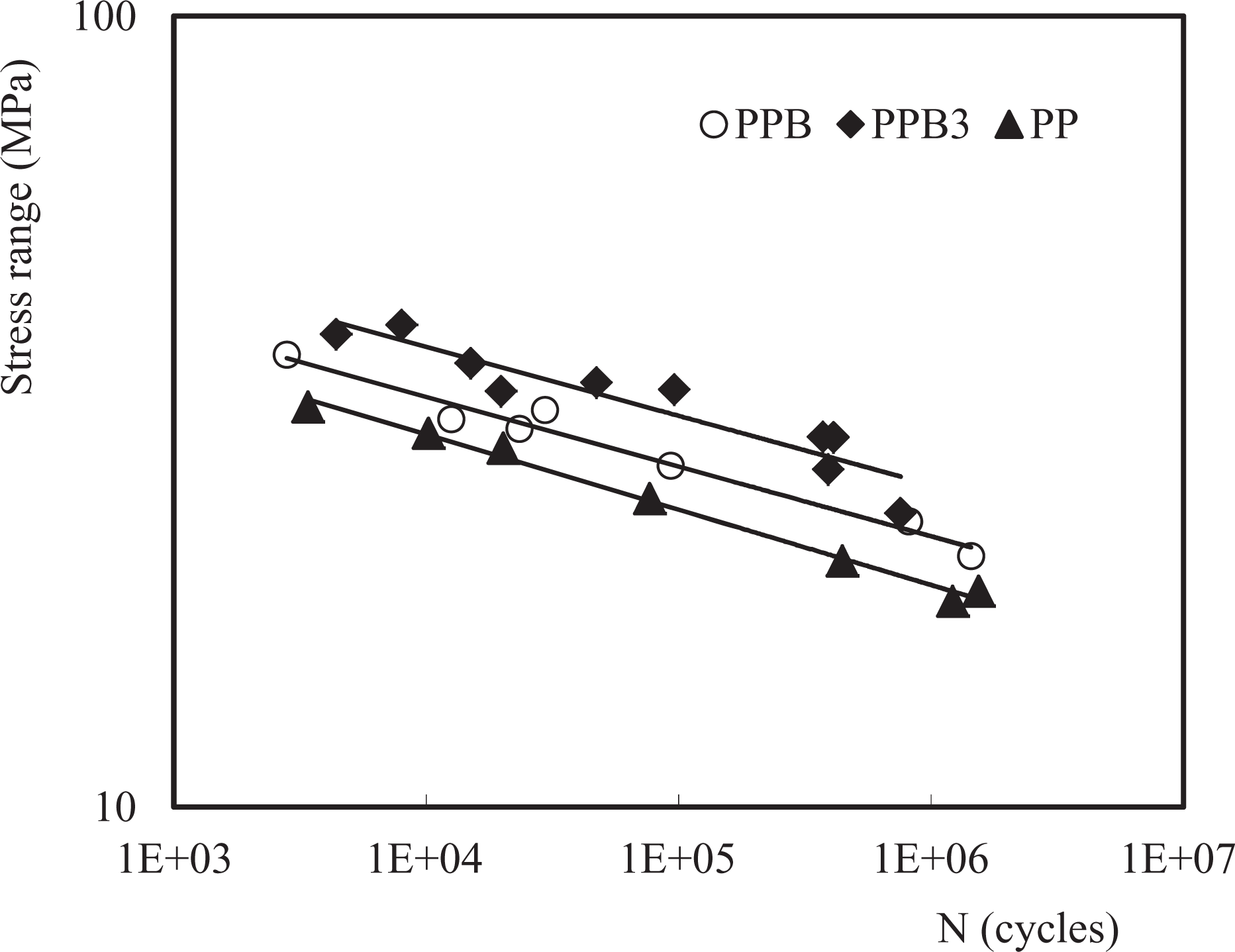
Stress amplitude versus number of cycles for 50% decay on maximum stress.
Conclusions
The effect of the nanoclay addition to a polypropylene matrix injection moulded composite on the stiffness, static and fatigue strength was studied and the main conclusions are: Nanoclayed composites exhibit bending quasi static stiffness about 12% higher than the unfilled materials and only a slight increase on bending strength. Also dynamic modulus was increased. Immersion in water for 40 days increases the stiffness and strength by more than 40% in filled materials. The addition of 3% w/w nanoclays promotes a negative effect that causes a decrease in Gc about 20%. At constant amplitude displacement fatigue tests matrix resin and nanoclay filled composites exhibited high stress release, particularly at earlier fatigue cycles. For a failure criterion corresponding to 50% on the decay of maximum stress, the nanoclayed composite PPB3 exhibits a fatigue strength, obtained in 3 PB displacement control, about 10% higher than PPB and 20% higher than the PP matrix control.
Footnotes
Acknowledgments
The authors thank Portuguese Foundation to Science and Technology for funding this work.
Funding
This work was funded by Portuguese Foundation to Science and Technology, Project n° PTDC/EME-PME/103622/2008 co-financed by FEDER, through the Operational Factors for Competitiveness Programme of the QREN with reference COMPETE: FCOMP-01-0124-FEDER-010249 and to Global Trading Group/CTA Ltd UK, for the supply of the prototype nanoclays.