




Abstract
Electrically conductive composites with very low percolation threshold values and high elastic modulus have been developed using single-screw extruder from short E-glass fiber (GF) reinforced carbon black (CB) filled high-density polyethylene (HDPE). The percolation threshold values of composites decreased with increased content of GF. The elastic modulus, tensile strength, and impact strength of composites were improved after addition of GF into CB/PE (PE, polyethylene). Three coupling agents, namely glycidyl methacrylate-grafted ethylene copolymer, maleic anhydride-grafted PE, and maleic anhydride-grafted polypropylene were used to study the effect on the conductivity and mechanical properties of GF/CB/PE composites. The tensile strength and modulus of composites increased after addition of coupling agent, meanwhile the conductivity of composites were decreased. The interface strength between GF and PE was improved after addition of coupling agent. The images of scanning electronic microscope showed that coupling agent improved the bonding between GF and matrix in an effective manner.
Keywords
Introduction
Conductive composite materials have wide applications in industries such as electromagnetic interference shielding and antistatic discharge capability in electronic devices, static electric coating, self-regulating heaters, and over-current and over-temperature protection devices.1–8 However, most thermoplastics are insulators, with an electrical resistivity above 10–18 Ω•m. One of the most convinced methods to reduce the resistivity of polymer is using high conductive filler to blend with polymer. The electrical conductivity of conductive filler/polymer can increase several orders, when the filler content exceeds a critical value. This critical filler concentration is known as percolation threshold. When particle concentration is higher than the percolation threshold, the filler particles are so close to each other which allow the transfer of electrons from one particle to the neighboring one.9–11 Further increasing conductive filler content in the composite slowly increases the conductivity of the composite. However, high filler content makes processing of the material difficult and worsens mechanical properties, especially the impact strength of composite. Many research studies focused on how to reduce the amount of filler required to produce adequate conductivity and thereby minimizing problems of reduction in mechanical performance.
In the early author’s work, the carbon black (CB) filled high-density polyethylene (HDPE), low-density polyethylene (PE), and linear low-density PE composite were manufactured using single-screw extruder. The percolation threshold value of these composites is about 2 wt% CB content.12–15 However, the elastic modulus of CB/HDPE is not high enough for many applications and the impact strength and elongation of HDPE were decreased after addition of CB content.16,17
Short glass fiber (GF) compounded with polymer can significantly increase the elastic modulus of neat polymer. The modulus of HDPE can increase 73.5% at the 10% short GF content. When continuous GF 18 or nature fiber 19 was added into CB/PE or CB/epoxy resin, the conductivity of composites increased with the fiber content.
This article provided a new way to increase the conductivity and elastic modulus of CB/HDPE composite using single-screw extruder by compounding chopped E-GF with CB/HDPE. The different coupling agents were used to modify the interface between GF and polymer matrix. The effects of GF content, structure of coupling agent, and microstructure of composite were studied.
Experimental
Raw materials
HDPE (HD3690) was purchased from Qenos Ltd Australia. E-GF was obtained from Owens Corning of length 6.6 mm. The CB (Printex XE 2, Degussa) is used as conductive filler with the surface area 600 m 2 /g and particle size 40–100 nm. The coupling agent glycidyl methacrylate (GMA) grafted ethylene copolymer (Igetabond BF-E, content of GMA was 12 wt%) was purchased form Sumitomo (Japan). Maleic anhydride-grafted PE (MAPE) was obtained from Dupond (MD100) and maleic anhydride-grafted polypropylene (MAPP) from Aldrich. The content of maleic anhydride function group in both MAPE and MAPP is 9 wt%.
Experimental and characterization
The CB-filled PE with and without GF composites were manufactured using a single-screw extruder (single-screw compounding line). The processing temperature was set at 175°C and the rotation speed of the screw at 180 rpm. The extruded string was cooled using water bath and pressed air, then chopped into small pellets, and dried at 70°C for 12 h.
The sample for conductivity test was made using hot press. About 10 g material, dried priorly at 70°C for 12 h, was put in a Teflon-coated round mold with a diameter of 100 mm and depth of 0.5 mm. The temperature was kept at 175°C for 10 min for CB/PE composites. After that, cooling water was let into the mold until temperature dropped below 60°C. A round film sample with thickness of 0.5 mm was obtained for the test of resistivity.
The samples for mechanical properties test were manufactured using injection molding method (Battenfeld type 800/315 CDC machine) at the melt temperature of 200°C and mold temperature of 50°C.
Characterization
The electrical surface resistivity of composites was measured according to the different resistivity levels. For high-resistant (<1 × 10 6 Ω/sq) composites, the surface resistivity was measured using the four-point method with a Keithley Electrometer (Model 6517 A), which was connected to a concentric (guarded ring) and fixture (Model 8009). If the resistance of the composite was lower than 1 × 10 6 Ω/sq, the two-probe technique was used. A pair of brass bars of length 20 mm was used as electrodes and the spar distance between two electrodes was 20 mm. The electrodes were pressed against the sample to insure better contact. The surface resistance was displayed on a digital multimeter.
Tensile properties of CB/GF/PE composites were evaluated using an Instron universal test machine 5569 according to ASTM D638-97, sample type III. The cross-head speed was 0.05 mm/min for tensile modulus and 5 mm/min for tensile strength. The mean value was obtained from five tested samples.
The impact strength of composites was evaluated using Izod impact method according to ASTM D256 with an instrumented impact tester (Radmana ITR2000). The samples were notched and tested at room temperature with impact speed of 3.3 m/s. The mean value was obtained from 10 tested samples.
The microstructures of the composites were analyzed using an scanning electron microscope (SEM; Leica 360FE) at a low voltage (2 kV) coated with gold. To keep the original structure, the disc samples used for measurement of conductivity were broken in liquid nitrogen. The samples used for the fracture surface analysis were obtained from impact test sample.
Results and discussion
Effect of GF content on the electrical conductivity
HDPE is an insulator with surface resistivities from 10
17
to 10
18
Ω/sq. CB has very fine structure with particles size 40–150 nm and electrical resistivity in the range 0.001–0.1 Ω m. Using CB to compound with PE, is a very effective method. The conductivity of CB/HDPE composite is a function of carbon content. When the content of CB was 1 wt%, the resistivity of CB/PE composite was about 2 × 10
15
Ω/sq. When 2 wt% CB was added into HDPE, the resistivity of composite dropped to 1.2 × 10
6
Ω/sq (Figure 1). On further addition of CB, the resistivity of CB/PE composite was affected only slightly, since the conductive network had already been formed. When chopped GF was added into the CB/HDPE composites, the resistivity of composite decreased sharply at low CB content. The conductivities of GF/CB/HDPE were 1.1 × 10
12
and 1.05 × 10
9
Ω/sq for the GF contents 5 wt% and 10 wt% at 1 wt% CB content, respectively. At the high CB content (>2 wt%), the resistivity of GF/CB/HDPE composites reached a stable level and there was no change with the loading of GF.
Conductivity of CB/PE with different GF contents.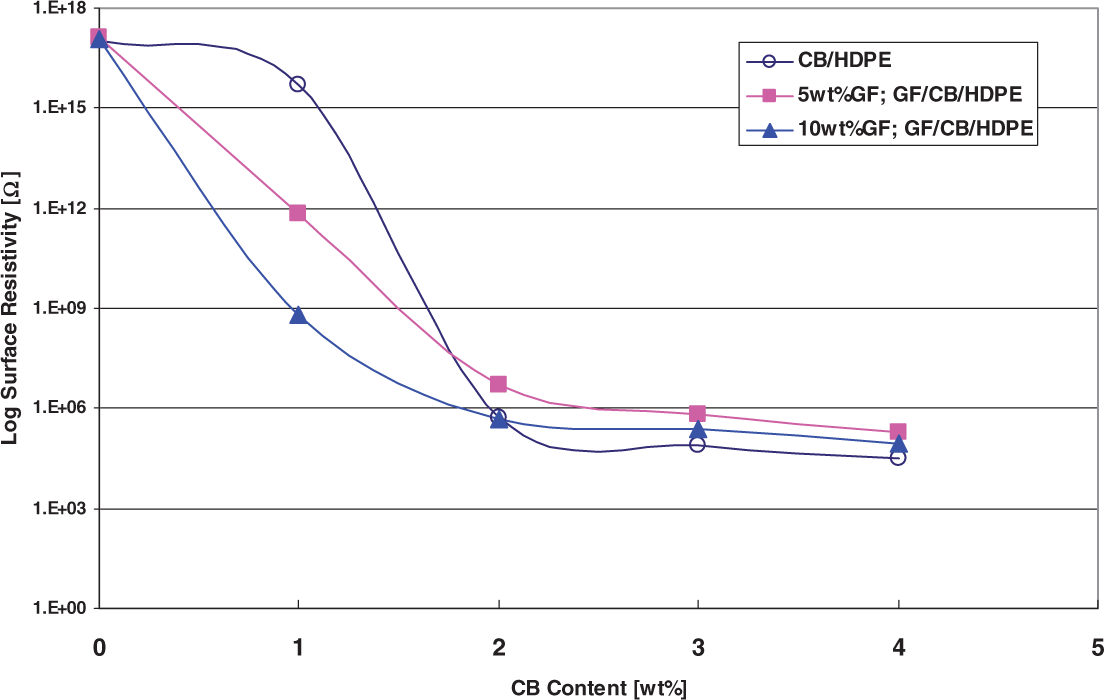
SEM image showed that the CB particles located mostly at the surface of CB particles (Figure 2(a)) due to the high affinity of CB with GF. At the high magnification, CB showed clear attachment on the surface of GF (Figure 2(b)). Since GF has much higher aspect ratio (length/diameter) than that of CB, the conductive networks are easily to be formed by overlapping the GF.
CB on the surface of GF on different magnifications.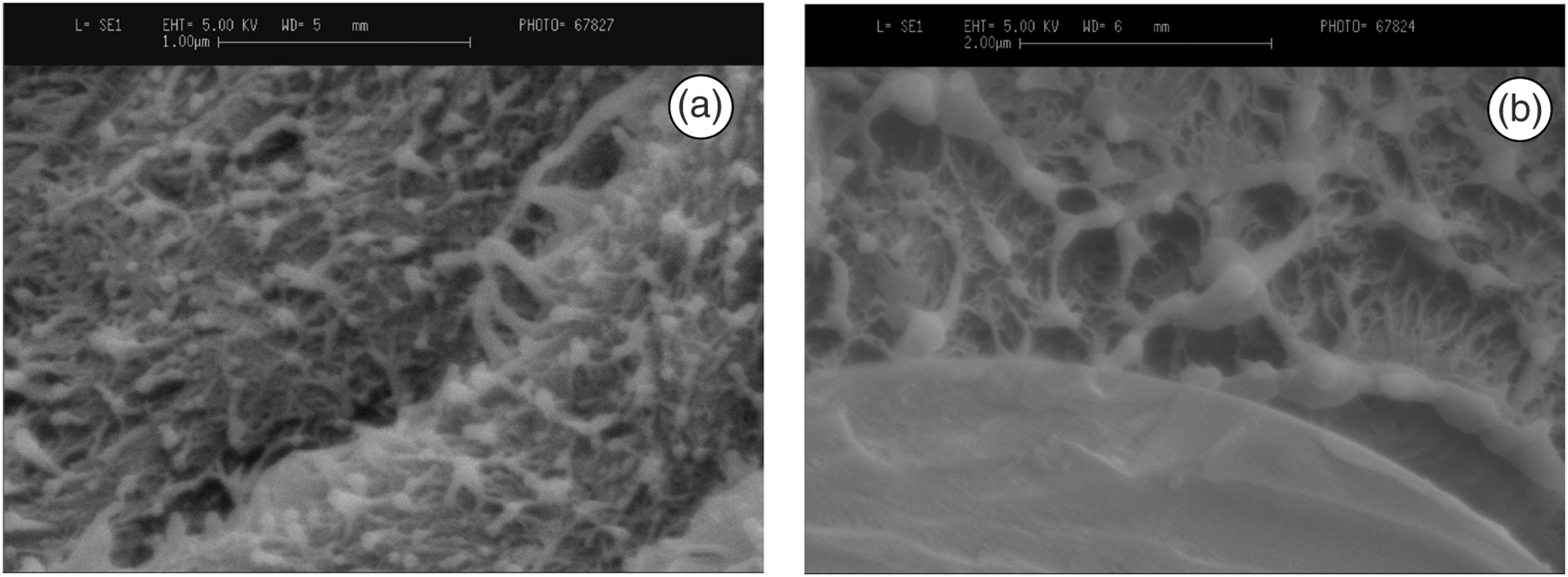
Mechanical properties of GF-reinforced CB/PE composite
Mechanical properties of CB/PE composites.
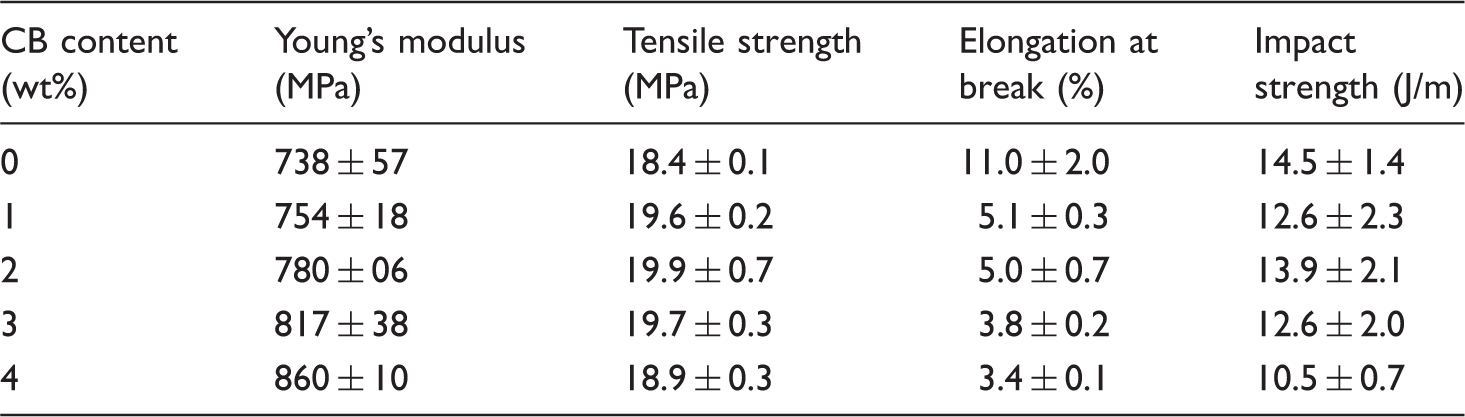
The elongation of PE composite decreased after addition of CB (Table 1), since the CB particles resist the reorientation and reduced the intermolecular force. Izod impact strength of material is determined by total absorbed energy divided by the thickness of the tested sample. The total energy absorption is the sum of initial crack energy and propagation crack energy. Addition of CB led to decrease in energy absorption in the crack propagation. As a result, the impact strength of PE decreased after addition of CB (Table 1), since the deformation of PE was limited by CB particles.
Effect of GF content on the mechanical properties of GF-reinforced CB/PE composites at the 2 wt% CB content without coupling agent.
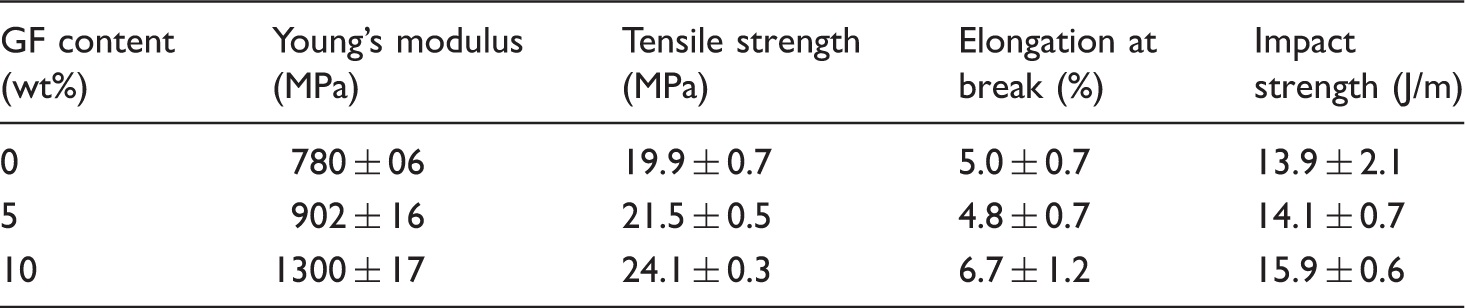
The tensile strength of GF/CB/HDPE composites clearly increased with the content of GF from 18.4 MPa to 21 and 25 MPa, when the GF contents were 0, 5, and 10 wt%, respectively. CB particles have strong affinity force with GF, which increases the friction force when the fibers were pulled out during the tensile test. The elongation of GF/CB/HDPE composite is almost same after the addition of GF.
The impact strength of GF/CB/HDPE increased with the content of GF, since the impact force was increased a lot to start the crack; the initial energy of initial crack is much higher than CB/PE without GF, since GF acted to resist, the crack fast propagation and the friction force between fiber and matrix increased the energy absorption during the fiber pull-out. The impact strength increased from 14 MPa for neat PE to 16 MPa for the CB 2 wt% and GF 10 wt% GF/CB/PE (Table 2).
Effect of different coupling agents on the electrical conductivity
The conductivity of GF/CB/PE with addition of coupling agents MAPE and MAPP led to increase in the resistivity of GF/CB/HDPE composite at the fiber content of 5 wt% (Figure 3(a)) and 10 wt% (Figure 3(b)). The increasing resistivity of GF/CB/PE after the addition of coupling agent can be ranked as MAPE > MAPP > GMA. Strong bonding between CB and coupling agent led to more dispersion of CB in matrix, which decreases the conductivity of composite. Similar results have been obtained in prior result of CB/PE and CB/MAPE.
14
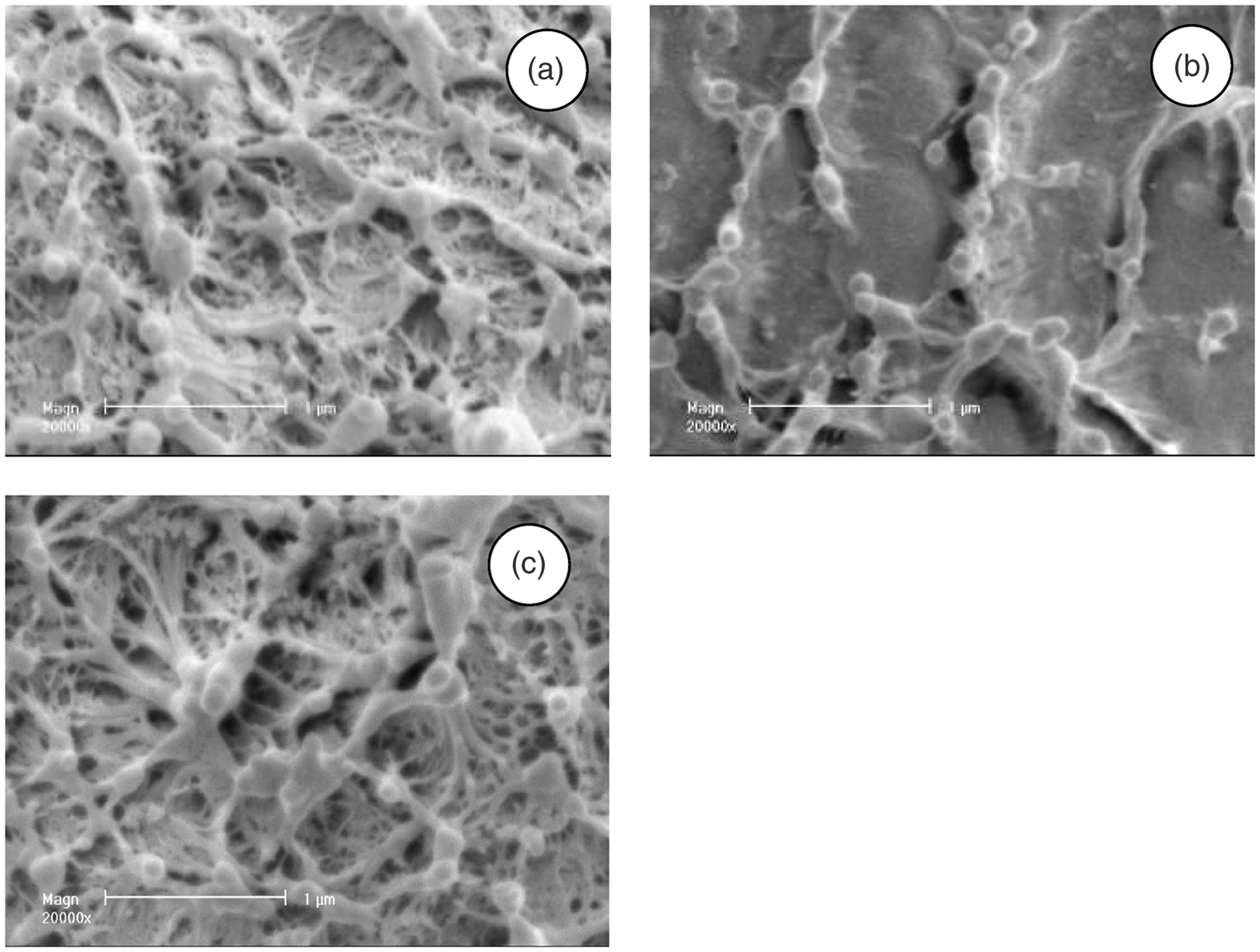
The SEM image showed the conductive paths of GF/CB/PE with different coupling agents (Figure 4). The morphology of composites containing GMA, MAPP, and MAPE at the 2 wt% CB content is observed. For the composite with coupling agent GMA, more consistent conducting network is observed (Figure 4(a)), while with MAPP (Figure 4(b)), more uniform distribution of CB particles is observed. In the case of MAPP used as coupling agent, more CB contents are required to build the conducting network. On the other hand, the image with MAPE (Figure 4(c)) demonstrates that the affinity of MAPE to CB caused the particles to stick together rather than form conducting chains. Some CB particles coated by polymer were also observed.
(a) Conductivity of GF/CB/PE with different CB contents at the: (a) 5 wt% GF and (b) 10 wt% GF. Morphology of CB in the GF/CB/PE with different coupling agents: (a) GMA (b) MAPP, and (c) MAPE.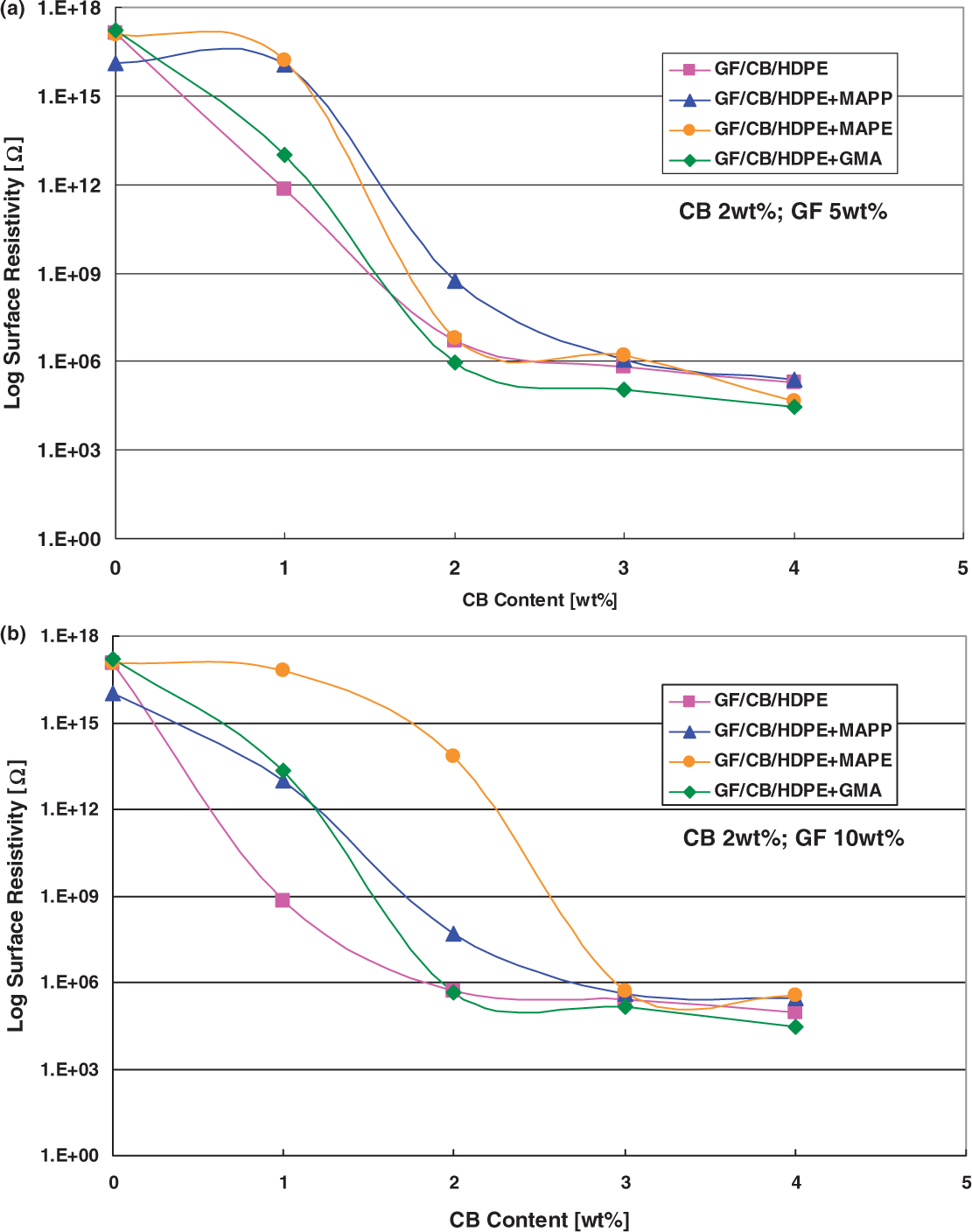
Mechanical properties of GF-reinforced CB/PE composite with different coupling agents
Interface bonding strength between reinforcing filler and matrix is a critical factor for the mechanical properties in the fiber-reinforced polymer composite. Since PE is a hydrophobic polymer and the GF a hydrophilic material, it is necessary to use a coupling agent to improve the bonding between fiber and matrix. Three coupling agents with 2 wt% loading have been used in this study, i.e., GMA-grafted ethylene copolymer, MAPE, and MAPP.
Effect of different coupling agents on the mechanical properties of GF/CB/PE at the content of 2 wt% CB with 5 and 10 wt% GF.
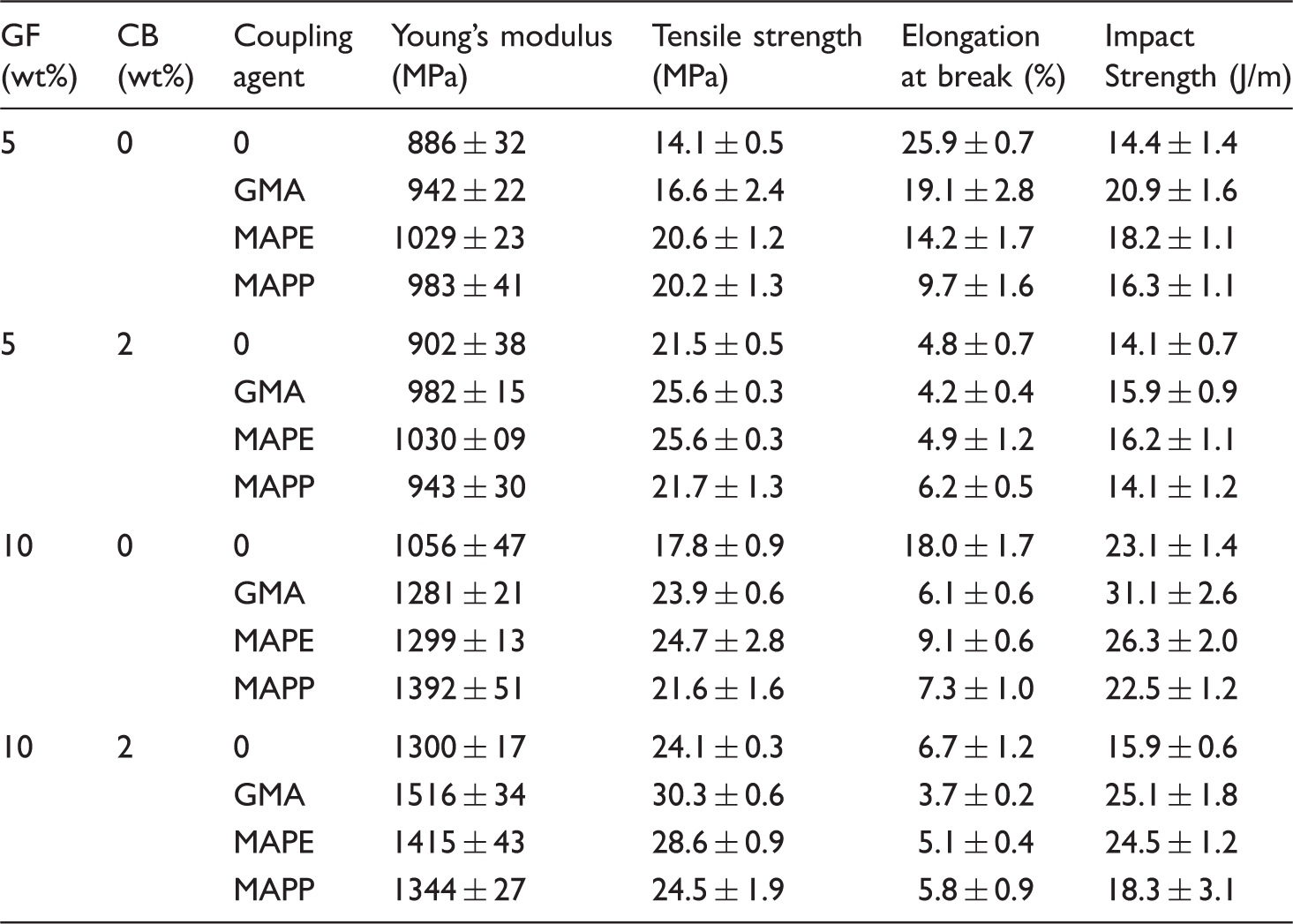
When 2 wt% CB was added into this composite (GF/PE), the tensile modulus of the composite with coupling agent has only a little increase compared with that of without coupling agent. The possible reason is that the coupling agent was consumed on the surface of CB/PE and the surface situation of GF/PE has less improvement (Table 3).
After addition of coupling agents MAPE, MAPP, and GMA, the tensile modulus of GF/PE at 10 wt% GF content increases 23%, 32%, and 21%, respectively (Table 3). Since high GF content requires more coupling agent, the improvement effect is better than 5 wt% GF composites. Addition of CB decreased the effects of the coupling agent.
At 2 wt% CB content, the tensile modulus of GF/CB > PE composites increased 9%, 3%, and 16.6% for MAPE, MAPP, and GMA. However, when CB was added up to 4 wt%, the tensile modulus of GF/PE composites decreased 7% and 5% for MAPE and MAPP and increased 8% for GMA.
The tensile strength of composites increased after addition of coupling agent (Table 3). The tensile strength of GF/PE composite increased 38.7%, 21.3%, and 34.2% for MAPE, MAPP, and GMA, respectively. When 2 wt% CB was compounded with GF/PE to make the conductive composite, the GMA showed better compatibilizing effect than MAPE and MAPP. After addition of 4 wt% CB, the tensile strength of GF/CB/PE increased 7.3%, 2.7%, and 16.6% for MAPE, MAPP, and GMA, respectively.
Fracture surface of GF with different coupling agents: (a) No, (b) GMA, (c) MAPP, and (d) MAPE.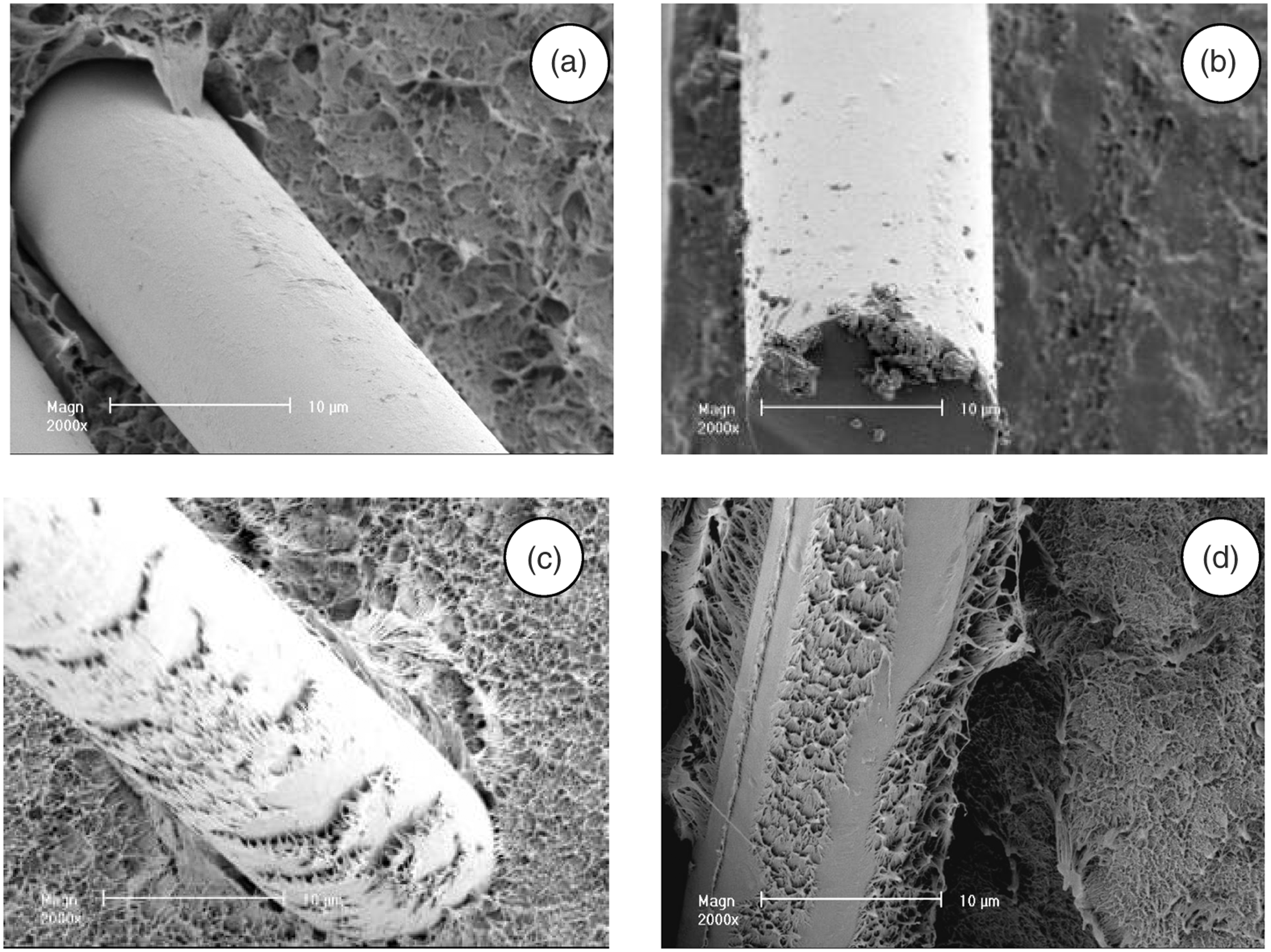
Unlike tensile modulus and strength, the elongation decreased with addition of coupling agent. For GF/PE composite, the composite with GMA showed the longest elongation followed by MAPE and MAPP. Addition of CB led to dramatic drop of elongation of the composite for both GF contents 10 wt%. The main reason of decreasing elongation was that CB limited the free movement of polymer matrix; hence, reduced the intermolecular bonding force.
Impact strength of fiber-reinforced composite depended on crack initial and crack propagation energy absorption. In the crack propagation stage, the crack either broke the fiber or pulled out the fiber. Increasing bonding strength by addition of coupling agent can increase the energy for pulling out the fiber from matrix. As a result, impact strength of GF/PE composites clearly improved after addition of coupling agent. The impact strength of GF/PE increased 26%, 45%, and 13%, while addition of MAPE, GMA, and MAPP, respectively (Table 2). After addition of 2 wt% CB, the impact strength of composite decreased. 14 The tendency of impact strength of 10 wt% GF to decrease with CB content was observed in the GF/CB/PE composite with coupling agents MAPP and GMA.
Impact strength of GF/PE increased with the content of GF. The impact strengths of GF/CB/PE composite at the 2 wt% CB content and 10 wt% GF content were 26.3, 31.1, and 22.5 J/m, respectively, for the coupling agents MAPE, GMA, and MAPP (Table 3).
The morphologies of fracture surface for GF/CB/PE with and without coupling agent were analyzed using SEM. The surface of GF without coupling agent was clean and smooth, which indicated that no bonding occurred between GF and matrix (Figure 5(a)). When GF/CB/PE was added with coupling agent MAPP, the surface of GF had better adhesion to the matrix (Figure 5(b)). However, the bonding between GF and matrix was still weak. The most possible reason is that MAPP is not compatible with HDPE. A stronger bonding can be observed in Figure 5(c) and (d), where GMA and MAPE are used, respectively, as coupling agents. The surface of the GF showed wet with polymer matrix. This strong bonding strength led to high tensile modulus, tensile strength, and impact strength of composites.
Conductivity of GF/CB/PE with coupling loading
The resistance of GF/CB/PE composites increased with the content of MAPE, since the MAPE has strong bonding with both GF and CB, which made the CB difficult to join together (Figure 6). For MAPP and GMA, there was no big effect on the conductivity of composite when the content of coupling agent increased. It is possible that MAPP and GMA bind less strongly with CB.
Conductivity of GF/CB/PE with different contents of coupling agent.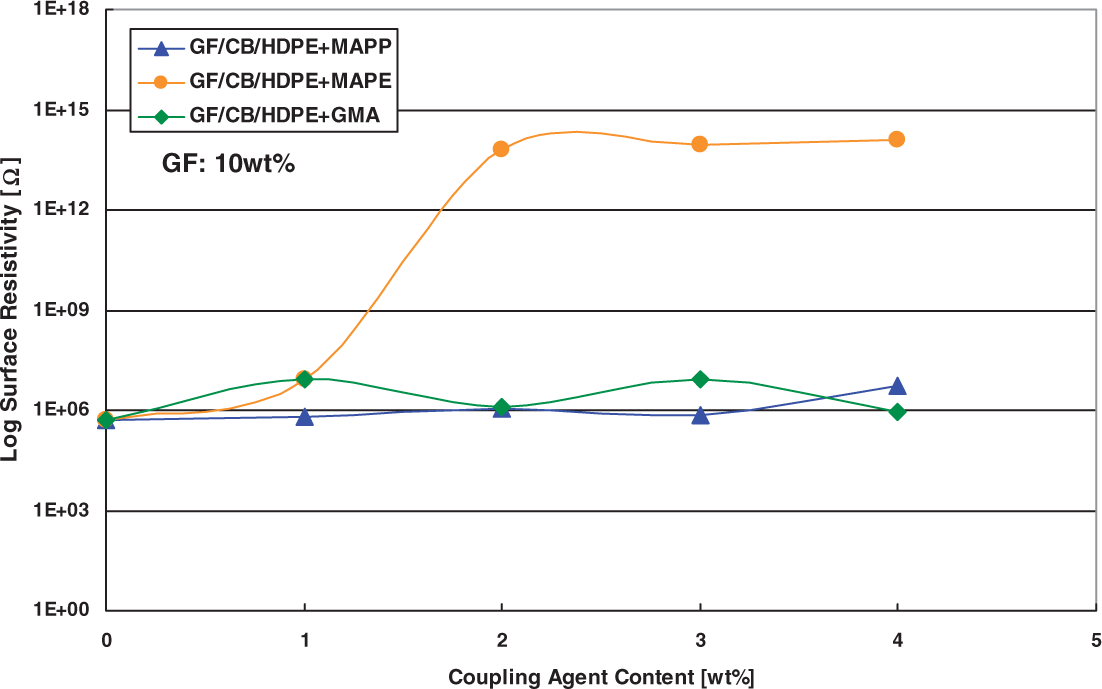
Mechanical properties of GF/CB/PE composite with different contents
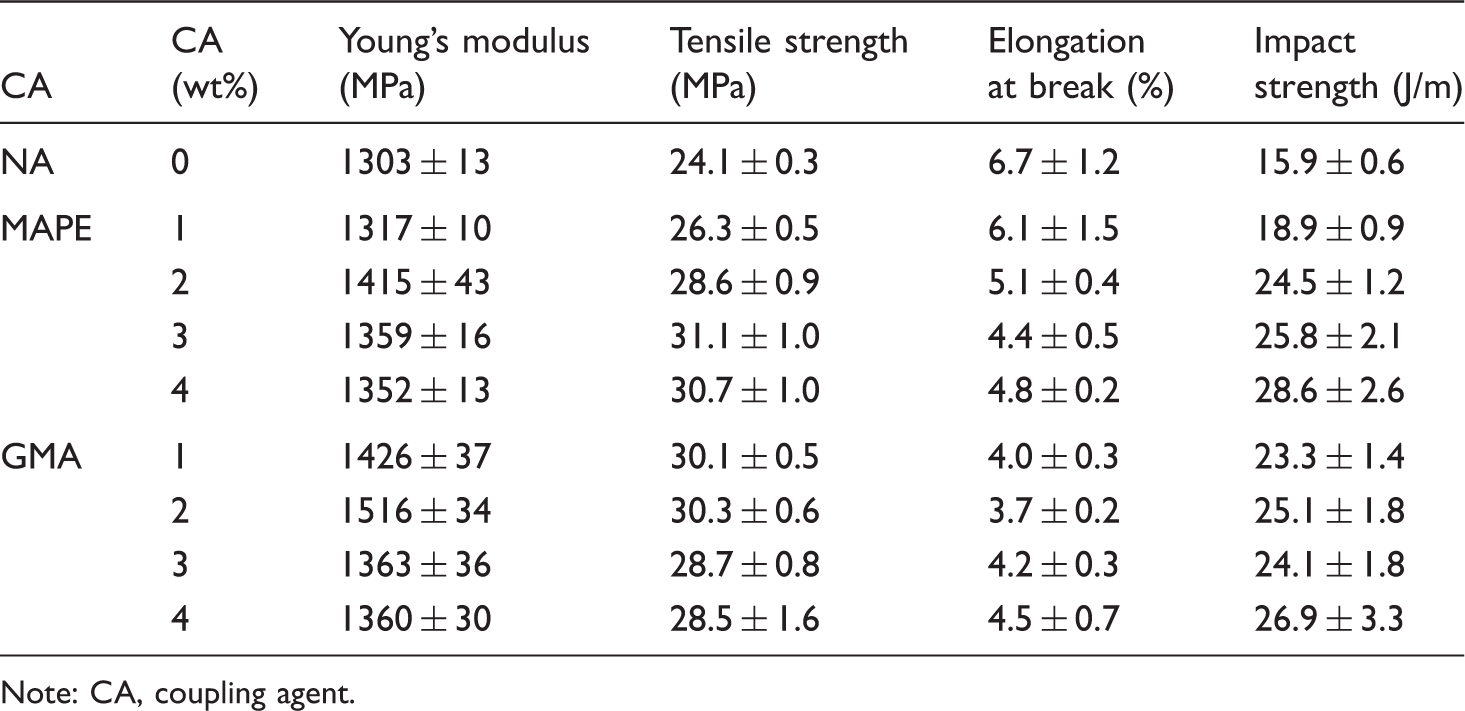
Effect of coupling content on the mechanical properties of GF/CB/PE at the CB content 2 wt% and 10 wt% GF.
Note: CA, coupling agent.
Conclusions
The conductivity, elastic modulus, and tensile strength of CB-filled HDPE were improved after the addition of chopped GF. Addition of coupling agent can improve the bonding strength between GF and polymer, which led to improvements in mechanical properties. On the other hand, the conductivity of GF/CB/PE decreased after addition of coupling agent. Unlike MAPP and GMA, the resistivity of GF/CB/PE increased with the content of MAPE. The elastic modulus and impact strength of GF/CB/PE increased with the content of coupling agent.