



Abstract
The morphological and microstructural changes during ball milling of PE powder mixed with different weight percent (5–15 wt%) of Alumina particles (50–100 nm) were studied. The milling was performed in a planetary ball mill for various times up to 40 h. The results showed that the addition of hard particles accelerates the milling process, leading to fracture of polyethylene matrix. The result of X-ray diffraction analysis determined that the degree of crystallinity of polyethylene decreased by increasing of ball milling time and weight percent of Alumina.
Introduction
Polymer systems are used because of to their rare properties: ease of production, light weight, and often ductility. One way to enhance their properties is to reinforce polymers with fibers, whiskers, platelets, or particles. 1 The embedding of reinforcement in a matrix to produce composites has been a common practice for many years. Using this approach, polymer properties can be improved while maintaining their suitable characteristics. Improvements in properties can often be found even at relatively low filler content. 1 – 11 Polymer nanocomposites offer new technological and economical benefits. The nanocomposites which include nanoparticles exhibit superior properties such as enhanced mechanical and thermal properties. 11
Making good samples of polymer matrix nanocomposites is a challenging area that draws considerable effort. Creating one universal technique for making polymer nanocomposites is difficult due to the physical and chemical differences between each system and various types of equipment available to researchers. Each polymer system requires a special set of processing conditions to be formed, based on the processing efficiency and desired product properties. The different processing techniques in general do not yield equivalent results. 1
Researchers have tried a variety of processing techniques to make polymer matrix nanocomposites. These include melt mixing, in situ polymerization, sol gel, mechanical milling, and other approaches. 1 – 8 Ball milling, which has been one of the main methods to prepare traditional polymer microcomposites, can be used for preparation of polymer nanocomposites. 2 – 4
According to a literature survey done by the authors, there are many articles that focus on the polymer nanocomposite, and they can be categorized in several approaches.
Vollenberg and Heikens 12 were able to produce good nanocomposite samples by thoroughly mixing filler particles with polymer matrix. The polymer matrices used in these experiments were polystyrene (PS), styrene-acrylonitrile copolymer (SAN), polycarbonate (PC), and polypropylene (PP). The reinforcement was alumina beads 35 nm and 400 nm in diameter. The results showed that the PS and PP had a very poor interaction with the particles due to their nonpolar character, while the interfacial interaction was much more noticeable for the SAN and PC. For composites with PS, PC and PP matrix and alumina particles the modulus increased with decreasing size of particles. For all systems, the elastic modulus increased with increasing volume fraction of the reinforcement. 5 – 6
Alumina is a ceramic metal oxide of great importance as building material, refractory material, electrical and heat insulator, attributed to its high strength, corrosion resistance, chemical stability, low thermal conductivity, and good electrical insulation. 13 The incorporation of nano-scaled alumina in PP has improved the mechanical properties of the polymer composites 14 and the wear resistance of PET filled by nearly 2× over the unfilled polymer. 15
Mohamad et al. reported that the presence of uniformly distributed alumina nanoparticles have efficiently hindered polymer chain movement during deformation, and contribute to the high stiffness of the composites. 16 Alumina presence thermoplastic and thermosetting polymeric materials are also gaining wide application as surface coatings. The addition of alumina nanoparticles is meant to enhance the mechanical and thermal properties compared to an absence of such constituents. Generally, it has been found that the presence of low loading of alumina nanoparticles tend to enhance the thermal and mechanical properties of the polymer matrix. A challenge has been observed to be overcome to facilitate the enhancement of the properties of the polymer matrix, namely the need to disperse the nanoparticles uniformly throughout the polymer. At low loading, the nanoparticles could be distributed uniformly across the polymer. 13 Various preparative methods have been adopted to facilitate good dispersion. This includes mechanical milling Alumina nano fiber 17 and mechanical milling followed by hot extrusion. 18
The degree of crystallinity of a polypropylene system was found to change very little with the addition of CaCO3 nanoparticles. Moreover, the size of the crystalline domain spherulites was found to change dramatically in different systems. Scanning electron microscopy (SEM) showed that the spherulites in the pure system had an average size of around 40 µm, but no spherulites could be seen when CaCO3 nanoparticles were added to the system. It is possible that the spherulites were too small and they were not detected by SEM. 1
The addition of nano-size montmorillonite clay platelets to a polyamide-6 matrix was found to have no effect on the degree of crystallinity of the polymer with weight fraction up to 5%. However, the nanoparticles did have an effect on the size of the crystallites. 7 The size of crystallites in the nanocomposites was nearly an order of magnitude smaller than the size of spherulites in the pure matrix system.1,7 Results for a polyamide-6 matrix composite with silica nanoparticles showed that neither the size nor the filler content had any effect on the crystallinity of the system. 7
Abareshi et al. 19 fabricated MDPE/clay nanocomposite using the ball-milling method. They showed that both milling time and clay content had not significant effect on the crystal structure of MDPE matrix. They believed that the microcrystalline dimension Lhkl of MDPE-clay nanocomposite was less than that of pure MDPE. They also showed that the addition of clay to MDPE caused the reduction of the crystalline size of MDPE, although ball milling could also be an effective parameter in reducing the crystallite size of MDPE. Abareshi et al. proved that the ball milling had influence on the crystallinity of MDPE, especially during the early stage of milling, and the crystallinity of MDPE decreased as the clay contents increased.
Based on the literature survey, there is no any evidence of study concentrated on polyethylene-alumina nanocomposites. Thus, the main goal of this study is to fabricate polyethylene-alumina nanocomposites by high energy ball milling as a new method. Also, attempts will be made to elucidate the role of both ball milling and alumina nanoparticles on the crystallinity index of medium-density polyethylene.
Experimental
Materials
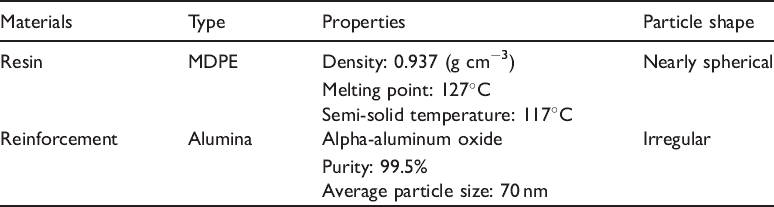
The specification of starting materials.
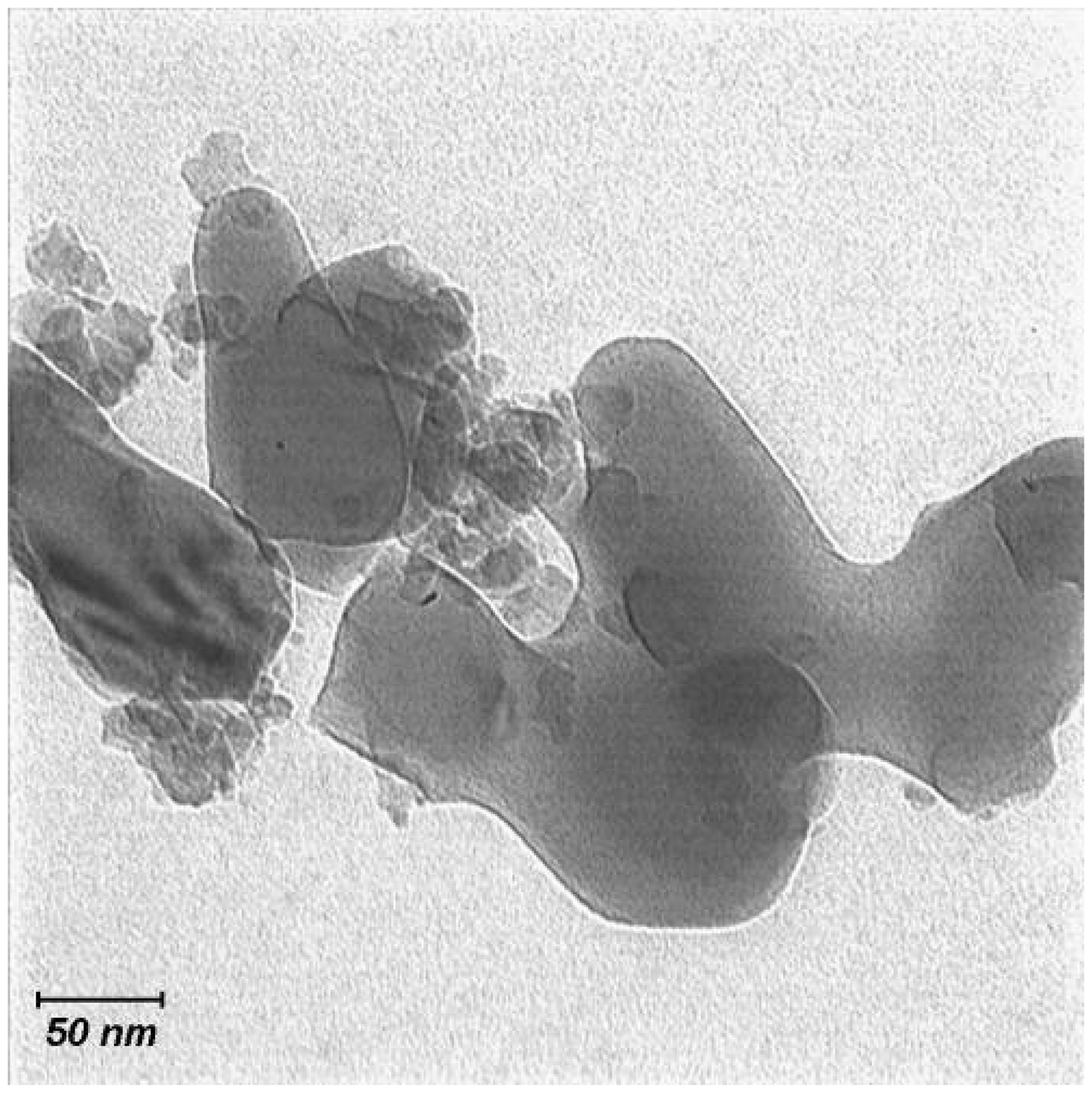
TEM picture of nanoscaled alumina.
Composite preparation method
The mixture of pure medium-density polyethylene and different weight percent of alumina (0–15 wt%) were put in to a stainless steel vial with stainless steel balls. The size of the balls varied: 13 balls with 10 mm diameter, and 7 balls each with 12 and 15 mm diameters. The ratio of ball mass to the mixture load was kept constant at 20:1.
Ball milling was carried out using planetary high energy ball-milling machine (PM-200) at 250 rpm, for 5, 10, 20 and 40 hours. Then the produced nanocomposites were characterized by X-ray diffraction.
Morphological analysis
TEM examinations provided information about PE/Al2O3 nanocomposite. After 20 hours’ milling, the initial particles were deformed and a change from irregular to bean shape was noticed (Figure 2a, b).The experimental results indicate that increasing ball milling time enhances alumina dispersion and decreases size of particles. 40 hours of milling was sufficient to reduce the alumina size to ∼60 nm (Figure 2c, 2 d). Note that the fragmentation of the bean-like particles and distribution of nanoparticles may occur concurrently. It can be expected that for a given volume fraction (15 wt%), the smaller mean size of particles and the narrower size distribution will enhance the homogeneity of the nanocomposite. The shape of the particles probably also plays a role. It may be guessed that particles with more regular shapes should be more effective at a given size and volume fraction. It is important to highlight here that particles with irregular shapes of alumina can be prepared from this method with a specific size, at least, as an average and with a homogeneous distribution in matrix.
TEM micrographs of MDPE–5 wt% Al2O3 at various milling times; (a) and (b) 20 h, (c) and (d) 40 h.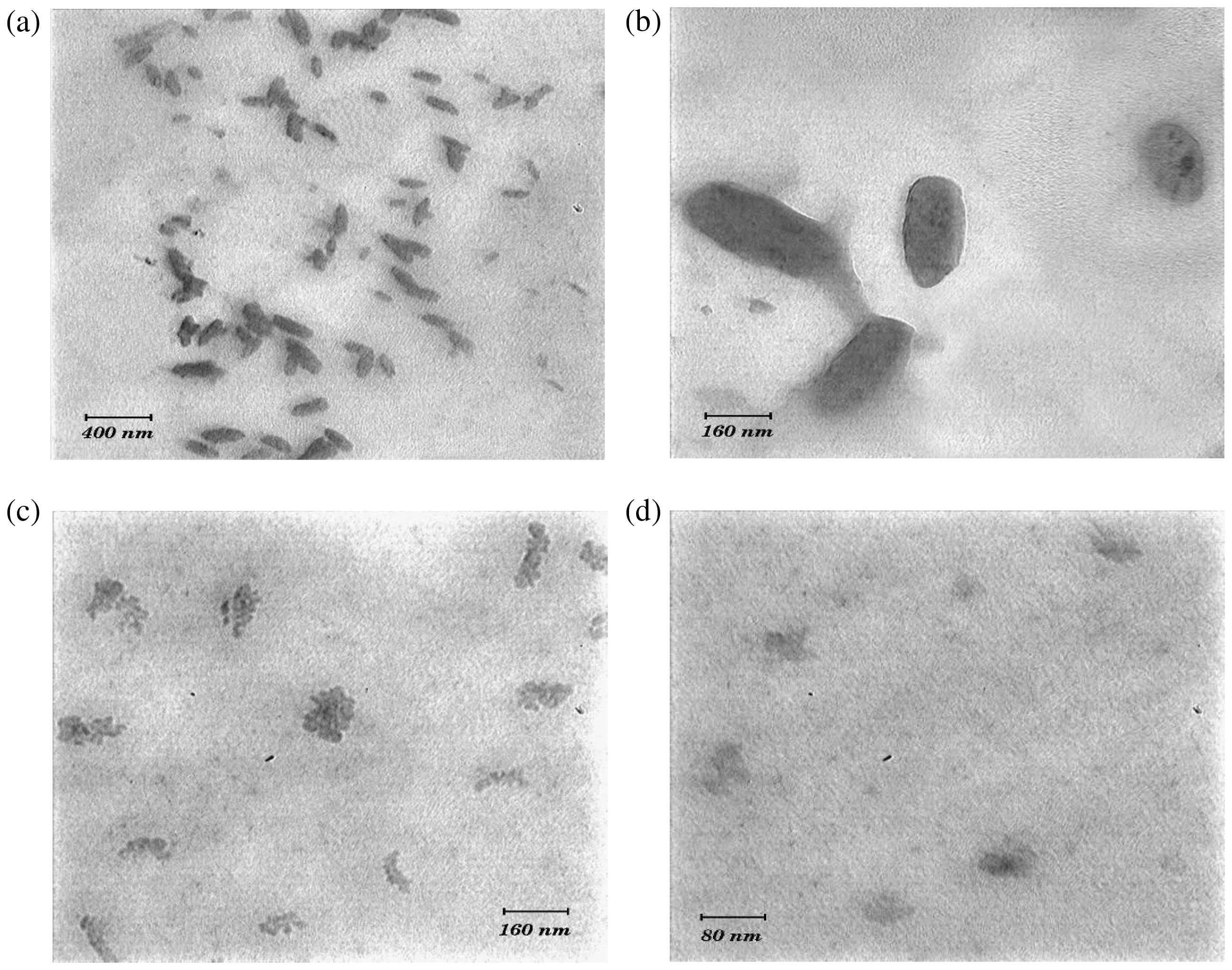
X-ray diffraction (XRD)
XRD patterns were obtained using a Bruker/D8 ADVANCE diffractometer with Cu Kα radiation (λ = 0.15406 nm) in the range of 2θ = 4–70° at 0.03° increments.
The degree of crystallinity of samples was quantitatively estimated following the method of Nara and Komiya;
20
a smooth curve which connected peak baseline was computer-plotted on the diffractogram by Smadchrom software (Figure 3). The area above the curve was taken as the crystalline portion, and the lower area between the curve and linear baseline which connected the two points of the intensity was taken as the amorphous section.
21
Calculation of the relative degree of the crystallinity.
21
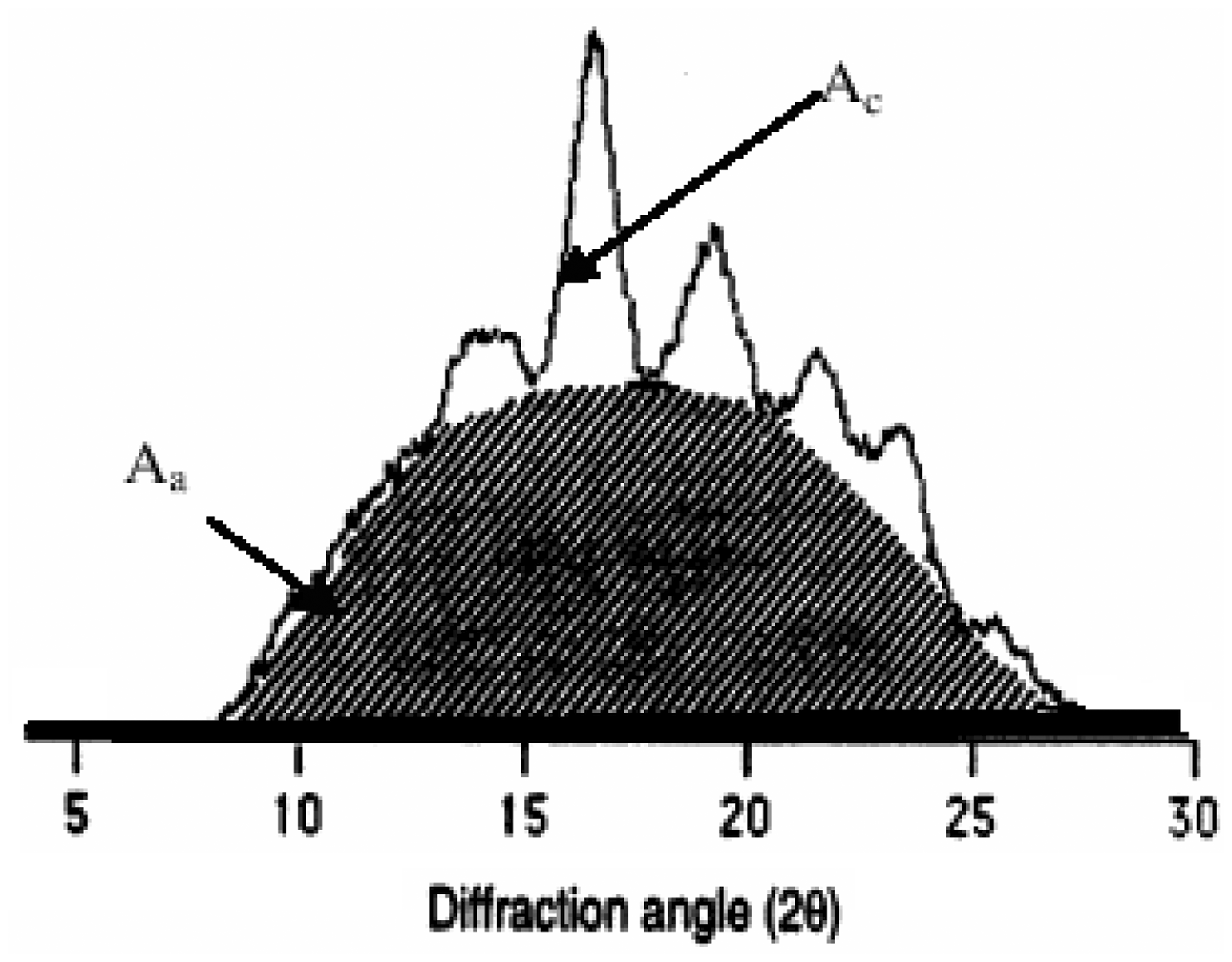
The ratio of upper area to the total diffraction area was considered as the degree of crystallinity. The equation of the degree of crystallinity is as follows:

Results and discussions
Figure 4 shows the XRD spectrum of un-milled pure polyethylene and alumina. As seen in the figure, an amorphous peak of polyethylene at diffraction angle of about 20 and two crystalline peaks at diffraction angle of 21.7 and 24 appear. Alumina peaks at diffraction angle are: 25.7, 35.5, 38, 43.5, 52.7, 57.6, 61.4, 66.7 and 68.3 respectively. In fact polyethylene crystallizes in an orthorhombic crystalline structure with lattice dimensions of a = 7.40 Å, b = 4.93 Å and c = 2.534 Å, with the c-direction being the chain direction. Typically only three strong reflections are observed, the former is the amorphous step and the others are crystalline diffraction peaks. These peaks is due to X-ray diffraction from the (110), (200) planes whereas the (200) being the prominent peak. First peak is superimposed on a broad region of intensity which results from the amorphous component of the polymer (polymers are usually not 100% crystalline). This amorphous halo reflects a preferred spacing of PE chains in the amorphous state.
X-ray diffraction patterns of neat PE and as-received Alumina before ball milling.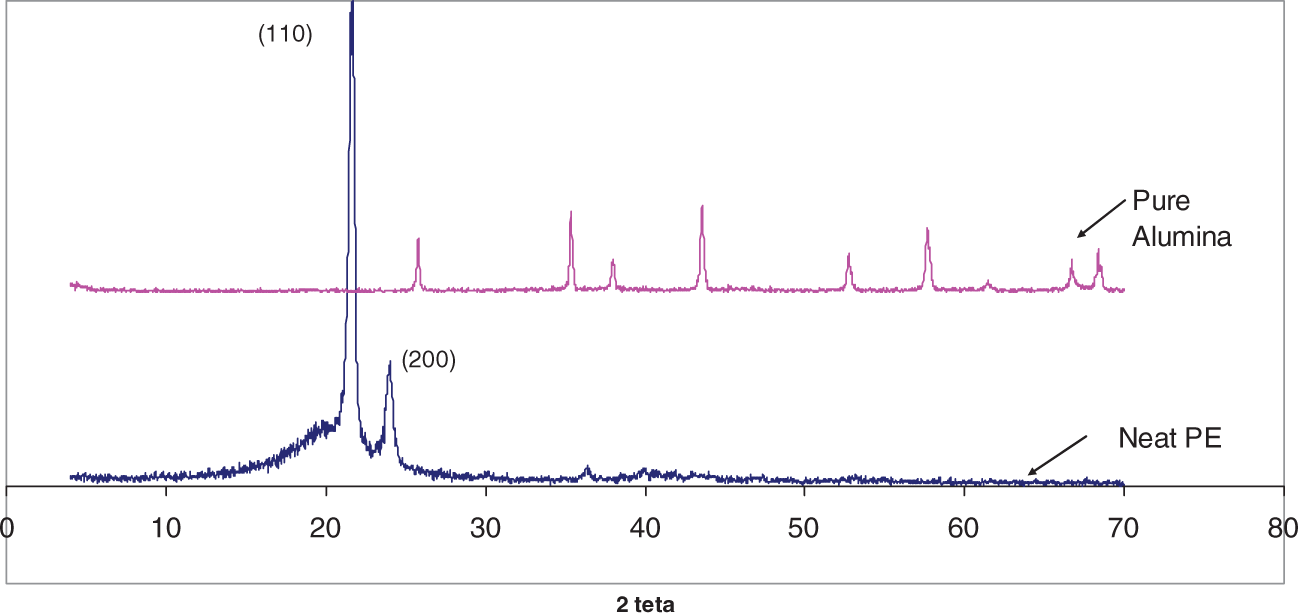
The dependence of XRD profiles of pure MDPE on milling time is shown in Figure 5. The position of the maximum peaks in the patterns of MDPE before and after ball milling is similar, but the intensity of peaks has remarkably decreased as milling time increases. In fact, severe plastic deformation of the polyethylene powder can lead to accumulation of internal stress.
2
As the plastic deformation continues (it means that mechanical milling continues), work hardening of the deformed particles reached to a critical value, leading to activation of the fracture process. As a matter of fact, with increasing milling time, internal strain increases steadily.
2
The peak broadening of the milled powders represents a decrease in the crystallite size and accumulation of lattice strain. Therefore, high-energy mechanical milling of polyethylene results in amorphization, as evidenced by reduced intensities and peak broadening in X-ray diffraction patterns (see Figure 5). The position of the XRD peaks doesn't have any shift that can be related to the lack of change in the lattice structure. This result is similar to what Abareshi et al. proposed.
12
X-ray diffractogram of pure MDPE at different milling times.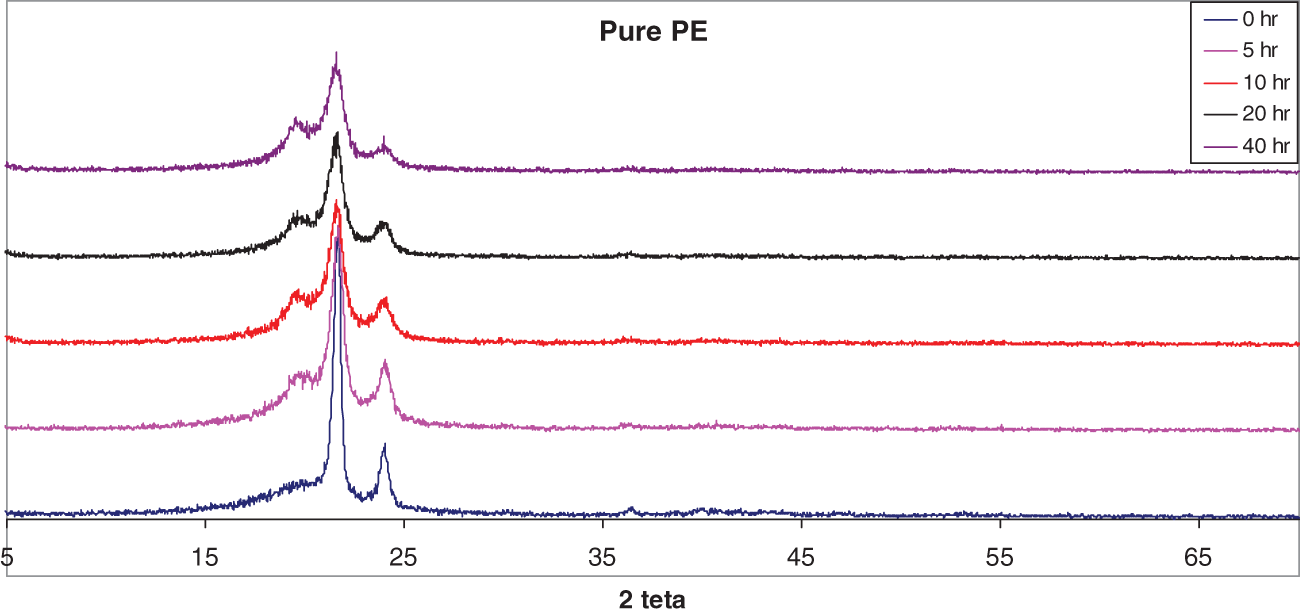
The dependence of X-ray diffraction patterns of produced MDPE matrix nanocomposite powders on nano-size alumina content and milling time are shown in Figures 6 and 7. Indeed the peaks of MDPE do not show any significant shift as the alumina content increases. It implies that all matrix nanocomposites have the same crystal structure, and that alumina nano-size powders cannot change the crystal structure. With the alumina loading, the peaks have become wider and their intensities have decreased. On the other hand, when hard particles are added to polyethylene powder, the chain scission occur earlier, the agglomerations are broken to smaller pieces, and their morphology changes because of nanodispersed alumina disrupts the ordered structure of polyethylene. This is because alumina is brittle and acts as a concentration point, and causes failure of crystallites and increases degree of amorphous. Figure 8 shows the X-ray diffraction patterns of PE/15 wt% Al2O3 powder after selected ball-milling time. The intensity of the peaks decreases after the 5 hours of milling time, whereas the peak positions do not change. Further milling, to 20 hours, causes the intensity of peaks decreases but it is not dramatic.
X-ray diffractogram of MDPE matrix nanocomposite as a function of alumina content after 5 hours milling. X-ray diffractogram of MDPE matrix nanocomposite as a function of alumina content after 20 hours milling. X-ray diffractogram of MDPE/15 wt% Al2O3 at different milling time.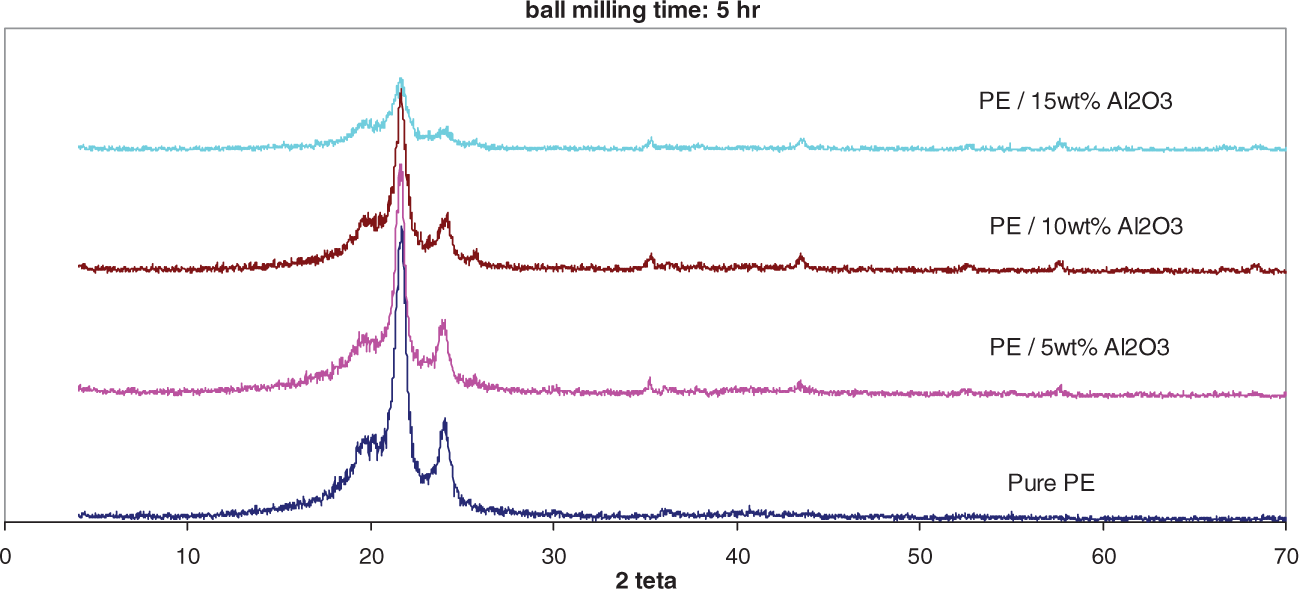
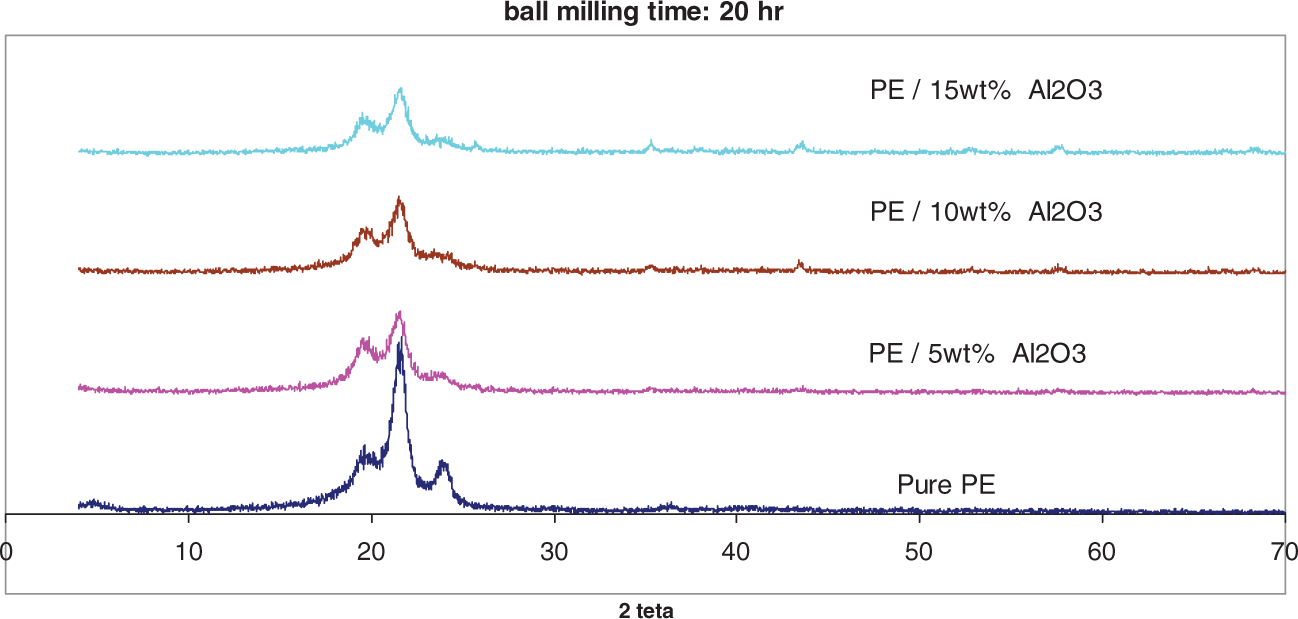
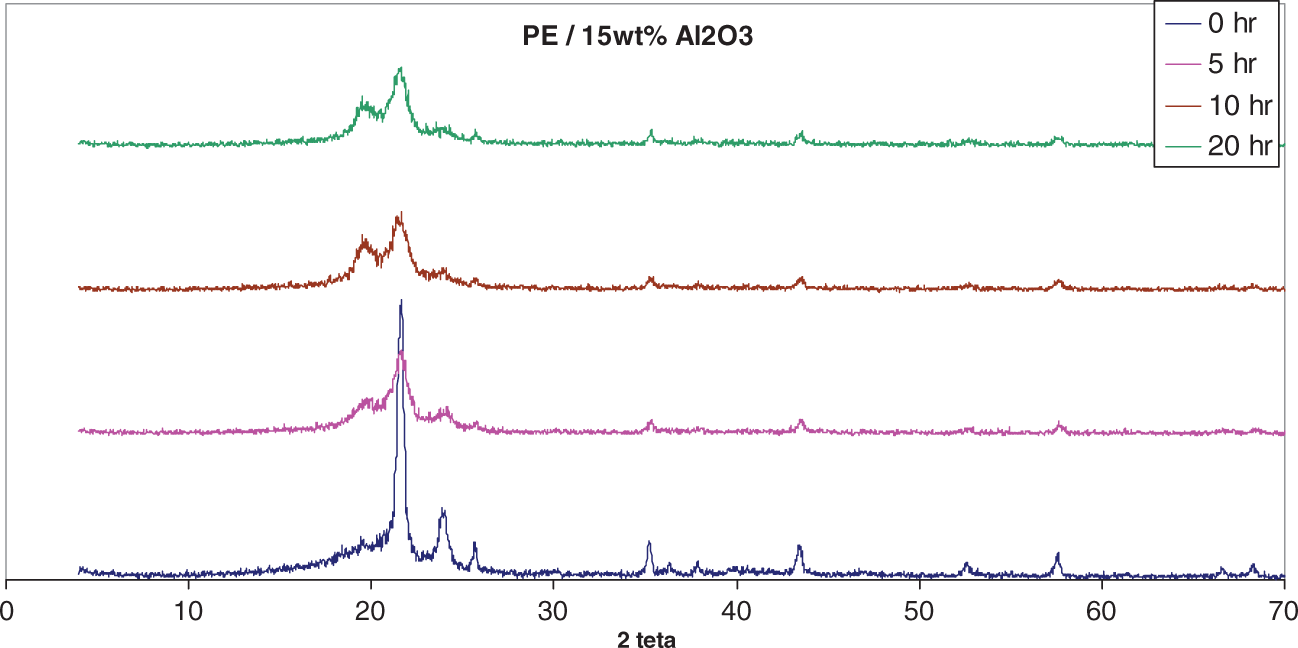
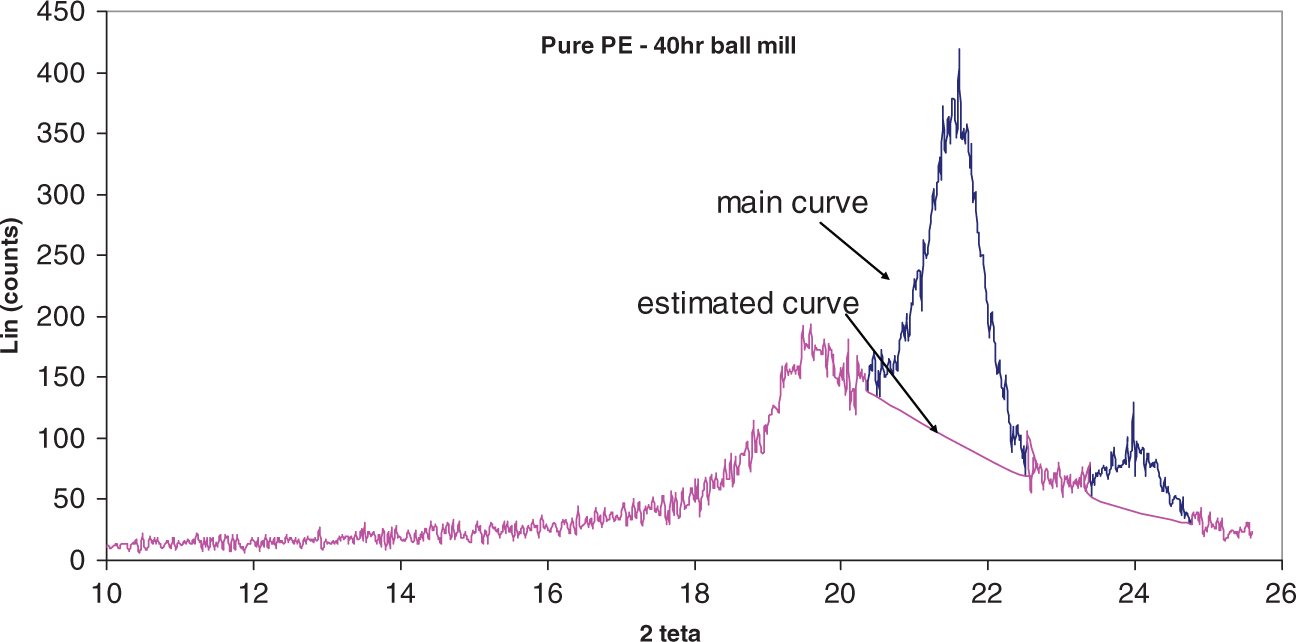
Figure 9 shows the estimation method for determining degree of crystallinity. The Area between the new curve and baseline which connected the two points of the intensity 2θ of 10° and 25.6° in the samples was taken as the amorphous section. The ratio of amorphous area to total diffraction area was taken as the degree of amorphousness. The degree of crystallinity can be obtained using the following equation:
Estimation of the relative degree of the crystallinity.
Degree of crystallinity of pure and un-milled polyethylene is 36.5. The addition of nano-size alumina to polymer matrix is found to have an effect on the degree of crystallinity of the polyethylene with weight fraction up to 10%. After 20 hours worth of milling, the degree of crystallinity remains nearly constant with a final value of about 24%. Considering these data, results determine that milling time is more effective than alumina weight percent. The presented results in Figure 10 summarize that during the early state of milling, degree of crystallinity decreases rapidly and slow down afterwards.
Degree of crystallinity versus milling time for different samples.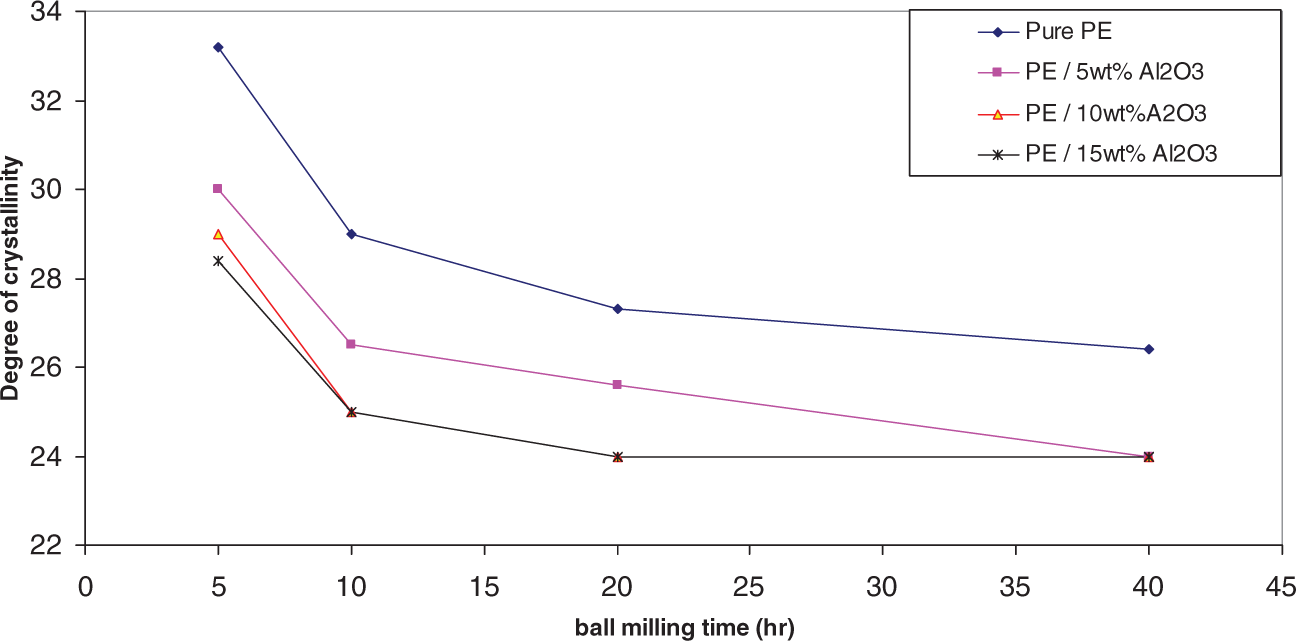
The achieved results are similar to those reported by other investigators. For example, the addition of nano-size montmorillonite clay platelets to a polyamide-6 matrix was found to have no effect on the degree of crystallinity of the polymer with weight fraction up to 5%. However, the nanoparticles did have an effect on the size of the crystallites. The size of crystallites in the nanocomposites was nearly an order of magnitude smaller than the size of spherulites in the pure matrix system. 5 Results for a polyamide-6 matrix nanocomposite with silica nanoparticles showed that neither the size nor the filler content had any effect on the crystallinity of the system. 8 Park et al. 22 found that for (syndiotactic) polystyrene–organoclay nanocomposites, dispersed clay layers act as nucleating agent competing with crystal growth in polymers. Thus, exfoliated clay nanocomposites have a lower degree of crystallinity with faster crystallization rate. However, the crystallinity of crystalline and semi-crystalline polymers was not affected very much by the addition of nanoparticles. There may be some changes in particular nanocomposite systems, but overall no major differences in crystallinity of nanocomposites versus neat polymers were observed in any of the systems examined. 1
Conclusions
PE/Al2O3 nanocomposite can be prepared by dry high-energy ball milling from polyethylene and Alumina nanoparticles. During mechanical milling of PE/Al2O3 powders, the morphology and structure of the particles undergo continuous changes. Plastic deformation, cross-linking, and chain scissions of materials are all dominant mechanisms which influence the characteristics of milled powders. The results show that the addition of nano-scaled alumina particles accelerated milling process of polyethylene powder, and small hard particles may act as small milling agent. Therefore, the fracture process is started earlier. After ball milling, polyethylene is pulverized to a disorder and amorphous state, while the dispersed Al2O3 particles remain nanocrystalline. With increasing of the volume fraction of alumina particles, crystallinity percent decreases. During the early stages of milling, the degree of crystallinity decreases rapidly, and slows down afterwards.