



Abstract
The effect of maleic anhydride-g-polyethylene compatibilizing agent on mechanical and thermal properties of waste office white paper (WOWP)-filled low-density polyethylene (LDPE) composites was investigated. Results showed that compatibilized LDPE/WOWP composites have higher tensile strength, Young’s modulus than uncompatibilized LDPE/WOWP composites, but lower on elongation at break. Thermal analysis results exhibited that compatibilized LDPE/WOWP composites have higher thermal stability, and degree of crystallinity (Xc) compared to uncompatibilized LDPE/WOWP composites, but melting temperature (Tm) did not change significantly. Scanning electron microscope and Fourier transform–infrared spectroscope studies revealed that the addition of compatibilizing agent enhanced dispersion of filler in polymer matrix as an evidence of covalent bonding between WOWP filler and compatibilizing agent.
INTRODUCTION
Recently, the utilization of waste natural fibers as filler to substitute synthetic fillers in composite material is being more attractive. This is due to environmental awareness and establishes in producing eco-friendliness composite materials [1]. The advantages using natural fibers in composite are low cost, low density, bio-degradable, and lower abrasive nature compared to synthetic fibers. All of these offer advantages with respect to processing techniques, recycling, dimensional stability, etc. [2–5]. Although natural fiber-based composites satisfy the environmental friendly, their performance in application do not show strong correlation with their advantages that is strongly influenced by the polarity properties of natural fibers.
There are many natural fibers which are currently used as filler to replace synthetic fibers, such as wood, sawdust, waste paper, jute, rice husk, sisal, etc. [6–13]. Waste papers are one of the most collected materials in most community recycling programs. Recycled waste paper materials consist of lignocellulosic material and other inorganic fillers, which invariably contain printing inks and other process aid materials. Recycled waste paper cellulose fiber-reinforced plastic composites may find applications as structural materials for the housing industry, such as load bearing roof systems, framing components, and non-structural products such as doors, furniture, and automotive interior parts that might be similar to wood-based composites [14,15]. Therefore, recycled waste papers are an ideal source of fibers and could be converted into high-value composite materials using dry common techniques such as compression- or injection-molding.
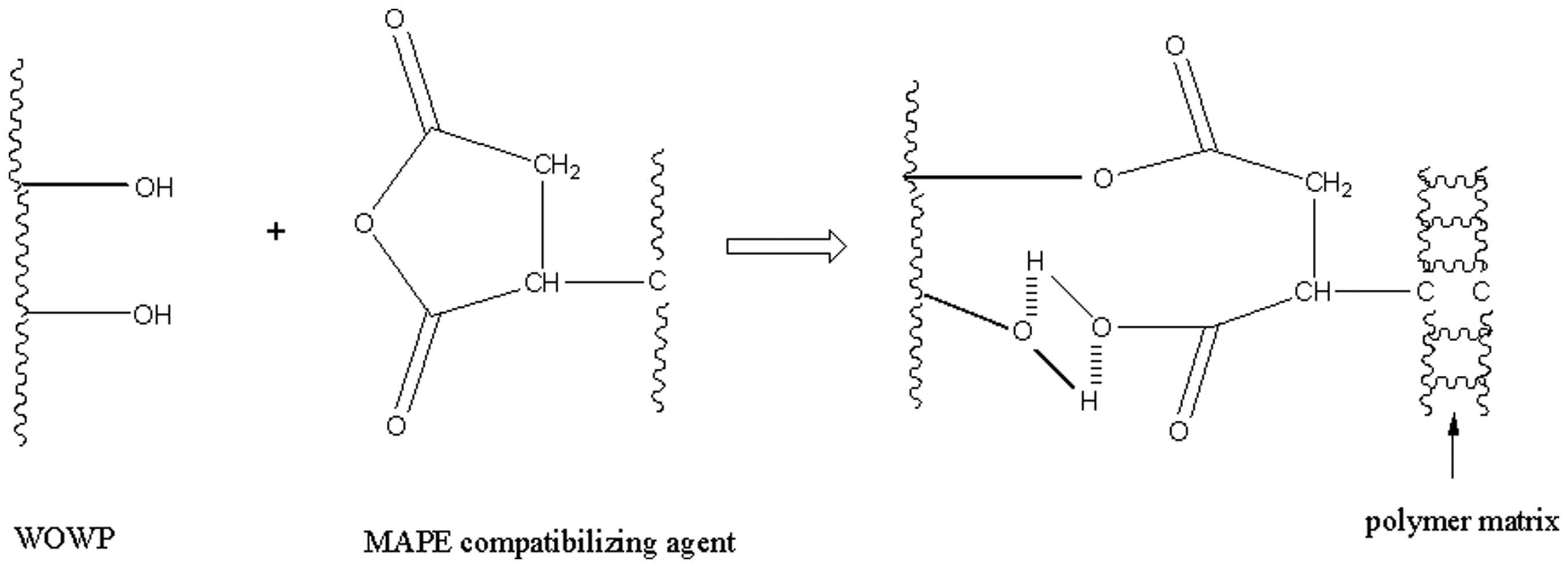
The mechanical and physical properties of natural fiber-reinforced plastic composites strongly influenced by the interaction on interface between filler and matrix. This interaction is weak due to different polarity properties between natural fiber and plastic resulted poor filler–matrix interaction and consequently dimensional change of furnished products [16]. In order to enhance filler–matrix interaction a compatibilizing agent is usually used. In polyolefin composites functionalized polymers, usually maleated polypropylene (MAPP) or polyethylene (MAPE), are added to the composite during homogenization in order to improve interfacial adhesion and prevent debonding under the loading of the product [17–23]. Maleic anhydride groups react chemically with the –OH groups of the filler [24,25] and improve interfacial adhesion considerably.
In our previous paper, waste office white paper (WOWP) has been used as filler in low-density polyethylene (LDPE) composites [26]. It was found that the pulled out filler and debonding occurred due to poor filler–matrix interaction. In accordance with literature information, the use of compatibilizing agent is a way to improve interfacial adhesion and filler–matrix interaction. The current investigation was aimed to study effect of compatibilizing agent on mechanical and thermal properties of LDPE/WOWP composites.
EXPERIMENTAL
Materials
Formulation of uncompatibilized and compatibilized LDPE/WOWP composites.
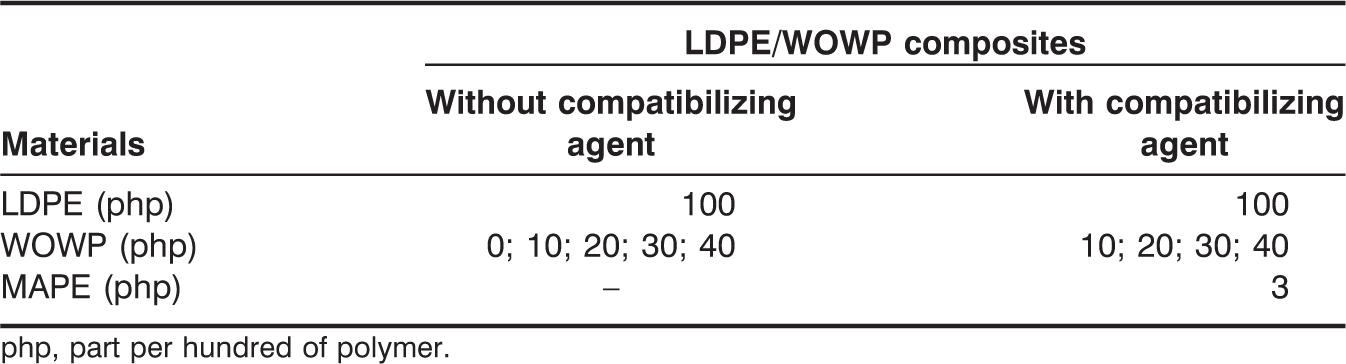
php, part per hundred of polymer.
Mixing Procedure
LDPE/WOWP composites were prepared in Z-Blade Mixer, at 180°C and 50 rpm. LDPE and MAPE were first charged together to start melt. After 12 min, the WOWP filler was added and mixing continued for another 25 min. At the end, the LDPE/WOWP composites were taken out and sheeted through a laboratory mill at 2.0 mm nip setting. The sample of LDPE/WOWP composites was taken compression molded in an electrically heated hydraulic press. Hot press procedures involved preheating at 180°C for 6 min followed by compressing for 4 min at the same temperature and subsequent cooling under pressure for 4 min.
Measurement of Tensile Properties
Tensile tests were carried out according to ASTM D 638-91 on an Instron 5582. Five dumbbell specimens of each composition, with thickness 1 mm, were cut from the molded sheets with a Wallace die cutter. A cross-head speed of 50 mm/min was used and the test was performed at 25°C ± 3°C.
Scanning Electron Microscope
Studies on the morphology of the tensile fracture surface of uncompatibilized and compatibilized LDPE/WOWP composites were carried out using a scanning electron microscope (SEM), model JSM 6260 LE JOEL. The fracture ends of the specimens were mounted on aluminum stubs and sputter coated with a thin layer of palladium to avoid electrostatic charging during examination.
Thermogravimetric Analysis
Thermogravimetric analysis (TGA) of the LDPE/WOWP composites was carried out with a Perkin Elmer Pyris Q500 TGA analyzer. The sample weights about 15–25 mg were scanned from 30°C to 600°C using a nitrogen flow of 50 mL/min and heating rate of 20°C/min. The sample size was kept nearly the same for all tests.
Differential Scanning Calorimetry
Differential scanning calorimetry (DSC) was conducted by using Perkin Elmer Q10 with each sample weighing about 8–10 mg. Each sample is heated from 20°C to 250°C with heating rate of 10°C/min, and then cooled with same rate using nitrogen flow.
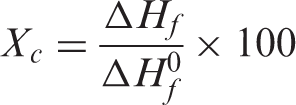
Degree of crystallinity (Xc) for every specimen of LDPE/WOWP composites was counted using Equation (1)
Fourier Transform–Infrared Spectroscopy
Fourier transform–infrared (FT–IR) spectroscopy analysis of uncompatibilized and compatibilized LDPE/WOWP composites was carried out in Perkin Elmer 1600 Series. The sample was dispersed in dry KBr powder and was ground to obtain fine particles and KBr technique was applied. Scanned range was 400–4000 cm−1.
RESULTS AND DISCUSSION
Figure 1 shows the effect of filler loading on the tensile strength of LDPE/WOWP composites. It can be seen that the increase of WOWP filler loading does not significantly increase the tensile strength of LDPE/WOWP composites, probably due to less dispersion efficiency of the WOWP filler in the LDPE matrix. In order to make higher the tensile strength value of LDPE/WOWP composites, the MAPE compatibilizing agent was used. As a result, the tensile strength of compatibilized LDPE/WOWP composites is higher than uncompatibilized LDPE/WOWP composites in the same filler loading. This result confirms that the incorporation of the MAPE compatibilizing agent in LDPE/WOWP composites imparts a positive effect on the tensile strength due to enhanced interfacial adhesion between the LDPE matrix and the WOWP filler. This enhancement is mainly due to the presence of hydrophilic–hydrophobic side of the MAPE compatibilizing agent, whereas the hydrophilic side interacts with the hydroxyl group of WOWP filler and the hydrophobic side diffuses into the LDPE chain resulting better dispersion of the WOWP filler in the LDPE matrix. Tserki et al [28] also reported that compatibilizing agent produced a formation of ester bond or hydrogen bond on interface between hydroxyl group of organic filler and carboxylic group of compatibilizing agent diffused into polymer matrix.
Effect of filler loading on tensile strength of uncompatibilized and compatibilized LDPE/WOWP composites.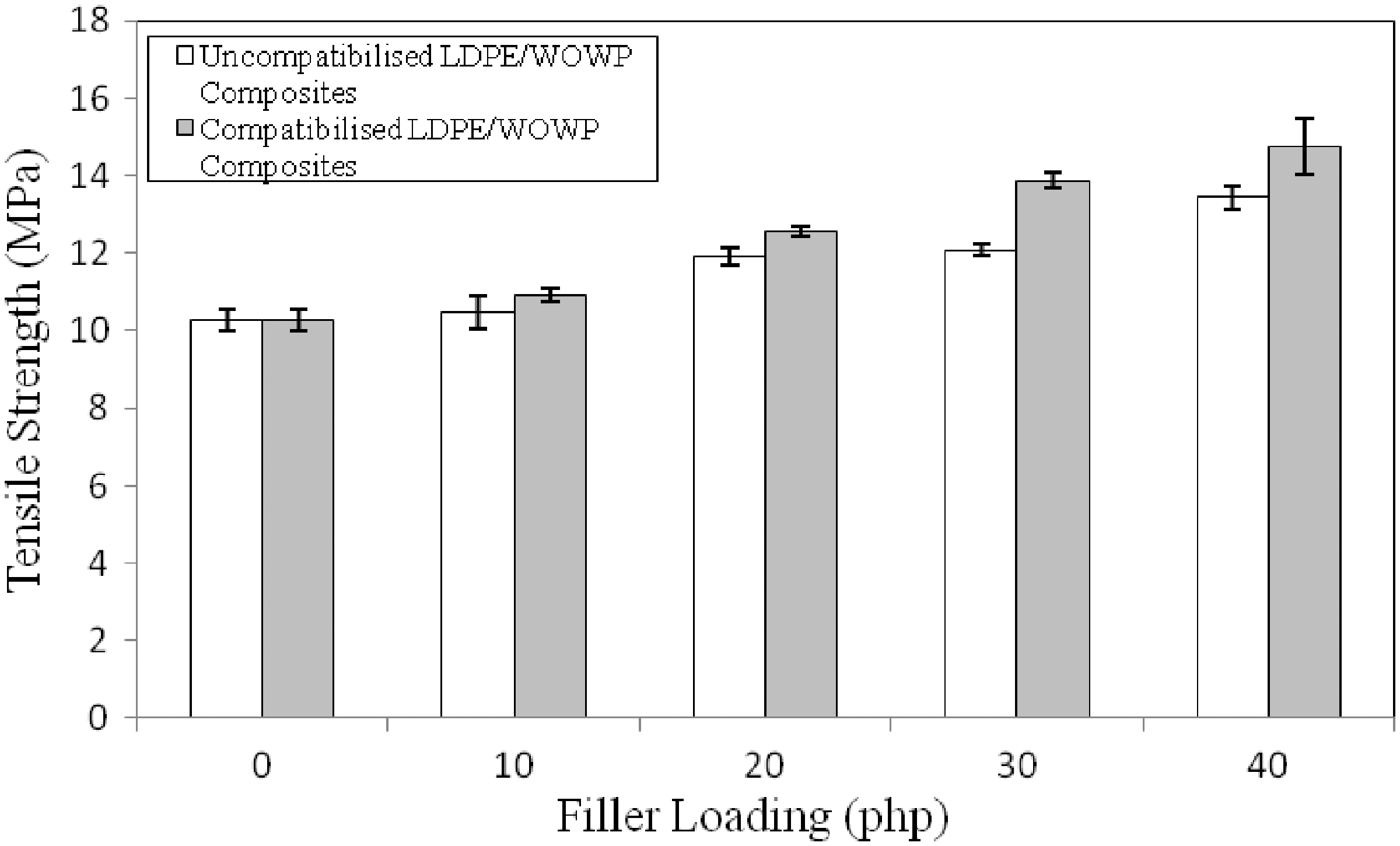
In contrast, Figure 2 shows that the increase of WOWP filler loading reduces the elongation at break of LDPE/WOWP composites that might be due to the decreasing of deformation and plasticity properties of the LDPE matrix, especially at a higher filler loading. The presence of WOWP filler reduces apparently the LDPE chain mobility leading to the loss of flexibility. At a similar filler loading, the compatibilized LDPE/WOWP composites exhibit lower elongation at break as compared to the uncompatibilized LDPE/WOWP composites, as an evident of enhanced interfacial adhesion between the WOWP filler and the LDPE matrix.
Effect of filler loading on elongation at break of uncompatibilized and compatibilized LDPE/WOWP composites.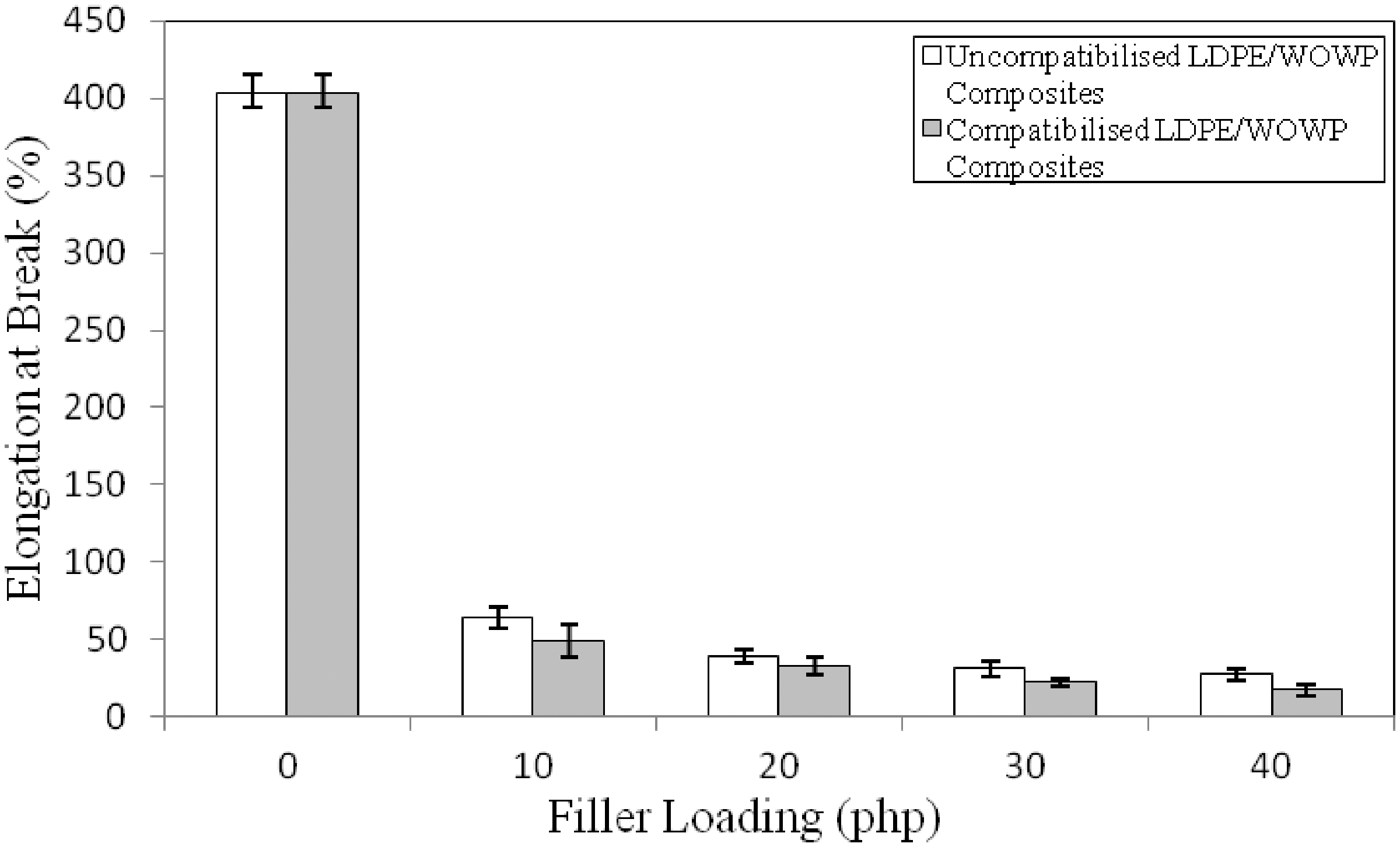
Figure 3 shows the Young’s modulus of uncompatibilized and compatibilized LDPE/WOWP composites as a function of filler loading. As shown, the increasing of WOWP filler loading improves the Young’s modulus of LDPE/WOWP composites. Young’s modulus indicates the stiffness properties of composite materials and depends on the filler loading. Sain et al [29] reported the Young’s modulus as a function of filler loading. Furthermore, the Young’s modulus of compatibilized LDPE/WOWP composites is higher than uncompatibilized LDPE/WOWP composites owing to the MAPE compatibilizing agent which acts as a chemical bridge between the WOWP filler and the LDPE matrix, then increases the stiffness of LDPE/WOWP composites.
Effect of filler loading on Young’s modulus of uncompatibilized and compatibilized LDPE/WOWP composites.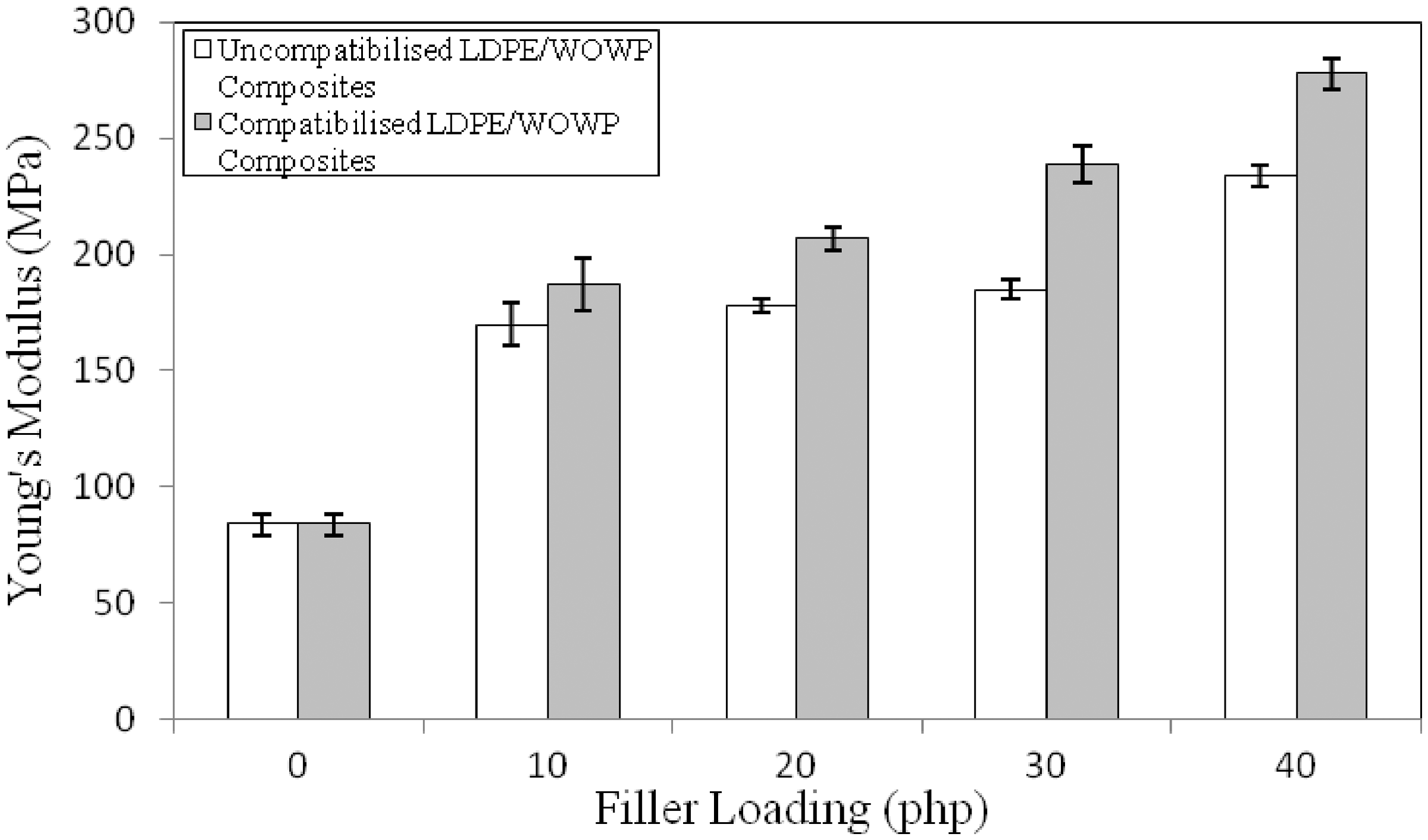
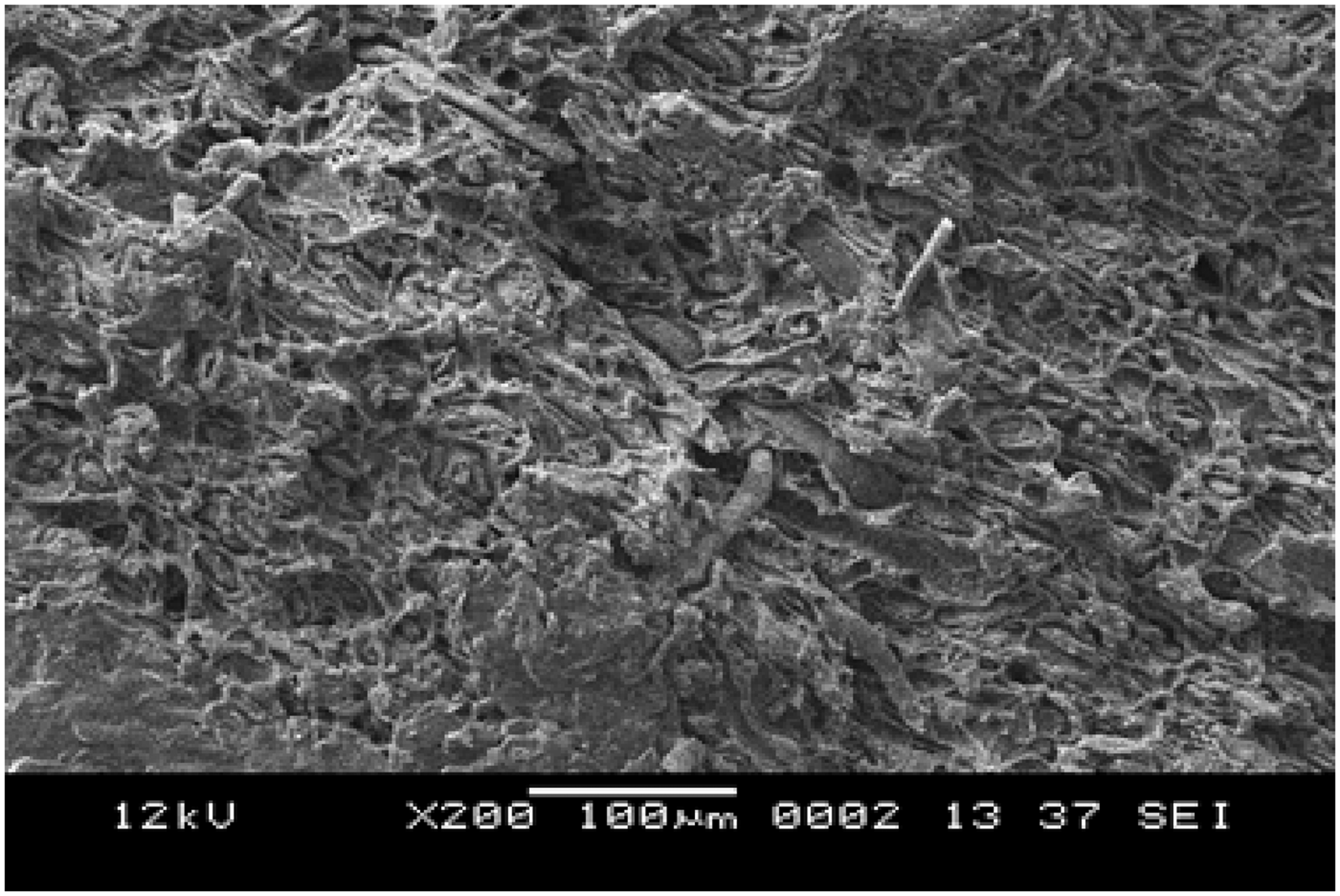
Figures 4 and 5 show the tensile fractured surface of uncompatibilized and compatibilized LDPE/WOWP composites. From Figure 4, it can be seen the trace of pulled out filler indicating to the weak interaction between the WOWP filler and the LDPE matrix. The difference of polarity resulted less efficiency of the dispersion of WOWP filler in LDPE matrix. On the contrary, Figure 5 exhibited the appearance of smaller pits owing to less pulled out filler in composite. This might be due to improved interaction between the WOWP filler and the LDPE matrix resulting better interfacial adhesion as compared to uncompatibilized ones.
SEM micrograph of tensile fractured surface of uncompatibilized LDPE/WOWP composite at magnification 200×. SEM micrograph of tensile fractured surface of compatibilized LDPE/WOWP composite at magnification 200×.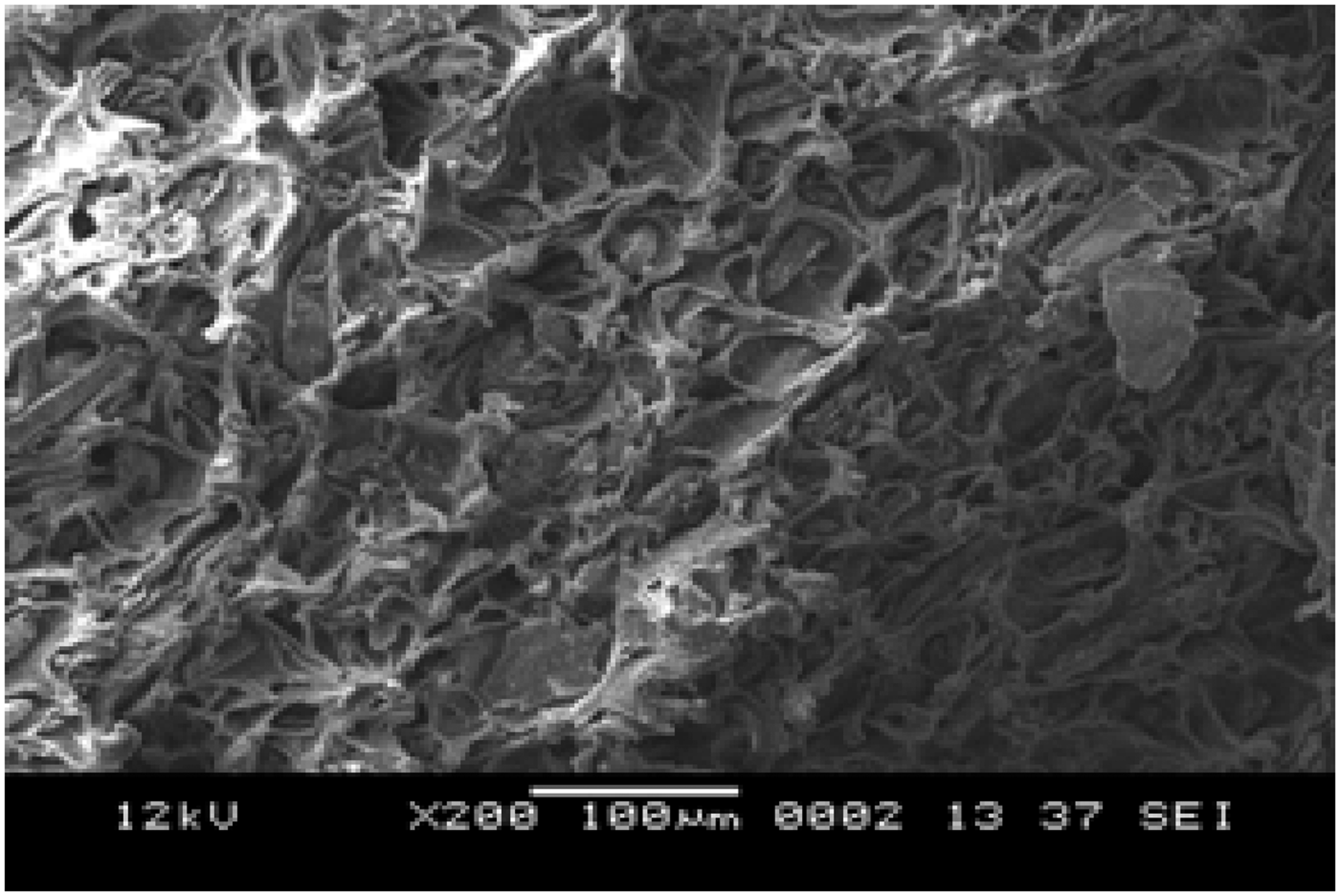
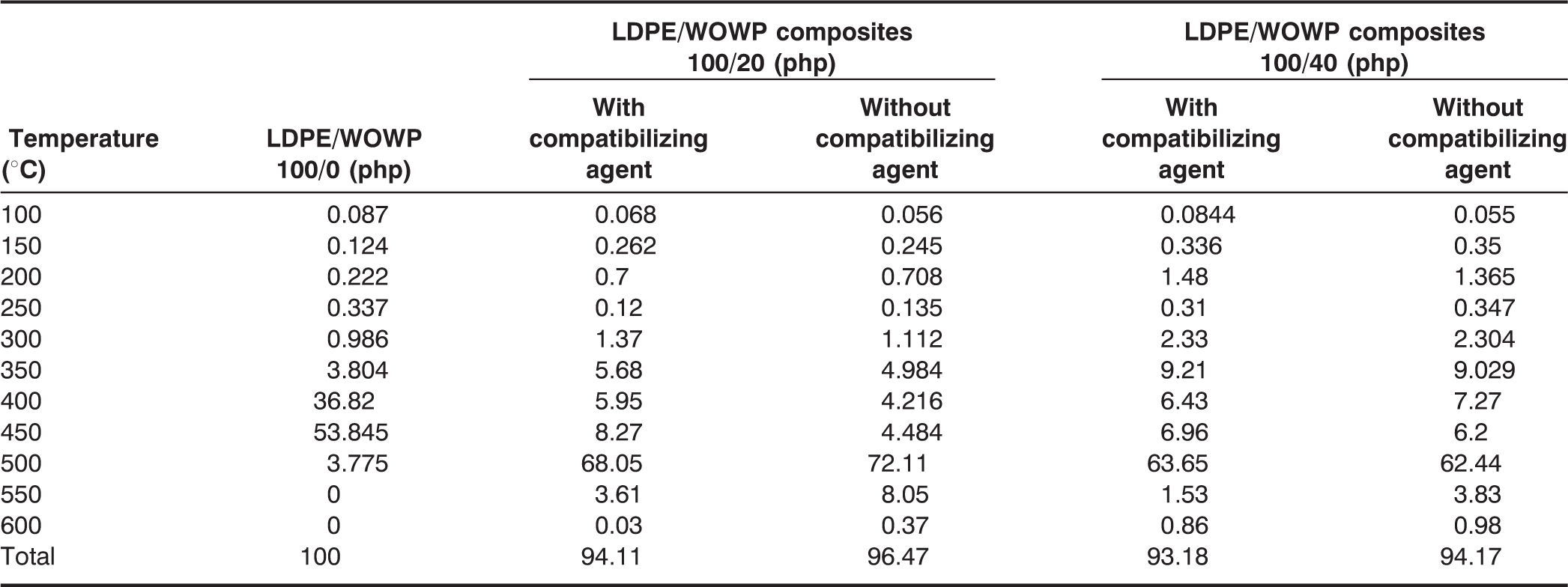
Percentage of weight loss of uncompatibilized and compatibilized LDPE/WOWP composites with different temperature and filler loading.
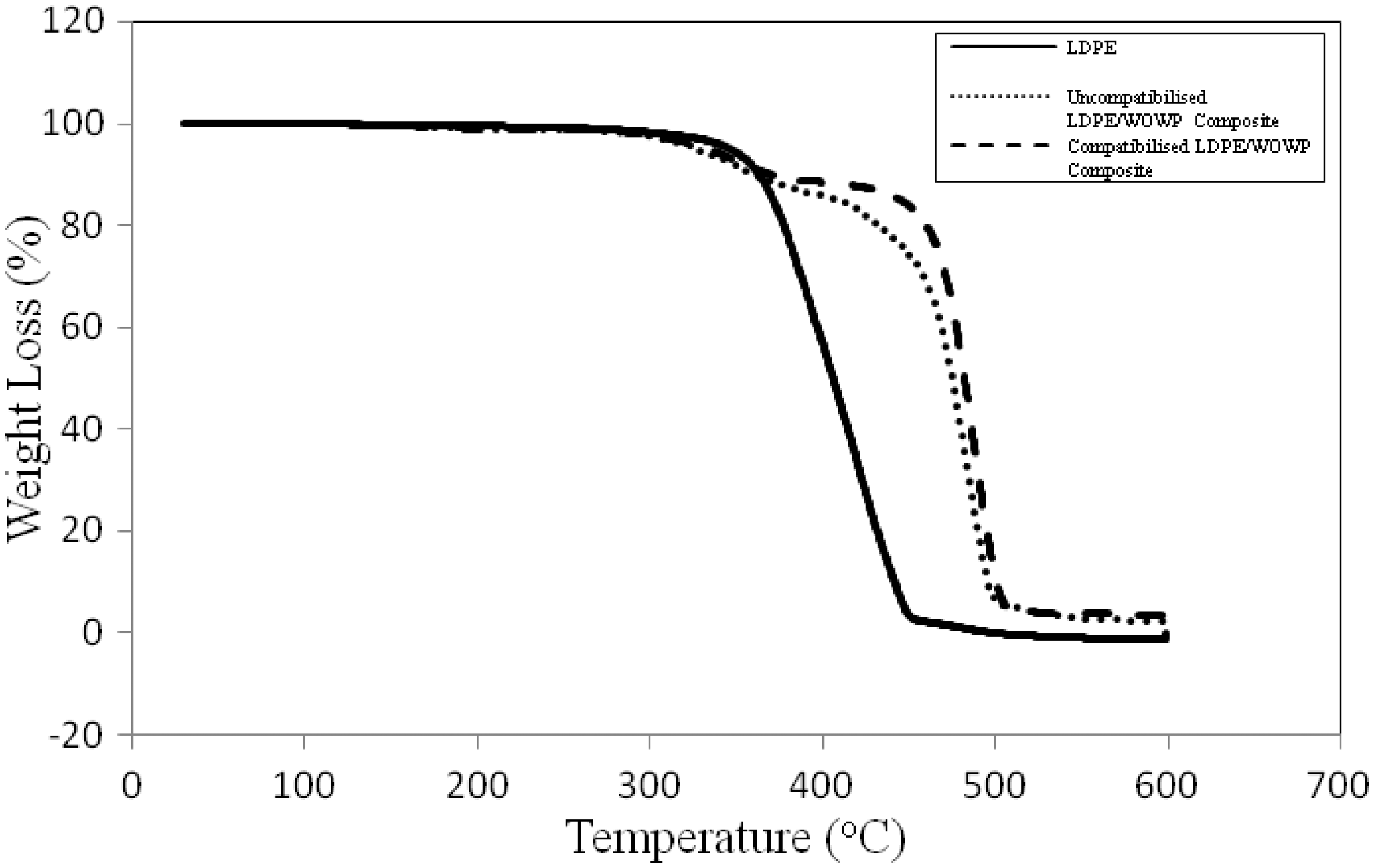
TGA curves of uncompatibilized and compatibilized LDPE/WOWP composites as a function of temperature.
Summary of Tm, ΔHf and Xc of uncompatibilized and compatibilized LDPE/WOWPcomposites with different filler loading.
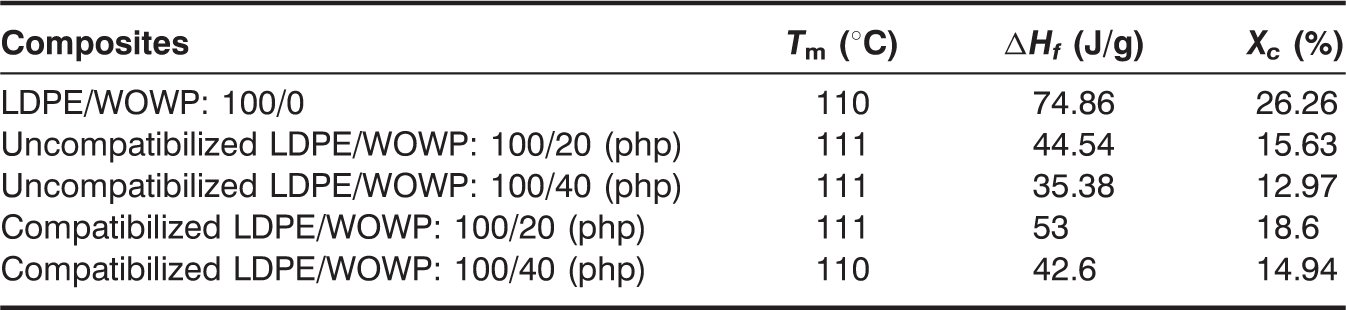
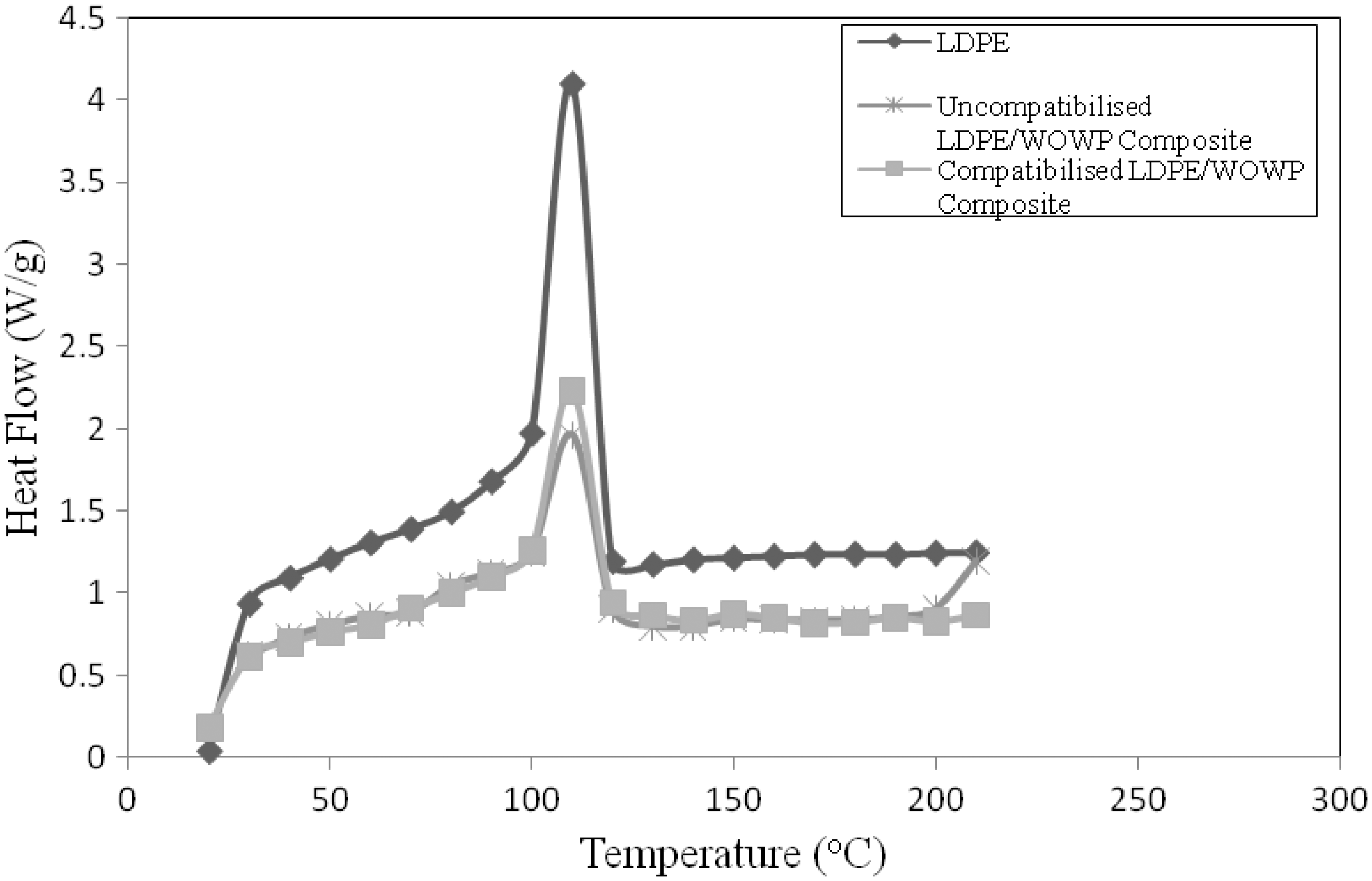
DSC curves of uncompatibilized and compatibilized LDPE/WOWP composites.
Figure 8 exhibits IR spectra of uncompatibilized and compatibilized LDPE/WOWP composites. It can be seen that the peak of absorbance at 3460 cm−1 corresponds to –OH functional group of WOWP filler. The addition of MAPE compatibilizing agent reduces the peak to 3448 cm−1 due to the interaction between –OH functional group and polar side of MAPE compatibilizing agent produces the covalent bonding. The interaction between WOWP filler and MAPE compatibilizing agent is not clearly seen on peak 2924 and 2369 cm−1 which are assigned to C–H symmetrical and asymmetrical of LDPE chain. On the other hand, the increased absorbance between 1450 and 1475 cm−1 which is corresponded to the interaction between polyethylene side of the compatibilizing agent and the matrix produces a deformation of –CH2 bonding. This might be due to the diffusion of polyethylene group of the compatibilizing agent into the LDPE matrix imparts to the increasing on tensile strength and Young’s modulus of compatibilized LDPE/WOWP composites as discussed previously. The scheme of reaction between WOWP filler and compatibilizing agent is shown in Figure 9.
FT–IR spectra of (a) uncompatibilized and (b) compatibilized LDPE/WOWP composites. The scheme of reaction between WOWP filler and MAPE compatibilizing agent.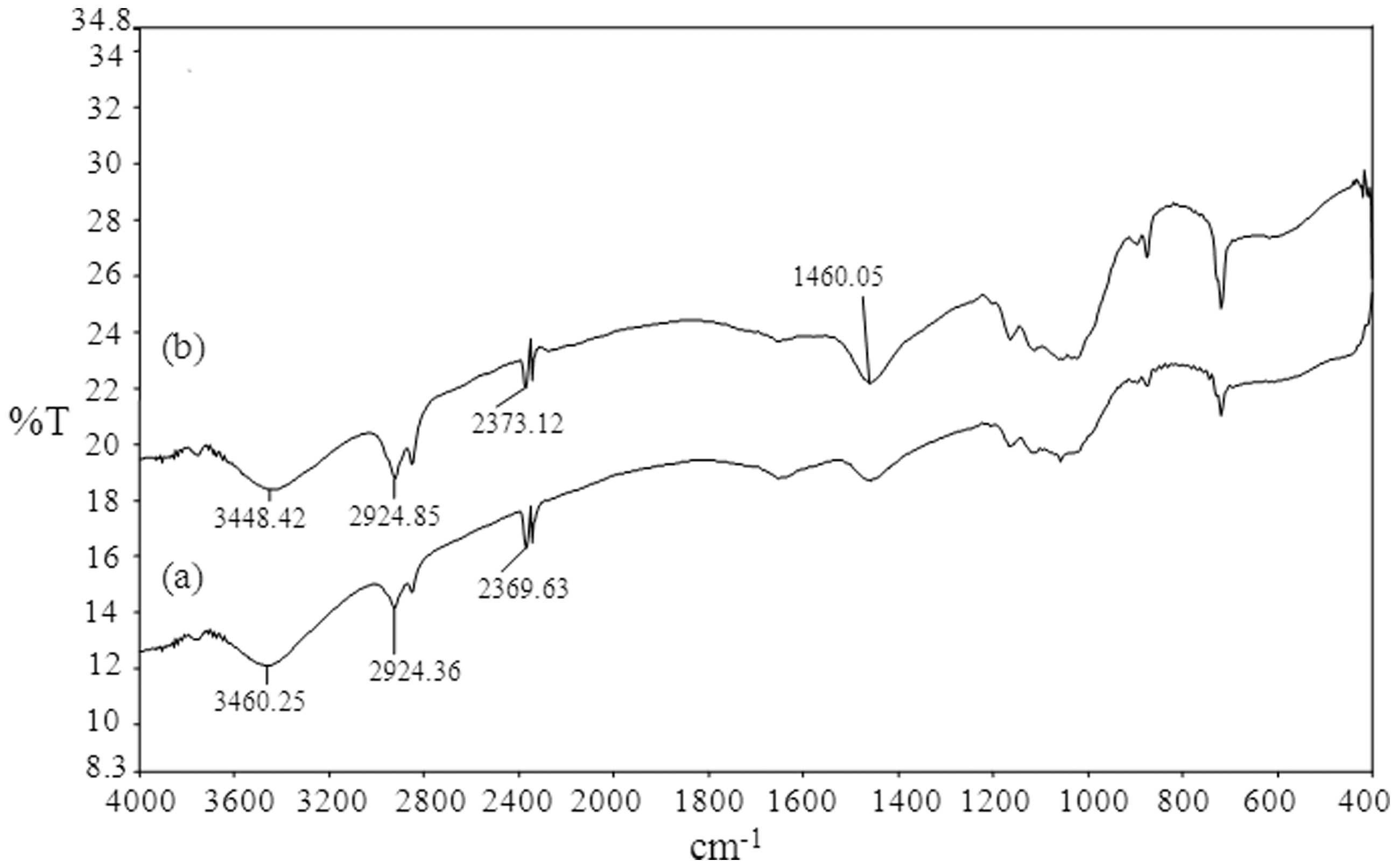
CONCLUSIONS
The tensile strength and the Young’s modulus of LDPE/WOWP composites increased with the increasing of WOWP filler loading, but decreased on elongation at break. The effect of compatibilizing agent was clearly seen that the tensile strength and the Young’s modulus of compatibilized LDPE/WOWP composites were higher than uncompatibilized LDPE/WOWP composites, however, lower on elongation at break. Futhermore, the compatibilized LDPE/WOWP composites have higher thermal stability, and Xc compared to uncompatibilized LDPE/WOWP composites, but Tm did not change significantly. IR spectroscopy and SEM fractured surface studies revealed that compatibilizing agent acted as a chemical bridge between filler and matrix, thus improved filler dispersion in the matrix and enhanced interfacial adhesion between WOWP filler and LDPE matrix.
Footnotes
ACKNOWLEDGEMENT
The authors acknowledge the Universiti Malaysia Perlis for funding this project through research grant.