



Abstract
The internal friction behavior of the nanocomposite polymer was studied using a multifunction internal friction apparatus. It is shown that the internal friction peak in the polymer has relaxation feature and the peak height is almost independent of frequency for the polymer without nanosilica. Nevertheless, the peak height in the polymer with nanosilica increases not only with increasing vibration frequency, but also with increasing nanosilica content, which results from the stronger interaction between nanosilica with polymer chains. For the nanocomposite polymer with 3 wt.% nanosilica, the activation energy of polymer chain motion is higher than that of neat copolymers.
INTRODUCTION
The experimental methods of investigating polymeric systems nowadays have reached a very developed stage, which allows micromanipulation up to the level of single monomers. In this way, information on basic macroscopic features, such as the mechanical module and the dielectric relaxation, gets complemented by observations on the microscopic level. Furthermore, one can monitor the motion of portion of the macromolecules through some special methods.
The internal friction method has been widely used to investigate the various low-frequency relaxation processes of solid materials in the recent decades [1]. However, all the previous investigations, to our knowledge, are almost focused on low-damping metal materials, such as neat metal or alloys [2], nonmetal composites, and so on, and there has been very little research concerning for organic polymers, especially composite polymer [3]. It is well known that polymers are complicated systems that display a rich variety of dynamical processes in the time/frequency scale-with vibrations, and the dynamical process has something to do with side group motions, α-transition, secondary relaxations, and segmental dynamics. The internal friction method can be used to determine above-mentioned the dynamical processes in polymers such as the glass transition, obtaining some information on the microstructure of polymer. In the recent years, research on the polymer composite materials by internal friction technology has been reported [4,5]. However, there are no reports on the thermosetting polymer with nanoparticles by internal friction technology.
Nanosized silica is a very useful reinforcement of thermoplastic and thermosetting polymers if it can be dispersed well in polymer matrices [6–9]. However, the structure complex of the multicomponents of the composite polymers increases the insufficiency for understanding the relationships of microstructures and components with dynamical properties of polymer composites containing nanometer-scale fillers. Therefore, it is necessary to investigate the relaxational features of composite polymers by internal friction method for understanding the microscopic reinforcing mechanism of nanosized silica.
EXPERIMENTAL
The specimens used for measuring internal friction are prepared from biphenyl A epoxyl diacrylate as the oligmer, butyl acrylate and methyl methacrylate as active monofunctional monomer, Irgacre 907 (2-methyl-1-(4-methylthiophenyl)-2-morpholinopropanone-1) as photoinitiator, and silica with a size of 10–15 nm as additive components. All chemical reagents were used as-received from the market.
After the solid powder silica was added with a certain proportion (all wt.% values) to liquid active components containing oligmers (about 20–50%), monomers (45–75%), and photoinitiator (3%), the mixture was stirred by a mechanical stirrer and a supersonic vibrator at room temperature for nearly 1 h to get stable dispersing systems. Then, the dispersing mixtures, poured into sample cells to obtain 1 × 5 × 55 mm3 specimens, were photopolymerizated on a UV curer (UV125, Beijing Exploit Co.) by the irradiation of high-pressure mercury lamps with a UV intensity of 0.4 mW/cm2 for less than 1 min to obtain solidified nanocomposite samples for testing.
Microstructures of the nanosilica composites materials were characterized on the cut samples utilizing standard operating techniques. The cut samples, into which the bulk nanocomposites were cut at the ambient temperature by diamond knife and the cut collected on a copper grid, were observed by means of transmission electron microscopy (TEM) with a Model of JEOL JEM100SX.
All samples were shaped to cuboid with 1 × 5 × 55 mm3 and polished to meet the need of the measurements of the low-frequency internal friction. The internal friction (Q−1) and relative shear modulus were measured by a multifunction internal friction apparatus (MFIFA-1, Institute of Solid State Physics, Academia Sinica) [10], which basically consists of an inverted torsion pendulum, a temperature programmer, a photoelectron transformer, an IBM computer, and an 8087 processor for controlling all measurements. This apparatus could provide several different frequency measurements at one temperature running in the forced oscillation mode. The scope of temperature measurement ranged from 240 K or 300 K to 390 K. During running, the specimen was oscillated at several discrete frequencies in sequence, and was heated at a rate of 1°C/min.
RESULTS AND DISCUSSION
Figure 1 shows internal friction–temperature curves of the neat polymer without nanosilica. It can be seen that the neat copolymers present an internal friction peak at about 320 K and the peak position shifts toward higher temperature with increasing frequency, indicating that the peak possessed relaxational feature.
Internal friction as a function of temperature for the polymer without nanosilica at different vibration frequencies. Note: *, f = 0.05 Hz; Δ, f = 0.1 Hz; and +, f = 1 Hz.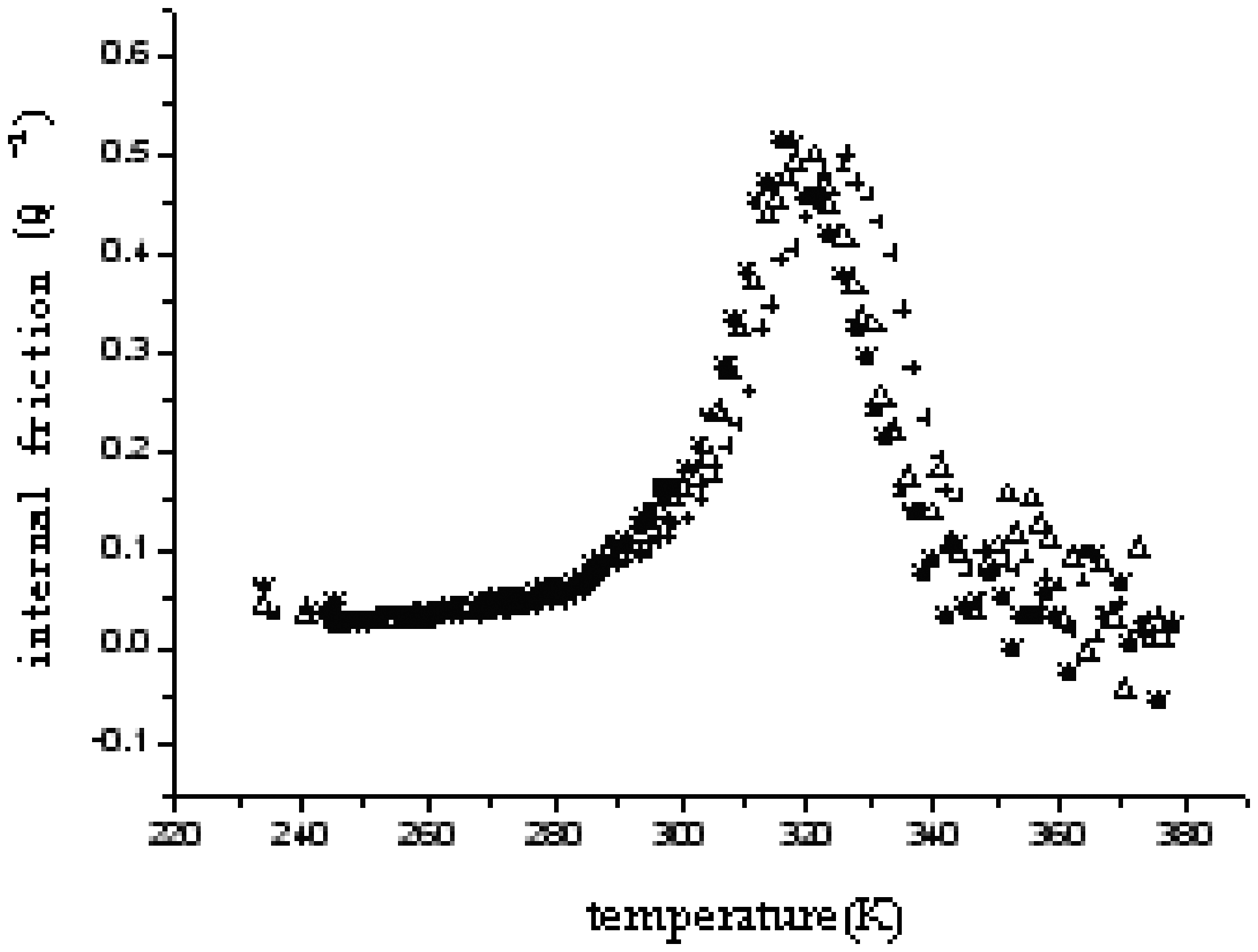
For a thermal activation relaxation process, peak temperature and its activation energy follow Arrhenius law [11], i.e.,
where 
where Arrhenius plots of the peaks for the neat polymer and the polymer with 3 wt% nanosilica. Note: ▪, Neat polymer; ◯, the polymer with 3 wt.% silica.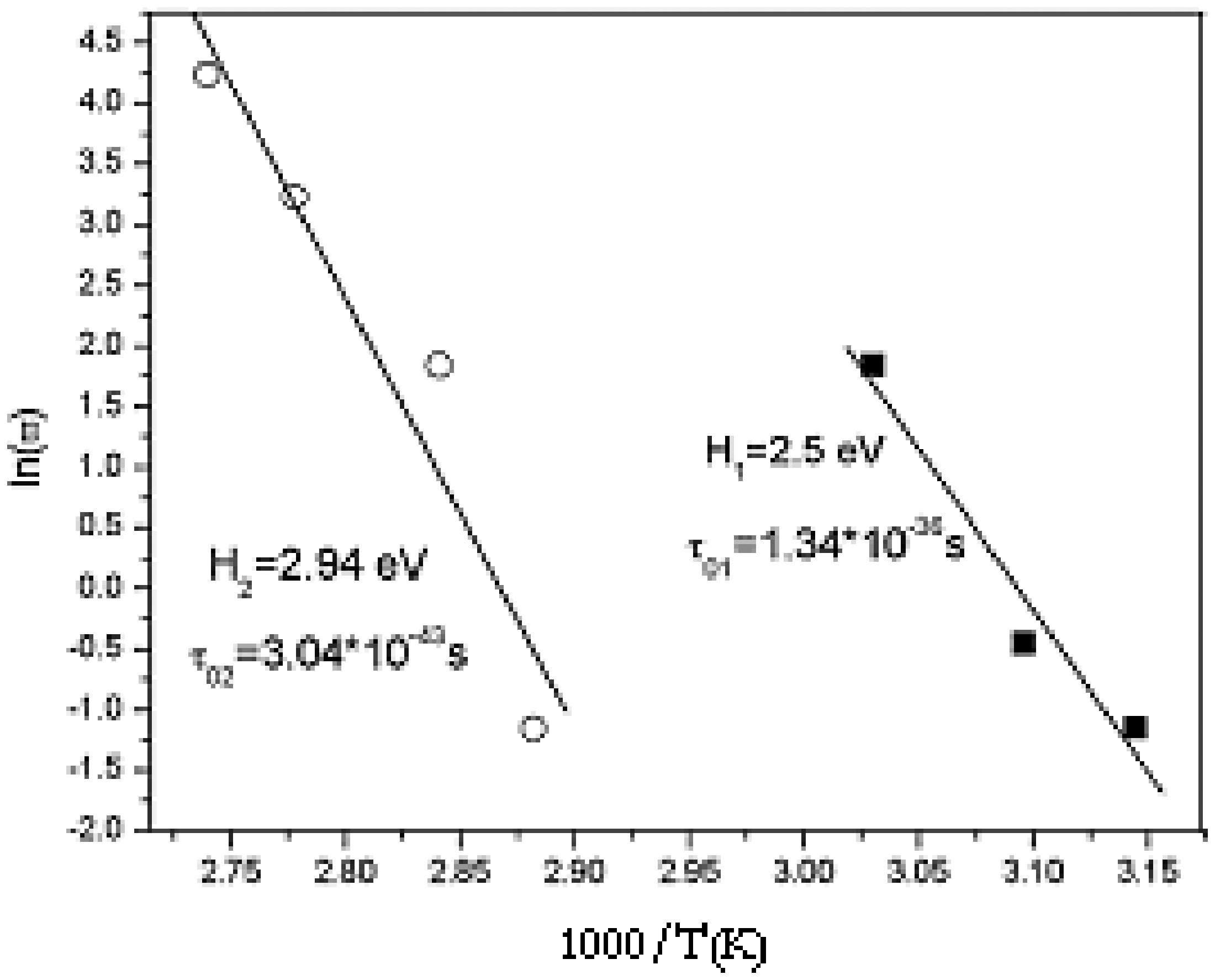
From Figure 1, it can be known that their peak heights are almost independent of frequency. The internal friction peak possibly results from the movement of the chains in copolymer. There are side chains and different structure main chains. The chains can move and produce an internal friction peak by induced stress. Because the interaction between molecules or/and segments is equal to each other statistically within copolymers, the internal friction value with different frequencies is almost the same.
As shown in Figure 2, for the nanocomposite polymer with 3 wt.% nanosilica and neat copolymer,
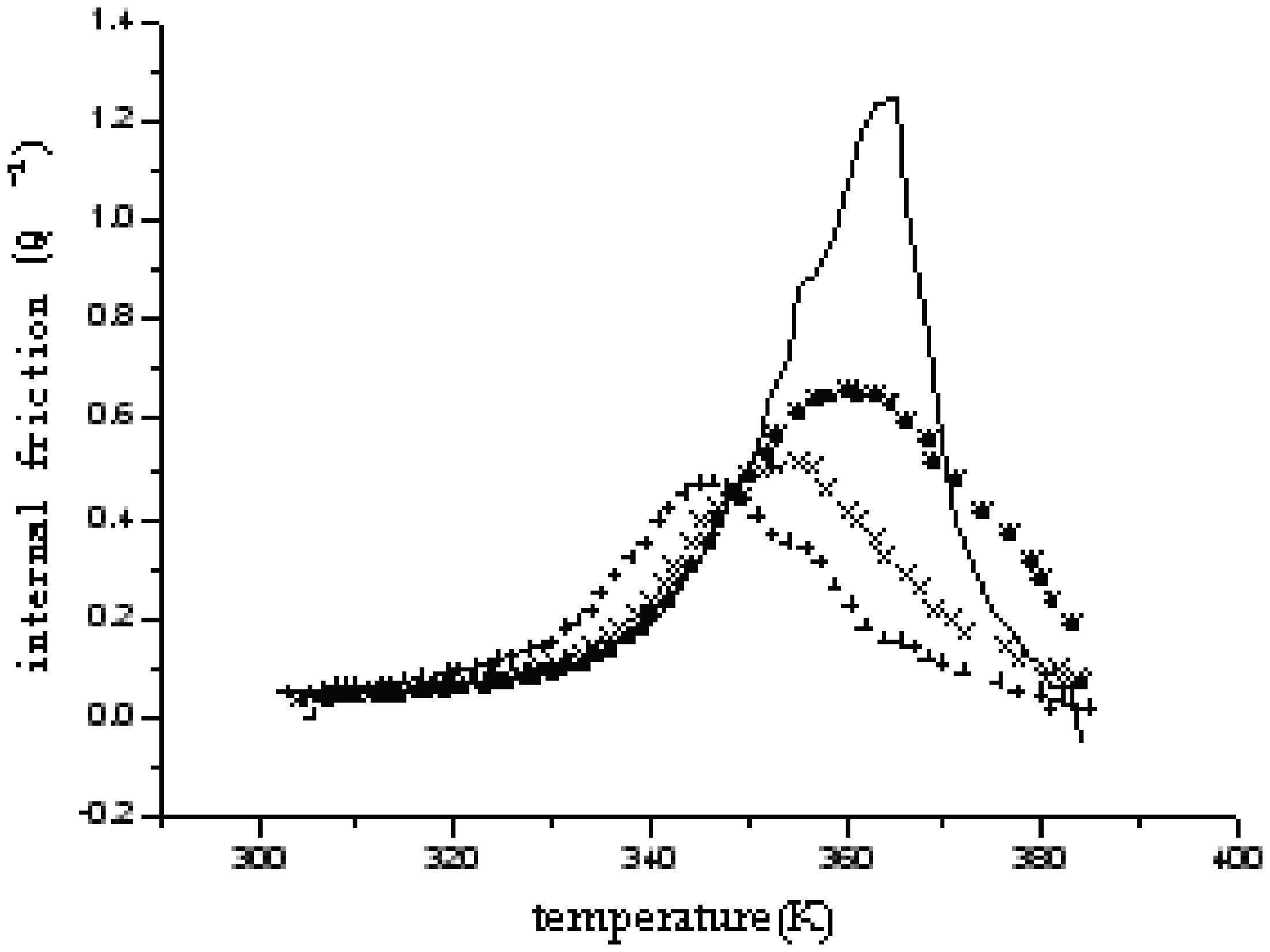
Figure 3 shows the internal friction–temperature curves of the composite polymer with 3 wt.% nanosilica at different frequencies. It can be seen that the peak temperature also shifts to higher temperature with increasing frequency. Different from Figure 1, the peak heights in Figure 3 increase drastically with increases with increasing frequency. The existence of ‘crosslinking’ points resulting from interaction of nanosilica with polymeric chain causes the shortening of movable segments, the segments motivation might be trailed off by the ‘crosslinking’ points. In the nanocomposite, the peak temperature from every frequency was higher than that in the neat copolymers, indicating that the presence of the nanometer silica in the polymer matrix improved the thermal stability of materials. By nonlinearly fitting, the relationship of the peak height with frequency can be expressed as: Internal friction as a function of temperature for the polymer composite with 3 wt% nanosilica at different vibration frequencies. Note: |, f = 11 Hz; *, f = 4 Hz; ×, f = 1 Hz; and +, f = 0.05 Hz.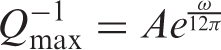
where
Figure 4 shows the internal friction–temperature curves of the composite polymer with different nanosilica contents at 0.05 Hz. From Figure 4, it can be seen that the height of internal friction peak increases with increasing nanosilica content in the matrix, and the peak temperatures are nearly same for different nanosilica contents. This phenomenon results from the stiffening of the matrix imparted by inorganic nanometer silica. The motion of the acrylates copolymer chain was further restricted by the interaction of between polymer segment and silica size. The relaxation strength increases with increasing nanosilica content.
Internal friction–temperature curves for within the composite polymer with different nanosilica contents at 0.05 Hz. Note: Silica content wt%, |, 0.5; ▵, 1; ▴, 3; and ×, 4.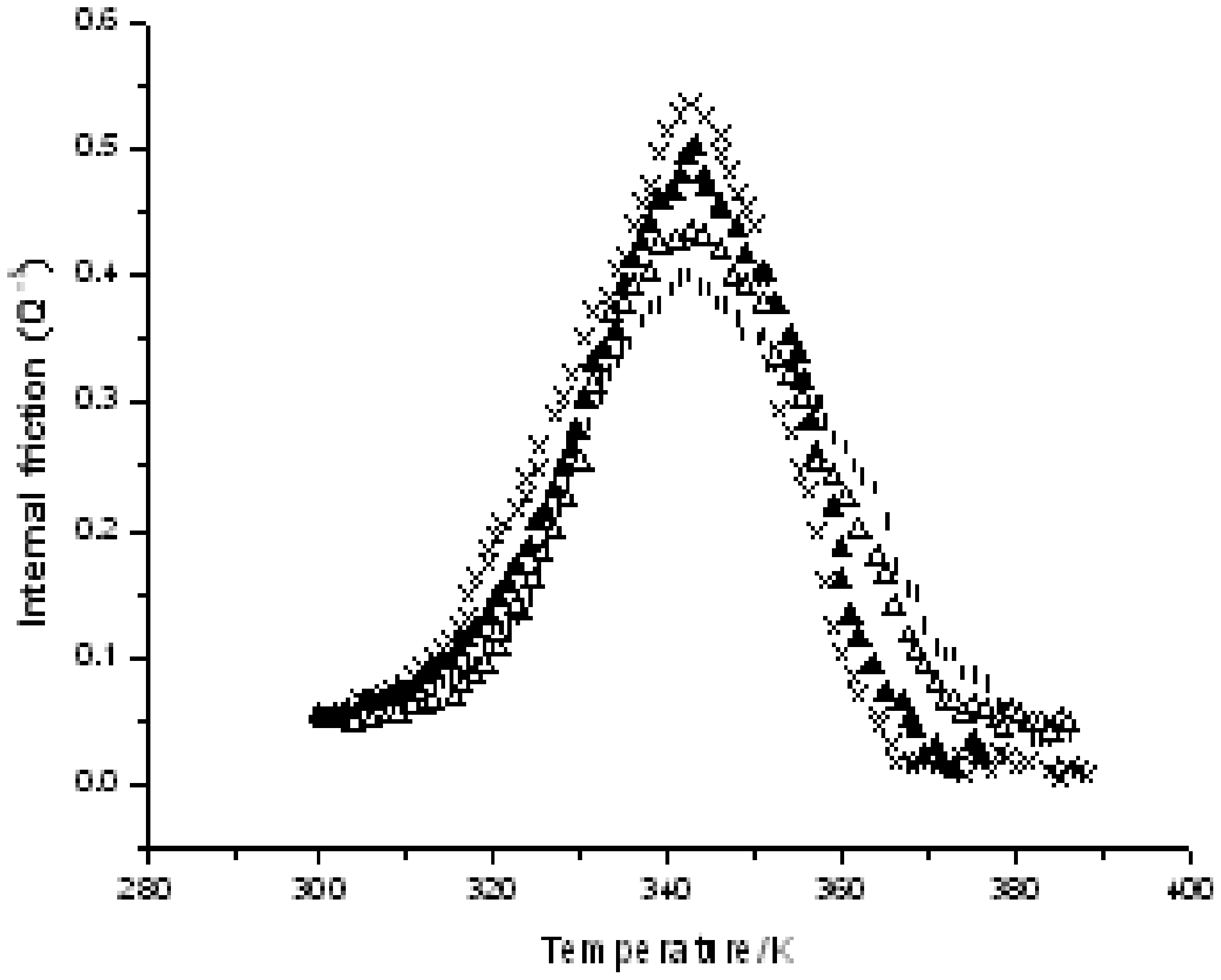
The damping in composition polymer could be attributed to the interaction of the nanosilica inside the polymer matrix with polymer segments. The increase of relaxation strength of the nanocomposites results from the existence of nanosilica in polymer matrix, which results in partial transformation of ‘free’ macromolecule segments into a ‘bound’ state with super-segmental order. As a result, intensification of the overall damping process was observable. On the other hand, there are phase boundaries between nanosilica with polymer chains. These phase boundaries also attribute the damping because of thermal expansion mismatching between nanosilica and polymers and some interface defects. It has been calculated that interface damping is proportional to the volume fraction of reinforce phase [12]. Therefore, the damping increases with increasing nanosilica content. As a matter of fact, the damping mechanism of nanocomposite polymer with nanometer-scale silicas is quite complicated, which is different from the conventional micrometer-scale silica. The interface between polymers with nanometer silica was able to be a gradual penetrating region, i.e., the transitional region, as shown in Figure 5. It is concluded that the penetrating group is likely to be hydroxyl group of biphenyl A epoxyl group-suspending polyacrylates main chains and sil-hydroxyl group on surface of nanosilica. The region possibly attributes to dissipation of main energy and increases with increasing nanometer particle volume fraction.
Model of nanosilica-dispersing polymer matrix.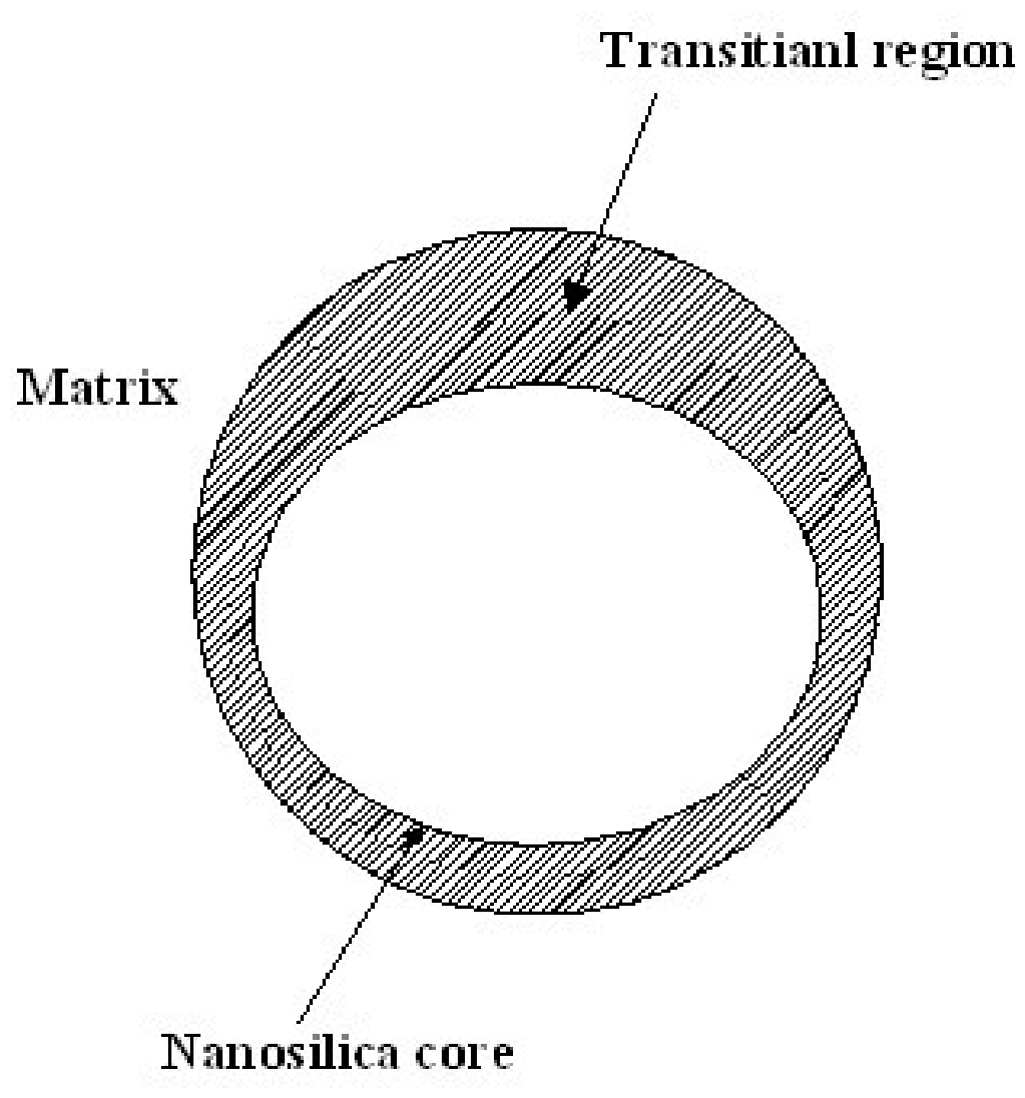
From Figure 6, it can be seen that nanosilica is homogeneously dispersed with a narrow size distribution in photopolymerized nanocomposite. The dots in the image located about from 10 to 15 nm, in conformance with the primary size of nanosilica that is embedded into the polyacrylates matrix. Due to dispersing states uniformly of nanosilica sizes, the interaction between nanosilica and polymer segments is considered to be equivalence, so polymer segments would be activated at almost same temperature for nanocomposites with different concentrations of nanosilica in the photocured matrix. The data have not been recorded regularly in higher temperature for the samples been softened, but the tendency of internal friction changing was apparent. Of course, the molecular mechanism of the polymer–nanofiller interaction cannot be completely understood, but it can be suggested that the fillers can restrict chain mobility by formation of an immobilized polymer shell around the filler.
TEM of nanocomposite polymer with 3% nanosilica (100 K×).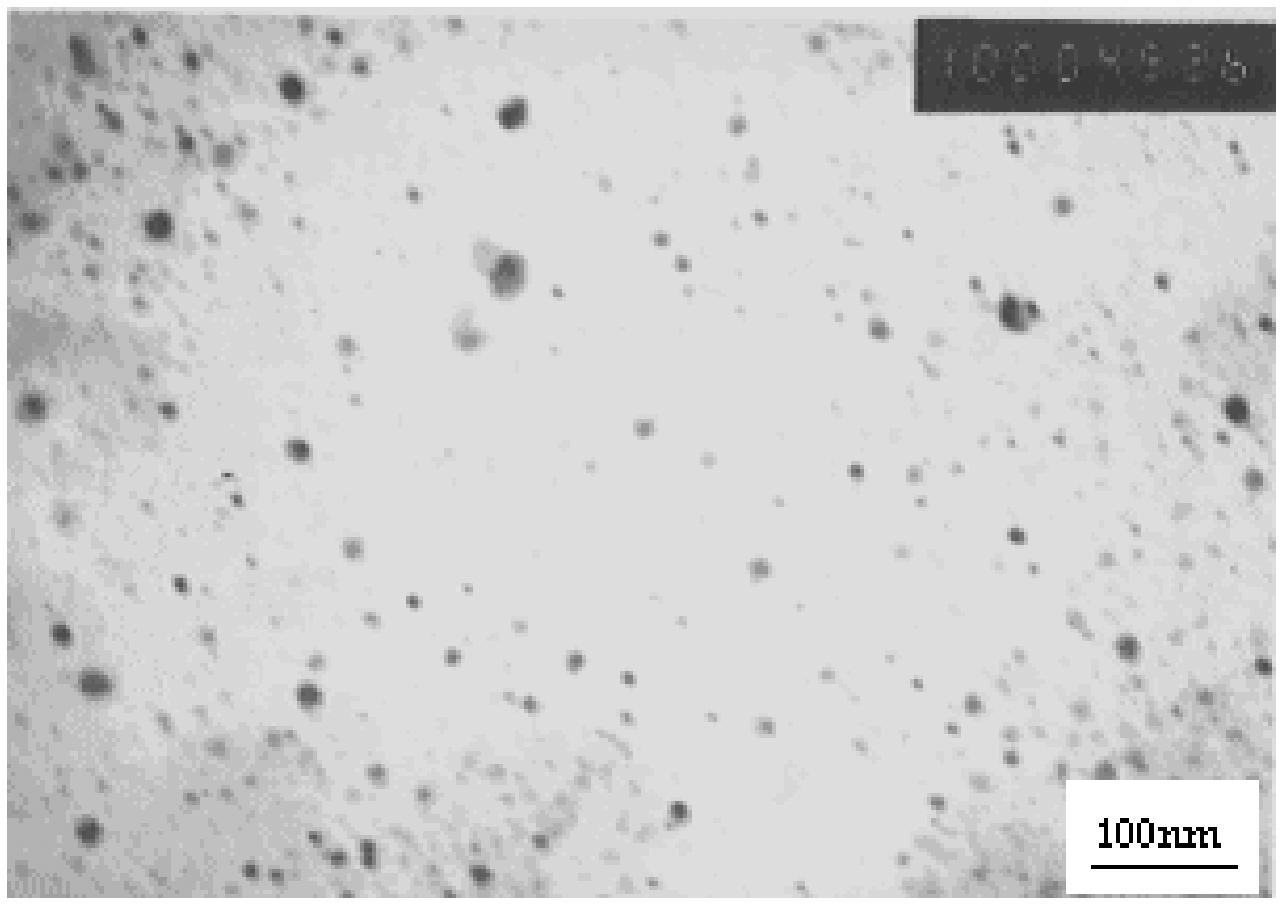
CONCLUSIONS
There is an internal friction peak on the internal friction–temperature curves in the polymer. It can be suggested that the peak results from the movements of chains in polymer. The nanosized filler can affect the dynamics of the relaxation peak of the nanosilica composites that are fabricated from acrylate oligment, monomer, and nanometer silica powder under irradiation of ultraviolet light, internal friction–temperature curves illustrate that position of internal friction peak is shifted toward higher temperatures with increasing forced oscillation frequency, and the height increases with increasing nanosized powder within organic polymer matrix. For nanosilica composites, the activation energy of the polymer chain motion is higher than that of neat copolymers and the relaxation time lesser.
Footnotes
ACKNOWLEDGMENTS
The authors thank Prof. Zhang Li De, who works in the Institute of Solid State Physics, Chinese Academy of Sciences, for his guidance in the internal friction test, and thank the Natural Science Foundation of Anhui Province (grant no: 090414183) and Science Foundation of Education Department of Anhui Province, China (grant: KJ2009A46) for providing their support.