



Abstract
The fracture behavior of all-PP composites was studied under quasi-static loading conditions. Fracture toughness was evaluated by means of different fracture mechanics approaches depending on materials’ behavior. Composites consolidated at low temperature exhibited pop-in features and the failure occurs typically by delamination and tape stretching and fracture. With increasing consolidation quality – i.e., with increasing processing temperature – the delamination became less pronounced, and so the tape stretching occurred, before the specimens break. In composites consolidated at the highest temperature investigated (190°C), the laminate-like structure typical of self-reinforced composites produced according to film-stacking method was lost. Accordingly, composites behave as if they were only α-PP and β-PP matrices: α-rPP exhibited typical brittle fracture of α-PP, while β-rPP exhibited the stable behavior with fully yielded ligament before crack propagation commonly observed for β-PP. In general, stress–strain behavior changed from stable to unstable and fracture toughness strongly decreased as consolidation quality increased. Based on these results and previous findings, it can be concluded that the properties of self-reinforced PP composites can be tailored for a given application through the quality of consolidation.
INTRODUCTION
Polypropylene (PP) is apparently the major polymeric construction material of the future in view of its impressive growth figures of the past years. However, PP as such has to be reinforced to meet the high demands on stiffness and strength in engineering applications and glass fibers are the major reinforcing elements used in these materials. Unfortunately, in view of recyclability, glass fibers are components which still cause environmental problems, both in mechanical recycling and thermal recycling (incineration).
An important contribution to environment preservation and energy saving may come from our ability to recover, recycle, and/or reuse materials. Consumer consciousness, waste management regulations, and environmental legislation are all pushing the manufacturers of raw materials and end-products to carefully consider the environmental impact of their products at all stages of the life cycle, including ultimate disposal. This scenario obviously involves also composite materials, increasingly used in several industrial sectors. In fact, there is a marked interest to improve the methods for recycling and reusing the existing composites, or to develop new materials intrinsically more suitable to be recycled and reused. In this framework, a great deal of efforts has been expended for the development of the so-called ‘single-polymer’ or self-reinforced polymer composite materials [1].
The concept of ‘single-polymer’ composites was first described by Capiati and Porter [2] using oriented polyethylene filaments and polyethylene powder with different melting points. Following this study, a large number of different techniques have been reported in the literature, for combining an oriented fiber with a separate phase to form the matrix.
The so-called ‘all-PP’ composites are designed to compete with traditional thermoplastic composites such as glass fiber-reinforced PP (GF-PP). In comparison to the classical composites, self-reinforced composites have some advantages in addition to the good mechanical properties: the enhanced recyclability and low density which are achieved using the same polymer for both fiber and matrix phases of the composite [3–10]. Unlike GF-PP, all-PP composites can be entirely melted down at the end of the product life for recycling into PP feedstock [11]. As a consequence, all-PP composites are gaining acceptance in automotive applications.
Further promising possibility to widen the processing window is to exploit the polymorphism-related difference between the melting temperature of β-(matrix) and α-phases (reinforcement) of PPs. Note that the β-PP has a markedly lower melting temperature that the α form [12–19]. Therefore, the β-PP can fulfill the role of matrix, while the stretched α-PP should work as reinforcement. The resulting composite is really a PP homocomposite – the matrix and the reinforcement differ from one another only in their crystalline modifications. This was confirmed in previous works [10,20,21].
Consolidation quality was proved to influence the mechanical behavior [22]. For assurance of the reliability of these materials in structural applications, it is of paramount interest to study and understand the fracture resistance of composites. In addition, the study may be useful also in the optimum design of structural materials.
Traditionally toughness has been characterized by the Izod or Charpy impact energy. It has long been recognized that the impact energy is a very complicated strain rate function of the plastic and fracture work with generally the plastic work dominating. The Izod and Charpy tests have lost favor in mechanical engineering because they cannot be used directly in design, but they still have use for comparing the toughness of a particular polymer composite system. Design of structural parts, their connecting, and assembly may be based on fracture mechanical approaches. In their desire to characterize toughness of polymer composites more exactly, many researchers have turned to fracture mechanics.
In this study, the fracture behavior of all-PP composites was studied under quasi-static conditions and toughness was evaluated by means of fracture mechanical approaches.
EXPERIMENTAL
Materials and Sample Preparation
Thermal and mechanical properties of materials determined by differential scanning calorimeter [10] and uniaxial tensile test.
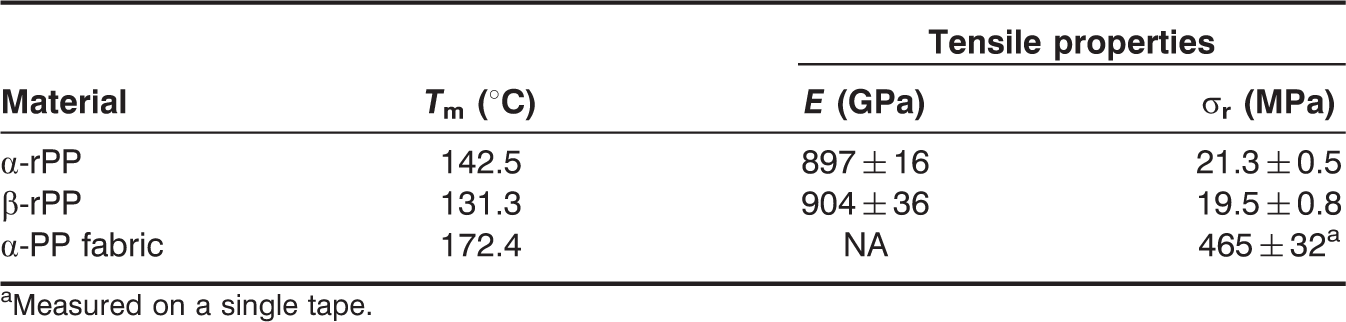
Measured on a single tape.
The matrix films (nine layers) and the reinforcing woven fabrics (eight plies) were laminated according to the film-stacking method. Since the properties of the fabrics showed some directional anisotropy, they were assembled adopting a cross-ply lay-up to make the resulting sheets orthotropic. Self-reinforced PP composite sheets with a thickness of 2.5 mm and a nominal reinforcement (i.e., α-PP fabric) content of 50 wt% were produced by compression molding of a film-stacked package. It was demonstrated in previous works that there was no significant effect of the holding time and pressure on consolidation quality of composites. Therefore, composites were obtained by only varying processing temperature. It was selected 5–45°C above the relevant matrix melting temperature, i.e., composites were processed at 147°C, 162°C, 177°C, and 190°C. For the melting temperature, the differential scanning calorimetry (DSC) melting peak was considered (Figure 1). The consolidation process took place as follows: after heating up the molds, the film-stacked package was inserted and held for 30 s without pressure and for 90 s under a pressure of 7 MPa, and then it was cooled down to 50°C with a cooling rate of 7.5°C/min and demolded. It is noteworthy that the holding time at processing temperature was kept as short and low, respectively, as possible to prevent shrinkage (relaxation) of the fibers.
DSC melting curves of matrices and reinforcement.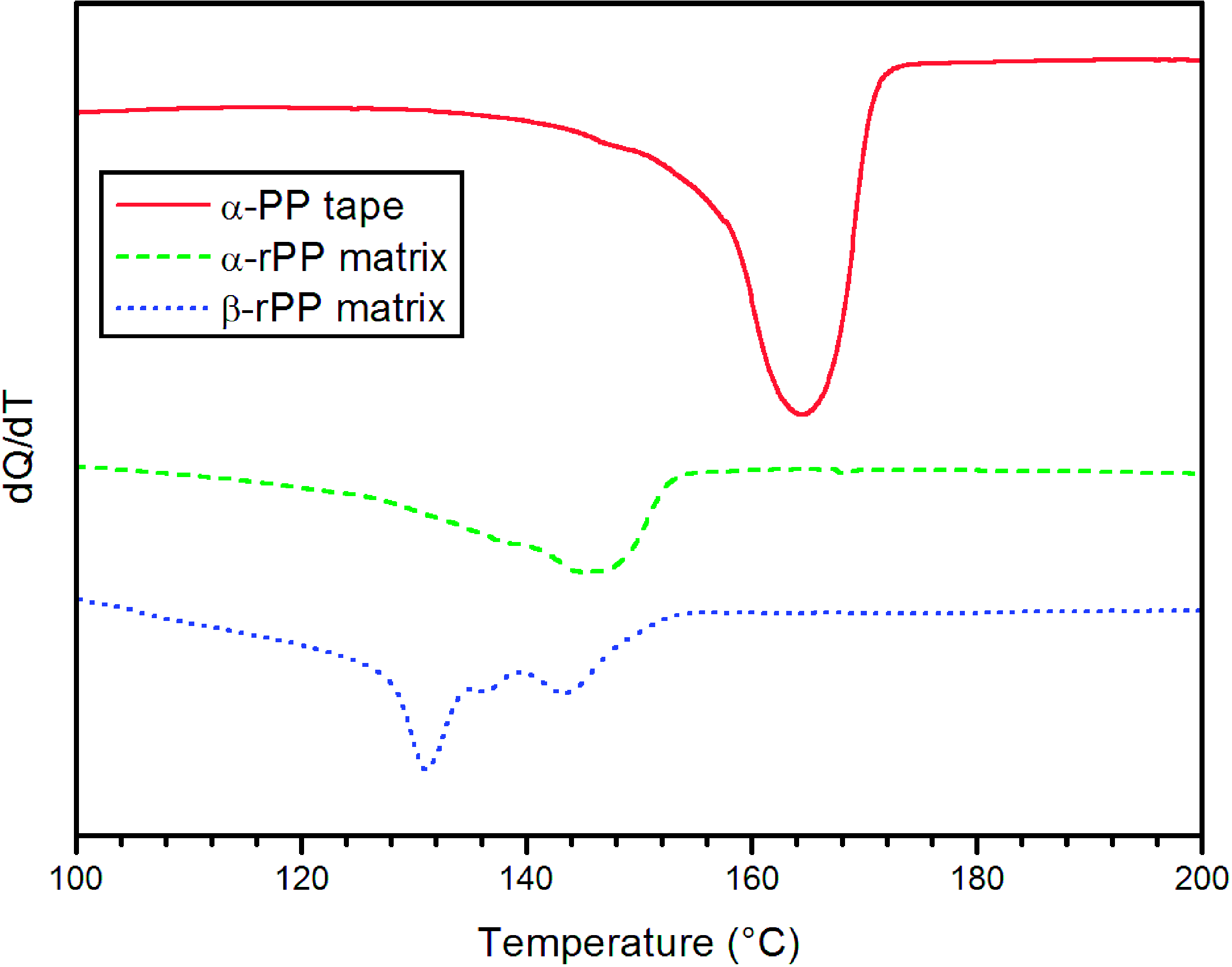
Mechanical Tests and Data Reduction
Fracture characterization was carried out on mode I double edge-notched tensile (DENT) specimens cut from 3 mm thick plaques (nominal width W was 23 mm and nominal length S was 100 mm), at a cross-head speed of 10 mm/min. Sharp notches were introduced by scalpel-sliding a razor blade having an on-edge tip radius of 0.13 mm.
Different fracture mechanics approaches were applied depending on materials’ behavior.
In cases where there is no significant crack growth resistance, the value of the J-integral at initiation, J
Ic, is a good measure of toughness. The J-integral is conventionally defined for nonlinear elastic materials as a path-independent line integral. In fact, the single-specimen J formulation has been extensively used in the past to characterize the ductile fracture in polymers [23,24]. Although ASTM E813 and ASTM E1152 apply only to ductile fracture, more recent standards, allow J-integral of testing materials that fail by cleavage. The J
c parameter [23,25] is applicable to characterize the quasi-brittle failure behavior (load–displacement curves with sharp load drop at the point of fracture) of specimens with a crack to depth ratio close to 0.5. Jc
was evaluated at the instability load point by calculating the fracture energy required to produce cleavage behavior of pre-cracked specimens having a crack depth-to-width ratio of 0.45 ≤ a/W ≤ 0.55 as: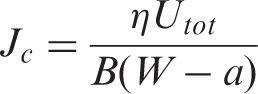
where Utot is the overall fracture energy, i.e., the total area under the load–deflection curve, B the thickness of tested specimens, and η a geometry factor for DENT specimens is expressed as [26]
The J-integral approach is a natural extension of linear elastic fracture mechanics and works best for not too ductile fractures. A methodology that works best for very ductile fracture that has been used for polymer composites is the essential work of fracture (EWF) approach. This approach was first proposed for plane-stress ductile metal fractures [27] and later applied to polymers [28,29]. The aim of the EWF approach is to separate the work performed in the fracture process zone, We, from the total work of fracture, Wf, that in ductile polymers is often dominated by the work of plastic deformation, Wp.
The work performed in the fracture process zone, termed as EWF, is a quasi-material property only dependent on the specimen thickness. The EWF method makes use of the fact that the essential work and the plastic work scale differently:
where B is the plate thickness, β the shape factor, and we and wp the specific EWF and the specific non-EWF, respectively. By dividing Wf by the ligament area lB, one obtains the specific total work wf that can be expressed as:
If the entire specimen ligament deforms plastically before fracture initiation, then the specific essential work can be found by testing different ligament lengths and extrapolating the specific total work of fracture to zero ligament length. In recent years, the EWF method has been extensively applied to polymers and there is a draft standard of the European Structural Integrity Society [30]. The EWF method delivers a single-fracture parameter that is representative of crack propagation.
It is noteworthy that JIc and we can be compared since they should be identical or very similar, as was indeed corroborated by several authors [31–34]. The EWF approach can also be used for plane-strain fracture JIc either obtained from slow-strain rate tests [35,36] or impact tests [37].
Broken samples were studied by optical microscopy and lateral views of tested samples were investigated by scanning electron microscopy (SEM) after they had been coated by a thin layer of gold.
RESULTS AND DISCUSSION
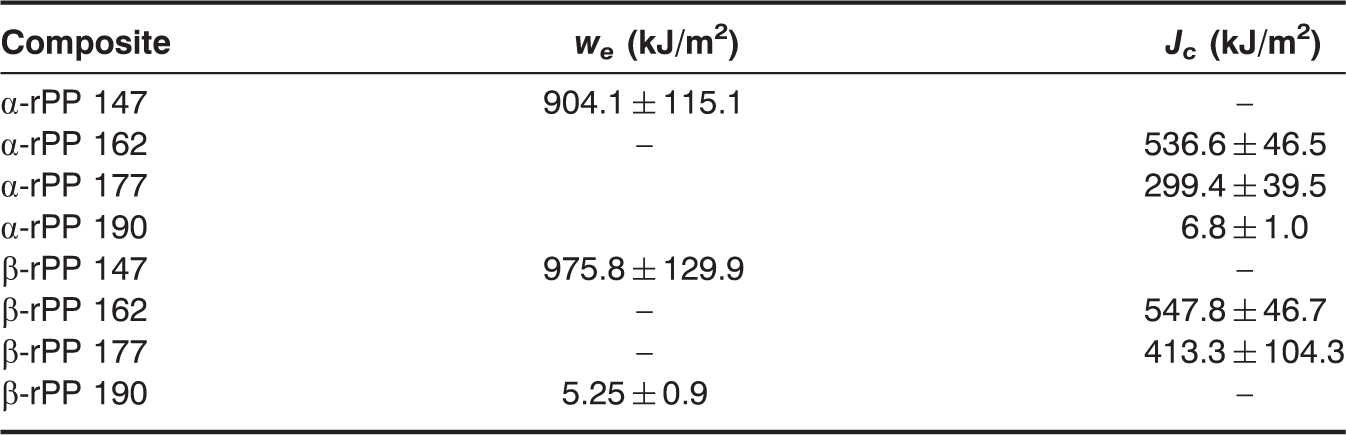
Figure 2 shows typical load–displacement curves of DENT specimen along with typical failure behavior for all composites. Composites consolidated at lower temperature (147°C) exhibited pop-in features, i.e., crack propagation occurred by the stick-slip mechanism. Each load drop resulted in a peak linked with the crack progress. The failure occurred typically by delamination and stretching with subsequent tensile failure of tapes. Load remained constant during these events and dropped to zero gradually. With increasing consolidation quality (with increasing processing temperature), the delamination and the tape stretching became less pronounced when the specimens broke (note that the delamination process absorbs high energy but easy delamination is linked to poor tensile and flexural mechanical properties). Composites consolidated at 162°C and 177°C exhibited non-linear quasi-brittle behavior with abrupt load drop. A different phenomenon was observed in composites consolidated at 190°C. Optical laminate-like structure typical of self-reinforced composites produced according to film-stacking method was lost. Accordingly, composites behaved as if they were only α-rPP and β-rPP matrices: α-rPP consolidated at 190°C exhibited typical brittle fracture of α-PP, while β-rPP consolidated at 190°C exhibited stable behavior with fully yielded ligament before crack propagation commonly observed for β-rPP. It should be recalled that in the case of composites obtained at high processing temperatures, significant transcrystalline layer was detected along the tapes as studied on thin sections by polarized light microscopy [38]. This transcrystalline layer has grown from the melted surface of the reinforcing tapes. Next to the transcrystalline layer, the matrix material crystallized in a spherulitic structure. Note that for processing temperatures as low as 162°C, some melting of tape surface occurred (see DSC curves in Figure 1). Existence of the transcrystalline layer ensures improved adhesion between the matrix and reinforcement. It seems that at the higher consolidation temperature (190°C) which is far above the temperature of the end of the melting peak of the reinforcement (∼174°C) almost total melting of reinforcing tapes occurred, so the fabric and the matrix are not only adhesively but also cohesively bonded, losing reinforcement effect.
Load–displacement curves and macroscopic failure behavior of all-PP composites.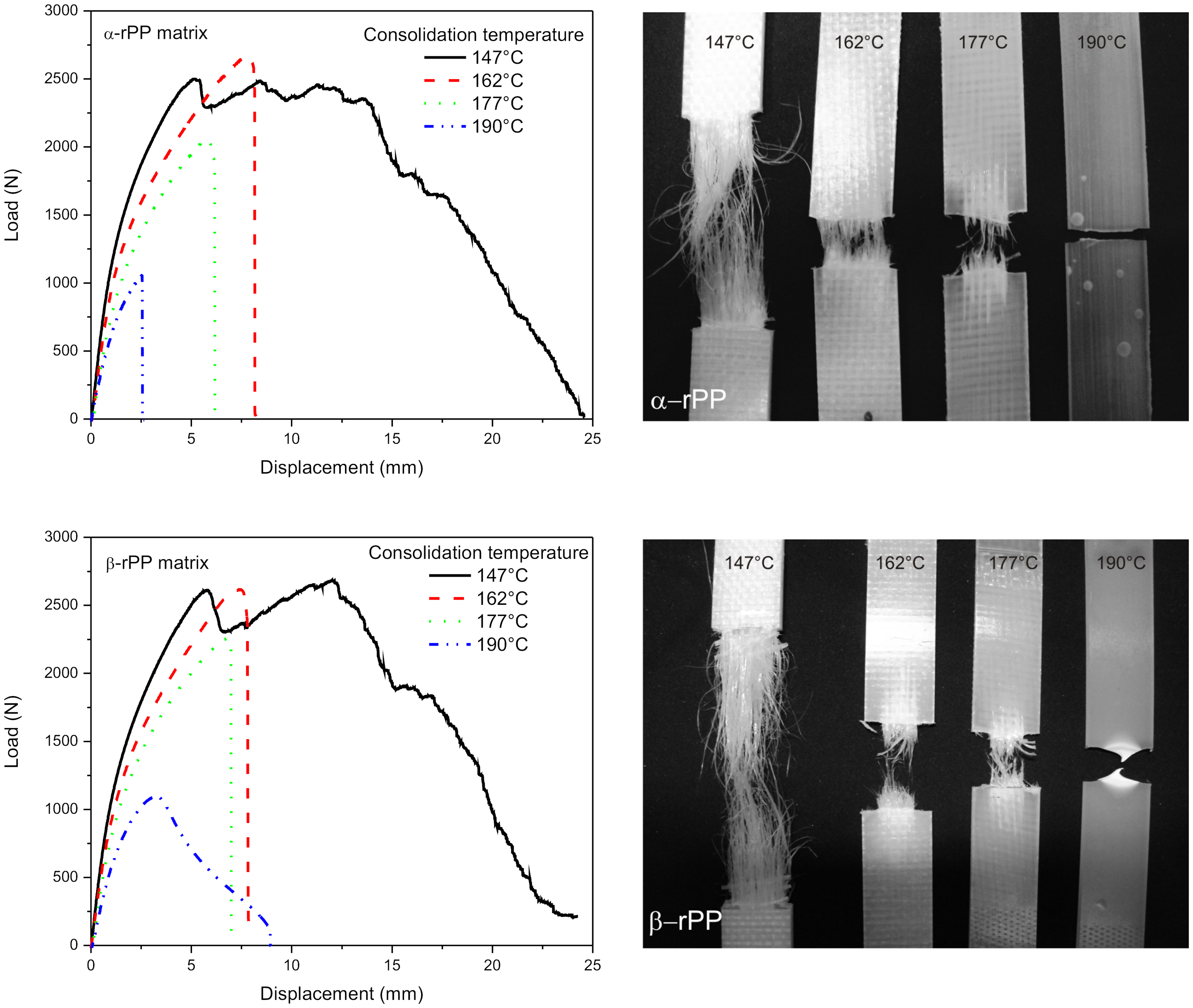
It is noteworthy that composites consolidated at the lowest temperature (147°C) absorb considerable higher energy than the better consolidated at intermediate temperatures (167°C and 177°C).
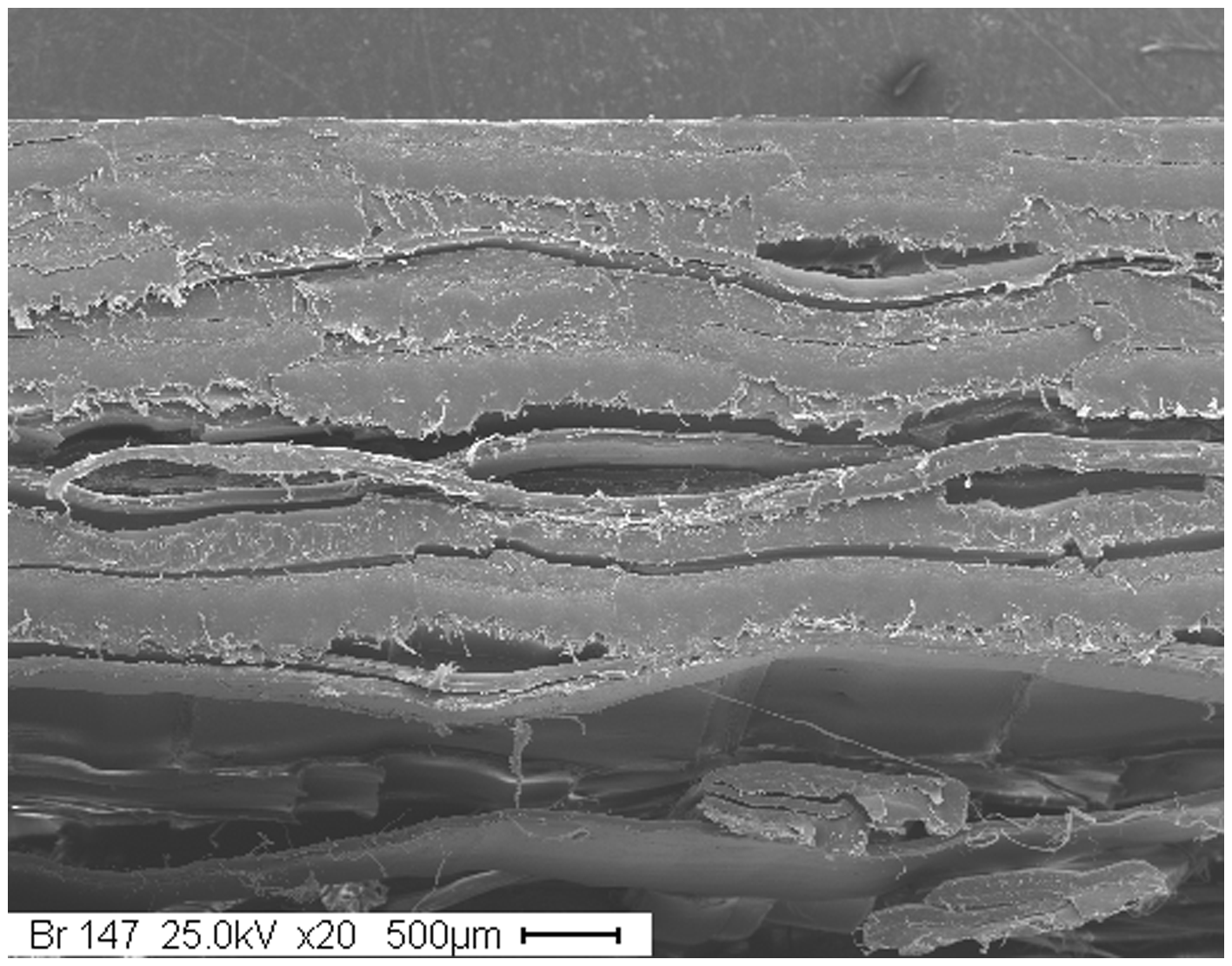
Optical micrographs give extra evidence of failure mechanisms. Some examples are shown in Figure 3. In poorly consolidated samples, debonding of tapes is clearly seen as white lines, and stretching of tapes can be easily observed. Moreover, lateral SEM inspection of failed samples confirms massive delamination of fabric tapes (Figure 4). In α-rPP-based composites consolidated at 190°C, on the other hand, no signs of plastic deformation are found, while β-rPP-based composites consolidated at 190°C exhibited fully yielded ligament.
Light microscopy photographs of some typical failures. SEM micrograph of typical failure of a poorly consolidated composite.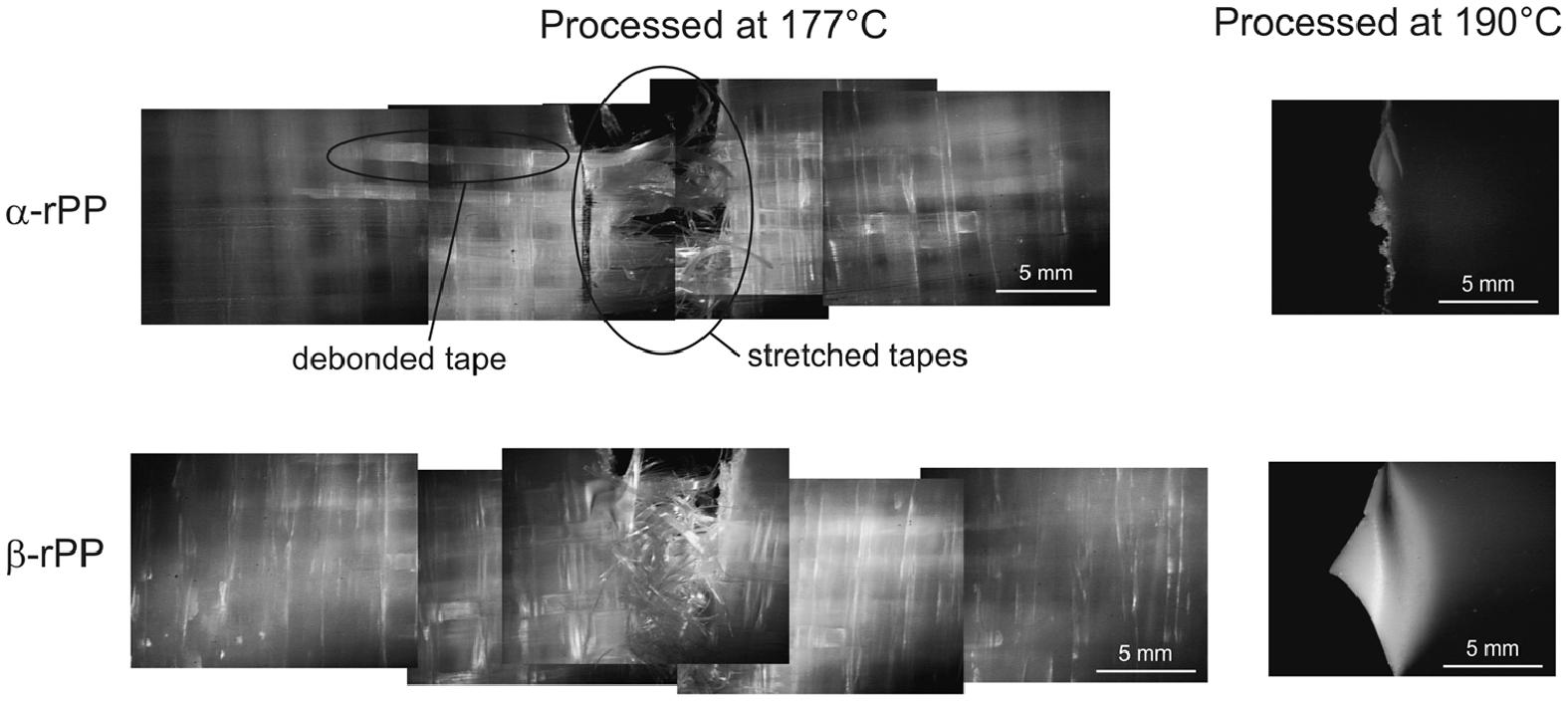
Toughness of self-reinforced PP composites.
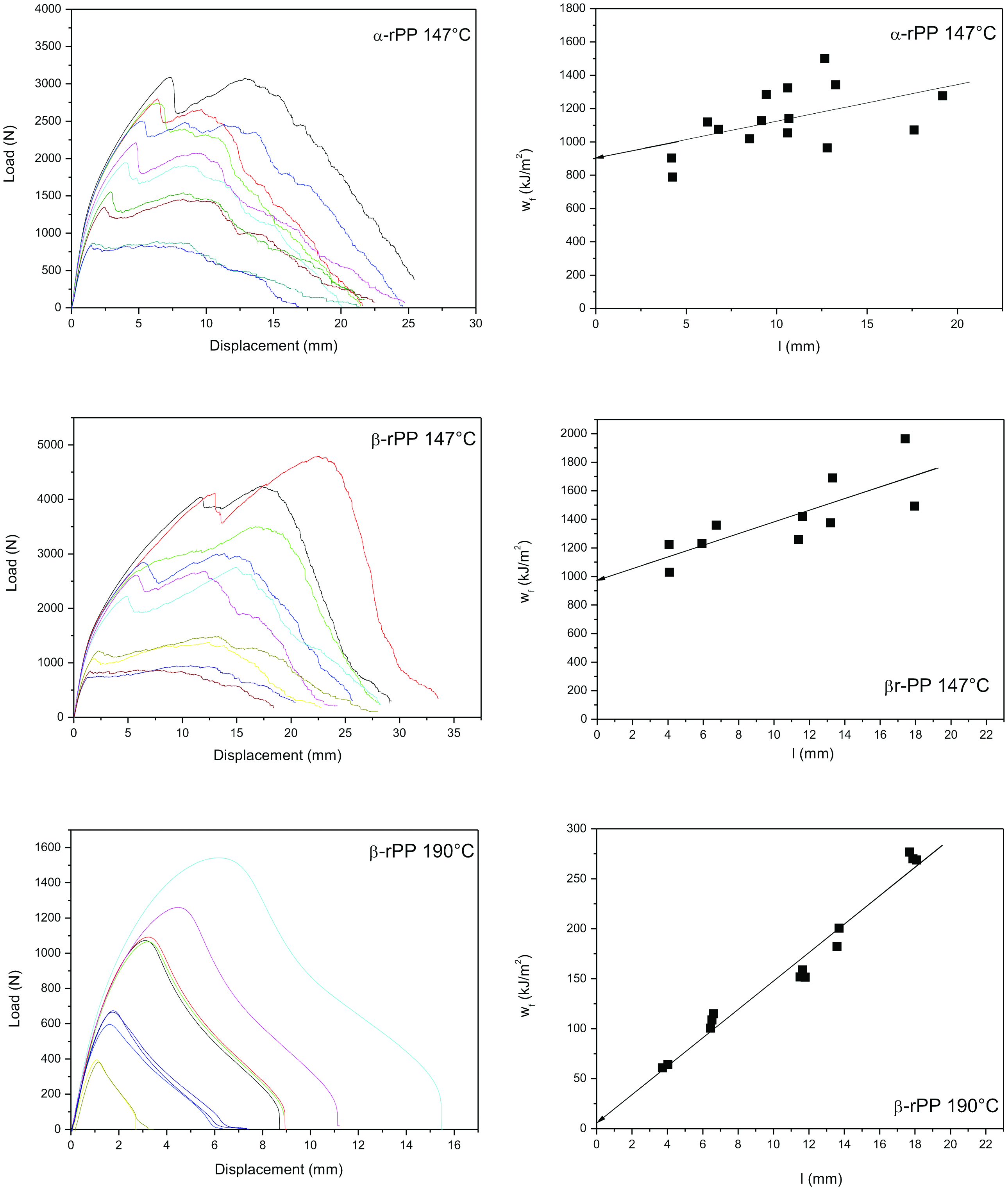
Load–displacement curves and work of fracture plots for composites which exhibited stable behavior.
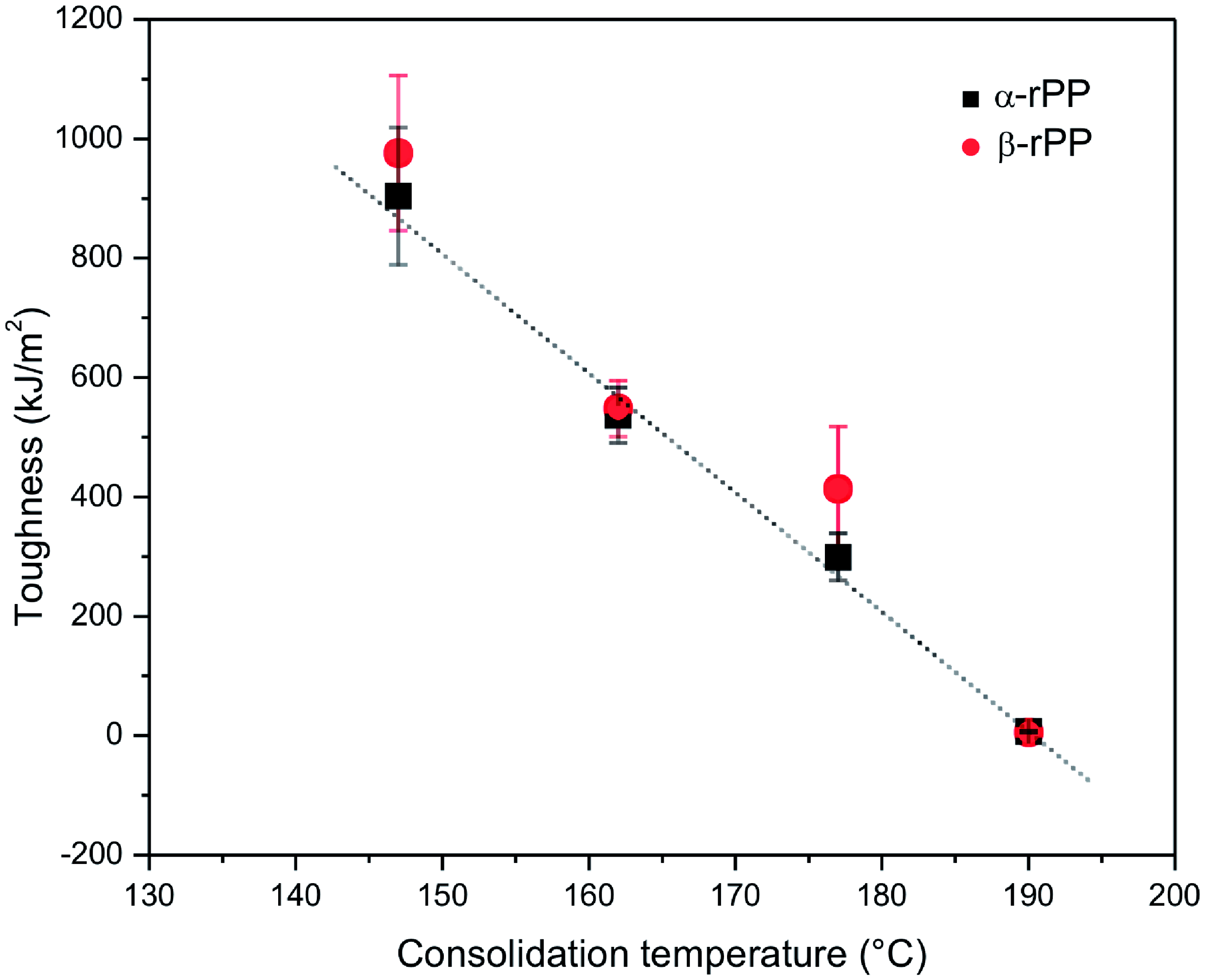
Toughness of the composites as a function of processing temperature.
From the above discussion, it can be concluded that in poorly consolidated composites, PP tapes debond from the PP matrix, so crack advances passing through the PP matrix leaving PP fibers practically intact and available for load carrying. This toughening mechanism, in which the fibers completely bridge the crack faces, preventing the composite from undergoing catastrophic failure, is known as a fully bridging situation [39]. After a certain degree of crack face displacement, fibers no longer bridge the crack faces and load starts to fall, while fibers continuously break, allowing the composites to reach a higher level of final displacement. The extension of this mechanism depends on the degree of adhesion between matrix and fabric: the lower the adhesion, the higher the degree of crack bridge. Hence, the superior performance of poorly consolidated composites is based on the high degree of PP fibrillation, giving rise to improved energy absorption capability with sustained crack growth stability through crack surface bridging and large drawability.
CONCLUSIONS
The fracture behavior of all-PP composites was studied under quasi-static loading conditions and toughness was evaluated by means of different fracture mechanics approaches depending on the materials’ response.
It was found that stress–strain behavior changed from stable to unstable and fracture toughness strongly decreased as consolidation quality increased.
The superior performance of poorly consolidated composites is based on the high degree of PP fibrillation, giving rise to improved energy absorption capability with sustained crack growth stability through crack surface bridging and large drawability.
Based on the results of this investigation and previous results on similar composites [22,38], it can be concluded that the properties of the composites can be tailored for a given application through the quality of consolidation.
Footnotes
ACKNOWLEDGMENTS
Authors thank the National Research Council of Argentina, the MINCyT (Argentina), the Hungarian-Argentinean Intergovernmental Science and Technology Programme (TéT AR-1/2007), and the Hungarian Scientific Research Fund (OTKA 75117) for financial support for this investigation. T. Bárány thanks the János Bolyai Research Scholarship of the Hungarian Academy of Sciences.