The soluble polyimide (PI)–silver nanocomposite (PISN) 6a containing chalcone moieties as a photosensitive group was synthesized successfully by a convenient ultraviolet irradiation technique. A precursor such as AgNO3 was used as the source of the silver particles. PI 6 was synthesized by the one-step synthesis of PI from polycondensation reaction of 4,4′-diamino chalcone 4 with pyromellitic anhydride 5 in the presence of iso-quinoline solution. The resulting composite film was characterized by Fourier transform infrared spectroscopy, X-ray diffraction, scanning electron microscopy, thermogravimetry analysis, and differential scanning calorimetry.
Polyimides (PIs) are a class of high-performance polymers that have excellent thermal, electrical, and mechanical properties and are widely used in microelectronic devices, such as buffer coatings, interlayer insulation, and wafer-scale packages [1,2].
Recently, photosensitive PIs have attracted a great interest, because they simplify processing steps by avoiding the use of photoresists to obtain the desired patterns [3–5].
There is intense interest in the synthesis and properties of metal clusters and nanoparticles prepared in both aqueous and organic solutions and prepared in condensed state, for instance, polymers, zeolites, and glasses. Clusters, nanoparticles, and their containing materials are potentially useful in a wide range of applications, including highly active catalysts [6], magnetic materials, quantum dots, and miniaturization of electronic devices and nonlinear optical materials [7–11].
Various methods can be used to produce metal nanoparticles within a polymeric matrix [12,13]. Most of them are based on in situ reactions, that is, the particles are generated from the respective metal precursors in the presence of the matrix polymer. Different procedures for the synthesis range from chemical reduction, photoreduction, thermal decomposition to vapor deposition methods and sputtering [14]. Several basic routes can be employed, in the case of dispersions, the solution of the metal precursor and the polymer are combined, and the reduction is subsequently performed in solution. Another method is by deposition, where the metal precursor and the polymer are first sprayed onto a substrate, and the reduction to the metal colloids is then performed. The last method is the immersion, where the solid polymeric material is placed into a solution containing the metal precursor. The selection of the polymeric matrix is crucial for the optimization of the systems. Frequently, the polymers are employed not only as protective coatings but also as the dispersing and stabilizing media for the metal nanoparticles. In many cases, the polymers that surround the metal nanoparticles can also exert direct influence on the particles and material properties. Up to now, several types of stabilizing and protective agents for metal nanoparticles have been thoroughly investigated [15–17].
In this study, we investigated the preparation of new PI–silver nanocomposite (PISN) by convenient ultraviolet irradiation technique at room temperature. The silver nanoparticles were homogeneously dispersed in the PI matrix and the PISNs exhibited an ultraviolet–visible (UV–vis) absorption peak, corresponding to the characteristic surface Plasmon resonance (SPR) of silver particles.
EXPERIMENTAL
Materials
All chemicals were purchased from Fluka Chemical Co. (Switzerland), Aldrich Chemical Co. (Milwaukee), Merck Chemical Co. (Germany), and Acros Organics N.V/S.A (Belgium).
Techniques
Fourier transform infrared (FT-IR) spectra were recorded on Galaxy Series FTIR 5000 spectrophotometer (England). Thermogravimetry analysis (TGA) and differential thermal analysis (DTG) data were taken on a Mettler TA4000 System under N2 atmosphere at a rate of 10°C/min. The morphologies of PISN 6a were investigated on Cambridge S260 scanning electron microscope (SEM). The film was cryogenically fractured in liquid nitrogen and then coated with Pt/Pd. Differential scanning calorimetric (DSC) analysis was performed on differential scanning calorimeter (Du Pont 910) at a heating rate of 10°C/min. X-ray diffraction (XRD) was performed on Philips X-Pert (Cu-Kα radiation, λ = 0.15405 nm).
Monomer Synthesis
SYNTHESIS OF 4,4′-DINITROCHALCONE 3
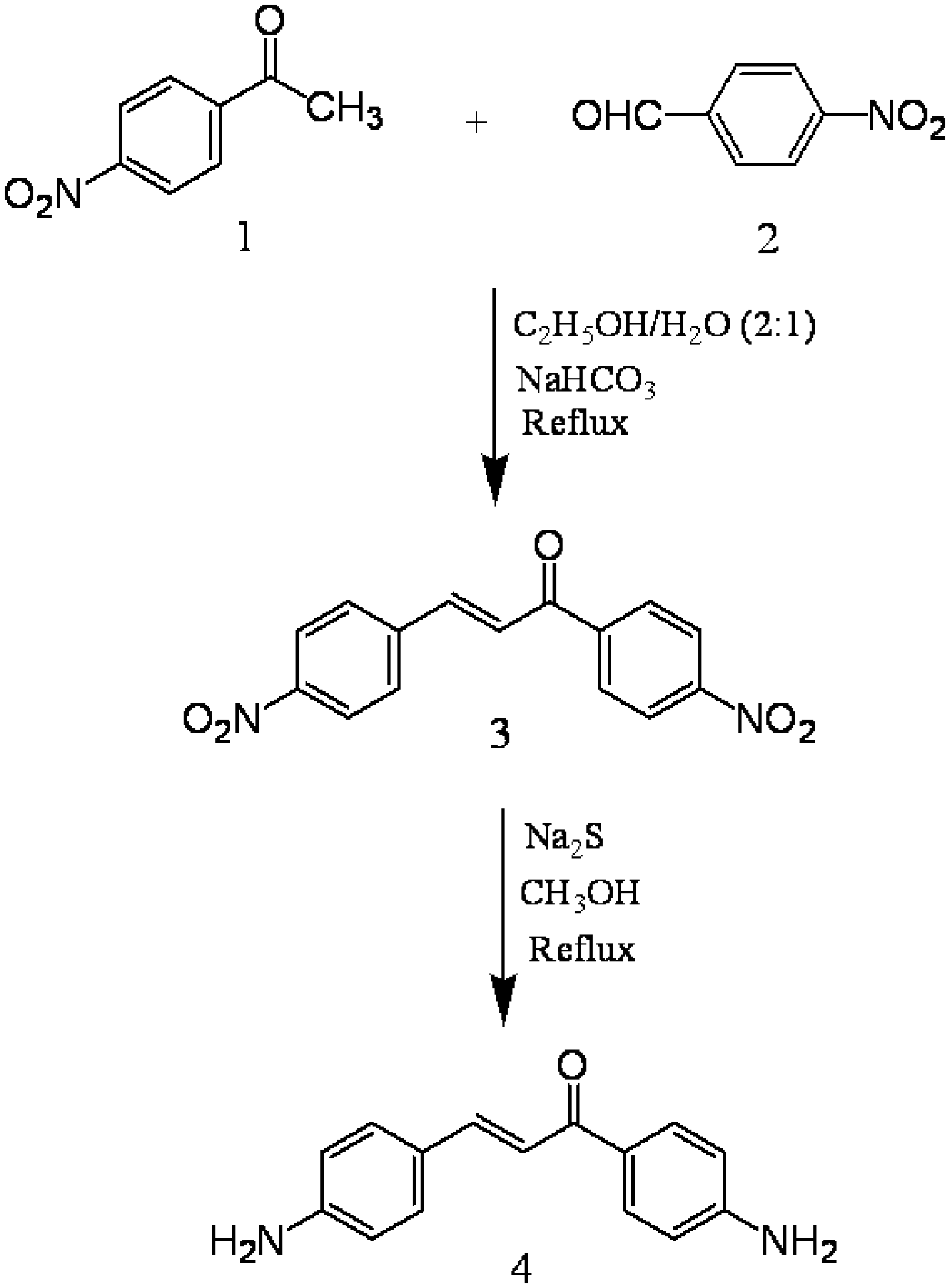
To a solution of 4-nitroacetophenone 1 (1.65 g, 10 mmol) and 4-nitrobenzaldehyde 2 (1.51 g, 10 mmol) in mixture of H2O/EtOH (3:1, 100 mL), Na3PO4·12H2O (0.038 g, 0.1 mmol) was added. The mixture was stirred under reflux conditions for 2 h and then the mixture was cooled to room temperature. The precipitate was filtered off, washed thoroughly with water, and dried to afford 2.72 g 3 (yield 91%). mp: 215–216°C; FT-IR (KBr): 3113 (m), 3086 (w), 3049 (w), 1670 (s), 1599 (s), 1518 (s), 1415 (w, sh), 1338 (s, br), 1288 (s), 1209 (s), 1107 (m), 1028 (s), 987 (m, sh), 839 (s, sh), 787 (m), 742 (m), 682 (m), and 499 (w) cm−1.
SYNTHESIS OF 4,4′-DIAMINOCHALCONE 4
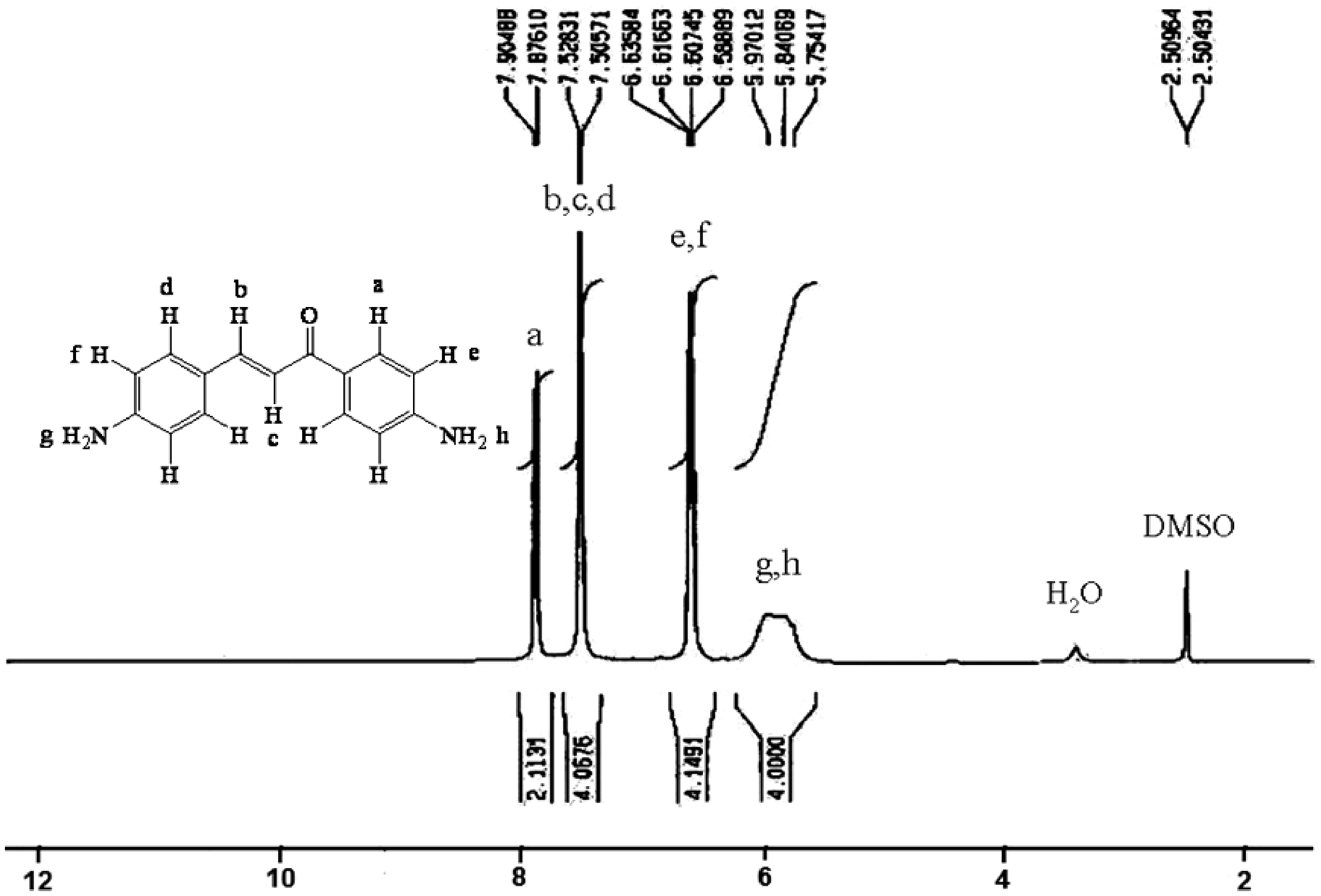
To a solution of Na2S (1.56 g, 20 mmol) and NaHCO3 (1.26 g, 15 mmol) in water (10 mL), methanol (10 mL) was added. The mixture was stirred for 30 min at room temperature. The precipitate was filtered, the filtrate was added to a mixture of 4,4′-dinitrochalcone 3 (1.19 g, 4 mmol) and methanol (100 mL), and stirred for 3 h under reflux conditions. Then, the mixture was concentrated using rotary evaporator, and the residue poured into water, an orange crude product was formed and collected by filtration, washed thoroughly with water, and dried to afford 0.69 g (7) (yield 72%). mp: 177–179°C; FT-IR (KBr): 3485 (w), 3367 (m), 3329 (s), 3213 (w), 1630 (s), 1595 (s, sh), 1512 (s), 1439 (m), 1346 (m), 1300 (m), 1226 (s), 1170 (s), 1024 (m), 983 (w), 815 (m), 611 (w), and 513 (w) cm−1. 1H-NMR (DMSO-d6), δ: 5.84 (br, 4H), 6.58–6.63 (m, 4H), 7.50–7.53 (m, 4H), and 7.88 (d, J = 8.6 Hz, 2H) ppm.
Anal. Calcd. for C15H14N2O: C, 75.6; H, 5.9; and N, 11.8; Found: C, 75.4; H, 6.0; and N, 11.6.
Preparation of PI
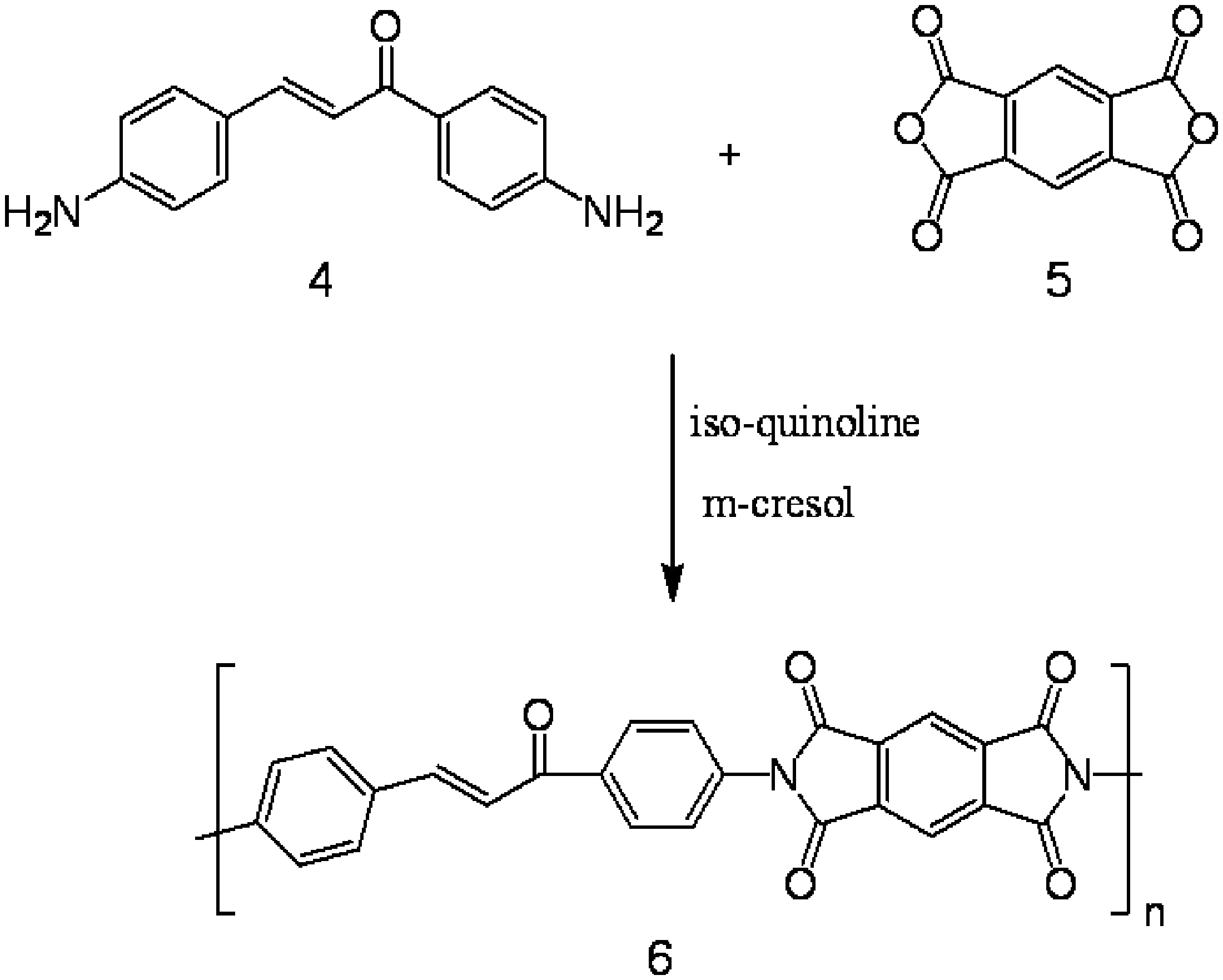
A quantity of 5 mmol 4,4′-diamino chalcone 4, 5 mmol pyromellitic anhydride 5, and two drops of iso-quinoline were dissolved in 25 mL m-cresol, consecutively. The mixture was stirred at room temperature for 2 h and then at 180°C for 3 h. The obtained PI solution was precipitated in 100 mL ethanol. The precipitate was immersed in distilled water and ethanol for 2 h, and then washed with distilled water and ethanol several times to remove the residual m-cresol. The inherent viscosity of this soluble PI is 0.74 dL/g.
Preparation of PISN 6a
A 250-W high-pressure mercury lamp was used as the ultraviolet irradiation source. The AgNO3 was introduced as the source of Ag nanoparticles. First, a solution such as 1.0 g soluble PI in 7.0 mL N-methyl-2-pyrrolidinone (NMP) and also a solution of 1.0 mmol AgNO3, and 1.2 mmol trifluoroacetic acid in 5.0 mL NMP were prepared. Then, the two solutions were mixed and irradiated for 12 h to ensure the complete reduction of AgNO3 under ultraviolet irradiation at room temperature. The product was precipitated quickly to distilled water and washed with distilled water several times. Then, the sample was dried in vacuum, redissolved in chloroform by sonication, cast on a glass substrate, and dried at 50°C in vacuum for 2 days.
RESULTS AND DISCUSSION
Then, 4,4′-dinitrochalcone 3 was reduced using Na2S/NaHCO3 to produce 4,4′-diaminochalcone 4 (Scheme 1) [18]. The chemical structure and purity of compound 7 were determined by elemental analysis, FT-IR and 1H-NMR spectroscopic techniques. The 1H-NMR spectrum of compound 7 showed a broad peak at δ = 5.75–5.97 ppm, which was assigned to the Hg and Hh protons of the NH2 groups. Peaks at δ = 6.58–6.63, δ = 7.50–7.53, and δ = 7.87–7.90 ppm were assigned to the Hf, He, Hb, Hc, Hd, and Ha protons of the phenyl rings and vinyl group (Figure 1).
Synthetic route of diamine 4.
1H-NMR spectrum of diamine 4.
Polymer Synthesis
PI 6 as a source of polymer was synthesized by the one-step synthesis of PI from polycondensation reaction of 4,4′-diamino chalcone 4 with pyromellitic anhydride 5 in m-cresol solution and in the presence of iso-quinoline as a base (Scheme 2).
Synthetic route of PI 6.
Preparation of PISN
The soluble PISN was prepared using ultraviolet irradiation is presented in this section. A precursor of the silver (AgNO3) particles was used.
Characterization of PISN
The FT-IR spectrum of PI 6 exhibits characteristic absorption peaks for C=O unsymmetrical stretching of imide groups (at 1776 cm−1), C=O symmetrical stretching of imide groups (at 1710 cm−1), and C–N stretching of imide groups (at 1380 cm−1). These bands show that PI 6 has been successfully synthesized. In addition, no obvious difference between the infrared spectra of the pure PI 6 and the PISN 6a was observed.
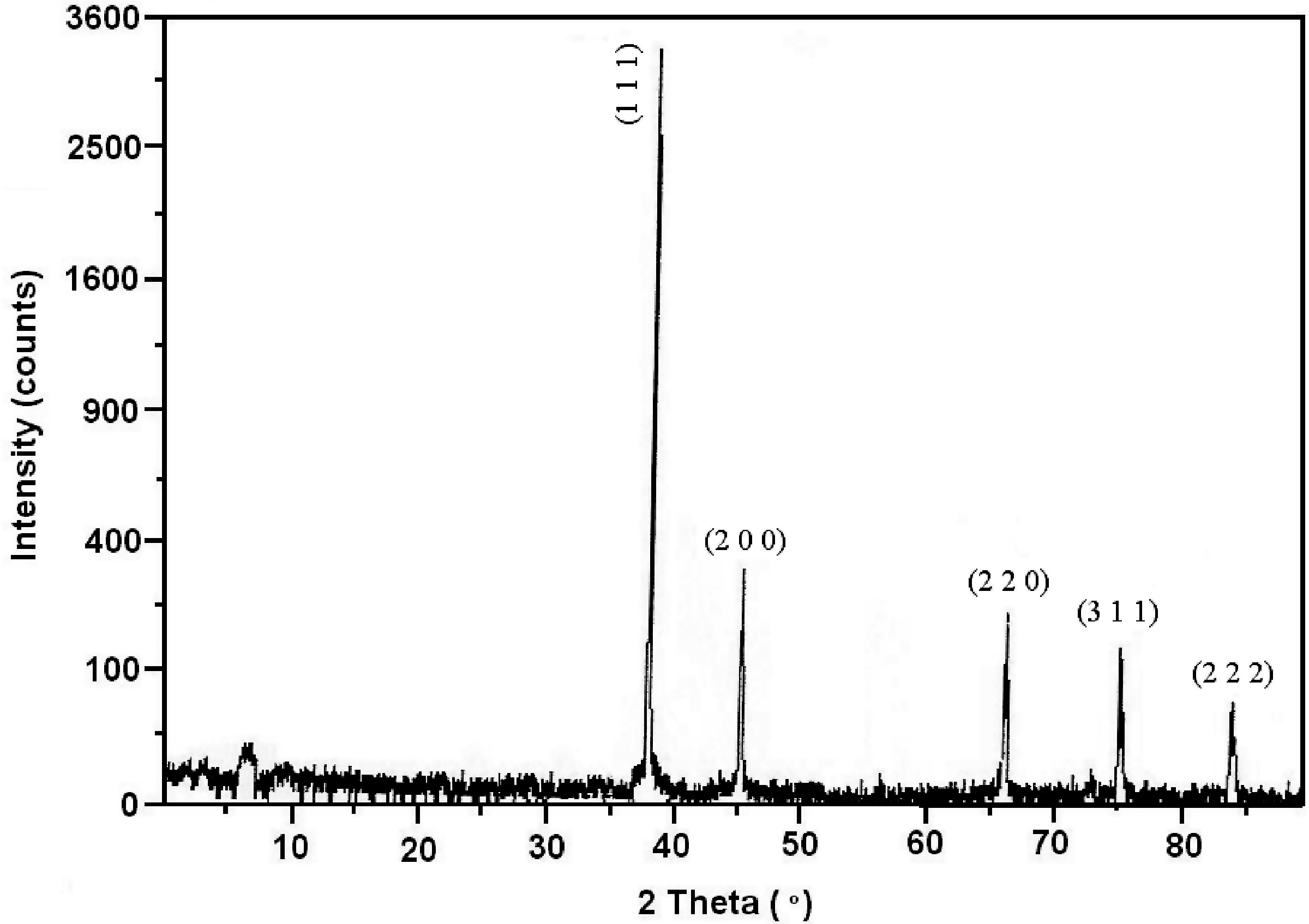
Figure 2 shows the XRD pattern of the soluble PISN 6a. The five diffraction peaks in the XRD patterns of samples 6a widen greatly, indicating the formation of the nanometer scale of silver particles in the PISN. Figure 2 containing diffraction signals at 2 h values of 38.2°, 45.3°, 66.1°, 75.5°, and 83.7° attributed to the diffraction planes (1 1 1), (2 0 0), (2 2 0), (3 1 1), and (2 2 2) of fcc silver nanoparticles confirming the presence of silver nanoparticles in the nanocomposites [19].
XRD of PISN 6a.
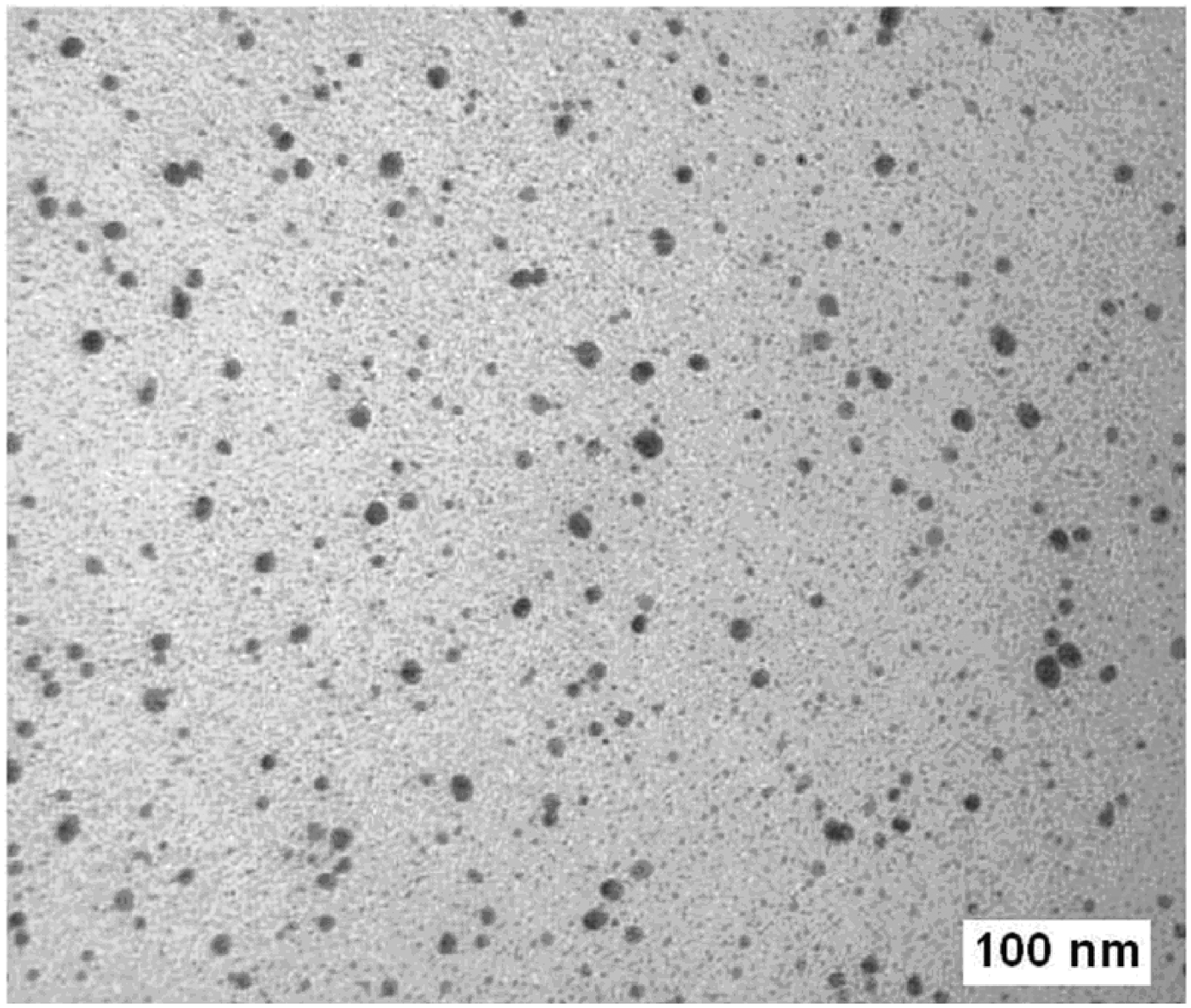
The SEM micrograph of the PISN 6a in Figure 3 shows that the silver nanoparticles were homogeneously dispersed in PI matrix.
SEM image of PISN 6a.
UV–Vis Absorption Characteristics
The photosensitive property of the new polymers 6 and 6a in the DMF solution was studied by a UV spectrophotometer. The polymer 6 solution exhibits two positions of absorption maximum in UV–vis spectrum around 380 and 270 nm.
The absorption maximum at around 270 nm corresponds to π → π* transition of the olefinic double bond present in the chalcone moiety and carbon double bonds in aromatic rings in the polymer backbone. Also, the absorption maximum at around 380 nm corresponds to n → π* transition of the nonbonding electrons present in nitrogen and oxygen atoms in the polymer backbone. The PI shows no obvious absorption at wavelength above 400 nm. The PISN 6a, however, shows a broadened peak at 418 nm. Overall, the formation of silver nanoparticles was confirmed using SPR phenomenon. This is in agreement with most AgNPs having kmax value in the visible range 400–500 nm [20].
Thermal Properties
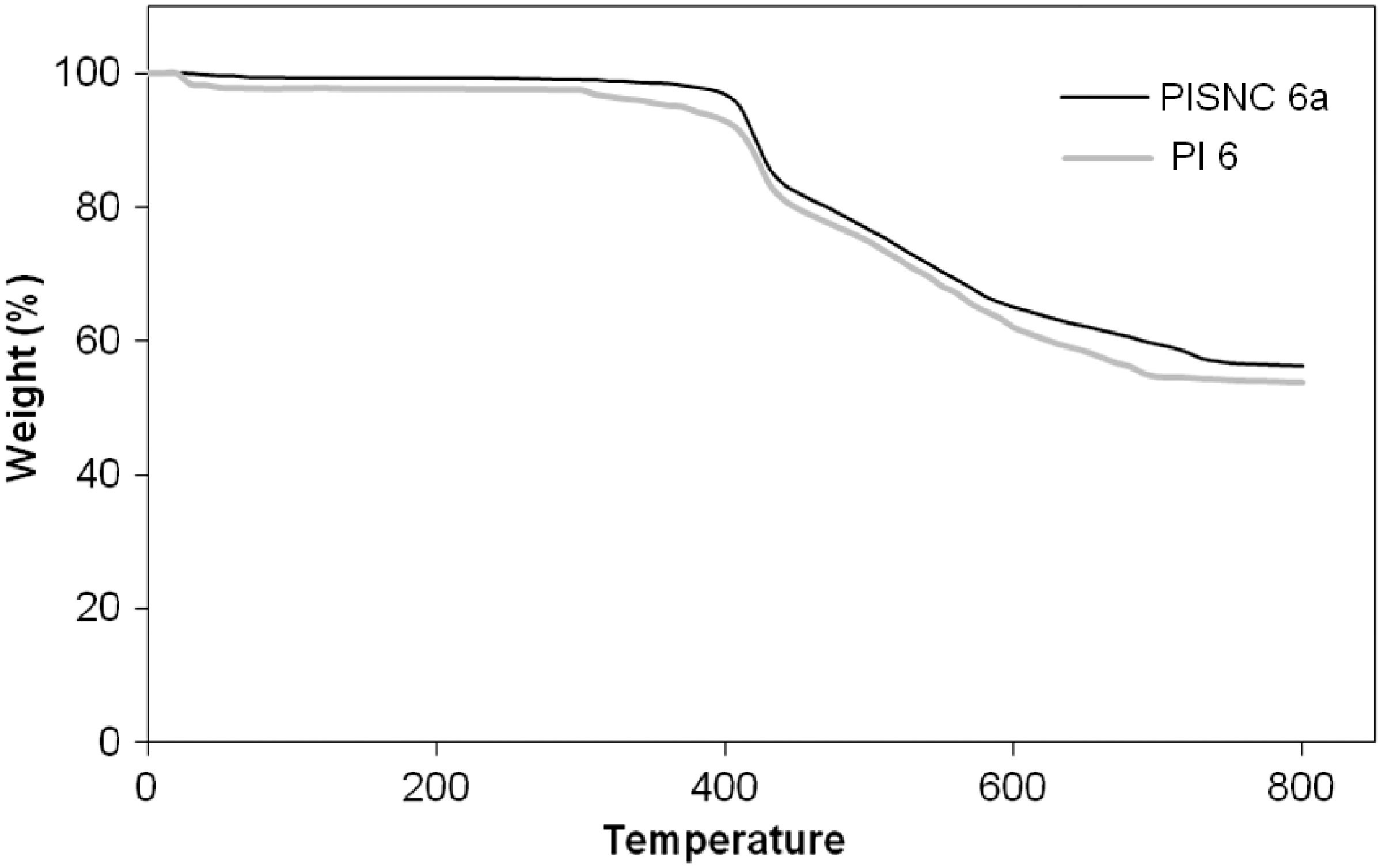
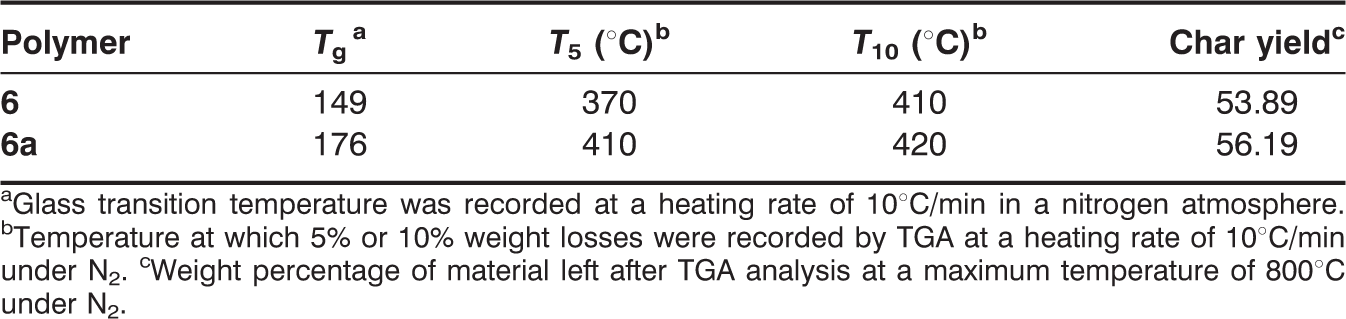
The thermal properties of pure PI 6 and PISN 6a were investigated by TGA (in a nitrogen atmosphere at a heating rate of 10°C/min) and DSC experiments (Table 1). The initial decomposition temperatures of 5% and 10% weight losses (T5 and T10) and the char yield at 800°C for these samples are summarized in Table 1. The temperatures of 5% and 10% weight losses and also the char yield at 800°C of PISN 6a were higher than the pure PI 6 (Figure 4). The higher thermal stability of nanocomposite 6a can be attributed to the presence of inorganic silver nanoparticles in the PI matrix.
Glass transition temperature was recorded at a heating rate of 10°C/min in a nitrogen atmosphere.
Temperature at which 5% or 10% weight losses were recorded by TGA at a heating rate of 10°C/min under N2.
Weight percentage of material left after TGA analysis at a maximum temperature of 800°C under N2.
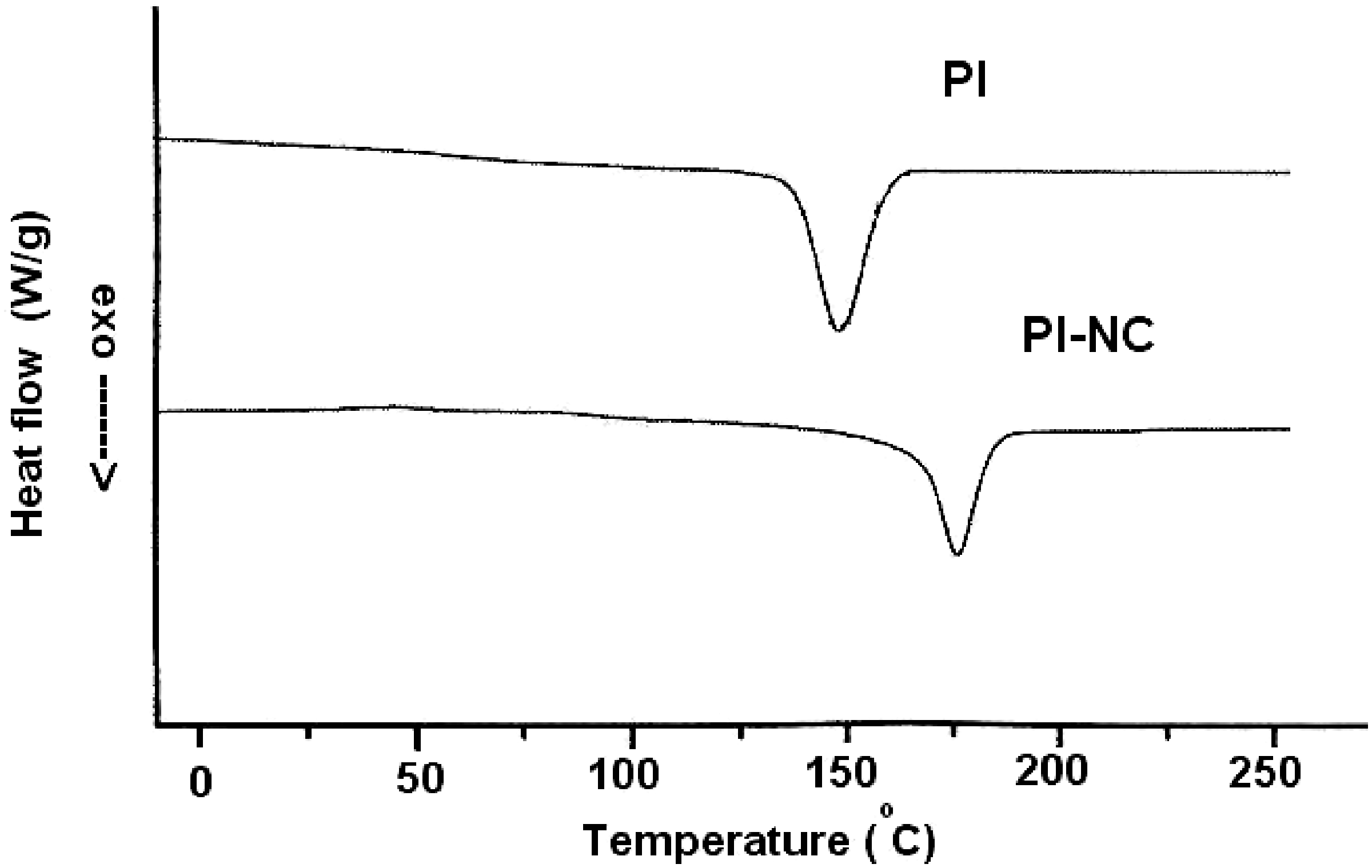
Also, the Tg of nanocomposite 6a was higher than pure PI 6 (Figure 5). The increase in the Tg can be attributed to the strong interaction between the silver nanoparticles and polar imide chain.
DSC thermograms of PI 6 and PISN 6a.
CONCLUSION
In this study, a PISN containing chalcone moieties was successfully prepared by a convenient reduction of silver by ultraviolet irradiation technique. PI 6 as a source of polymer was synthesized by the one-step synthesis of PI from polycondensation reaction of 4,4′-diamino chalcone 4 with pyromellitic anhydride 5 in the presence of iso-quinoline solution. From the scanning electron microscopy (SEM) and XRD investigations, the silver nanoparticles homogeneously dispersed in the PI matrix. In the UV–vis absorption spectra of the PISN, the absorption peak due to the SPR of silver particles was observed at 418 nm. Due to the presence chalcone moieties in polymer backbone and good thermal properties, these silver/PI nanocomposites can be photosensitive and have the potential for the use in microfabrication of conductive components in microelectronic industry.
References
1.
GhoshM.K.MittalK.L. (1996). Polyimides: Fundamentals and Applications, Marcel Dekker, New York.
2.
FaghihiKh.ShabanianM.HajibeygiM. (2009). Optically Active and Organosoluble Poly(amide-imide)s Derived from N,N′-(Pyromellitoyl)bis-L-histidine and Various Diamines: Synthesis and Characterization, Macromolecular Research, 17: 912–918.
3.
LiT.L.HSUS.L.C. (2009). Preparation and Properties of Conductive Silver/Photosensitive Polyimide Nanocomposites, Journal of Polymer Science Part A: Polymer Chemistry, 47: 1575–1583.
4.
FaghihiKh.HajibeygiM.ShabanianM. (2010). Photosensitive and Optically Active Poly(amide-imide)s Based on N,N-(pyromellitoyl)-bis-L-amino acid and Dibenzalacetone Moiety in the Main Chain: Synthesis and Characterization, Journal of Macromolecular Science Part A: Pure and Applied Chemistry, 47: 144–153.
5.
FaghihiKh.HajibeygiM.ShabanianM. (2010). Synthesis and Properties of New Photosensitive and Chiral Poly(amide-imide)s Based on Bicyclo[2,2,2]oct-7-ene-2,3,5,6-tetracarboxylic Diimide and Dibenzalacetonemoieties in the Main Chain, Polymer International, 2: 218–226.
6.
LewisL.N. (1993). Chemical Catalysis by Colloids and Clusters, Chemical Review, 93: 2693–2730.
7.
HuangJ.C.QianX.F.YinJ.ZhuZ.K.XuH.J. (2001). Preparation of Soluble Polyimide–Silver Nanocomposites by a Convenient Ultraviolet Irradiation Technique, Materials Chemistry and Physics, 69: 172–175.
8.
RobinE.S.DavidW.T. (2004). Metal-Polyimide Nanocomposite Films: Single-Stage Synthesis of Silvered Polyimide Films Prepared from Silver(I) Complexes and BPDA/4,4¢-ODA, Chemistry Materials, 16: 1277–1284.
9.
HengleinA. (1989). Small-Particle Research: Physicochemical Properties of Extremely Small Colloidal Metal and Semiconductor Particles, Chemical Review, 89: 1861–1873.
10.
KobayashiT.IwakiM. (2005). Depth Profile Analysis of the Structure and Composition of a Metal-Implanted Polyimide Surface, Surface and Coatings Technology, 196: 211–215.
11.
StuckyG.D.MacDougallJ.E. (1990). Quantum Confinement and Host/Guest Chemistry: Probing a New Dimension, Science, 247: 669–678.
12.
CorbierreM.K.CameronN.S.SuttonM.LaaziriK.LennoxR.B. (2005). Gold Nanoparticle/Polymer Nanocomposites: Dispersion of Nanoparticles as a Function of Capping Agent Molecular Weight and Grafting Density, Langmuir, 21: 6063–6072.
13.
AbdelsayedV.IbrahimY.E.DeeviS. (2006). Polymerization of Butadiene on Nanoparticles’ Surfaces and Formation of Metal/Polymer Nanocomposites, Applied Surface Science, 252: 3774–3782.
14.
KlabundeK.J.EfnerH.F.MurdockT.O.RoppleR. (1976). Solvated Nickel Atoms and Their Free Cluster Formation in Organic Media, Journal of American Chemical Society, 98: 1021–1023.
15.
GutierrezM.HengleinA. (1996). Nanometer-Sized Bi Particles in Aqueous Solution: Absorption Spectrum and Some Chemical Properties, Journal Physical Chemistry, 100: 7656–7661.
16.
FaghihiKh.HajibeygiM.ShabanianM. (2010). Polyimide–Silver Nanocomposite Containing Phosphine Oxide Moieties in the Main Chain: Synthesis and Properties, Chinese Chemical Letters, 21: 1387–1390.
17.
BalanL.BurgetD. (2006). Synthesis of Metal/Polymer Nanocomposite by UV-radiation Curing, European Polymer Journal, 42: 3180–3189.
18.
FaghihiKh.MozafariZ. (2008). Synthesis and Properties of Novel Photosensitive Poly(amide-imide)s Containing Chalcone Moiety and Aromatic Diamines in the Main Chain, Turkish Journal of Chemistry, 32: 673–683.
19.
MurthyP.S.K.Murali MohanY.VaraprasadK.SreedharB.Mohana RajuK. (2008). First Successful Design of Semi-IPN Hydrogel-Silver Nanocomposites: A Facile Approach for Antibacterial Application, Journal of Colloid and Interface Science, 318: 217–224.
20.
MandalS.ArumugamS.K.PasrichaR.SastryM. (2005). Silver Nanoparticles of Variable Morphology Synthesized in Aqueous Foams as Novel Templates, Bulletin Materials Science, 28: 503–510.