



Abstract
Teacher leadership encompasses numerous facets that remain largely unexplored, with its potential to foster stress-free teaching environments standing out as a crucial, yet underexplored, aspect. This study, using math teachers’ anxiety as a case study, investigated the relationship between teachers’ anxiety and their teacher leadership skills. Involving 103 teachers from six different countries, the study employed a quantitative survey approach. Through structural equation modeling and correlation analysis, the findings revealed a reciprocal relationship between teaching anxiety and teacher leadership skills, suggesting that these skills not only affect anxiety levels but are also influenced by them. These results underscore the potential of teacher leadership to support the reduction of teaching anxiety, highlighting that strengthening leadership skills can act as a vital scaffold for teachers, promoting a more positive emotional climate in educational environments.
Introduction
Teaching anxiety and stress not only impact teachers’ well-being and professional development but also have profound implications for students’ learning outcomes (Agyapong et al., 2022; Liu et al., 2022a; Zhou et al., 2020). The prevalence of teaching-related stress has been widely documented across virtually every subject, including Mathematics (Karakose et al., 2023), Science (Yang et al., 2021), ICT (Wang et al., 2024), English (Ren, 2024), and, more broadly, across all disciplines of education (Aydin, 2021). The literature suggests that the emotional experiences of teachers, particularly their anxiety toward teaching the subject, have been noted to influence their instructional effectiveness, classroom management, and overall teaching performance (Aydin, 2021).
The literature identifies multiple factors that contribute to mitigating anxiety associated with teaching. Among these, professional development emerges as a critical component (Juniati and Budayasa, 2022). Specifically, professional development initiatives embedded within supportive school environments—where collaboration is actively fostered, and opportunities for sharing experiences and resources are readily available—are regarded as essential mechanisms for alleviating teaching-related anxiety (Ghamrawi and Al-Jammal, 2013a, 2013b; Zhang et al., 2019).
Given the literature's emphasis on professional development and collaborative school environments as critical in mitigating teaching anxiety, it is both valid and necessary to critically examine the role of teacher leadership within this framework. This is because teacher leadership transcends traditional hierarchical structures, fostering a culture of shared expertise, collective problem-solving, and sustained peer mentorship (Al-Jammal and Ghamrawi, 2013a, 2013b, 2013c, Ghamrawi, 2013; 2015; Ghamrawi and Al-Jammal, 2013a, 2013b, 2014; Ghamrawi et al., 2013, 2016, 2023a, 2023b, 2023c, 2024a, 2024b; Harris and Jones, 2020). It encompasses a distinct set of skills that cultivate teachers’ sense of empowerment and professional efficacy (Ghamrawi et al., 2024a, 2024b; Shal et al., 2024a, 2024b), which, in turn, could plausibly contribute to lowering anxiety levels in teaching.
Most research on teacher leadership is qualitative, primarily exploring its conceptual foundations, implementation strategies, and perceived impact within educational settings (Nguyen et al., 2020). As a result, there remains a significant gap in empirical, quantitative investigations that assess its measurable effects (Jiazhi and Batool, 2024; Schott et al., 2020)—one of which is its potential role in mitigating teaching anxiety—a gap that this study specifically aimed to address.
Given that teaching anxiety has been extensively documented across various subject areas (Aydin, 2021), we chose to focus on mathematics—a subject widely recognized for inducing anxiety not only among students but also among teachers, particularly due to its reputation for being both challenging and abstract (Mammarella et al., 2019). This focus allowed for a more targeted examination of the potential of teacher leadership in alleviating subject-specific teaching anxiety.
It was guided by the following research questions:
What is the relationship between teachers’ anxiety and their teacher leadership skills? Are there significant differences in teachers’ anxiety levels and teacher leadership skills based on education level, years of experience, and country of teaching? Which specific dimensions of teachers’ anxiety are most strongly associated with different domains of teacher leadership skills?
Conceptual framework
This study is grounded in the relationship between teacher leadership and teaching anxiety, with a specific focus on mathematics teachers. Teacher leadership, as defined here, refers to the ability of teachers to exercise influence and take on leadership roles within the classroom and school setting, beyond the traditional hierarchical structures (Ghamrawi and Abu-Tineh, 2023; Harris and Jones, 2020). This influence can manifest in various forms, such as peer mentoring, collaborative teaching, decision-making, and fostering a culture of shared responsibility (Ghamrawi et al., 2023c). Through these leadership actions, teachers are empowered, gaining a sense of agency and control that can counteract the overwhelming sense of stress or anxiety that often accompanies the profession (Shal et al., 2018a, 2018b; 2019, 2024a, 2024b). Thus, this study endorses that teacher leadership can play a pivotal role in mitigating anxiety among teachers by fostering a more supportive and empowering teaching environment.
On the other hand, teaching anxiety, particularly in the context of mathematics, is a complex phenomenon that can have detrimental effects on teachers’ performance and classroom dynamics (Ramirez et al., 2018). Mathematics, as a subject, is often seen as particularly anxiety-inducing for both students and teachers, with its abstract nature and the pressure to meet high academic standards (Mammarella et al., 2019). Teachers experiencing high levels of anxiety may struggle with managing their classrooms effectively, communicating complex ideas, and maintaining the emotional climate of the classroom (Liu et al., 2022a). This anxiety can stem from a variety of sources, including self-doubt, fear of failure, and the perceived difficulty of the subject matter (Zhou et al., 2020). We assume that these challenges can be mitigated through the application of teacher leadership practices that promote a sense of competence, emotional resilience, and a positive classroom environment (Ghamrawi and Al-Thani, 2023).
The core hypothesis is that teacher leadership skills can serve as a protective factor against teaching anxiety. Teacher leadership practices, such as fostering collaboration and providing emotional and professional support to colleagues, may help to reduce anxiety by creating a more collegial, supportive, and less isolated teaching environment. When teachers are empowered through leadership roles, they are more likely to feel confident in their ability to manage classroom challenges and to engage with students effectively. This increased sense of control and professionalism may reduce the cognitive and emotional stressors associated with teaching, particularly in a high-stakes subject like mathematics.
Furthermore, the study considers the potential moderating effects of factors such as gender, age, years of experience, and grade level taught. These factors may influence how teacher leadership is enacted and how it impacts teaching anxiety. For instance, more experienced teachers might be better equipped to utilize teacher leadership practices in ways that reduce anxiety, while less experienced teachers might benefit more from the support structures that teacher leadership fosters. The study will explore how these variables interact with teacher leadership to either strengthen or weaken its effects on anxiety reduction.
In conclusion, the conceptual framework centers on the idea that teacher leadership has the potential to alleviate teaching anxiety, particularly in mathematics. By empowering teachers, fostering collaboration, and providing emotional and professional support, teacher leadership might act as a buffer against the anxiety that often accompanies teaching a challenging subject. The study aims to explore and quantify this relationship, offering insights into how teacher leadership can be leveraged to create more supportive, anxiety-reduced teaching environments, particularly in subjects that are typically high stress, such as mathematics.
Methodology
Research design
This study employed a quantitative research design to examine the relationship between teaching anxiety and teacher leadership in the context of mathematics teachers. A survey instrument consisting of two main parts was administered to a sample of 103 mathematics teachers from various grade levels in six countries. The collected data were analyzed using statistical methods, including descriptive statistics to examine the distribution and characteristics of the variables. Regression analysis was conducted to investigate the relationship between mathematics teachers’ anxiety and teacher leadership, allowing for an assessment of the extent to which teacher leadership variables predicted teachers’ anxiety levels.
The sample
A two-stage sampling approach was employed in this study, beginning with convenience sampling to ensure accessibility, followed by self-selection from the pool of available participants. This approach aimed to balance the practicality of quickly accessing participants with the goal of involving a diverse group of teachers. While the initial stage focused on ease of access, the second stage allowed for participant choice, helping to ensure representation from the intended target group (Golzar et al., 2022).
In the first stage, convenience sampling, the researchers engaged with the administration of an established online community dedicated to Arab-speaking teachers worldwide. This community, comprising over 3000 educators, provided a diverse yet accessible pool of potential participants. Given the study's focus on mathematics teachers, the community's board facilitated recruitment by disseminating invitations, consent forms, and study links exclusively to mathematics teachers within the group. This constituted a stage, where all mathematics teachers in the community had an equal opportunity to participate.
Over a designated one-month period, during which participation was actively accepted, 103 mathematics teachers completed the online survey. At the time of data collection, the community had a total of 147 mathematics teachers, yielding an approximate response rate of 70%, demonstrating substantial engagement from the target population. As to the countries involved in the study, participants in this study reflected a diverse geographic distribution, drawn from six Arab nations: Qatar, the United Arab Emirates, the Kingdom of Saudi Arabia, Lebanon, Jordan, and Egypt.
Data collection procedures
A survey consisting of three parts was administered to participants. The initial section gathered background information from the participants. The second section focused on assessing the teacher leadership skills of the study's participants. This assessment was based on a self-assessment tool, created and validated in collaboration between the Center on Great Teachers and Leaders and the American Institute for Research, with funding from the U.S. Department of Education. The domains and associated teacher leadership skills examined through this tool include:
Collaboration and Communication: This encompassed group processes, facilitation, coaching skills, and conflict resolution and mediation. Professional Learning and Growth: This involved understanding adult learning and facilitating professional development among colleagues. Instructional Leadership: This category explored the use of data and research to enhance teaching practices and the application of coaching skills. School Community and Advocacy: This domain delved into demonstrating systems thinking, building partnerships, engagement in school improvement efforts, and professional advocacy
Furthermore, to assess mathematics teachers’ anxiety, we used an adapted version of the Mathematics Teaching Anxiety Scale developed and validated by Alkan et al. (2019). This survey assesses the self-perceived concerns and anxieties of mathematics teachers, exploring the various aspects of their teaching experiences and worries related to their instructional abilities. It gauges teachers’ concerns about motivating students, addressing individual differences, handling disinterested students, facilitating the conversion of mathematical concepts, using effective teaching methods, managing student performance disparities, covering the curriculum comprehensively and in a timely manner, and maintaining a learner-centered approach. It also explores concerns related to their own skills and fears of potential negative judgments from superiors or students, thus providing insights into the teachers’ self-doubts and apprehensions in their teaching roles.
Results
Descriptive statistics
The following table (Table 1) presents the descriptive statistics for various participant characteristics, including education level, teaching level, years of experience, and country of origin, based on the data collected for the study.
Descriptive statistics.
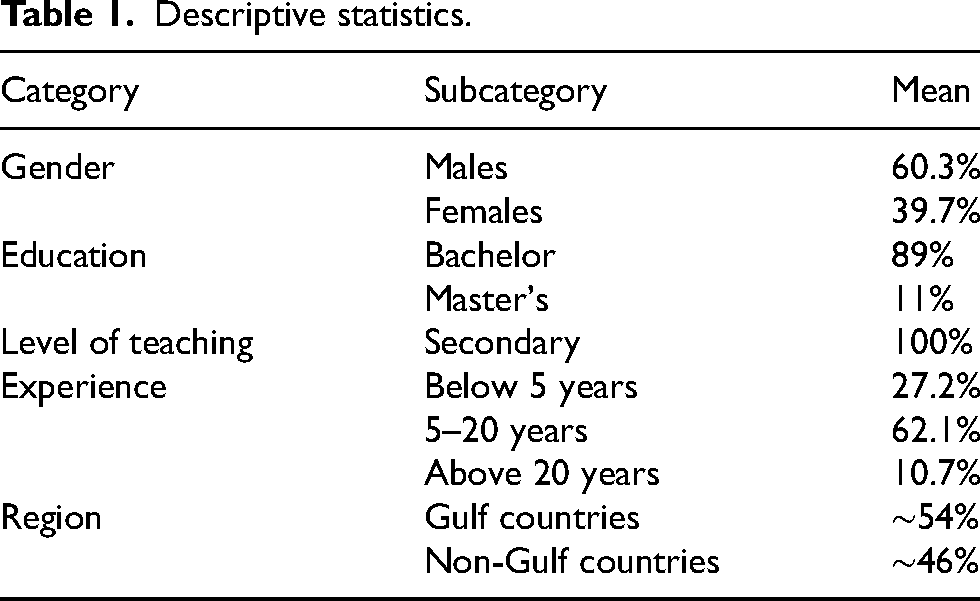
The study sample consisted of 39.7% females and 60.3% males, with participants primarily secondary school mathematics teachers. In terms of experience, 27.2% of the teachers had less than 5 years of teaching experience, 62.1% had between 5 and 20 years, and 10.7% had over 20 years. The sample was distributed across two regions: approximately 54% were from Gulf countries (such as Qatar, KSA, and UAE), and 46% were from Non-Gulf countries (including Jordan, Lebanon, and Egypt). Regarding education, 89% of the teachers held a Bachelor's degree, while the remaining 11% had a Master's degree in mathematics or mathematics education.
The structural equation model
The researchers commenced with an exploratory factor analysis to assess the model fit of the data using AMOS SPSS 28 software. The structural equation model (SEM) is depicted in Figure 1.
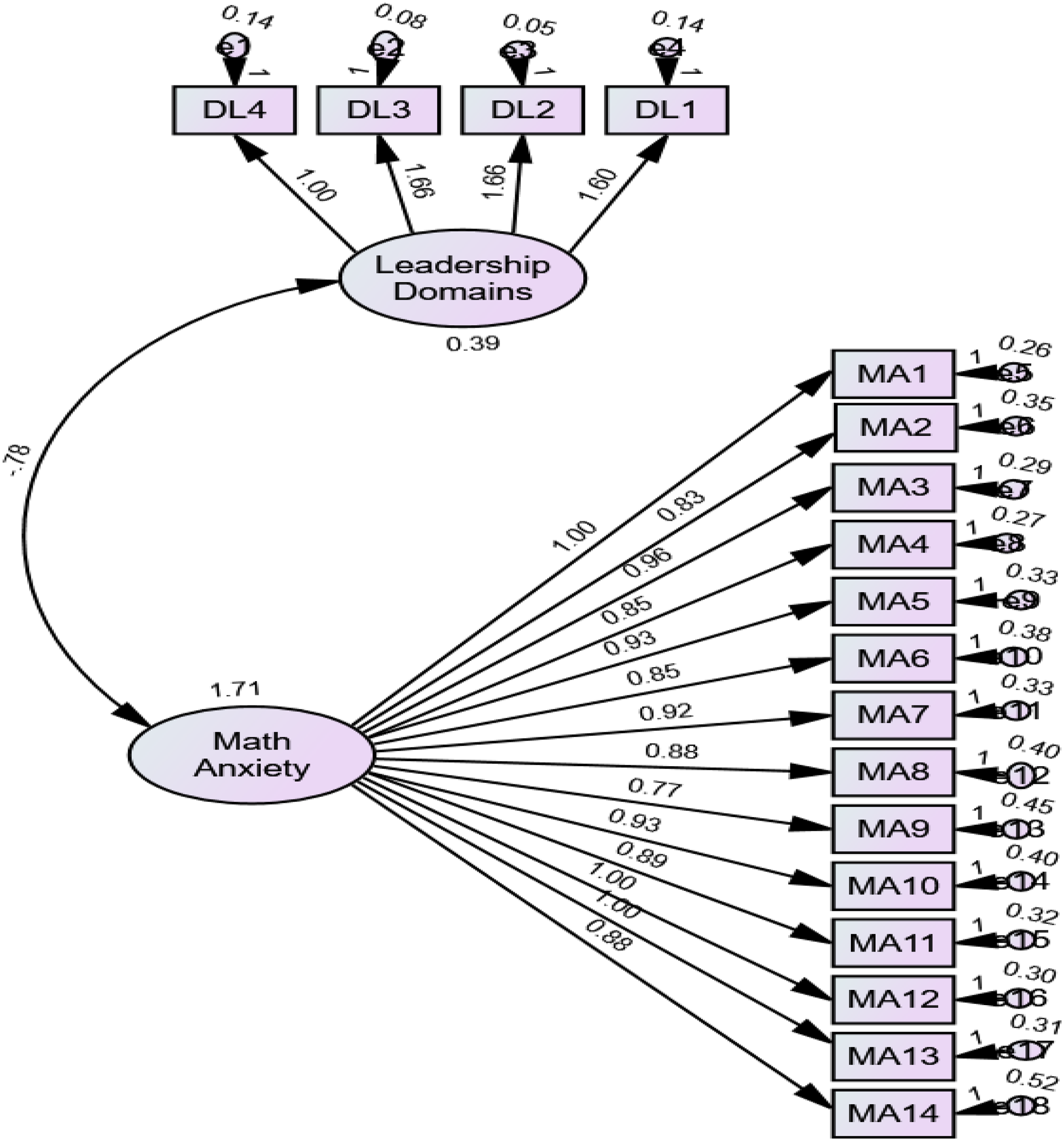
Structural equation model.
The results of the exploratory factor analysis to assess the validity of the survey indicate a high model fit, as shown in Table 2.
Model fit result.

Table 1 shows the values that ensure the validity and the fit of the survey; the ratios of cmin/df, the goodness-of-fit index (GFI), the normed fit index (NFI), the comparative fit index (CFI), and the root mean square error of approximation (RMSEA). The model fit indices all fall within the needed range where the values are as follows: Cmin/df is 1.668 (spec. < 2.0), GFI = 0.976 (spec. > 0.95), NFI = 0.963 (spec. > 0.95), CFI = 0.967 (spec. > 0.95), and RMSEA = 0.049 (spec. < 0.080).
In addition, the researchers also conducted a reliability test, which showed high reliability in both sections of the survey. The mathematics anxiety section had a Cronbach alpha value of 0.98, and the leadership section had a Cronbach alpha of 0.955, the Cronbach alpha in each domain was as follows: 0.952 in DL1, 0.966 in DL2, 0.934 in DL3 and 0.955 in DL4.
Moreover, Table 3 shows the regression weights of the variables.
Regression weights.
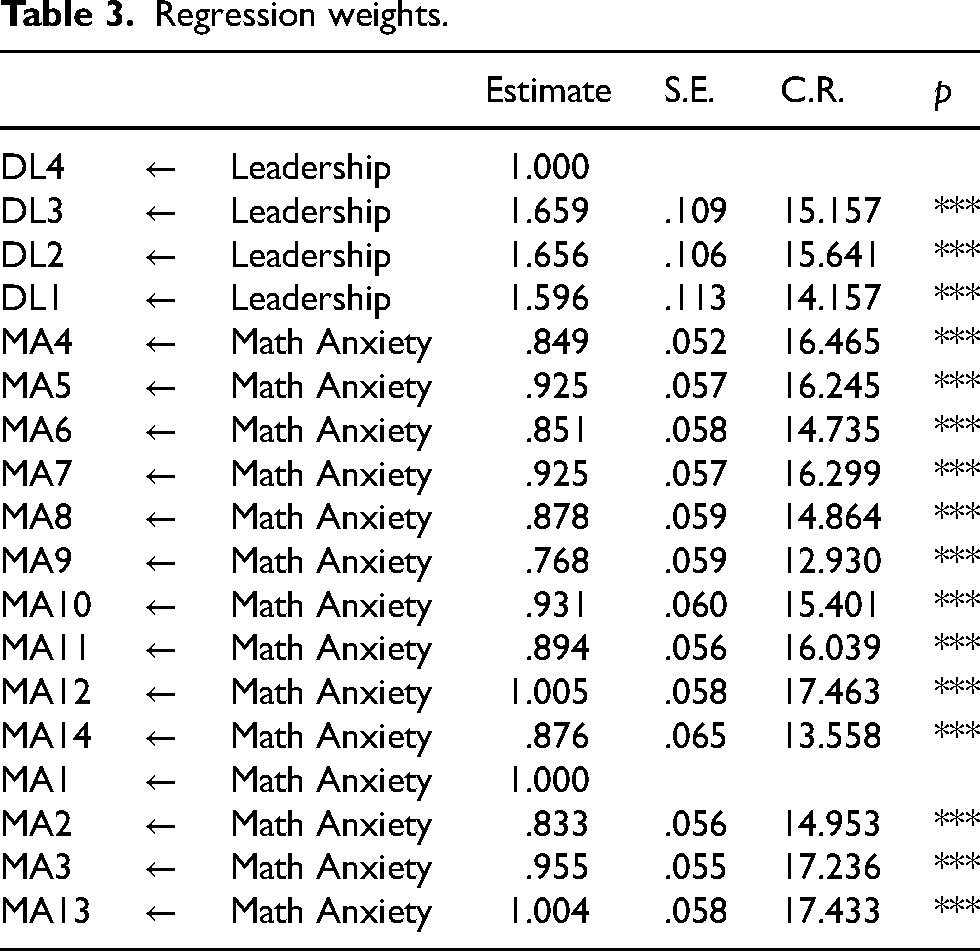
In this table, the effect of the weights is clear and it ensures the validity of the survey where the p-value is significant.
Impact of demographics on leadership and mathematics anxiety
The normality test indicated a non-normal distribution, prompting the researchers to conduct non-parametric tests to examine the impact of work experience, gender, country of origin, and educational background on leadership and mathematics anxiety. The results are presented in Table 4.
Mann-Whitney test and Kruskal–Wallis.
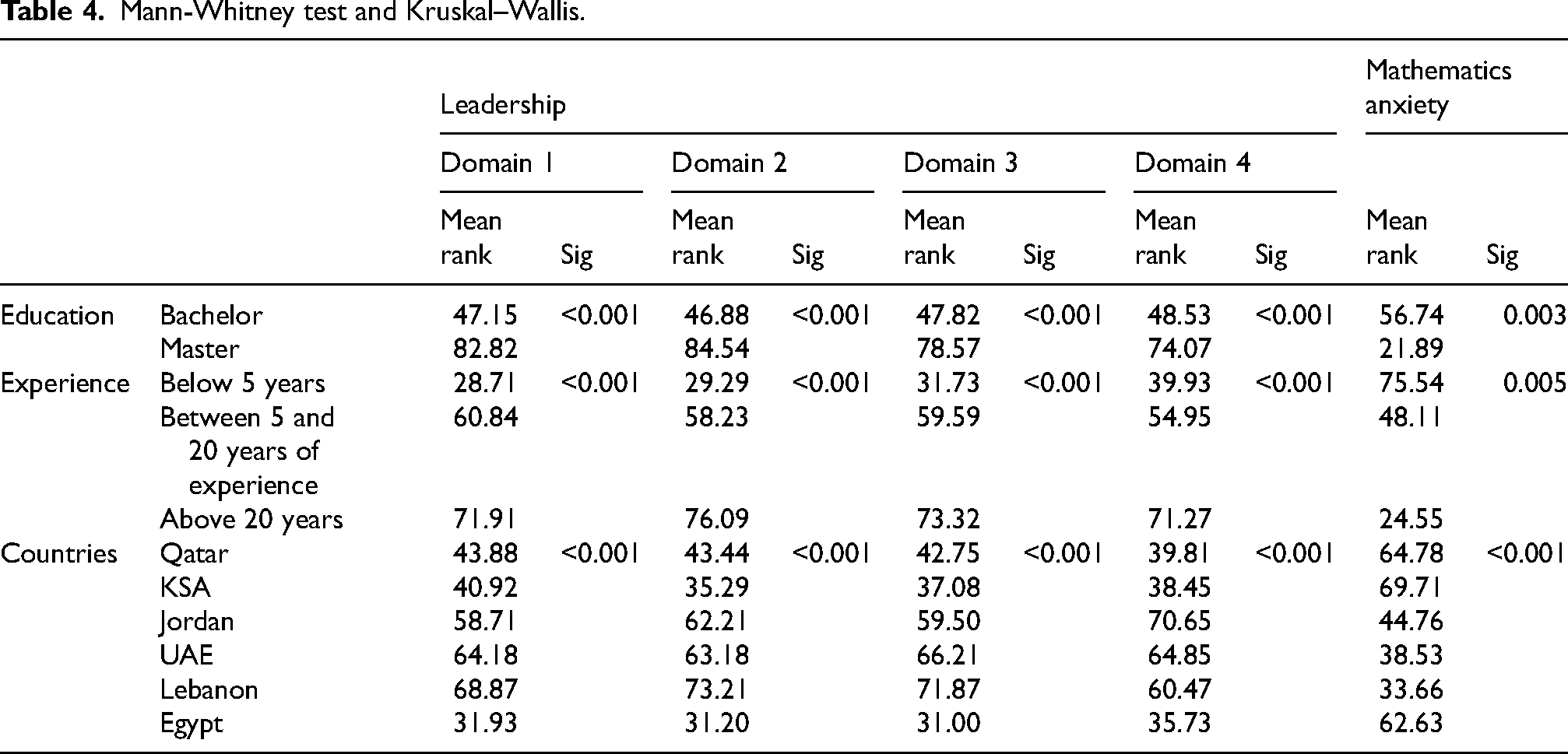
The results indicate that there is no significant difference in leadership and mathematics anxiety based on gender. However, differences emerge when considering education level, and countries. Holding a master's degree appears to have a stronger positive impact on leadership skills compared to holding a bachelor's degree, whereas it has a weaker impact on mathematics anxiety, as illustrated in Table 2. Furthermore, teachers with over 20 years of experience tend to have lower mathematics anxiety but higher leadership skills. In terms of countries, Lebanon stands out with the highest levels of leadership skills compared to the other countries, while teachers in KSA show the lowest levels of mathematics anxiety among mathematics teachers.
Regression and correlation analysis
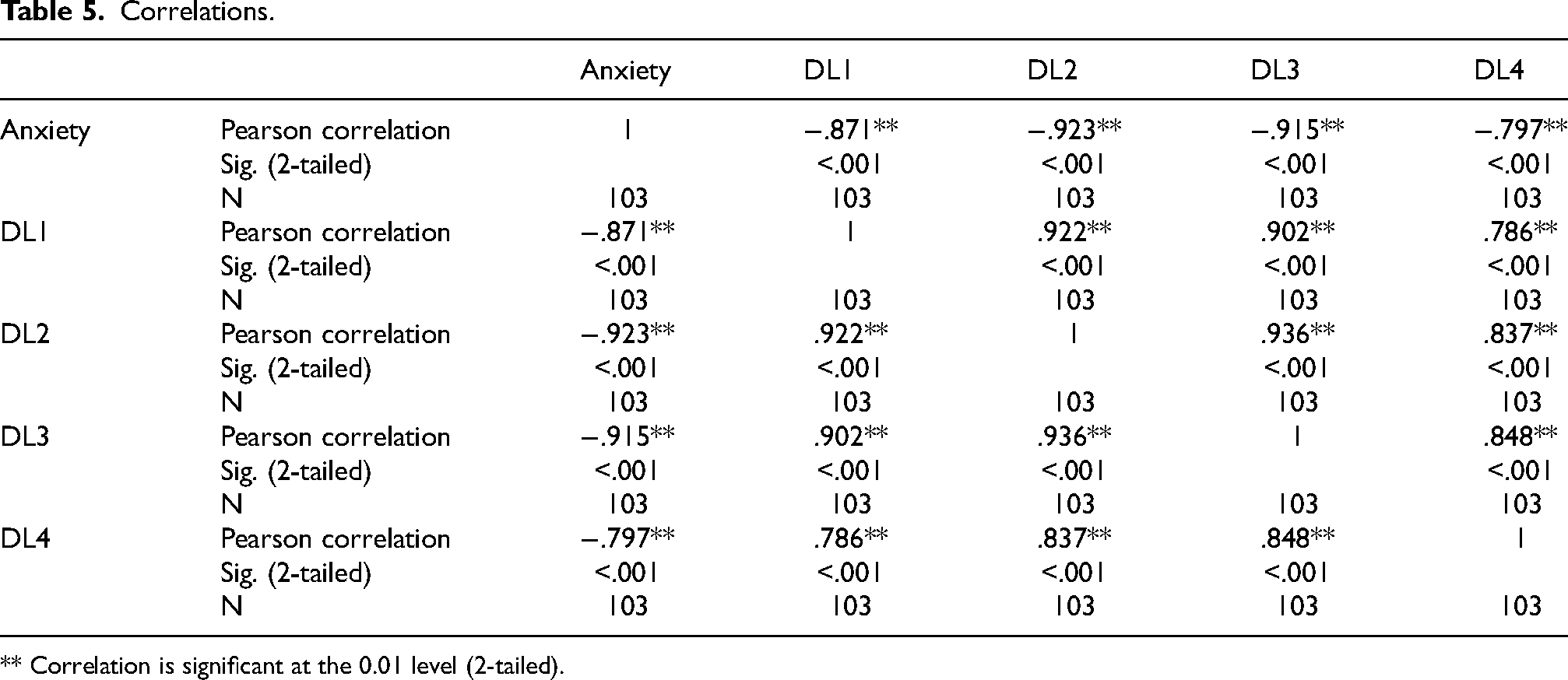
To address the research question of this study, the researchers conducted a regression analysis to examine the impact of possessing leadership skills on mathematics anxiety. Additionally, the researchers explored the reciprocal influence of mathematics anxiety on each domain of leadership skills and vice versa using Pearson correlation. The results are presented in Table 5.
Correlations.
** Correlation is significant at the 0.01 level (2-tailed).
Significant findings are observed in the relationship between mathematics anxiety and each domain of leadership skills. Specifically, a negative and high correlation is evident, particularly in domain 2 with respect to anxiety. This negative correlation suggests that when mathematics anxiety is high, leadership skills tend to be low, and conversely when leadership skills are high, mathematics anxiety tends to be low.
Discussion
This study explored the relationship between teacher leadership and teaching anxiety among mathematics teachers, employing SEM and correlation analysis. The ensuing discussion centers on the implications of these findings, their alignment with existing literature, and potential avenues for future research.
The findings of this study underscore the complex relationship between teacher leadership and teaching anxiety, revealing a compound interplay that significantly impacts educational outcomes. Our results indicate that teachers experiencing elevated levels of anxiety around teaching their subjects, often struggle to fully engage in leadership roles, a finding that aligns with and extends the existing literature on teacher well-being and leadership (Aydin, 2021; Furner and Higgins, 2019; Ghamrawi and Al-Thani, 2023; Ghamrawi et al., 2023b).
A key observation from our study is that teachers grappling with high levels of teaching anxiety demonstrate a marked reluctance to assume leadership positions or actively participate in collaborative initiatives. This reluctance manifests in reduced engagement in professional learning communities, decreased willingness to mentor colleagues, and diminished involvement in school-wide decision-making processes. These findings resonate with the work of Liu et al. (2023), who noted that excessive stress can lead teachers to develop negative perceptions of their school and profession, resulting in psychological fatigue and increased teaching anxiety. Our study extends this understanding by explicitly linking this anxiety to reduced leadership capacity and engagement.
Furthermore, our research reveals a cyclical pattern wherein anxiety not only hinders participation in collaborative endeavors but also undermines both individual and collective professional growth. This observation aligns with the findings of Liang et al. (2022), who suggested that teacher collaboration contributes positively to teacher well-being. Our study builds on this by demonstrating how teaching anxiety can disrupt this positive cycle, creating barriers to effective collaboration and, consequently, to the benefits it brings.
Additionally, our findings also support and extend the insights of Liu et al. (2022b), who contended that the distribution of leadership within schools is linked to enhanced teacher well-being. Our research suggests that this relationship is bidirectional: while distributed leadership can indeed enhance well-being, high levels of teaching anxiety can also impede the effective distribution of leadership roles. This mutual influence creates a complex dynamic that schools must traverse to foster both teacher well-being and effective leadership.
The implications of these findings are significant for school culture and climate. In fact, when teaching anxiety inhibits teacher leadership, the overall school environment suffers from the loss of diverse perspectives and collective expertise that teacher leaders bring. This observation underscores the importance of addressing teaching anxiety not just as an individual issue but as a systemic concern that impacts the entire educational ecosystem.
On the other hand, the study suggests that the role of effective teacher leadership in mitigating teaching anxiety cannot be overstated. When teacher leaders cultivate a collaborative and supportive environment, they not only enhance pedagogical practices but also provide crucial opportunities for peer support and professional dialogue. This collegial atmosphere encourages educators to confront their anxieties openly, fostering a culture where challenges can be addressed collectively rather than in isolation. Such environments allow for shared experiences that normalize discussions around teaching anxiety, empowering teachers to develop coping strategies and resilience. These findings align with literature, reaffirming that the benefits of teacher leadership extend beyond the realm of improved educational outcomes (Cann et al., 2021). However, it goes beyond that to suggest that teacher leaders, by fostering a supportive and collaborative environment, might potentially create a safe space for addressing and mitigating the anxieties that teachers face daily.
Implications for practice
The findings of this study hold implications for educational practice, particularly in fostering a school culture that supports both teacher leadership and well-being. Given the demonstrated link between teaching anxiety and reduced leadership engagement, school leaders are encouraged to implement targeted interventions to mitigate anxiety and encourage teacher participation in leadership roles.
Moreover, it is recommended that professional development programs incorporate strategies for managing teaching-related stress, such as mentorship initiatives, peer coaching, and structured collaboration opportunities, which have been shown to enhance teacher well-being and professional efficacy (Liang et al., 2022). Additionally, schools could adopt policies that promote distributed leadership in a manner that is sensitive to teachers’ emotional and psychological burdens, ensuring that leadership responsibilities are shared equitably and accompanied by sufficient institutional support. In the same line, creating a culture of open dialogue around teaching anxiety—through regular reflective practices, teacher-led workshops, and leadership training—can empower educators to confront challenges collectively rather than in isolation.
Furthermore, school leaders must recognize that fostering a supportive environment where teachers feel psychologically safe to take on leadership roles is essential for sustaining a collaborative and innovative teaching community. By prioritizing both teacher well-being and leadership development, schools can break the cycle of anxiety-driven disengagement and cultivate a more resilient, empowered teaching workforce
Conclusion
This study elucidates the complex relationship between teacher leadership and teaching anxiety among mathematics teachers, offering valuable insights into their interconnection. It highlights the transformative potential of teacher leadership, emphasizing its role in influencing teachers’ emotional well-being beyond traditional boundaries. Exploring teacher leadership as a strategic tool for alleviating mathematics anxiety allows schools to create an environment where teachers not only excel in their instructional roles but also contribute to a positive emotional climate within the school community.
While this study establishes a significant relationship between the two constructs, future research should delve into causality to better understand the directionality of this relationship. Such insights could enable schools to adopt a more holistic approach to professional development, one that recognizes and addresses the emotional landscape of teachers while prioritizing opportunities for enhancing teacher leadership skills.
In summary, this study suggests a reciprocal relationship between teacher leadership and teachers’ emotional well-being in the context of mathematics instruction. This interconnectedness implies that teacher leadership skills can both influence and be influenced by teachers’ emotional well-being. Recognizing and understanding this relationship allows educators to work collaboratively to foster a supportive environment that promotes effective leadership alongside the emotional well-being of teachers in mathematics education. Ultimately, this dual focus may lead to improved instructional practices and a healthier school culture, benefiting both educators and students alike.
To close up, this study represents a first step toward unveiling the latent influence of teacher leadership, shedding light on its significant role in mitigating teaching anxiety and fostering a more resilient and cohesive educational ecosystem—an aspect not commonly explored in the literature.
Limitations
While this study offers valuable insights into the dynamic relationship between teaching anxiety and teacher leadership skills in the context of mathematics teaching, it is essential to acknowledge its limitations. Firstly, the study's sample size of 103 mathematics teachers from six different countries may not fully represent the diversity present in the global community of mathematics teachers. The findings should be interpreted with caution, recognizing that cultural, contextual, and regional differences could influence the relationship between teacher leadership and anxiety in unique ways. Future research with more extensive and diverse samples could provide a more comprehensive understanding of this relationship.
Secondly, another limitation of this study is its focus on mathematics teachers’ teaching anxiety as a case study. While this specific context provides valuable insights, the dynamics between teacher leadership and anxiety may vary across different subject areas. Exploring teaching anxiety in other disciplines could reveal additional perspectives and nuances, further enriching the understanding of how teacher leadership influences educators’ emotional well-being across various teaching environments.
Thirdly, another limitation of this study lies in its reliance on convenience sampling, which may introduce selection bias and constrain the generalizability of the findings. By selecting participants based on accessibility, the sample may not fully capture the diversity of the broader population of mathematics teachers. However, the strategic use of equal opportunity within the convenience sampling framework partially mitigated this limitation, reducing potential bias and enhancing the representativeness of the sample, thereby strengthening the overall validity of the results.
Furthermore, this study primarily concentrated on the two-way relationship between teaching anxiety and teacher leadership skills. While this bidirectional perspective offers valuable insights, it is essential to recognize that other variables, such as school culture, administrative support, or external pressures, could also influence this relationship. Exploring these potential mediators and moderators could provide a more comprehensive understanding of the complex dynamics at play.
Footnotes
Confirmation
We confirm that the content of this manuscript has not been published elsewhere nor submitted for publication in any other journal.
Data availability statement
Data associated with this study are not made available for confidentiality reasons.
Declaration of conflicting interests
The author(s) declares no potential conflicts of interest with respect to the research, authorship, and/or publication of this article.
Ethical approval
This study has gained the research ethics approval from Qatar University Institutional Review Board- IRBnet # 1928-E/23. The primary function of an Institutional Review Board (IRB) is the protection of human subjects involved in research, following international standards of research ethics.
Funding
The author(s) received no financial support for the research, authorship, and/or publication of this article.
Informed consent
All participants in this study were informed of the purpose of the study and how data will be used. They were assured that their identities would remain anonymous across the study.
