




Abstract
The term vulnerability has become increasingly integral to humanitarian legislation, policies, discourse, and procedures in contexts of displacement. While people categorized as “vulnerable persons” are ostensibly entitled to specialized care, this categorization is widely used to divide people into those “legitimate” and “illegitimate” to receive basic rights and care. Critical feminist scholarship has highlighted how gender is the dominant lens through which vulnerability is constructed and recognized. This affects all people during displacement. However, here we address the implications of this framework for men’s experiences of displacement, exploring as a case study the issue of housing for displaced people in Greece. Drawing on our independent fieldwork and interviews with humanitarians and displaced men, we demonstrate how gendered conceptions of vulnerability are not only integrated into institutionalized immigration apparatuses but also circulate in the everyday discourses, practices, and affective economies that constitute the Greek care regime. The result is that a form of necropolitics is exercised against men, forcing them to reside in conditions of slow violence and permanent injury. We address the gendered nature of this necropolitics as well as the gender-specific consequences for men at Europe’s borders.
Plain Language Summary
Vulnerability shapes responses to and experiences of displacement in Greece, especially access to housing. This article reveals how gender biases are integrated into institutionalized uses of the term, as well as the everyday discourses, practices, and emotions of multiple actors. This highlights the role of masculinities in necropolitics and bordering.
The concept of “vulnerability” has taken on an increasingly central role in responses to forced displacement, penetrating asylum law (Peroni and Timmer 2013), humanitarian policy (Sözer 2020), and media and political discourses (Johnson 2011), as well as solidarity activism (Danewid 2017). In the Greek context, scholarship has highlighted how the state classifies displaced people as a “vulnerable person” to differentially distribute rights, protections, and care (Bird 2022; Freedman 2019; Kofman 2019; Papada 2023; Papatzani et al. 2022). This category is integral to the registration and examination procedures of the Greek Asylum Service, as well as the EU–Turkey Agreement (Freedman 2019; Papada 2023) and the (now defunct) EU Relocation Programme (Kofman 2019). Kofman (2019) and Papatzani et al. (2022, 195) have also highlighted how this classification is used as a tool to differentially allocate accommodation.
These studies have identified the centrality of gender in the ascription of the “vulnerable person” label. Papada (2023, 272), for instance, notes that decision-makers at the Reception and Identification Centre in Lesvos regularly wield assumptions about women’s “embodied state of vulnerability” when determining who is vulnerable and, thus, worthy of entry and protection. Freedman (2019, 12) likewise notes that the “vulnerable person” label, both as it “is enshrined in policy and legislation, and in the way that these policies are applied, carried a real risk of essentialisation of women as vulnerable victims.” These works contribute to feminist scholarship that has explored how the conceptual proximity of vulnerability to women and femininity serves to obfuscate and depoliticize migrant women’s agency and suffering (Malkki 1995); infantilize and essentialize women’s experiences of displacement (Enloe 1990); encourage women to pursue vulnerable identities (Ticktin 2011); and ultimately increase women’s exposure to harm rather than challenge it (Alberti 2010).
However, the effects of the vulnerability classification system on the lives of displaced men are often overlooked (Turner 2016). In the Greek context, for instance, Papada (2023, 262) only briefly acknowledges that this system operates at “the expense of single travelling women [and] young men.” Similarly, Kofman (2019, 2193) only mentions that “the vulnerabilities of . . . men are also not taken into account,” while Freedman (2019) writes (in parenthesis) how this system denies “men’s possible vulnerability” (p. 12). Our paper addresses this oversight.
We examine the provision of housing for displaced people in Greece to explore the place of masculinities in border politics, and the implications this has on the lives of displaced men. We highlight how legislation and policies, as well as formal and informal practices regarding asylum registration and accommodation, are deeply entwined with feminized notions of vulnerability. The effect of this is that many men, even those with (legislatively and non-legislatively defined) vulnerabilities, struggle to register for asylum, while those who have managed to register are often placed in the worst facilities or none at all. Accordingly, many displaced men are forced to live in states of protracted homelessness and illegality, abandoned, almost entirely, from state and humanitarian care.
To understand the political, social, and emotional dimensions of these detrimental living conditions, we employ Mbembe’s (2003, 2019) theory of necropolitics. Necropolitics is increasingly used to understand European bordering practices because it attends to the minor and major acts of harm and degradation that displaced people are forced to endure (Davies, Isakjee, and Dhesi 2017; Mayblin 2019). This framework also draws attention to the legacies of colonialism, whereby “racialised unbelonging is equated with undeservingness and is then used to justify the denial or limiting” of rights, protections and care (Mayblin 2019, 33). Race and racialization are integral to the bordering processes we examine in Greece, but we contribute a gendered analysis of necropolitics which has so far remained underexplored.
We also seek to expand the current literature’s focus on “state (in)action” (Davies, Isakjee, and Dhesi 2017) to the more diffuse and everyday processes of bordering, including the gazes, discourses, and affective orientations of differentially situated social actors (Yuval-Davis, Wemyss, and Cassidy 2019). Indeed, we found that men’s abandonment from care resulted not only from legislative definitions and state procedures that equate a feminized conception of vulnerability with deservingness for care but also from many humanitarians’ and solidarians’ everyday practices and affective encounters with displaced men.
To this end, we explore how affect structures men’s experiences and exclusions from services and care. Drawing on Ahmed’s (2000, 2004) theory of “affective economies,” we argue that emotions, specifically of detachment and apathy, precede and stick to displaced men and masculinities. This affective economy is produced by and productive of gendered conceptions of vulnerability and is widely participated in by humanitarians, solidarians, and even displaced men themselves. Feelings of apathy not only limit the support available to men but also constitute an “affective necropolitics,” whereby men are abandoned from and denied almost all emotional forms of care, such as empathy, interconnectedness, and concern.
Despite their exclusion from material and emotional care regimes, men have created their own infrastructures of care in Greece. Men’s widespread and reciprocal practices of cohabitation, companionship, and caregiving challenge the feminized and vulnerability-centered structures of assistance. These practices are a vital source of solidarity, especially amid the increasing withdrawal of state, humanitarian, and solidarian housing infrastructures.
The article proceeds as follows. First, we introduce our theoretical framework, which brings together a wide range of literature to examine the gendered dimensions of necropolitics and the ways differentially situated social actors maintain the border. Next, we discuss our respective methodologies and positionalities, and how our analyses converged. Then we investigate the gendered nature of vulnerability categories in EU and Greek legislation as well as in humanitarian policies. The subsequent section focuses on how vulnerability categories structure men’s access to in/formal housing facilities. We explore different actors’ emotional responses to displaced men’s suffering and needs, and how these constitute and maintain men’s necropolitical conditions. Next, we investigate the living conditions that men, including men with vulnerabilities, are forced to reside in, and the violent effects these conditions have on their minds and bodies. Before concluding, we foreground the autonomous housing initiatives that men have created in response to their widespread exclusion from care.
Vulnerability in Regimes of Care and Rightful Presence
Feminist scholarship has shown how vulnerability is associated with victimhood, weakness, and dependency (Gilson 2016; Hollander 2001). The vulnerable subject is considered incapable of preventing their own bodily harm and emotional disintegration (Fineman 2008). This contrasts with the independent and rational individual who possesses the capacity and strength to manage their own needs and withstand adversity (Aolain 2011). While assumptions about, inter alia, race, sexuality, disability, and age play important roles in the construction of this dichotomy, gender is often its primary axis (Hollander 2001). Gendered assumptions predominantly portray women as “intrinsically weaker [and] more physically exposed to danger than men” (Freedman 2019, 2). These patterns of association have linked vulnerability with women and femininity (Vaittinen 2015), such that, when a person is coded as masculine, they are not perceived as needing care (Myrttinen, Khattab, and Naujoks 2017).
The concept of vulnerability, along with its gendered associations, is highly relevant in contexts of forced displacement and humanitarian response. Johnson (2011, 1016) shows how in public and political imaginations the figure of the “genuine” refugee has shifted since the 1990s from the politically motivated White man fleeing persecution to “a nameless flood of poverty-stricken women and children.” This shift has (re)assembled rights to mobility, presence and protection around the vulnerable and suffering body (Johnson 2011; Malkki 1995; Ticktin 2011).
Ticktin (2011, 4) argues that “the meaning of suffering and of bodily integrity is mediated [by] transnational regimes of care.” These regimes are constituted by a multiplicity of actors and institutions, which together produce highly regulated discursive and representational frameworks that determine and authenticate vulnerability. These frameworks are laced with moral (Ticktin 2011) and affective (Butler 2010) components, meaning that only some forms of vulnerability are seen as worthy of compelling humanitarian intervention and care.
The moral legitimacy and affective relationality of a person’s vulnerability are often based on dominant assumptions about race (de Hart 2015), sexuality (Akbari and Vogler 2021), disability (Brown 2014), health (Fassin 2005), age (Palillo 2022), and gender (Kea and Roberts-Holmes 2013). In different displacement and humanitarian contexts, these categories have varying and overlapping significance. While vulnerability—and more broadly deservingness and rightful presence—are always determined intersectionally, in the Greek context, gender is the primary axis through which the vulnerable label is ascribed. As we show below, men’s suffering is often disqualified as illegitimate and placed beyond the purview of care. Consequently, many men are left without any or limited access to basic protection and rights. This state of abandonment can be helpfully analyzed using the concept of necropolitics.
Necropolitics and Affective Economies
Mbembe (2003, 2019) introduced necropolitics as a complement to, if not a critique of, biopolitics (Foucault 2008). Whereas biopolitics refers to how states regulate and protect the life of the “legitimate” population (Lemke 2011)—albeit often in sinister ways—necropolitics denotes the forms of power that are exercised on those considered “illegitimate.” Necropolitics, then, is the deliberate exposure of specific groups of people to a permanent “state of injury” (Mbembe 2003, 21). Mbembe (2019) emphasizes that this form of power is structured by colonial logics and legacies, which continue to determine “who matters and who does not, who is disposable and who is not” (p. 80; emphasis in original).
Although modern Greece does not have a (direct) history of empire and colonialism, its participation in contemporary border violence against racialized people can be seen as a crucial extension of Europe’s “constitutive history of empire, colonial conquest, and necropolitics” (Danewid 2017, 1679). Furthermore, “anti-Muslim racism” (Grewal 2021) is pertinent in the constitution of the Greek state and national identity, which is narrated as having emerged from the “liberation [of orthodox Christians] from the ‘Muslim’ Ottoman Empire” (Kukreja 2021, 309). Hence, the narrative of Islam as the “nation’s Other” continues to promote fear and violence toward people racialized as Muslim (Kirtsoglou and Tsimouris 2018). Accordingly, racism and coloniality are central to the necropolitics we explore below. Yet we draw specific attention to the gendered nature of necropolitics and the gender-specific consequences for racialized men.
Studies have already begun to employ the notion of necropolitics to understand and theorize European bordering practices (Davies, Isakjee, and Dhesi 2017; Mayblin 2019). These studies also draw on the idea of “slow violence” (Nixon 2011) to illuminate the more mundane, less dramatic, incremental modes of necropolitics. Thus, the everyday harms that result from policies of “state (in)action” are situated on a continuum with more visible and direct acts of border violence (Davies, Isakjee, and Dhesi 2017). This literature focuses predominantly on “what states choose not to do” (Davies, Isakjee, and Dhesi 2017, 1281; our emphasis). In contrast, Mbembe (2019), like critical border theorists (Yuval-Davis, Wemyss, and Cassidy 2019), emphasizes the diverse, complex, and ambivalent actors involved in necropolitics, including non-state actors. Our analysis, therefore, encompasses a range of different actors’ and institutions’ legislative, discursive, practical, and affective conceptions of vulnerability.
To engage with the affective dimensions and the ways emotions are integrated into everyday acts of bordering, we draw on Ahmed’s (2004) notion of “affective economies.” Ahmed argues that emotions do not belong to the subjects feeling them nor the objects evoking them, but rather circulate and mediate the relations in between. The more emotions circulate, “the more affective they become, and the more they appear to ‘contain’ affect” (Ahmed 2004, 120). Emotional orientations toward certain people are generated and become more powerful, through their repeated association with specific concepts, ideas, or objects. Ahmed (2014) notes how Black and Brown bodies are always already saturated with affect and marked as devious and dangerous before they come into view. For instance, she focuses on how feelings of fear and hatred are attached to asylum seekers in the United Kingdom, through their recurring conflation with terrorism in public and political narratives (Ahmed 2004). This emotional orientation toward the racialized other creates and sustains a community of White British nationals who feel compelled to protect the nation from “invasion” (Ahmed 2004, 124). As mentioned, similar feelings of fear and hatred precede and are attached to racialized people in Greece, undergirding institutionalized and everyday bordering practices (Carastathis 2018). However, we focus on the circulation of emotions, such as detachment and apathy, and how these also stick to racialized men’s bodies. This is part of an “affective economy” within the Greek regime of care that both constitutes and compounds men’s necropolitical abandonment.
Methodologies
This collaborative study draws on multiple periods of separate fieldwork and our distinct professional and activist engagement in Greece since 2016. I (Oska) conducted two periods of fieldwork in Athens in 2016–2019 and 2021–2023, which involved semi-structured interviews, participant observation in different networks of assistance, as well as more participant action research approaches, such as organizing peer support groups, events, and exhibitions with my participants. I (Meena) conducted fieldwork in 2022, which included semi-structured interviews in Athens and Lesvos. Additionally, my methods include auto-ethnographic elements from my work assisting vulnerable individuals to access services in island and mainland camps from 2017 through 2020.
Despite some similarities in our methodologies, important differences shaped our research. My (Oska’s) presence as a White British citizen created both distance from my interviewees, due to our divergent experiences of race, class, and legal status, as well as a certain closeness and proximity as a result of being foreign men in Greece. In negotiating this balance while also seeking to build rapport, I was cautious to avoid reifying specific forms of masculine or national identities and instead sought to build companionship by encouraging critical reflection.
My (Meena’s) positionality as an Afghan woman with experience of displacement helped to foster rapport and a feeling of closeness with displaced men, especially the Afghan men with whom I could communicate in our shared languages. Nevertheless, my role as a researcher with British citizenship meant that my relationship with the men was not always straightforward. Indeed, a few men commented on my “luck” in not being displaced currently in Greece. My position was further complicated by my identity as a young woman, with many men asking about my age and relationship status.
There were also differences in our respective interview participants and approaches. Whereas Oska interviewed only displaced men (40 interviews in total), including asylum-seeking men and undocumented men, Meena interviewed both displaced men (16 interviews) and humanitarian personnel (22 interviews), including senior advisors and managers. Across both samples, there was variation in the age (between 18 and 60 years old), sexuality, nationality, and religious and racial identities of the participants. The names and identifying features of interviewees have been anonymized unless otherwise requested by interviewees.
We used our own interview guides that varied in content and number of the questions asked. Accordingly, our data sets and interviewees were distinct. We transcribed, coded, and analyzed our interviews independently of each other. We both used a line-by-line analysis approach to identify recurring themes, patterns, and motifs. The themes explored in this paper were striking in both of our projects. These commonalities emerged through numerous conversations about our research, experiences, and analyses. The fact that our data have been triangulated in this way further points to the significance of the findings we now present.
Vulnerability in Legal and Humanitarian Policy
The term vulnerable person in relation to the Greek state’s response to immigration was first introduced under Presidential Decree 220/2007 (in line with EU Directive 2003/9/EC). However, this provision did little to address the systematic and chronic deficiencies that have long characterized the reception and integration facilities in Greece. Consequently, many people, including people with vulnerabilities, have not received basic care and protections from the state and other humanitarian agencies, especially including housing (Mantanika and Arapoglou 2022).
These deficiencies were highlighted and became politically significant in the landmark decision of M.S.S. v. Belgium and Greece (2011). In this case, the European Court of Human Rights (ECtHR) prohibited the return of a male asylum seeker from Belgium to Greece on the grounds he would face a “real risk” of “inhumane and degrading treatment” including the risk of homelessness (M.S.S. v. Belgium and Greece 2011, 254). The decision had several important consequences (see Peroni and Timmer 2013), including that the applicant’s “status as an asylum seeker” was taken as an indication that he belonged to “vulnerable population group in need of special protection” (M.S.S. v. Belgium and Greece 2011, 251). In short, it was recognized that asylum seekers as a group are de facto vulnerable owing to their experiences of displacement.
In 2016, however, a new regime of care for displaced people exploded in Greece, constituted by a multiplicity of different actors and institutions including nongovernmental organizations, volunteers and activists, corporations, academics, international agencies, legal regimes, media, militaries, and states (Rozakou 2017). It was during this period that the vulnerability classification system became widely popularized and deeply institutionalized in Greece (see also Sözer 2020).
Greek Law 4375/2016 implemented new reception and identification procedures, including a definitive list for identifying “vulnerable persons” with the ostensible aim of providing “specialised care” (Article 9(1)(e)). According to Article 14(8), the people belonging to the following groups are considered vulnerable: unaccompanied minors; persons who have a disability or suffering from an incurable or serious illness; the elderly; women in pregnancy or having recently given birth; single parents with minor children; victims of torture, rape or other serious forms of psychological, physical or sexual violence or exploitation; persons with a posttraumatic disorder, in particularly survivors and relatives shipwreck victims; victims of human trafficking.
This definition marked a shift from the ECtHR’s recognition of all asylum seekers as vulnerable to a much more partial recognition of vulnerability among specific groups of asylum seekers. This created an exceptional, selective, and increasingly restrictive model of assistance. It further narrowed the scope of those who are considered legitimate for care by adopting a highly feminized conception of vulnerability. Indeed, the categories listed either explicitly exclude men or implicitly reference vulnerabilities that are rarely recognized among men, such as “victim of trafficking” (Hebert 2016) and “of sexual violence” (Dolan 2017).
Moreover, in the updated definitions (Law 4636/2019 and 4939/2022), this list has become progressively feminized. For instance, “female genital mutilation” is now the only example for the “victim of torture” category, while “persons with a post-traumatic disorder” has been removed completely. Additionally, the category “relatives of shipwreck victims” to has been limited “direct relatives . . . (parents and siblings).” This narrowing of qualifying circumstances excludes single people, of whom the majority are men.
The concept of vulnerability is also integrated into the language and procedures of aid organizations and practitioners in Greece, reflecting a global trend in humanitarian policy and practice since 2010 (Sözer 2020). Although there is no standard definition of vulnerability used by organizations in Greece, certain categories are commonly recognized. These include those defined by Greek legislation, and additionally “person from the LGBTQ+ community,” “woman at risk,” and “person at risk of trafficking.” Yet very few organizations specifically recognize a “man at risk” category or meaningfully identify men’s vulnerabilities. Hence, it is very difficult for men to be recognized as a “vulnerable person”, even outside legal frameworks.
Beyond Greece, scholars and practitioners have called for an expansion of vulnerability categories so as to better recognize men’s suffering and needs (see Turner 2021). The issue, however, is not only that men with serious needs cannot access specialized care or protections, although this is important. The problem is that vulnerability is the dominant framework through which basic rights and protections are distributed, and not just specialized provisions. As Turner (2021, 14) has effectively argued, expanding the categories to incorporate men in the vulnerability classification system serves only to expand “a system which, at its heart, is disempowering for refugees of all genders.”
In the Greek context, it is also important to note that systems of aid distribution based on vulnerability emerged when an unprecedented number of people were arriving in Europe through Greece, the majority of whom were single men (Hellenic Republic 2023). The heavy reliance on feminized understandings of vulnerability thus facilitated the withdrawal of care and protection from the largest demographic. Attention to the gendered dimensions of vulnerability in relation to men thus complicates the assumption that these classification systems have emerged due to limited financial or material resources. On the contrary, the situation in Greece has been recognized as “the EU’s largest-ever humanitarian programme” (European Commission 2016, 11) and the “most expensive humanitarian response to displacement in history” (Howden and Fotiadis 2017).
The feminized vulnerability classification system aligns precisely with broader political–economic aims not only to “curb the financial and operational burdens of humanitarian engagement” (Sözer 2020, 2167) but also to curtail the rights of as many people as possible at any cost. This system then should not be seen as an unintended outcome or necessary measure, but rather an effective strategy for fulfilling the filtering function of the border.
Gendered conceptions of vulnerability operate as a differentiating device through which illegality is produced. This maintains the necropolitical conditions that racialized men have long been subjected to in Europe. This gendered exercise of necropolitical bordering is at the heart of immigration legislation and humanitarian policies. It structures men’s access to housing in complex ways through a variety of different actors and processes, to which we now turn.
Accessing Formal and Informal Housing
At the time of our research, there were three types of institutional housing facilities available to asylum seekers in Greece: the ESTIA program, which provides accomodation in flats and houses; Temporary Reception Facilities; and Reception and Identification Centers, the latter two essentially being camps. For recognized refugees, there is the HELIOS program (Kourachanis 2022) and some very limited facilities offered by municipalities and humanitarian organizations (Kandylis and Maloutas 2017). For undocumented persons, who do not qualify for these facilities, there are very few options; hence, between 2015 and 2019, many people were living in squats. Below, we show how access to all these facilities is mediated to varying extents by gendered conceptions of vulnerability.
Eligibility for asylum seeker accommodation relies on registering an asylum application—a process that itself is mediated by vulnerability. Until 2023, registration for international protections took place via Skype. The Skype accounts were open only for specific hours for specific languages and could receive only one call at a time. Due to the vast number of people phoning simultaneously, the system frequently crashed, preventing anyone from registering. Thus, many people were unable to register for asylum after months, even years, of trying (Linnecar 2021).
However, there were exemptions for people who qualify as a “vulnerable person,” allowing them to register directly at a Regional Asylum Office (RAO). In our shared experiences of assisting people with this process, we found that the ability for an applicant to enter the RAO, present evidence of their vulnerability, and thus register their application was greatly facilitated by the accompanying presence of a humanitarian worker or simply a White person, whose advocacy was taken seriously. Aside from the racially problematic implications of this process, it also required people to have their vulnerability authenticated by other actors, such as humanitarians, volunteers, doctors, psychotherapists, and social workers, before visiting the RAO. Thus, vulnerability assessments were displaced away from state officials and protocols onto other organizations and individuals (Witcher 2021), who often have their own biases and definitions of vulnerability, as we discuss in the next section. As a result, many men in mainland Greece are not able to register for asylum and so remain in states of illegality without any rights to housing.
On the islands, there is an additional ranking measure of “high,” “low,” and “no” vulnerability. Only “high vulnerability” cases are prioritized for the registration and examination of asylum applications and the allocation housing (see Papada 2023). Additionally, as part of the EU–Turkey Statement (European Union 2016), asylum applicants are not permitted to leave the island of arrival until a positive asylum decision is granted or the restriction is lifted due to exceptional circumstances relating to vulnerability.
Yet, even those classified as “highly vulnerable” are not always granted such admissions. Men with and without categorical vulnerabilities are rarely granted preferential housing or transferred to the mainland. Consequently, many men either live in horrendous conditions on the islands or leave without permission. The latter means, often unknowingly to them, the implicit withdrawal of an individual’s asylum application and, thus, the loss of any right to institutional housing, in addition to increasing the risk of arrest and detention.
These obstacles account, to a large degree, for the high levels of homelessness across Greece, especially among men. However, even if men successfully register an application and are recognized as vulnerable, accommodation remains prioritized for others considered “more vulnerable” due to the gendered conception of the term. As Sami, a humanitarian practitioner, explains: “There are not many chances for single men to get access to proper shelters . . . priority goes to other more vulnerable people who aren’t single men. So single men are in the end of the line and often are not accommodated” (Interview with Meena, 2022).
In response, squatting emerged as a viable housing solution for many people in Athens, especially before 2019 (Mudu and Chattopadhyay 2017). In scholarship, the squats are generally seen as distinct from humanitarian regimes of care because they “include people not on the basis of their vulnerability” (Squire 2018, 112). Yet most analyses overlook the fact that gendered conceptions of need still structure access to these spaces. Indeed, when assisting men to find shelter in squats, I (Oska) often encountered a lack of availability for this specific group. As Mehdi also recalls of his own experiences looking for shelter: “I went to Plateia Squat. There was a huge waiting list, especially for a single man. They put my name on the list, and after that they told me, ‘We cannot give you a place to stay now’” (Interview with Oska, 2018).
Gendered conceptions of vulnerability are integral to accessing housing facilities in Greece. For the state, this helps impose sovereign control over the lives of people while maintaining a humanitarian guise (Papada 2023). For humanitarian organizations and solidarity initiatives, these conceptions enable them to manage, differentiate, and govern large groups of people while still purporting to care for all (Agier 2011). The different ways gendered conceptions of vulnerability are mobilized points to how vulnerability and gender are woven into the everyday discourses, practices, and affective orientations of differentially situated social actors, as we can now explore.
Affective Necropolitics
The gendered reproduction of vulnerability through legislation, policies, and practices, public and political discourses, and imagery has created an “affective economy” wherein emotions, such as empathy and grief, circulate and “stick” to feminized figures, particularly women and children. Co-constitutively, emotions, not only of fear but also of apathy and detachment, precede and stick to racialized displaced men. These feelings circulate among humanitarians, solidarians, and others, who often feel bound together in a quest to help the “most vulnerable.” This results in a gendered distribution of sympathetic/apathetic emotions that perpetuates men’s material experiences of necropolitics by deprioritizing and excluding them from basic care infrastructures. Additionally, it constitutes a kind of affective necropolitics, in which men are abandoned from emotional forms of care.
In another context, Malkki (2015, 67) argues that emotional detachment is an “affective strategy” used by aid workers to navigate the challenges of working with people whose lives are characterized by suffering. This may well apply in our context too. However, we explore the highly gendered ways that “affective value” (Ahmed 2004) accumulates. This is clear in the way that practitioners commonly respond to men’s suffering and needs. As James notes of his own affective orientation toward men who approached him for housing, “What [was] operating in my subconscious mind . . . it’s literally ‘you’re a guy, you’re a young guy, you’re gonna be fine’ or like ‘you can deal with a night on the street’” (humanitarian, Interview with Meena 2022).
Such assumptions about gender and vulnerability stimulate apathetic responses toward men being forced to sleep on the streets. This apathy excludes men from existing care infrastructures, such as housing, and thus it materially reproduces the realities of slow, necropolitical violence that many men experience through homelessness. Indeed, many men are exposed to a severe lack of compassion and empathy, or are even humiliated, when approaching humanitarian organizations for support. Mehdi’s experience exemplifies this: I went to Praksis and asked them [for] a place to stay. But I was very innocent. They laughed when they hear this thing from me. . . . I didn’t know that housing and accommodation is very hard to find . . . If you are a single man, without sickness, they won’t help you . . . We are at the end of queue because we are single men. (Interview with Oska, 2018)
This affective economy is prevalent among differently situated social actors in the Greek care regime, not only humanitarians. Many solidarians also affectively relate to men in similarly detached and apathetic ways. This became evident when I (Oska) and a Nigerian friend, Nathaniel, tried to start a weekly men’s group, where we intended to cook food and do various activities together. We visited a self-organized community center to propose the idea. Manolis, one of the center’s members, told us to email our proposal for their assembly to discuss and consider. A week later, we were informed that “the majority of the assembly does not like your idea. There are too many bad stories about gathering only single refugee men” (Fieldnotes, February 2022, Oska).
Upset, we decided to visit the center to discuss their decision. I asked Manolis what “bad stories” had influenced them. I was expecting abstract tales from the media, but he referred specifically to Andras Squat, which had housed around 150 single men between 2016 and 2018. The squat came to a controversial end when the anarchist group, which had originally occupied the space, was accused of violently evicting the residents to dismantle the supposed drug-dealing networks that operated from there (Raimondi 2019, 571). Though these allegations were denied, various stories continue to circulate about Andras Squat in ways that (re)produce stereotypes about racialized men as a danger, further “sticking” emotions of fear to this group. Indeed, despite the obvious differences between 150 destitute people living in an abandoned school and a weekly luncheon club, Manolis told us that the assembly were afraid their center would suffer the same fate as Andras, becoming so overrun with drugs and violence that it would be closed down.
Nathaniel tried to convince Manolis to let us attend the “open” assembly to detail our project and to respond to their questions and concerns. He said, in his very poetic manner, “I understand your worries, you are afraid of many things. But we are here as peacemakers. You don’t know us, and you don’t know our intentions, but our goal is to spread love and peace. We want nothing more. We are peacemakers” (Fieldnotes, February 2022, Oska).
He went on to describe the difficulties men face, including their lack of safe social spaces, and hence the importance of such an initiative. While I was emotionally moved by this intervention, Manolis appeared disengaged, looking into the distance as Nathaniel spoke. He was clearly not afraid of Nathaniel, nor did he find him threatening. Yet he chose to abandon any affective relationality with him, the hardships he was describing, or the caring project we wanted to create. Afterward, Manolis emailed, saying “the centre’s assembly clearly . . . do not want to hear you out on the subject, [you do] not need to come [to the assembly]” (Fieldnotes, February 2022, Oska).
This story demonstrates how alternative regimes of care are also shaped by and contribute to dominant gendered affective economies wherein fear “sticks” almost irreversibly to racialized and displaced men (Ahmed 2004). What is significant, however, is that this affective orientation does not create a community of people who are explicitly against this threatening figure, as Ahmed (2004) demonstrates, but rather a community of people who are completely apathetic toward displaced men’s need for care. Hence, it is not only fear that sticks to racialized men, but also feelings of apathy. These responses create and compound necropolitical violence by emotionally and materially abandoning men. This has implications for how men understand their own experiences of displacement and vulnerability, often leading them to feel less deserving or in need of care.
Vulnerability and the Construction of Masculinities
Many men also (re)produce an emotional orientation of detachment and apathy toward their own suffering. On one hand, this can be seen as a strategy to cope with the feelings of abandonment, neglect, and slow violence that many men experience (Berlant 2007). On the other hand, these emotional responses appear to be interwoven with notions of the gendered masculine self and with the construction and contestation of dominant masculinities.
Allan (2018) argues that masculinity is a form of “cruel optimism” (Berlant 2011) because it can never be fully achieved, but remains a collectively invested form of life. In a different context from ours, he draws attention to the common belief that “to strive for masculinity is manly,” even though it incurs failure and suffering (Allan 2018, 182). In our context, this helps explain why many men reproduce gendered assumptions and justifications about their own suffering. Some men actively construct their gendered identities as distinct from the idea of vulnerability by juxtaposing assumptions about women’s need for care against men’s resilience. As Abu exemplifies, “Men have strength that women don’t. For example, I can fight for food but obviously women need more help” (Interview with Meena, 2022).
Other men (re)produced gendered logics about their own disposability as part of their masculine identity, as Tipu exemplifies: “We [men] are not afraid from anything, from any challenge. . . . maybe our women are not strong enough, or maybe they don’t want this. . . . If they want to put us [men] in detention centre . . . No worries!” (Interview with Oska, 2018). He brings together assumptions about women’s inherent weakness, and men’s resilience and indifference to harm.
In engaging in these affective economies, men not only consent to but reinforce the legitimacy of vulnerability as a framework for distributing rights and care. That said, not all men deny or avoid recognizing their vulnerabilities. Jamal was one of the many men who were open about the difficulties they experienced in Greece: “Before I came here, I didn’t have any mental health issues . . . I developed it here in the last five months. My memory is worse. I lost all my hair, and I had to shave it. I feel like I have Alzheimer’s. It is all due to stress” (Interview with Meena, 2022).
Some men even acknowledged the ways that dominant ideals of masculinity work to increase their suffering. Kennedy recognized how assumptions about men’s ability to “fight” contributed to men’s exclusions from care: I came here, as a man, it was very difficult. . . . No one to help you. No one to support you. They say that “you are a man you have to fight as a man.” So, it is a very difficult thing . . . not to be a man, but to be a man and get support from organizations. (Interview with Oska, 2023)
These extracts challenge the common assumption, evident even in academic scholarship, that men do not ask for help (Allsopp 2017). Rather, it demonstrates that when men do request care from state, humanitarian, and solidarian actors, their needs are often overlooked and even laughed at. This disregard and humiliation can have short- and long-term negative effects on many men, as Danso explains: “Many times, after telling your story to humanitarian actors, they don’t recognize you as vulnerable. There is trauma that goes into that. The traumas that exist; you have no idea” (Interview with Meena, 2022).
Furthermore, this disregard ultimately discourages many men from engaging with service providers altogether, thus compounding harms. As Lateef explained, “To be honest, I haven’t asked for much help because when I went a few times, years ago, no help was provided. So, I stopped asking” (Interview with Meena, 2022).
The role of emotions in the gendered construction of vulnerability, and in the construction of gender identities more broadly, points to the significance of affect in creating and sustaining necropolitical violence and European bordering practices. As Ahmed (2004, 121) notes, “the accumulation of affective value shapes the surfaces of bodies and worlds.” This is evident in the precarious and inadequate housing that most men are expected to live in. It is these conditions of material abandonment that the next section addresses.
Necropolitical Housing Conditions
As mentioned, the most accessible forms of institutional housing for men who had registered for asylum was in the camps. This also applies to men with legally-defined vulnerabilities, who are thus entitled to more suitable accommodation inside and outside camps. Assad’s case is an apt example of this (Interview with Meena, 2022). Assad is a wheelchair user with multiple medical issues, and yet he has resided in different camps for 5 years. The container he currently lives in has no step-free access, and the camp itself has very restricted wheelchair accessibility.
Assad’s situation highlights how being a man tends to diminish the significance of vulnerability categories. Indeed, in my (Meena’s) experience enabling people to access to alternative accommodation, including those who fit the vulnerability categories, men, especially single men, were consistently deprioritized and denied suitable housing. Hence, most men were housed in camps. This included men with disabilities, men who were victims of torture, men with mental and physical issues, men with severe post-traumatic stress disorder (PTSD), queer men who felt unsafe in the camps, and more.
In the camps, there are different shelter facilities, ranging from the preferable buildings and containers—like Assad’s—to the less adequate rubhalls and refugee housing units (RHUs). Rubhalls are large plastic tents, often housing dozens or hundreds of people (see Figure 1); while RHUs are modular rooms that accommodate fewer people, though they are also often extremely overcrowded (see Figure 2). In both these facilities, the conditions are extremely poor. Electricity frequently cuts off throughout the day, sometimes for multiple hours, which creates unbearable, even fatal consequences during the bitter cold winters and stiflingly hot summers (MacGregor 2018). As Mohammad explained, “Where we are now [RHU area], it’s not good. It’s basically plastic tents, it’s very hot. It’s true in Moria it was very overcrowded, but at least we had the shade” (Interview with Meena, 2022).
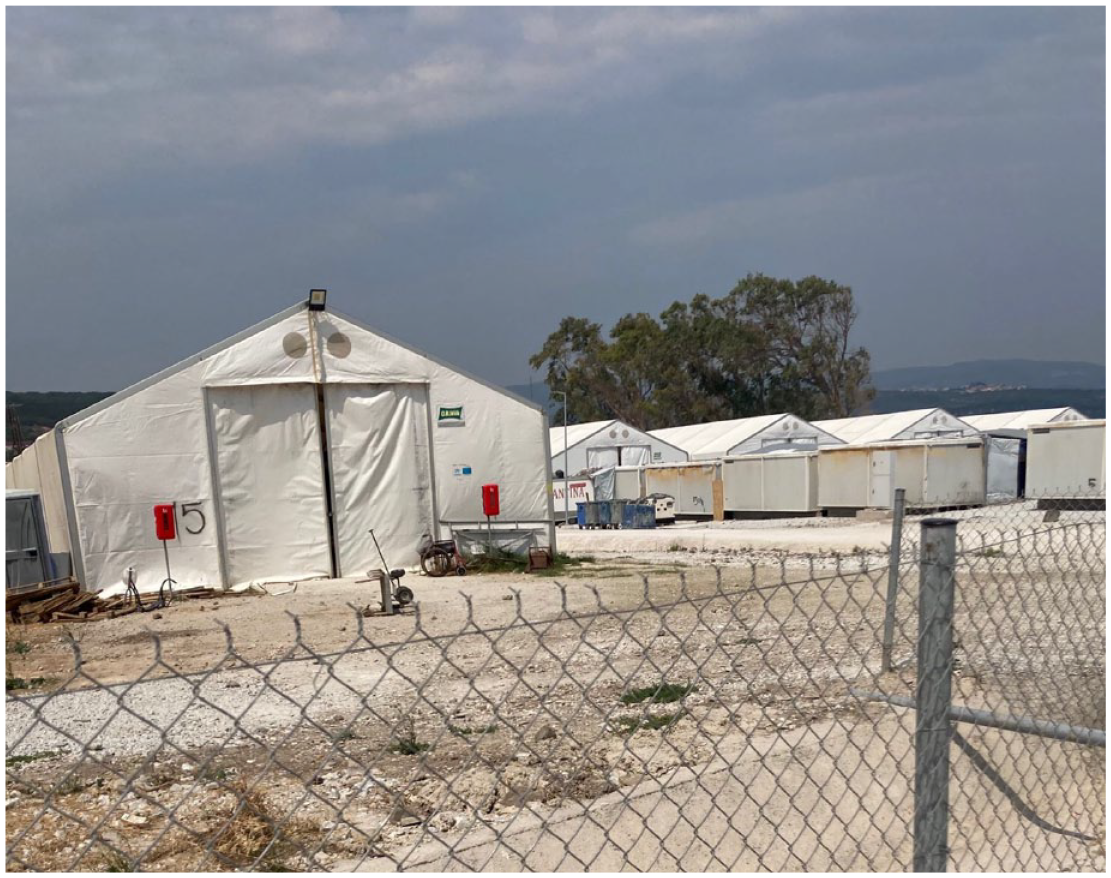
Rubhalls
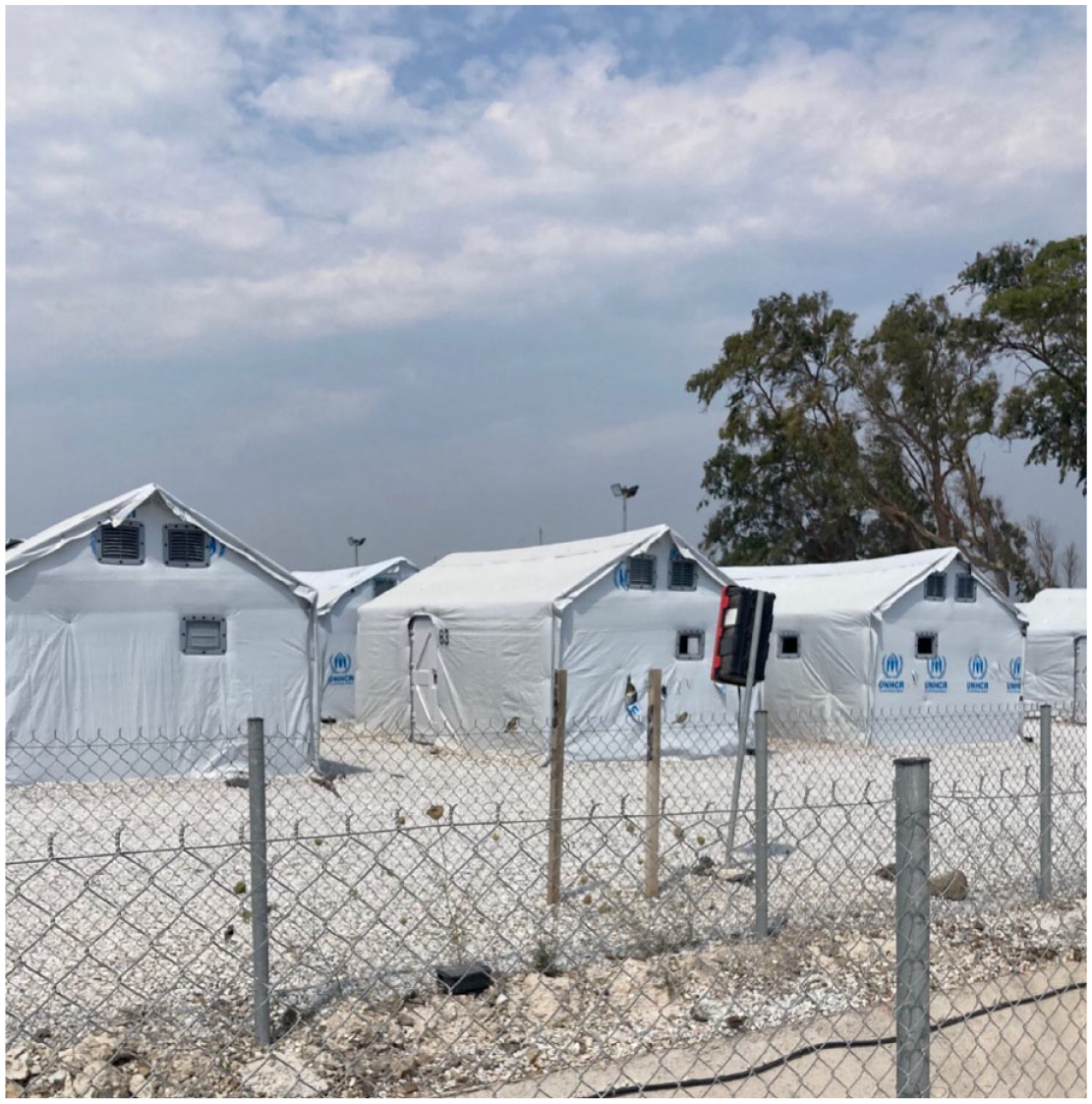
Refugee Housing Units (RHUs)
Allocation to different facilities is determined by vulnerability assessments (Papatzani et al. 2022). As a result, it is almost exclusively men, especially single men, who live in rubhalls and RHUs (see Figure 3).
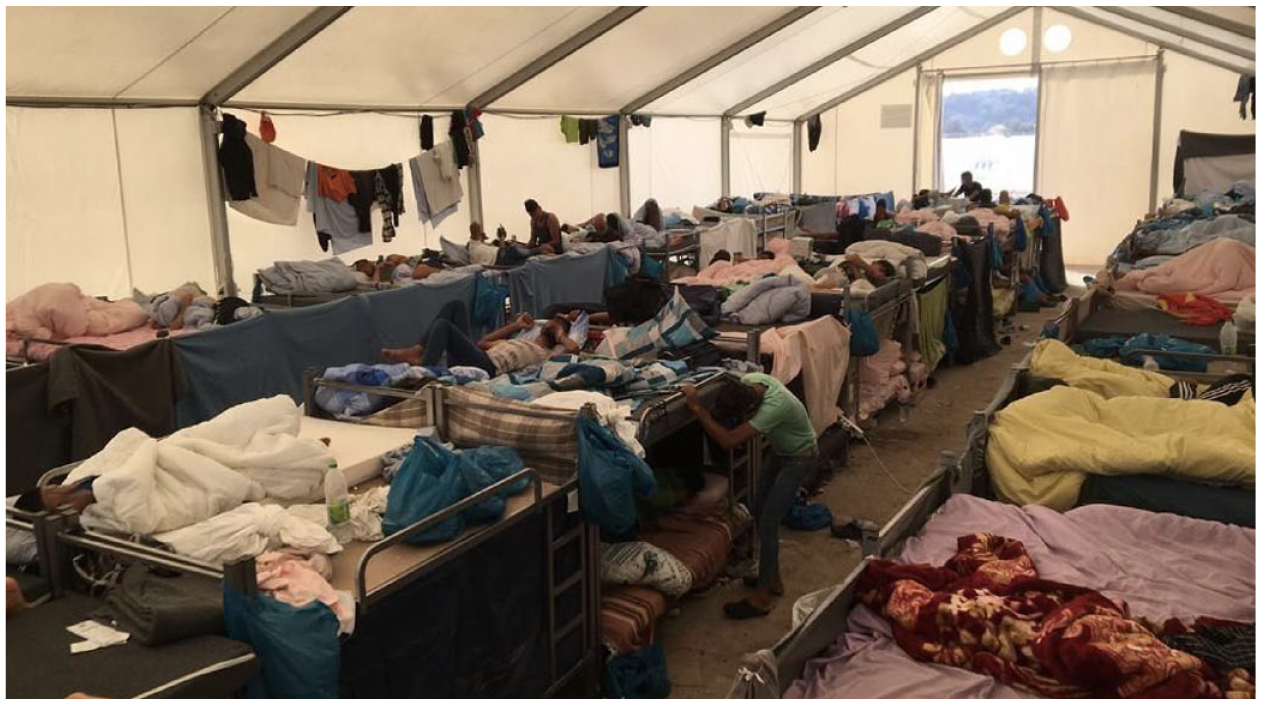
Men Living Inside a Rubhall
These facilities, and ergo single men, tend to be grouped and located within specific areas, usually with poorer access to facilities, such as toilets and showers. This separation of people according to gender—or, more aptly, gendered notions of vulnerability—has visible necropolitical effects. As Ali, a humanitarian working in an island camp, highlights, I’ll never forget this image: . . . single men washing themselves in this massive pipe that had small pipes coming out, like udders almost, coming out the sides of it, and they were showering . . . in clear plain view of the rest of the camp. To me, that highly symbolizes the indignity we dish up at single men . . . they were seen as people who can just shower in public and just use buckets, whatever. (Interview with Meena, 2022) (see Figure 4)
Yet even rubhalls and RHUs can be inaccessible. New arrivals—especially men—are often expected to live in single-person tents on the ground; or in the case of Sadio, they are simply given a blanket: All the containers were full. They give us only the blanket, and you go and find a house for yourself. So, with my friends, we sleep outside about five days in October. It was cold, very cold. Very bad time. . . . There was lots of rats around everywhere . . . For two years we were in the camp. Very hard time. (Interview with Oska, 2023)
Like Sadio, many men are forced to live in inadequate conditions for lengthy periods, often years, as they await their asylum decision. Although prolonged waiting periods are common for many, it is often worse for men because, as mentioned, the examination of applications is prioritized according to vulnerability (Papada 2023). In such situations, time becomes warped by the banality and limitations imposed on people’s lives by of protracted encampment and legal limbo. Mohammad, who has been living in Lesvos for 3 and a half years, said “it feels like 35” (Interview with Meena, 2022).
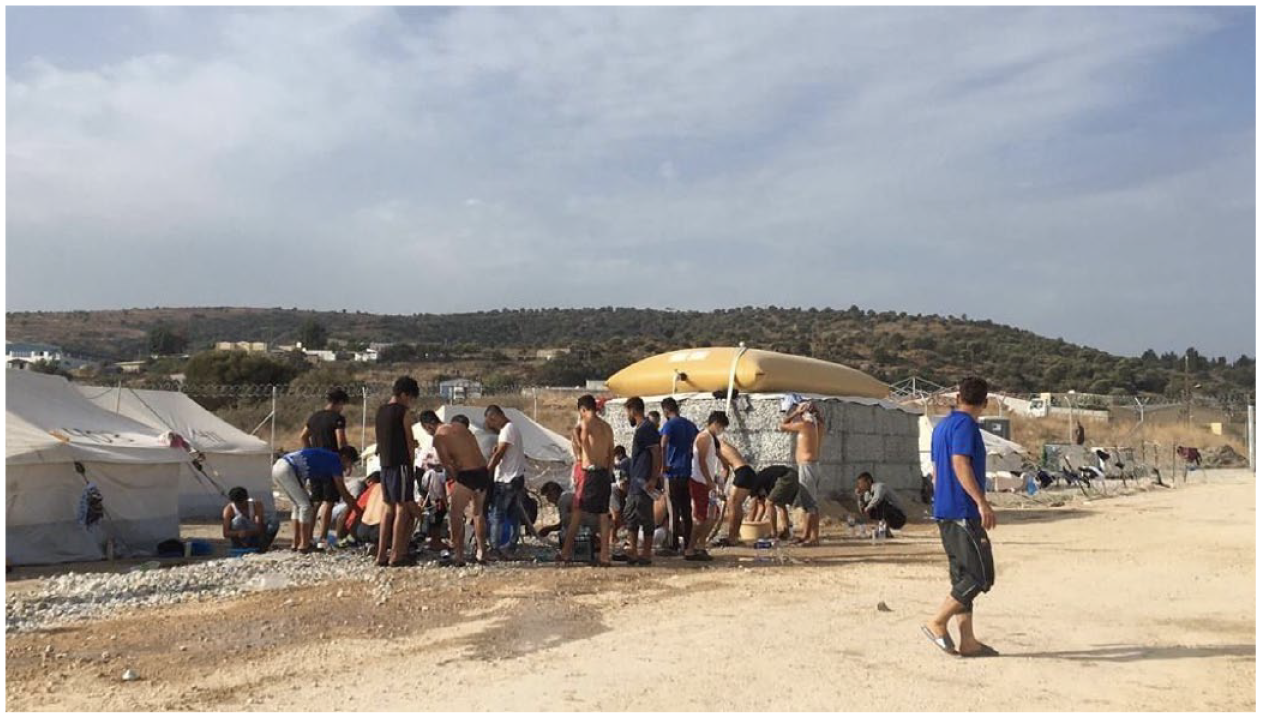
Men Having to Wash Outside
Many men, especially single men, struggle to access any facilities at all. Accordingly, high levels of homelessness typify experiences among this group. Homelessness, even more than camps, exemplifies the necropolitical conditions that many men are forced to reside in. Many men sleep in parks and streets, where access to even the most basic needs and facilities, such as food and toilets, are nonexistent. Javed testifies to the emotional collapse that such experiences inflict: I was on the road all the time, eating dust . . . I was just running to different other places to find free food. . . . I was homeless, I was penniless, I was joyless, and I was this near to hopelessness. And if I was ready to be hopeless it was to be a disaster. (Interview with Oska, 2018)
For some, relief from the streets means living in overcrowded squats or subtenancy apartments. While these are often preferable to parks, the conditions are also abject and incite feelings of fear: I was just living in the street . . . So, I went to Andras Squat. I saw hundreds of people! You know, Andras Squat can’t support more than 100, but when I reached there it was like 160, and we used to sleep shoulder-to-shoulder. (Noor, Interview with Oska, 2018) We were only men living in the house. Around 12 people in the same room. Many men are living in that kind of situation here. . . . I was obliged to go there, because to sleep outside is difficult. . . . I was scared. My money was too little to live, eat, drink. At night to sleep was very difficult. (Soloman, Interview with Oska, 2023)
These daily, unceasing, compounded harms—both material and emotional—do not typically receive as much attention as the more direct and pervasive forms of border violence in Greece. Yet the protracted abandonment and slow exposure to violence are important practices of bordering. As we have shown, this is enabled and sustained by a wide range of actors.
Men’s Responses to Necropolitics
In response to their abandonment, many men have created alternative networks of care to support each other with a wide range of services to those who fall outside dominant regimes of care (Grewal 2021), including housing for men. A common practice by displaced men with homes is to host those without homes. Such practices, unlike humanitarian infrastructures, do not mobilize a gendered conception of vulnerability as a means of inclusion. Instead, they emerge from the shared experiences of danger and violence that come with living on the streets as racialized men, as well as of hospitality. As Solomon explains: If I see a newcomer, . . . I will try to help him as soon as possible because I can remember the first time I was here in Athens. I can remember what other people did for me also. If I leave the person like that [sleeping on the street], after I will think about him, his situation . . . It will make me very stressed. I will not sleep. (Interview with Oska, 2023)
Solomon’s expressions of empathy, love, and care demonstrate the capacity of sentiments to build and sustain communities of solidarity in exile. In some cases, these communities stretch beyond normative paradigms of belonging, such as nationality or religion, revolving instead around a shared experience of displacement (Paul 2018). As Tipu notes, “we have all gone through these situations. I’m not Syrian, but I can identify with their situation” (Interview with Oska, 2018). Likewise, Hasan (Interview with Oska, 2018), who coordinated a squat, underlines how a shared experience of homelessness and displacement motivates him to help others: “The circumstances we have passed through are really hard, really miserable. It is full of sadness. That is what [we are] sharing, that is also what motivated me.”
In most cases, however, more typical patterns of belonging shape men’s solidarity practices and communities, such as shared religion and nationality (Grewal 2021). Indeed, there are more than 40 registered national associations in Greece. These associations are typically run on small monthly membership fees and provide important social and political functions, particularly for men, who tend to form most of their members. This is largely attributable to their abandonment from other services. As Kennedy explains: People leave us because we are men. You have to try yourself, you have to do everything by yourself. No one wants to help you, no one wants to give you advice or support. So, as a community we built [the Association]. (Interview with Oska, 2023)
Although housing is a complex and costly service, not typically provided by associations, the Union of Guineans in Greece (UGG) established their own reception facilities for new arrivals. This was driven by Mamadou, who had spent a week living on the streets of Athens before a compatriot invited him to stay at his house. He proposed to expand this widespread practice of solidarity in a more formal way, using the UGG’s coffers: We have people from our community who [were sleeping] in Plateia Amerikis. It shocked me. So, one time, at a meeting I said, “We are organizing a solidarity fund between us while our brothers are dying in the cold in Plateia Amerikis, three hundred meters away from our headquarters! If the State is doing nothing to help them, that doesn’t mean that we shouldn’t do anything for our brothers.” (Interview with Oska, 2023)
The UGG unanimously approved Mamadou’s proposal to create an alternative housing structure for new arrivals. Following the success of this project, several other associations followed this model. Such initiatives are indicative of the ways people with precarious legal status contest state and humanitarian inaction and necropolitics. Yet it is important to note that most groups continue to form and organize according to nationality. Thus, such initiatives often do not fully cut across normative categories of belonging. As Mamadou explains: The contradiction of this thing was that at Plateia Amerikis you will find six or seven people [of different nationalities], who know each other and who just arrived . . . But I wasn’t able to obtain the right from the Association to take everyone. We had to extract the Guineans. And that was also shocking for me. . . . The solidarity was still lacking. . . . We were reproducing what we criticize: borders and nationality. It hurts my heart that I recreated that. (Interview with Oska, 2023)
Mamadou’s political and emotional critique of the housing project is an important reminder of the ways refugee solidarity practices and initiatives remain somewhat entangled in dominant regimes of care that determine who is worthy of protection. Nevertheless, these practices and initiatives challenge the gendered use of vulnerability as a means of distributing care. They therefore constitute an important and radical response to widespread policies of gendered necropolitical abandonment.
Conclusion
The concept of vulnerability increasingly mediates access to services and rights for displaced people. However, its effects on the lives of men are often overlooked. The Greek case is exemplary of how formal and informal vulnerability classification systems are constructed and applied in close relation to racialized men and masculinities, and the insidious effects this has on their lives. We have focused specifically on men’s access to institutional and alternative accommodation, demonstrating how a multiplicity of different actors—including the state, humanitarians, and solidarians—use vulnerability to determine who is il/legitimate for care. While these determinations are made according to multiple lines of social demarcation—such as age, nationality, disability, ethnicity, and sexuality—gender is often the overriding lens through which vulnerability is perceived and authenticated in Greece. Ultimately, this results in displaced men’s exclusion from almost all forms of care.
Mbembe’s (2003, 2019) notion of necropolitics describes how violence is administered through everyday harms and deprivations. It has been used extensively within postcolonial and decolonial scholarship to understand how il/legitimacy is constructed in relation to racial un/belonging, including in the Mediterranean region. We have demonstrated how il/legitimacy for care is additionally equated with gendered conceptions of vulnerability, advancing the application of necropolitics.
These conceptions create and sustain an affective economy, whereby emotions, such as fear and apathy, both precede and stick to racialized and displaced men. The use of gender as a function of the border thus pertains not only to the withdrawal of material care, such as shelter, but also to emotional forms of care. Men’s encounters within the Greek regime of care demonstrate how their needs and calls for empathy, emotional intimacy, and understanding are routinely ignored. This widespread emotional detachment from men and their potential suffering constitutes an affective necropolitics, which plays a pivotal role in the construction of vulnerability, as well as in the practices and politics of bordering.
We expand the current literature’s focus on state and/or humanitarian policies and procedures, onto the gazes, discourses, practices, and affective orientations of differentially situated social actors, including displaced men themselves. Indeed, several men also reinforced the legitimacy of gendered necropolitics by constructing their masculine selves in relation to women, understandings of femininity, and entitlements to care. That said, men also engage in practices and initiatives of companionship and cohabitation that contest the use of gender in the production of il/legitimacy. Despite its own challenges, these alternative infrastructures of care offer men some opportunities for surviving the material and affective landscapes of necropolitical bordering.
Footnotes
Authors’ Note:
Thanks to all the participants who gave us their valuable time, as well as the reviewers for their helpful feedback. Oska Paul was supported by the Economic Social Research Council, 1+3 Award. Meena Masood was supported by the Leverhulme Trust Doctoral Scholarship.
Funding
The author(s) disclosed receipt of the following financial support for the research, authorship, and/or publication of this article: Oska Paul was supported by the Economic Social Research Council, 1+3 Award. Meena Masood was supported by the Leverhulme Trust Doctoral Scholarship.

Oska Paul is a PhD candidate at the University of Warwick. He has been involved in migrant-justice initiatives as an activist, a legal advice professional, and a researcher in London and Athens. His PhD project contributes to a growing body of work on solidarity networks in Greece, by exploring the gendered dimensions of migrants’ and refugees’ alternative infrastructures and socialities of care, especially with regard to the practices, affective responses, and agency of displaced men. He is committed to participatory methods and community-engaged research outputs. He has published work in Routledge Handbook of Masculinities, Conflict and Peacebuilding (2024), Critical Sociology (2022), OpenDemocracy (2020), University College London’s Migration Research Unit (2018), and University of East London’s Refugee Archives (2015).
Meena Masood is a Leverhulme Trust Doctoral Candidate at Queen Mary University of London. Using mixed methods, her PhD project investigates how humanitarian actors in Greece operationalize the concept of vulnerability. She focuses on how single asylum-seeking, refugee, and migrant men fit into humanitarian understandings of vulnerability and men’s experiences with humanitarian service provision. Using critical approaches, including feminist approaches, her research investigates how vulnerability structures everyday humanitarian work and the impact of it on men. Meena’s thesis builds on her previous work with humanitarian organizations and asylum seekers, refugees, and migrants across Greece. She has published with Al Jazeera, the Refugee Law Initiative, and the Institute of Race Relations and has upcoming work in the Journal of Gender Studies.