



Abstract
This qualitative study sought to explore, in depth, the sporting experiences of two Canadian elite athletes related to the menstrual cycle. Considering male patriarchy, a novel interview approach was used to facilitate between-athlete sharing and reflection on their menstruation-related experiences, initiated by an interview between participants without the male researcher being present. Thematic analysis revealed key differences in the experiences of the two participants with respect to the knowledge and awareness of their coaches, athletes’ attitudes toward the menstrual cycle, and availability of facilities and resources, while highlighting the lack of equality within male-dominated sporting environments and general menstruation taboo in society. An interwoven confessional tale highlighted the challenges imposed by a lack of relatability of experiences of male, non-menstruating researchers and the need to recognize the patriarchal power that in the past has filtered female athletes’ perspectives and specific needs, while unquestionably promoting sport from a male perspective.
Introduction
The menstrual cycle is a source of concern and anxiety for cyclically menstruating athletes engaged in elite sport and exercise. While challenges with menstrual symptoms can impact their availability to train and the sporting experience (Brown, Knight, and Forrest (Née Whyte) 2021; Findlay et al. 2020), intense athletic pursuits also have the potential to impact menstrual function and, thereby, the reproductive health and well-being of athletes (Harber 2011; Taim et al. 2023). With historically low rates of female participants in sport research (Cowley et al. 2021), it is only in the past decade that the relationship between the menstrual cycle and sport participation has come into focus, demonstrating continued challenges in sport due to insufficient and inconsistent information among coaches and athletes (McHaffie et al. 2022; Zipp and Hyde 2023). The societal taboo against menstruation, the promotion of sporting objectives over personal health, and the desire or obligation to maintain a strong, athletic image further complicate the ability of coaches and athletes to communicate openly and prioritize athlete health (Srinivasa Gopalan et al. 2024). The lack of qualitative studies on elite female athletes’ experience with the menstrual cycle also speaks to the need to explore the role of the menstrual cycle in elite sport from a more lived experience perspective of the athletes (Kolić et al. 2023).Therefore, within this growing body of research, there remain opportunities to (1) provide athletes with a greater voice and platform to explore and investigate their sporting experience with respect to the menstrual cycle and (2) contextualize these findings to evaluate the impact of changes within the sporting environment.
Qualitative Research Process: The Realist Account
The private nature of the menstrual cycle for female athletes, in addition to the complex sociocultural underpinnings and varied lived experiences (Brantelid, Nilvér, and Alehagen 2014), necessitates a research paradigm where the epistemological assumption is that “knowledge is constructed and subjective, reality is multiple, created, and mind-dependent, and methods cannot provide theory-free knowledge” (Smith 2018, 140). With regard to the menstrual cycle and sport, qualitative investigations through interviews and focus groups allow for greater involvement of athletes’ perspectives in the research process, thereby providing more personal context and richer insights into their experiences and attitudes (Bekker et al. 2020). Given the stigma against menstruation (Chrisler 2013), such analyses through ethnographic explorations help to uncover how female athletes and their coaches construct their perceptions about the menstrual cycle, as well as the impact of their interactions. The first component of this study, therefore, involves a qualitative approach through ethnographic interviews, within a life-history approach (Connell 2010; Sparkes and Smith 2014), between, and with, two elite female Canadian athletes, one former and one current, across two different sports, to compare their sporting experiences with respect to the menstrual cycle. Such a process promotes what social science researchers term as a realist account (Sparkes 2002; Van Maanen 2011), wherein the researcher seeks to “foreground the voices of participants, allowing the reader to gain important insights into their perceptions of events” (Sparkes and Smith 2014, 155). For this study, the lead researcher sought to minimize his “male” predisposition by initiating a participant-to-participant initial interview leading to a preliminary analysis and then, through a follow-up interview, facilitate the participants sharing and interpreting their insights. Specifically, the primary research question was to understand “how did the menstrual cycle and sport participation impact each other during the two elite female athletes’ sporting endeavors?” In addition, the study sought to understand the factors that facilitated or hindered the athletes’ abilities to communicate and seek support for these challenges.
Combining Qualitative Genres: Weaving in a Confessional Tale
In qualitative research, the ethnographic account has been broadened using different forms of genres where, as Sparkes and Smith (2014) notes, the representation of findings has moved “outside conventional social scientific writing forms” (156), blurring the boundaries between forms of writing to promote richer meaning-making processes on the phenomena being studied. Such movement involves a dynamic interplay between the researcher, the participants, and the entity or phenomena that is researched, changing during the research process and subsequently influencing the interpretation of the findings (Sparkes and Smith 2014, 17). In order to fully acknowledge and appreciate these interactions, it is vital to consider the positionality of the researcher (Hopper et al. 2008; Macbeth and Powis 2022). This study is led by a male researcher, and youth soccer coach, who is exploring the experiences of the menstrual cycle of two elite female athletes who have represented Canada in their respective sports. The relationship between a male researcher and two female participants exploring the menstrual cycle creates a certain dynamic that could sterilize the investigation and potentially impact the ability or willingness of the female athletes to freely explore the menstrual cycle.
Therefore, an additional research genre proposed by Van Maanen (2011) called confessional tales was used in this study as a means to (1) complement fieldwork in the social science domain to reveal the “messiness” in often untold elements, reflections, and tensions in the research process (Douglas and Carless 2010) and (2) enrich the findings of the traditional realist account, that tend to present a controlled and sterilized view of the research process and data (Van Maanen 2011, 74), by offering researcher revelations and documenting the participants’ emerging role as co-researchers through the process. As illustrated by other confessional tales (Douglas and Carless 2010; Fortune and Mair 2011; Smith 2012), reflexive accounts of the research process through this genre uncover the richness, tensions, and complexity of a study, thereby shaping the researchers’ learning, interpretations, and understanding of the research practices as well as that of other future researchers. We propose that the confessional tale of a male researcher studying the experiences connected to the menstrual cycle, given his lack of relatability as well as the gendered perceptions of the topic, would be vital in contextualizing the findings and informing future research. Incorporating the voices of the female researchers within this confessional tale can lend further clarity and support to the findings. Therefore, the second component of this study consists of a confessional tale to examine, through a reflexive account with critical friends (co-authors), the bidirectional relationship between a male, non-menstruating researcher, his research team, and the process of conducting research on the menstrual cycle.
The claims to truth in this study are based on what Smith (2018) refers to as natural generalizability. From a representation perspective, natural generalizability is reached when the “research bears familiar resemblances to the readers’ experiences, settings they move in, events they’ve observed or heard about, and people they have talked to” (140). From the perspective of the realist tale, the goal is elite female athletes speaking to other female athletes and their experiences with the menstrual cycle and their sport, creating a sense of common experience and space to feel heard. However, the confessional tale offers another form of generalizability, namely inferential generalization, which is “defined as occurring whenever a person or group in one setting considers adopting something from another that the research has identified” (140). The confessional tale offers a space to consider the way, and by whom, gendered issues are reported and disrupts the sterile reporting of taboo subjects like the menstrual cycle in sports. The confessional tale, to be successful, should be less self-indulgent on the researcher’s challenges and more revealing of the ways normalized practices might silence insights on the phenomena (Douglas and Carless 2010; Sparkes 2002). In this study, therefore, the confessional genre offered a space to challenge the patriarchal power of how sports are run (Scraton and Flintoff 2013), while, at the same time, ignoring basic female health issues associated with the menstrual cycle.
Methods
Confessional Tale Creation
Journal entries maintained by the first author (SSG), that is, the lead researcher, throughout the research process served as the primary source material for the confessional tale, along with reflective discussions with the co-authors, who served as critical friends. Initially, the fourth author (TH), as course instructor and senior researcher, was the critical friend, but over time the two participants (ES and JR) became co-researchers in the study. The confessional tale insights, woven in throughout the paper, are written as a first-person account from the point of view of the lead researcher, or from collective reflections using “we,” and with specific attributions made to the co-authors for quotes and reflections.
Participants
Through convenience sampling and informal invitation, two potential participants were recruited within the university graduate program based on the following eligibility criteria: (1) elite Canadian female athletes aged eighteen years or older, (2) cyclically menstruating during their athletic career, and (3) no overlap in their respective spans of elite sport training and competition. Participants were briefed on the study protocol and use of their data and provided their informed consent prior to participation. Ethical consent was established outlining the expectations of the two interviews to explore the participants’ experiences, as elite athletes, with the menstrual cycle. The participants, who later became co-authors in this study (ES and JR), consented to the use of their names in the article. For contextual clarity in the findings, however, their names have been replaced by the codes Gen1 and Gen2, which are short for generation 1 (former athlete) and generation 2 (current athlete), respectively.
Background and Sport Participation
Both Gen1 and Gen2 are cis-female, elite athletes from Canada. Gen1, born in 1972 in British Columbia, Canada, is a former international and collegiate level soccer player. She comes from a family with a rich sporting background and grew up with two older sisters and two younger brothers. Gen1 had a predominantly team-sport background and continued her professional soccer career into her forties, only stopping after sustaining a career-ending injury. Gen2, born in 2000 in Alberta, Canada, started her athletic career in 2014. She is a current elite endurance athlete competing in national-level triathlon and cyclocross events and trained at the national center until 2023. Gen2 has also competed as a guide in elite para-triathlon events like the North American championships, world cups, and world series races. Gen2 has one younger and one older sister, and her parents encouraged them to participate in a variety of sports from a young age. Gen2 primarily competed in endurance sports as a youth, placing in strong positions in several junior championships.
Gen1: I think my sporting experiences have taught me and shown me what I’m made of and losing my ability to play sport, I lost my identity. Gen2: My sporting experience has been a major leader, navigator, or pillar in the person that I am today.
Confessional Insight 1: Male Researcher
As a male researcher, on more than one occasion I have been asked about my motivation behind researching the menstrual cycle, a typically “female” topic. Both ES and JR asked that very question. The answer lies in my reflections as a youth soccer coach and as a researcher focused on promoting physical activity among all youth regardless of income, status, or gender. I consider it our responsibility as coaches to acknowledge the unique physiological experiences of female athletes and create the conditions for them to seek timely support. We also felt that the menstrual cycle is an important topic to address, and that the male researcher could make the topic more accessible for male coaches of female athletes. However, the research needs to remain relatable to female coaches and athletes and, therefore, it is vital that I acknowledge how my position as a male and non-menstruating researcher could influence female participants sharing their experiences with the menstrual cycle in sport.
Confessional Insight 2: Recruitment
ES, JR, and I met as classmates in TH’s qualitative methods course. Separate recruitment calls for the study ensured that ES and JR could approach the study without any preconceived notions of each other. Both participants were eager to be involved after hearing about my study in class, which came as a surprise to me as we had only previously met in a few classes prior to recruitment. The positive classroom relationship promoted in the course seemed to transfer to trust in me for the participants. Their excitement was further influenced by their desire to analyze and speak openly about what they perceived to be an important topic.
Data Collection
Two rounds of in-person interviews, each lasting seventy-five minutes, were used to examine the athletes’ sporting experiences. The participants were invited to provide their suggestions for questions for the initial interview. Both interviews were video recorded for the purpose of analysis only. The first round was an unstructured interview between the participants, in the absence of the researcher. This approach aimed to facilitate greater freedom and comfort between the participants and the discovering of shared experiences (Sparkes and Smith 2014), without the influence of a male researcher. The participants were provided with a list of questions to guide the interview but were free to pursue and explore insights that emerged from their discussions. In the second round, the researcher interviewed the participants together, asking for clarification of ideas and emerging concepts from preliminary coding, exploring the participants’ reflective insights after the first interview, and informing the discussion of findings from the researcher to the participants, akin to a focus group discussion (Sparkes and Smith 2014, 86). Questions for this interview were based on preliminary themes such as “knowledge and empathy in the sporting environment” emerging from an analysis of the first interview.
Confessional Insight 3: Data Collection
The idea for the initial interview without the researcher present came in consultation with TH. Concerning the issue of a male researcher not having a lived experience of being an athlete dealing with the menstrual cycle, a discussion emerged around the role of the researcher in shaping participants’ responses. This led to the idea of the interview based on a guide but led by the participants. However, for me, a few weeks later, waiting in another room during the first interview was an unnerving experience, and there was a clear sense of a lack of control. It took a concerted effort on my part to not stress over the recording devices working properly or the participants progressing with the questions. When I went back to check on them after about an hour, I was delighted that they asked for a few more minutes to wrap-up. Later, watching the recording, it genuinely seemed like my absence had allowed the participants to talk freely, build a connection, and share relatable experiences with each other rather than to a male. Moreover, they had addressed all the questions in the guide, often arriving at them naturally, while also posing additional questions.
Data Analysis
The interviews were transcribed using Echo360, an active learning platform used by students and instructors to capture videos and transcripts from class interactions (Echo360 2007). Verification of the transcription process, using the video recordings, revealed a high degree of accuracy and fidelity of the transcripts, with different speakers identified as well. Thematic analysis was then used to identify, interpret, and compare patterns in the resulting dataset. This approach was used owing to its flexibility in synthesizing large datasets and ability to derive meaning in a social as well as psychological context (Sparkes and Smith 2014, 124). SSG performed the thematic analysis over multiple stages, with TH offering feedback and suggestions initially, and ES and JR providing additional feedback and verification of findings after the second interview through a member checking phase. First, initial codes were produced following an immersive reading of the transcripts using NVivo (2023). Participants’ themes were identified through sorting and aggregating inductive themes to elaborate on the differences and similarities of their experiences (Saldaña 2013, 3–25), which were then written in the form of a preliminary report shared with the participants.
Confessional Insight 4: Unpacking Initial Data Analysis
The main themes emerging from the first interview centered around the participants’ attitudes to the menstrual cycle in their athletic careers (i.e., knowledge) and their coaches’ approaches toward menstruation and sport (i.e., empathy), which were shared back with the participants as a report. In elite women’s soccer, Gen1 claimed that menstruation was not a taboo topic during her time. This had confounded me, and I was eager to follow-up with her on this in the second interview. Listening to Gen1’s response in the second interview, I realized that menstruation as a topic was secondary, publicly totally ignored as it implied a weakness, and completely overshadowed by her generation’s fight for equality in playing conditions and opportunities compared to males. It was clear that I had overlooked this factor as a male and as a researcher, a crucial historical factor to include in such investigations and in current discussions to form a more holistic picture.
Repeating the analysis in two waves, one for each interview transcript, also allowed for the re-evaluation of existing codes and identification of new codes. The process of articulating the themes into a descriptive analysis served a critical role, with the final stage involving a reframing of the themes based on a combination of the reflexive insights of the first author as well as the feedback provided by the co-authors.
Confessional Insight 5: Second Interview Set-Up
In the second interview, after reading the report, JR shared her reflection that this was an opportunity to “educate the researcher.” However, despite this intent, they (ES and JR) deferred to me (male, non-menstruating, researcher) rather than to each other as elite athletes who menstruate. Rewatching the recording, I felt that modifying the seating arrangement, such that participants were facing each other rather than directly at me, could have promoted more direct conversation between them. Contrary to the goal of keeping the balance of power with the participants, interview 2 “felt like more of a structured interview,” as per ES’s recollection, where “we allowed ourselves to be led by the male researcher researching the menstrual cycle.”
Findings
Following a discussion of the participants’ early experiences with the menstrual cycle for contextual clarity, the subsequent sections highlight the four dominant themes that emerged from the interviews regarding Gen1 and Gen2’s sporting experiences, which addressed the first research question (“how did the menstrual cycle and sport participation impact each other during the two elite female athletes” sporting endeavors?”): (1) knowledge and empathy in the sporting environment, (2) menstruation stigma and the struggle for equality, (3) relevance and availability of medical advice and resources, and (4) athletes’ understanding and perceptions of menstruation.
Confessional Insight 6: Theme Generation
Sharing and validating the generated themes with ES and JR was critical to ensure that their thoughts as participants were appropriately represented. Both ES and JR also felt that these themes covered the main aspects that impact a female athlete’s experience. This approach allowed the thematic analysis to be more organic and natural, as opposed to a sterilized process of just the researcher attempting to make sense of the participants’ experiences. From an analysis perspective, while breaking down the transcripts into smaller and more cohesive chunks was more challenging in a format where the discussions were largely unstructured, the recordings provided greater insights into the emotions involved, adding great depth to the messages conveyed. The deviation from my proposed questions in the guide also allowed understandings to emerge that I could not anticipate.
Participants’ Early Environment and Menarche
Both Gen1 and Gen2 received basic information regarding menstruation and puberty in their schools through sex education classes for girls only (Gen2 was in an all-girls school at the time). However, Gen1 and her peers did not take these classes seriously, but Gen2 appreciated their informative and open nature. While Gen2 noted that tampon receptacles were a staple in bathrooms at her high school, Gen1 spoke about the need to visit the school nurse to procure menstrual hygiene products. Gen1 and Gen2, however, had their first period only at seventeen years of age. While they both came to the realization (of being late to menarche) by observing their peers, their approach to dealing with this situation was completely different.
Gen1: So, I vividly remember around 13–14, all of my friends were getting their period, and I wasn’t and I kind of just moved on. I just didn’t even think about it. . . But no, it wasn’t, really wasn’t a thing. Like, my mom never said anything to me. . .it wasn’t fair, my parents are older. . . So, it was not like dinner talk. We never talked about that with my brother or my dad. Gen2: When I was younger, um, I can’t remember who it was, me or my mom, who said “wanna go get this checked out”. But I feel like it was me. Like, “mom, I’m 15, why don’t I have a period? This is weird. So, like, can we go to a doctor and see what they think?”
Confessional Insight 7: Connection Between Participants
As researchers re-reading the paper, ES and JR reflected on a deep connection and empathy toward one another during the interviews and felt validated through their shared experiences with the menstrual cycle as elite athletes. This connection was evident in their natural digressions from the interview guide in the first interview, where they discussed biking, menopause, sleep, and intrauterine devices (IUD), among other topics.
I remember, while watching the recording, I was anxious about the time spent on these tangents. But these conversations and opportunities to share learnings between the participants seemed to be a more relevant and effective means to arrive at authentic and candid responses. In contrast to the second interview, where in ES’s words, “we (JR and I) elaborated less (as) a result of having the male researcher in the room,” keeping the researcher out of interview 1 allowed the participants to freely share their frustrations with one another. For example, regarding the discomfort and costs associated with menstrual hygiene products. ES’s reflection also echoed the discussion between TH and I, where we felt that participants could be nervous or unsure of what to say in an interview with a male researcher, one that they are unable to relate to experientially, and one they had only met a month earlier.
Knowledge and Empathy in the Sporting Environment
Throughout her career, Gen1’s soccer coaches, who were usually male, displayed a lack of knowledge and awareness of the menstrual cycle, neglected their responsibility to support the athletes, and even used period-related euphemisms to mock the athletes. Even female coaches later in Gen1’s career were deemed unlikely to offer support, with Gen1 exclaiming that she “never had a coach that she could talk openly to.” On the contrary, Gen2, as an endurance athlete, credits her informed and knowledgeable coaches, especially her female coaches, with creating an empathetic and supportive environment that was accommodative of an athlete’s needs and concerns regarding menstruation. This was also exemplified by the support that Gen2 received from her youth coach who recognized her lack of a period at age seventeen.
Gen1: . . .if you were depressed or down or hormonal or whatever, the coach would usually just make a joke about it, “she must be getting her period,” “oh, we know what time of the month it is,” like, that was always a bit of a joke. So, you didn’t expose yourself in that way. We did two [training sessions] a day whether you were feeling good or not. Gen2: I’ll say to my coach, “I’m sorry if I’m off today, but like my period is coming soon.” I’ll say to my strength coach “it’s day 27, I’m not having a good day” and he’s like, “do you wanna like chill out in the gym today because you’re obviously not gonna be coordinated enough to do some heavy lifts?” Gen1: . . .I think about my older female coaches who would have just been like, “I dealt with it, we’re dealing with it, get out there like everybody else.”
In Gen1’s sporting career, specialist staff, such as nutritionists and psychologists, were a rarity and her coaches were unwelcoming of external experts and guest speakers, leading to a continued cycle of insufficient knowledge and experience. In stark contrast, Gen2 extolled the virtues of the specialist staff who were integrated into the training team and enabled knowledge-sharing and evidence-based practice.
Gen1: (talking about inviting external experts) Definitely not. It’s closed, everything. Training was closed. . .we didn’t even have sports psychology until I think 1995–1996. But even then, that was kind of like nobody cares. Gen2: . . .our physiologist is a scientist. . .our nutritionist only tells us stuff if it’s backed by science and she’s always talking about the latest studies that came out. Even our strength coach too, he’s a PhD in Strength and Conditioning. Our nutritionist told me that with the sweet cravings, your metabolism is slightly elevated in the last week of your period, like before your period, so you burn more carbohydrates. And so, she would just tell us just have an extra piece of toast at breakfast than you normally would or put some extra honey on your food in the morning. Gen1: Oh! Gen2: Yeah. And, like, the heat, she’s like, yeah, just drink more water than you normally would. And then you can sweat properly and then that will mitigate the heat. Gen1: Oh, all these little things. See no one taught us that though. It wasn’t like there’s a “period 101” somewhere.
Finally, with regard to their peers, both, Gen1 and Gen2, credited their fellow athletes with providing empathy and guidance. In both sporting environments, teammates, especially older and more experienced ones, stepped up to help manage visible bleeding in training, provide support for pain or discomfort due to menstrual symptoms, and shared information regarding menstrual hygiene and symptom management.
Confessional Insight 8: Attitude Shifts Over Time
TH and I, the two male researchers in this study, reflected on our own coaching experiences, realizing that we had never been able, or indeed equipped, to have this discussion with our female athletes. As males, the menstrual cycle was neither a part of our education curriculum on sexual and reproductive health nor did it feature in any of the coaching courses or certifications that we had undergone in our respective coaching pathways. While coaches’ attitudes toward the menstrual cycle are gradually changing, there still seems to be a hesitation to openly discuss the topic with players, with the period continuing to be thought of as a female problem. Although we (TH and I) had not personally come across coaches explicitly shaming or teasing players based on their periods, growing instances in the media on the importance of considering menstrual cycle for elite female athletes has only increased our bewilderment over the collective inability of people to address it as a normal, biological process. As JR noted, greater awareness of mental health and safe sport practices and women being appointed to leadership roles had allowed for gradual improvements in conditions for cyclically menstruating athletes, but progress was slow. ES echoed these sentiments in underscoring the importance of the availability of knowledge and resources in changing attitudes among athletes as well.
Menstruation Stigma and the Struggle for Equality: “Train Like a Boy.”
Gen1 identified the struggle faced by female athletes of her generation, especially in the soccer world, to earn respect, recognition, and equality as elite competitors in a time where they were considered lesser to their male counterparts. Gen2 noted that while she and her fellow competitors were privy to a more level playing field, compared to men, in triathlon events, there was still a need for continued improvement and progress.
Gen1: But back then it was just like if you wanna play a sport like a boy, then you’re gonna train like a boy. For years we’ve had to work so much harder to be equal to men. Gen2: That’s such a contrast to triathlon. It’s equal prize money, equal airtime. Long course and Iron Man is a little bit of a different story. . . it’s more like the screen time is a little bit different. Um, and there needs to be a bit more equity there.
As a direct consequence of the status of female athletes in their respective careers, Gen1 and Gen2 identified marked differences in how their menstruation-related needs and concerns were perceived, acknowledged, and addressed. In Gen1’s sporting environment, not only were concerns related to the menstrual cycle considered unimportant or irrelevant, menstrual symptoms were, in fact, perceived to be a sign of weakness. Gen2’s experience, three decades later and in triathlon sport, suggested a shift to an environment that was more accepting of female athletes’ challenges, acknowledging the physiology of the athlete as key to long-term success, and placing an emphasis on athletes’ ongoing health and future well-being.
Gen1: If we identify something that biologically makes us different [to men] and we leave the field to go and deal with that, it just opens us up to criticism, it opens us up to mockery. . . I just wanna be thought of as the same. I don’t wanna be a menstruating individual out there who has to leave. . . I would never leave the field. Gen2: My coaches know that I’m smart enough and in-tune with my body. . .if I’m gonna come forward with something, they’re gonna be like, “ok, well, this is legit,” you know, I’m not trying to just slack off.
However, Gen1 and Gen2’s common perceptions of the stigma and embarrassment associated with visible signs of menstruation, especially visible bleeding, suggested the persistence of the taboo against menstruation and the corresponding challenges posed to athletes who menstruate.
Gen2: But I feel like [there is] a huge stigma [against visible bleeding]. Like, you don’t go out! Gen1: In a game situation, having spectators, I’d be mortified if that [visible bleed] happened.
Confessional Insight 9: Sport Environment Designed for Males
Gen1’s comments highlighted an important aspect that I had ignored, but is critical, when discussing female athletes’ experiences, that is, females continue to face challenges with equality and recognition in sport. The fact that Gen1 and her peers felt that they trained and competed in a sport designed by and for men could be a perception that modern athletes feel as well. Within such a context, topics such as the menstrual cycle would become secondary or an ignored issue, as in Gen1’s case. As JR reflected on these insights, she remembered being “glad I didn’t menstruate sooner” and that “being one of the boys meant fitting in.” As a male researcher focusing on the menstrual cycle, this competing in a men’s world by men’s rules had not initially struck me as a potential issue, which only served to strengthen the case for the research approach adopted in this study.
Medical Advice and Resources: Lack of Relevance and “So Much Money!”
Both Gen1 and Gen2 noted that the advice they received from external doctors, that is, outside their sporting environments, was often irrelevant to their high-performance sporting contexts and based on trial-and-error methods. Gen1 only managed to receive advice relevant to her athletic context, in terms of the interactions between her health and performance, from a female sports doctor much later in her career. Gen2, similarly, faced challenges with getting the right diagnosis related to her lack of a period during adolescence due to underfueling.
Gen2: So first person I went to go see was a GP [general practitioner] . . .not helpful at all. . .like does not understand the demands of sport, isn’t in touch with the knowledge of how these things are impacted by the menstrual cycle. Gen1: And it’s trial and error too. Gen2: Like I went three times, I remember. I had like multiple blood tests and even a pelvic ultrasound to make sure I was structurally intact.
With Gen2’s doctors not recognizing that she might be suffering from Relative Energy Deficiency in Sports (RED-S; Mountjoy et al. 2018), it was only through her own insistence and that of her coach at the time that she consulted a nutritionist and received relevant advice. Gen2’s experience in this regard echoed the challenges faced by athletes related to RED-S, where primary or secondary amenorrhea due to low energy intake can go ignored or undiagnosed due to lack of awareness and relevant medical guidance (Brown, Knight, and Forrest (Née Whyte) 2021; Verhoef et al. 2021).
Gen2: So, 15 years old. No period. I went to the doctor. They’re like, you’re fine. It’s all good. 16 years old, same thing. You’re fine. It’s all good. 17 years old, same thing. You’re fine. It’s all good. . .But then she [coach] was like you’re not getting any better, we need to like get on top of this. . .And so I worked with a nutritionist and I learned a bunch and I started eating more. . .and I got my period for the first time.
The lack of relevant advice could be a greater challenge in situations where athletes are unable to access relevant and accurate information on their own. In addition to an aware coach and educated nutritionists, Gen2 also had access to menstrual tracking applications, books, and podcasts with researchers and athletes, which had helped her improve her knowledge of the relationship between the menstrual cycle and athletic performance. Gen1, on the contrary, thirty years earlier, was exposed to far fewer avenues of information during her sporting career, if any. Consequently, Gen1 and her peers also lacked awareness of different menstrual hygiene products (e.g., different tampon applicator options, as Gen2 pointed out), and strategies other than hormonal contraceptives (HC) for birth control and timing their periods. Additionally, some options, such as copper IUDs, something that Gen2 was able to acquire through a simple procedure, were not commonly available for Gen1 and her peers. Gen1, in fact, commented that “she couldn’t recollect having ever even heard of them.” However, the discomfort associated with having to wear menstrual hygiene products while training and competing was echoed by both participants. Similarly, the expenses involved with menstrual hygiene products were a shared frustration between them, as discussed in their first interview.
Gen1: I vividly also remember slide tackling a girl one time and my tampon coming out and I remember feeling it in my shorts thinking, “oh, this is great!” . . .there’s been a lot of those embarrassing moments. Gen2: And tampons are so expensive. Gen1: Ok. That’s the other thing that really kind of bugs me which isn’t touched on in any the questions, which I will also add—the sheer expense is unfair. Gen2: So much money!
Gen1 and Gen2’s experiences with sporting facilities and availability of products pointed to the changes in consideration given to the menstrual cycle in the current sporting environment, while, simultaneously, suggesting the need for continued progress. Medical kits for the women’s national soccer team during Gen1’s playing career seldom consisted of menstrual hygiene products, while Gen2 remarked that these were commonly available in her training centers. Lack of appropriate facilities during Gen1’s career also led to potentially unhealthy, unhygienic, and embarrassing situations with menstrual hygiene products.
Gen1: . . .the sink was on the outside of the bathroom at one particular ground. So, you’re like in the bathroom and you’re like, I need to change my [menstrual cup], I wanna rinse it out. So, you’ve got to go outside to the sink, go back in, and I was like, “I can’t. No, I hate this.” Yeah. So, then you just keep it in longer than you really want to.
Finally, both Gen1 and Gen2 pointed to the challenges with inappropriate or unsuitable sporting apparel. White and light-colored uniforms increased the likelihood of visible bleeding for Gen1 and her peers, while Gen2 noted the challenges of concealing bleeding while swimming and finding menstrual products and apparel that were appropriate for in-water use.
Gen1: We had white shorts for the longest time. . . Gen2: At least if it’s black or dark blue it can cover up as sweat. Gen1: Exactly. It starts to leak and it’s embarrassing. It impacts your play. It impacts your confidence. . .
Confessional Insight 10: Who Created the Questions and Who’s Asking Them?
The discussion around costs and issues with toilet privacy were clear indications of further blind spots in my approach to the topic of the menstrual cycle in sport research. It stressed the benefits of co-creating and co-producing research with participants and expanding and enriching the questions. I suspect, Gen1 and Gen2 asking these questions of one another also produced the appropriate emotional responses and allowed them to share a deeper connection.
Reviewing the interview guide, and as TH pointed out, I had not included any direct questions related to embarrassment with visible bleeding or menstrual symptoms in public settings. Until hearing about it from JR, I had not even thought about the challenges with being unable to replace menstrual hygiene products during games. While the format of the first interview allowed this theme to emerge naturally, Gen1 highlighting that the interview guide did not include any questions related to costs or embarrassing situations summed up the issue with my oversight perfectly.
It must be acknowledged that the rich first interview could be a consequence of the participants’ nature as knowledgeable and educated individuals. Both JR and ES admitted that this is a possibility as to why they were so open and candid in my presence as well, but somehow the more conversational nature of the interview, with free-flowing discussion and tangential topics, promoted fuller insights between them, not mediated by a male agenda. This connection between the participants, across time, across sports, but with a common commitment to elite level performance, allowed them to openly share their opinions regarding the need for elite sport coaching to do better, especially in sporting environments that continue to be dominated by male perspectives.
Athletes’ Understanding and Perceptions of Menstruation: “A Health Check.”
For Gen1 and Gen2, the menstrual cycle was a normal process, and they both acknowledged the challenges they have had to face with menstrual symptoms as elite athletes. However, differences in their understanding of its role and importance provided an example of the changing perspectives over time in relation to elite sport and menstruation. Where Gen1 and her peers tended to ignore the menstrual cycle and focus solely on their performance and sporting goals, Gen2 considered it equally important to maintain regular menstrual function.
Gen1: We didn’t want to talk about it. We just wanted to focus on sport. . .I regretted it [having a period] every single time. I never wanted it. . .I know I never looked forward to it. Gen2: The little thing that I love about [it] like a health check, that you’re doing well. Gen1: As you’ve labeled it a health check, that’s better. . .So not only is it a health check, you’re like, “yes, not pregnant. Excellent!”
As a consequence of these attitudes, Gen1 admitted to a poor understanding of the menstrual cycle in her playing days, while Gen2 conveyed a nuanced understanding of the science associated with the menstrual cycle and a greater recognition of its relationship with her training and health. This was also reflected in the contrasting strategies they adopted to control and manage their menstrual symptoms, with the focus solely on performance for Gen1, and Gen2 adopting a more holistic approach that gave equal importance to her health.
Gen1: Every time I had a game and I was bleeding, I would increase my ibuprofen. . .But if we had a big game, we would take a look at the calendar and be like, “ok, I’m just gonna keep taking my pill the entire time and just skip over my period”. . .I honestly think one girl tried it and it worked and we all just did it. Gen2: I never took the pill and then I used the copper IUD cause I’m so scared of putting hormones in my body. . .if the hormone one [IUD] is gonna get rid of my period, I’m like “big no!”. . .that’s my check mark you’re doing well every month.
In addition to possessing a curiosity and inclination to learn more about the menstrual cycle, Gen2 also believed that it was important to speak up and be open with your coaches regarding any menstruation-related challenges. Gen2 felt that speaking up could also set a positive example for other athletes, especially youth athletes, to discuss these topics openly. Gen1, on the contrary, admitted a reluctance to engage in conversation about the menstrual cycle, regardless of who initiated it, and felt the need to deal with her menstrual symptoms on her own. Gen1 simply stated that “I wouldn’t have talked about it.”
Gen1: I can think of multiple training sessions where someone has had light-colored shorts and you just carry on. Nobody leaves training to go fix that. You just kind of deal with it. . .not starting on Sunday [in a game] is what’s kind of on the line. Gen2: I’m a big proponent of, if you have the time and the space, to say “no,” and to change things. . .in the gym, for example, it’s a super great place. But, sometimes, you gotta compete on your day.
Confessional Insight 11: Sustained Impact of Experiences
JR reflected on how her environment had led her to having a “male” perception of sport, which had influenced her approach as a coach too. Crucially, JR noted that she saw her role “as a coach of the sport and not of life,” adding that “not once did I validate or support any of the athletes verbally in regard to their menstrual cycles.” This was a critical point that illustrated the potential persistence of mistaken perceptions and ideas among current female coaches as well. It was only in her older years and, after having children on her own, that JR recognized the need to go beyond the sport and understand the needs of her athletes.
Gen2 labeling the menstrual cycle as a “health check,” perhaps, served as the most powerful metaphor for coaches and athletes alike, one that comes from an insider with relatable and relevant experiences at the elite level of sport. We (TH, JR, and I) felt that it underscores the value of the menstrual cycle as a ready indicator of athlete health, something that can be considered an asset as opposed to a burden, promoting a lifelong holistic view of a sport career and female health.
Discussion
This study aimed to understand the differences in the elite sporting environment in Canada with respect to the menstrual cycle, based on the experiences of two top-level athletes whose sporting careers were separated by thirty years. Acknowledging the gendered perceptions and sensitive nature of the menstrual cycle as a topic, this study employed a novel research approach where the participants initially interviewed each other in the absence of any researcher. Then, drawing on a preliminary data analysis, the second interview was conducted as a focus group with the lead researcher. This approach allowed the participants to share insights not imagined by the male researcher, prompting him to consider his own approach as a researcher and coach, and for the participants to further unpack their own perspectives regarding the menstrual cycle in their respective sporting environments. The persisting gendered inequalities in sport and the societal taboo against menstruation stressed the continued challenges for female athletes competing in sporting environments designed by and for males. A secondary aim was to capture the insights of a male, non-menstruating researcher conducting a study on the menstrual cycle. These reflexive accounts, presented in the form of a confessional tale with the co-authors serving as critical friends, laid bare the challenges posed by the lack of relatability of experiences in conducting research on the menstrual cycle. It also acknowledged the strength of the combined “realist-confessional” as a paradigmatic approach that promotes greater insider insight into doing social science research and, in the case of this paper, created a space for the participants to become co-researchers.
Gen1 and Gen2’s contrasting accounts regarding the presence of female coaches supported greater inclusion of females in coaching roles to allow for a more open and understanding sport environment. With female coaches able to draw on their own experiences to be more proactive with their athletes’ needs and concerns regarding the menstrual cycle, and female athletes preferring to talk to female coaches in comparison to male coaches (Srinivasa Gopalan et al. 2024), there is a need to challenge the male-dominated nature of the sporting environment. Creating more opportunities for female perspectives could enable more accommodation and empathy in relation to menstruation in sport, especially at the elite level (Hovden 2013). However, as noted in the confessional tale, Gen1’s admissions about her own approach to coaching, dictated by her playing experience, suggest that simply including female coaches may not be sufficient. In similar situations where female coaches may project their own mistaken perceptions of the menstrual cycle and support seeking behaviors on to their athletes (Brown and Knight 2022), there is a need for educating female coaches about correct practices regarding the menstrual cycle. With increasingly more male and female coaches showing a desire to improve their understanding of the menstrual cycle to better support female athletes (Clarke, Govus, and Donaldson 2021; Schofield, Thorpe, and Sims 2022; Zipp and Hyde 2023), there seems to be a shift toward acknowledging the diversity of experiences within the sporting environment, facilitating the expression of vulnerabilities, and embracing more than just a male athletic identity. Indeed, it was the knowledge and awareness of Gen2’s educated coaches that helped her to press for better medical advice. Creating a space that allowed the athlete to be candid, and receive the appropriate support and advice when needed, transformed the menstrual cycle from an inconvenience to being embraced as a “health check.” It is conceivable, however, that these accommodations are more common in individual sports, as in the case of Gen2, as compared to team sports, where challenges with variability of symptoms and experiences among the athletes in a team can impact the ability and willingness of coaches to adapt training (Bergström, Rosvold, and Sæther 2023; Laske, Konjer, and Meier 2024).
Gen2’s positive approach toward the importance of maintaining good menstrual function and desire to learn more suggested the importance of athletes taking greater ownership of their own health and well-being. However, the pressure of performance, competition, and selection in elite sport environments can impact athlete attitudes and their willingness to communicate (Casto 2022). In addition, given the normalization of issues with menstrual function and the lack of consideration for menstrual symptoms common among elite athletes (Srinivasa Gopalan et al. 2024), there is a continuing need for more education for coaches and athletes. The prevalence of conditions such as RED-S stresses the need for intervention and support for athletes from educated staff (Cabre et al. 2022), especially in relation to general medical advice. In contrast to Gen1, Gen2’s experience suggest that the modern sport environment might be more open to the inclusion of specialists in the coaching staff, with athletes benefitting from their experience and expertise (McHaffie et al. 2022; O’Loughlin, Reid, and Sims 2023). Additionally, technological advancements in menstrual cycle tracking and widespread availability of information through books and media have also enabled the modern-day athlete to better understand and manage their own menstrual cycle. Gen2’s ability to access, learn from these resources, and share her experiences further suggests the importance of increasing athlete awareness and knowledge (Verhoef et al. 2021; Von Rosen et al. 2022).
As outlined in Figure 1, facilitating the involvement of participants as co-researchers throughout the research process (i.e., interview process, thematic analysis, and co-writing) in this study created a sense of shared experiences between the participants, as well as natural generalizability of the findings for the elite sportswoman reader. Furthermore, within this emerging participatory paradigm (Denzin and Lincoln 2017; Sparkes and Smith 2014), the free and flowing discussion between the two elite athletes, not framed by a male “in charge” researcher, help to reveal fundamental challenges that female athletes face in sport that a male researcher may have unwittingly ignored by leading the questioning. Crucially, Gen1’s admission of having to “train like a boy” and Gen2’s comment regarding inequalities in triathlon events, suggested the continued struggle for female athletes against unequal funding, opportunities, and playing conditions (Baker, Seymour, and Zimbalist 2021; Meier, Konjer, and Krieger 2021). In addition, it highlighted the challenges of having to train and compete in an environment designed exclusively by and for males, with minimal attention placed on menstrual cycle challenges for female athletes. For example, as both participants mentioned, and as supported by previous studies, elite female athletes are often expected to compete by their coaches and teams despite experiencing pain or discomfort with menstrual symptoms (Moreno-Black and Vallianatos 2005; Verhoef et al. 2021), while lack of privacy with regard to facilities and athletic apparel are a constant source of worry and embarrassment (Adam et al. 2022; Caballero-Guzmán and Lafaurie-Villamil 2020; Pinel, Mehta, and Okholm Kryger 2022). Within this environment, the taboo against menstruation further complicates the conditions for female athletes, particularly in the early years of elite training and competition (Srinivasa Gopalan et al. 2024). Gen1 and Gen2’s shared hesitation, or reluctance, to talk about the menstrual cycle with their male coaches during adolescence suggests that a female athlete-centric sport environment may be even more critical for younger female athletes.
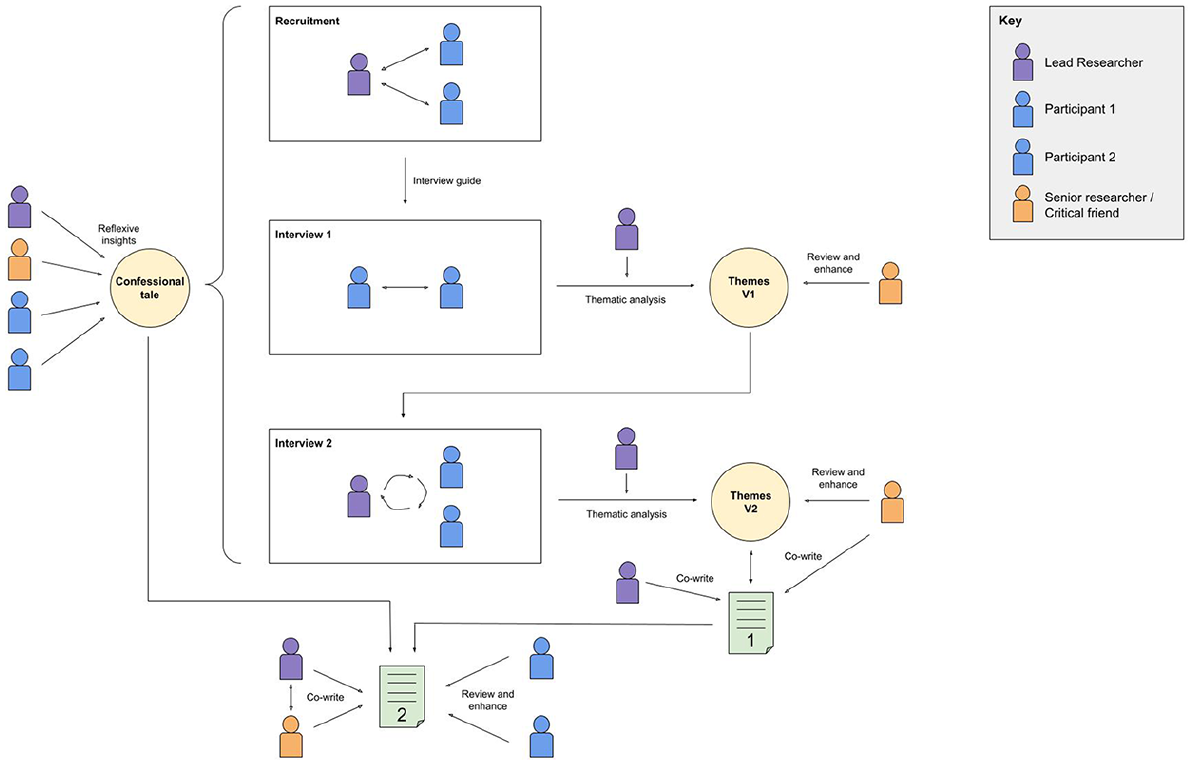
Research design with the transition of participants into co-researchers through the confessional space.
As represented in Figure 1, the emergence of the research themes, with the participants offering critical insights that would have been missed (as conveyed through the confessional admissions of the lead researcher), promotes the balancing of voices represented in a realist account with ones that come from researchers critically examining how their background, assumptions, and positionality impact their interactions, data collection, and interpretation (Sparkes and Smith 2014). For example, in this study, the participants revealed un-anticipated insights of challenges with inequality in sport, such as costs associated with menstrual products, and the extent of potentially embarrassing situations for female athletes, issues not originally covered in the question guide or research design that was developed from an extensive literature review. However, in the discussion surrounding the theme of “menstruation stigma and the struggle for equality,” these issues rose in prominence with the participants leading the discussion and sharing their frustrations and emotions with one another through shared and relatable experiences. This increasingly participant-led data gathering approach was undoubtedly aided by the participants’ knowledgeable and extremely candid nature. However, it demonstrated that empowering participants to have more control and autonomy throughout the research process, and revealing the researcher’s subjectivity and lack of personal experiences during fieldwork in the confessional space, can help in identifying and addressing potential blind spots and facilitate natural conversations based on the authority of lived experience (Krane and Baird 2005). Finally, as evident throughout this study, the confessional tale, woven in with the realist account, served as a vehicle for paradigmatic reflexivity in the analysis of the findings and the research process itself, as participants became co-researchers and then co-authors of this final paper, providing insights for future research on the topic of the menstrual cycle.
Conclusion
This study, adopting a qualitative approach, involved the participants becoming co-researchers over the time of conducting and analyzing the data, as the lead researcher with the research team explored his own assumptions and pre-conceived ideas. The study explored the differences in the experiences of two elite Canadian athletes, separated by thirty years, in relation to the menstrual cycle, revealing key differences in the knowledge, perceptions, and attitudes in the sporting cultures, coaches, and athletes between sports and over time. However, similarities persisted in the challenges with inequalities for female athletes, the taboo nature of the menstruation topic in sport, and receiving relevant medical advice, which suggested the persistent patriarchal nature of modern-day sporting environments. Weaving in a confessional tale of the researcher captured the blind spots in the design of the study initially framed by the male researcher. The confessional tale promoted a more participatory approach and allowed the researcher’s lack of relatable experiences and unexamined biases to become a part of the study. As the participants became co-researchers in the study through the confessional space, it offered a reflective forum to reaffirm the study findings and promote personal reflection, but also promote what Krane and Baird (2005) describe as mixed participant and researcher voices. This participatory paradigmatic approach suggests potential benefits and ideas for conducting research on topics like the menstrual cycle, to inform insights and promote greater awareness on female inclusion in sport experiences, as well as research in general.
Footnotes
Declaration of Conflicting Interests
The author(s) declared no potential conflicts of interest with respect to the research, authorship, and/or publication of this article.
Funding
The author(s) received no financial support for the research, authorship, and/or publication of this article.
