




Abstract
Felis catus is considered a domestic species, but the individuals belonging to this taxonomic category navigate along the domestic-wild-feral spectrum. This ethnography draws attention to the plethora of adjectives used by three social groups, namely biologists, hunters, and animal-rights campaigners, to examine the ways in which these terms serve to frame cats concerning different moral ecologies in Tenerife (Canary Islands, Spain). The use of these adjectives is always morally charged and pursues specific political agendas regarding how cats should be framed, whether as companion domestic animals to care for or devastating feral predators to kill based on their negative impact in the environment. By teasing out the rationales behind these adjectives, this ethnography reveals how the variables of space and time are key to bringing cats in or pushing them out the human sphere through synchronic or diachronic moral ecologies.
A Roundtable With Biologists and Hunters: Cats, The Evil of Nature
On April 26, 2023, just a couple of weeks after I had landed in Tenerife, Canary Islands (Spain), to carry out a four-month ethnographic fieldwork on the social conflicts emerged out of cat-biodiversity issues, I received via WhatsApp and from different contacts the announcement of a roundtable that was going to take place the following week. The poster showed an apparently old picture with two adult men wearing a hat, sleeves, and jeans as they were pulling two hunting dogs [podencos] through a short leash at a demonstration event: a canonical portraiture of traditional male hunters from Tenerife. The picture divided the poster into two parts (see Figure 1). In the upper side, the announcement referred to a hunting dog demonstration that would be held on Saturday, May 6th, in the morning. The lower part interested me the most, though. The message read: “Roundtable, different topics related to hunting, animal welfare, and fauna will be discussed.” The date was two days before, on May 4th. My interest increased considering the list of speakers. Out of the five participants, I had already heard of four of them belonging to a group of biologists settled in Tenerife who had been standing for the strongest opposition to the new animal welfare law in Spain, which had recently been passed in March 2023 (Jefatura del Estado 2023).
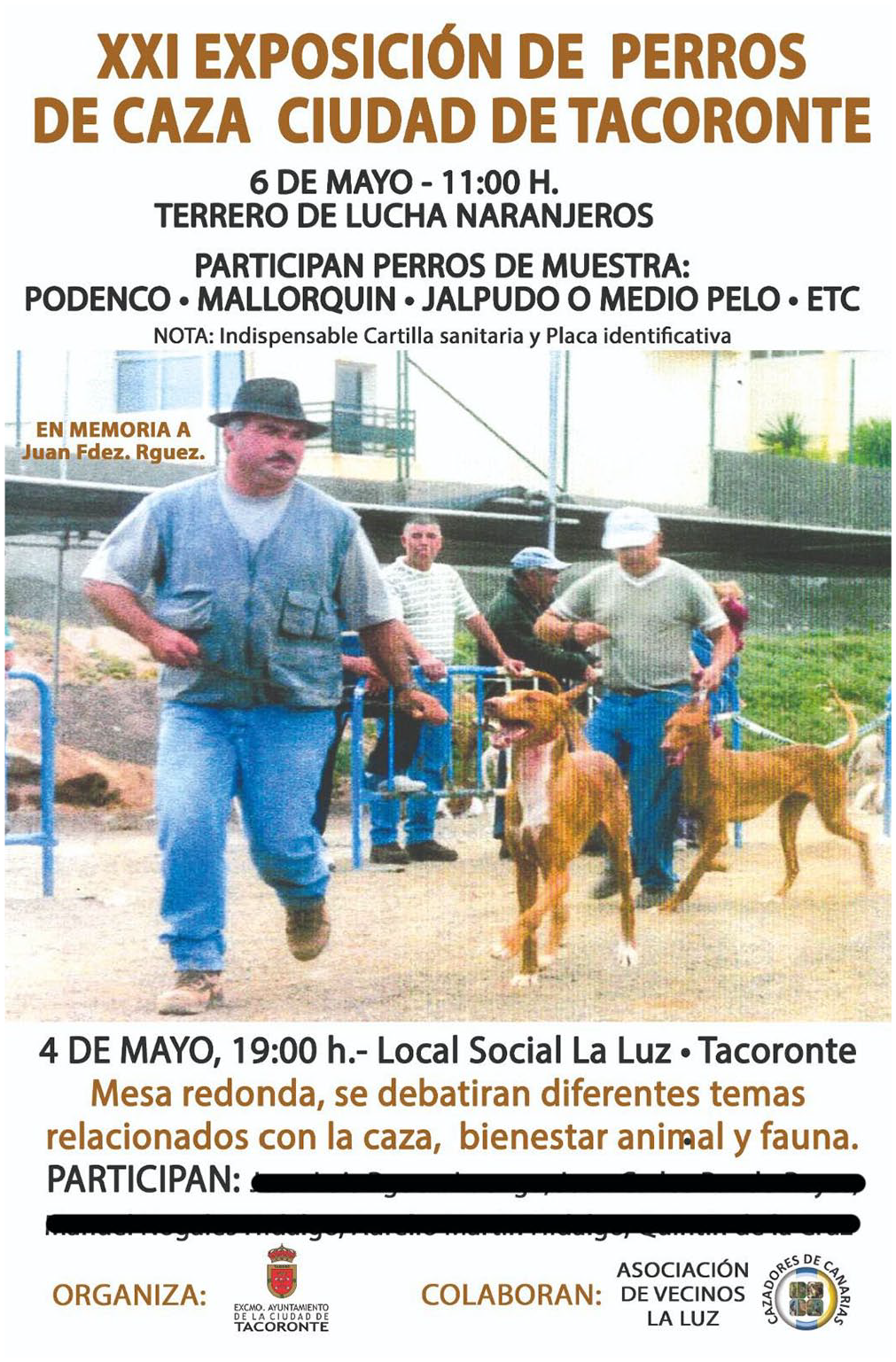
Poster announcing a hunting two-stage event organized by the municipality of Tacoronte, in northern Tenerife, with the collaboration of a local neighborhood association. In the first event, four out of the five invited speakers were biologists from the Canary Islands with a strong stance against the presence of cat colonies and the approval of the new animal welfare law in Spain.
More specifically, the group of biologists had argued against the persistence of cat colonies and the efficacy of the TNR (Trap-Neuter-Return) method in reducing their numbers, and more generally against the presence of cats (Felis catus) with some degree of access to the outdoors for their devastating impact on protected, and sometimes endangered endemic species in the Canary Islands (Carrete et al. 2022).
The roundtable with hunters and biologists came up as the counterpart of a previous event I had attended just a couple of weeks before: The II Feline Sessions under the title “Caring for the caregivers” (Anon n.d.-b), which gathered a wide array of animal welfare associations devoted to the care of cat colonies in Tenerife and other islands of the archipelago (see Figure 2). Through three intense days, packed with talks, informal corridor conversations, and networking, I managed to grasp the vast array of cases and sensitivities within cat welfare associations in the Canary Islands. Among the messages shared with the audience, a particular slogan called my attention: “Behind every single cat there is a person, there is a story.” Once the announcement of the event between biologists and hunters began to circulate through social media, one of the interlocutors I had gotten acquainted with at those feline sessions, defined the group of biologists invited for the event as follows: “Out of the five who appear as participants, the first four are “killingcat” [matagatos] biologists. For them, cats are the evil of nature.”
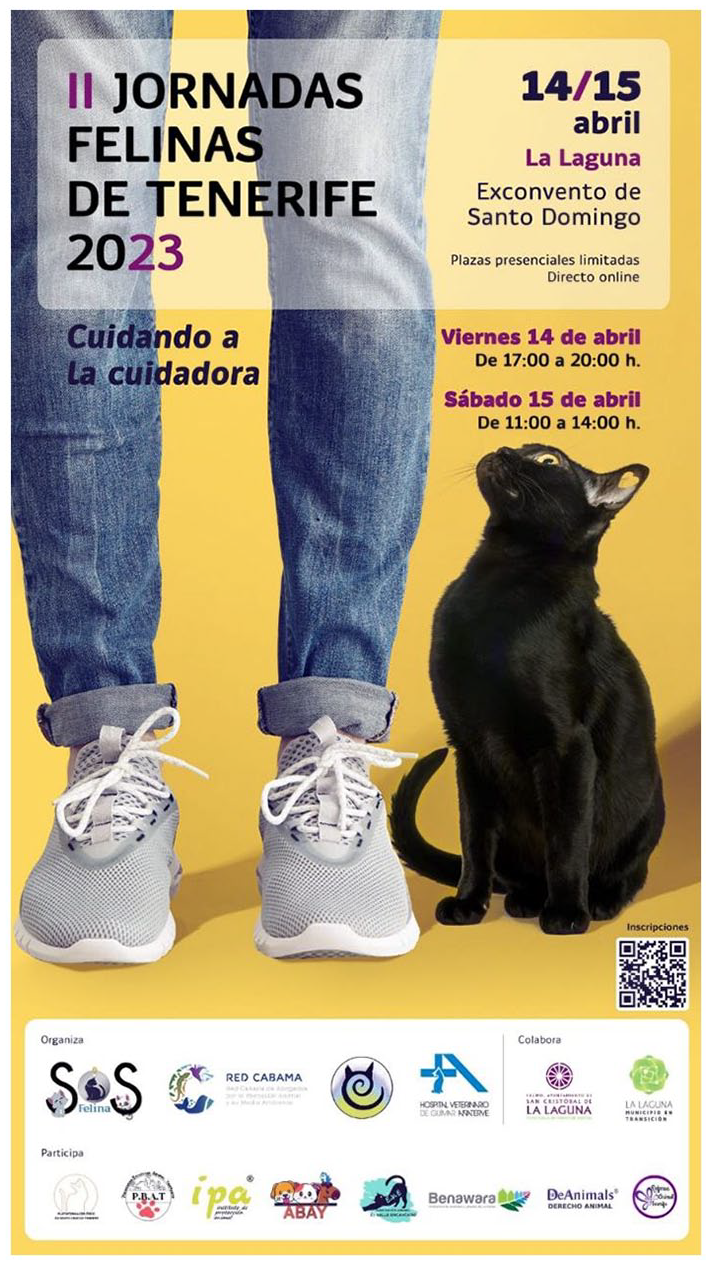
Poster announcing the II Feline Sessions in La Laguna, Tenerife, under the title “Caring for the caregiver.”
In this article, I draw attention to the plethora of adjectives used by three social groups, namely biologists, hunters, and members of animal welfare associations, to examine the ways in which these terms serve to frame cats differently in relation to the environmental impact they cause on protected species in Tenerife. The epistemological premise is that the use of these adjectives is always morally charged and pursues specific political agendas regarding how cats should be framed, whether as companion domestic animals to care for or devastating feral predators to kill (Crowley, Cecchetti, and McDonald 2020).
Despite of the efforts to frame cats within a bounded category, as either domestic or feral animals, they constantly defy these boundaries (Riley 2019; Wischermann, Steinbrecher, and Howell 2020). This defiance has much to do with their capacity to revert their social significance while preserving their taxonomic status as a species (Arregui 2024). Felis catus is considered a domestic species, but the individuals belonging to this taxonomic category navigate across, or may even oscillate alongside the domestic-wild-feral spectrum (Marvin and McHugh 2014). Reversibility thus correlates to the concept of liminality, since cats not only “occupy a liminal position but are themselves liminal (. . .) transcend[ing] the categories that humans place them in” (Schuurman and Dirke 2020, 20). As a result, domestic, wild, and feral must be understood as fluctuant categories within a controversial gradient in which different adjectival forms play out. Framing and moral ecology are taken as the two analytics through which to examine the controversies surrounding the adjectives endowed on cats by biologists, hunters, and members of an animal welfare associations settled in Tenerife.
Inspired by communication studies (Entman 1993), framing is here understood as “the narratives that are used (. . .) to structure the ways an issue, problem, or event,” in this case the environmental impact caused by cats, “is received and interpreted” (Wald and Peterson 2020, 8–9). This analytical insight aligns with the premise that “words, concepts and metaphors influence how we frame problems and make conservation interventions,” structuring “peoples’ understanding of ecology” (Barua 2011, 1428; 1439. My emphasis). Consequently, the plethora of adjectives endowed on cats by different social groups informs us about the extent to which we are always “directing attitudes, thoughts, and management practices” when naming different sub-populations of cats (Lepczyk and Calver 2022, 2314). Understanding the logics behind those terms helps us, therefore, seeing socioecological conflicts, in general, and the cat-biodiversity debate, in particular, through more generative lenses.
A fine-grained discursive analysis of the logics underpinning the use of cat adjectives based on in-depth ethnographic research dovetails with the concept of moral ecology, understood as the values, beliefs, and practices that govern how different social groups interact with their local environments, cats in this case (Griffin et al. 2019). My approach to moral ecology aligns with that of moral economy as “the anthropological way to study the political [ecology]” of human–cat relations (Palomera and Vetta 2016, 428). Following the rephrasing of the concept by the author who originally coined it in the singular form three decades ago (Jacoby 2019), I use moral ecology in the plural form, moral ecologies, to stress that all adjectives, and hence values, beliefs and practices attached to cats, encompassing biologists, hunters, and members of animal welfare associations, are always imbued with a specific moral ecology (cf. Lepczyk and Calver 2022).
Domestic, stray, communitarian, feral, wild, to name a few of them, are adjectives that serve to frame cats as either pets or pests, bringing them in or pushing them out of the human sphere. Thus, the use of different adjectives does not merely lay at a conceptual level. It seeks to support and justify specific political agendas on what to do with these controversial felines. How we define a cat is key because these “definitions are linked not only to explanations,” but also “notions of responsibility [and] interventions” (Holmberg 2014, 65). In other words, human–cat moral ecologies “constitute assessments of justice and motivations for action” (Scaramelli 2019, 389). Thus, “the issue of framing is something that will matter for determining the best policies and actions” (Stanescu and Cummings 2017, ix). From this vantage point, moral ecologies are always political in the sense that they stem from and move toward the practice of politics (Li 2007), which not only includes the practice of government underpinned by legal principles but also the mobilization of politics on less formal grounds by biologists, hunters, and animal welfare associations in the pursuit of framing cats within a particular moral ecology: domestic animals to care for, feral animals to kill (DeMello 2012).
The aim of the article is not to provide a comprehensive classification of cat typologies based on the number of adjectival forms used by the three social groups included in this examination. Rather, this ethnography focuses on what these terms tell us about how biologists and hunters, on one side, and members of an animal welfare association, on the other, seek to frame cats, respectively, outside or inside the human sphere, in the pursuit of legitimizing their caring or death.
The Spanish Animal Welfare Law and Tenerife’s Specific Features
Cats have retained the capacity to hunt, and hence to survive out of humans’ food provisioning. In the literature, cats with access to the outdoors are usually referred to as “free-roaming” or “free-ranging” cats covering “from owned pets allowed to roam outdoors, through barnyard cats and colonies of stray cats receiving food from people, to feral cats living completely independently of humans” (Trouwborst, McCormack, and Martínez Camacho 2020, 3). Although free-ranging and free-roaming are meant to lack of any connotation, the word “free” conjures up a sense of loose management or simply the absence of any human being responsible for or aware of cats’ behavior. To avoid this misunderstanding, throughout the text I use the term “outdoor” to refer to any cat having a potential negative impact in the environment.
Leaving this caveat aside, my focus does not reside in assessing cats’ ecological capacities or ascertaining what is the right term to define an outdoor cat. Rather, I intend to reveal the moral ecologies of framing cats within a bounded sphere through different adjectives where the mandate to caring for or killing them can be enforced by law. Contrary to the social scenario around cats in the United Kingdom, depicted as “the small British cat debate” for the irrelevance cats are sparking among British environmental NGOs (Palmer 2022), in the Canary Islands the cat-biodiversity topic has definitely become a heated issue to campaign about in recent times. Three intertwined factors may explain this phenomenon providing a broader context through which to better understand the relevance of this issue in Tenerife.
The first factor is legal. The new law 7/2023 for the protection of animal rights and welfare, approved in March and implemented as of September 2023, dictates an equal status as domestic animals for all cats belonging to the species Felis catus, including those that have some degree of access to the outdoors, calling them all “community cats” unless they have a self-recognized individual owner. The law also legalizes feline colonies and forbids to move them except when environmental impacts caused by cats are scientifically proven. The legal principle is based on a taxonomic classification. However, the adjective “communitarian,” used broadly in the legal manuscript, has sparked controversy among scholars from Law (Schaffner 2016) and Biology (Lepczyk and Calver 2022). Within the context provided by this law, and despite some discrepancies, biologists and hunters constitute a couple that confronts animal welfare campaigners. The first two social groups hold a strong stance against the new animal welfare law, given the new status and terminology associated with animals formerly named as stray or feral cats, and now reframed as community cats.
Despite of sharing the diagnosis and the goal of addressing the overpopulation of outdoor cats, the clash between these two blocks is specifically channeled through the rejection or support to the new animal welfare law and the TNR method, consisting in trapping, neutering, vaccinating, and returning to the original site the cats grouped together in a feline colony provisioned by an anthropogenic source of food. Biologists define cats as an invasive alien species, a pest similar to rats, dwelling out of place, conceived as feral and, hence, killable animals. Conversely, animal welfare associations claim to frame cats as domestic animals beyond their location (indoors or outdoors, as well as rural, urban, or natural settings), ethological traits (sociable and nonsociable), or ownership status (owned, semiowned, and unowned). They thus advocate for the TNR method under a zero-sacrifice policy as the only humane option to reduce the overpopulation of cats living outdoors. While domestic and wild animals tend to be protected by humans following humane and conservation principles, respectively, ferality renders animals killable (Johnston 2023; Palmer and Thomas 2023).
The second is a sociogeographic factor, and it relates to the tourism-based dispersed urbanism in the Canary Islands since the mid-twentieth century, the high densities of human populations in the major islands (i.e., above 500 inhabitants per square kilometer in Tenerife and more than 600 inhabitants per square kilometer in Gran Canaria, including tourists), the rough orography in the archipelago, idiosyncratic of any volcanic island, the persistent relevance of small-scale peasantry, and the uncertain but high number of cats. The sociogeographic factor must thus be subdivided into several features. The concentration of hotel resorts in some urban areas and the construction or restoration of former agrarian buildings [cuartos de apero] in previously conceived rural areas make it extremely difficult to set a clear-cut boundary between urban and rural environments. This challenge is compounded by Tenerife’s orographic features, cliffs and ravines cutting across towns and villages, and the persistence of kitchen gardens and vineyards, especially in mid-range mountain areas from 400 to 1,200 m of altitude [medianías]. The combination of these features leads to a perfect combo for the abundance of cats all over the islands. These numbers are uncertain due to the lack of any official census covering all subpopulations of cats. However, just to give a hint of them, the number of owned cats in Tenerife, according to the Zoocan database, is around 46,000 individuals (Anon n.d.-a), while in Tacoronte, a municipality situated in northern Tenerife and inhabited by 24,000 people, there currently are more than seventy registered colonies amounting to 675 cats dwelling in the outdoors permanently (Marín 2024).
The third and crucial factor is ecological. As a renowned biologist for his longstanding studies of the negative impacts caused by cats on endemic or protected species in the Canary Islands told me through an in-depth semi-structured interview, the Canaries “are [one of the] three iconic oceanic archipelagos. One is Hawaii; another one is Galapagos. (. . .) They are the three archipelagos with major island biodiversity out of oceanic islands.” In fact, the “Canary Islands is an important hotspot of global biodiversity because 2,985 animal and 524 plant species are endemic elements” (Medina and Nogales 2009, 830). Biodiversity, according to most of the biologists settled and doing research in the Canary Islands, may be at risk due to the presence of outdoor cats (Gómez-Alceste and Rando 2024; Medina et al. 2016).
Methodological Notes
After attending the II Feline Sessions and the roundtable between hunters and biologists, I was puzzled by the abundance of adjectives endowed on cats and the different connotations depending on who was using them. Departing from my terminological bewilderment, I conducted in-depth semistructured interviews with: (a) the four biologists who had participated in the roundtable, belonging to the Spanish National Research Council (CSIC), Universidad de La Laguna, and the Canaries Government; (b) five hunters, who organized or participated in the roundtable, belonging to different hunting associations from Tenerife; (c) eight cat colony caregivers from the municipality of Tacoronte where the roundtable took place; (d) key local politicians and public officers from Tacoronte’s town council; (e) five members from other cat welfare associations in Tenerife; and (f) three key members of an animal welfare association, PBAT (Animal Welfare Platform from Tacoronte), mainly focused on the implementation of the TNR method in this municipality. In fact, Tacoronte soon became the main area of study for the ethnographic research considering the shift this municipality had undergone recently regarding animal welfare politics. The town council’s stance concerning the presence of cat colonies shifted from collaborating with the insular public administration (Cabildo) in November 2020 to withdrawing, and probably sacrificing twenty seven cats that used to wander around a site nearby a nestling area for Cory’s shearwater (Calonectris borealis), a nonendemic but protected bird species, into an active collaboration with PBAT in the implementation of the TNR method consistently since 2022.
Most of those interviews took place in situ, following the ethnographic method of going walkabout, which allow us to explore “people’s historical and contemporary relationships with local environments” visiting with the informants “the places that they consider to be important, and collecting social, historical and ecological data in situ” (Strang 2010, 132). Those important sites included visiting cat colonies and veterinarian clinics in urban settings with caregivers or key members from PBAT, strolling in hunting grounds in rural environments with hunters, and hiking in natural protected areas with biologists.
Being, Becoming, Getting Feral: Mapping Out the Cat Adjectives Used by Biologists and Hunters
Going Back to the Roundtable: The Unexpected Alliance Between Biologists and Hunters Against the Cat
The hunting association from Tacoronte gathered around thirty people, mostly men, including the five invited speakers. The roundtable was preceded by four talks given by the biologists appearing in the poster. The title of the first presentation was as surprising as appealing to my research interests: “What do feral cats [gatos asilvestrados] eat in the Canary Islands?.” The next slide was enlarging my attention: “Feral cats’ [gatos cimarrones] impact in the Canary Islands.” Although asilvestrado and cimarrón were used indistinctively throughout the event, there are some nuances between these two terms that I will examine later. For now, it will suffice to translate both as “feral.”
All of a sudden and unexpectedly, cats were at the forefront, and not sporadically or randomly. The second talk revolved around a critique of the new animal welfare law that had recently been approved at the Spanish Parliament, but more precisely around the ways in which this law protects cat colonies advocating for the TNR method and, consequently, according to the speaker, another biologist whom I also interviewed and went walkabout in a natural protected area some weeks later, crossed a red line going against the global biodiversity goals advocated by the European Union and worldwide. 1
What stroke me the most once the floor was opened to questions and answers was the atmosphere of sympathy between hunters and biologists for most of the time. For slightly different reasons, both parties stand for the withdrawal of cats from the environment through methods that stay away from TNR and inevitably lead to sacrifice many animals via vet injections, in the case of biologists, or shooting, in the case of hunters. If I had to summarize the message conveyed out of that roundtable in a short and concise statement, it would be as follows: “Biologists and hunters, joined against the cat, a feral animal to be withdrawn from the environment.” If the slogan convincingly expressed in the II Feline Sessions could be read as a clear attempt to frame all cats within the human sphere in terms of care for the longstanding relations between cats and humans, independently from where the former dwell, the message that came out of that roundtable between hunters and biologists was the opposite. Outdoor cats were framed as disturbing beings dwelling out of place. As a result, biologists and hunters rendered them killable as feral animals.
Although biologists would confront hunters given the harmful effect the presence of hunting alien invasive species (e.g., rabbits), cause on the Canary Islands’ endemic flora, the same biologists also realize that the hunters are those who can bring about surreptitiously on the ground a tangible control on cat populations by shooting at those felines wandering around in rural or natural environments, no matter if they have any sort of bond with a human being. To put it bluntly, considering the need to withdraw outdoor cats from the environment, hunters, regarding the control of feline populations in Tenerife, turn out to be the armed wing of biologists’ thoughts published not only in peer-reviewed but also in nonacademic journals and taking shape as press release (Asociación para la Conservación de la Biodiversidad Canaria (ACBC) n.d.; Rando et al. 2020).
Once the biologists abandoned the room, a hunter shared with some fellows and myself a phenotypic description of a feral cat [gato cimarrón] that he had witnessed around a pine forest situated above 1,200 m and far away from any inhabited village. According to this description, cimarrón seemed not to equate to a “feral cat” but rather to another species, the wildcat (Felis silvestris), easily recognizable based on its phenotypical appearance. It is crucial to distinguish here what hunters called as a “wild” cat [gato salvaje] from what is recognized and classified in biological terms as another species, the wildcat (Felis silvestris), which in Spanish translates as gato montés instead of gato salvaje. An important caveat is also worth mentioning: there are no wildcats in the Canary Islands.
On the way back home, I was overwhelmed by the use of adjectives to frame cats as domestic or feral animals, respectively, close to or detached from humans. Within less than a month conducting fieldwork, cats were already defined with a plethora of terms that challenge basic, even foundational dichotomies and boundaries through which to apprehend, according to Western naturalistic parameters, human–animal relationships. In what follows, I seek to underline that the vast array of adjectives are not mere technical terms. Rather, they always pursue to framing human–cat moral ecologies inside or outside the human domain in what can be seen as the political agenda of (de)humanizing cats. As a result, the cat is framed as an autonomous feral predator or a dependent domestic companion. Cats as pests, cats as pets (Sutton and Taylor 2019; Van Patter and Hovorka 2018; Yus Ramos 2018). The extreme poles about the same species may be condensed through the following combined description of cats: our wild, or maybe better, feral companions (Crowley et al. 2020). This binary scheme paves the way to “often emotionally charged and highly polarized debates over public policies regarding animals” (Arluke and Sanders 1996, 4), and cats more specifically (Marra and Santella 2016) And yet, cats exceed this binary scheme, still performing as neither pets or pests, but rather mousers in agrarian parcels.
The “Bio-Logical” Terms for Cats: Bounded Categories Within a Porous Spectrum
I’ll clarify it for you. It’s very simple. There are two major strains of cats. Those that depend on human beings (. . .), which can be domestic or stray [callejeros], and those that do not depend on human beings, which are feral [asilvestrados]. That’s it, right away: Do you understand? Domestic or stray. Domestic, if they are housebound, they have access to the outdoors, but they are perfectly controlled; and those animals in the street are stray. (. . .) In urban. . . and rural environments. (. . .) If they depend on human beings for something, they are domestic or stray. And if they don’t, they are feral.
In this clarification statement, shared by a worldwide renowned biologist for his studies on the outdoor cats’ diet in the Canary Islands and elsewhere, human dependency, or to put it differently, any bond with humans was taken as the key epistemic factor to classify two major strains of cats. Within those depending on humans to survive and thrive, there would be two subtypes: domestic and stray cats. It is worth mentioning that “domestic” here refers not to a legal status, biologically classified as the domestic cat species Felis catus, nor necessarily “domesticated” or “tamed” considering the ethological traits of a given animal, but rather a socially induced spatial category, distinguishing those having an owner and being housebound, also known as indoor cats, from those homeless or living in the outdoors, and more concretely in the streets with no self-recognized owner. In fact, the terms “stray” or “street” [callejero], although the biologist pressed himself to specify that those cats may dwell in urban and rural settings, denote an urban environment. Biologists also use the term “homeless” [vagabundo] to refer to these cats; an adjective that usually relates to the urban milieu and reinforces a pejorative connotation of an unsociable animal. On the other side, we find feral cats [gatos asilvestrados], allegedly autonomous predators whose survival would not depend whatsoever, directly or indirectly, on the presence of humans.
Moving forward from this starting point, I sought to understand the logics behind the identification of what is and what is not a feral cat. Another biologist, who also participated in the roundtable event as the second speaker, gave me some hints on this point by emphasizing that feral cats, indistinctively referred by biologists as asilvestrados or cimarrones, are well known for their capacity to predate on wildlife wherever they wander around, so it “means that they were born in nature.” “They are wildcats [gatos monteses]!,” referring to the other species Felis silvestris, a third biologist who had worked for the Canaries Government for decades told me to describe the ethological and phenotypical features of those cats that dwell in natural protected areas in Tenerife. To be “feral” was thus considered a status, not a process. Cats are instead of becoming feral; a new pseudotaxonomic category conflating with another species: the wildcat.
However, the first biologist added some important nuances regarding the origin of feral cats in Tenerife as we proceeded with our interview. “This is the basis of feral [cats]. No doubt about it,” he affirmed with no hesitation. “The major source of feral cats are those sites,” referring to kitchen gardens and vineyards usually placed next to small barns in the mid-range mountain areas called medianías. By asserting that the baseline or origin of feral cats was deeply rooted in those settings, the wild state of feral cats turned into a more anthropogenic process within the social rural milieux. Interestingly, feral cats’ origin was not only spatialized, linked to rural settings held by peasants for their rodent hunting abilities and managed through a loose stewardship, without neutering the cats and letting them roam freely in the outdoors, but also temporalized, looking back to times immemorial or, more specifically, the Spanish colonization period: “And that’s where the origin of feral cats comes from. . . Let’s say, five centuries ago. (. . .) Five centuries with this ongoing effect.” All of a sudden, the origin and sprawl of feral cat populations in Tenerife was historicized, and consequently humanized: “They also have them because these areas would accumulate grain from time to time, for planting. And these are areas where mice feast. So, it makes sense [tiene su lógica]. (. . .) This has been an invasion of a constant tide of bad practices.” By historicizing human–cat relations, the cat-biodiversity problem was turning anthropogenic, shifting from a technical issue into a social, cultural, and political conundrum that unfolds onto the different moral ecologies through which to frame the cats along the porosity ingrained to the domestic-feral-wild spectrum.
Hiking along a natural protected area with the “second” biologist confirmed the challenge of framing cats within this porous spectrum. Going walkabout with him served me to know first-hand how the biologists doing research in Tenerife recognize and collect the cat’s feces samples to analyze in the lab the percentual composition of preys in their diet. Leaving behind the small village, we approached by car a natural protected area situated at the northwestern edge of Tenerife where one of the two scant populations of an endemic species threatened by the presence of cats—Tenerife’s giant lizard (Gallotia intermedia)—dwells. Through the window, the biologist pointed to a small building surrounded by trees and some cultivated fields to tell me that the person living there had many cats. Considering this observation, I was curious to know if he could draw a line, a boundary to frame separately the subpopulations of domestic, stray or homeless [gatos callejeros or vagabundos] living in the village or nearby, and the feral cats [gatos asilvestrados o cimarrones] dwelling in the natural protected area. Although he had defined feral cats as “animals that dwell in the natural environment, totally unrelated to human intervention; they are feral [están asilvestrados],” his answer was revealing about the extent to which the allegedly bounded separation between stray and feral cats was more an abstract theoretical attempt than stemming from an empirical observation on the ground. At first glance, this framing seems to not present “the problem (. . .) as a “human” problem but an exotic [animal] problem—one that needs to be removed to allow the native species to thrive” (Subramaniam 2017, 97). However, the boundary was imbued with a certain moral ecology: “It may probably be no line. . . It is much probable that the area of stray cats [gatos vagabundos] is enlarging the population of feral cats [gatos cimarrones]. This is why [cat’s] densities [in natural settings] have increased.” In other words, even though biologists seem to draw a pseudotaxonomic line based on the human dependency or independency factor between the subpopulations of cats that we may encounter in the streets, in urban settings, and those wandering around natural environments, they also recognize that these two subgroups are both historically related through “logical bad practices” undertaken by peasants in mid-range mountain areas and ecologically linked through the potential interbreeding between domestic cats with access to the outdoors, urban cats grouped together in colonies with an anthropogenic source of food, and cats dwelling far away from human settlements. The continuum across these subpopulations makes the debate about the existence of “true feral cats” in Tenerife, that is, those with the capacity to thrive with no human interference whatsoever, ecologically irrelevant, but politically crucial. At the end of the day, to determine whether a cat is domestic, stray, or feral is morally charged and may have important consequences on how to deal with its presence in the outdoors. Once a cat is considered to be “feral” it can be killed. At least, before the implementation of the new animal welfare law (7/2023) under the second additional amendment of the Decree 630/2013 of the Spanish Catalog of alien invasive species, according to which “feral domestic animals in the natural environs” can be considered alien invasive species, and hence killable.
Hunters are those who have undertaken, sometimes with the support of the insular public administrations, the practice of killing cats for years, not only in natural but also rural settings. Moving from biologists to hunters thus serves to shift our scope from theoretical abstract “bio-logical” parameters to grounded everyday practices of encountering cats from those who hike more often along rural paths and mid-range mountain areas, that is, hunters. Looking at the adjectives used by hunters as well as the meaning they give to those terms is a generative lens through which to examine this analytical move: the shift from a biological to a hunting moral ecology to frame cats as feral animals.
Outing in Two Hunting Grounds: Where the Cats are Killable
Right after the roundtable with biologists and hunters was formally closed, a hunter showed me a picture on his cellphone of a dead rabbit attacked by a cat in the mid-range areas of Fasnia, a village situated on the southern part of Tenerife. He assured me that he had witnessed a cat preying on a rabbit a few days before. The outing to that spot a couple of weeks later was an excuse to know first-hand one of the many hunting grounds scattered across the island, and to go walkabout with a hunter to read through his lens the landscape transformations undergone in Tenerife over the last decades, but more specifically in those mid-range mountain areas called medianías.
Fasnia, according to him, can be taken as an illustrative example for what occurs all around the island, where most of the villages extend their boundaries from the coast up to the pine forest, encompassing urban and rural areas, limiting to the Corona Forestal Natural Park, which covers more than 41,000 hectares surrounding from below the Teide National Park (see Figure 3).
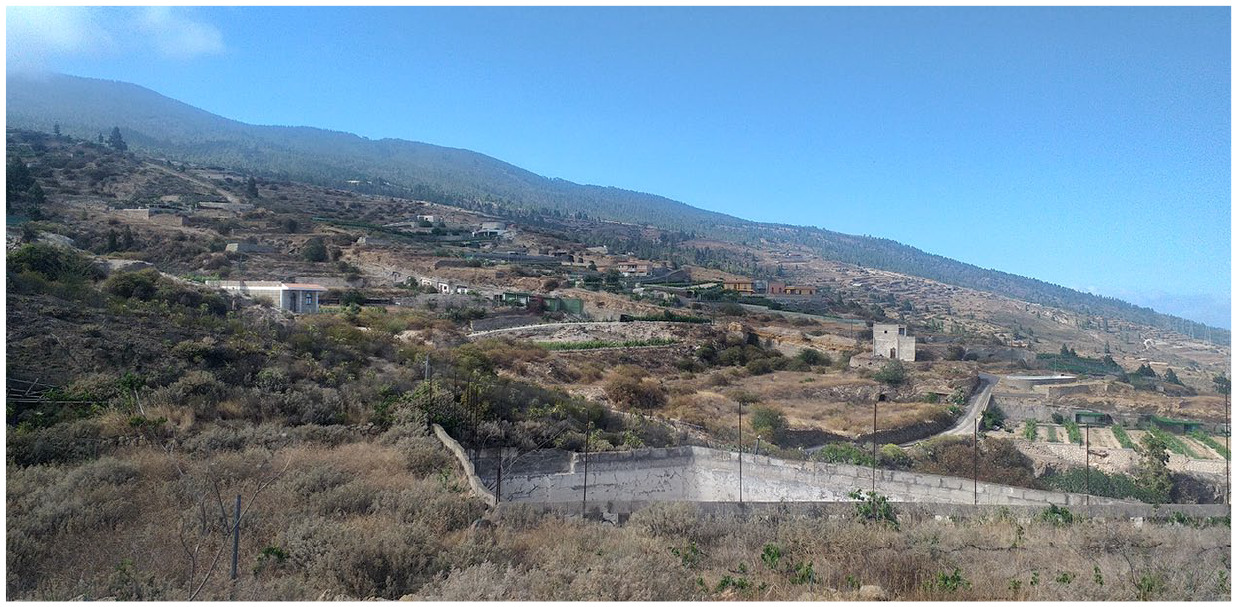
Panoramic view of Fasnia’s medianías featured by an urbanized rural milieu. Above these hunting grounds and private parcels, we can see the lower part of the Corona Forestal Natural Park.
All of a sudden and with no previous anticipated sign, the cat was brought to the forefront through the hunter’s account inside the car. In the context of explaining to me the two ways of hunting rabbits, with a rifle or with dog and ferret, he argued for the need to allow the former, which had been officially forbidden for roughly ten years by the regional government due to rabbit health issues. He firmly seconded “hunting rabbits with rifle in the areas where the dog can’t work [hunt] well.” The answer addressing my simple question, “Why so?,” was extremely revealing: “To kill feral cats [gatos asilvestrados].” With no need to entice him to expand on this statement, he furthered the sentence with plenty of details. In bushy areas, using the rifle not only serves to hunt rabbits that cannot be caught by dogs, but also to kill feral cats. “And hunters,” he added with pride, “kill hundreds of them [cats].” By that time, he was fully aware of the animal welfare law that had already been passed in the Parliament, and whose implementation was going to take place few months after our conversation. He assured, though, that this law was not going to change hunters’ killing actions on cats.
Right after expressing his concern about the number, density, and tenure regimes of cats, he moved on highlighting a crucial distinction regarding cats’ location: “Except from urban settings, where cats stay housebound, in rural areas no cat lives indoors.” Similar to the classification provided by the biologists I had interviewed, by laying down a clear-cut cleavage between urban and rural settings, he also connected, implicitly, the domain of the “domestic” to indoor cats. In line with this argument, his was fully aware that cats were present in the rural milieux as mousers. In Fasnia, as it happens all around the island, “most of the people,” he explained to me, “have kitchen gardens in the medianías and they [the locals] take cats over there for their mice-hunting abilities.” The problem around this practice is that, according to him, “after the weekend they go back [to their apartments in the village] without the cat, and then, although they may return the next weekend, this cat is already getting feral [va asalvajándose].” The process of getting feral would proceed as follows: “The following week [they] leave some food [for the cat], but up to a certain moment that cat no longer shows up. Then, they replace it with another one,” with the subsequent and logical increase in the number of outdoor cats wandering around with no or, to say the least, a loose control over them.
At first, the hunter seemed to correlate the potential increasing number of feral cats in rural and natural areas to this recurrent practice carried out by the local rural populations, namely the “logical bad practices” previously described by one of the biologists. This pattern would lead to ongoing and persistent cat abandonments around the vineyards and kitchen gardens situated in the medianías. However, he later pointed to urban-based layers of society and to much more recent sociological dynamics in these rural areas. In concrete, he told me that over the last ten years, roughly coinciding with the rabbit hunting restrictions applied by the regional government, “there has been a boom in getting rural parcels to have their paradise, their Jurassic Park.” The acquisition of parcels of land by populations coming from urban areas entailed the refurbishment of the old abandoned barns [cuartos de apero], turning them into second-home apartments. According to him, these new occasional residents also began to bring cats to their buildings with the same purpose of keeping mice and other rodents away from their apartments, even though they no longer have kitchen gardens or vineyards to take care of. Although the fate of these cats may not be the abandonment in these mountainous areas, their presence may also cause some interbreeding with other feline populations dwelling in the nearby (see Figure 4).
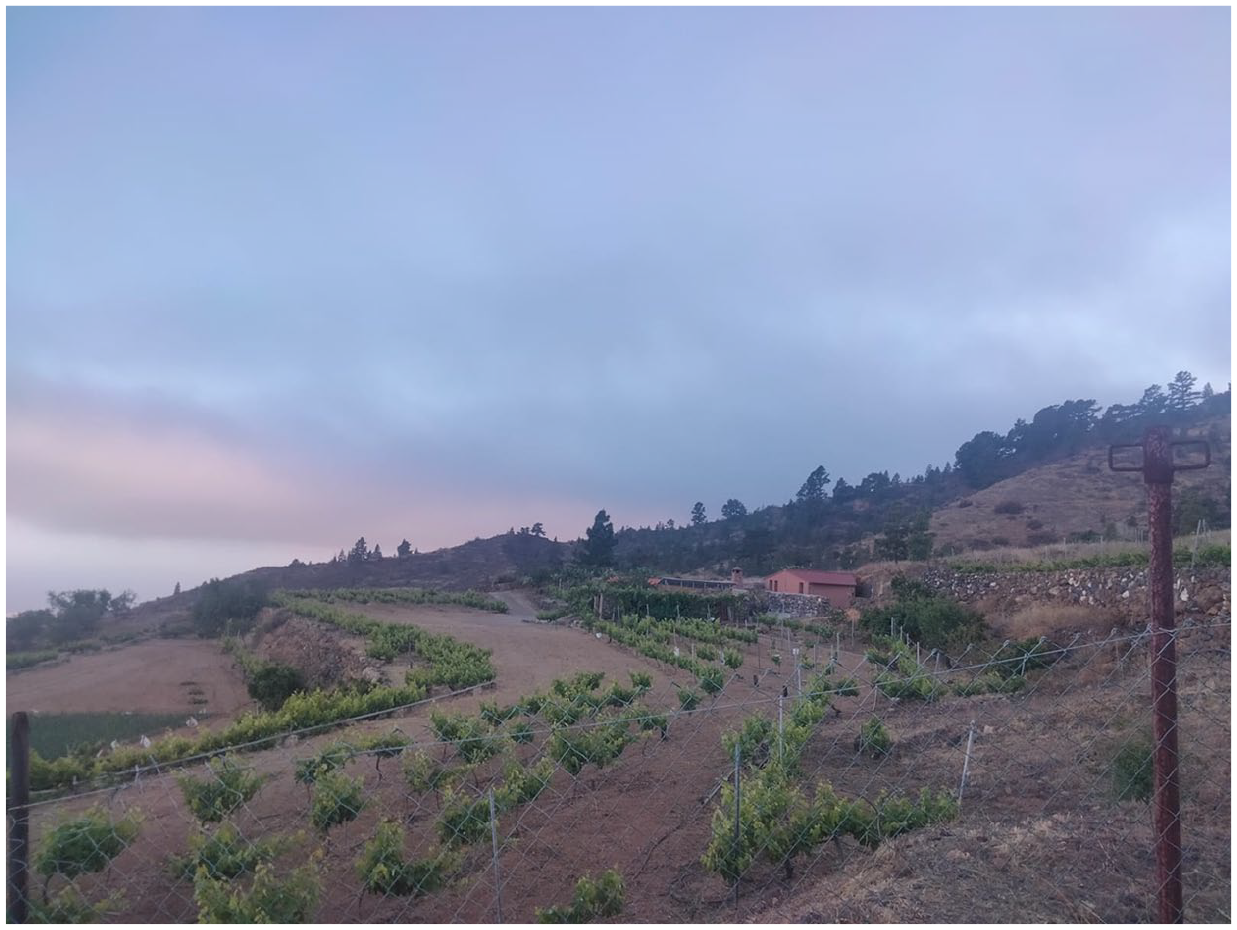
A vineyard around a barn recently built in Fasnia’s medianías.
In a nutshell, this hunter considered that the presence of cats not only in these rural areas but also in other higher natural protected areas, such as the Corona Forestal Natural Park or even in the Teide National Park, would not be caused by their abandonment in situ. Rather, the loose management of cats in the medianías would be a key factor to better understand the increase of feral cat populations, not only in these mountain rural areas but also in natural protected areas following a feline colonization pattern toward higher territories.
Beyond the reasons that explain the increasing number of cats in rural areas situated in mid-range mountains that would eventually colonize higher areas, further away from a persistent human presence, the hunter who brought me to Fasnia’s medianías made a point on the distinction between “wild” [salvaje] and “feral” [asilvestrado or cimarrón] cats, both wandering around these areas. Near a ravine where the fur of the predated rabbit still laid on the ground (see Figure 5), he said to me: “A wild cat [gato salvaje] is like a wildcat [gato montés],” referring to the species Felis silvestris. “The fur, the hair. . . A wild cat [gato salvaje] doesn’t even get close to humans. It may wander nearby a barnyard one night, but its wild state is so high that it doesn’t need to do so,” he added. In contrast, “there are feral domestic cats [gatos domésticos asilvestrados].”
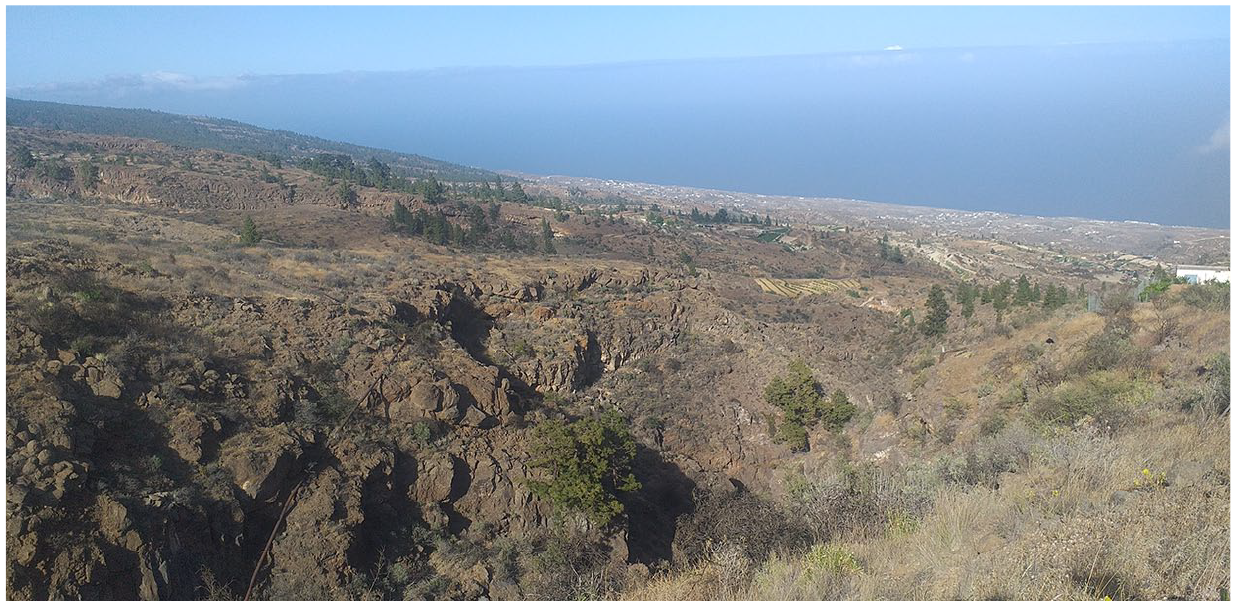
A ravine where the hunter shot at an “authentic wild cat.” In the background the urbanized coast near the village of Fasnia.
Seeing this way, wild cats [gatos salvajes or cimarrones] would dwell in natural areas away from the humans, whereas feral (domestic) cats [gatos domésticos asilvestrados] would still be situated, both geographically nearby and conceptually within the human domain, requiring direct or indirect anthropogenic sources of food to thrive. The geographical location would thus play a key role in these categorizations, as noted by the second hunter as we were walking across periurban parcels, mixed with scattered small buildings and crop fields next to one of the two airports in Tenerife: “In these places, you can use indeed the word ‘feral’ [asilvestrado],” to contrast with the word “wild” [salvaje] (see Figure 6).
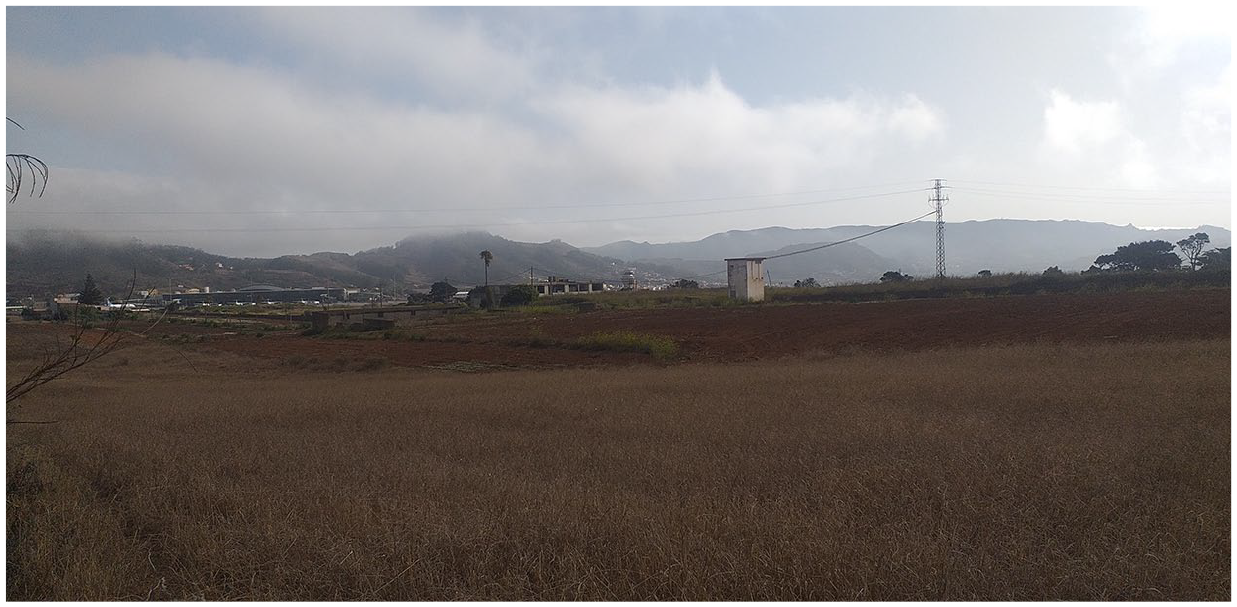
Private fields near Tenerife North Airport, a no killing hunting ground for partridges where hunters can come with their dogs for rehearsal hunting practices.
The distinction between wild and feral domestic cats notwithstanding, any given hunter, according to ethnographic sources, do not hesitate when running into a cat in the rural or natural milieux, whether they are framed as feral [asilvestrados] or wild [salvajes] animals. “Any hunter shoots at any cat,” the one who took me to Fasnia’s medianías told me. And he proceeded: “Here, in the natural settings [interestingly referring to sites full of human imprint], I haven’t held back at all. Death to them!.” (see Figures 3 and 4). An informal conversation with the owner of a cafeteria located near the airport hunting ground, was even more explicit. “The best thing you can do with a cat,” he almost yelled at me, “is shooting at its head or giving furadán to it [a very strong poison currently forbidden in the official market].”
Hunters, although they do not like cats in the outdoors, do not usually mind or act on those living in the streets, in urban settings. Their concerns are rather focused on those interfering negatively with the practice of hunting, beyond the fact that they may cause any environmental impact or may be owned, stewarded, or cared by any human being. Cats are actually seen as hunting competitors since they “search for,” as the hunter who took me near the airport told me, “their hunting ground, so to speak.” In Tenerife’s mid-range mountain areas, cats and hunters compete for the same preys: rabbits.
In sum, although hunters are capable to draw more nuanced descriptions of cats based on their grounded experiences, distinguishing wild [salvaje] from feral [asilvestrado] animals, they overtly admit to shoot at any cat they encounter in the rural or natural milieux.
The (De)Humanization of Cats: Bringing Them in or Pushing Them Out the Human Domain
Despite the nuances in the use of adjectives between biologists and hunters revealed through this ethnography, both groups seek to frame human–cat moral ecologies based on a clear-cut division between those animals that must be considered “domestic,” and hence to be taken care of, and those that must treated as “feral,” and hence killable. The adjectives feral [asilvestrado or cimarrón], wild [salvaje or cimarrón], stray [callejero], and homeless [vagabundo] may denote important differences regarding aspects of ownership, ethological traits, and the relational bonding with humans or cats’ human dependency to survive. However, beyond all these features the one that becomes crucial to determine whether or not a given cat should be framed as a feral animal is the dehistoricized location where the encounter takes place. As one of the biologists told me, although the framing is not based on a biological taxonomic classification, given that all the individuals belong to the same species, “a cat in the Teide National Park [Cañadas del Teide] or in the Giants Cliffs [one of the ecological niches of Tenerife’s endemic giant lizard] is a feral cat [gato cimarrón].” Ferality thus becomes a synchronic, morally charged ecological category imbued with a teleological reasoning. In other words, the impact a cat may cause in a certain location is what determines to frame it as a feral animal. The rationale underpinning biologists’ and hunters’ moral ecology of cats contrasts with that of animal welfare associations. To illustrate this point, I take a written document from PBAT on how to implement the TNR method in Tacoronte and several semistructured interviews with some key members of this volunteer association. These sources will bring us back to the message launched at the II Feline Sessions: “Behind every single cat, there is a person, there is a story [una historia].”
In PBAT’s TNR document submitted to the municipal council, cat colonies and cats as a species are framed as follows:
Feline colonies are groups of cats that live together in an urban or rural setting. The species to which all their individuals belong is Felis catus, a domestic species, that is, they depend on the presence of humans to survive. It is necessary not to confuse the term unsociable with feral or wild. Cats in colonies that live with humans may not be sociable individuals, but they still belong to a domestic species and could not survive, therefore, in a wild environment. (PBAT’s TNR document. My emphases)
Through this brief excerpt, the biologists’ and hunters’ classification between domestic, stray, and feral or wild cats based on the degree of human dependency to survive (dependent or independent) and their location (urban, rural, or natural areas) is narrowed down into a single adjective: “domestic.” A concise statement given by the PBAT’s secretary to the current animal welfare councilor from Tacoronte’s municipality illustrates perfectly this approach. “The feral cat doesn’t exist, you know that, don’t you?!, the secretary asserted as we three were chatting having a coffee after PBAT’s general assembly. And she proceeded: “Because that would be a different species. Here [in the Canary Islands], we only have the domestic cat.” Interestingly, this reduction is fundamentally based on biological taxonomic principles and, more specifically, the category of species (Arregui 2024). PBAT’s president put it more bluntly: “The cat is a domestic animal. Period.”
What I seek here is not to ascertain or confront this condition, but rather to go, precisely, beyond this “period”; to go beyond this statement to uncover the rationale and the political agenda underpinning PBAT’s moral ecology of cats. To do so, I delve into three semistructured interviews with PBAT’s president and secretary, as well as one of the cat colony caregivers more involved in the management and functioning of this association.
Departing from the unitarian framing of cats as domestic animals, there would be two parallel subdivisions, according to PBAT’s president. Domestic cats are then subdivided into (a) sociable and unsociable, considering their ethological traits or degree of sociability mostly determined if they let or do not let humans touch them; and (b) considering their location and human bonding, into pets for owned indoor cats living housebound and communitarian for outdoor cats whose relational bonding with humans may encompass a collective stewardship and a municipal ownership. Several terminological aspects are worth mentioning here. First, domestic, contrary to the usage from biologists and hunters, does not refer to neither a location (home) nor an ethological behavior (domesticated). Instead, the term is stiffly attached to a taxonomic classification (Felis catus) and, consequently, a formalized legal principle: domestic animals cannot be sacrificed unless a veterinary certifies it. This approach confronts biologists’ and hunters’ rationales according to which location is a key parameter to determine the domesticity or ferality of a given cat. PBAT’s secretary perfectly illustrated how animal welfare associations argue against this spatial framing by advocating for a universal human–cat moral ecology: “I don’t like that the surname [referring to the different adjectives used to frame cats] depends on where they live.” Second, location is also considered to set the basis of one subgroup of cats, but in this case, it is not fraught with an ontological categorization. Instead, it is subdued to a much more relational feature with human beings: the question of property. In effect, where a given cat lives serves to differentiate between pets, owned by a single human being (private property regime), and community cats, owned, stewarded, or cared by a collective or community of people (communal or public property regimes). The adjective “communitarian” [comunitario] has actually replaced the terms “stray” or “street” [callejero]. Although PBAT’s president viewed both terms as almost interchangeable, since “stray encompasses everything [all cats living in the outdoors] as it does so communitarian; they are the same, but one sounds better than the other,” her additional comment reveals to what extent this is not merely about a replacement of adjectives. “Stray,” she proceeded, “means that they [cats] live in the street; communitarian means that they belong to the community.” Her preference on the latter was, therefore, not superfluous. In other words, it is not about which term “sounds better” to describe a given animal; it is rather about how the use of adjectives frames cats differently concerning a specific moral ecology with the ensuing political and legal consequences. In this case, while “stray,” “street,” or “homeless” [callejero; vagabundo] holds a spatial connotation without necessarily tracing any relational bond with a human being, “communitarian” endows the cat with a collective property beyond their spatial location. To put it differently, “stray” leaves cats out of the quintessential human domain, the domus, whereas “communitarian” presses us to make the oppositive move, bringing them into the human sphere by tracing one of the foundational social relations, property, which in this case exceeds the layer of ownership for also touching on those of stewardship and care (Hart 2019). In a way, the adjective “communitarian” could be read as unnecessary or redundant, since it seeks to reinforce the term “domestic,” placed hierarchically above. This reinforcement serves, though, to enforce a humane treatment for all outdoor cats sheltered under a sacrifice zero policy.
Although another member of PBAT recognized the ecological capacity of domestic cats to adapt and survive out of humans’ food provisioning by preying on other species, she pointed out that cats are domestic animals because “they have always lived near the human beings.” The closeness between humans and cats, which stretches historically up to times immemorial as a commensal relationship dating back to 10,500 years ago (Vigne et al. 2012), and which have more recently, roughly since the mid-twentieth century, coincided or shifted into one of companionship, is what would infuse us, humans, with an ethical responsibility toward them.
Before delving into the concluding remarks to summarize the main arguments and think forward beyond this specific case study, I want to highlight a paradox and its political consequences. The plethora of adjectives gathered through this ethnography and the rationales underpinning their usage reveals the extent to which cats’ liminal or even reversible capacity to navigate along the domestic-feral-wild spectrum defies humans’ persistent attempts to frame them within a bounded dualistic moral ecology as whether domestic or feral animals. The paradox thus resides in the fact that despite human–cat relations would align with a “fluid, pragmatic, and phenomenological animality,” according to which “the boundary between the wild and the domestic is not always between species, but also within the species” (Gamuz and Ruiz Ballesteros 2024, 107), all three social groups included in this ethnographic analysis seek to frame cats ontologically within a bounded moral ecology, embedded or detached from the human sphere.
The adjectives endowed on cats seek to reinforce these ontological categorizations, which actually precede any given human–animal encounter. The strains of cats (domestic, stray, and feral), drawn by biologists according to their degree of human dependency mask the a priori framing based on their location. In a similar way, the fine-grained descriptions voiced by hunters on the different cats they encounter in the rural areas are preceded by a general flat principle: shooting at any cat in the rural. On the other side, according to PBAT’s members in particular, and animal welfare associations more broadly, domestic is the adjective that serves to frame all cats as embedded to humans’ existence, thus guiding the ways in which they should be treated independently from the context or situation of a given human–animal encounter. In all three cases, the domestic and the feral are considered ontological categories that serve to frame cats inside or outside the human sphere in what I call the (de)humanization of cats. (De)humanizing cats, or the obliteration or reinforcement of the border between humans and nonhumans (Arluke and Sanders 1996, 14), is not merely a semantic game, but has crucial biopolitical consequences. How cats are framed is key to decide whether they should be neutered o sacrificed.
Concluding Remarks: Wrapping Up and Thinking Forward
Outdoor cats spark heated debates for their capacity to cross or defy dualistic boundaries. In Spain, and more specifically in the Canary Islands, the cat-biodiversity debate has become trending topic in some academic, political, and social circles. Three different features in this specific context allow us to better understand the emergence of cats in the social arena: the new 2023 animal welfare law, the Canaries’ sociogeographic characteristics, and the ecological fact that this archipelago contains a particular biodiversity, including some endemic species preyed by cats.
Given their dual role as companions and predators cats are framed as pets or pests. However, cats transcend this binary scheme because, not only they can act as both companion and predator animals but also they are still taken as mousers or pest-controllers in the rural milieux. Therefore, cats do not only challenge the domestic/wild boundary but also other foundational cleavages in Western societies, such as nature/culture or urban/rural divides. Following an anthropological insight into human–animal studies, they fit into what others have called liminal or reversible animals (Arregui 2023; Schuurman and Dirke 2020), transcending dualistic approaches ingrained in Western societies moral ecologies (Arluke and Sanders 1996, 170).
Departing from a nonessentialist approach to the domestic-wild-feral spectrum through which animals, and specifically cats fit in one of these categories only in relational terms (Marvin and McHugh 2014), framing and moral ecology have served as the analytical lens through which to examine the ways in which the plethora of adjectives used by different social groups are key to reveal the dialectics between flux and order, malleability and stability in human–cat relations. These adjectives illustrate the fluidity of human–cat moral ecologies; they also show the human need to frame cats within a particular bounded moral ecology for the sake of laying down a political agenda underpinned by formalized and static legal principles. The vast array of adjectives endowed on cats and their different connotations thus reflects the challenge to frame cats within a bounded moral ecology, as either domestic pets or feral pests. These adjectives also illustrate the incessant human will or need to frame them based on an either/or binary schemes. This binary mindset aligns with what Arluke and Sanders called the sociozoologic scale, as it seeks to rank animals “according to how well they seem to ‘fit in’ and play the roles they are expected to play in society,” classifying them as good or bad animals (Arluke and Sanders 1996, 169). The dual scheme may probably explain why biologists and members of animal welfare associations alike usually ignore the peasants as a relevant social group to consider when approaching the cat-biodiversity debate. Before returning to this point and other aspects revealed by this ethnography to expand the argument toward other human–animal relations, I briefly highlight an epistemological insight of this study.
Framing human–cat moral ecologies is the ethnographic and epistemological lens that has allowed us to see how space and time are key variables in the construction of cat’s animality by different social groups. Through a synchronic moral ecology, both biologists and hunters, although in different ways, frame cats as feral, and hence, killable animals by looking at their current impact, being out of place, when dwelling in the outdoors. Through a diachronic moral ecology, animal welfare members frame cats as domestic animals to care for by looking back to the anthropogenic history of cats, embedded to humans since time immemorial until today. The variables of space and time thus serve to bringing cats in or pushing them out the human domain. This is what I call the moral ecology of (de)humanizing cats. Thus, dehumanizing and humanizing cats should be taken, respectively, as a synchronic or diachronic moral ecology that allows for killing or caring for outdoor cats.
The following concluding words seek to offer insightful avenues beyond this case study for developing generalizations regarding other human–animal relations (Best 2018). To do so, I highlight some epistemological lines of exploration derived from the ethnographic results. The first one draws attention to the consequential challenges when taking the framing-moral ecology analytical couple seriously to examine human–animal relations. This lens presses us not only to gathering different frames ethnographically but also to taking these frames beyond an ontological monism (Calarco 2017). This pressing need “stems from the complexity and richness of the world itself, from the ways in which the world [cats and other animals] exceeds the frames through which we have sought to disclose it” (4). The shift from ethical and ontological monism into pluralism thus entails a paramount challenge for policy makers, and incline us to consider the scholarship on legal pluralism in human–animal studies (Braverman 2015; Moore 2001).
The second line stems from the relevance of taking space and time as key analytical variables, and not only as mere descriptive parameters, in the examination of the social construction of animals, and more specifically in the construction of animals as social problems (Best 2018). In this vein, I claim that anthropological focus should be drawn not only to the fact that “most species are considered problems only when and where they become pests” (e12631); our insight should also be directed into space and time as key analytics in the social construction of human–animal relations within the domestic-wild-feral spectrum. In other words, the social conflicts between different social groups regarding the framing of a species as domestic, wild, or feral is built not only in space and over time, but through space and time. How human–animal relations are spatialized and temporalized is key to understand the socio-cultural constructions of certain animals as well as the framing of human–animal moral ecologies.
Finally, the ethnographic study on the cat-biodiversity issues in Tenerife must be viewed as a prompt to engage with two other broader scholarships: peasant and gender studies. Outdoor cats do not only relate to “who owns the outdoors,” as Wald’s and Peterson’s book subtitle put it (2020). Rather, it relates to who belongs to, rules, and takes care of the natural, rural, and urban environments, and how this belonging, ruling, and caring is highly gendered. While the natural and the urban are usually taken as two confronting poles, both animal welfare campaigners and biologists share an urban-based viewpoint. This is why cats may be considered pets or pests, but in either way both parties agree on the fact that they should stay indoors. The peasants, and partly the hunters escape from this logic. Peasants are actually a key missing social group in this story, precisely because they still frame cats from a rural insight exceeding the pe(s)t binary scheme. If there is a “cat war,” as Marra and Santella would put it (2016), this war is not only about cats, but rather the management of the rural. While this point should deserve more attention engaging with peasant studies literature, gender should also be considered given the striking male/female unbalanced composition in animal welfare and hunting associations, as well as biologists dealing with the impact of cats on the natural environments. The former are mostly composed of women; the latter of men. Who cares of what species is a question that awaits to tackle through a gender perspective.
Footnotes
Declaration of Conflicting Interests
The author declared no potential conflicts of interest with respect to the research, authorship, and/or publication of this article.
Funding
The author disclosed receipt of the following financial support for the research, authorship, and/or publication of this article: This research was supported by the Spanish Ministry of Science and Innovation under the Juan de la Cierva fellowship (JDC2022-048564-I).
