




Abstract
Background:
Cultural norms and myths can prevent the continuation of breastfeeding. Information sharing on social media platforms is extremely fast and uncontrolled, making it the most important factor in the spread of misinformation. The aim of this study is to examine the relationship between women’s social media trust, verification habits, and breastfeeding myths.
Method:
This descriptive and cross-sectional study reached 258 women. Study data were collected using a sociodemographic information form, the Breastfeeding Myths Scale, and the Social Media Verification/Trust Scale. The data obtained were analyzed using independent t tests, One-Way Analysis of Variance, and the Pearson Correlation Test. An indirect effects analysis was conducted using the PROCESS Macro Model 4.
Results:
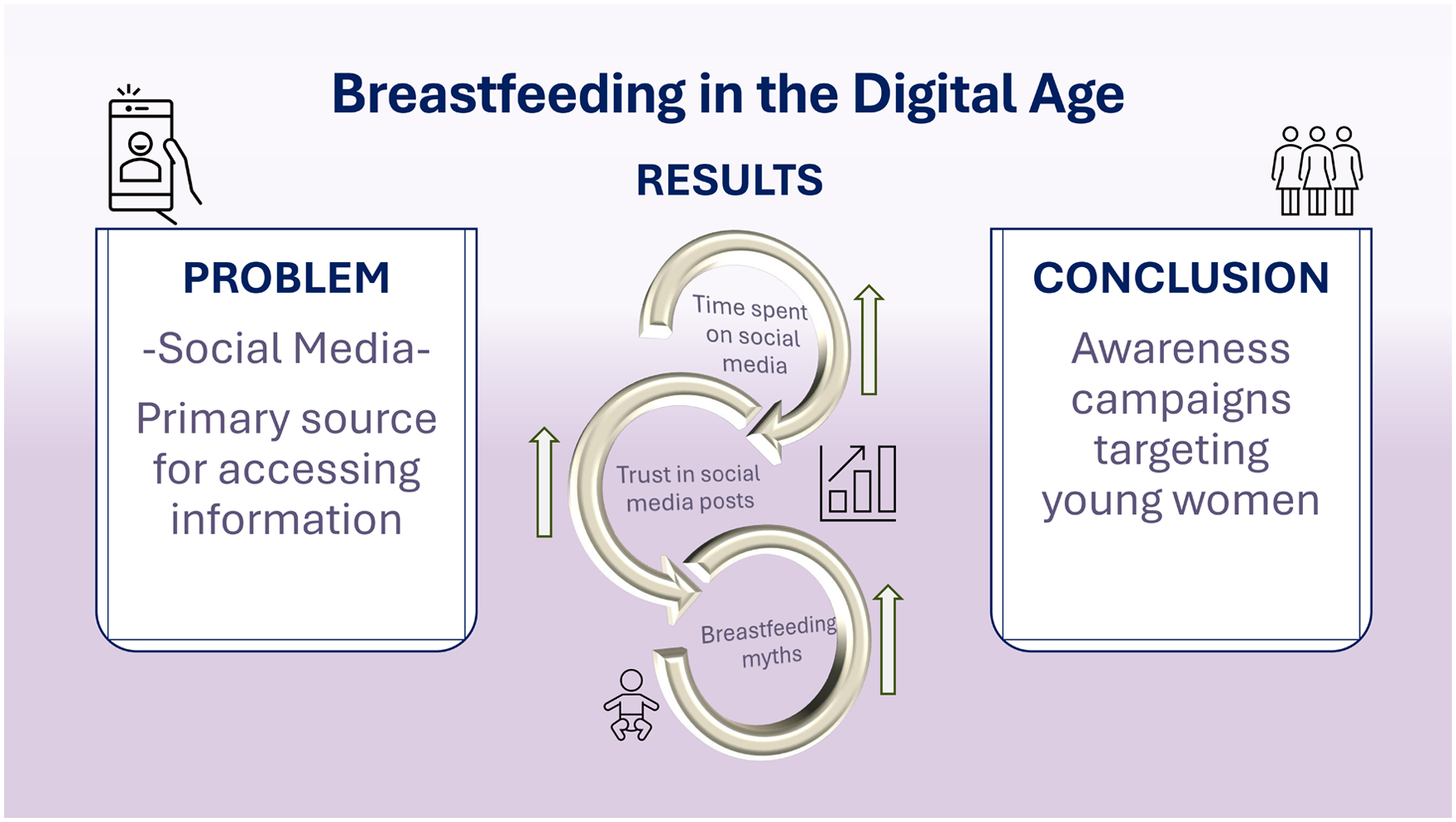
The average age of participants was 33.16 ± 10.55. A significant and positive correlation was found between the Trust Score for Corporate and Individual Social Media Sharing and the total score on the breastfeeding myths scale (r = .594, p < 0.001; r = .135, p = 0.036), while a significant and negative correlation was found between social media usage time and age (r = −.346, p < 0.001). In addition, the results revealed that the effect of age on breastfeeding myths was largely mediated by the amount of time spent on social media (β = −0.086, 95% CI [−0.200, −0.011])
Conclusions:
Women who rely on corporate and individual social media posts are more likely to believe breastfeeding myths. Furthermore, the findings indicate that the relationship between age and breastfeeding myths is mediated by time spent on social media. It is important for health officials to promote the dissemination of evidence-based information through collaboration with professional organizations and social media platforms.
Get full access to this article
View all access options for this article.