




Abstract
Nostalgia and declinism are often intertwined in the literature. We argue that they share a common reference to the past but differ in their psychological and social implications. Nostalgia entails a personal, meaningful connection to one’s past and contributes to a positive present or optimistic future outlook. Declinism, by contrast, idealizes a societal past and contributes to a negative perception of the present and a pessimistic view of the future. Across five preregistered studies—four cross-sectional and one experimental (ΣN = 2,300)—we empirically distinguished these constructs. Nostalgia positively, whereas declinism negatively, predicted social connectedness (Studies 1–3) and favorable responses to innovative technology such as artificial intelligence and ChatGPT (Studies 2–3). We observed these patterns when assessing nostalgia with the Southampton Nostalgia Scale and the Nostalgia Inventory, whereas no such patterns emerged with the Personal Inventory of Nostalgic Experiences—a scale that instead exhibited a high correlation with declinism (Study 4). Finally, experimentally induced nostalgia increased support for AI research compared to induced declinism (Study 5). The findings clarify theoretical distinctions between nostalgia and declinism, and offer novel insights into their broader psychological and societal consequences.
Plain Language Summary
Nostalgia and declinism are two ways in which individuals relate to the past, but despite being frequently linked in literature, we propose they are distinct psychological experiences with opposite effects. Nostalgia involves a personal, meaningful connection to one’s past, and inspires hope for the future. Declinism, conversely, is defined by an idealization of the past and the belief that things are getting steadily worse. Across five studies, we empirically separated these constructs, showing that nostalgia consistently and positively predicted social connectedness and ensuing favorable responses to innovative technology, such as AI and ChatGPT. Declinism, on the other hand, negatively predicted these same outcomes. These findings clarify that, although both reference the past, nostalgia serves as a positive resource for stepping into the future, whereas declinism generates resistance to innovation.
Nostalgia isn’t what it used to be. —Simone Signoret (1979)
Recent years have witnessed unabated innovation and advances in artificial intelligence (Haefner et al., 2021). In parallel with these rapid technological developments, the demand for retro-technology is rising, fueled by consumer fascination with obsolete devices (Asmelash, 2022; Ryan, 2024). This coexistence of enthusiasm for innovation and affection for halcyon days raises an intriguing question. Is yearning for the past compatible or incompatible with endorsing technological progress?
We argue that reliving sentimentally, and somewhat longing for, one’s personal past refers to nostalgia, which differs from declinism, a term that denotes a reverence for the past, accompanied by the belief that conditions, values, or ways of life are deteriorating. Simone Signoret’s (1979) opening quote blurs the distinction between two constructs, but she is no exception; a recurring oversight in the literature is the conflation of nostalgia with declinism (Grosche & Rothmund, 2025; Reyna et al., 2022; Smeekes et al., 2021; Wohl et al., 2020a, 2020b), which has contributed to inconsistent findings. For example, studies conceptualizing nostalgia as a sentimental longing for one’s personal past have shown that it enhances social connectedness with immigrants (Gravani et al., 2018). By contrast, studies operationalizing nostalgia as the belief that the world used to be better report that it predicts prejudice against immigrants (Grosche & Rothmund, 2025). Similar inconsistencies arise in research on nostalgia and innovation: defining nostalgia as a sentimental longing for meaningful personal experiences is associated with greater openness to new products (Xia et al., 2021; Zhou et al., 2021), whereas defining it as an affection for objects or practices from the past is associated with resistance to innovation (Hsieh, 2019; Reisenwitz et al., 2007). This blurring of conceptual boundaries obscures theoretical distinctions, hampers cumulative knowledge, and undermines practical relevance.
In the current article, we advocate for a more precise definition of nostalgia by distinguishing it from declinism. We report findings from five studies—four cross-sectional, one experimental—to systematically disentangle nostalgia from declinism, based on their structural differences and hypothesized divergent links with social connectedness and responses to innovative technology, namely, artificial intelligence (AI). We opted for social connectedness and responses to AI as outcome variables, because they can illuminate how retrospective emotions can either equip individuals with psychological resources to navigate and adapt to emerging technology or deprive them of such resources.
Nostalgia Versus Declinism: Conceptual Commonalities and Distinctions
Entrenched in yesteryear, both nostalgia (Batcho, 2013a; Hepper et al., 2012) and declinism (Abrams, 1988; Holbrook, 1993) entail positive views of the past. Nostalgia is defined as “a feeling of pleasure and also slight sadness when you think about things that happened in the past” (Cambridge Dictionary, n.d. a). Historical records indicate that expressions of nostalgia have been prevalent across various epochs, from ancient civilizations such as China, Greece, Israel, and Rome to contemporary society (Batcho, 2013b; Dodman, 2023; Li et al., 2025), and across cultures (Hepper et al., 2014, 2024; Sedikides & Wildschut, 2022). Declinism is defined as “a belief that everything is gradually becoming less, worse, or lower” (Cambridge Dictionary, n.d. b). Expressions of declinism have also been recorded throughout history (e.g., from China, Greece, Israel, and Rome to today; Buchanan, 2024; Herman, 1997; Murphy, 2005) and across cultures (Lowenthal, 2015; Spengler, 1926; Sztompka, 2000).
Nevertheless, the two constructs are distinct. Nostalgia refers to “the way I was” (Stern, 1992, p. 16). More substantively, nostalgia refers to meaningful aspects of the way one was (Sedikides & Wildschut, 2018). Thus, although nostalgia has a bittersweet quality, it is affectively more positive than negative, that is, characterized by a positivity offset (Leunissen et al., 2021; Sedikides & Wildschut, 2016a; van Tilburg, 2023). Nostalgic reverie entails—in addition to sadness—contentment, tenderness, warmth, or joy (Batcho, 1998; Hepper et al., 2012; Wildschut et al., 2006). This emotion fosters a favorable view of one’s present and an optimistic outlook on one’s future (Cheung et al., 2013; Sedikides & Wildschut, 2016b, 2020).
However, declinism refers to “the way [the past] was” (Stern, 1992, p. 13). More substantively, declinism embodies the viewpoint that the passing of time is associated with a deterioration in living conditions, morality, altruism, quality of life, the youth, or society in general (Holbrook, 1993; Mastroianni & Gilbert, 2023; Protzko & Schooler, 2019; Schuman & Scott, 1989; Wolfe, 1998). It highlights the challenges of current times while celebrating the triumphs of the past. As such, declinism pertains to infatuations with days of yore that carry dissatisfaction with the present (Castelnuovo-Tedesco, 1980; Holbrook & Schindler, 1994; Showalter, 1990). It involves an “incurable thirst for the sense of escape” (Whissen, 1989, p. 73) from the barrenness of contemporary life; the present is viewed unfavorably and the future pessimistically (Hirschman, 1991; Inglehart, 2018; Sharot, 2011).
Despite the above conceptual distinctions between nostalgia and declinism, no empirical work has differentiated between the two constructs. Furthermore, conceptual ambiguity precedes and shapes researchers’ methodological choices. Some scholars define nostalgia as a sentimental longing for the past and have accordingly developed measures assessing the intensity of this longing (Batcho, 1995) or the frequency and personal relevance of nostalgic experiences (Routledge et al., 2008; Wildschut & Sedikides, 2022). Others, however, have framed nostalgia as “a preference toward objects that were more common when one was younger” (Holbrook, 1993, p. 332) or a belief that the past was superior (Grosche & Rothmund, 2025), thereby constructing instruments that more accurately capture declinism. The former conceptualization aligns more closely with cross-cultural lay understandings of nostalgia as an emotional longing for personally meaningful experiences or relationships (Hepper et al., 2012, 2014). In the current research, we examined whether nostalgia and declinism are discrete constructs with divergent psychological implications or whether they are inherently linked and inseparable.
Divergent Implications of Nostalgia and Declinism
We investigated the distinct psychological implications of nostalgia and declinism, particularly their associations with social connectedness. Social connectedness refers to a sense of closeness with one’s social environment (Gabriel & Schneider, 2024; Lee & Robbins, 1995), and incorporates indicators of relatedness-need satisfaction, including feeling socially supported or accepted, connected with or trusting others, protected, and loved (Hirsch & Clark, 2019; Wildschut et al., 2010). Social connectedness provides a springboard for personal growth, as evidenced by the beneficial influence of attachment security (Mikulincer & Shaver, 2020) and the thriving function of social support (Feeney & Collins, 2019; Slemp et al., 2024). Consequently, examining how nostalgia and declinism predict social connectedness can clarify their distinct roles in responses within a potential domain of personal growth, namely, innovative technology. Recent research has begun to examine the role of social connectedness in preferences for innovative technology (Dang et al., 2024, 2025a, 2025b; Dang & Liu, 2024; Jung et al., 2022). We further tested whether nostalgia and declinism exhibit divergent roles in predicting responses to innovative technology due to their distinct associations with social connectedness. We articulate rationale and hypotheses below.
Associations With Social Connectedness
Nostalgia encompasses social connectedness. The emotion is firmly tied to cherished recollection of interactions with close others (e.g., friends, relatives, partners) or momentous life events (e.g., graduation, birthday parties, wedding anniversaries) in which close others surround the self (Abeyta et al., 2015; Wildschut et al., 2006). Hence, in the act of nostalgizing, individuals are symbolically enveloped by the presence of important figures from their past (Sedikides et al., 2004, 2015). Indeed, individuals high on trait nostalgia are often filled with memories of interpersonal relationships (Batcho, 1998; Sedikides & Wildschut, 2024) and report intimacy maintenance, that is, attaining symbolic proximity to close but absent others (Cheung et al., 2018). It is no surprise, then, that trait nostalgia is positively associated with social connectedness (Juhl & Biskas, 2023; Sedikides & Wildschut, 2019, 2024). Furthermore, experimentally induced nostalgia promotes social connectedness not only at the individual level (Dai et al., 2024; Wildschut et al., 2006) but also within ingroups (Abakoumkin et al., 2017; Wildschut et al., 2014) and broader social networks (Huang & Chang, 2025; Zhou et al., 2008).
In contrast, declinism may be tethered to a decreased emphasis on social bonds. Steeped in the conviction that circumstances are steadily deteriorating, declinism is entangled with a reduction in social capital (Putnam, 2000), diminished faith in humanity (Abrams, 1988; Batcho, 2013a), eroded trust in others (Putnam, 2000; Twenge et al., 2014), and waning focus on the value of social bonds (Showalter, 1990; Twenge et al., 2014). Hence, in endorsing declinism, individuals will likely be devoid of the symbolic presence of key figures from their past or treasured memories of interpersonal relationships. Those who hold relatively strong perceptions of declinism are likely to be characterized by emotional distancing, disengagement, and withdrawal from social connections (Mikulincer & Shaver, 2017). Experimental research has yet to address the impact of declinism on social connectedness.
Based on the above reasoning, we hypothesize that nostalgia is positively associated with, or strengthens, social connectedness, whereas declinism is negatively associated with, or weakens, social connectedness (Hypothesis 1 or H1).
Associations With Responses to Innovative Technology
Social connectedness can serve as a psychological resource for exploration and increase the quest for new experiences (Dang & Liu, 2023; Feeney & Collins, 2019; Ja & Jose, 2017; Mikulincer & Shaver, 2020; Ryan & Deci, 2017). One such experiential domain is innovative technology, particularly AI. AI functions semi- or fully-autonomously to perform tasks traditionally handled by humans (Clarke, 2019; Taddeo & Floridi, 2018). People can explore innovative technology in various ways, such as interacting with AI-powered tools, experiencing immersive environments, or engaging in collaborative tech-driven projects. Technology exploration, then, refers to intentions or actions to gain knowledge about features or applications of novel technology (Maruping & Magni, 2012; Nambisan et al., 1999). Previous work has revealed that social connectedness promotes technology exploration (Dang et al., 2024, 2025a). For instance, people who recall experiences of social acceptance (as opposed to social rejection) report greater interest in engaging with robots (Dang & Liu, 2024). Exploration allows individuals to gain a deeper understanding of a technology’s functionality, its potential benefits, and its suitability for personal adoption (Boudreau & Robey, 2005; Rogers & Muller, 2006). Hence, technology exploration is a key predictor of favorability toward innovative technology.
Therefore, we hypothesize that nostalgia and declinism predict responses to AI in a different manner. Specifically, nostalgia predicts, and engenders, more favorability toward AI via stronger social connectedness, whereas declinism predicts, and engenders, less favorability toward AI via weaker social connectedness (H2). We further hypothesize that nostalgia facilitates a more open and exploratory orientation toward AI by encouraging social connectedness and promoting technological exploration, whereas declinism engenders resistance to AI by eroding social connectedness and hampering technological exploration (H3).
Overview
We conducted five preregistered studies to test H1–H3. In addition, we conducted three supplemental studies (one preregistered), to inform sample size planning and address secondary research questions. The study methodologies varied (i.e., cross-sectional and experimental, using diverse nostalgia measures and operationalizations of responses to innovative technology). Also, to a limited extent, their cultural context differed (British in Supplemental Study 2, Chinese in all other studies).
In correlational Studies 1–4, we carried out factor analyses—preregistered in Study 1—to examine structural differences between nostalgia and declinism. Further, in Study 1, as well as Studies 2–3, we tested H1, namely, the divergent associations of nostalgia and declinism with social connectedness. In Studies 2–4, we tested H2 and H3, namely the mediating role of social connectedness in the divergent associations of nostalgia and declinism with responses to AI. We acknowledge the ongoing debate concerning the appropriateness of cross-sectional mediation analyses. Some scholars highlight the potential biases inherent in such analyses (Maxwell & Cole, 2007), whereas others propose that they remain informative for identifying theoretically meaningful pathways (Shrout, 2011; Winer et al., 2016). We used cross-sectional mediation analyses to test (and thereby put at risk; Fiedler et al., 2011) our hypotheses concerning the divergent roles of nostalgia and declinism in shaping responses to AI through social connectedness. In Study 4, we also sought to refine the conceptualization of nostalgia by anchoring it to its measurement. Specifically, in testing H1–H3, we examined the relation between nostalgia, as assessed by each of three scales, and declinism. Importantly, to establish causal evidence for their postulated divergent effects, we experimentally manipulated nostalgia and declinism in Study 5, and tested their impact on responses to AI technology as mediated by social connectedness.
Transparency and Openness
We preregistered the hypotheses, design, and analyses for all studies (Study 1: https://osf.io/awu6n; Study 2: https://osf.io/dbxf5; Study 3: https://osf.io/v34b2; Study 4: https://osf.io/xpk84; Study 5: https://osf.io/xserw). We provide stimulus materials for all studies in Supplemental Material S1, the timeline of studies in Supplemental Material S2, and the frequency distributions of assessed variables in Supplemental Material S3. We note and explain deviations from the preregistrations in Supplemental Material S4. These deviations come in the form of ancillary analyses that add information to the preregistered ones, which we also report. We did not omit preregistered analyses. All data and analysis code are available at https://osf.io/9u584/files/osfstorage.
We report how we determined our sample size, data exclusions, and measures, and we follow journal article reporting standards (Appelbaum et al., 2018). We determined sample sizes as follows. In Study 1, we aimed for N = 250 to obtain stable estimate of bivariate correlations (Schönbrodt & Perugini, 2013) in order to provide the foundation for the preregistered factor analyses and structural equation analysis (Rodgers & Nicewander, 1988). In Studies 2–5, which focused on the indirect effects of nostalgia and declinism, we used the web-based Monte Carlo power analysis application (Schoemann et al., 2017) to estimate the sample size required. We reported parameters used in the power analyses in Supplemental Material S5. Given that our research represented a foray into the topic, and in anticipation of attrition, we routinely and conservatively oversampled.
Study 1
In Study 1, we tested whether nostalgia and declinism are distinct as far as their associations with social connectedness are concerned. We tested H1: nostalgia is positively related, whereas declinism is negatively related, to social connectedness.
Method
Participants
Aiming for at least an N of 250 (Schönbrodt & Perugini, 2013), and hedging against attrition, we conservatively recruited 304 Chinese participants via the online platform Credamo. Credamo workers encompass a diverse demographic profile, representing a wide range of regions and socioeconomic backgrounds across China. The platform automatically excluded four participants who failed at least one attention check (out of two). The final sample consisted of 300 participants (159 women, 141 men; Mage = 30.29 years, SDage = 7.90 years), each remunerated with 3 CNY (0.44 USD).
Procedure and Materials
Nostalgia
We assessed this construct with the 7-item Southampton Nostalgia Scale (SNS; Sedikides et al., 2015; Wildschut & Sedikides, 2022). Following a definition of nostalgia (“sentimental longing for one’s past”), four items refer to frequency of nostalgic engagement (e.g., “How often do you experience nostalgia?”; 1 = very rarely, 7 = very frequently), and three items to whether participants consider nostalgia personally relevant (e.g., “How valuable is nostalgia for you?”; 1 = not at all, 7 = very much). We averaged the ratings to create an index (α = .89). In this and all measurement cases, higher scores indicate higher levels of the pertinent construct.
Declinism
We assessed this construct with eight items selected by Holbrook (1993) from an initial pool of 20. Four positively worded items indicate declinism (e.g., “We are experiencing a decline in the quality of life”) and four negatively worded items indicate improvement (e.g., “History involves a steady improvement in human welfare”; 1 = strongly disagree, 7 = strongly agree). Schindler and Holbrook (2003) conducted a principal components analysis on a set of 52 items that comprised Holbrook’s (1993) initial pool of 20 items, the 12 items of the Experience subscale from Taylor and Konrad’s (1980) study of personal dispositions toward the past, and the 20 items of the Antiquarianism subscale from McKechnie’s (1977) Environmental Response Inventory. Items from the latter two scales had high loadings on a dimension that Schindler and Holbrook labeled Antiques. These items mostly tapped liking for things or objects from the past (e.g., “I would be happy living in an old house full of antique furniture and mementos of the past”). Holbrook’s items loaded on a second dimension, which Schindler and Holbrook labeled Decline. They proposed that these items tap “the belief that the passing of time is associated with a decline in conditions” (p. 289).
We made the a priori decision to exclude one improvement item (i.e., “Technological change will insure a brighter future”) from the 8-item declinism scale, due to its apparent confound with our research objectives—specifically, its overlap with the dependent measures of Studies 2–4. After-reverse scoring the remaining three improvement-oriented items, we averaged the seven items to form a declinism index (α = .77).
Social Connectedness
We assessed this construct with the 5-item social connectedness scale (Dang et al., 2024, Study 1A; see also Hepper et al., 2012). All items were preceded by the stem “I feel ….” Sample items are: “connected to loved ones,” “supported,” “warm” (1 = strongly disagree, 7 = strongly agree). We averaged the ratings to compute a social connectedness index (α = .87).
Results
Factor Analysis
Exploratory Factor Analysis of Nostalgia (N) and Declinism (D) Items in Study 1: Rotated Factor Pattern
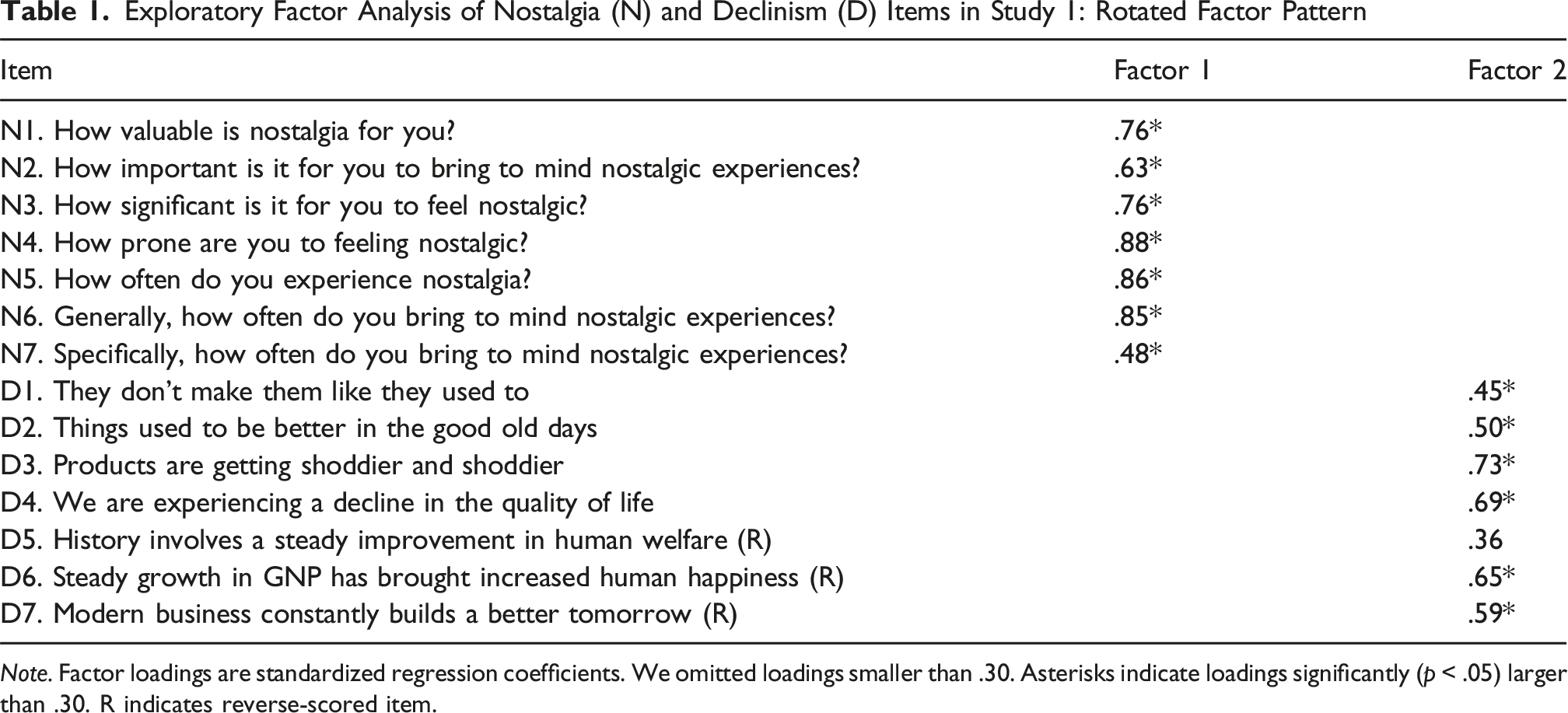
Note. Factor loadings are standardized regression coefficients. We omitted loadings smaller than .30. Asterisks indicate loadings significantly (p < .05) larger than .30. R indicates reverse-scored item.
Associations Among Variables
Descriptive Statistics and Zero-Order Correlations Among Variables in Studies 1–3
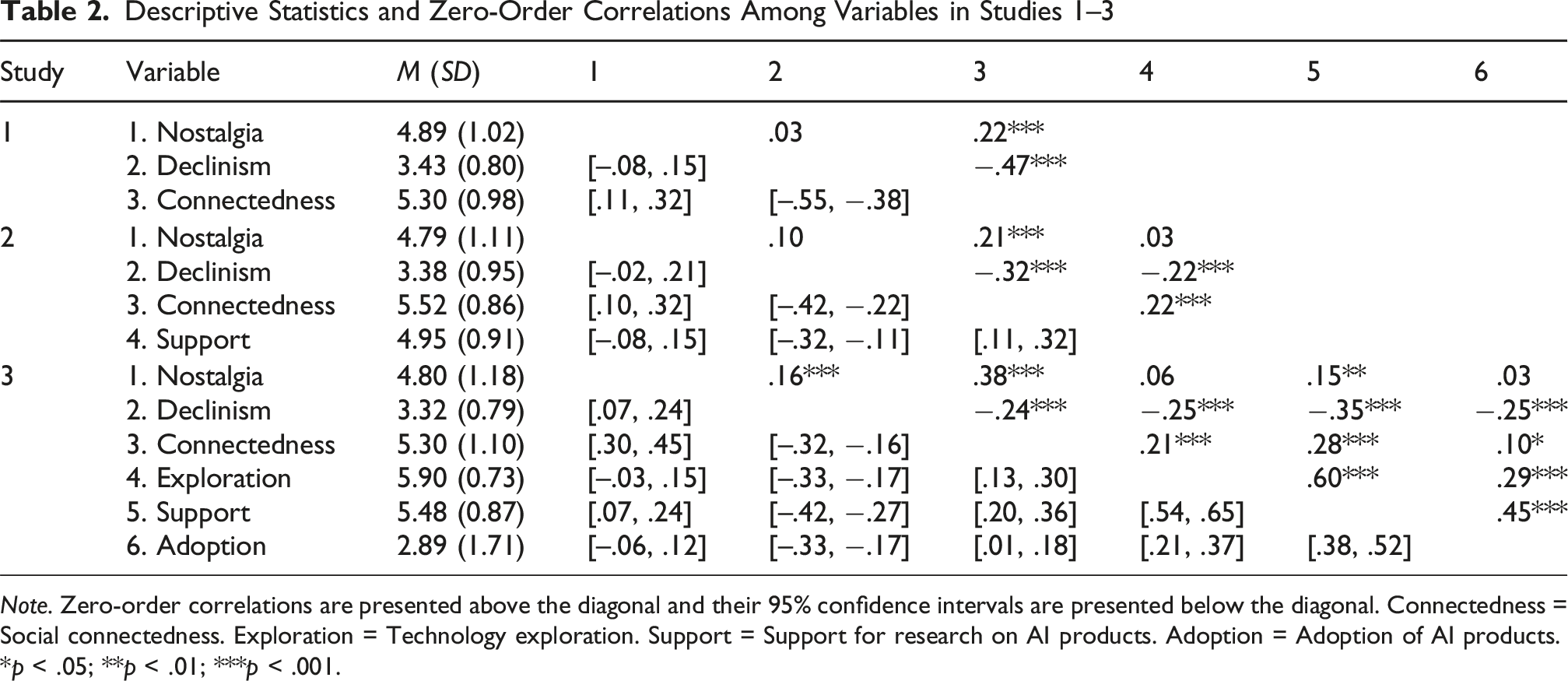
Note. Zero-order correlations are presented above the diagonal and their 95% confidence intervals are presented below the diagonal. Connectedness = Social connectedness. Exploration = Technology exploration. Support = Support for research on AI products. Adoption = Adoption of AI products.
*p < .05; **p < .01; ***p < .001.
Different Roles of Nostalgia and Declinism in Predicting Social Connectedness
As preregistered, we further tested H1 by considering the unique associations of nostalgia and declinism with social connectedness. Using Mplus 8.3, we modelled nostalgia and declinism as parallel and correlated independent variables, and social connectedness as dependent variable. This model was saturated. Nostalgia positively predicted (b = 0.22, 95% CI [0.13, 0.31], SE = 0.05, z = 4.71, p < .001, b* = .23), whereas declinism negatively predicted (b = −0.58, 95% CI [–0.70, −0.46], SE = 0.06, z = −9.71, p < .001, b* = −.48), social connectedness. The covariance between nostalgia and declinism was not significant, b = 0.03, 95% CI [–0.07, 0.12], SE = 0.05, z = 0.58, p = .561, b* = .03.
Discussion
We demonstrated that nostalgia and declinism are distinct constructs. More importantly, consistent with H1, nostalgia and declinism were associated with social connectedness in opposing directions: nostalgia positively, declinism negatively.
Study 2
In Study 2, we examined the replicability of Study 1 findings, retesting the divergent associations of nostalgia and declinism with social connectedness (H1). We also extended Study 1’s scope, testing H2: nostalgia has a positive indirect effect on responses to AI technology via (stronger) social connectedness, but declinism has a negative indirect effect on responses to AI technology via (weaker) social connectedness. We operationalized responses to AI technology as support for research on AI products (Złotowski et al., 2017).
Method
Participants
Aiming for at least an N of 278, we recruited 312 Chinese participants via Credamo. The platform automatically excluded 12 participants for failing at least one attention check (of the two included). The final sample comprised 300 participants (177 women, 123 men; Mage = 30.11 years, SDage = 6.86 years), each paid with 3 CNY (0.44 USD).
Procedure and Materials
Nostalgia, Declinism, and Social Connectedness
We assessed these constructs as in Study 1 (nostalgia α = .91, declinism α = .84, social connectedness α = .84).
Support for Research on AI Products
Participants read descriptions of four products powered by AI technology (Waytz et al., 2010). An example is Moodpod, which we depicted as an MP3 player that plays songs in different moods, based on detecting the user’s mood from their physical state. Although the products were not real, to ensure realism, they resembled existing products or products in development. Participants were not informed that the four products were fictional. Given the technological feasibility, participant suspicion was minimal. Our suspicion check, conducted via an open-ended feedback section at the end of the survey, yielded no evidence of skepticism regarding the products’ existence. Following each description, participants responded to two items measuring their support for research on the corresponding products (Złotowski et al., 2017). The items were: “How much do you support research on [product]?”, “How much do you support the use of taxpayer money for research on [product]?” (1 = extremely oppose, 7 = extremely favor). We averaged across the two ratings to create a score for each product. Then, we averaged across ratings of the four products to form an index of support for research on AI products (α = .82).
All participants who completed the study were presented with a full debriefing statement clarifying the products described were for research purposes and may not be currently available in the form described. For those who withdrew early, an explicit debriefing was not technically feasible. However, given that the four products were non-sensitive and did not involve any evocative or distressing content, the risk of harm to participants who exited without a full debriefing was deemed minimal.
Results
Association Among Variables
We present descriptive statistics and zero-order correlations in Table 2. Nostalgia and declinism were weakly and non-significantly associated. Nostalgia was positively associated with social connectedness, but not with support for research on AI products. Declinism was negatively associated with both social connectedness and support for research on AI products. Finally, social connectedness was positively associated with support for research on AI products.
Mediation by Social Connectedness
To test the respective indirect effects of nostalgia and declinism, via social connectedness, on support for research on AI products (H2), we included nostalgia and declinism as predictors in a mediation analysis, as preregistered. We tested a saturated model in Mplus 8.3 to accommodate nostalgia and declinism as parallel and correlated predictors (Figure 1). Differing roles of nostalgia and declinism in predicting social connectedness and support for research on AI products in Study 2.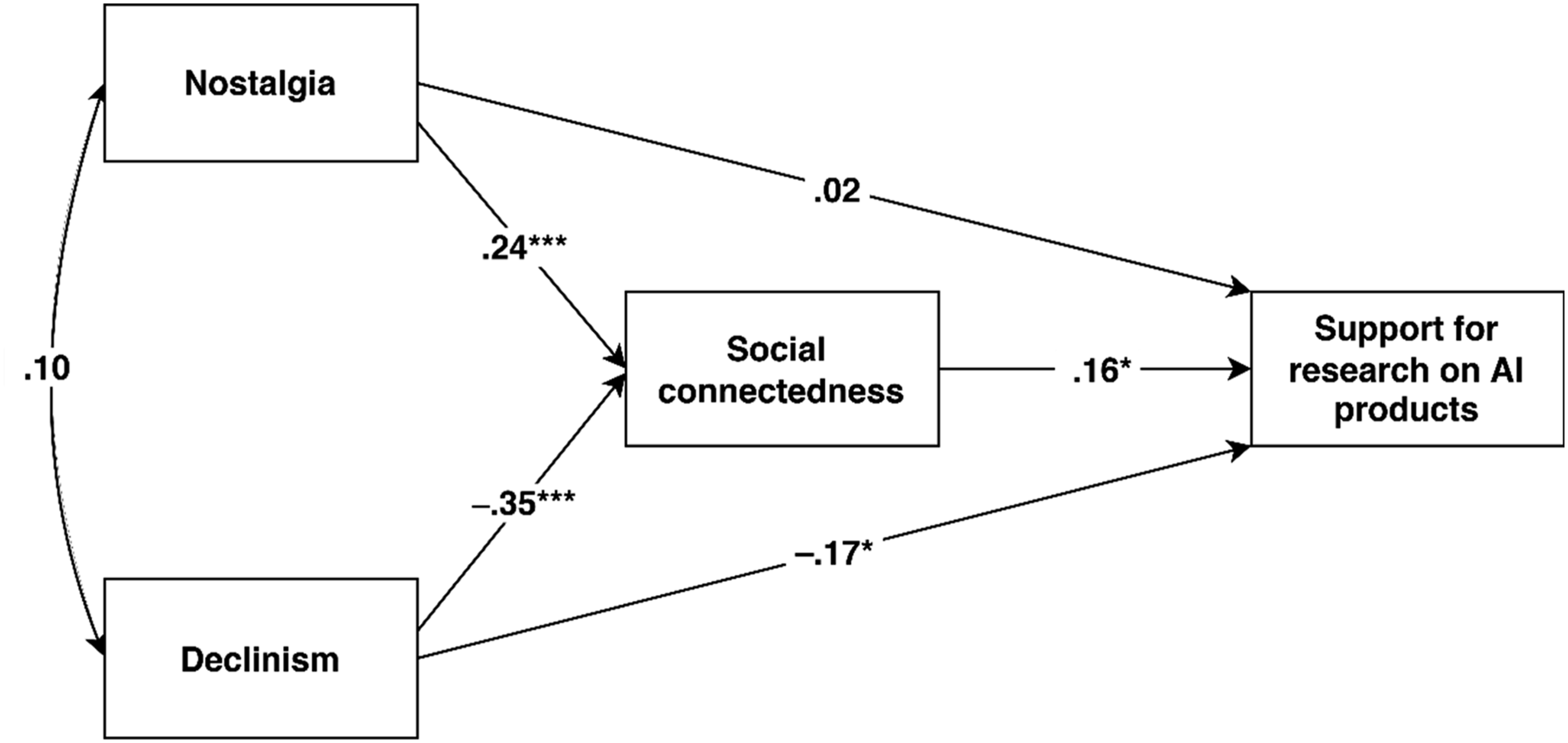
Nostalgia predicted positively (b = 0.19, 95% CI [0.11, 0.27], SE = 0.04, z = 4.58, p < .001, b* = .24), whereas declinism predicted negatively (b = −0.31, 95% CI [–0.40, −0.22], SE = 0.05, z = −6.50, p < .001, b* = −.35), social connectedness. Social connectedness, in turn, was associated positively with support for research on AI products (b = 0.17, SE = 0.07, 95% CI [0.05, 0.30], z = 2.65, p = .008, b* = .16). The indirect effect of nostalgia on support for research on AI products via social connectedness was positive, ab = 0.03, 95% CI [0.01, 0.07], and the corresponding indirect effect of declinism via social connectedness was negative, ab = −0.05, 95% CI [–0.10, −0.01]. When controlling for social connectedness, declinism (b = −0.16, 95% CI [–0.28, −0.05], SE = 0.06, z = −2.83, p = .005, b* = −.17), but not nostalgia (b = 0.01, 95% CI [–0.08, 0.11], SE = 0.05, z = 0.25, p = .802, b* = .01), directly predicted reduced support for research on AI products.
Discussion
We replicated the Study 1 findings. Consistent with H1, nostalgia was positively related to social connectedness, whereas declinism was negatively related to it. More importantly, we obtained results in accord with H2. We observed a positive indirect effect of nostalgia on support for research on AI products via stronger social connectedness, and a negative indirect effect of declinism on support for research on AI products via weaker social connectedness.
Study 3
In Study 3, we retested H1 and H2. Crucially, we included technology exploration, thought to account for the link between social connectedness and responses to innovative technology. We operationalized responses to innovative technology as both support for research on ChatGPT and adoption of ChatGPT. We retested H1 and H2, but our main objective was to test H3: nostalgia has a positive association with responses to (i.e., support for and adoption of) ChatGPT via higher social connectedness and higher technology exploration, whereas declinism has a negative association with responses to ChatGPT via lower social connectedness and lower technology exploration.
Method
Participants
Aiming for at least an N of 415, we recruited 500 Chinese participants via Credamo for 5 CNY (0.75 USD). Those who failed an attention check (out of two) were automatically excluded by the platform. The survey link remained active until we reached the targeted N of 500 participants (343 women, 157 men; M age = 30.68 years, SD age = 8.56 years).
Procedure and Materials
Nostalgia, Declinism, and Social Connectedness
We assessed these constructs as in Studies 1 and 2 (nostalgia α = .92, declinism α = .75, social connectedness α = .90).
Technology Exploration
We presented participants with a description to familiarize them with natural language processing (ChatGPT; see Supplemental Material S1). We then assessed technology exploration regarding ChatGPT with three items adapted from Nambisan et al. (1999; e.g., “I intend to spend time and effort in exploring ChatGPT for potential applications”; 1 = strongly disagree, 7 = strongly agree). We averaged the ratings to create a technology exploration index (α = .72).
Support for Research on ChatGPT
We assessed this variable with three items (Dang et al., 2024; e.g., “To what extent do you support increasing state funding for research on ChatGPT”; 1 = not at all, 7 = very much). We averaged the ratings to form an index (α = .72).
Adoption of ChatGPT
We presented participants with six contexts wherein either ChatGPT or real persons could be used (Dang et al., 2025b; e.g., checking the format or grammar of an academic paper and writing a medical note). Participants indicated which of the two (ChatGPT or real persons) they would use in each context. We coded their choices: ChatGPT = 1, real persons = 0. The total number of contexts where participants adopted ChatGPT constituted the relevant index (range = 0–6).
Results
Associations Among Variables
We present descriptive statistics and zero-order correlations in Table 2. As in Studies 1–2, nostalgia was weakly positively associated with declinism, although the correlation was statistically significant this time (r = .16). Nostalgia was positively associated with social connectedness, whereas declinism was negatively associated with it. Social connectedness was positively associated with technology exploration, which was positively linked to responses to ChatGPT.
Mediation Roles of Social Connectedness and Technology Exploration
To find out whether social connectedness (as well as technology exploration) played different roles in the respective associations of nostalgia and declinism with responses to ChatGPT (H3), we included nostalgia and declinism as parallel predictors in mediation models, as preregistered. We conducted two mediation analyses using Mplus 8.3, one focused on support for research on ChatGPT and one on adoption of ChatGPT (Figure 2). We report path coefficients in Table 3. Differing roles of nostalgia and declinism in predicting (a) support for research on ChatGPT and (b) adoption of ChatGPT via social connectedness and technology exploration in Study 3. Tests of Direct and Indirect Paths in Study 3 Note. Connectedness = Social connectedness. Exploration = Technology exploration.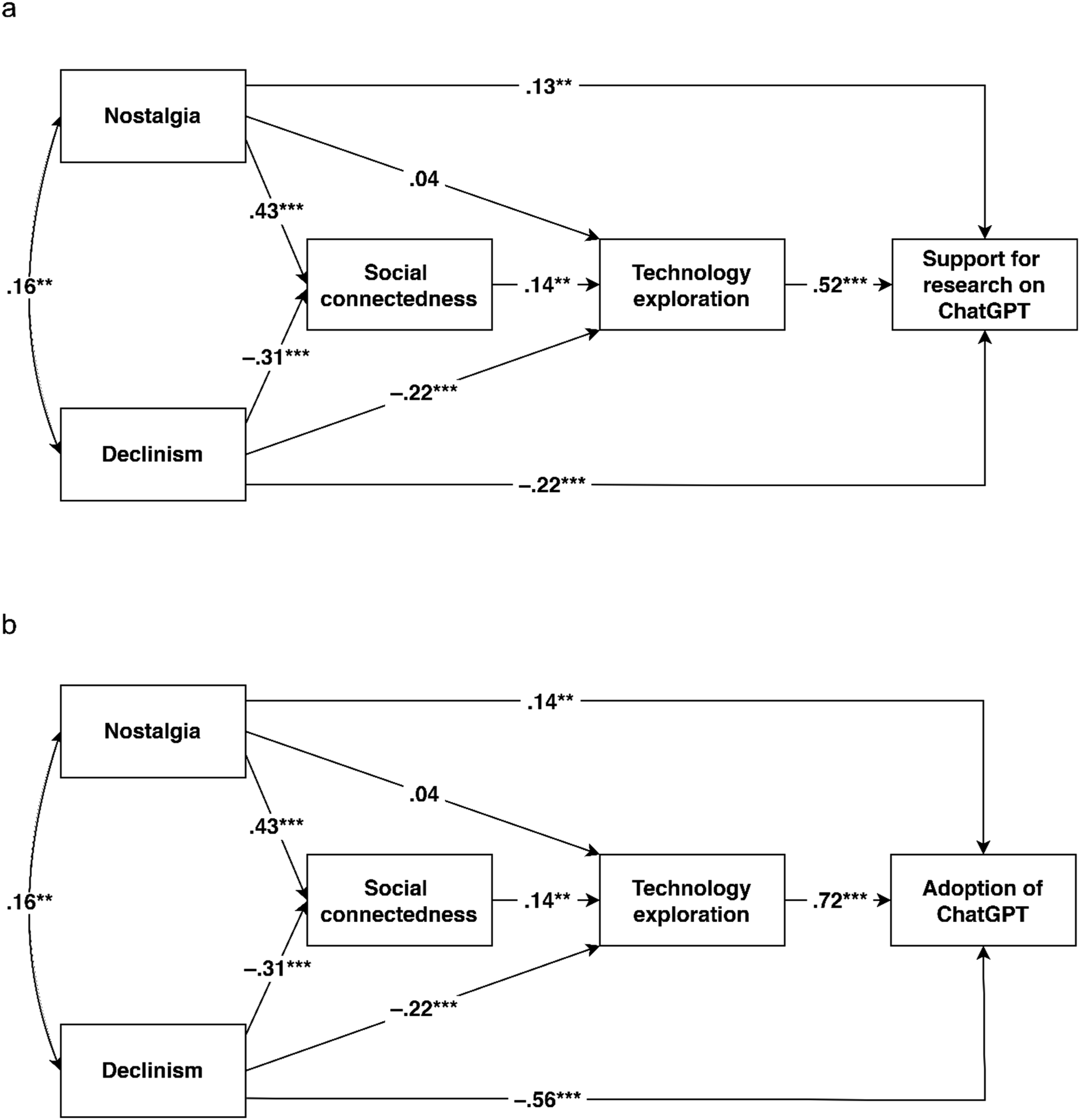
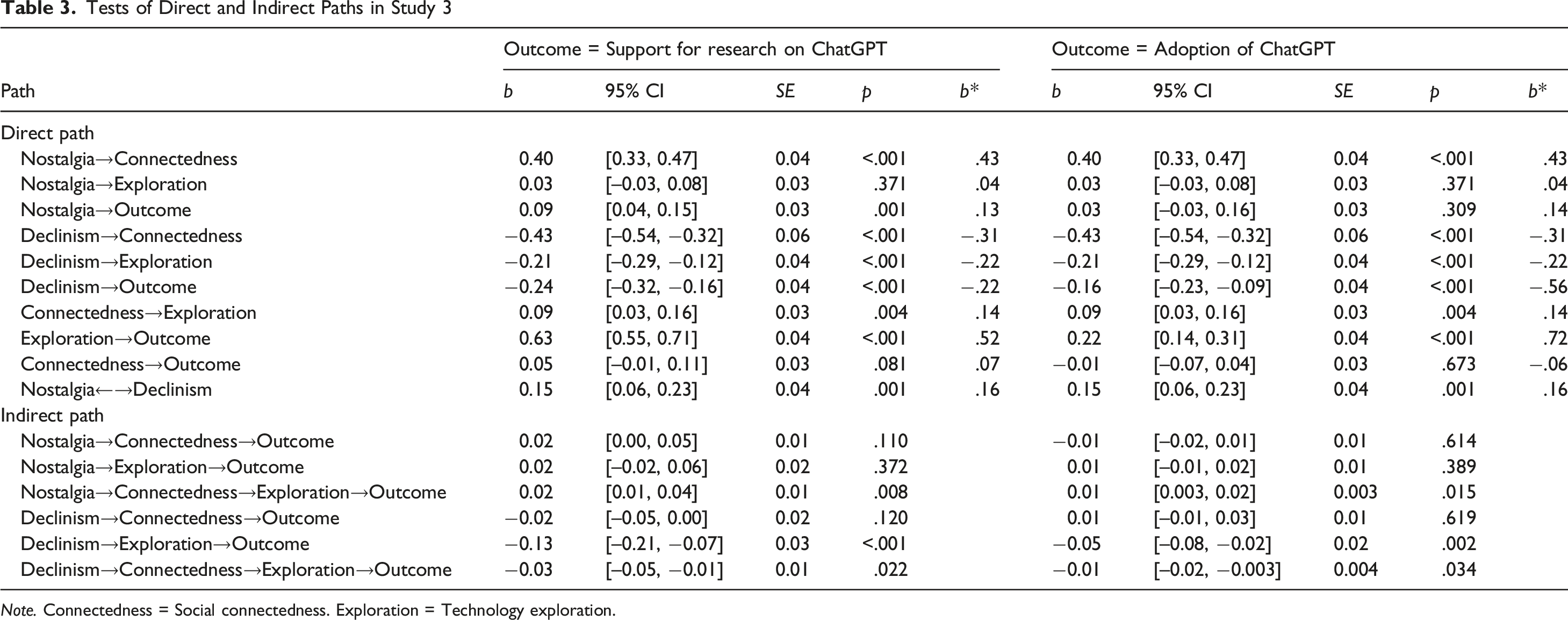
To test the hypothesized pathways underlying the associations of nostalgia and declinism with support for research on ChatGPT, we specified a saturated model (Figure 2(A)). Nostalgia positively predicted, whereas declinism negatively predicted, social connectedness. Social connectedness positively predicted technology exploration. Technology exploration positively predicted support for research on ChatGPT. Nostalgia had a positive association with support for research on ChatGPT via stronger social connectedness and stronger technology exploration, whereas declinism had a negative association with support for research on ChatGPT via weaker social connectedness and weaker technology exploration. When controlling for all indirect effects, the direct links from nostalgia and declinism to support for research on ChatGPT were significant, but directionally opposite.
We specified a similar saturated model for adoption of ChatGPT (Figure 2(B) and Table 3). Nostalgia positively predicted, whereas declinism negatively predicted, social connectedness. Social connectedness positively predicted technology exploration, which in turn positively predicted adoption of ChatGPT. Nostalgia had a positive association with adoption of ChatGPT via stronger social connectedness and stronger technology exploration, whereas declinism had a negative association with adoption of ChatGPT via weaker social connectedness and weaker technology exploration. When controlling for all indirect effects, the direct links from nostalgia and declinism to adoption of ChatGPT were significant, but opposite in direction.
Discussion
The results were consistent with H1 and H2. Importantly, they were also consistent with H3. Nostalgia serially predicted more favorable responses to ChatGPT via greater social connectedness and greater technology exploration. Declinism, on the other hand, serially predicted less favorable responses to ChatGPT via weaker social connectedness and weaker technology exploration.
Study 4
In Study 4, we aimed to test the robustness of our prior findings (H1–H3). More importantly, we aimed to refine the conceptualization of nostalgia by aligning it with its measurement. We assessed nostalgia with three scales. Specifically, we randomly assigned participants to complete either the SNS (used in Studies 1–3), the 18-item Nostalgia Inventory (NI; Batcho, 1995), or the 4-item Personal Inventory of Nostalgic Experiences (PINE; Newman et al., 2020). The SNS and the NI have been associated with similar correlates or outcomes (Juhl et al., 2020; Routledge et al., 2008; Stephan et al., 2014, 2015; Zhou et al., 2008). Accordingly, the findings from the NI would serve to validate the results obtained from the SNS. However, it has been suggested that the PINE provides a more balanced assessment than the SNS (and, by extension, the NI), as it captures both the positive and negative correlates or outcomes of nostalgia (Newman et al., 2020). We questioned whether this perceived balance arises from the PINE’s focus on declinism rather than nostalgia per se.
We started by conducting Supplemental Study 1, a pilot study, and describe it in detail in Supplemental Material S7. We tested 200 Chinese participants. The results of this pilot study revealed that the PINE item “To what extent do you feel a longing to return to a former time in your life?” conflated nostalgia and declinism, as it connotes dissatisfaction with one’s present circumstances. As such, we hypothesized that, although nostalgia assessed by the SNS or the NI is positively associated with social connectedness and responses to AI technology, nostalgia assessed by the PINE—like declinism—is negatively associated with social connectedness and responses to AI technology. The PINE, we propose, confounds nostalgia and declinism.
Method
Participants
We aimed for an N of 300 for each of three conditions. We recruited participants through Credamo and compensated them with 4 CNY (0.55 USD). Participants who failed an attention check (out of two) were automatically excluded by the platform. The survey link remained active until we reached the targeted N of 900 participants (552 women, 348 men; M age = 30.53 years, SD age = 8.46 years).
Procedure and Materials
Nostalgia
We randomly assigned participants to complete one of the three nostalgia scales, rather than administering the three scales to all participants. We did so to avoid carry-over effects between the three nostalgia scales (i.e., responses on one nostalgia scale influencing subsequent responses on other nostalgia scales; Tourangeau et al., 1989). In the SNS condition, we assessed nostalgia with the SNS (α = .92). In the NI condition, we assessed nostalgia with the NI. Participants rated how much they missed 18 persons, situations, or events from when they were younger (e.g., “my childhood toys”; 1 = not at all, 7 = very much; α = .83). In the PINE condition, we assessed nostalgia with the PINE (e.g., “To what extent do you feel a longing to return to a former time in your life”; 1 = not at all, 7 = very much; α = .85).
Declinism, Social Connectedness, and Response to ChatGPT
We assessed declinism (α = .80), social connectedness (α = .86), technology exploration (α = .69), and support for research on ChatGPT (α = .69) as we did in Study 3.
Results
Associations Among Variables
Descriptive Statistics and Zero-Order Correlations Among Variables as a Function of Condition in Study 4
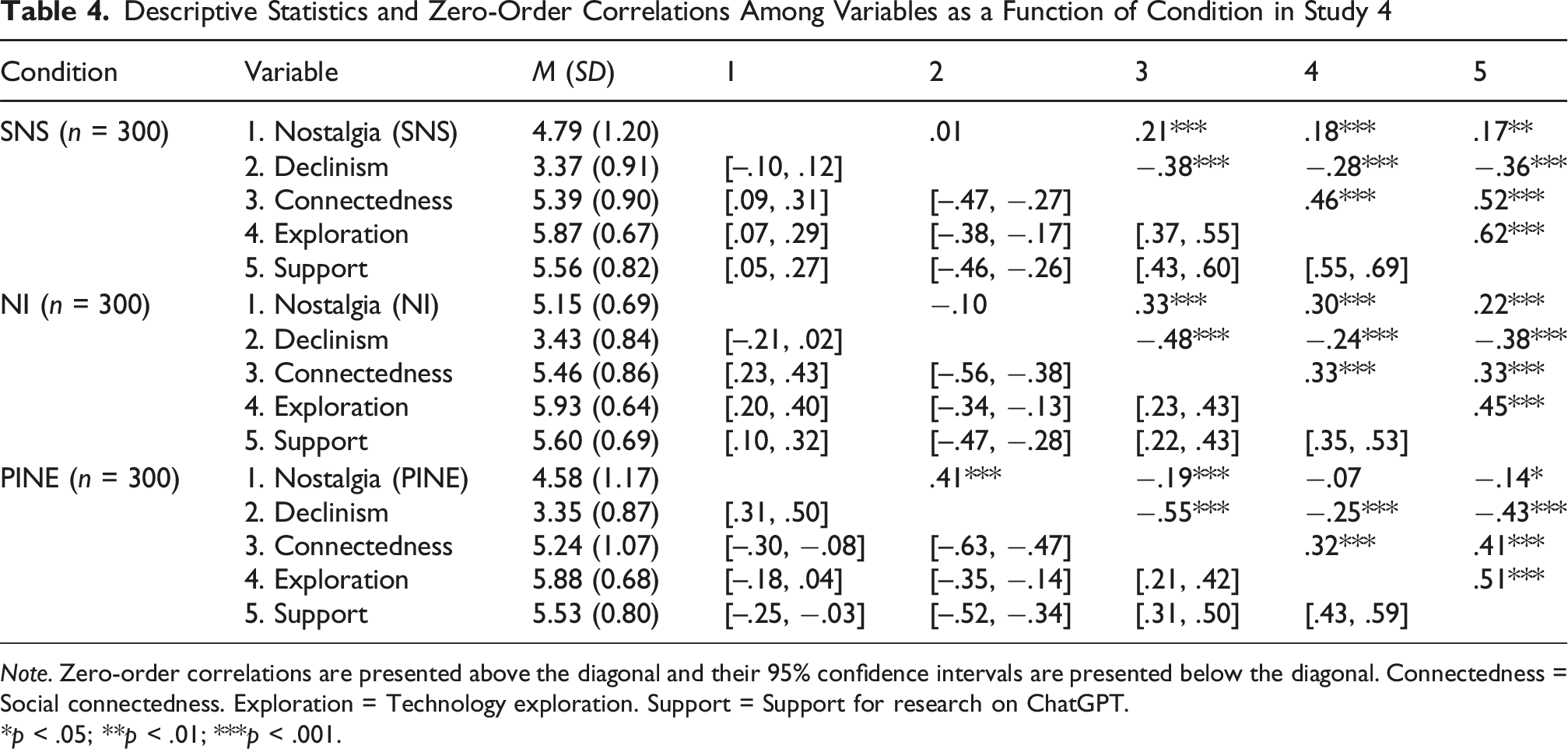
Note. Zero-order correlations are presented above the diagonal and their 95% confidence intervals are presented below the diagonal. Connectedness = Social connectedness. Exploration = Technology exploration. Support = Support for research on ChatGPT.
* p < .05; ** p < .01; ***p < .001.
Comparison of Zero-Order Correlations Between Nostalgia and Model Variables in Study 4
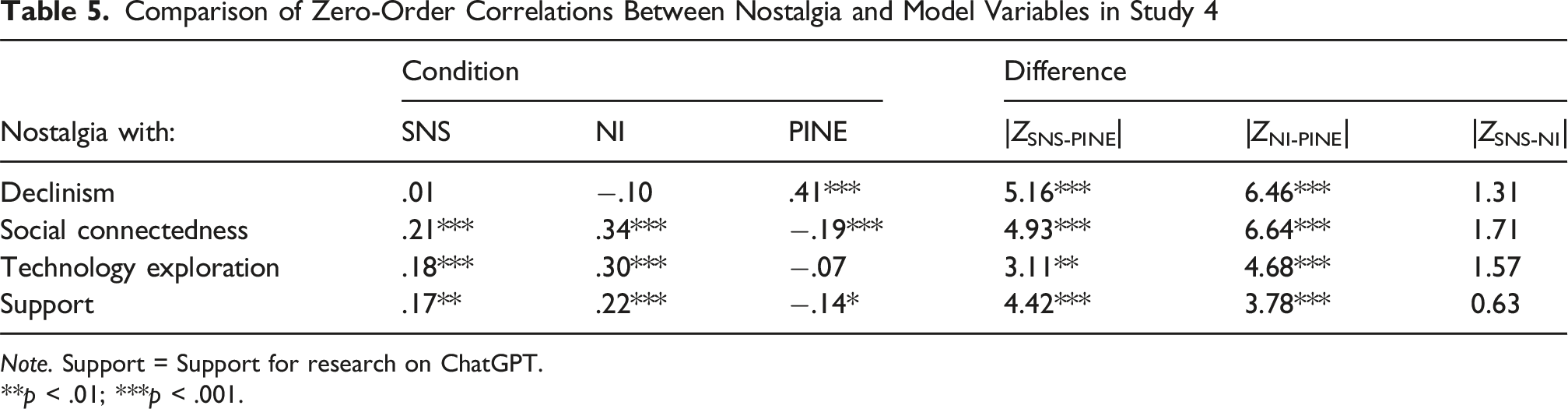
Note. Support = Support for research on ChatGPT.
**p < .01; ***p < .001.
Based on Supplemental Study 1 findings, we anticipated that the stronger correlation of the PINE with declinism, relative to the correlations of the SNS and NI with declinism, would be attributable mainly to the PINE item, “To what extent do you feel a longing to return to a former time in your life?” This item, we propose, conflates nostalgia with declinism because it connotes dissatisfaction with the present. To examine this, we conducted an ancillary canonical correlation analysis (Supplemental Material S8). We found a significant canonical correlation between the set of PINE items and the set of declinism items, r = .56, Wilks’s λ = .620, F(28, 1043.43) = 5.29, p < .001. The item “To what extent do you feel a longing to return to a former time in your life?” emerged as the primary contributor to the canonical PINE variable and exhibited the strongest cross-loading on the canonical declinism variable.
Mediation Roles of Social Connectedness and Technology Exploration
To examine whether social connectedness and technology exploration differentially mediated the associations of nostalgia and declinism with responses to ChatGPT, we conducted a series of mediation analyses, incorporating nostalgia and declinism as parallel predictors (Figure 3). Given that we assessed nostalgia using three different measures (SNS, NI, and PINE) across conditions, we conducted multigroup analyses to examine whether the role of nostalgia within the full mediation model varied as a function of measurement approach. We preregistered these analyses. Differing roles of nostalgia and declinism in predicting social connectedness and support for research on ChatGPT in Study 4.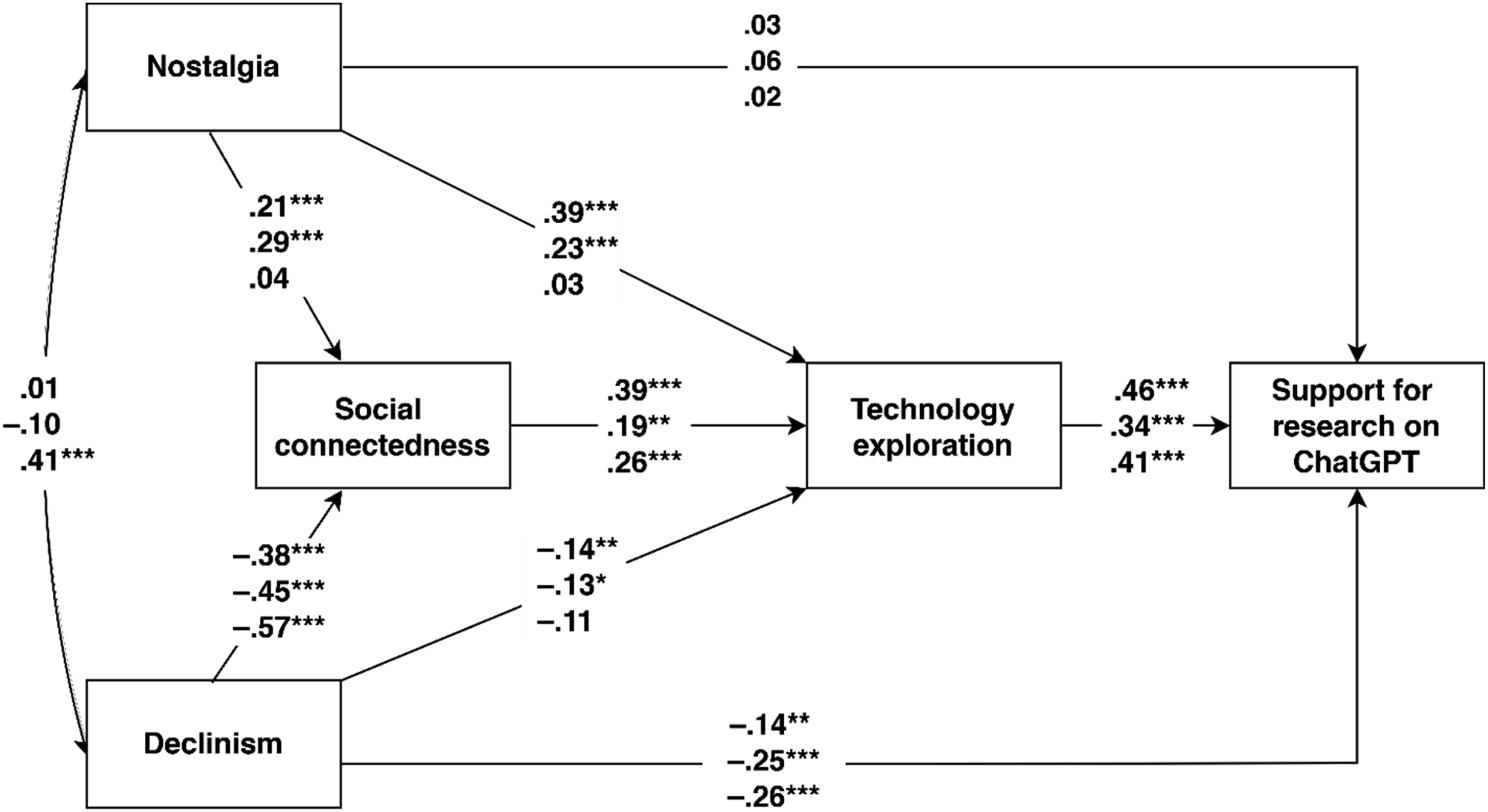
Tests of Direct and Indirect Paths in Study 4
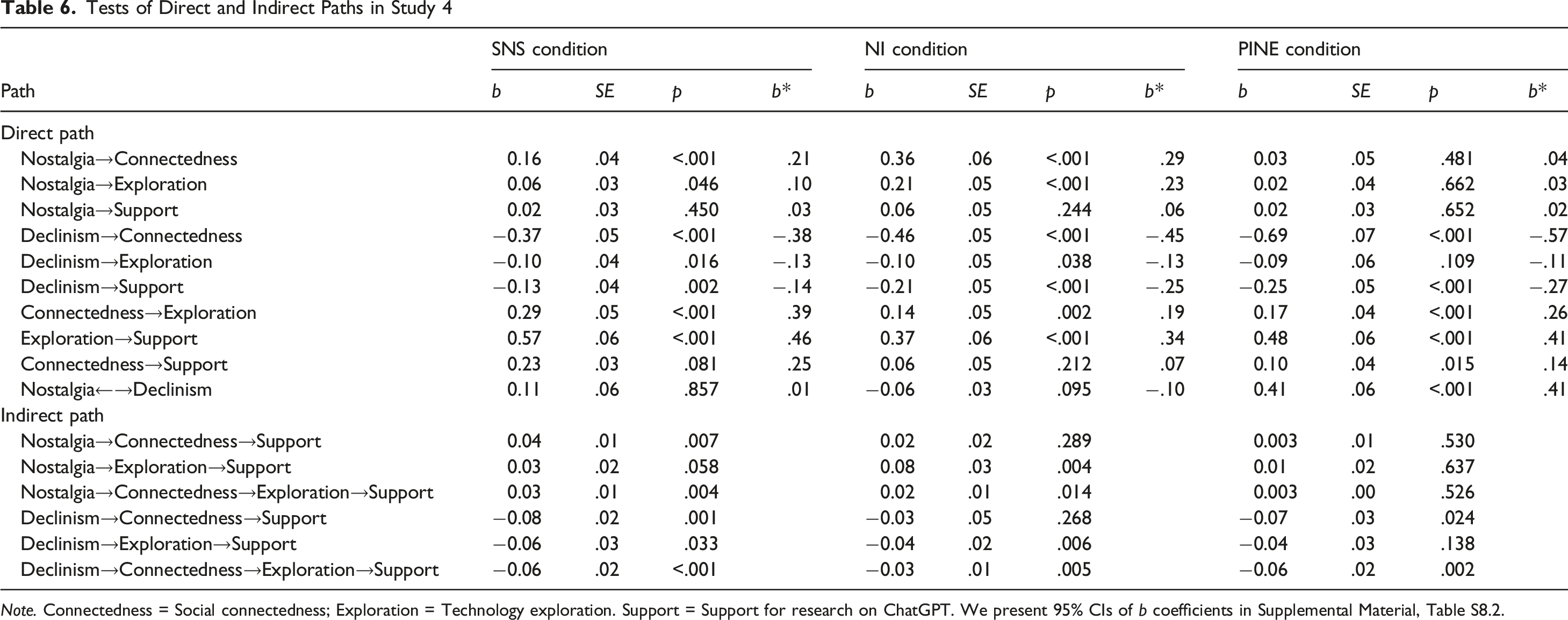
Note. Connectedness = Social connectedness; Exploration = Technology exploration. Support = Support for research on ChatGPT. We present 95% CIs of b coefficients in Supplemental Material, Table S8.2.
Model Comparisons in Study 4
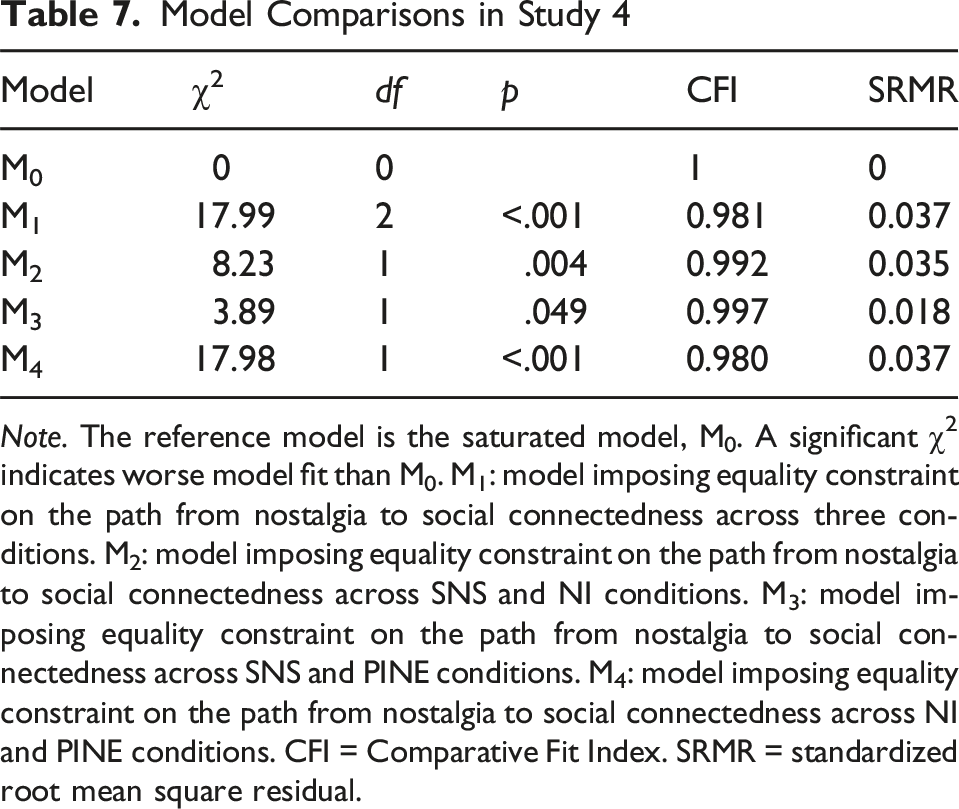
Note. The reference model is the saturated model, M0. A significant χ2 indicates worse model fit than M0. M1: model imposing equality constraint on the path from nostalgia to social connectedness across three conditions. M2: model imposing equality constraint on the path from nostalgia to social connectedness across SNS and NI conditions. M3: model imposing equality constraint on the path from nostalgia to social connectedness across SNS and PINE conditions. M4: model imposing equality constraint on the path from nostalgia to social connectedness across NI and PINE conditions. CFI = Comparative Fit Index. SRMR = standardized root mean square residual.
Discussion
Consistent with H1–H2, nostalgia—as assessed by the SNS—positively predicted social connectedness and subsequent responses to ChatGPT, whereas declinism negatively predicted both social connectedness and responses to ChatGPT. The NI yielded comparable results, thereby validating the findings from the SNS. However, nostalgia as assessed by the PINE did not significantly predict social connectedness. This discrepancy was partially attributable to the stronger correlation of the PINE with declinism, relative to the correlations of the SNS and NI with declinism. Notably, compared to the SNS and PINE, which have a similar surface structures (i.e., prosodic, syntactic, and morphological features), the NI is arguably more concrete or less abstract, instructing participants to rate how nostalgic they feel for specific objects, places, and persons from their past (e.g., “my music,” “my school,” “someone I loved”). Similarities or differences in surface structure, then, cannot readily explain why the PINE overlapped with declinism whereas the SNS and NI did not.
Study 4 (and Supplemental Study 1) involved Chinese participants who completed measures that had been translated into Standard Chinese from the original English. It is therefore possible that the discrepant findings for the PINE are due to idiosyncrasies introduced via translation. For example, low-frequency English words such as “yearning” and “wistful” may carry different connotations when translated into Standard Chinese. We addressed and ruled out this issue in preregistered Supplemental Study 2 (https://osf.io/wps34) by administering the English version of the PINE to UK participants. Specifically, 206 UK participants completed the PINE and the same measures of declinism and social connectedness as in Studies 1–4. We report detailed results in Supplemental Materials S9. The findings directly replicated those of Supplemental Study 1 and Study 4. PINE and declinism overlapped substantially (r = .37, 95% CI = [.24, .48]), and both PINE (r = −.18, 95% CI = [–.30, −.04]) and declinism (r = −.29, 95% CI = [–.41, −.16]) were negatively a correlated with social connectedness. As in Supplemental Study 1 and Study 4, canonical correlation analyses pointed to the PINE item “To what extent do you feel a longing to return to a former time in your life?” as the primary source of overlap with declinism.
Study 5
In Study 5, we aimed to provide causal evidence for the effects of nostalgia and declinism on social connectedness and responses to AI. We manipulated nostalgia and declinism (vs. control) and measured the putative mediator and dependent measure. We hypothesized that nostalgia (compared to control) promotes favorable responses to AI via increased social connectedness, whereas declinism (relative to control) inhibits favorable responses to AI via reduced social connectedness (H1 and H2).
Method
Participants
To inform sample size planning, we conducted Supplemental Study 3, a pilot study (Supplemental Material S10). Based on this pilot study, we need at least an N of 187 to test each of two parallel mediation pathways. As this was the first experiment comparing the effects of nostalgia and declinism (vs. control), we recruited 300 Chinese participants via Credamo for 8 CNY (1.10 USD). Those who failed an attention check (out of two) were automatically excluded by the platform. The survey link remained active until we reached the targeted N of 300 participants (177 women, 123 men; M age = 30.68 years, SD age = 7.24 years). We randomly and evenly assigned participants to one of three conditions: nostalgia, declinism, control.
Procedure and Materials
Nostalgia and Declinism Manipulations
We used a variant of the Event Reflection Task (Sedikides et al., 2015; see also: Fetterman et al., 2025; Wildschut & Sedikides, 2025), to manipulate these variables. Participants in the nostalgia condition reflected on a nostalgic event from their lives, summarized the gist of it in four keywords, and described it in writing. Participants in the declinism and control conditions followed the same protocol, but for a declinist and ordinary event, respectively. Then, all participants responded to two 3-item manipulation checks in counterbalanced order. The first check pertained to nostalgia (e.g., “Right now, I am feeling quite nostalgic”; 1 = strongly disagree, 7 = strongly agree; α = .91), whereas the second check pertained to declinism (e.g., “I am experiencing a decline in the quality of life”; 1 = strongly disagree, 7 = strongly agree; α = .81).
Social Connectedness
We assessed this construct as in Studies 1–4 (α = .93). Each item was preceded by the stem “Thinking about this event makes me feel ….”
Support for Research on AI Products
We assessed this construct as in Study 2 (α = .85).
Results
Manipulation Checks
We conducted preregistered Analyses of Variance (ANOVAs) on the nostalgia and declinism manipulation checks. Participants differed on their felt nostalgia across conditions, F(2, 297) = 34.27, p < .001, η2 = .188, 90% CI [0.123, 0.250]. Those in the nostalgia condition (M = 6.08, SD = 0.61) felt more nostalgic than those in the declinism condition (M = 5.44, SD = 1.23), t(145.12) = 4.68, p < .001, Cohen’s d = 0.66, 95% CI [0.38, 0.94] and control condition (M = 4.73, SD = 1.46), t(132.65) = 8.55, p < .001, Cohen’s d = 1.21, 95% CI [0.93, 1.49]. Further, participants in the declinism condition felt more nostalgic than those in the control condition, t(198) = 3.73, p < .001, Cohen’s d = 0.53, 95% CI [0.25, 0.81]. The nostalgia manipulation was effective.
Participants differed on their felt declinism across conditions, F(2, 297) = 19.90, p < .001, η2 = .118, 90% CI [0.064, 0.175]. Those in the declinism condition (M = 4.83, SD = 1.23) felt more declinist compared to those in the nostalgia condition (M = 4.27, SD = 1.22), t(198) = 3.25, p = .001, Cohen’s d = 0.46, 95% CI [0.18, 0.74] or control condition (M = 3.72, SD = 1.28), t(198) = 6.25, p < .001, Cohen’s d = 0.88, 95% CI [0.60, 1.16]. Additionally, participants in the nostalgia condition felt more declinist compared to those in the control condition, t(197.51) = 3.09, p = .002, Cohen’s d = 0.44, 95% CI [0.16, 0.71]. The declinism manipulation was effective. 2
Effects of Nostalgia and Declinism
We carried out preregistered ANOVAs on social connectedness and support for research on AI products. As shown in Figure 4(A), participants differed on social connectedness across conditions, F(2, 297) = 87.96, p < .001, η2 = .372, 90% CI [0.302, 0.434]. Those in the nostalgia condition (M = 5.51, SD = 0.83) reported higher social connectedness relative to those in the declinism condition (M = 3.34, SD = 1.40), t(161.46) = 13.36, p < .001, Cohen’s d = 1.89, 95% CI [1.61, 2.17] and control condition (M = 4.90, SD = 1.28), t(170.01) = 4.00, p < .001, Cohen’s d = 0.57, 95% CI [0.29, 0.84]. Further, participants in the declinism condition reported lower social connectedness relative to those in the control condition, t(196.52) = 8.24, p < .001, Cohen’s d = 1.17, 95% CI [0.89, 1.44]. Social connectedness (A) and support for research on AI products (B) as a function of experimental condition in Study 5.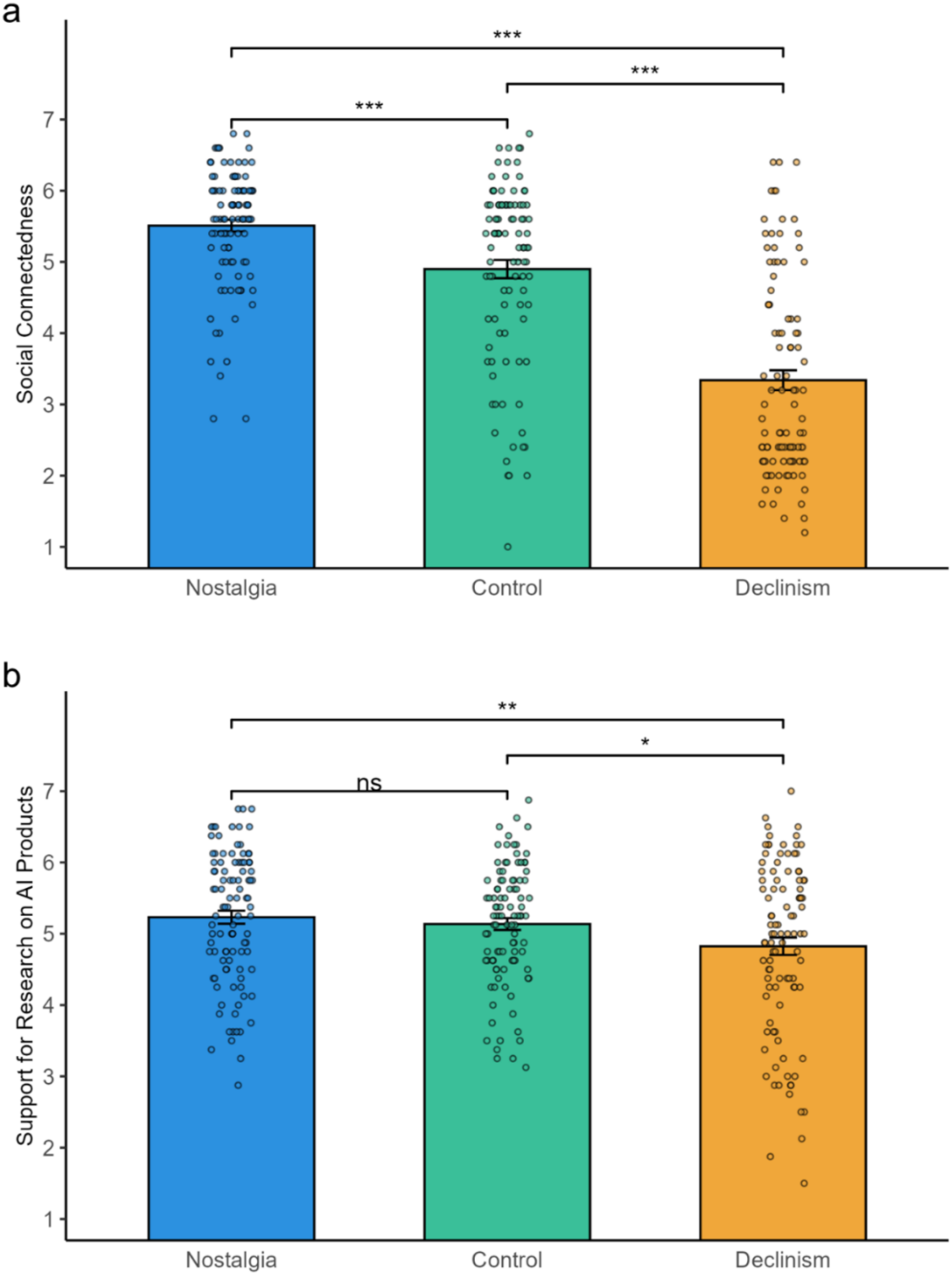
As depicted in Figure 4(B), participants differed on support for research on AI products across conditions, F(2, 147) = 4.49, p = .012, η2 = .029, 90% CI [0.004, 0.064]. Those in the nostalgia condition (M = 5.23, SD = 0.92) reported stronger support for research on AI products relative to those in the declinism condition (M = 4.83, SD = 1.22), t(184.53) = 2.67, p = .008, Cohen’s d = 0.38, 95% CI [0.10, 0.66], but did not differ significantly from those in the control condition (M = 5.14, SD = 0.83), t(198) = 0.77, p = .440, Cohen’s d = 0.11, 95% CI [–0.17, 0.39]. Participants in the declinism condition reported weaker support for research on AI products than those in the control condition, t(174.84) = 2.11, p = .036, Cohen’s d = 0.30, 95% CI [0.02, 0.58].
Mediation Role of Social Connectedness
We tested the preregistered mediation model using path analysis in Mplus 8.3. Specifically, we created two dummy variables to represent the three conditions in the mediation analysis, with the control condition serving as reference category (i.e., coded ‘0’ on both dummy variables; Cohen et al., 2003). The first dummy variable compared the nostalgia condition to the control condition (nostalgia condition = 1, control condition = 0, declinism condition = 0) and the second dummy variable compared the declinism condition to the control condition (nostalgia condition = 0, control condition = 0, declinism condition = 1). We tested a model with the dummy variables as independent variables, social connectedness as mediator, and support for research on AI products as dependent variable (Figure 5). Differing effects of nostalgia and declinism on social connectedness and support for research on AI products in Study 5.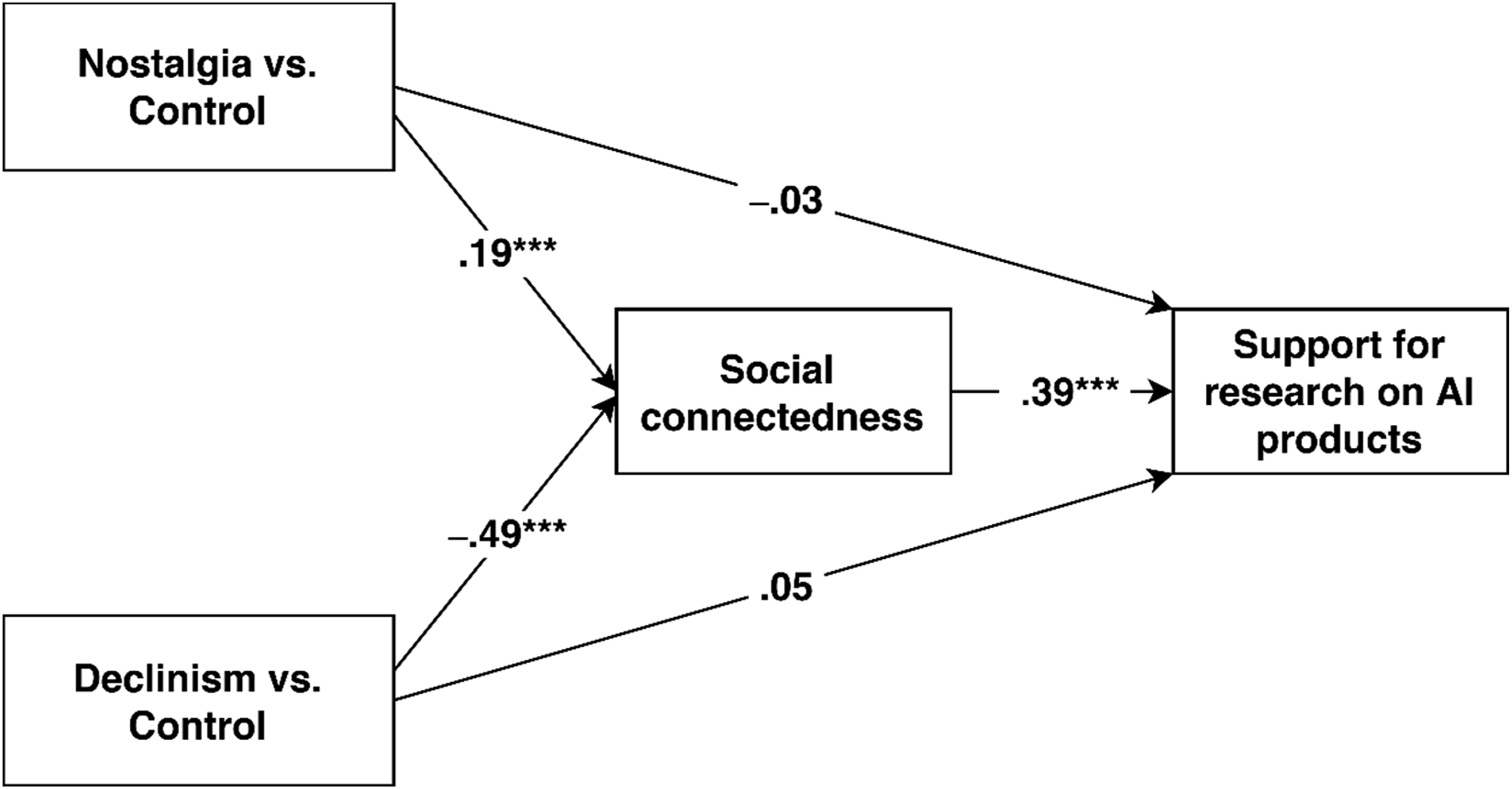
The results revealed that social connectedness was significantly higher in the nostalgia than control condition (b = 0.61, 95% CI [0.28, 0.94], SE = 0.17, z = 3.63, p < .001, b* = .19), whereas it was significantly lower in the declinism than control condition (b = −1.56, 95% CI [–1.89, −1.23], SE = 0.17, z = −9.29, p < .001, b* = −.49). Social connectedness positively predicted support for research on AI products (b = 0.26, 95% CI [0.17, 0.35], SE = 0.05, z = 5.65, p < .001, b* = .39). The indirect effect of nostalgia (compared to control) on support for research on AI products via social connectedness was positive, ab = 0.16, 95% CI [0.08, 0.27], and the corresponding indirect effect of declinism (compared to control) via social connectedness was negative, ab = −0.41, 95% CI [–0.61, −0.24]. After controlling the mediating role of social connectedness, neither the direct effect of nostalgia (b = −0.06, 95% CI [–0.33, 0.20], SE = 0.14, z = −0.46, p = .647, b* = −.03) nor that of declinism (b = 0.10, 95% CI [–0.20, 0.40], SE = 0.15, z = 0.63, p = .528, b* = .05) was significant.
Discussion
The results replicated and extended prior findings (specifically, Study 2) in accord with H1 and H2. Importantly, the experimental design allowed us to compare the causal effects of nostalgia and declinism. Nostalgia enhanced support for research on AI products by strengthening social connectedness, whereas declinism diminished such support by weakening social connectedness.
General Discussion
Is nostalgia futile escapism, as Simone Signoret (1979) seemed to believe and as often advocated in the literature (Bednar et al., 2020; Beiser, 2004; McDonald et al., 2006; Milligan, 2003; Ylijoki, 2005; Zinchenko, 2011)? We proposed that this view has conflated the construct of nostalgia with the construct of declinism. This view describes declinism, not nostalgia.
Summary of Findings
We distinguished between nostalgia and declinism, structurally and consequentially, in five studies. Nostalgia was positively related, whereas declinism was negatively related, to social connectedness (Studies 1–4; H1). Moreover, nostalgia was positively associated with favorability toward innovative technology through higher social connectedness and technology exploration, whereas declinism was negatively associated with favorability toward innovative technology through lower social connectedness and technology exploration (Studies 2–3; H2–H3). Third, the findings obtained by assessing nostalgia with the SNS were conceptually replicated by assessing nostalgia with the NI in Study 4: Nostalgia was positively associated with social connectedness and subsequent responses to ChatGPT (with declinism being negatively associated with social connectedness and responses to ChatGPT; H2–H3). However, the assessment of nostalgia with the PINE yielded a different results pattern. Here, nostalgia (like declinism) was negatively correlated with connectedness. The PINE appears to confound nostalgia and declinism (rPINE.declinism = .41, 95% CI = [.31, .50]). Lastly, in experimental Study 5, nostalgia (compared to control) increased support for AI research by enhancing social connectedness, whereas declinism (compared to control) reduced support by undermining social connectedness.
Theoretical and Practical Implications
Our findings contribute to the literature on past-oriented emotions. The current research is the first to empirically demonstrate that nostalgia is structurally distinct from declinism and is characterized by unique predicted outcomes. Prior investigations have acknowledged the diverse psychological impacts of past-oriented thoughts and feelings (Castelnuovo-Tedesco, 1980; Holbrook & Schindler, 1994; Leunissen et al., 2021; Showalter, 1990; van Tilburg, 2023). Our findings extend these investigations by showing that nostalgia for one’s personal past differs from the declinist conviction that everything is deteriorating in terms of their implications. Specifically, nostalgia bolsters individuals’ sense of social connection, serving as a source of encouragement to render them more open to exploring their social environment, whereas declinism does not provide the same psychological benefits. Therefore, distinguishing between nostalgia and declinism deepens scholarly understanding of the diverse ways in which individual engage with the past (Feng et al., 2025). This definitional clarity may aid in future theorizing.
Our research also enhances comprehension of how distinct orientations toward the past influence responses to innovative technology. Recent years have witnessed the rapid advancement of innovative technology in parallel with a thriving market for retro-technology products (Asmelash, 2022; Ryan, 2024), prompting interest in how past-oriented emotions shape responses to technological innovation. Unlike prior studies, which focused solely on influences of nostalgia (Dang et al., 2024, 2025, 2025b), we compared the roles of nostalgia and declinism. Consistent with previous findings (Dang et al., 2024; 2025a), we observed that nostalgia positively predicts favorability toward AI via greater social connectedness (Studies 2–4). We obtained this results pattern in both cross-sectional (Studies 2–4) and experimental (Study 5) studies, and not only for AI agents with social cues (i.e., ChatGPT in Studies 3–4) but also for non-social AI agents (Studies 2 and 5), suggesting that the effect was not due to the inherent sociality of the AI agents (Dang et al., 2025b). Further, nostalgia serially predicted favorability toward AI via greater social connectedness and technology exploration (Study 3). Declinism, on the other hand, was negatively associated with social connectedness (Studies 1–4), directly decreased social connectedness (Study 5), and did not predict favorability toward AI (Studies 1–5). Declinism is bound to breed doubt, if not aversion, toward innovative technology.
Although our findings document that nostalgia is structurally and consequentially distinct from declinism, this conclusion is subject to measurement considerations. Most research on trait nostalgia employs the SNS or NI, typically reporting positive correlates or outcomes of nostalgia (Sedikides & Wildschut, 2024; Wang et al., 2023, 2024; Yin et al., 2024, 2025). In contrast, a limited number of studies, using the PINE, have suggested less favorable correlates or consequences (Newman et al., 2020; Newman & Sachs, 2020). Our findings indicate that these discrepancies may arise because the PINE confounds nostalgia and declinism. To ensure valid assessment of nostalgia, we recommend that future research prioritize the SNS, NI, or another highly correlated measure, the Nostalgia Prototype Scale (Cheung et al., 2017; Yin et al., 2024), which comprises items centrally prototypical of the construct “nostalgia” (Hepper et al., 2012). We also recommend the PINE be amended to replace the item that, by connoting dissatisfaction with the present, consistently blurred the distinction between nostalgia and declinism: “To what extent do you feel a longing to return to a former time in your life?”
Our findings encourage empirical forays into the complex roles that past-oriented emotions play in the acceptance of innovation. The residual direct link from nostalgia to AI responses was sporadic and significant in Study 3 only. By contrast, the residual direct link from declinism to AI responses was negative and significant in Studies 2–4, suggesting the operation of additional, unmeasured intervening mechanisms. A potential additional mechanism linking declinism to unfavorability toward AI is skepticism about change (Dang et al., 2024). Skepticism refers to “an attitude of doubt or a disposition to incredulity either in general or toward a particular object” (Webster’s Ninth New Collegiate Dictionary, 1986, p. 1103). Research has explored skepticism in the context of various changes, including climate change (Ecklund et al., 2017). Those who are skeptical of change may feel unable to accurately anticipate or fully comprehend the evolution of technology, a key obstacle to embracing new innovations (Jahanmir & Cavadas, 2018). Declinism’s infatuation with the past and dissatisfaction with the present may fuel skepticism about change, engendering negative reactions to technological advancements.
Our research also has practical implications for promoting openness to innovative technology. Several documented cases of nostalgia-driven AI design illustrate how nostalgia enables institutions to translate complex technologies into familiar, emotionally resonant experiences. For example, AI-assisted reconstructions of historical sites in Chongqing help visitors reconnect with their childhood and hometown while fostering community engagement (Luo, 2024). Similarly, the application Deep Nostalgia allows users to animate loved ones in old photographs, creating emotionally charged experiences that parallel “vintage innovation” strategies, that is, efforts to merge cutting-edge technology with retro aesthetics (Starburst, 2023). More recently, Reflekta’s partnership with OpenFortune embedded AI into a national awareness campaign that blended nostalgia, family connection, and technology, delivered through hundreds of thousands of fortune cookies each year (PR Newswire, 2025). These examples highlight nostalgia’s mass-market appeal and suggest that designers can strategically leverage its social character to lower entry barriers for AI-resistant users, positioning it as a “gateway” to broader technological adoption.
Limitations and Future Directions
We used both cross-sectional and experimental designs. Follow-up studies would do well to complement the findings through longitudinal and momentary ecological assessment designs. Relatedly, in Studies 2–4, we used measurement-of-mediation designs to test the intervening role of social connectedness (and technology exploration). In such designs, the associations between mediator(s) and outcome variables are correlational and do not allow strong causal inferences. Nonetheless, the design is informative, because it puts the mediation hypothesis at risk (Fiedler et al., 2011). Experimental Study 5 partially remedied the limitations of the measurement-of-mediation design by demonstrating the causal effects of, respectively, nostalgia and declinism on social connectedness—the first link in the mediational chains. Although merely correlational in the present studies, directionality of the second link—from social connectedness to favorability toward AI—was supported in previous experiments (Dang et al., 2024, 2025a; Dang & Liu, 2024). Jointly, then, past and present evidence supports the hypothesized causal pathways.
Coda
Nostalgia has long been conflated with declinism. We showcased the distinct character and outcomes of each construct. Nostalgia involves assimilation of the positive past to the present, whereas declinism involves a contrast between the positive past and the present. Nostalgia predicts more favorable responses to innovative technology via greater social connectedness and technology exploration, but declinism predicts less favorable responses to innovative technology via weaker social connectedness and technology exploration.
Supplemental Material
Supplemental Material - Juxtaposing Nostalgia and Declinism: Divergent Associations With Social Connectedness and Responses to Innovative Technology
Supplemental Material for Juxtaposing Nostalgia and Declinism: Divergent Associations With Social Connectedness and Responses to Innovative Technology by Jianning Dang, Constantine Sedikides, Tim Wildschut, Li Liu in European Journal of Personality
Footnotes
Funding
The authors disclosed receipt of the following financial support for the research, authorship, and/or publication of this article: The authors acknowledge financial support from the National Natural Science Foundation of China (32271124), the Humanities and Social Science Research of the Ministry of Education of China (25YJA190002), and the Fundamental Research Funds for the Central University (2253200016). Jianning Dang and Li Liu, Beijing Key Laboratory of Applied Experimental Psychology, Faculty of Psychology, Beijing Normal University, China; Constantine Sedikides and Tim Wildschut, Center for Research on Self and Identity, School of Psychology, University of Southampton, United Kingdom.
Declaration of Conflicting Interests
The authors declared no potential conflicts of interest with respect to the research, authorship, and/or publication of this article.
Open Science Statement
We preregistered the hypotheses, design, and analyses for all studies (Study 1: https://osf.io/awu6n; Study 2: https://osf.io/dbxf5; Study 3: https://osf.io/v34b2; Study 4: https://osf.io/xpk84; Study 5: https://osf.io/xserw). We report how we determined our sample size, data exclusions, and measures, and we follow journal article reporting standards (Appelbaum et al., 2018). We provide stimulus materials for all studies in Supplemental Material S1. All data and analysis code are available at  .
.
Supplemental Material
Supplemental material for this article is available online.