




Abstract
Confinement is a major life event with far-reaching consequences for an individual, which may also influence personality change, but data on this topic are fragmented across disciplines. Therefore, this review aims to provide a comprehensive synthesis of the evidence on personality change in confined individuals. A systematic literature search covering publications up to March 2024 was conducted using EBSCOhost, PubMed, and Web of Science. Peer-reviewed original articles examining personality changes associated with any form of confinement were included. They examined a wide range of personality traits, which we categorized within the Big Five. Thirteen observational studies focused on personality change during confinement irrespective of specific interventions. They most consistently reported increases in emotional stability and conscientiousness, while findings for agreeableness, extraversion, and openness were mixed or limited. Twenty-seven intervention studies examined change in the context of interventions in confinement. They mostly found increases in emotional stability and agreeableness, whereas openness, extraversion, and conscientiousness yielded mixed results or were rarely targeted, especially in forensic settings. Our findings suggest that confinement, especially when combined with targeted interventions, may potentially promote personality changes. However, highly heterogeneous designs, methods, and trait definitions, together with other limitations, reduced the interpretability and generalizability of the findings.
Plain language summary
Why was this study done? Being in confinement, such as in prison or forensic psychiatry, is a life-changing experience. It may lead to changes in personality traits but the evidence on this is scarce and scattered across different fields. This study aimed to gather and summarize all the available research on personality changes observed in individuals during confinement.
What did the researchers do? The researchers looked at studies published between 1979 and 2024 using a standardized search term in scientific databases. They included studies that tracked personality changes in confined individuals over time to see if their personalities changed while they were confined.
What did the researchers find? They identified 40 studies that met the criteria for inclusion in their review. Of these, 13 focused on personality changes observed during confinement without targeted interventions. These studies most often found increases in traits related to emotional stability and conscientiousness from the beginning to the end of confinement, whereas results for agreeableness, extraversion, and openness were mixed or rare. The other 27 studies explored personality changes associated with specific interventions in confinement settings. The most common intervention-related changes were improvements in emotional stability and agreeableness. Openness, extraversion, and conscientiousness showed inconsistent results and were less often targeted, especially in forensic settings. The studies used very different methods, definitions, and participant groups, which made it hard to draw clear conclusions.
What do the findings mean? The findings indicate that certain patterns of personality changes are observed during confinement, especially when specific interventions (e.g., therapy programs) are involved. However, because of differences in how the studies were done and possible biases, more research is needed to better understand these patterns and what might contribute to them.
Introduction
Confinement is a major life event that has far-reaching consequences for an individual’s environment, daily routines, social interactions, and access to resources (Bukstel & Kilmann, 1980; Crane & Pascoe, 2021; Massoglia & Remster, 2019; Paterline & Petersen, 1999; Thomas, 1977). Social and emotional support from friends and family is usually diminished due to restricted contact and visitation rights. Confined individuals must adhere to strict schedules and routines set by the institution, including sleeping times and meal choices. Additionally, taking on the often socially stigmatized role of a confined individual can shape one’s identity (Feingold, 2021; Schmid & Jones, 1991; Sinko et al., 2020; Walters, 2003). Moreover, access to cultural events, entertainment, and leisure activities is drastically limited, often restricted to books, television, and fitness training (Ellison et al., 2022; Massoglia & Remster, 2019). Therefore, it is reasonable to assume that personality change is influenced by these drastic changes in life circumstances (Bukstel & Kilmann, 1980).
Personality traits are defined as relatively stable patterns of thoughts, feelings, and behavior that differ between individuals (Roberts, 2009). Structural models, such as the Big Five (extraversion, agreeableness, conscientiousness, emotional stability, and openness to experience; McCrae and Costa Jr, 2008) and the HEXACO model (honesty-humility, emotionality, extraversion, agreeableness, conscientiousness, openness to experience; Ashton & Lee, 2007) can be used to describe a large proportion of these individual differences with just a few basic traits.
Besides these basic traits, personality includes a large variety of other (lower-level) traits (Kandler et al., 2014). Importantly, although personality traits are relatively stable, they can change over longer periods of time (Bleidorn et al., 2018; Denissen et al., 2019). In line with contextual theories of personality change, previous research suggests that environmental factors (e.g., major life events and conditions) partially drive these changes (Bleidorn et al., 2018; Bühler et al., 2024; Denissen et al., 2019; Specht et al., 2014; Wrzus & Roberts, 2017).
Theoretical assumptions
In line with the Social Investment Principle (Nye & Roberts, 2019; Roberts & Wood, 2006), major turning points in life (e.g., confinement) typically induce changes in social roles and role demands. Individuals may be forced or motivated to behave in line with these and adapt accordingly (e.g., adhere to strict rules and routines and interact with many others in a confined setting), which may lead to changes in personality traits (Bukstel & Kilmann, 1980; Ellison et al., 2022; Massoglia & Remster, 2019).
The TESSERA framework (Wrzus & Roberts, 2017) complements this macro-level perspective by focusing on micro-level processes and conceptualizing long-term personality change as the result of repeated short-term situational processes. For example, an inmate may repeatedly experience distrust and hostility from fellow inmates (triggering situation), expect negative consequences from showing vulnerability (expectancy), react by withdrawing emotionally (state expression), and receive social reinforcement for this behavior (reaction). Over time, such repeated patterns may consolidate into heightened distrust and emotional detachment through associative and reflective processes.
This model also illustrates the distinction between personality traits and states. Traits refer to enduring patterns of thoughts, feelings, and behavior, whereas states represent short-term expressions of these traits, influenced by current situations and internal conditions (Matz & Harari, 2021). In confinement, individuals may exhibit temporary adaptations—such as increased restraint or compliance—that reflect state-level changes. According to the TESSERA framework (Wrzus & Roberts, 2017), repeated state-level expressions in the same environment may result in trait-level change over time. The distinction between personality traits and states is critical for interpreting confinement-related personality changes, as it remains an open question to what extent observed shifts reflect true dispositional transformation vs. transient situational adaptation. Beyond the conceptual challenges of this differentiation, both transient adaptations and more enduring dispositional transformations may manifest in divergent ways, likely depending on contextual circumstances, individual characteristics, and other factors, with confinement potentially giving rise to both beneficial and detrimental personality changes.
On the one hand, confinement may be seen as a stressor with destabilizing effects: Mandatory adherence to strict rules may reduce levels of perceived control, autonomy, and individuality (Massoglia & Remster, 2019). Monotony and lack of stimulating activities may increase lethargy and negative affect and decrease openness and extraversion. Isolation, separation from one’s social network, social exclusion, and bullying may lead to frustration, depressive symptoms, lower emotional stability, and lower extraversion (Stephenson et al., 2021).
Disciplinary measures such as solitary confinement, seclusion, and restraint measures may add mental and physical harm (Roy et al., 2021; Valk et al., 2016). Other adverse experiences such as stigmatization, adoption of a negative self-image (Nolbeck et al., 2020), prolonged stress, the effects of prison hierarchy (e.g., fear of inmates and oppression), psychological and physical violence, and potentially traumatic experiences may exacerbate these destabilizing effects (Feingold, 2021; Sinko et al., 2020).
The concept of prisonization further suggests that confined individuals tend to internalize the culture and norms of their prison environment in order to adapt (Akers et al., 1977; Naderi, 2014; Paterline & Petersen, 1999; Thomas, 1977; Walters, 2003). This concept encompasses behavioral, emotional, and cognitive adaptation. That is, confined individuals may begin to follow the unwritten rules among themselves, become more mistrustful, radicalize, or develop prison-specific coping strategies. Consistent with these theoretical ideas, personality changes related to confinement may not be temporary but permanent and persist long after release (Walters, 2003).
On the other hand, confinement may be seen as an opportunity: The protective and stabilizing prison environment may distance individuals from previous criminal and dysfunctional milieus, provide structured daily routines, and replace chaotic or harmful lifestyles (Dahle et al., 2020; Dillon et al., 2020; Jaegers et al., 2020). Vocational training or employment within the institution can offer options for skill acquisition and reemployment after confinement. In addition, psychosocial interventions, such as therapy and resocialization measures, may promote mental health and social reintegration (Barber-Rioja et al., 2023). These changes, for example, might lead to decreases in impulsive and antisocial personality traits, and increases in self-esteem, self-efficacy, and perceived control.
Taken together, these considerations highlight the practical importance of better understanding personality change in confinement, as (changes in) personality traits may be associated with compliance, engagement in treatment programs, interactions with staff and fellow inmates, reintegration, and personal growth. Such knowledge may help refine settings and interventions in prison and forensic contexts and guide strategies that foster long-term adaptive changes while reducing the risk of maladaptive ones.
Empirical findings
In previous studies, personality traits have predominantly been considered as correlates and risk factors for criminal behavior and subsequent confinement (Thielmann, 2023). For example, higher psychopathy, sensation seeking, and impulsivity as well as lower agreeableness and self-control were associated with more pronounced criminal behavior in reviews (Ciurbea et al., 2022; Gillespie et al., 2022; Ray & Jones, 2023; Tharshini et al., 2021) and meta-analyses (Geerlings et al., 2020).
In addition, a few studies suggest that personality traits may influence how well individuals adjust to confinement (Bloem et al., 2019; Mckeown et al., 2017). For example, individuals with antisocial personality tendencies were more likely to experience a decline in well-being during remand imprisonment (Bloem et al., 2019). Furthermore, aggression in detention was lower among confined individuals who were more capable of group work (associated with agreeableness), indicating better adjustment (van der Helm et al., 2012).
Considerably fewer studies have examined how personality traits change before, during, and after confinement (Bukstel & Kilmann, 1980; Greve & Enzmann, 2003). The sparse literature on personality changes related to confinement is fragmented across different disciplines, often using disparate terminologies for similar traits, which hinders comparability, integration, and scientific progress. A systematic review of these studies would allow for a comprehensive synthesis to overcome these barriers but is lacking so far.
Only one non-systematic review was conducted in 1979 to summarize the evidence on the psychological consequences of confinement (Bukstel & Kilmann, 1980). This review found that the effects of confinement varied widely between individuals: While some experienced a deterioration in (emotional) stability and other traits during confinement, others experienced improvement or no significant change. Since this pioneering work nearly 50 years ago, no other research has synthesized the evidence on personality change in confined individuals.
However, an update based on more recent literature would be particularly important because the justice systems and circumstances of confinement have changed significantly over time. Moreover, examining personality changes related to confinement requires taking different contextual factors into account: The reasons for as well as types and length of confinement vary considerably (Bukstel & Kilmann, 1980; Dargis & Koenigs, 2018; Helfgott, 2008; van Hall & Cleofa-Van der Zwet, 2023). The type of offense ranges from nonviolent offenses such as minor fraud to serious offenses such as armed robbery to mass murder. The type of deprivation of liberty also varies widely and includes, for example, pretrial detention, mandatory detention, and forensic psychiatric detention. Further, the duration of deprivation of liberty ranges from a few days to life imprisonment.
In sum, these factors can significantly shape the experiences of confined individuals and the associated personality changes, thereby yielding their relevance for understanding such developments. In a reverse direction of influence—and perhaps even more strongly—the type of offense, form of confinement, and length of sentence may also reflect pre-existing personality dispositions (e.g., antisocial traits) (DeLisi & Vaughn, 2014).
Interventions in confinement settings
In most countries, confinement serves not only to incapacitate convicted individuals but also to facilitate therapeutic change aimed at reducing reoffending (Auty et al., 2017; Barber-Rioja et al., 2023; Beaudry et al., 2021; Lo et al., 2020; Malik et al., 2023). However, the extent and nature of therapeutic interventions in prisons vary widely. Most research on correctional treatment focuses on serious offenses, such as sexual and/or violent crimes, and targets outcomes like emotion regulation, attachment and relationship difficulties, social skills, antisocial personality traits, and problem-solving abilities. These interventions are grounded in the identification and treatment of criminogenic needs to reduce recidivism risk. Accordingly, most studies evaluate treatment effectiveness primarily via recidivism rates rather than changes in personality traits. Psychological interventions in confinement have yielded, at best, modest effects on recidivism outcomes (Beaudry et al., 2021), and are subject to various influencing factors, including publication bias (Lösel & Schmucker, 2005; Schmucker & Lösel, 2017). Moreover, even when therapeutic improvements in criminogenic personality traits occur, they do not necessarily translate into reduced reoffending (Woessner & Schwedler, 2014), and have been shown to be inconsistent (Woessner, 2025). A separate research strand has examined mental health outcomes in confined individuals, rather than recidivism, with mixed findings regarding symptom reduction (Rosenfeld et al., 2024).
When considering treatment, it is also essential to differentiate between types of confinement settings. In forensic psychiatric institutions—which are typically designated for individuals with severe mental disorders under court-mandated treatment—psychotherapeutic interventions are usually more prevalent than in standard prison environments. In addition, pharmacological treatments (e.g., antipsychotics and mood stabilizers) are frequently used to manage psychiatric symptoms and reduce risk in these populations (Howner et al., 2020). Cognitive-behavioral approaches are commonly implemented across confinement settings and have, for example, been shown to improve emotion regulation in confined individuals (Dumornay et al., 2022).
In summary, it is plausible that confinement settings—especially when targeted interventions are involved—induce personality changes, such as increased agreeableness and emotional stability. Our review is the first to systematically synthesize evidence on this topic, with particular attention to the contextual factors of confinement. To this end, we examined a broad range of confinement settings and personality traits, drawing on established trait taxonomies and prior research in personality and forensic psychology.
Aims of the current work
The aim of this systematic review was to synthesize existing evidence on personality change in the context of confinement, with the central research question of whether—and, if so, in what ways—changes in personality traits are associated with confinement, including both specific interventions and the broader confinement environment.
A review on this topic is important to integrate findings from different disciplines, highlight consistencies and inconsistencies, and identify research gaps to be addressed in future studies. Integrating previous findings will facilitate the assessment of the consequences of confinement not only on criminal behavior and mental health in the narrow sense, but also on personality traits more broadly. Such knowledge can be important, for example, to advance theoretical frameworks and to optimize prevention, treatment, and reintegration strategies and policies.
Methods
Systematic literature search
This systematic review was preregistered in the PROSPERO Systematic Reviews Database (CRD42023412356) and conducted in accordance with the PRISMA protocol and other established practice guidelines for systematic reviews (Page et al., 2021; Siddaway et al., 2019).
The systematic literature search covering publications up to March 2024 was conducted in the databases PubMed (including MEDLINE), Web of Science, and—via the search platform EBSCOhost—in the databases PsycINFO, CINAHL, Academic Search Complete, SocINDEX, and Psychology and Behavioral Sciences Collection. In addition, references cited in the identified papers were manually retrieved for examination. The scope was restricted to peer-reviewed original papers published in academic journals in English or German language (see Table S1 for a detailed overview of the inclusion and exclusion criteria). The lower publication date threshold was set at 1979 to ensure no overlap with articles previously included in the review of Bukstel and Kilmann (1980); no upper threshold was applied. No limitations were specified concerning other formal characteristics of the studies considered. Search terms were employed on the title, keywords, and abstract of potential studies. Search terms (fully provided in Table S2) included a combination of personality-related keywords (e.g., Big Five, HEXACO, dark triad) and change-related keywords (e.g., development, change) together with keywords for confinement or confined individuals (e.g., jail, carcel, prison, forensic psychiatry). To capture all relevant studies, we included both broad and specific personality traits, guided by: (1) general personality theories and established trait taxonomies (e.g., Big Five, HEXACO model); (2) traits commonly examined in forensic and correctional research (e.g., antisocial traits, impulsivity, self-esteem); and (3) an exploratory scoping of the literature to identify frequently assessed constructs in confinement contexts.
Studies not examining personality changes in individuals experiencing confinement (e.g., detention in prisons, pre-trial detention, inpatient forensic psychiatry) were excluded. Studies focusing on individuals in forensic outpatient settings or individuals wearing ankle bracelets or other electronic monitoring devices in domestic surroundings were excluded, as these settings lack the controlled, fully institutionalized environment characteristic of closed confinement. The literature search was repeated prior to the final submission in October 2024 to ensure the inclusion of the latest studies. The procedure of the search, screening, and data extraction is illustrated in the PRISMA flowchart (Figure 1). PRISMA flow chart.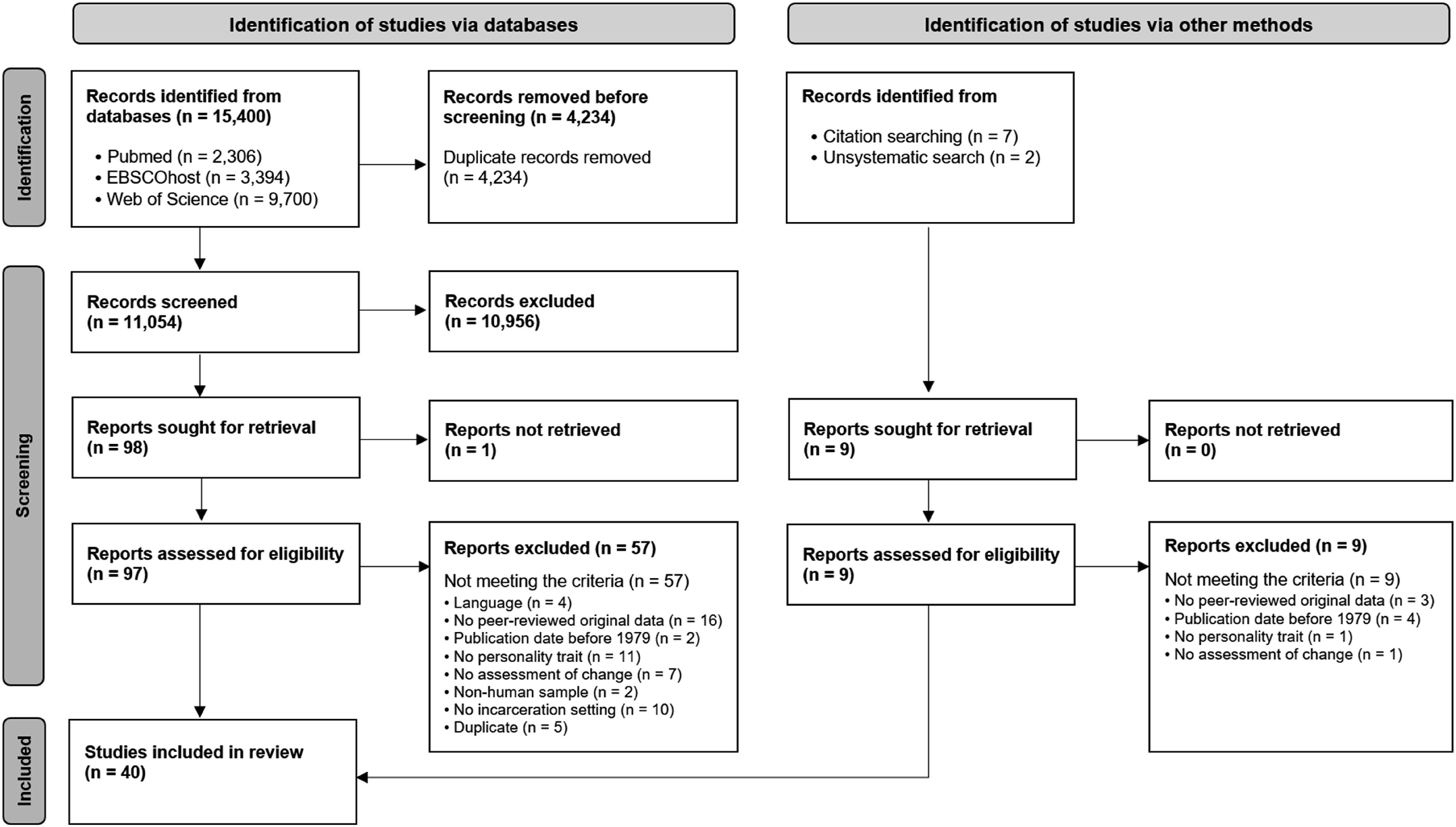
Screening and data extraction
To determine the studies to be included, eligibility criteria were assessed by two independent raters. One rater (a trained research assistant with a co-author role) scanned the records and selected studies based on the predefined inclusion/exclusion parameters. The other rater (another trained research assistant with a co-author role) acted as a quality control check, validating these decisions. Conflicting viewpoints were addressed through the intervention of a third neutral rater (the first author), with the aim of reaching consensus. The raters adhered to a standardized protocol encompassing multiple stages. First, they removed duplicates and examined the titles and abstracts of references obtained from the databases. Second, the raters (mainly the first author, supported by the trained research assistants) read the full texts of potentially relevant articles and applied the selection criteria to determine their eligibility.
From all studies meeting the inclusion criteria, key information was extracted (by the first author), including study characteristics and methodology (e.g., country, sample size, study design, self-report instruments vs. observer reports, etc.), characteristics of confinement (e.g., duration and type), sociodemographic and other relevant characteristics of the study participants, potential sample overlap with other publications, main outcome variables, and main findings, including information on effect sizes and statistical significance (if available). Aspects concerning the reliability and validity of assessment instruments, study limitations, and generalizability were also summarized. Study quality was assessed using three adapted NIH Study Quality Assessment Tools (2021), with the specific tool chosen based on the respective study design: (1) the Quality Assessment Tool for Observational Cohort and Cross-Sectional Studies, (2) the Quality Assessment Tool for Before-After (Pre-Post) Studies With No Control Group, and (3) the Quality Assessment Tool for Controlled Intervention Studies. Each criterion was rated as yes, no, unclear/not reported, or not applicable, and an overall quality judgment was made for each study (good, fair, or poor).
Overview of the personality traits examined in the 40 included studies.
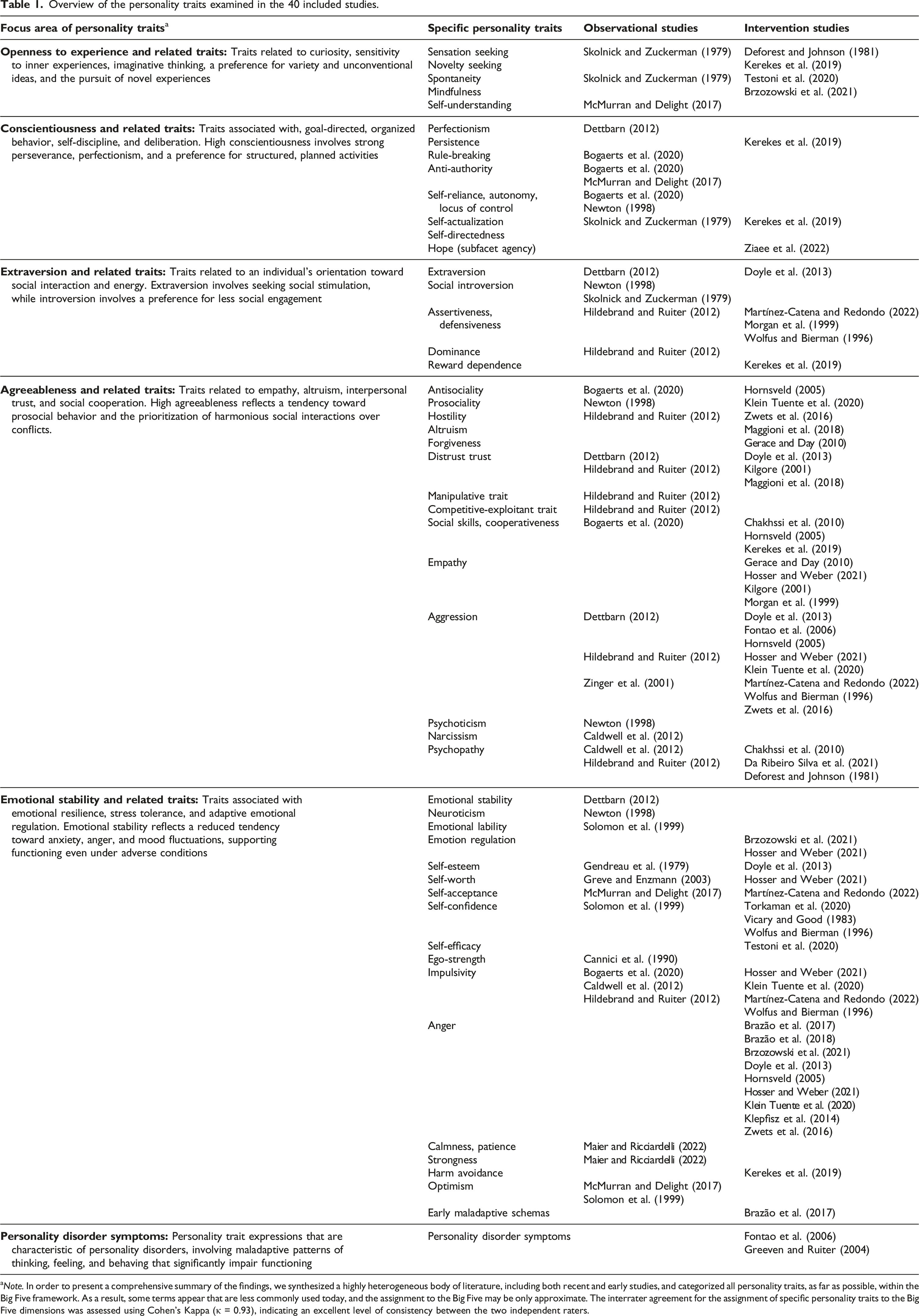
aNote. In order to present a comprehensive summary of the findings, we synthesized a highly heterogeneous body of literature, including both recent and early studies, and categorized all personality traits, as far as possible, within the Big Five framework. As a result, some terms appear that are less commonly used today, and the assignment to the Big Five may be only approximate. The interrater agreement for the assignment of specific personality traits to the Big Five dimensions was assessed using Cohen’s Kappa (κ = 0.93), indicating an excellent level of consistency between the two independent raters.
It should be noted that the assignment of traits to the Big Five dimensions is not always clear-cut, and certain traits may span across multiple dimensions (Bleidorn et al., 2022). For example, “psychoticism” was assigned primarily to agreeableness, given its association with socially unconventional and antagonistic behavior, but it also includes aspects related to emotional instability and conscientiousness. To ensure reliability, two independent raters assigned the specific traits to the Big Five dimensions. Interrater agreement of the assignment was assessed using Cohen’s Kappa (κ = 0.93; calculated for all traits), indicating excellent reliability. Interrater reliability was also excellent for the selection process (Cohen’s Kappa κ = 0.98; calculated for a subset of 20% of the studies) and for the quality assessment of the included studies (Cohen’s Kappa κ = 0.95; calculated for a subset of 20% of the studies).
Results
Key information of the 9 observational studies in non-forensic settings.
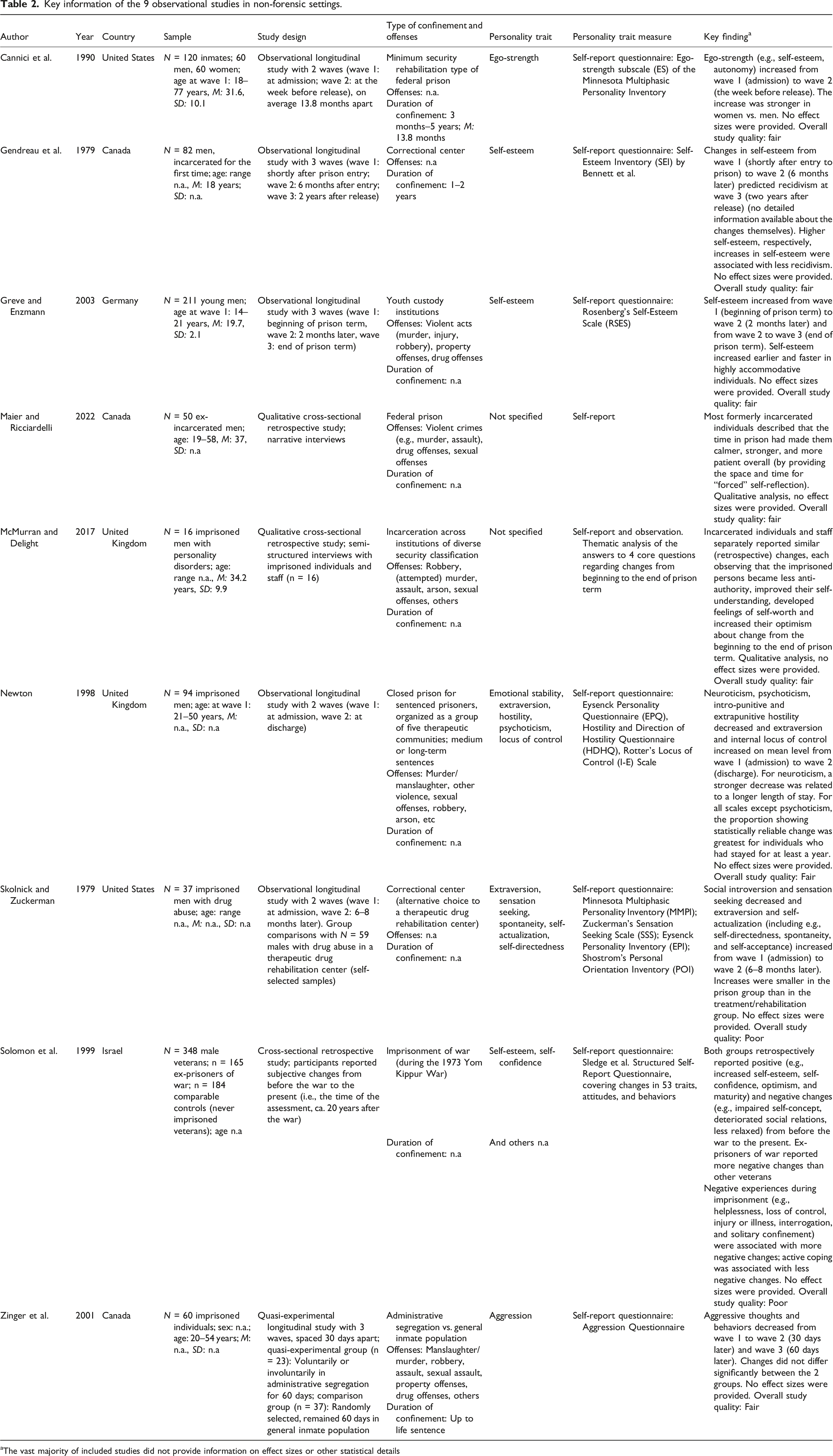
aThe vast majority of included studies did not provide information on effect sizes or other statistical details
Key information of the 4 observational studies in forensic settings.
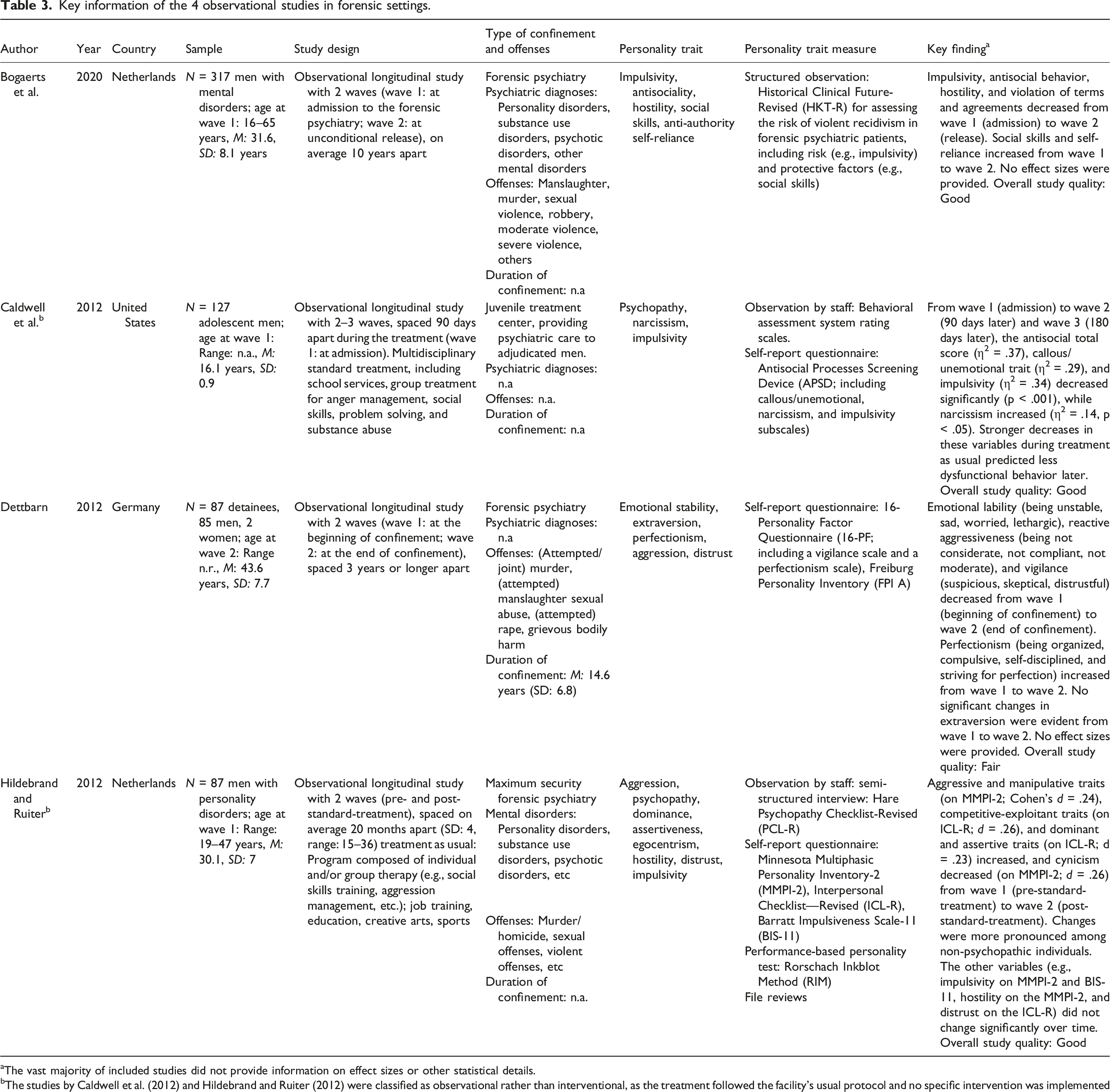
The vast majority of included studies did not provide information on effect sizes or other statistical details.
bThe studies by Caldwell et al. (2012) and Hildebrand and Ruiter (2012) were classified as observational rather than interventional, as the treatment followed the facility’s usual protocol and no specific intervention was implemented
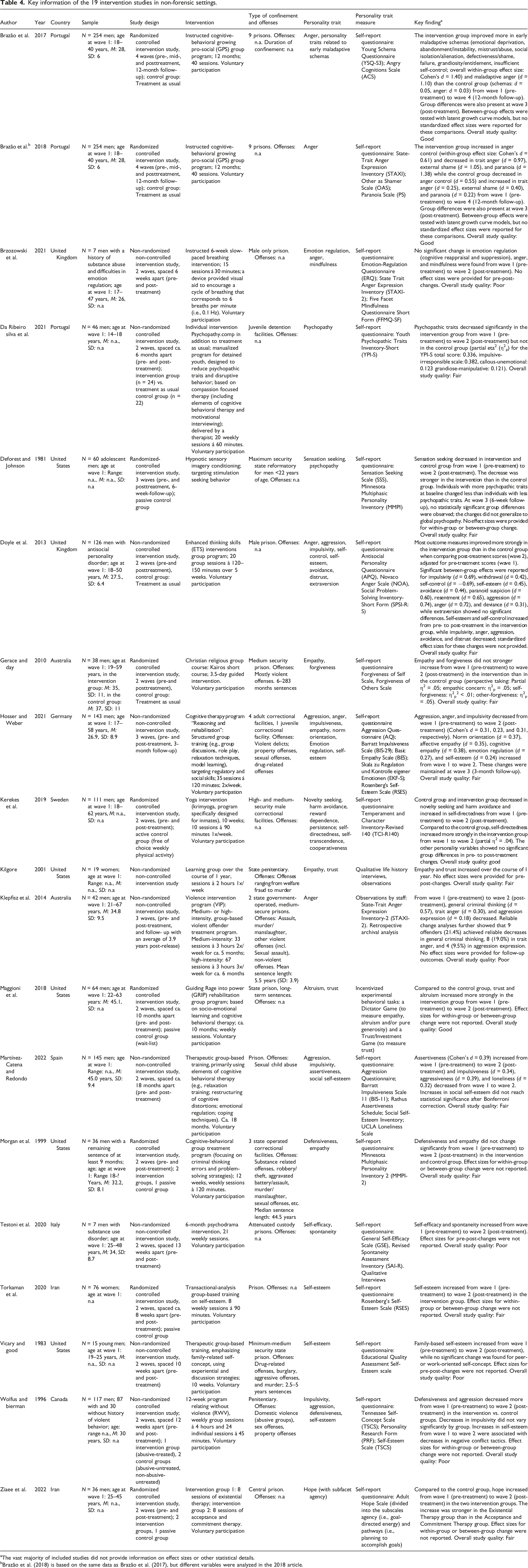
Key information of the 19 intervention studies in non-forensic settings.
aThe vast majority of included studies did not provide information on effect sizes or other statistical details.
bBrazão et al. (2018) is based on the same data as Brazão et al. (2017), but different variables were analyzed in the 2018 article.
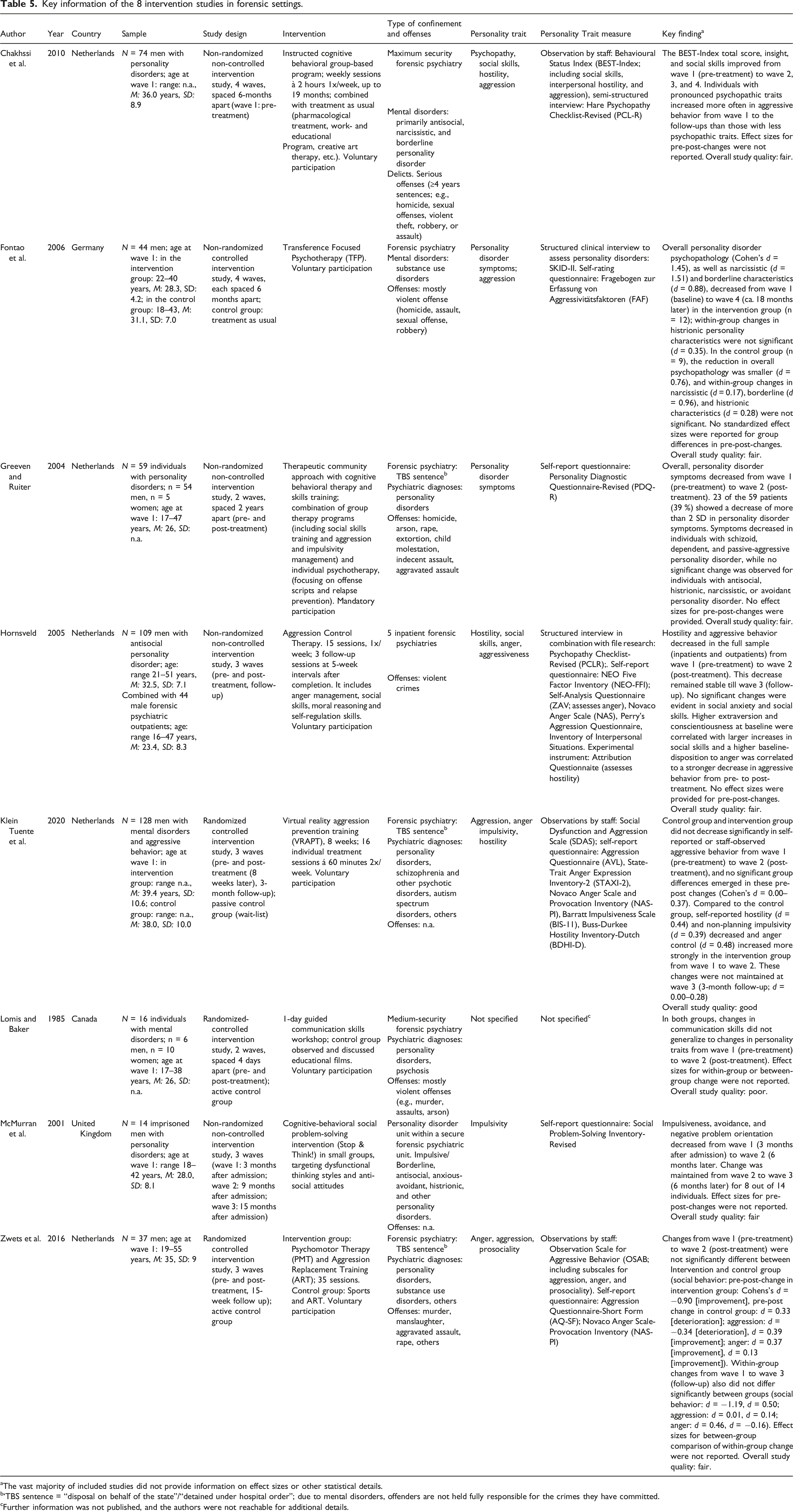
Key information of the 8 intervention studies in forensic settings.
aThe vast majority of included studies did not provide information on effect sizes or other statistical details.
b‘TBS sentence = “disposal on behalf of the state”/“detained under hospital order”; due to mental disorders, offenders are not held fully responsible for the crimes they have committed.
cFurther information was not published, and the authors were not reachable for additional details.
Observational studies
Samples
The observational studies were mostly conducted in North America (6 studies; United States: 3, Canada: 3) and Europe (6 studies; Netherlands: 2, Germany: 2, United Kingdom: 2), with only one study from Israel (see Tables 2 and 3). No research from other regions, such as Asia or Africa, was found. Only 2 observational studies (Cannici et al., 1990; Dettbarn, 2012) included both female and male participants. All other observational studies exclusively focused on male participants. Most studies examined a wide age range, with a tendency toward young adulthood. The sample sizes ranged from 16 (McMurran & Delight, 2017) to 317 (Bogaerts et al., 2020) confined individuals.
Study designs
The observational studies analyzed changes in personality traits using either prospective longitudinal or retrospective data. The majority of studies involved a longitudinal observational design containing 2 to 4 assessment waves (median: 2). The observation periods varied widely, from a few weeks (Zinger et al., 2001) to more than a decade (Bogaerts et al., 2020). Only 3 studies used retrospective designs (2 qualitative, one quantitative) with a single assessment wave. One study employed a quasi-experimental design to examine the effects of segregation (Zinger et al., 2001). Among the 13 observational studies, 2 (15.4%) were rated as having poor overall quality, 8 (61.5%) as fair, and 3 (23.1%) as good (see Table S3 for detailed quality ratings of the 40 included studies). Even the studies rated as good exhibited methodological shortcomings, such as the absence of power analyses and the insufficient consideration of potentially confounding variables.
Type of confinement and offenses
The majority of settings examined were within forensic psychiatry institutions (Bogaerts et al., 2020; Caldwell et al., 2012; Dettbarn, 2012; Hildebrand & Ruiter, 2012) or federal prisons or equivalents (Cannici et al., 1990; Gendreau et al., 1979; Maier & Ricciardelli, 2022; McMurran & Delight, 2017; Newton, 1998; Skolnick & Zuckerman, 1979; Zinger et al., 2001). One study examined prisoners of war (Solomon et al., 1999) and one examined a youth custody institution (Greve & Enzmann, 2003). In forensic settings, the research predominantly involved individuals with personality disorders and substance use disorders. The offenses varied widely, ranging from minor infractions (e.g., drug offenses) to major violent crimes (e.g., murder, robbery, assault, sexual offenses), with a tendency toward more serious and violent offenses. Sentence durations varied significantly, from several months (Cannici et al., 1990) to life sentences (Zinger et al., 2001).
Personality traits
In the observational studies, traits related to self-esteem and other aspects of emotional stability, as well as antisocial and aggressive personality traits (agreeableness), were most frequently examined.
Assessments
Personality traits were predominantly measured via self-report questionnaires. Additionally, 3 studies were based on structured observation by prison or forensic psychiatry staff members (Bogaerts et al., 2020; Caldwell et al., 2012; Hildebrand & Ruiter, 2012) and 2 studies on qualitative interviews (Maier & Ricciardelli, 2022; McMurran & Delight, 2017). One study used the Rorschach Inkblot Method as a performance-based personality test (Hildebrand & Ruiter, 2012).
Changes in personality traits in observational studies in non-forensic settings (9 studies; Table 2)
Openness and related traits
Sensation seeking decreased and spontaneity increased over the course of incarceration in a correctional center (Skolnick & Zuckerman, 1979).
Conscientiousness and related traits
Internal locus of control increased from admission to discharge in a prison (Newton, 1998), while anti-authority decreased (McMurran & Delight, 2017).
Extraversion and related traits
Extraversion increased over the course of confinement in a correctional center (Skolnick & Zuckerman, 1979) and a prison (Newton, 1998)
Agreeableness and related traits
Hostility and distrust decreased from admission to release in a prison setting (Newton, 1998), and aggression declined during administrative segregation as well as in the general inmate population (Zinger et al., 2001).
Emotional stability and related traits
Emotional stability increased from admission to the end of confinement in prisons (McMurran & Delight, 2017; Newton, 1998), and formerly confined individuals described retrospectively that confinement had made them calmer, stronger, and more patient (Maier & Ricciardelli, 2022). Longer confinement was associated with stronger increases in emotional stability (Newton, 1998). Self-reported self-esteem and self-acceptance increased from admission to release in youth custody institutions (Greve & Enzmann, 2003), federal prisons (Cannici et al., 1990), and correctional institutions (Skolnick & Zuckerman, 1979). These results were further corroborated by research based on (retrospective) staff observations (McMurran & Delight, 2017). Increases in self-esteem tended to be stronger for women than men (Cannici et al., 1990) and faster in highly accommodative individuals (described as flexible, adaptable, and open to change; Greve & Enzmann, 2003). Moreover, increases in self-esteem from shortly after entering prison to 6 months later predicted less recidivism 2 years after release (Gendreau et al., 1979). Former prisoners of war retrospectively reported varying changes in emotional stability and self-esteem during incarceration, with some describing increases and others decreases (Solomon et al., 1999).
Changes in personality traits in observational studies in forensic settings (4 studies; Table 3)
Openness and related traits
None of the observational studies in forensic settings targeted openness.
Conscientiousness and related traits
Perfectionism (Dettbarn, 2012) and self-reliance (Bogaerts et al., 2020) increased from admission to release in forensic psychiatry settings, while the propensity to violate terms and agreements decreased (Bogaerts et al., 2020).
Extraversion and related traits
No significant changes in extraversion were found from the beginning to the end of confinement (Dettbarn, 2012), while dominant and assertive traits (Cohen’s d = .23) increased over the course of standard treatment in a forensic setting (Hildebrand & Ruiter, 2012).
Agreeableness and related traits
Findings on traits related to agreeableness were heterogenous. Antisocial tendencies, hostility, and distrust decreased, and social skills increased from admission to release in two studies conducted in forensic psychiatry settings (Bogaerts et al., 2020; Dettbarn, 2012). In contrast, in a maximum security forensic psychiatry setting, no significant changes were found in general distrust and hostility, while aggressive-manipulative (d = 0.24) and competitive-exploitant traits (d = 0.26) increased with small effect sizes (Hildebrand & Ruiter, 2012). During 6 months of confinement in a juvenile treatment center with psychiatric standard treatment, the total psychopathy score (η2 = .37) and callous/unemotional traits (η2 = .29) decreased significantly, with large effect sizes, while narcissistic traits increased slightly over time (η2 = .14) (Caldwell et al., 2012). Self-reported aggressive traits decreased over the course of confinement (Dettbarn, 2012), while aggression observed by staff members increased (Hildebrand & Ruiter, 2012).
Emotional stability and related traits
Emotional stability increased from admission to the end of confinement in forensic psychiatry (Dettbarn, 2012). Observer-rated and self-reported impulsivity decreased during confinement in forensic psychiatry (Bogaerts et al., 2020) and a forensic juvenile treatment center (η2 = .34; Caldwell et al., 2012), whereas no significant changes were observed with a different self-report instrument in an adult forensic psychiatry sample (Hildebrand & Ruiter, 2012).
Intervention studies
Samples
Most of the intervention studies (see Tables 4 and 5) were conducted in North America (7 studies; United States: 5, Canada: 2) and Europe (16 studies; Netherlands: 5, Portugal: 3, United Kingdom: 3, Germany: 2, Sweden: 1, Spain: 1, Italy: 1). Additionally, 2 studies were carried out in Australia and 2 in Asia (Iran), with no studies available from other regions such as Africa or South America. Out of the 27 intervention studies, 23 exclusively examined male participants, whereas 2 focused on female participants (Kilgore, 2001; Torkaman et al., 2020), and 2 included both male and female participants (Greeven & Ruiter, 2004; Lomis & Baker, 1985). Most studies covered a broad age range, overall spanning from 14 to 67 years, with a tendency to overrepresent younger adults. The sample sizes ranged from 7 (Brzozowski et al., 2021) to 254 confined individuals (Brazão et al., 2017, 2018). Some studies investigated undifferentiated groups of confined individuals, while others focused on specific groups, such as individuals with personality disorders, a history of violent behavior, substance abuse, or difficulties in emotion regulation.
Study designs
All intervention studies analyzed changes using prospective longitudinal data. Twelve of the 27 studies used randomized controlled designs with active (Kerekes et al., 2019; Lomis & Baker, 1985; Zwets et al., 2016), passive (Deforest & Johnson, 1981; Klein Tuente et al., 2020; Maggioni et al., 2018; Morgan et al., 1999; Torkaman et al., 2020; Ziaee et al., 2022), or treatment as usual (Brazão et al., 2017, 2018; Gerace & Day, 2010) control groups. Three studies used non-randomized controlled intervention designs with treatment as usual (Da Ribeiro Silva et al., 2021; Doyle et al., 2013; Fontao et al., 2006) or other control groups (Wolfus & Bierman, 1996). The remaining 13 studies were non-randomized and non-controlled intervention studies. The studies typically included between 2 and 4 assessment waves (median: 2 waves; usually pre- and posttreatment). The intervals between assessment periods varied widely, ranging from 4 days to 2 years, with a median interval of 12 weeks between assessments. Regarding study quality, 5 (18.5%) of the intervention studies were rated as having poor overall quality, 16 (59.3%) as fair, and 6 (22.2%) as good (see Table S3). Even the studies rated as good exhibited methodological shortcomings. Common issues across studies included the absence of power analyses, insufficient reporting of randomization procedures and adherence to the intention-to-treat principle, as well as a lack of blinding of participants or outcome assessors. In addition, few studies included follow-up assessments beyond the immediate post-treatment period, limiting conclusions about the long-term stability of intervention effects.
Interventions
The studies examined various types of interventions, including 16 group programs and 11 primarily individual programs. Cognitive-behavioral interventions, such as the “Growing Pro-Social group program” and the “Reasoning and Rehabilitation program,” were most frequent. Multidisciplinary treatments combined elements like education services, anger management, social skills training, problem-solving, and substance abuse counseling. Individual interventions targeted, for example, psychopathic traits and disruptive behavior in youth, using therapies like compassion-focused and cognitive-behavioral therapy. Specialized programs included breathing interventions, yoga, virtual reality aggression prevention training, and violence intervention programs. Most interventions focused on improving mental health and behavioral outcomes, predominantly through voluntary participation—only one study mandated participation (Greeven & Ruiter, 2004). The number of sessions ranged from only one session in a guided communication skills workshop to 67 sessions in a high-intensity violence intervention program. Session durations also varied widely, from 30-min sessions in a slow-paced breathing intervention to 4-h sessions in an anti-violence program. This illustrates the wide range of intervention approaches and intensities in the context of confinement.
Type of confinement and offenses
The settings examined in the intervention studies included juvenile detention facilities, medium-security prisons and maximum-security prisons, forensic psychiatry, and maximum-security forensic psychiatric units (some of which focused on specific pathologies such as personality disorders and psychotic disorders). The offenses ranged widely from welfare fraud to murder, manslaughter, rape, and other severe crimes, with a predominance of violent and serious offenses.
Personality traits
The intervention studies examined a wide range of personality traits, focusing primarily on self-esteem, trait anger, and impulsivity (emotional stability), as well as aggressive and (anti-)social traits (agreeableness; see Table 1 for trait assignment to the Big Five dimensions). The available effect sizes for pre-post-intervention-changes in personality traits are summarized by trait clusters in Table S4.
Assessments
The intervention studies were based on various assessment measures, including primarily self-report questionnaires. Observational methods and structured interviews were also used, with instruments such as the Hare Psychopathy Checklist-Revised. Experimental tasks included the Dictator Game and the Trust/Investment Game, which measured empathy, altruism, and trust; the Attribution Questionnaire was used to measure hostility. Additionally, some studies used qualitative methods such as life history interviews and retrospective archival analyses.
Changes in personality traits in intervention studies in non-forensic settings (19 studies; Table 4)
Openness and related traits
Sensation seeking decreased through hypnotic imagery conditioning (Deforest & Johnson, 1981), and novelty seeking decreased from before to after a yoga intervention, but not statistically significant compared to an active control group (Kerekes et al., 2019). Spontaneity increased from before to after a psychodrama intervention (Testoni et al., 2020).
Conscientiousness and related traits
Self-directedness, but not persistence, increased through a yoga intervention in a randomized controlled study (Kerekes et al., 2019), the agency-facet of hope increased through existential therapy and acceptance and commitment therapy (Ziaee et al., 2022),
Extraversion and related traits
Changes in extraversion were not significantly different between individuals who received a cognitive intervention and a treatment as usual control group (Doyle et al., 2013). Defensiveness decreased more in an anti-violence intervention than in two control groups (Wolfus & Bierman, 1996), whereas no significant changes in defensiveness were found through a cognitive-behavioral group treatment compared to a passive control group (Morgan et al., 1999). Assertiveness increased in individuals who underwent a therapeutic group program in Spanish prisons (Martínez-Catena & Redondo, 2022).
Agreeableness and related traits
There were pre-post increases in empathy, altruism, and trust among individuals who underwent a learning group program (Kilgore, 2001) and a 10-month cognitive behavioral rehabilitation group program in state prisons (Maggioni et al., 2018). A cognitive intervention resulted in stronger decreases in distrust and increases in prosocial traits than treatment as usual (Doyle et al., 2013). Empathy and norm-orientation increased from before to after a cognitive therapy program (Hosser & Weber, 2021), whereas neither another cognitive-behavioral group treatment (Morgan et al., 1999) nor a religious group course (Gerace & Day, 2010) led to significant pre-post changes in empathy and forgiveness, and no significant changes in cooperativeness occurred through a yoga intervention (Kerekes et al., 2019). Psychopathy decreased through an individual psychopathy-focused treatment targeting psychopathy (Da Ribeiro Silva et al., 2021) and a hypnotic imagery conditioning task (Deforest & Johnson, 1981). An anti-violence program in a penitentiary was related to decreases in aggressive traits compared with a passive control group (Wolfus & Bierman, 1996), and in uncontrolled studies aggression decreased from before to after cognitive group interventions (Doyle et al., 2013; Hosser & Weber, 2021; Martínez-Catena & Redondo, 2022).
Emotional stability and related traits
Emotion regulation improved from before to after a cognitive therapy program (Hosser & Weber, 2021), whereas no significant changes in emotion regulation and mindfulness were observed in individuals who received a breathing intervention (Brzozowski et al., 2021). Self-efficacy increased in confined men with substance use disorders who underwent a psychodrama intervention (Testoni et al., 2020), and self-esteem increased from before to after cognitive interventions (Doyle et al., 2013; Hosser & Weber, 2021) and group-based transactional analysis training (Torkaman et al., 2020). Increases in self-esteem through an anti-violence program were also associated with decreases in negative conflict tactics (Wolfus & Bierman, 1996). Pre-post improvements were observed in family-based self-esteem, but not in peer-oriented or work-oriented self-concept among young confined men in a therapeutic group-based training (Vicary & Good, 1983). In a group program for offenders of child abuse there were no significant pre-post increases in social self-esteem (Martínez-Catena & Redondo, 2022). Yoga led to decreases in harm avoidance (Kerekes et al., 2019) and personality traits related to early maladaptive schemas improved through a group program (Brazão et al. 2017). Impulsivity decreased through anti-violence intervention (Wolfus & Bierman, 1996) and from before to after uncontrolled cognitive interventions (Doyle et al., 2013; Hosser & Weber, 2021; Martínez-Catena & Redondo, 2022), whereas self-control increased (Doyle et al., 2013). Trait anger decreased more in a 12-month prosociality group program than in the treatment as usual group, with changes maintained at 12-month follow-up (Brazão et al., 2017, 2018). In uncontrolled studies, anger decreased from before to after cognitive group interventions (Doyle et al., 2013; Hosser & Weber, 2021) but not from before to after a breathing intervention (Brzozowski et al., 2021).
Changes in personality traits in intervention studies in forensic settings (8 studies; Table 5)
Openness, conscientiousness, extraversion, and related traits
None of the included intervention studies in forensic settings addressed openness, conscientiousness, or extraversion.
Agreeableness and related traits
Improvements in prosociality from pre-treatment to post-treatment and follow-up were not significantly different between a psychomotor therapy and the active control group (Zwets et al., 2016). A virtual reality anti-aggression program led to decreased hostility, but not to significant changes in aggression, compared to a waitlist control group (Klein Tuente et al., 2020). In uncontrolled studies, social skills improved in confined men with personality disorders from before to after a cognitive-behavioral group program (Chakhssi et al., 2010), while pre-post decreases in hostility but not social skills were found for an aggression-control program (Hornsveld, 2005). There were no significant changes in aggression from before to after transference-focused psychotherapy (Fontao et al., 2006) and a psychomotor therapy program (Zwets et al., 2016).
Emotional stability and related traits
A virtual reality anti-aggression training resulted in increases in anger control compared to a waitlist control group (Klein Tuente et al., 2020), and impulsivity decreased through anti-violence interventions (Klein Tuente et al., 2020) and from before to after an uncontrolled cognitive intervention (McMurran et al., 2001).
Personality disorder symptoms
Overall, personality disorder psychopathology decreased in forensic psychiatry settings through voluntary psychodynamic psychotherapy (Fontao et al., 2006) and from before to after a mandatory cognitive behavioral therapy program (Greeven & Ruiter, 2004). Specifically, there were decreases in personality disorder psychopathology for individuals with schizoid, dependent, and passive-aggressive personality disorders, but no significant changes for individuals with antisocial, histrionic, narcissistic, or avoidant personality disorders (Greeven & Ruiter, 2004).
Discussion
This systematic review provides a comprehensive synthesis of evidence on personality change among confined individuals, based on 40 studies published between 1979 (the predefined lower limit) and 2022. Both observational and interventional studies were included to offer a broad overview of how confinement—and interventions delivered within confinement settings—is associated with changes in personality traits. Most findings addressed intervention effects and personality traits were often assessed only as secondary outcomes, across both forensic and non-forensic settings.
Our findings revealed that the extant literature on personality change in confinement has predominantly focused on specific personality traits that are linked to criminal behavior, such as antisocial, aggressive, and impulsive traits. Changes in broader personality traits, which are the focus of other areas of personality research, have been less frequently examined in the context of confinement.
Our review included studies from non-forensic prison settings and forensic psychiatry. Although we found no direct evidence for systematic differences in findings between these settings, both the study populations and prison environments may differ substantially between these confinement types.
Observational studies
In observational studies conducted in non-forensic settings, confinement was most consistently associated with increases in traits related to emotional stability (including self-esteem) and conscientiousness, whereas findings for other traits such as those related to agreeableness, extraversion, and openness were mixed or rare. Observational studies in forensic settings also reported improvements in emotional stability (e.g., reductions in impulsivity) and partly in antisocial traits, although some findings—particularly in high-security environments—indicated increases in narcissistic and manipulative tendencies or showed no significant change.
Although the majority of changes could be interpreted as “desirable” or “adaptive,” the available studies do not allow for conclusions about the extent to which such changes result from interventions in the sense of treatment-as-usual conditions within confinement contexts—particularly in forensic settings, which often involve intensive therapeutic components—vs. the effects of confinement itself, such as separation from the outside world, highly structured routines, or restricted autonomy.
While some of these findings may be compatible with the Social Investment Principle—which suggests that turning points involving new role demands can prompt personality change (Bukstel & Kilmann, 1980; Ellison et al., 2022; Nye & Roberts, 2019; Roberts & Wood, 2006)—the evidence base in this review provides only limited and mixed support for this assumption. Still, it is conceivable that confinement environments, by disengaging individuals from previous harmful contexts and offering structure, education, or psychosocial support, may in some cases facilitate adaptive personality change (Barber-Rioja et al., 2023; Dahle et al., 2020; Dillon et al., 2020; Jaegers et al., 2020).
From a micro-level perspective, such changes may reflect repeated, situation-specific learning and adaptation mechanisms as described in the TESSERA framework (Wrzus & Roberts, 2017). Another explanation might be that confined persons are trying to close a cognitive dissonance gap, meaning they may adjust their self-perception and reported personality traits to see their experiences during confinement in a more positive light. This could reflect a desire to perceive personal growth or meaningful change, helping them reconcile the challenges of confinement with a sense of progress or improvement. However, a few observational studies suggest that confinement has destabilizing effects on personality traits and general mental health (Massoglia & Remster, 2019; Stephenson et al., 2021). One possible explanation for these partially inconsistent results is that short-term and long-term effects may differ: For example, confinement might lead to an initial shock and have unfavorable effects on personality traits in the short term (Bukstel & Kilmann, 1980). Over time, individuals might overcome their initial crisis and adjust, leading to favorable personality change in the long term (albeit prolonged exposure to restraining conditions and stressors could also result in long-time maladaptive changes). In addition, personality changes due to confinement might be temporary and bounce back after release, or they might last beyond this period of life. However, since most studies collected data only at the beginning (upon incarceration/admission) and the end (upon release) of confinement, they cannot test these assumptions. Additional research with multiple short-term and long-term assessments would be desirable to analyze more nuanced temporal patterns of linear and nonlinear personality changes.
The observational studies identified in this review predominantly focused on mean-level changes in personality traits over the course of confinement, without examining individual differences in these changes or specific mediators and moderators. Without investigating such influencing and mediating variables, it remains unclear how aspects like the confinement conditions, interactions with inmates and staff, interventions, or individual background factors, such as psychological states and resilience, contribute to the observed changes in personality traits (Crane & Pascoe, 2021; Ellison et al., 2022; Massoglia & Remster, 2019). This underscores the need for future research to systematically explore possible mediators and moderators of personality change in the context of confinement.
Intervention studies
In intervention studies conducted in non-forensic settings, the most consistent changes were observed in traits related to emotional stability and agreeableness, including reductions in impulsivity, aggressive traits, and trait anger, as well as increases in self-esteem, self-efficacy and self-regulation. In forensic settings, findings were slightly more limited and mixed; while some studies reported improvements in emotional stability, social skills, and reductions in personality disorder symptoms, traits such as openness, conscientiousness, and extraversion were rarely targeted, and several studies showed no significant change or only small effects. In summary, most intervention studies have shown rather desirable changes in personality traits associated with a variety of interventions in confinement settings. No clear patterns emerged regarding the nature and efficacy of the observed effects, based on the country, publication date, confinement setting, type of offenses, target group, or intervention. Taken together, these findings suggest that settings and interventions related to confinement may be effectively used to induce desirable changes in personality states and traits.
It is difficult to contextualize personality changes in relation to other interventions and treatment outcomes in confinement settings, as most extant studies prioritize behavioral indicators such as recidivism or symptom reduction—typically with mixed findings and at best modest effects (Beaudry et al., 2021; Rosenfeld et al., 2024). In addition, studies vary considerably in terms of design, assessment timing, and outcome focus, and they rarely examine changes in personality traits or their potential role in mediating or moderating treatment effects. As a result, the relevance of personality change within broader treatment processes remains largely unexplored. Shifting attention to personality traits as treatment-relevant outcomes offers a valuable additional perspective by capturing internal and potentially longer-lasting changes that are not reflected in behavioral measures (e.g., recidivism) alone.
Our findings are also consistent with broader evidence on intervention-related personality change beyond confinement settings: Meta-analyses indicate that psychological interventions, such as psychotherapy or skills training, relate to changes in personality traits—most notably increases in emotional stability—which aligns well with our results (Roberts et al., 2017).
Limitations and directions for future research
Limitations of the included studies
The reviewed studies have several limitations. First, the considerable heterogeneity in research designs and methodological approaches makes it difficult to draw clear conclusions. Moreover, the studies employed diverse and sometimes overlapping definitions of personality traits, with some conflating traits and behavioral tendencies, further complicating interpretation.
For a better understanding, a systematic, theory-driven examination of personality traits would be particularly valuable. In particular, studies focusing on changes in broader and more established traits, such as the Big Five or HEXACO, could enhance comparability across studies, populations, and contexts. From a personality psychology standpoint, most existing research has focused on normative life events such as entering the workforce, becoming a parent, or experiencing relationship separation (Bleidorn et al., 2018, 2022; Bühler et al., 2024). Incarceration, by contrast, constitutes a qualitatively different, non-normative life event that has received considerably less attention, despite its potential to affect core personality traits. As such, it offers an opportunity for comparison with other life events, contributing to a broader understanding of personality change across diverse life contexts. From a criminological perspective, it is not only relevant to examine changes in criminogenic traits, but also to investigate whether and how individuals change in more fundamental, broad traits. Such trait models would also offer practical value by providing established frameworks to guide psychological assessment and inform tailored intervention planning. Low levels of conscientiousness or emotional stability, for instance, may indicate areas in which targeted support could improve treatment responsiveness or facilitate reintegration.
Second, less than half of the intervention studies were based on randomized controlled designs, limiting the ability to draw causal inferences about confinement-related personality changes. In addition, observational and intervention studies partially overlap, as even “standard correctional detention” typically includes some form of treatment, reintegration, or rehabilitation. Thus, even in observational studies, confined individuals may receive interventions, making it difficult to disentangle the effects of confinement alone and combined with psychological treatments. Future research would benefit from more detailed descriptions of the confinement settings and the interventions provided.
Third, the generalizability of results may be limited due to most studies examining only males. Moreover, the included studies primarily focused on US and European samples. Findings from Africa, South America, and Asia are absent and would be highly useful for cross-country and cross-cultural comparisons, including different detention conditions and legal systems.
Fourth, in most studies, the results were described very briefly, and effect sizes or other statistical parameters were often not presented, which further limits the interpretability. Besides the overall quality shortcomings of the included studies, this may be due to the fact that the majority of intervention and observational studies treated personality changes as supplementary outcomes, giving them less priority and less detailed analysis.
Fifth, some specific aspects of the confinement context interacting with research execution need consideration. Even voluntary interventions might not have been entirely voluntary, as confined individuals may have participated in the hope of receiving privileges or a more lenient regime or to avoid appearing uncooperative or avoidant. This may have biased not only the samples but also the personality assessments. With the majority of studies relying on self-report instruments to measure personality traits, response biases such as social desirability are likely to influence findings. Another notable source of bias may be the Hawthorne Effect, according to which individuals alter behavior simply because they are being observed. Memory recall issues, particularly in retrospective self-reports, interviewer/observer biases, and potential influences of the confinement setting on respondents’ feelings and mood at the time of completing questionnaires or interviews are additional factors that can potentially affect the data. Regression to the mean may also contribute to less extreme responses from confined individuals in follow-up assessments. Additionally, retrospective evaluations of time spent in confinement may be filtered through a lens that seeks to find 'meaning’ in the experience—at least for some individuals. Thus, self-reports may not perfectly align with actual changes in personality traits. Moreover, extreme settings like confinement may prompt coping strategies rather than true shifts in core traits. For traits like emotional stability, effective coping could be as beneficial as actual change. Future research might therefore focus on distinguishing between genuine personality change and superficial adaptive coping in confinement, providing a nuanced understanding of personality dynamics in such settings.
Taken together, the overall methodological quality of the included studies was limited. Most were rated as fair, with only a few meeting criteria for high methodological rigor. Common shortcomings included small sample sizes, lack of statistical power analyses, limited blinding, and insufficient consideration of confounding variables. These factors constrain the interpretability and generalizability of the findings. In addition, the predominance of studies reporting “desirable” changes may also reflect a potential publication bias. Overall, these limitations reduce the strength of the conclusions that can be drawn and underscore the need for more methodologically robust and transparent research in this area.
Limitations of the review methodology
For the first time, since the pioneering work of Bukstel and Kilmann (1980) almost 50 years ago, we conducted a systematic review of studies on personality changes in the context of confinement. However, our review strategy is not without limitations. To provide a comprehensive overview, we included a wide range of studies covering various confinement settings, target traits, and methodological approaches. Although this strategy increased scope, it also introduced heterogeneity. For instance, combining studies across multiple confinement types may obscure setting-specific effects. Thus, the breadth of our inclusion criteria is a strength in terms of coverage, but also a limitation regarding precision. Future studies may benefit from a more targeted comparison of these settings and (sub-)populations to better understand the unique conditions affecting personality traits in each context (Weithmann et al., 2019).
At the same time, we deliberately limited our review to exclude outpatient forensic settings and alternatives to confinement, such as electronic monitoring, to avoid introducing further heterogeneity in confinement conditions. This, however, restricts the generalizability of our findings to less institutionalized forms of liberty deprivation and forensic treatment and may represent a relevant target for future research.
We defined personality traits rather broadly to capture all relevant traits, which in some cases led to conceptual overlap with behavioral tendencies and other psychological characteristics not consistently defined as personality traits. Because the included studies assessed a broad and diverse range of personality traits, we categorized them within the Big Five framework to enhance conceptual comparability. This categorization proved challenging, as several traits overlapped conceptually with multiple Big Five dimensions or reflected traits that are less commonly used in contemporary personality research. Although the assignment of traits to dimensions was necessarily approximate, it was carried out with a high level of consistency, as reflected in strong interrater agreement.
In light of substantial heterogeneity in trait definitions and measurement approaches across studies, combined with the widespread lack of reported effect sizes or other statistical parameters, meta-analytic integration was not feasible.
To ensure methodological quality and interpretability, we restricted our review to peer-reviewed articles published in English or German. As a result, potentially relevant studies published in other languages or in non-peer-reviewed sources (e.g., gray literature) were not considered. This may have contributed to publication bias, as studies with null or negative findings are generally less likely to be published in peer-reviewed journals and thus may be underrepresented in the reviewed literature (Fanelli, 2012; Lösel & Schmucker, 2005; Schmucker & Lösel, 2017).
Conclusions
The identified studies mostly suggest that interventions in the context of confinement are associated with “desirable” personality changes, such as increases in emotional stability and prosociality, across various countries, settings, populations, and interventions. These findings support the idea that the structured environment of confinement, when combined with targeted interventions, may promote “personality maturation.” However, these effects could also stem from methodological factors, such as social desirability effects and potential publication bias favoring studies with favorable outcomes (Fanelli, 2012).
Moreover, our review identified major limitations and gaps in the existing literature, including highly inconsistent definitions and only peripheral consideration of personality traits. To address these conceptual and methodological gaps and advance insight into personality change, (intervention) studies—ideally randomized controlled trials—that place personality traits at the center of methodologically rigorous investigations would be particularly valuable. Such designs could not only give insight into causal roles of interventions in shaping personality but also illuminate underlying psychological mechanisms. In addition, future research could systematically examine how different forms and contexts of confinement influence desirable or detrimental personality trajectories in specific (sub-) populations (e.g., with regard to sociodemographic characteristics), offering insightful perspectives on the dynamic interplay between environment and personality change.
Supplemental Material
Supplemental Material - Personality change associated with confinement: A systematic review of observational and treatment-related evidence from prisons and forensic settings
Supplemental Material for Personality change associated with confinement: A systematic review of observational and treatment-related evidence from prisons and forensic settings by Antonia Bendau, Isabel Thielmann, Gunda Wössner, Nico Jonathan Reich, Leonie Carmen Bandurski, and Eva Asselmann in European Journal of Personality.
Footnotes
Author contributions
Antonia Bendau: Conceptualization, methodology, data collection, data analysis, visualization, and writing—original draft. Isabel Thielmann and Gunda Wössner: Conceptualization, methodology, and writing—review and editing. Nico Jonathan Reich and Leonie Carmen Bandurski: Data collection and data analysis. Eva Asselmann: Conceptualization, methodology, supervision, and writing—review and editing.
Declaration of conflicting interests
The authors declared no potential conflicts of interest with respect to the research, authorship, and/or publication of this article.
Funding
The authors received no financial support for the research, authorship, and/or publication of this article.
Open Science Statement
This systematic review was preregistered in the PROSPERO Systematic Reviews Database (CRD42023412356). This systematic review is based on data extracted from publicly available, peer-reviewed studies. The complete coding scheme, data extraction files, and full search protocol (including PRISMA flowchart, search terms, and databases consulted) have been made openly available on the Open Science Framework (OSF). No new primary data were collected for this review.
Ethical considerations
This systematic review utilized data from previously published studies that were assumed to comply with ethical standards, including institutional review board approval and informed consent, where applicable. No new data were collected, and no additional ethical approval was required.

Supplemental Material
Supplemental Material for this article is available online.
References
Supplementary Material
Please find the following supplemental material available below.
For Open Access articles published under a Creative Commons License, all supplemental material carries the same license as the article it is associated with.
For non-Open Access articles published, all supplemental material carries a non-exclusive license, and permission requests for re-use of supplemental material or any part of supplemental material shall be sent directly to the copyright owner as specified in the copyright notice associated with the article.
