




Abstract
Ethnic prejudice has negative effects on the well-being of ethnic minorities. However, less is known about the consequences of holding negative attitudes toward diversity for ethnic majority youth in current multicultural societies. Across two studies, the current research examined the medium-term (Study I) and day-to-day (Study II) reciprocal associations between affective and cognitive prejudice and several well-being outcomes (i.e., subjective, psychological, and social well-being, physical health, and sleep) among ethnic majority adolescents. In Study I (N = 1103; Mage = 15.66, 48.59% females), ethnic prejudice was found to be mostly linked longitudinally and concurrently to decreases in well-being indicators, although with a few exceptions, at both the within- and between-person levels. Conversely, in Study II (N = 458; Mage = 15.59, 54.77% females), poorer subjective well-being and physical health were associated with increases in prejudice on the next day. Together, these findings suggest a spiraling effect whereby poor well-being leads to short-term increases in prejudice, which in turn contribute to medium-term decreases in well-being. Overall, this research highlights for the first time the intertwined nature of prejudice and well-being among ethnic majority youth and suggests the need to support adolescents in navigating the diversity of current societies.
Plain language summary:
Research has highlighted that being subject to prejudice and discrimination can have detrimental effects on the well-being of ethnic minority youth. It is not clear, however, whether ethnic majority adolescents who hold prejudices against others can also suffer negative consequences for their health and well-being (i.e., subjective, psychological, and social well-being, physical health, and sleep functioning). Understanding the implications of prejudice is crucial to planning interventions aimed at fostering inclusivity and positive relationships among people of different ethnicities. This research aimed to shed light on these processes in adolescence across two studies involving a large group of Italian (ethnic majority) youth. In Study I, the reciprocal associations between ethnic prejudice and well-being across four time points over one year were examined. Adolescents who display higher levels of prejudice were found to report lower levels of well-being later. In Study II, these associations were analyzed on a daily basis over one week. Youth with poorer well-being reported an increase in their ethnic prejudice on the following day. Overall, these results highlight that prejudice and well-being are intertwined also among ethnic majority adolescents. This means that displaying prejudice does not only affect its victims (i.e., ethnic minority targets), but it also has a negative effect on ethnic majority adolescents. Therefore, interventions to reduce prejudice are needed not only to support the development of inclusive societies but also to promote the well-being of its members.
Introduction
Learning to approach diversity is a crucial competence for youth to navigate current multicultural societies (McKeown et al., 2019), whereas ethnic prejudice can prevent the development of harmonious intergroup relationships (Vezzali et al., 2023) and disrupt individuals’ adjustment to increasingly diverse contexts. Ethnic prejudice is a multifaceted and complex social phenomenon that entails negative emotions (i.e., the affective dimension) and stereotypes and beliefs (i.e., the cognitive dimension) against groups and individuals because of their different ethnic backgrounds (Allport, 1954; Brown, 2011). Together, affective and cognitive tendencies can influence individuals’ intergroup behaviors, ranging from avoidance to discrimination and victimization of diverse others.
Extensive research has documented the negative consequences of ethnic-based discrimination on the victim’s psychological and social well-being (e.g., Bayram Özdemir & Stattin, 2014; Huynh & Fuligni, 2010; for a review, see Benner, 2017), physical health (for a review, see Cave et al., 2020), and sleep outcomes (e.g., Goosby et al., 2018; Yip et al., 2020; for reviews, see Bobba et al., 2023; Slopen et al., 2016). These effects were found to be especially detrimental for ethnic minority adolescents compared to adults (Schmitt et al., 2014). On the contrary, only a few studies (e.g., Dinh et al., 2014; Gordon, 2018) have examined the associations between ethnic prejudice and well-being among ethnic majority adults, and findings appeared to be inconclusive. The current research sought to contribute to extant literature by unraveling the interplay between multiple dimensions of ethnic prejudice (i.e., affective and cognitive) and several health and well-being outcomes during the crucial developmental phase of adolescence. Additionally, it aimed to uncover whether these associations (if any) play out differently in the medium- (i.e., monthly; Study I) and short-term (i.e., on a day-to-day basis; Study II). This knowledge is crucial to shed light on the detrimental effects of holding prejudicial attitudes in current multicultural societies and to inform interventions promoting the well-being of both ethnic majority and minority youth.
A multidimensional perspective on adolescents’ well-being
Youth’s well-being can be conceived as a key to the sustainable development of current and future societies (Lehtimaki et al., 2019). Adolescents’ well-being refers to a condition under which youth can thrive and realize their full potential in the multiple contexts of development (Ross et al., 2020). Such definition calls for a multidimensional account of adjustment, encompassing subjective, psychological, and social well-being, as well as indicators of general health and functioning (Petrillo et al., 2015).
In line with a hedonic perspective, subjective well-being refers to individuals’ judgment of their life satisfaction and the positive emotions (e.g., happiness) associated with their daily experiences (Diener et al., 1999). Conversely, the eudaimonic approach focuses on the optimal psycho-social functioning of individuals in their life contexts (Ryff, 2017). Within this framework, psychological well-being evaluates the extent to which individuals accept themselves, feel in control of their own life (i.e., mastery and autonomy), have a sense of purpose, and engage in satisfying relationships with others (Ryff, 1989, 2014), while social well-being refers to the individuals’ functioning within society and the extent to which they feel accepted and able to actively contribute to their social contexts (Keyes, 1998).
Beyond the role of subjective, psychological, and social well-being, physical health, which refers to the subjective perceptions of one’s physical condition as compared to that of others, represents another important indicator of adjustment. Additionally, general health conditions are intertwined with individuals’ sleep functioning, which encompasses multiple subjective and objective indicators. On the one hand, perceived sleep quality refers to individuals’ satisfaction with their sleep and alertness during wake hours, and it is based on their subjective perceptions. On the other hand, sleep functioning can be objectively evaluated as a combination of multiple parameters. Specifically, sleep duration refers to the number of hours slept at night, while sleep efficiency represents the amount of time a person is asleep during the time spent trying to sleep. Overall, well-being, physical health, and sleep functioning are important gateways for the adjustment and full development of adolescents in current societies. Understanding their interplay with attitudes and beliefs can shed light on the processes through which both ethnic majority and minority youth can navigate diverse contexts and form positive relationships with others.
Are prejudice and well-being intertwined?
Most research examining the consequences of ethnic prejudice has highlighted its detrimental effects on the ethnic minority targets of such negative emotions, beliefs, and behaviors (for meta-analyses, see Benner et al., 2018; Schmitt et al., 2014). However, less attention has been paid to the consequences in terms of well-being and physical health for those who hold prejudicial attitudes. Are prejudice and well-being intertwined also among the ethnic majority group? Recently, a few studies have tried to answer this question by examining whether holding prejudicial attitudes might have detrimental consequences for one’s well-being (e.g., Dinh et al., 2014) or whether life satisfaction can influence individuals’ tendency to devalue diversity (e.g., Yoxon et al., 2019).
Does prejudice hurt those who endorse it?
A first line of research examined the consequences of holding negative emotions and cognitions about diverse others. The origins of these studies can be found in the personality and social psychology literature. However, within this framework, opposing theoretical explanations and empirical findings have been put forward, suggesting that attitudes might be either a risk, in line with seminal work on the authoritarian personality (Adorno et al., 1950), or a protective factor, as suggested by the palliative function of system justification ideologies (Jost & Banaji, 1994; Jost & Hunyady, 2003), for personal adjustment.
For instance, right-wing authoritarianism was found to contribute to significant over-time increases in depression among college students and adolescents (Duriez et al., 2012). Given the strong interplay between right-wing authoritarianism and prejudice (e.g., Cowling et al., 2019), holding ethnic prejudice might also have negative consequences on individuals’ adjustment by hindering their successful adaptation to the daily experiences in multicultural societies. Prior experimental research has highlighted that less prejudiced individuals report lower anxiety and more adaptive stress responses in intergroup interactions (Mendes et al., 2007), while implicitly prejudiced participants were found to report heightened cortisol reactivity on their first intergroup encounter (Page-Gould et al., 2008). These physiological reactions might help explain why holding prejudice can negatively impact individuals’ well-being both concurrently and longitudinally. Along this line, cross-sectional studies have highlighted that individuals with high levels of blatant prejudice (Hightower, 1997) and intergroup anxiety (Dinh et al., 2014; Holmberg, 2010) tend to report poorer psychological (i.e., depressive symptoms) and social (i.e., social support) well-being. Further, intergroup anxiety was found to be concurrently associated with poorer levels of physical health (but not with physical symptoms; Dinh et al., 2014). Similarly, in longitudinal and panel research, negative attitudes toward immigrants were linked to reductions in subjective well-being over two years (Korol et al., 2023), and these effects were found to be stronger for younger than older generations (Bazán-Monasterio et al., 2021). Additionally, individual- and community-level prejudice were linked to increases in mortality risk of both Black and White adults alike (Lee et al., 2015). Interestingly, individuals with high levels of prejudice who live in low-prejudiced communities appeared to be the ones with the lowest survival rates 10 years later, possibly as a consequence of the disruption of social capital and isolation that might characterize these individuals (Lee et al., 2015).
However, other studies have found only limited support for the negative consequences of authoritarianism on well-being (for a meta-analysis, see Onraet et al., 2013). Rather, in line with the palliative function of system justification (Jost & Banaji, 1994; Napier & Jost, 2008), research has highlighted that ideologies supporting the status quo, such as right-wing authoritarianism and conservatism, might act as protective factors for people’s well-being and life satisfaction (e.g., Onraet et al., 2017; Sengupta et al., 2017;Vargas‐Salfate et al., 2018). In other words, these attitudes help individuals to perceive their society as fair and just, experience fewer negative effect, and feel more positive about themselves and their lives. These palliative effects appear to be stronger for members of high-status groups, such as in the case of ethnic majority individuals (e.g., Jost & Hunyady, 2003) and in contexts characterized by higher threat (e.g., social inequality and economic threats; e.g., Onraet et al., 2017). In other words, authoritarianism (and related attitudes) might buffer against the negative implications of threat perceptions. Applied to intergroup attitudes, multicultural ideology (Kauff et al., 2013) and perceived diversity (Van Assche et al., 2014, 2018) were associated with increased perceptions of threats and heightened ethnic prejudice among people high in right-wing authoritarianism. Therefore, ethnic prejudice, as a set of attitudes justifying the higher status of ethnic majority group members, might be linked to better well-being and perceptions of adjustment.
Overall, empirical research focusing on the consequences of holding ethnic prejudice for well-being is limited. Nevertheless, available evidence more consistently highlights the detrimental effects of prejudice for both ethnic minority and majority individuals. Additionally, while holding prejudice can impair individuals’ adjustment to the diversity of current societies, it is less clear whether conditions of well-being can shape how youth think and feel about diverse others.
Can well-being influence ethnic prejudice?
Another line of research has examined whether individual well-being, or lack thereof, can influence social and political attitudes. These assumptions follow the theoretical premises of the scapegoat theory (Allport, 1954). Specifically, individuals experiencing conditions of ill-being or dissatisfaction with personal life can be more prone to blaming others, such as immigrants, for their misfortunes (Allport, 1954) and perceiving them as a threat to their adjustment and thriving (Aydin et al., 2014). These processes can be fueled by public narratives and discourses widespread across several countries that tend to represent immigrants as economic and cultural threats (e.g., Albarello et al., 2023). Additionally, poor well-being and negative physical and sleep functioning of individuals might spillover into their interpersonal relations (e.g., Goetz et al., 2021). Applying this reasoning to the intergroup domain implies that ill-being feelings about oneself might lead individuals to hold more negative views about others and the relationships they have with them.
So far, empirical research has provided only partial support for these assumptions. On the one hand, some studies have highlighted that poorer well-being was linked to higher prejudice against and perception of threat from the Muslim minority (Sirgy et al., 2019) and that perceived deprivation was associated with more negative immigrant sentiment (Yoxon et al., 2019). Moreover, panel research highlighted significant associations between adjustment and attitudes, whereby individuals with poorer physical health and subjective well-being reported higher levels of negative attitudes toward immigrants, while within-person increases in social and political distrust were linked to heightened anti-immigrant sentiment (Kudrnáč et al., 2023). On the other hand, life satisfaction was not significantly associated with intergroup attitudes (Gordon, 2018; Korol et al., 2023). Overall, these findings appear to be somewhat inconclusive and leave the question of whether well-being could influence the affective and cognitive manifestations of ethnic prejudice unanswered.
Gaps and open questions
The theoretical and empirical overview provided does not offer a clear-cut answer as to whether and how ethnic prejudice and well-being are reciprocally associated. Rather, it highlights the existence of important gaps in the literature, which the current study sought to address. First, prior research has almost exclusively focused on the consequences of prejudice (and other related attitudes, such as right-wing authoritarianism) among college students and adults while neglecting to examine these processes in adolescence (for an exception, see Duriez et al., 2012). However, this is a crucial period for individuals’ development, which also lays the foundation for long-term and intergenerational well-being (Baltag & Servili, 2016; Ross et al., 2020). Additionally, prior research has highlighted that the negative effects of discrimination are especially impactful for ethnic minority adolescents (for a meta-analysis, see Schmitt et al., 2014), highlighting the importance of focusing on this developmental stage.
Second, available research provides a limited picture of the interplay between ethnic prejudice and well-being as it mostly focused on subjective perceptions of well-being (e.g., life satisfaction) and paid less attention to other indicators (e.g., social well-being, physical health, and sleep functioning). In line with a multicomponent definition of health (WHO, 1948), different facets of well-being and health are strongly intertwined and can contribute to the general adjustment and functioning of youth within society. For instance, prior research has highlighted that discrimination might exert negative consequences not only on youth’s well-being (for a meta-analysis, see Benner et al., 2018) but also on their sleep functioning (e.g., Yip et al., 2020; for reviews, see Bobba et al., 2023; Slopen et al., 2016), a crucial factor for adjustment especially in adolescence (McGlinchey, 2015). Additionally, and in a similar way, prior research has assessed prejudice as a single-dimension construct. However, its affective and cognitive facets have shown distinct developmental trajectories and associations with other individual characteristics (e.g., empathic concern and perspective-taking; Bobba & Crocetti, 2022; for a meta-analysis, see Crocetti et al., 2021), warranting a multidimensional account of this social phenomenon.
Third, the inconclusive findings of prior studies might be a consequence of confounding associations that neglected to account for stable individual differences in both attitudes and well-being. This is especially relevant given that many psychological constructs are characterized, at least to some extent, by high stability, which reflects a trait-like disposition of individuals (Hamaker et al., 2015). Relatedly, advanced analytic strategies are needed to disentangle the stable components (i.e., random-intercepts or between-person level) of prejudice and well-being from their over-time changes (i.e., within-person level) and to examine if and how these constructs are associated at multiple levels of analysis.
Last, the few available longitudinal studies have examined long-term effects, addressing how holding prejudicial attitudes at a certain time point can affect individuals’ well-being in the subsequent years (considering a time lag from 2 to 10 years; Korol et al., 2023; Lee et al., 2015). There is thus a lack of knowledge on how the interplay between prejudice and well-being unfolds at different time scales, also considering implications in the medium- and short-term. This knowledge is especially relevant in light of the continuum from micro- to macro-frameworks (Klimstra & Schwab, 2021) that characterizes psychological research and interpersonal dynamics. Specifically, the micro-end of this continuum defines the extent to which youth report certain levels of prejudice and/or well-being that are linked to their concrete experiences and feelings in the “here and now.” Conversely, the macro-end of the continuum tackles individuals’ higher-order reflections about their general thoughts (e.g., prejudice) and feelings (e.g., subjective well-being) across longer periods (e.g., multiple months). Consequently, the interplay between these phenomena might differ depending on the time lag considered. Accounting for different timescales provides a more nuanced understanding of these processes, which can more accurately inform interventions.
Overview of the current research
Building upon previous findings and benefiting from recent methodological advances, the current research examined the longitudinal reciprocal medium- and short-term associations between ethnic prejudice and well-being in adolescence. Specifically, the purpose of this research is two-fold. First, with a four-wave longitudinal study (Study I), it aimed to unravel how the interplay between ethnic prejudice and well-being unfolds over one year and whether associations occur at both the between- and within-person levels. Second, relying on a daily diary methodology (Study II), it further examined whether ethnic prejudice and well-being are intertwined on a day-to-day basis. Given the limited and somewhat inconclusive findings from the theoretical and empirical literature, no specific hypothesis about the quality of these associations was formulated. Across both studies, this research took a multidimensional account of both prejudice (i.e., affective and cognitive facets) and well-being (i.e., subjective, psychological, and social well-being, physical health, and sleep functioning) to shed light on the interplay between youth’s attitudes and adjustment levels. Moreover, the current study relied on a multi-method assessment of adolescents’ sleep functioning by combining their subjective evaluations (i.e., self-reported questionnaires) with objective parameters (i.e., wrist actigraphy recording).
Study I
Methods
Participants
Data for this research are drawn from the ongoing longitudinal project IDENTITIES “Managing identities in diverse societies: A developmental intergroup perspective with adolescents,” a cohort sequential study conducted in the north-east part of Italy (i.e., Emilia-Romagna region). For the purpose of the current study, only adolescents of Italian descent (i.e., whose parents were both born in Italy) were included. Specifically, participants for this study were 1103 adolescents 1 (Mage = 15.66, SD = 1.17 at T1, 48.59% females) attending the 1st (50.27%) and 3rd (49.73%) year of high school at the beginning of the study (i.e., 2022). Students participated in four assessments in January/February 2022 (T1), April/May 2022 (T2), September/October 2022 (T3), and January/February 2023 (T4), respectively. At each time point, participants wore an actigraph for eight consecutive days (i.e., seven nights) and, on the last day, completed a questionnaire during school hours.
At baseline, adolescents reported that most of their fathers (47.69%) and mothers (48.09%) had a medium educational level (i.e., high school diploma). Among fathers, some of the remaining (27.61%) had a low (i.e., up to middle school diploma) followed by those (24.70%) with a high (i.e., university degree or higher) educational level. Conversely, most of the remaining (33.94%) mothers had a high and only a few (17.97%) had a low educational level.
Regarding questionnaire completion, all adolescents included in the present study completed at least one out of the four assessments, a few only completed two (15.87%) and three (18.22%) assessments, while half of the sample (47.87%) participated at all time points. Within each assessment, the completion rate was high (ranging from 60.38% of items at T4 to 79.15% of items at T1), and missingness was mostly due to participants not filling out the questionnaire because they were not in school on the day of data collection. Regarding the actigraphic assessments, a large portion of adolescents had complete data on their sleep quality across the four assessments (ranging from 43.06% at T4 to 60.83% at T2). Little’s (1988) Missing Completely at Random (MCAR) test yielded a normed χ2 (χ2/df = 6582.12/5489) of 1.20, indicating that data were likely missing completely at random. Therefore, the total sample of 1103 participants was included in the analyses, and missing data were handled with the Full Information Maximum Likelihood (FIML) procedure available in Mplus (Kelloway, 2015).
Procedure
The present study was approved by the Ethics Committee of the Alma Mater Studiorum University of Bologna (Italy) as part of the ERC-Consolidator project IDENTITIES “Managing identities in diverse societies: A developmental intergroup perspective with adolescents.” Schools were selected through a stratified (by track and level of urbanization) randomized method, and principals were approached to present the project. Upon their approval, the study was presented to students and their parents, who also received written and detailed information. Active consent from parents was obtained prior to their children’s participation. Active consent was also obtained from adolescents of age while their underage peers provided their assent to participate in the project. Participation in the study was voluntary, and students were informed that they could withdraw their consent at any time. At each wave, adolescents first received an actigraph, which they were invited to wear for eight consecutive days. On the eighth day, they completed an online questionnaire during school hours. Research assistants were present in the class to answer possible questions from students. Adolescents were required to create a personal code to ensure confidentiality and pair their answers over time and across assessment methods.
Measures
Affective prejudice
The affective component of prejudice was assessed using the Feeling thermometer (Haddock et al., 1993; for the Italian version, see Bobba & Crocetti, 2022), asking participants to rate how much they like different outgroups (i.e., Romanians, Albanians, Moroccans, Chinese, and Ukrainians, which are the largest groups of foreigners in Italy according to ISTAT, 2020) on a scale from 0 (at all) to 100 (very much). A total affective prejudice score was computed using the mean level of liking expressed for these different outgroups. The scale was reversed to simplify the interpretation of results, with higher scores indicating higher affective prejudice. Cronbach’s alphas were .92, .91, .93, and .94 at T1, T2, T3, and T4, respectively.
Cognitive prejudice
To evaluate the cognitive component of prejudice, five items (e.g., “I would be bothered if most of my classmates were foreign people”) were adapted from Brown et al. (2008). Participants rated their agreement on a 5-point Likert scale, ranging from 1 (completely disagree) to 5 (completely agree). Cronbach’s alphas were .86, .88, .89, and .89 at T1, T2, T3, and T4, respectively.
Subjective, psychological, and social well-being
Subjective, psychological, and social well-being were assessed with the three subscales of the Mental Health Continuum – Short Form (MHC-SF; Keyes, 2005; Italian validation by Petrillo et al., 2015). This scale consists of 14 items referred to the last month. Ratings were expressed on a 6-point Likert-type scale from 1 (never) to 6 (every day). Sample items are the following: “How often did you feel happy?” (subjective well-being; 3 items); “How often did you feel good at managing the responsibilities of your daily life?” (psychological well-being; 6 items); and “How often did you feel that you had something important to contribute to society?” (Social well-being; 5 items). The Cronbach’s alphas across the four assessments ranged between .80 and .85, between .74 and .87, and between .80 and .88, for subjective, social, and psychological subscales, respectively.
Physical health perception
Adolescents’ physical health perception was assessed using the “General Health (GH)” subscale from the Short Form-36 Health Survey (SF-36; Ware & Gandek, 1994; for the Italian version, see Apolone & Mosconi, 1998). The instrument consists of five items, of which one (i.e., “In general, would you say your health is”) scored on a 5-point Likert-type rating scale, ranging from 1 (poor) to 5 (excellent), and the remaining four items (e.g., “My health is excellent”) scored on a 5-point Likert-type rating scale, ranging from 1 (completely false) to 5 (completely true). Cronbach’s alphas were .72, .72, .78, and .78 at T1, T2, T3, and T4, respectively.
Sleep functioning
Sleep quality was assessed by relying on both subjective and objective indicators.
Subjective sleep quality
Problems of the sleep/wake cycle were assessed with the Mini Sleep Questionnaire (MSQ; Zomer et al., 1985; for the Italian validation, see Fabbri et al., 2006). MSQ comprises two main factors (sleep and wake) and consists of nine items rated on a 7-point Likert-type scale from 1 (never) to 7 (always) referred to past week. Sample items are the following: “Did you have troubles falling asleep?” (sleep, 6 items) and “Did you feel tired at the morning awakening?” (wake, 4 items). Two total scores were obtained by summing up the items pertaining to problems during the sleep period and those related to problems during the wake period.
Objective sleep quality
Sleep was objectively assessed with the Micro Motionlogger Watch (Ambulatory Monitoring, Inc., Ardsley, NY, USA), which uses an accelerometer to assess sleep and wake states in 1-min epochs. Data were analyzed through the software Action W2 (Ambulatory Monitoring, Inc., Ardsley, NY, USA) using previously validated algorithms (Cole et al., 1992; Cole & Kripke, 1988). To capture the multifaceted nature of sleep, the current study relied on multiple indicators. Sleep duration was assessed by the number of minutes adolescents actually slept (i.e., the sum of all sleep epochs between sleep start), while sleep quality was evaluated in terms of both sleep efficiency (i.e., the ratio between the total sleep time and time in bed multiplied by 100) and sleep onset latency (i.e., the number of minutes between bedtime and actual sleep onset). These parameters were extracted for each day and then averaged across the seven nights of sleep assessment.
Strategy of analyses
Although multiple dimensions of well-being are intertwined with each other, they also tackle different aspects of individual functioning and, therefore, might be differently associated with multiple facets of prejudice. In line with these assumptions, three Random-Intercept Cross-Lagged Panel Models (RI-CLPMs; Hamaker et al., 2015) were estimated to disentangle the within- and between-person associations between multiple facets of ethnic prejudice and (a) multiple dimensions of well-being (i.e., subjective, psychological, and social; Model 1A), (b) subjective perception of general health (i.e., physical health and subjective sleep functioning; Model 1B), and (c) objective sleep functioning (i.e., sleep duration, efficiency, and onset latency; Model 1C). This analytical strategy allows to decompose the variance of longitudinal observations into stable between-person differences (i.e., random intercepts) and within-person changes over time, and to estimate different types of associations. While between-person effects provide information on inter-individual differences, that is the relative standing of each participant compared to the general group of youth, within-person effects offer insights into intra-individual processes, that is fluctuations of each participant from their own mean (Hamaker et al., 2015).
At the between-person level, the random intercepts represent general stable levels of a given variable across the study occasions. For instance, in the case of our data, the random intercept of affective prejudice represents the stable score of negative emotions that adolescents display over the year of the study. Significant between-person correlations indicate that youth who score generally high in one variable (e.g., prejudice) also score generally high (or low) on the other variables (e.g., well-being).
At the within-person level, each variable represents the momentary deviation of an individual from their stable levels (i.e., random intercept) of the same construct. Applied to the models included in the current study, within-person levels of affective prejudice indicate the extent to which, at a given time, an individual displays a significant change (decrease or increase) in negative emotions against ethnic minorities compared to their stable levels of the same construct. In this unit of analysis, different types of effects can be examined, mainly autoregressive effects, cross-lagged associations, and correlations. Within-person autoregressive paths (i.e., the association between within-person levels of variable X at time T with within-person levels of variable X at time T + 1) represent carry-over effects (Hamaker et al., 2015). For instance, a significant positive T1–T2 autoregression effect for prejudice indicates that an adolescent who at T1 reports elevated levels of prejudice relative to their expected stable score is also likely to display a similar pattern at the following time point (i.e., T2). In a similar way, within-person cross-lagged paths (i.e., the association between within-person levels of variable X at time T with within-person levels of variable Y at time T + 1) represent the extent to which momentary within-person changes in one variable from the stable score lead to momentary within-person deviations from the stable score in another variable at the following time. For instance, a significant negative T1–T2 cross-lagged association between prejudice and well-being would indicate that an individual who reports heightened levels of prejudice at T1 is also likely to experience decreased well-being at T2. The magnitude of cross-lagged paths should be interpreted in light of the fact that these models control for the stability of effects, which might attenuate the effect size of other predictors (Adachi & Willoughby, 2015). Relatedly, cross-lagged associations of .03, .07, and .12 are indicative of small, medium, and large effects, respectively (Orth et al., 2022). Last, within-person correlations (i.e., the correlations between within-person levels of variable X at time T and within-person levels of variable Y at time T) represent the extent to which a momentary fluctuation from the stable level in one variable at one time point co-occurs with momentary fluctuations from the stable level in another variable at the same occasion. For instance, a significant negative within-person correlation at T1 between prejudice and well-being suggests that an individual who experiences elevated levels of prejudice is also likely to experience decreased levels of well-being on the same measurement occasion.
Random-Intercept Cross-Lagged Panel Models of Study I: Model fit indices and model comparison.
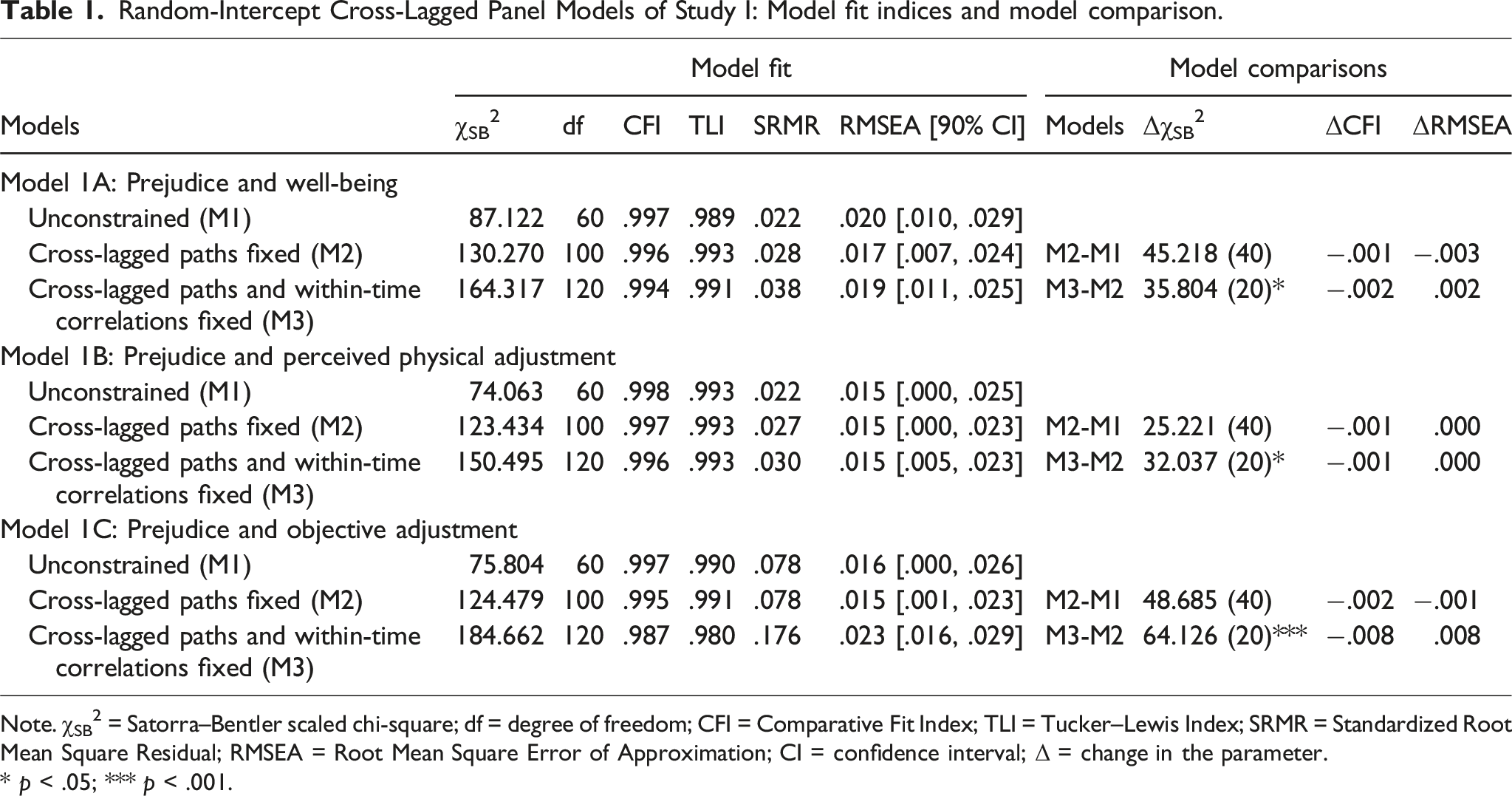
Note. χSB2 = Satorra–Bentler scaled chi-square; df = degree of freedom; CFI = Comparative Fit Index; TLI = Tucker–Lewis Index; SRMR = Standardized Root Mean Square Residual; RMSEA = Root Mean Square Error of Approximation; CI = confidence interval; Δ = change in the parameter.
* p < .05; *** p < .001.
Results and discussion
Preliminary analyses
Descriptive statistics and correlations among study variables were computed using IBM SPSS Version 28.0 and are reported in Tables S1 and S2 of the Supplemental Materials. All the remaining analyses were conducted in Mplus 8.10 (Muthén & Muthén, 1998–2017) using Maximum Likelihood Robust (MLR) estimator (Satorra & Bentler, 2001). As a preliminary step, longitudinal measurement invariance was tested separately for each questionnaire measure. Results are reported in Table S3 of the Supplemental Materials. Full metric invariance could be established for all study measures, and therefore, we could proceed with the main analyses. Unstandardized estimates of the models are reported in Table S4 (Model 1A), Table S5 (Model 1B), and Table S6 (Model 1C) of the Supplemental Materials.
Prejudice and subjective, psychological, and social well-being
The first goal of this study was to examine the interplay between affective and cognitive prejudice and multiple indicators of well-being (i.e., subjective, psychological, and social). Results of this model are reported in Figure 1 and in Table 2. As can be inferred, a few significant associations emerged at the within-person level, while only within-domain correlations (e.g., between affective and cognitive prejudice) were found at the between-person level. Regarding within-person associations, displaying an increase in affective and cognitive prejudice led youth to, respectively, experience significant decreases and increases in social well-being at the following time. Moreover, increases in adolescents’ subjective well-being led to decreases in cognitive prejudice over time. These effects were medium and large, respectively. Additionally, affective prejudice displayed significant negative correlated changes with all three dimensions of well-being, indicating that as prejudice increases over time, well-being tends to decrease. Study I: Standardized results of Model 1A. Note. For the sake of clarity, only significant within- and between-person level associations are displayed. Gray continuous arrows indicate within-construct effects. * p < .05; *** p < .001. Standardized results of Model 1A and 1B. Note. T = Time. * p < .05; ** p < .01; *** p < .001.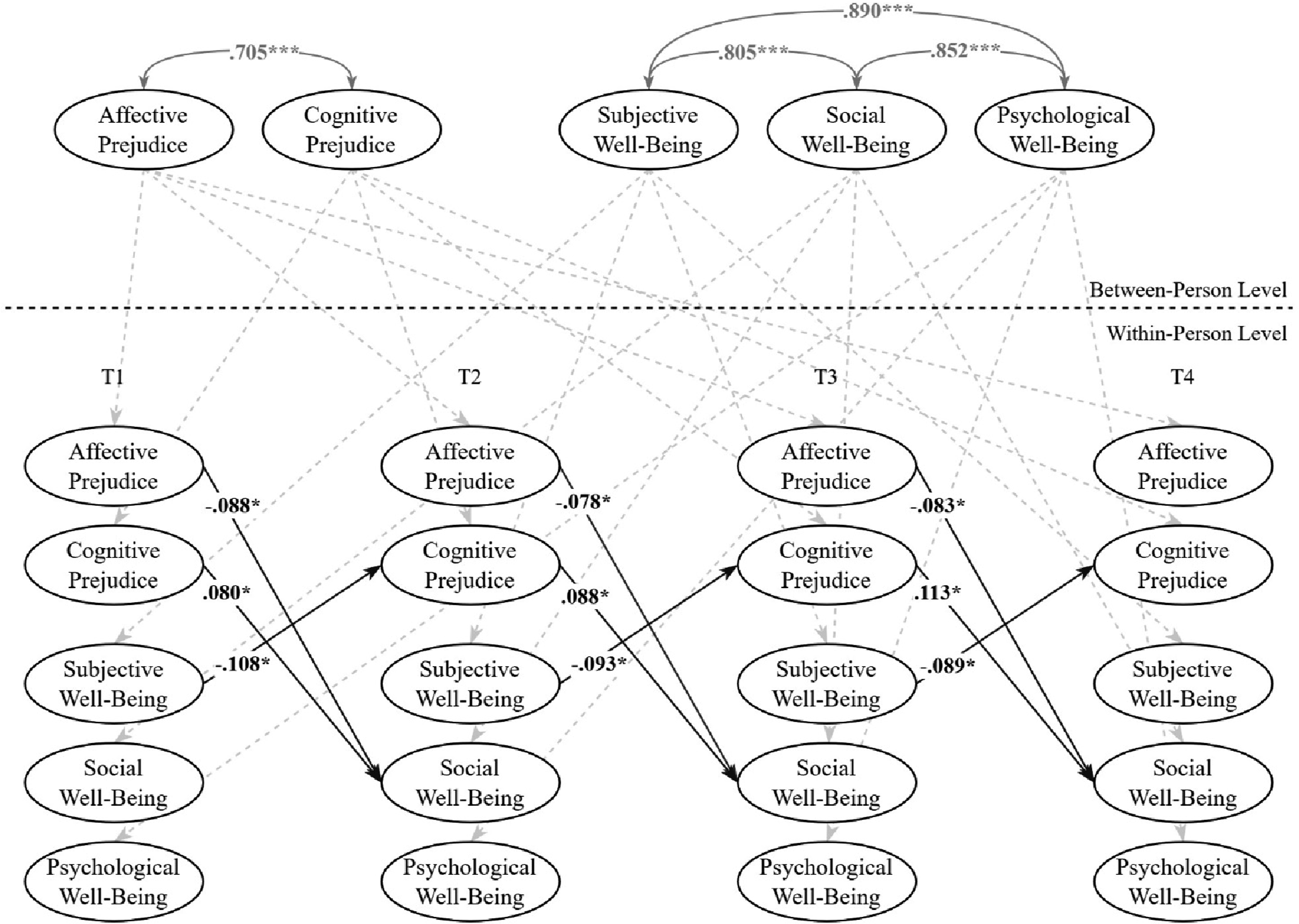
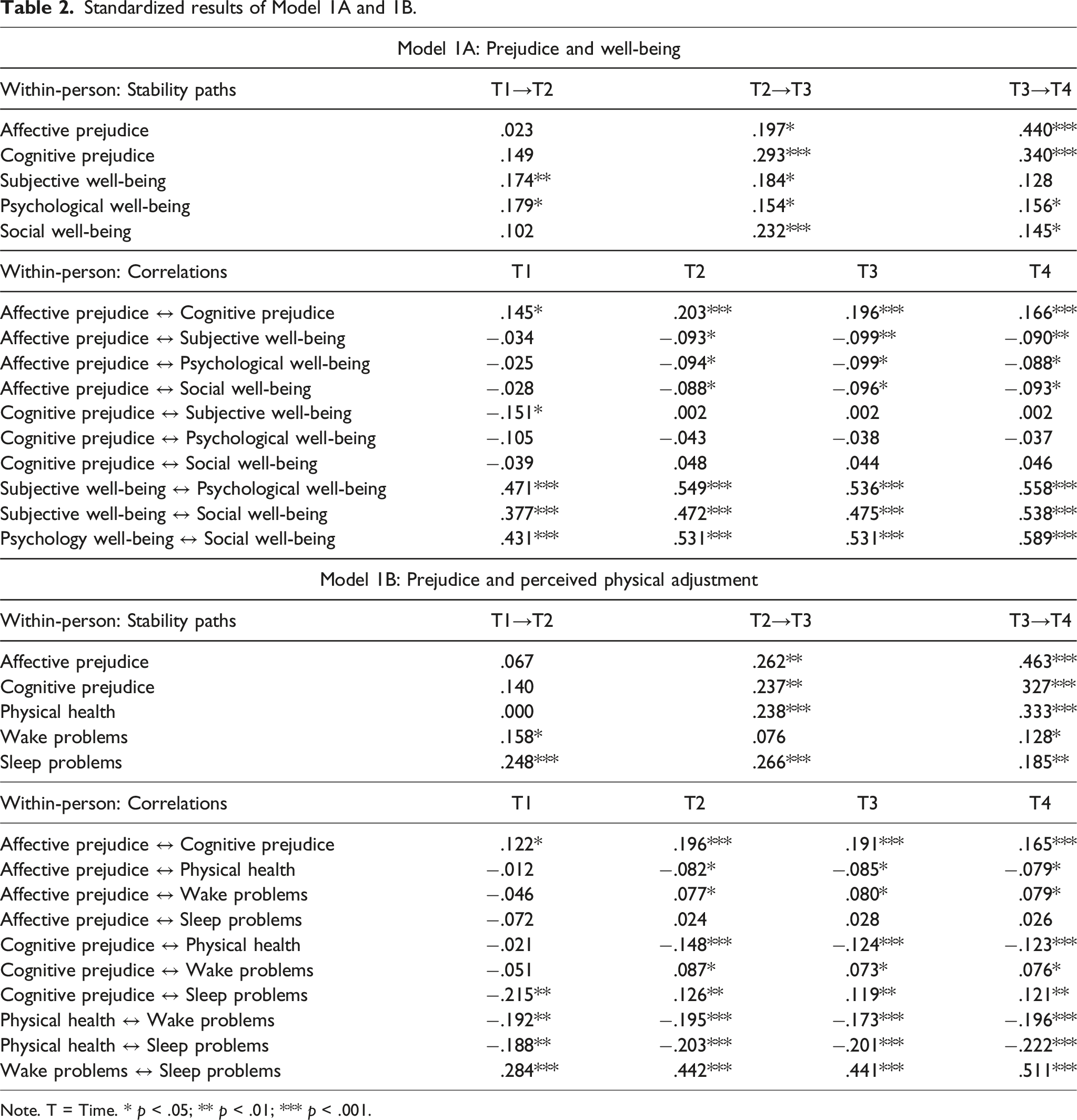
Overall, it appears that while the affective dimension of prejudice is linked (longitudinally and concurrently) to lower well-being, youth who hold high levels of cognitive prejudice tend to display increases in their social well-being. This puzzling finding might be explained in light of the fact that cognitive prejudice heavily relies on stereotypical and simplistic views of others and society (Albarello et al., 2020). Therefore, adolescents might report skewed perceptions of their adjustment to the social context as a result of oversimplified individual and intergroup conceptions. Additionally, given the progressive shift of the Italian socio-political landscape toward right-wing and anti-immigrant sentiments (Ambrosini, 2019), youth with high cognitive prejudice might experience a greater person-culture fit, which leads to more positive perceptions of social well-being (Fulmer et al., 2010), or be better equipped to face contextual threats (Onraet et al., 2017).
On the other hand, youth who displayed lower subjective well-being reported increases in their cognitive prejudice at a later time, highlighting the reciprocal nature of these associations. In line with the scapegoat theory (Allport, 1954), as well as prior research (e.g., Sirgy et al., 2019), individuals who feel unsatisfied with their life might blame others for their own misfortunes. This, in turn, contributes to processes of stereotyping and negative bias against members of the targeted group and to more negative conceptions of diversity.
Prejudice and perceived physical adjustment
The second goal of this study was to understand whether prejudice, physical health, and perceived sleep quality were associated over time. Results (Figure 2 and Table 2) of the RI-CLPM highlighted a significant interplay between prejudice and subjective adjustment measures at both the within- and between-person levels. At the within-person level, increases in cognitive prejudice led to increases (with a medium effect size) in problems during the sleep period, despite the negative T1 correlation indicating that youth higher in cognitive prejudice also reported lower sleep problems. Additionally, correlated changes revealed that increases in affective and cognitive prejudice go together with decreases in physical health and increases in problems during the wake and sleep (only for cognitive prejudice) states. However, at the between-person level, different patterns of associations emerged. Specifically, both affective and cognitive prejudice displayed significant negative correlations with wake problems, indicating that individuals with higher levels of prejudice also reported fewer sleep-related problems during their wake period. Study I: Standardized results of Model 1B. Note. For the sake of clarity, only significant within- and between-person level associations are displayed. Gray continuous arrows indicate within-construct effects. * p < .05; ** p < .01; *** p < .001.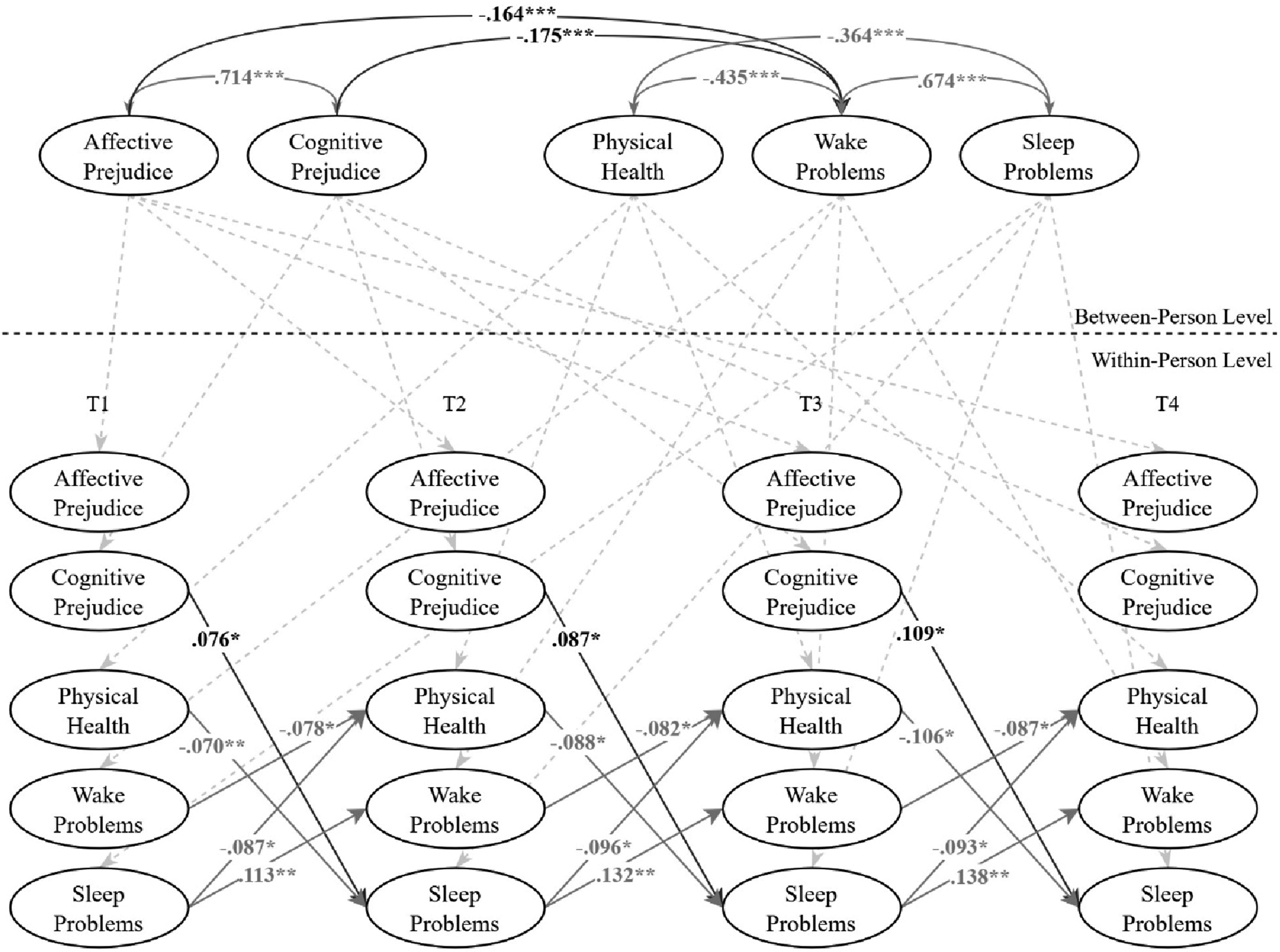
Overall, in line with prior findings among young adults (e.g., Dinh et al., 2014; Holmberg, 2010), high levels of prejudice against ethnic minorities can negatively impact adolescents’ physical and sleep functioning, not only concurrently but also over time. However, associations at the between-person level displayed an opposite trend whereby youth who report higher affective and cognitive prejudice over one year also tend to exhibit fewer problems in the sleep–wake cycle during the same period of time. These contrasting results highlight a Simpson’s paradox, which arises when inferences are drawn from different levels of analyses, such as from stable cross-sectional (e.g., correlations between random intercepts) to within-person longitudinal associations (Kievit et al., 2013). Although youth with generally higher levels of prejudice also report better sleep across one year, this does not exclude the fact that experiencing an increase in prejudice can hinder adolescents’ sleep functioning at subsequent times. Therefore, separating within- and between-person effects is crucial to draw ecologically valid conclusions about individual-level processes and build interventions that support youth’s adjustment to current multicultural societies.
Prejudice and objective sleep assessment
The third and last goal of this study was to unravel the interplay between affective and cognitive prejudice and objective measures of sleep quantity and quality (i.e., sleep efficiency and sleep onset latency). Results are displayed in Figure 3 and Table 3. As can be inferred, no significant cross-lagged paths emerged across prejudice and sleep measures, and only a few correlations emerged at the within- and between-person levels. At the within-person level, increases in affective prejudice were found to correlate, or go together, with significant decreases in sleep duration. At the between-person level, adolescents with generally high stable levels of affective prejudice also displayed low stable levels of sleep efficiency. Study I: Standardized results of Model 1C. Note. For the sake of clarity, only significant within- and between-person level associations are displayed. Gray continuous arrows indicate within-construct effects. Coefficients in italics indicate paths that, despite being fixed across time, are significant in the unstandardized model (p = .038) but not significant (p = .060) in the standardized model. * p < .05; ** p < .01; *** p < .001. Standardized results of Model 1C. * p < .05; ** p < .01; *** p < .001. aIn this model, sleep duration was rescaled and ultimately expressed in hours by dividing the parameter (in minutes) by 60. T = Time.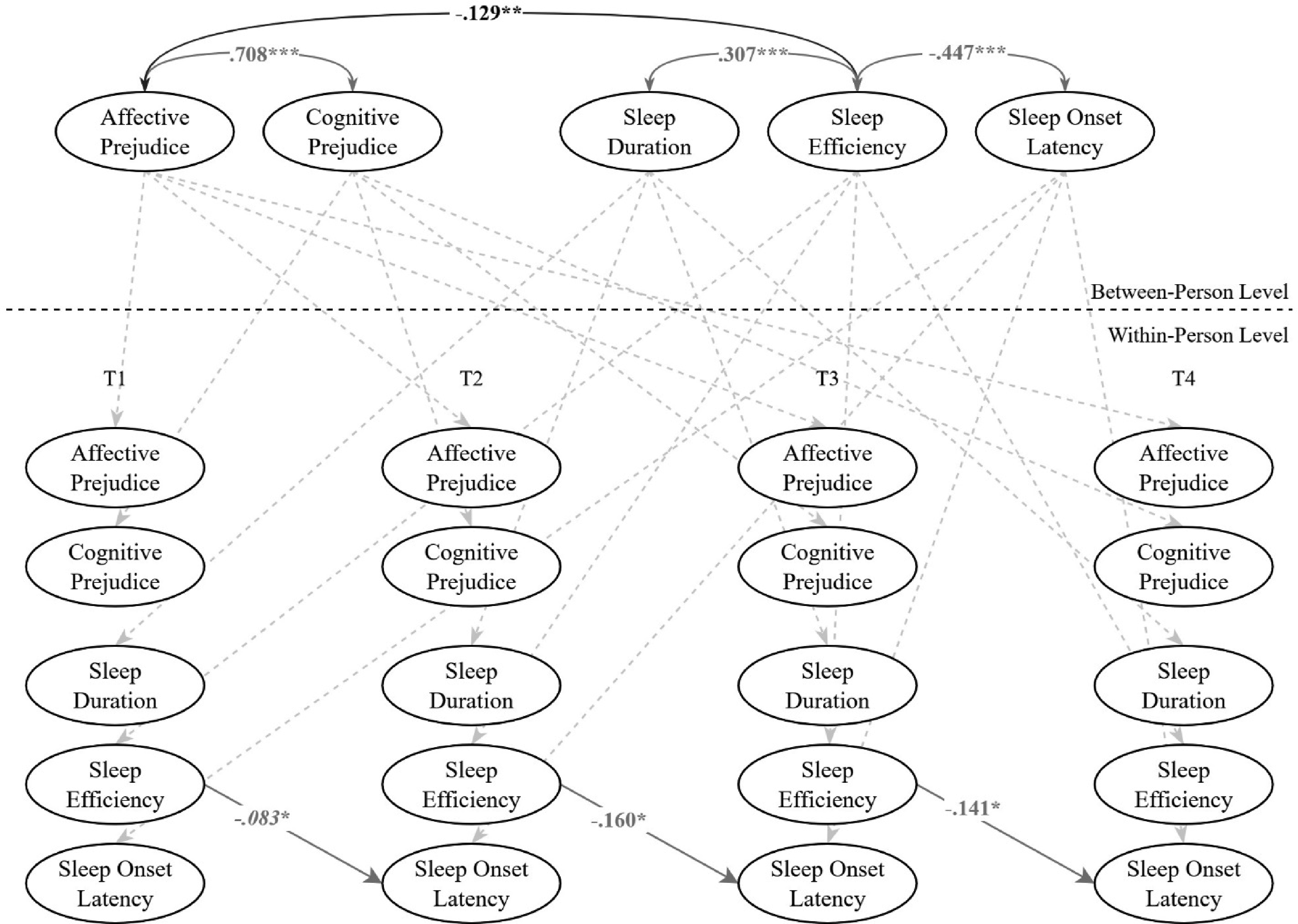
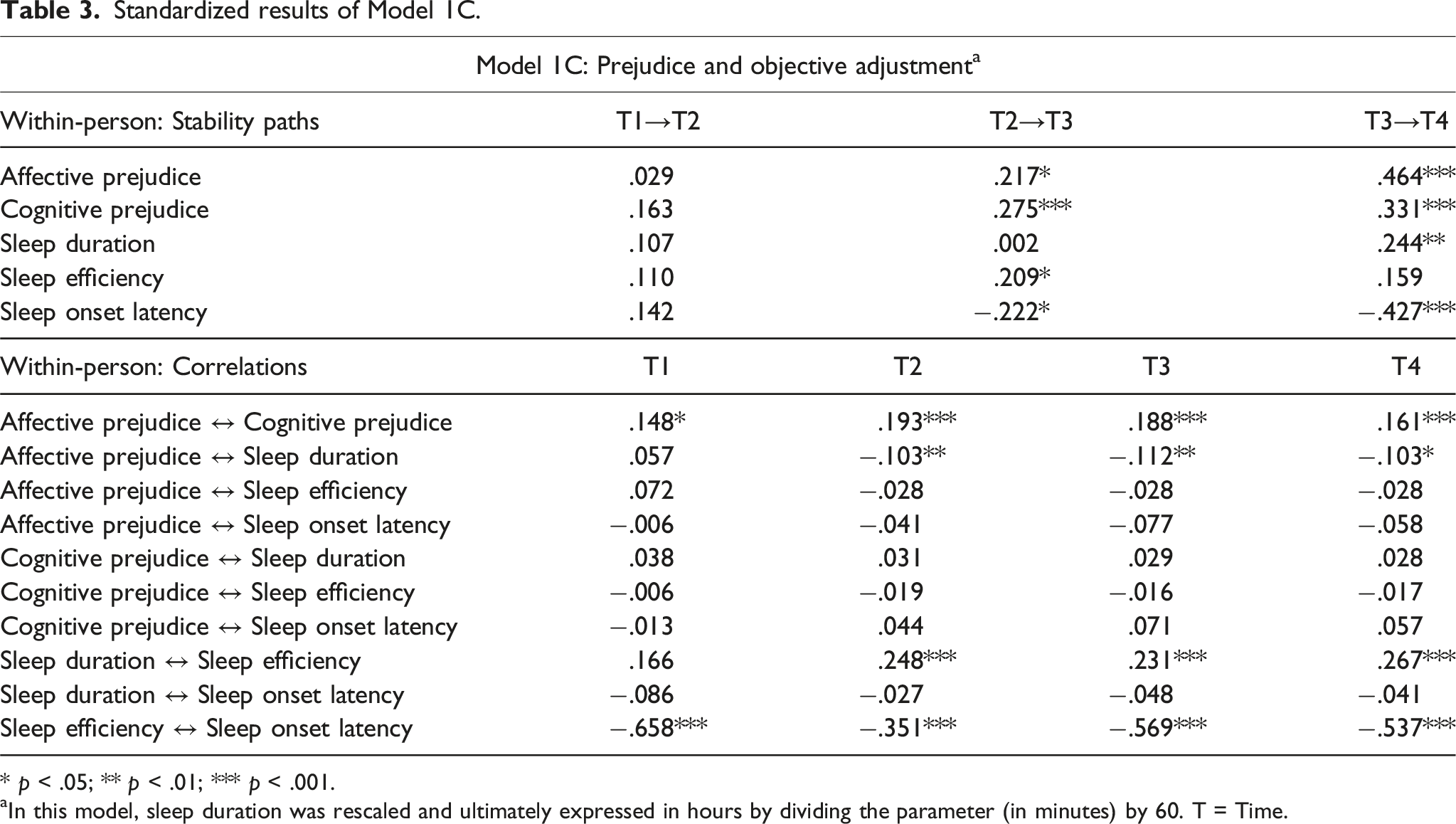
Despite the lack of cross-lagged associations, these findings suggest the need to further investigate possible processes at play to understand the concurrent changes occurring in both prejudice and sleep functioning. For instance, negative intergroup experiences in multiple contexts were found to contribute to increases in prejudice (e.g., Aberson, 2015; Kotzur & Wagner, 2021). Additionally, research among ethnic minority youth has highlighted that discrimination and negative intergroup encounters can lead to decreases in sleep quantity and quality because these experiences might initiate physiological stress responses and intrusive and ruminative thinking (e.g., Fuller-Rowell et al., 2021; Levy et al., 2016). In a similar way, negative intergroup experiences could have a toll also on ethnic majority youth, contributing to both hindered sleep–wake cycle functioning and increased prejudice against diverse others. More research is needed to corroborate these hypotheses and understand the implications of negative intergroup contact for all adolescents.
Sensitivity analyses
The main models presented above were additionally tested in a bivariate format (i.e., one dimension of prejudice and one dimension of well-being at a time; see Tables S7–S10) as well as including covariates (i.e., participants’ sex, age, and their parents’ educational level; see Tables S11–S14). The procedure followed and full results are available in the Supplemental Materials. Results were largely replicated, highlighting the robustness of current findings.
Study II
Methods
Participants
A subsample of the IDENTITIES project was involved in the current study. Specifically, the participants were 458 adolescents 2 (Mage = 15.59, SD = 1.11 at T1, 54.47% females) who completed the daily diary section of the project (i.e., daily online questionnaires for seven consecutive days) with the actigraphic assessment over one week in January/February 2023. The current sample was evenly divided among those attending the second (54.65%) and those attending the fourth (45.35%) year of high school at the time of daily study. Similar to the general sample of the IDENTITIES project, adolescents included in this study reported that almost half of their fathers (49.50%) and mothers (49.50%) had a medium educational level (i.e., up to high school diploma). Among fathers, most of the remaining (25.75%) had a low (i.e., up to elementary school diploma) followed by those (24.75%) with a high (i.e., bachelor’s degree or higher) educational level. Conversely, among mothers, most of the remaining (38.06%) attained a high and a few (12.44%) a low level of education.
Retention throughout the daily diary and actigraphic study varied considerably. Half of the participants (52.44%) completed four or more daily questionnaires, some (26.76%) completed between two and three, and the remaining (20.80%) completed only one assessment throughout the week. Additionally, the majority of the sample (78.38%) also wore the actigraph during the same week and therefore provided valid objective sleep data. Little’s (1988) Missing Completely at Random (MCAR) test yielded a normed χ2 (χ2/df = 10,069.70/9,688) of 1.04, indicating that data were likely missing completely at random. Therefore, the total sample of 458 participants was included in the analyses, and missing data were handled with the Full Information Maximum Likelihood (FIML) procedure available in Mplus (Kelloway, 2015).
Procedure
The present study was approved by the Ethics Committee of the Alma Mater Studiorum University of Bologna (Italy) as part of the ERC-Consolidator project IDENTITIES “Managing identities in diverse societies: A developmental intergroup perspective with adolescents” (see Study I for more details). This ongoing longitudinal study included multiple assessments across different time scales (i.e., daily, monthly, and annual). For the purpose of the current study, daily diary and actigraphic data collected over one week in January/February 2023 were used. Specifically, participants who agreed to participate were invited to wear an actigraph Micro Motionlogger watch (Ambulatory Monitoring, Inc., Ardsley, NY, USA) for one week. Over the same period, students received via e-mail a brief online questionnaire to complete. The first e-mail was sent during the late afternoon (i.e., 5:00 pm), and automatic reminders were scheduled throughout the evening hours for those who have not yet completed the daily assessment. Adolescents were informed that participation in the study was voluntary and that they could withdraw at any time. They were also required to create a personal code to ensure confidentiality and pair their answers across multiple assessments.
Measures
Daily affective prejudice
The affective component of prejudice was assessed using a single-item of the Feeling thermometer (Haddock et al., 1993; for the Italian version, see Bobba & Crocetti, 2022), asking participants to rate how much they like foreign people on a scale from 0 (at all) to 100 (very much). The item was reversed to simplify the interpretation of results, with higher scores indicating higher daily prejudice.
Daily cognitive prejudice
To evaluate the cognitive component of prejudice, a single item (e.g., “Today, I felt that Italy would be better off without foreign people”) was selected from the scale used in the other assessments (Brown et al., 2008). Participants rated their agreement on a 5-point Likert scale, ranging from 1 (completely disagree) to 5 (completely agree).
Daily subjective, psychological, and social well-being
Subjective, social, and psychological well-being were assessed by relying on the same scale (MHC-SF; Keyes, 2005; Italian validation by Petrillo et al., 2015) adopted in Study I. Cronbach’s alphas across the seven daily assessments ranged between .83 and .91, between .88 and .92, and between .89 and .91, for subjective, social, and psychological subscales, respectively.
Daily physical health perception
Adolescents’ physical health perception was assessed using a single item (i.e., “In general, today would you say your health was”) from the “General Health (GH)” subscale from the Short Form-36 Health Survey (SF-36; Ware & Gandek, 1994; for the Italian version, see Apolone & Mosconi, 1998), rated on a 5-point Likert-type rating scale, ranging from 1 (poor) to 5 (excellent).
Daily sleep functioning
Daily sleep functioning was assessed by relying on both self-report and objective measures of its quality and quantity.
Daily subjective sleep quality
Problems of the sleep/wake cycle were assessed using two items for problems in the sleep (i.e., “Tonight, did you have an unrestful sleep?”) and in the wake (i.e., “Today, did you feel sleepy especially during non-active moments?”). These items were selected from the Mini Sleep Questionnaire (MSQ; Zomer et al., 1985; for the Italian validation, see Fabbri et al., 2006). Participants rated their answers on a 7-point Likert-type scale from 1 (never) to 7 (always).
Daily objective sleep quality
Daily sleep duration and efficiency (i.e., sleep efficiency and sleep onset latency) were assessed following the same procedure presented in Study I. However, in the current study, sleep data were not aggregated across multiple days. Conversely, daily sleep parameters were paired with participants’ answers to that day’s questionnaire.
Strategy of analyses
Random-Intercept Cross-Lagged Panel Models of Study II: Model fit indices and model comparison.
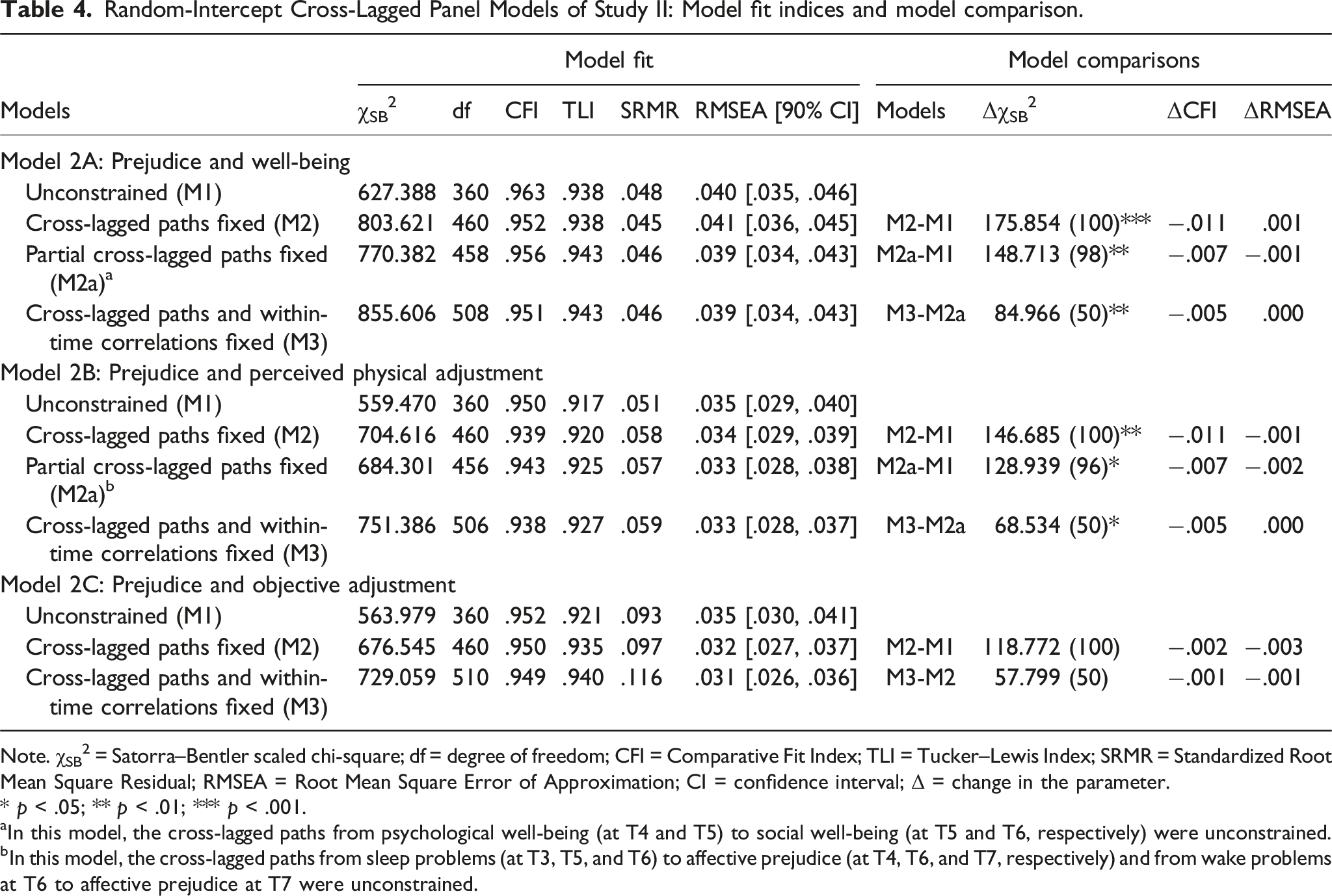
Note. χSB2 = Satorra–Bentler scaled chi-square; df = degree of freedom; CFI = Comparative Fit Index; TLI = Tucker–Lewis Index; SRMR = Standardized Root Mean Square Residual; RMSEA = Root Mean Square Error of Approximation; CI = confidence interval; Δ = change in the parameter.
* p < .05; ** p < .01; *** p < .001.
aIn this model, the cross-lagged paths from psychological well-being (at T4 and T5) to social well-being (at T5 and T6, respectively) were unconstrained.
bIn this model, the cross-lagged paths from sleep problems (at T3, T5, and T6) to affective prejudice (at T4, T6, and T7, respectively) and from wake problems at T6 to affective prejudice at T7 were unconstrained.
Results and discussion
Preliminary analyses
Descriptive statistics and correlations among daily variables are reported in Table S15 of the Supplemental Materials. As a preliminary step, longitudinal measurement invariance was tested for the subjective, social, and psychological well-being scales. Results are reported in Table S16 of the Supplemental Materials. As can be inferred, full metric invariance was reached for all three scales, and therefore, we could proceed with the main analyses. Unstandardized estimates of the main models are reported in Table S17 (for Model 2A), Table S18 (for Model 2B), and Table S19 (for Model 2C) of the Supplemental Materials.
Daily prejudice and subjective, psychological, and social well-being
This study sought to examine the day-to-day associations between affective and cognitive prejudice and subjective, psychological, and social well-being. Results (see Figure 4 and Table 5) of the RI-CLPM highlighted only one cross-lagged association (with a large effect size) and a few correlations at the within- and between-person levels. Specifically, adolescents’ increased subjective well-being on one day led to significant decreases in affective prejudice on the next day. Further, momentary increases in affective prejudice significantly correlated with momentary decreases in psychological well-being. Similarly, at the between-person level, youth with generally high affective prejudice also reported generally low subjective, psychological, and social well-being. A different pattern of associations emerged for cognitive prejudice at the within-person level. Specifically, momentary increases in cognitive prejudice were found to significantly correlate with similar increases in psychological well-being. Study II: Standardized results of Model 2A. Note. For the sake of clarity, only significant within- and between-person level associations are displayed. Gray continuous arrows indicate within-construct effects. Coefficients in italics indicate paths that, despite being fixed across time, are significant in the unstandardized model (.024 < p < .048) but not significant (.052 < p < .057) in the standardized model. * p < .05; ** p < .01; *** p < .001. Standardized results of Model 2A. Note. T = Time. * p < .05; ** p < .01; *** p < .001.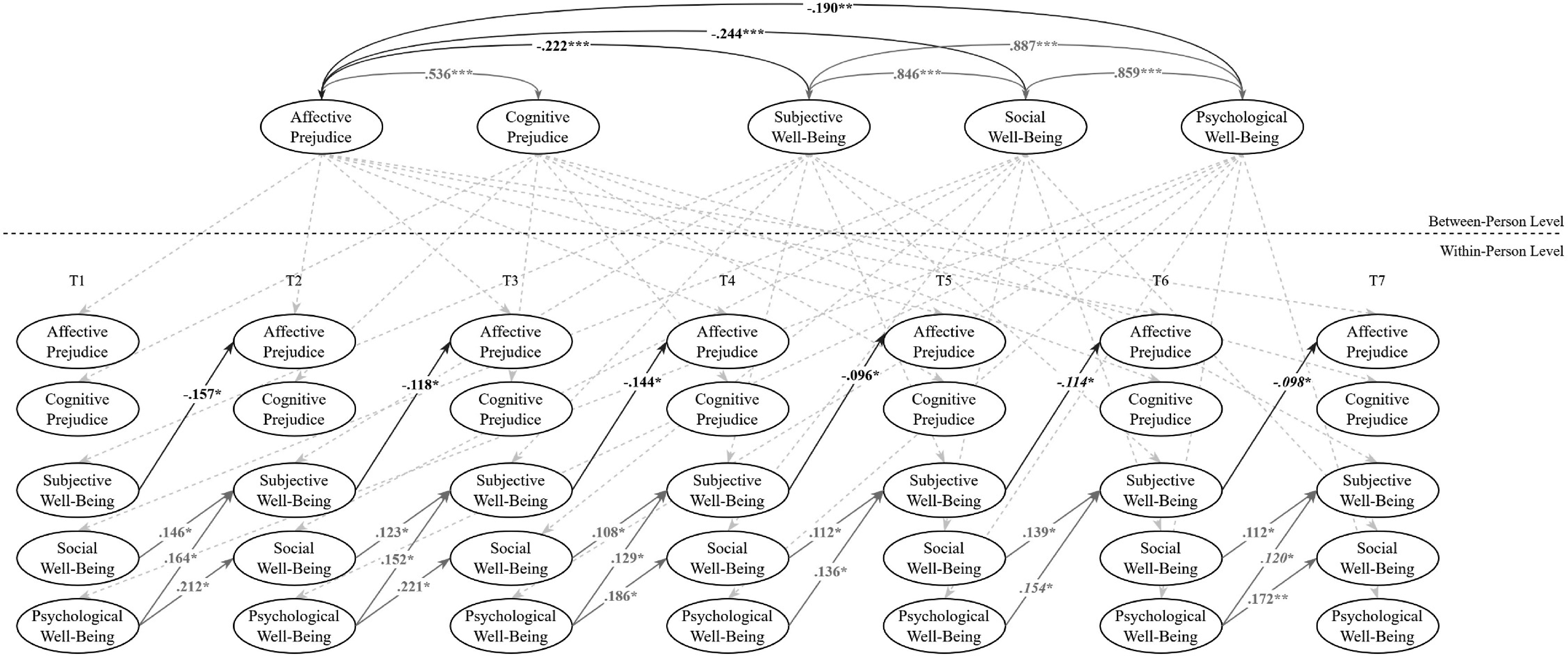
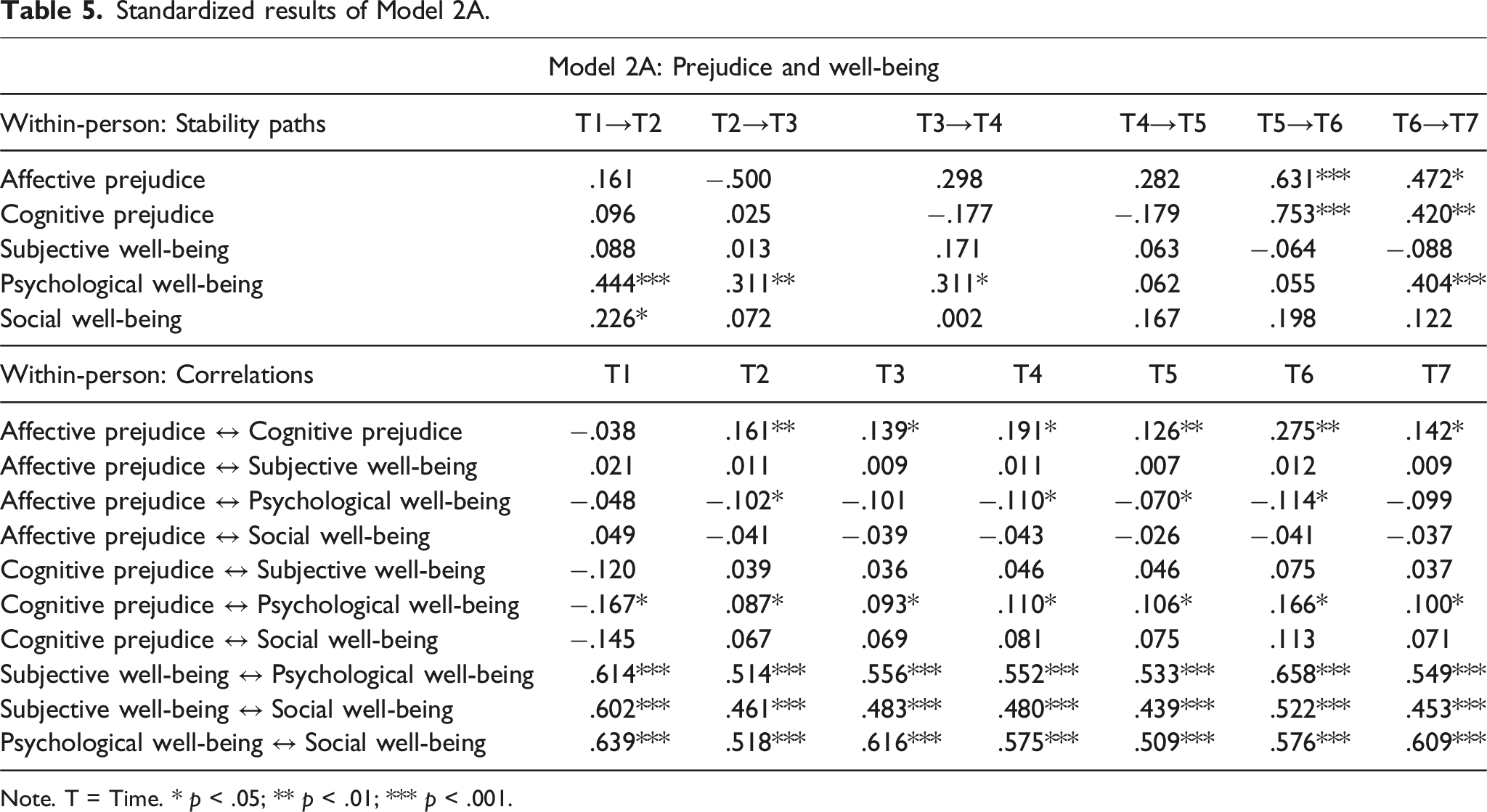
Overall, these findings complement those of Study I in providing a more nuanced understanding of the prejudice-adjustment link. On the one hand, they align with the scapegoat approach (Allport, 1954) and extend prior longitudinal (Sirgy et al., 2019) research by highlighting that on a day-to-day basis, individual well-being spillovers in their intergroup relations and influences feelings against ethnic others. On the other hand, they suggest that cognitive prejudice might have a palliative effect on youth’s psychological well-being (Jost & Banaji, 1994; Jost & Hunyady, 2003). This might be the result of cognitive distortion and stereotypical views that lead youth to endorse more negative beliefs about diverse others, misperceive their own interpersonal adjustment, and feel more capable of overcoming threat perceptions in multicultural contexts.
Daily prejudice and perceived physical adjustment
Concerning the second goal of the current study, the RI-CLPM (see Figure 5 and Table 6) showed a few cross-lagged associations (with effect sizes ranging from medium to large) as well as a couple of significant within- and between-person correlations. Regarding cross-lagged paths, decreases in adolescents’ physical health led to significant increases in affective and cognitive prejudice on the following day. On the contrary, a negative cross-lagged association emerged between affective prejudice and wake problems in that increases in youth’s negative feelings against ethnic minorities were linked to decreases in wake problems on the following day. It should be noted that the strength and significance of this effect were marginal and inconsistent across days. Therefore, caution is warranted in drawing empirical conclusions. Additionally, both at the within- and between-person level, affective prejudice significantly correlated with poorer adjustment. On the one hand, momentary increases in negative emotions against ethnic minorities co-occurred with momentary decreases in physical health. On the other hand, youth with generally high levels of affective prejudice also reported generally low physical health and generally high problems during the wake state. Study II: Standardized results of Model 2B. Note. For the sake of clarity, only significant within- and between-person level associations are displayed. Gray continuous arrows indicate within-construct effects. Coefficients in italics indicate paths that, despite being fixed across time, are significant in the unstandardized model (.021 < p < .049) but not significant (.053 < p < .086) in the standardized model. * p < .05; ** p < .01; *** p < .001. Standardized results of Model 2B. Note. T = Time. * p < .05; ** p < .01; *** p < .001.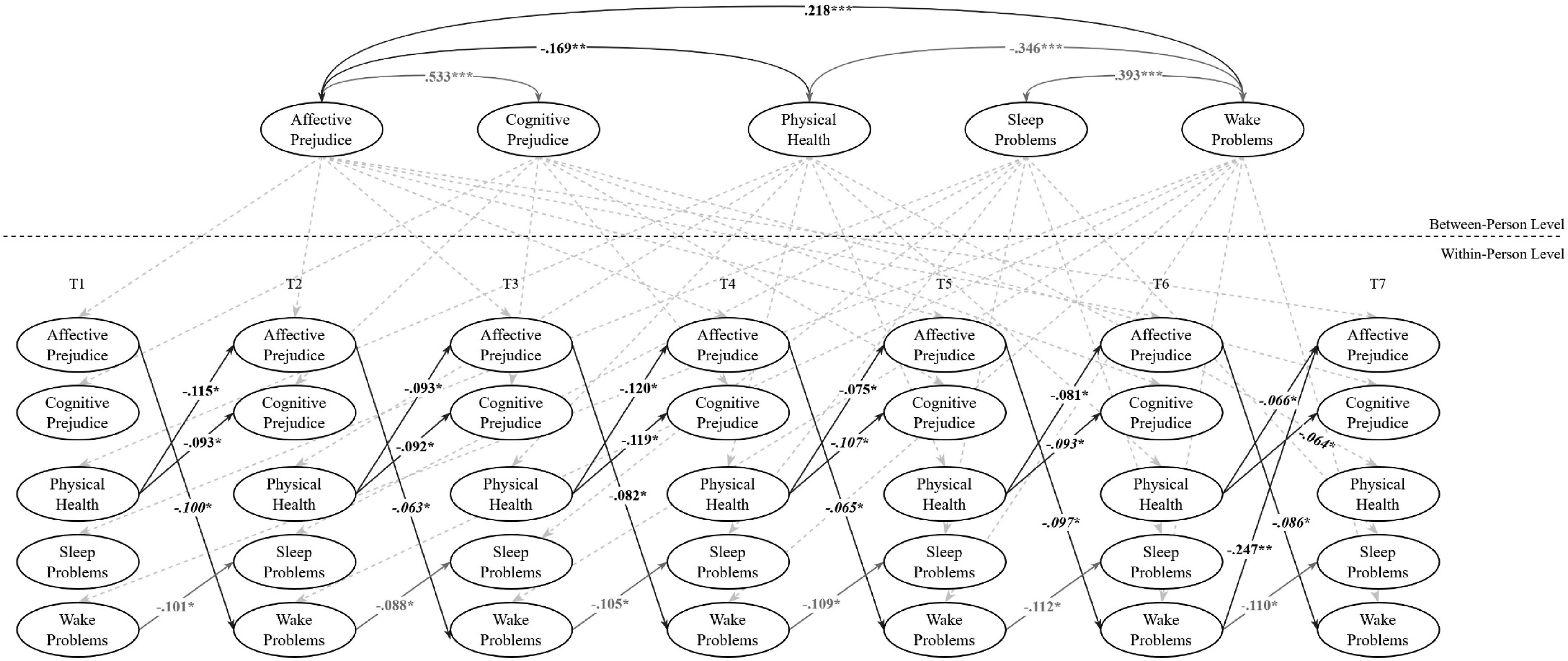
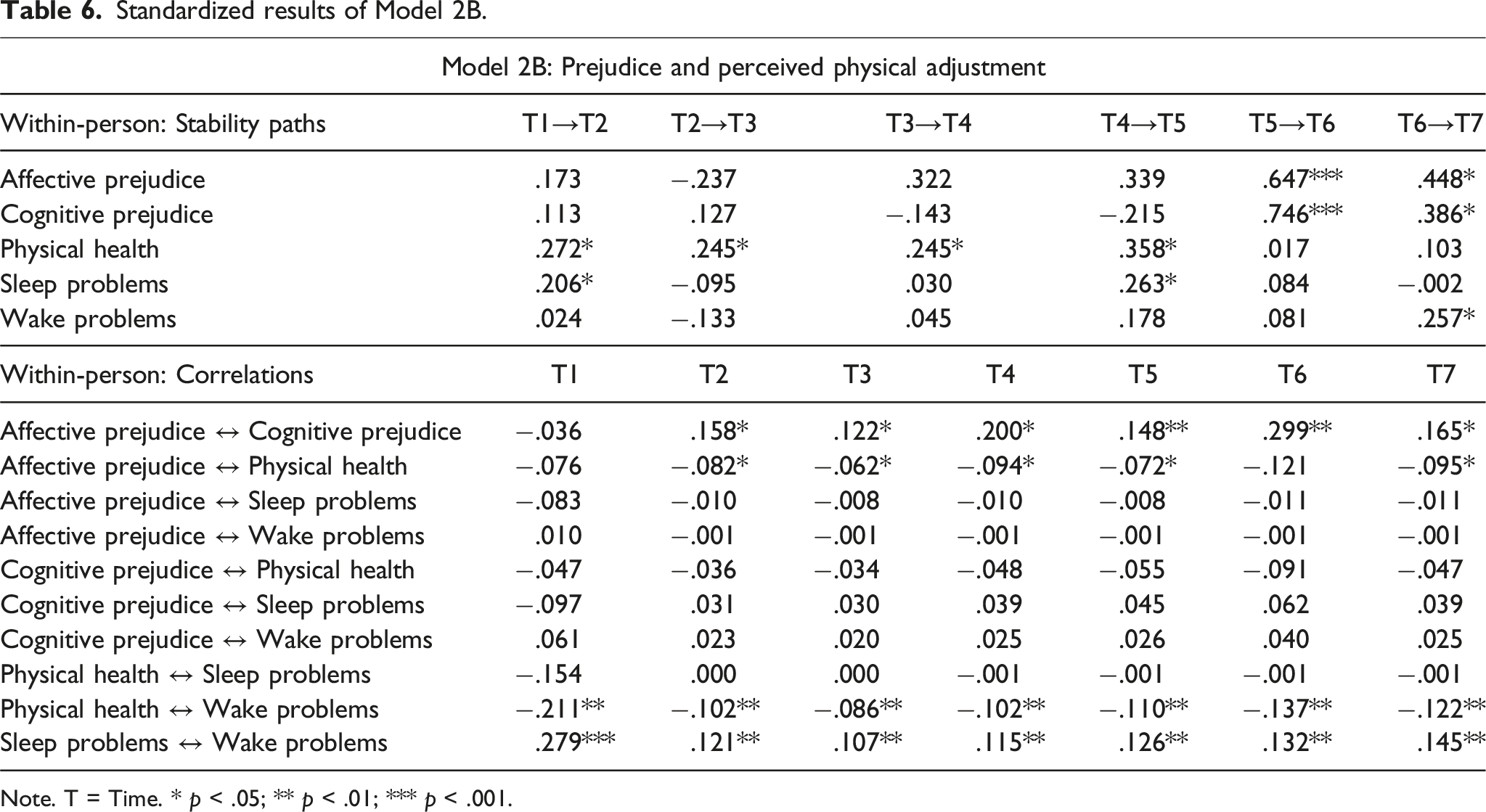
Overall, these findings highlight the negative interplay between prejudice and physical health and problems of the sleep–wake cycle both concurrently and longitudinally. Similar to the daily dynamics between prejudice and well-being, most longitudinal influences were found from physical health to affective and cognitive prejudice. These associations might also explain the negative interplay between stable levels of both health and prejudice over the week considered.
Daily prejudice and objective sleep assessment
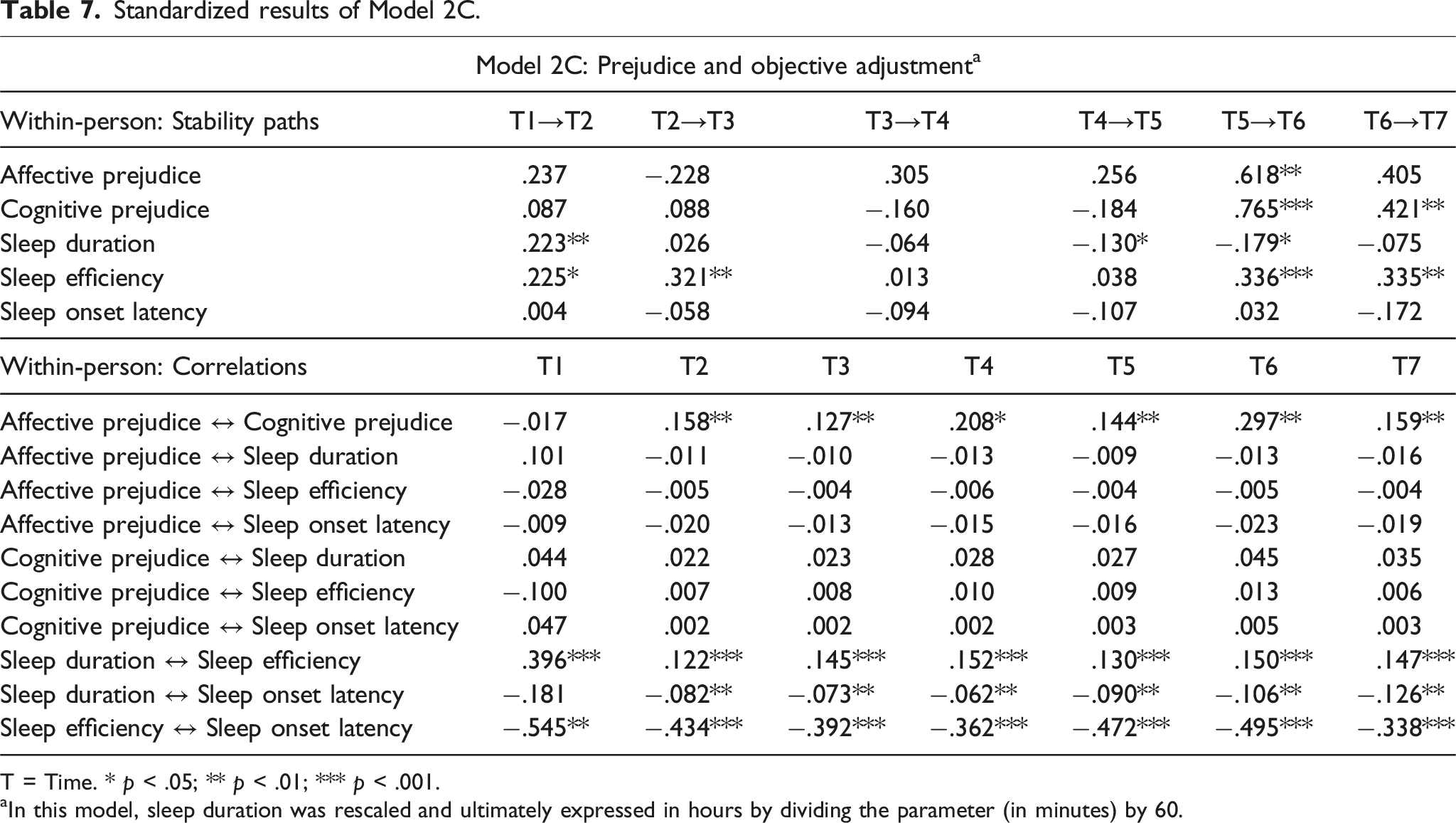
Last, this study examined the daily interplay between ethnic prejudice and sleep duration and quality based on objective parameters (see Figure 6 and Table 7). Results highlight the lack of significant associations across the two domains and levels of analysis. In other words, on a daily level, it appears that individual changes in ethnic prejudice are not intertwined with changes in sleep outcomes and that youth who report higher levels of prejudice do not necessarily display impaired sleep functioning as assessed by objective parameters. Study II: Standardized results of Model 2C. Note. For the sake of clarity, only significant within- and between-person level associations are displayed. Gray continuous arrows indicate within-construct effects. * p < .05; ** p < .01; *** p < .001. Standardized results of Model 2C. T = Time. * p < .05; ** p < .01; *** p < .001. aIn this model, sleep duration was rescaled and ultimately expressed in hours by dividing the parameter (in minutes) by 60.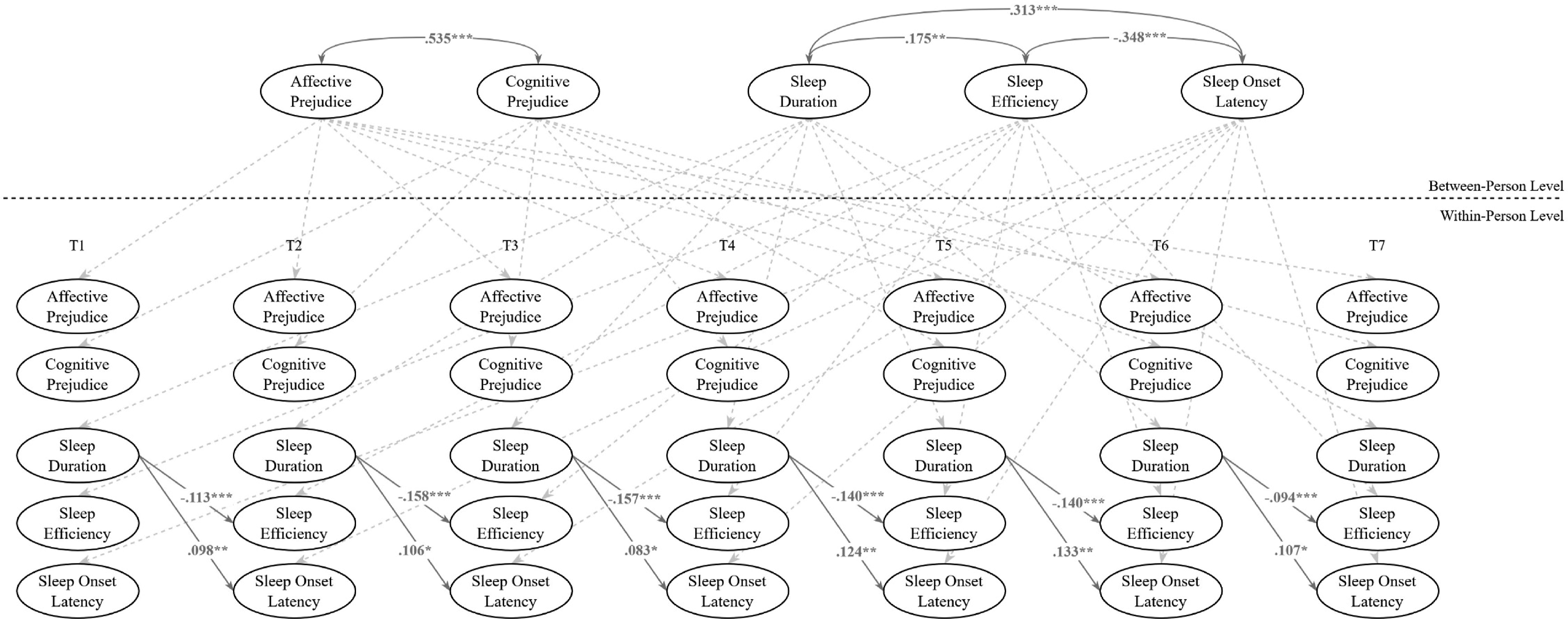
Sensitivity analyses
As additional sensitivity analyses, the main models were tested in a bivariate format (i.e., one dimension of prejudice and one dimension of well-being at a time; see Tables S20–S23) as well as including covariates (i.e., participants’ sex, age, and their parents’ educational level; see Tables S24-S27). The procedure followed and full results are available in the Supplemental Materials. Overall, results were largely replicated in these sensitivity analyses, lending additional support to the strength of the findings of the current study.
General discussion
Developing negative emotions and attitudes toward diverse others might prevent both ethnic minority and majority youth from successfully adjusting to and navigating current multicultural societies (McKeown et al., 2019). The literature on the consequences of discrimination for its victims (i.e., ethnic minority individuals) has consistently highlighted the detrimental effects of negative intergroup relations on adolescents’ well-being (for reviews, see, e.g., Benner et al., 2018; Cave et al., 2020; Schmitt et al., 2014). Conversely, less attention (for exceptions, see, e.g., Dinh et al., 2014; Korol et al., 2023; Sirgy et al., 2019) has been paid to those who hold negative emotions and endorse stereotypes (i.e., ethnic majority individuals) against diverse others and to how prejudice might affect their adjustment to the complexity of current societies. Theoretical approaches to the study of attitudes and well-being suggested either a negative, such as the seminal work on authoritarian personality (Adorno et al., 1950) and scapegoat theory (Allport, 1954), or a positive, in line with the palliative function of system justification (Jost & Banaji, 1994; Jost & Hunyady, 2003), interplay between the two. Additionally, the few available studies have examined these associations mostly among adult or young adult samples and have provided a scattered picture of the reciprocal associations between prejudice and well-being. The current research aimed to significantly advance the understanding of this longitudinal interplay in several directions by focusing on adolescents, relying on multidimensional assessments of both constructs, and examining their associations across multiple time scales. Thus, this contribution tackled the reciprocal longitudinal interplay between multiple dimensions of ethnic prejudice (i.e., affective and cognitive) and several adjustment outcomes (i.e., subjective, psychological, social well-being, physical health, and sleep functioning) in the medium- (Study I) and short-term (Study II) among adolescents, who are going through a crucial formative period for developing inclusive attitudes in increasingly diverse societies.
The interplay between prejudice and well-being: Common and unique threads in medium- and short-term effects
Findings from the current study highlighted a nuanced and reciprocal pattern of associations between ethnic prejudice and some, but not all, indicators of well-being. Specifically, accounting for multiple dimensions of both phenomena and considering multiple levels of analysis allowed for a more complex understanding of the interplay between prejudice and well-being. Interestingly, several common and unique patterns of results emerged across the two timescales considered, which can help advance extant knowledge on these phenomena and inform preventive interventions with adolescents.
Regarding common findings, two main threads can be highlighted across the timescales considered. The first one concerns the unique interplay that different facets of prejudice display with the adjustment outcomes examined. On the one hand, affective prejudice and well-being displayed consistent negative reciprocal longitudinal associations both in the medium- and short-term. This highlights a spillover of negative emotions across the two domains and aligns with the assumptions of the scapegoat theory (Allport, 1954). On the other hand, the interplay between cognitive prejudice and adjustment outcomes appeared to be more nuanced, with a few positive medium-term longitudinal (i.e., with social well-being) and short-term concurrent (i.e., with psychological well-being) associations. These unexpected findings can be explained based on several theoretical and empirical foundations.
From a theoretical standpoint, they lend support for the palliative function of ideologies of system justification (Jost & Banaji, 1994; Jost & Hunyady, 2003). Specifically, endorsing negative cognitions and stereotypes against ethnic minorities strengthens the societal position of ethnic majority individuals and, therefore, might help them face the perceptions of cultural threats stemming from the increasing diversity of current societies (e.g., Onraet et al., 2017; Van Assche et al., 2018). From an empirical perspective, prior research has highlighted that adolescents with strongly negative intergroup attitudes (e.g., xenophobia) tend to befriend peers who endorse similar views (van Zalk et al., 2013). These selection processes can contribute to the creation of isolated niches characterized by shared perceptions of others and reality, therefore fostering the subjective feeling of being well integrated into one’s social context. Brought to a larger extent, highly prejudiced adolescents might feel in line with the general socio-political landscape characterizing the context of the study (i.e., Italy) and experience a strong person-culture fit, which has been linked to more positive perceptions of well-being (Fulmer et al., 2010).
A second common thread across the two studies concerns the lack of longitudinal associations between prejudice and objective indicators of sleep functioning. Specifically, affective prejudice correlated significantly in the medium-term with decreases in sleep duration (at the within-person level) and sleep efficiency (at the between-person level), while no associations were found for cognitive prejudice nor at the daily level. This lack of associations is in contrast with the longitudinal and concurrent links between prejudice and subjective perceptions of sleep functioning. This nuanced interplay between prejudice and sleep adjustment suggests the importance of combining subjective and objective indicators to reach a more comprehensive understanding of these phenomena.
Regarding unique associations across the two studies, the direction of cross-lagged associations between prejudice and well-being differed substantially depending on the timescale considered. On the one hand, in the medium-term, prejudice was found to precede and inform later levels of social well-being and sleep functioning. This aligns with seminal work on the authoritarian personality (Adorno et al., 1950) and with prior research with young adults (e.g., Dinh et al., 2014; Holmberg, 2010; Korol et al., 2023). In other words, these findings suggest that negative intergroup attitudes take a toll not only on the adjustment of the targets of such attitudes (i.e., ethnic minority individuals) but also on the well-being of those who endorse them (i.e., ethnic majority individuals). On the other hand, in the short-term, subjective well-being and physical health led to significant changes in prejudice levels on the following day. This means that, in line with the scapegoat theory (Allport, 1954), youth might endorse ethnocentric views of society and increase their negative emotions against diverse others who can be conceived as convenience targets to displace unpleasant feelings about the self (e.g., Sirgy et al., 2019).
Theoretical and practical implications
Overall, the current studies have important theoretical and practical implications. From a theoretical point of view, they advance prior research with adults (e.g., Dinh et al., 2014; Kudrnáč et al., 2023; Yoxon et al., 2019) and provide initial evidence on the interplay between ethnic prejudice and well-being among ethnic majority adolescents. Additionally, they highlight the importance of considering multiple time scales for gathering a comprehensive understanding of the processes at play. Tackling short- and medium-term dynamics not only provides a more comprehensive understanding of these phenomena but also helps shed light on the far-reaching consequences of day-to-day experiences and interactions (e.g., Klimstra & Schwab, 2021). For instance, perceptions of ill-being can contribute to increases in negative emotions and stereotypes about ethnic others on the following day, and these, in turn, can cumulatively spiral into worsening youth’s adjustment in the medium-term.
From a practical point of view, the current studies found several associations between prejudice and well-being with medium and large effect sizes, providing an important evidence base for interventions aimed at improving individual and societal adjustment. On the one hand, interventions supporting youth’s adjustment not only have a “triple dividend” of improving their present and future lives and those of the next generation (WHO, 2021) but also have the added value of reinforcing the fabric of current societies by supporting positive intergroup attitudes and relationships. On the other hand, preventing the development and consolidation of ethnic prejudice in adolescence can prove effective not only in enhancing collective outcomes, such as promoting the development of inclusive norms and harmonious intergroup relationships (Beelmann & Heinemann, 2014), but also in contributing to individual outcomes pertaining to multiple dimensions of well-being. All in all, it appears that tackling the development of both prejudice and well-being can simultaneously be of service to the thriving of adolescents and the societies they are part of.
Strengths and limitations of the present research and suggestions for future studies
The current findings should be read in the light of some strengths as well as limitations. First, this research adopted a multidimensional account of prejudice by tackling both its affective and cognitive facets. However, behavioral expressions of prejudice (e.g., avoidance and victimization) might ulteriorly compromise youth’s adjustment and well-being in multicultural contexts. Therefore, future research should strive to understand the collective and individual implications of different behavioral forms of prejudice. Moreover, self-reported assessments of prejudice might be subject to social desirability. Relatedly, more research combining explicit and implicit evaluations (e.g., with the Implicit Association Task; Greenwald et al., 1998) of youths’ attitudes is needed to unravel their common and unique associations with adjustment outcomes. Additionally, this study included both subjective and objective indicators of sleep functioning among the several well-being outcomes examined. Future research could extend current findings by examining well-being from a multi-informant perspective by including parental or teachers’ evaluations of youth’s adjustment across multiple contexts (De Los Reyes & Epkins, 2023).
Second, across two studies, this research tackled the medium- and short-term reciprocal associations between ethnic prejudice and adjustment. Nevertheless, it is less clear how these findings can be integrated with the long-term effects highlighted by previous research (e.g., Korol et al., 2023). Examining the interplay of these constructs across multiple years and integrating different timeframes might shed light on important windows of opportunity and micro-processes that can support positive adjustment to multicultural contexts (Klimstra & Schwab, 2021).
Third, this research included a large sample of youth followed longitudinally across different time scales. However, post hoc power analyses highlighted that both studies might have been underpowered to detect meaningful small and medium associations between prejudice and well-being. Therefore, findings from the current study should be further substantiated by additional research involving larger representative samples of youth.
Last, the current studies have targeted adolescents living and studying in an area (i.e., Emilia-Romagna region) characterized by higher levels of ethnic diversity (Regione Emilia-Romagna, 2022), especially in the school context (Ministero della Pubblica Istruzione, 2022). Therefore, this research contributes to the understanding of intergroup processes that are salient not only for the individual but also for the larger social context. However, it should be noted that these contextual features might limit the generalizability of the present findings. Future research should examine how contextual factors (e.g., the share of the immigrant population in the neighborhood or at school) can shape the associations between prejudice and the well-being of ethnic majority adolescents.
Conclusions
Ethnic prejudice can have heinous consequences for its victims, while less is known about its effect on the well-being of those who endorse it. The current research provided novel insights into the medium- and short-term interplay between affective and cognitive facets of prejudice and several well-being outcomes in adolescence. In the medium-term, endorsing ethnic prejudice was linked to poorer well-being, physical health, and sleep functioning, mainly at the between- but also at the within-person level. Furthermore, within-person increases in subjective well-being led to decreases in cognitive prejudice. This latter result was further clarified by the study of short-term processes that revealed how subjective perceptions of maladjustment contributed to day-to-day increases in negative emotions and stereotypes against diverse others. Overall, this research highlights the toll of prejudice, which not only hampers intergroup relationships in diverse societies but also brings a personal cost to adolescents’ well-being.
Supplemental Material
Supplemental Material - The toll of prejudice: The longitudinal interplay between ethnic prejudice and well-being in adolescence
Supplemental Material for The toll of prejudice: The longitudinal interplay between ethnic prejudice and well-being in adolescence by Beatrice Bobba and Elisabetta Crocetti in European Journal of Personality.
Footnotes
Author’s note
Beatrice Bobba: Conceptualization, data curation, formal analysis, investigation, methodology, visualization, and writing—original draft. Elisabetta Crocetti: Conceptualization, funding acquisition, investigation, methodology, resources, supervision, and writing—original draft.
Declaration of conflicting interests
The author(s) declared no potential conflicts of interest with respect to the research, authorship, and/or publication of this article.
Funding
The author(s) disclosed receipt of the following financial support for the research, authorship, and/or publication of this article: This work was supported by a grant from the European Research Council (ERC) under the European Union's Horizon 2020 research and innovation programme (ERC-CoG IDENTITIES Grant agreement N. [101002163]; Principal investigator: Elisabetta Crocetti).
Open science statement

Ethical statement
Supplemental Material
Supplemental material for this article is available online.
Notes
References
Supplementary Material
Please find the following supplemental material available below.
For Open Access articles published under a Creative Commons License, all supplemental material carries the same license as the article it is associated with.
For non-Open Access articles published, all supplemental material carries a non-exclusive license, and permission requests for re-use of supplemental material or any part of supplemental material shall be sent directly to the copyright owner as specified in the copyright notice associated with the article.
