




Abstract
Romantic partners routinely regulate each other’s emotions; this phenomenon is known as extrinsic emotion regulation. Previous research investigating emotion regulation in couples has typically examined self-report of emotion regulation from only one member of the couple. It is therefore unclear how much romantic partners agree on which emotion regulation strategies their partner uses and whether this agreement or the unique perspective of each person is the stronger predictor of relationship quality. In the current study (N = 395 romantic couples), we applied a bifactor model to assess the extent to which extrinsic emotion regulation processes (expressive suppression, downward social comparison, humor, distraction, direct action, reappraisal, receptive listening, and valuing) related to relationship quality, comparing: (a) the unique perspective of the regulator, (b) the unique perspective of the target, and (c) the shared perspective (consensus) between the target and regulator. The results indicated that it is the target’s, rather than the regulator’s perspective of emotion regulation that predicts the relationship quality of both members of the romantic couple. Overall, these findings suggest that it is not what the regulator thinks they do to regulate their romantic partner’s emotions that relates to relationship quality, but rather the target’s perceptions of the regulation attempt.
Plain language summary
Romantic partners often try to manage each other's emotions, a process called extrinsic emotion regulation. Many prior studies have looked at this by asking only one person in the couple either about how they manage the emotional experiences of their partner, or how their partner has managed their own emotions. This means that there are still questions about whether and how much both partners agree on what things are said and done to make each other feel better, and whose view is more important for how they view the quality of their relationship. In our study with 395 couples, we looked at how different ways of trying to make each other feel better (like using humor, distracting them, or listening to them) related to each partner's perceived relationship quality. We compared three perspectives: (1) What the person trying to make their partner feel better (the regulator) thinks they do. (2) What the person whose emotions are being managed (the target) thinks their partner does. (3) How much both partners agree on what is being done. The results showed that the target's view (what the person being helped thinks their partner did to try and make them feel better) is more important for their relationship quality than the regulator's view (what the helper thinks they did to make their partner feel better). This means that how the person receiving the emotional help perceives the effort has a bigger impact on how both partners view the quality of their relationship, rather than what the person giving the help thinks they are doing.
Keywords
Introduction
Emotion regulation refers to the processes people use to influence the intensity, duration, and expression of emotions (Gross, 2002). Although research has typically focused on intrinsic processes (how someone regulates their own emotions; Gross, 1998), interest in extrinsic emotion regulation (how someone attempts to regulate the emotions of others; Gross, 2015) has burgeoned in recent years (Dixon-Gordon et al., 2015; Ford & Gross, 2019; Nozaki & Mikolajczak, 2020). There is substantial evidence that people not only regulate their own emotions (Gross, 1998) but they also attempt to regulate the emotions of others (Niven, Macdonald et al., 2012; Nozaki & Mikolajczak, 2020; Williams et al., 2018). For example, you (the regulator) might try to help your partner (the target) feel better (regulating your partner’s emotions) by diverting their attention away from the source of their stress (a distraction process), by encouraging them to change how they interpret the situation (a reappraisal process), or by telling them a joke (a humor process). Unsurprisingly, pro-hedonic extrinsic emotion regulation in couples (i.e., attempting to make a romantic partner feel better) has been linked to higher relationship satisfaction (e.g., Kinkead et al., 2021; Williams et al., 2018). However, much of this research has examined only one member of the romantic couple—either the regulator or the target. As such, it is not yet clear how much regulator and target perspectives differ on which processes the regulator used, nor which perspective shows the strongest links to outcomes such as relationship quality. Examining the perspectives of both partners provides insight into the dynamics of extrinsic emotion regulation in romantic relationships, revealing how strategies aimed at regulating a partner’s emotions influences the quality of their relationship. Understanding these mechanisms not only enriches the theoretical knowledge in emotion and relationship science but has practical implications in relationship counseling and interventions. We address this gap by assessing self- and informant-reported extrinsic emotion regulation, acknowledging the common reliance on self-reports which often fail to capture the dyadic nature of emotion regulation in interpersonal relationships. The decision to use a bifactor modeling approach was driven by the opportunity to separate and compare the unique perspectives of the regulator (e.g., I made my partner laugh), and the target (e.g., My partner made me laugh) as well as the shared perspective (i.e., the agreement between the two people), thereby addressing the limitations of single-perspective assessments as predictors of relationship quality.
Extrinsic emotion regulation
Emotion regulation is important for both personal well-being (Gross & John, 2002) and for relationship quality (Niven et al., 2015; Williams et al., 2018). Intrinsic emotion regulation refers to the modulation and/or expression of one’s own emotional experience (Gross & John, 2002). However, emotion regulation is rarely a purely solo process (Butler & Gross, 2009; Rime, 2007), with extrinsic emotion regulation understood as an attempt to influence the emotional experience of others (Niven et al., 2012; Nozaki & Mikolajczak, 2020; Tamminen et al., 2019; Zaki & Williams, 2013). Specifically, a key goal of extrinsic emotion regulation is to increase positive and/or decrease negative emotions in another person (Nozaki & Mikolajczak, 2020). However, despite the conceptual similarities between intrinsic and extrinsic emotion regulation, there are important differences. One key difference between intrinsic and extrinsic emotion regulation is the distinct roles of the regulator (the person making the regulation attempt) and the target (the person whose emotions are targeted for change). Intrinsic emotion regulation occurs when the regulator is motivated to regulate their own emotions. Extrinsic emotion regulation occurs when the regulator is motivated to regulate another person’s emotions (the target). Accordingly, the regulator is required to perceive the target’s emotion and identify the need for regulation, select a process, and then implement that process (Reeck et al., 2016). This can be done through a trial-and-error approach or by considering the specific emotional context, prior knowledge of the target’s preferences for regulation, and likely appraisals by the target. Importantly, intrinsic and extrinsic emotion regulation can co-occur. By attempting to regulate the emotions of a distressed partner, for example, one can also down-regulate one’s own emotions that were generated by the distress one’s partner expressed (Gross, 2008).
The primary conceptual model of extrinsic emotion regulation describes several processes that could be used to improve or worsen other people’s emotions (Niven et al., 2009). The current study focuses only on extrinsic affect improving (i.e., pro-hedonic regulation, where the regulator attempts to up-regulate positive and/or down-regulate negative affect). Recent research has found support for eight possible extrinsic emotion regulation processes (MacCann et al., 2023; Walker et al., 2024; Xiao et al., 2022). One could use valuing to tell an employee their work is valuable, use receptive listening to encourage the other person to express their emotions, help a friend to cognitively reappraise a negative situation by helping them see it in a positive light, use direct action to change someone else’s situation, use humor by telling the other person a joke to lighten the mood, use distraction to divert someone’s attention away from a stressor, use downward social comparison to help a partner reconceptualize their problem as less distressing than other possibilities, or use expressive suppression to encourage someone not to give in to tears. Although downward comparison has been shown to improve one’s own emotions (Wheeler & Miyake, 1992), it has only recently been considered as a possible emotion regulation process.
These processes are not equally effective in terms of the emotions they produce, or the downstream personal and relationship well-being outcomes. People report significantly higher positive and lower negative affect toward others who use receptive listening, valuing, and reappraisal to regulate the emotions of other people. Additionally, people report significantly higher positive affect, but not negative affect, toward others who use expressive suppression (MacCann et al., 2023). In an experience-sampling study of undergraduate students, participants showed increases in positive affect but decreases in negative affect when they received humor or reappraisal from another person since the last time point (i.e., humor and reappraisal seem effective for regulating others’ emotions; MacCann et al., 2023). People with higher emotion management ability (the core component of emotional intelligence) report using more valuing and receptive listening but less expressive suppression and downward social comparison to regulate others’ emotions (Xiao et al., 2022).
Extrinsic emotion regulation and relationship quality
Romantic relationships represent a core feature of people’s lives. Characteristics such as commitment, love, trust, communication, security, and emotional support help people evaluate the quality of their relationship (Fletcher et al., 2015; Hendrick et al., 1998). The expression of negative emotions can evoke emotional and behavioral responses in others (Kiltner & Haidt, 2001; Keltner & Kring, 1998), motivating a sympathetic response toward the personal who expressed these emotions (Lench et al., 2016). Evidence suggests that people who attempt to regulate others’ emotions develop stronger relationships and deeper trust in those relationships (Keltner & Haidt, 2001; Keltner & Kring, 1998; Niven et al., 2012). Relationships involve the ebb and flow of negative and positive experiences, which inevitably influences both partners’ well-being (Antonucci et al., 2001). For example, increased negative emotions and adverse mental and physical health outcomes for both partners can result when the relationship’s needs and expectations are unmet (Bravo et al., 2017; McNulty et al., 2021; Whisman, 2007). Furthermore, the longer adverse outcomes persist, the more likely it is that relationship quality will decline, potentially leading to relationship breakdown (Bravo, 2017; McNulty et al., 2021). In contrast, when needs and expectations are met within the relationship, and conflict is addressed with effective communication and emotional support, there are greater overall perceptions of relationship quality within the partnership (Antonucci et al., 2001; Pateraki & Roussi, 2012; Voss et al., 1999).
Although much of the past emotion regulation research in romantic relationships examines intrinsic rather than extrinsic regulation processes, the interdependent nature of close relationships means that both partners’ emotional experiences are inherently linked (Butler, 2015; Rusbult & Van Lange, 2003) That is, the way one person regulates their own emotions can positively or negatively impact their partner’s emotions and emotional experiences (Proulx et al., 2007). From intrinsic emotion regulation research, it is clear that some regulatory processes are more effective than others in maintaining healthy relationships. For example, intrinsic expressive suppression (suppressing one’s own emotions) leads to lower relationship satisfaction over time (Gross & John, 2002; Impett et al., 2012), whereas intrinsic cognitive reappraisal relates to higher relationship quality (Rusu et al., 2019). Given that prior research has shown that people deliberately provide support to a distressed partner (Bolger & Eckenrode, 1991), it is feasible that extrinsic expressive suppression and reappraisal may be similarly related to the perception of relationship quality reported by both partners. In situations where one partner’s emotional insight is limited, or they are having difficulty interpreting a situation, an external observer (regulator) may be able to offer an alternative perspective to help their partner reframe or reinterpret the situation (Barrett, 2012), thus engaging extrinsic regulatory processes.
Similarly, extrinsic emotion regulation processes, such as valuing and receptive listening, are centered on the relationship between the regulator and the target. In fact, Walker et al. (2024) shows that people who use extrinsic emotion regulation strategies to regulate their partner’s emotions have higher relationship satisfaction, with the strongest effects for valuing, receptive listening, and humor. Listening to someone has been shown to improve the other person’s emotional response to negative events in terms of subjective feelings and physiological response (Seehausen et al., 2012). Moreover, listening relates to increased feelings of closeness and reduced loneliness (Nils & Rimé, 2012; Pauw et al., 2018). Likewise, humor is positively related to relationship quality (Cann et al., 2009; Carstensen et al., 1995; Kurtz & Algoe, 2015) and tends to improve positive emotions (Fredrickson & Levenson, 1998; MacCann et al., 2023) while distracting from negative emotions (MacCann et al., 2023; Strick et al., 2009). In contrast, expressive suppression (encouraging the target to avoid verbally or physically expressing their emotions) generally negatively impacts romantic relationships (Sasaki et al., 2022). Although extrinsic emotion regulation processes have been examined within organizational (e.g., Niven et al., 2012), developmental (e.g., Kiel et al., 2020), and clinical (e.g., Fenning et al., 2018; Hoffman, 2014) literatures, research into the processes people use to regulate their romantic partner’s emotions is relatively recent.
Self- and informant-report perspectives
Although the informant-reported attributes of one partner do not typically predict relationship satisfaction in romantic relationships beyond what is captured by self-reported variables (Joel et al., 2020), the way each partner perceives and reports on their partner’s traits or behaviors (i.e., informant-report) may influence both individuals’ view on the quality of their relationship. This highlights the importance of considering the perspective of both partners in the relationship—particularly when the actions of one partner is intended to directly impact the emotional experiences of the other. Despite prior research demonstrating that the perspective of both people in a relationship is an important consideration for relationship outcomes (Kenny & Acitelli, 2001), the prevailing body of research on extrinsic emotion regulation has typically used self-report measures examining either the target or regulator perspective. Specifically, asking the target what they perceived the regulator had done to influence their emotional experience (an informant-report) or asking the regulator what actions they took to influence their target’s emotional experience (self-report). While valuable, a one-sided perspective does not consider the complexity of the interdependent, interpersonal nature of extrinsic emotion regulation. For example, regulators cannot directly access a target’s emotional state, and although they have access to expressive facial, verbal, and body expressions (Rimé et al., 1998), accurately identifying romantic partners’ emotions can be difficult (Ickes et al., 1990; Zaki et al., 2008). Consequently, the regulator’s inaccurate identification of the target’s emotions may not only result in an ineffective regulation attempt, but it may also initiate other negative emotions (Levenson et al., 2014).
Moreover, the few studies that have explored the dyadic nature of extrinsic emotion regulation offer valuable insights but remain exceptions to the broader research (Nozaki & Mikolajczak, 2023; Shu et al., 2021; Zhang et al., 2023). For example, Zhang et al. used neuroimaging to evaluate changes in the level of sadness and neural activity in response to a partner’s regulation attempt. Similarly, Nozaki and Mikolajczak and Shu et al. examined the targets appraisal of regulation effectiveness following a regulation attempt. These approaches highlight the potential of dyadic research and the importance of exploring the perspective of both target and regulator together and the impact of those perspectives on relationship quality. Inevitably, a failed regulation attempt and inadvertently worsening of a partner’s emotional experience may negatively impact both partners' perception of relationship quality (Marigold et al., 2014; Niven et al., 2012).
Examining the interplay between the intention of using extrinsic emotion regulation processes and their corresponding implementation is more nuanced and less straightforward than examining the intentions and implementation of intrinsic emotion regulation processes. Given that extrinsic emotion regulation necessarily involves at least two people, exploring the combination of the “self” (what I do to make my partner feel better [the regulator]) and “informant” (what my partner does to make me feel better [the target]) perspectives can help to further our understanding of their association with relationship quality. The dominant approach to analyzing dyadic data is the Actor–Partner Interdependence Model (APIM), a form of multi-level modeling where individuals are clustered within dyads. While this approach controls for the dependencies between dyad members by modeling both actor and partner effects, it does not separate the shared variance from the unique variance attributed to each individual. Consequently, it is not possible to precisely distinguish which parts of the association are unique to each person within the dyad.
In contrast, using a bifactor structural equation model (SEM), it is possible to examine the unique perspectives of the regulator (what I do to make my partner feel better) and the target (what my partner does to make me feel better) once the shared variance is accounted for. The advantage of using structural equation (SEM) bifactor models is that it allows the association between the regulator and target to be examined as a specific variable (i.e., the shared perspective), providing a clearer understanding of the contributions from each individual within the dyad.
The bifactor model separates the general shared factor and models the specific self-report or informant-reported extrinsic emotion regulation process factors as latent variables. This allows for the direct examination of their independent relationship with relationship quality by regressing the outcome variable on the shared factor and the self- and informant-reported factors via a general structural equation model. Accordingly, the standardized regression coefficients can be interpreted as showing the unique contributions of the self-report (regulator) and the informant-report (target) to relationship quality independent of the other factors as a result of the orthogonality of the factors (Gustaffson & Balke, 1993; Reise et al., 2013).
The aim of the current study is to explore the extent to which extrinsic emotion regulation processes relate to relationship quality, comparing: (a) the unique perspective of the regulator (what I report I do to make my partner feel better), (b) the unique perspective of the target (what I report my partner does to make me feel better), and (c) the shared perspective (consensus) between the target and regulator. People who regulate others’ emotions tend to develop more socially supportive relationships (Kinkead et al., 2021; Niven et al., 2012; Williams et al., 2018). As such, we expect the unique regulator perspective to significantly predict the regulator’s relationship quality (Hypothesis 1a)
Method
Participants and procedures
Romantic couples (dyads) who indicated they were in a heterosexual relationship were recruited through Prolific, an online crowdsourcing platform, to participate in this study. Each dyad consisted of a “regulator” (who completed all surveys in self-report form) and a target (who completed the extrinsic emotion regulation survey in informant-report form and measures of relationship quality in self-report form; see Measures section for details). There were 395 couples in total consisting of 395 regulators (172 female, 223 male; M age = 36.71 years, SD = 10.22 years) and 395 targets (223 female, 172 male; M age = 36.20 years, SD = 10.80 years). The average relationship length was 10.87 years, with 0.77% of participants in a casual relationship, 28.10% in an exclusive (but not engaged) relationship, 9.87% engaged, and 61.26% married. Of those, 91.90% were cohabitating. A priori sample size for structural equation modeling (SEM) using Soper (2022) calculations indicated that for each model with three latent variables and 8 observed/indicator variables, a sample size of at least 256 dyads were required to detect a small effect (d = 0.3) with 80% power at alpha = .05. Please note Soper (2022) a priori sample size estimates are recommended as a minimum sample size for model structure, rather than the ideal sample size. The SEM calculations are based on recommendations from Christopher Westland (2010).
To methodologically circumvent the complexities associated with gender-specific roles in romantic relationships (i.e., distinguishable dyads), we designated the first partner to enroll in the study as the “target” and their nominating partner as the “regulator.” This systematic approach allowed us to focus on the regulation dynamics without the confounding influence of gender, thereby aligning with our study’s objectives while avoiding potential biases and complexities introduced by gender-based role assignments. Therefore, the first member of a dyad to sign-up for the study (the target) was asked to complete a short questionnaire to confirm eligibility (indicating that participants were in a heterosexual relationship of at least 6 months duration), and to provide their partner’s Prolific ID with consent to contact them. Additionally, although reciprocal data was collected from both partners in the relationship, the data from only one regulator and one target was used per dyad. This approach, although not capturing the full nuance of a reciprocal dyadic design, provides a simpler statistical model with which to base future research. Given this is the first application of an adapted McAbee and Connelly (2016) Trait, Reputation, Identity (TRI) model within this relational context, a simpler foundation is advantageous. Limiting complexity by taking a simpler approach provides a framework to begin exploring the potential of using an SEM bifactor model for analyzing relationship data in this way.
A total of 422 couples consented to participate, 211 were assigned as the target and their partners were assigned as the regulator. Consistent with the preregistration, participants were excluded if they were not in a heterosexual relationship, completed the survey in less than 1/3 median response time (n = 3 dyads); or participants failed 2 or more data
1
attention checks (n = 8 dyads). In total, 395 dyads completed the full set of surveys and were included in analyses. Participants completed the survey over two-time points situated one week apart. Once participants completed the surveys, they were debriefed and thanked for their time. All protocols were approved by the Human Research Ethics Committee at the University of Sydney (2021/411). The study was preregistered, and the preregistration is available here https://aspredicted.org/dw2c3.pdf. Please note that the preregistration and subsequent data collection was part of a larger longitudinal study with other objectives. As such, those variables are not relevant to this particular study and have not been included for that reason. This decision ensures the clarity of this study avoiding confusion and unnecessary complexity. These objectives were outlines in the preregistration for transparency purposes. Study data are available on the Open Science Framework (OSF; https://osf.io/v9357/.
Measures
Analysis
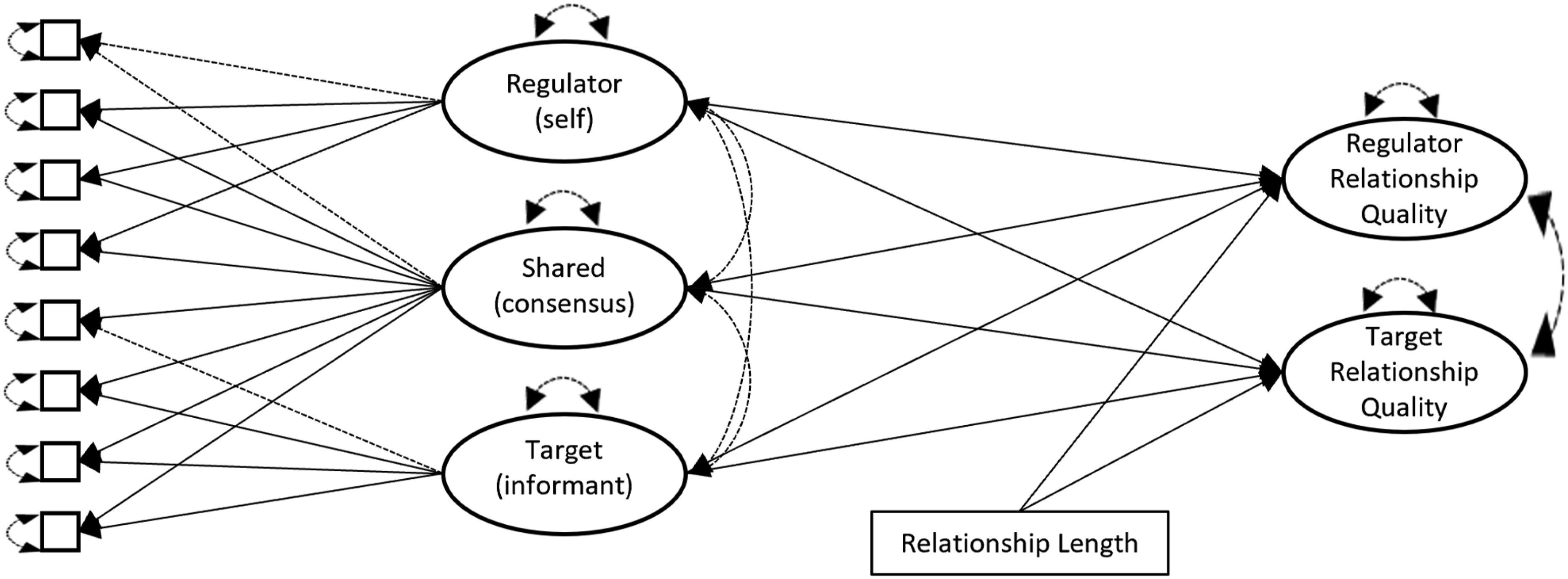
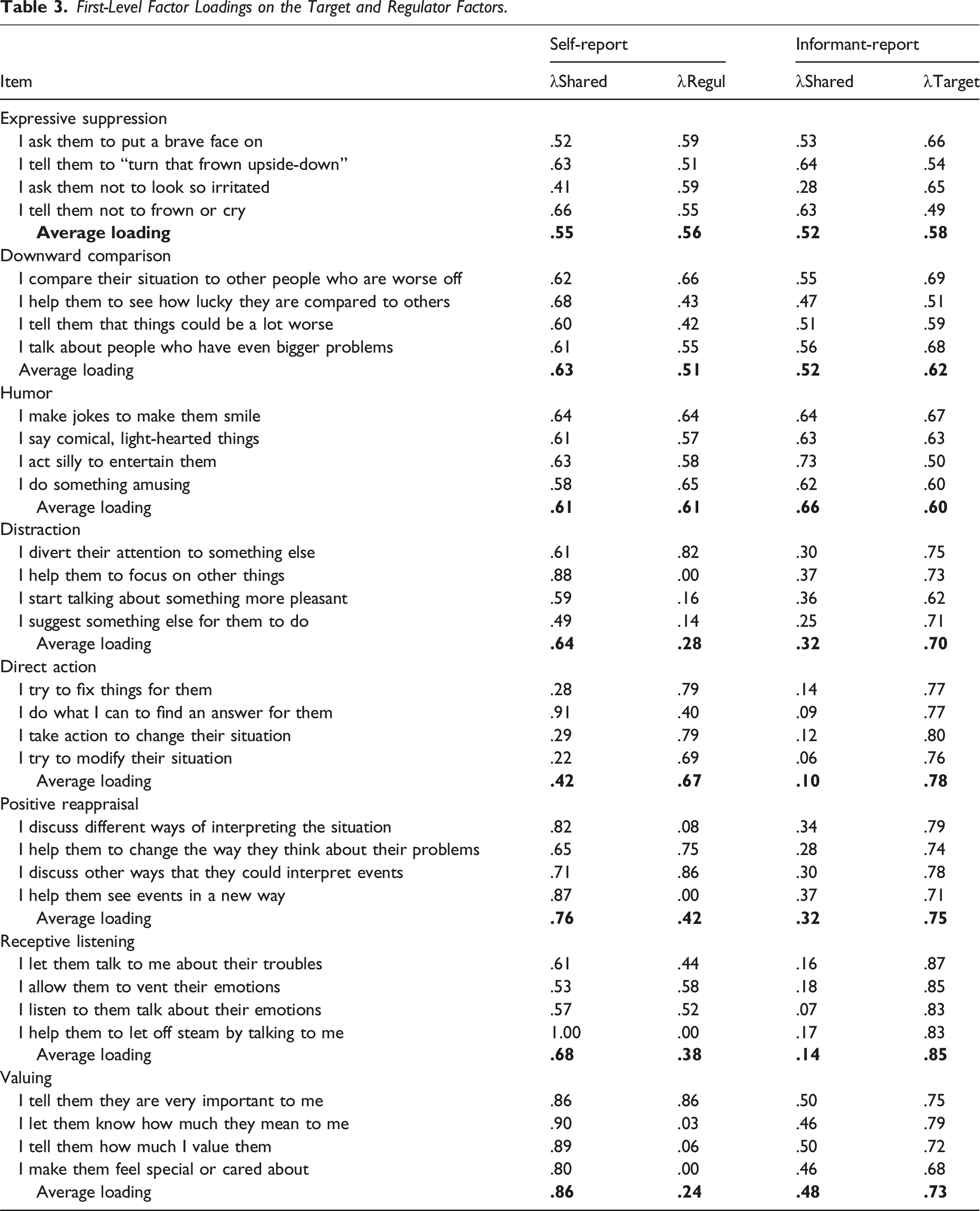
Measurement and structural bifactor models were constructed separately for each extrinsic emotion regulation process, specifying the target perspective, regulator perspective, and shared perspective, which in turn predicted relationship quality. Relationship length was controlled in each model (see Figure 1). Analyses for each bifactor model were conducted using structural equation modeling (SEM) in JASP version 0.16.3 (JASP Team, 2022). Each item is simultaneously loaded onto the shared perspective factor, and either the target or regulator perspective factor (see Figure 2). Models were identified by fixing factor variances to 1.0. All models were assessed according to common guidelines relating to adequate model fit (e.g., CFI ≥.95, RMSEA ≤.05; Hu & Bentler, 1999; Kline, 2015). Bifactor model of extrinsic emotion regulation. Error terms are omitted for clarity. Bifactor model of extrinsic emotion regulation processes (left) predicting self-reported regulator and target relationship quality. Dashed arcs represent correlations among outcome variables. Eight separate models were tested, one for each ROES process. Error terms are omitted for clarity.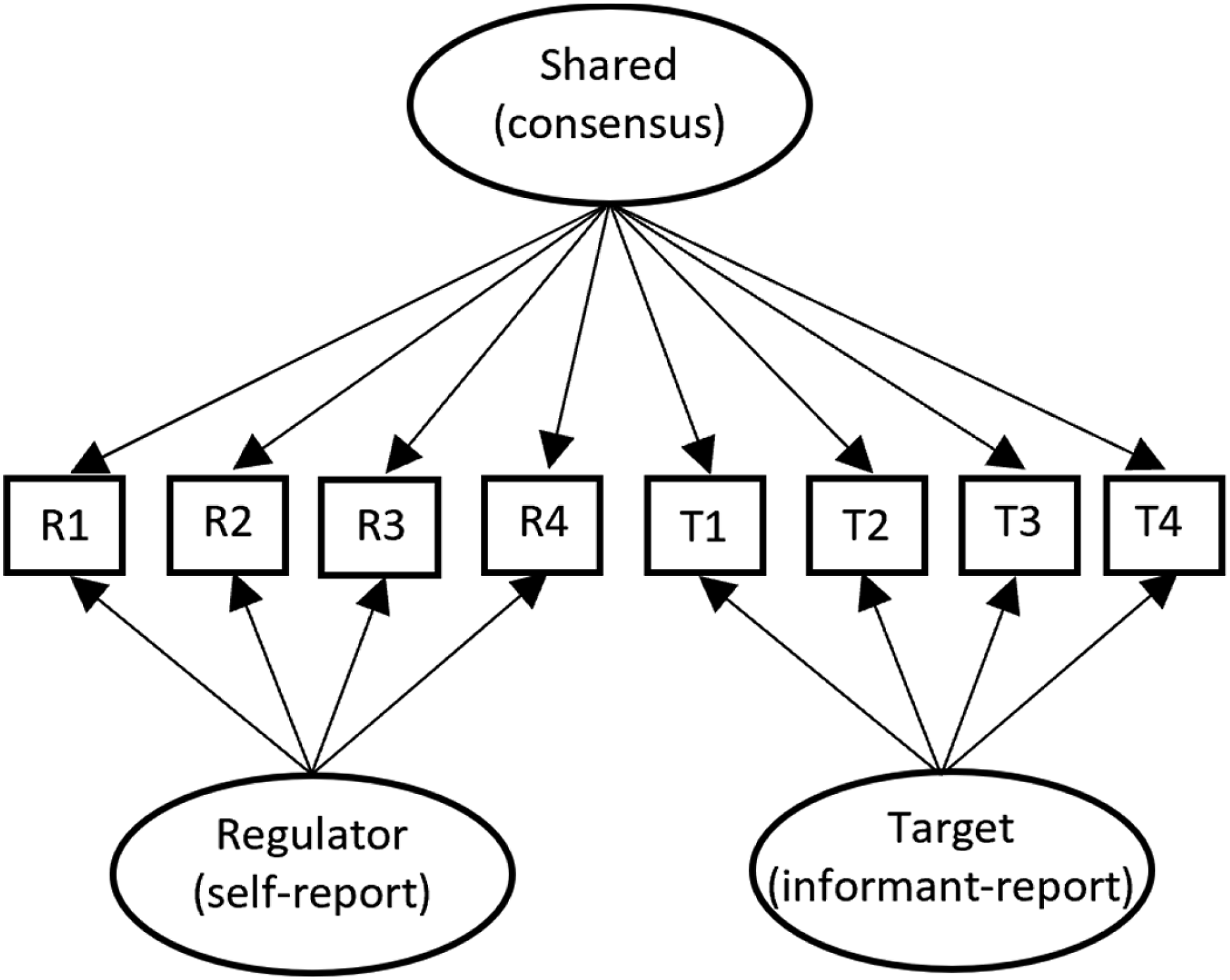
Results
Reliability and descriptive statistics
Descriptive Statistics and Correlations.
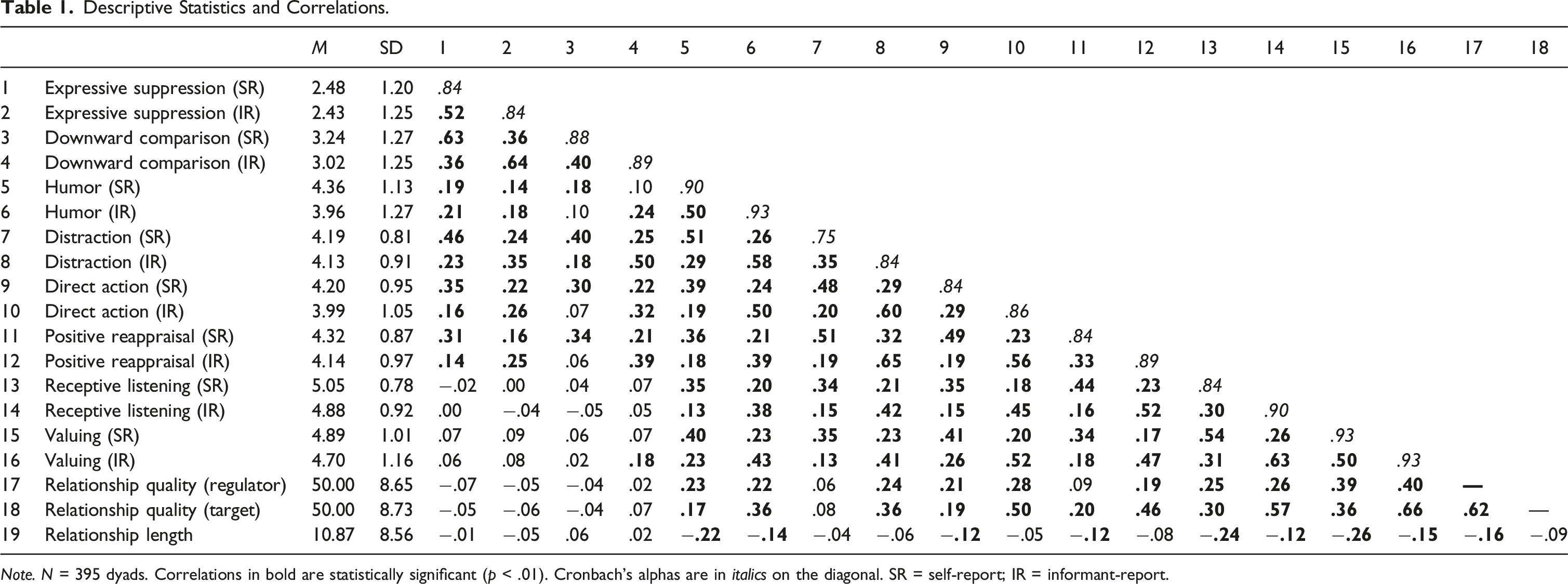
Note. N = 395 dyads. Correlations in bold are statistically significant (p < .01). Cronbach’s alphas are in italics on the diagonal. SR = self-report; IR = informant-report.
Structural equation model
Model Fit Statistics for Bifactor Structural Equation Models.
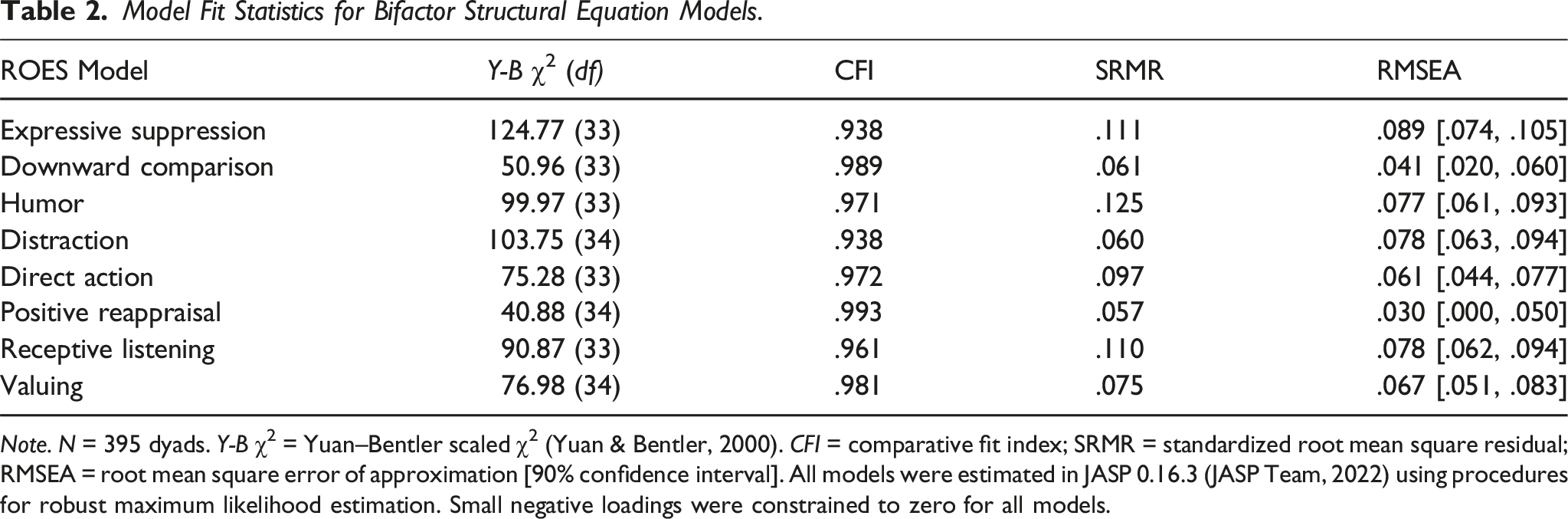
Note. N = 395 dyads. Y-B χ2 = Yuan–Bentler scaled χ2 (Yuan & Bentler, 2000). CFI = comparative fit index; SRMR = standardized root mean square residual; RMSEA = root mean square error of approximation [90% confidence interval]. All models were estimated in JASP 0.16.3 (JASP Team, 2022) using procedures for robust maximum likelihood estimation. Small negative loadings were constrained to zero for all models.
First-Level Factor Loadings on the Target and Regulator Factors.
Hypotheses
Standardized Path Estimates for Shared, Regulator, and Target Perspective Bifactor Models of the Regulation of Others’ Emotions Processes Association with Relationship Quality. (Standard Errors and Confidence Intervals Are Unstandardized).
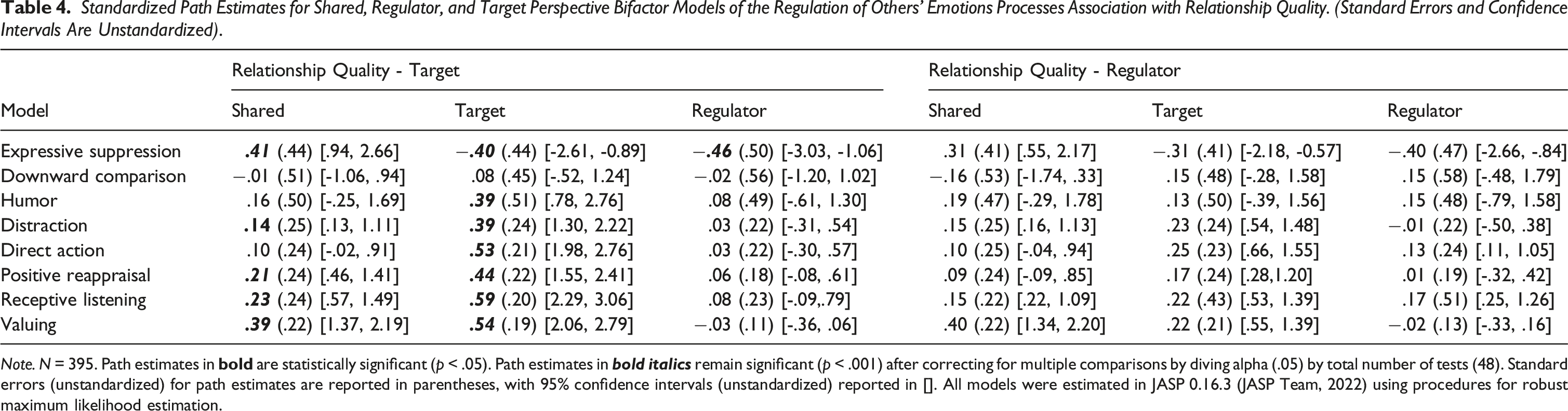
Note. N = 395. Path estimates in
Hypothesis 1a Regulator’s unique perspective of extrinsic regulation processes will predict regulator-rated relationship quality. Of the eight processes, three showed the hypothesized effect (a positive association for direct action and receptive listening, and a negative association for expressive suppression) and five showed no significant association (downward comparison, humor, distraction, positive reappraisal, and valuing). Effect size was small for direct action (β = .13), small-to-moderate for receptive listening (β = .17), and moderate-to-large for expressive suppression (β = −.40). Only the effect for expressive suppression remained after correcting for multiple comparisons. There is therefore partial support for H1a.
Hypothesis 1b Regulator’s unique perspective of extrinsic regulation processes will predict target-rated relationship quality. Of the eight regulation processes, only one (expressive suppression) showed a significant effect (β = −.46) which remained after controlling for multiple comparisons. With this one exception, results are therefore not consistent with our expectations for H1b.
Hypothesis 2a Target’s unique perspective of extrinsic regulation processes will predict target-rated relationship quality. Of the eight regulation processes, seven showed the expected effect (i.e., significant positive associations for humor, distraction, direct action, positive reappraisal, receptive listening, and valuing, and a significant negative association for expressive suppression). Effect sizes were moderate-to-large or large, ranging from β = .39 (for humor and distraction) to β = .59 (for receptive listening). Only downward social comparison was not significantly associated with relationship quality. The effects remained after correcting for multiple comparisons. Therefore, we have support for H2a (with the exception of downward social comparison).
Hypothesis 2b Target’s unique perspective of extrinsic regulation processes will predict regulator-rated relationship quality. Results for H2b (examining regulator relationship quality) were analogous to H2a (examining target relationship quality), but with smaller effect sizes. That is, five processes significantly predicted greater regulator-rated relationship quality (distraction, direct action, positive reappraisal, receptive listening, and valuing). Effect sizes were small-to-moderate in all cases, ranging from β = .17 (for positive reappraisal) to β = .25 (for direction action). Again, expressive suppression showed a significant negative relationship with relationship quality (β = −.31) and downward social comparison was unrelated to relationship quality. Except for positive reappraisal, the effects remained after correcting for multiple comparisons. Results largely support H2b.
Hypothesis 3a Shared perspective on extrinsic regulation processes will predict target-rated relationship quality. Consistent with this hypothesis, the shared perspectives of expressive suppression, distraction, positive reappraisal, receptive listening, and valuing showed significant small-to-moderate positive associations with the target’s relationship quality ranging from β = .14 (for distraction) to β = .41 (for expressive suppression). After correcting for multiple comparisons, distraction was no longer significant. In contrast to expectations, downward comparison, humor, and direct action were not associated with the target’s relationship quality. Therefore, there is partial support for H3a.
Hypothesis 3b Shared perspective on extrinsic regulation processes will predict regulator-rated relationship quality
Discussion
Extrinsic emotion regulation necessarily involves at least two people; the person who attempts to regulate the emotions of another person (regulator) and the person who is the target of the regulation attempt (target). The main objective of this study was to examine the association between the regulation of others’ emotions as unique perspectives between the regulator (self-report) and the target (informant-report), and their respective, self-reported ratings of relationship quality.
To achieve this, we employed a bifactor structural equation model (SEM), which allowed us to separate the shared variance from the unique variances attributed to each individual’s perspective. This methodological choice was driven by the need to address the limitations of traditional dyadic analysis methods, such as the Actor–Partner Interdependence Model (APIM), which do not distinguish between shared and unique variances. By doing so, we were able to more precisely understand the contributions of each partner’s perspective to the overall relationship quality.
We collected ratings of extrinsic emotion regulation process use from one member of the romantic couple designated as the regulator. The regulator provided self-report ratings of what they did to make their partner feel better. The other member of the romantic couple was designated as the target, and they provided informant-report ratings of what the regulator did to make them feel better. Overall, the results of this study provide important insight into the extent to which both the target’s and the regulator’s feelings of relationship quality are generally impacted by the target’s, rather than the regulator’s, perspective. This underscores the importance of considering the target’s perspective in future research and highlights the utility of a bifactor SEM to disentangle shared and unique variances, offering an alternative interpretation of the relational dynamics.
Unique target perspectives
The most compelling results from this study relate to the unique target perspectives of extrinsic emotion regulation. Recall that the target reported what their partner (the regulator) does to make them feel better. As expected, we found the target’s perspective was a key predictor of their own and their partner’s self-reported ratings of relationship quality. In particular, there were moderate-to-strong relations between humor, distraction, direct action, positive reappraisal, receptive listening, and valuing with the target’s self-reported ratings of relationship quality. These results are consistent with prior theoretical and empirical evidence which suggests that a target’s positive view of a regulation attempt may contribute to the development and maintenance of high-quality relationships (Niven et al., 2012; Schwarz & Clore, 1983). Similarly, should a target view a regulation attempt negatively, and then this may influence the target’s evaluation of the relationship resulting in lower levels of relationship quality (Schwarz & Clore, 1983). This may be a possible explanation for the strong negative association found between the target’s perspective of expressive suppression and their own rating of relationship quality. For example, a regulator may genuinely try to make their partner feel better by suggesting they smile instead of frown, but the target may construe this use of expressive suppression negatively, thus potentially contributing to overall lower relationship quality.
Interestingly, the target’s perspective of the regulator’s use of expressive suppression is not only negatively related to the target’s rating but also the regulator’s rating of relationship quality. Prior research has found that one partner’s use of intrinsic expressive suppression negatively impacts relationship satisfaction of both partners (Sasaki et al., 2022). The results of the present study extend earlier research demonstrating that extrinsic expressive suppression has a similar effect. Using expressive suppression to regulate one’s romantic partner may not have the desired effect, instead reducing the perceived relationship quality of both partners. An important caveat is that causality should not be assumed from these results. It is possible that individuals in unhappy relationships may use expressive suppression more frequently as a way of avoiding emotional engagement with their partner.
There were small relations between the target’s perspective of distraction, direct action, positive reappraisal, receptive listening, and valuing, and the regulator’s report of relationship quality. A more complex potential explanation of these results could be derived from the social interaction model (Côté, 2005). Although the social interaction model has been applied predominantly within organizational research, the principles can be applied to romantic relationships. That is, the feedback the regulator receives from the target following the attempted implementation of a regulatory process influences the positive or negative emotions of the regulator, thus potentially contributing to the regulator’s rating of relationship quality. Marigold et al. (2014) and Niven et al. (2012) showed that the target’s affective state following a regulation attempt influenced the affective state of the regulator. Overall, our results provide a case to further explore the important role of feedback between target and regulator in extrinsic emotion regulation within romantic relationships.
Unique regulator perspectives
Prior research suggests that the regulator is likely to feel positive affect following an interpersonal interaction and that these positive feelings influence the regulator’s judgment of relationship quality (Niven et al., 2012). Conversely, a regulator is likely to be negatively impacted should a regulation attempt fail (Marigold et al., 2014). Surprisingly, the results of our study indicated the regulator’s unique perspective was not a key driver of either the regulator or the target’s self-reported ratings of relationship quality (although there were exceptions). The key exception was the regulator’s perspective of expressive suppression use which was strongly and negatively related to both the regulator’s and target’s reports of relationship quality. This indicates that higher use of expressive suppression was associated with lower perceived relationship quality. This is unsurprising given that long-term use of expressive suppression typically predicts difficulties in interpersonal relationships (Sasaki et al., 2022).
In contrast, we expected the remaining extrinsic emotion regulation processes to be positively related to the regulator’s ratings of relationship quality given that attempts to make someone feel better are generally related to higher reported levels of closeness, trust, and friendship (Niven et al., 2012). Instead, we found small positive effects for the association between direct action and receptive listening only. Additionally, except for expressive suppression which was strongly negatively associated with the target’s relationship quality, there were no other significant results. The results of this study suggest that what the regulator says they do to make their partner feel better generally does not influence either the target or the regulator’s relationship quality.
Shared perspective
The results of this study showed that the extent to which the partners agreed on the use of expressive suppression (shared perspective) was positively associated with their self-reported relationship quality. This is despite the negative association of the target and regulator’s unique perspectives of expressive suppression with relationship quality. One possible explanation is based on findings from prior research examining couple identity in romantic relationships. When couples are “in sync” they tend to report higher levels of relationship commitment (Emery et al., 2021). It is possible that the extent to which partners agree (or are “in sync”) on the use of expressive suppression drives the positive association with relationship quality rather than the use of expressive suppression itself. This may also explain the other emotion regulation processes in which the shared perspective was positively associated with both the target’s and the regulator’s self-reported relationship quality. That is, the consensus shared by the couple on a specific emotion regulation process, rather than the process itself, is associated with their self-reported perception of relationship quality.
Future research
Although this study differed from conventional approaches to analyzing dyadic data (i.e., Actor–Partner Interdependence Model) by using a bifactor SEM analysis, it allowed for the examination of shared and unique variance in self- and informant-reports. By using this bifactor approach, we were able to parse out the general factor (shared variance across all items reflecting the common extrinsic emotion regulation strategies) from specific factors (unique variance attributed to the target and regulator roles). This method accounted for the inherent complexities and interdependence in the dyadic data. As a result, this study provides a basis for future research that seeks to further investigate the impact of extrinsic emotion regulation within various interpersonal relationships and to expand the range of methodological approaches.
This also provides opportunities to apply this framework to further understand the impact of extrinsic emotion regulation within the workplace (e.g., team cohesion and leadership training), educational contexts (e.g., parent–teacher meetings), and in other interpersonal contexts (e.g., family and friendship). While much of the research on extrinsic emotion regulation has typically focused on the regulator (e.g., Coo et al., 2022; Horn et al., 2019; Jarman & Windsor, 2021), our results highlight the importance of including the target. That is, future research could examine the individual differences associated with the target’s interpretation of the regulation attempt. For instance, targets with low self-esteem are less receptive to regulation attempts than those with high self-esteem (Marigold et al., 2014). A natural progression of this work is to investigate what influences the target’s perspective of a regulation attempt as un/successful, threatening, or positive/negative (e.g., attachment style, personality traits, and emotional intelligence). A limitation of the current study is that we did not measure positive or negative affect. Therefore, identifying the role of target and regulator affect (positive/negative) in response to a regulation attempt is vital for understanding how affect relates to overall perceptions of relationship quality, successful regulation, and other useful outcome measures. Finally, as it is not possible to derive causal explanations from this dyadic study, longitudinal research would be beneficial for determining whether the use of extrinsic emotion regulation increases relationship quality, or whether existing relationship quality encourages greater emotional engagement with one’s romantic partner. For example, using a longitudinal design helps to establish temporal precedence in which observations of changes in extrinsic emotion regulation strategies and relationship perceptions unfold over time. This may help establish causal pathways by discovering whether or not extrinsic emotion regulation precedes and predicts changes in relationship quality, while simultaneously controlling for potentially confounding variables that remain constant over time. Although this may not provide conclusive evidence of causation, it could certainly strengthen causal inferences by addressing the limitations from this study.
Conclusion
Taken together, our results demonstrate that it is the target’s, rather than the regulator’s perspective that is driving the association between extrinsic emotion regulation processes and the relationship quality of both members of the romantic couple. Specifically, expressive suppression does not appear to be an effective regulation process for long-term relationship quality. In contrast, both target and regulator relationship quality levels are higher when a target feels heard (receptive listening), valued, or that their partner helps them solve a problem (direct action). Overall, these findings add to a growing body of literature that seeks to understand the role of extrinsic emotion regulation not only in romantic relationships but within interpersonal relationships more broadly.
Supplemental Material
Supplemental Material - It’s What I Think You Do That Matters: Comparing Self, Partner, and Shared Perspectives of What a Romantic Partner Does to Regulate Your Emotions
Supplemental Material for It’s What I Think You Do That Matters: Comparing Self, Partner, and Shared Perspectives of What a Romantic Partner Does to Regulate Your Emotions by Sarah A Walker, Rebecca T Pinkus, Kit S Double, Hester Xiao, and Carolyn MacCann in European Journal of Personality
Footnotes
Declaration of conflicting interests
The author(s) declared no potential conflicts of interest with respect to the research, authorship, and/or publication of this article.
Funding
The author(s) disclosed receipt of the following financial support for the research, authorship, and/or publication of this article: This research was supported by Australian Research Council Discovery Grants to the last author (DP150101158 and DP210103484). Study data are available on the Open Science Framework (OSF;  ).
).
Open Science Statement
The study was preregistered, and the preregistration is available here https://aspredicted.org/dw2c3.pdf. Study data are available on the Open Science Framework (OSF; .
Supplemental Material
Supplemental material for this article is available online.
Notes
References
Supplementary Material
Please find the following supplemental material available below.
For Open Access articles published under a Creative Commons License, all supplemental material carries the same license as the article it is associated with.
For non-Open Access articles published, all supplemental material carries a non-exclusive license, and permission requests for re-use of supplemental material or any part of supplemental material shall be sent directly to the copyright owner as specified in the copyright notice associated with the article.
