




Abstract
The grandparent role has been often described as one of the most fulfilling aspects of older age. Yet, no longitudinal studies investigated the effect of the transition to grandparenthood on older adults’ sense of purpose and meaning in life. In this pre-registered study, we investigated the effect of becoming a first-time grandparent and a first-time caregiving grandparent on changes in sense of purpose and meaning in life. We used data from the Health and Retirement Study (HRS) and English Longitudinal Study of Ageing (ELSA), covering up to 12 years around the transition (N HRS = 843, N ELSA = 587). To disentangle potential grandparenthood effects from age-related developmental changes, we used propensity score matching to compare grandparents to matched non-grandparents. Using latent change score models, we only found increases in sense of purpose in the years leading up to the transition, but not afterwards. No consistent findings of mean-level changes were observed in the control groups. Thus, our findings suggest that becoming a (caregiving) grandparent does not necessarily contribute to higher meaning and sense of purpose in life than before or compared to non-grandparents.
Plain language summary
Older adults often report that being a grandparent is one of the most fulfilling roles of older age. However, there are no studies to investigate how older adults’ sense of purpose and meaning in life changes over time when they first become grandparents. Similarly, no past research has investigated how the two constructs change when first-time grandparents start to provide care for their grandchildren for the first time. In this study, we use data from two large population studies (Health and Retirement Study and English Longitudinal Study of Ageing; NHRS = 843, NELSA = 587 ) covering up to 12 years to see if newly grandparents increase in sense of purpose and meaning in life during the transition to (active) grandparenthood. To make sure that any potential effects are not due to life events or changes that normally take place during old age, we compared grandparents to older adults that were not (yet) grandparents, or did not have children, but were similar to our target group (i.e., grandparents) with respect to other characteristics—for example, age, gender, and health status. We did not find evidence for any change in sense of purpose and meaning in life after older adults become grandparents, but only in the years leading up to the transition to grandparenthood. For the groups of non-grandparents, we did not find any notable differences in how sense of purpose and meaning in life changed during the study period compared to the groups of grandparents. Starting to provide grandchildren as a first-time grandparent also did not lead to any changes in sense of purpose and meaning in life.
Introduction
Becoming a grandparent is a common experience in older age, with the majority of older adults having gone through this transition (Thiele & Whelan, 2008; Winefield & Air, 2010). The transition to grandparenthood is traditionally regarded as joyful, as it allows older adults to contribute to the development and personal growth of the grandchild (Clarke & Roberts, 2004; Tanskanen et al., 2019). Yet, the new role of being a grandparent could also serve as a reminder of one’s own mortality and lead to conflict in older adults as they have to balance the time they spend with their grandchild with the time they engage in other responsibilities, such as working or caring for aging family members (Bordone & Arpino, 2019). It might thus not be surprising that recent longitudinal research showed no changes in subjective well-being (e.g., life satisfaction) when older adults become grandparents (e.g., Krämer et al., 2022). Both positive and negative factors (e.g., opportunities to nurture versus necessity to juggle multiple responsibilities) might have opposing effects on grandparents’ subjective well-being, canceling each other out (Bordone & Arpino, 2019; Condon et al., 2018).
Interestingly, however, older adults still report the grandparent role as one of the most rewarding and important roles of older age (Leopold & Skopek, 2015; Mahne & Motel-Klingebiel, 2012). Even if the transition is recognized to be stressful, it is also seen as an opportunity of growth, and a chance to have a new outlook on life (Taubman–Ben-Ari et al., 2018). As previously proposed (Taubman-Ben-Ari, 2012), the transition to grandparenthood might not be experienced through changes in subjective well-being, but through changes in how older adults understand their place and goals in the world, including their meaning and purpose in life. However, so far, empirical research on the psychological consequences of becoming a grandparent remains limited. Using a prospective design and two large datasets, we investigate the effect of becoming a first-time grandparent on sense of purpose and meaning in life. We distinguished between the transition to the grandparent role per se and the transition to a caregiving grandparent to see if the new social role alone or the involvement in grandchild care drives long-term changes in meaning and sense of purpose.
Sense of purpose and meaning in life
Sense of purpose has been defined as the extent to which individuals feel that they have personally meaningful and clear goals that promote life engagement and form a core component of their identity (Pfund & Lewis, 2020; Ryff, 1989; Weston et al., 2021). A stronger sense of purpose has been linked to multiple indices of healthy aging, such as better self-reported health (Scheier et al., 2006), better subjective well-being (Gudmundsdottir et al., 2023), lower risk of cognitive decline (Boyle et al., 2010), or greater longevity (Boyle et al., 2009).
To define meaning in life, research often refers to tripartite models (King et al., 2006; Steger et al., 2006), suggesting that the experience of meaning in life is derived from (1) a sense of coherence (i.e., comprehension of one’s life experiences), (2) a sense of purpose in life, and (3) a sense of existential mattering (i.e., feeling that one’s existence has significance; Costin & Vignoles, 2020). Based on these models, meaning in life emerges as a broader construct that encompasses purpose in life. In fact, meaning in life is often used interchangeably with purpose (Kiang, 2012; Kim et al., 2013). However, although correlated (George & Park, 2013), there are important distinctions between purpose and meaning in life that become increasingly recognized (Costin & Vignoles, 2020; George & Park, 2013; Martela & Steger, 2016). Meaning is more related to processing and interpreting reality (George & Park, 2013; McKnight & Kashdan, 2009), while purpose is related to motivated planning and acting (i.e., having a direction and future-oriented goals in life; Martela & Steger, 2016). Thus, meaning is about evaluating one’s life as a whole, including the past, present and the future, while purpose is distinctively future-oriented (Martela & Steger, 2016).
Changes in sense of purpose and meaning in life in older age
Both sense of purpose and meaning in life change throughout the lifespan as life circumstances change. Past longitudinal research has found that older adults’ sense of purpose shows a vulnerability to decline (Hill & Weston, 2019; Irving et al., 2017; Pfund & Lewis, 2020; note however that Hill & Weston, 2019 reported measurement invariance violations between working older adults and retirees). Possibly, this is because health declines or age-related losses in social roles such as retirement or widowhood might prevent older adults from engaging in activities that traditionally made them feel purposeful (Lee et al., 2022). However, the active engagement in physical, social, or cognitive leisure activities as well as prosocial activities (e.g., volunteering) can serve as a buffer against declines in purpose in older age, particularly around the transition to retirement (Lewis & Hill, 2020). Similarly, the perceived social support from the spouse or children has also been found to reduce the decline in purpose (Weston et al., 2021). Thus, the grandparent role may offer a way for older adults to preserve their sense of purpose by providing a role for caregiving (see similar discussion for the impact of dementia caregiving in Hill et al., 2020).
For meaning in life, the research on age differences is primarily cross-sectional. Yet, the reported differences between younger and older adults deviate from the differences observed for purpose: While sense of purpose seems to be lower in older compared to younger adults, meaning in life appears as higher or stable in older age (Steger et al., 2006, 2009; Sørensen et al., 2021). Possibly, this is because meaning in life is primarily derived from past experiences and achievements (Pinquart, 2002; Reker et al., 1987), whereas sense of purpose is more future-oriented.
Interestingly, past research also reports age-related differences regarding sources of both sense of purpose and meaning in life. While at younger ages individuals seem to derive purpose and meaning from more personal goals (i.e., building a career and achieving financial stability), older adults derive meaning and purpose from relationship with family and friends, generativity and the engagement in society (Fave et al., 2013; Jongenelis et al., 2022; Karwetzky et al., 2021; Pfund et al., 2022). Yet, past research on sources of meaning and purpose is cross-sectional, and it is thus unclear if these reported differences result from gradual, ongoing changes (e.g., family becomes more important as one ages), or if they occur in response to particular life events (e.g., changes in meaning and purpose elicited by the transition to grandparenthood; Alter & Hershfield, 2014; Lee et al., 2022; van de Goor et al., 2020). Nevertheless, past research suggests that increases in meaning in particular are detected following positive life events, or positive changes in one’s daily life circumstances 1 (King et al., 2016; King & Hicks, 2009; Lambert et al., 2013; Machell et al., 2015; Wilt et al., 2016). This might be because positive events could provide opportunities to reflect on and appreciate one’s life (King et al., 2006).
Yet, research investigating the impact of positive life events on meaning in life and purpose in older adults is limited. Grandparenthood, as a widely expected life event in older age (Thiele & Whelan, 2008), offers a valuable opportunity to study the effects of positive life events on meaning and purpose in late life.
Grandparenthood as a source of purpose and meaning in life
Grandparenthood is a developmental task that usually takes place in (early) old age (Hutteman et al., 2014). The transition is considered a counter-transition, as it is brought upon children’s transition to parenthood (Hagestad & Lang, 1986). However, the transition is still predictable to some degree, as the parents-to-be will generally announce the pregnancy at some time before birth. This allows grandparents-to-be to already think at the opportunities provided by the new role, such as nurturing or protection of the grandchild (Condon et al., 2013; Di Gessa et al., 2020; Somary & Strieker, 1998). The grandparent role is also described as a meaningful and productive social role that can be still taken in older age (Kahana & Kahana, 1971; Mahne & Motel-Klingebiel, 2012), therefore being perceived as both an opportunity to meet personal needs (e.g., it provides social status among other older adults), and as an opportunity to transmit one’s values to the new generation (Thiele & Whelan, 2006).
Qualitative work has suggested that the transition to grandparenthood could prompt increases in sense of purpose and meaning in life (Taubman-Ben-Ari, 2012; Vo-Thanh-Xuan & Rice, 2000). For example, older adults report expecting to become grandparents once their children got married, and they express joy at the thought of having something to look forward to (Cunningham-Burley, 1986). Further, grandparenthood is reported as a period of increased self-reflection, with new grandparents stating that the new role prompted them to change their priorities and to have new goals and a new outlook on life (Findler et al., 2016; Taubman-Ben-Ari, 2012). Within qualitative research, the relevance of grandparenthood for a purposeful and meaningful life has been gradually acknowledged (Neugarten & Weinstein, 1964; Thiele & Whelan, 2008). However, there are no longitudinal quantitative studies investigating the impact of becoming a grandparent on grandparents’ purpose and meaning in life to date.
Quantitative research investigating the transition to grandparenthood
In fact, quantitative research examining the experiences of older adults during the transition to grandparenthood is quite limited. Previous studies have predominantly focused on constructs related to subjective well-being such as depression, life satisfaction (Condon et al., 2018; Yang, 2022), or personality traits (Krämer et al., 2022). These constructs are moderately associated with a sense of purpose or meaning in life (subjective well-being: Gudmundsdottir et al., 2023; Martela & Steger, 2023; personality traits, in particular conscientiousness: Hill & Burrow, 2012). However, in particular for personality traits, there is limited evidence for change following this life transition, with research reporting no or only small changes for some of the traits (Krämer et al., 2022).
When it comes to subjective well-being, which reflects the presence of positive affect and the absence of negative affect (Disabato et al., 2019), past findings present a mixed picture. For instance, some studies indicate a decrease in depressive symptoms after the grandparenthood transition (Di Gessa et al., 2020; Sheppard & Monden, 2019), while others suggest a decline in depressive symptoms for new grandparents only in low-income countries but an increase in depressive symptoms in high-income countries (Yang, 2022). Others found no significant changes in depressive symptoms following the transition (Condon et al., 2018; Tanskanen et al., 2019). Similarly, some research indicates increased life satisfaction after grandparenthood transition (Tanskanen et al., 2019), while others fail to detect clear evidence of such changes (Condon et al., 2018; Krämer et al., 2022).
While these mixed findings might be the results of differences in methodology and analysis used 2 , some have suggested that these conflicting findings may stem from the dual nature of grandparenthood (Bordone & Arpino, 2019; Condon et al., 2018). Grandparenthood entails both positive and negative aspects, such as feelings of pride due to opportunity to nurture the child and the necessity to juggle multiple responsibilities (Taubman-Ben-Ari, 2012). Such positive and negative changes associated with the transition might have opposing effects on grandparents’ subjective well-being, canceling each other out. Alternatively, depending also on other factors, such as cultural context or socioeconomic status, the transition to grandparenthood might lead to more positive or negative outcomes (e.g., lower depression after the transition in low-income countries; Yang, 2022).
Nevertheless, results of quantitative studies suggest that the transition to grandparenthood is a major life event in older adulthood that could prompt older adults to alter their priorities (Wiese et al., 2016). For example, after the transition to the new role, older adults might work less or limit involvement in other activities to spend more time with their grandchildren (Floridi, 2022; Goodfellow & Laverty, 2003; Kridahl, 2017; Wiese et al., 2016). While these changes could potentially be a source of stress, the grandparent role provides a unique opportunity for expressing generativity (Villar et al., 2012) that can serve as an important source of meaning and purpose in old age (Hofer et al., 2014; Warburton et al., 2006; see also Erikson, 1968). By having the possibility of nurturing and passing on values to a newer generation, grandparents might experience an increase in their sense of purpose and meaning in life despite no changes in subjective well-being.
While there is no past research looking at changes in sense of purpose or meaning after the transition, there is past research on related constructs, such as self-realization and personal growth, reflecting indicators of psychological well-being (Vittersø & Søholt, 2011). Tanskanen et al. (2019) found increases in self-realization following the transition to grandparenthood, but no changes in pleasure, the latter being an indicator of subjective well-being (Kim, 2015; Sacco et al., 2022). Similarly, Orit and Shirley (2016) showed that new grandparents had higher feelings of personal growth, especially appreciation for life, after than before the birth of a grandchild. These self-reported changes were also corroborated by reports of significant others (e.g., offspring and partner). In contrast, Shlomo et al. (2010) did not find changes in feelings of growth in grandmothers two months after the birth of the first grandchild, in comparison to when the daughter was pregnant. However, as for feelings of growth, it is possible that purpose and meaning already changes in anticipation of the event, for example, when the pregnancy is announced, as grandparents-to-be already report expectations about their role before the birth of the grandchild (Somary & Strieker, 1998).
We also do not know the exact time-scale on which changes in sense of purpose and meaning take place following the transition to grandparenthood (or other life events). The set-point theory of well-being would posit that individuals’ well-being levels change following major life events, but return to pre-event baselines afterwards (Diener et al., 2006; Luhmann & Intelisano, 2018). How fast this adjustment takes place—or whether it even occurs—is not clear, with some life events appearing to leave a pronounced and more permanent effect on one’s well-being (Headey, 2010; Lucas, 2007). For grandparenthood specifically, changes in sense of purpose and meaning might start when grandparents find out about their child’s pregnancy, in anticipation of the event, or immediately after the child is born. Effects might also take more time to manifest, or can potentially only affect those grandparents that also take an active grandparenting role through grandchild care (Bordone & Arpino, 2019; Condon et al., 2018).
Grandchild caregiving as a source of purpose and meaning in life
While the transition to grandparenthood could have only a normative meaning (i.e., the role holding only a symbolic value and providing status among other older adults; Robertson, 1977; Thiele & Whelan, 2008), most grandparents are actively involved in the grandparent role by providing grandchild care (Glaser et al., 2013). In line with Erikson’s (1993) theory of psychosocial development, one could expect caregiving grandparents to show stronger increases in purpose and meaning in life in comparison to non-caregiving grandparents. This is because being an active grandparent (i.e., providing care) would offer the opportunity to acquire a sense of generativity, or a feeling that one makes worthwhile contributions to the future generations, prompting a more purposeful and fulfilling life (Moore & Rosenthal, 2015; Noriega et al., 2017, 2022). In fact, qualitative studies suggest, for example, that grandchild care comes as a “natural” decision once being a grandparent, with the time spent with the grandchild acting as an important source of purpose and meaning in life (Gattai & Musatti, 1999; Halama et al., 2021; Villar et al., 2012). To date, however, there are no studies quantitatively examining the impact of starting to provide grandchild care on grandparents’ sense of purpose and meaning in life. The only study that investigated meaning in life in the context of caregiving grandparents is on grandparents living with their grandchildren, where it was reported that moments spent doing activities with grandchildren are perceived as more meaningful than moments spent alone or with other people (Dunifon et al., 2020). Yet, the primary focus of their research is on the daily life experiences of grandparents, and not on the long-term effects of the first-time transition to grandparenthood.
Research questions and hypotheses
In this pre-registered study (https://osf.io/ur2ch), we used data from the Health and Retirement Study (HRS) and the English Longitudinal Study of Ageing (ELSA) to investigate whether becoming a (caregiving) grandparent for the first time was associated with changes in sense of purpose or meaning in life. 3 We focused on the first-time transition as it was previously suggested that the meaning of the grandparent role is evaluated when the role is acquired for the first time (Thiele & Whelan, 2006). We also focus only on grandparents that do not live in the same household with their grandchildren, as grandparents living in the same household reflect a specific subpopulation for which the effects of the transition and caregiving might not be normative (i.e., low health of grandparents or other factors; Danielsbacka et al., 2022).
To ensure that the findings can be attributed to the role of grandparenting and do not only reflect developmental trends or pre-existing differences between grandparents and non-grandparents, we compared first-time grandparents to (a) a propensity score matched group of older adults who did not become grandparents, yet had at least one child in reproductive age, means at least 18 but younger than 40 years and (b) a group of childless older adults (Krämer et al., 2022). To study the effect of providing grandchild care, we compared grandparents who reported to actively provide care for their grandchildren to (a) a propensity score matched group of first-time grandparents who reported to not provide grandchild care and also to (b) a propensity score matched group of older adults, who are parents but had not become grandparents (yet).
Informed by past findings on grandparenthood and theoretical notions on purpose and meaning in life, we pre-registered two hypotheses:
We expected to see increases in sense of purpose and meaning in life for older adults becoming grandparents, both within the group (i.e., Hypothesis 1a) and compared to a matched control group (i.e., parents but non-grandparents; Hypothesis 1b). In addition to the non-grandparent group, we also explored the difference in changes of sense of purpose and meaning in life between the grandparent group and a group of matched non-parents (not pre-registered). We did this based on previous research on the transition (Krämer et al., 2022), as it would allow us to disentangle the effect of being a parent from the effect of becoming a grandparent.
Once grandparents start caregiving for their grandchildren, we expected to see stronger increases in grandparents’ sense of purpose and meaning in life, both overall (i.e., within the group; Hypothesis 2a) and compared to the matched control groups (i.e., non-caregiving grandparents and parents but non-grandparents; Hypothesis 2b). Further, the transition to grandparenthood might not impact everyone to the same extent due to differences in for instance retirement status or health. While past research aimed to identify who benefits more from the grandparenthood transition, results are so far mixed. For example, some research found differences between how grandfathers and grandmothers experience the transition to grandparenthood in terms of well-being (Di Gessa et al., 2020), and others found differences between working and non-working grandparents (Arpino & Bellani, 2022). Yet, others do not find such gender differences during the transition to the new role (Condon et al., 2018), or report that the grandparent role is equally important for working and non-working older adults (Mahne & Motel-Klingebiel, 2012). Further, we do not know whether the effects accumulate with more grandchildren. Thus, in this research, we also aimed to evaluate individual differences in change in older adults that become grandparents, and if these differences could be explained by some common covariates employed in grandparenthood literature (i.e., gender, age, working status, health, and the number of grandchildren born in the respective interval and at once; Condon et al., 2018; Sheppard & Monden, 2019). However, due to the mixed past findings regarding these moderators (e.g., Condon et al., 2018; Sheppard & Monden, 2019), we had no specific hypotheses regarding their effect. Note that this aim is descriptive in nature, with analysis being performed only in the grandparent group and not in the control groups.
Methods
This study is a re-analysis of (publicly available) existing and fully anonymous datasets, and as such no additional ethical approval was obtained. The pre-registration of the hypothesis and analyses can be found in the OSF repository https://osf.io/ur2ch. All analyses were run in R version 4.1.3 (R Core Team, 2021) with the R-packages psych v2.3.3 (Revelle, 2020), lavaan v0.6.15 (Rosseel, 2012), MatchIt v4.5.3 (Ho et al., 2011), and mice v3.15 (Van Buuren & Groothuis-Oudshoorn, 2011).
Sample
To investigate the two outcomes of this study we used the HRS study (for sense of purpose in life) and ELSA (for meaning in life). The HRS (Juster & Suzman, 1995) is a national longitudinal ongoing panel study, initiated in 1992, including American adults older than 50 years of age followed up at 2-year intervals on topics such as health, pension plans as well as household information. Starting in 2006 and 2008, sense of purpose in life was measured every 4 years in two cohorts (i.e., 2006 and 2008 cohorts). We used the available data from 2006 to 2020, for a total of four repeated measures of purpose per cohort.
ELSA collects data from adults older than 50 years of age to understand various aspects of aging such as physical and mental health, well-being, and attitudes toward aging. It started in 2002, with participants being re-interviewed every 2 years (Steptoe et al., 2013). For this study, we used data from wave 5 (2010) to wave 9 (2018).
In both datasets, we selected participants (i.e., first-time grandparents/caregiving grandparents) who were not in a nursing home during the study period, who reported to be cognitively healthy (i.e., no dementia, as self-reported), participated in the interviews themselves, had children within reproductive age, and had at least two waves of data (one either in wave 1/wave 2 and one in wave 3/wave 4). This led to a sample of N HRS = 843 or N ELSA = 587 first-time grandparents, with an average of 2.89 (SD = 0.60) or 3.33 (SD = 0.60) waves completed in HRS or ELSA, respectively. From the sample of first-time grandparents, we identified participants who also started to provide grandchild care during the study period (N HRS = 381). In ELSA, we were not able to create a caregiving group due to a low sample size of caregiving grandparents, as caregiving questions were only included in the last two waves.
Sample descriptives for grandparents and matched controls.
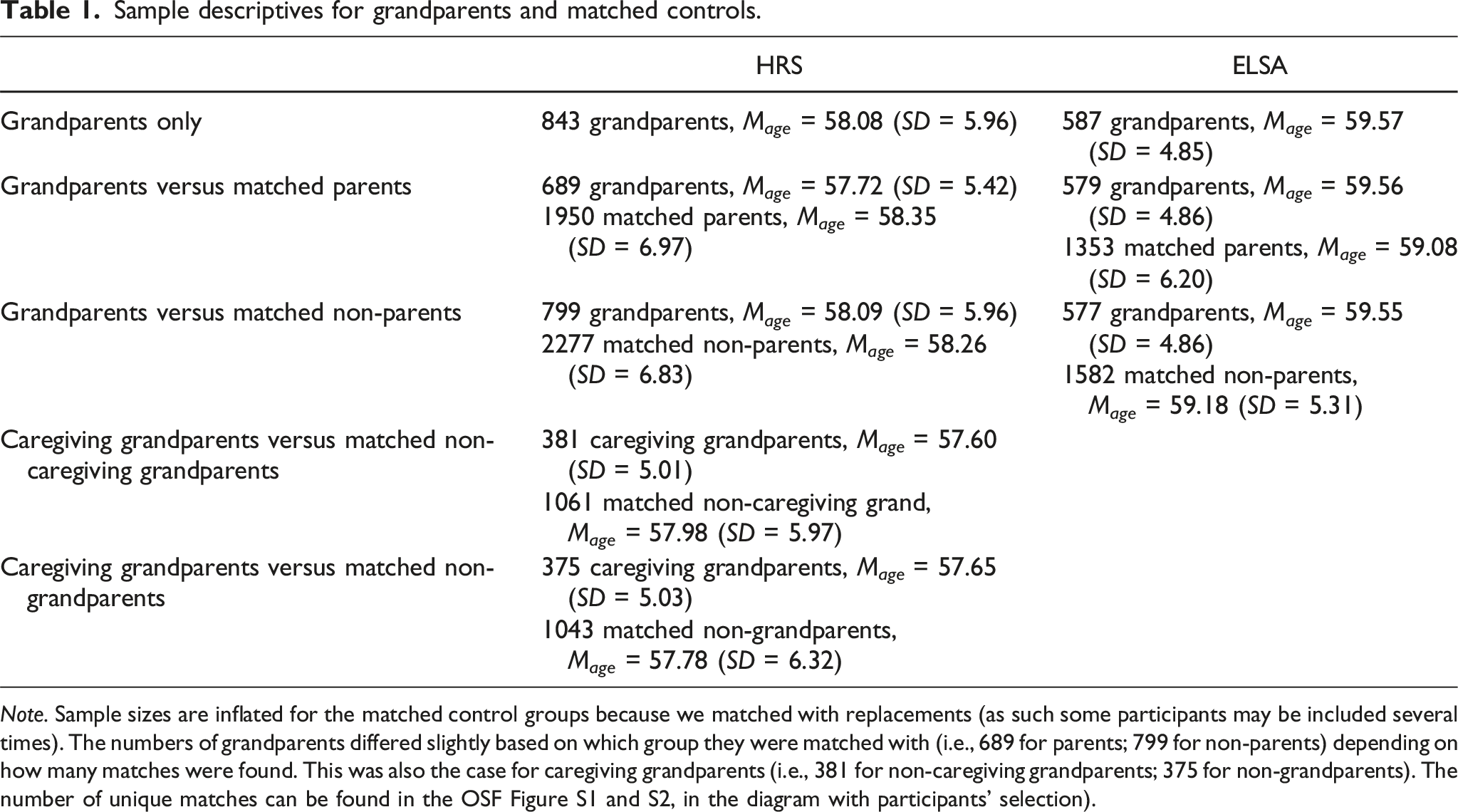
Note. Sample sizes are inflated for the matched control groups because we matched with replacements (as such some participants may be included several times). The numbers of grandparents differed slightly based on which group they were matched with (i.e., 689 for parents; 799 for non-parents) depending on how many matches were found. This was also the case for caregiving grandparents (i.e., 381 for non-caregiving grandparents; 375 for non-grandparents). The number of unique matches can be found in the OSF Figure S1 and S2, in the diagram with participants’ selection).
Measures
Grandparenthood transition
In HRS
In ELSA, participants were asked every 2 years if they have any grandchildren (i.e., first question) and how many grandchildren they have (i.e., follow-up question). For the grandparent group, we selected those participants who switched from no to yes on the first question or 0 to 1 (or more) during the study period (2010–2018).
Grandchild care provision
The HRS dataset contains multiple questions on grandchildren, assessed biannually. Once older adults reported having grandchildren, they were asked if their partner or themselves spent 100 hours or more taking care of their grandchildren in the last two years (or since the last interview). If they answered yes, they were asked to report how many hours, roughly, they spent caregiving (question addressed to the respondent, instead of the couple). To be considered a caregiving grandparent in this study, respondents should have reported they provide grandchild care and provide more than 100 hours of care themselves. A similar cutoff to define caregiving grandparents was used in the literature before (Caputo et al., 2023), with this corresponding to approximately 1 hour a week of care (if care is distributed evenly across the two years).
ELSA participants were asked every 2 years whether they looked after their grandchildren without parents present in the last 12 months (yes/no). As the number of hours spent caregiving was not assessed in all caregiving participants, the sample size was not large enough to distinguish first-time transition to care and matched non-caregiving grandparents. For ELSA, we thus included caregiving as a time-varying predictor (dichotomous) in a model looking at individual differences in change during the transition to grandparenthood.
Outcomes: Sense of purpose and meaning in life
Sense of purpose (HRS)
Sense of purpose was assessed every four years using the 7-item subscale of the Psychological Well-Being Scale (Keyes et al., 2002; Ryff, 1989). Using a 6-point Likert scale ranging from 1 (strongly disagree) to 6 (strongly agree), respondents rated the extent to which they agreed to items such as: “I enjoy making plans for the future and working to make them a reality,” “My daily activities often seem trivial and unimportant to me,” and “I have a sense of direction and purpose in my life.”. We used the average scale responses (after recoding negatively keyed items) for the subsequent analyses. Cronbach’s alpha coefficients for the measure ranged from .73 to .80 across the measurement occasions (see OSF Table S1 Supplemental Material).
Meaning in life (ELSA)
Meaning in life was assessed biannually using the “I feel that my life has meaning” item of the CASP-19 quality of life scale. This item was measured on a 4-point scale from 1 = never to 4 = often. We only used this item and not any of the CASP-19 subscales (i.e., control, autonomy, self-realization, and pleasure) as research suggested that the items do not load on the corresponding latent factors (e.g., Sexton et al., 2013; Wiggins et al., 2008). However, past research has used the item “I feel that my life has meaning” of the CASP-19 to assess meaning in life in relation to health and cognition (Panagi et al., 2021; Sutin et al., 2021, 2022; Weziak-Bialowolska & Bialowolski, 2022).
Moderators
Working status (time-varying covariate)
Current working status was measured with a multiple-choice question. We recoded the responses into currently working versus not working (i.e., retired or unable to work).
Health (time-varying covariate)
Subjective health was measured on a 5-point Likert scale ranging from 1 = poor health to 5 = excellent health (after reverse keying).
Additional covariates
We also included gender (female and male), age in years, caregiving status (care versus no care), and the number of grandchildren born between assessments and at once as predictors.
Propensity score matching
Covariates selection
As a first step for the propensity score matching, in line with guidelines of recent research (VanderWeele, 2019; VanderWeele et al., 2020), we selected covariates that are assumed to influence our outcomes (purpose and meaning), the exposure to the life event (i.e., the transition to grandparenthood/first-time caregiving), and also other unmeasured possible common causes of the outcomes and the exposure to the life event. These covariates covered socio-demographics characteristics (e.g., age and education), health status (e.g., subjective health and functional capacity), and information about family (e.g., number of children and daughters among children). To ensure treated groups (i.e., grandparents and caregiving grandparents) and control groups start on the same level on sense of purpose and meaning in life, we also included pre-transition sense of purpose and meaning in the propensity score matching, in line with recommendations and practices of recent research (Cook et al., 2020; Hallberg et al., 2018). We pre-registered the covariates on which we matched upon and followed the pre-registration with a few exceptions (if there were too few cases in some response categories). See OSF (covariates) for an overview of covariates included and the justification for the inclusion of each covariate.
Imputation
To conduct propensity score matching, it is necessary to have complete data on the covariates that are being used for the matching. As there were missing values for some of these covariates (however, less than 50% of the data for each participant), we used multiple imputation with the mice package in R. The imputation procedure was conducted 10 times, resulting in 10 different datasets. Using these datasets, we predicted the treatment variable (i.e., transition to grandparenthood) 10 times per observations with a logistic regression with a logit link function (see Krämer et al., 2022, for a similar approach). In the logistic regressions, we used all covariates as predictors, except for gender, as this was used for exact matching later on (i.e., to ensure female grandparents are matched with female controls). Finally, we used the average of these 10 scores per observation to compute the propensity score used for matching (see Mitra & Reiter, 2016). Because there were few missing values for sense of purpose and meaning in life, we used the imputed dataset only for matching and not in later analysis (i.e., when investigating change in purpose and meaning in grandparents and matched controls).
Matching
Propensity score matching was performed using MatchIt package in R (Ho et al., 2011). In HRS, matching was performed 4 times: (1) To match first-time grandparents to non-grandparents, (2) first-time grandparents to non-parents, (3) caregiving first-time grandparents to non-caregiving first-time grandparents, and (4) caregiving grandparents to non-grandparents. In ELSA, matching was performed 2 times (first two as in HRS). We performed matching with replacement (1:3) to reduce the risk of matching grandparents to controls that are very different in their propensity score (Bottigliengo et al., 2021; Dehejia & Wahba, 2002). We used the nearest neighbor method and a caliper of .2 (Austin, 2011). The time of the matching preceded the transition to grandparenthood with at least two years, to ensure that the covariates used were not influenced by the transition itself. Exact matching was performed on gender and year of first assessment, to account for any historical trends (e.g., financial crisis in 2008). We obtained adequate covariate balance, as indicated by standardized mean differences below 0.10, and variance ratios below 1.25 (Austin, 2011; Rubin, 2001; Zhang et al., 2019). See OSF Table S2 for results of matching.
Data restructuring
We aimed to have the transition to grandparenthood as a central point, with up to two waves before and two waves after the transition. Yet, because participants transitioned into the (caregiving) grandparent role at different time points, we restructured the data so that we were able to estimate one to two time points before and after the transition and to maximize the sample size (instead of taking only participants who transitioned in one year). An illustration of the restructuring in the two datasets is presented in Figure 1. For example, if participants became a (caregiving) grandparent between 2014 and 2016, their responses in 2012, 2014, 2016, and 2018 were used as waves 1, 2, 3, and 4, respectively. For participants who became a (caregiving) grandparent between 2016 and 2018, their responses in 2014, 2016, and 2018 were used as waves 1, 2, and 3, respectively, with wave 4 being missing. We only used two waves before and after the transition to ensure sufficient coverage in the restructured data. We restructured each matched control according to the corresponding (caregiving) grandparent. The same approach was applied also to HRS data, except that now time between assessments was 4 years. The number of participants included in the analysis in each wave can be found in OSF Table S3. Data Restructuring in ELSA and HRS.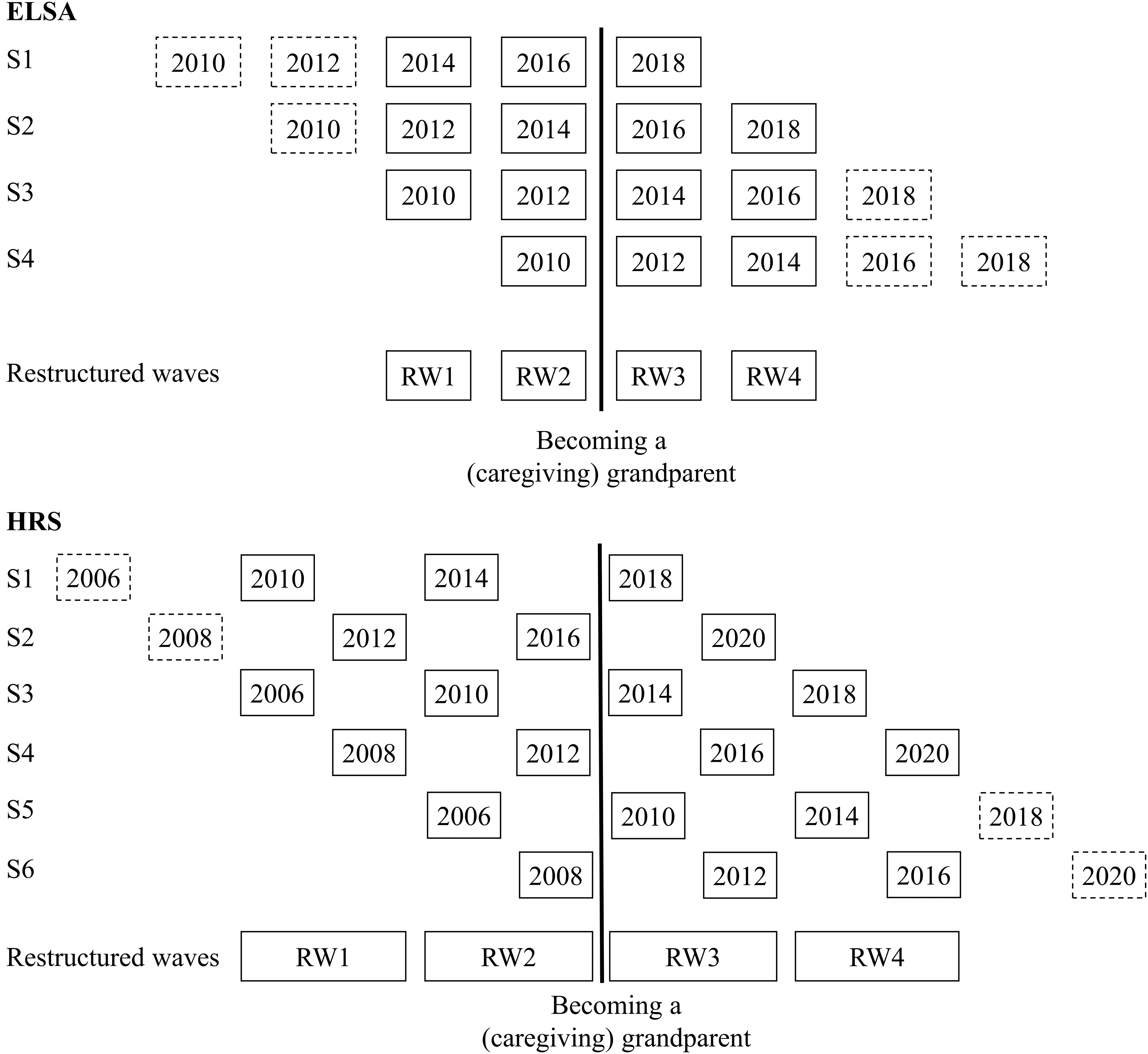
Statistical analysis
All models were estimated using full information maximum likelihood (FIML) to account for missing data. We assessed model fit using three estimators: comparative fit index (CFI), root mean square error of approximation (RMSEA), and square root mean residual (SRMR). For CFI, values higher than .90 suggest acceptable fit and for RMSEA and SRMR, values lower than .08 suggest acceptable fit while values lower than .05 show good fit (Bentler, 1990; Bentler & Bonett, 1980; Byrne, 2013; Hu & Bentler, 1999).
Measurement invariance testing
Measurement invariance across time (first column) and across groups for sense of purpose.
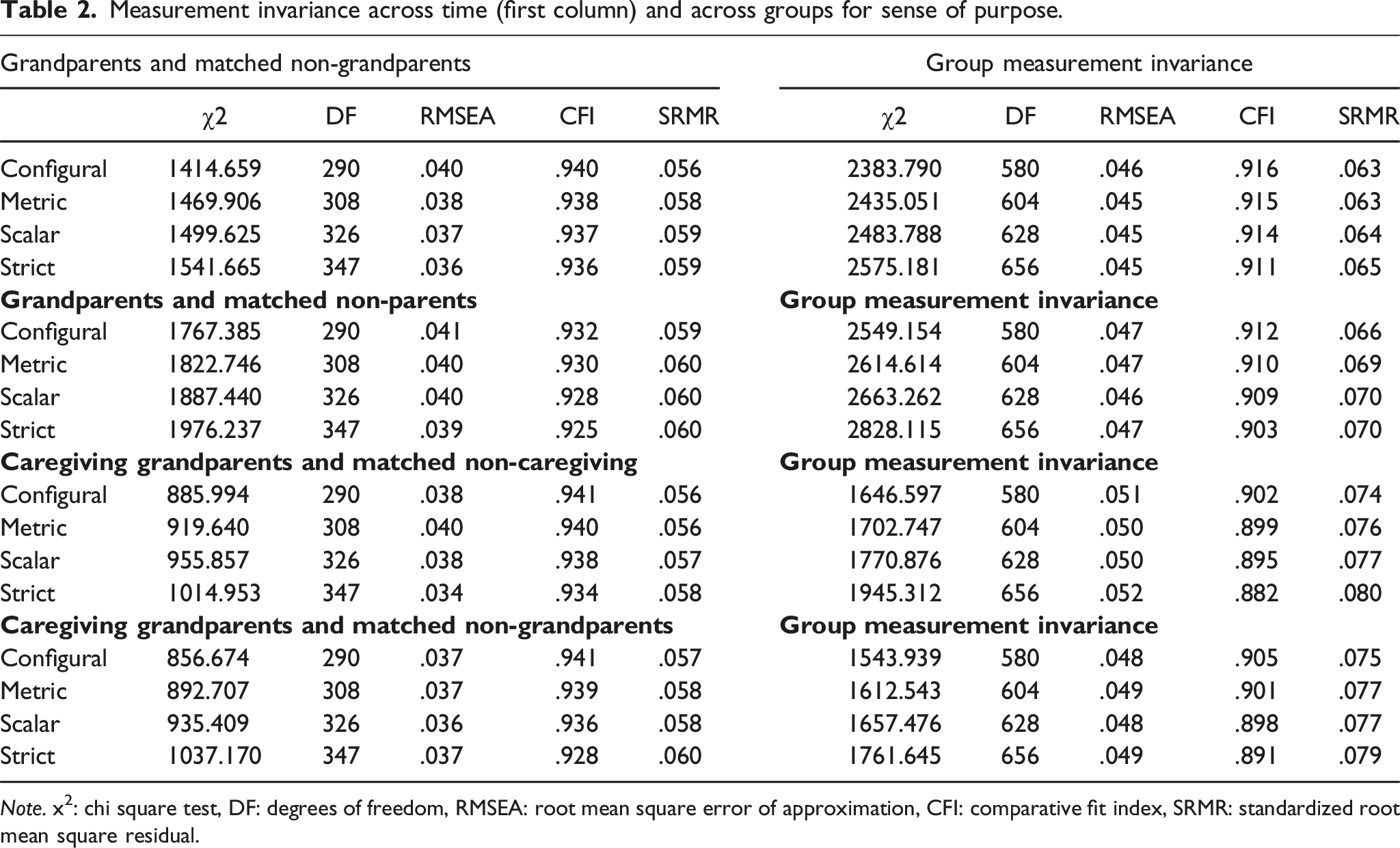
Note. x2: chi square test, DF: degrees of freedom, RMSEA: root mean square error of approximation, CFI: comparative fit index, SRMR: standardized root mean square residual.
Latent change score model used for hypotheses testing
During life transitions, changes in well-being (or related constructs) can have a different magnitude at different stages of the transition (e.g., change can be more pronounced closer to the life event; Bleidorn et al., 2016; Denissen et al., 2019; Di Gessa et al., 2020). In addition, changes could also happen before or in anticipation of the life event. Although we did not have specific hypotheses distinguishing the magnitude of these effects at different stages of the transition (e.g., anticipation) when evaluating changes following a life event, it is important to distinguish between each stage of the transition. We thus estimated a latent change score model with three change scores (see Figure 2), distinguishing between anticipatory changes prior to the transition (i.e., “pre-transition” change), changes directly following the transition (i.e., “post-transition” change), and delayed changes in the years following the transition (i.e., “socialization”; see also Denissen et al., 2019). This allowed us to understand how much change occurs in each stage. Although based on the past literature we have hypothesized increases in sense of purpose following the transition, we need to account for the situation that at later time points, changes might start levelling off, or that there might be stronger increases later on as one grows into the new role. As indicators, we used the scalar invariant measurement model for sense of purpose (HRS) or the single item response for meaning in life (ELSA). The model specification is presented in Figure 2. Factor (purpose) or indicator (meaning) intercepts and residual variances starting at the second measurement occasion were constrained to 0, whereas change score means and variances were freely estimated. For the association with the covariates, we controlled for regression to the mean by regressing each change scores on the previous level. Path diagram of the latent change score model. Note. I1 = Item 1; I2 = Item 2; I7 = Item 7; P1 = purpose wave 1; P2 = purpose wave 2; P3 = purpose wave 3; P4 = purpose wave 4. Pre-Trans = change between wave 1 and wave 2; Post-Trans = change between wave 2 and wave 3; Soc = change between wave 3 and wave 4.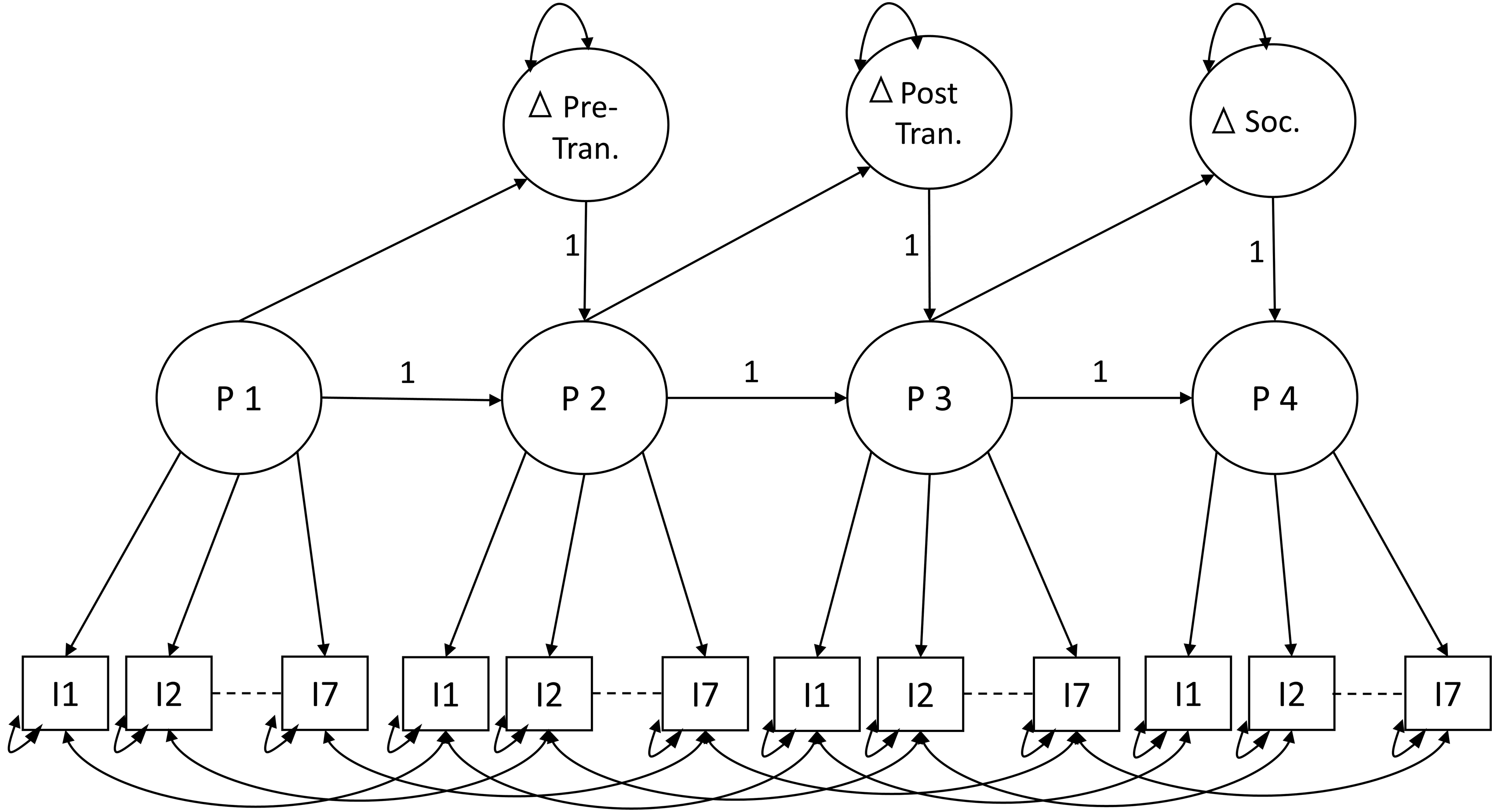
Model fit for the purpose models was the same as for the scalar invariant measurement model (see Table 2) and was good for the meaning in life models across all combinations of groups examined (CFI ≥.974, RMSEA ≤.086, SRMR ≤.045). For the models including covariates, fit was good for both HRS and ELSA (CFI ≥.905; RMSEA ≤.054; SRMR ≤.063; see OSF Table S4).
For each hypothesis, we first ran the model as a multi-group model (transition versus matched control group). For Hypothesis 1a and 2a, we examined if the factor mean of the post-transition and socialization factor was positive and significantly different from 0 in the transition group. For Hypotheses 1b and 2b, we examined if the factor mean of the post-transition and socialization for the transition group was significantly different from the corresponding factor mean of the control group. To test for the difference between factor means, we used the AIC, BIC, and χ2 difference test between models in which the factor means were unconstrained versus constrained to equality across group.
To examine which variables could explain individual differences in change, we ran the model including the covariates as predictors of each factor (only in the transition group). The following covariates were included: gender (0 = male; 1 = female), working status (0 = not working/retired; 1 = working), number of grandchildren at first-time transition (continuous), further increases in grandchildren after the first-time transition (continuous), self-rated health (continuous), and grandchild care (0 = no care; 1 = care). The latter was added as a time-varying covariate, to account for the situation in which a grandparent does not provide grandchild care within a specific wave.
Results
Descriptive statistics
Descriptive statistics and correlations for all variables of interest are presented in OSF Tables S5 to S12. Figure 3 shows the mean-levels of sense of purpose (HRS) and meaning in life (ELSA) across time in all groups (grandparents and controls). Descriptively, both the (caregiving) grandparent and control groups reported rather stable and high levels of sense of purpose and meaning in life across the covered time span. Sense of purpose and meaning in life over time (transition for grandparents between wave 2 and wave 3). 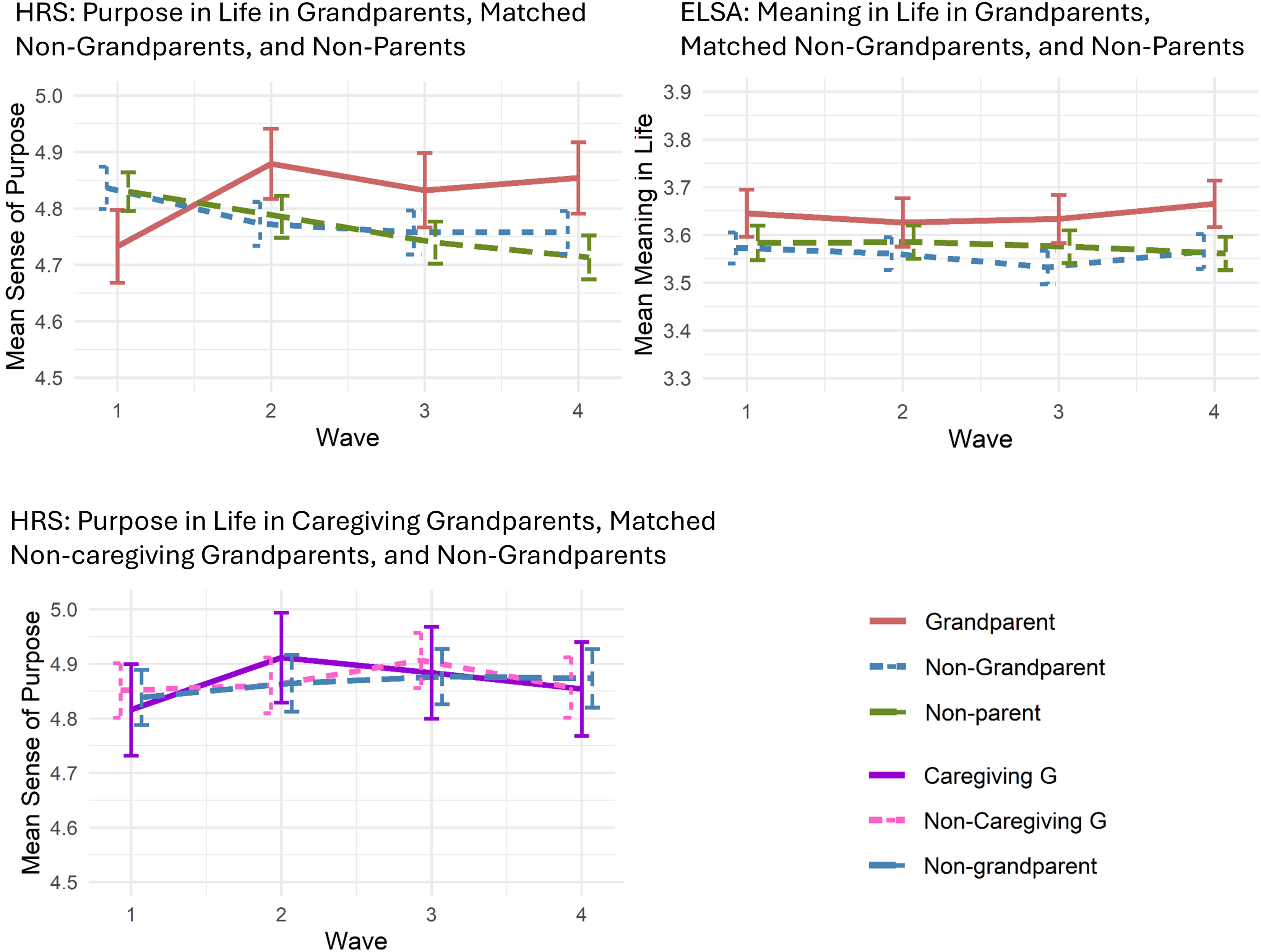
Mean-level changes
We then used latent change score models to examine mean-level changes during the different phases of the transition into grandparenthood. The change score means are presented in Figure 4. Overall, the groups did not show any pronounced mean-level changes. With respect to sense of purpose (HRS), new grandparents showed an increase of 0.07 (p = .004; d = 0.12) before the transition—but no other changes. In the matched control groups, we only found a decrease of 0.05 (p = .020; d = −0.08) in sense of purpose in the non-grandparent group between wave 1 and wave 2. In the non-parents’ group, we found a decrease of 0.03 (p = .039, d = −0.06) between wave 3 and wave 4. For meaning in life (ELSA), we found no changes in the grandparenthood group. Mean-levels were also stable in the control groups. When comparing models with progressively constrained means (i.e., pre-transition, post-transition, and socialization) between grandparents and matched controls, the AIC, BIC, and χ2 difference test suggested that only the grandparents’ increase in sense of purpose before the transition differed significantly from both control groups. Yet, no other differences between groups were observed, and the observed effects were rather small (see OSF Table S13 for difference tests). Unstandardized estimates of the mean factors for the grandparent/caregiving grandparent group and matched controls. 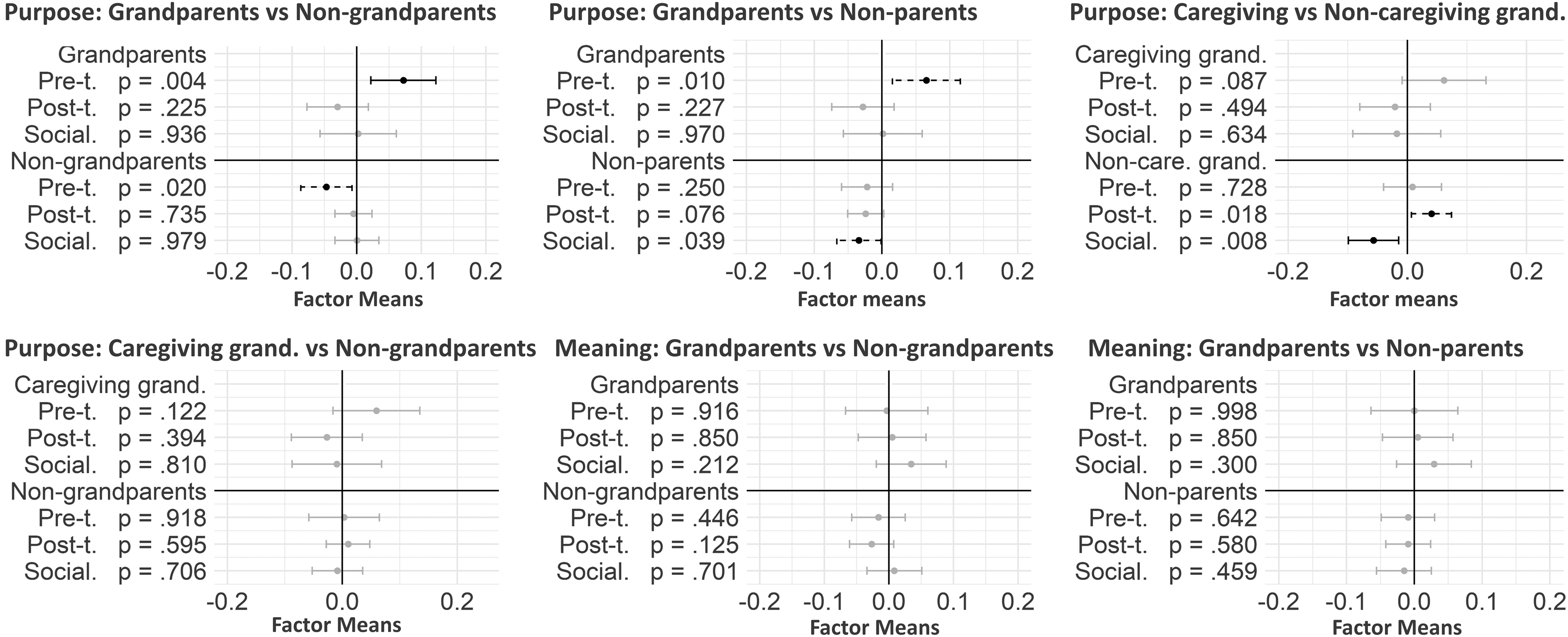
Next, we examined the transition into providing grandchild care (only for HRS because of a low sample size in ELSA). We did not find changes in the group starting to provide grandchild care. In the non-caregiving control group, we found an increase in purpose from wave 2 to wave 3 of 0.04 (p = .018, d = 0.07), followed by a decline of −.06 (p = .008, d = −0.10) from wave 3 to wave 4 (see Figure 3 for all results both for control and caregiving groups). The AIC, BIC, and χ2 difference test suggested no difference in change (i.e., factor means) between groups.
Individual differences in change
To examine potential reasons for individual differences in change during the transition to grandparenthood, we regressed gender, age, working status (time-varying), health (time-varying), number of grandchildren born between the pre- and post-transition wave (i.e., 1 or more), and further increases in the grandchild number after the transition on each of the latent factors in the grandparent group (i.e., pre-transition, post-transition change, and socialization/delayed change). All results are presented in OSF Table S14. 4
Across the two datasets, most of the covariates did not consistently predict individual differences in change, except for health. We found that those grandparents with better health had a more positive change trajectory in sense of purpose before (β = .26
Discussion
This study aimed to investigate if becoming a grandparent increases older adults’ sense of purpose or meaning in life, and if becoming a first-time caregiving grandparent would be associated with additional increases in sense of purpose and meaning in life. In contrast to our hypothesis, we found no changes in sense of purpose and meaning in life after older adults became grandparents as compared to the matched controls. Similarly, we found no changes after the transition to the role of caregiving grandparent. However, we found increases in purpose of life prior to the transition. Finally, except for health, the included moderators did not explain different trajectories of change for sense of purpose and meaning in life following the transition to grandparenthood.
Becoming a grandparent
Considering that past research suggested that being a grandparent is one of the most rewarding and significant roles of older age (Ben Shlomo & Taubman-Ben-Ari, 2017; Mahne & Motel-Klingebiel, 2012; Tanskanen et al., 2019), it is surprising to not see changes in sense of purpose and meaning in life after becoming a grandparent. This is not in line with the findings of Tanskanen et al. (2019) who reported increases in self-realization after the transition. However, except for the study of Tanskanen and colleagues (2019), most of past research was qualitative or cross-sectional and did not include comparison groups. Yet, without repeated assessments it is impossible to compare sense of purpose and meaning of grandparents after the transition with pre-transition baselines (Condon et al., 2018). Similarly, with no comparison groups, one could not rule out the possibility that those with already higher sense of purpose and meaning are the ones that experience and benefit from this life transition (i.e., differences in the outcomes are because of other background variables and not the transition itself; Stuart, & Green; 2008). Thus, in this study, we used propensity score matched groups to account for pre-existing differences between the treated (i.e., grandparents) and the control groups, aiming to isolate potential effects of the life event on sense of purpose and meaning in life from general developmental patterns in the two outcomes.
Although contradicting some past research, our findings are in line with results of Shlomo et al. (2010) who followed first-time maternal grandmothers two months after the birth of the grandchild, with the baseline during the mothers’ pregnancy. More specifically, the authors did not find any changes in grandparents’ sense of growth after the transition. The authors concluded that the follow-up period of two months might be too short for older adults to adapt to the new role. Yet, our findings following grandparents for several years after the transition were similar. In fact, our findings are consistent with research on subjective well-being (i.e., life satisfaction; Krämer et al., 2022; Sheppard & Monden, 2019): That is, sense of purpose and meaning in life do not appear to change during the transition to this new role. As suggested by the high scores in meaning and sense of purpose in all groups (control and grandparents), this is possibly because older adults have established a strong sense of purpose and meaning in life already before the transition, possibly due to other aspects of their life (e.g., hobbies and involvement in the community; Karwetzky et al., 2021; ; Muller & Litwin, 2011; Schnell, 2011).
In contrast to past suggestions that changes in meaning or purpose in life are derived from increased contact with one’s children during the transition (Chang et al., 2020; Friedman et al., 2008; Tomlin & Passman, 1991), we also did not find differences to the matched non-parent group. Possibly, this is because childless older adults may have other frequent social interactions, and receive support from other family members or friends (Deindl & Brandt, 2017). Yet, more work is needed to understand the (social) activities from which childless older adults derive a sense of meaning or purpose in life (Buchinger et al., 2022; Doerwald et al., 2021; Rothrauff & Cooney, 2008).
While we did not find any changes after the event, we found increases in sense of purpose in life before the transition to grandparenthood as compared to both matched control groups. Within the life event literature, changes that take place before the life event are referred to as anticipation effects (Bleidorn et al., 2016; Van Scheppingen & Leopold, 2020). However, because we do not have information about the birthdates of the grandchildren, we cannot be certain that these effects genuinely reflect changes resulting from finding out about a child’s pregnancy for all participants in the sample. Interestingly, however, this finding appears in line with some prior research suggesting that older adults have certain expectations about their grandparent role even before the transition (Somary & Strieker, 1998). Future research therefore needs to clarify whether these anticipation effects are driven by really knowing that they are about to become a grandparent (i.e., knowing that their child is pregnant), or expectations due to related indicators and hope (e.g., long-lasting relationships of the child, child finishing education, and members of social network become grandparents), without exact knowledge that this would be about to happen. Alternatively, these changes could also be due to other life events that happened in the same time period (see Krämer et al., 2023 for an overview of the effects of multiple life events on life satisfaction).
Becoming a caregiving grandparent
Starting from the idea that older adults do not just take a social role but actively participate in the role and infuse it with meaning (Moore & Rosenthal, 2015; Muller & Litwin, 2011; Stryker & Burke, 2000), we also hypothesized that grandparents who start providing grandchild care would show stronger increases in purpose and meaning in life compared to those that do not take a caregiving role. We did not find support for this hypothesis. Yet, only a few past studies have considered the impact of becoming a grandparent per se compared to the effects of taking an active caregiving role, and this research focused only on constructs related to subjective well-being such as life satisfaction or depression (Bordone & Arpino, 2019; Condon et al., 2018). Results of this research are also mixed, with some demonstrating changes in subjective well-being during the first-time transition to grandchild caregiving, but no changes for the grandparent role per se (Condon et al., 2018), and others reaching opposite conclusions (Bordone & Arpino, 2019).
In terms of sense of purpose and meaning in life, it is possible that we did not find an effect because we looked at starting to provide care only and did not consider other factors, such as the quality of the time spent with the grandchild, or the desire to have contact with grandchildren (Condon et al., 2013; Moore & Rosenthal, 2015; Young & Denson, 2014). It might also be possible that only certain activities performed with grandchildren provide meaning and purpose in life. For example, past research suggests that certain types of leisure activities (e.g., cognitive activities) better predict positive changes in sense of purpose over time (Lewis & Hill, 2020). Thus, possibly, grandparents increase in meaning and sense of purpose in life only when performing tasks that give opportunities to express generativity, which is linked to a purposeful life (Thiele & Whelan, 2008). However, to our knowledge, there are no longitudinal datasets that assess purpose and meaning in life and also contain detailed information on grandparents’ experience with their caregiving role, or relationship with the grandchild.
Furthermore, changes in sense of purpose following the transition might also show fluctuations that are hard to capture with only a few assessments across several years. During the different stages of grandchild care, the levels and sources of sense of purpose and meaning might change. For example, a grandparent might provide intensive hands-on care for a very young grandchild but may start to be less involved when the grandchild goes to school and focus more on transferring knowledge.
Our findings thus suggest that it is not crucial for older adults’ development of sense of purpose and meaning in life if they provide or do not provide grandchild care. By not providing care, or by not becoming grandparents, older adults might not necessarily miss out on critical sources of well-being. Yet, more research is needed to replicate these findings, ideally following grandparents on shorter time intervals and assessing the relative importance of the new role. In addition, future research should also investigate the effect of the transition to (active) grandparenthood on other constructs related to well-being, such as generativity or self-esteem.
Individual differences in change after the transition
Despite a lack of mean-level findings, we found some evidence of individual differences in change in sense of purpose and meaning in life across time. More specifically, we used covariates often investigated within the grandparenthood literature to see if they explain why some older adults might experience the transition with more purpose and meaning in life than others. We found that those grandparents reporting better subjective health had higher sense of purpose and meaning after the transition. Possibly, this is because these older adults had more physical resources to engage in the new role.
However, except for health, the covariates included in the analysis did not explain individual differences in change. For working status, past findings are mixed, with some showing that the grandparent role is equally important for working versus non-working grandparents (Mahne & Motel-Klingebiel, 2012), and others suggesting that retired or non-working older adults benefit more from the grandparent role (Arpino & Bellani, 2022; Halama et al., 2021). Yet, for the time-frame of this study, our findings suggests that irrespective of the working status of the older adult, there are neither negative nor positive effects for sense of purpose and meaning in life when one becomes grandparent. Future studies should aim to replicate this finding and also investigate the impact of working status on the transition by considering the shifting nature of both (i.e., shift in relative importance of the grandparent role following the transition to retirement).
We also did not find consistent evidence for gender differences in the experience of the new role. While this is in line with some past research on related constructs (e.g., life satisfaction and loneliness; Zhang et al., 2022), it contradicts other findings on anxiety and depression (Condon et al., 2018). Possibly, these differences emerge because of the outcome of focus (e.g., life satisfaction and loneliness), or on the country of provenience (e.g., lower depression scores after the transition to grandparenthood have been reported only in certain countries and/or for some genders; Bordone & Arpino, 2019). We also did not find support for stronger or weaker changes in meaning and sense of purpose for grandparents that have additional grandchildren over time and also more grandchildren at the first-time transition. To our knowledge, only two previous studies investigated the effect of the birth of additional grandchildren on grandparents’ well-being (i.e., subjective well-being and depression) and found no differences (Bordone & Arpino, 2019; Di Gessa et al., 2020). In addition, caregiving (time-varying covariate) also did not predict individual differences in purpose or meaning change—a similar finding with the results of the prospective analysis. Yet, more research is needed to investigate other potential predictors for individual differences in changes during the transition to grandparenthood such as variables related to grandparents’ relationship with the parents of the grandchild, lineage, or actual desire to be involved with the grandchildren (Hank et al., 2018).
Strengths and limitations
To the best of our knowledge, this is the first study to investigate the impact of the transition to grandparenthood and first-time caregiving on sense of purpose and meaning in life. In contrast to past longitudinal research that investigated the impact of the transition on well-being outcomes (e.g., life satisfaction and feelings of growth; Condon et al., 2018; Shlomo et al., 2010), we included a “clear baseline”—that is a first assessment taken before older adults knew they would become grandparents (but see Krämer et al., 2022). In this way, we accounted for possible changes in sense of purpose and meaning that could have taken place before the actual birth of the grandchild or during children’s pregnancy (Shlomo et al., 2010). Indeed, changes in purpose in life have been observed for the grandparent group prior to the actual transition. Yet, although we included a second assessment before the transition to grandparenthood with the hope of capturing possible anticipation effects, we did not have information on the actual date of birth of the grandchild. We could thus not investigate whether grandparents were aware of the pregnancy or its planning during the (approximately) two years preceding the event, and if the observed increases in purpose in anticipation of the transition were due to other, unknown, factors.
The time-lag between assessments was also quite large (2 years for ELSA and 4 years for HRS). It is possible that becoming a grandparent impacts meaning and purpose on a shorter time-frame. For example, purpose and meaning in life might change in the early stages after the birth of the grandchild (i.e., first month), and then return to baseline level (but see Shlomo et al., 2010). Nevertheless, even if short-term changes in sense of purpose and meaning in life might occur, we did not find evidence for long-term changes after the transition. As they do not appear as long-lasting, one might question their relevance as a source of sense of purpose or meaning. In addition, in this study, we looked at sense of purpose and meaning in life, or in other words, the degree to which people feel they have a direction in life or a life worth living. However, we do not know to what degree the grandparents incorporated their new role as a point of orientation in their life or an additional source of meaning. A valuable goal for future research would thus be to also look into this potential qualitative shift beyond mean-level changes in sense of purpose and meaning alone.
In addition, increases in sense of purpose and meaning in life might be short-lived and dependent on situational factors. For example, meaning might increase when grandparents interact with their grandchildren, but quickly return to their “usual” level once grandchildren are no longer present (see similar proposition by Danielsbacka & Tanskanen, 2016). Future studies might investigate this assumption using ambulatory assessments of grandparent-grandchild interactions and experienced meaningfulness and sense of purpose in life. Given results of previous research on grandparents from three generational households (Dunifon et al., 2020), one could expect grandparents to find moments spent with grandchildren more meaningful than time spent with others.
Furthermore, meaning in life was only assessed with one item on a 4-point Likert scale. As such, the ability to detect differences or changes in this construct was severely limited. Although past research has used this item in the study of meaning in life and linked it to measures of health or well-being (Sutin et al., 2021, 2022; Weziak-Bialowolska & Bialowolski, 2022), future research should aim to assess the construct with more thorough measures. Using multiple-item measures would also allow testing for measurement invariance over time for this construct, which is a limitation of the current study. Additionally, future research should conduct psychometric evaluations, examining concurrent or discriminant validity in comparison with established measures of meaning in life.
Another measurement aspect that should be considered is the assessment of intensity of caregiving in HRS, where participants were asked to report the number of hours spent in the last two years, or since the last interview. This can be problematic, as grandparents might easily under- or overestimate the time spent caring when reflecting on their behavior over such a long period. Further, we do not know if these hours were evenly distributed over the two years, or condensed, for example, over two months.
We also only examined sense of purpose and meaning in life around the years of the transition, unlike past qualitative or (some of the) quantitative studies that asked participants more directly about the transition or were specifically designed to assess it (Condon et al., 2013; Shlomo et al., 2010; Taubman-Ben-Ari, 2012). While using questions about grandparenthood might lead to new insights into the transition, it could also prime older adults to respond in more desirable ways. After all, grandparenthood is an event for which society creates certain norms and expectations of behaving accordingly (Kivnick, 1982; Neuberger & Haberkern, 2014). For example, Muller and Litwin (2011), using one wave of SHARE data, concluded that while most of the grandparents in the sample agreed with statements about grandparental duty (e.g., grandparents’ duty is to help the parents of the grandchildren by providing care), a smaller proportion of them actually followed through with frequent interactions with their grandchildren. Future research should thus carefully design the instruments aiming to assess the experience of grandparenthood to make sure new grandparents’ responses do not simply reflect social norms or expectations.
Our results also only pertain to the countries for which the data comes from: England and the United States. Possibly, the impact of the transition to grandparenthood is different in other countries or cultures (Danielsbacka et al., 2022). For example, Bordone and Arpino (2019) investigated the impact of the transition to grandparenthood on older adults’ depression levels across 18 European countries, and although they show a general decline in depressive symptoms after the transition, they found contrasting results for some countries considered to share a similar perspective on grandparenthood and similar welfare systems. For instance, new grandparents reported an increase in depressive symptoms after the transition to grandparenthood in Italy, but opposite effects in Spain.
Overall, longitudinal studies on changes in purpose and meaning in life are rare, and it is unclear how these constructs change across the lifespan. For example, there is limited support for changes in purpose following health events, with some studies finding declines in purpose following health adversity (using the HRS dataset; Lewis et al., 2020), and others not replicating this effect when comparing individuals that experience health adversity to matched control groups (Hill et al., 2021). Overall, the observed decline in sense of purpose in HRS is rather modest, with previous studies finding unstandardized mean-level declines of purpose of −0.01 per year (Hill et al., 2021; Hill & Weston, 2019). For meaning in life, however, we are not aware of any longitudinal studies to report mean-level changes over time in older age, or changes following life events. Thus, future research should aim to investigate the impact of other life events on changes in sense of purpose and meaning in life (e.g., partner loss and unemployment), while also considering multiple life events that might occur simultaneously during later stages of life (e.g., loss of own parents and retirement). In addition, close attention should be paid to the methodology used, for example, by using propensity score matching to control for selection effects into the life event.
Conclusion
Our study investigated the impact of becoming a (caregiving) grandparent on sense of purpose and meaning in life. Using two nationally representative panel studies in a pre-registered project, we found that the first-time transition to grandparenthood does not lead to increases in sense of purpose and meaning in life, only that sense of purpose increased in grandparents prior to the transition. We also did not find differences in the post-event change compared to older adults that have children but do not go through the transition and older adults without children. Becoming a caregiving grandparent was also not linked to increases in sense of purpose and meaning in life. Health was the only variable that accounted for individual differences in change in sense of purpose and meaning in life during the transition. Overall, it seems that becoming a (caregiving) grandparent does not confer any advantages or disadvantages in terms of meaning and sense of purpose in life, as measured by the measures used in the current study.
Supplemental Material
Supplemental Material - Sense of purpose and meaning in life during the transition to grandparenthood
Supplemental Material for Sense of purpose and meaning in life during the transition to grandparenthood by Flavia S Chereches, Nicola Ballhausen, Yvonne Brehmer and Gabriel Olaru in European Journal of Personality
Footnotes
Declaration of conflicting interests
The author(s) declared no potential conflicts of interest with respect to the research, authorship, and/or publication of this article.
Funding
The author(s) received no financial support for the research, authorship, and/or publication of this article.
Open Science Statement
The data files used in this study can be obtained upon request and free of charge at https://www.elsa-project.ac.uk/accessing-elsa-data and https://hrs.isr.umich.edu/data-products. ELSA is funded by the National Institute on Aging (R01AG017644), and by UK Government Departments coordinated by the National Institute for Health and Care Research (NIHR). The HRS is sponsored by the National Institute on Aging (NIAU01AG009740) and conducted by the University of Michigan. The pre-registration of the hypothesis and analyses can be found in the OSF repository  .
.
Supplemental Material
Supplemental material for this article is available online.
Notes
References
Supplementary Material
Please find the following supplemental material available below.
For Open Access articles published under a Creative Commons License, all supplemental material carries the same license as the article it is associated with.
For non-Open Access articles published, all supplemental material carries a non-exclusive license, and permission requests for re-use of supplemental material or any part of supplemental material shall be sent directly to the copyright owner as specified in the copyright notice associated with the article.
