




Abstract
Purpose
Asian and pacific region countries are considered to be high risk countries for Human Immunodeficiency Viruses (HIV). There is little literature quantifying the relationship between education of HIV/AIDS and its principal socioeconomic determinants through a spatial analysis. The purpose of this study was to assess the knowledge and awareness about HIV among the women in Thailand, and its direct and indirect association with sociodemographic factors including sexual education, level of education, area of living and wealth index through a structural equation modelling approach.
Design
Cross-sectional analysis using data from the 2022 UNICEF Multiple Indicator Cluster Survey (MICS).
Setting
Thailand.
Subjects
A total of 3671 women from the 2022 MICS dataset.
Measures
Key variables included knowledge and misconceptions about HIV, sexual education, education level, area of residence, marital status, and wealth index.
Analysis
Structural equation modeling was used to assess direct and indirect effects of sociodemographic factors on HIV-related knowledge and misconceptions.
Results
The direct effect of sexual education on knowledge, transmission and misconception about HIV/AIDS is significant (β = 0.051, P = .002). The mediation effect test found that the sexual education and education indirectly affected knowledge, transmission and misconceptions about HIV/AIDS through the mediation effect of women’s marital status (β = −0.068, P = .018) and wealth index (β = 0.007, P = <.001).
Conclusion
Sexual education alone is insufficient to improve health literacy on HIV/AIDS, as other mediating factors such as education level, wealth index, marital status and area of residence are also key drivers. To achieve Sustainable Development Goal (SDG) 3 by 2030, it is essential to enhance HIV/AIDS related health education for women through multifaceted intervention programs that address these mediating factors.
Keywords
Purpose
Human immunodeficiency virus (HIV), the virus that causes acquired immune deficiency syndrome (AIDS) has become one of the world’s most serious public health challenges in recent years. According to the United Nations Programme on HIV/AIDS (UNAIDS), 1 there were 37.9 million people globally living with HIV in 2018, which was 3.3% higher than 2015. In 2022, about 39 million people globally had HIV, including 37.5 million adults and 1.5 million children (<15 years). Women and girls made up 53%. While 86% of people with HIV knew their status, 14% (5.5 million) still required testing services. 2 Globally 46% of all new HIV infections were among women and girls in 2022. HIV testing is an essential gateway to HIV prevention, treatment, care, and support services. The global target for HIV status awareness is 95% by 2025. 2 Asia ranks second only to sub-Saharan Africa in terms of the number of people living with HIV. The United Nations (UN) has set a Sustainable Development Goal (SDG) target to end AIDS as a public health threat by 2030. Thailand stands out as one of the most severely affected countries in the Asia-Pacific region regarding HIV prevalence, with 1% of adults aged 15 to 49 living with HIV in 2020, compared to less than 0.1% in neighbouring countries like Bangladesh, Mongolia, New Zealand, and Sri Lanka.1,3,4 Thailand is one of the Asian countries that have been most impacted by the epidemic of HIV/AIDS.5,6 Regardless of continuous widespread international efforts, the epidemic of HIV/AIDS has survived more than 4 decades with higher prevalence in low and middle income countries (LMIC), and still remains a threat to millions of lives and destabilizes the development of the vulnerable countries.7-9 Specifically, Thailand has made notable progress through prevention programs but continue to face significant challenge, with over 440 000 people living with HIV and thousands of deaths due to HIV annually. 10
The 2016 UNAIDS political declaration aimed to reduce new HIV infections to under 500 000 globally by 2020. A key target was ensuring 90% of young people had the knowledge, skills, and access to sexual and reproductive health services to protect themselves, reducing new infections among adolescent girls and young women to under 100 000 annually. 11 One of the key indicators for achieving Sustainable Development Goal 3 (SDG3), set by the World Health Organisation (WHO) in 2015 is to end AIDS as a public health threat by 2030.12,13 However, the current trend suggests otherwise.14-16 HIV remains a significant public health issue in Thailand despite the successful preventions in the early to mid-1990s and the expansion of access to antiretroviral therapy (ART) in the 2000s. Data from the HIV sentinel surveillance system (HSS) and surveys among key affected populations and the general population suggest the continued spread of HIV and ongoing risk behaviours. 17
Misconceptions are a significant barrier to controlling the spread of AIDS. They contribute to negative attitudes towards those affected by the disease, potentially causing serious harm to both their physical and emotional well-being. 18 Providing accurate information about HIV/AIDS is the first step towards raising awareness among the general public, which in turn can help people protect themselves from HIV infection. This strategy aligns with the Global AIDS Monitoring (GAM) reporting indicator provided by UNAIDS, 11 which has shown that the percentage of young people who have comprehensive and correct knowledge of HIV prevention and transmission, is defined as (1) knowing that consistent use of a condom during sexual intercourse and having just 1 uninfected faithful partner can reduce the chance of getting HIV, (2) knowing that a healthy-looking person can have HIV, and (3) rejecting the 2 most common local misconceptions about transmission/prevention of HIV/AIDS. HIV/AIDS related knowledge and education are seen by many as central to increasing people’s awareness of, as well as decreasing their vulnerability to HIV/AIDS.19-22 Previous studies have shown that the prevalence of HIV/AIDS is significantly higher among individuals who are unaware of the potential routes of transmission due to lack of sexual education.23-26
Studies suggest there are many potential factors that are attributable to the increased risk of HIV/AIDS infection and/or transmission. Such factors include sexual education, education, poverty, place of residence (urban/rural), gender inequity, migration, knowledge about HIV/AIDS, ethicality and exposure to media.21,27-32 Studies have found that sexual education has a significant positive effect on knowledge and attitudes about HIV and its transmission.19,33-35 Women from male-headed households often have less knowledge about HIV/AIDS and a greater belief in myths and misconceptions. This may be due to gender inequality, as women in male-headed households often have less freedom to participate in adult health education and are subjected to societal subordination, which influences the societal response to female drug users.9,19,36,37 Evidence indicates that the primary modes of HIV/AIDS transmission include unprotected sexual contact, intravenous drug use with contaminated needles, blood transfusions, and vertical transmission from mother to child. 38 However, there remains significant misconception about how HIV/AIDS is transmitted. 39
Several studies have examined HIV/AIDS knowledge, attitudes, and misconceptions among women in Asia, including Thailand. However, research on how sexual education and educational status affect HIV/AIDS awareness and misconceptions, using path analysis and socio-demographic mediators, is lacking. Such insights could guide interventions to achieve SDG3 by 2030. Identifying vulnerable cohorts at risk of HIV is crucial for efforts in prevention, treatment, care, and support. Therefore, this study aimed to conduct a path analysis using structural equation modelling to examine the complex associations between sexual education, educational status, and women’s knowledge about HIV/AIDS (awareness), transmission, and misconceptions, while investigating the mediating factors and identifying the most vulnerable group of women in Thailand.
Theoretical Framework
Various theories and models have been used in health communication campaigns to assess changes in behaviour, particularly regarding HIV/AIDS. Early in the pandemic, approaches based on the Health Belief Model (HBM), Theory of Reasoned Action (TRA), and AIDS Risk Reduction Model (ARRM) were prevalent. These models emphasize knowledge and behaviour in minimizing HIV/AIDS risk. The current study’s framework is based on HBM, positing that individual actions are influenced by perceived threat and benefits of addressing the disease.40,41 According to the HBM, it is hypothesized that in order to adopt recommended health behaviors, individuals must be aware of the potential negative outcomes, such as understanding how HIV/AIDS is transmitted and the methods of its prevention.41-43 This model has been used in previous studies on HIV/AIDS prevention to address knowledge about HIV/AIDS, transmission methods, and related myths and facts.
19
This study aims to examine how women’s perceptions of HIV/AIDS in Thailand are influenced by their knowledge of sexual education and various socio-demographic factors, such as level of education, area of residence, number of children, household wealth index, and marital status, by evaluating MICS data. In line with these objectives, the theoretical framework of the HBM
19
was adopted for this study (Figure 1). Conceptual framework illustrating the inter-relationships among key factors influencing knowledge about HIV and Knowledge on myths and misconceptions among women in Thailand.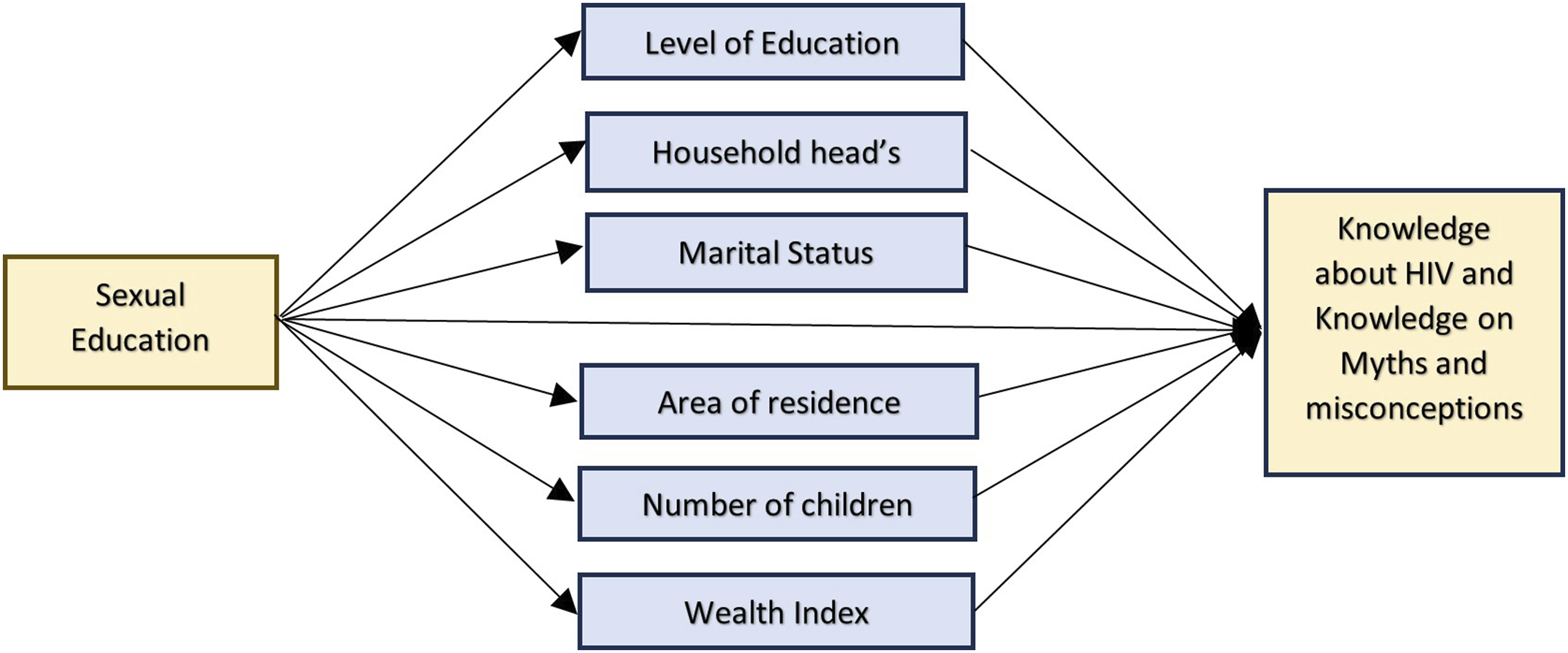
Methods
Design
This study used secondary data from the latest Thailand Multiple Indicator Cluster Survey (MICS) conducted in 2022. It is a cross-sectional, population-based survey of Thai women aged 15-49, carried out from June 2022 to October 2022 using a multistage, stratified cluster sampling technique. 44 As part of the Global MICS Programme, this survey was jointly conducted by the National Statistical Office of Thailand (NSOT) and the United Nations Children’s Fund (UNICEF). The sample size estimation and sampling method were designed to provide national-level estimates for a range of public health indicators concerning children and women, covering five regions and 12 priority provinces. 44
Households were selected through a two-stage process: first by region, then stratified by area type (urban/rural). Primary sampling units (PSUs) were chosen using probability proportional to size. Each region’s clusters were determined based on sample size, with 20 households randomly selected per PSU. After listing households in the selected areas, a systematic sample of 20 households was drawn for each PSU. The survey covered 1727 PSUs and 34 540 households. Detailed sampling design and MICS questionnaires are available at https://mics.unicef.org.
Sample
This study focused on a subset of the Thailand MICS dataset, including 3671 women aged 15-49 years.
Measures
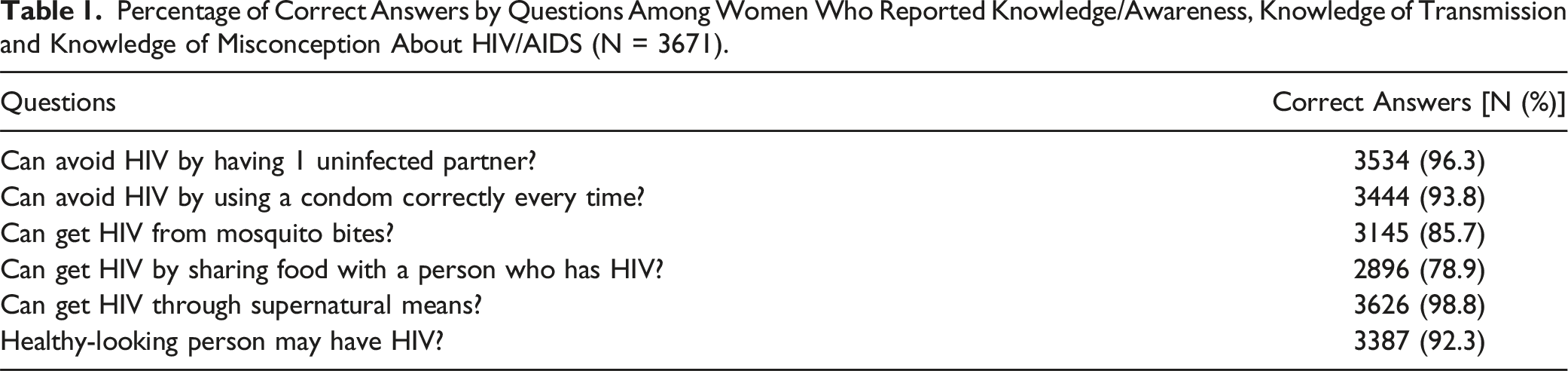
Women’s knowledge about HIV and knowledge of HIV transmission and its misconceptions was considered as the main endogenous (outcome) variable in this study. This variable was determined by combining 2 sets of HIV-related questions. The first set assessed knowledge about HIV/AIDS transmission, with 2 questions asking whether women knew they could protect themselves from getting HIV/AIDS by: (i) having just 1 uninfected sex partner who has no other sex partners, and (ii) using a condom every time they have sex. The second set quantified knowledge on myths and misconceptions about HIV/AIDS based on responses to 4 questions: (i) Can people get HIV from mosquito bites? (ii) Can people get HIV by sharing food with a person who has HIV? (iii) Can people get HIV because of witchcraft or other supernatural means? and (iv) Is it possible for a healthy-looking person to have HIV? Answers to all 6 questions were combined into a binary variable, coded ‘yes’ = 1 if a respondent correctly answered all 6 questions and ‘no’ = 0 otherwise, based on similar past studies.19,41,45
The exogenous variables (predictors) included: women’s exposure to sexual education (yes, no), education levels of both women and their household head (primary or lower secondary, upper secondary, higher), age (in years), area of residence (urban, rural), household wealth index (poorest, second, middle, fourth, richest), marital status (married, single, living together), number of children (no children, 1 or more children), gender of household head (male, female), and age of household head (15-35, 36-50, more than 50 years), which were selected based on the objective of the current research and suggested by previous research.19,30,45
Analysis
The dataset used for this study included 3671 women from the 2022 Thailand MICS. Missing data were excluded in a list-wise manner, assuming they were missing at random.46,47 After descriptive analysis, a bivariate analysis was performed, tabulating HIV/AIDS knowledge across variables like age, residence, education (women and household head), wealth index, marital status, number of children, and exposure to sexual education. Associations were tested using Pearson Chi-square and t-tests.
In the Structural Equation Model (SEM), linear relationships between exogenous variables and knowledge about HIV are described, allowing simultaneous testing of several interrelationships, including mediation effects. 48 Using mediation analysis as a guiding framework, SEM was employed to analyse the complex relationships between sexual education, several socio-demographic variables related to women and their households, and knowledge about HIV among Thai women.
Pathway selection and variable inclusion/exclusion were based on prior research and refined iteratively using standardized residuals and modification indices. Model fit was assessed using recommended indices, including a root mean square error of approximation (RMSEA) below 0.07 and a comparative fit index (CFI) or Tucker-Lewis index (TLI) greater than 0.95. 49 The significance of the mediation effect was assessed based on a bootstrap analysis of 5000 samples. Data preparation and statistical analysis were conducted using R (version 4.2.0) and SPSS (version 29).
Results
In the MICS 2022 survey, data from 3671 Thai women were available for analysis. The women in this study had a mean age of 19.61 years (SD = 3.01). About 51.1% of the women lived in urban areas, while the rest lived in rural areas. A significant portion (47.5%) of the women had completed upper secondary education, 26.6% had completed primary or lower secondary education, and 25.9% had reached higher education. More than half (66.1%) of the women were single, while 9.9% were married and 24% lived together with a partner. Approximately 71% of women did not have children, and most households (52.6%) were headed by males. Approximately 70% of the household heads had completed only primary or lower secondary education, and the majority were over the age of 50 years. Most of the women (91%) had received sexual education. Supplemental Table 1 provides a detailed breakdown of sociodemographic variables (Suppplemental Table 1).
Percentage of Correct Answers by Questions Among Women Who Reported Knowledge/Awareness, Knowledge of Transmission and Knowledge of Misconception About HIV/AIDS (N = 3671).
Bi-Variate Association (Unweighted) Between Knowledge About HIV and Knowledge on Myths and Misconceptions of HIV and Socio-Demographic Variables for Thai Women (N = 3671).
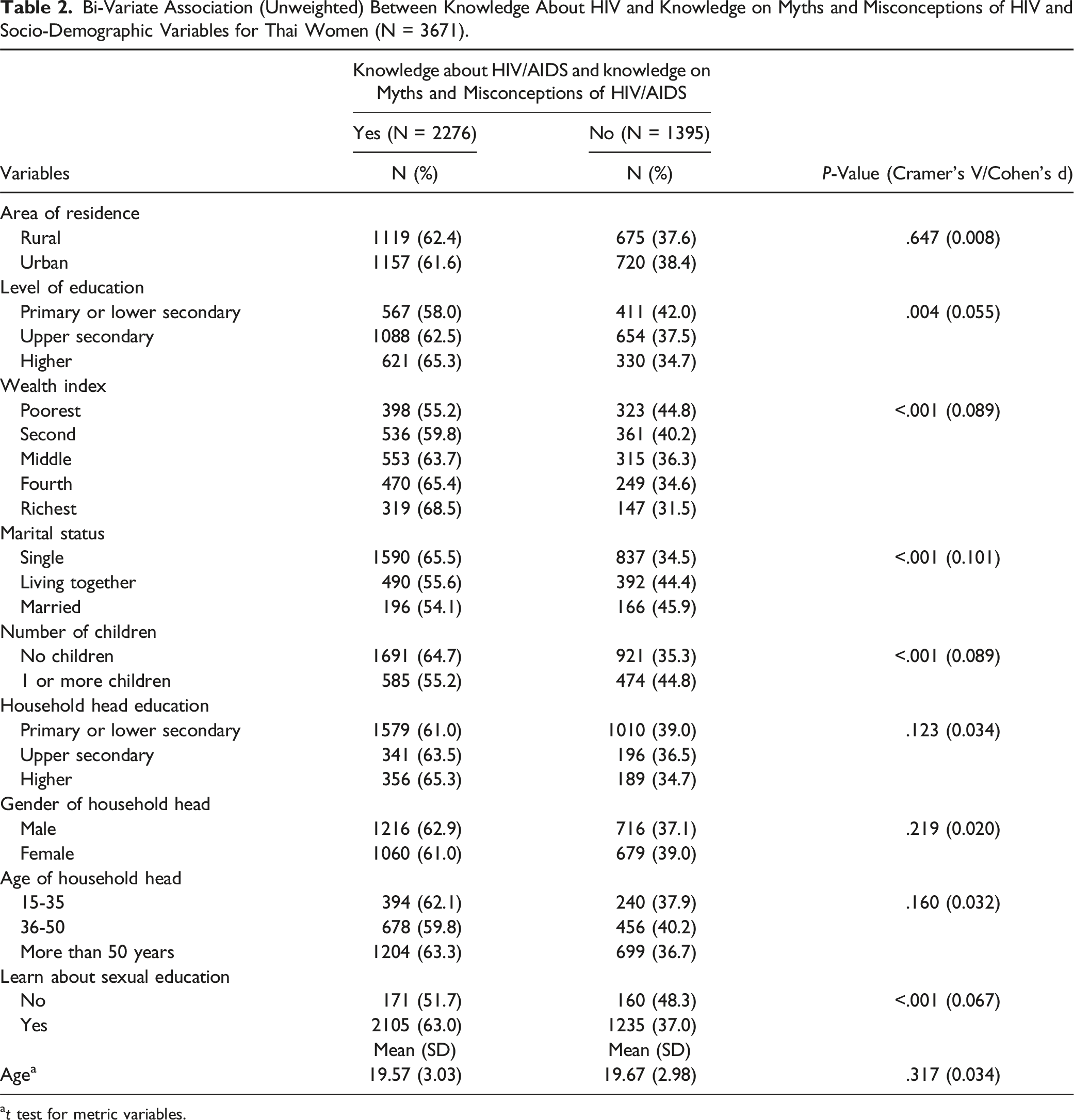
at test for metric variables.
Socio-demographic factors, such as women’s and the household head’s education, marital status, wealth index, number of children, area of residence, and gender of household head, have been integrated as mediators in the SEM, with pathways outlined in line with earlier research. Variables not associated with women’s knowledge of HIV, such as age and the age of the household head, were excluded from the SEM. Figure 2 shows the path diagram of the final adjusted fitted SEM. The main predictor in our model is sexual education, which influences the outcome variable, knowledge about HIV/AIDS and its transmission and misconception, through several mediating variables. Notably, the model fit statistics ( Fitted structural equation model (SEM) illustrating the relationship between women’s sexual education status, various socio-demographic factors, and their Knowledge about HIV/AIDS and knowledge on myths and misconceptions about HIV/AIDS (N = 3671).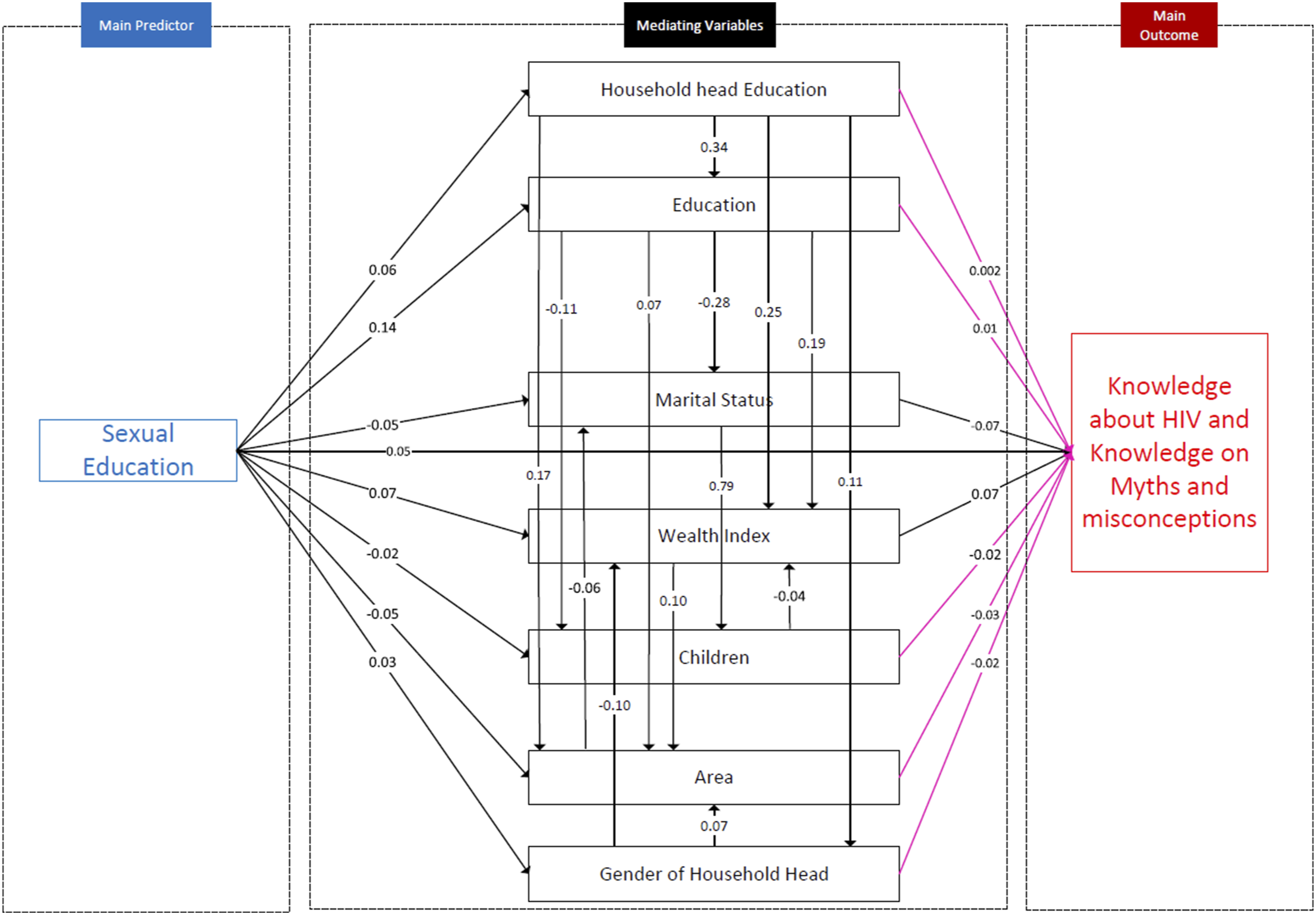
Path Coefficient in the SEM Model.
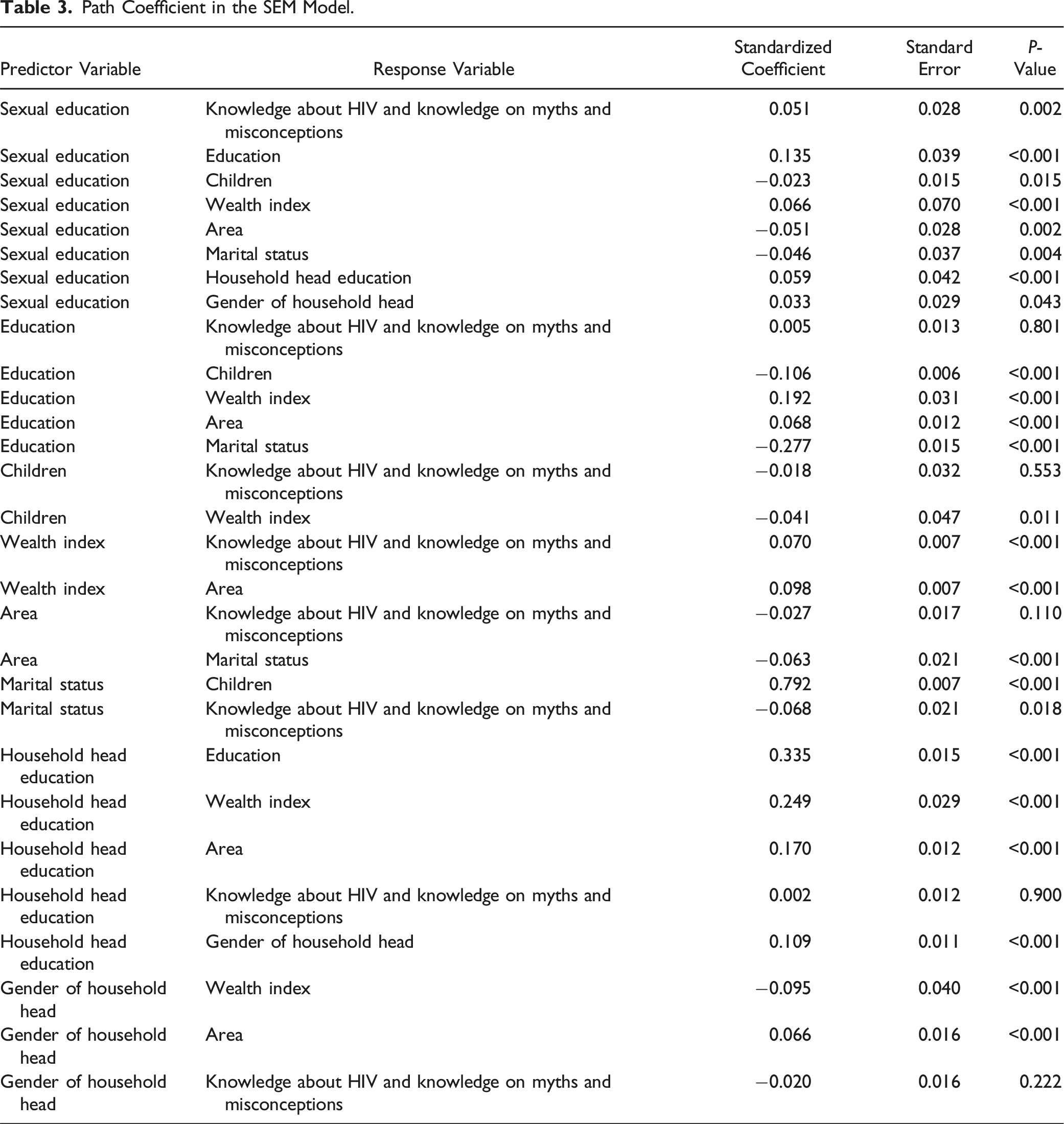
Sexual education is positively linked to education level (β = 0.135), wealth index (β = 0.066), household head’s education (β = 0.059), and female-headed households (β = 0.033). Women receiving sexual education tend to have higher education, wealth, and educated household heads. Conversely, sexual education is negatively associated with number of children (β = −0.023), urban residence (β = −0.051), and marital status (β = −0.046), indicating women without it are more likely married with more children and living in urban areas.
Women’s education is positively linked to household wealth index (β = 0.192) and area of residence (β = 0.068), while negatively associated with the number of children (β = −0.106) and marital status (β = −0.277). This indicates that more educated women tend to have fewer children and are more likely to be single. The education level of the household head positively correlates with women’s education (β = 0.335), wealth index (β = 0.249), urban residence (β = 0.170), and female-headed households (β = 0.109). This suggests that higher household head education leads to better educational opportunities for women, increased wealth, and a tendency to live in urban areas. Women’s area of residence negatively associates with marital status (β = −0.063), indicating urban living is linked to being single. The gender of the household head negatively correlates with wealth index (β = −0.095), while positively associating with urban residence (β = 0.066).
Test for Mediation Using a Bootstrap Analysis With 95% Confidence Interval.
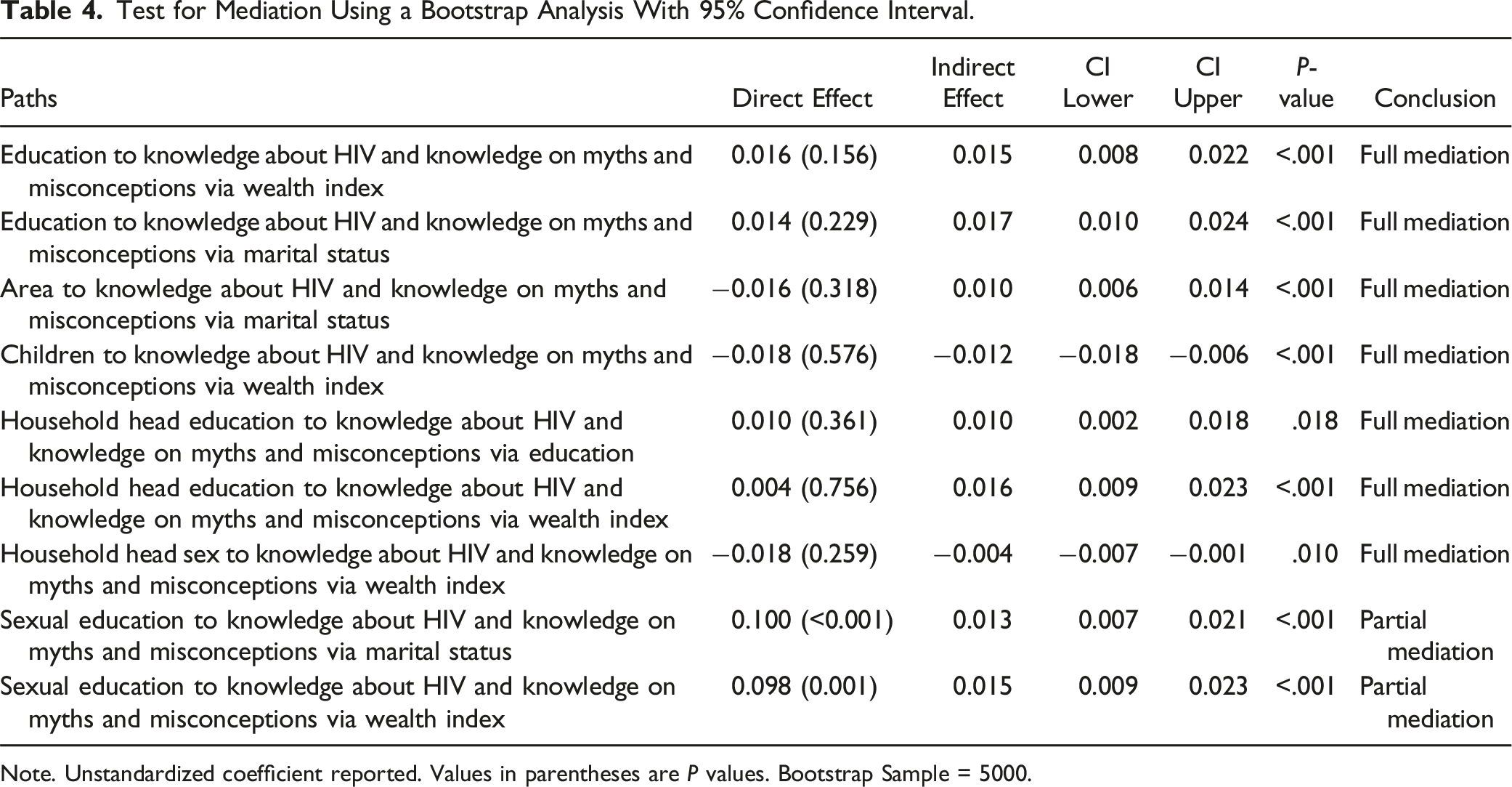
Note. Unstandardized coefficient reported. Values in parentheses are P values. Bootstrap Sample = 5000.
Discussion
In this study, data from the latest nationally representative MICS conducted in 2022 were analyzed to identify predictors of poor HIV/AIDs transmission among women living in Thailand. This study estimate the portion of women who were vs were not knowledgeable about HIV/AIDS transmission, and examined the direct and indirect associations of knowledge status with sociodemographic factors through SEM analysis. The findings demonstrated strong evidence of direct, indirect, and mediating effects of women’s sexual education and education status on knowledge about HIV/AIDS. The results revealed that overall, 62% of Thai women reported having accurate knowledge about HIV. Poor knowledge was more likely for women without sexual education, living in households led by an illiterate head, residing in rural areas, belonging to the poorest wealth quintile, and having a low level of education.
These findings are consistent with previous literature.19,50,51 As anticipated, consistent with previous studies and the Health Belief Model (HBM), this study found that several sociodemographic factors—including education level, wealth index, living area, gender of the household head, number of children, and marital status—mediated the relationship between the primary predictor, sexual education, and knowledge about HIV/AIDS.52-55
This study reveals that women’s sexual education, wealth index, and marital status significantly impact HIV/AIDS knowledge, supporting previous research that highlights these sociodemographic factors as key predictors.52-54,56,57 As expected, sexual education and education are the key drivers in the knowledge of HIV/AIDs in women, as educated women are expected to be more concerned about their health and their newborn child as compared to their uneducated counterparts.19,58,59 As addressed in past literature, it is expected that women with institutional education would understand the concept of how a virus spreads, comprehend the deadliness of sexually transmitted diseases (STDs) and so render awareness.41,60,61 Studies have emphasised that to reduce the risk of infection among young women, the most important thing is to promote comprehensive sexual education.33,52 The structural equation model reveals that sexual education directly improves knowledge of HIV/AIDS and its misconceptions. Women’s education impacts HIV knowledge, fully mediated by household wealth and marital status. To enhance HIV/AIDS knowledge, it’s crucial to educate women and provide sexual education, considering factors like wealth, marital status, and area of residence.
Studies have highlighted that married women are more likely to be exposed to misconceptions about HIV/AIDS transmission compared to never-married women, as observed in this study of married women in Thailand.18,62 Similarly, married women are at a higher risk of HIV/AIDS due to a range of structural barriers and contextual gender inequalities, including poverty, economic disempowerment, cultural inequities, increased risk of sexual violence, gender power imbalances in sexual interactions, and traditional beliefs about HIV/AIDS knowledge and its transmission.63,64 Misconceptions about HIV/AIDS transmission and a lack of knowledge about the disease were found to be less prevalent among women in rural areas compared to those in urban areas. This finding is consistent with other studies conducted in China, Malawi, Ghana, and Bangladesh,18,19,62,65,66 possibly due to inhabitants of these regions possessing limited information about how HIV/AIDS is transmitted. However, rural women were less likely to believe that HIV/AIDS could be transmitted through witchcraft or supernatural means, a result that warrants further investigation using qualitative data.
While the household head’s education did not directly affect women’s HIV/AIDS knowledge, its impact was fully mediated by the women’s education level. Women in households where the head had primary or higher education showed significantly greater HIV/AIDS knowledge, supporting previous research that views education as a “social vaccine” against HIV/AIDS. 19
Educated women are more likely to live in urban areas and be wealthier, yet their ability to identify HIV myths and misconceptions is indirectly influenced. Sexual education significantly correlates with the wealth index, which indirectly affects knowledge about HIV/AIDS myths, aligning with previous studies.19,58 As hypothesized in the conceptual framework, the effects of sexual education on knowledge and understanding of myths and misconceptions about HIV/AIDS was mediated through women’s wealth index. This study found that respondents in the richest quintile had better knowledge and understanding of myths and misconceptions about HIV/AIDS than respondents in the poorest quintile. A possible explanation is that HIV/AIDS is considered a disease of the poor. Poverty increases risky behaviour towards HIV/AIDS such as transactional gender. Poverty also leads to fewer opportunities for work and education. On a broader scale, financial shortfalls can limit educational opportunities, access to health care, and access to jobs. These conditions create a favourable environment for the spread of HIV/AIDS.67,68
In summary, this study found that education and sexual education were important predictors of knowledge about HIV/AIDS. Improvement in education and sexual education are likely to assist Thai women to be better informed about HIV transmission, which in turn is likely to reduce new cases of HIV/AIDS, consistent with the SDG goal.46,69-71
To our knowledge, this is the first study to utilize the most recent MICS (2022) data—a relatively large and representative dataset—to assess the direct and indirect impact of sexual education and educational attainment on HIV/AIDS knowledge and awareness among Thai women, using path analysis through an SEM approach. However, this study had several limitations. First, the HIV/AIDS data from the MICS were based on self-reported information, which may be subject to recall bias. Second, the responses regarding HIV/AIDS knowledge, transmission, and misconceptions were dichotomous, such a binary approach may have oversimplified knowledge status, and that by a continuous measure of knowledge may be a better indicator of knowledge of HIV/AIDS. Third, women who had never heard of HIV/AIDS were not asked about transmission or misconceptions, significantly reducing the sample size in the latter part of the analysis, which requires careful interpretation. Fourth, since the MICS surveys are cross-sectional, causal associations cannot be established. Fifth, although women’s education was assessed, health literacy could not be evaluated due to limitations in the survey data, which might be more relevant for understanding health awareness. Sixth, due to the absence of qualitative data, the generalization of the findings should be approached with caution. Finally, women’s empowerment and media exposure were not included in the analysis due to limitations in data availability. Future studies or surveys could consider addressing this issue.
To enhance knowledge and address misconceptions about HIV/AIDS transmission among married women in Thailand, policymakers should consider implementing effective intervention programs that focus on factors indirectly influencing HIV/AIDS awareness, rather than relying solely on sexual education and/or education. Strengthening educational initiatives alongside sexual education could play a crucial role in fostering knowledge and awareness among the younger generation. Additionally, health promotion and gender equality programs involving community participation could be highly effective in Thailand, where women’s autonomy remains limited. Moreover, the government plays a crucial role in reducing stigmatizing attitudes toward HIV/AIDS transmission by promoting accurate information and fostering understanding among youth through partnerships with health professionals and public figures.
Future research should adopt a more in-depth approach using a mixed-methods study design at the population level, incorporating mediating factors alongside the primary predictors of HIV/AIDS knowledge. Additionally, studies should emphasize a co-design approach by involving community members in the research design process.
Conclusions
In the dynamic social settings of LMICs including Thailand, it is necessary to gather vital evidence through mixed-method research to empower women with sexual education along with education, alongside achieving broader goals including the SDG3 by 2030. The direct and indirect effect of sexual education, education, residence, wealth index and husband’s education on knowledge and understanding of myths and misconceptions about HIV/AIDS outline the complex mechanisms of various sociodemographic factors on Thai women’s knowledge about HIV/AIDS. In summary, this study’s findings support previous studies examining the influences of sociodemographic characteristics on knowledge and understanding of myths and misconceptions about HIV/AIDS. The findings indicated that there were multifaceted scopes for improvement in increasing awareness about HIV/AIDS and clarifying misconceptions regarding the mode of transmission of HIV/AIDS through a path analysis approach. Strengthening educational programs along with sexual education could have great importance in fostering knowledge and awareness among the younger generation. The issue of HIV/AIDS remains a major public health concern, knowledge about HIV/AIDS and its misconceptions about transmission continue to hinder prevention efforts. Although sexual education has been identified as a key element in improving awareness about HIV/AIDS, other sociodemographic factors can also influence its effectiveness. There is a significant direct and indirect association between sexual education, wealth index, level of education, and marital status on HIV knowledge and misconceptions among women in Thailand. Therefore, enhancing HIV awareness necessitates addressing both of these interconnected sociodemographic factors through a path analysis model, rather than concentrating exclusively on sexual education or general education. To achieve the UN Sustainable Development Goal of reducing HIV/AIDS transmission by 2030, policymakers must implement multifaceted interventions that enhance access to both formal education and sexual education. Health systems in LMICs need to prioritize education-based interventions to address HIV/AIDS knowledge gaps, while considering the broader socioeconomic context. This integrated approach can reduce health disparities and improve HIV prevention efforts, leading to more effective and sustainable outcomes in the fight against HIV/AIDS.So What?
What is Already Known on this Study?
What Does this Article Add?
What are the Implications for Health Promotion Practice or Research?
Supplemental Material
Supplemental Material - Knowledge About HIV/AIDS and its Transmission and Misconception Among Women in Thailand: A Structural Equation Modelling Approach
Supplemental Material for Knowledge About HIV/AIDS and its Transmission and Misconception Among Women in Thailand: A Structural Equation Modelling Approach by Jahar Bhowmik, Lakma Gunarathne, Sunil Bhar, Udayan Bhowmik, and Pragalathan Apputhurai in American Journal of Health Promotion
Footnotes
Acknowledgments
The authors acknowledge the United Nations Children’s Fund (UNICEF) and the National Statistical Office of Thailand (NSO) for conducting Thailand MICS as part of the Global MICS programme, with government funding and financial support of UNICEF.
Authors’ Contributions
This study was conceptualized by J.B. The study design was developed by J.B., while the screening and analysis of the data were performed by L.G., J.B., and P.A. The initial draft of the manuscript was prepared by J.B. S.B., L.G., P.A. and U.B. thoroughly reviewed the draft manuscript and provided their feedback. The final manuscript was read and approved by all the authors.
Declaration of Conflicting Interests
The author(s) declared no potential conflicts of interest with respect to the research, authorship, and/or publication of this article.
Funding
The author(s) received no financial support for the research, authorship, and/or publication of this article.
Ethical Statement

Supplemental Material
Supplemental material for this article is available online.
References
Supplementary Material
Please find the following supplemental material available below.
For Open Access articles published under a Creative Commons License, all supplemental material carries the same license as the article it is associated with.
For non-Open Access articles published, all supplemental material carries a non-exclusive license, and permission requests for re-use of supplemental material or any part of supplemental material shall be sent directly to the copyright owner as specified in the copyright notice associated with the article.
