




Abstract
Purpose
The purpose of this study was to investigate the relationship between obesity and internet addiction in first-year university students (aged 18-25 years).
Design
The study was designed using a cross-sectional analytic model.
Setting
Data collection took place at Dokuz Eylul University, involving a diverse group of first-year students from different faculties.
Subjects
The study population comprised 12,365 students, with 2890 individuals selected using cluster sampling.
Measures
Internet addiction was evaluated using the Online Cognition Scale (OCS). Data on obesity-related variables and demographic details were collected through a questionnaire. Descriptive statistics, chi-square analysis, t test, and ANOVA were applied for statistical evaluation.
Results
The study included 2105 participants, with 43.8% males and 56.2% females. A significant positive correlation was found between body mass index (BMI) and OCS scores (P = .000), indicating a higher prevalence of internet addiction among individuals with higher BMI. Males had higher mean OCS scores (91.19 ± 35.14) than females (80.21 ± 30.51) (P = .00). Overweight and obese individuals exhibited higher scores on OCS sub-dimensions (P < .005). Notably, individuals with a BMI over 25 were categorized as overweight, and those with a BMI over 30 were classified as obese.
Conclusions
The findings demonstrate a noteworthy relationship between internet addiction and obesity among university students. The study emphasizes the necessity of increased attention to this issue in Turkey for the implementation of effective interventions and preventive measures.
Introduction
Technology, particularly computers and the internet, has become an essential part of modern life. Although the internet was initially designed to provide easy, quick, and safe access to information and facilitate communication, its widespread use has led to a new phenomenon known as pathological overuse or internet addiction.
According to, 1 “healthy internet use” refers to using the internet in a suitable manner to achieve desired goals without experiencing mental or behavioral discomfort. 2 introduced the term “internet addiction” and developed indicators for it, drawing from the diagnostic criteria used for alcohol addiction in DSM-V. Young established the “Center for On-line Addiction” to address this issue based on indicators adapted from DSM-V’s criteria for pathological gambling.
Excessive internet use has been labeled as Computer Addiction, internet Addiction, or Pathological internet Use. 3 defined pathological internet use as “overuse” leading to difficulties in a person’s home, work, school, social, or psychological life. Research has shown that internet addiction is linked to various physical and psychological problems. 4 Studies have also found associations between internet addiction and personality disorders, mental health issues, and gender differences.5,6
Internet addiction is 1 of many forms of addiction, and addicted individuals are more susceptible to various diseases.7,8
Studies with adolescents have reported internet addiction rates ranging from 1.9% to 18.8%, with higher prevalence in boys than girls.9-11 Among high school students in Turkey, internet addiction rates have been found to range from 6.14% to 11.6%, with higher rates in males.12,13
Obesity is a significant public health concern with both psychological and somatic aspects.14,15 The “Turkey Nutrition and Health Survey-2010“ reported obesity prevalence in Turkey as 30.3% (women 30.3% and men 20.5%), with overweight individuals accounting for 34.6%. The combined rate of overweight and obese individuals is 64.9%, and extreme obesity is at 2.9%. 16
University students are particularly susceptible to internet addiction due to the heavy reliance on the internet for academic purposes, social interactions, and entertainment. The widespread availability of high-speed internet, coupled with the need to research, complete assignments, and stay connected with peers, contributes to the increased risk of developing problematic internet use among university students. 17
Research has indicated a potential link between internet addiction and obesity, with excessive time spent online leading to a sedentary lifestyle, decreased physical activity, and weight gain. For university students, the allure of the internet lead to irregular eating patterns and unhealthy food choices as they mindlessly snack while immersed in their devices. Moreover, internet addiction has detrimental effects on mental health, possibly triggering emotional eating and overeating as a coping mechanism. The combination of reduced physical activity, poor dietary habits, and negative psychological impacts can create a concerning cycle that contributes to the development of obesity among university students grappling with internet addiction. Addressing these interconnected issues requires comprehensive strategies that target both the excessive use of the internet and the promotion of healthier behaviors to safeguard the well-being of students. 18
Despite publications on internet use, research on this topic in Turkey remains limited. 19
The aim of this study was to explore the relationship between obesity and internet addiction in university students. Understanding this relationship can reveal that obesity is not solely a result of nutrition and physical activity but also influenced by psychological and social factors. The findings may help develop appropriate prevention and treatment strategies for university students, as both internet addiction and obesity are on the rise among young people.
Method
Approval for this cross-sectional analytical research was obtained from the Non-Invasive Research Ethics Committee of Dokuz Eylul University Faculty of Medicine (approval with protocol number 839-GOA 2012/43-08). Necessary permissions were also acquired from Izmir Dokuz Eylul University Rectorate and the faculties. The study was funded by Dokuz Eylul University Rectorate BAP (project number: 2013 KBSAG096). The population of the study consisted of 12,365 students.
The sample size has been determined as at least 354 participants, considering a population size of 12,365, a prevalence of 50%, a margin of error of 5%, and a confidence level of 95%.20,21
The chosen sampling strategy for this study was cluster sampling. There are 20 faculties and vocational schools (Faculty/VS) at Dokuz Eylul University, each comprising various numbers of first-year classes. The study treated each faculty/VS as a separate cluster, aiming to include at least 50% of these 20 clusters. This approach led to the selection of 12 faculties/VS (including faculties: the Faculty of Education, the Faculty of Maritime Affairs, the Faculty of Science, the Faculty of Nursing, the Faculty of Law, Faculty of Economics and Administrative Sciences, Faculty of Business Administration, Faculty of Architecture, Faculty of Engineering, Faculty of Medicine and Vocational School of Justice). The target was to reach all the first-year students in these selected institutions. Questionnaires were administered in classrooms during the lessons. Prior to distributing the questionnaire, participants were verbally informed about the study, and their signatures were obtained on the voluntary informed consent form attached to the back of the questionnaire. In total, 2890 people (with a response rate of 23.3%) participated in the research. However, 785 participants were not included in the analysis as they did not completely fill out the data forms and scales. Therefore, the analysis of the study was conducted with 2105 participants.
“Internet addiction assessment scale” along with a demographic data questionnaire addressing variables related to obesity were utilized. The data collection tools also included the “Online Cognition Scale.” 22 The 36-item internet Online Cognition Scale is a 7-point Likert-type scale assessing problematic internet use in 4 sub-dimensions: social support (SS), loneliness-depression (LD), diminished impulse control (RIC), and distraction (D). The validity and reliability of the scale have been established, with a reliability coefficient (α) of .93. 23
The statistical analysis was performed using SPSS 16.0 (Statistical Package for Social Sciences) Descriptive analysis, including mean and median, was conducted. To examine differences in the mean scores of OCS sub-dimensions and the total scale score between individuals classified as overweight and obese compared to those classified as overweight, t-tests were used, ANOVA was employed to determine whether there were statistically significant differences in OCS scores among individuals with different BMI classifications. Chi-square tests were used to determine whether there were statistically significant associations between demographic factors and BMI categories. The significance level was set at P < .05.
Results
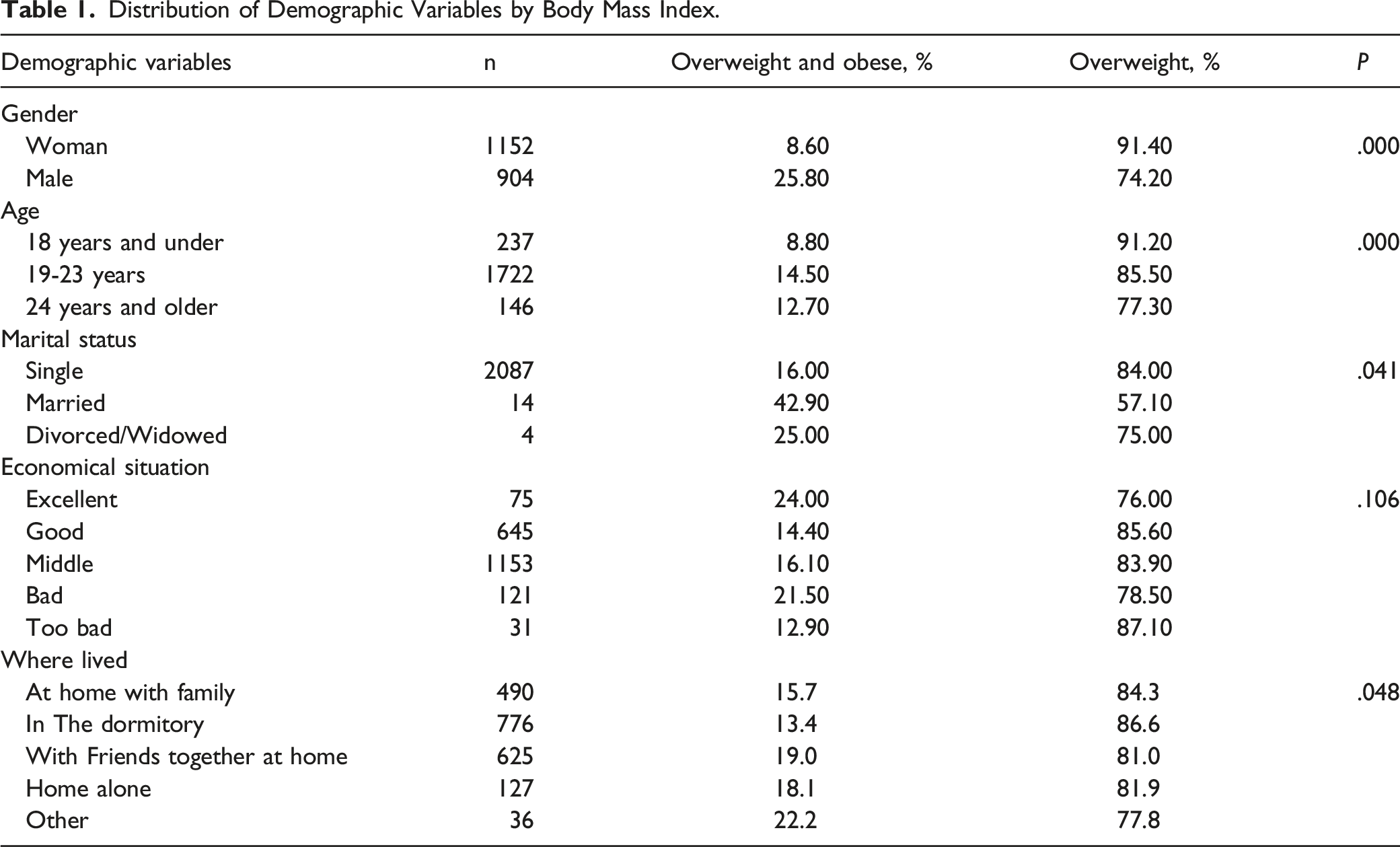
The study included 2105 students from Dokuz Eylul University, with 43.8% male and 56.2% female participants, with a mean age of 20.46 ± 1.99 years. The majority of students lived in dormitories (37.8%), and 57% reported a medium economic status. Faculty-wise, most students studied at the Faculty of Economics and Administrative Sciences (24.5%), while the Vocational School of Justice had the lowest representation (2.0%) (Table 1).
Regarding health and lifestyle factors, 36.4% of participants exercised regularly, 38.2% had an obese family member, and 3.9% had a psychiatric illness. Additionally, 9.0% had a chronic disease, with 11.0% using medication for it. Dietary habits revealed that 55.8% ate three meals a day, 37.82% consumed fruits and vegetables, and 5% avoided fast food altogether. The average weight of participants was 65.19 ± 13.05 kg, and the average height was 171.23 ± 8.83 cm. Based on BMI, 71.38% were classified as normal, while 17.43% were overweight or obese.
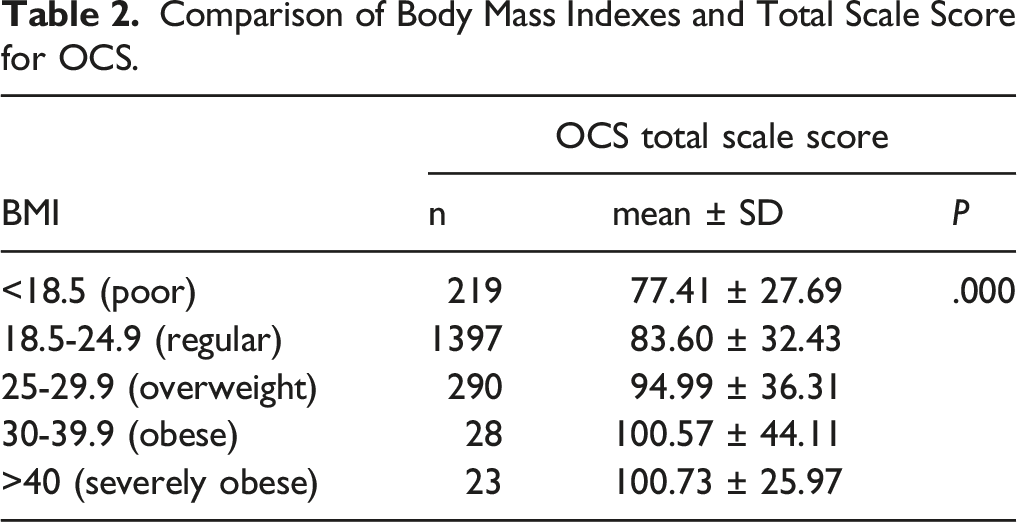
The study found a significant relationship between BMI and internet addiction questionnaire (IAQ) scores, with higher BMI associated with higher OCS scores. Male students had higher rates of overweight and obesity (25.8%) compared to females (8.6%). Overweight and obesity prevalence varied by age group, with 14.5% in the 19-23 age group, 12.7% in the 24-year-old and older group, and 8.8% in the 18-year-old and younger group. Married participants had a higher prevalence of overweight and obesity (42.9%) compared to unmarried individuals. Participants who stayed at home with friends also had a higher rate of overweight and obesity (19.0%).
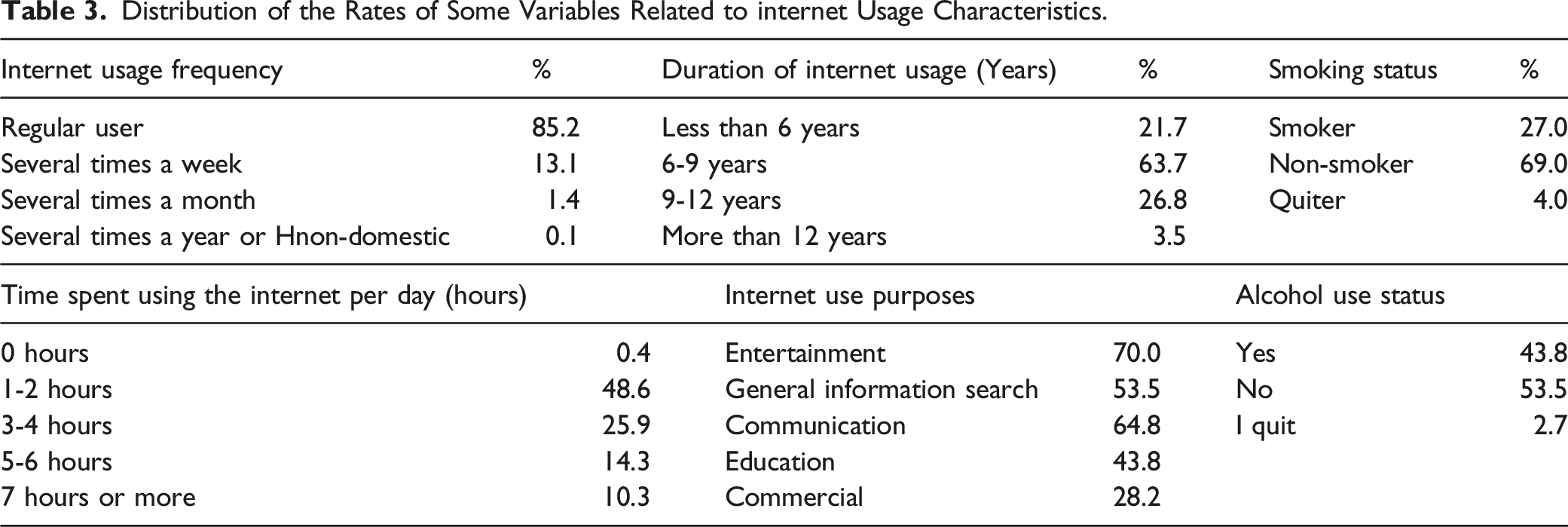
Regarding internet usage habits, 85.0% of students used the internet regularly, with 63.7% using it for 6-9 years. Overweight and obese individuals spent more time on the internet and sedentary than non-obese individuals. The mean OCS scores were higher in males compared to females, and students with atrocious economic status and those studying at the Maritime Faculty had higher OCS scores. There were no data assumption violations during analysis.
Discussion
University students spend long hours on their computers and smartphones to study, socialize, and have fun. While the internet has undoubtedly made today’s life easier and more connected, there are potential drawbacks to spending too much time online. Recent research raises important questions about the impact of technology on our health, suggesting that there may be a link between internet addiction and obesity.
This study investigated the relationship between internet addiction and obesity in university students. The findings show that there is a positive relationship between internet addiction and obesity. This result is consistent with previous studies that found a similar relationship between excessive internet use and overweight/obesity.14,24,25 It was found that as BMI increased, the level of internet addiction also increased.
There are very few studies on this subject in the literature. In a study conducted in China in 2014, obesity was found to be 23.57% in 1150 secondary school students, internet addiction was 21.23%, and internet addiction was found to be 32.96% in obese students, and in logistic regression analysis, internet addiction was found to be a risk factor for obesity. 26 In our study, the rate of overweight and obesity was found to be 17.43%. This study, unlike our study, was conducted in secondary school students and includes differences in the developmental period.
According to the results of the Turkish health survey, the rate of obesity and overweight was found to be 19.5% in the young population aged 15-24 in 2019. 27 The rate we found in our study is slightly lower than this rate because only university students were studied and because university students are a more educated and conscious group, they are more sensitive about nutrition and exercise. 28 Therefore, we think that our sample can represent university students.
The internet addiction scale we used in our study does not differentiate between internet and non-internet addicts. Therefore, it was not possible to make comparisons with internet addiction rates.
In a study conducted in China, internet addiction was 2.8%; In a study conducted in Norway, it was found to be 1%. In their study, 25 23.2% of the participants showed signs of internet addiction, while 28.4% found it in the risky internet user group. When we look at the studies, it is seen that the high rates are mostly done over the internet or by phone. However, in studies conducted with face-to-face interviews, it is seen that internet addiction rates are generally around 1%-2%. 22 Since our study was conducted face-to-face, it is possible that the rate of participants who can be thought to use the internet as problematic is lower than the studies conducted via the internet or telephone. Since the results obtained from the face-to-face interview technique will be more accurate, it can be considered that the result obtained from our study is reliable. 29
In our study, comparisons with other studies were made over the mean score of the OCS and with studies using the same scale.
Overall, the relationship between obesity and internet addiction is complex and likely bidirectional, with each potentially contributing to the other. The relationship between internet addiction and obesity is attempted to be explained both as psychiatric and physical (lifestyle). Both obesity and internet addiction are evaluated in the impulse control disorder subclass. 30
It is stated that the relationship between internet addiction and obesity may be bidirectional. In a study, it was concluded that there is a mutual interaction between obesity and internet use. In this study, it was stated that people with obesity risk are more likely to use the internet excessively to escape from stressful or challenging situations, and this increases the risk of internet addiction. 6 Another study stated that there are similar risk factors between obesity and internet addiction. In particular, low self-esteem, depression, and anxiety increase the risk of both obesity and internet addiction. 7
A possible physical explanation for the link between internet addiction and obesity is that internet addiction can lead to a sedentary lifestyle. University students who are addicted to the internet can decrease their physical activity levels and thus weight gain by sitting in front of a computer screen for a long time. 31 Additionally, internet addiction may be related to bad eating habits. Some studies have suggested that individuals with internet addiction may be more likely to overeat or consume high-calorie foods while using the internet.32,33 This may result in an increased risk of obesity among internet-addicted individuals. In other studies, it has been shown that obese individuals have poor diet quality and have too much time spent sedentary during the day. 34 Individuals with internet addiction spend a lot of time without physical activity during the day, and it has been determined that they eat unhealthy in studies. 35
Distribution of Demographic Variables by Body Mass Index.
Comparison of Body Mass Indexes and Total Scale Score for OCS.
Distribution of the Rates of Some Variables Related to internet Usage Characteristics.
Distribution of Some Variables According to Body Mass Indexes.

Comparison of the Scores of Being Overweight and Obese and the Total Scale Score and Sub-Dimensions of OCS .

There are 4 sub-dimensions of the cognitive status scale on the internet. When our findings are examined in terms of these sub-dimensions; In our study, the mean score of the social support dimension of internet addiction was 27.85, and it was determined as 30.96 points in overweight and obese individuals and 27.27 points in obese and non-overweight individuals. A high social support score on this scale indicates low social support. The social support dimension is associated with an adaptive state. It is about the use of the internet by lonely individuals to obtain social support or to avoid social rejection by individuals who are overly sensitive to rejection. However, situations where internet use precedes real-life relationships and rely heavily on relationships experienced here are defined as pathological processes. 23
In a study conducted with university students in Turkey, the social support sub-dimension score of OCS was found to be 31.40. 36 In our study, our social support sub-dimension average score is close to these data. However, it was found to be high in obese and overweight individuals. Some research showed that people who have more social support have a lower risk of obesity. People with a large social support network may be more motivated to maintain healthy lifestyle habits and avoid obesity risk factors. Additionally, getting social support can reduce stress levels, which can reduce the risk of obesity. However, obese youths are hesitant to enter social environments because they are uncomfortable with their physical appearance and body images. 37 The internet environment is a good environment for socializing and it also allows people to reflect themselves differently. People with internet addiction may be more exposed to obesity risk factors such as consuming unhealthy foods, not performing physical activity, and disturbed sleep patterns. 38
Of the loneliness depression, the dimension of internet addiction was 13.53, and it was determined as 14.88 points in overweight and obese individuals and 12.27 points in obese and non-overweight individuals. In the study by Özcan et al, the loneliness-depression dimension score was reported as 11.51. 36 The score in this study was found to be close to our score. However, in our study, the loneliness depression dimension score was found to be higher in obese and overweight students.
The loneliness-depression dimension includes depressive thoughts about loneliness and worthlessness in problematic internet use. The loneliness-depression dimension is 1 of the most important factors that causes internet addiction. Psychological problems such as depressive thoughts and feelings of loneliness can cause internet addiction. Although the loneliness-depression dimension is associated with internet addiction, it may also be associated with obesity. This link may occur due to depressive thoughts, low self-esteem, feelings of inadequacy, and generally poor social support under the loneliness-depression dimension. Many studies have shown that loneliness and depression are associated with obesity. Feelings of loneliness and depression can trigger many people’s eating behaviors in stressful situations. It has also been stated that loneliness and depression may be associated with a boring and distressed lifestyle. 39 Here, people may become less physically active and start eating more. This can increase the risk of obesity.
Therefore, a link can be established between the loneliness-depression dimension, internet addiction, and obesity. Depressive thoughts and feelings of inadequacy can both trigger internet addiction and increase the risk of obesity. Additionally, increased internet use can also increase the risk of obesity. Therefore, a healthy lifestyle needs to keep internet use under control and support enough physical activity.
The diminished impulse control dimension of internet addiction was 24.02, 28.00 points in overweight and obese individuals, and 23.26 points in obese and non-overweight individuals. In a study conducted with university students, the diminished impulse control score average was found to be 22.55. 36 The score in this study was found to be close to our score a. However, in our study, diminished impulse control dimension scores were found to be higher in obese and overweight students.
The dimension of diminished impulse control is related to the fact that internet use cannot be reduced despite the desire to reduce it, and there are constant thoughts about the internet. This dimension is associated with risky and dangerous behaviors on the internet (such as online gambling, online sex, child pornography, spying on other people’s information networks). 40 Obesity is a condition related to the uncontrolled eating behavior and the inability to resist one’s cravings. Eating behaviors that may be associated with a diminished impulse control dimension may include behaviors such as overeating, snacking, and less healthy food choices. 41 diminished impulse control in this dimension refers to difficulties in reducing or controlling internet use. Increasing internet use may cause many people to decrease their physical activity level and be unable to control their eating behaviors. Additionally, consuming unhealthy foods while using the internet can make eating behaviors worse.
Therefore, a link can be established between diminished impulse control dimensions and obesity. Increasing internet use may increase the risk of obesity, as well as factors such as lack of control and inability to resist cravings under the diminished impulse control dimension may increase the risk of obesity.
Of the distraction dimension of internet addiction was 19.66, it was determined as 21.70 points in overweight and obese individuals and 19.28 points in obese and non-overweight individuals. In the study by Özcan et al, the distraction dimension score was reported as 19.09. 36
The score in this study was found to be close to our score. However, in our study, the distraction score was found to be higher in obese and overweight students.
The distraction sub-dimension includes turning to the internet to escape or avoid an activity that needs to be done. People prefer to use the internet to escape from thoughts, stress, or responsibility. Attention is drawn to the use of the internet for postponing work at school and at work. 42
There is evidence that there may be a relationship between obesity and distraction. Studies have shown that individuals with obesity may have more difficulties with attention and cognitive control. This may lead to increased distractibility and decreased ability to focus on tasks. 43
One reason for this association is that obesity is associated with chronic inflammation. This condition can affect brain function and impair cognitive abilities such as attention. Also, since obesity is often associated with sleep apnea and other sleep disorders, it can cause daytime sleepiness and further impair cognitive functions. 44
Another possible explanation is that individuals with obesity may experience greater levels of stress and anxiety. This can affect attention and concentration. This may be related to obesity-related stigmatization and discrimination, resulting in chronic stress and negative emotions. 45
Overall, more research is needed to fully understand the relationship between obesity and distraction. However, there is evidence that individuals with obesity may be at a higher risk of experiencing cognitive difficulties related to attention and concentration.
There are some limitations in this study. The research is a cross-sectional study, so it was not possible to fully demonstrate the relationship between obesity and internet addiction as a causal relationship. The results of our study may not be directly generalizable to other populations or age groups. Different cohorts of students, varying levels of education, and diverse demographic backgrounds can lead to variations in experiences and outcomes as the sample is limited to first-year college students. In our study, since the data were collected during in-person classes, the sample consisted of students with high attendance, which may introduce a potential bias given that high attendance is associated with lower internet usage. Conducting the study exclusively among first-year university students may have positively influenced the results due to the unique circumstances of their first-year experience, such as adapting to college life and leaving home for the first time. This could be considered a factor affecting the generalizability of the study to university students. Since the IAQ, which is used to evaluate internet addiction, does not have a predictive score, the participants could not be numerically differentiated as being internet addicts (problematic internet use) or not internet addicts (problematic internet use). For this reason, the analysis were made over the arithmetic mean, and it was not possible to distinguish the boundaries.
Study strengths: It was the first study to look at the relationship between obesity and internet addiction among university students in Turkey. A high number of participants was evaluated in the study. Data was collected face – to – face. The sample was chosen to represent the population using the probability sampling method. Additionally, in the power analysis performed after the data were collected, the power of the study was calculated as 99.9%.
Although there is some evidence of a potential relationship between obesity and internet addiction, this is still an active area of research, and more work is needed before this relationship is fully understood. Additionally, many people use the internet in healthy and productive ways, and it’s important to remember that not everyone who spends a lot of time on the internet will develop internet addiction or obesity.
It is important for college students to be aware of the potential risks associated with excessive internet use. While the internet is an important tool for education and socialization, I important to balance online activities with physical activity and healthy eating habits. Thus, it may be possible to benefit from technology without sacrificing health.
Conclusion and Recommendations
In conclusion: In this study, a relationship was found between internet addiction and obesity in university students. Obesity is a growing problem in children and young people today. With the development of technology, the use of the internet has become widespread. As the psychiatric and physical risk factors of obesity and internet addiction affect each other, the incidence of both conditions is increasing.
This study discussed the relationship between internet addiction and obesity from different dimensions. It is the interconnectedness of the cause and effect of the 2 conditions. This study will contribute to the drawing of the framework of internet addiction as in other addiction types and the emergence of diagnosis and evaluation criteria. It is thought that as studies in this area increase, its definition will become more standardized. Additionally, it is important to consider obesity not only as a metabolic disorder but also as a psychiatric disorder. It is thought to have an important place in the fight against obesity.23,46,47 Previous research has explored the relationship between internet addiction and various health outcomes, including mental health issues and academic performance. Some studies have also examined the association between sedentary behavior and obesity. While existing literature provides valuable insights, few studies have specifically investigated the link between internet addiction and obesity in university students. This article contributes to the existing body of knowledge by focusing on the unique population of university students. It adds empirical evidence to support the positive correlation between internet addiction and obesity in this specific demographic. The study’s findings underscore the importance of addressing internet addiction as a potential risk factor for obesity among university students. The implications of this research are 2-fold. First, health promotion practitioners working with university students should be aware of the potential risks associated with excessive internet use and consider incorporating strategies to promote balanced lifestyles. This may include interventions to reduce sedentary behavior and encourage physical activity. Second, further research in this area is warranted to explore the bidirectional relationship between internet addiction and obesity more comprehensively. Additionally, future studies could examine the effectiveness of interventions aimed at reducing internet addiction and its impact on obesity.So What?
What is already known on this topic?
What does this article add?
What are the implications for health promotion practice or research?
Footnotes
Declaration of Conflicting Interests
The author(s) declared no potential conflicts of interest with respect to the research, authorship, and/or publication of this article.
Funding
The author(s) received no financial support for the research, authorship, and/or publication of this article.
