




Abstract
Field placements are arguably the most crucial component of traditional preservice special education teacher preparation. In field placements, cooperating teachers and university supervisors foster preservice special educators’ sense of efficacy to teach, supporting their investment in continuing in the profession. Although ample research indicates the importance of cooperating teachers for preservice teachers’ outcomes, little of this research has been conducted with preservice special educators. Moreover, prior research has almost never focused on university supervisors, despite their critical role bridging the relationship between content learned in coursework and the applied practice of special education within placement schools. In this investigation, we examined how preservice special educators’ experiences of support from cooperating teachers and university supervisors relate to their teacher self-efficacy and their plans to teach. Analyzing a survey of 154 preservice special educators from six traditional preparation programs, we found that perceptions of university supervisors’ support significantly predicted both self-efficacy and plans to teach, whereas perceptions of support from cooperating teachers were unrelated to either outcome. Our findings indicate that university supervisors’ roles are crucial for preservice special educators’ outcomes, and thus that they could be an important leverage point for improving special education teacher preparation. We call for much more extensive research on university supervisors’ roles.
Keywords
The transition from preservice preparation to their first year of teaching is a critical point at which many prospective special education teachers (SETs) are lost to the profession (Mason-Williams et al., 2020). In an analysis of data from Washington state, Theobald et al. (2021) found more than 30% of preservice teachers (PSTs) who graduated with special education licensure did not enter special education teaching positions the following year. This represents a substantial number of SETs who could be filling empty positions. Of note, these preservice SETs invested in special education as a career and learned about special education teaching through their teacher preparation programs (TPPs); yet, upon completing preparation, they chose other professions. Given chronic ongoing shortages in all 50 states (Mason-Williams et al., 2020; Peyton et al., 2021), the ways preparation may contribute to SETs’ sense of efficacy for the job and their plans to actually enter the profession warrant further attention. Moreover, teacher self-efficacy, which refers to a teacher’s belief in their ability to succeed and make a positive impact in the classroom, could play a significant role in this transition (Bandura, 1997). Gaining a deeper understanding of various aspects of SET preparation can provide valuable insights into how we can better prepare and support SETs during their transition into the teaching profession. By doing so, we have the potential to boost their confidence and commitment to stay in special education positions.
Research on the effects of SET preparation is limited (Brownell et al., 2010). However, extant research indicates that some aspects of preparation are associated with SET outcomes, such as higher student achievement among students with disabilities and feelings of preparedness (e.g., Connelly & Graham, 2009; Feng & Sass, 2013; Lee et al., 2011; Sindelar et al., 2004). Notably, supervised field placements—where PSTs can plan and enact instruction directly with students, with the support of a cooperating teacher and a university supervisor—appear especially crucial to positive SET outcomes (e.g., Boe et al., 2007; Nagro & deBettencourt, 2017). To date, however, few studies have examined the relationship between specific aspects of field placements and preservice SETs’ sense of self-efficacy for teaching (Lee et al., 2011). And, to our knowledge, no existing studies have examined relationships between aspects of field placements and preservice SETs’ plans to enter the profession (Nagro & deBettencourt, 2017; Theobald et al., 2021).
A field placement experience is widely considered to be a vital component of TPPs for preservice SETs (Leko & Brownell, 2011; Nagro & deBettencourt, 2017). Field placements are defined broadly as learning that takes place in authentic school contexts, providing preservice SETs the opportunity to work directly with students, plan and lead instruction, manage student behavior and participate in the individual education programming (IEP) process, with the support of an experienced teacher and a university-based supervisor. Field placement experiences are critical in providing preservice SETs the hands-on practical experience they need to become effective SETs and to make informed decisions about their future career. Many studies have found that field placements are highly consequential for preservice general educators’ outcomes (Anderson & Stillman, 2011; Boyd et al., 2008, 2009; Grossman et al., 2009; Ronfeldt & Reininger, 2012), but few have considered how dimensions of field experiences shape preservice SETs’ outcomes (Nagro & deBettencourt, 2017).
Understanding elements of field placements that shape preservice SETs’ self-efficacy and plans to enter the profession could support improvements in field placement experiences. Thus, the purpose of this investigation is to examine key features of field placements—specifically, the supports preservice SETs receive from cooperating teachers and university supervisors—that shape preservice SETs’ self-efficacy and plans to teach.
Field Placements
The goal of field placements in TPPs is to provide PSTs opportunities to gain practical, hands-on experience in educational settings, while receiving ongoing feedback from experienced educators (Nagro & deBettencourt, 2017). Field placements also often serve as an opportunity for PSTs to develop relationships with school administrators, other educators, and students, preparing them for their future teaching careers. Typically completed at the culmination of teacher preparation, high-quality field placements cultivate PSTs’ visions of themselves as professionals (Hixon & So, 2009). They do so by helping them to connect theory with practice while working directly with students in authentic classroom contexts, observing expert teachers, applying what they have learned in coursework in classroom settings, receiving feedback from cooperating teachers and university supervisors, and reflecting on and adapting their practice based on that feedback (Grossman et al., 1999; Leko & Brownell, 2011; Nagro & deBettencourt, 2017; Ronfeldt, 2021). Importantly, feedback is a part of their experience of support (Leko & Brownell, 2011) and—for beginners—works in tandem with the emotional support that other researchers have found is crucial to beginning SETs’ development (Israel et al., 2014). Performance feedback from trustworthy mentors helps them to hone their skills, which we posit may support their development of self-efficacy and potentially their commitment to the profession. As an illustration, in a systematic review of research on field placements, Nagro and deBettencourt (2017) found that strong field placements supported preservice SETs’ teaching proficiency and positive attitudes toward teaching. Although there was variability in the way that field experiences were reported across studies, most authors concluded that field experiences were beneficial for PSTs and helped them develop pedagogical knowledge, implement evidence-based practices, and better understand and work with students with disabilities.
Yet, the extent to which PSTs benefit from field placements depends on their opportunities to observe skilled instruction, practice, receive feedback, and reflect on their teaching (Grossman et al., 1999; Leko & Brownell, 2011). For example, Lee et al. (2011) surveyed 154 preservice SETs at one TPP and found that perceptions of support in their field experience varied greatly; these perceptions were correlated with self-efficacy, such that those who reported stronger supports also reported stronger self-efficacy for teaching.
The Role of Cooperating Teachers
The supervisors tasked with facilitating the field experience—the cooperating teacher and the university supervisor—play an essential role in preservice SETs’ placements. These individuals can provide preservice SETs crucial support for making sense of their experiences in authentic school contexts (Lee et al., 2011; Leko & Brownell, 2011; Nagro & deBettencourt, 2017). As such, the extent to which these personnel provide preservice SETs with support is likely a crucial aspect of preservice SETs’ experiences in and outcomes from field placements.
Importantly, however, the research literature provides considerably more evidence about the contributions of cooperating teachers to preservice SETs’ development (e.g., Matsko et al., 2020; Ronfeldt, Goldhaber, et al., 2018). By contrast, the contributions of university supervisors have seldom been investigated (Cuenca et al., 2011).
Cooperating teachers, typically in-service SETs whose classes preservice SETs work in during their field placement, allow preservice SETs to learn by observing the cooperating teachers’ work and slowly taking increasing responsibility for fulfilling the cooperating teachers’ role, with support as they develop their skills (Bardelli & Ronfeldt, 2021; Nagro & deBettencourt, 2017). Matsko et al. (2020) used administrative data from Chicago Public Schools and found that PSTs reported feeling better prepared to teach when their cooperating teachers provided them with feedback on their practice. Leko and Brownell (2011) conducted a grounded theory study of a purposive sample of preservice SETs at one institution and found that preservice SETs’ opportunities to observe and receive feedback on effective teaching practices—and thus, their opportunity to develop skill and confidence in using these practices—depended on their cooperating teachers. Aligned with this, Lee et al. (2011) found that preservice SETs’ perceptions of support from their cooperating teacher correlated with their self-efficacy.
The Role of University Supervisors
Less scholarship has explored the role of university supervisors, but they are also well-positioned to support PSTs, and they may provide expertise that is complementary (and non-overlapping) to that of cooperating teachers (Burns et al., 2016; Cuenca et al., 2011). University supervisors are usually employed by the TPP to observe PSTs in their field placement, meet with them and the cooperating teacher to provide support, and bridge the connection between coursework (situated within the TPP) and practical learning experiences (situated in the K12 school; Burns et al., 2016; Cuenca et al., 2011). University supervisors play a key role in maintaining relationships by establishing clear channels of communication, visiting the school, providing feedback to the cooperating teacher and PST, and mediating relationships between cooperating teachers and PSTs when necessary (Burns et al., 2016; Koerner et al., 2002). University supervisors can help PSTs make sense of dissonance between the effective practices they have learned about in courses and the practices that are used in their field setting (Kaldi & Xafakos, 2017; Katz & Isik-Ercan, 2015). Lee et al. (2011) found that preservice SETs’ at one California state TPP rated the support from their university supervisor strongest of all sources of support; however, perceptions of support from university supervisors were unrelated to their self-efficacy.
Given prior evidence of the importance of cooperating teachers (e.g., Ronfeldt, 2021) and university supervisors’ key positions in supporting field placements (Cuenca et al., 2011), they likely both shape preservice SETs’ outcomes, including both their self-efficacy and their plans to teach. In the following sections, we describe the importance of preservice SETs’ self-efficacy and plans to teach, as well as evidence that aspects of field placements may foster their self-efficacy and plans to teach.
Self-Efficacy and Field Placements
Self-efficacy reflects an individual’s assessment of their capacity to successfully complete a given task (Bandura, 1997). Individuals with high self-efficacy believe they can be successful on a given task and thus invest more effort, persist in the face of challenges, and have stronger coping mechanisms for managing stress (Bandura, 1997). Importantly, self-efficacy is domain-specific, such that teachers may feel efficacious in one domain but not another (Tschannen-Moran & Woolfolk Hoy, 2001). Research links self-efficacy to various aspects of teaching, such as high-quality instruction (Allinder, 1994), teaching effectiveness (Klassen & Tze, 2014), student achievement (Caprara et al., 2006; Zee & Koomen, 2016), teacher retention (Yost, 2006), and job satisfaction and commitment (Coladarci, 1992; Viel-Ruma et al., 2010; Wu & Short, 1996). Studies have found that general education teachers who enter the workforce with a higher sense of teaching self-efficacy are more likely to persist and continue teaching for longer; by contrast, teachers who leave the profession have been found to have lower self-efficacy than those who persist (Elliott et al., 2010; Glickman & Tamashiro, 1982). Most research on self-efficacy focuses on general educators, but there are few studies that specifically address preservice SETs’ self-efficacy (Allinder, 1994; Coladarci & Breton, 1997; Viel-Ruma et al., 2010). For example, in a structural equation modeling analysis of a national sample of SETs teaching students with emotional/behavioral disorders, Cumming et al. (2021) found that SETs who reported strong self-efficacy for instruction were more likely to report using effective instructional practices (e.g., providing a high rate of opportunities to respond), though they did not examine how preservice experiences fostered self-efficacy. Collectively, these studies consistently indicate that self-efficacy is crucial for supporting SETs’ effort, persistence, and resilience in the profession and thus that developing PSTs’ self-efficacy should be an important aim of teacher preparation.
Field placements may provide crucial supports for developing preservice SETs’ perceptions that they have the capacity to teach effectively (Nagro & deBettencourt, 2017), and thus, their teacher self-efficacy. By taking responsibility for a class, with robust support, preservice SETs may develop confidence in their capacity to lead a class independently. Indeed, in a mixed-methods study, Klassen and Durksen (2014) examined how 150 PSTs’ self-efficacy changed during their field placements; most PSTs reported higher self-efficacy as they gained experience in their field placement. Furthermore, those who gained experience working with students with disabilities had significantly higher self-efficacy than those without experience with students with disabilities. Thus, field placements may be crucial for fostering self-efficacy among preservice SETs.
Limited research indicates the specific aspects of field placements that promote self-efficacy, but cooperating teachers and university field supervisors likely play an important role. By providing guidance, opportunities to teach, feedback, and models of effective practice, cooperating teachers and university supervisors may support PSTs to grow, thus fostering confidence in their capacity to continue growing and successfully fulfill the role of teacher (Graham, 2006; Ronfeldt, 2021). Feedback is a crucial aspect of the support that cooperating teachers and university supervisors provide. For example, Sayeski and Paulsen (2012) analyzed PSTs’ evaluations of their cooperating teachers, across content areas, at one TPP, and found that PSTs want direct feedback, with space to explore their own concepts of teaching. Several studies have found that the quality and frequency of cooperating teachers’ coaching was related to increased self-efficacy (Bardach et al., 2020; Lee et al., 2011). Because both cooperating teachers and university field supervisors are in positions to support preservice SETs with feedback and guidance to learn, they likely both shape the extent to which the field placement fosters preservice SETs’ teacher self-efficacy.
Plans to Teach and Field Placements
By fostering their teaching self-efficacy, high-quality field placements may also enhance preservice SETs’ plans to actually enter the profession. Indeed, several studies indicate that aspects of field placements are related to the likelihood that new teachers enter the profession (Ronfeldt, 2021). For example, Theobald et al. (2021) found that, when cooperating teachers were endorsed in special education, preservice SETs were more likely to enter the SET workforce. By enhancing preservice SETs’ self-efficacy, cooperating teachers and university field supervisors may also enhance preservice SETs’ plans to actually become SETs. However, to our knowledge, no prior studies have explored how preservice SETs’ perceptions of the supports they receive from cooperating teachers and university field supervisors may relate to their plans to teach.
Purpose of This Study
There is evidence that field placements are important to beginning SETs’ success. Much of this literature has been established in general education, but a handful of studies also examine qualities of productive field experiences in special education. Existing studies, however, have not explicitly investigated the role of two critical actors in the field placement: university supervisors and cooperating teachers. Thus, there is a need for close attention to how PSTs experience these relationships in their placements and how these experiences relate to their self-efficacy and plans to teach. Thus, we analyzed survey data collected from a sample of 165 preservice SETs across six preparation programs, regarding their experiences with their cooperating teacher and university supervisor in their field placements. We specifically addressed the following research question: What is the relationship between preservice SETs’ experiences of support from cooperating teachers and university supervisors and their (a) teacher self-efficacy and (b) plans to teach?
Method
Research Sites
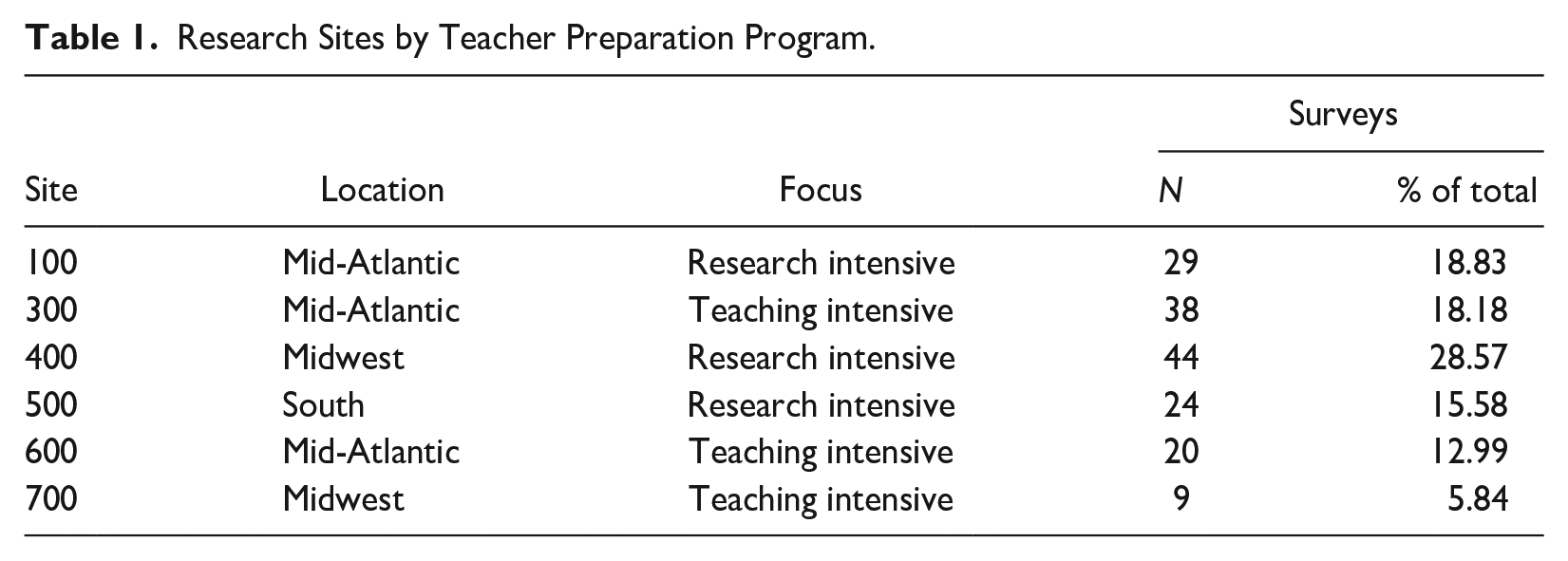
We collected data across six TPPs in the Mid-Atlantic (n = 3), South (n = 1), and Midwest (n = 2) regions. Following Institutional Review Board (IRB) approval, we recruited preservice SETs for participation in the study. We focused data collection efforts on traditional programs, to describe traditional teacher preparation. As a result, we did not consider alternative route, provisional licensure, and residency programs. See Table 1 for site information.
Research Sites by Teacher Preparation Program.
Participants
To be eligible for participation in this study, participants had to be (a) teacher candidates attending one of the participating traditional special education TPPs; (b) who had completed their special education field placements and had completed the preparation necessary for initial licensure; and (c) were not yet employed as a full-time teacher. Importantly, though some participants may have planned to pursue further education, all participants were eligible to teach special education in the following school year. We recruited 165 participants (67% response rate) from the six preparation programs in the Summer 2017 and Summer 2018. Of note, in 2017-18, Program 400 underwent changes in their recruitment procedures, making it impossible to determine the exact response rate for this program in that year; we thus excluded Program 400’s 2017-2018 data when calculating the response rate. Out of the 165 surveys, 11 were removed due to incomplete responses, resulting in a final sample size of 154.
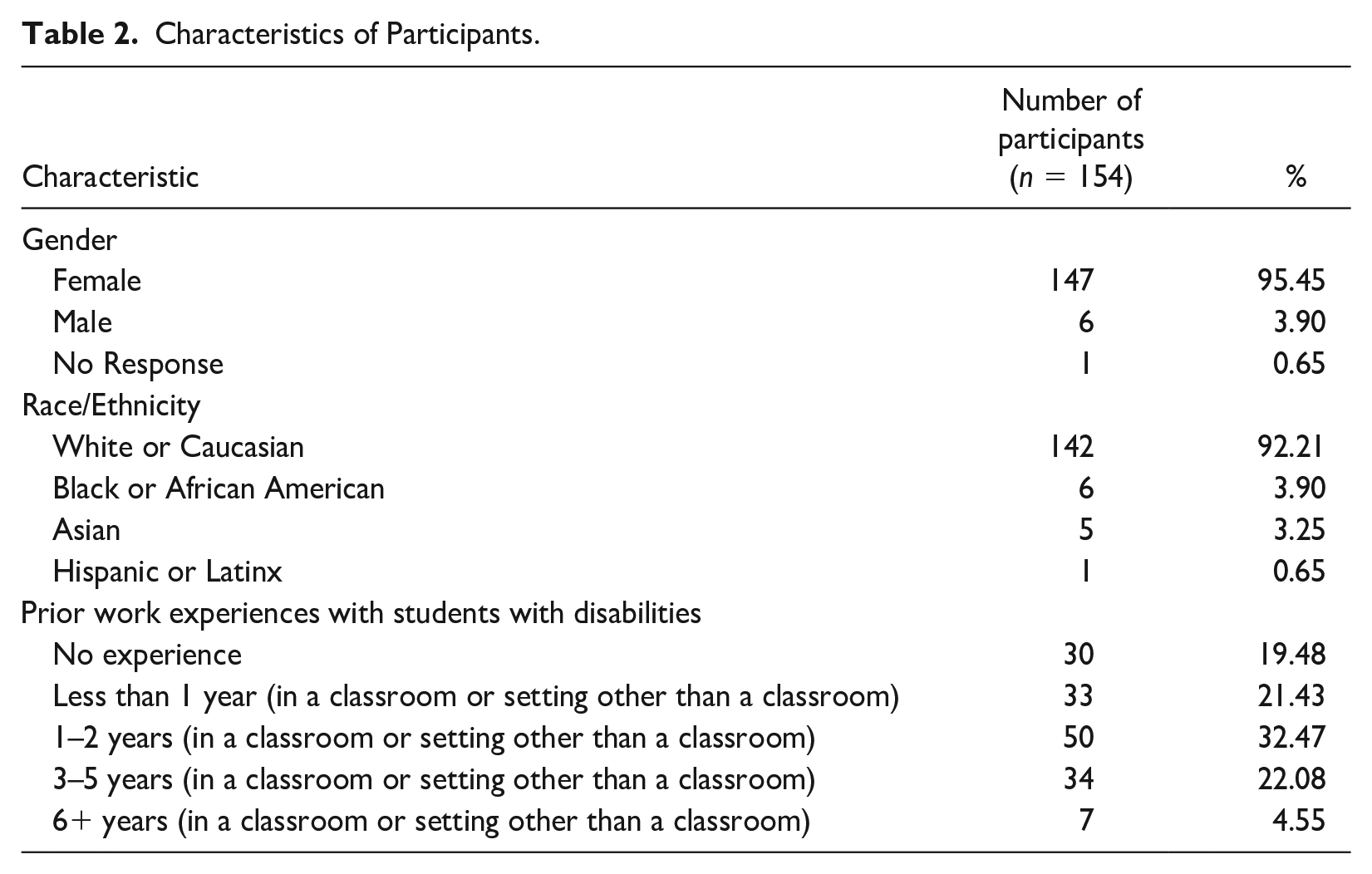
As shown in Table 2, the majority of participants were white (92%) and female (89%) consistent with the population of most TPPs and the overall education workforce (Billingsley & Bettini, 2017). Participants reported varying levels of experience prior to entering preparation working with individuals with disabilities, ranging from less than a year to several years. Some had experience with students with disabilities in a classroom setting, while others had experience in nonacademic settings.
Characteristics of Participants.
Data Collection
Using Qualtrics, we collected survey data in two cohorts (Summer 2017 and Summer 2018). Following IRB approval, we worked with site representatives to access PSTs in their program who met inclusion criteria. The second author emailed PSTs up to three times with a survey link; participants received a $25 gift card for completing the survey, funded by an internal award from the University of Virginia.
Instrumentation
The scales in our survey measure, the Survey of Special Education Teaching Candidates, underwent an extensive review process, including three rounds of piloting, expert review, and cognitive interviews using paper/pencil and online survey administration, (Mathews, 2023). The survey was piloted with three doctoral students who had served as special educators and three SET candidates, who were not included in the final sample. The team of five expert reviewers included researchers and teacher educators who had expertise in teacher preparation and teacher development; three are prominent scholars in SET preparation and/or workforce development and two are leading researchers in general education teacher preparation. Drawing on feedback from these efforts, the second author made changes to the content and format of the survey to better reflect the constructs of interest and ensure the face validity of the items. The survey addressed participants’ beliefs about their own teaching capacity (teacher self-efficacy) and their experiences of support from university supervisors and cooperating teachers in field placements.
Dependent Variables
Teacher Self-Efficacy
We measured participants’ teacher self-efficacy using 12 items from Tschannen-Moran and Woolfolk Hoy’s (2001) Ohio State Teachers’ Sense of Self-Efficacy (OSTSES): Short-Form scale. This measure of teacher self-efficacy has been studied extensively and has shown strong measurement properties (Tschannen-Moran & Woolfolk Hoy, 2001). We asked participants to complete the short form of the OSTSES; items ask respondents to indicate their perceived capability on 12 items on a 9-point scale (e.g., “How much can you do to motivate students who show low interest in school work?”). Prior research suggests the scale measures three dimensions of teacher self-efficacy (Tschannen-Moran & Woolfolk Hoy, 2001): self-efficacy for classroom management (CM), strategies for engagement (ENG), and instructional strategies (INST). Thus, we elected to use the three-factor model and achieved acceptable model fit, χ2(df) = 86.643(51), p = .000, comparative fit index (CFI) = .945, root mean square error of approximation (RMSEA) = .075, standardized root mean squared residual (SRMR) = .053 (See Supplemental Appendix 1).
Plans to Teach
Although planning to teach does not guarantee entry into the field, it is a meaningful indicator, as it is the first step in entering the profession. To assess plans to teach, at the end of the survey, participants were asked to indicate their future plans using the following item: I plan to teach special education in the upcoming school year. Responses were “yes” or “no.” Responses were dummy coded as 1 (indicating yes) and 0 (indicating no).
Independent Variables
To measure university supervisor support and cooperating teacher support, we asked participants to indicate the level of support they received from their mentors; items were scored on a 4-point Likert-type scale.
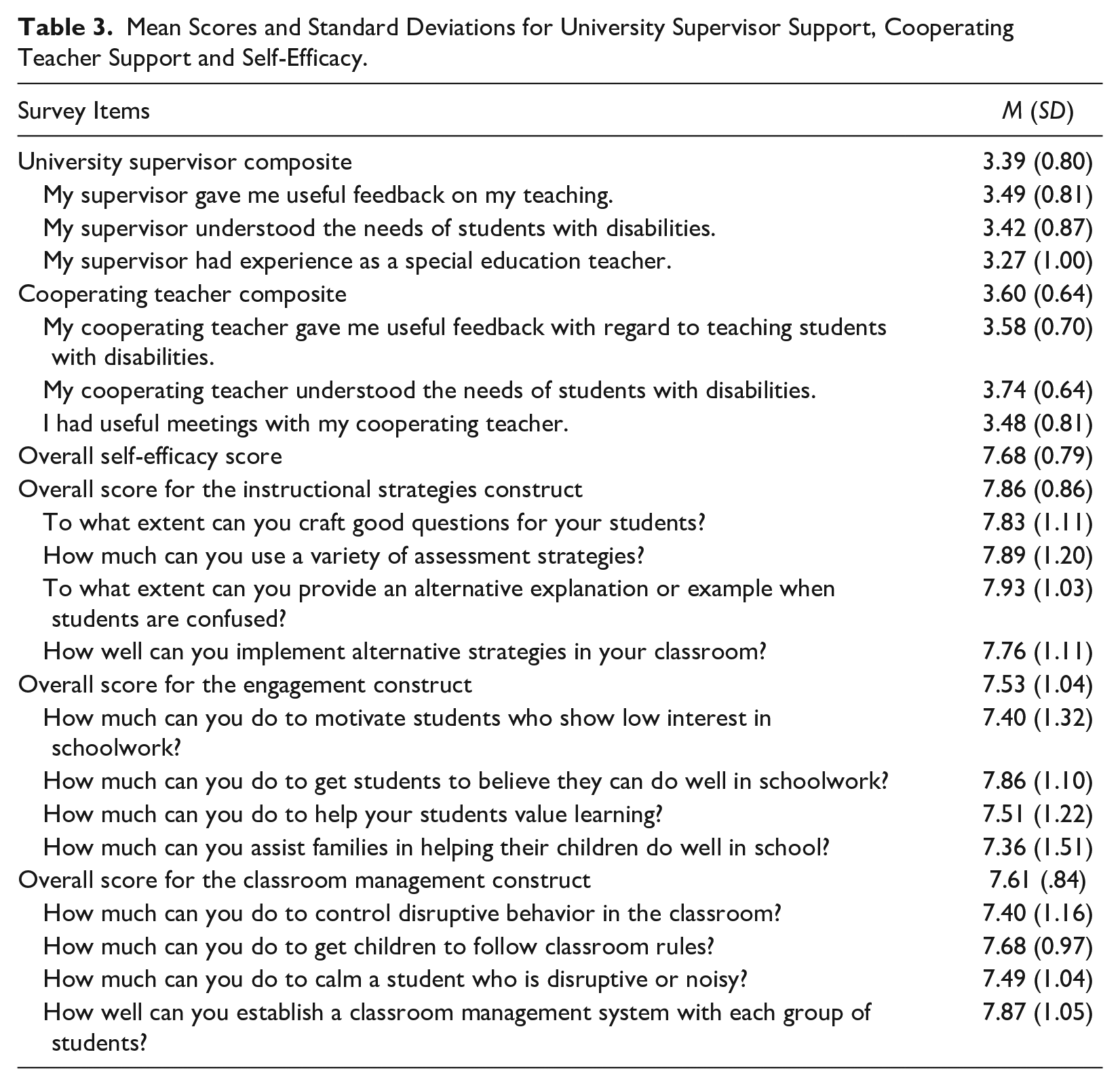
To represent the constructs of perception of support from the university supervisors and cooperating teacher, we created composite measures using the mean of single scale items; responses on the individual items ranged from 1 = strongly disagree to 4 = strongly agree. The university supervisor construct consists of three items from the survey: “My supervisor gave me useful feedback on my teaching,” “My supervisor understood the needs of students with disabilities,” and “My supervisor had experience as a special education teacher” (Scale M = 3.39, SD = 0.80; α = .86). The cooperating teacher support scale included three items: “My cooperating teacher gave me useful feedback regarding teaching students with disabilities,” “My cooperating teacher understood the needs of students with disabilities,” and “I had useful meetings with my cooperating teacher to discuss my instruction” (Scale M = 3.60, SD = 0.64; α = .88). To assess the support received from cooperating teachers, the items were designed to encompass important aspects such as feedback, understanding of students with disabilities, and opportunities for instructional discussions. Research has shown that feedback is a particularly beneficial part of PSTs’ experiences in field placements, when those mentors demonstrate understanding and possess experience working with students with disabilities (Cornelius & Sandmel, 2018). Table 3 provides item-level means and standard deviations for a comprehensive overview of participant responses.
Mean Scores and Standard Deviations for University Supervisor Support, Cooperating Teacher Support and Self-Efficacy.
Control Variable
Because we hypothesize that prior experiences might shape candidates’ self-efficacy and plan to teach special education (Mathews, 2023; Zhang et al., 2014), we controlled for years of experience working with students with disabilities, prior to entering TPPs. Five items asked PSTs about the extent to which they worked with students with disabilities in a teaching and/or nonteaching setting with response options being “Not at all,” “Less than 1 year,” “1–2 years,” “3–5 years,” and “6 or more years.” Example items included: “Taught students with disabilities in your own classroom(s) or in a co-teaching classroom” and “Taught students with disabilities in a setting other than a classroom (e.g., after school care, day camp).” To analyze the participants’ responses regarding their experience working with students with disabilities, we merged these survey items into a single categorical variable, defined by the highest number reported by each participant across the five items. For instance, if a participant reported having 3 to 5 years of experience in one item and 0 in the other items, they were labeled as having “3 to 5 years” of experience. By combining the items and considering the maximum value, we captured the highest level of experience reported by each participant across the multiple items. Overall, 20% had no experience working with students with disabilities, 21% had <1 year of experience, 32% had 1 to 2 years of experience, 22% had 3 to 5 years, and 5% had 6 or more years of experience working with students with disabilities.
Data Analysis
The goal of this study was to investigate the extent to which perceived support from the university supervisor and cooperating teacher contributed to preservice SETs’ self-efficacy and plans to teach special education. We calculated means and standard deviations for the dependent and independent variables for the overall sample for each construct of self-efficacy and at the item level (See Table 3). We employed a mixed-effects model to investigate the relationship between university supervisor and cooperating teacher support on teacher self-efficacy and plans to teach. We include fixed effects for school (Φs) and year fixe (αt). With the inclusion of these controls, the relationship between university supervisor and cooperating teacher support and teacher self-efficacy is identified by within-school changes in support across the two years. We also include random effects (μ) to address both group-level and individual variation among preservice SETs. Given that the data is collected from six universities, these universities can be treated as distinct groups. In other words, preservice SETs in the same school and year may exhibit similiarities in self-efficacy that are not accounted for by the predictors. Random effects also account for individual variation because preservice SETs, even with the same university, cohort, and year are distinct individuals. These individual differences may include personal attributes, learning styles, and inherent qualities not captured by the variables in the model. Random effects capture the idiosyncratic differences in self-efficacy that are specific to each preservice SET and are not explained by the broader factors in the model. In other words, the application of mixed-effects models allowed us to accurately account for these factors and remove any unobserved heterogeneity among schools. By using mixed-effects modeling, we were able to assess the relationship more accurately between university supervisor and cooperating teacher support, and teacher self-efficacy and plans to teach special education. We treated self-efficacy and intent to teach as a function of preservice SETs’ perceptions of support from university supervisors and cooperating teachers. In addition, we controlled for preservice SETs’ prior work and/or teaching experience with students with disabilities in a school or non-school setting to account for differences at the individual level.
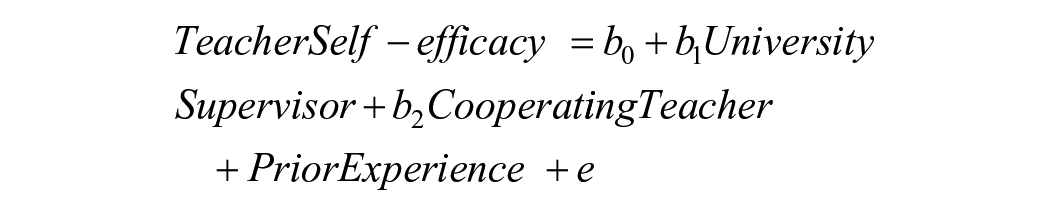

First, we ran separate models for the university supervisor and cooperating teacher to analyze the predicted relationships independently. We included mixed effects in these models to account for any variation explained by the TPP and individual participants across the two cohorts. Then, we ran a second mixed-effects model with both variables to observe the effect of the university supervisor and of the cooperating teacher, conditional upon the other. We conducted a third model without mixed-effects and included both predictor variables. This was done in response to concerns that our previous findings might have been influenced by multiple participants rating the same individual, specifically the university supervisor. To further examine this, we also ran separate models for each predictor variable without mixed effects.
To analyze our binary outcome variable, “plans to teach,” we used logistic regression and incorporated mixed effects and both predictor variables: university supervisor and cooperating teacher. To further examine the influence of each predictor, we also conducted separate mixed-effects models for each predictor. In addition, we ran a logistic model without mixed effects that included both predictors, and finally, we ran separate models for each predictor individually without mixed effects.
Results
Descriptive Results
Support
In this study, we examined the level of support received from university supervisors and cooperating teachers during field placements for preservice SETs. As seen in Table 3, the results indicated that on average, composite scores for support from cooperating teachers were slightly higher than from university supervisors across all programs. For the whole sample, on a scale of 1 to 4 with, 1 indicating “strongly disagree” and 4 indicating “strongly agree,” composite scores for support from the university supervisor were slightly lower than support from the cooperating teacher on average (university supervisor: M = 3.39, SD = .80; cooperating teacher: M = 3.60, SD = .64). Across programs, there was some variation to how individuals experienced their field placements; mean ratings of support from university supervisors ranged from 3.15 to 3.67, with standard deviations ranging from 0.82 to 0.40. Mean ratings of support from cooperating teacher ranged from 3.5 to 3.87, with standard deviations ranging from 0.72 to 0.53.
Overall, preservice SETs felt supported by their university supervisors and cooperating teachers and agreed that both mentors understood the needs of students with disabilities and provided useful feedback. At the item level, feedback from the university supervisor was rated highest (M = 3.49, SD = 0.81) while understanding the needs of students with disabilities was rated the highest for the cooperating teacher (M = 3.74, SD = 0.64; see Figure 1).
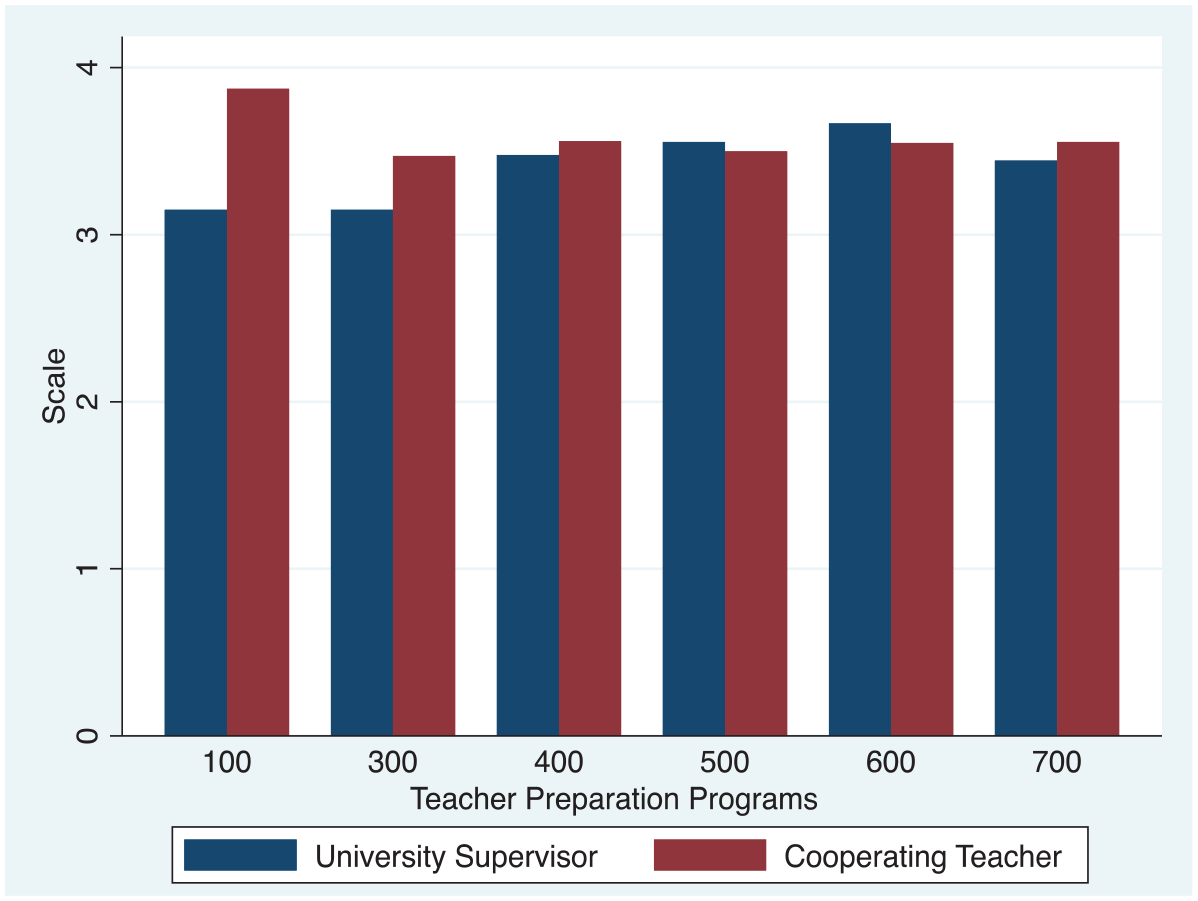
Mean Rating of Support From University Supervisor and Cooperating Teacher by Institution.
Teacher Self-Efficacy
On a scale of 1 to 9, with 1 indicating “nothing” and 9 indicating “a great deal” in response to the question “How much can you do?,” preservice SETs across the sample reported feeling high levels of self-efficacy at the end of their field placement experience (M = 7.67, SD = .79). Preservice SETs felt most self-efficacious in their instructional strategies (M = 7.86, SD = 0.86) and least efficacious in student engagement (M = 7.53, SD = 1.04; See Table 3).
Plans to Teach
Of the preservice SETs surveyed, 25% stated that they did not intend to pursue a career in special education, while 75% indicated that they do plan to teach special education.
Relationships Between Field Placements and PSTs’ Self-Efficacy
The association between preservice SETs’ teacher self-efficacy and university supervisor support was stronger than the relationship between their self-efficacy and the support of the cooperating teacher. In the mixed-effects model, an increase of one unit in university supervisor support was associated with a 0.21 unit increase in overall teacher self-efficacy, conditional on the effects of cooperating teacher and prior work experience (Table 4). Furthermore, within this model, while holding university supervisor support constant, preservice SETs with 3 to 5 years of experience working with students with disabilities was associated with a 0.49 unit increase in self-efficacy, specifically in the domain of engagement, as compared to those with 0 years of experience. In the model without mixed effects, an increase of one unit in university supervisor support was associated with a 0.24 increase in overall self-efficacy, conditional on support from the cooperating teacher and prior work experience (Table 5). Similarly to previous findings, within this model, while holding university supervisor support constant, preservice SETs with 3 to 5 years of experience working with students with disabilities was associated with 0.51 unit increase in self-efficacy in engagement, as compared to those with 0 years of experience. The association between overall self-efficacy and cooperating teacher was negative but nonsignificant in both models (Tables 4 and 5).
Mixed-Effects Model Results for the Relationship Between Preservice Teachers’ Self-Efficacy and Support Received From the University Supervisor and Cooperating Teacher.
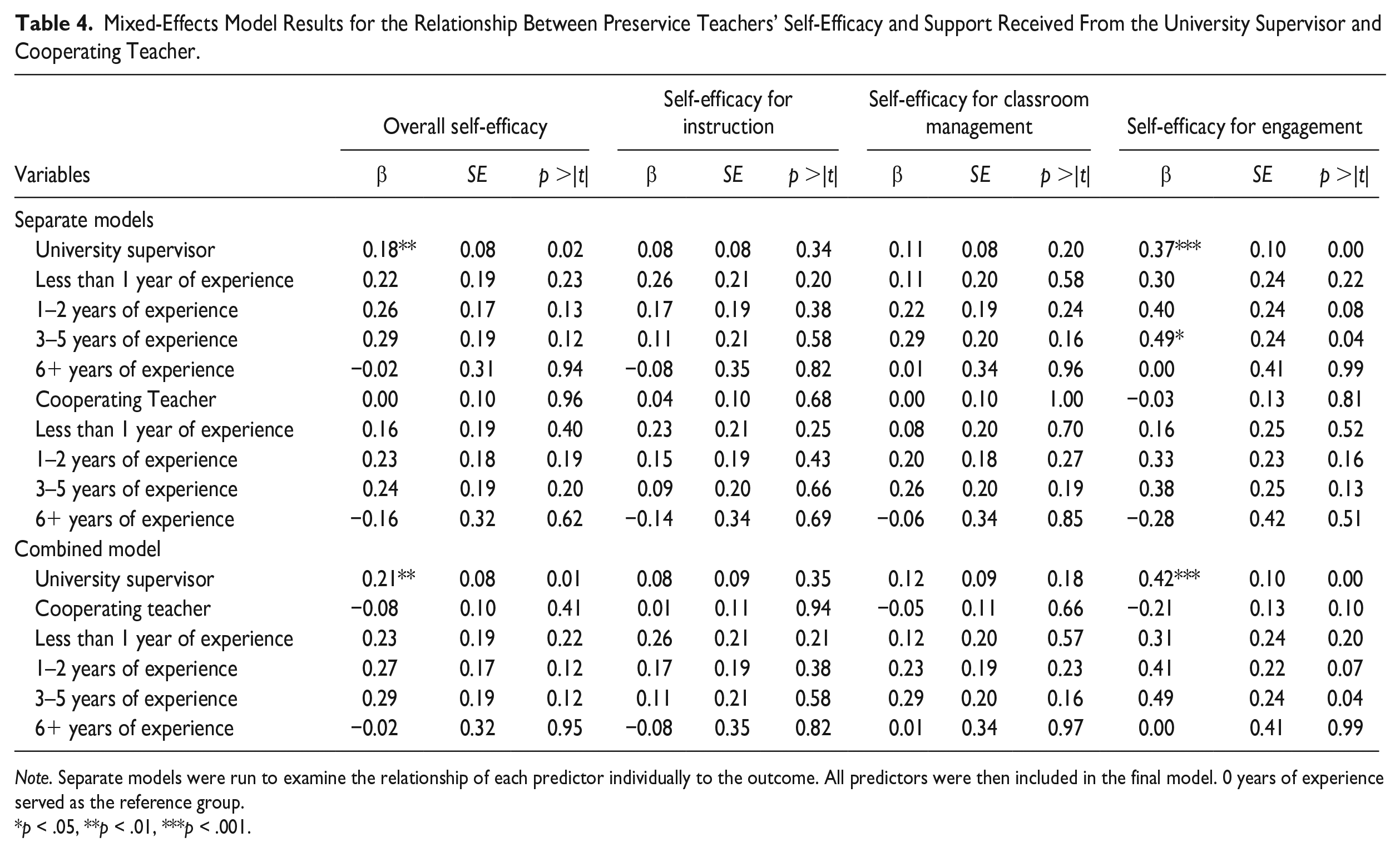
Note. Separate models were run to examine the relationship of each predictor individually to the outcome. All predictors were then included in the final model. 0 years of experience served as the reference group.
p < .05, **p < .01, ***p < .001.
Model Results for the Relationship Between Preservice Teachers’ Self-Efficacy and Support Received From the University Supervisor and Cooperating Teacher, Without Mixed Effects.
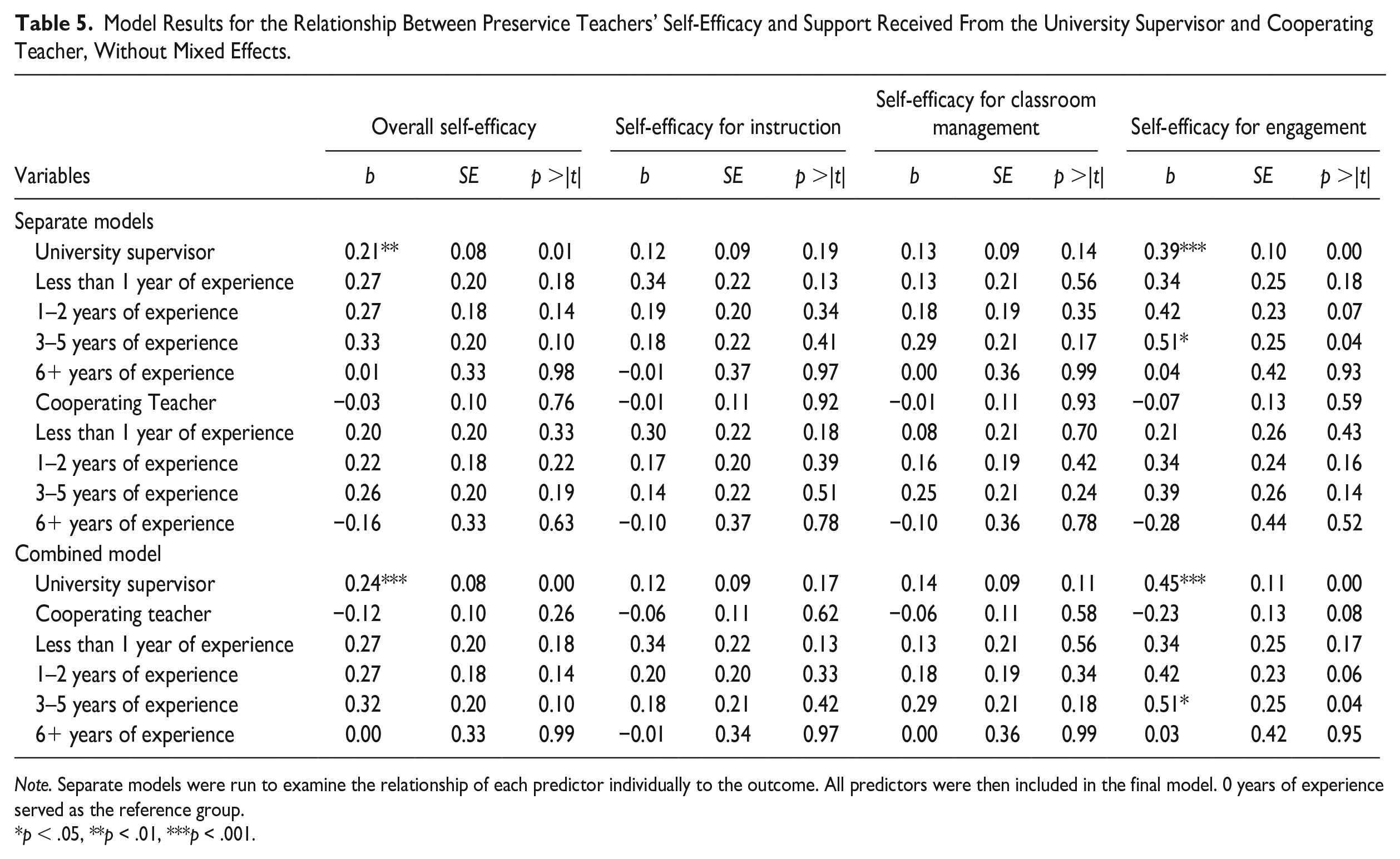
Note. Separate models were run to examine the relationship of each predictor individually to the outcome. All predictors were then included in the final model. 0 years of experience served as the reference group.
p < .05, **p < .01, ***p < .001.
Relationships Between Field Placements and PSTs’ Plans to Teach
The results of the study indicate that among the PSTs, university supervisor support played a significant role in predicting their intent to enter the SET workforce. Specifically, preservice SETs who rated their university supervisors’ support higher were approximately two times more likely to indicate that they planned to teach special education, compared to those who rated their university supervisors’ support lower. This relationship was significant, even after controlling for other factors such as cooperating teacher support, prior work experience, and institution (Tables 6 and 7). On the contrary, the association between cooperating teacher support and the PSTs’ intent to enter the special education workforce was small and nonsignificant.
Model Results for the Relationship Between Preservice Teachers’ Intent to Teach and Support Received From the University Supervisor and Cooperating Teacher, With Mixed Effects.
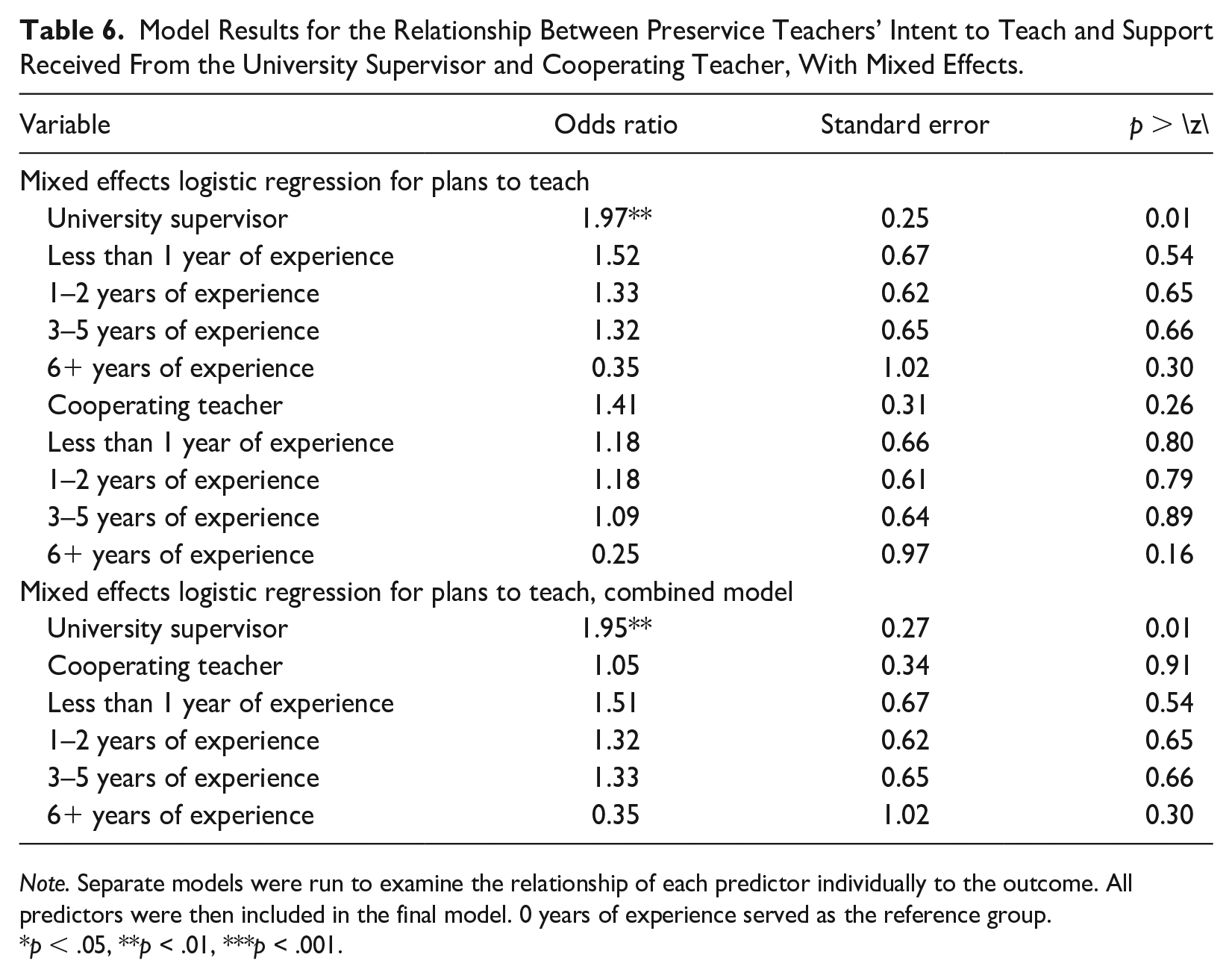
Note. Separate models were run to examine the relationship of each predictor individually to the outcome. All predictors were then included in the final model. 0 years of experience served as the reference group.
p < .05, **p < .01, ***p < .001.
Mixed-Effects Model Results for the Relationship Between Preservice Teachers’ Intent to Teach and Support Received From the University Supervisor and Cooperating Teacher.
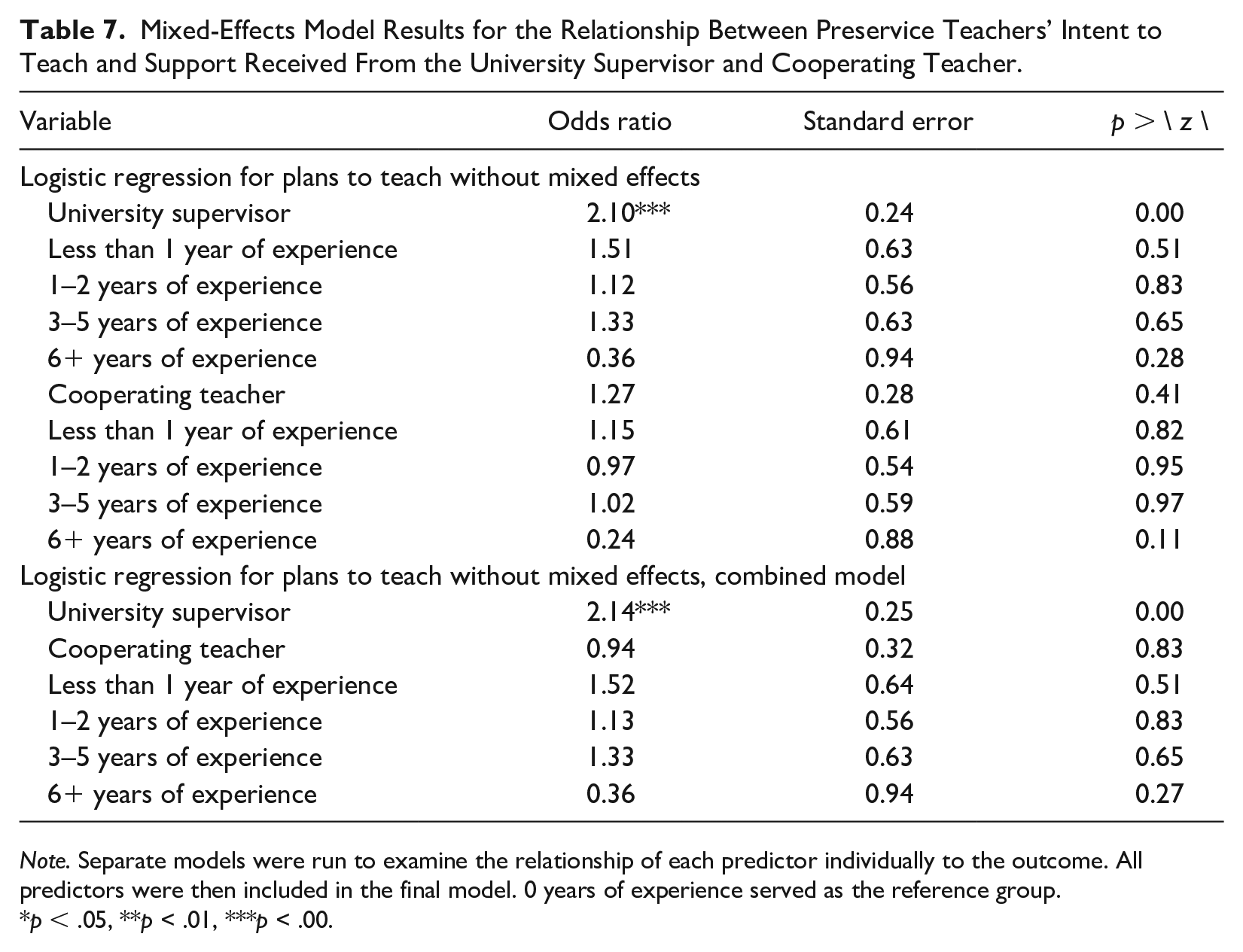
Note. Separate models were run to examine the relationship of each predictor individually to the outcome. All predictors were then included in the final model. 0 years of experience served as the reference group.
p < .05, **p < .01, ***p < .00.
Discussion
Despite the critical importance of field placements, few researchers have examined the features of the field placement experience that may play a role in their self-efficacy and their plans to enter the SET workforce. Analyzing surveys of 154 special education PSTs across six TPPs, we focused on cooperating teachers and university supervisors, both of whom are well-positioned to play a crucial role in PSTs’ self-efficacy and plan to teach upon completing their field placement. In contrast to previous research, which has highlighted the importance of PSTs’ relationship with their cooperating teacher (e.g., Leko & Brownell, 2011; e.g., O’Brian et al., 2007; Ronfeldt, 2021), we were surprised to find a nonsignificant relationship between perceptions of cooperating teachers’ support and PSTs’ teacher self-efficacy and plans to teach special education. However, our results suggest that the university supervisor is crucial actor in shepherding PSTs toward their role as special educators; preservice SETs’ perceptions of university supervisors’ supports were significantly positively associated with their self-efficacy and plans to teach, with coefficients that were large and meaningful in magnitude. This indicates that university supervisors may be a critical lever for improving the effectiveness of preservice SET preparation and thus that their roles warrant much more extensive research.
What might explain the importance of the university supervisor? First, at the heart of the university supervisors’ role is offering feedback on PSTs’ practice as they enter the profession (Burns et al., 2016). Second, as an outside observer in the field placement, the university supervisor is there to support problem-solving, with time dedicated to meeting with the preservice SET. Whereas the cooperating teachers’ main job is to teach their students, with supporting the preservice SET as an added responsibility, the university supervisors’ main job is to enhance PSTs’ skills. Third, more than any other actor working with PSTs, the university supervisor is positioned as a bridge between the vision of special education put forward in preparation and the often-challenging reality of K-12 settings. Thus, they may be uniquely positioned to support PSTs’ self-efficacy development and, therefore, their ability to envision themselves as an SET.
Implications for SET Preparation
University supervision is a malleable part of the preparation process; TPPs have agency to change their models for providing supervision. Our findings indicate that improving university supervisors’ supports for preservice special educators could be a powerful way to enhance preservice SETs’ outcomes from their field experiences. For example, preparation program could consider how they train university supervisors in effective mentoring, how the structure of supervision (e.g., the frequency and structure of observations, postobservation meetings, and reflections) fosters supportive mentorship and the relevance of the university supervisor’s expertise for special educators’ placements.
Limitations and Directions for Future Research
Our study indicates, for the first time, the crucial importance of university supervisors in shaping preservice SETs’ outcomes from field placement. More research is needed to replicate our investigation, to address the limitations of this investigation, and to provide insights into the many questions it raises.
First, our focus on traditional TPPs allows us to draw substantiated conclusions about the importance of university supervisors’ support for preservice SETs in these settings. However, we cannot draw conclusions about the supports that are important for preservice SETs’ in alternate pathways and residency programs. These pathways could introduce other factors that might attenuate the influence of the university supervisor. As an illustration, in residency programs the PST is embedded in their professional context for an extended period of time and likely takes on more responsibilities more quickly than a traditional PST (Guha et al., 2017). It could be that collegial or administrative support within that context would be a more powerful influence over preservice SETs’ development because they, possibly, would take on some of the roles that the university supervisor would in traditional pathways (e.g., providing targeted assistance, offering individualized support, helping PSTs cope with stress; Burns et al., 2016). On the contrary, support from their preparation program personnel could still be vital for helping them make sense of and navigate challenging situations in their school. Future research could explore the role of supervision, as it unfolds across pathways, to understand whether and how supervision is most influential on PSTs’ sense of efficacy and career intentions. Second, our sample does not allow for generalization beyond the six included programs. Future studies should both attend to the size of the sample as well as the selection of programs, such that findings would be adequately powered and would generalize beyond a handful of preparation programs.
Third, we collected data at a single time point, following the completion of PSTs’ field placement. Although this provides an important snapshot of PSTs’ experiences, our data do not allow us to make claims about how PSTs’ experiences of support lead to changes in their teacher self-efficacy or plans to teach. Future research should look at PSTs’ development of teacher self-efficacy and their plans to teach over time. Longitudinal studies could assess how the field experience, and the actors therein, shape these outcomes over time.
Fourth, the use of survey data allowed us to identify relationships between PSTs’ experience of support and teacher self-efficacy and career intentions, a key strength. However, this data collection method cannot provide in-depth insights into the nature of PSTs’ relationships with university supervisors, nor how various activities and relationships that are part of university supervision may have contributed to self-efficacy development and plans to teach. Rich qualitative research might allow us to tease out how university supervisors’ approaches to mentorship (Burns et al., 2016) and the structure of supervision (Cuenca et al., 2011) shape PSTs’ vision of themselves as a special educator. Future studies should consider conducting observations of supervisory meetings and follow-up interviews with the PSTs to understand how interactions with university supervisors contribute to preservice SETs’ development. This type of work could also help scholars determine which aspects of support (e.g., the actual feedback given, the PSTs’ perception of the supervisor’s knowledge and expertise) are most influential in shaping their experiences. Furthermore, qualitative research documenting PSTs’ interactions across both relationships might support developing more robust theories about the differences between the PST-supervisor and the PST-cooperating teacher relationship, and the ways these relationships could be coordinated to foster future special educators’ self-efficacy and commitment to the profession.
Finally, if future research validates our findings regarding the importance of university supervision, future scholarship should consider experimentally manipulating aspects of supervision to determine causal effects. For example, are preservice SETs more likely to plan to teach when their university supervisor uses particular approaches to mentorship, or when they have more frequent meeting schedules?
Conclusion
This study is the first in the field of special education to examine PSTs’ experiences of support across multiple TPPs. Our findings suggest that university supervisors could be an understudied mechanism for supporting PSTs’ development during field placements. We recommend that the field of special education dig into the supervision experience, as a tool to foster beginning SETs’ success. Our results indicate that doing so could be a powerful lever for shifting preservice SETs’ self-efficacy and plans to teach, and thus a potential way to address the persistent, pervasive shortage of qualified SETs who choose to teach in special education.
Supplemental Material
sj-docx-1-tes-10.1177_08884064231202382 – Supplemental material for Examining Relationships Between Field Placements and Preservice Teachers’ Self-Efficacy and Career Plans
Supplemental material, sj-docx-1-tes-10.1177_08884064231202382 for Examining Relationships Between Field Placements and Preservice Teachers’ Self-Efficacy and Career Plans by Tashnuva Shaheen, Hannah Mathews, Elizabeth Bettini and Nathan Jones in Teacher Education and Special Education
Footnotes
Declaration of Conflicting Interests
The author(s) declared no potential conflicts of interest with respect to the research, authorship, and/or publication of this article.
Funding
The author(s) received no financial support for the research, authorship, and/or publication of this article.

Supplemental material
Supplemental material for this article is available online.
Author Biographies
References
Supplementary Material
Please find the following supplemental material available below.
For Open Access articles published under a Creative Commons License, all supplemental material carries the same license as the article it is associated with.
For non-Open Access articles published, all supplemental material carries a non-exclusive license, and permission requests for re-use of supplemental material or any part of supplemental material shall be sent directly to the copyright owner as specified in the copyright notice associated with the article.
