




Abstract
Despite a growing number of novel approaches to the far right and new explanatory models, one feature appears to persist in the scholarship: namely, a tendency to discuss the developments in Western Europe and in postsocialist countries separately. Bucking this trend, this article investigates the similarities between the activism of Italian and Polish far-right movements, focusing on the field of historical politics. More specifically, it investigates the ways in which the memories of World War II and accounts of victims of communism are mobilized in the two countries, as well as the question of “censorship” and “mainstreaming” of far-right historical narratives. Apart from comparing the developments in these countries, the article discusses various forms of cooperation between Polish and Italian far-right movements, which reveal their mutual influences but also the limits of transnational networking.
Introduction
At the ASEEES [Association for Slavic, East European and Eurasian Studies] conference in 2013, a question raised at one of the many panels discussing developments in the region was how to define Eastern Europe. In his response, one of the panelists stated that to him, Eastern Europe comprises “all those countries which are deeply preoccupied with history.” Though no doubt in part ironic, as his answer was given at the largest humanities and social sciences convention gathering specialists from the area, it cannot be treated as a trivial statement. No matter what the speaker’s intentions were, a comment of this sort can only perpetuate the sense of Eastern Europe’s otherness and awkwardness.
A similar approach has been increasingly evident in attempts to explain the rise of the far right across Europe. 1 In this case, the following narrative has been becoming more and more prominent: (1) The far right is on the rise and is becoming a problem in all of Europe. (2) The developments in Western Europe can be, at least partly, explained by rising youth unemployment, economic crisis, terrorist attacks, and problems with immigrants’ integration. (3) In Eastern Europe, there are few or no immigrants, most countries are experiencing relatively stable economic growth and an influx of funds from the European Union, but similar sentiments are rising, too. (4) Thus, the rise of far right must be caused by particular historical legacies. “History” is understood to mean both relatively recent experiences of socialism and earlier developments, which resulted in a “lack of democratic traditions” and a “legacy of uncivicness.” 2 For instance, introducing a special issue on the radical right in Central and Eastern Europe, Michael Minkenberg, a leading expert, states that “in contrast to its Western European counterpart, whether it is catching up or not, the Central and Eastern European radical right is particularly conditioned by the force of history.” These major forces are, to him, “histories of state socialism and of pre-socialist (non-democratic) experiences.” 3 The weight of more than forty years of Soviet Union dominance is an undeniable fact, but Eastern Europe’s “relapse into authoritarianism” in the interwar was far from unique. Similarly, it is hard to defend the argument that in the pre–World War I era “democratic experience” was widespread in Western Europe. Finally, the notion of the “force of history” lessens the role of human agency in favor of viewing the world as ordered by historical-economic determinism.
My aim in this article is to address the question of the “preoccupation with history” by proposing a comparison of the activism undertaken by Italian and Polish far-right youth activists. In an attempt to critically engage with the above-mentioned presumptions regarding the specificity of both Eastern Europe as a whole and its far-right scene, I ask not only what we gain from comparing East and West but also whether we can find traces of mutual inspirations and influences. In other words, I combine a comparative and a transnational perspective to shed light on the use and the construction of historical narratives by the far-right youth.
More specifically, drawing on the ethnographic research I have been carrying out since 2016, I would like to demonstrate the ways in which far-right militants in both countries have been gradually monopolizing the discourses on particular historical developments and engaging them in their political battles. To be clear, in so doing I do not mean to simply suggest that “Western Europeans are also preoccupied with history” or to use the evidence to rebuke the argument about Eastern Europe’s exceptionalism. Rather, my aim is to shed light on some peculiar aspects of youth mobilization in Europe, the understanding of which makes it necessary to conduct an analysis that not only crisscrosses the former Iron Curtain but that fosters a reflection on a broader set of conditions that have an impact on far-right youth activism.
Therefore, while I focus on specific historical-political debates, analyses of these debates are not the aim per se. I use these debates to reflect on why particular narratives and particular protagonists become important, and what their importance and the ways they are brought to the fore may tell us about young activists’ views on issues as diverse as social order, personal responsibility, and the future of their communities. At the same time, in discussing certain specific forms of activism, I also aim to contribute to the discussion about the rise of the far right and the frequent comparisons with the similar developments in the 1920s and 1930s. I thus hope that this piece can make a contribution on three levels: providing methodological reflection on the study of the far right, primarily the transnational aspects of its operating; insights into the specific youth milieus; and a commentary on the broader sociopolitical context.
Before proceeding with my analysis, I discuss the methodological premises of my analysis and briefly present the socioeconomic contexts in Italy and Poland. Then, I provide a comparative analysis of some discursive tropes used by far-right activists and offer some examples of networking and exchanges in the domain of historical politics. In the conclusions, I reflect on the place of historical politics within a broader far-right agenda and their vision of Europe.
Methodological Note
This article presents some findings from my ongoing ethnographic project on transnational far-right networking among Italian, Polish, and Hungarian activists. I am combining here the data gathered in the course of participant observation, informal conversations with activists, as well as the various documents they made available to me (printed works, leaflets, as well as numerous social media entries). The basic premises of my research—the emphasis on comparative and transnational aspects—largely correspond with the methodological approach outlined in the introduction to this special section. 4 First, I approach comparative and transnational approaches as complementary, positing that an understanding of transnational processes is contingent on an in-depth knowledge of specific locales, often gained via comparative inquiries. Second, and relatedly, in combining the two approaches, I assume that far from being “discrete units,” the objects of my comparative analysis are products of connections. Third, I approach comparison as “open” and “unfinished,” as a path to new questions and as a means of “de-naturalizing” established ways of doing analysis. In the following, I would like to briefly elaborate on two additional aspects of my study, namely, the implications of studying the far right ethnographically and of the very possibility of conducting a “transnational ethnography.”
In a recent article on political ethnography, Matthew Mahler observed that the vast majority of the contemporary studies of politics present subjects as “composed of an admixture of preference curves, optimums, schemas and institutional structure, along with a pinch of statistical correlations.” 5 What is missing in such studies is the human being as characterized by Karl Marx, that is “seeing, hearing, smelling, tasting, feeling, thinking, being aware, sensing, wanting, acting, [and] loving.” 6 This observation illustrates well the state of research on the far right, which is dominated by quantitatively oriented studies and a presentation of individuals and groups in terms of “political campaign targets,” “voters,” and “recipients of political discourses.” Ethnographic studies of the far right are still underrepresented among the scholarly investigations of this phenomenon. 7 As I have argued elsewhere, this scarcity results from powerful, yet erroneous, assumptions regarding “empathy” and “sympathy” as prerequisites of anthropological endeavors, assumptions that thereby preclude the study of “unlikable others.” 8 I have argued that, instead, an attempt to understand far-right actors requires that we take them seriously. Such a take challenges the approaches suggesting that far-right discourses and practices are merely an expression of, or attempt at, manipulation; rather, it suggests considering them as, certainly, an element of political strategies, yet also an illustration/extension of individually and collectively upheld values and beliefs. This kind of approach has driven my own work, and I hope to pay justice to it in the following in my attempt to understand why far-right activists favor particular narratives and vocabularies.
Second, although the organizations and the activists I research indeed exhibit a transnational orientation (hence “transnational nationalists”), my study questions the very possibility of conducting a transnational ethnography and the meaningfulness of the term in this context. The far-right activists I got to know do reach across borders: they network, socialize, exchange information, and inspire each other. They recognize that they are “fighters in the same battle,” to use their own expression. However, with a few exceptions, the vast majority of their undertakings are targeted at a local audience and aimed at influencing politics at home, at the national level. The transnational dimension matters first and foremost as a means of enhancing activism at the national level—for example, through the learning processes—and thus, at the end of the day, it serves national purposes. This recognition, I believe, should prompt us to revisit the question of the prominence of transnational space in a globalized world and to show the complex ways in which the transnational and national are intertwined. I mean here first and foremost the fact that the material conditions and ideological framework cannot be separated. As a consequence, “the most effective transnational historical studies are those that examine how cultural practices and ideologies shape, constrain, or enable the economic, social, and political conditions in which people and goods circulate within local, regional and global locales.” 9 A good illustration of this problem is the comparison of the socioeconomic situation in Italy and Poland.
Italy and Poland Compared
“Today, it must be easier to find a job in Poland than it is in Italy,” Mauro, a twenty-five-year-old far-right sympathizer, said to me when accompanying me to the train station in Florence. A graduate in history and philosophy, Mauro has been looking for a job for months. On completing his master’s degree, he wished to continue his studies and work on a PhD thesis, yet his applications were rejected. He is convinced that he was turned down because of his right-wing views; like most of his comrades, he emphasized the idea of the “hegemony of the left” in academic milieus. Even though I have been observing the situation in both countries for some time (not to mention that I lived in one of them for more than 20 years), I stopped in amazement on hearing his comment. As a student, I used to work in Italy during summer vacations—at the time when Italy still meant “earning euros” and Poland was “catching-up-with-the-West”—and the idea of Poland being “ahead” continues to surprise me.
The situation is of course not as simple as the data regarding youth unemployment may suggest (32% in Italy, 11% in Poland in 2018). 10 A comparison of socioeconomic contexts and people’s life standards means taking into account data as diverse as GDP, economic growth, accumulated wealth, and property ownership. In Italy, numerous young activists come from the families that strongly benefited from the Italian economic boom of the 1970s and 1980s; their discontent with the present-day situation is thus in part a realization of how much better their (grand)parents did. Many of them are making do thanks to family support and assets. In Poland, on the other hand, many of the representatives of the young generation are much better off than their parents; that is, than the last generation that entered adolescence in communist Poland. They are the ones who made it; they have a relatively good standard of life, albeit often at a high price: employment below one’s qualifications, temporary migration, or (increasingly contested) “slave” work in multinational corporations.
Despite these different trajectories, young people’s attitudes toward work are strikingly similar and can be succinctly summarized as a conviction of their right to have a good job in their home country. Whether it is about unemployment or underemployment, the situation in both countries is closely related to the growing number of graduates and/or lack of correlation between education and market demands. In both countries, numerous jobs are now performed by foreigners, a phenomenon to which radical right-wing activists have a clear response: it is not about us not wanting to do certain (“dirty”) jobs, it is about how these jobs are remunerated (“below dignity”). At the same time, the rapid increase in immigration Italy has been facing, primarily due to it being the key destination on the Mediterranean route, is incomparable with the Polish experience of immigration.
In Europe-wide comparisons, Poland and Italy seem to be currently occupying rather opposite ends, with Italy having been described in terms of “stagnation” and “budgetary irresponsibility” and Poland as a shiny economic success story, widespread especially under the rule of the liberal Civic Platform government (2007–2015). Explicitly or not, such accounts also tend to frame the ongoing developments in terms of the “disciplined” or “undisciplined” economies and societies. Again, despite the different framing, these accounts seem to provoke similar reactions among my research participants: perception of the EU as the source of problems and as the epitome of “devastating,” top–down interventions. No matter if it is fiscal discipline, deficit procedures, or foreign capital under discussion, what my interlocutors emphasize is the disastrous consequences for the local economies (and inhabitants). These are precisely the arguments the young far-right activists employ, arguing in favor of national autarchy and national economies. Like Mauro, most of them follow the developments in the neighboring countries and compare the situation at home with other European contexts. Some do this using the networks established by their organizations, but a definite addition is their experiences gathered during summer travels or, in the case of students, university exchanges. In other words, the critique and evaluation of European Union policies is paradoxically facilitated by the very opportunities the EU gives young people, including the lack of internal borders and various mobility programs (such as Erasmus).
Naturally, when trying to set the background for far-right activism, numerous other (non–economic-related) factors come to mind, such as the local religious landscape, demographic dynamics, and the presence of “alternatives” to far-right activism. In both countries, Roman Catholicism is the dominant religion. Unlike religiously homogenous Poland, however, Italy has a growing Muslim population. In common with numerous Western European countries, Italy has already witnessed debates about the presence of Islam in the public sphere (as well as the accompanying debates about Christianity as “cultural heritage”). Italy has a long tradition of youth engagement in left-wing and communist organizations, various forms of volunteering, as well as centri sociali (social centers). In Poland, the organizational landscape is incomparably poorer; in this case, one can detect the consequences of the socialist era, when youth socialist organizations were state-controlled and often far from voluntary.
Scholars debating the causes of the rise of the far right tend to ask whether it should be related to “socioeconomic” or to “cultural factors,” or, to put it differently, to an “economic” or “identity” crisis. If the former stands for lack of jobs and prospects as well as the problem of relative deprivation, the latter relates to the insecurities related to globalization and “awakened” xenophobic attitudes and nationalistic sentiments. 11 The premise behind these searches is the conviction that there is an underlining cause, which can lead to a triumphal “It’s the economy/culture, stupid!” This premise is quite surprising given that one intuitively recognizes a necessary interplay between these two dimensions, which makes it difficult to speak about two distinct sets of criteria. What does “worrying about social status” indicate, for instance? Or how do we describe “anti-immigrant rhetoric” without highlighting the overlap of representations of immigrants as (cultural) “others” and as (economic) “competitors”? I hope to contribute to this discussion by demonstrating that it is not only helpful to look at the interplay of economic and cultural factors as shaping the attitudes and worldviews of young far-right activists, but to try to place them in a broader context and entertain the possibility that they reflect a generational experience.
Youth Far-Right Movements at a Glance
To say that both Italy and Poland have recently seen a growth in youth nationalist movements certainly does not make them unique in the broader European context: grassroots far-right organizations have been on the rise across the continent (and beyond), taking different forms, from the pan-European Génération identitaire movement to local initiatives. The Polish and the Italian organizations I have been following share a few important features: an attachment to the Christian, and more specifically Catholic, tradition, which often translates into a “culturally Catholic” orientation and a rejection of secularist ideologies; an ethno-religious conceptualization of national communities; the importance of the discourse on the “normal,” “natural” family and implicitly on traditional gender roles; and a very strong anti-communist orientation, an element often missed in analyses featuring the forty years of Soviet dominance as predetermining anti-communism in Eastern Europe and the lack thereof in Western Europe. All these aspects make them different from those representatives of the New Right who embrace the defense of secularism and LGBT movements. 12 And all these aspects are perfectly reflected in the groups’ activism in the domain of historical politics.
The Italian association Lealtà Azione (Loyalty Action, hereinafter: LA) has been active in the country for more than a decade and has been very successful in developing nationwide, even if its stronghold is still in northern Italy. Hierarchical and clearly structured, it is divided in sections—branches—responsible for specific tasks: social assistance (provided to Italian citizens only), care for the environment and animals, actions raising awareness about persecuted Christians, martial arts and sport, and historical politics, dealt with by the branch named “Memento.” Among Memento’s tasks are preservation of the tombs of fascist soldiers as well as collecting and documenting evidence on their lives (selected materials are then published in the form of leaflets and small booklets); publications that promote knowledge about “unknown” heroes or unknown deeds of rather known heroes (see Figures 1 and 2); as well as the organization of various commemorative events through the year. In addition, the branch frequently hosts discussions, conferences, and guest lectures by “cause”-friendly journalists and scholars. Similarly to other Italian far-right organizations (such as Forza Nuova or Casa Pound), the movement strives to reach schools and university milieus, which they call “bastions of left-wing thought.”
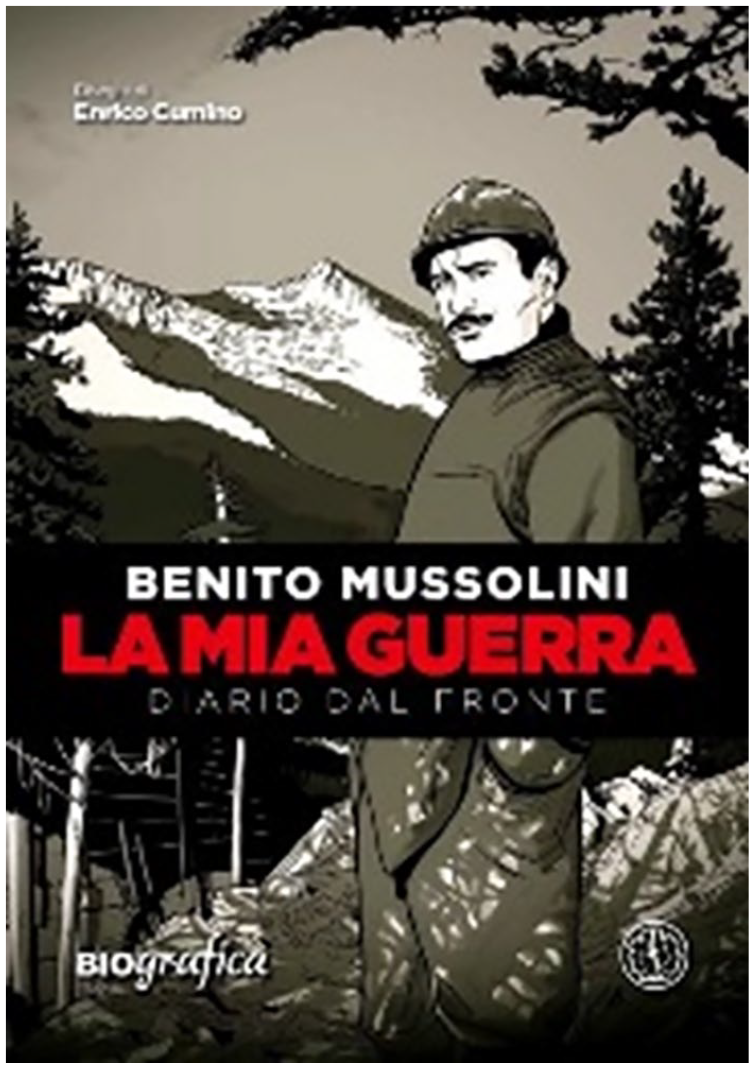
Cover of the comic book My War: Diary from the Front by Benito Mussolini (Publisher: Ferrogallico, associated with the Lealtà Azione)
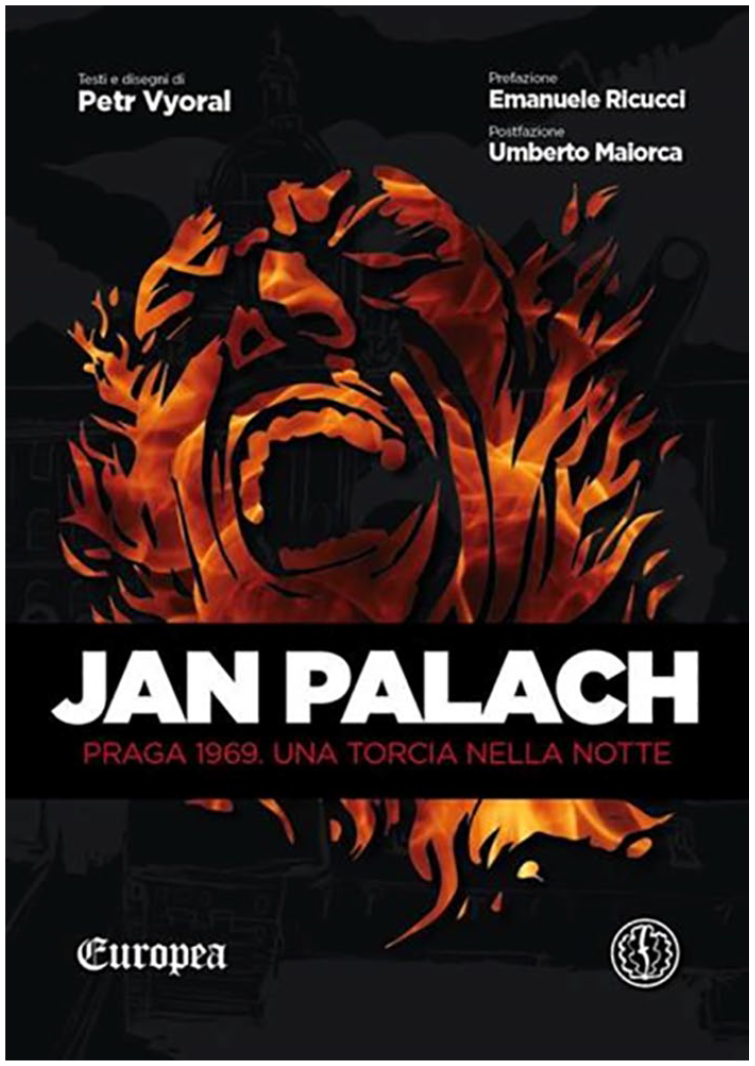
Cover of a comic book on Jan Palach (subtitled: Prague 1969: A Torch in the Night)
The Polish association Obóz Narodowo-Radykalny (National Radical Camp hereinafter: ONR) dates back to the 1930s. Banned under communism, it was reestablished in the early 1990s, and has been functioning since then with variable success and energy. As is the case with LA, the members are usually in their twenties and thirties, and predominantly male. The ONR is not as well organized as LA, but its main field of activism is similar. The movement organizes commemorative events for Polish soldiers killed during and after World War II as well as victims of the communist regime; it gathers evidence about prewar nationalist activists; it actively promotes book and journal publications on the subject, through social media, promotional meetings, and conferences. Many ONR members are at the same time authors of the publications promoted; graduates in history and kindred disciplines are actually quite numerous within the ONR. And although Polish universities are certainly not as clearly ideologically oriented as their Italian counterparts, the ONR is also making attempts to—literally and metaphorically—get closer to them, for instance with promotional stands.
In both cases, it is hard to give exact membership figures. When asked for numbers, activists reply: “We care about quality and not quantity: it is better to have a dozen devoted members than hundreds of half-committed ones.” Pushed harder, they emphasize that each regional chapter has a small core of active members who are involved in the organization of cyclical events and day-to-day operations; one could speak about “hundreds” of people only when counting sympathizers and less engaged members who show up at anniversaries and demonstrations. The emphasis placed on the core corresponds with the movements’ self-representation: an elitist idea of “ethical communities” who grow together and educate new generations, a community of committed if not chosen men.
This short description provokes the question of the importance of fascist references. Numerous historians use the term “fascism” or “of fascist type/stamp” when depicting the interwar predecessor of the ONR. 13 Contemporary activists draw on that heritage, emphasizing first and foremost the idea of the “Polish Catholic nation” which was popularized at the time and bore resemblances to the ideologies of the Spanish Falanga and the Romanian Iron Guard. As to their Italian collaborators, not only do they cherish fascist heritage but the politics around that heritage is a cornerstone of their activism, at times defined in terms of heroic mission (fight for the historical truth) and at times closer to stating the obvious (if you cherish past right-wingers in Italy, you cherish fascists). Does this make the two associations fascist or neo-fascist? Answering this question is at least as complicated as providing a widely accepted definition of fascism, a task that has proved quixotic. 14 This question also cannot be divorced from wider discourses. The associations in question tend to reject the term partly because it is used by their opponents to discredit them and partly because of the necessity to carefully navigate existing legal frameworks. Lastly, like fascists, they believe in the necessity of being future-oriented and contend that the fascist program, as a whole, does not necessarily fit present-day circumstances. For all these reasons, I do not label them as fascist—which is not to deny the importance of this component for the movements’ understanding. 15
To give an idea of the history-oriented undertakings organized by the two groups, let us look at the calendar of their initiatives in one month, November, which is rich in events due to All Saints’ Day and World War I anniversaries (the examples that follow were gathered in November 2018). This will shed light on some of the subjects they engage in and their national and transnational dimension: On 1 November, All Saints’ Day, the LA representation visited the graves and paid their respects to the soldiers of the Italian Social Republic. 16 The very same day, in the afternoon, the (chief) Milan group met up to watch a para-documentary on the Italian soldiers fighting during World War I, followed by a “communitarian lunch” and later by a presentation of a new graphic novel titled Mussolini’s Diary (see Figure 1). Based on Mussolini’s writings, the comic book shows him as a brave, sociable, and very responsible soldier fighting in the Alps during World War I. The ONR celebrated the same day (1 November) by paying visits to the tombs of World War II soldiers, together with a deputation of Hungarian activists who had come to Poland to light candles on the Hungarian graveyards present in the south of the country. On 3 November, the ONR co-organized the so-called “All Saints’ Day for the Cursed Soldiers,” celebrating the memories of the Polish soldiers who did not surrender after the communist government had been installed in Poland and continued a partisan fight in the forests. On 4 November, the Italians celebrated the so-called Day of the Army by paying a visit to a mountain war monument. A week later, on 11 November, hundreds of nationalist activists gathered in Warsaw to march in the so-called March of Independence, during which frequent historical references were made. On 15 November, the ONR held a promotional event for a book on one of the leaders of the cursed soldiers, titled Christ for Us, We for Christ. The same week, LA held a meeting presenting new comic books, advertised as “wonderfully stubborn and contrarian,” and the following week yet another book promotion, this one titled The Great Killers of the Liberation: An Essay of the Partisan Atrocities. In the meantime, their Polish partners celebrated the one-hundredth anniversary of the defense of Lviv during the Polish–Ukrainian war of 1918–1919.
This short overview may suggest that far-right historical activism is all about the dead. Indeed, the movements are clearly fascinated with death, fighting, and war. But, as I shall try to show, they mobilize these discourses in order to promote much more than “love, war and death,” to quote one of the LA slogans. The examples of historical protagonists and events the two movements refer to and cherish are abundant, and I shall focus on three selected examples. Before presenting them in detail, I shall add that the discourses I am focusing on are neither produced nor referred to exclusively by the far-right groups in question. On the contrary, as I emphasize below, many of them have been slowly making their way into mainstream discourses and have been supported by cultural organizations, publishing houses, as well as scholars and opinion-makers associated with the conservative right. My aim is to show how and why LA and ONR activists appropriate and co-produce these particular discourses and employ them in their present-day activism.
New Heroes for New Times?
The rhetorical tropes I am analyzing connect the different discourses and practices the studied movements engage in. The first trope can be succinctly defined as
Former soldiers are presented by means of both historical accounts and through encounters with the (few) living soldiers. Italian and Polish activists often use social media to provide accounts of such meetings as well as celebrations of birthdays and anniversaries. Also in this case, the language used is very solemn, with an emphasis on the transmission of values and continuity: “We are proud that our and your paths crossed and became indistinguishable, we are proud of what you taught us and of the invincible spirit you filled us with.” 17
Soldiers are referred to both as individuals—and in this case biographical details are brought up (unrealized dreams, interrupted studies, abandoned fiancées—all sacrificed in the name of service)—and as members of broader communities. In the latter case, the idea of comradeship is strongly emphasized, a unity transcending class and (especially in the Italian case) regional divisions, which constituted the core of the fascist creed. 18 Needless to say, these accounts are highly selective: not only the crimes in which the soldiers were implicated but profound divisions marking the cherished comradeships are omitted. The virtue of “faithfulness” to the cause supersedes that of the moral assessment of the Italian alliance with Nazi Germany or a reflection on the consequences of the civil war fought by Polish partisans against the communist Polish authorities, which meant the death and punishment of numerous innocent people. An important historical detail—namely, the fact that the cherished Italian soldiers fought with Nazi Germany, and Polish partisans fought against both Nazi Germany and the Soviet Union—is left out here, as what is emphasized is the communist foe. In the Italian case, the inimical figures are communist partisans who fought against fascists; in the Polish case—the communist authorities and army.
Women are not excluded from these accounts. In both countries, there has been a growing interest in female army or paramilitary units, such as fascist female auxiliary units and female partisans fighting in the Home Army, and some emblematic female protagonists have emerged. Arguably the best-known and most cherished female figure in Poland is Danuta Siedzikówna, pseudonym “Inka,” a medical orderly of a Home Army unit, killed in prison at the age of 17 after a long and brutal investigation (Figure 3A). In Italy, her equivalent is Norma Cossetto, an inhabitant of the Istrian Peninsula and daughter of a local fascist leader, imprisoned and killed, after being repeatedly raped, by the Yugoslavian (communist!) partisans (Figure 3B). Both women embody faithfulness and devotion, and they are presented as joyful, full-of-life students with many dreams and plans for life; they too are fashioned according to the “people like us” scheme. At the same time, a contrast with men is drawn, through the emphasis on purity, chastity, as well as bodily integrity.
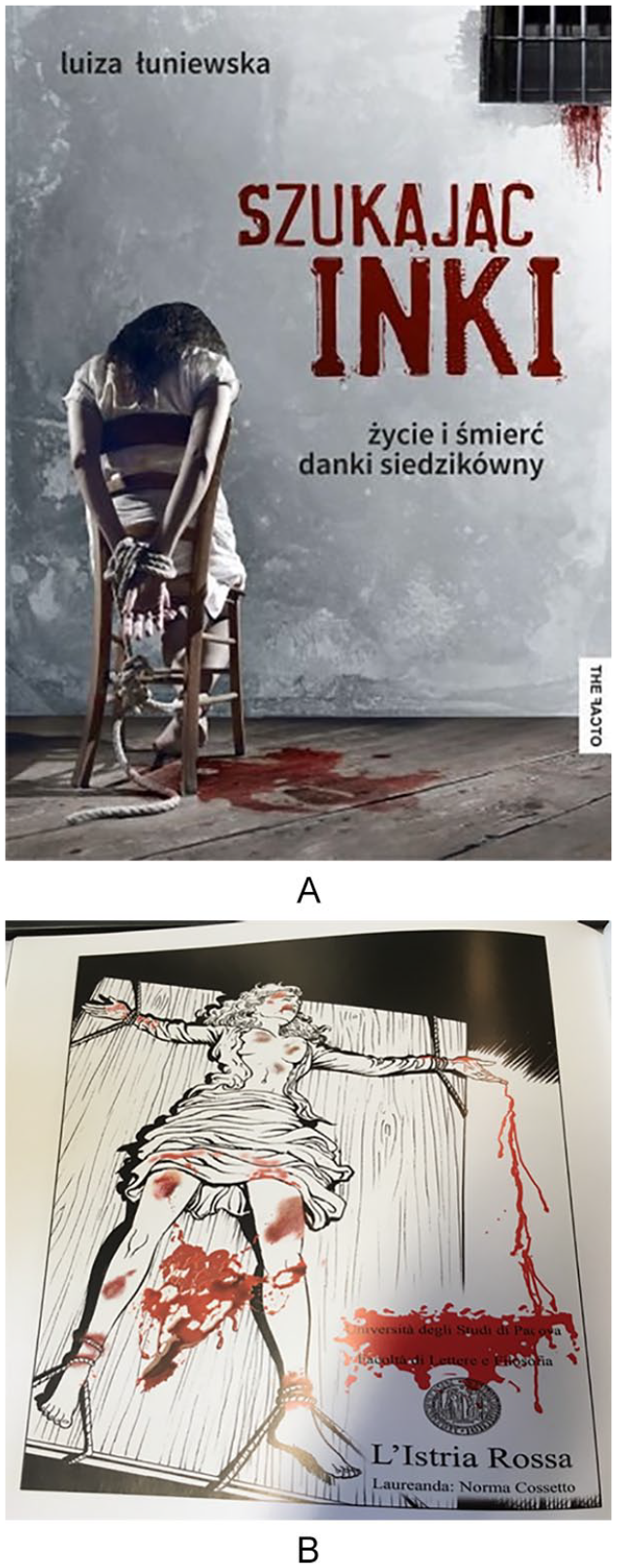
(A) Cover of the book Looking for Inka: The Life and Death of Danka Siedzikówna and (B) a page from a comic book on Norma Cossetto published by Ferrogallico. I am placing these pictures together to emphasize the similarity of the aesthetics. The book on Inka was not published by far-right activists (as the one on Norma was), but it was widely promoted via various (radical) right-wing channels.
The figure of the ethnic cleansing victim Norma leads to the second trope: the idea of the
The dead victims are referred to as integral elements of the territories they inhabited. Widespread accounts of the former Eastern borderlands as “cradles of Polishness,” rich in evidence of the “Polish” character of place, are amplified by the far right and constitute one of the cornerstones of their ideology. 22 Italian victims’ connection with the land is made sacred through their dead in the sinkholes (foibe) and “blood that bathed the earth.” 23 Geographical features matter as much as the cultural heritage of the area, owing to the Polish/Italian presence. What is emphasized is the “naturalness” of the connection between the people and the land—and by extension, of the people’s rights to that land. My Italian interlocutors delight in the accounts of the present-day Istrian inhabitants’ inability to fish and produce wine, as these are not their natural skills (as they are for Italians). The Polish ones, instead, emphasize the inability of Ukrainians to care for the historical heritage.
The third trope is that of
The strategy of withdrawal is best exemplified by the activists’ emphasis on the communities they belong to. In their accounts, their far-right communities are a “refuge,” a place (often: the only place) where they are fully understood, in which they feel safe and recognized. Their T-shirts feature the idea of their organizations as “bastions” and “trenches,” separating them from non-members and from damaging influences. This kind of language is very typical for the far-right and neo-fascist milieus inspired by Julius Evola, the author of the “Revolt Against the Modern World.”
24
One of the LA regional subgroups, appropriately called “the enclave,” describes this idea in the following manner: Surrounded by a world of rubble, spiritual but also physical, we strongly believe in our mission to transmit tradition. . . . Our enclave is a custody but also an encampment, and even if we are also surrounded we will never lose because our values are eternal. The beauty of the battle consists precisely in the desperation of this battle. The witnesses, the guardians and . . . the soldiers.
25
The evocations of war present in the depictions of the defense of endangered communities are echoed in their outreach activities, which are thought of as a prolongation of the in-group ones. Armed with proper knowledge, morals, and ideas, activists see and present themselves as fighting for the truth and against misinformation. The historical case studies of ethnic cleansing and national persecution mentioned earlier are the main frontlines. Apart from highlighting national sufferings, the activists amplify the accounts of the victims of the forgotten cases of ethnic cleansing through references to the conspiracy of silence that supposedly surround them.
Undeniably, in the postwar era, the authorities in both countries did a lot to distort the historical knowledge of the events in the Polish and Italian borderlands. The Italian Left found it uncomfortable to speak of the crimes of communist comrades (whether Yugoslavian or Italian partisans) and feared revision of the borders. More generally, the “myth” of the communist Resistance and the nation’s unity against Nazism and fascism served as ideological underpinnings of the postwar Italian Republic. 26 In Poland, the communist authorities used the events in Volhynia to play their own political battles, acerbating conflicts among ethnic Poles and Ukrainians and finding legitimization for the expulsion of ethnic Ukrainians from the territories of People’s Poland. Needless to add, the persecution of anti-communist partisans and “cursed soldiers,” hundreds of whom were murdered in communist prisons, was a taboo subject. It is thus hard not to see the explosion of interest in the events in Istria and Volhynia, and in the communist crimes more broadly, partly as a response to the decades of silencing.
However, recent years have brought an unprecedented political recognition of the events in question, not only introducing Volhynia and foibe into the mainstream debates, but leading to their political recognition. 27 Consider that former Italian president Giorgio Napolitano (incidentally the former leader of the communist party) inaugurated the Day of the Foibe (Giornata delle foibe), while former Polish president Bronisław Komorowski, a member of the liberal Civic Platform, introduced the Day of Cursed Soldiers (Dzień Żołnierzy Wyklętych). Komorowski’s act was just the beginning of a long series of commemorative events, the most recent being the ceremonial burial of Danuta “Inka” Siedzikówna attended by the current president, Andrzej Duda. Lastly, the political legitimation made the relatives and the descendants of the crimes’ victims more determined to present their claims and co-produce the historical memory.
Confronted with these facts, far-right activists emphasize that “it is not enough” and that the societal knowledge on the events in question is still low. They hunt for any evidence of how knowledge of these events is censored and access to it limited. As they consider the classrooms and universities to be the main battlefields, they continue distributing informative leaflets to students and offer guest lectures to schoolteachers. This intensifies around the official commemorative days, when the militants engage in a variety of activities, from ceremonial marches with torches, through prayers for the dead, to theater plays and debates. In presenting themselves as historical truth defenders, they successfully reach the families of the victims, which often leads to joint attempts at collecting and safeguarding historical memories. The alliance with the witnesses and relatives, in turn, legitimates far-right historical politics. In this way, what might have originated as “purely” commemorative practices and discourses aimed at acknowledging the dead are transformed into political tools: in part, owing to the extremely selective, black-and-white and one-sided accounts that are promoted, but also due to the fact that these accounts become arguments in debates that go well beyond the realm of history.
Thus far, I have mostly focused on the comparative aspects of historical far-right activism. The identified rhetorical tropes that feature prominently in the history-oriented discourses in both the studied countries demonstrate the similarity of political sensibilities and the tools used in shaping them. As the anthropologist Leo Howe notes, “the process of comparison, by virtue of the fact that certain criteria are chosen to the exclusion of others, creates or establishes relations of similarity in the first place” [my emphasis]. 28 However, as he notes, our aim is not to draw a sketch of similarities and differences but to use one set of phenomena to better understand another. 29 Set side by side, the Italian and the Polish phenomena illuminate each other, as well as other similar situations, as the following section suggests.
A Transnational Far-Right Memory?
During a conversation with a regional leader of the third movement I am focusing on, the Hungarian Hatvannégy Vármegye Ifjúsági Mozgalom (The Sixty-Four Counties Youth Movement [HVIM]) my interlocutor, Imre, talked to me at length about the importance of the “Trianon commemorations” and, more generally, of the various commemorative projects related to the former Hungarian territories (the territories Hungary lost as a result of post–World War I peace treaties). 30 Imre’s account featured a variety of undertakings, from organizing demonstrations through erecting monuments to running educational activities in the form of lectures and summer camps for children. One of the initiatives is organized jointly with the ONR. Every June, a group of Hungarian activists goes to southern Poland to jointly commemorate the Trianon treaty, as a result of which twenty villages were assigned to Poland. When I asked Imre if there is no contradiction there—after all, Poland made territorial gains (even if symbolic) at the expense of Hungary—he cut my question short: “Well, if those territories were to be given to another country, Poland was the best choice.” He also emphasized that the joint commemoration was a Polish initiative and that Poles do it even though it is not approved by another international partner, the Slovaks. “But Slovaks are weak and need to respect Poles,” he stated with satisfaction.
He concluded his account of the activities targeted at the Hungarian diaspora by saying that he is surprised that the Poles—by whom he meant members of the Polish movements he cooperates with—do not make an important political issue of the “kresy” [he used the original Polish word]. Kresy, the Eastern borderlands of the Second Polish Republic, were incorporated into the Soviet Union after World War II and today are part of independent Ukraine, Belarus, and Lithuania. After I told him that revisionist policies in Poland were now quite marginal, he said with a smile: “Don’t you think they used to be marginal in Hungary, too? And now look at what we have achieved in about ten years.” He also mentioned the growing success of the Italian commemoration of Istria.
Imre is happy to share his experiences in “promoting the cause” with fellow activists outside of Hungary, and influences of Hungarian historical activism are indeed detectable among ONR members. 31 At international far-right gatherings, activists have the chance to learn about developments in other countries and about issues deemed particularly important in a given context. Later, they spread information about them via social media; on March 10, the celebration of the foibe, Polish activists remind friends/followers about “forgotten crimes” and “Italian sufferings,” while their Italian counterparts repost images from the Warsaw uprising. Both groups are likely to “commemorate” the Trianon Treaty, as well as much more controversial Hungarian anniversaries, such as the liberation of Budapest (when the Hungarian far right celebrates the deaths of Hungarian and German soldiers defending Festung Budapest).
While this kind of transnational “solidarity” definitely contributes to the creation and reinforcement of alternative historical narratives, which—as we have seen—can no longer be dubbed marginal, it is less clear to what extent Internet exchanges alter memories and commemorative practices in specific settings. Given that the processes of translation (understood literally) remain to date at a rather rudimentary level, the form is more willingly imitated than the content: the way commemorative marches are organized, for example. 32 Symbols and aesthetics also travel more easily than their narrative accompaniment, as the specificity of the social media employed by activists and the primacy of visual elements in contemporary internet communication show.
Yet what matters more is the fact these kinds of mutual referencing serve clearly political purposes, and more specifically that they are used by far-right actors in their discussions (fantasies?) of a new Europe—and this is a truly transnational phenomenon. In referring to Hungarian or Italian “lost territories,” far-right actors emphasize the intrinsic and natural connection of the people and the territory. The claimed naturalness of this connection becomes an argument in the discussions of present-day immigration and its senselessness: non-European immigrants’ habitat is elsewhere. They thus contend there is nothing xenophobic or racist about it; “it is a fact.” In a similar vein, they would use the people–land argument in order not only to question the possibility of immigrants’ moving permanently to Europe but also to emphasize their obligations toward their home countries. As Italian activists tell me: “As we know [as visible in the reposted Facebook post] Poles fought in the Warsaw uprising, they did not abandon their city as the inhabitants of Aleppo did.” 33
It is clear that most of the historical arguments used by far-right activists can be easily contested; it is likewise clear that they are selective and at times self-contradictory (although it ought to be noted that selectivity is a defining feature of any national historical narrative). Rather than disputing them, however, I believe it is much more productive to reflect on the role they play and the reasons for their success. The mainstreaming of the far-right historical narrative, or rather the mutual reinforcing of far-right historical activism and other actors—politicians, professional historians, relatives of the victims—forces us to recognize its importance for quite broad and varied groups of people. 34 This trend has been explained by observers as a manifestation of longing for (strong) authorities, of a predilection for a black-and-white view of the world, and a broadly conceived retreat to the “national” (history, heritage) in the context of “threatening” globalization. These explanations indeed find resonance among my interlocutors, who use their historical narratives to counter the “damaging heritage of 1968,” the leftist “globalist propaganda” aimed at “the destruction of any difference [in the main the national one],” to use their own expressions. These are not the only explanations behind this turn to the national, and much more research is necessary to explore this aspect. At any rate, in reference to the observations of scholarly discussions on the “return of the 1930s” presented in the introduction to this special section, an urgent task appears to be a more thorough consideration of the far-right actors’ own perspective on that “return.”
Conclusion
In my introductory remarks, I have highlighted the problematic aspects of the comparative approaches which aim to (re)establish dichotomies (East–West, past- and future-oriented) instead of trying to engage the very categories used for the purpose of comparison, such as the “relevance of history.” I have also indicated that when carrying out comparisons it is necessary to take into account that our research subjects constantly engage in comparisons, too. My case study shows that through the established transnational networks, far-right activists compare the developments in different countries, draw inspirations from their comrades abroad and promote knowledge about the events and causes particularly prominent in their home countries. I have also suggested that it is debatable to what extent this kind of networking and mutual inspiration affects local memories and historical narratives, but at the same time indicated that it no doubt contributes to a transnational narrative explaining both the causes of the current crises and potential remedies.
The activists emphasize that they are searching for “remedies” and “inspiration” when discussing their engagement with history, escaping the label of being backward-looking. Quite tellingly, in this context Italian militants reach for the notion of “passatisti” (indicating an unreflective past orientation), a polemical contraposition of the notion of “futuristi” associated with fascism, in order to emphasize that their idea of history has nothing to do with sentimentalism and blind obedience to tradition. When engaging in comparisons, they also compare themselves with left-wing actors. They described left-wing activists as “deprived of any vision” and as too “nostalgic about the past” to propose a solution to current problems. Instead, they use the past only to find “examples,” but they claim to be aware that it is necessary to adapt them to the current circumstances. It is for this reason that many of them, especially in Italy, refute the idea of calling themselves fascists (apart from the political implications of the use of such a heavily loaded term). Fascism was a response to particular circumstances, a product of a particular era; today is “something else,” even if the “something” is meant as a continuity of certain ideals from the past.
Cherishing dead soldiers, visiting the cemeteries, and marching with torches might, at first sight, put these claims into question. Yet these celebrations of the past are an integral part of a broader agenda: social assistentialism, educational and sport activities, campaigns targeting the defense of “traditional family,” “pro-life,” Christian heritage. I mean here that they are not treated as a preoccupation with the past as opposed to an orientation toward today/the future; rather, “past” and “present” are carefully linked, enabling the leaders to cast the various forms of present-day activism as a “natural” continuation—for these were “people like us [them],” people forming strong “communities” and caring for their own folks, national ancestors with whom they are connected through blood and inhabited territory. 35 My ethnographic observations and conversations with far-right militants confirm that they find it convincing, and mobilizing for action, as the way this “past and present connection” is established, addresses the varied concerns I described earlier: those regarding dignity (and especially dignifying work), promises of a stable future, being active, and bringing about change.
The comparison I offered does not provide a full picture of the far-right historical politics; it is certainly a fragmentary and selective one. I believe, however, that precisely for this reason it fulfills the role I envisioned for it. It encourages us to carry out further comparative exercises beyond “obvious” comparative frames and, I hope, to think differently about Europe: not only across the border between the West and the East but also recognizing the multiple voices that, although commonly labeled anti-European, wish to be vocal in the discussion of its shape.
Footnotes
Acknowledgements
Work on this article was possible thanks to the FWF Elise Richter Fellowship (Project nr: V 669). This paper benefited from the comments I received thanks to the guest talks at Oxford University, University of Michigan Ann Arbor and Brown University. I would like to thank Kate Lebow, Genevieve Zubrzycki and Holly Case for invitations. Furthermore, I would like to thank for very important remarks two anonymous reviewers as well as Krzysztof Jasiewicz, Wendy Bracewell and Marta Kotwas from EEPS.
