




Abstract
Community corrections has risen in popularity as a method to reduce incarcerated populations. Although researchers have pointed to the value of thinking about success outside of the traditional recidivism metric, many of the agencies that engage in this sort of work are evaluated by oversight agencies based on traditional metrics such as recidivism and program completion. To understand how alternative measures of success are integrated into different dimensions, we surveyed a sample of leaders across community corrections agencies in six states and asked them to share their perceptions about the goals of their agency, the programming they offer, and the metrics to which they are held accountable; we also examined their mission statements. Responses from more than 30 agencies indicate there is a cultural space and a pragmatic use for agencies to integrate alternative measures more formally into their assessment processes but that strictures from oversight agencies are a notable obstacle.
The reliance on community corrections to administer justice, enhance public safety, and accomplish rehabilitation and reintegration of its clientele has grown considerably across the United States. In fact, by 2020, the number of adults on community supervision was nearly 3.9 million people—a threefold increase since 1980 (Kaeble, 2021; Urahn et al., 2018). Despite the focus of research on mass incarceration trends, most people under correctional supervision experience it via community corrections. For example, in 2018, nearly seven out of 10 corrections-involved individuals were under a term of community supervision (Maruschak & Minton, 2020). Several factors have influenced this growth. These include a fiscal crisis that forced states to limit their use of jail and prison and the progressive belief that community corrections could be a more just, efficient, and effective way to contend with the “crime problem.”
Because of this growth, researchers have asked a variety of research questions about these organizations. For instance, research has examined types of supervision strategies (Barnes et al., 2010; Blasko & Taxman, 2018; Bonta et al., 2021; Kennealy et al., 2012; Pearson et al., 2016), evidence-based programming (Dewey et al., 2020; Hollis et al., 2019; Hsieh et al., 2021; Lurigio et al., 2012; Pearson et al., 2016), as well as best practices for reentry and reintegration (Chin & Dandurand, 2012; Costanza et al., 2015; Fox, 2012; Frisman et al., 2010; Galletta et al., 2021; Geller & Curtis, 2011; Glavin, 2012; Gunnison et al., 2015; Harding et al., 2017; K. E. Moore et al., 2020; Wallace et al., 2016). In addition, many researchers have focused on understanding predictors of success on the client and organizational level. However, this research has not yet examined the measures that agencies themselves use to assess the work they do and how they value these measures (Iratzoqui & Metcalfe, 2017; Spence & Haas, 2015).
Scholars have traditionally evaluated the organizational efficacy of community corrections agencies through recidivism. Organizations use rates of recidivism as a comparable standard of measurement across organizations to assess successful offender rehabilitation. While criminologists recognize recidivism as a widely utilized measure of success, researchers have not examined how alternative measures of success affect directors’ perceptions of their work, agency mission statements, or the outcomes reported to oversight agencies. Examining how community corrections leadership think about the success of their own agencies and their organizational goals provides an opportunity to examine how alternative metrics are incorporated into community corrections. Thus, in this article, we focus on filling this gap by examining the broad research question: To what extent are alternative measures of success integrated into different dimensions of community corrections agencies?
Given that our interest is to understand the ways that alternative measures of success appear in the work that agencies value and do, the literature review focuses on how research has measured “success.” In particular, we illuminate how scholars have used recidivism to measure organizational and client success. In addition, we emphasize the ways that research has moved beyond recidivism alone as a measure of success, drawing on theories of desistance and harm reduction to inform alternative success measures. To answer our research questions, we draw on survey results of community corrections agencies conducted in several states.
Measuring Recidivism
Social scientists have historically used recidivism as a measure to evaluate client outcomes and organizational efficacy and to make recommendations and practice changes. Broadly defined as the reduction of future offending by justice-involved people, recidivism has been most frequently measured by assessing an individual’s return to a correctional institution (Barnes et al., 2017; Bird & Grattet, 2016; Cullen et al., 2017; Dewey et al., 2020; Hollis et al., 2019; Killias et al., 2010; Miller & Khey, 2017; Schrantz, 2015). However, as we demonstrate below, there are several kinds of measures that can be used to evaluate recidivism beyond return to correctional facilities and research increasingly has explored the value and possibilities of these and other metrics (Butts & Schiraldi, 2018).
Table 1 presents a variety of categories that researchers frequently have drawn on when measuring recidivism. Beyond distinguishing between reoffending behaviors through rearrests, reconvictions, and reincarceration, the literature has underscored the importance of further differentiating these outcomes. Given that each instance of reoffending corresponds with different forms of criminal (or noncriminal) behavior, each has highlighted varying aspects of the effectiveness of an organization.
Examples of Research Using Relevant Recidivism Measures.
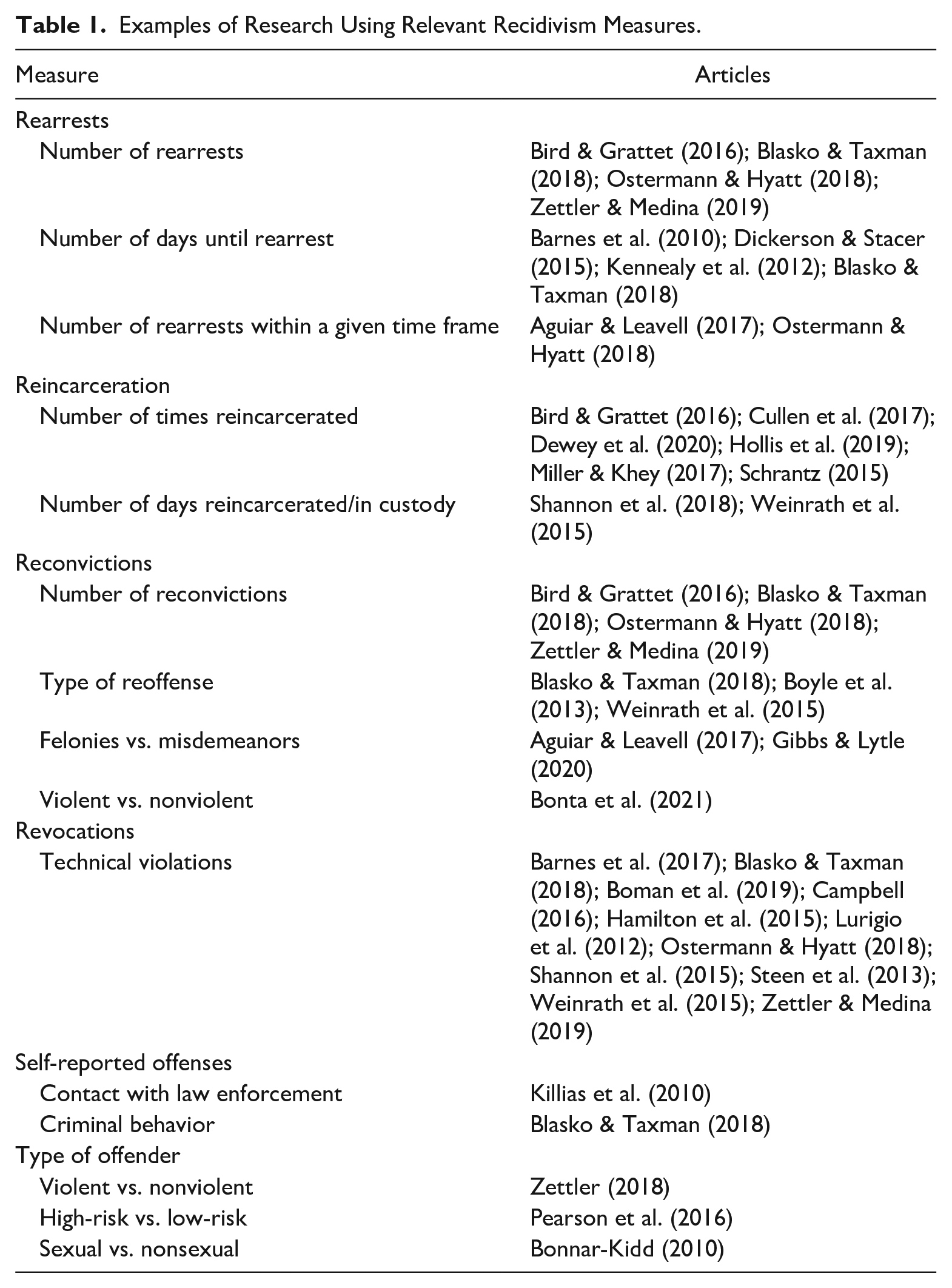
Hamilton and colleagues (2015) highlighted the importance of moving beyond reoffending alone to measure recidivism. They recommended that new criminal charges be distinguished by whether they resulted in reincarceration; this practice is echoed by other researchers and organizations (Bird & Grattet, 2016; Hamilton, 2011; Killias et al., 2010; Ostermann & Hyatt, 2016, 2018; Pearson et al., 2016). While reconviction resulting in reincarceration was an important outcome measure, reconviction as a strict definition of recidivism is conservative, if not insufficient. As suggested by Bird and Grattet (2016), “[Recidivism] omits criminal activities for which there is insufficient evidence or any number of reasons for abandoning a prosecution” (p. 183). For this reason, measures of recidivism have not been limited to accounts of reconviction and many researchers emphasize the need to differentiate the type of re-offense that results in the reincarceration (Boyle et al., 2013; Weinrath et al., 2015).
Strategies to categorize recidivism vary. As an example, Blasko and Taxman (2018) used a list of 25 offenses to organize instances of recidivism; others classified re-offenses by their legal severity, that is, felonies versus misdemeanors (Aguiar & Leavell, 2017; Gibbs & Lytle, 2020; Steinmetz & Anderson, 2016). One additional line of distinction emphasized the centrality of public safety in evaluating the success of community corrections organizations. Specifically, Bonta and colleagues (2021) used violent and sexual re-offense levels as distinctive markers of success toward community safety.
Regarding recidivism as a measure of organizational success, scholars have frequently drawn upon the classification of behaviors based on the type of offense, as defined by prior convictions (Pearson et al., 2016; Zettler, 2018). Following the separation of general versus violent recidivism rates, the rate of people convicted of violent offenses, which then recidivate, compared with people convicted of nonviolent offenses presents a different form of evaluation. Researchers have also distinguished between risk levels through Level of Service Inventory (LSI) scores (Pearson et al., 2016).
Technical violations are another way to measure recidivism. Operationalizing recidivism in this way means measuring distinctive and often noncriminal behavior including missing appointments with community supervision officers, not following curfew, or associating with unapproved persons. Research has shown that officers have substantial discretion in their choice to pursue these types of violations and, thus, recidivism here can be considered a measure of officer approach and behavior (Steen et al., 2013; Steen & Opsal, 2007). Research has also suggested that technical violations and revocations are evaluated distinctly from new criminal charges (Barnes et al., 2017; Blasko & Taxman, 2018; Boman et al., 2019; Campbell, 2016; Hamilton et al., 2015; Lurigio et al., 2012; Ostermann & Hyatt, 2018; Shannon et al., 2018; Steinmetz & Anderson, 2016; Weinrath et al., 2015; Zettler & Medina, 2019).
Other recidivism measures have distinguished between in-program and postrelease recidivism. In-program recidivism indicates law violations that occurred while under supervision. In terms of in-program recidivism, Hyatt and Barnes (2017) found that probationers subject to intensive supervision are more likely to abscond, be charged with technical violations, and be incarcerated, but differences in reoffending did not emerge. Some studies has found that individuals subject to in-program supervision are more likely to re-offend than those who were released unconditionally (J. Moore & Eikenberry, 2021), while others have found that those who are subject to supervision, particularly longer terms of supervision, have lower rates of recidivism (Ostermann, 2013; Ostermann et al., 2013).
Some other research has focused more explicitly on postrelease recidivism which reflects offending that occurred once an individual has been released from a community corrections program. These studies have found that postrelease recidivism was correlated with the security level where the individual was incarcerated (Gaes & Camp, 2009), prison misconduct (Cochran et al., 2014), education (Lockwood et al., 2016; Nally et al., 2012; Roessger et al., 2021), employment (Nally et al., 2014; Skardhamar & Telle, 2012), and housing stability (Rydberg et al., 2023). These studies illustrate how factors that influence recidivism transcend community supervision.
Finally, apart from types of reoffending behaviors, some researchers have considered recidivism as a function of time passed until an offender recidivates postrelease or postsupervision (Barnes et al., 2010; Blasko & Taxman, 2018; Dickerson & Stacer, 2015; Kennealy et al., 2012). Kennealy et al. (2012) and Blasko and Taxman (2018) used a measure of the number of days until arrest to evaluate the effectiveness of a program over time, while others described this measurement as “time-to-failure” until rearrest (Barnes et al., 2010). Alternatively, other scholars have evaluated recidivism through measures of days in custody or days incarcerated following release (Shannon et al., 2018; Weinrath et al., 2015). Ostermann and Hyatt (2018) took a different approach and used increments of time as a mechanism of making sense of recidivism rates. Specifically, the scholars evaluated rates of rearrest and reconviction after the passing of 1, 2, and 3 years following completion of community corrections (Ostermann & Hyatt, 2018). Others limited evaluations to within 24 months and emphasize this period of time as essential for measuring felony offenses (Aguiar & Leavell, 2017).
Alternatives to Recidivism
Although traditional outcome measures center around recidivism, researchers have increasingly gone beyond this measure to evaluate success. For instance, there are several alternative measures related to theories of desistance which scholars have drawn upon to evaluate the success of clients. Desistance, or the process by which individuals abstain from participating in behaviors labeled as criminal, includes internal change (the creation of new identity, new attitudes or beliefs, etc.) as well as forms of tangible behavioral change, such as reduced frequency or severity of committing crimes (Bersani & Doherty, 2018; Maruna, 2001; McNeill, 2009; Paternoster et al., 2016; Serin et al., 2010; Weaver & McNeill, 2010). While these aspects may be similar to some of the aforementioned recidivism measures, these outcomes are linked to the desistance process and the generation of a new self. To evaluate outcomes, researchers have drawn on markers associated with internal change that are consistent with desistence, such as enrollment in psychological-based interventions like cognitive behavioral therapy (CBT) which empower clients to reshape their sense of self, increase coping skills, or enhance intrinsic motivation to change (Barnes et al., 2017; Hsieh et al., 2021; O’Sullivan et al., 2018).
Researchers have also highlighted the role of “indicators of stability” which promote social integration and help address the structural barriers that justice-engaged individuals often experience. These mechanisms include employment (Bain, 2019; Chin & Dandurand, 2012; Gunnison et al., 2015; Guo & Metcalfe, 2022; Harding et al., 2017; Opsal, 2012), familial support or reunification (Guo & Metcalfe, 2022; Harris, 2011; Lloyd et al., 2020; McKiernan et al., 2013; Wallace et al., 2016; Youssef et al., 2017), housing (Geller & Curtis, 2011; Gunnison & Helfgott, 2017), access/participation to services (Matheson et al., 2011; Unnithan et al., 2017; Visher et al., 2017), or civic participation (Binnall, 2018; Fox, 2012; Glavin, 2012). These indicators of stability are aligned with goals of community corrections that focus on reintegration of corrections-involved individuals back into their communities.
Scholars have also suggested that harm reduction is another measure of interest in gauging successful community-based sentencing. Harm reduction means reducing the adverse individual and community consequences associated with different types of criminalized behaviors. Typically quantified through risk-needs-assessments or similar scales of measurement, these variables can include a variety of categories, such as time to failure, an individual’s average number of arrests over a time period before and after criminal justice intervention, or a reduction in offense severity over time (Andrews & Bonta, 2006; Gibbs & Lytle, 2020; Harding et al., 2013). Other features of harm reduction identified as alternative success measures include reduction or abstinence from substance use (Boman et al., 2019; Hollis et al., 2019; Midgette et al., 2021).
Finally, researchers have used different agency practices to measure successful outcomes in community correction organizations. This can include the use of evidence-based practices (Hamilton et al., 2015; McNeill et al., 2012; Schlager, 2018; Schrantz, 2015), collaboration with external community agencies (Costanza et al., 2015; Frisman et al., 2010; Gunnison & Helfgott, 2017; McKiernan et al., 2013), or fidelity of programming (Lowenkamp et al., 2010), all of which are associated with decreased recidivism, increased desistance, or other positive outcomes. Schlager (2018) suggested that the presence of evidence-based practices like those that are strength-based emphasize empowerment of clients and collaboration between client and officer, and draw on community agency resources which overall promote law-abiding behaviors.
There are a wide variety of potential success measures and outcome metrics which community corrections agencies might use that help them—and others—assess their success. As demonstrated above, many of these success measures include how well they demonstrate success, whether they are applicable to certain groups, and whether they communicate programmatic or individual success. Thus, in this article, we examine the following research questions:
To explore how community corrections organizations evaluate client success, we used a survey to assess what measures of success they use and whether they draw on aspects of recidivism to measure success. We also examined whether agencies draw on alternative measures of success. In the next section, we describe our survey method.
Method
To explore how alternative measures of success are relevant to the work of contemporary community corrections agencies, we developed a survey to distribute to agency directors. The survey asked community corrections agency directors to provide information regarding (a) the population(s) that their agency serves, (b) the extent of programming offered through the agency, (c) metrics reported to oversight agencies, (d) the most important agency goals and, (e) the metrics they believe reflect the work in the agency.
In late 2021, the 19-question survey was distributed to a purposive sample of adult community corrections agency directors across six states: Colorado, Florida, Ohio, Minnesota, Pennsylvania, and Tennessee. 1 We used a purposeful sampling strategy and selected these states because we wanted to represent states in our sample that we knew—based on their presence as research sites in the literature or our own knowledge of them—are structured differently and have varied philosophical approaches to community corrections. 2 On four separate occasions, e-mails were sent out to agency directors with a link to an internet-based survey. We sent surveys to 220 agencies and received survey responses from 33 total agencies with a response rate of 15%.
Given that community corrections agencies have a wide variety of approaches and serve clients in different ways, we asked agency directors to share (a) whether their agencies served diversion, reentry, residential, and/or nonresidential client populations and (2) the types of programming, if any, the agency provided. For this question we asked about CBT, alcohol and drug monitoring, alcohol and drug treatment, mental health programming, employment programming, work release, educational programming, parenting skills/family reunification, and religious programming; directors indicated whether their agency provided those services with a strong focus, moderate focus, to some extent, or not at all.
We asked four questions that focused on how alternative measures of success are imbued in the work of agencies. First, we asked respondents to provide the measures that oversight agencies use to evaluate their agency’s work and, second, to rank order the metrics that best reflect the work they believe the agency is doing. Reflecting some of the more common measures suggested by researchers, as presented in Table 1, options included client recidivism, technical violations, absconsions, participation in treatment or services, changes in risk assessment scores, program completion, staff retention, reduction of risk/need measures, employment while under supervision, reconviction, high school diploma, and earnings.
In addition, directors chose the primary goal of their agency and what they thought the oversight agency perceived as the primary goal of their agency. The options included reducing prison population, reducing recidivism, public safety, rehabilitation of clients, enhancing reentry of clients, cost savings to the state, or something else (other). The respondent was allowed to provide any other information about their agency, or how the work that the agency does is evaluated.
Finally, we examined the mission statements of each of the agencies in our sample. To do this, we looked at each agency’s webpage for their mission statement or program purpose and downloaded the statement into NVivo. Using an open-ended coding process, we coded for agency goals based on the purpose that was identified first in the statement. To structure the coding process, we used the agency goals reflected in our survey identified in the previous paragraph. However, one new goal emerged from our coding: providing services or referral to clients. We analyzed these data based on the theme that appeared first in each mission statement.
The analysis is descriptive in nature. We present information regarding client population, programming, and how respondents perceived goals both in terms of oversight agencies and the community corrections agencies themselves. Given our sample size as well as the scope of our research questions, descriptive analysis was more appropriate than an inferential one.
Results
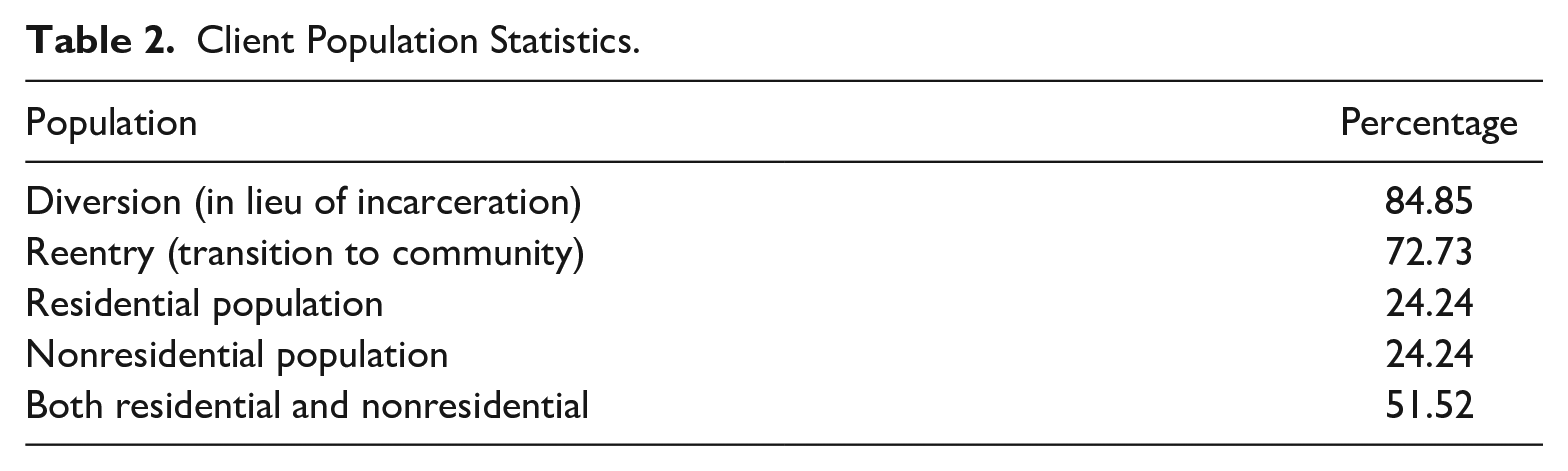
We started by inquiring about the types of populations that these agencies oversee. This allowed us to develop a baseline understanding of the agencies given that community corrections take such varied form across state, jurisdiction, and agency. This question was framed both in terms of the primary purpose of the organization (e.g., diversion or reentry) and whether the client population was residential. Results are presented in Table 2. According to these results, 84.85% of agencies reported a focus on diversion (n = 28) and 72.73% reported a focus on reentry (n = 24). 3 In terms of residential/nonresidential population, 24.24% of agencies identified a primary residential client population (n = 8), while 24.24% also identified a primary nonresidential client population (n = 8). Fifty-one percent (n = 17) reported that their primary client population consists of both residential and nonresidential clients.
Client Population Statistics.
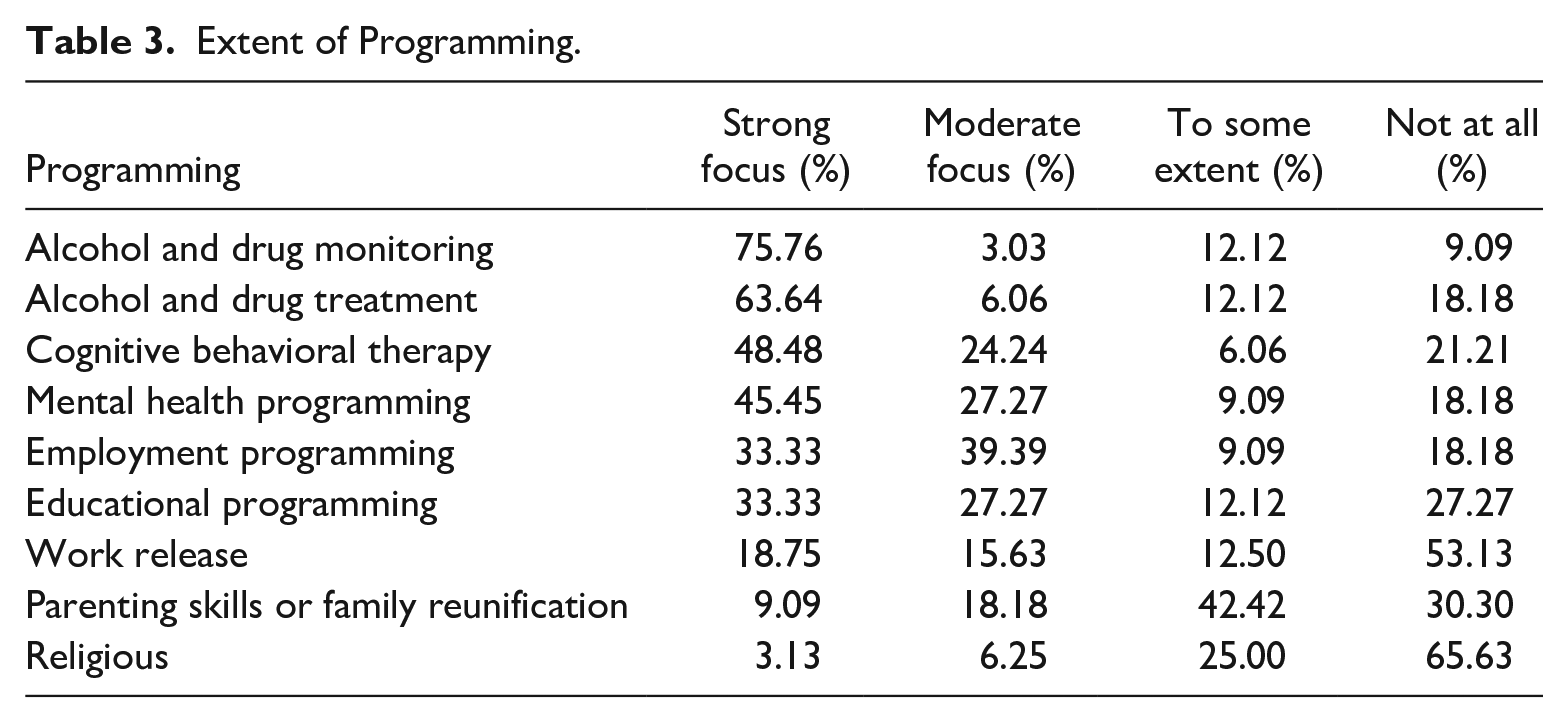
To understand the kinds of agencies responding, we examined the extent of programming in community corrections agencies. For these questions, agencies were able to rate how much they focus on each type of programming ranging from strong focus to not at all. Results are presented in Table 3. We found that the types of programming with the strongest focus were those that had to do with alcohol and substance abuse. In all, 75.76% of agencies reported a strong focus on alcohol and drug monitoring, and 63.64% identified a strong focus on alcohol and drug treatment (see also K. E. Moore et al., 2020). Over 40% of agencies reported a strong focus on CBT (48.48%, n = 16) and mental health programming (45.45%, n = 15). The types of programming with the weakest focus were work release (18.75% strong focus, n = 6), parenting skills/family reunification (9.09% strong focus, n = 3), and religious programming (3.13% strong focus, n = 1).
Extent of Programming.
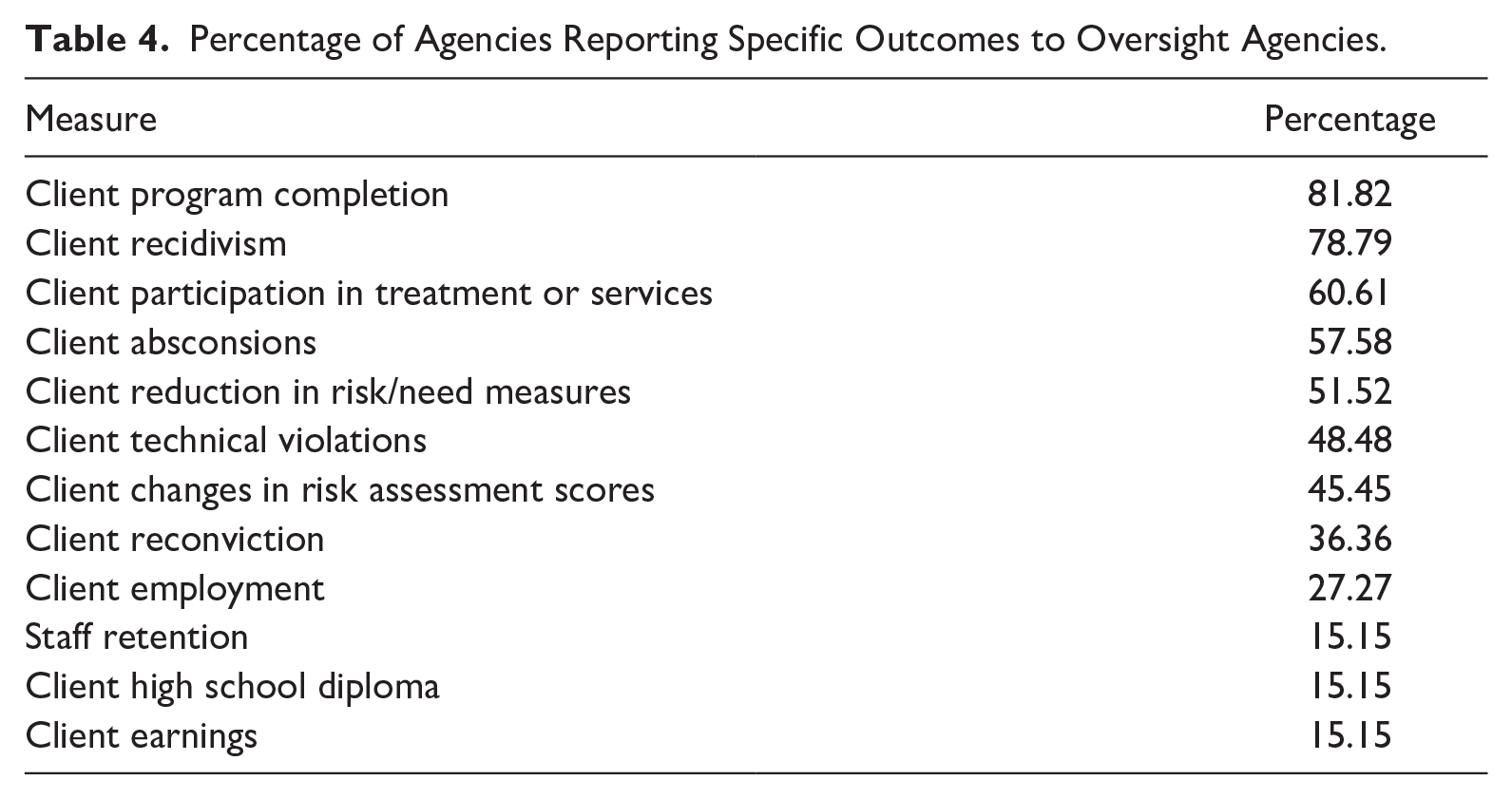
We asked respondents two questions related to metrics. First, which metrics are reported to oversight agencies (Table 4), and second, what are the top 3 measures that reflect the work that the agency is doing (Table 5)? The most common metrics reported to oversight agencies were identified as client program completion (81.82%, n = 27), client recidivism (78.79%, n = 26), and client participation in treatment or services (60.61%, n = 20). More than half of the responding agencies also identified client absconsions (57.58%, n = 19) and reductions in risk/need measures (51.52%, n = 17) as metrics that are reported to oversight agencies. Staff retention, client education, and client earnings were among the least commonly reported metrics (15.15%, n = 5 for each).
Percentage of Agencies Reporting Specific Outcomes to Oversight Agencies.
Leader’s Perception of the Measures that Reflect the Agency’s Work.
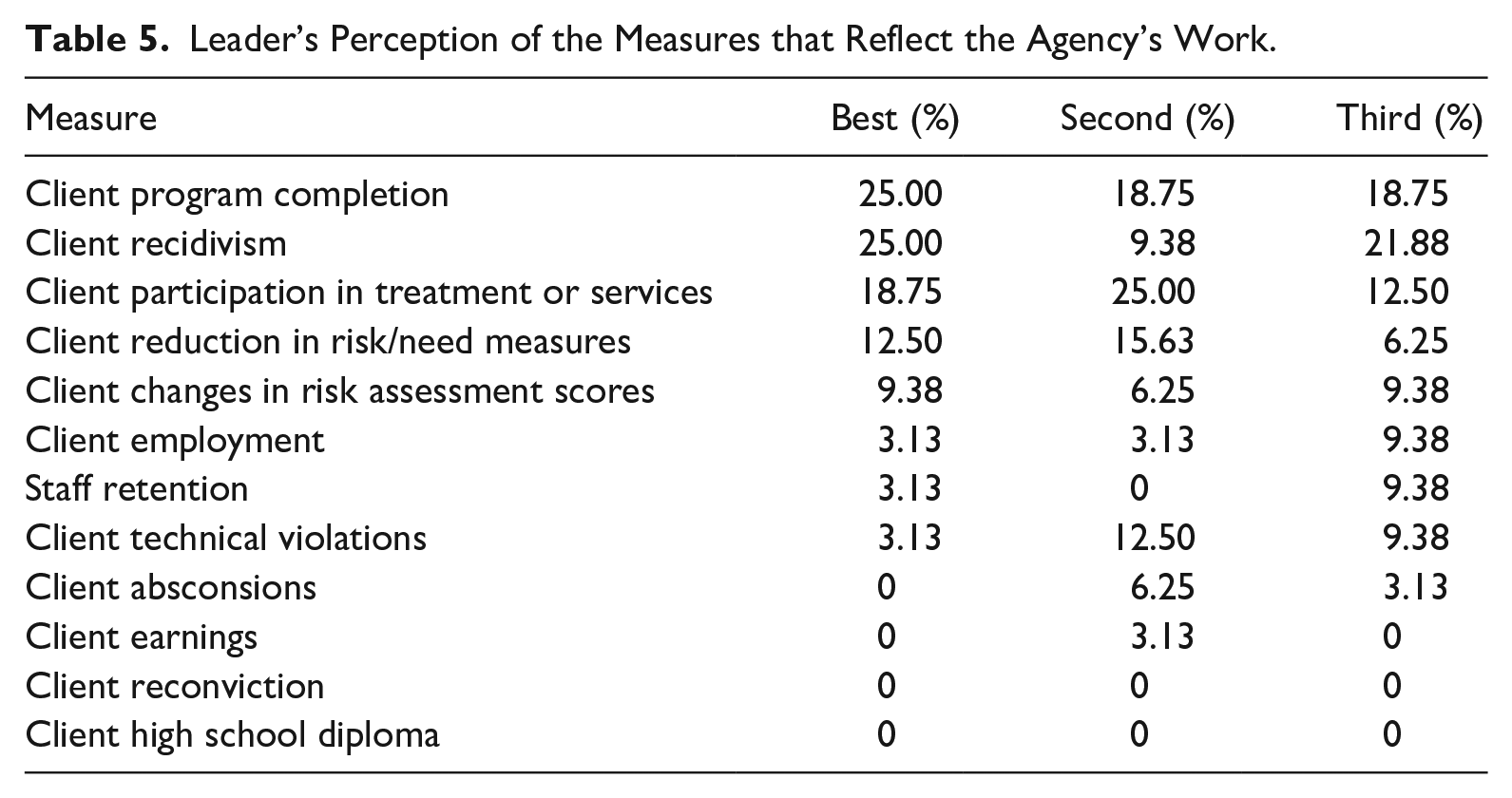
The most common metrics leaders identified as most reflective of their agencies’ work were client recidivism (25.00%, n = 8), client program completion (25.00%, n = 8), and client participation in treatment or services (18.75%, n = 6). These three metrics were also frequently identified as the second or third best metric which reflect the work of the agencies. Several metrics were not identified by any agencies as the best measure of the work that they do including absconsions, earnings, reconviction, and education.
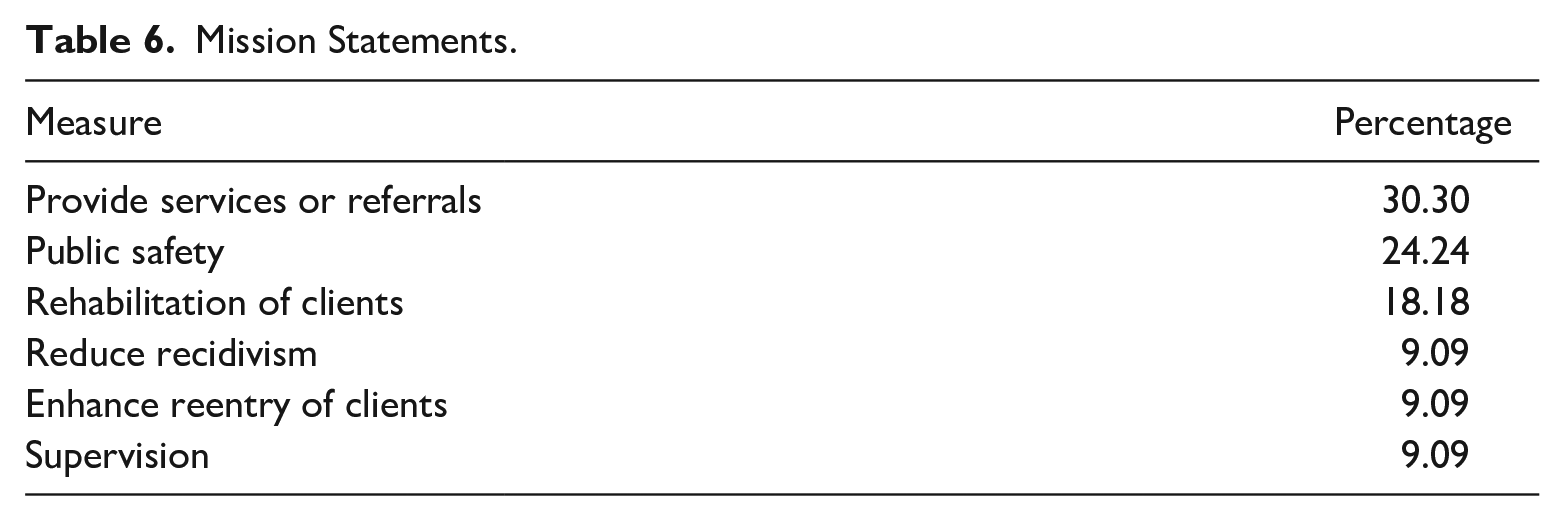
The second research question focused on understanding how well mission statements reflect alternative measures of success. The results from our analysis of mission statements appear in Table 6. The themes that were mentioned first in these statements most frequently were providing services or referrals (30.30%, n = 10), public safety (24.24%, n = 8), and client rehabilitation (18.18%, n = 6). The other themes of reducing recidivism, enhancing reentry experiences for clients, and supervision appeared less frequently (9.09%, n = 3 for each of these).
Mission Statements.
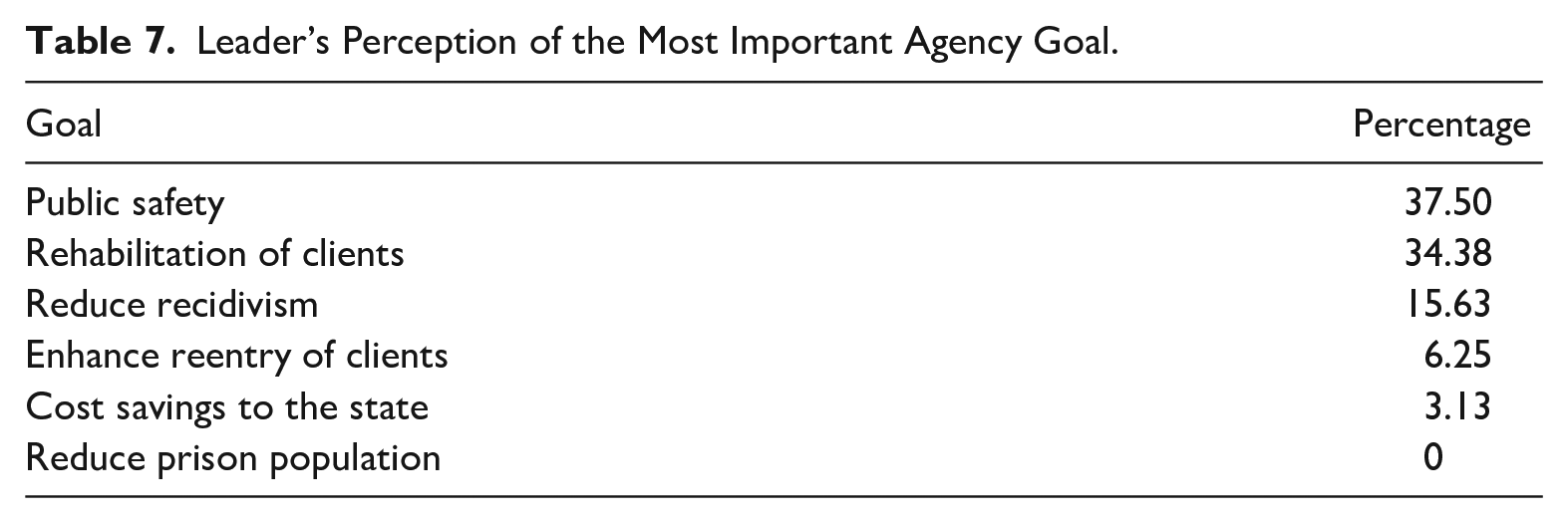
Our final research question examines whether directors’ perceptions of the central goal of their agency reflect alternative measures of success. To answer this question, we use data where we asked agency directors about the primary goal of the organization. This information appears in Table 7. Results indicate that the most common primary goal was public safety (37.50%, n = 12), followed by rehabilitation of clients (34.38%, n = 11), and reducing recidivism (15.63%, n = 5) after that. Some agencies also indicated that enhancing reentry experiences for clients was a primary goal (6.25%, n =2) and one agency indicated that cost savings was the primary goal (3.13%). No respondents suggested that reducing prison population was their primary goal.
Leader’s Perception of the Most Important Agency Goal.
Discussion
Community supervision as a form of reintegration and rehabilitation for justice-involved persons has been increasingly used in place of and complementary to incarceration. The literature demonstrates that recidivism is the measure most universally utilized by researchers to evaluate successful community corrections organizations but it is defined differently across studies (Barnes et al., 2017; Blasko & Taxman, 2018; Bird & Grattet, 2016; Cullen et al., 2017; Hamilton et al., 2015). Relatedly, scholars have sometimes elected to use alternative measures of success by, for example, drawing on theories of desistance and harm reduction (see Bersani & Doherty, 2018; Gibbs & Lytle, 2020). Because of these divergences, we examined the extent to which alternative measures of success were imbued, or not, into the work of contemporary community corrections agencies. Notably, among the literature on community corrections is a lack of research informed by perspectives held by leadership in these organizations themselves. To examine our research questions, we elected to survey a sample of community corrections directors to understand how their organizations think about success and, especially, successful outcomes of clients. More specifically, we asked which types of success metrics are reported to oversight agencies, what the over-arching agency goal is, and which measures best reflect the work of the agency. We supplemented our survey data with a content analysis of agency mission statements to provide another lens into understanding how formal statements reflect agency goals as well as alternative measures of success. Here, we briefly review our results, reflect on their utility, and offer recommendations for future research.
First, to understand the extent to which alternative versus traditional metrics are reflected in the evaluation efforts of contemporary community corrections agencies, we examined the outcomes agency leaders believed best reflect their organizations’ work. We also examined the measures they are required to report to oversight agencies. We saw substantial overlap between these data. In particular, the measures most frequently reported to oversight agencies were program completion, recidivism, and participation in treatment and services. These were also the three areas most commonly identified as measures that leaders believed reflect the work of community corrections agencies. We think that this alignment occurs, to at least some degree, because of “gravitation pull” (for a similar example in the sentencing literature, see Hofer, 2019), toward traditional metrics, whereby community corrections agencies have been bound to these measures for so long that agency directors logically associate those metrics with their own success. At the same time, we found some notable divergences between these two measures. For instance, our results indicate that some metrics—such as technical violations and absconscions—are commonly reported to oversight agencies but that directors do not believe those measures reflect the work being done by their organizations. One explanation may be that program completion and declining recidivism rates reflect more meaningful organizational achievements where, for example, clients successfully accomplish something (completing a program) or a program addresses important client needs (participating in treatment or services). Technical violations, on the contrary, are data points that lie at the intersection of client and correctional officer behavior. That is, while clients can do things that evoke a revocation, officer discretion may be equally, if not more, predictive of technical violations (Steen et al., 2013). Therefore, measuring these outcomes may require organizations to look inward and assess their own role in revocations. A final important finding includes the distribution of responses across these two questions. Over 80% of agency directors reported that they submit program completion data to oversight agencies and over 78% reported that they submit recidivism data. While it is the case that these measures (program completion and recidivism) were also identified by directors as those most reflective of their agencies’ work, only about 25% of the agencies responded in this way. These latter results indicate that there is substantial variation in how agency leaders perceive the value of traditional versus alternative measures of success in the context of their agencies’ work. In other words, while oversight agencies offer fewer opportunities to draw on diverse measurements to think about agency success, leadership appears to have a somewhat more holistic perspective and point to a variety of measures as potentially valuable.
We also examined agency mission statements as well as how directors viewed the central goal of their organization. Organizational goals can help us understand, in another way, the extent to which alternative measures of success are imbued in the ways that agencies view the work that they do. For instance, goals like rehabilitation align more clearly with alternative measures of success that researchers have promoted as useful including participation in CBT programs or reduction in drug use, whereas a goal like reducing recidivism is quite clearly connected with traditional metrics. Our findings also showed that the goal mentioned first in most mission statements was providing either services and referrals or public safety. On the contrary, when asked about what they viewed as the primary goal of their agency, directors most commonly identified public safety or, second, rehabilitation. Together these findings indicate, first, that there is moderate alignment between how directors view the goal of their agency and the goals identified via organizational mission statements. Second, these goals reflect both traditional (public safety) and alternative (rehabilitation and referrals) measures of success.
While recidivism has been a hallmark measure used to assess organizational and client success in correctional settings, researchers have increasingly advanced the idea that alternative measures of success such as participation in treatment services, reduced LSI scores, or employment can be quite illuminative. This is especially the case in the community corrections context given that historical orienting philosophies tend to be more focused on reintegration and rehabilitation (see Lawrence, 1991; Wormith et al., 2007). Our findings indicate that oversight agencies are likely responsible for helping to maintain a commitment to traditional metrics. However, even though agencies do not seem to be able to rely extensively on alternative measures of success as a self-measurement, given that directors in our sample valued a diversity of metrics, there does appear to be cultural space for a more holistic understanding of success. Moreover, mission statements and their related goals may be more clear if traditional and alternative metrics were used together. Indeed, diverse measures would better reflect the varied goals that community corrections often claim to be focused on, including rehabilitation, reintegration, and public safety. By broadening metrics, agencies can illustrate the work that they are doing related to changes in offending trajectories, indicators of stability, and harm reduction. Thus, it is important that the success of community corrections agencies relies not just on easily interpretable recidivism statistics, but also on more complicated measures that capture potential differences that agencies make in their clients’ lives. Note, however, that it may be difficult for agencies to develop alternative metrics because they report to oversight agencies. Future research can focus more explicitly on these oversight agencies and how they create barriers to developing new metrics.
Community corrections agencies can go a step further by developing practices that reflect success in innovative ways. While not a metric that was identified often by the respondents in this study, indicators such as staff retention may illustrate an agency strong in organizational justice. Staff members are more likely to stay with the organization when they feel that they are doing important work and when they are treated well. This helps insulate them from burnout. In addition, more metrics that reflect client accomplishments are another way to signal success. This may include things such as client educational attainment, employment, or other achievements. These were not identified frequently in the survey responses, but this can be partially attributed to how community corrections agencies have been constrained by traditional metrics that are commonly required by oversight agencies. In this way, community corrections agencies who are serving their clients need not be concerned about cuts to resources, even if they do not score well on traditional metrics.
While these data gave us an opportunity to address the lack of literature informed by perspectives of leadership internal to community corrections, the available sample, given its size, along with the low response rate that we received, does lack generalizability to the broader population of community correctional organizations. Future research should aim to address this limitation. To exhaustively understand the beliefs surrounding successful outcomes in the context of an agency’s work and their expectations, researchers should prioritize collecting data from a representative sample of organizations. In addition, we were unable to locate research that highlights the role of oversight agencies. Given the power of these entities to, for example, set programmatic and supervisory mandates and determine funding structures, future research should carefully examine not only the role these organizations have on the daily operations of local offices but also the organizational context of the work more broadly. Finally, future research could examine how the organizational characteristics of community corrections agencies, as well as characteristics of their surrounding environments, might influence the use of success metrics beyond traditional metrics such as recidivism.
Conclusion
We have demonstrated that while researchers have historically utilized recidivism to assess organizational outcomes of community corrections, this emphasis does not necessarily carry to organizations internally. This study helps give voice to community corrections agency directors regarding how they measure success. While community corrections agencies might perceive oversight agencies as prioritizing recidivism, the work done by community corrections organizations and the clientele they serve are identifying alternative priorities. Following an expansion of alternative success measures highlighted recently by academics, inter-organizational communication and goal reformation should follow among community corrections institutions. Expanding on research which highlights the voices of leadership in community corrections is essential to furthering the integration of community supervision into alternatives to incarceration and in bettering outcomes of justice-involved peoples and the community in which they are returning.
Footnotes
Declaration of Conflicting Interests
The author(s) declared no potential conflicts of interest with respect to the research, authorship, and/or publication of this article.
Funding
The author(s) disclosed receipt of the following financial support for the research, authorship, and/or publication of this article: This research was supported by the Colorado Community Corrections Coalition: 10507-00002.

Data Availability Statement
Data used in this study are not shared.