




Abstract
This study presents the first exploratory inquiry into women's perception of High Metabolic Clothing (HMC) that could aid in weight loss and/or muscle maintenance/gain. A mixed methods study was conducted combining an online survey (n = 502) and interviews (n = 30). A composite variable combining BMI and exercise engagement was used to group and compare participants for data analysis. Quantitative data were analyzed using descriptive statistics and qualitative data were analyzed using thematic analysis and content analysis guided by the FEA (functional, expressive, and aesthetic) Consumer Needs Model. Results revealed that 83.5% of survey respondents were interested in wearing HMC; high BMI non-exercisers were identified as the biggest market for HMC. Four future directions were identified for HMC to address a range of user needs. Clothing that resisted movement was perceived as acceptable providing HMC helped a wearer to achieve their goals and the design adhered to consumers’ aesthetic needs and societal clothing norms.
Physical inactivity is a major public health challenge (World Health Organization [WHO], 2020). Over the past century, activity levels have declined substantially due to the shift toward less physically demanding work (Hill et al., 2013). Urbanization and mechanization fueling technological developments and the rise in convenience living have dramatically impacted the metabolic energy demands required to overcome everyday life; thus, achieving high levels of physical activity in the contemporary, sedentary environment proves challenging (Blair, 2009). To counteract daily physical inactivity, exercise activity guidelines are advised; however, women often fail to meet those targets (WHO, 2020). Many factors contribute to women's lower activity patterns including weight gain during pregnancy, feeling too overweight to exercise (Ball et al., 2000), experiencing uncomfortable breast motion (Coltman et al., 2019), postpartum recovery limitations, and practical barriers such as lack of time, childcare, and finances (Makama et al., 2021). Moreover, uptake of strength training among women is low (Vasudevan & Ford, 2021) and females experience an accelerated loss of muscle mass during the menopausal transition which negatively impacts women's ability to manage their weight since muscle mass is crucial for metabolic health (Maltais et al., 2009). As a result of these factors, women are less metabolically active than men, and obesity in females continues to increase (Mauvais-Jarvis, 2015).
These findings highlight a need for novel interventions that focus on increasing women's daily energy expenditure for weight management and supporting muscle maintenance/gain, to benefit a female's metabolic health through weight loss and ageing. Currently, emphasis is placed on environmental interventions to make daily living more active such as urban planning to promote walking behavior and occupational treadmill desks to reduce sedentary activity; however, the multifaceted challenges associated with scaling up these interventions prove complex (Zhang et al., 2022). Clothing is our closest “portable environment” (Watkins & Dunne, 2015), yet little has been done to explore how the design of clothing could metabolically benefit a wearer. Although, some types of clothing such as protective overalls have been shown to increase a wearer's metabolism by restricting movement, adding frictional resistance between clothing layers and increasing the weight of clothing carried (Dorman & Havenith, 2009). This in turn imposes additional force requirements on a wearer and thereby, increases the energetic cost of movement. However, these studies focus on the unintentional metabolic effects of clothing for the purpose of work efficiency and safety (Dorman & Havenith, 2009). The ability for clothing to intentionally challenge a wearer's movement to increase the metabolic cost of daily activity and aid in weight loss/muscle gain has not been well established.
For this research, we have termed clothing that could be designed to intentionally challenge a wearer's movement for metabolic benefits, “High Metabolic Clothing” (HMC). Wearing HMC potentially could metabolically benefit women over the long term; although, since HMC is a new clothing concept, the context of use is unknown. Moreover, the design of HMC is complex and multifactorial. While it is evident that clothing can impact a wearer's metabolic rate, a broad range of clothing needs must be considered to ensure HMC does not prevent someone from doing everyday activities, while being perceived as socially acceptable and desirable to wear. Research is needed to explore women's interest in and perception of HMC, as a new clothing concept, to determine the future directions that match different user profiles and lifestyles, and to establish clothing needs that would need to be satisfied in order to develop market-ready HMC.
To address this gap, it was essential to understand the potential adopters of HMC and their needs, from a more contemporary user/human-centered design perspective. Thus, the FEA (functional, expressive aesthetic) Consumer Needs Model developed by Lamb and Kallal (1992) was used as a theoretical framework to guide this research. Literature reviews were performed to find evidence of how the design of clothing can increase a wearer's metabolism both unintentionally (protective clothing) and intentionally (sports stress clothing), and clothing attributes that may be required for the design of HMC. A two-part study design combining an online survey and interviews was conducted to introduce the concept of HMC to a large population of adult women, to explore interests, and to gather data from potential adopters regarding their perceptions and needs for HMC. The objectives of the study were as follows:
To explore women's interests in, and preferences and motivations for wearing HMC. To explore attributes contributing to the acceptance of HMC from the perspective of clothing functionality, expressiveness, and aesthetics.
Because clothing needs differ among different body mass index (BMI) groups (Tiggemann & Lacey, 2009) and active/inactive individuals respond differently to physical inactivity interventions with regard to user needs (Gal et al., 2018), our study looked at the statistical differential results between women's BMI and physical activity status. The findings of the study were used to identify future directions for HMC that matched different user profiles and lifestyles. By utilizing the FEA model to explore a range of users’ needs, the insights achieved suggest design implications that may result in higher user satisfaction. By determining the factors that might affect a consumer's adoption of HMC, this research established the initial groundwork required to develop market-ready HMC.
Literature Review
The Metabolic Cost of Clothing—Then and Now
The metabolic cost of wearing clothing today is less than it was years ago (Wells et al., 2007). In the 1880s, women's clothing ensembles consisted of up to five layers, collectively weighing approximately 4.4 kg, while by the early 21st century, a woman's outfit averaged just two layers and weighed 1.1 kg (N. M. Wells, personal communication with L. M. Lyman-Clarke August 10, 2006). Using Dorman and Havenith's (2009) formula to calculate the metabolic effect of clothing averaging 2.7% per kg, the shift in how women dress has resulted in an 8.9% reduction in metabolic activity from clothing only. Considering these changes, it is surprising that little research has explored how some clothing designs might be related to energy imbalances. Nevertheless, contemporary clothing that is designed for ease of movement, such as athleisure wear, promotes physical activity (Brice & Thorpe, 2021; Lipson et al., 2020). Despite these suggestions, no studies were found to show evidence that wearing freely moving clothing results in higher levels of physical activity. The athleisure wear trend is supposedly driven by a health-conscious society. However, considering that many women are now wearing energetically efficient clothing for everyday wear, the influence of clothing on daily metabolism could very well be at its lowest.
Increasing Metabolic Activity With Clothing
The design of clothing can increase a wearer's metabolism both unintentionally and intentionally. Protective clothing can require added force of a wearer to complete tasks by restricting movement, increasing frictional drag between clothing layers or adding to the weight of clothing carried, thereby increasing the unintentional metabolic cost of movement by up to 20% (Dorman & Havenith, 2009). Given the hazardous environments in which protective clothing is worn, the metabolic effects of clothing are considered design defects because a worker must perform tasks efficiently with no hindrances. On the other hand, intentionally increasing the metabolic cost of clothing can provide sports performance benefits. Sports stress clothing utilizes aerodynamic drag or weighted wear to increase an athlete's training efforts so the body builds strength in ways that will allow it to be faster or stronger once the resistance is removed for competing events (Watkins & Dunne, 2015). Altogether, the metabolic effects of clothing can be grouped under restricting movement, clothing weight, and drag, in addition to commercial products that claim to aid weight loss.
Restricting Movement
Clothing can restrict a wearer's movement by pulling at the crotch and thigh when the hip is flexed or tying the arm to the bodice; these restrictions impose additional force requirements on a wearer to perform tasks and thereby, increase the energy cost of movement (Duggan, 1988). The isolated clothing attributes that contribute to restricting a wearer's movement include ease, stiff fabrics, fabrics that resist extension, and fabric/clothing bulk. Ease allowance is included in the design of clothing to allow for the changes in body dimensions that occur as the body moves; excess ease around the joints results in a larger garment which in turn, shortens the underarm/crotch seam and thereby restricts movement (Dorman & Havenith, 2009). The amount of ease required can be determined by the amount of stretch inherent in a fabric with stiffer fabrics requiring greater ease (Watkins & Dunne, 2015). Stiff fabrics also produce resistance to bending, impeding a wearer during movement, particularly at the joints (Duggan, 1988), and fabrics that resist extension and cannot easily be stretched or change form can impede the full range of motion (Ashdown, 2011). Clothing thickness and bulky layers can also restrict mobility (Boorady, 2011) with each thick clothing layer worn increasing energy costs by 3% to 4% (Teitlebaum & Goldman, 1972). The metabolic cost of clothing bulk is particularly taxing around the torso and the legs because it interferes with the pendulum-like swinging of the arms/legs, forcing a wearer to use exaggerated/extra movements to complete a task (Dorman & Havenith, 2009).
Clothing Weight
Protective clothing is heavy due to its thick fabrics, layering systems, and treatments applied to stiffen fabrics (Duggan, 1988; Watkins & Dunne, 2015). Each kilogram of clothing weight worn increases a wearer's metabolism by 2.7% (Dorman & Havenith, 2009). Clothing weight at the extremities results in the body requiring more effort to move than it does when it is near the torso because the arms/legs must be accelerated and decelerated (Soule & Goldman, 1969). Wearing weighted vests or ankle/wrist weights has been evidenced to increase a wearer's energy expenditure; light loads can be applied to the limbs (10% body mass), while trunk loading enables heavier loads (5–65% body mass) (Macadam et al., 2017).
Drag
Frictional drag between clothing layers (i.e., the frictional resistance as one layer of fabric slides over the other during movement) increases the metabolic cost of movement; wearing four thin clothing layers rather than one layer of the combined thickness increases energy cost by 7.9% (Dorman & Havenith, 2009). High-friction fabrics magnify the drag effect due to the greater coefficient of friction of rough surfaces resisting sliding over one another (Watkins & Dunne, 2015). Layers binding together because of frictional drag can also add bulk and thus, increase the difficulty of movement (Ashdown, 2011). In high-speed sports like speed skating or sprinting, wearable resistance is achieved by increasing the aerodynamic drag on an athlete to build strength and endurance during training. Drag can be achieved by turbulence-generating fabric resisting fluid flow across the fabric's surface (Demarest et al., 2006) or by integrating parachute structures to channel air into a garment while its wearer is in motion (Parkinson, 2019).
Commercial Weight Loss Wearables
Sauna suits and body wraps are designed using latex, neoprene, or non-breathable fabrics to restrict the transport of heat and water vapor from the body, based on the reasoning that they stimulate heat stress on a wearer during exercise, to increase energy expenditure (Byrd et al., 2017). Non-medical compressors such as shapewear and waist trainers are worn for aesthetic purposes; however, no evidence was found to show that they have any impact on fat loss. Rollover footwear that is characterized by a curved sole designed to induce instability claims to increase energy expenditure more than walking in normal shoes, although these effects have been found to be negligible (Romkes et al., 2006).
Meeting Users’ FEA Needs
The FEA Consumer Needs Model developed by Lamb and Kallal (1992) is recognized for assessing users’ clothing needs for new, innovative design. The model states that an individual's clothing needs are equally functionally, expressively, and aesthetically orientated and that the target consumer, at the model center, dictates these needs. Although various types of weight loss clothing products including sauna suits and waist trainers have been introduced in the market, women's FEA needs for these products have not been established, hence the barriers to adoption for everyday wear.
Functionality is a utilitarian aspect of clothing that relates to its utility, fit, mobility, and comfort (Lamb & Kallal, 1992). Mobility is the ease with which a wearer performs various movements in clothing. As the wearable technology market expands, body maps have emerged to inform designers how wearables should be placed on the body to cause the least amount of body motion impedance (Zeagler, 2017); however, the design of HMC relies on intentionally interfering with a wearer's mobility to increase the effort required to move. To date, no studies have explored how much a wearer's mobility could be resisted, in exchange for metabolic/health benefits, before it is perceived unacceptable or an injury risk.
Comfort is understood as a neutral state that exists when an individual does not feel pain or discomfort when wearing a garment and is an important factor influencing the overall evaluation of clothing (Hatch, 1993). Motion hindrance in clothing is often described as discomfort (Ashdown, 2011); however, no research has explored women's comfort perception of intentional clothing resistance and whether they would trade-off optimal clothing comfort for metabolic benefits. Although Corner (2014) explains how discomfort has been a feature of female dress throughout history, the idea that “one must suffer for beauty” (Steele, 2001, p. 25) was common and those in favor of uncomfortable clothing (e.g., corsets) flipped the comfort/discomfort discourse by highlighting the discomfort of body dissatisfaction and the comfort gained from looking good wearing a corset. Several clothing comfort dimensions could be relevant for the evaluation and acceptance of HMC. Thermal comfort relates to the body's thermal regulation process which can be influenced by age, gender, health, and activity level, while sensorial comfort is the sensation experienced by a wearer when clothing interacts with the skin (Kamalha et al., 2013). Psychological comfort involves subjectively formulating an overall perception of clothing through several perceived sensations judged by a wearer's previous experiences and inner wants (Kamalha et al., 2013). Pontrelli (1977) involves psychological factors in his filter concept theory; the filter emphasizes an individual's stored modifiers which represent experiences, anticipations, and expectations to determine the comfort state.
Expressive factors communicate social roles, values, self-esteem, and identity through clothing choice. Damhorst (1990) state that the way a person dresses is a form of nonverbal communication, so expressive considerations require a designer to be aware of the message the garment communicates and the style the clothing portrays. It is unknown whether women would want to be recognized for wearing novel clothing that is designed to promote metabolic benefits, or whether they would want HMC to be discrete and adhere to their individual style. Consistent with mainstream fashion design processes, aesthetic considerations explore silhouette, texture, color, pattern, and the body/garment relationships (Lamb & Kallal, 1992). It has been evidenced that as a woman's weight satisfaction decreases, concerns with clothing increase, and women who perceive themselves as overweight use clothing as camouflage to cover figure faults (Kwon & Parham, 1994).
Since HMC is a new concept of clothing, it is unknown if HMC will materialize as an overgarment or undergarment. Thus, this research aimed to discover users’ FEA clothing needs to determine how HMC could be designed into users’ current clothing choices, while increasing their metabolic activity by applying resistance to daily movement. Clothing weight was not considered for HMC development because weighted wear already exists on the market.
Method
As illustrated in Figure 1, the study was conducted using a mixed-methods design; the results of an online survey and interviews were analyzed separately and then merged to form an overall interpretation. By using this design, the researchers were able to implement quantitative and qualitative methods into the data collection process to provide a more detailed understanding of women's perception of HMC (Creswell & Plano Clark, 2017). The survey was advertised on social media channels and aimed to reach a broad population of adult women to allow participants to disclose weight information comfortably and anonymously because previous studies reported that the study participants objected to self-reporting their weight (Greenleaf et al., 2019). Follow-up interviews explored reasons behind unexpected and interesting survey results and gave participants the freedom to explain their perceptions and needs for HMC (Creswell & Plano Clark, 2017). The study population was defined as adult women living in the United Kingdom; women were chosen because their metabolic activity is typically less than men's (Mauvais-Jarvis, 2015). Ethical approval was obtained from the institutional ethics committee.
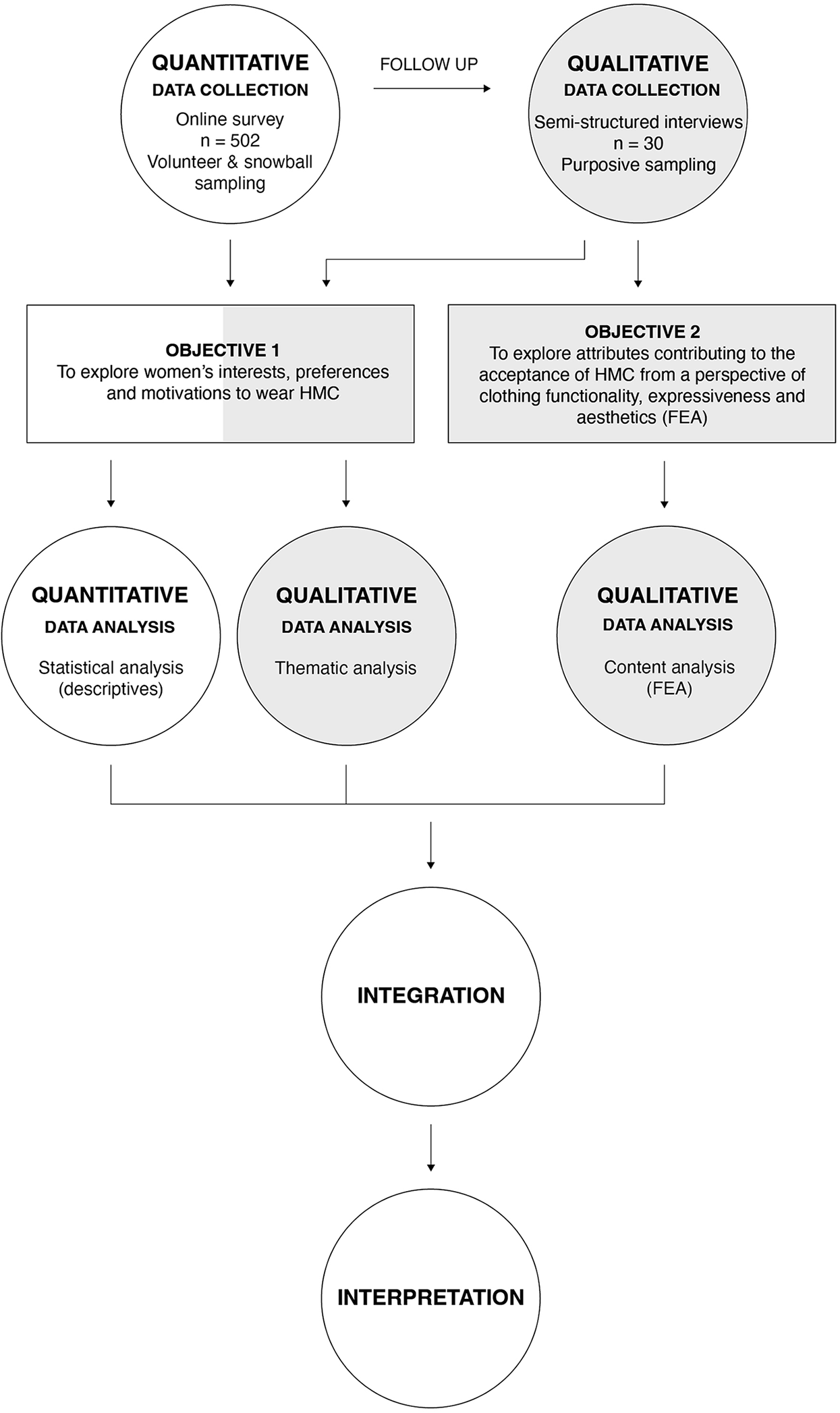
Mixed methods study design.
Quantitative Survey
An online survey aimed to explore women's interest in, and preferences and motivations for wearing HMC (objective 1). Multiple choice questions were used to identify whether women would wear HMC and if so, what would motivate them to wear it (weight management and/or muscle maintenance/gain benefits), and in what scenarios (during exercise, commuting, or working/studying hours). Each participant reported age, exercise engagement, and height and weight, which allowed for a calculation of BMI (weight [kg]/height [m2]). Since HMC is a new clothing concept, the design does not yet exist. So the survey's introductory forward informed participants how HMC could be designed including the potential benefits and disadvantages, explaining: “Clothing can increase metabolism (calories burnt) by inflicting resistance on muscles that would normally be activated during regular movement but cause them to be worked to a further degree. Increasing the force required to move can be achieved by clothing resisting extension and pulling at the crotch/thigh/arms, clothing bulk restricting mobility, or frictional drag occurring between multiple clothing layers. Wearing clothing that increases metabolism could contribute to weight loss and/or muscle maintenance/gain if worn long term, but it is likely that this clothing will be less comfortable than everyday wear due to increasing the efforts required to move and restricting range of motion.” All women were invited to leave their contact information if they were willing to participate in follow-up interviews. Volunteer and snowball sampling methods were used to recruit participants for the survey (Goodman, 1961).
The study looked at the differential results between BMI and physical activity status; thus, BMI and exercise activity were combined into a composite variable (McTiernan, 2012) and all survey respondents (n = 502) were assigned to one of the four groups: low BMI exercisers, low BMI non-exercisers, high BMI exercisers, and high BMI non-exercisers. The National Institute of Health guidelines were used to define the groups; low BMI was classified as ≤24.9 BMI (underweight to normal) and high BMI was classified as ≥25 BMI (overweight to obese) (Weir, 2022). Exercisers were classified as such if they participated in “any type of physical activity during leisure time that is planned, structured, repetitive and intentional” (Caspersen et al., 1985); others were classified as non-exercisers. Quantitative data were analyzed with SPSS (version 25) to run descriptive statistics and to present data as percentage means and standard deviations. A Kruskal–Wallis one-way analysis of variance (ANOVA) with Dunn's post-hoc tests for pairwise comparisons was used to explore significant differences between the four groups under study (independent variables) and their reported interests in, and motivations and preferences to wear HMC (dependent variables).
Qualitative Interview
Thirty women were purposively recruited to participate in follow-up interviews, which were conducted over Skype and lasted approximately 40 min for each interview. Open-ended questions were developed to expand on women's survey responses (objective 1) and explore the attributes contributing to the acceptance of HMC from the perspective of clothing FEA (objective 2). The participants were asked to respond to the following three exploratory questions: (1) “How do you imagine HMC fitting in with your lifestyle?”, (2) “Could you talk me through your clothing choices and how you imagined HMC fitting in with your outfits?”, and (3) “How do you feel about wearing clothing that will increase the effort required to move?”.
All interviews were transcribed (39,310 words), imported into NVivo Qualitative Coding software (version 12) and analyzed using a thematic analysis (Braun & Clarke, 2006). A content analysis was further conducted to organize themes using the FEA Consumer Needs Model (Lamb & Kallal, 1992). A second coder coded a sample of five interview transcripts because intercoder agreement contributes to reliability in qualitative research (Creswell & Plano Clark, 2017). The second coder had no knowledge of the study's subject matter but was provided with definitions and examples of the FEA clothing needs. Coding categories were compared by running a coding comparison query in NVivo; a kappa score of 0.62 was calculated, which represented “substantial agreement” (Viera & Garrett, 2005, p. 362).
Results
Sample
A total of 502 U.K. women aged between 18 and 75 years (M = 35, SD = 13.3) responded to the survey (see Table 1). Women ranged in BMI classification from 16.2 (underweight) to 49.2 (morbidly obese) and averaged 25.6 (overweight) (SD = 5.6). Based on the BMI classification, fewer participants were classified under high BMI (n = 238) when compared to low BMI (n = 264). In addition, fewer participants were identified as non-exercisers (n = 88) when compared to exercisers (n = 414). Among the total 30 women who participated in follow-up interviews, most were interested in HMC (n = 24). These participants were aged between 20 and 60 with an average age of 32 (SD = 9.8). BMIs ranged from 17.2 (underweight) to 40.9 (obese) with an average of 26.4 (overweight) (SD = 6.1).
Demographics of Online Survey and Interviews for the Total Sample and of Each Group.
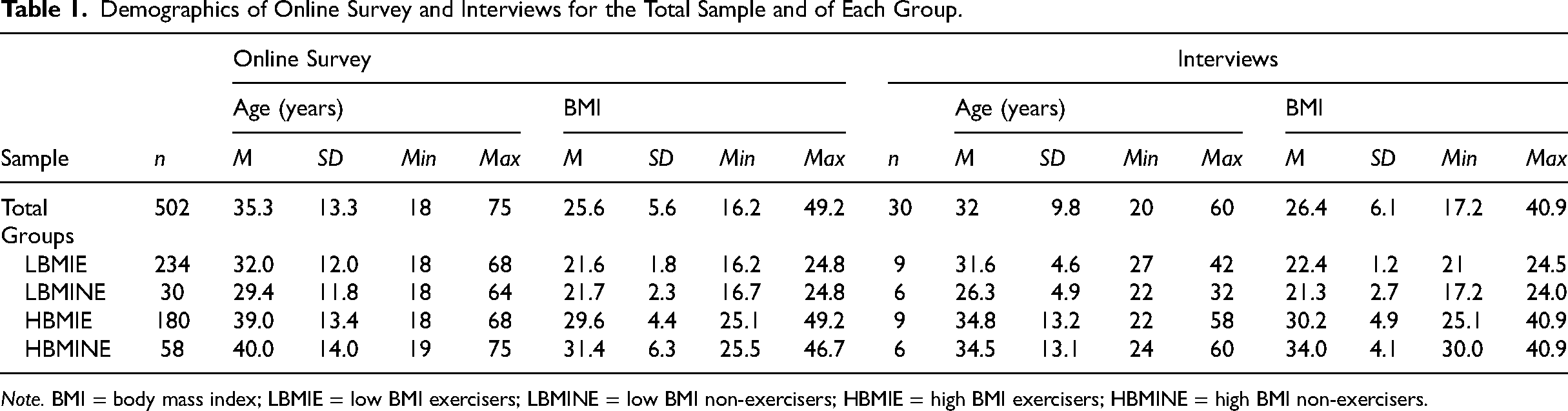
Note. BMI = body mass index; LBMIE = low BMI exercisers; LBMINE = low BMI non-exercisers; HBMIE = high BMI exercisers; HBMINE = high BMI non-exercisers.
Interest in HMC
As shown in Table 2, the majority of women surveyed (83.5%) were interested in wearing HMC; the average age was 36 years (SD = 13) and the average BMI was 26 (SD = 5.7) (overweight). A Kruskal–Wallis H test showed that the BMI and exercise status of adult females had a significant effect on reported interest for HMC χ2(3) = 10.391, p = .016. A Dunn's post-hoc pairwise comparison test indicated that high BMI exercisers (89.4%) showed significantly more interest than low BMI exercisers (78.2%) (p = .032) but other pairwise comparisons were not significant. Exercisers (83.1%) and non-exercisers (85.2%) demonstrated almost equal interest in HMC; more high-BMI women were interested (89.5%) than low BMI women (78%). High BMI non-exercisers showed the greatest interest (89.7%) and those not interested in wearing HMC (16.5%) were younger (M = 33, SD = 14.6) and had a lower BMI (M = 23.4, SD = 4.3) than those who were interested.
Reported Interest, Motivations, and Preferences of When to Wear High Metabolic Clothing (HMC) Expressed as Percentages of the Total Sample and of Each Group.
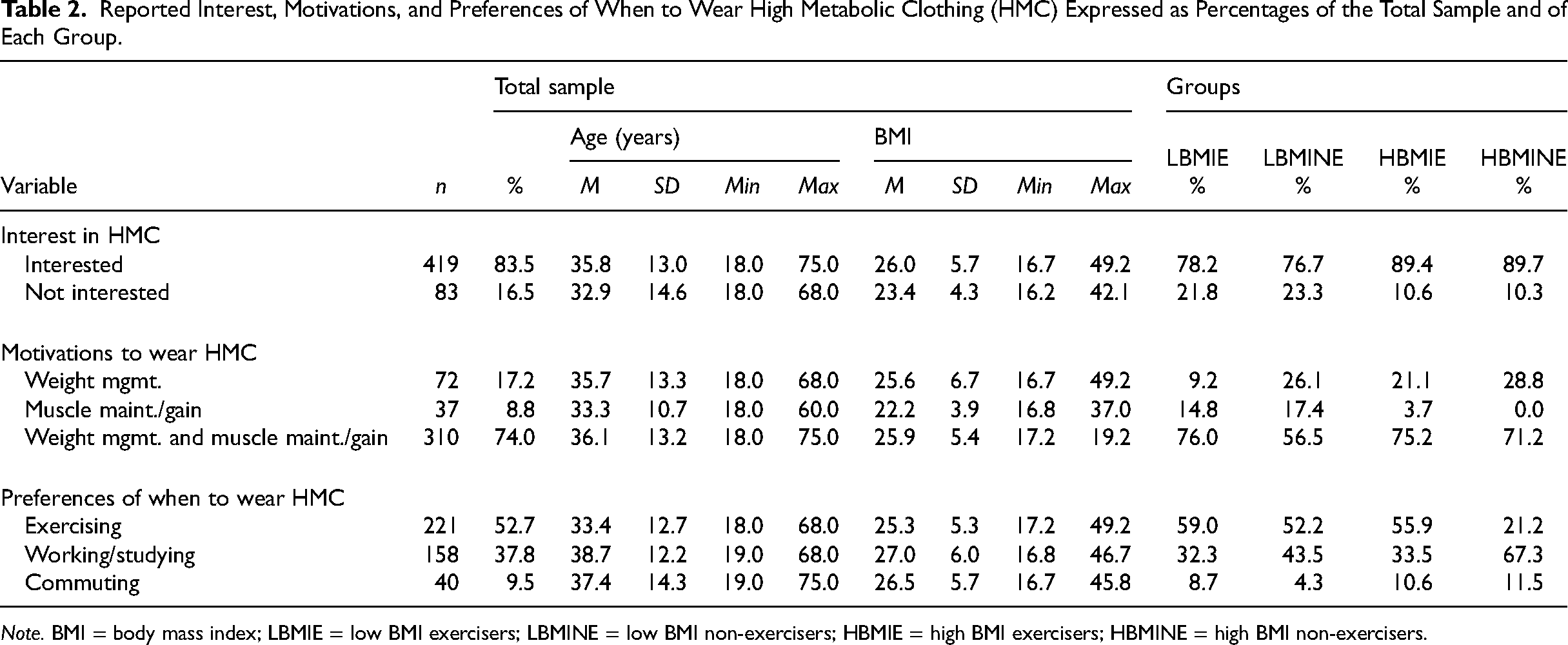
Note. BMI = body mass index; LBMIE = low BMI exercisers; LBMINE = low BMI non-exercisers; HBMIE = high BMI exercisers; HBMINE = high BMI non-exercisers.
Motivations to Wear HMC
Most participants felt motivated to wear HMC for weight management and muscle maintenance/gain benefits (74%). High BMI non-exercisers reported the most interest in weight management benefits (28.8%) and low BMI non-exercisers felt more motivated by muscle maintenance/gain benefits (17.4%). A Kruskal–Wallis H test showed no significant differences in motivation to wear HMC between groups χ2(3) = 5.411, p = .144
Preferences of When to Wear HMC
A Kruskal–Wallis H test showed that the BMI and exercise status of adult females had a significant effect on reported preferences of when to wear HMC χ2(3) = 15.845, p = .001. A Dunn's post-hoc test observed significant differences between low BMI exercisers and high BMI non-exercisers (p < .001) and between high BMI exercisers and high BMI non-exercisers (p < .001); other pairwise comparisons were not significant. Wearing HMC during exercise activity was the strongest preference (52.7%); low BMI exercisers demonstrated the most interest (59%). The second favored was wearing HMC during working/studying hours (37.8%); these women were older (M = 39, SD = 12.2) and had a higher BMI (M = 27, SD = 6) than those who wanted to wear HMC during exercise. High BMI women (41.8%) showed more interest in wearing HMC in the work/study environment than low BMI women (33.5%) and non-exercisers (60%) reported more interest than exercisers (32.8%). Wearing HMC during commuting was the least preferred (9.5%). Follow-up interviews expanded on the survey responses and identified several future directions for HMC. Table 3 presents themes supported with example quotes.
Future Directions for High Metabolic Clothing (HMC).
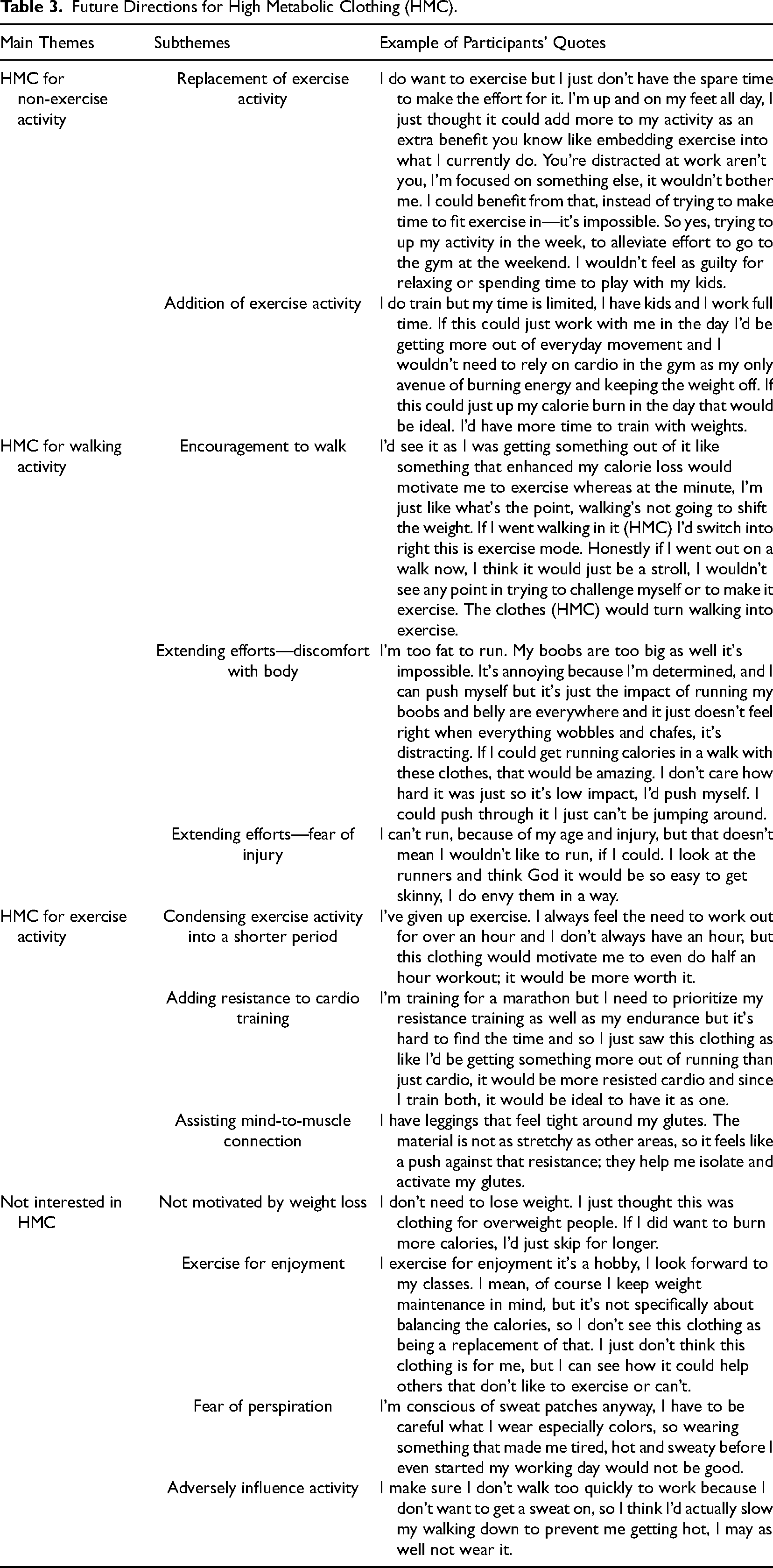
HMC for Non-Exercise Activity
Two themes were identified to explain why women wanted to wear HMC for non-exercise activity. Most non-exercisers wanted to wear HMC during daily activity as a
HMC for Walking Activity
All participants interested in HMC believed clothing that applied resistance to movement could serve as a mechanism to
HMC for Exercise Activity
Three themes were identified to explain how women wanted to wear HMC for exercise activity. High BMI working mothers explained that they did not exercise as much as they should, but lack of time was a barrier to exercise (Makama et al., 2021); these women recognized opportunities for HMC to
No Interest in HMC
Six women were interviewed to explore why they would not be interested in wearing HMC; four themes were identified. Low BMI exercisers expressed that they were
FEA Clothing Needs
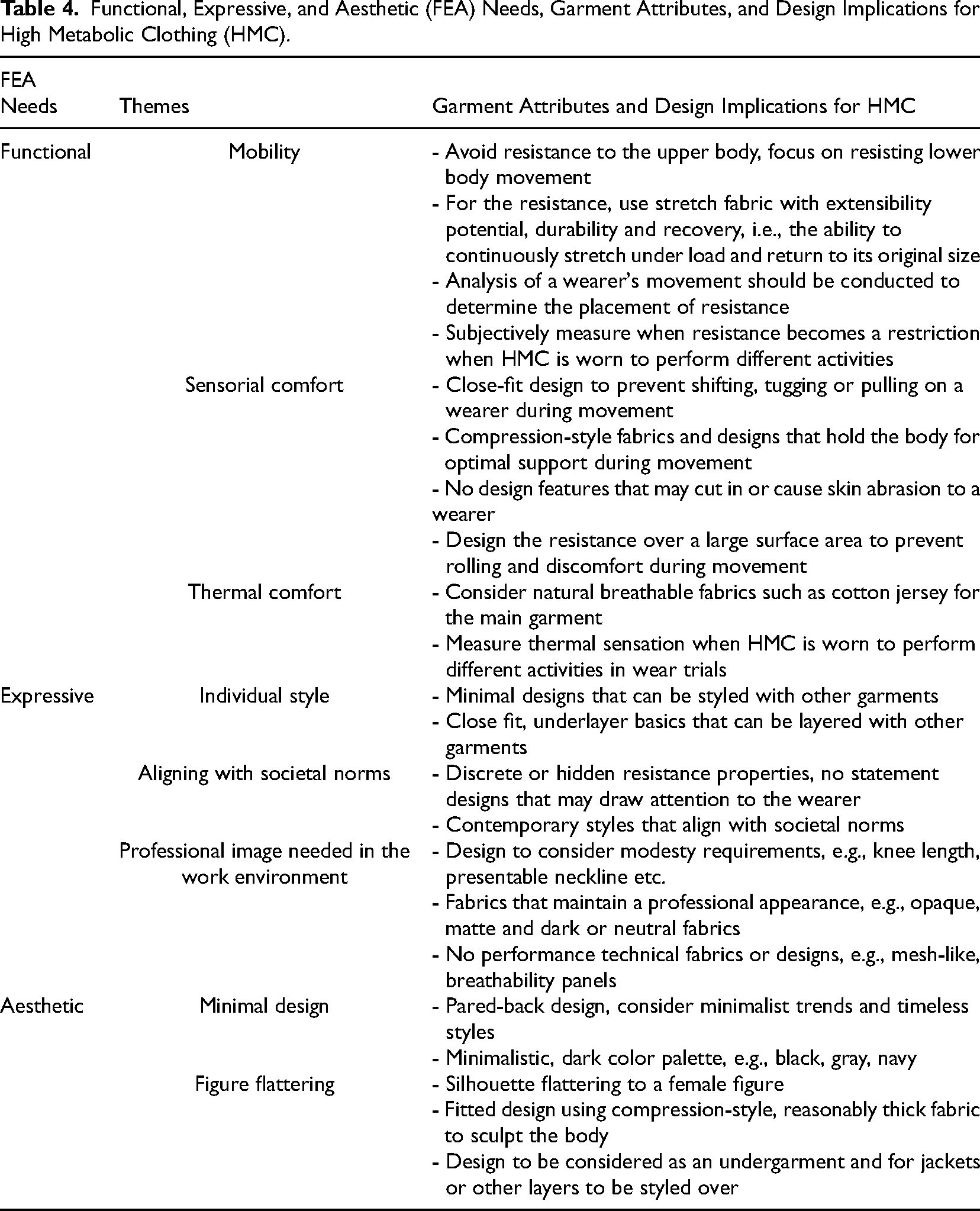
Table 4 presents the FEA needs and design implications for HMC.
Functional, Expressive, and Aesthetic (FEA) Needs, Garment Attributes, and Design Implications for High Metabolic Clothing (HMC).
Functional Needs
All participants emphasized a need for adequate
Expressive Needs
All participants stressed the need for HMC to fit in with their
Aesthetic Needs
The results indicated that self-image and appearance were important. All participants desired a
Conclusion and Implications
The ability of clothing to provide metabolic benefits to a wearer is currently under-investigated. This study was theoretically guided by the FEA Consumer Needs Model (Lamb & Kallal, 1992) to provide the first exploratory inquiry into HMC as a new clothing concept. We implemented a composite variable combining BMI and exercise activity status to explore and compare differences in women's perception of HMC and the FEA clothing needs that would need to be satisfied for HMC to be accepted into everyday clothing norms. The results of this study indicated that low/high BMI women and exercisers/non-exercisers had significantly different perceptions of HMC and their preferences of when to wear it. Moreover, these findings have theoretical implications for researchers in terms of prioritizing BMI and exercise activity status as composite variables during the initial, scoping, and exploratory stages of new product development for health wearables/clothing products. Although high BMI non-exercisers were identified as the biggest market for HMC, interest was evident across the other three groups. The characteristics of those who contributed to the themes identified suggested four overarching, future directions for HMC that can be used to direct future product development: (1) walking wear to provide high intensity to a low-impact walking activity for women who are high BMI, postpartum, mature or have a large bust; (2) jogging wear to simultaneously provide strength and cardiovascular benefits for low BMI exercisers in a shorter period of time; (3) everyday wear to provide an alternative method of energy expenditure for low/high BMI non-exercisers who do not enjoy exercise; and (4) everyday wear to provide an alternative avenue of energy expenditure for low BMI exercisers who want to prioritize strength training instead of cardiovascular activity during planned exercise sessions. These results provide direction for researchers, product developers and marketers to conduct further research on HMC.
A mutual finding among all women interested in HMC was that they believed when clothing applies resistance to their movement, it would appear more desirable to increase their activity because the extended metabolic benefits of movement would help them achieve their goals. This finding contrasts with other research (Brice & Thorpe, 2021; Lipson et al., 2020) and has practical implications for researchers and industry professionals, in the field of athleisure wear or health wearables who design with the intention of encouraging activity.
Although there are a range of ways that clothing can increase a wearer's metabolism, the FEA needs identified in this study (see Table 4) suggest some clothing designs that should be avoided. Specifically, clothing bulk may result in an unflattering silhouette and cause thermal discomfort; multiple layers have seasonal limitations and may limit a wearer's styling choices; high friction fabric layers that shift and displace as a wearer moves could distract a wearer; and excess ease could tug at a wearer during movement causing sensorial discomfort. Concerns with upper body restrictions indicate that HMC should be designed to resist lower limb movement. However, because mobility was identified as an essential functional need, it is important to highlight this contradiction. Future developers should acknowledge the complexities underlying HMC for clothing attributes to coexist with clothing resistance and use our findings to balance the design of HMC to ensure a wearer feels “resisted” but not “restricted.” We recommend exploring how elastane blend fabrics might be designed into garments to resist across a wearer's leg flexion/extension during movement. It is important to use fabrics that have the potential for extensibility (i.e., the ability to apply resistance to a wearer), while continuously stretching under increasing load so a wearer can feel challenged but still overcome tasks. The resistance should be managed over a large surface area to prevent it from “rolling up” or “cutting in” to a wearer during movement and thus, satisfy the sensorial comfort needs identified in this study. Analysis of a wearer's movements could help determine how to resist a wearer's movements in an anatomically correct manner. Designs that are close fitting to allow for layering, minimal in appearance and darker in color can address most expressive and aesthetic needs for HMC to be worn by a range of body types. Designs that encompass these characteristics satisfy a range of FEA needs and could be applied to all use situations identified in this study.
The theoretical and practical implications of this study contribute to the growing body of research concerned with health wearables/clothing. The potential for HMC is clear; researchers and product developers must understand the interconnections between clothing resistance and FEA clothing attributes that need to be satisfied. By determining the factors that might affect consumers’ adoption of HMC, this research established the initial groundwork required to develop market-ready HMC which could positively affect the adoption rate, long-term adherence to HMC, and ultimately women's health. As public demand for health wearables/clothing continues to expand, the clothing industry should acknowledge this under-investigated, yet vast field.
Limitations and Future Work
This study's limitations relate to the exploratory nature of the study and the diversity of participants recruited. The depth of information collected to drive design directions and contribute to specific design criteria was also limited. Due to the voluntary and snowball recruitment methods employed for survey participants, more exercisers were surveyed than non-exercisers; this made it difficult to compare composite variables and limited the generalizability of the findings. While results showed a positive demand for HMC, the survey's introductory forward provided hypothetical benefits of HMC that may have influenced participants’ responses, although the authors did present disadvantages at the same time. Moreover, since participants could not physically experience a resisted movement through clothing in this study, these findings should be treated with caution. Future research requires a user-centered, interdisciplinary approach; researchers are encouraged to identify a specific use situation for HMC to be worn and involve relevant, end-user collaborators in wear trials and wearer acceptability studies. In doing so, participants could subjectively report their perception of mobility and comfort when HMC is worn to establish appropriate resistance intensity thresholds for different activities.
Footnotes
Declaration of Conflicting Interests
The authors declared no potential conflicts of interest with respect to the research, authorship, and/or publication of this article.
Funding
The authors disclosed receipt of the following financial support for the research, authorship, and/or publication of this article: This work was supported by the Engineering and Physical Sciences Research Council.
