




Abstract
The apparel global supply chain is fragmented and globalized, making it challenging to satisfy consumers’ wants and needs. Thus, to satisfy the consumer's wants and needs, global supply chain management is critical to a brand's success in the marketplace. The goal of this study was to gain an in-depth, holistic, and contextualized understanding of the experience and knowledge Mindy Scheier, an adaptive apparel advocate, gained by managing and negotiating the existing supply chain functions during her collaboration with Tommy Hilfiger® to launch the first mainstream children's adaptive apparel line. To achieve this goal, a case study was deployed. The authors found that supply chain networks required unique adaptations to their existing manufacturing processes to ensure the adaptive design innovations were viable; however, those supply chain adaptations were not significant. Further, the authors found that a collaborative partnership with an advocate seemingly provided a competitive advantage in the marketplace.
One in five people in the United States lives with disabilities and contributes $21 billion of disposable income to the marketplace (Yin et al., 2018). However, despite the significance of the population and its contribution to the marketplace, the apparel needs and wants of people with disabilities (PWD) have been largely ignored, leading to a lack of consumer satisfaction (Freeman et al., 1985). To address the lack of attention, Tommy Hilfiger® (TH), in 2016, launched the first mainstream adaptive apparel line for children. The brand collaborated with Mindy Scheier (Scheier), an adaptive apparel advocate (i.e., someone who defends a cause or a group, Merriam-Webster, n.d.). Scheier gained attention advocating for the inclusion of adaptive apparel into mainstream fashion (McBee-Black & Ha-Brookshire, in press). The collaboration was heralded as the catalyzing event that prompted interest in adaptive apparel (Lieber, 2019).
Adaptive apparel is clothing designed for people with impairments who face difficulty donning and doffing their clothing (McBee-Black & Ha-Brookshire, 2020). The introduction of adaptive apparel into mainstream fashion has resulted in an adaptive apparel market estimated to reach $54.8 billion by 2023 (Coresight Research, 2019). However, despite the increased attention, what is unknown are the factors that caused the apparel industry to ignore PWD and what the apparel industry did to bring adaptive apparel to the marketplace.
Global supply chain management theory (GSCM) explored this gap. Specifically, GSCM theory explored how the complexity of the apparel global supply chain (AGSC) and supply chain management (SCM) impacted the delay in addressing the apparel needs and wants of PWD. The collaboration between Scheier and TH is the foundation for this study.
Therefore, a case study was conducted to achieve the research goal of this study. The aim of the study was to gain an in-depth, holistic, and contextualized understanding of the experience and knowledge Scheier gained through managing and negotiating the existing supply chain functions during her collaboration with TH to launch the first mainstream children's adaptive apparel line. The findings from this study highlight how apparel brands can integrate adaptive apparel into the apparel marketplace to satisfy the needs and wants of PWD. The findings also address the belief that adaptive apparel requires supply chain reconfiguration or customization to satisfy the consumer needs of PWD.
Literature Review
Adaptive Apparel
Adaptive apparel utilizes design features such as (a) placing access points with easy-to-use closures at seam openings, (b) removing seams and pockets from the back of garments to ensure wheelchair users do not acquire pressure sores, and (c) fabric that supports body temperature regulation and sensory sensitivity. Adaptive apparel is clothing designed for people with impairments who face difficulty donning and doffing (McBee-Black & Ha-Brookshire, 2020).
Adaptive Apparel Enters Mainstream Fashion
In 2016, TH introduced the first mainstream adaptive apparel line for children with 22 products for boys and girls in sizes 4–20. The line featured magnets, Velcro®, and access points at the legs, shoulders, and waist to support ease of dress. Most importantly, the line was sold for the same price point as their traditional line (Novellino, 2016). Previously, apparel marketed to PWD was priced higher than traditional apparel lines. TH collaborated with Scheier, president, and founder of Runway of Dreams™ (RoD), a nonprofit organization, to produce the line (Runway of Dreams, n.d.) due to her notoriety as an adaptive apparel advocate and the adaptive design innovations she created (Novellino, 2016).
Scheier, a former fashion designer and a mother of a child living with a rare form of muscular dystrophy, formed RoD in 2013. RoD was formed after Scheier struggled to find fashionable jeans that would accommodate her son's leg braces and allow him to use the restroom independently (e.g., manipulating buttons and zippers due to his low muscle tone; Novellino, 2016). Scheier's challenge to find mainstream apparel to satisfy her son's fashion needs led her on a 2-year journey to research the issue of apparel and disability, interviewing dozens of PWD to discover their apparel needs. The research culminated in the development of adaptive design innovations focusing on three areas: (a) magnetic closures; (b) adjustable pant legs, sleeves, and waistband; and (c) the flexibility of donning and doffing using different points of entry (Novellino, 2016).
Armed with these adaptive design innovations, Scheier approached the apparel industry. However, she was rejected by apparel brands who felt the market size of PWD was limited, and the costs to produce adaptive apparel were too high (McBee-Black & Ha-Brookshire, in press). Scheier, looking to find an option to produce fashionable adaptive apparel, connected with Global Brands Group (GBG). GBG is a global brand management group focusing on full package contracting. Further, GBG is a member of the Fung Group, one of the world's largest global AGSC management firms (Global Brands Group, n.d). GBG tasked Scheier to revise her adaptive design innovations to ensure they could integrate into its existing supply chain. For GBG, magnets and access points at the legs and neckline were potential challenges in the manufacturing process, leading to increased costs. GBG felt that controlling costs using existing supply chain integration was necessary to support adaptive apparel by mainstream brands (McBee-Black & Ha-Brookshire, in press).
Scheier and GBG worked with suppliers to control costs and operators to streamline sewing operations to ensure the magnets would not slow down production or increase labor costs (McBee-Black & Ha-Brookshire, in press). After 8 months, GBG and Scheier streamlined the process and reduced costs. GBG then identified TH as the best target for adaptive apparel because they held the children's wear license and were already producing apparel for the brand (McBee-Black & Ha-Brookshire, in press). Further, GBG believed the brand would be open to adaptive apparel because of its history of democratizing fashion and its recent use of magnetic closures by PVH, the parent company of TH (Johns, 2018).
The partnership proved beneficial for TH as, shortly after introducing its adaptive apparel line for children, the brand showed an increase in sales (Novellino, 2016). Two of the six best-selling items on Tommy.com came from the adaptive apparel collection, resulting in 20% of the children's business driven by the adaptive apparel line (Binkley, 2016). This success prompted TH to introduce the Tommy Adaptive collection, adding adaptive apparel for men and women to their existing children's line (Lubitz, 2018). The Tommy Adaptive collection created a “halo effect for the brand” (Lieber, 2019, para. 20), with nearly 85% (Lieber, 2019, para. 20) of the Tommy Adaptive consumers being new to the brand and 45% (Lieber, 2019, para. 20) coming “for the adaptive fashion collection but (buying) other products as well” (Lieber, 2019, para. 20).
Growth of the Adaptive Apparel Market
Brands like Nike®, Zappos®, and Target® have joined TH as early innovators in the adaptive market, launching their lines in 2016–2017 (Diament, 2016). Nike® introduced the Nike FlyEase shoe. Zappos® created the Zappos adaptive division that curates but does not produce adaptive apparel and footwear for PWD. Target® created the Cat & Jack children's wear line and has expanded their adaptive offerings into other categories including men and women. The luxury apparel market has also taken an interest in adaptive apparel, with the Council of Fashion Designers of America (CFDA) hosting an adaptive fashion webinar series in 2021 featuring PWD activists, adaptive apparel industry leaders, researchers, and innovators. The webinar's goal was to expand the availability of adaptive apparel by refuting the myth that PWD and adaptive apparel represent a consumer market with limited buying power and designs that require significant customization to accommodate the PWD consumer (CFDA, 2021a, 2021b, 2021c, 2021d). This increased interest has seemingly impacted the growth of the adaptive apparel market, which is estimated to reach $349.9 billion by 2023 (Coresight Research, 2019).
Adaptive Apparel in Scholarship
Existing literature focuses on function to satisfy the apparel needs and wants of PWD (Freeman et al., 1985; Lamb & Kallal, 1992)—highlighting the clothing and textile challenges of PWD, including ease of dressing, manipulating closures, fit, freedom of movement, and comfort (Dallas & White, 1982). Lamb (2001) suggested that apparel for the “mainstream” (p. 138) has changed drastically since the development of functional apparel for PWD in the 1960s. However, she posited that apparel for marginalized PWD consumers has not changed. She also posited that apparel designers unintentionally create apparel that fosters difficulty for PWD due to their lack of knowledge of PWD's needs and wants. Recently, the apparel literature has highlighted the introduction of the fashion-forward adaptive apparel market for PWD, concentrating on aesthetics, styling, and function (McBee-Black & Ha-Brookshire, 2018, 2020). However, what is not addressed in the literature is the role of adaptive apparel in the AGSC and the impact of SCM on the supply chain integration of adaptive apparel.
Global Supply Chain Management Theory
Within academic scholarship, several frameworks are used to position the AGSC, namely, Gereffi's global value chain theory (1994), supply chain management theory (Mentzer, 2004), and the GSCM model (Ha-Brookshire & Hawley, 2013). The GSCM model is the most recent and builds upon the global value chain and the supply chain management frameworks to include new dimensions to the triple bottom line of overall sustainability goals. Therefore, through this lens, the GSCM model is used in this study to understand how an adaptive apparel advocate managed and negotiated the AGSC to introduce adaptive apparel to satisfy the unmet needs and wants of PWD.
Competitive Advantage
Within highly competitive markets, such as the apparel industry, it is becoming increasingly difficult to gain market share through traditional business practices; therefore, companies attempt to redefine their competitive advantage (Mentzer, 2004). According to the GSCM model developed by Ha-Brookshire and Hawley (2013), for an apparel firm to gain a competitive advantage, they must strive to satisfy various consumers’ needs and wants, including those of PWD. Furthermore, to maintain a competitive advantage, a firm's ability to produce more efficiently than any other activity it performs, resulting in superior financial performance, firms are using strategic collaborations within their supply chain network to enter new markets (Vanathi & Swamynathan, 2014). The supply chain refers to “a set of three or more companies directly linked by one or more of the upstream or downstream flows of products, services, finances, and information from a source to a customer” (Mentzer, 2004, p. 4).
The GSCM model suggested that new markets lead to a competitive advantage, specifically by pursuing and meeting the satisfaction goals of consumers’ needs and wants (Ha-Brookshire & Hawley, 2013). Gereffi and Frederick (2010) alluded to the impact exclusive product lines have in building a competitive advantage. The authors suggested that as the apparel industry and consumer trends change, the AGSC will look to niche markets to satisfy consumers’ needs and wants, much like the collaboration between Scheier, GBG, and TH, which launched the first adaptive apparel line for PWD. Furthermore, Mentzer (2004) posited that SCM is critical to accomplishing consumer satisfaction as the firm must embed SCM into nearly all aspects of its traditional business practices. SCM is “the systemic, strategic coordination of the traditional business functions within a particular company and across businesses within the supply chain, to improve the long-term performance of the individual companies and the supply chain as a whole” (Mentzer, 2004, p. 4). Therefore, it is suggested that capitalizing on the unique supply chain functions apparent in the AGSC is one way to ensure competitive advantage by diversifying products and markets (Gereffi & Frederick, 2010) and focus on satisfying consumer's needs and wants (Ha-Brookshire & Hawley, 2013), much like adaptive apparel.
Supply Chain Coordination for Consumer Satisfactions
Gereffi and Frederick (2010) suggested that the AGSC will trend toward more exclusive product lines as the industry and consumer trends change. They argued that satisfying consumers' needs and wants have become difficult due to the “extremely fragmented and globalized” apparel industry (p. 22). Routroy and Shankar (2014) argued that the fragmented supply chain increases firms' risks. Therefore, mitigating SCM risks requires coordination and collaboration among the supply chain members to manage demand volatility, allowing the firm to use its products, retail channel, and brands to drive its competitive advantage. Notably, they posited that “high product variety” (p. 7) will create variation in supply chain characteristics such as customer demand and the complexity of the manufacturing process. Therefore, the authors posited that firms must have a widespread yet flexible supplier network to accommodate a high product variety.
Adaptive apparel, as a current product category, can be classified as providing a high product variety that attempts to improve consumer satisfaction in the marketplace. Adaptive apparel requires more design innovation and sourcing/production modifications within the existing AGSC. Therefore, various supply chain functions must be managed to integrate adaptive apparel into the AGSC (McBee-Black & Ha-Brookshire, 2020). However, the literature has not addressed how Scheier's adaptive design innovations impacted the AGSC to satisfy PWD needs and wants. Therefore, the main research question of this study is what role did Scheier, the advocate, play in helping TH manage and negotiate its existing supply chain functions, to include adaptive apparel and meet the apparel needs and wants of PWD?
Method
A case study method was used to achieve the goal of this study. This study aims to understand the experiences and knowledge Scheier, an adaptive apparel advocate, gained by managing and negotiating the existing supply chain functions during her collaboration with TH to launch the first mainstream children's adaptive apparel line. Qualitative research is used when the data and study design require focusing on an inductive style, which is the unique meaning and importance of documenting the complexity of a particular situation (Creswell & Creswell, 2018). Yin (2014) suggested using a case study method when the research questions posed require an in-depth and holistic manner within its socially relevant context, such as in the case of the adaptive apparel collaboration between Scheier and TH.
Bounding the Case
Identifying the unit of analysis (case or cases to be studied), defining the specific events or process to investigate, and specifying the period for the beginning and end of the case (bounding the case) is necessary when conducting a case study to ensure the validity of the study (Yin, 2014). In this study, the unit of analysis was a single main case, the launch of the first mainstream adaptive apparel line for children, as experienced by Scheier, the adaptive apparel advocate. This case was bounded by the time before and up to the launch of the first-of-its-kind adaptive apparel children's line. To bind the case further, this study examined, during the specified time, the events and processes that led Scheier to partner and collaborate with TH. Moreover, how her adaptive design innovations prompted the negotiation of the existing supply chain was also examined. Finally, all the experiences and knowledge she gained throughout the process were explored, along with how her experiences and knowledge helped achieve a partnership with TH.
Data Collection
The researcher deployed data source, method, and theory triangulation to provide a rich understanding of the phenomenon of the launch of the first mainstream adaptive apparel line for children through Scheier's lived experiences. Semistructured interviews with Scheier, observations of Scheier and her processes, and review and analysis of various archival documents were conducted after an Institutional Review Board approval. Face-to-face interviews and observations took place with Scheier at her workplace in Livingston, New Jersey, with follow-up interviews via phone and emails. In addition to the interviews, the researcher used documents and archival records, some of which were provided by Scheier (i.e., media coverage of the phenomenon, research and process documentation, participant photographs, and design prototypes) to gain an in-depth and holistic perspective. Field notes were used during the interviews and observations that became a part of the research journal. In addition, the research journal was used to create case study memos to guide the initial findings during the data analysis process. Overall, 191 pages of Scheier's documents, 88 images, 65 pages of field notes, 149 pages of published articles, and 111 pages of interview transcriptions were reviewed, coded, and analyzed.
Data Analysis
Coding was conducted in three phases, with constant comparison to the research questions and theoretical frameworks guiding the study. Firstly, using the process of “open coding,” the data was reviewed manually, line by line, and annotated with notes in the margins to help guide initial concepts, ideas, and themes development (Merriam & Tisdell, 2016, p. 204). This process is based on the knowledge generated from previous research, literature review, and ideas grounded in the study's theoretical framework and supported by the study's research questions. Overall, the coding methods used were descriptive, in vivo, process, and concept coding (Miles et al., 2020).
After initial coding and subsequent theming of the data, the researcher cross-referenced all transcripts to ensure the data fit the research question. Next, the researcher, using the initial coding and themes, developed a model focusing on the research question. The model was developed to explain data thematically, categorized within the research question. The model demonstrates the key themes and processes of the study case and how they impacted the partnership between Scheier and GBG and the supply chain integration process stages Scheier and GGB undertook to solidify their partnership with TH. Further, the model showcases how the GSCM theory impacted the supply chain integration process stages and the brand partnership and product launch of the adaptive apparel line for children. Using a constant iterative process (Merriam & Tisdell, 2016), the researcher reviewed the coded and themed data and generated the initial model. The researcher then reviewed the data again, looked for gaps in the analysis or additional details to explain the data, and generated a new model until the researcher felt the model was a good fit to explain the data and answer the research question. For example, one revision introduced GBG into the supply chain integration processes and the brand relationship, a critical component of the study case. Overall, over 20 revisions were made.
To support the trustworthiness of this study, the researcher used the following protocol, suggested by Yin (2014), to ensure the validity of the data collection and analysis phase of the study: (a) theoretical frameworks were used to generate explanation building and to guide the research design and data collection and analysis; (b) all concepts were identified, defined, and established in the literature review; (c) multiple sources of evidence were collected; (d) a clear chain of evidence was demonstrated during data collection; (e) member checks were conducted; (f) case study protocol and field notes were used; and (g) thick descriptions of Scheier's lived experiences were used during analysis.
Results
Within the study's research question—what role did Scheier, the advocate, play in helping TH manage and negotiate its existing supply chain functions, to include adaptive apparel and to meet the apparel needs and wants of PWD? —a theoretical interpretation of the data was possible using GSCM theory. Figure 1 shows the model that demonstrates the key themes associated with the partnership between Scheier and GBG. This partnership provided the opportunity to test the supply chain for adaptive apparel integration, leading to a critical partnership that catalyzed the first mainstream adaptive apparel line for children. Further, Figure 1 showcases how GSCM theory underpins the interorganizational and functional coordination with the apparel supply chain network during the product testing, supplier negotiation, and cost negotiation stages. This coordination is what ultimately supported the collaboration between Scheier and TH.
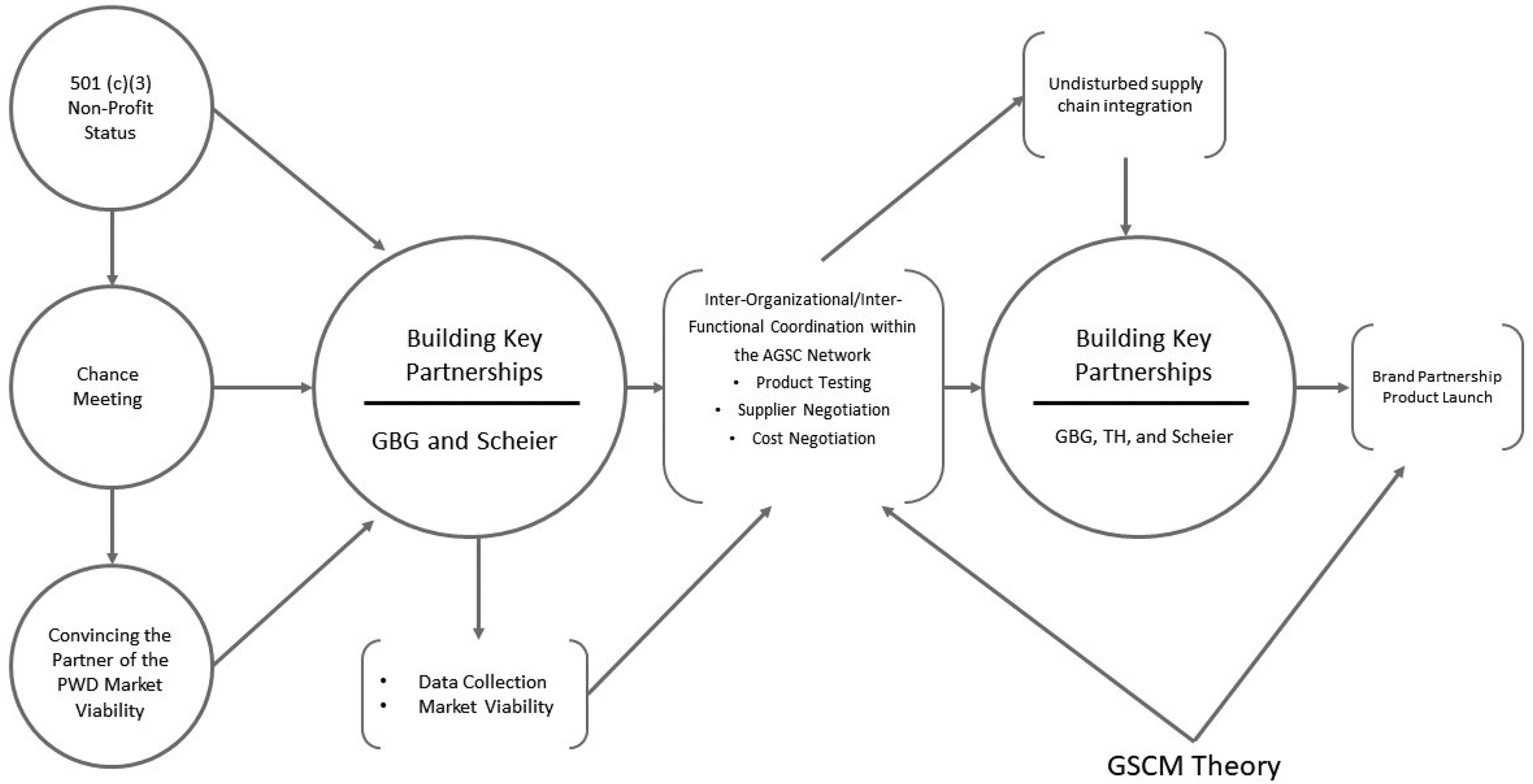
Key themes and processes of the study case.
Building Key Partnerships: GBG and Scheier
501(c)(3) Nonprofit Status
Scheier was rejected by many apparel brands when attempting to introduce adaptive apparel into the marketplace before successfully collaborating with TH. Scheier described the brands as not interested in adaptive apparel and feeling that PWD was not a profitable consumer market. As a result, all she could get was a “courtesy” phone call. She described being able to script every call she received, stating they would say, “Wow, that's a great idea, but we’re not in a position right now to start anything new. There must be a reason if, in 2014-2015, nobody's done this before if there are no mainstream brands in this space.”
Scheier stated that the brands seemed concerned about the financial risk of a market they perceived to be minimal and unknown, despite providing them with statistics about the market viability. For Scheier, the way to address financial risk was to take money out of the equation and “show that there was a market.” She exclaimed, “If the money was the problem, I had to take those monetary risks off the table. The best way to do that was to become a nonprofit so they would get a tax deduction.” Scheier then established a nonprofit, RoD, because “she was never surer that (she could) get in the door because it felt good” to brands.
Chance Meeting
After establishing the nonprofit RoD, Scheier gained media attention for her adaptive design innovations. The media attention led Scheier to a chance meeting with Steve, a managing partner at a consulting company working in the apparel industry, whose wife, Susan (both names are pseudonyms), read about RoD and told Steve he should help Scheier connect with the apparel industry. While describing this moment in her journey, Scheier stated, “I should identify both of them because if Susan didn't do this, he [Steve] wouldn't have done it … [and] he is the reason that I got to Tommy Hilfiger.” Steve introduced her to Mark Fishman and Jimmy Rosenfeld, with GBG, because, according to Scheier, “he felt that we needed to convince the [apparel supply chain] manufacturers first and have them believe in this [RoD and adaptive apparel] so that they could then go to their licensees [for support].” Steve, according to Scheier, knew that GBG held the children's wear license for TH and because Mark Fishman was well-known as a philanthropist, Steve believed GBG would be interested in supporting the work of RoD.
Convincing the Partner of the PWD Market Viability
Scheier described meeting Steve, which led to her partnership with GBG, as serendipitous, stating that without her recent shift from for-profit to nonprofit, she would have never developed a relationship with Steve or GBG. Scheier stated, “I had to be a nonprofit. [Mark] Fishman [of GBG] is an incredibly philanthropic human being.” However, despite the philanthropic motivation for the meeting, Scheier described their tone as business focused. Scheier explained she felt as if she “needed to convince them that modifications [to the apparel] could help so many different types of disability.” Because, although GBG was interested in working with Scheier and RoD, they were skeptical if Scheier's adaptive design innovations could benefit the broader PWD market or efficiently implemented into the existing apparel manufacturing process.
Scheier explained that she “had to get them [GBG] past the difference between customization and [how to] make it easier [for PWD to don and doff].” She exclaimed that “the concept of PWD not segmented by their disability, was new to GBG. They had to be convinced that the modifications could help many different types of disabilities.” To demonstrate the diversity of her adaptive design innovations, Scheier used her modified line sheets, which she created based on her adaptive design innovations. The line sheets helped GBG visualize how the adaptive design innovations integrated into an existing product. Figure 2 shows one of the line sheets Scheier brought to GBG.
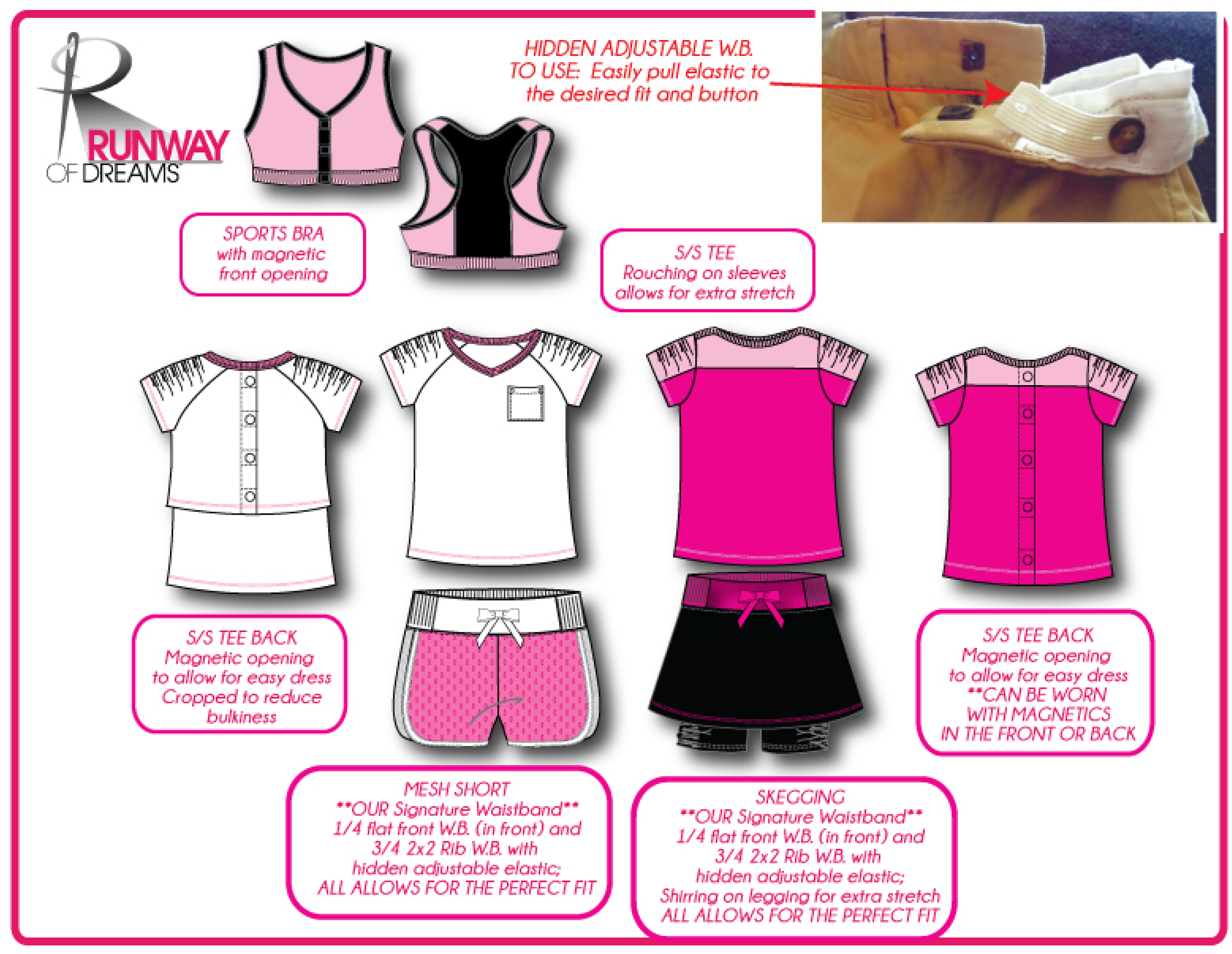
Adaptive design innovation line sheets.
Upon showing GBG the line sheets, Scheier said to GBG, “there is nothing that's going to be perfect for every person with disabilities out there. So, let's move from that and focus on what is going to make it [donning and doffing] easier.”
Scheier explained that although the line sheets helped GBG understand the disability accommodations, it was not enough. They needed more information. They, according to Scheier, were “loving what I did, loving what I made, but they were forcing me to think bigger in terms of production.” According to Scheier, GBG's concerns focused on how magnets would interact with the apparel production machinery, leading to increased production time, ultimately leading to increased costs. Therefore, according to Scheier, GBG wanted those issues addressed before taking on the financial risk of incorporating her adaptive design innovations into a client's existing supply chain. Specifically, they asked Scheier, “How are we going to make it? How is it going to be scalable? We need more information on how this product is going to help somebody with autism and somebody with cerebral palsy.”
Scheier explained that GBG began working with their supply chain partners to test various methods for including magnets in the apparel manufacturing process to address the concerns. According to Scheier, it was trial-and-error and negotiation with suppliers to determine how to encase the magnets and reduce the magnets' impact of sticking to the machines. GBG directed Scheier to conduct more consumer research to demonstrate how her adaptive design innovations would support the broader disability population. Scheier describes finetuning my pitch. I went back and got some testimonials. I probably did some videos explaining why this was helpful for them because everybody's very siloed in terms of never really has anybody thought about it [adaptive design] as [helping the] population.
Scheier explained that she felt that her partnership with GBG was necessary as it allowed her to fine tune her research and better understand the needs of PWD.
Supply Chain Integration: GBG and Scheier Partnership
Scheier's partnership with GBG supported her increased understanding that apparel brands needed to see how her adaptive design innovations would positively impact all disabilities and how they could integrate into the existing supply chain network. According to GSCM theory, the apparel industry focuses on intense competition built on a fragmented supply chain network, all driven by strong consumer demand to get the right product at the right price at the right time (Ha-Brookshire & Dyer, 2008). For GBG, their concern about adaptive apparel focused on whether Scheier's adaptive design innovations could accommodate the larger PWD population. Moreover, GBG was concerned with how they could fit adaptive apparel into their existing supply chain without making significant changes to their supply chain network as it may cause disruption and increased time, which ultimately equates to increased costs. Although Scheier unearthed a wealth of findings from her research and felt she could demonstrate the need for adaptive apparel, she had not yet thought through the supply chain impact. She stated, “I was a designer that knew that there was an opportunity, but I also knew I had to prove it.”
Data Collection and Market Viability
Scheier took 8 months to work with GBG, conducting additional consumer research and coordinating the testing of magnets in GBG's manufacturing process. Looking back at this process, Scheier stated she felt that if she had taken her research straight to the apparel brands and not through GBG first, she would have been ill-prepared to advocate for the inclusion of adaptive apparel. She believed she would not have had the “foresight to work through the potential supply chain impacts first” stating it was helpful in that it became a directive for finetuning my focus groups. They [GBG] delegated the information that they needed [and I] then translated [that] into more specific questions or information that I had to get out of the focus group to be able to go back to my next meeting with them [GBG].
According to Scheier, the information she gathered helped alleviate GBG's concerns about market needs and integrating the innovations into the existing supply chain network.
As shared by Scheier, the supply chain integration happened in three stages within the interorganizational and interfunctional coordination of the AGSC network, underpinned by the GSCM theory (Ha-Brookshire & Hawley, 2013). Stage 1 was product testing to determine the viability of including magnets in the apparel production process. Stage 2 was supplier negotiation, working with suppliers to reduce the costs of magnets. Stage 3 was cost negotiation allowing GBG to reduce production costs to better leverage apparel brands to agree to the risk of developing adaptive apparel. Stage 3 also included the negotiation between Scheier and GBG to find the best apparel brand partner to pitch the idea of adaptive apparel. These three stages run parallel to the apparel supply functions discussed in the GSCM model in that they replicate consumer and market research, creative design and product development, product testing and sample making, production, and sourcing operations needed to bring adaptive apparel to the marketplace (Ha-Brookshire & Hawley, 2013).
Interorganizational/Interfunctional Coordination Within the AGSC Network
Product Testing and Supplier Negotiation: GBG focused on testing Scheier's adaptive design innovations to make the necessary changes to support efficient integration into an existing supply chain. The changes made it more likely they could negotiate the inclusion of adaptive apparel into an existing apparel brand's marketplace. Scheier described working with GBG's design team to modify designs from a line they were producing. According to Scheier, GBG felt that integrating her adaptive design innovations into an existing line would reduce costs associated with production and mitigate the risk to apparel brands. Those costs, according to Scheier, consisted of sourcing new fabrics, trims, findings, and design and production. By using an existing line, GBG could “take that (existing line) and modify. Using all the same fabrics, all the same, tech packs, with modifications.” Initially, Scheier shared her technical packages, showing her adaptive design innovations integrated into existing products.
As Scheier and GBG worked with their supply chain partners and their sewing operators, they would modify the technical flats and technical packages to reflect the changes based on the supply chain integration. Scheier also described using her connections with small-adaptive apparel brands integrating magnets into their products to coordinate magnet testing for GBG. This insight allowed GBG to include encasing the magnets to reduce the magnets' impact of sticking to the sewing machines. See Figure 3 for technical package details demonstrating how the magnets were integrated into an existing shirt placket for manufacturing.
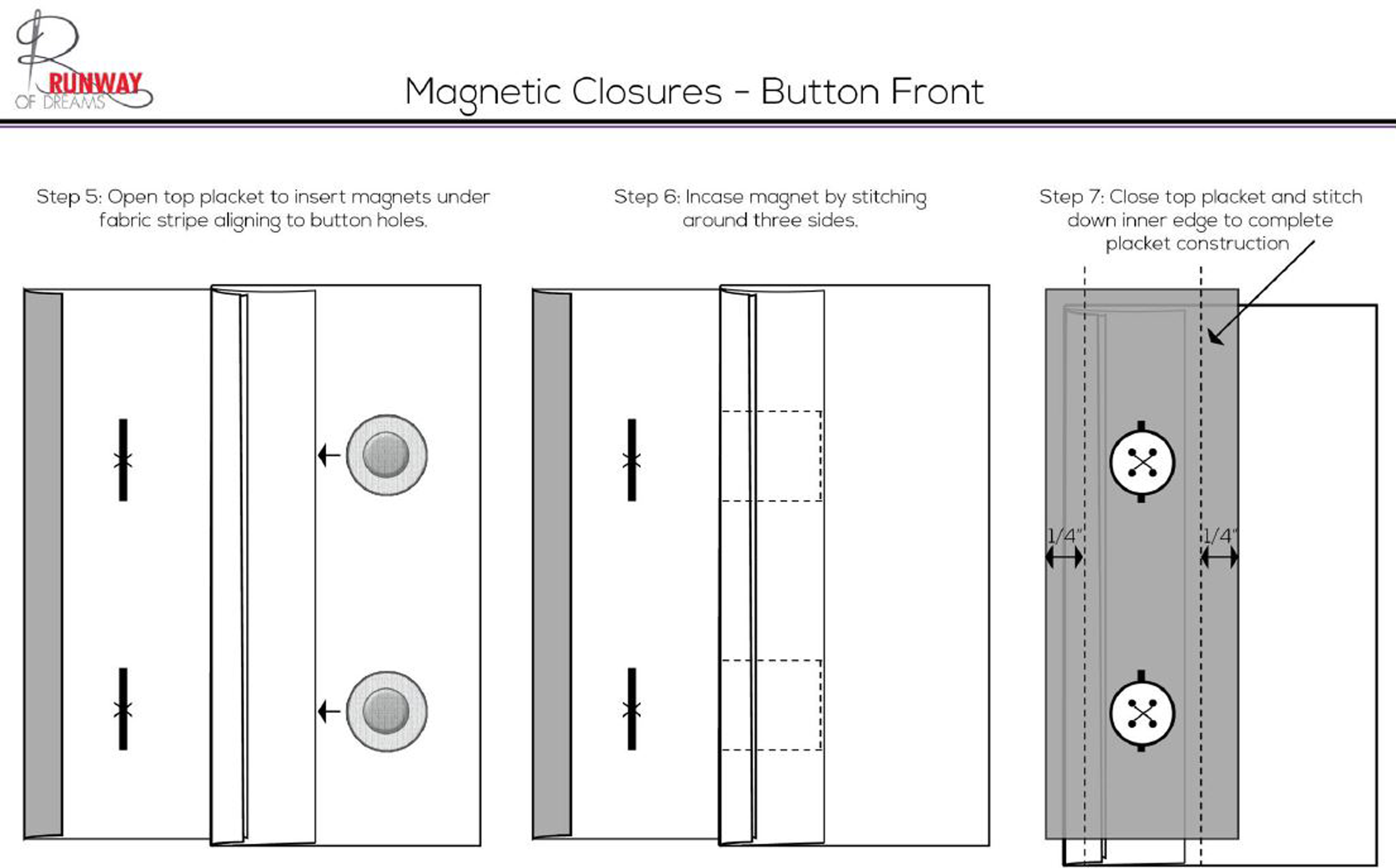
Technical package images of magnet integration into a dress shirt placket.
Cost Negotiation: Scheier stated that GBG believed the only way a mainstream apparel brand would risk including adaptive apparel into their product line was if GBG absorbed the manufacturing cost and did not pass the cost along with apparel brands. This belief was based on Scheier's initial interaction with apparel brands that stated the financial risk with an unknown market as their reason for not entering the marketplace. Therefore, product testing was used as a form of cost negotiation. Scheier described that the GBG design team provided her with the technical flats from the existing line they were producing, and Scheier would modify the flats based on her adaptive design innovations. According to Scheier, the primary concern was the use of magnets in the garments. GBG required several iterations to properly encase the magnets (see Figure 3 for an example of how the magnets were eventually encased) so that they could be machine washed and work with the existing apparel manufacturing equipment. Scheier engaged with GBG's design team to reduce the sewing operations and processes associated with magnets. This product testing ultimately led to streamlining the manufacturing process enough that GBG felt confident they could “absorb” the cost of manufacturing an adaptive apparel line. Therefore, the product testing cost was far less than multiple rounds of garment prototyping.
The next step was to find a children's wear licensee partner from GBG's existing supplier network. Scheier described that GBG identified TH because they had a personal relationship with Gary Sheinbaum (the CEO of TH North Americas) and held the TH children's wear license (Novellino, 2016). According to GSCM theory, developing strategic relationships can support competitive advantage in the marketplace and lead to firm success (Ha-Brookshire & Hawley, 2013). The GBG and Scheier partnership and the product test and cost negotiation stages seem to support this finding from the GSCM theory.
Undisturbed Supply Chain Integration
The culmination of the GBG and Scheier partnership demonstrated that introducing adaptive apparel into the AGSC did not require significant modifications, leaving GBG's existing supply chain relatively unchanged. Scheier explained that, after looking back at this process, if she had taken her research straight to apparel brands and not through a sourcing agency, she would have been ill-prepared to advocate for the inclusion of adaptive apparel because she would not have had the foresight to work through the potential supply chain impacts. GBG's concern about adaptive apparel residing in its current supply chain network indicates that the complexity and fragmentation of the AGSC is still a crucial consideration as firms must consider the impact on the entire supply chain network (Ha-Brookshire & Hawley, 2013).
According to GSCM theory, the apparel industry focuses on intense competition built on a fragmented supply chain network, all driven by strong consumer demand to get the right product at the right price at the right time (Ha-Brookshire & Dyer, 2008). For GBG, their concerns focused on integrating adaptive apparel into their existing supply chain without significant changes might cause disruption and increased time, leading to increased costs. Thus, GBG's insistence on ensuring supply chain integration seems key to the partnership with TH.
Building Key Partnerships: GBG, TH, and Scheier
Supply Chain Integration: Brand Partnership and Product Launch
After Scheier and GBG met with Gary Sheinbaum, she worked with the TH team to develop the children's adaptive line (Novellino, 2016). Scheier described the events that followed as expedited, positing that TH could move quickly because of the research and product testing she did with GBG, as well as because of the use of TH's designs from their existing children's wear line already in production (Novellino, 2016). Scheier emphasized this by stating that “because we [RoD] came in through Global Brands … this happened so fast. I primarily worked with the tech team at Global Brands and the Tommy team, who does the licensing.” According to Scheier, she worked directly with TH's customer service team to ensure they knew “how to speak to customers … purchas[ing] the adaptive pieces. It's a sensitive market, and rightfully so” (Kast, 2016). Scheier also worked with the design team to integrate her adaptive design innovations into their existing children's line. Her advocacy efforts to include adaptive apparel into mainstream fashion helped solidify her collaboration with TH. Thus, TH's collaboration with Scheier demonstrates that they viewed adaptive apparel as a core competency (Gupta, 2013).
Media coverage suggested TH saw adaptive apparel as a unique opportunity to gain a competitive advantage by introducing a new, valuable product for a prospective consumer (Novellino, 2016). In addition, GSCM theory supports adaptive apparel as a competitive advantage as it suggests SCM can lead to a competitive edge by addressing consumers' needs and wants by providing value to the consumer. Once TH recognized the competitive advantage adaptive apparel provided, they quickly partnered with Scheier and launched the adaptive apparel line. In sum, the first adaptive apparel line for children was possible by Scheier, the advocate, and TH through supply chain integration solutions offered by GBG and by demonstrating that the AGSC could remain virtually undisturbed when integrating adaptive apparel.
Conclusions
The goal of this research study was to gain an in-depth, holistic, and contextualized understanding of the experience and knowledge Mindy Scheier, the advocate, gained by managing and negotiating the existing supply chain functions during her collaboration with TH to launch the first mainstream children's adaptive apparel line. This line aimed to accommodate the adaptive apparel needs and wants of PWD, who have been historically ignored within the apparel industry. To achieve the objective of this study, a case study was deployed.
The results of this case study show that to build a key partnership necessary to launch the first adaptive apparel line for children, Scheier had to develop a nonprofit. The nonprofit eliminated the financial risk associated with an untested market and product. Further, the key partnership with GBG allowed Scheier to gather additional data about the PWD population, solidifying the PWD market's viability. Finally, Scheier's partnership with GBG provided the opportunity to test her adaptive design innovations ensuring the innovations would not slow down production using magnets nor increase the cost of production—that is undisturbed supply chain integration. Ultimately, these steps provided TH with enough knowledge to embrace the adaptive apparel market and see its benefits as a competitive advantage for their brand (McBee-Black & Ha-Brookshire, in press).
The limitations of the study provide future research opportunities. Firstly, the study's findings would have benefited from a multiple case perspective, including the apparel sourcing firm, GBG, and the adaptive apparel brand, TH. Secondly, a more in-depth perspective into the AGSC and GSCM theory's implications would be helpful by including GBG and TH. Finally, the study's findings must be reviewed cautiously, given the study background's contextual nature.
The findings from this study suggest that, for Scheier, an obstacle in introducing adaptive apparel into mainstream fashion was ensuring that the existing supply chain network could incorporate her adaptive design innovations without restructuring the supply chain functions completely. Specifically, Scheier created prototypes to understand the modifications needed to solve the needs of PWD. Her adaptive design innovations included replacing zippers and buttons with magnets. This change resulted in Scheier working with GBG to ensure that magnets could be incorporated into an existing supply chain's production process without increasing costs and production time, which equates to increased cost. For GBG, the apparel producer, the concern was how these modifications would impact the apparel production process. Therefore, they had to work directly with Scheier, their magnet vendors, their sample makers, and their quality control units to ensure that the introduction of magnets into the production process was viable.
Moreover, the study supports the GSCM theory by demonstrating the need for interorganizational and interfunctional coordination within a global supply chain network as demonstrated by Scheier's coordination with GBG and the brand (Ha-Brookshire & Hawley, 2013; Mentzer, 2004). Further, using an existing apparel line, GBG and TH maintained control, supported the reduction of costs associated with labor and materials, and guided a more efficient production process, demonstrating coordination within the supply chain network (Mentzer, 2004). This finding suggests that when sourcing is conducted globally, the coordination of various sourcing activities becomes increasingly complicated, requiring sourcing firms to negotiate their complex supply chain functions to satisfy consumers (Mentzer, 2004).
Thus, this study's findings provide implications for existing apparel brands and entrepreneurs wishing to enter the adaptive apparel market or other niche or unserved markets. They should consider the importance of collaborating with supply chain partners to negotiate apparel production challenges before bringing new product ideas to the apparel marketplace. Scheier believed that her research and adaptive design innovations were enough to warrant a new product line. However, through her partnership with GBG, she discovered that negotiating the supply chain integration of her adaptive design innovations was necessary before partnering with TH. Additionally, partnering with GBG allowed Scheier to adapt her designs without prototyping, ultimately reducing costs (i.e., labor and materials). This allowed Scheier to provide TH with precise details demonstrating the impact of adaptive design innovations on apparel production costs.
Furthermore, Scheier demonstrated that incorporating underserved markets, like PWD, into a company's product offering does not require a complete reconfiguration of the supply chain. This suggests that brands who once thought that incorporating underserved markets, like PWD, would require significant modifications to their supply chain function may not need to make such significant changes. This finding opens future opportunities for all apparel brands and apparel entrepreneurs to meet the needs and wants of unserved niche markets. However, the implications from this study do not stop with the apparel industry. All brands, not just apparel brands, interested in unserved niche markets can find similarities and relevance to their supply chain networks. Therefore, all brands can benefit from collaborating with existing supply chain partners to negotiate risk and costs before bringing a new product to market.
Finally, this study provides implications for any firm wishing to gain a competitive advantage through strategic partnerships. Specifically, as consumers demand inclusivity and representation from their brands, firms will need to demonstrate their investment in these factors. As this study demonstrated, Scheier, as the advocate, played a critical role in legitimizing the collaboration with TH. Through her research and design innovations, Scheier built a community of PWD and brought that community to the collaboration with GBG and TH. She provided a built-in consumer base focused on adaptive apparel and demonstrated the significant need within the consumer market. This strategic relationship with Scheier, the advocate, is like brands utilizing social media influencers to drive sales and brand identity. Firms could build strategic partnerships with social advocates that legitimize their inclusive and diversity efforts in the consumer's eyes.
Footnotes
Declaration of Conflicting Interests
The author declared no potential conflicts of interest with respect to the research, authorship, and/or publication of this article.
Funding
The author received no financial support for the research, authorship and/or publication of this article.

Author Biography
References
Supplementary Material
Please find the following supplemental material available below.
For Open Access articles published under a Creative Commons License, all supplemental material carries the same license as the article it is associated with.
For non-Open Access articles published, all supplemental material carries a non-exclusive license, and permission requests for re-use of supplemental material or any part of supplemental material shall be sent directly to the copyright owner as specified in the copyright notice associated with the article.
