




Abstract
Domestic violence (DV) legislation has expanded significantly across the United States, yet there is limited systematic understanding of how state criminal statutes currently define and structure responses to domestic violence. This study examines how DV is codified across all 50 states and the District of Columbia, focusing on statutory definitions, sentencing provisions, protective order violations, survivor-related legal defenses, second-look sentencing opportunities, and mandated treatment or intervention programs. Using doctrinal legal analysis and qualitative content analysis, we conducted a comprehensive state-by-state review of statutory provisions drawn from state legislative databases, legal search engines, and Westlaw. Relevant statutory provisions from the state criminal codes were coded to capture how jurisdictions define qualifying relationships and abuse, categorize DV offenses and penalties, address violations of protective orders, provide survivor-specific legal defenses or sentencing relief, and mandate or authorize DV intervention programs. Findings reveal substantial variation across states in how DV is codified and punished. In most jurisdictions, DV offenses are treated as misdemeanors with felony escalation for repeat offenses, although some states classify these crimes as felonies only. Violations of protective orders are widely criminalized, though the severity of penalties differs across jurisdictions. In contrast, statutory provisions addressing survivors who become defendants remain relatively rare, with only a small number of states providing explicit defenses or second-look sentencing mechanisms. States also vary considerably in the extent to which they mandate or authorize batterer intervention or DV prevention programs. Overall, the findings highlight a fragmented statutory landscape in which punitive responses are common but survivor-centered provisions and rehabilitative frameworks remain unevenly implemented. These differences have important implications for legal consistency, survivor protections, and the alignment of statutory frameworks with contemporary research on DV and coercive control.
Keywords
Introduction
Domestic violence (DV) statutes in the United States have expanded substantially over the past several decades, reflecting growing recognition of DV as both a criminal and public health issue. States have broadened definitions of domestic and intimate partner abuse, adopted more expansive protections for survivors, and increased criminal penalties, including longer sentencing time compared to non-DV crimes (Buzawa & Buzawa, 2017; Klein et al., 2014). These developments have positioned the criminal-legal system as a central mechanism for responding to both DV and intimate partner violence (IPV; Goodmark, 2018; Kajeepeta et al., 2024; Kim, 2018).
Despite this trajectory of reform, there remains limited systematic understanding of how DV is structured within state criminal codes. Much of the existing literature focuses on case law, service systems, or program evaluations, rather than statutory dictates (Moore, 2009; Sullivan, 2018). As a result, there is little empirical mapping of how states define qualifying relationships, delineate forms of abuse, assign sentencing consequences, respond to protective order violations, codify defenses, and offer sentencing relief to survivor-defendants. 1 This lack of statutory synthesis is particularly consequential given evolving understandings of DV as a pattern of coercive control rather than a series of isolated incidents (Walby & Towers, 2018).
While research across disciplines has emphasized the importance of capturing psychological, emotional, and economic abuse (Adams et al., 2008; Smith et al., 2018), state criminal statutes vary widely in terms of the extent to which they reflect these dynamics. At the same time, state legislatures continue to expand sentencing enhancements, mandate DV-specific interventions, as well as survivor-specific reforms, raising important questions about consistency, equity, and alignment with contemporary evidence. Against this backdrop, a comprehensive, cross-state review of DV sentencing statutes is necessary to clarify how domestic violence is currently codified within the U.S. criminal-legal system and highlight the implications of statutory variation for survivors, defendants, and broader social norms.
Background
Early statutory reform efforts concentrated on criminalization and law enforcement duties. Miller’s (2004) comprehensive survey documented an “avalanche” of new DV legislation between 1997 and 2003, including the creation of standalone DV offenses in over three dozen states and significant expansions of police and prosecutorial authority. These changes reflected the broader era of “tough on crime” policy but also the influence of the Violence Against Women Act, which catalyzed national attention on IPV (Koehler, 2025). Over time, states added mandatory arrest policies, specialized protective order frameworks, and enhanced penalties for repeated DV offenses and/or protective order violations. Research from this era found that these laws were often effective in reducing violence, though implementation varied. For instance, Dugan (2003), using geocoded NCVS data, found that many statutory reforms were associated with declines in family or intimate violence, suggesting that criminal statutes had deterrent effects even though they did not necessarily increase arrests.
Building on this period of reform, legal scholarship emphasized that statutory changes were driven by enforcement imperatives rather than by careful attention to statutory language, scope, or downstream effects. For example, Lewis (2015) demonstrates how the wording of DV statutes can shape who is recognized as a legitimate victim and how laws are applied in practice, revealing that early reforms sometimes reproduced inequities even as they expanded criminalization. However, subsequent work underscores the limits and unintended consequences of the criminal-legal framework (Alvarez, 2025; Goodmark, 2018, 2023). Scholars and advocates have long emphasized that overly punitive or mandatory responses may harm marginalized survivors, intensify system contact, or foreclose survivor autonomy (Sadusky, 2020). Empirical legal analyses further illustrate that these harms are not merely theoretical. Zeoli et al. (2011), in a comprehensive state-by-state analysis of warrantless arrest statutes, show that although all states authorize warrantless arrest for DV, statutory provisions vary widely in phrasing, scope, timing, and reporting requirements— differences that can meaningfully shape arrest practices.
Meanwhile, criminalization alone does not capture the full dynamics of abuse. Contemporary research across psychology, sociology, and law consistently highlights that DV is fundamentally a pattern of coercive control, not solely discrete incidents of physical violence (Manring, 2021). Yet most U.S. statutes continue to define DV in incident-based terms that privilege physical injury, thereby excluding patterns of emotional, psychological, and economic abuse. Koehler (2025) likewise argues that statutory definitions narrowly focused on individual acts fail to reach the coercive control that constitutes the core of abusive relationships.
International reforms illustrate alternative approaches. Scotland, Ireland, England, and Wales have adopted “course of conduct” statutes that criminalize patterns of abusive behavior, explicitly including emotional abuse, degradation, and isolation. Manring (2021) argues that these models more accurately reflect survivors’ lived experiences and could inform U.S. statutory modernization. Although some U.S. states, such as California and Hawai‘i, have begun experimenting with coercive-control definitions in civil protection order statutes (Garrett, 2023), criminal codes have largely lagged behind (Lee et al., 2026). As a result, the statutory landscape insofar as it relates to criminal laws remains fragmented, and many forms of abuse continue to be inconsistently addressed in criminal contexts.
This statutory gap has implications not only for legal recognition but also for prevention interventions and developing societal norms. Emerging international evidence indicates that DV legislation can shift attitudes about IPV at the population level. Richardson et al. (2025), analyzing longitudinal data from 61 countries, found that the adoption of DV legislation was associated with reductions in permissive attitudes toward IPV, particularly among men. These findings suggest that statutory frameworks do more than create legal remedies—they may contribute to shifting cultural understandings of violence and gender inequality. Consistent with this insight, comparative legal research in the U.S. context demonstrates that variation in statutory design—such as eligibility thresholds, relationship definitions, and enforcement mechanisms—can shape not only legal outcomes but public understandings of who is entitled to protection, as illustrated by Lee et al.’s (2023) state-by-state analysis of DV protection order statutes. In other words, while DV statutes vary widely across states, mapping these statutory features can illuminate how differing legal definitions reflect and shape broader norms surrounding IPV.
Another key dimension of DV legislation involves sentencing and the treatment of survivors who become defendants. Harrington (2024) demonstrates how second-look sentencing reforms—exemplified by New York’s Domestic Violence Survivors Justice Act (DVSJA)—offer critical avenues for revisiting harsh sentences imposed on survivors criminalized for actions related to their abuse. Yet she also cautions that prosecutorial discretion often acts as a gatekeeping mechanism that can impede equitable application of these reforms. The uneven implementation of the DVSJA across counties shows that statutory relief for survivors can be significantly constrained by local prosecutorial attitudes, signaling a broader challenge for states seeking to integrate trauma-informed sentencing into law.
In addition to sentencing reforms, some states have experimented with specialized defenses such as battered woman syndrome (BWS) or trauma-based mitigation. Although these defenses have opened pathways for contextualizing survivors’ actions, scholars have criticized BWS in particular for pathologizing victims, implying uniform responses to abuse, and failing to capture the diversity of survivor experiences (Holliday et al., 2022).
Meanwhile, legislatures continue to expand mandated interventions, from Batterer Intervention Programs (BIPs) to trauma-informed or culturally specific programming. Yet the evidence base for mandated BIPs remains mixed, and scholars note a growing critique of standardized models that fail to account for cultural context, trauma, or structural inequalities (Sadusky, 2020). Reviews of state standards governing BIPs further underscore this concern, showing substantial variation in program length, theoretical orientation, oversight, and evidentiary grounding across jurisdictions, raising questions about the effectiveness of statutorily mandated treatment absent consistent empirical support (Maiuro & Eberle, 2008).
Despite these substantial developments in law, empirical understanding of the statutory landscape remains outdated. The last comprehensive national review of DV-related statutes was conducted more than 20 years ago (Miller, 2004), before major expansions in coercive-control debates, protective order statutes, sentencing reforms, and mandated programming. Since that time, state legislatures have revised statutes to expand definitions of abuse, restructure penalties (including categorization of certain DV offenses as felonies), strengthen responses to protective order violations, and experiment with rehabilitative and preventative interventions. Yet no systematic, cross-state mapping exists to document how contemporary statutory frameworks compare across jurisdictions.
Current Study
This state-by-state review addresses that gap by examining the statutory landscape across all 50 states and the District of Columbia, with attention to definitions, relationship categories, sentencing provisions, protective order violations, survivor-specific defenses, second-look opportunities, and mandated treatment or intervention programs. This review is timely for two reasons. First, 2 decades of piecemeal statutory revisions have created a landscape that is both more expansive and more complex than existing literature acknowledges. A systematic mapping of how states now codify DV is necessary to understand the legal architecture that shapes criminal justice responses, survivor pathways, and prosecutorial discretion.
Second, the rapid evolution of DV research—particularly on coercive control, trauma, and culturally responsive interventions—invites reconsideration of whether statutory structures align with contemporary evidence and emerging best practices. By cataloging the statutory features across all U.S. jurisdictions, this review provides an updated foundation for evaluating the relationship between law, research, and practice. Ultimately, understanding how DV is codified across states is essential for assessing whether statutory frameworks meaningfully reflect the realities of abuse, provide coherent protections, and offer pathways for prevention, accountability, and survivor-centered justice. This mapping lays the groundwork for future empirical research, comparative statutory analysis, and policy reform aimed at aligning state law with modern understandings of DV and its impacts.
Methodology
To provide an updated snapshot of how DV is codified across the United States, we employed doctrinal legal analysis, which is facilitated through qualitative content analysis techniques (Nolasco et al., 2010). The first phase of data collection involved identifying relevant statutes that criminalize or define penalties for DV and related crimes in each of the 50 states and the District of Columbia (DC). Statutory provisions were drawn from a combination of state legislature websites, free legal search engines (e.g., Justia Law), and the Westlaw database. The search terms for the systematic search included: (1) “domestic violence” OR “family violence”; (2) “violation” AND “restraining” OR “protective order”; (3) “batterer intervention”; (4) “battered woman” AND “defense”; (5) “domestic violence prevention”; and (6) “second-look sentencing” AND “domestic violence.” The initial inclusion criteria for the type of statute were the state’s criminal code, but we expanded to other statutes if no such definition was found in that criminal code or penal code statute. For instance, we expanded the search to statutes addressing public health and safety, or the code of criminal procedure, which can specify the manner of punishment. The search did not include court rules, administrative guidelines, or appellate cases.
Once the relevant statutory provisions were collected, the authors evenly divided the coding process for the states. Applying deductive coding techniques similar to other studies (Kokkalera et al., 2021; Laugalis et al., 2023; Panza et al., 2020), we coded statutory provisions for: (1) definition of domestic or family violence in terms of both punishment degrees as well as who is defined as a cohabitant or household/family member within the definition, that is, the applicability of the crime; (2) whether violation of a restraining or protective order for domestic/violence is a specific offense and the degrees of punishments; (3) if the state has a statutory provision defining an affirmative defense for victims/survivors of domestic violence who are facing criminal charges; (4) second-look sentencing for domestic/family violence victims convicted of crimes; and (5) legislative support to participate in “batterer intervention” or “domestic violence prevention programs. 2
Results
Categorization of Domestic Violence as a Crime
In a majority of states, DV crimes are treated as either misdemeanors or felonies. For instance, in Illinois, domestic battery, defined as “causing bodily harm” or making “physical contact of an insulting or provoking nature” to any family or household member, is treated as a Class A misdemeanor upon first instance. However, the same crime can be charged as a felony if the defendant has previous convictions (720 Ill. Comp. Stat. Ann. 5/12-3.2 [2025]). In 10 states (Alabama, Florida, Oregon, Pennsylvania, Rhode Island, South Carolina, South Dakota, Texas, Vermont, and Washington), DV crimes are charged as felonies only (Figure 1).

Distribution of states by how domestic violence is classified in criminal codes.
Across most states, DV is defined as a separate crime. For instance, in Colorado, DV is defined as “an act or threatened act of violence upon a person with whom the actor is or has been involved in an intimate relationship” (Colo. Rev. Stat. Ann. § 18-6-800.3 [2025]). The definition further specifies that such acts can include crimes against persons, property, or animals, especially when “used as a method of coercion, control, punishment, intimidation, or revenge directed against a person with whom the actor is or has been involved in an intimate relationship” (Colo. Rev. Stat. Ann. § 18-6-800.3 [2025]). In 21 states, DV is defined as acts encompassing a range of crimes (from one type to more than 20) committed by an individual against an intimate partner, family member, or household member, such as a roommate. In these states, a DV offense means any act of violence perpetrated through another crime, such as assault, harassment, and even homicide. For instance, in Utah, 33 different crimes are prescribed in the provision to identify if an incident qualifies as DV (Utah Code Ann. § 76-5-114 [2022]). Moreover, all states provide definitions of who qualifies as either “intimate partners” which can be current or former (e.g., Arizona), household members such as roommates (e.g., Connecticut), and family members through blood, adoption, or marriage including stepparents and stepchildren (e.g., Montana; Figure 2).
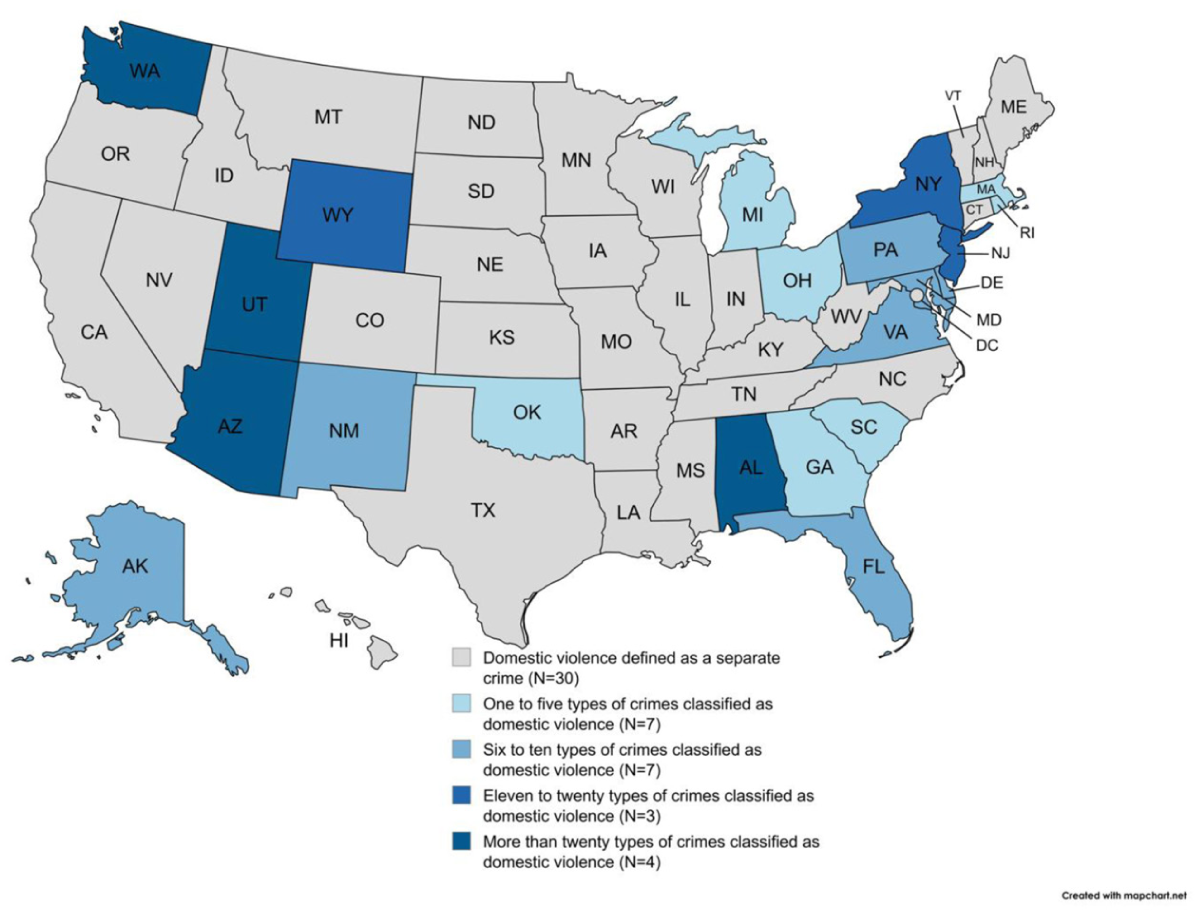
Distribution of states by the definition of domestic violence as a crime.
Classification of Violations of Protective Orders Related to Domestic Violence
Nearly half of all states treat violations of protective orders related to DV incidents as either a misdemeanor or a felony. For instance, in Missouri, a violation of a protective order related to DV is treated as a Class A misdemeanor, unless “the respondent has previously pleaded guilty to or has been found guilty” of a previous violation of a protection order “within five years of the date of the subsequent violation,” in which case, the subsequent violation is treated as a Class E Felony (MO Rev Stat § 455.085 [2024]). In 21 states, violation of protective orders is treated as a misdemeanor only (Figure 3).
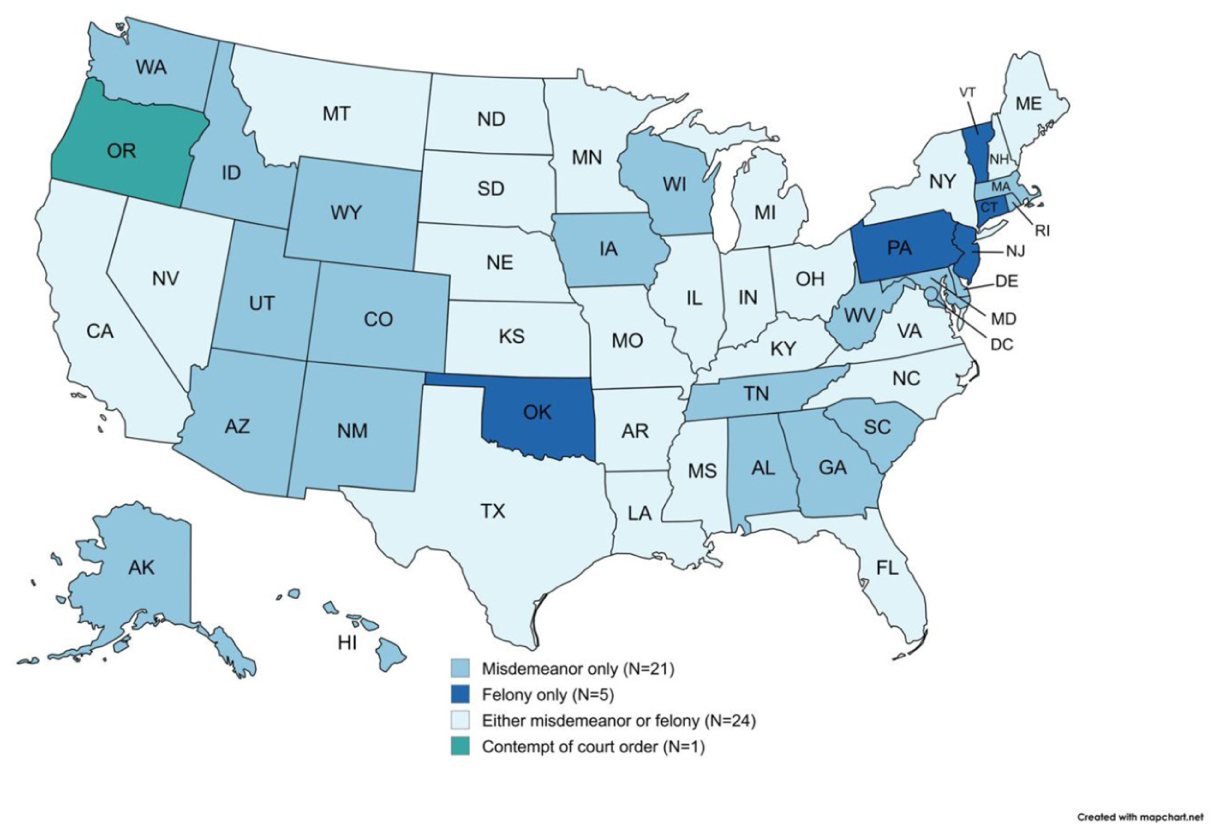
Distribution of states by classification of violation of protective orders.
In only five states, a violation of a protection order in relation to DV is treated as a felony crime. For example, in Connecticut, a criminal violation of protective order is treated as a Class D Felony (up to 5 years in prison), and can further be escalated as a Class C Felony (up to 10 years in prison) if the violation of the order involves “(1) imposing any restraint upon the person or liberty of a person in violation of the protective order, or (2) threatening, harassing, assaulting, molesting, sexually assaulting or attacking a person in violation of the protective order” (Conn. Gen. Stat. Ann. § 53a-223 [2025]). Oregon was the only exception where violating a restraining order related to DV is not a separate crime, however, it is treated as “contempt of court” and punishable with six months in jail (Oregon Legislative Committee Services, 2012, p. 2).
Survivor-Related Legal Recourse
State statutes can provide two broad types of survivor-related legal recourse. First, in instances where the survivor of a DV situation has been charged with a crime against the perpetrator of such violence, a specific self-defense argument often referred to as “battered woman syndrome” is available. Twelve states have specific provisions that describe how victims/survivors can use self-defense in relation to their victimization at trial. For example, in Washington DC, any survivor of an “intrafamily offense” (i.e., DV incident) may use their status as a defense against a charge of failure to report an incident of abuse that they are privy to (D.C. Code Ann. § 22-3020.53 [2025]). In Kentucky, a survivor can make an argument of self-defense as justifiable force if they “establish the existence of a prior act or acts of DV and abuse as defined in KRS 403.720 by the person against whom the defendant is charged with employing physical force” (Ky. Rev. Stat. Ann. § 503.050 [2006]). Likewise, in Massachusetts, besides a claim of self-defense against one’s person or property against any criminal charge alleging use of force (lethal or non-lethal), a defendant can provide evidence that they were a victim of “physical, sexual or psychological harm or abuse” and/or call on expert testimony about the common patterns in abusive relationships and how they “relate to the perception of the imminent nature of the threat of death or serious bodily harm” (M.G.L.c. 233 §23F [2023]).
Only three states (New York, Oklahoma, and Washington) have introduced second-look legislation for survivors of DV. These second-look legislations provide survivors of abuse and violence to petition for a reduction of their sentence if they can show that their victimization contributed directly to their criminal offense for which they are serving time. In 2019, New York passed the DVSJA, which authorized motions for resentencing where judges can consider past incidents of abuse or violence when determining appropriate sentences. Specifically, the DVSJA amended the state’s Criminal Procedure Code to allow any person who is incarcerated for a term of eight or more years for an offense to petition for resentencing to provide at least two pieces of evidence related to the claim that they were a victim of domestic violence (N.Y. CPL 440.47 [2019]). Similarly, individuals incarcerated in Oklahoma can petition for resentencing and provide at least one piece of corroborating evidence that they were a victim of DV (Okla. Stat. Ann. tit. 22, § 1090.5 [2024]).
Finally, in Washington, the prosecutor has “discretion to apply to the court on behalf of the state recommending that the court vacate the victim’s record of conviction” as long as there is specific corroborating evidence of the person’s victimization (Wash. Rev. Code Ann. § 9.96.080 [2021]). Across other states, there are pending bills related to second-look legislation insofar as it applies to sentence modification for individuals who were survivors of domestic violence, including Connecticut and Missouri (Second Chances Working Group, 2025).
Codification of Domestic Violence Prevention Programs
There is also considerable variation in the codification of programs related to DV prevention or treatment for perpetrators. Eighteen states have provisions that specifically mandate the establishment of DV treatment or BIPs. For example, in Arizona, a judge can order an individual convicted of a misdemeanor DV offense to complete a “domestic violence offender treatment program” approved by relevant departments (Ariz. Rev. Stat. Ann. § 13-3601.01 [2025]). Six states provide courts with the authority to decide any type of programming for individuals convicted of DV. For instance, in Texas, judges are authorized to direct individuals to a DV intervention program, or counseling with a licensed therapist or social worker, or to participate in any other acts that the court deems appropriate to prevent further violence (Tex. Fam. Code Ann. §85.022 [2023]). Five states (Idaho, Minnesota, Nevada, Oklahoma, and West Virginia) prescribe counseling as an option for individuals convicted of DV, which can be in addition to any other sentence term, including incarceration or probation. Finally, in two states (Virginia and Washington), state funding has been allocated for batterer intervention or DV prevention programs, but there are no specific statutory provisions directing how and when these programs must be completed (Figure 4).
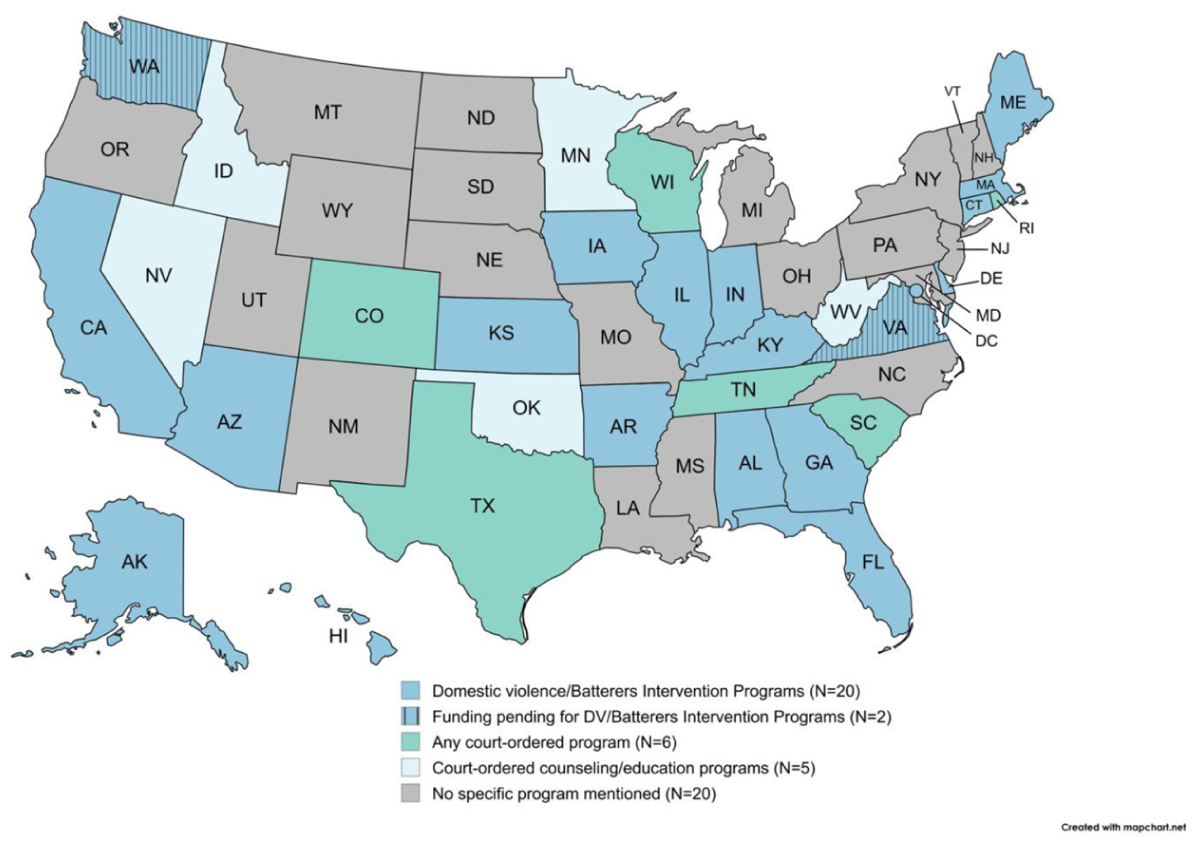
Distribution of states by codification of domestic violence prevention programs.
Discussion
This state-by-state mapping of DV statutes reveals a legal landscape that is simultaneously expansive, fragmented, and unevenly aligned with contemporary research on abuse dynamics, survivor needs, and effective intervention. By examining definitions, penalties, protective order violations, survivor-related legal recourse, and mandated programming across all U.S. jurisdictions, this review highlights both areas of convergence and critical gaps that shape how DV is addressed in practice.
Across jurisdictions, DV is widely recognized as a distinct legal category, either as a standalone offense or as a designation applied to underlying crimes committed within qualifying relationships. Most states treat DV as a misdemeanor at first instance with felony escalation for repeat offenses, reflecting a graduated accountability model. However, a subset of states classify DV crimes as felonies only, signaling a more punitive approach. States also broadly define qualifying relationships to include current or former intimate partners, as well as family and household members, indicating an effort to capture the relational context of abuse.
Another notable trend is the extensive criminalization of protective order violations. Nearly half of the states authorize felony charges under certain conditions, typically for repeat violations or aggravating conduct, while others maintain misdemeanor-only frameworks. This emphasis underscores the centrality of court-issued protection orders as a primary mechanism of survivor safety within the legal system. With respect to intervention, statutes demonstrate growing—though inconsistent—recognition of treatment-oriented responses. A minority of states explicitly mandate batterer intervention or DV treatment programs, while others grant courts discretion to order counseling or related services. This variability suggests an emerging but incomplete shift toward rehabilitation approaches alongside punitive sanctions.
Despite widespread criminalization, statutory provisions that directly address survivors’ legal circumstances remain limited. Only a small number of jurisdictions codify specific defenses recognizing the impact of prior abuse, and even fewer provide second-look sentencing mechanisms for incarcerated survivors whose offenses were shaped by victimization. The scarcity of such provisions is striking given decades of research documenting pathways from victimization to criminalization, particularly among women subjected to coercive control or chronic violence (Harrington, 2024).
Where survivor defenses exist, they often rely on traditional self-defense frameworks augmented by evidence of abuse rather than fully accounting for the realities of ongoing coercion, delayed responses to threat, or survival-based offending. Similarly, second-look statutes remain rare despite growing policy attention to wrongful or excessive punishment of survivors. This limited availability suggests that statutory reform has focused more heavily on prosecuting perpetrators than on addressing the complex legal needs of victims entangled in the criminal justice system.
Building on these findings, the fragmented nature of U.S. DV statutes also raises the question of whether more unified or model legislative approaches may be warranted. International frameworks, particularly the “course of conduct” or coercive-control statutes adopted in jurisdictions such as the United Kingdom and Ireland, offer a potential point of reference (Manring, 2021). These models shift the focus from discrete incidents of physical violence to patterns of behavior that encompass psychological, emotional, and economic abuse. While developing model legislation is beyond the scope of the present study, incorporating elements of these approaches into U.S. statutory frameworks may better align legal definitions with contemporary understandings of IPV. Such reforms could provide greater consistency across jurisdictions while more accurately capturing the lived realities of survivors.
The analysis also reveals substantial ambiguity regarding the implementation of mandated treatment or intervention programs. Even in states that require batterer intervention or counseling, statutes frequently lack detail regarding program standards, oversight, accessibility, or evaluation. Some jurisdictions allocate funding without specifying eligibility criteria or completion requirements, while others leave program selection entirely to judicial discretion. Such variability risks inconsistent quality, limited availability in rural areas, and unequal access across socioeconomic groups. Notably absent from most statutes are provisions addressing cultural and linguistic responsiveness, disability access, or tailored programming for diverse populations. Given evidence that intervention effectiveness may depend on cultural relevance and participant engagement, this omission may undermine program outcomes and perpetuate disparities.
The statutory landscape reflects a persistent tension between punishment and prevention. Felony-only frameworks and aggressive enforcement of protective order violations emphasize incapacitation and deterrence, while treatment mandates signal an interest in behavioral change. However, when participation in intervention programs is mandated as part of probation or sentencing, failure to attend or complete the program is common and may limit its effectiveness as an alternative to incarceration (Aaron & Beaulaurier, 2017; Campbell et al., 2024; Cunha et al., 2023). Such cases may reflect structural barriers rather than refusal to engage, raising concerns about fairness and proportionality (Ralph et al., 2025).
A related tension concerns the dual goals of offender accountability and survivor safety. Protective order violations are criminalized to reinforce court authority and deter continued abuse, yet enforcement strategies that do not incorporate survivor input may inadvertently escalate risk or limit survivors’ autonomy. Similarly, statutes that prioritize legal control mechanisms without addressing underlying causes of violence may have limited preventative impact. Statutory design profoundly shapes the lived experiences of survivors and defendants alike. The broad inclusion of intimate partners, family members, and household members expands eligibility for protection but may also increase system involvement in complex family dynamics. Strong penalties for order violations may enhance formal accountability, yet do not guarantee actual safety if enforcement is inconsistent or if survivors face barriers to reporting.
For survivors who become defendants, the limited availability of affirmative defenses and second-look remedies constrains pathways to justice. Individuals whose criminal conduct is directly linked to abuse may remain incarcerated or convicted without meaningful opportunities for reconsideration. Conversely, jurisdictions that provide such mechanisms offer models for integrating survivor-centered principles into criminal law. Program mandates also affect access to services. Where intervention programs are required but scarce, costly, or geographically distant, both defendants and communities may experience reduced compliance. Conversely, jurisdictions that authorize flexible programming or funding streams may facilitate more responsive service delivery, particularly when coordinated across agencies.
Limitations and Future Directions
As noted, we only reviewed statutory provisions to show legislative support for the criminalization of domestic violence-related offenses. There may be policy manuals and administrative regulations that fill the gap in providing adequate resources and programming for domestic violence-related offenses. Relatedly, we could have missed provisions in other statutes (outside of the penal code) that have criminal penalties for DV incidents. While legislative provisions provide directions for sanctioning DV, we cannot gauge the actual utilization of these laws without administrative data. Future research can use our findings as a baseline to conduct implementation studies, qualitative assessments of legislatively mandated programs, and cost-effectiveness of DV prevention programs.
Conclusion
Overall, the statutory landscape reflects substantial progress in recognizing DV as a serious public concern but remains uneven in its attention to survivor experiences, implementation detail, and preventive effectiveness. Criminalization and protective mechanisms are widespread, yet rehabilitative programming, survivor-specific remedies, and accountability structures vary dramatically across jurisdictions. Aligning statutes with contemporary knowledge about coercive control, trauma, and effective intervention will require more comprehensive and coordinated reform. This mapping provides a foundation for future research examining how statutory differences translate into real-world outcomes, including rates of reoffending, survivor safety, and equitable access to justice. Comparative analyses and empirical evaluations are essential to determine which statutory approaches most effectively reduce violence while supporting survivors and promoting long-term accountability.
Footnotes

Funding
The authors received no financial support for the research and/or authorship of this article.
Declaration of Conflicting Interests
The authors declared no potential conflicts of interests with respect to the authorship and/or publication of this article.