




Abstract
Image-based Sexual Abuse (IBSA) victimization appears to be prevalent among adolescents, but the influence of lifestyles and routine activities on its etiology is still not well understood. Informed by Routine Activity Theory, the current study aims to explain IBSA victimization by examining the risk factors associated with adolescents’ routine activities, with a particular focus on the different ways of exposure to Internet use on weekdays and weekends. The study was conducted in Tanzania, East Africa, a country with one-third of its population as adolescents and a rapid increase in Internet use. Data were collected using a cross-sectional survey questionnaire administered to a stratified random sample of 1,014 adolescents (aged 12–20 years; 58.38% female). Tobit models with moderation analyses were employed to test the hypotheses. Routine activity factors such as exposure on the weekends, and attractiveness, and proximity to offenders increased the risks of IBSA. Internet use patterns showed distinct moderation effects: weekday use positively moderated physical guardianship against IBSA, while weekend use demonstrated a negative moderation effect. IBSA victimization among the current sample of Tanzanian youth was influenced by their different weekly Internet use patterns, with smaller households found to increase weekday risk while providing weekend protection. The results highlight the importance of implementing customized prevention strategies that address weekly Internet use patterns within both school and family environments.
Introduction
With growing Internet use globally, image-based sexual abuse (IBSA) of adolescents has emerged as a prominent public concern (Gámez-Guadix et al., 2022; Stanley et al., 2018). IBSA was defined as “the nonconsensual creating, taking, or sharing of intimate images, including threatening to share images,” and “coercing someone into sharing intimate images, or sending unwanted intimate images” (Henry & Beard, 2024). IBSA comprises two main categories, sexting and sextortion (Gámez-Guadix et al., 2022; Pedersen et al., 2023). Sexting refers to “sending, receiving, or sharing sexually suggestive text and images via cell phones, computers, or other electronic devices” (Qu et al., 2022), and sextortion includes “the threatened dissemination of explicit, intimate, or embarrassing images of a sexual nature without consent, usually for the purpose of procuring additional images, sexual acts, money, or something else” (Patchin & Hinduja, 2020).
IBSA victimization among adolescents raises great public and academic concerns globally. The National Center for Missing & Exploited Children (2025) in the United States reported that its CyberTipline received 29.2 million separate incidents of suspected child online sexual exploitation in 2024, including various forms of IBSA such as live-streamed abuse, sextortion, and the distribution of child sexual abuse material. Similarly, the Internet Watch Foundation (2025) in the United Kingdom documented 291,270 webpages containing child sexual abuse material in 2024, emphasizing a 19% rise in sextortion cases targeting younger victims compared to the same period in 2023. IBSA victimization is associated with various negative psychological and behavioral outcomes for individuals, such as depression, anxiety, loss of trust, somatic symptoms, and suicidal intent (Bates, 2017; Hellevik et al., 2025; Ruvalcaba & Eaton, 2020).
As illustrated, IBSA victimization of children and adolescents is a serious crime with significant social consequences. Understanding the factors that contribute to IBSA victimization is essential for developing effective prevention strategies. Research shows that adolescents who frequently use social media or dating apps are at greater risk of online sexual victimization (Hernández et al., 2021; Marcum et al., 2022), particularly males aged 18 to 19 (Henry & Beard, 2024; Henry et al., 2020). However, explanations of IBSA risk are limited in considering adolescents as victims (Parton & Rogers, 2025), especially considering their varied online activity patterns (Pedersen et al., 2023). For example, previous research has highlighted variations in adolescents’ Internet use across different days of the week, with some studies indicating that adolescents spend more time online during weekends (Asarnow et al., 2021; You et al., 2023), while others suggest that weekday Internet use is more strongly linked to online sexual victimization (De Santisteban & Gámez-Guadix, 2018). Noteworthily, the varying temporal patterns of Internet use, which reflect exposure to online risks, may mitigate the impact of other protective factors, such as parental guardianship, on the likelihood of IBSA victimization. Without a comprehensive understanding of the impact of risk exposure activities, establishing an effective crime prevention framework becomes nearly impossible. Furthermore, most studies of IBSA have been conducted in developed countries, such as the United States, Australia, Canada, and Portugal (see a review by Parton & Rogers, 2025). Little is known about IBSA in developing regions, such as Africa.
To address this knowledge gap, this study examines how adolescents’ weekday and weekend Internet use relates to IBSA victimization, applying Routine Activity Theory (RAT) and analyzing data from a sample of 1,014 adolescents in Tanzania, East Africa. This study makes several contributions to the literature by (a) providing insight into IBSA victimization patterns in Tanzania, a country in Africa with a rapidly growing youth population and rising cybercrime rates (ECPAT et al., 2022; National Bureau of Statistics, 2022), (b) extending the application of RAT to IBSA victimization, and (c) offering policy-relevant findings to help reduce IBSA risks among minors.
Literature Review
Understanding IBSA Victimization: Lifestyles and Routine Activities
RAT, proposed by Cohen and Felson (1979), attributes the probability of crime occurring to the convergence of offenders, suitable victims, and the absence of capable guardians in time and space. Crime becomes likely if a motivated offender meets a suitable target in the absence of a capable guardian. The daily routine activities (such as commuting, banking, and shopping.), whether conducted online or offline, create opportunities for the convergence of these factors. Cohen et al. (1981) extended RAT to the lifestyle routine activities theory (LRAT), which conceptualizes routine activities as an integral part of a broader lifestyle. Certain risky lifestyles could elevate the risks of victimization.
Recent research studies have incorporated elements from the RAT or LRAT frameworks to explain online crime, focusing on key concepts developed in recent years. First, proximity to potential offenders (proximity) is indicated by interactions with others, such as “adolescents’ online disclosure of private information” (Wachs et al., 2020) and “(adolescents) virtually (as opposed to physically) present in the domains of influence of potential cyber abusers,” which highlights how individuals’ online activities may inadvertently enter the spheres of potential offenders, thereby increasing their risk (Vakhitova et al., 2019). There appears to be stronger empirical support for this element of RAT in cybercrime victimization (Longobardi et al., 2020; Reyns et al., 2016; Wachs et al., 2020).
Target suitability refers to an individual’s perceived attractiveness as a target for victimization by motivated offenders. In the cyber context, some demographic characteristics (e.g., being female, being non-white, being single, and being a sexual minority), along with unguarded online behaviors such as disclosing one’s personal details online (e.g., home address, telephone number, and e-mail address; Guerra & Ingram, 2022), are found to be associated with an individual’s increased attractiveness as a target (Hsieh et al., 2021; Reyns et al., 2016; Vakhitova et al., 2019).
Capable guardianship refers to an individual’s ability to prevent crimes from occurring (Cohen & Felson, 1979) or access to those who have the capacity to intervene, such as law enforcement and other public or private services (Reynald, 2009, 2011). Guardianship can be further divided into physical guardianship, operationalized as the physical presence of parents, family members (e.g., siblings), and relatives (Parti, 2023; Qi & Yang, 2024; Thomas et al., 2023), and social guardianship (Hayes & Maher, 2024), usually operationalized as close parental supervision and active parenting strategies (Wachs et al., 2020) and social support (McNeeley, 2015). Although the effectiveness of capable guardianship in reducing online sexual victimization remains mixed (Marcum, Higgins, & Ricketts, 2010; Marcum, Ricketts, & Higgins, 2010), recent research has indicated that the absence of physical parental guardianship, such as during late-night hours or bedtime, increased adolescents’ likelihood of experiencing online sexual victimization (Kamar et al., 2022; Reardon et al., 2023; Thomas et al., 2023).
Within the cybercrime literature, the last construct of RAT, exposure to cyber risk (exposure) is typically operationalized by assessing the duration and frequency of activities such as blogging, Internet use, and sharing personal, political, or social views via social media (Guerra & Ingram, 2022; Marcum, Higgins, & Ricketts, 2010; Vakhitova et al., 2019). However, empirical support for this theoretical element in explaining cybercrime victimization remains mixed (Holt et al., 2016; Näsi et al., 2017; Reyns et al., 2011). While most studies focus on general exposure patterns of routine online activities in relation to online sexual victimization (Seymour-Smith & Kloess, 2021; Wang et al., 2025), limited attention has been paid to temporal variations in exposure across the week—particularly differences in Internet use between weekdays and weekends (De Santisteban & Gámez-Guadix, 2018; Pedersen et al., 2023; Xu et al., 2012).
Variation in Adolescent Internet Exposure Between Weekdays and Weekends
As reviewed above, a notable gap in the existing literature concerns how weekday and weekend Internet exposure differentially influences online sexual victimization, particularly IBSA. Given that weekdays are school days and work days while weekends are non-school days and non-working days, adolescents’ exposure to risks and parental guardianship vary.
First, online risk exposure or proximity may be higher during non-school days than on school days. Prior research has consistently shown that adolescents engage more frequently in online activities, such as chatting, on weekends than on weekdays (Asarnow et al., 2021; Choi et al., 2018; Toh et al., 2019; Xu et al., 2012; You et al., 2023). Second, guardianship may also vary across the days of a week, though findings are mixed. Studies have reported that weekday Internet use is associated with greater online sexual victimization, as guardians may assume their children are engaged in homework and consequently provide less supervision (De Santisteban & Gámez-Guadix, 2018). A recent study also supported that screen monitoring by parents is lower during weekdays (Nagata et al., 2025). Nevertheless, other studies have found that the duration of exposure is higher at bedtime on weekends (Reardon et al., 2023), a period during which parental supervision and guardianship may be significantly reduced. In addition, the attractiveness to motivated offenders also varied, given the temporal situation of the exposure, with mixed results. Research on online sexual victimization indicates that weekdays, characterized by absence of guardianship, may lower perceived costs for perpetrators (Whittle et al., 2013). Perpetrators assess risk, as opposed to attractiveness, by inquiring about parents’ schedules (Black et al., 2015). Nevertheless, more recent evidence suggests adult perpetrators prefer weekends when seeking potential victims (Hewitt et al., 2022).
Considering these temporal distinctions, the amount and timing of Internet exposure during weekdays and weekends may moderate the influence of target attractiveness, physical or virtual proximity, and the presence or absence of guardianship on the risk of IBSA. The distinction between weekend and weekday exposure patterns is critical for understanding IBSA victimization mechanisms among adolescents. A recent systematic review highlighted that existing explanations of IBSA victimization mechanisms remain limited in scope (Parton & Rogers, 2025). Failure to acknowledge this temporal variation in exposure overlooks opportunities to derive precise practical implications, such as prioritizing school-based interventions when risky exposure occurs during weekdays. Despite its theoretical importance, the distinction between weekday and weekend Internet use has not been explicitly examined in studies applying Routine Activities Theory to explain online sexual victimization (Kamar et al., 2022; Wachs et al., 2020). Thus, the present study employed the temporal distinction between weekdays and weekends as contextual conditions to examine how these two settings may moderate the explanation of Routine Activities variables on IBSA victimization.
Current Research Site
IBSA victimization among adolescents and young people has been extensively studied across various regions globally; however, limited research has focused specifically on African contexts (Parton & Rogers, 2025). While organizations such as ECPAT International, INTERPOL, and UNICEF (2022) have released reports addressing online sexual victimization in South Africa and Tanzania, significant gaps remain regarding the risk factors for adolescents in Tanzania and the suitability of Respondent-Driven Sampling as a methodological approach in this setting.
This study was conducted in the United Republic of Tanzania, East Africa, which had an estimated population of approximately 66.62 million in 2023, with 53.74% under the age of 19 (World Health Organization, 2023). Christianity is the predominant religion, constituting 63.1% of the population (Global Edge, 2023). The country has experienced notable growth in Internet penetration, reaching 79.3% by mid-2025 according to the Tanzania Communications Regulatory Authority (2025, p. 21). Young people represent a particularly active demographic in digital engagement that, according to a survey conducted by the United Nations Children’s Fund (UNICEF), 67% of adolescents aged 12 to 17 in Tanzania use the Internet (Kardefelt-Winther et al., 2022, p. 3). Furthermore, social media use has more than doubled from 3.51 million users in 2019 to 6.95 million in 2022 (Statista, 2023). These trends highlight Tanzania’s substantial youth population as one of the most active Internet user groups in the country, highlighting the importance of addressing online exploitation risks within this demographic. Thus, the current study employed a sample of Tanzanian adolescents and examined the following hypotheses based on the above review. Given the application of RAT on IBSA, we proposed the following hypothesis:
As noted above, temporal differences in Internet exposure between weekdays and weekends may alter how RAT variables relate to IBSA risk. Accordingly, Internet exposures during weekdays and weekends were conceptualized as moderating variables in these relationships, and we proposed the following hypothesis:
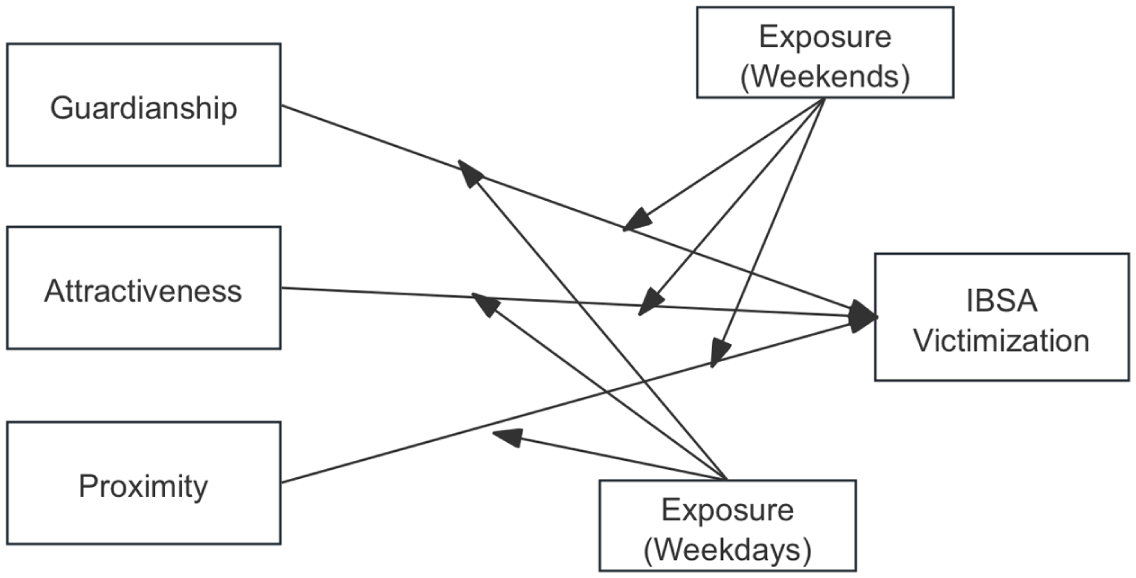
Theoretical model.
Method
Procedure and Sampling
The data were collected through a questionnaire survey conducted among secondary students in two areas in Tanzania (i.e., Dar es Salaam and Ruvuma) in 2022. Ethical approval was obtained from the Institutional Review Board of University of Dar es Salaam. Data collection was permitted by the Ministry of Education and Vocational Training in Tanzania. The questionnaire was designed in the local language, Kiswahili. The translation and back-translation method (Brislin, 1970) was used for all English instruments. Two professionals were involved: one was a native Kiswahili speaker and proficient in English, and the other was proficient in English. Any discrepancies were discussed by the team, which included a Tanzanian social science researcher, to ensure the accuracy of the questionnaire. A pilot study was conducted with 12 Tanzanian adolescents, and after the interviews, minor changes were made by the team to ensure content validity and contextual appropriateness.
Regarding sampling, in 2021, there were 340 and 211 registered secondary schools in Dar es Salaam (an urban region) and Ruvuma (a rural region), respectively. We randomly selected 12 schools (6 urban, 6 rural) to balance coverage across strata and to reduce design effects driven by cluster size (Lohr, 2019). On average, approximately 1,000 students were enrolled in each of the 12 schools. This yielded a sampling frame of approximately 12,000 students. Within participating schools, we randomly selected 10% to 12% of enrolled students to achieve a sample of 1,200 respondents. This fraction has approximately a ±3% margin of error at the 95% confidence level for proportions under conservative assumptions (p = .5; Lohr, 2019). Accordingly, 1,200 invitations were sent for parental consent, and only those with consent were asked to complete a self‑administered paper-and-pencil questionnaire. Data were collected anonymously in class, with an author and a trained assistant supervising administration using standardized instructions to minimize any interruptions. In total, 1,014 valid responses were collected (i.e., the response rate is 84.50%). The current sample showed an average age of 15.71 (SE = 1.48), of which 58.38% were female and 57.20% resided in the rural area (see Table 1).
Descriptive Statistics.
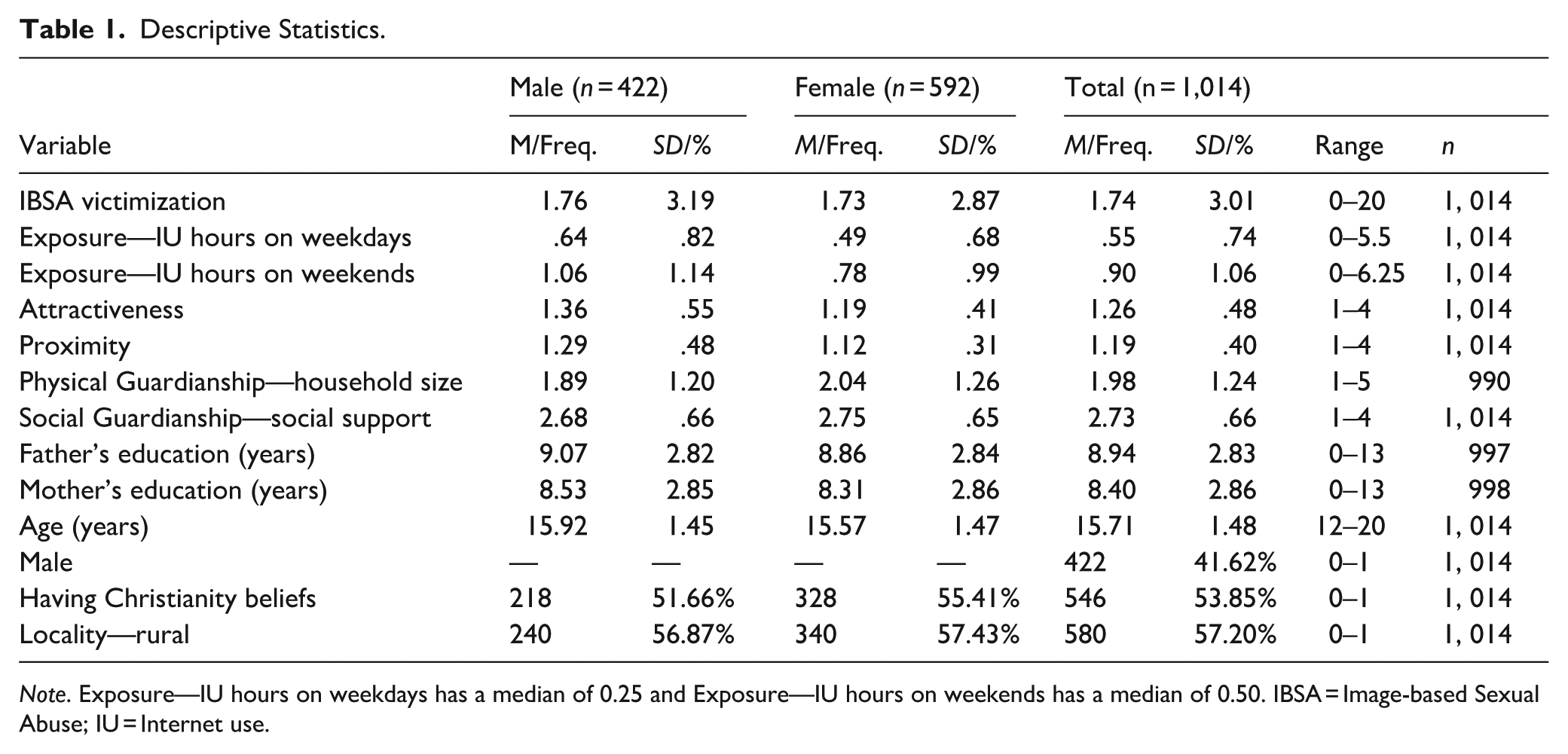
Note. Exposure—IU hours on weekdays has a median of 0.25 and Exposure—IU hours on weekends has a median of 0.50. IBSA = Image-based Sexual Abuse; IU = Internet use.
Measurements
IBSA Victimization
According to Gámez-Guadix et al. (2022) and Pedersen et al. (2023), IBSA includes two main types of offenses: sexting and sextortion. Thus, IBSA victimization was assessed using 8 questions from two scales, covering (1) respondents’ recent experiences of sexting (Qu et al., 2022; 5 questions, “Has someone sent you pictures of a sexual nature that you did not want, even before initiating any communication?” “Has someone told you they are horny and expect you to satisfy them?” “Has someone insulted you (e.g., verbally or by sending nude pictures) when you rejected their requests for sex?” “Has someone repeatedly contacted you even when you demonstrated no interest in them?” and “Has someone insulted you sexually (e.g., verbally or by sending nude pictures) when you did not respond to their messages?”), and (2) sextortion (Patchin & Hinduja, 2020; 3 questions: “Has someone threatened to expose a sexual image, video, or conversation of you to coerce you into doing something?” “Has someone threatened to expose a sexual image, video, or conversations of you for money?” and “Has someone threatened to expose a sexual image, video, or conversations of you for revenge?”). Respondents were asked to report their victimization experiences since the age of 12 on a four-point scale ranging from never (1) to many times (4). The two scales, consisting of eight items in total, were integrated into a unidimensional measure to enhance analytical efficiency. The eight items yielded a Cronbach’s α = .74, and a unidimensional factor structure yielded a very good model fit, with Х2/df = 3.21, comparative fit index (CFI) = 0.99, Tucker–Lewis index (TLI) = 0.97, and root mean squared error of approximation (RMSEA) = 0.047, with 90% CI [0.031, 0.063]. A sum-up score was applied, with a higher score representing a greater IBSA victimization.
Proximity to (Motivated) Offenders (Proximity)
A measure with four items was applied (Vakhitova et al., 2019) (“How frequently do you participate in discussions in online forums (e.g., Reddit)?” “How frequently do you participate in online multi-player gaming?” “How frequently do you post about your personal life?” and “How frequently do you post in the comments sections of online newspapers and social media?”). According to Vakhitova et al. (2019), proximity highlights the potential for adolescents’ everyday online routines, such as participating in discussions, to draw the attention of perpetrators. Respondents were asked to report their experiences over the past year on a four-point scale ranging from never (1) to often (4). A composite score was applied (Cronbach’s α = .72), with a higher score representing a greater proximity.
Target Attractiveness to (Motivated) Offenders (Attractiveness)
Following Wachs et al. (2020) and Guerra and Ingram (2022), five questions of information disclosure were used to measure attractiveness, including “How frequently do you disclose your age or date of birth online?” “How frequently do you disclose your gender online?” “How frequently do you disclose your relationship status online?” “How frequently do you disclose your socio-economic status online (e.g., parental education, job, or household income)?” and “How frequently do you post your own picture online?” Respondents were asked to report their experiences over the past year on a four-point scale ranging from never (1) to often (4). Five items exhibited a unidimensional factor structure with a very good model fit, with Х2/df = 2.20, CFI = 0.99, TLI = 0.99, and RMSEA = 0.035, with 90% CI [0.000, 0.099]. A composite score was calculated (Cronbach’s α= .77), with a higher score representing greater target attractiveness.
Guardianship
Guardianship was measured using two indicators: physical and social guardianship according to the literature review. Physical guardianship refers to the number of people that the respondents currently live with, such as parents, partners, and other relatives (Miethe et al., 1990; Reyns et al., 2016). Since all the participants lived with guardians, this measure reflects the additional protective presence of family members (Qi & Yang, 2024). To measure this, we asked, “How many people do you live with?” The physical guardianship variable (household size) was then coded based on the number of people the respondent lives with.
Social guardianship was assessed based on social support using the 18-item Modified Social Support Survey (Sherbourne & Stewart, 1991). Sample items include “How often is someone available to show you love and affection?” and “How often is someone available to give you good advice about a crisis?” Respondents were asked to rate the frequency of receiving social support, with responses ranging from never (1) to often (4). The items demonstrated high internal consistency (Cronbach’s α = .92).
Exposure to Risks in Cyberspace
As the Internet use patterns differ on weekdays and weekends among adolescents (Choi et al., 2018; Xu et al., 2012), two variables measuring their exposure to risks were created to measure respondents’ Internet use on weekdays and weekends, respectively. Following Guerra and Ingram (2022) and Seok and DaCosta (2020), respondents were asked to report the amount of time (in hours) they spent per day on a list of activities on weekdays or weekends/holidays, respectively, over the past year. Activities include using social media, streaming and/or posting videos, downloading and/or sharing files, and involvement in online gaming. Daily total hours were indicative of adolescents’ Internet use on weekdays or weekends, respectively.
Demographics
Demographics include religious affiliation (Christianity = 1; Muslim and other = 0), locality in a rural area (rural = 1; urban = 0), age in years, female gender (female = 1; male = 0), and father’s and mother’s education levels, transformed into years of education, respectively.
Analytic Strategy
Stata 18 was employed for the analyses. The missing pattern of the data was checked. Missing values for household size, father’s years of education, and mother’s years of education ranged from 1.58% to 2.36%. Given this low proportion, these missing cases were auto-excluded via listwise deletion in the subsequent analyses (Schafer, 1999). Common method bias was tested using the Harman Single Factor technique (Eichhorn, 2014). All items loaded onto one factor which accounts for 26.06% of the total variance, indicating no common method bias.
A descriptive analysis of the sample and a zero-order bivariate correlational analysis of the key variables were performed. To test the hypotheses, we employed Tobit regression models with robust variance, as recommended for outcomes with inflated zeros (Boulton & Williford, 2018). We examined weekday Internet use and weekend Internet use as moderators, interacting with proximity, attractiveness, and guardianship in relation to IBSA victimization. The analysis proceeded in three steps. First, we included demographic variables as independent variables (Model 1, Table 3). Second, we added the main effects of exposure, proximity, attractiveness, and guardianship (Model 2, Table 3). Third, we added interaction terms to test the moderation effects (Model 3, Table 3).
Results
Referring to Table 1, the descriptive statistics showed that the average IBSA victimization among adolescents was 1.74 on average (SE = 3.01). The age of the current sample ranged from 12 to 20 (M = 15.71, SE = 1.48), which is largely consistent with the World Health Organization’s (2010) and Tanzania Demographic and Health Survey 2022 (2023) definition of adolescents (10–19 years). This distribution is also consistent with the age distribution of similar studies on adolescents (Chiu & Quayle, 2022; Hamilton-Giachritsis et al., 2020). The age ranges for the four grades were 14 to 17, 13 to 19, 14 to 20, and 15 to 20, respectively, indicating an overage enrollment trend. Adolescents in the current study reported an average of 0.55 hr (SE = 0.74) of Internet use (IU) on weekdays and 0.90 hr (SE = 1.06) on weekends. Attractiveness (M = 1.26 out of 4, SE = 0.48) and proximity to offenders (M = 1.19 out of 4, SE = 0.40) were observed at low levels. On average, adolescents who lived with 1.98 members per household (SE = 1.24) reported a mean level of 2.73 (out of 4, SE = 0.66) for perceived social support.
Bivariate correlation results are presented in Table 2. As expected, IBSA victimization was slightly positively correlated with IU on weekdays (
Zero-Order Correlation Matrix.
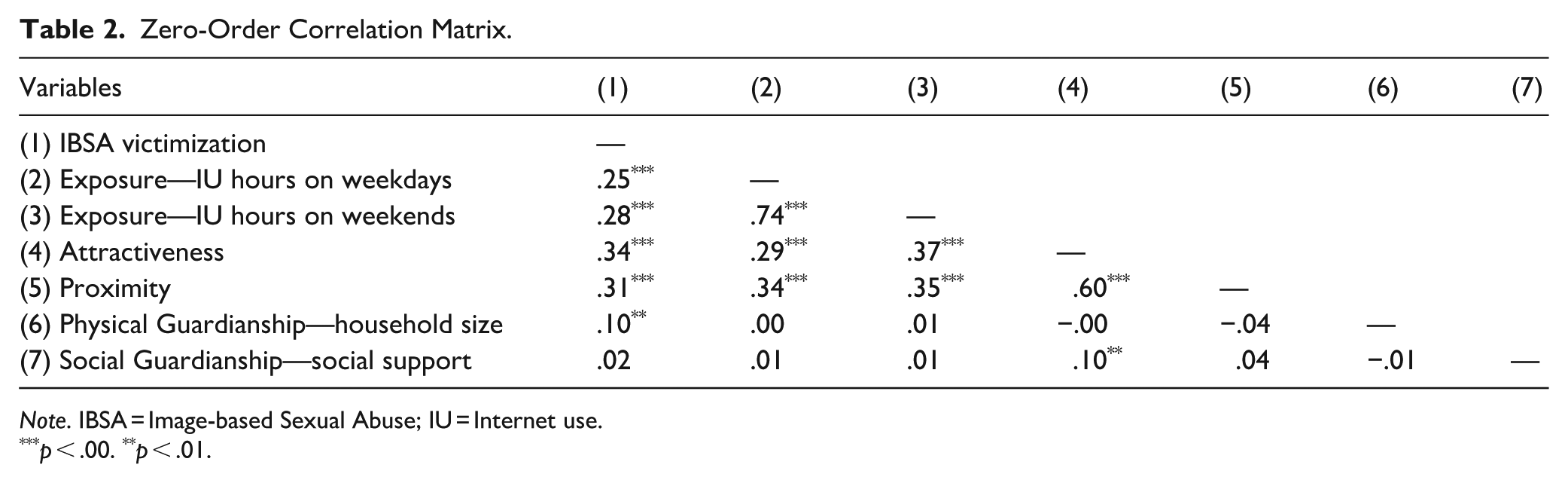
Note. IBSA = Image-based Sexual Abuse; IU = Internet use.
p < .00. **p < .01.
The Tobit regression results are presented in Table 3. Regarding H1, Model 2 illustrated that IBSA victimization was positively associated with IU on weekends (B = 0.72, SE = 0.27, p < .01), attractiveness (B = 2.10, SE = 0.51, p < .001), proximity (B = 1.86, SE = 0.71, p < .001), and had a marginally significant positive association with physical guardianship (household size; B = 0.30, SE = 0.15, p < .10). The full model in Model 3 of Table 3 indicated the positive effects of attractiveness remain (B = 3.38, SE = 0.77, p < .001). Thus, H1 was partially supported.
Tobit Regression Models Predicting IBSA Victimization (N = 965).
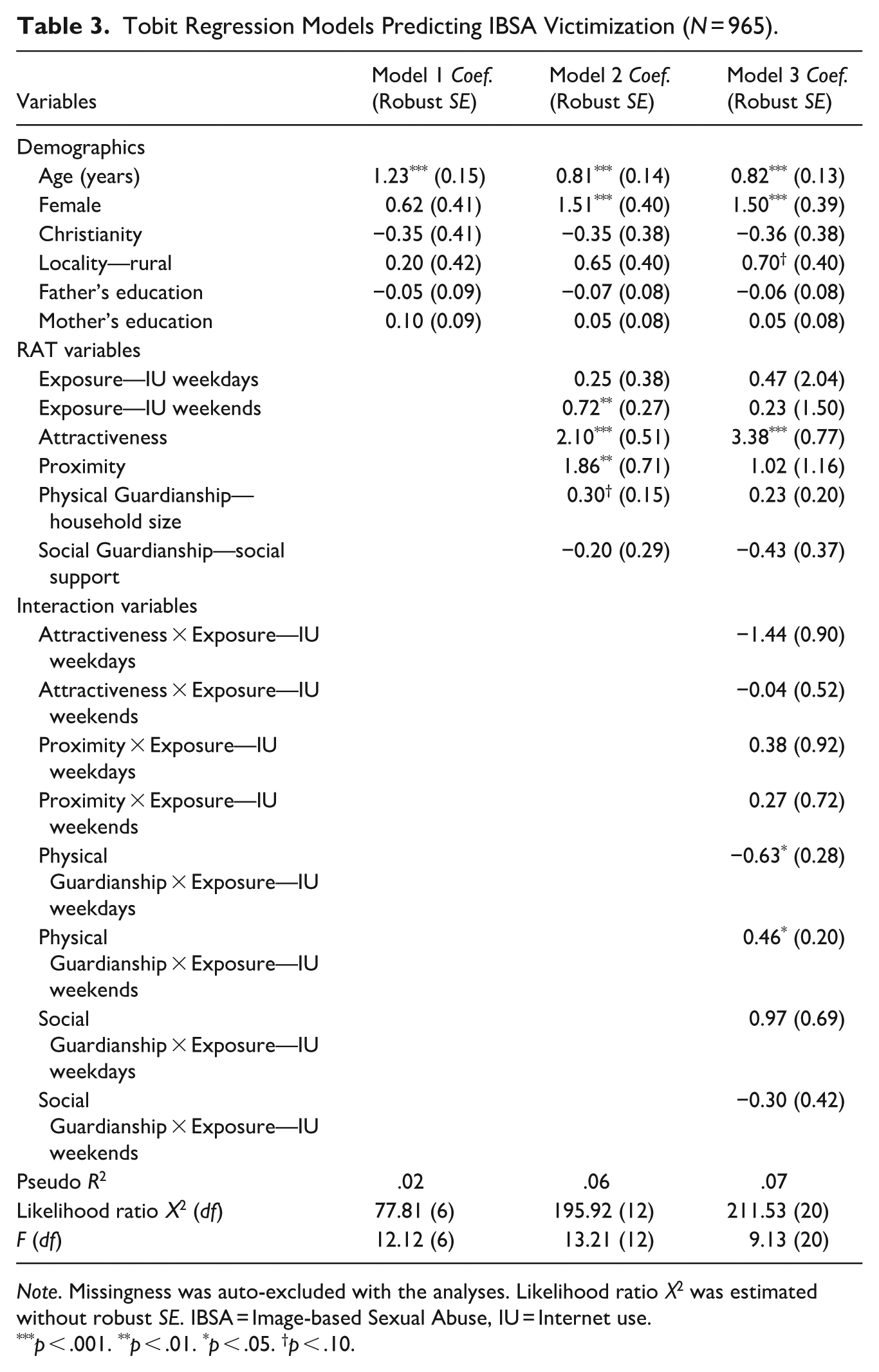
Note. Missingness was auto-excluded with the analyses. Likelihood ratio Х2 was estimated without robust SE. IBSA = Image-based Sexual Abuse, IU = Internet use.
p < .001. **p < .01. *p < .05. †p < .10.
Regarding H2, Model 3 in Table 3 showed two significant moderation effects. First, weekday Internet use negatively moderated the relationship between physical guardianship and IBSA victimization (B = −0.63, SE = 0.28, p < .05), indicating that the protective effect of guardianship weakened with increased weekday exposure. Specifically, slope tests indicated that adolescents in smaller households (1–2 members) showed significantly higher IBSA risk (B = 0.64, p < .01; B = 0.33, p < .05; see Figure 2), while those in larger households (3–5 members) showed no significant change in risk. In contrast, weekend Internet use positively moderated the relationship (B = 0.46, SE = 0.20, p < .05; see Figure 3), meaning that the influence of household size on IBSA risk increased with greater weekend exposure. Slope tests indicated adolescents in larger households (3–5 members) experienced significantly higher IBSA risk (B = 0.34, p < .05; B = 0.57, p < .01), while those in smaller households showed no significant change in risk.
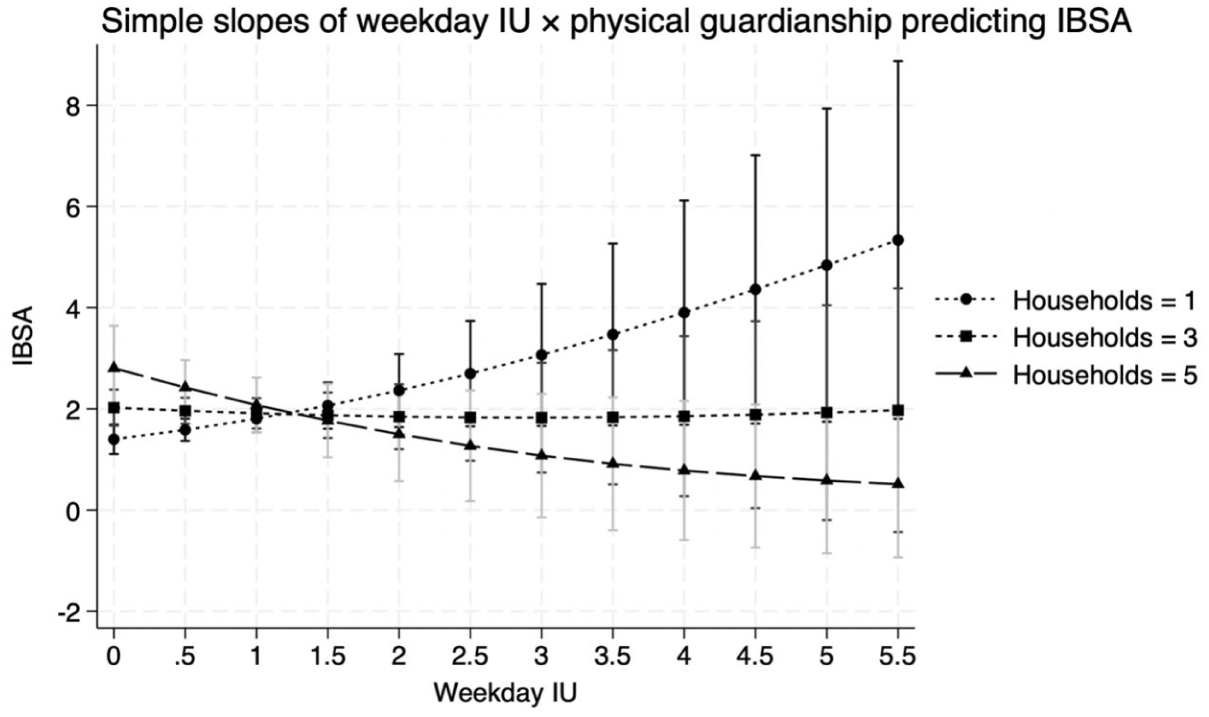
The simple slope tests of weekday Internet use × physical guardianship predicting IBSA victimization.
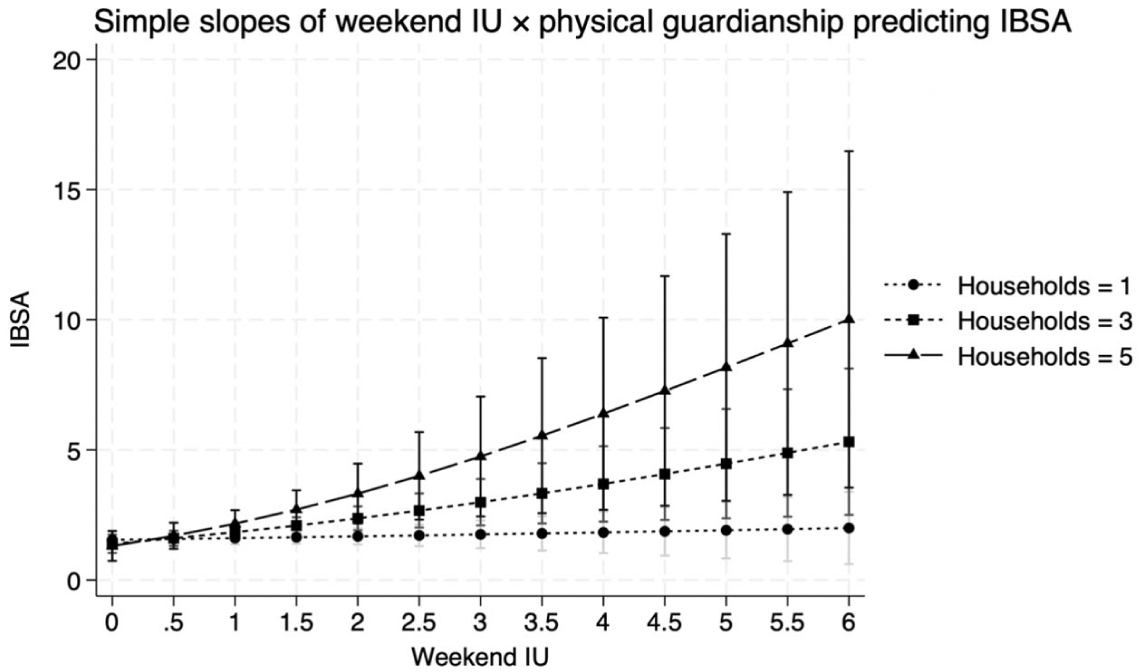
The simple slope tests of weekend Internet use × physical guardianship predicting IBSA victimization.
Discussion
Informed by the RAT, the current study investigated adolescents’ IBSA victimization as influenced by their different weekly Internet use patterns. Adopting a sample of adolescents in Tanzania, a developing country in East Africa with increasing Internet access and sexual victimization against children and adolescents, the findings from the current research evidenced that adolescents’ Internet use on the weekends exerted a direct and elevating impact on their risk of IBSA. Further, in line with the RAT framework, the study confirms the significant effects of RAT factors, including victim attractiveness, proximity to motivated offenders, and physical guardianship, on adolescents’ risk of IBSA.
The findings of the current study deliver several theoretical and empirical contributions to the existing literature. First, this study found that the prevalence of IBSA victimization among Tanzanian adolescents was high, with 42.70% of the participants reporting at least one instance of IBSA victimization. This prevalence was much higher than other reported prevalence rates, such as 12% to 15% (Madigan et al., 2018; Maes et al., 2023). Given the significant 112% increase in online sexual victimization in Tanzania between 2017 and 2019 (ECPAT et al., 2022), IBSA victimization warrants great attention as its incidence could potentially grow in the future, as more people gain access to the Internet through the country’s ongoing economic development. Future research on IBSA victimization in Tanzania and other similarly situated developing countries is essential to monitor this trend and to ensure that adequate attention and resources are allocated for effective prevention and intervention efforts.
Second, the findings of the current study highlighted the salience of RAT factors, especially exposure and physical guardianship, in explaining IBSA victimization among adolescents. The current study demonstrated that the RAT factors exerted significant effects in explaining the risks of IBSA, aligning with previous literature (Vakhitova et al., 2019) and further extending the theoretical application of RAT to the realm of cyber sexual offenses (Aizenkot, 2022; Wachs et al., 2020). In particular, our findings revealed a direct association between victim attractiveness and IBSA victimization among adolescents, the highest total effect observed among RAT factors. This finding corroborates previous research suggesting that sexual offenders proactively select targets (Quayle et al., 2014) and that the voluntary disclosure of personal information appears as a marker of attractiveness to motivated offenders (Guerra & Ingram, 2022; Reyns et al., 2016; Vakhitova et al., 2019). It is also consistent with recent studies on other forms of cybercrime (Lin et al., 2023; Partin et al., 2022), which identified victim attractiveness as one of the strongest predictors of victimization. Moreover, we found that proximity, as indicated by the frequency of online interactions with others, increased the risk of adolescents’ IBSA. Regarding the main effect of exposure, results indicated a positive association between weekend Internet use and IBSA victimization. This finding contrasts with De Santisteban and Gámez-Guadix (2018), who emphasized the online sexual risks associated with weekday Internet use. However, given that previous literature suggests Internet use during unsupervised periods tends to be more extensive on weekends (Reardon et al., 2023), the current finding aligns with theoretical expectations about vulnerability during periods of diminished supervision.
Third, the current study sheds light on how physical guardianship is associated with IBSA victimization across weekday and weekend Internet exposure patterns. It is worth noting that all participants lived with at least one guardian (e.g., a parent). Households with one to two members typically indicated living with one or both parents, whereas households with three to four members indicated living with both parents and additional relatives, such as grandparents or siblings. Moderation analyses revealed contrasting effects depending on the timing of exposure. For weekday Internet use, physical guardianship with one or both parents (households with one to two members) was associated with higher IBSA victimization. Conversely, for weekend Internet use, adolescents living with three to four household members were more likely to experience IBSA victimization. These findings reveal distinct IBSA risk patterns based on exposure timing: adolescents living with one or two parents may be more vulnerable during weekdays, while those in extended family settings may face elevated risk during weekends. During weekdays, parents may assume children are engaged in educational activities online while attending to other household duties (De Santisteban & Gámez-Guadix, 2018), weakening supervision despite their physical presence. Additionally, larger households are associated with reduced parental oversight and increased opportunities for delinquency (Fischer, 1984), which may explain the elevated weekend IBSA risk in these configurations. Moreover, given the longer Internet use hours on weekends (Reardon et al., 2023), these findings suggest that guardianship operates most effectively during weekends when working parents are more available for supervision. This aligns with evidence highlighting the importance of physical parental presence in disrupting online sexual offenders’ attempts to communicate with potential victims (Thomas et al., 2023). These results echo RAT’s emphasis that parental presence consistently reduces risk (Parti, 2023; Thomas et al., 2023), while extending this notion to highlight the significance of parents’ active availability on weekends compared to weekdays. It is also important to note that IBSA prevention efforts should be tailored to different family structures. Nevertheless, guardianship as operationalized in the current study focused solely on the number of household members with whom adolescents reside. Future research should delve deeper into how differing exposure patterns on weekdays and weekends interact with specific forms of guardianship, such as active and passive parental guardianship (Price et al., 2024) and cyber guardianship (Vakhitova & Reynald, 2014). For instance, the App “Balance” uses Generative artificial intelligence (AI) to help parents monitor children’s online activities (Kent & Busch, 2025).
Demographic differences in adolescents’ IBSA victimization were also identified. Consistent with findings from the study by Pedersen et al. (2023), the current study found that female adolescents encountered higher risks of IBSA than their male counterparts. This gender difference contradicts findings from some previous literature (see reviews by Henry & Beard, 2024; Parton & Rogers, 2025). Furthermore, older adolescents experienced higher risks of IBSA, even after controlling for other variables, which aligns with prior literature (Henry et al., 2020). Although some studies suggest that younger adolescents are more vulnerable to online sexual victimization (Hamilton-Giachritsis et al., 2020; Whittle et al., 2013), age-related patterns appear context-dependent. A plausible explanation is that older adolescents may perceive IBSA or similar behaviors as relatively normal and harmless (Martínez Román et al., 2026), and therefore may be more involved in online romantic and dating interactions. Such interactions, including sexting within romantic contexts, may increase the risk of nonconsensual dissemination and IBSA (Hu et al., 2025). Moreover, adolescents in this study who reside in rural areas demonstrated marginally significant risks of IBSA compared to their urban counterparts. Therefore, preventive programs targeting rural adolescents require special attention. For example, community education outreach could be tailored to address the unique circumstances of rural adolescents, fostering greater awareness of online risks (Li et al., 2024).
The findings of this study point to a pressing need for targeted online safety education, particularly in relation to the timing of adolescent Internet use and guardian supervision across different living situations. Programs that are age- and gender-sensitive, with special attention to older adolescents and girls who face higher victimization rates, may be more appropriate. Strengthening physical and digital guardianship is crucial; parents and caregivers, especially in both small and large households, should be supported through media literacy training. The training can incorporate the latest modus operandi of sextortion and sexting targeting children and adolescents, the underlying risk factors, and strategies for negotiating Internet use time with children. To achieve this, policymakers, educators, and helping professionals should work collaboratively to design context-sensitive prevention strategies, foster parental involvement, and ensure that underserved populations, such as out-of-school youth, are not overlooked. Finally, stronger data monitoring systems and longitudinal research are needed to guide sustainable policy and practice responses.
Several limitations of the current study should be noted. First, the study employed a cross-sectional design, which limits the ability to draw causal inferences. Future research would benefit from implementing experimental or longitudinal designs to establish causality. Second, data collection relied on a self-administered questionnaire. Certain factors, such as technical guardianship provided by software and websites, and formal help-seeking measures were excluded to prevent response fatigue. This limits the ability to control for biases such as social desirability and restricts insights into the effectiveness of technological prevention strategies. Third, future studies should incorporate more detailed measures, including IBSA, physical guardianship, proximity, and attractiveness to the potential offenders, to enhance the accuracy and comprehensiveness of the data. In particular, the current operationalization of physical guardianship lacks sufficient precision in capturing the monitoring and supervision of adolescents’ online behaviors, and more valid and nuanced measures are warranted in future studies. Fourth, the sample was drawn exclusively from Tanzania, limiting the generalizability of the findings to other populations. Caution is advised when extrapolating these results beyond the study context. Fifth, our adolescent sample spans ages 12 to 20, introducing heterogeneity, and future studies should clarify age-related effects. Finally, the sample may be subject to selection bias due to the exclusion of adolescents who have dropped out of school, a subgroup that may be more vulnerable and disadvantaged. Future investigations should consider using random online sampling methods to include a broader range of participants, including adolescents, parents, school teachers, and other stakeholders.
Conclusion
The current study adopted a RAT perspective to examine IBSA victimization among Tanzanian adolescents, focusing on how RAT variables influence risk based on distinct Internet use patterns throughout the week. Findings revealed that RAT factors, particularly weekend exposure, proximity to motivated offenders, and victim attractiveness, significantly elevated adolescents’ risk of IBSA. Physical guardianship operated differently across household configurations: smaller households (e.g., nuclear families) were associated with increased weekday risk, while larger households (e.g., extended families) were linked to heightened weekend risk. These findings suggest that adolescents in smaller families may require enhanced parental guidance during weekday Internet use, whereas those in larger households may benefit from increased supervision on weekends. The study extends existing applications of RAT by demonstrating how guardianship effects vary according to temporal exposure patterns. These results affirm the importance of implementing tailored approaches to adolescent Internet supervision throughout the week and promoting effective digital supervision strategies among guardians.
Footnotes

Ethical Considerations
All the procedures performed in studies involving human participants were in accordance with the ethical standards and approved by the Institutional Review Board of the University of Dar es Salaam (Code. N. A.).
Funding
The author(s) disclosed receipt of the following financial support for the research, authorship, and/or publication of this article: The current research was funded by the MOE Foundation for Humanities and Social Sciences of China (24YJCZH13) and the National Natural Science Foundation of China (72404091).
Declaration of Conflicting Interests
The authors declared no potential conflicts of interest with respect to the authorship and/or publication of this article.
Compliance With Ethical Standards
All the procedures performed in studies involving human participants were in accordance with the ethical standards of the institutional and/or national research committee and with the 1964 Helsinki Declaration and its later amendments or comparable ethical standards.