



Abstract
Image-based sexual abuse (IBSA) is a growing global issue with significant psychological impacts, yet few validated tools assess childhood experiences. This study provides information on a newly developed IBSA Scale designed to capture the accumulating burden of multiple distinct dimensions of IBSA. The study included 6226 U.S. participants aged 18–28, with an oversampling of IBSA experiences (prior to age of 18) and of sexual and gender minority individuals. Psychometric evaluation involved Exploratory Graph Analysis (EGA) and Confirmatory Factor Analysis (CFA) were conducted to assess the scale’s structure. Convergent validity was tested using peer norms and online risky behaviors, and discriminant validity with social connectedness. EGA confirmed a cohesive structure and 100% stability of all items, confirmed by CFA (χ2(9) = 102.17, p < .01, CFI = .99, RMSEA = .041). Convergent validity was demonstrated by moderate correlations with peer norms (rmean = .41) and online risky behaviors (rmean = .24). Discriminant validity was confirmed with low correlations with social connectedness (rmean = −.06). Sociodemographic analysis revealed higher IBSA scores among females, sexual and gender minority individuals, and participants with lower-income (p < .001). The IBSA scale is a promising tool for measuring the cumulative burden of different IBSA experiences.
There is a wide range of terminologies used to describe the phenomenon of image-based sexual abuse (IBSA), including child sexual abuse material (CSAM), child sexual exploitation material (CSEM), technology-assisted child sexual abuse (TA-CSA), child pornography, and image-based abuse (Parton & Rogers, 2025). Notably, the term “image-based abuse” can also be used in reference to adult experiences of non-consensual image sharing or revenge pornography. In this paper, we use the term IBSA to refer specifically to experiences that occurred before the age of 18, underscoring our focus on childhood and adolescent victimization. This distinction is important given the developmental, legal, and clinical differences between youth and adult experiences of image-based harm.
The availability of digital cameras, video devices, and the ease of sharing images have significantly contributed to the growing problem of IBSA and exploitation of children. In 2023 alone, the National Center for Missing & Exploited Children (NCMEC) CyberTipline received 36.2 million reports of suspected child sexual exploitation online, with 35.9 million of these being reports of apparent IBSA (NCMEC, 2023). The rise in these numbers reflects an increase of more than 300% in reports concerning online enticement between 2021 and 2023. This alarming trend emphasizes the scale of the problem and the urgent need to address the consequences for victims.
There is no universally agreed-upon definition of IBSA across legal systems, academic disciplines, and practical contexts. While federal law in the United States defines IBSA as any visual representation of sexually explicit conduct involving individuals under 18 years of age (18 USCS 2256), this definition is limited to certain legal applications and does not encompass the broader conceptualizations of IBSA found in contemporary research and advocacy work. Newer frameworks expand IBSA to include nonconsensual sexting, sextortion, revenge pornography, and other forms of digital exploitation that may not fit within the narrow scope of federal law, to better reflect the changing nature of these harms, now encompassing more than just traditional adult-produced child sexual abuse material (Finkelhor et al., 2023). A new framework suggested by Finkelhor and colleagues (2023) proposes conceptualizing IBSA as encompassing a wide range of activities that include the creation, distribution, and misuse of sexual images of minors. This approach highlights that online child sexual abuse is not confined to interactions with unknown adult predators, as commonly portrayed, but rather often involves acquaintances, peers, and intimate partners (Finkelhor et al., 2023; Quayle et al., 2018; Turner, Finkelhor, & Colburn, 2024). These dynamics blur the boundaries between traditional notions of sexual abuse and newer forms of harassment, coercion, and exploitation in digital spaces. As the abuse manifests in different forms—such as nonconsensual sexting, sextortion, and revenge pornography—prevention strategies must adapt to address the unique challenges of the digital landscape (Finkelhor et al., 2023).
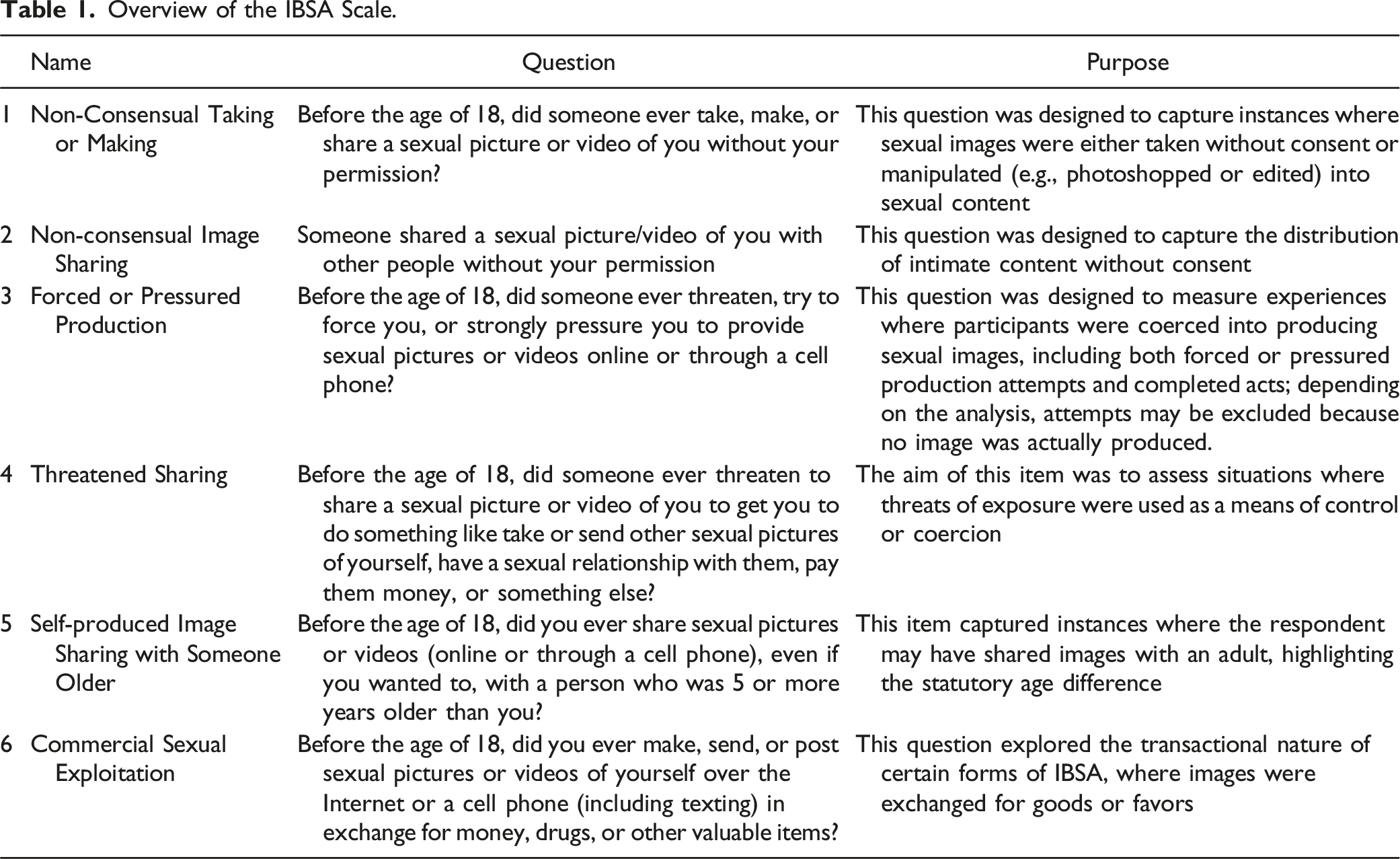
Finkelhor and colleagues identified several specific forms of IBSA: Non-consensual image-taking or making involves the unauthorized capture of intimate images or videos; Non-consensual image-sharing refers to the distribution of intimate content without consent; forced or pressured production involves coercion to provide sexual images or videos, particularly targeting minors who may be more susceptible to pressure; Threatened sharing uses the threat of releasing intimate content as a means of control or blackmail; Self-produced image sharing with someone older occurs when minors share images with significantly older individuals; and commercial sexual exploitation involves coercing minors to send sexual images in exchange for money or goods (Finkelhor et al., 2022, 2023). A recent study conducted according to this framework in the United States among 2639 young adults, revealed that 15.6% experienced online child sexual abuse, while 11.0% reported IBSA during childhood (Finkelhor et al., 2022). Notably, the study found that 88% of image abuse cases involved youth-produced content, significantly higher than previous estimates based on law enforcement data. The prime age of vulnerability was 13–17 years, with 91% of victims falling within this range. Contrary to common assumptions, perpetrators were often peers or intimate partners rather than online strangers (Canadian Centre for Child Protection, 2017; Chauviré-Geib & Fegert, 2024; Gewirtz-Meydan et al., 2018; Gewirtz-Meydan et al., 2019; Schmidt et al., 2023; Stänicke et al., 2024).
While most research focuses on online child sexual abuse, encompassing broad digital harms like grooming and sextortion, IBSA warrants separate attention as a narrower but distinct dimension involving the persistent, non-consensual circulation of explicit images or videos, which can be disseminated, stored indefinitely, and repeatedly accessed, amplifying harm and revictimization (Canadian Centre for Child Protection, 2017; Gewirtz-Meydan et al., 2018). This lack of control over the distribution of their images can create a prolonged sense of vulnerability, revictimization, and emotional distress for the victim. Victims can experience anxiety and shame, knowing that their images could resurface at any time, leading to a continuous cycle of trauma (Canadian Centre for Child Protection, 2017; Gewirtz-Meydan et al., 2018).
Despite the growing prevalence of IBSA and its concerning dynamics (Gewirtz-Meydan et al., 2018; Turner, Finkelhor, & Colburn, 2024), there remains a significant gap in the development of validated and standardized tools to assess IBSA experiences. Many studies continue to use unvalidated measures or adapt tools designed for broader categories of abuse (e.g., Canadian Centre for Child Protection, 2017; Gewirtz-Meydan et al., 2018; Gewirtz-Meydan et al., 2019; Jonsson et al., 2019; Soo et al., 2012; Wolak et al., 2018). Other studies use sources like court verdicts (e.g., Joleby et al., 2021), and specialized databases such as those used in legal and investigative contexts (e.g., Quayle et al., 2018; Salter & Whitten, 2022) to assess IBSA. This gap hinders research efforts to identify prevalence rates and risk factors, as well as clinicians’ ability to screen for IBSA and provide effective interventions.
The Current Study
This study aims to address the gap in standardized measures that assess IBSA experienced before the age of 18 by validating a comprehensive scale based on Finkelhor et al.’s framework (Finkelhor et al., 2022, 2023). The study frames the scale as a formative measure versus a reflective measure. Unlike reflective measures in which the indicators are manifestations of a latent construct that exists independently from the reflective indicators, formative indicators define the conceptual domain of the latent construct. Thus, formative indicators operate independently to capture the distinct forms of IBSA that together delineate the broader domain of IBSA. The cumulative impact of these items aligns with a polyvictimization framework (Finkelhor et al., 2005, 2007, 2011), where the accumulation of independent experiences correlates with heightened psychological and emotional harm. This distinction is critical for accurately assessing the multifaceted nature of IBSA and its unique challenges. The measure integrates six distinct domains—non-consensual taking or making, shared sexual pictures, forced or pressured production, threatened sharing, self-produced image sharing with someone older, and commercial sexual exploitation. Each domain was conceptualized as a distinct contributor to the latent construct, adhering to the principles of formative measurement models (Riebel & Lichtenberg, 2023).
By validating this scale, this study will offer a more complete understanding of the distinct aspects of IBSA, supporting the development of robust theoretical frameworks and tailored interventions in the field of IBSA. It will provide researchers, clinicians, and policymakers with a screening tool that comprehensively captures multiple types of IBSA. By bridging the gap between existing research on traditional child sexual abuse and the emerging challenges of IBSA and exploitation, this study advances theoretical insights and practical methodologies to more effectively operationalize and address the dynamics of IBSA as part of childhood abuse experiences.
Method
Participants
The final sample of participants were 6226 individuals recruited through social media. Eligibility criteria was: 1) currently living in the United States, 2) ages 18–28, and 3) proficiency reading and writing English. Data were collected between June 28, 2023 – April 1, 2024. Study methodology was approved by the [masked for review] Institutional Review Board.
Procedures
The overall study aimed to recruit a diverse sample by oversampling sexual and gender minority (SGM) individuals through targeted enrollment quotas. This approach was especially important given that diverse populations and marginalized groups remain underrepresented in the existing IBSA literature (Parton & Rogers, 2025), limiting the generalizability of past findings and the development of inclusive, responsive measures. These quotas aimed for 50% of participants to be assigned female at birth, 80% to identify as sexual minorities, 20% or more to be Hispanic, 20% to be Black, and at least 20% to be gender minorities. Once these quotas were filled, additional participants matching those demographics were ineligible.
Potential participants saw ads on Facebook and Instagram that included language such as “have your voice heard.” Interested individuals clicked on the ad which directed them to complete a short screener survey. Those eligible were re-directed to a consent document and if consented, the main behavioral survey using the Qualtrics platform. To oversample individuals with experiences of IBSA, the screener included three questions assessing the likelihood of behaviors like sending sexual images, being asked for such images, and discussing the risks of sharing them. Participants who rated their likelihood as 2 or higher on a 5-point scale for the first two questions were initially invited to complete the full survey. As the study progressed, the selection criteria were modified to increase participation from individuals with experiences related to IBSA. Thus, the data are not intended to be representative of the general U.S. population aged 18–28.
A total of n = 8596 participants consent to participant and completed the main behavioral survey. During data cleaning, cases were dropped due to reasons such as declined consent (n = 227), duplicate or suspected fraud (n = 289), incomplete responses (n = 1701), or had no matching screener data (n = 161). After appending cases considered “in-progress” at or above 90% and an additional fraud or duplicate check at that level, the final sample was n = 6226.
The survey took an average of 29.8 minutes to complete. Those who completed the survey and provided a valid U.S. non-P.O. box mailing address were sent a $15 Amazon gift card as a thank-you. Requiring a physical U.S. mailing address for the gift card successfully deterred fraudulent entries from outside of the U.S., a common challenge with online recruitment strategies which offer an email incentive (Pratt-Chapman et al., 2021).
Measures
Overview of the IBSA Scale.
Each item was rated on a 5-point Likert scale ranginf from 1 (“Never”) to 5 (“Most everyday”), and scores were summed to form a composite risk index. Participants scoring in the top decile were considered high risk (9.8%; 95% CI [8.3, 11.5]). The reliability of this measure in the current sample was acceptable (α = 0.69), in line with expectations for short behavioral indices that encompass heterogeneous risk domains. No single validated scale was used in its entirety; rather, the measure was adapted from previously used national surveys with adolescents to capture key risky online behaviors relevant to IBSA exposure.
Data Analysis
IBSA scores were compared across different participant demographic characteristics using a series of t-tests (for variables with 2 categories) and one-way analysis of variance (for variables with 3+ categories). To examine and optimize the factorial structure of the IBSA Scale, we employed Exploratory Graph Analysis (EGA) using the EGAnet R package (Golino et al., 2020). This is a network psychometrics method that applies undirected network models to assess the psychometric properties of questionnaires. EGA was used to determine the number of factors using graphical lasso regularization (Friedman et al., 2008) and to identify the items associated with each factor. Network loadings, which are conceptually similar to factor loadings, were calculated using the net.loads() function. As suggested by Christensen and Golino (2021), general effect size guidelines for network loadings are 0.15 for small, 0.25 for moderate, and 0.35 for large effects. The stability of the EGA model—specifically, the stability of the number of factors—was evaluated using Bootstrap Exploratory Graph Analysis with 5000 resampling cycles. Additionally, the stability of each item’s loading (i.e., the extent to which items switch factors) was assessed using the itemStability() function. To further validate the structure of the questionnaire, we conducted a Confirmatory Factor Analysis (CFA) using the lavaan package for Structural Equation Modeling (SEM) in R, employing maximum likelihood estimation with robust standard errors and mean- and variance-adjusted test statistics.
Next, we employed Multi-Trait Multi-Method (MTMM) analysis (Höfling et al., 2009) to assess the convergent and discriminant validity of the IBSA scale. The analysis was performed using the mtmm() function from the psy R package. MTMM examines correlations within and between clusters, where each item is treated as a unit of analysis. Strong psychometric indices are indicated by high within-cluster correlations (e.g., high correlations between all items in the IBSA scale), moderate between-cluster correlations for items from related theoretical constructs (indicative of convergent validity), and weak between-cluster correlations for items from unrelated constructs (indicative of discriminant validity). In the present study, convergent validity was assessed using the peer norms and online risky behaviors questionnaires, while discriminant validity was evaluated using the group connectedness questionnaire.
Results
Characteristics of Participants by IBSA Score
Characteristics of Participants by IBSA.
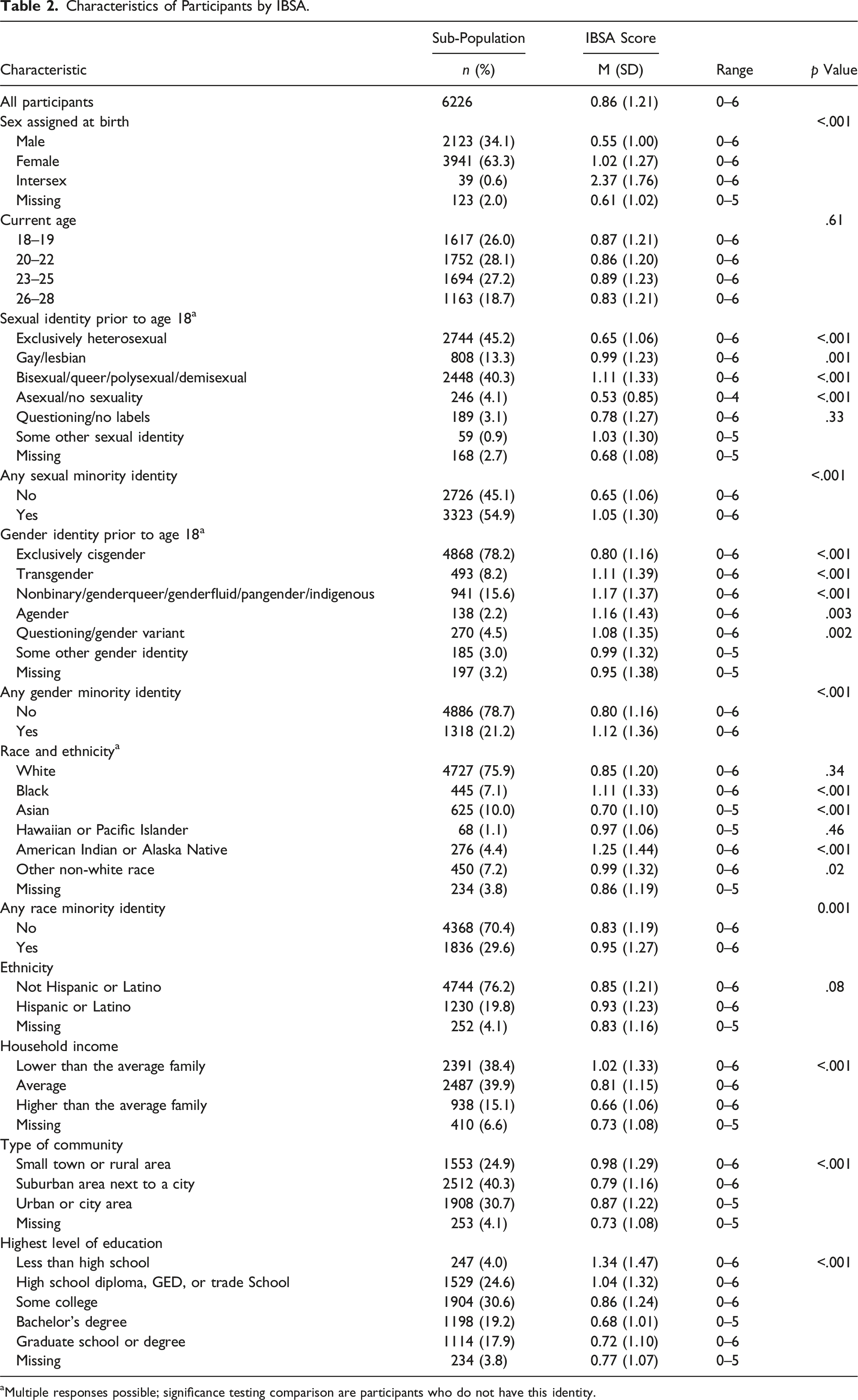
aMultiple responses possible; significance testing comparison are participants who do not have this identity.
Differences were also noted by sexual and gender identity with participants who identified as a sexual minority prior to age 18 reporting higher IBSA scores (M = 1.05, SD = 1.30) compared to non-sexual minority particpants (M = 0.65, SD = 1.06, p < .001). This was also true for participants who identified as a gender minority prior to age 18 with higher IBSA scores (M = 1.12, SD = 1.36) compared to non-gender minority participants (M = 0.80, SD = 1.16, p < .001). Black participants (M = 1.11, SD = 1.33) and American Indian or Alaska Native participants (M = 1.25, SD = 1.44) also had signfiicnatly higher IBSA scores than participants who did not identify with that race. Significant IBSA score differences were also noted by household income and highest level of education with scores the highest among lower income and less educated participants as detailed in Table 2.
Exploratory Graph Analysis
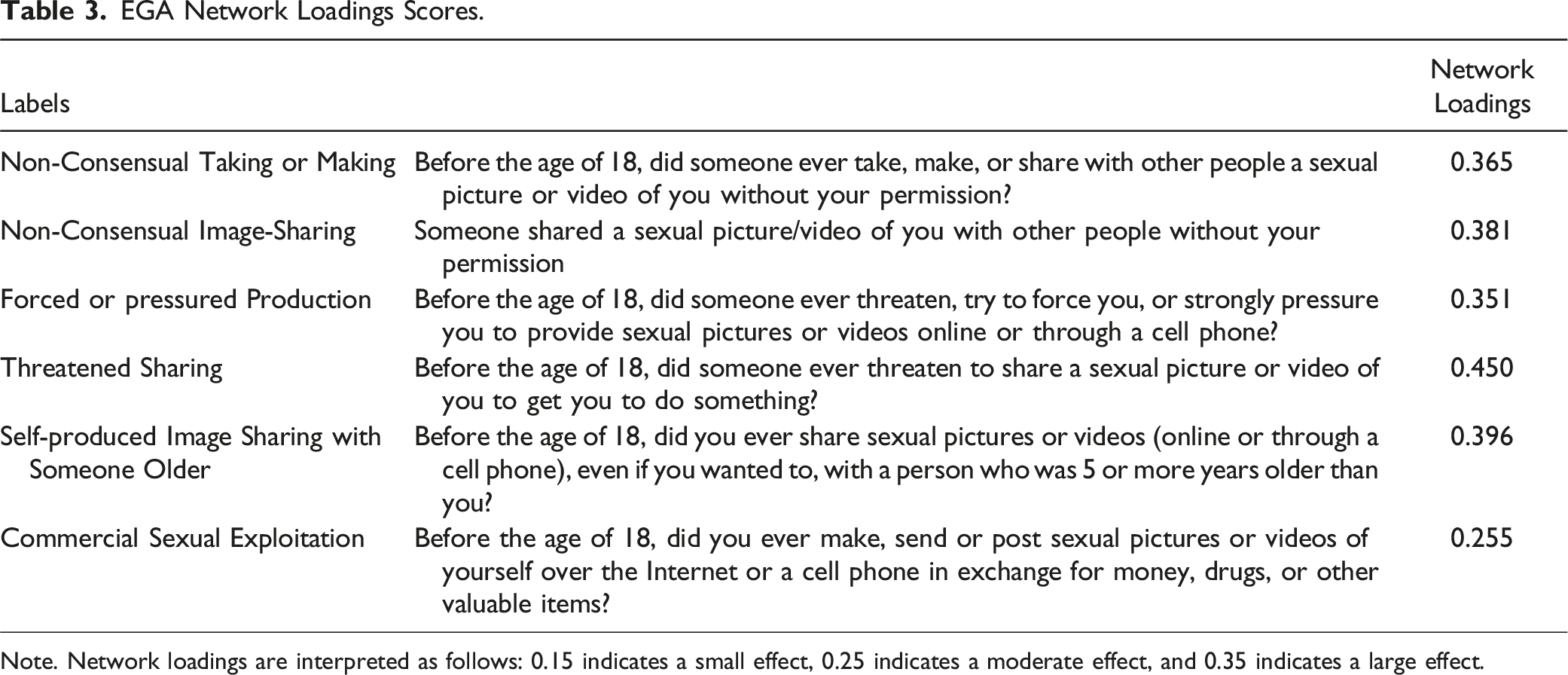
The initial EGA of the IBSA scale indicated that the factorial structure comprised one factor. When estimating the stability of the EGA by bootstrapping with 5000 resampling cycles, the analysis indicated exceptionally high structure and item stability, with all cycles supporting a cohesive structure and 100% stability of all items. The EGA is presented in Figure 1, and network loadings are in Table 3. The network loadings indicate that all items except “Commercial Sexual Exploitation” had strong associations with the latent factor, whereas “Commercial Sexual Exploitation” had only a moderate association. A confirmatory factor analysis that was used to corroborate the EGA solution verified the factorial structure, χ
2
(9) = 102.17, p < .01, robust CFI = .99, robust TLI = .99, RMSEA = .041 (90% confidence interval [CI] of .034, .048), SRMR
bentler
= .042. Exploratory graph analysis (EGA) of the IBSA. Blue paths represent positive associations between nodes (i.e., items); the color intensity, length, and width of the paths reflect the strength of the edges (i.e., associations). EGA Network Loadings Scores. Note. Network loadings are interpreted as follows: 0.15 indicates a small effect, 0.25 indicates a moderate effect, and 0.35 indicates a large effect.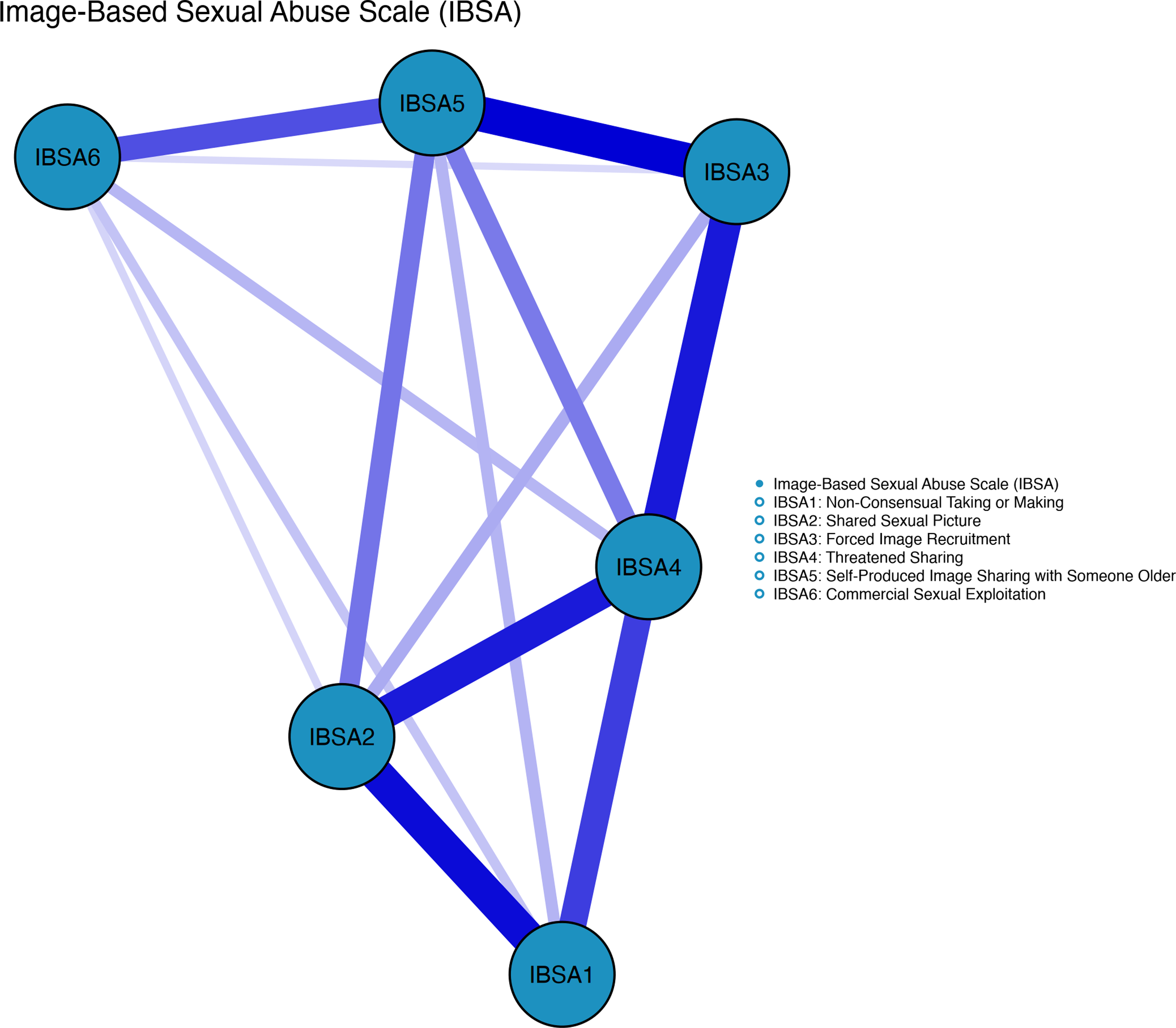
Multi-Trait Multimethod Analysis for Appraising Convergence and Discriminant Validity
The results of the Multi-Trait Multi-Method analysis are summarized in Figure 2. The analysis showed that the within-cluster correlations of the IBSA scale items were moderate to strong, with a mean correlation of r = .40. Convergent validity was also high, as demonstrated by moderate to strong correlations between IBSA scale items and peer norms (rmean = .41) and online risky behaviors (rmean = .24). Discriminant validity was evidenced by a low average correlation (rmean = −.06) between IBSA scale items and group connectedness, indicating that the IBSA scale effectively distinguishes between unrelated constructs. Multi-trait multi-method (MTMM) results. The analysis shows strong psychometric indices by revealing high within-cluster correlations (e.g., high correlations between all items in the IBSA scale), moderate between-cluster correlations between IBSA items and peer norms and online risky behavior (indicative of convergent validity), and weak between-cluster correlations for between IBSA and group connectedness (indicative of discriminant validity).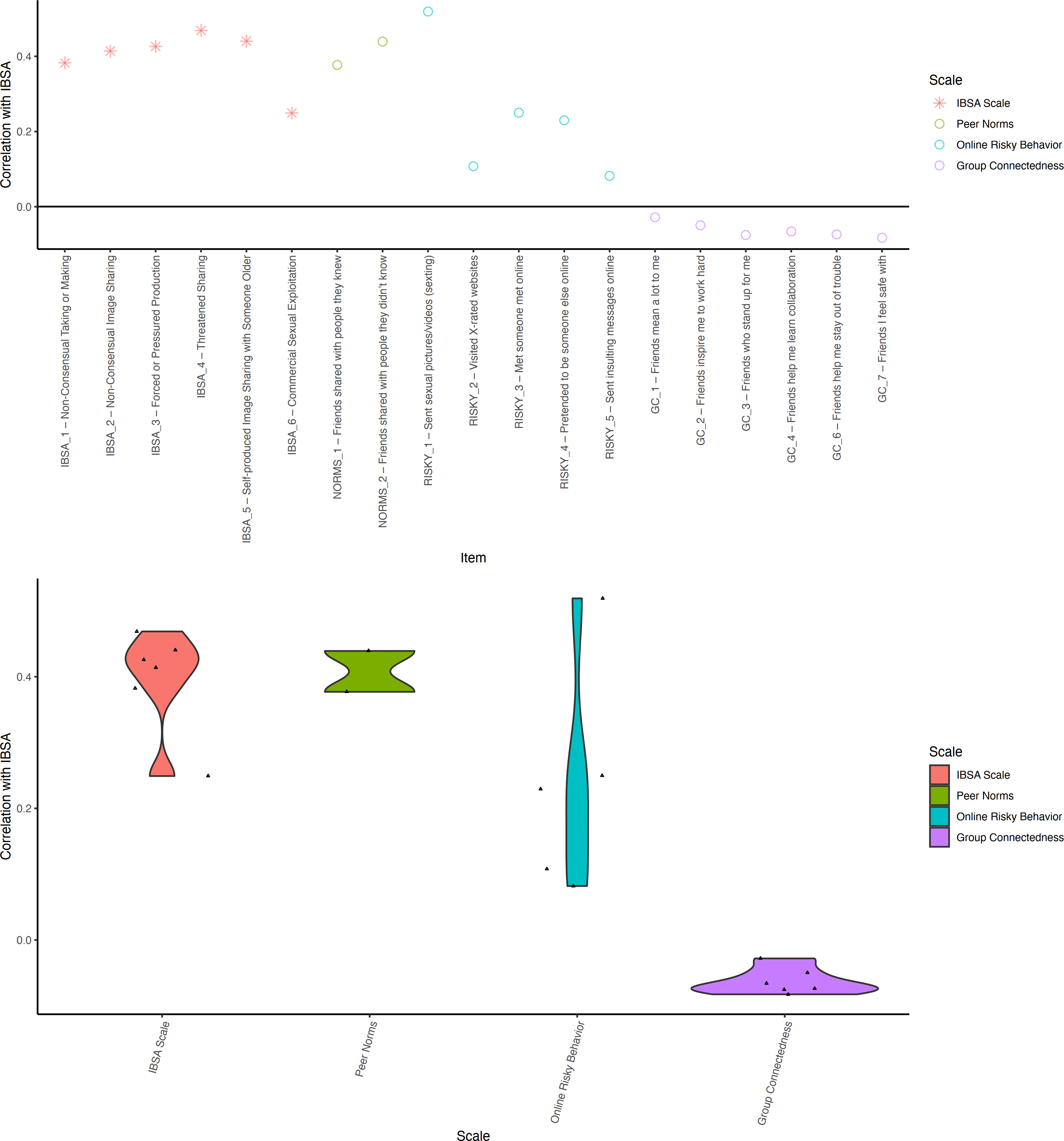
IBSA Scale Scores Across Sociodemographic Variables
IBSA scale average scores across sociodemographic variables are presented in Table 2. Significant differences were found based on sex assigned at birth, with intersex individuals scoring the highest (M = 2.37, SD = 1.76), followed by females (M = 1.02, SD = 1.27), and males scoring the lowest (M = 0.55, SD = 1.00) (p < .001). Sexual identity also showed variation, with bisexual/queer/polysexual/demisexual individuals scoring the highest (M = 1.11, SD = 1.33) compared to exclusively heterosexual individuals (M = 0.65, SD = 1.06) (p < .001). Gender minorities scored significantly higher (M = 1.12, SD = 1.36) than cisgender individuals (M = 0.79, SD = 1.16) (p < .001). Race/ethnicity differences were also found, with American Indian or Alaska Native participants scoring the highest (M = 1.25, SD = 1.44), and Asians the lowest (M = 0.70, SD = 1.10). Income level showed a clear trend, with lower-income participants scoring higher (M = 1.02, SD = 1.33) (p < .001). Participants from rural areas also scored higher (M = 0.98, SD = 1.29) than those from suburban/urban areas (p < .001). Lastly, education level had a significant impact, with those having less than a high school education scoring the highest (M = 1.34, SD = 1.47) (p < .001).
Discussion
In this study, we aimed to develop and validate the IBSA scale to assess the cumulative burden experiences of IBSA during childhood. Given the rising prevalence of IBSA and its profound psychological impacts (Finkelhor et al., 2022, 2024; Paradiso et al., 2024), having a measure is crucial for understanding the diverse scope of these behaviors and informing prevention and intervention efforts. Our findings indicate that the IBSA demonstrates excellent psychometric properties, including structural stability, and robust evidence for both convergent and discriminant validity. The results of our EGA suggest that the IBSA has a cohesive structure and 100% stability of all items, meaning there were no items with potential misfit. All six core items contribute independently to the scale, consistent with the framework proposed by Finkelhor and colleagues (2023), which conceptualizes IBSA as a multifaceted phenomenon but unified by the overarching theme of sexual exploitation through imagery.
The CFA findings further strengthened the validity of the IBSA scale by confirming its cohesive structure. The excellent model fit indices suggest that, while IBSA can manifest in various forms—such as non-consensual image sharing, threatened sharing, and commercial sexual exploitation (Chauviré-Geib & Fegert, 2024; Finkelhor et al., 2023; Turner, Finkelhor, & Colburn, 2024) – these behaviors are interconnected. This supports the hypothesis that, despite differences in the specific actions or contexts of IBSA, the victimization experiences may share a core set of emotional and cognitive impacts (Chauviré-Geib & Fegert, 2024). These interconnected experiences may stem from shared feelings of powerlessness, betrayal, and loss of control, which are often reported by victims of sexual exploitation (Canadian Centre for Child Protection, 2017; Gewirtz-Meydan et al., 2018; Stänicke et al., 2024). The psychological mechanisms, such as chronic anxiety, shame, and fear of revictimization, likely arise regardless of the specific form of IBSA, whether it involves the unauthorized sharing of intimate images or coercive recruitment to produce such content. However, it is important to note that these findings do not imply the existence of a unidimensional latent structure driving these experiences. Rather, their connection may be analogous to the associations observed between different types of abuse in polyvictimization research (Finkelhor et al., 2005, 2007, 2011), where various forms of victimization often co-occur without being driven by a single underlying construct.
Nonetheless, a nuanced interpretation is required when considering these findings in the context of the scale’s validity. The coherence of the scale items alone does not necessarily confirm either form of validity. For example, certain extraneous factors, such as the number of dating partners, could exhibit strong associations with IBSA items, introducing potential confounds that may obscure the intended construct. To address these concerns, systematic evaluations by legal professionals, researchers, and advocates are essential. Such evaluations can assess whether the items appropriately define and delimit the construct of IBSA, effectively capturing its multifaceted nature while avoiding the inclusion of tangential or irrelevant elements. These steps are critical for enhancing the scale’s theoretical robustness and practical applicability in research and clinical contexts.The IBSA scale demonstrated strong convergent validity, with moderate to high correlations with related constructs, such as peer norms around sharing sexual material and online risky behaviors. These findings align with previous research indicating that individuals who experience IBSA are often embedded in social environments where such behaviors are normalized (Quayle et al., 2018). The strong relationship between IBSA experiences and risky online behaviors (Turner et al., 2023) further underscores the importance of addressing digital literacy and the risks associated with online interactions, particularly for minors. The weak correlation between IBSA experiences and social connectedness supports its discriminant validity, suggesting that, while social withdrawal and isolation can be responses to IBSA experiences (e.g., Bates, 2017), the scale captures experiences that are distinct from general social isolation or lack of social support.
Finally, our analysis revealed several important sociodemographic trends in the IBSA experiences scale. Females, individuals identifying as sexual minority or gender minority, reported higher endorsement of IBSA items than their male, heterosexual, and cisgender counterparts, respectively. These findings are consistent with the broader literature, which highlights that marginalized groups are at increased risk for online sexual victimization due to factors such as social stigma, discrimination, and increased vulnerability (Turner, Finkelhor, Mitchell, & Colburn, 2024). Additionally, individuals that report lower-income and those with less education reported higher levels of IBSA, suggesting that socioeconomic factors may exacerbate the risk of exploitation. Interestingly, while some research has shown that IBSA victims are more often from high socioeconomic backgrounds, likely due to greater Internet usage (Pedersen et al., 2023; Sklenarova et al., 2018), low parental socioeconomic status is associated with reduced resources, lower parental involvement, and greater family adversity (Bøe et al., 2014; Kalil & Ryan, 2020) – all of which can increase the risk of online sexual abuse for youth from disadvantaged backgrounds. Finally, participants from rural areas reported higher levels of IBSA compared to their urban counterparts, which may reflect differences in access to technology, online behaviors, or social norms regarding privacy and sexual activity in different communities. It is important to note that these findings reflect current socioeconomic and living conditions and do not necessarily represent experiences during childhood – thus should be interpreted cautiously.
Limitations
While the IBSA scale demonstrates strong psychometric properties, there are some several significant limitations that warrant careful consideration. While the IBSA scale provides a valuable tool for assessing the accumulated burden of IBSA, it does not capture the full complexity of the IBSA phenomenon. One key limitation is the lack of follow-up questions, which restricts the depth of information captured. For instance, while the scale assesses whether participants experienced threats related to image sharing, it does not clarify whether the participant ultimately complied or if the image was shared. Similarly, for items such as self-produced image sharing with someone older sharing images with older adults, the scale cannot determine whether the perpetrator was an adult or a peer, even though the question specifies that participants consider a person 5 or more years older. This framing could, for instance, capture interactions between an 11-year-old victim and a 16-year-old perpetrator. These nuances are critical for understanding the context of abuse, and future research should incorporate follow-up questions to address them.
There is currently no universally agreed-upon definition of IBSA within the academic field or legal systems, which adds complexity to both the design and interpretation of the scale. This lack of consensus raises challenges in ensuring that the scale comprehensively and accurately reflects the experiences it aims to measure. Additionally, the scale may be overly inclusive, capturing experiences that might not ultimately be classified as “abuse” or “image-based abuse” (e.g., instances where pressure to share images did not result in an image being created or shared). Conversely, the scale may also be insufficiently inclusive, potentially omitting experiences that could later be recognized as part of the phenomenon (e.g., consensual image sharing among youth, which is criminalized in some jurisdictions but not assessed by the scale).
The cross-sectional nature of the data also precludes causal inferences about relationships between IBSA and associated outcomes, emphasizing the need for longitudinal research to explore how cumulative IBSA experiences impact mental health, relationships, and well-being over time. The oversampling of SGM individuals and the screening for IBSA experiences limit the generalizability of findings, though these methods are crucial for addressing heightened risks in these populations. Reliance on self-reported data introduces potential recall bias, and future research could benefit from qualitative or mixed-methods approaches to better understand the nuances of IBSA experiences. Additionally, the lack of a validated cutoff score prevents clear differentiation between victims and non-victims, emphasizing the need for further validation. The study’s focus on young adults (18–28) also raises concerns about the applicability of findings to younger populations and the reliability of retrospective reporting. Finally, as the digital landscape continues to evolve, the emergence of new technologies—including, for example, AI-generated imagery and deepfake capabilities—may give rise to novel forms of image-based abuse (Flynn et al., 2022). These advancements underscore the need for periodic reassessment and potential modification of the scale to ensure its continued relevance and comprehensiveness in capturing the shifting dynamics of IBSA.
Future Research Directions
Two items in the scale assess behaviors on the part of the youth, such as sharing images with significantly older individuals, prompting questions about the context and agency involved. These items may reflect coercion, peer dynamics, or power imbalances; however, without follow-up questions, these distinctions remain unclear. Future research should delve into the broader dynamics of IBSA, examining its progression over time and its interaction with other risk factors.
While the scale effectively captures the cumulative burden of IBSA, it does not offer insight into which specific experiences most significantly contribute to psychological or emotional impacts. Future research should investigate how each dimension of IBSA uniquely affects mental health outcomes, providing a nuanced understanding of the relative significance of different victimization experiences. Such analyses could enhance the clinical and research applicability of the scale by identifying key dimensions that warrant focused interventions.
Incorporating qualitative or mixed-methods approaches could further enrich understanding of IBSA, particularly regarding its context and consequences. Additionally, future studies should assess the test-retest reliability of this scale, a critical component of robust scale validation. This step will be essential in refining the scale and enhancing its ability to accurately capture the complexities of image-based abuse.
Finally, a particularly damaging aspect of IBSA is its potential for re-traumatization (Canadian Centre for Child Protection, 2017; Gewirtz-Meydan et al., 2018). Unlike many other forms of abuse, IBSA involves a unique temporal and digital permanence—the persistent fear that explicit images may resurface unexpectedly, be shared with new audiences, or be used to regain power over the victim (Gewirtz-Meydan et al., 2018). This ever-present threat undermines a sense of closure and safety, contributing to chronic anxiety, shame, hypervigilance, and emotional exhaustion (Paradiso et al., 2024). These psychological impacts may persist long after the initial incident, creating a cyclical pattern of trauma that traditional abuse measures often fail to capture. To address this gap, future iterations of the IBSA scale should incorporate follow-up items that assess perceived ongoing threat, emotional responses to the potential reappearance of content, and coping strategies employed to manage digital vulnerability. Doing so would enable researchers and clinicians to more accurately assess the lasting psychological toll of IBSA and to develop trauma-informed interventions that reflect the full scope of the victim’s lived experience.
Theoretical and Clinical Contributions
The development and validation of the IBSA Scale offers critical advantages in both clinical and theoretical domains. Theoretically, a validated measure significantly contributes to the advancement of research in the field. It provides a formative standardized tool that enables researchers to consistently assess IBSA across different studies, making it easier to compare findings and draw more accurate conclusions. This standardization is vital for building a comprehensive understanding of the different forms of IBSA and their associated factors, including predictors, demographic variations, and psychological implications. By using a consistent tool, researchers can more accurately identify the unique contribution of IBSA to specific vulnerabilities and outcomes linked to IBSA.
Clinically, the IBSA scale provides practitioners with a promising tool to assess the specific experiences of IBSA victimization. A validated measure ensures that clinicians can accurately identify the types and severity of abuse that a survivor has endured, enabling them to tailor interventions more effectively. This specificity enhances the therapeutic process, allowing for more personalized and trauma-informed care. By distinguishing the core trauma related to IBSA from other issues, such as non-filmed child sexual abuse, a validated tool ensures that treatment is focused on the direct emotional harms caused by the IBSA, leading to more effective outcomes. Clinicians also play a crucial role in identifying and responding to IBSA, as their screening practices and clinical insights not only guide individual care but also contribute to understanding broader patterns of victimization. Including clinicians in prevalence research helps bridge the gap between lived experiences and system-level responses, ensuring that IBSA is more effectively recognized, addressed, and prevented within mental health and healthcare settings. Overall, the availability of a validated measure improves both the quality of research, and the care provided to survivors.
Conclusion
This study offers promising tool for assessing the cumulative burden IBSA through a formative framework, capturing distinct dimensions of victimization experienced during childhood and adolescence. As digital technologies evolve, this scale offers a valuable resource for researchers, clinicians, and policymakers to screen for IBSA and better understand and address IBSA. Future use of this scale should consider its limitations by incorporating follow-up questions.
Footnotes
Declaration of Conflicting Interests
The author(s) declared no potential conflicts of interest with respect to the research, authorship, and/or publication of this article.
Funding
The author(s) disclosed receipt of the following financial support for the research, authorship, and/or publication of this article: All phases of this study were supported by NIJ grant 5PNIJ-21-GG-02983-MUMU. The research presented in this paper is that of the authors and does not reflect the official policy of the US Department of Justice.
