




Abstract
This study investigates attachment style and gender as predictors of ratings of warning signs of intimate partner violence. University students (N = 349, 269 women, 60 men, 15 non-binary individuals, and 5 who did not report their gender) completed the Experiences in Close Relationships Questionnaire-Relationship Structure Questionnaire (attachment style) and rated how strongly each of 25 red flag behaviours was indicative of warning signs of abuse, on a scale from 1 (not at all a red flag) to 4 (very much a red flag). An exploratory factor analysis of the red flag behaviours suggested two factors consisting of controlling and surveillance behaviours and intimidating and threatening behaviours, in contrast to the five-factor structure initially proposed by the scale authors. Anxious attachment significantly predicted lower ratings for the controlling and surveillance red flag behaviours. Gender significantly moderated the relationship between avoidant attachment and both controlling and surveillance red flag behaviours and intimidating and threatening red flag behaviours. For men, higher levels of avoidant attachment were associated with higher ratings of these behaviours as red flags, while women’s ratings remained stable regardless of their avoidant attachment. This suggests that avoidantly attached men are more likely to identify these behaviours as highly indicative of red flags compared to women. Overall, the findings indicate that gender and attachment type influence how red flags are perceived, and that anxiously attached individuals may selectively interpret these behaviours. Avoidantly attached men may better recognize red flags as warnings than avoidantly attached women, who might overlook certain behaviours as indicators of intimate partner violence.
Introduction
Intimate partner violence (IPV) is characterized by any form of aggression or violence committed by a current or former romantic partner (World Health Organization [WHO] & World Bank, 2011). IPV remains a serious issue that many individuals face globally and is a significant infringement of human rights. Individuals who experience IPV are at a higher risk for physical injury, mental health disorders, suicide, and homicide (World Health Organization [WHO] & Pan American Health Organization, 2012). Previous exposure to IPV in childhood, childhood sexual and physical abuse, economic stress, and low education have also been consistently linked to a heightened risk of IPV victimization (L. M. Murphy, 2011; Vatnar & Bjørkly, 2008; WHO & Pan American Health Organization, 2012). As such, extensive research has been done to determine which methods work best to prevent IPV from occurring. For example, shifting power imbalances, increasing communication, and supporting the economic empowerment and skill development of women have been shown to be effective in IPV prevention (Starmann et al., 2017; Stern & Carlson, 2019).
Another method of IPV prevention is early identification and pre-emptively addressing warning signs, also termed “red flags” (Kearney & O’Brien, 2018), that may predict future violence. Individuals who experience behaviours that are indicative of warning signs of abuse in the context of romantic and intimate partner relationships are more likely to experience IPV in the future (Charlot et al., 2023). The ability to detect these signs should allow individuals to initiate various precautionary techniques, potentially preventing them from experiencing victimization. However, there is currently a paucity of research addressing the significance of individual differences and the ability to detect and label warning signs of IPV.
By shifting the focus from intervention efforts post-IPV to pre-violence prevention, the findings underscore the value of identifying and addressing risk factors before violence emerges. The present research examines how gender and attachment style influence one’s rating of warning signs of impending partner violence.
Red Flags
Partner violence does not always initially present as acts of physical aggression. Certain red flag behaviours such as monitoring, controlling, demeaning one’s partner, jealousy, and small acts of aggression may be present before the violence progresses and escalates (Kearney & O’Brien, 2018). Red flag behaviours can seem innocuous at first; however, they can lead to serious harm if not addressed. In fact, frequency and number of red flag behaviours have been shown to predict abuse in as little as 6 months (Charlot et al., 2023). Kearney and O’Brien (2018) propose five categories of red flags: controlling behaviours (i.e. restricting one’s autonomy), demeaning behaviours (i.e. belittling a partner), monitoring behaviours (i.e. monitoring a partner’s whereabouts and actions), threatening and aggressive behaviours (i.e. intimidation with physical violence), and jealous and possessive behaviours (i.e. demanding a partner’s attention and time). These actions lie on a continuum, with some being considered forms of abuse while others are signs that lead to abuse. Often, the victim only in hindsight realizes that the behaviours were warning signs for future impending abuse (Murphy et al., 2012). In fact, young people can misinterpret dating violence warning signs as acts of affection and thus find themselves in harm’s way later in their relationships (Kearney & O’Brien, 2018). For example, one’s partner insisting that they spend more time with them could develop into the potential victim being isolated from their friends and loved ones. Adolescent girls have been shown to be unaware of the seriousness of specific warning sign behaviours, particularly jealousy and possessiveness (K. A. Murphy & Smith, 2010). In addition, gender roles can also contribute to the misidentification of red flag behaviours. For example, forms of economic abuse may be missed as couples argue about money and are normalized in society (Wilson et al., 2024).
IPV can happen to anyone; however, there are harmful stereotypes that perpetuate the idea that men cannot be victims of IPV (Russell et al., 2025). Recent research suggests that the lifetime prevalence of IPV is comparable between men (44.2%) and women (47.3%; Basile et al., 2022). Nevertheless, there remains a gap between violence prevention efforts for men and women victims. While rates of IPV may vary, women have been shown to incur the most harm from violence, as women often face more serious negative outcomes of IPV (Fanslow et al., 2023). National studies have shown that women between 18 and 24 experience one of the highest levels of IPV (Black et al., 2011). In fact, rates of IPV across college campuses are shown to range between 6 and 64% (An et al., 2024). The unique college environment has been thought to exacerbate violence through an abusive partner feeling threatened by a victim trying to better themselves and therefore turning to controlling their partner (Tsui & Santamaria, 2015). It is therefore crucial to understand the phenomenon of warning signs of IPV, given that this is a particularly crucial time for young people as they enter a new dating environment.
Attachment Style
The dynamic one has with their partner will undoubtedly contribute to the health of their relationship. Previous research has found associations between partner attachment styles and IPV perpetration (Pollard & Cantos, 2021). Bowlby’s (1978) attachment theory first described how infants and children bond with their caregivers and then later described how these early patterns of attachment carry over to adult relationship attachment habits. Individuals can range along the continuums of avoidantly attached and anxiously attached. Building on Bowlby’s (1978) pioneering work on infant-caregiver attachment, researchers extended the theory to adult romantic relationships (Hazan & Shaver, 1990; Johnson & Whiffen, 1999). This body of research identifies two primary insecure attachment styles: anxious and avoidant. As described by Johnson and Whiffen (1999), individuals who score high on anxious attachment tend to fear rejection, crave closeness from their partner, and have a harder time getting over breakups. Individuals scoring high on avoidant attachment, on the other hand, tend to place an emphasis on self-reliance and independence. These individuals may distance themselves from a partner while also having issues forming close emotional bonds (Miyagawa & Kanemasa, 2022). Finally, securely attached individuals, characterized by low levels of both anxious and avoidant attachment, are comfortable with intimacy, able to effectively communicate their needs, and are more open and trusting towards their partners (Collins et al., 2002).
A meta-analysis conducted by Spencer et al. (2021) found that both anxious and avoidant attachment styles predict victimization and perpetration of physical intimate partner abuse. Notably, for women, the association between avoidant attachment and IPV victimization was stronger compared to men, suggesting gender-specific dynamics in how attachment style influences IPV risk. Relatedly, women with insecure attachment styles also tend to hold ideologies that minimize minor violence and generally tolerate both psychological and physical violence, for instance, by supporting violence attributed to external causes such as alcohol consumption and excusing violence by blaming the woman’s behaviour (e.g. if she was unfaithful; Almeida et al., 2023).
Research investigating the links between attachment style and IPV perpetration suggests that individuals with different insecure attachment styles may perpetrate IPV for distinct reasons. For instance, individuals with anxious attachment may consider their partners untrustworthy, engage in violence and aggression to control partners, and perpetuate violence to deter their partners from initiating or seeking intimacy from them (Spencer & Keilholtz, 2020). In contrast, those with avoidant attachment may engage in IPV perpetration as a way to maintain emotional distance or assert autonomy within the relationship (Arseneault et al., 2023).
However, findings related to avoidant attachment are less consistent and robust compared to anxious attachment. While some studies and meta-analyses report significant moderate associations between avoidant attachment and various forms of IPV perpetration and victimization (Spencer et al., 2021), others find weaker or non-significant effects (Pollard & Cantos, 2021; Velotti et al., 2018). This mixed evidence suggests that the relationship between avoidant attachment and IPV is complex, warranting further investigation.
While research provides evidence for insecure attachment styles predicting both IPV perpetration and victimization, there remains a significant gap in understanding how attachment style influences the perception of red flag behaviours that precede IPV. In other words, we lack insight into how an individual’s attachment style shapes their ability to identify and rate the severity of early warning signs of abuse. Individuals with attachment anxiety exhibit a hyperactivation of the attachment system, which is thought to bias attention toward cues of potential rejection or abandonment. Conversely, those high in attachment avoidance may rely on deactivation strategies that can manifest as suppression of negative information about one’s partner or the rationalization of problematic behaviours (Dykas et al., 2014). Therefore, in relation to acknowledging red flag behaviours, attachment-related cognitive biases may explain why anxious and avoidant individuals diverge in both the detection and interpretation of warning signs of abuse. This avenue of research is important to investigate because understanding how attachment style influences the perception of red flags could help explain why some individuals are more vulnerable to IPV or are more likely to stay in abusive relationships. Gaining insight into this relationship is also crucial for developing targeted and effective prevention and intervention programmes.
Current Study
The aim of this study is to investigate attachment style and gender as predictors of how college-aged students identify and rate red flags (warning signs) of IPV. We specifically sought to clarify whether individuals with an insecure attachment are able to accurately identify behaviours that precede IPV, or whether they tend to discount or cognitively minimize these behaviours through a deliberate or unconscious re-evaluation that reduces perceived severity of red flags. By examining these relationships, our research aims to shed light on how attachment shapes the interpretation of behaviours that typically precede violence.
Attachment style may shape how early warning signs are interpreted. We propose that those with anxious attachment may misinterpret or tolerate red flags due to fears of abandonment and a need for reassurance. These biases may interfere with the ability to recognize and appropriately respond to early signs of abusive behaviour, thereby increasing vulnerability to IPV victimization. We also hypothesize that this potential tendency to downplay warning signs of IPV in anxiously attached individuals will be stronger for women, as research suggests that women high in anxious attachment experience greater overall relationship distress (Muetzelfeld et al., 2020), which may heighten their focus on maintaining relational harmony despite warning signs.
Conversely, the role of avoidant attachment is likely more complex. Individuals scoring high on avoidant attachment might either downplay or dismiss such red flag behaviours to maintain emotional distance or, alternatively, be more attuned to such red flags. The latter could be due to a heightened sensitivity to threats to their autonomy and a tendency to seek reasons to exit relationships they perceive as unsafe or overly demanding (Bretaña et al., 2022; Jang et al., 2002; Meyer et al., 2005). This dual possibility reflects the mixed and sometimes contradictory findings in the literature regarding avoidant attachment’s role in IPV perception and response. Given this inconsistent evidence, we treated the analyses related to avoidant attachment as exploratory.
Methods
Participants
The sample consisted of 349 Western University undergraduate students, all aged 18 years and older. Of these, 56% were between the ages of 19 and 25. Specifically, 90 participants were aged 18 years, 195 were aged 19 to 25, 34 were aged 26 to 30, 24 were aged 31 to 49, and 6 participants were over the age of 40. The sample included 269 women, 60 men, 15 non-binary individuals, and five participants who did not report their gender. The sample was predominantly Caucasian (n = 213), followed by East/Southeast Asian (n = 65). Regarding sexual orientation, majority of the sample identified as heterosexual (n = 249), followed by bisexual (n = 50), queer (m = 18), asexual (n = 9), pansexual (n = 7), lesbian (n = 8), gay (n = 4), unlabelled (n = 1), and three did not report their sexual orientation. In terms of relationship history, 246 participants indicated that they have been in a romantic relationship in the past, whereas 103 participants indicated that they had never been in a romantic relationship. At the time of the study, the majority of the sample was single (n = 220), with the remainder dating (n = 93), married (n = 19), engaged (n = 8), in a common-law relationship (n = 7), or divorced (n = 2). One hundred twenty-seven participants indicated that they had experienced some form of IPV in the past, 119 indicated they had never experienced any IPV, and 103 participants did not respond to the question.
Measures
Demographics
The demographic survey included questions about age, education, ethnicity, gender, and current relationship status and length. The demographic questionnaire also included two questions assessing prior experiences with IPV. Participants were asked: Has any partner ever/Have you ever (select all that apply): (1) Hit, kick, or otherwise physically hurt you; (2) Forced you into sexual activities against your will; (3) Done things to make you feel afraid of them; (4) Done things to try and intimidate you or control your thoughts, feelings, or actions; (5) I have not experienced any of these things.
Attachment Style
The Experiences in Close Relationships Questionnaire-Relationship Structure Questionnaire (ECR-RS; Fraley et al., 2011) was used to measure attachment. This is a 9-item scale assessing experiences in close relationships. These items evaluate two subscales: attachment anxiety, which measures the fear of abandonment and rejection within a relationship (3 items, e.g. “I’m afraid this person may abandon me”), and attachment avoidance, measuring discomfort with closeness in a relationship (6 items, e.g. “I don’t feel comfortable opening up to this person”). Items are rated on a scale of 1 (strongly disagree) to 7 (strongly agree). This scale is widely used to measure attachment style and has been validated in several different age groups and languages (Moreira et al., 2015; Zortea et al., 2019). Our sample yielded a Cronbach’s alpha of α = .88 for anxious attachment and α = .86 for avoidant attachment.
Red Flag Behaviours
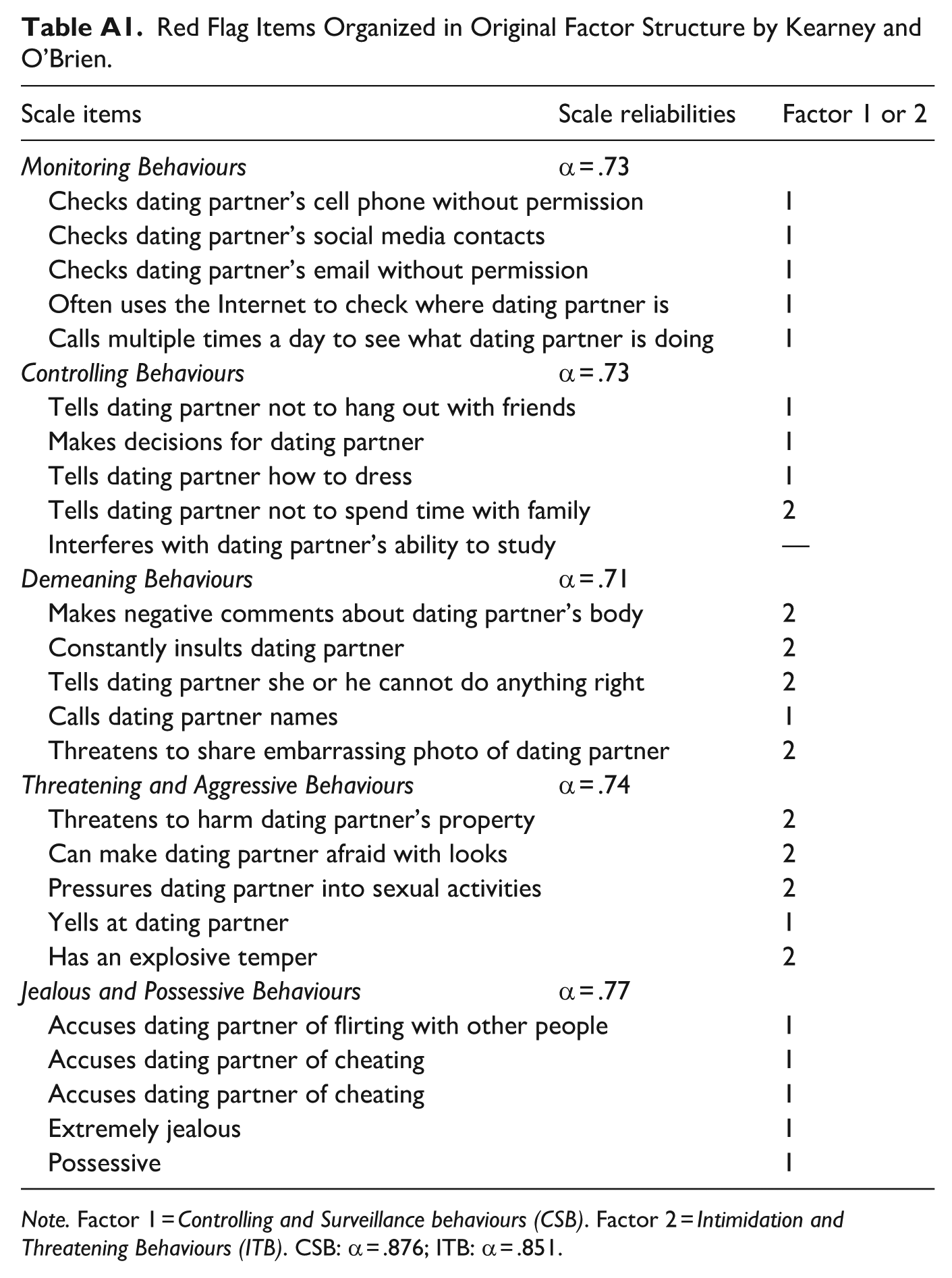
Participants filled out the 25-item Relationship Red Flags Scale (Kearney & O’Brien, 2018). Participants read a list of 25 red flag behaviours and rated them from 1 (not at all a red flag) to 4 (very much a red flag). Before completing the scale, participants were provided with the following definition of a red flag: “warning signs for impending violence (physical, emotional, psychological, etc.) in a romantic relationship.” They were instructed to consider this definition while rating each item. Examples of the red flag behaviours are “calls dating partner names” and “yells at dating partner.” Our sample yielded a Cronbach’s alpha of α = .910 for all items. Following an exploratory factor analysis (EFA) that revealed a two-factor structure, factor 1 (controlling and surveillance behaviours) demonstrated a Cronbach’s alpha of α = .872, and factor 2 (intimidating and threatening behaviours) demonstrated a Cronbach’s alpha of α = .855. The original scale was designed to capture five factors of red flag behaviours in romantic relationships: Monitoring Behaviours, Controlling Behaviours, Demeaning Behaviours, Threatening and Aggressive Behaviours, and Jealous and Possessive Behaviours (see Table A1 in Appendix A for a list of items and their classification within the original five-factor structure).
Procedures
Participants were recruited through the Western University SONA system or through a mass email recruitment sent to all undergraduate students at Western University during the spring of 2023. Participants filled out the surveys online through the Qualtrics data collection platform. Participants first filled out the demographic questionnaire, then the ECR-RS, followed by the red flag questionnaire.
Results
Descriptive statistics and correlations between measures are reported in Table 1.
Descriptive Statistics and Bivariate Correlations Among Predictors and Dependent Variables.
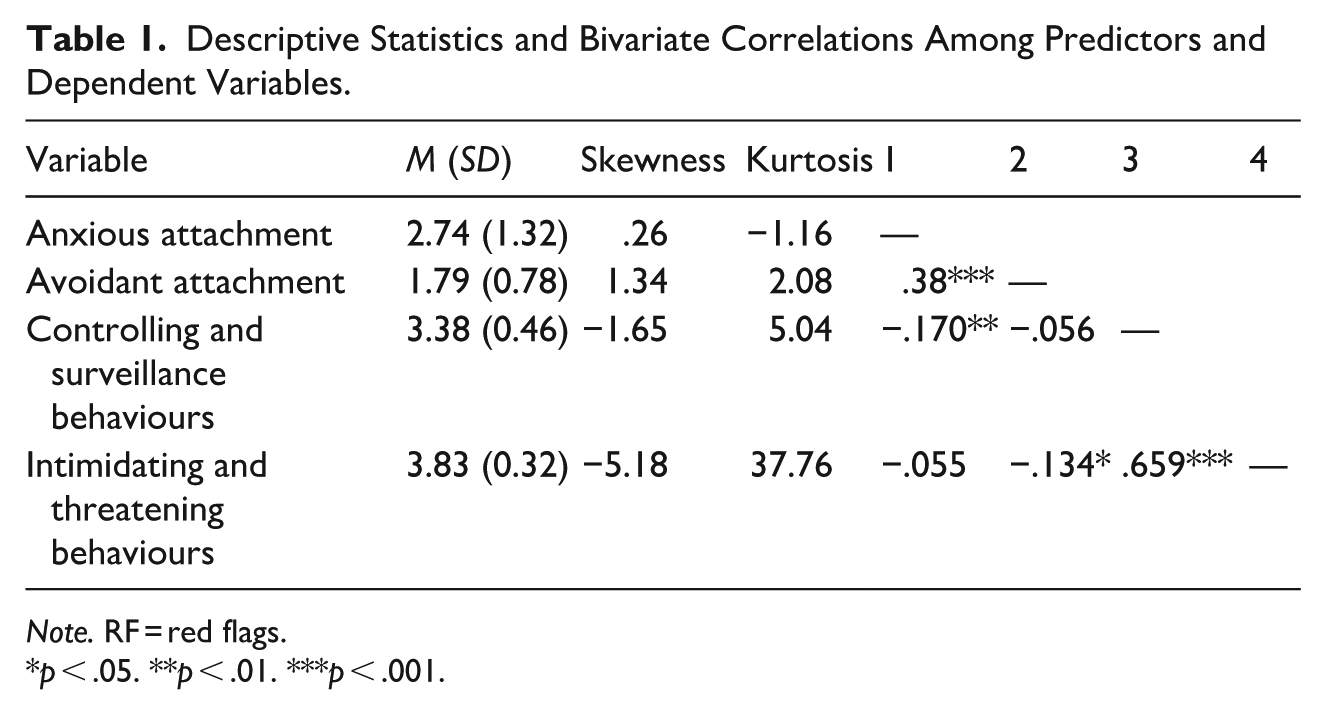
Note. RF = red flags.
p < .05. **p < .01. ***p < .001.
Factor Structure of the Red Flag Behaviours
First, we conducted a confirmatory factor analysis (CFA) to test the model fit of a five-factor structure for the red flag behaviours (see Table A1 in Appendix A for scale items and a breakdown of the original five-factor structure). We removed any items with factor loadings below 0.3. This resulted in the removal of two items. The model fit the data relatively well (Comparative Fit Index (CFI) = 0.87, Tucker Lewis Index (TLI) = 0.850, Root Mean Square Error of Approximation (RMSEA) = 0.067), however, the correlations between some of the factors were quite high with three of these above .80, and three additional correlations above .75, calling into question the distinctiveness of some factors. Therefore, we then ran an EFA with minimum residual extraction and an oblimin rotation to investigate the best-fitting factor structure of the red flag questionnaire. The transition to a two-factor model was supported by several criteria. Visual inspection of the scree plot indicated a clear “elbow” after the second factor. The initial eigenvalues for the first two factors were approximately 8.0 for factor 1 and 1.8 for factor 2, with subsequent factors falling below the threshold of 1.0.
The two-factor solution accounted for a total of 37.98% of the cumulative variance. Factor 1 had an SS loading of 4.81 and explained 19.22% of the variance, while Factor 2 had an SS loading of 4.69 and explained 18.76% of the variance. Items with factor loadings greater than 3.0 were retained. The correlation between the two factors was .54, representing an improvement in construct distinctiveness compared to the high correlations observed in the initial CFA. These findings suggest that while Kearney and O’Brien (2018) proposed five factors, a two-factor solution better represents the red flag behaviours in our sample.
The two identified factors included items reflecting red flag behaviours that included controlling and surveillance behaviours (Factor 1) and intimidating and threatening behaviours (Factor 2). The controlling and surveillance behaviours factor encompassed monitoring and jealousy-related behaviours (e.g. “checks dating partner’s phone”). In contrast, the intimidating and controlling behaviours factor included behaviours that could be classified as a form of abuse (e.g. “yells at dating partner”). These items reflected more of the threatening and aggressive as well as the demeaning behaviours. The factor structure of the present study is in contrast with the five-factor structure proposed by Kearney and O’Brien (2018), suggesting that, for our sample, the original five factors may not be as distinct as initially conceptualized. The high correlations among factors in our CFA further support this, indicating significant overlap between the original constructs. Table 2 shows the loadings for both factors.
Factor Loadings for the Red Flag Behaviours.
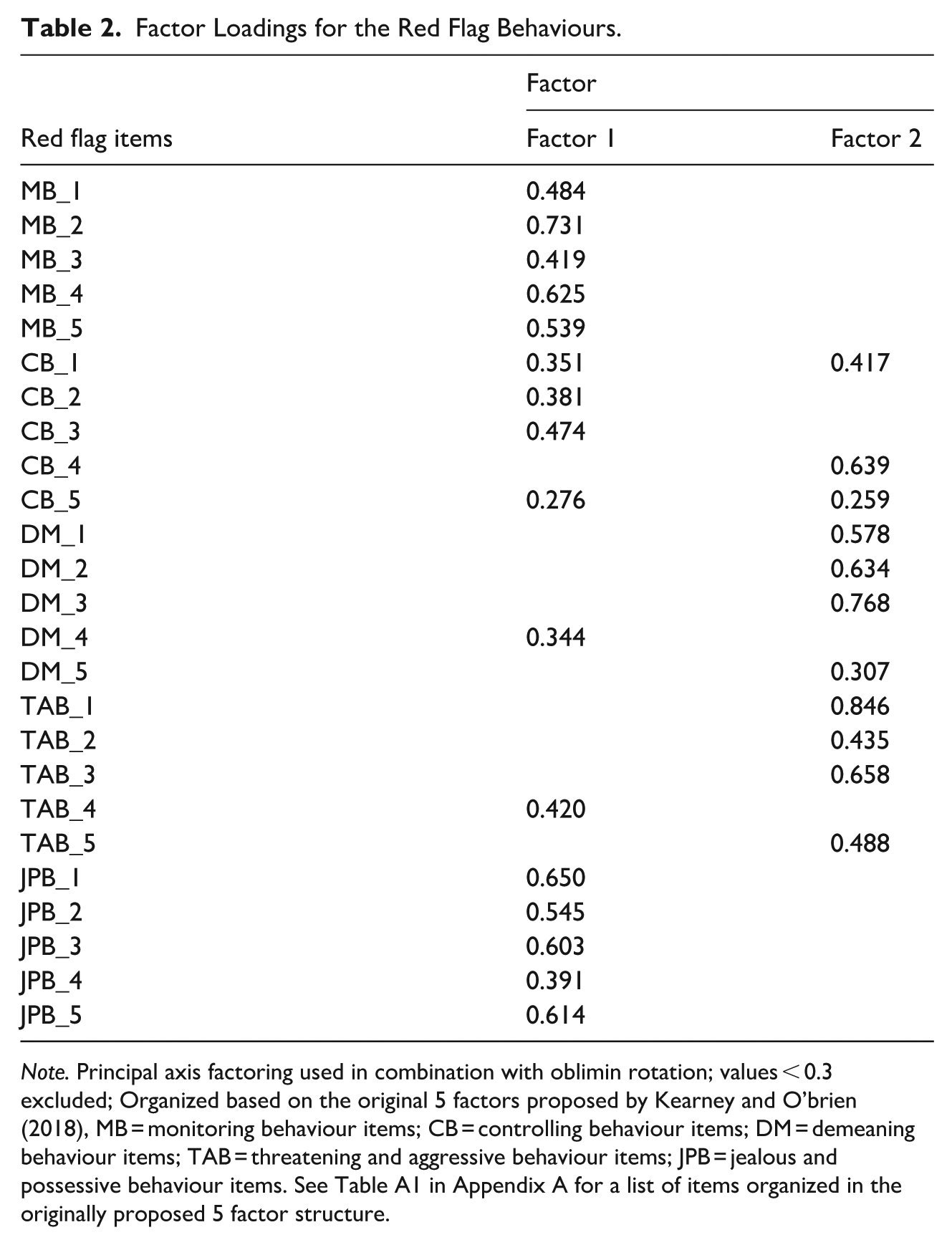
Note. Principal axis factoring used in combination with oblimin rotation; values < 0.3 excluded; Organized based on the original 5 factors proposed by Kearney and O’brien (2018), MB = monitoring behaviour items; CB = controlling behaviour items; DM = demeaning behaviour items; TAB = threatening and aggressive behaviour items; JPB = jealous and possessive behaviour items. See Table A1 in Appendix A for a list of items organized in the originally proposed 5 factor structure.
Predicting the Discounting of Red Flags
Regression analyses were conducted to evaluate whether attachment style predicted participants’ perceptions of behaviours as red flags. Age, gender, and experiences of IPV were first included in the model as covariates to control for their effect (Table 3). Age significantly predicted ratings of red flags in the controlling and surveillance behaviours factor (b = 0.079, p = .008) but not the intimidating and threatening behaviours factor (b = −0.002, p = .924). IPV experience significantly predicted ratings for the intimidating and threatening behaviours factor (b = 0.092, p = .026) but not the controlling and surveillance behaviours factor (b = 0.018, p = .762)
Controlling and Surveillance Red Flag Behaviours and Intimidating and Threatening Red Flag Behaviours Regressed on Attachment Styles and Gender.
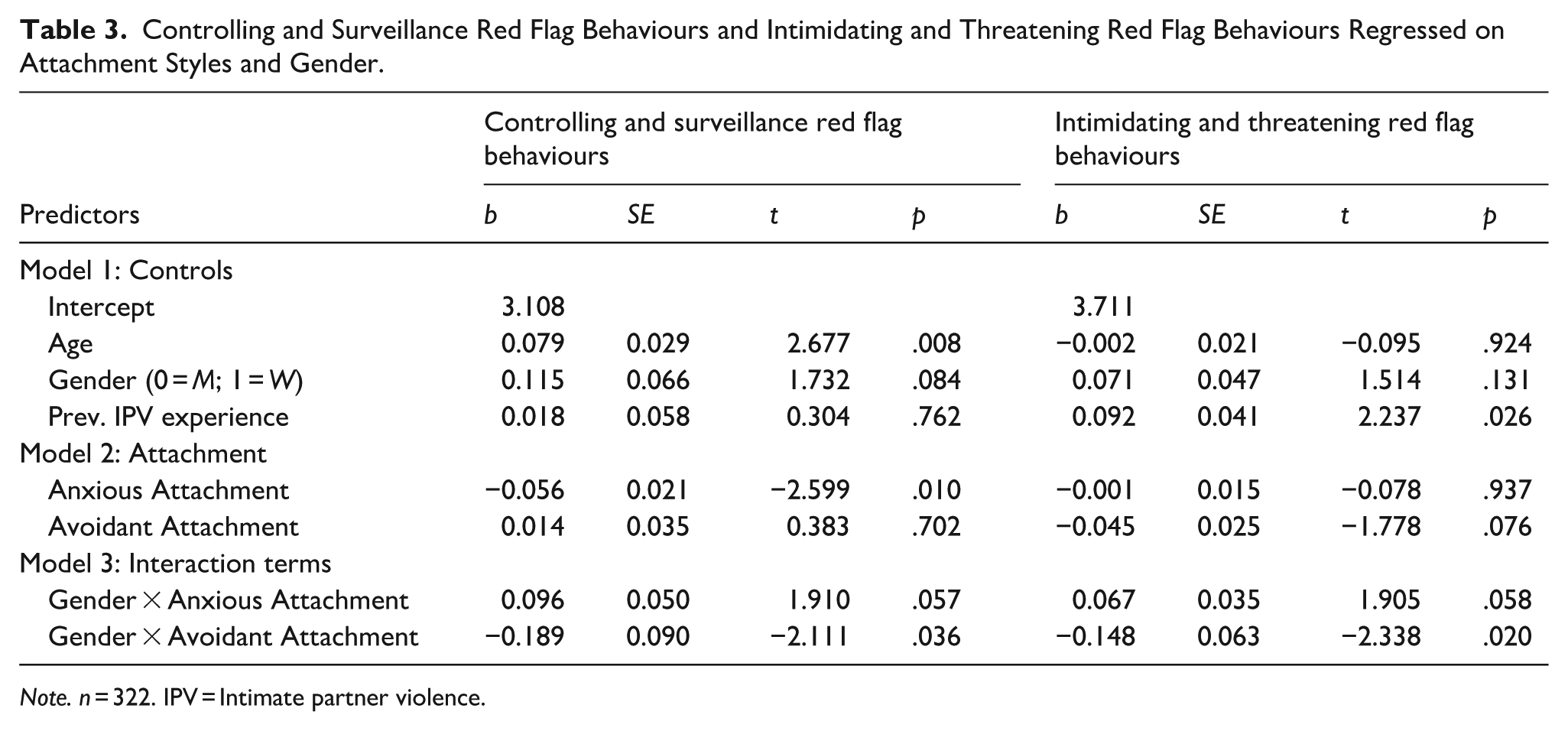
Note. n = 322. IPV = Intimate partner violence.
Anxious and avoidant attachment were then included to investigate their unique predictive value of ratings of red flag behaviours (Table 3). Anxious attachment was the only significant predictor. Anxious attachment significantly predicted lower ratings for the controlling and surveillance behaviours factor (b = −0.056, p = .010), suggesting that individuals with higher levels of anxious attachment are less likely to recognize these behaviours as red flags. Avoidant attachment was not a significant predictor of the controlling and surveillance behaviours factor. In addition, neither attachment style significantly predicted ratings of the intimidating and threatening behaviours factor.
Finally, the gender by attachment interaction terms were included in model 3 to evaluate if gender moderates the relationship between each attachment style and the ratings of red flags (Table 3). Due to the small sample size of participants identifying as nonbinary (n = 15), we did not include them in this analysis. We have included a supplemental analysis for individuals identifying as nonbinary.
Gender significantly moderated the relationship between avoidant attachment and participants’ ratings of the extent to which controlling and surveillance behaviours were indicative of red flags (t = −2.111, p = 0.036; Figure 1). Simple slopes analyses showed that avoidant attachment was not a significant predictor of controlling and surveillance behaviour ratings for women (b = −0.026, p = .501), but it was a significant predictor for men (b = 0.161, p = .047). This suggests that as avoidant attachment increases, men’s ratings of controlling and surveillance behaviours are higher, or more indicative of red flags, whereas women’s ratings remained relatively stable across levels of avoidant attachment. Another way to interpret this interaction is that at lower levels of avoidant attachment, men and women were relatively similar in their ratings of controlling and surveillance red flag behaviours. However, as avoidant attachment increased, men’s ratings of these behaviours increased, while women’s ratings did not change substantially. This suggests that avoidantly attached men are more likely to identify red flag behaviours as indicative of a red flag compared to women. See Figure 1 for a plot of this interaction.
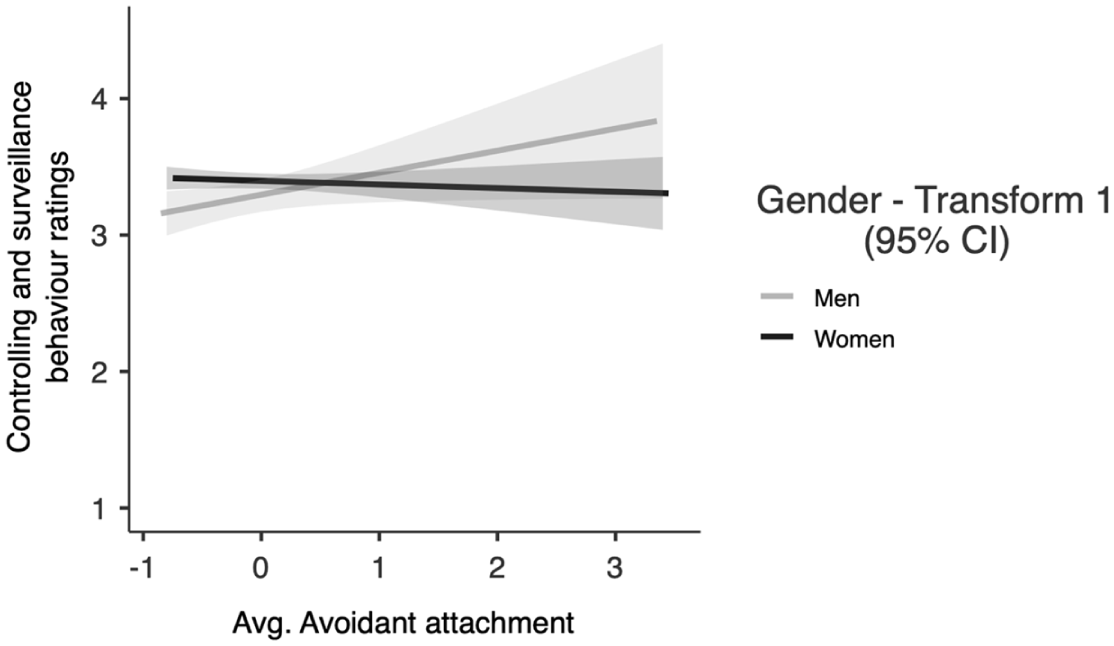
Interaction plot of gender and avoidant attachment style on controlling and surveillance red flag behaviours.
Similarly, gender significantly moderated the relationship between avoidant attachment and intimidating and threatening red flag behaviours (t = −2.338; p = .020). The simple slope regression coefficients were b = −0.081. p = .262 for women and b = 0.064, p = .004 for men, indicating again that the influence of avoidant attachment in predicting ratings of intimidating and threatening behaviours was only significant for men. That is, as avoidant attachment increased, men rated intimidating and threatening behaviours as more indicative of red flags, while women’s ratings did not vary based on avoidant attachment. At lower levels of avoidant attachment, men and women rated intimidating and threatening behaviours similarly; however, at higher levels, men gave higher ratings for these behaviours than women. See Figure 2 for a plot of this interaction.
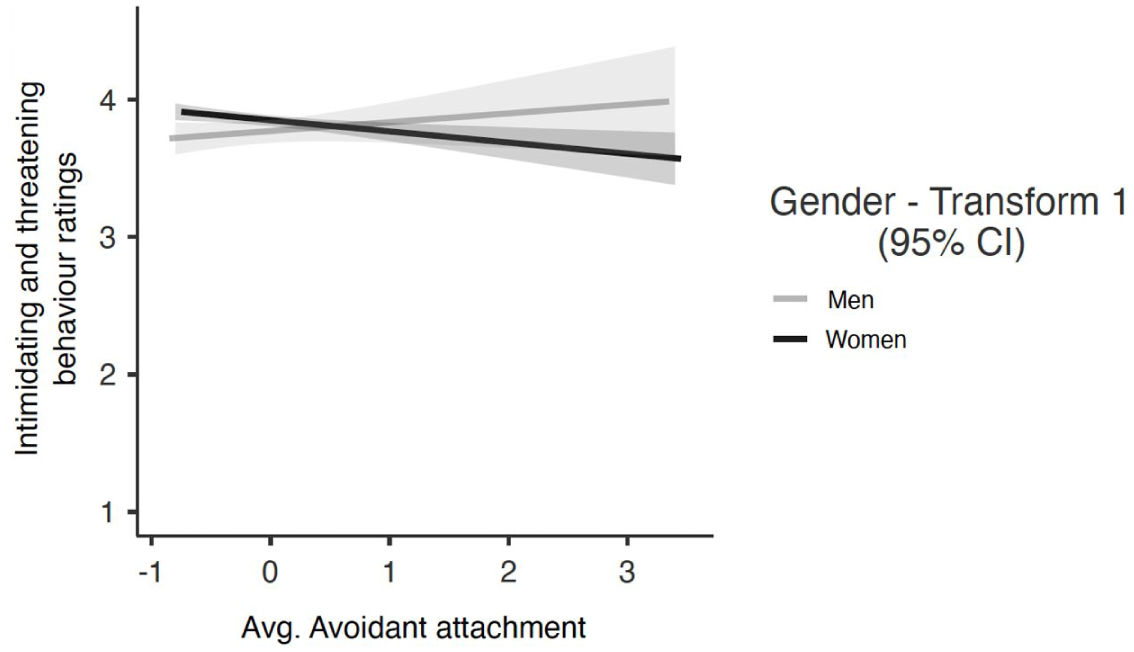
Interaction plot of gender and avoidant attachment style on intimidating and threatening red flag behaviours.
Taken together, these findings suggest that the relationship between avoidant attachment and perceptions of red flag behaviours differs by gender, such that avoidant attachment is related to an increased sensitivity to classifying red flag behaviours among men, but not among women.
Figures 3 and 4 represent the plots for the two insignificant interactions (anxious attachment × gender in both factors).
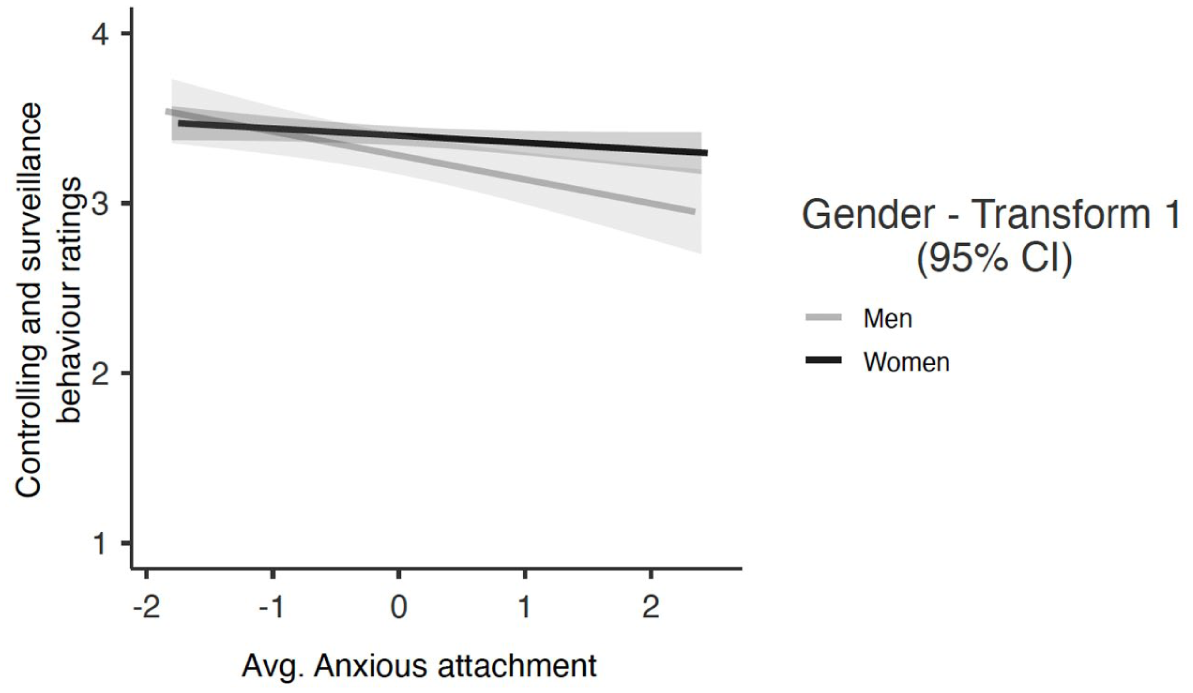
Interaction plot of gender and anxious attachment style on controlling and surveillance red flag behaviours.
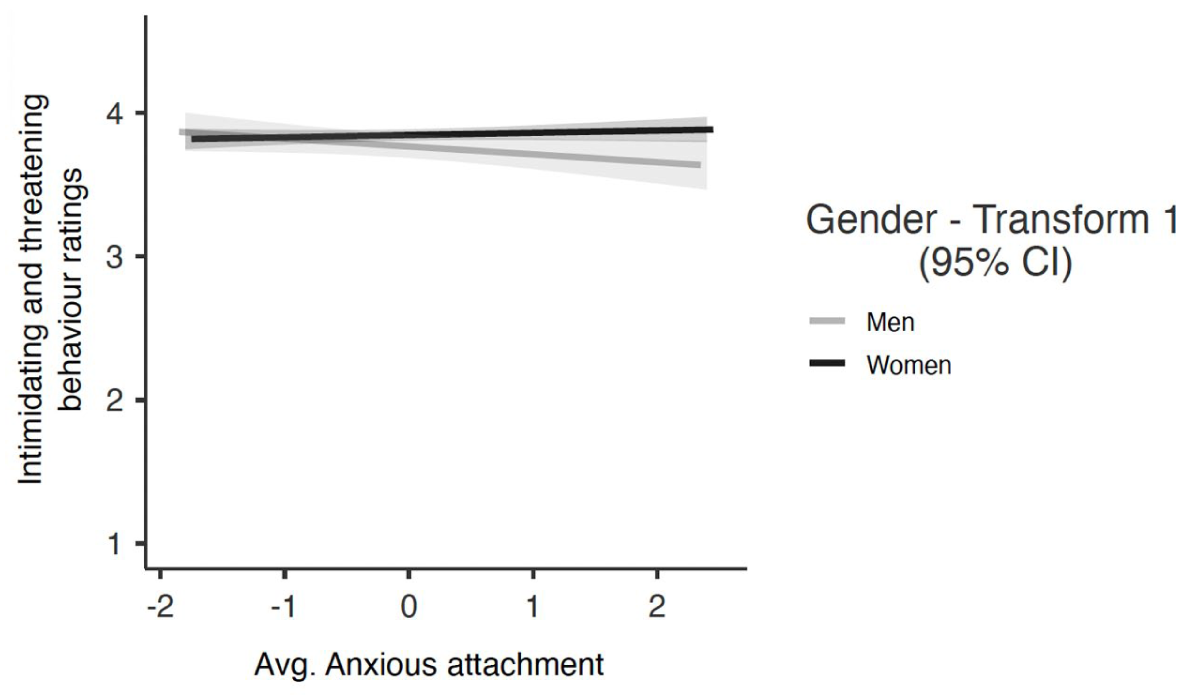
Interaction plot of gender and anxious attachment style on intimidating and threatening red flag behaviours.
Discussion
The purpose of this study was to quantitatively examine the role of attachment style and gender in individuals’ conceptualization of red flag behaviours that are indicative of IPV. Anxious attachment predicted lower ratings for controlling and surveillance red flag behaviours. Two potential mechanisms, both drawing from attachment theory, may help explain these findings. First, individuals with an anxious attachment style often experience a fear of abandonment and an intense need for closeness and approval from their partners (Cavalli et al., 2022; Johnson & Whiffen, 1999; Miyagawa & Kanemasa, 2022). Consequently, these individuals may be motivated to downplay or rationalize behaviours that could threaten the relationship, such as controlling and surveillance red flag behaviours. By perceiving these behaviours as less indicative of warning signs of violence, anxiously attached individuals might find it easier to maintain the relationship and avoid conflict or rejection. This interpretation is supported by existing research which shows that anxiously attached individuals are more likely to remain in their romantic relationships even when they are experiencing violence from their partner (Kural & Kovacs, 2022). Research has found that anxious attachment is positively correlated with the perpetration of IPV (Miyagawa & Kanemasa, 2022). Research suggests that individuals with an anxious attachment style are more likely to engage in these behaviours as a way of getting attention from their partner (Miyagawa & Kanemasa, 2022). It is therefore possible that anxiously attached individuals rated some of the controlling and surveillance red flag behaviours as less indicative of a warning sign of IPV because they have found themselves engaging in these behaviours previously and do not want to view themselves as abusive.
Our findings suggest that anxious attachment influences individuals’ perception of red flag behaviours associated with IPV. However, the exact mechanisms driving these perceptions remain unclear. It is possible that anxiously attached individuals downplay these behaviours either to maintain their relationship by avoiding conflict and fear of rejection, or due to a self-perception bias stemming from their own involvement in similar behaviours. Future research should explore these potential pathways to determine whether anxiously attached individuals genuinely fail to recognize these behaviours as warning signs or if they do recognize them as concerning but choose to rationalize or minimize their significance.
In terms of gender differences, our results revealed that gender significantly moderated the relationships between avoidant attachment and ratings of red flag behaviours for both controlling and surveillance behaviours, as well as intimidating and threatening behaviours. These findings indicate that, at low levels of avoidant attachment, men and women showed similar ratings of red flags, indicating comparable sensitivity to identifying potential relationship threats. However, as avoidant attachment increased, men’s ratings of red flags increased while women’s ratings remained stable and comparable to those at low levels of avoidant attachment.
These findings suggest that avoidant attachment heightens men’s sensitivity to classifying red flag behaviours. Perhaps this demonstrated a tendency for avoidantly attached men to exhibit heightened vigilance towards potential relationship threats. It is possible that this heightened vigilance serves as a defensive mechanism, allowing them to justify their emotional distance. For instance, men are socialized to value independence (McKenzie et al., 2018), and those with an avoidant style may be hypervigilant toward behaviours that could threaten autonomy or relational control, interpreting red flags as a justification for withdrawal. Avoidantly attached men may be more attuned to red flag behaviours as a means to maintain independence and justify emotional distance. From a cognitive perspective, men who exhibit an avoidant attachment style may have a schema that emphasizes self-protection and independence, so red flags are more salient. The ability to identify these behaviours may serve to validate their avoidant strategies, preventing them from forming deeper emotional bonds. Future research should further investigate these relationships to help understand the mechanisms behind this phenomenon and its implications for understanding relationship dynamics for avoidantly attached men.
In contrast, women’s relatively stable ratings across avoidant attachment levels suggest that their perception of red flags is less influenced by attachment avoidance. One possible explanation is that women’s interpretations of relationship threats are influenced more by social norms and gendered expectations surrounding relationship maintenance. Research shows that women in heterosexual relationships are socialized to prioritize cohesion and are primarily involved in the emotional maintenance of a romantic relationship (Anderson, 2023). As such, women may be motivated to maintain relationships even when avoidantly attached, which could dampen the impact of attachment avoidance on their sensitivity to red flag behaviours. Relatedly, women may have schemas emphasizing caretaking and connection, reducing a perceived threat. Alternatively, women may rely on different cues than men when assessing risk within their relationship, so avoidant attachment does not influence their appraisals of concerning partner behaviours.
Overall, these results highlight the importance of considering gender when exploring how attachment styles shape perceptions of interpersonal risk. While our findings demonstrate that gender differences exist, the exact mechanism behind this is still unknown. Future research should investigate the processes that contribute to these gender differences, including, for instance, how emotional regulation strategies and cultural and social norms interact with attachment to shape perceptions of red flag behaviours.
Limitations and Future Directions
A key limitation of this study was its reliance on a WEIRD sample, which was primarily composed of Caucasian undergraduate students. While focusing on this young adult population is valuable because this is a critical period for forming serious relationships (Siebenbruner, 2013), the findings may not be generalizable to more diverse populations. Future research should include a wider range of ages, ethnicities, sexual orientations, and educational backgrounds to allow for broader applications of the results.
Next, the data for this study were cross-sectional and entirely self-reported. Relying solely on self-report measures may overlook subtle behavioural cues or patterns that could provide valuable insights into attachment dynamics. Future research should employ behavioural measures and consider a longitudinal design to allow for the consideration of temporal influences. As well, varying methodologies, including qualitative studies, will allow for deeper probing into findings reported here and other studies.
Also, a brief measure was included that asked participants about their history with perpetrating or experiencing IPV. Although we controlled for this variable to focus specifically on the predictiveness of attachment style and gender alone, future research should examine how IPV history and experiencing red flag behaviours jointly contribute to how one perceives warning sign behaviours. Specifically, investigators could examine whether a history of IPV victimization is associated with a tendency to rationalize, ignore, or minimize red flag behaviours. This is supported by related findings in the literature, as evidenced by K. A. Murphy and Smith (2010), who found that girls with a history of being exposed to behaviours such as verbal abuse, personal put-downs, jealousy, and exit-control tactics rate these same behaviours as less serious (K. A. Murphy & Smith, 2010).
Finally, as our nonbinary sample was small, future research should investigate the experiences of individuals who identify as nonbinary.
Conclusions
These results, with further replication and expansion, indicate a need for education surrounding red flags of IPV, particularly targeting individuals with insecure attachment styles who appear to underestimate or discount these red flags. The findings from this study may be considered a stepping stone to developing practices in violence prevention initiatives where policymakers consider personal variables beyond what has already been established in the research as “high risk.” Given the epidemic of violence on college campuses (Tsui & Santamaria, 2015), targeted interventions regarding the victimization of young women should be considered when creating violence prevention programmes for college-aged students. For example, campus-based programmes could be created to differentiate between relational discomfort and genuine red flags, with the use of scenario-based exercises to counteract tendencies toward minimization. Clinicians could apply the findings of this research by incorporating attachment theory into their assessments and counselling to help clients identify moments when red flags are cognitively downplayed. These targeted approaches have the potential to enhance recognition of IPV risk factors and improve the effectiveness of prevention efforts. From a theoretical standpoint, this research advances IPV prevention theory by shifting the focus from post-violence intervention to the pre-violence recognition of warning signs. Rather than emphasizing outcomes after abuse has occurred, the findings highlight how individual differences, specifically attachment insecurity, shape the appraisal and potential discounting of red flags.
Supplemental Material
sj-docx-1-jiv-10.1177_08862605261426598 – Supplemental material for Attachment Style and Gender in the Prediction of Discounting Red Flags in Romantic Relationships
Supplemental material, sj-docx-1-jiv-10.1177_08862605261426598 for Attachment Style and Gender in the Prediction of Discounting Red Flags in Romantic Relationships by Cassidy Trahair, Malvika D’Costa, Paul F. Tremblay and Donald H. Saklofske in Journal of Interpersonal Violence
Footnotes
Appendix A
Red Flag Items Organized in Original Factor Structure by Kearney and O’Brien.
| Scale items | Scale reliabilities | Factor 1 or 2 |
|---|---|---|
| Monitoring Behaviours | α = .73 | |
| Checks dating partner’s cell phone without permission | 1 | |
| Checks dating partner’s social media contacts | 1 | |
| Checks dating partner’s email without permission | 1 | |
| Often uses the Internet to check where dating partner is | 1 | |
| Calls multiple times a day to see what dating partner is doing | 1 | |
| Controlling Behaviours | α = .73 | |
| Tells dating partner not to hang out with friends | 1 | |
| Makes decisions for dating partner | 1 | |
| Tells dating partner how to dress | 1 | |
| Tells dating partner not to spend time with family | 2 | |
| Interferes with dating partner’s ability to study | — | |
| Demeaning Behaviours | α = .71 | |
| Makes negative comments about dating partner’s body | 2 | |
| Constantly insults dating partner | 2 | |
| Tells dating partner she or he cannot do anything right | 2 | |
| Calls dating partner names | 1 | |
| Threatens to share embarrassing photo of dating partner | 2 | |
| Threatening and Aggressive Behaviours | α = .74 | |
| Threatens to harm dating partner’s property | 2 | |
| Can make dating partner afraid with looks | 2 | |
| Pressures dating partner into sexual activities | 2 | |
| Yells at dating partner | 1 | |
| Has an explosive temper | 2 | |
| Jealous and Possessive Behaviours | α = .77 | |
| Accuses dating partner of flirting with other people | 1 | |
| Accuses dating partner of cheating | 1 | |
| Accuses dating partner of cheating | 1 | |
| Extremely jealous | 1 | |
| Possessive | 1 | |
Note. Factor 1 = Controlling and Surveillance behaviours (CSB). Factor 2 = Intimidation and Threatening Behaviours (ITB). CSB: α = .876; ITB: α = .851.

Funding
The authors received no financial support for the research, authorship, and/or publication of this article.
Declaration of Conflicting Interests
The authors declared no potential conflicts of interests with respect to the authorship and/or publication of this article.
Author Biographies
References
Supplementary Material
Please find the following supplemental material available below.
For Open Access articles published under a Creative Commons License, all supplemental material carries the same license as the article it is associated with.
For non-Open Access articles published, all supplemental material carries a non-exclusive license, and permission requests for re-use of supplemental material or any part of supplemental material shall be sent directly to the copyright owner as specified in the copyright notice associated with the article.
