




Abstract
Domestic violence protective orders (DVPOs) are the most used legal intervention for secondary prevention of intimate partner violence (IPV) in the United States. The COVID-19 pandemic may have impacted DVPO access and outcomes as IPV incidence increased and stay-at-home order (SAHO) closures decreased access to civil proceedings. In North Carolina (NC), e-filing was designed to expedite the DVPO process and reduce barriers to filing for IPV survivors. E-filing may have further modified the impact of the COVID-19 pandemic on DVPO access and outcomes. The objective of this study was to evaluate the impact of the COVID-19-related SAHO on the DVPO filing rates and outcomes over time in 2020 compared to previous years (2017–2019) and examine effect modification by DVPO e-filing. We conducted controlled interrupted time series (CITS) analyses to examine if COVID-19-related SAHO and the second wave of COVID cases in October 2020, using administrative court data from 2017 to 2020. We measured DVPO filing rates and outcomes (grants, denials, involuntary and voluntary dismissals) for all e-filing and non-e-filing counties. The outcome time series from 2020 was compared to that from 2017 to 2019. We observed reductions in DVPO filings and granted orders and increases in denials, voluntary and involuntary dismissals during the COVID-19–related SAHO in NC. E-filing counties had fewer granted orders and involuntary dismissals and more denials and voluntary dismissals than non-e-filing counties during the SAHO period. Higher denials and voluntary dismissals in e-filing counties may be attributed to stricter standards for granting protective orders, as well as assessment of the severity of cases filed during the COVID-19–related SAHO. In addition, variations in support services by county could influence these outcomes. We recommend future research measure staff advocacy using a quantitative scale to assess its impacts for survivors throughout the DVPO filing to outcome process.
Keywords
Introduction
Intimate partner violence (IPV) is defined as physical or sexual violence, as well as coercive tactics and psychological aggression enacted by a current or previous intimate partner to gain or maintain power or control over the other person (Breiding et al., 2015). IPV is a major public health concern that affects nearly one in two women (Leemis et al., 2022). IPV has negative impacts on survivors’ physical and mental health, and is a risk factor for femicide, the homicide of women (Campbell et al., 2003; Greenfeld, 1998; Smith et al., 2018).
An emerging risk factor for IPV is the COVID-19 pandemic. During the COVID-19 pandemic, isolation, a risk factor for IPV, increased due to social distancing and quarantine practices (Choi et al., 2012; Lanier & Maume, 2009; Matoori et al., 2020). Referred to as the “pandemic within a pandemic,” there was a 7.5% increase in domestic violence calls to police in the United States in early 2020, and a systematic review on domestic violence during COVID-19 found increases in psychological, emotional, and sexual domestic violence cases, as well as an increases in the severity of domestic violence cases among the general population (Evans et al., 2020; Leslie & Wilson, 2020; Thiel et al., 2022). A systematic review found that prior natural disasters and emergency situations saw the rise in stressors that trigger IPV, such as loss of housing and social isolation, as well as the increase in enabling environments for IPV that disproportionately harm women and girls (Thurston et al., 2021).
The most widely used legal intervention for secondary prevention of IPV in the United States is domestic violence protective orders (DVPOs), which are civil court-ordered protections that prohibit the alleged perpetrator from contacting, harassing, or harming the protected person (Martin, 2017). DVPOs have been shown to be effective in reducing intimate partner homicides and repeat non-fatal IPV (Cordier et al., 2021; Holt et al., 2002; Roskam et al., 2023), but IPV survivors often experience logistical, economic, and psychological barriers to filing and/or completing the DVPO process.
Electronic filing (e-filing) of DVPOs is an innovation that addresses many of the barriers (such as logistical, safety-related, economic, and psychological) for IPV survivors and may increase expediency of DVPO processes for the court system. As of 2022, most of the 50 states utilized e-filing (either full or partial), and at least 23 states allowed fee-waiver approval through this process. One example is the New York court system, which has implemented electronic filing for the last 25 years and has further expanded its program given its success (Structural Innovations Working Group, 2021). The National Center for State Courts (NCSC) reports that litigants who are not represented or have a low-income greatly benefit from increased accessibility to file legal papers remotely at any time, and e-filing has the potential to increase public trust and ensure fairer access to justice for all (National Center for State Courts, 2022). However, issues that arise from e-filing include a lack of internet access, especially in rural areas, and more difficulty with understanding procedures when not in person and connecting with an advocate online (Schneider et al., 2022). The NCSC suggests best practices, including ensuring non-English speakers have translation support, accommodations for people with disabilities, and frequent review of the e-filing accessibility systems to ensure equal access. In 2016, in North Carolina (NC), DVPOs’ e-filing was launched as a pilot program in 10 of the state’s 100 counties by the NC Administrative Office of the Courts with funding from the Office on Violence Against Women (OVW; 2016-X1098-NC-WE).
There are major differences in how the filing process operates between e-filing and non-e-filing counties. In e-filing counties, a plaintiff submits a DVPO application at a Domestic Violence (DV) service agency, Family Justice Center, or another secure remote location. A main component of e-filing is that a DV advocate from the filing location facilitates completion of required forms and electronically submits paperwork to the clerk of the court, who swears in the plaintiff during a remote online session. During the session, the District Court Judge reviews the application, questions the plaintiff, and usually issues an ex parte emergency order, and the clerk schedules a hearing date for the permanent (12-month) DVPO. Information about the DVPO request is then automatically updated in the statewide court records management system and transmitted to the sheriff’s office. The sheriff’s office alerts a deputy on duty, who reviews the ex parte order, civil summons, and notice of hearing, and may be able to printout the paperwork in their patrol car. After the defendant is served, the plaintiff is notified by text or email. In non-e-filing counties, survivors arrive at their county courthouse in person and fill out paperwork by hand themselves. There, the judge also handwrites paperwork, and the paperwork will subsequently be given to the serving law enforcement agency in person. There are some DV organizations that also provide court advocacy services to survivors in non-e-filing counties as well.
During the COVID-19 pandemic, the statewide stay-at-home order (SAHO) in NC, intended to increase social distancing and prevent rapid spread of the virus, led to statewide court closures as well as closures for services such as childcare. While the isolation from the SAHO impacted the incidence of IPV, court closures also hindered the ability of IPV survivors to access the court system. During the SAHO, court proceedings, including DVPO filing and hearings, were disrupted. Under such circumstances, e-filing may have provided a way to mitigate the widespread disruptions in DVPO processing. For example, e-filing counties already have a system in place to submit paperwork electronically, conduct virtual initial hearings, and electronically send DVPO orders to sheriffs, while these three steps are required to be in person in non-e-filing counties. However, the extent of such disruptions, and any effect of e-filing in mitigating such disruptions on DVPO outcomes and time to disposition and service during the COVID-19 pandemic, are not understood.
Our aim is to evaluate the impact of the COVID-19 pandemic on the rates of DVPO filings and dispositions (i.e., granted, denied, voluntary dismissal – meaning that the plaintiff or their representative decided to withdraw the DVPO application at or before the scheduled full hearing, or involuntarily dismissal-meaning that the plaintiff or their representative did not show up to the court-scheduled full hearing), time to service, and time-to-DVPO-dispositions. Further, we evaluate differences by county e-filing status to understand if e-filing mitigated any COVID-19-related disruptions.
Methods
Data Source
We used secondary data from the North Carolina Administrative Office of the Courts (NC AOC) for DVPOs filed in NC, from January 1, 2017, to December 31, 2020. The data include dates of filing, whether an ex parte (emergency temporary) order was granted or not, the dates of full hearings, dispositions, dates of dispositions, and county names. We used these data to create weekly time series for each study outcome for 2020 (COVID year series), and for 2017 to 2019 (non-COVID year control series) to examine COVID-related disruptions, while controlling for any seasonal patterns in DVPO filing.
Outcomes
We included seven main outcomes in our analysis. We calculated (1) the DVPO filing rate, or the number of weekly DVPO filings divided by the county total population of the referenced year; (2) DVPO granting rate, calculated as the proportion of filed DVPOs that were granted; (3) DVPO denial rate, calculated as the proportion of filed DVPOs that were denied; (4) DVPO involuntary dismissal rate, calculated as the proportion of filed DVPOs that were involuntarily dismissed; (5) DVPO voluntary dismissal rate, calculated as the proportion of filed DVPOs that were voluntarily dismissed; (6) time to service, calculated as the time taken for the sheriff’s deputy to serve the ex parte DVPO order (temporary DVPO) and the summons of the full hearing to the defendant from the date of filing, and (7) time to disposition, calculated as the time taken for achieving a final disposition on the case from the date of DVPO application. We created weekly time series for all these outcomes for the year 2020 alone, and for the years 2017 to 2019 combined. The disposition outcomes were anchored based on the disposition outcome date. The time to service and time-to-disposition outcomes were reported as the mean days.
Exposure
The main exposure was the COVID-19-related SAHO (started March 15th and ended May 20th), and then the arrival of a large wave of COVID-19 in October of 2020. Therefore, we have three interruptions: the start of SAHO (March 15th – week 11), the end of SAHO (May 20th – week 20), and the big wave of COVID infections (October 1st – week 39). Therefore, 0 to 10 weeks are the pre-SAHO period, 11 to 20 weeks are the SAHO period, 21 to 39 weeks are the period during which the SAHO was lifted, and 40 to 52 weeks are when the next wave of cases occurred. Our control period was 2017 to 2019, while the intervention period was 2020 (Figure A1 in Appendix A). We kept the 53rd week in 2018 to ensure all data were included for this period.
Further, to understand if e-filing reduced DVPO disruptions, we assessed effect measure modification (EMM) by e-filing county status (separating results by 10 counties with e-filing and 90 counties without, excluding counties (n = 4) that implemented e-filing in 2020). For EMM analysis, we report results by e-filing counties (2020 vs. 2017–2019) and non-e-filing counties (2020 vs. 2017–2019). To select comparison non-e-filing counties, we examined pre-e-filing time trends for pooled e-filing counties (n = 10) and compared them to the potential comparison counties (n = 90) and chose comparisons that could serve as appropriate counterfactuals for each outcome.
Statistical Analysis
We used autoregressive integrated moving average models to conduct controlled interrupted time series (CITS) analyses. CITS is a quasi-experimental method used to measure the effect of an intervention through comparison of trends before and after the intervention, while using a control group to take into account external factors (Crifasi et al., 2025; Lopez Bernal et al., 2018). For each of the three time periods, we assessed both the immediate and sustained time trends (to assess the impact of the SAHO period, post-SAHO, and the second wave of cases). Measurement of both the immediate impact and the sustained trend allows for assessment of the effect of the SAHO immediately after it was implemented (following week), as well as how it changed the trend of the outcomes over time. The specific details of our methods are in “eMethods” in Appendix A. Our analysis was conducted using SAS 9.4 (SAS Institute, 1999).
We assessed results by e-filing and non-e-filing counties. We included 10 counties that implemented e-filing (Table B1 in Appendix B). Our study was approved by the University of North Carolina at Chapel Hill’s Office of Human Research Ethics Institutional Review Board. Since the data in this study represent a complete population, rather than a sample, we do not focus on statistical significance, but rather the substantive importance of the estimates of change. The confidence intervals are a measure of precision or lack thereof, representing the stability of the time series (Greenland et al., 2016).
Results
From 2017 to 2020, there were a total of 119,697 DVPO NC case records available for our analysis. The overall DVPO filing rate in NC was 74.8 cases filed per 100,00 person-years. Of the DVPO cases filed, 25.4% resulted in voluntary dismissals, 30.4% involuntary dismissals, 10.7% denials, and 33.4% grantings. Descriptive statistics for counties by e-filing status for each COVID-19 interruption period are available in Table C1 in Appendix C. Below, we report overall results and discrepancies by e-filing status with separate sections for each DVPO outcome (granting, denial, Involuntary Dismissal [IVD], Voluntary Dismissal [VD], time to service, and time to DVPO).
Filing Rate
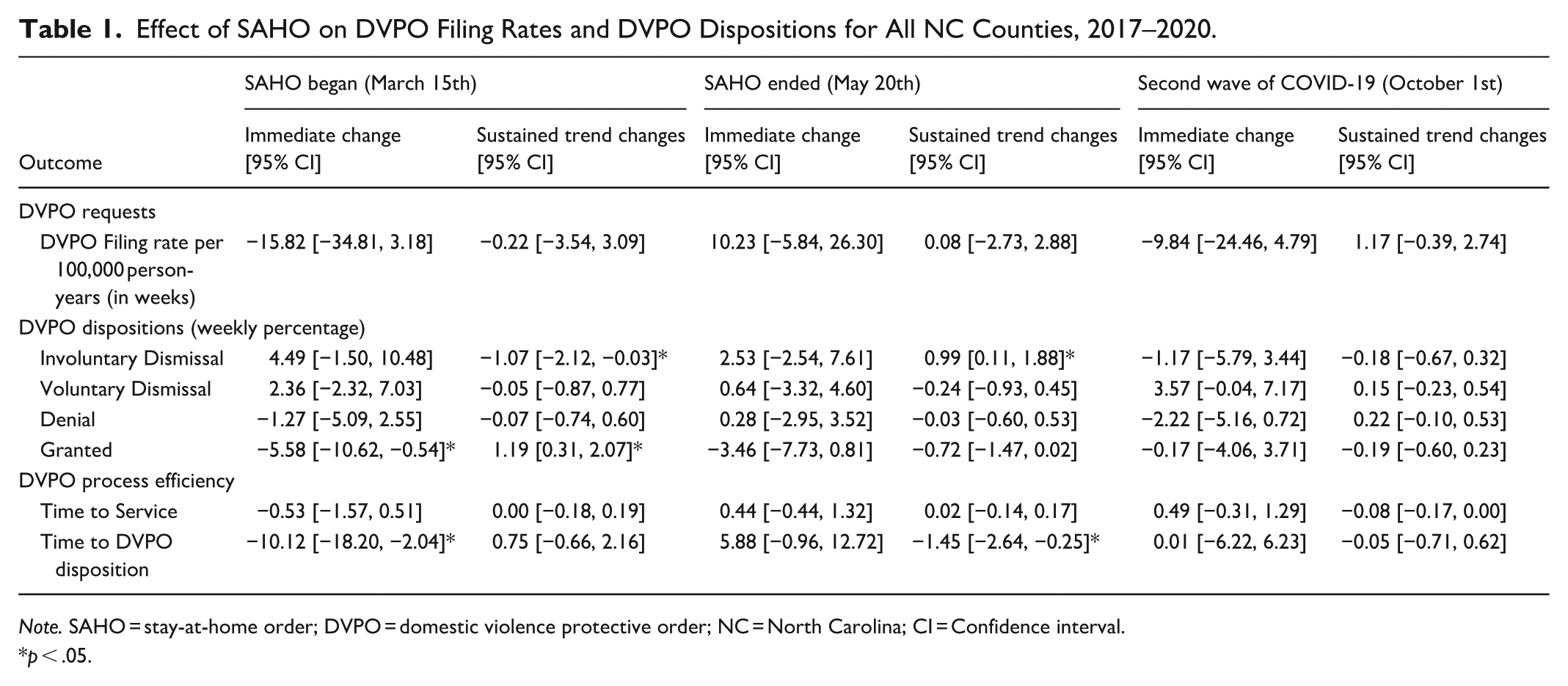
SAHO impact: From January to March 2020, filing rates were very similar in comparison to the January to March filing rates in 2017 to 2019. Once the SAHO began in mid-March 2020, filing rates immediately decreased by 15.82 cases per 100,000 person-years (PY) per week (95% CI [−34.81, 3.18]; Table 1; Figure 1A). Filing rates decreased more in e-filing counties than in non-e-filing counties, although non-e-filing counties have a higher filing rate overall than e-filing counties (Table D1 in Appendix D; Figure 1B and C). Once the SAHO lifted, overall filing rates returned to pre-pandemic levels and were comparable to those of 2017 to 2019. The immediate increase after the SAHO was much larger among e-filing counties (12.29 cases per 100,000 PY per week [−5.18, 29.77]) compared to non-e-filing counties (4.33 cases per 100,000 PY per week [−12,64, 21.29]; Table D1 in Appendix D; Figure 1B and C). Thus, after the SAHO was lifted, filing rates returned to pre-SAHO and 2017 to 2019 levels among both e-filing and non-e-filing counties (Figure 1B and C).
Effect of SAHO on DVPO Filing Rates and DVPO Dispositions for All NC Counties, 2017–2020.
Note. SAHO = stay-at-home order; DVPO = domestic violence protective order; NC = North Carolina; CI = Confidence interval.
p < .05.
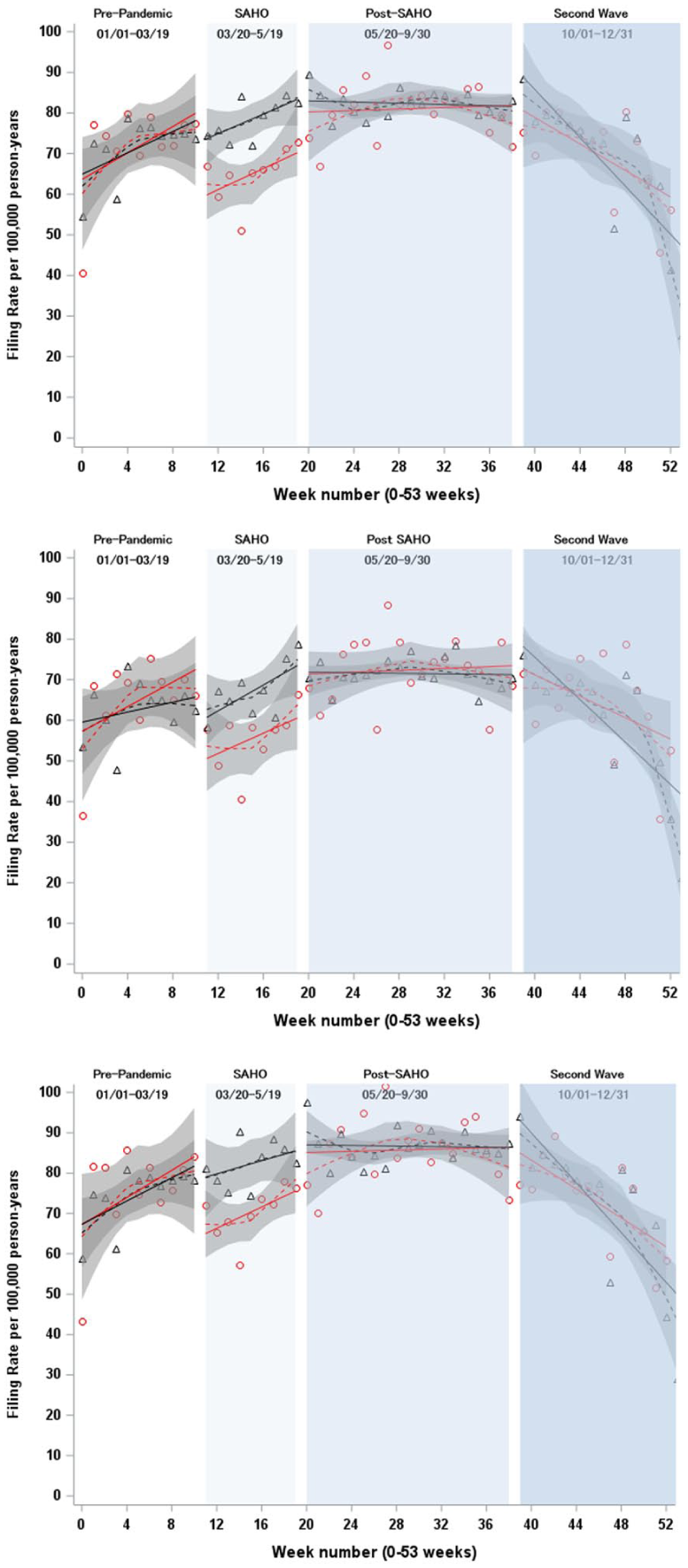
Effect of SAHO on DVPO filing rate among all (A), e-filing (B), and non-e-filing (C) counties, 2017–2020.
After the second wave of COVID-19, there was no overall immediate change among all NC counties, although there was a slower declining trend in comparison to the 2017–2019 filing rate. There were no differences after the second wave of COVID-19 by e-filing status (Figure 1A–C, Table D1 in Appendix D).
Granting
SAHO impact: Compared to previous years, granting rates in 2020 were similar. However, when the SAHO started, granting rates declined and proceeded to remain lower throughout the SAHO period (Table 1; Figure 2A). The decline in granting after the SAHO began was more pronounced in e-filing counties (compared to previous years), while non-e-filing counties saw no trend change (Table D1 in Appendix D; Figure 2B and C). Once the SAHO ended, there were less granted DVPOs across all NC counties, which was driven by e-filing counties, which saw an immediate and sustained decline, while non-e-filing counties had a slight increasing trend in granting outcomes compared to previous years (Table D1 in Appendix D; Figure 2B and C).
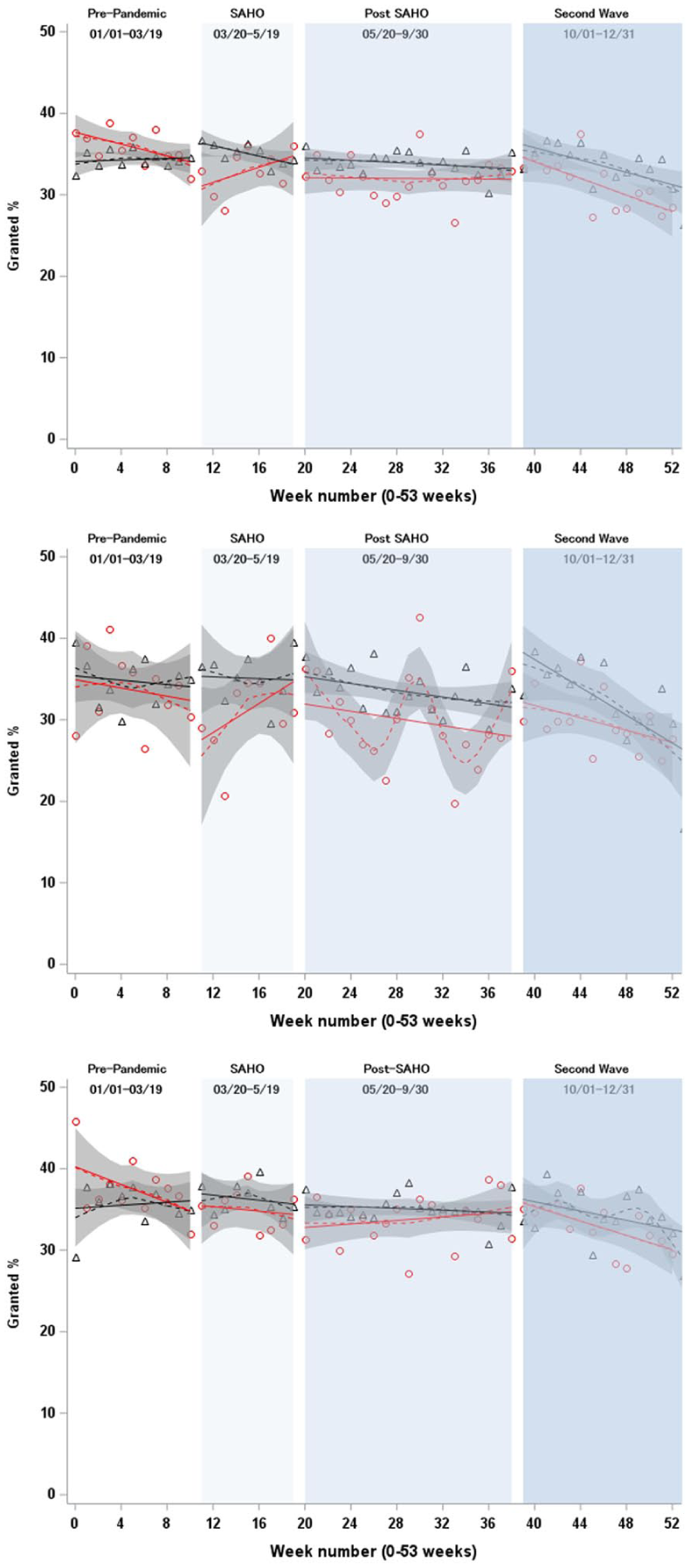
Effect of SAHO on weekly DVPO granting percentage among all (A), e-filing (B), and non-e-filing (C) counties in North Carolina, 2017–2020.
After the second COVID-19 wave, granting rates had a similar declining trend compared to previous years through the remainder of 2020 for all NC counties.
Denials
SAHO impact: Descriptively, there were more denials of DVPOs in 2020 compared to 2017 to 2019 among all NC counties. While these denials were affected somewhat by the SAHO, those changes were not large enough to change the overall picture of denials (Table 1; Figure 3A). This overall increase in denials in 2020 was largely due to the increase in denials in e-filing counties, rather than non-e-filing counties (Table D1 in Appendix D; Figure 3B and C). There were increasing, sustained trends in denials after both the start and end of the SAHO for all NC counties and especially for e-filing counties (Figure 3A and B). Non-e-filing counties did not see differences relative to 2017 to 2019 denial rates (Figure 3C).
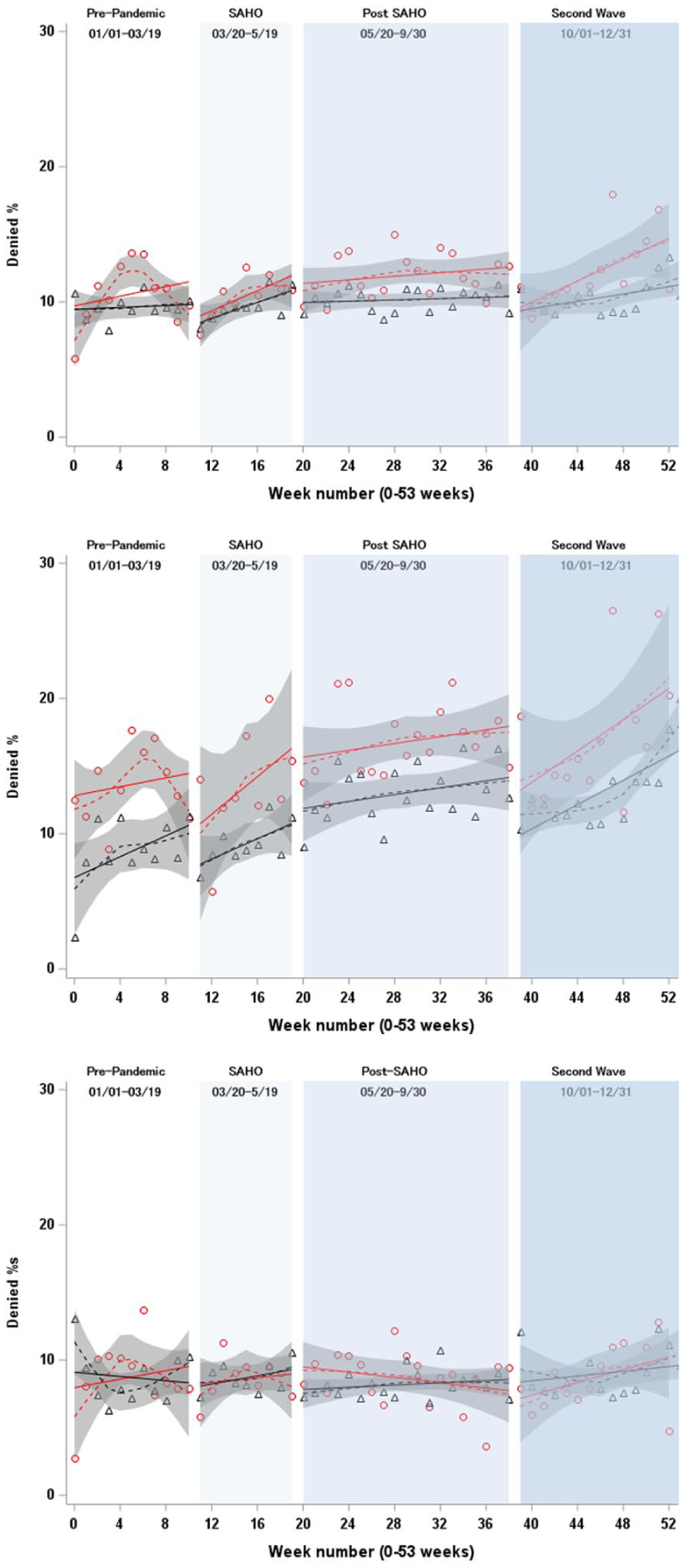
Effect of SAHO on weekly DVPO denial percentage among all (A), e-filing (B), and non-e-filing (C) counties in North Carolina, 2017–2020.
After the second wave of COVID-19, denials initially had an immediate decline but thereafter had an upward trend and were increasing higher in e-filing counties than non-e-filing counties (Table 1; Figure 3A; Table D1 in Appendix D; Figure 3B and C).
Involuntary Dismissals
SAHO impact: When the SAHO was implemented, there was an immediate increase of 4.49% in IVDs (95% CI [−1.50, 10.48]) followed by a −1.07% sustained decline [−2.12, −0.03] (Table 1; Figure 4A) in comparison to previous years. By e-filing status, there were differences in direction in the immediate change after the SAHO began, with a 4.17% [−14.38, 6.05] decrease in IVDs among e-filing counties and a 3.19% [−4.81, 11.18] increase in IVDs among non-e-filing counties (Table D1 in Appendix D; Figure 4B and C). After the SAHO was lifted in May 2020, there was no immediate difference by e-filing status as both groups saw an increase in IVDs. However, there was a difference in sustained trend after the SAHO was lifted, as there was no trend change among e-filing counties, and a 1.14% [−0.04, 2.32] increasing sustained trend in IVDs among non-e-filing counties (Table D1 in Appendix D; Figure 4B and C).
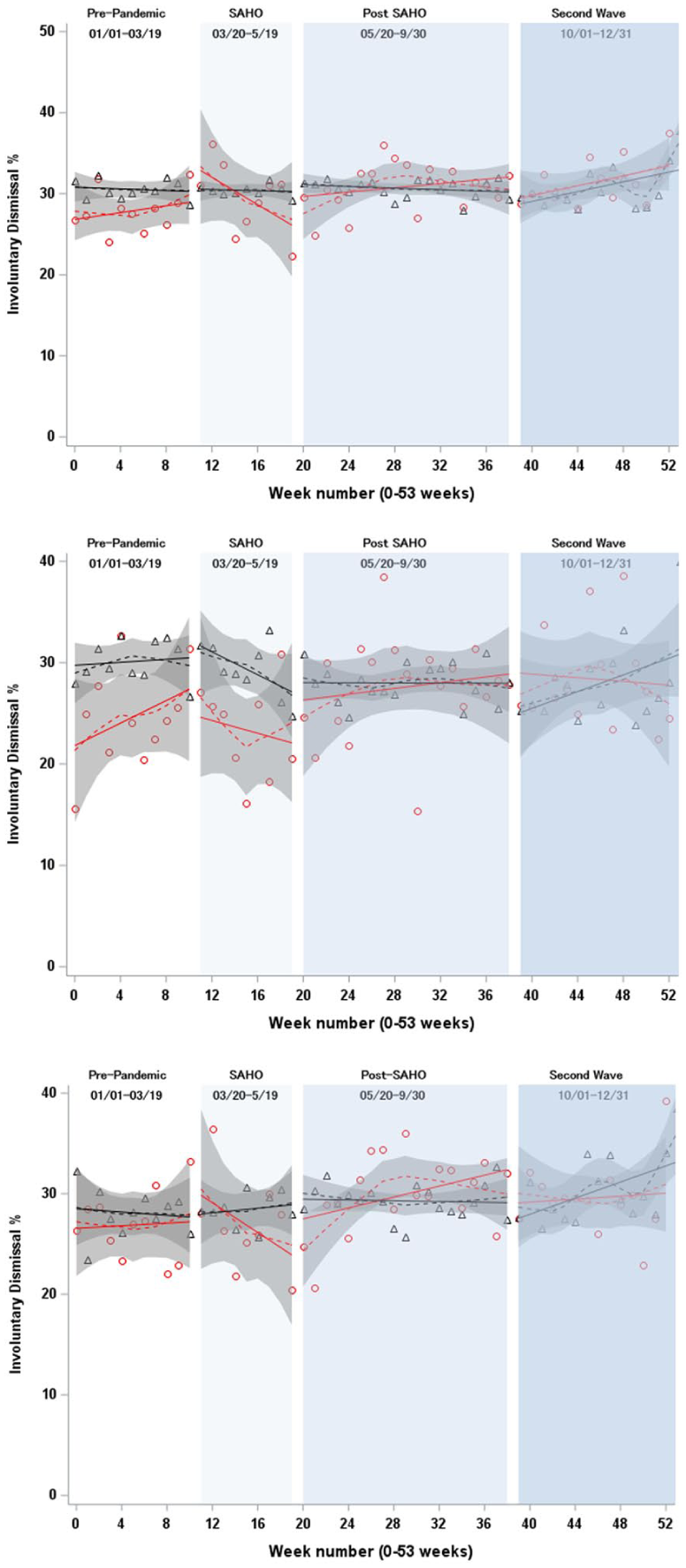
Effect of SAHO on weekly DVPO involuntary dismissal percentage among all (A), e-filing (B), and non-e-filing (C) counties in North Carolina, 2017–2020.
Immediately after the second wave of COVID-19 began, there was a slight 3.49% (95% CI [−4.38, 11.35]) immediate increase in IVDs among e-filing counties and a 1.40% [−7.56, 4.76] decrease in IVDs among non-e-filing counties, compared to previous years 2017 to 2019 (Table D1 in Appendix D; Figure 4B and C).
Voluntary Dismissals
SAHO impact: Overall, there was a 2.36% (95% CI [−2.32, 7.03]) immediate increase in VDs after the SAHO was implemented (Table 1; Figure 5A). Among e-filing counties, during the SAHO period, there was a 12.39% [2.60, 22.17] immediate increase in VDs, followed by a return to 2017 to 2019 levels by the end of SAHO, while among non-e-filing counties, there was an initial slight decrease of 2.02% [−8.03, 4.00] in VDs, followed by a sustained increase until the end of the SAHO. After the SAHO was lifted, the weekly percentage of VDs returned to 2017 to 2019 levels in both e-filing counties and non-e-filing counties (Table D1 in Appendix D).
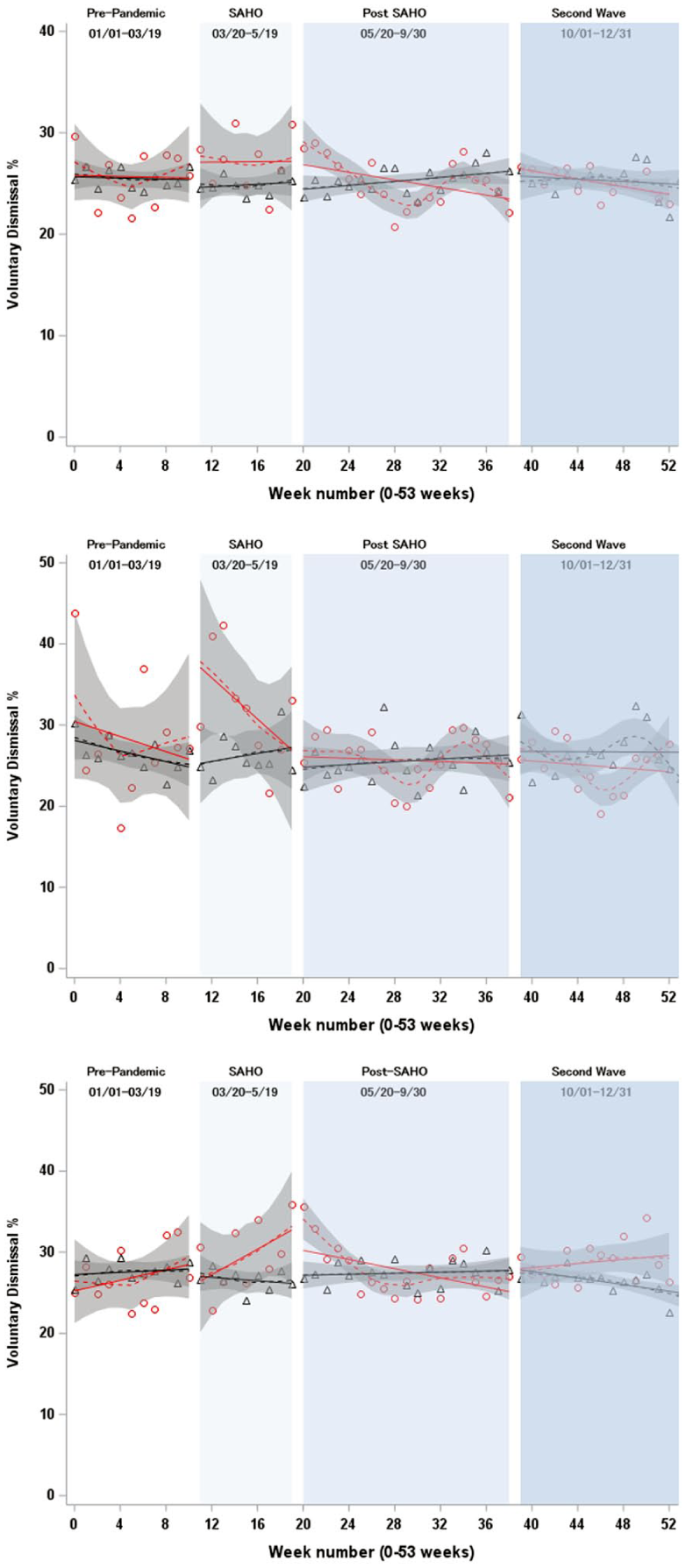
Effect of SAHO on weekly DVPO voluntary dismissal percentage among all (A), e-filing (B), and non-e-filing (C) counties in North Carolina, 2017–2020.
After the second wave of COVID-19, the weekly VD percentage in 2020 continued to follow 2017 to 2019 levels among all counties. By e-filing status, there was no trend change among e-filing counties and an increasing sustained trend among non-e-filing counties compared to previous years (Table D1 in Appendix D; Figure 5A–C).
Time-to-DVPO-Disposition
SAHO impact: Compared to previous years, time to disposition saw an immediate decline by 10.12 days (95% CI [−18.20, −2.04]) following the onset of the SAHO (Table 1; Figure 6A). Non-e-filing counties saw a larger decrease of 11.82 [−21.11, −2.53] days immediately after the SAHO began, while e-filing counties saw an immediate 7.14-day decrease [−17.74, 3.46] (Table D1 in Appendix D; Figure 6B and C) relative to previous years. Thereafter, all counties had a sustained increasing trend throughout the SAHO period, although e-filing counties had a higher increase in time to disposition by 1.41 days [−0.44, 3.26] while non-e-filing counties had an increase by 0.45 days [−1.17, 2.07] compared to prior years. When the SAHO was lifted, all counties had an immediate increase in time to disposition by 5.88 days [−0.96, 12.72], followed by a sustained declining trend by 1.45 days [−2.64, −0.25] compared to 2017–2019. E-filing counties had a larger immediate increase when the SAHO was lifted (9.96 days; [1.00, 18.93]) compared to non-e-filing counties’ increase by 5.94 days [−1.92, 13.80] (Table D1 in Appendix D).
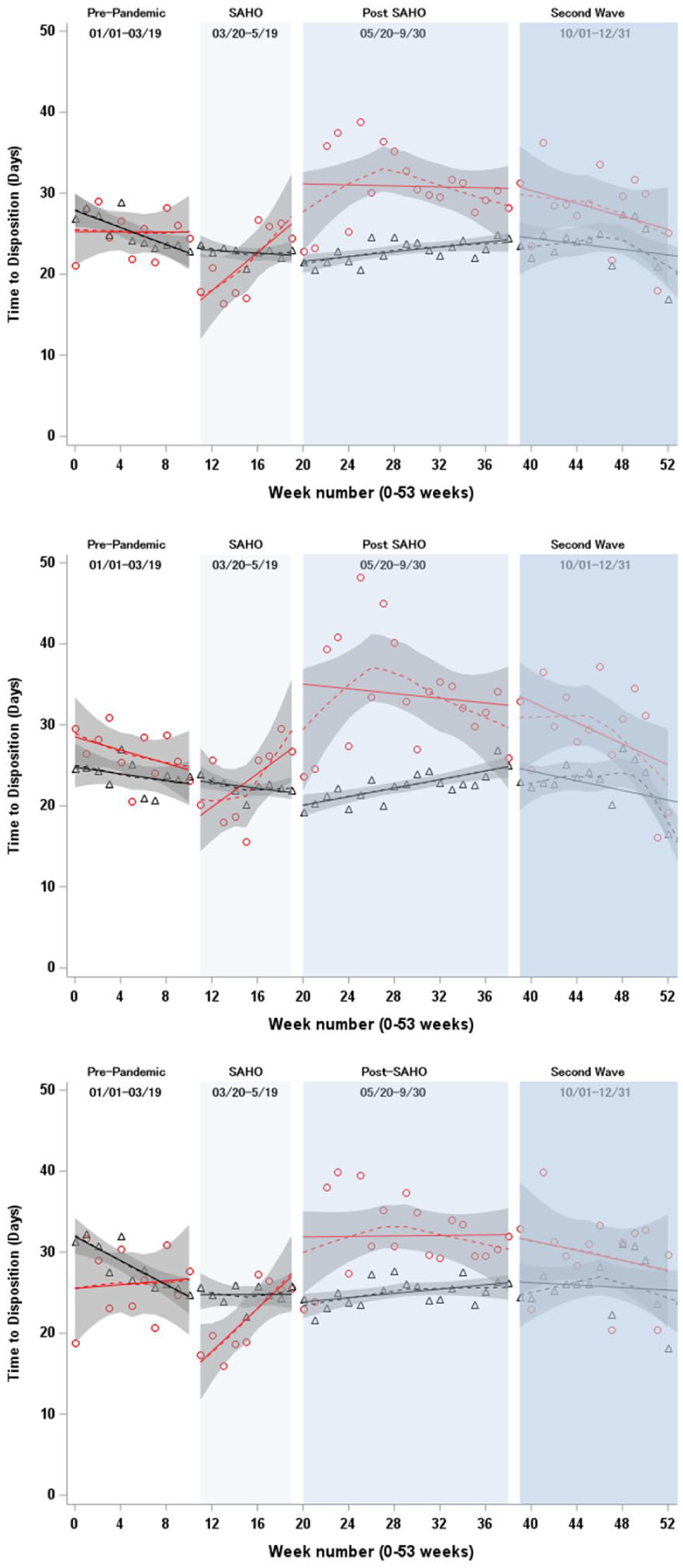
Effect of SAHO on weekly DVPO disposition time in days among all (A), e-filing (B), and non-e-filing (C) counties in North Carolina, 2017–2020.
After the second wave of COVID-19, there were no substantive effects on the time to DVPO disposition, although the time to disposition remained higher throughout 2020 compared to previous years (Figure 6A–C).
Time to Service
SAHO impact: Time to service immediately declined among all counties after the SAHO began by 0.53 days (95% CI [−1.57, 0.51]), and no sustained trend change occurred thereafter (Table 1; Figure 7A). By e-filing status, there was no immediate change in time to service for e-filing counties, while time to service immediately declined for non-e-filing counties by 0.63 days [−1.87, 0.62] compared to prior years (Table D1 in Appendix D; Figure 7B and C). After the SAHO ended, there was a slight overall increase in time to service by 0.44 days [−0.44, 1.32] followed by a sustained increasing trend (Figure 7A). Time to service immediately declined among e-filing counties compared to previous years, followed by a slight sustained incline in service time by 0.12 days [−0.09, 0.32] (Figure 7B). Non-e-filing counties experienced an immediate increase in time to service by 0.75 days [−0.30, 1.80] compared to prior years, while there was no sustained trend change reported thereafter (Figure 7C).
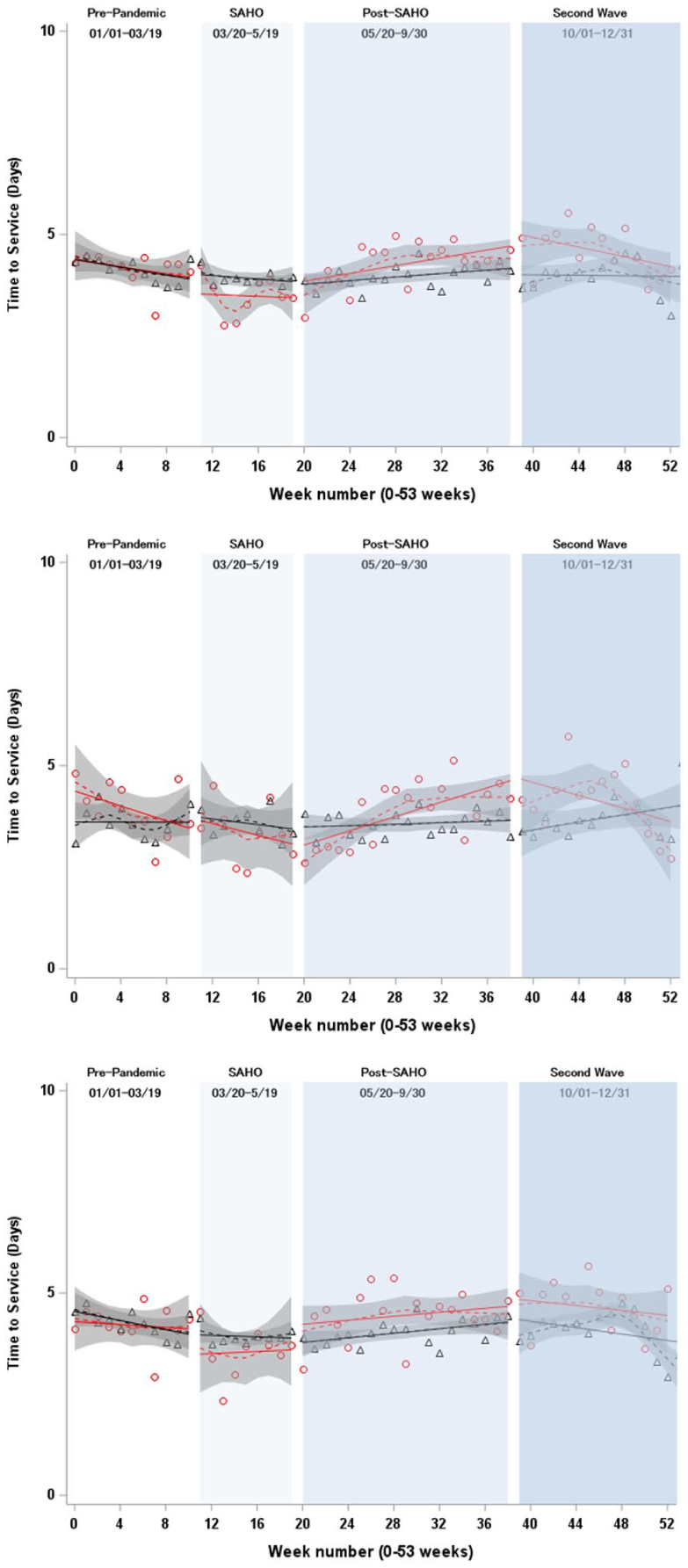
Effect of SAHO on weekly DVPO service time in days among all (A), e-filing (B), and non-e-filing (C) counties in North Carolina, 2017–2020.
Once the second wave of COVID-19 began, there was a small immediate increase in time to service by 0.49 days (95% CI [−0.31, 1.29]), followed by a slight declining sustained trend by 0.08 days [−0.17, 0.00] (Figure 7A). While there was no immediate trend change among either e-filing or non-e-filing counties following the second COVID-19 wave, e-filing counties had a slight sustained decline in time to service by 0.21 days [−0.32, −0.09] while non-e-filing counties showed no sustained trend change compared to previous years (Table D1 in Appendix D; Figure 7B and C).
Discussion
This paper provides insight into the impacts of the COVID-19 SAHO on DVPO outcomes and differences by e-filing utilization of NC counties. In summary, the COVID-19 SAHO led to declines in filing, granting, and shorter time to service and disposition, while denials, voluntary, and involuntary dismissals increased among all NC counties. By e-filing status, e-filing counties had lower granting and involuntary dismissals, higher denials and voluntary dismissals, and longer times to disposition than non-e-filing counties. However, the level of support that advocates provided for plaintiffs during the pandemic and SAHO may have varied and was not measured. This information may provide further insight into county-level differences, regardless of e-filing status.
We speculate that COVID-related restrictions and their impact on IPV, case severity, county-level differences in e-filing utilization, closures, standards, and advocacy further contextualize our results. We walk through each contextual factor below.
COVID-19–Related Restrictions
COVID-19–based restrictions led to increases in IPV based on reports from clinic-based shelters and health care settings (Kim & Royle, 2023). Factors that potentially increased barriers to filing during the COVID-19 SAHO include social and physical isolation, economic and psychological stress, job loss, lack of transportation, and lack of childcare (Ceroni et al., 2023; Cordier et al., 2021). Furthermore, seeking DV services could increase the risk of COVID-19 transmission, creating an additional safety barrier for survivors (Ceroni et al., 2023).
With the increase in barriers to filing during the SAHO, it is not surprising that filing rates declined after the start of the SAHO. As court cases are anchored on the date of their disposition result, we see a higher number of cases after the SAHO ended. Fewer people were able to get a disposition during the SAHO, and therefore, an influx of dispositions was given once the SAHO ended and the courts could process the cases again. In addition, DVPO outcomes were impacted by the SAHO as grantings declined and denials, IVD, and VDs increased. The increase in dismissals may be related to survivors living with their perpetrator during the SAHO, and potentially being subject to coercive control and at risk of further IPV if they were to follow through with their case by returning to court (Beasley, 2020; van Gelder et al., 2020). In addition, the lack of childcare during COVID-19 may have increased IVDs as plaintiffs may not have had the ability to take time off work or leave home, and subsequently were unable to contact the court. In addition, with the increasing need to use virtual methods of communication during the SAHO and other COVID-related restrictions, plaintiffs’ access to the internet to utilize e-filing county resources to their full potential may have been a hindrance to filing and maintaining contact with the court system for plaintiffs.
Case Severity
With many court closures during the SAHO, those who filed during this time period may have had the most urgent and severe cases. As filings declined, cases that were filed during this time had shorter service times and disposition deployment. Once the SAHO ended, the number of days to disposition increased, particularly among e-filing counties, perhaps due to a large influx in cases to be processed once plaintiffs were able to physically separate from their perpetrator to file, and adjustments were made to the court system to proceed during the pandemic. There was also an overall increase in time to service, potentially due to a larger influx of cases as courts opened fully. These increases in time to disposition and service may have led to more INVDs and VDs among people who did not have the ability to wait longer times and therefore dropped their case with or without notifying the courts. We also suspect the severity of cases impacted granting results, which remained lower among e-filing counties even after the SAHO, while granting returned to 2017 to 2019 levels among non-e-filing counties. Previous research found that the severity of DV among cases filed during this time impacted granted orders as a result (Lyons et al., 2021). Higher denials among e-filing counties compared to non-e-filing counties could potentially be explained by a higher bar needed to meet in terms of severity for granted DVPOs among e-filing counties, as the results are proportional to each other (such that the proportion of each DVPO disposition type is derived from all DVPO dispositions).
County-Level Differences in SAHO Implementation
Higher denials and lower granting results among e-filing counties than non-e-filing counties could be explained by county-level differences in how SAHO was implemented, particularly in closure and standard protocols. For example, in one large urban e-filing county, the local Domestic Violence Service Provider program was completely shut down and did not re-open fully until much later than other counties, preventing access to advocate support within an e-filing county, even when courthouses were open for filing. This further emphasizes that other SAHO and e-filing implementation factors at the county level may explain some unexpected results.
Advocacy
While there were restrictions that limited some counties from filing, there were also supportive mechanisms that allowed people to still move forward in the filing process. Supportive mechanisms include advocates who support e-filing, while other support mechanisms include court staff and judges working from home to process paperwork in both e-filing and non-e-filing counties. The unexpected results of lower granting of DVPOs and longer service times among e-filing counties compared to non-e-filing counties led us to believe there may be differences happening at the advocate level that were unmeasured quantitatively. While e-filing provided access to filing support during the SAHO, advocates in e-filing counties may have had limited ability to provide emotional support through online connection, potentially limiting feelings of safety for survivors to disclose information for their case. Therefore, we advise quantitative measurement of advocacy by advocates and court staff to further assess the impact of advocacy on DVPO outcomes during the COVID-19 SAHO.
Limitations
We did not discuss differences in plaintiff DVPO outcomes by age, sex, and race, as previous research has documented IPV health inequities based on minority ethnicity, age, and sex (Johnson et al., 2015; Stockman et al., 2015). Further, research has documented health disparities by socio-economic status, health care access, and police brutality that prevent Black and brown survivors from reporting their experiences of abuse that we were not able to evaluate in this study (Evans et al., 2020). COVID-19 cases also disproportionately affected racial and ethnic minority groups in the United States, which could be a substantial factor hindering DVPO filing by these groups (Romano, 2021). Further, we were not able to assess potential differences in DVPO filing and outcomes by gender identity or sexual orientation, and preferred language, as our data did not contain these categories. There may have also been differences in judicial discretion by county that were unmeasured that may have impacted DVPO outcomes.
Conclusion
The COVID-19 pandemic and subsequent SAHO vastly impacted DVPO filing and dispositions in NC, as there were overall reductions in filings, granting outcomes, and increases in denials and voluntary and involuntary dismissals. E-filing counties saw fewer granting and involuntary dismissals and more denials and voluntary dismissals than non-e-filing counties during the SAHO. Differences by e-filing status may be explained by advocacy of court staff, individual-level factors such as lack of childcare, and potential court procedural differences by county.
These findings provide evidence of how emergency situations and natural disasters can disrupt and impact DVPO services for survivors. Future research should focus on plaintiffs’ perceptions of barriers and facilitators to DVPO filing, including time considerations such as time to service of the ex parte order and time to disposition of the final case, as well as evaluate experiences among DV survivors during the COVID-19 pandemic to inform DV services of best practices during an emergency. In addition, the impact of legal aid and survivor advocacy services during the DVPO process and how technology access could have been improved needs further evaluation.
Footnotes
Appendixes
Acknowledgements
We would like to thank our Community Advisory Board members, as well as Stephanie Satkowiak, for her expertise in survivor advocacy and NC court systems.

Funding
The authors disclosed receipt of the following financial support for the research and/or authorship of this article: This study was funded by the Office on Violence Against Women, Grant #15-JOVW-21-GG-02485-MUMU (KEM and SIR) of the U.S. Department of Justice (Office on Violence Against Women [OVW]) | Office on Violence Against Women (OVW) (justice.gov). Points of view expressed in this document are those of the authors, and do not necessarily represent the official position or policies of the U.S. Department of Justice. Research reported in this publication was also partially supported by the Centers for Disease Control and Prevention (CDC), National Center for Injury Prevention and Control’s Injury Control Research Center Grant R49 CE003092 (KEM) (Injury Center | CDC). The findings and conclusions reported are those of the authors and do not necessarily represent the views of the CDC.
Declaration of Conflicting Interests
The authors declared no potential conflicts of interests with respect to the authorship and/or publication of this article.