




Abstract
This study investigates the intergenerational impacts of gender-based violence and discrimination (GBVD) experienced by mothers on the socioemotional development of young children using microdata from over 6,000 mother-child pairs drawn from the Multiple Indicator Cluster Surveys (MICS6) across five LMICs: Comoros, Eswatini, Fiji, Vanuatu, and Vietnam. Using household fixed effects and instrumental variable approaches, we examine how various dimensions of maternal GBVD, including feeling unsafe at home, gender-based and sexual orientation discrimination, and unsafe community environments, affect children’s expression behaviors, social competence, and functional learning difficulties. Our results show that exposure to maternal GBVD is significantly associated with poorer socioemotional outcomes across all dimensions, with the strongest effects observed for children of mothers who report discrimination related to gender identity or sexual orientation. Mechanism analysis reveals that maternal well-being, harsh parenting practices, and reduced cognitive caregiving mediate these effects. Importantly, we find that mothers with higher education levels and greater access to media are more resilient, providing protective buffers that mitigate the negative impact of GBVD on their children. These findings underscore the long-term developmental risks associated with interpersonal violence and highlight the need for integrated policy interventions that combine violence prevention with support for maternal empowerment and child development.
Introduction
Globally, approximately one-third of women have endured physical or sexual violence, with incidence rates reaching as high as 37% in economically disadvantaged nations. This pervasive issue transcends economic divisions, underscoring a systemic societal problem (World health Organization [WHO], 2021). At the individual level, such abuse and discrimination engender “psychological traps,” where women may experience self-blame and diminished self-esteem (Holt et al., 2008; Stephens, 1999). From a societal perspective, these actions severely impede sustainable development, adversely affecting familial connections and the nurturing of future generations. Notably, gender-based violence and discrimination (GBVD) represent a grave violation of human rights and, economically, constitute a suboptimal allocation of half the global societal resources. Therefore, addressing this phenomenon is critical for both individual well-being and broader social stability, necessitating comprehensive community-based approaches and policy interventions to rectify the underlying socio-economic and gender disparities (World Bank Group, 2019).
Regarding the generational nurturing process, significant concern arises over whether children raised in households where the mother is subjected to abuse and discrimination can develop healthy socioemotional traits. This wonder is particularly relevant for children under 5 years of age, who are not only psychologically and physiologically vulnerable but also cannot resist or protect themselves. Previous research indicates that women facing discrimination and violence may adopt harsher parenting practices. For instance, a consistent correlation between domestic abuse and child physical abuse is observed globally, with prevalence rates ranging from 45% to 70% (Holt et al., 2008). Moreover, at the turn of the 20th century, children exposed to domestic violence were 15 times more likely to suffer physical abuse and neglect (Osofsky, 1999). It should be noted that 14.6% of over 100,000 children under 5 across 35 low- and middle-income countries (LMICs) exhibited low cognitive development, and 26.2% displayed poor socioemotional growth (McCoy et al., 2016).
The tragedy multiplies when women, becoming victims of violence and discrimination, internalize guilt and inadvertently transmit these adverse effects to their children. Thus, this study aims to explore the impact of GBVD on the socioemotional development of children under five, focusing on the direct influence of maternal interactions within the family, such as emotional support, communication style, and disciplinary practices. This research will enhance empirical evidence concerning the heterogeneous effects of different types of violence and discrimination (e.g., physical abuse, sexual abuse, emotional neglect, and economic discrimination) on child development, leveraging survey data from over 6,000 mother-child pairs in 5 LMICs. The mechanisms of impact are also examined to elucidate the persistence of these effects.
Contributions include the construction of an experimental model based on the Understanding Skill framework (Kautz et al., 2014), which conceptualizes skill formation as a dynamic process shaped by cognitive, socioemotional, and behavioral factors, particularly relevant in the context of the Sustainable Development Goals (SDGs; Lund et al., 2018). The current empirical model aims to assess causal impacts of maternal exposure to violence and discrimination on children’s socioemotional development with potential applications in global contexts, particularly in LMICs where the incidence of gender-based violence remains high. Notably, the heterogeneous impacts of violence and discrimination on child development are considered moderated by the educational role of the mother within the family (McCoy et al., 2016).
Literature Review
Early Childhood Socioemotional Development
Early childhood, generally considered the first 5 years of life, represents the most rapid phase of growth, during which the developing brain is particularly receptive to stimulation and nurturing (Qiao et al., 2021). As noted, even “small perturbations in these processes can have long-term effects on the brain’s structural and functional capacity” (Grantham-McGregor et al., 2007, p. 61). This issue becomes even more critical in LMICs, where the proportion of children under 5 at risk of not achieving their full potential has risen from 200 million (39%) to approximately 250 million (43%) since 2010 (Black et al., 2017). To address this concern, scholars who view human development through the lens of human capital theory have sought to model the benefits of either promoting positive interventions or mitigating risks associated with early childhood development. For instance, Black et al. (2017), identify key elements of production functions, where outcomes such as cognition, education, health, and future earnings of children are influenced by parental inputs, including material resources, cognitive development, health, and time investments.
Psychologists emphasize the need to boost positive incentives and mitigate negative influences on child development by differentiating between “traits” and “skills.” According to Kautz et al. (2014, p. 9), “traits” imply a sense of permanence and potential heritability, while “skills” suggest that these attributes can be learned, with the assertion that “all attributes can be shaped.” The authors developed a theoretical framework, which is applied in this study, suggesting that parental investment, both emotional and physical, is essential for fostering cognitive and non-cognitive skills from the prenatal stage through adulthood. Such investments can either positively promote development (e.g., as reflected in early childhood development indices; McCoy et al., 2016) or negatively contribute to behavioral and developmental disorders (Lund et al., 2018).
In LMICs, the first approach (intervention through positive incentives) may become complex and yield inconsistent results across different settings (Banerjee & Duflo, 2012). Thus, within the scope of this study, we focus on examining the impact of mitigating negative factors originating from parents, specifically, gender-based discrimination and violence, on the development of children under 5 years old. It is worth noting that this approach appears more common in poorer countries than in developing nations, as many children in these regions still lack access to healthy living environments, let alone the additional incentives needed to achieve their full potential (Black et al., 2017; Grantham-McGregor et al., 2007). According to statistics from McCoy et al. (2016, p. 3), based on a sample of 35 LMICs and nearly 100,000 children under five, 14.6% exhibited low cognitive development, 1 while 26.2% showed low socioemotional development. 2 A widely recognized cause of this issue is a parental violent upbringing (Black et al., 2017; Grantham-McGregor et al., 2007; Lund et al., 2018). Notably, parental GBVD affect child socioemotional development through multiple mechanisms that align with the SDGs. Maternal mental health links to SDG 3.4 (mental health), harsh parenting and maternal victimization to SDG 5.2 (eliminating violence), reduced positive engagement to SDG 4.2 (early childhood development), and external discrimination to SDG 10.3 (reducing inequalities), and SDG 11 (safe communities). These pathways highlight that addressing GBVD is integral not only to SDG 5 and SDG 10, but also to broader goals of peace, justice, and strong institutions under SDG 16 (Lund et al., 2018; McCoy et al., 2016).
Another reason why parental GBVD are particularly severe compared to other issues is that they operate like a vicious cycle. As highlighted by Holt et al. (2008), the ongoing abuse of mothers within the family can initially damage the relationship between mothers and their children, impairing their ability to parent effectively and diminishing the quality of attachment with their children. Then, the externalization of children’s behavioral issues may further exacerbate the mother’s experience of violence from neighbors or extended family members, especially in countries where child-rearing responsibilities are predominantly assigned to women. Exposure to maternal victimization may foster an intergenerational cycle of violence, whereby children replicate aggressive behaviors within the household. Evidence from Spain and Germany indicates that boys are particularly prone to displaying physical aggression toward their mothers when the father has abused them (Beckmann et al., 2021; Ibabe et al., 2013).
From a psychological perspective, this vicious cycle can also be understood through the concept of “psychological traps,” where abused women, due to self-blame, may be reluctant to seek help or take protective measures, believing they are undeserving or incapable of improving their children’s situation (Stephens, 1999). Holt et al. (2008) also note that, even after separation and the cessation of physical abuse, women may continue to face social stigma from the community regarding traditional gender roles that women are “expected” to fulfill.
Mechanism
How do parental GBVD hinder children’s socioemotional development? First, the psychological and emotional stress experienced by mothers due to violence and discrimination often results in conditions such as depression, anxiety, and post-traumatic stress disorder (Paulson, 2022), which can severely impair a mother’s ability to provide consistent and nurturing care in both the short and long term (Holt et al., 2008; WHO, 2012). At its core, living with an abused mother can be considered a form of emotional abuse for infants and toddlers, as they are totally deprived of emotional validation and support, which constitutes a form of emotional abuse (Holt et al., 2008).
Second, there is often a transfer of violence from the mother to her children. Women who face discrimination and violence may adopt harsher parenting styles toward their children. Empirical evidence suggests that experiences of victimization can normalize aggression within households, increasing the likelihood that mothers transmit violent behaviors to their children through harsher disciplinary practices (Holt et al., 2008; McCoy et al., 2016). This correlation between domestic abuse and child physical abuse is consistent across various global samples, with rates ranging from 45% to 70% (Holt et al., 2008). In a similar vein, Osofsky (1999), after reviewing three decades of research from 1970 to 1999, concluded that children exposed to domestic violence are 15 times more likely to experience physical abuse and neglect than children without such exposure.
Third, the presence and persistence of parental GBVD disrupt broader family dynamics and the home environment, often referred to as the “adversity package.” This term describes the accumulation of multiple stressors in the lives of children exposed to violence, such as parental substance abuse and social isolation. For instance, a child may feel shame, fear, and inferiority due to discrimination from neighbors or peers as a result of parental conflict or separation. Put differently, the child’s development is negatively affected by the lack of social support from the surrounding environment, which stigmatizes families involved in domestic violence. Various concepts capture the impact of external discrimination (e.g., feeling unsafe when walking alone in the neighborhood after dark and community stigma) on children, including the “child’s sense of emotional security” (the perception of being safe and cared for), as described in Emotional Security Theory, and the “positivity spillover” (the transfer of positive emotions from parents to children) outlined in Interparental Positivity Spillover Theory (Don et al., 2024). The concept of “Parental Alienation” (emotional distancing caused by parental conflict) also addresses this phenomenon (Harman et al., 2022). The study of violence’s impact on the home environment has garnered significant scholarly attention (Harold & Sellers, 2018; Thompson et al., 2024; Zemp et al., 2021), linking parental gender-based violence and interparental conflict with increased parent-child conflict and more hostile relationships between siblings. Taken together, these mechanisms explain how external discrimination affects child development.
Fourth, several scholars have identified the links between parental GBVD and child development through mechanisms related to family economics and children’s nutrition. For example, Harold and Sellers (2018) synthesize evidence showing that violence directed at mothers is a significant cause of children’s sleep disturbances, which in turn impairs their already fragile neurobiological functioning. Furthermore, abused women often experience low self-esteem, which can lead them to either spend less quality time with their children or neglect their nutritional needs (see related discussions in Chambers & Gracia, 2021; Crouter & Crouter, 2003). Disruptions to the child’s environment and biological functioning during critical periods of brain development can harm cognitive development (Shonkoff et al., 2009). This argument is supported by studies observing modifications in family habits and child behavior during episodes of violence (Qouta et al., 2008; Sadeh et al., 2008).
For instance, Qouta et al. (2008) studied Palestinians in military conflict zones in Gaza and concluded that external violence disrupts parenting quality (e.g., family routines), reducing the ability to protect children exposed to such violence. Similarly, Sadeh et al. (2008) assessed the war exposure and stress reactions of 74 children (aged 2–7 years) in a sheltered camp during the second Israel-Lebanon war, revealing behavioral differences depending on the external support received. Additional evidence indicates that conflict exacerbates family economic difficulties (Summers, 2022), while malnutrition in children from impoverished families remains a key issue leading to poor developmental outcomes (Black et al., 2017; Grantham-McGregor et al., 2007; Victora et al., 2022). He et al. (2012) also found evidence in China that children from impoverished families abandoned by their parents, often as a result of prolonged domestic conflicts, are more prone to various mental health disorders.
Heterogeneous Effects
Why do some studies fail to find significant effects of exposure to parental gender-based violence on children’s socioemotional development? Several reasons exist for the inconsistent findings across empirical studies on this topic. Regardless of sample selection biases, omitted biases, and attenuation biases, resilience (both in response and interaction) is crucial in explaining the heterogeneous effects. For instance, Qouta et al. (2008) even identified “children of war,” referring to minors affected by armed conflict, who demonstrate endurance and resilience when witnessing various forms of violence. First, each child is unique, and their reactions to violence vary depending on factors such as age, gender, personality, family roles, and the extent of their exposure. The impact is also mediated by relationships with family members (e.g., parents and siblings) and the availability of support systems (Black et al., 2017; Bradley & Corwyn, 2002; Harold & Sellers, 2018; Holt et al., 2008; Zemp et al., 2021).
Second, whether a child externalizes or internalizes problems plays a crucial role in determining their response to violence (Evans et al., 2008; Harold & Sellers, 2018; Kitzmann et al., 2003; Vu et al., 2016). Externalizing tendencies often manifest as outward behaviors such as aggression, conduct issues, and antisocial behavior, while symptoms of withdrawal, fearfulness, sadness, shyness, low self-esteem, anxiety, depression, and, in severe cases, suicidality characterize internalizing tendencies. Sadeh et al. (2008) highlighted that external support can help children better adapt to external violence. Third, several studies emphasize the differential impact of various types of violence on children’s behavioral development; for example, Kelly and Johnson (2008); Kitzmann et al. (2003) argue that domestic violence involving knives or firearms poses a greater risk to children than exposure to violence where such weapons are not present.
Fourth, the difference in maternal education levels plays a role. For example, Yount and Carrera (2006) conducted a study with a sample of 2,074 married Cambodian women and found that mothers with higher educational levels were more likely to use effective coping strategies, which helped protect their children from the psychological and emotional impacts of domestic violence. It is important to note that this effect was particularly significant for women with 8 to 13 fewer years of education than their husbands. Similarly, a study by Ackerson et al. (2008), using data from 83,627 married women aged 15 to 49 from the 1998–1999 Indian National Family Health Survey, revealed that educated mothers were better able to access support services, creating a safer environment for their children and improving developmental outcomes. Additionally, García-Moreno et al. (2015), in their review of clinical interventions, highlighted that maternal education is crucial in reducing domestic violence, as educated mothers are more likely to challenge and avoid abusive relationships. As a result, children of more educated mothers are less likely to face the developmental challenges often associated with domestic violence (WHO, 2013)
Empirical Findings
Looking back at empirical research, studies in this field primarily use either data gathered from in-depth personal and semi-structured interviews (Black et al., 2017; Holt et al., 2008) or basic statistical methods (such as t-tests and multivariate regression) that often overlook assumptions about control groups (Cuartas et al., 2023; McCoy et al., 2021). Additionally, while randomized controlled trials (RCTs) effectively handle control groups, they typically involve relatively small sample sizes (Dunning et al., 2019; Evans et al., 2008; Kitzmann et al., 2003; Paulson, 2022; Schonert-Reichl et al., 2015; Vu et al., 2016). It is worth noting that, as Holt et al. (2008) observed, fewer than half of the studies using regression approaches control factors such as marital status, maternal age, and family size, with even fewer controlling for family stress, child health, or ethnicity. Moreover, studies using small sample sizes may be prone to bias when drawing generalizable conclusions, as they often focus on shelter populations, which may disproportionately represent lower socioeconomic groups. This sampling bias suggests that the effects identified in such studies may be exaggerated compared to actual impacts.
Thus far, empirical evidence appears to be divided into two common approaches. One approach focuses on in-depth interviews or detailed study samples maintained at a small scale to ensure rigor in controlling for confounding factors. While this approach yields consistent results, its generalizability is limited. The other approach emphasizes large-scale surveys, offering greater generalizability but often facing shortcomings in comparing identical observations; as a result, these studies tend to focus on identifying correlations or remain limited to descriptive statistics (McCoy et al., 2016). Thus, in section “ Methodology and Data,” we propose a design that partly addresses the generalizability of research findings from large samples while ensuring reasonable control over relevant factors.
Methodology and Data
Theoretical Framework
Grounded in the Understanding Skill framework (Kautz et al., 2014) and human capital theory, we view skill formation as a dynamic process from prenatal life into adulthood in which children’s cognitive and socioemotional development is shaped by parental investments, the surrounding environment, and schooling, and traits accumulated at earlier stages. We conceptualize parental investments broadly to include both supportive inputs (warmth, time, stimulation) and adverse inputs such as GBVD, which carry negative value for child development (Black et al., 2017). Focusing on children under five, we trace four pathways through which maternal adversity can affect child outcomes: deterioration in maternal mental health that reduces sensitive caregiving; a shift toward harsh parenting practices; reduced positive engagement and time with the child; and spillovers from external discrimination and safety concerns, for example, perceived gender discrimination, community stigma, and feeling unsafe walking alone after dark, into household routines and emotions (Panel A of Figure 1).
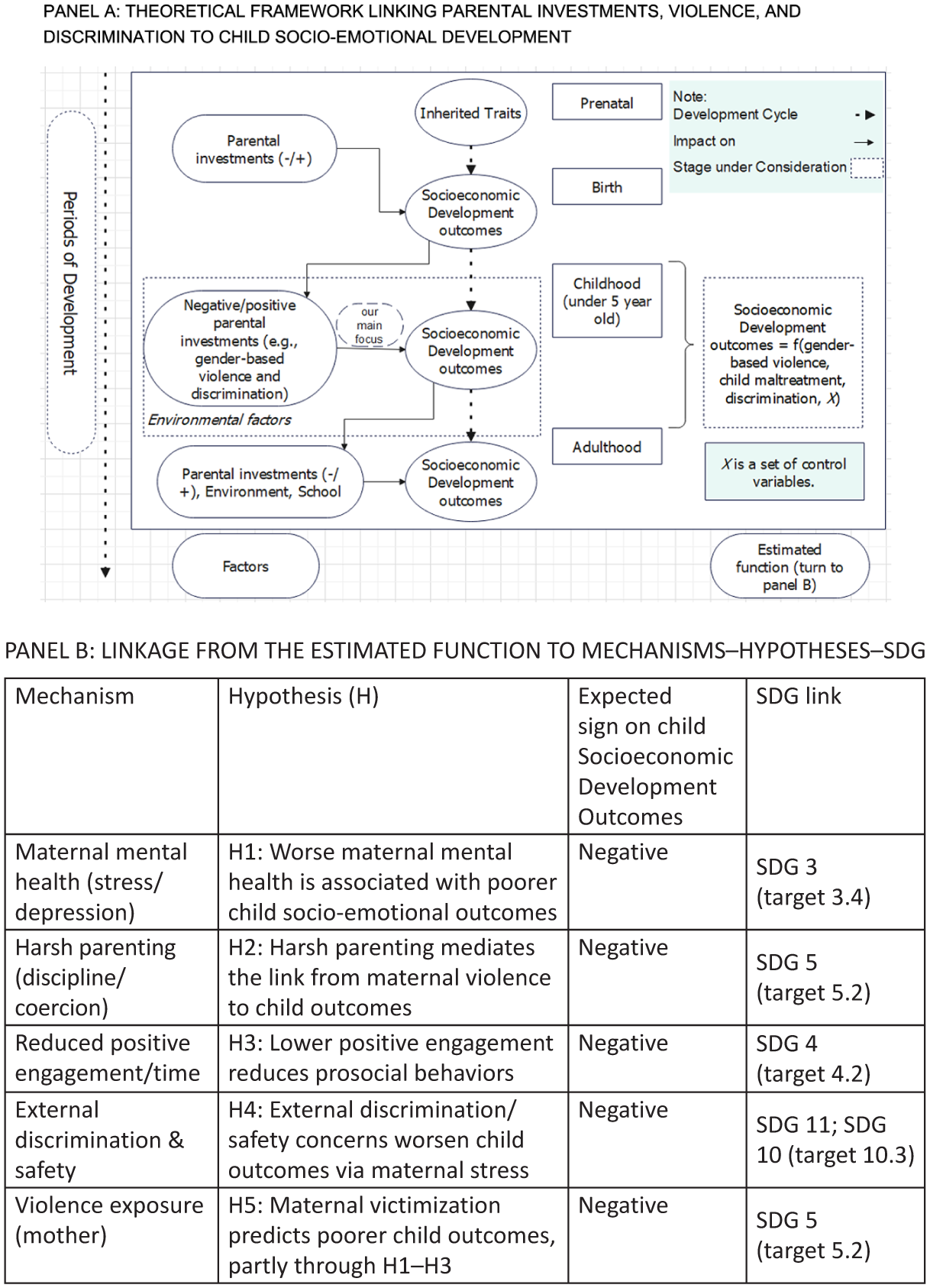
Theoretical framework and estimated function. Panel A: Theoretical framework linking parental investments, violence, and discrimination to child socioemotional development. Panel B: Linkage from the estimated function to mechanisms–hypotheses–SDG.
In the context of the SDGs, given a systematic review of 289 full-text reviews, Lund et al. (2018) propose a conceptual framework that synthesizes the social determinants of mental health across five domains: demographic, economic, neighborhood, environmental events, and social and cultural. Building on this framework, our study focuses on children under five and examines how maternal adversity (i.e., gender-based violence and perceived discrimination) shapes early socioemotional development. Substantively, we treat child outcomes as a function of these parental and contextual exposures alongside standard controls, situating the analysis primarily within the framework’s demographic domain while intersecting with neighborhood and social–cultural dimensions through measures of safety and stigma. The SDG orientation is explicit: the mechanisms map onto SDG 3.4 (mental health), SDG 4.2 (early childhood development), SDG 5.2 (eliminating violence), and SDG 10.3 (reducing discrimination). The simple estimated function could be simply represented as follows: Socioeconomic development = f (parental gender-based violence, child maltreatment, racial discrimination, X)
where
Empirical Strategy
Basic Setup
The estimation model can be fundamentally considered as follows (Chowdhury et al., 2022; Cuartas et al., 2023; Lu et al., 2020; McCoy et al., 2021).

where
It is challenging to ensure the target coefficient

Here,
Heterogeneity
As outlined in the literature review section, there are at least two channels, in addition to the individual characteristics of each child, that contribute to the heterogeneous effects of parental GBVD on children’s socioemotional development. First, the differential impact of various forms of violence, and second, the level of maternal education. Our empirical model captures these sources of heterogeneity as follows:

where
Mechanism
Given the feasibility of the data, we propose three tests for examining potential mechanisms. First, we consider whether violence and discrimination affect the mother’s emotional well-being. It is important to note that for individuals in poverty, future expectations can significantly impact child-rearing and family dynamics (Banerjee & Duflo, 2012). Consequently, discrimination and violence may diminish the mother’s happiness and future outlook. Second, we investigate the transmission channels, specifically whether the violence endured by the mother leads to violent behaviors toward her children, such as physical abuse or verbal reprimands (Beckmann et al., 2021; Holt et al., 2008; Ibabe et al., 2013; Osofsky, 1999).
Third, we explore the impact of violence on the frequency of close interactions between the mother and the child, which may be compromised by the mother’s low self-esteem, leading her to feel undeserving of her child’s affection, or her inability to maintain attention toward her children. In other words, this examination aims to verify whether violence affects children through: (a) the long-term subjective well-being of the mother, (b) the transfer of violence to the children, and (c) a reduction in nurturing actions towards the children.



Where
Data
We utilize data from the MICS program, which has become the largest and reliable source of statistically sound and internationally comparable data on children and women worldwide. This dataset is particularly relevant as it focuses on issues directly affecting the lives of children and women, especially in LMICs. We use the dataset from the sixth survey round, which began around 2018 and continued into 2020 across various countries. To date, 66 survey datasets have been completed and are publicly accessible on the United Nations Children’s Fund’s website. 3
Our initial study design intended to compile a comprehensive dataset from the current survey round. However, disparities in survey questions across countries and the absence of critical questions pertinent to children’s socioemotional development in some nations necessitated the exclusion of these countries from the primary dataset. In the case of Jamaica, Trinidad and Tobago, and Uzbekistan, while they did not lack key variables for equation (3), they were missing variables necessary for mechanism analysis. 4 Consequently, these countries will serve as an extended sample, enabling us to verify the robustness of our benchmark findings. In Supplemental Appendix 1, we list all the missing variables from the 66 datasets, along with the decision to include them in the master sample or the extended sample.
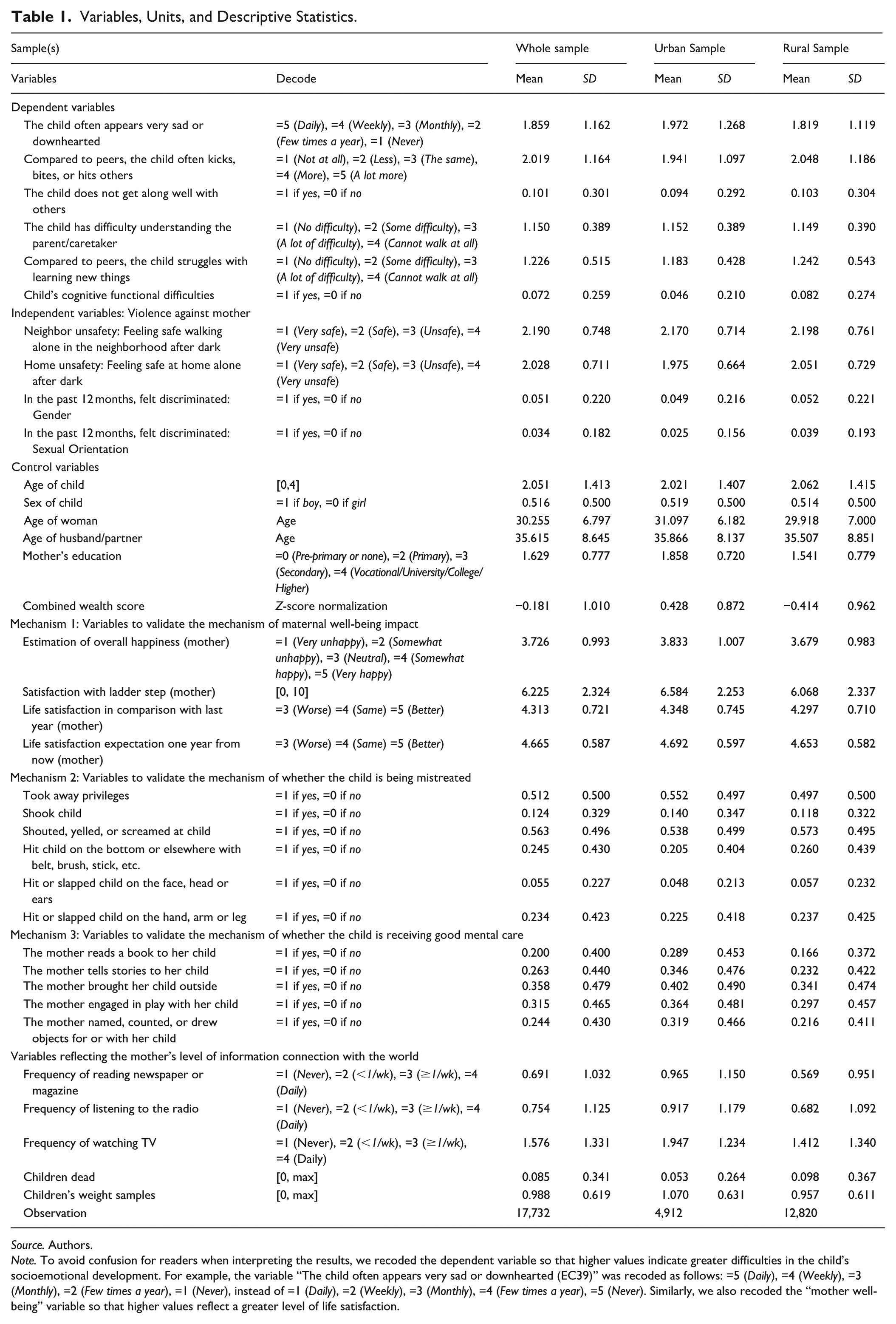
The final dataset includes five countries: Comoros, Eswatini, Fiji, Vanuatu, and Vietnam, with detailed observations for each variable. While the dependent variable is measured through observations provided by parents or caregivers, all relevant GBVD indicators used as independent variables are self-reported. These indicators are captured either through perception-based scales or binary yes/no questions. For instance, neighborhood safety is assessed by the item “Feeling safe walking alone in the neighborhood after dark” with response options ranging from 1 (very safe) to 4 (very unsafe), while perceived gender discrimination is measured with the question “In the past 12 months, felt discriminated: Gender” coded as 1 if yes and 0 if no. For transparency, we have only recoded these variables as detailed in Table 1 for the purpose of interpretation, and no imputation procedures were applied to address missing data.
Variables, Units, and Descriptive Statistics.
Source. Authors.
Note. To avoid confusion for readers when interpreting the results, we recoded the dependent variable so that higher values indicate greater difficulties in the child’s socioemotional development. For example, the variable “The child often appears very sad or downhearted (EC39)” was recoded as follows: =5 (Daily), =4 (Weekly), =3 (Monthly), =2 (Few times a year), =1 (Never), instead of =1 (Daily), =2 (Weekly), =3 (Monthly), =4 (Few times a year), =5 (Never). Similarly, we also recoded the “mother well-being” variable so that higher values reflect a greater level of life satisfaction.
We were somewhat surprised to find that over 10% of children do not get along well with others, although other indicators of unhealthy child development did not show similarly high rates. This may reflect a growing trend among young children, where a lack of direct interaction with peers is replaced by reliance on electronic devices for parenting. We were not particularly surprised to find that more than 50% of children had experienced parents taking away privileges or shouting/yelling at them. Additionally, about a quarter of children had been hit on the bottom or elsewhere with objects like belts, brushes, or sticks, or slapped on the hand, arm, or leg. This may reflect a cultural pattern in the countries included in the study, where children under five are more likely seen as “property” of their parents rather than independent individuals. Finally, we did not observe any unusual levels of parental GBVD, such as the mother’s feeling of safety walking alone at night or experiencing discrimination (with rates below 5%). Indicators reflecting the subjective well-being of mothers were also at average levels, with most mothers feeling optimistic about the future.
Importantly, we note that our analyses explicitly distinguish between urban (27.7% of observation) and rural samples (72.3%), which allows us to capture heterogeneity in children’s development. In rural areas, the prevalence of harsh disciplinary practices tends to be somewhat higher than in urban contexts, reflecting different cultural and socioeconomic settings. Moreover, the educational composition of mothers in the sample is heavily skewed toward lower levels of schooling: 11.7% report no formal education or only pre-primary, 20.4% completed primary, and 42.2% completed lower secondary, while fewer than 5% hold a university or higher degree. This demographic profile indicates that the bulk of our sample is drawn from socioeconomically disadvantaged households, especially in rural areas, and helps contextualize the high rates of harsh parenting observed.
Nevertheless, we acknowledge important limitations in the generalizability of our findings. The five LMICs included in the study may not reflect broader global experiences of GBVD. In particular, gender identity-based discrimination is likely underreported due to stigma and cultural sensitivities, which means our results should be interpreted with caution. Rather than claiming universal patterns, our findings should be read as indicative of dynamics in comparable LMIC contexts, particularly those with similar demographic and educational profiles.
Additional basic descriptive statistics are presented in Table 1.
Results
Benchmark Results
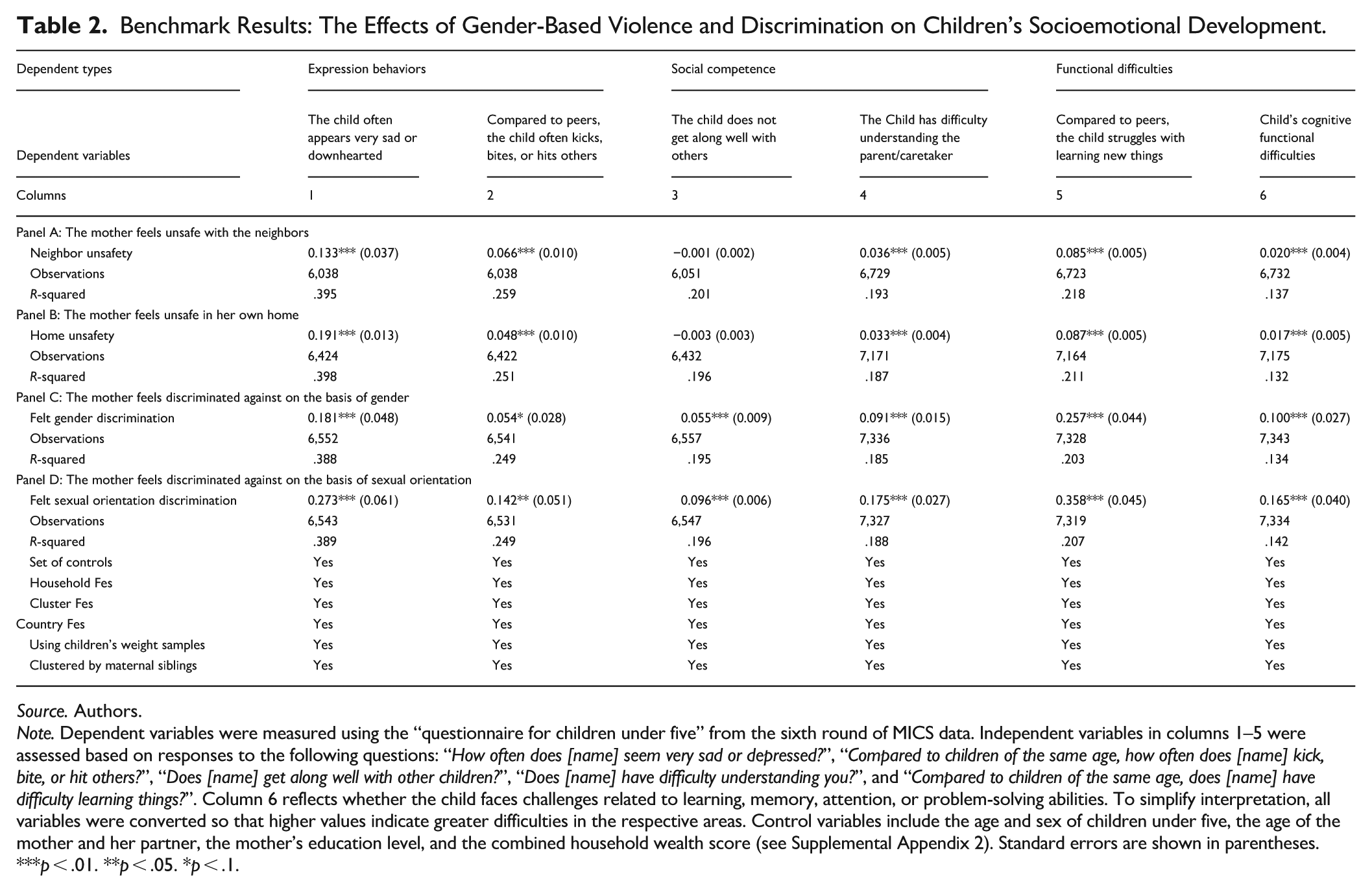
We first present the benchmark results concerning the effect of GBVD on the socioemotional development of children under five, covering aspects such as expression behaviors, social competence, and functional difficulties. As shown in Columns 1 and 2 of Table 2, children whose mothers reported exposure to GBVD were significantly more likely to exhibit negative expression behaviors, such as appearing sad or displaying aggression. Translating the coefficients into marginal effects, these associations correspond to an increase of approximately 6 to 8 percentage points in the probability of children showing such behaviors. This interpretation is meaningful when considered against the descriptive statistics in Table 1, which indicate that the average child displays signs of sadness less than twice per month (mean = 1.86 on a five-point scale), and aggressive behaviors slightly above the midpoint of the distribution (mean = 2.02 on a five-point scale). An increase of 6 to 8 percentage points, therefore, represents a substantial deviation from baseline patterns in early childhood expression.
Benchmark Results: The Effects of Gender-Based Violence and Discrimination on Children’s Socioemotional Development.
Source. Authors.
Note. Dependent variables were measured using the “questionnaire for children under five” from the sixth round of MICS data. Independent variables in columns 1–5 were assessed based on responses to the following questions: “How often does [name] seem very sad or depressed?”, “Compared to children of the same age, how often does [name] kick, bite, or hit others?”, “Does [name] get along well with other children?”, “Does [name] have difficulty understanding you?”, and “Compared to children of the same age, does [name] have difficulty learning things?”. Column 6 reflects whether the child faces challenges related to learning, memory, attention, or problem-solving abilities. To simplify interpretation, all variables were converted so that higher values indicate greater difficulties in the respective areas. Control variables include the age and sex of children under five, the age of the mother and her partner, the mother’s education level, and the combined household wealth score (see Supplemental Appendix 2). Standard errors are shown in parentheses.
p < .01. **p < .05. *p < .1.
Similarly, Columns 3 and 4 demonstrate that maternal exposure to GBVD negatively affects children’s social competence, with predicted probabilities of difficulties in peer relationships or understanding parental instructions increasing by about 7–9 percentage points. This finding is particularly noteworthy given that the baseline prevalence of these problems is relatively low, only about 10% of children were reported as not getting along with peers, and 15% as having difficulty understanding their caregiver. Even modest percentage-point increases, therefore, reflect considerable shifts in the distribution of social competence outcomes.
Finally, Columns 5 and 6 reveal that GBVD is associated with higher risks of functional difficulties, particularly in learning new things, where marginal effects are largest, ranging from 10 to 12 percentage points. Considering that 23% of children already show some struggles in learning (mean = 1.23 on a four-point scale), these additional risks represent a meaningful exacerbation of developmental challenges. Collectively, these findings highlight that children exposed to environments in which mothers experience violence or discrimination face significantly higher risks of socioemotional difficulties, reinforcing the intergenerational consequences of maternal adversity (Beckmann et al., 2021; Holt et al., 2008; Ibabe et al., 2013; Vu et al., 2016).
We specifically examine four variables that reflect violence and discrimination against mothers within the family. Panels A and B capture the mother’s sense of insecurity in her neighborhood and home, while Panels C and D reflect discrimination based on gender and sexual orientation. It is important to note that the surveyed feelings of insecurity in Panels A and B are highly relevant to experiences of both external and domestic violence, considering that the questions were structured to contemplate violent behaviors rather than general feelings of insecurity. Full regression analyses for each panel are presented in Supplemental Appendix 2, where other findings also align with expectations from prior studies, showing lower rates of abnormal socioemotional development among children with more educated mothers, from wealthier families, and being older (Black et al., 2017; Bradley & Corwyn, 2002; García-Moreno et al., 2015; Harold & Sellers, 2018; Holt et al., 2008; Zemp et al., 2021).
Mechanism
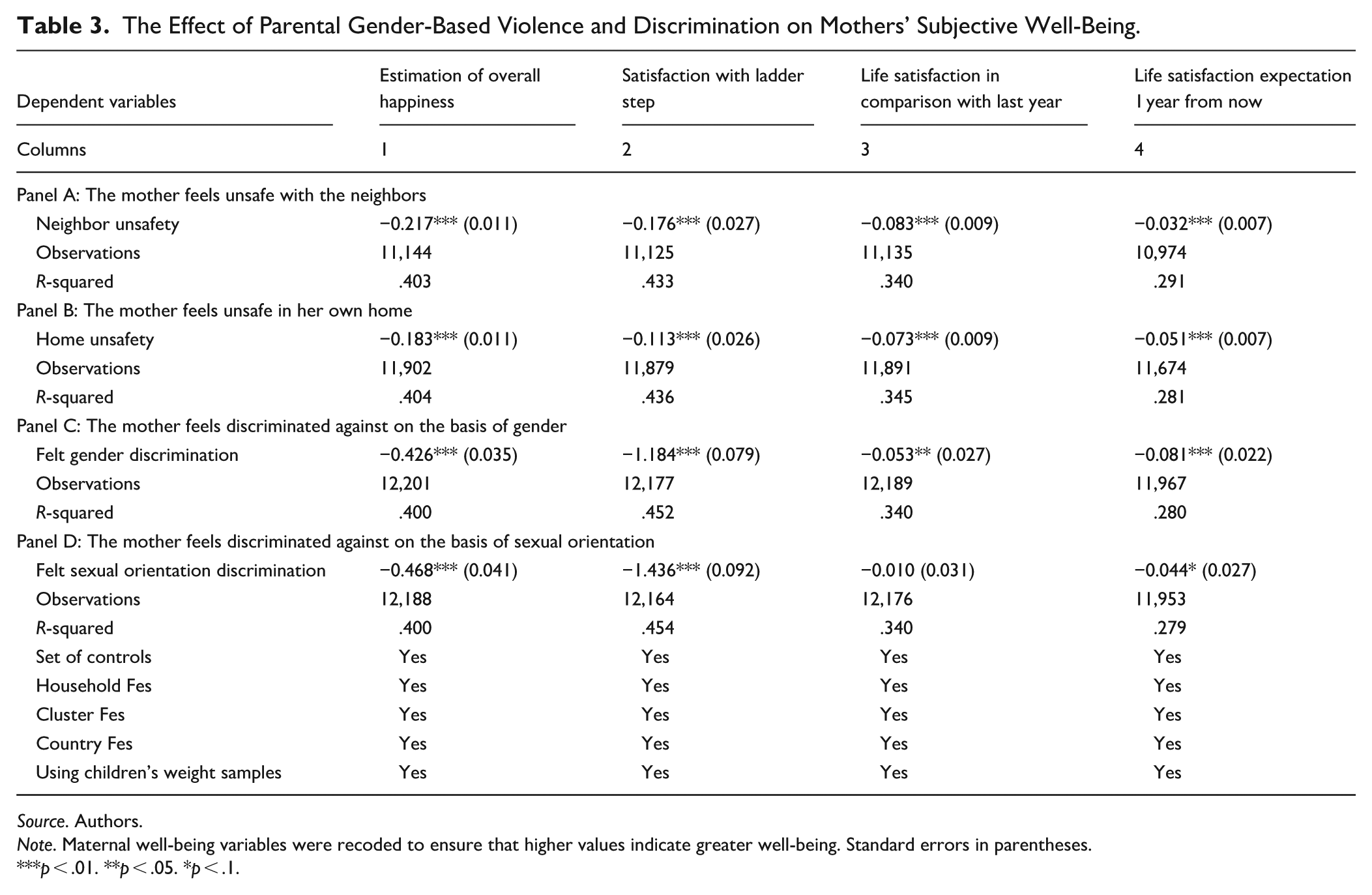
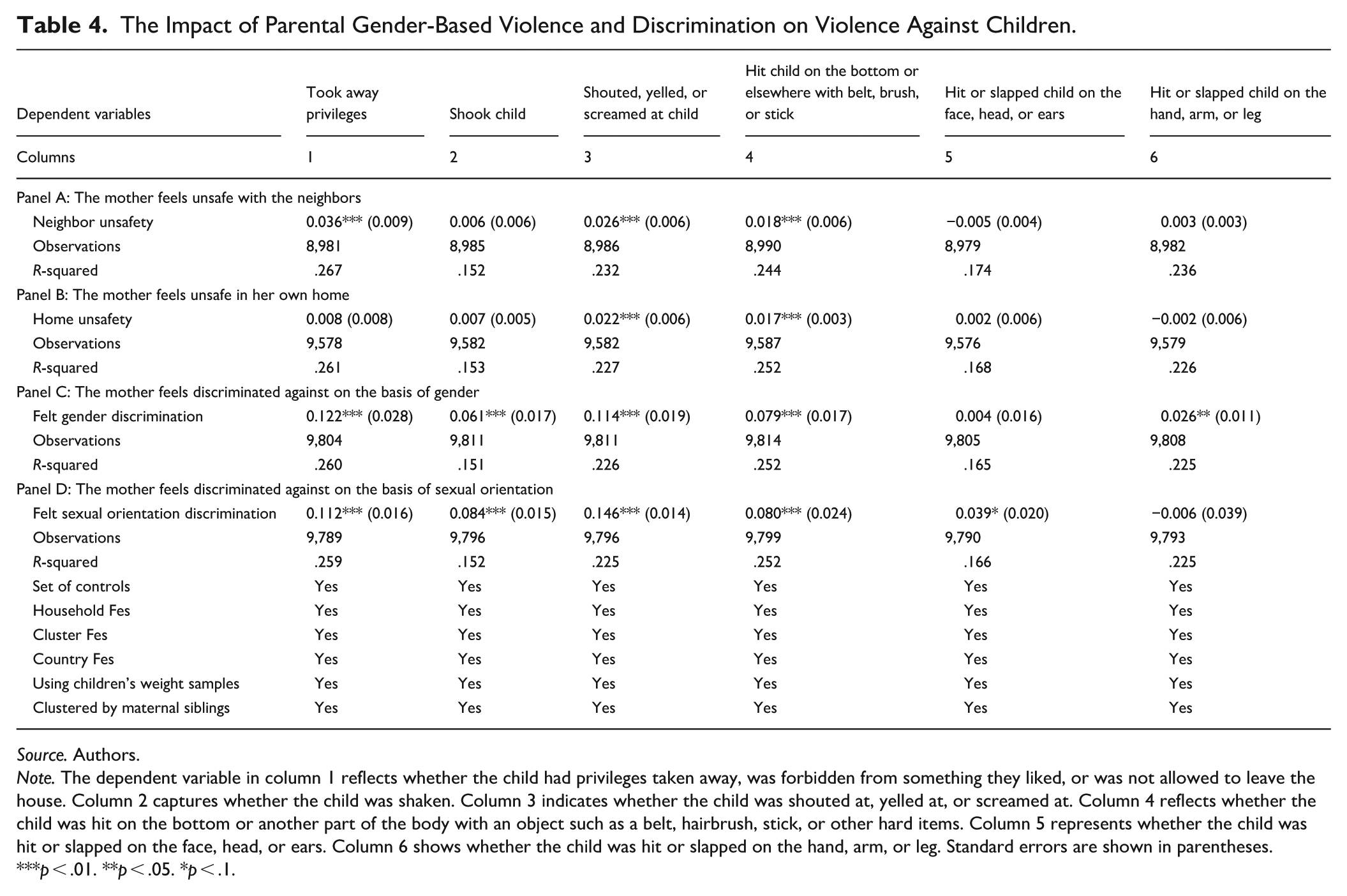
We now verify the mechanisms as outlined in the literature review. Given the availability of the dataset, we examine the impact of GBVD through three channels: mothers’ subjective well-being, violence against children, and mental health care for children. Table 3 consistently confirms the negative impact of GBVD on four indices of the mother’s subjective well-being, including perceptions of overall happiness (column 1), life satisfaction levels (column 2), satisfaction compared to the past (column 3), and prospects for future life satisfaction (column 4). Table 4 also consistently shows that an increase in GBVD within the family correlates with a higher likelihood of various forms of child abuse. The most evident impacts are on three behaviors: children being shouted at, yelled at, or screamed at; being hit on the bottom with a belt, brush, or stick; and having privileges taken away. These are also the behaviors most frequently observed in the descriptive statistics of this study.
The Effect of Parental Gender-Based Violence and Discrimination on Mothers’ Subjective Well-Being.
Source. Authors.
Note. Maternal well-being variables were recoded to ensure that higher values indicate greater well-being. Standard errors in parentheses.
p < .01. **p < .05. *p < .1.
The Impact of Parental Gender-Based Violence and Discrimination on Violence Against Children.
Source. Authors.
Note. The dependent variable in column 1 reflects whether the child had privileges taken away, was forbidden from something they liked, or was not allowed to leave the house. Column 2 captures whether the child was shaken. Column 3 indicates whether the child was shouted at, yelled at, or screamed at. Column 4 reflects whether the child was hit on the bottom or another part of the body with an object such as a belt, hairbrush, stick, or other hard items. Column 5 represents whether the child was hit or slapped on the face, head, or ears. Column 6 shows whether the child was hit or slapped on the hand, arm, or leg. Standard errors are shown in parentheses.
p < .01. **p < .05. *p < .1.
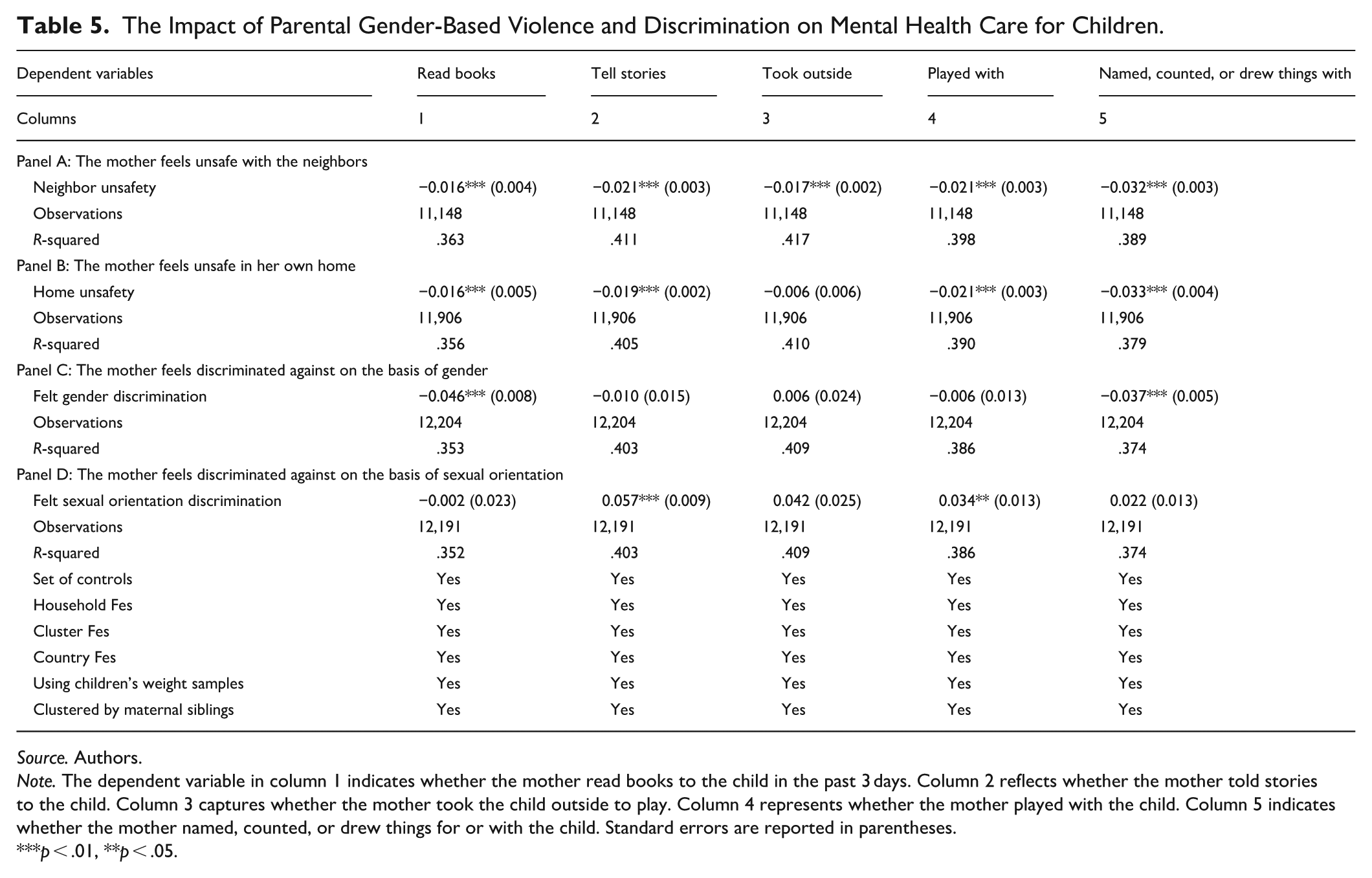
In Table 5, we examine whether mothers experiencing violence and discrimination spend less time with their children, given that exposure to GBVD may reduce maternal self-esteem or disrupt positive parenting routines. Results in Panels A, B, and C broadly support this expectation: mothers reporting neighborhood or home unsafety, or gender-based discrimination, consistently spend less time engaging in activities such as reading, telling stories, or playing with their children. However, Panel D reveals an unexpected pattern: mothers who report discrimination based on sexual orientation appear to spend more time reading to and playing with their children (Columns 2 and 4). There are at least two plausible interpretations for this finding. First, research on LGBTQ+ parenting highlights the resilience of sexual minority parents, who may deliberately invest more time in child-rearing as a compensatory strategy to counteract stigma and reinforce family bonds (Perrin et al., 2013). Second, such increased involvement may not always translate into improved child well-being if it coincides with maternal emotional distress; as Bowlby (2008) noted, proximity under strained emotional conditions may undermine sensitive caregiving. Also, our study cannot disentangle whether these unexpected positive coefficients reflect resilience or coping mechanisms versus potential reporting biases.
The Impact of Parental Gender-Based Violence and Discrimination on Mental Health Care for Children.
Source. Authors.
Note. The dependent variable in column 1 indicates whether the mother read books to the child in the past 3 days. Column 2 reflects whether the mother told stories to the child. Column 3 captures whether the mother took the child outside to play. Column 4 represents whether the mother played with the child. Column 5 indicates whether the mother named, counted, or drew things for or with the child. Standard errors are reported in parentheses.
p < .01, **p < .05.
Taken together, these findings underscore the heterogeneity of GBVD effects on parental behaviors, suggesting that the mechanisms linking maternal adversity to children’s socioemotional outcomes may vary substantially across different forms of discrimination.
Extended Analysis & Robustness Checks
We delve deeper into the heterogeneous effects of GBVD on child outcomes, particularly in relation to the mother’s level of education. Figure 2 displays the estimated coefficients and their 90% confidence intervals (CIs) for the interaction terms (
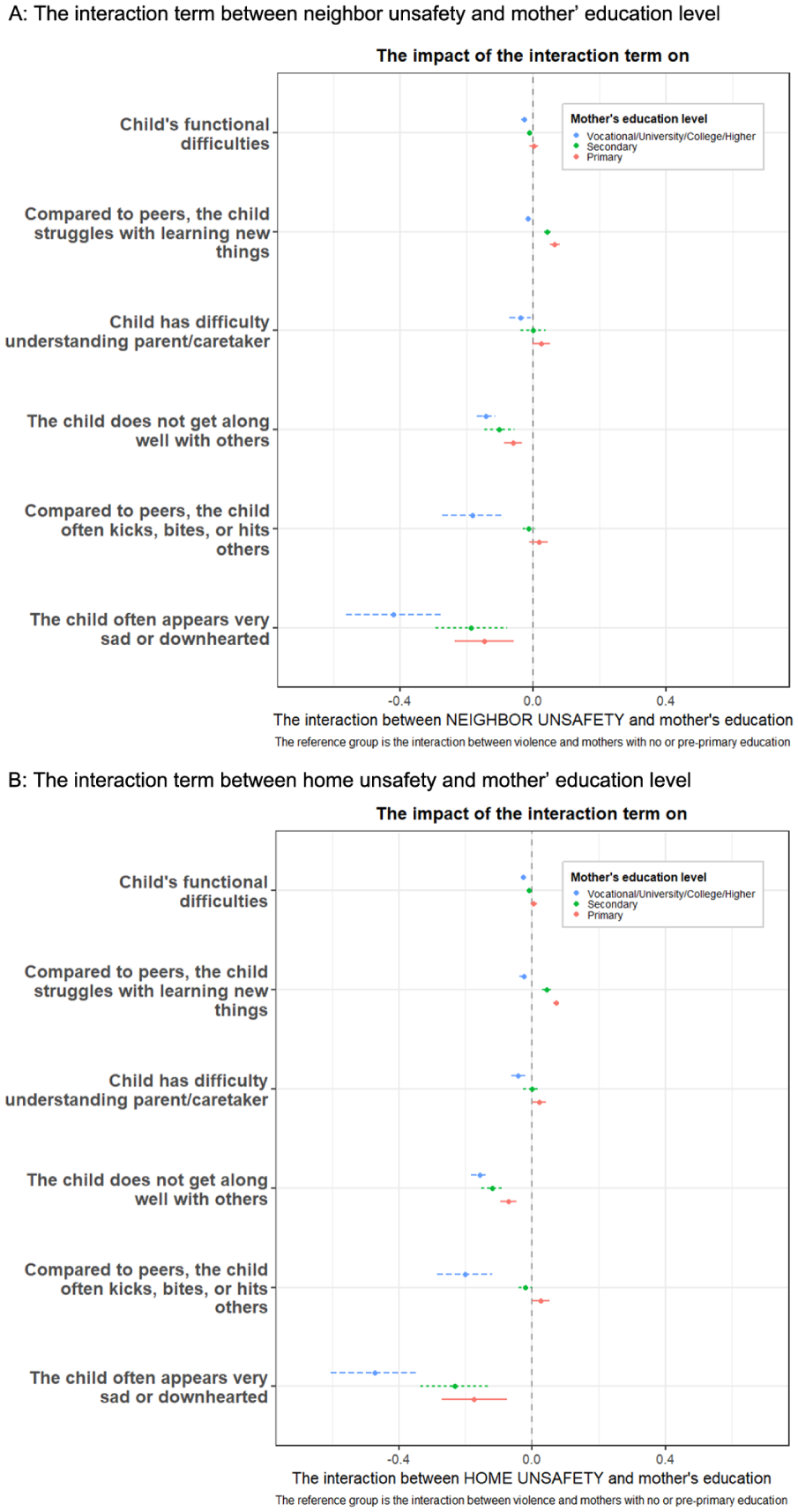
Heterogeneous impact of parental gender-based violence and discrimination on children’s socioemotional development: The role of maternal education level: (A) The interaction term between neighbor unsafety and mother’s education level, (B) The interaction term between home unsafety and mother’s education level.
It is noteworthy, however, that for the aspect of social competence, mothers with only pre-primary or no education are not significantly less effective at mitigating the negative impacts of GVBD on child outcomes compared to those with primary or secondary education. This result aligns with the findings of Yount and Carrera (2006), who observed that the heterogeneous impacts were particularly pronounced among women with significant educational discrepancies compared to their partners (8–13 years of education). In other words, based on our empirical results, the moderating effect becomes evident primarily among those with education levels of vocational training or higher. We also find similar evidence for gender-based discrimination, although it was statistically less significant (see Supplemental Appendix 3).
We examine the theory of women’s readiness to take decisive steps in addressing domestic violence, as proposed by García-Moreno et al. (2015). This theory posits that once a woman reaches the “turning point,” her likelihood of taking action, whether by improving her situation within the relationship or escaping the abusive environment, increases if she seeks help or establishes connections with external support systems. Consequently, if a woman, despite continuing to face abuse or discrimination, seeks to or wishes to engage with the broader community, it can pave the way for improved circumstances for both herself and her children. Furthermore, forging connections with the external world can diminish or soften the impact of severe violence.
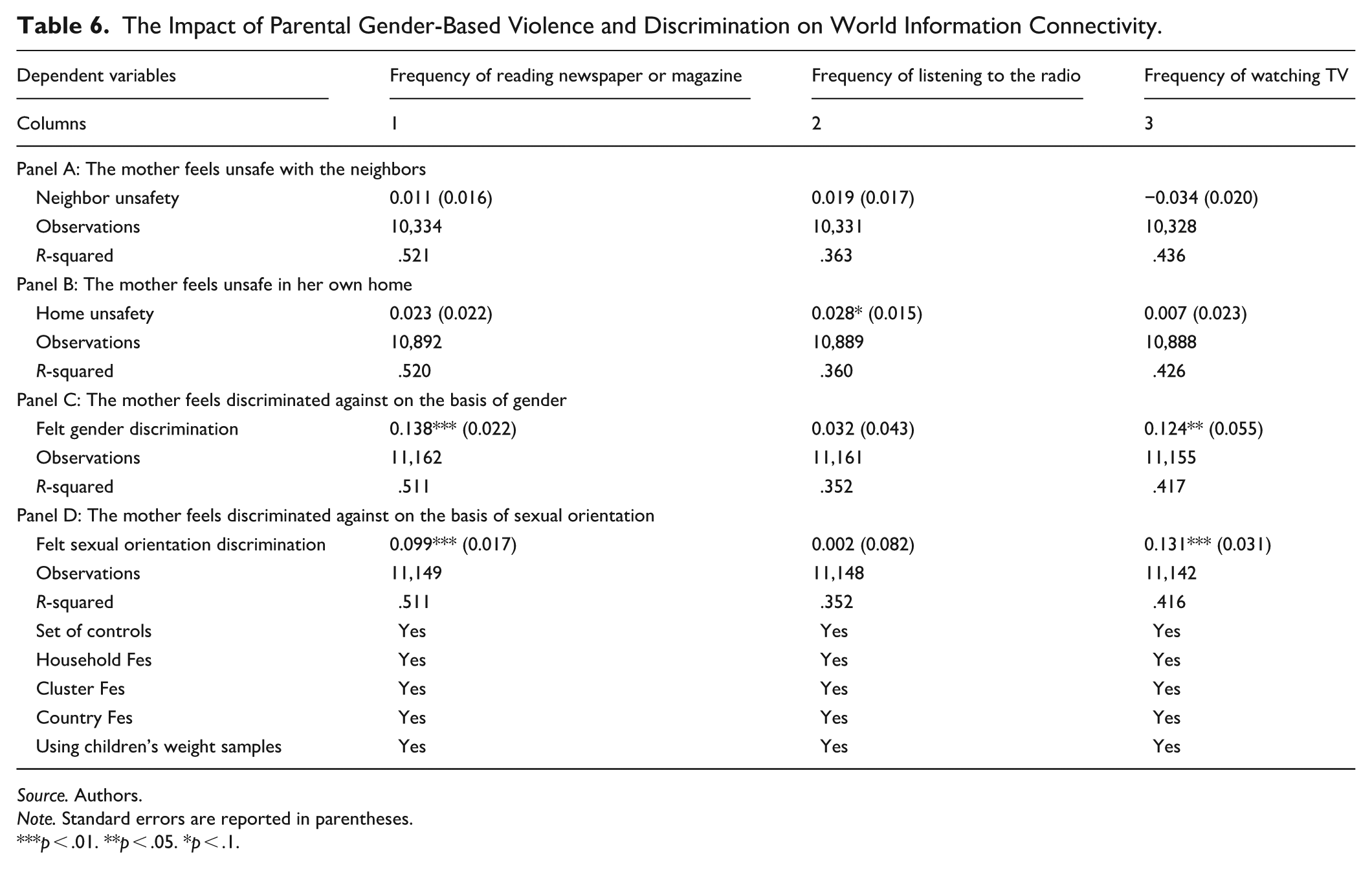
Echoing a sentiment similar to that found in Sherlock Holmes’ tales, where the serene countryside, as opposed to the notorious alleys of London, can harbor just as much sin (“the lowest and vilest alleys in London do not present a more dreadful record of sin than does the smiling and beautiful countryside” Doyle and Macaluso [2016, p. 5]), our findings in Table 6 also affirm that women who experience violence and discrimination are often those who keep themselves informed about the world. This not only suggests a grim reality but also highlights a hopeful perspective, as these connections may serve as crucial lifelines leading to better futures.
The Impact of Parental Gender-Based Violence and Discrimination on World Information Connectivity.
Source. Authors.
Note. Standard errors are reported in parentheses.
p < .01. **p < .05. *p < .1.
Discussion and Policy Implications
The findings of this study do not come as a major surprise to many observers and researchers in the field of women’s health. By utilizing survey data from five LMICs, the study corroborates the severe consequences of violence and discrimination against women, affecting children’s socioemotional development as evidenced through (a) expression behaviors, (b) social competence, and (c) functional difficulties. Our empirical research further confirms that such violent and discriminatory behaviors impact child development primarily through two channels: (a) diminishing the mother’s subjective well-being and (b) increasing the probability of physical and emotional abuse of children.
We also find that the impact of GVBD on mothers’ caregiving behaviors is heterogeneous. For instance, a mother discriminated against due to her sexual orientation might still spend considerable time with her children; however, it remains uncertain whether spending increased time with children while in a negative state is beneficial for the children. We do not delve deeper into this point; instead, we explore how the mother’s educational level can mitigate these negative impacts. We assert with certainty that women with qualifications from vocational training onwards can lessen the adverse effects of violence and discrimination on the healthy development of their children. Although this finding was not found among women with only secondary education or lower, fortunately, we observe that women who experience violence and discrimination tend to seek information and connect with the outside world, suggesting that incidents of extreme violence may be mitigated in remote and less connected areas.
In countries with low and middle incomes, it appears there are still very few mechanisms for women to raise their voices against violence and discrimination, and even fewer to protect their children. It is disheartening that such women may distance themselves from their children due to low self-esteem, and while spending more time with their children might seem like a solution, it does not appear optimal if feelings of hurt persist. Educating women could be a long-term solution, but remains challenging due to substantial financial barriers, with clear impacts only evident at higher educational levels like vocational training and above. Therefore, we align with García-Moreno et al. (2015) on the need to build a supportive community for women, where necessary incentives and a healthy environment should be prioritized as solutions.
Beyond these general insights, our findings also have direct implications for programs supporting maternal empowerment in underserved or marginalized communities. First, interventions that expand access to education and vocational training for women can yield intergenerational benefits by buffering children from the adverse effects of GBVD. Second, community-based initiatives that foster safe spaces, peer support networks, and collective action may help women counteract stigma and reduce isolation, particularly in rural or socioeconomically disadvantaged areas. Third, improving women’s access to media, digital technologies, and information flows can strengthen resilience by equipping mothers with tools to seek assistance and maintain external connections. Taken together, these program designs highlight how maternal empowerment, through education, connectivity, and supportive environments, can play a central role in mitigating the long-term consequences of violence and discrimination for both women and their children.
Limitation
The data do not allow us to disaggregate by other critical axes of diversity, such as ethnicity, religion, or disability status, which may influence both exposure to GBVD and child development trajectories. Moreover, certain forms of discrimination, including those based on sexual orientation or gender identity, are likely underreported due to stigma, cultural norms, or survey design limitations. In addition, the cross-sectional design of the MICS data restricts our ability to draw strong causal inferences or to formally test mediation mechanisms, since both exposure to GBVD and child outcomes are observed at the same point in time. Relatedly, the reliance on retrospective self-reports raises concerns of recall bias, while the absence of key covariates implies that unobserved confounding cannot be ruled out. For these reasons, any claims regarding policy interventions should be interpreted with caution: our findings highlight associations that may inform priority-setting, but they do not constitute definitive causal evidence. Future research should prioritize inclusive and longitudinal data collection strategies that capture the intersectionality of violence and caregiving across diverse populations, particularly among historically marginalized or underrepresented groups.
Supplemental Material
sj-docx-1-jiv-10.1177_08862605251404920 – Supplemental material for The Influence of Parental Gender-Based Violence and Discrimination on Children’s Socioemotional Development: Evidence From Low- and Middle-Income Countries
Supplemental material, sj-docx-1-jiv-10.1177_08862605251404920 for The Influence of Parental Gender-Based Violence and Discrimination on Children’s Socioemotional Development: Evidence From Low- and Middle-Income Countries by Tung Bui and Dao Le-Van in Journal of Interpersonal Violence
Footnotes

Ethical Considerations
An ethics exemption (Project number: 29881, Review reference: 2025-29881-30173) was granted by the Research Ethics, Integrity and Governance team on behalf of RMIT University, as the study meets the requirements of the National Statement on Ethical Conduct in Human Research.
Funding
The authors received no financial support for the research and/or authorship of this article.
Declaration of Conflicting Interests
The authors declared no potential conflicts of interests with respect to the authorship and/or publication of this article.
Data Availability Statement
Upon request.
Supplemental Material
Supplemental material for this article is available online.
Notes
Author Biographies
References
Supplementary Material
Please find the following supplemental material available below.
For Open Access articles published under a Creative Commons License, all supplemental material carries the same license as the article it is associated with.
For non-Open Access articles published, all supplemental material carries a non-exclusive license, and permission requests for re-use of supplemental material or any part of supplemental material shall be sent directly to the copyright owner as specified in the copyright notice associated with the article.
