




Abstract
Rape myths, or false beliefs about rape and sexual assault, held by professionals in the American Criminal Justice System have contributed to reduced rates of sexual offense case reporting, biased investigative procedures, and the nonprosecution of offenders. Thus, Rape Myth Acceptance (RMA) has been considered by scholars to be a direct contributor to the under-sentencing or non-sentencing of perpetrators of sexual assault and rape. Prior research on RMA in the American Criminal Justice System has disproportionately focused on criminal justice students and law enforcement professionals. With the potential to influence victim reporting and rape case outcomes, an understanding of RMA held by actual decision-makers in all steps of the criminal-legal process is needed. This study extends prior research in this area by examining RMA among various criminal justice decision-makers, including police officers, prosecuting attorneys, and jurors, and comparing the RMA held by a sample of criminal justice decision-makers to that of a sample of the general public. Specifically, this study used data collected from a nationwide survey of criminal justice decision-makers (n = 228) and members of the general public (n = 865) to examine the presence and predictors of RMA. Findings reveal that, in the aggregate, while both samples held RMA scores indicative of nonacceptance of such attitudes, criminal justice decision-makers reported higher RMA than members of the general public, with younger males, more conservative-leaning respondents, and higher socioeconomically advantaged individuals holding the highest rates of RMA in both samples. Policy implications, limitations, and directions for future research based on these findings are discussed within.
Introduction
Criminal justice decision-makers, including law enforcement officers, prosecutors, judges, jury members, and other professionals working in the criminal justice system with decision-making authority, hold key roles in relation to rape victimization. As gatekeepers to the criminal justice system, law enforcement officers are often some of the first individuals rape and sexual assault victims encounter after a victimization occurs. Prosecutors decide whether to pursue rape charges and what, if any, plea agreements to offer. Judges and jury members are tasked with reviewing evidence to determine final adjudication outcomes for sexual assault cases that go to trial. As such, the beliefs and actions of decision-makers in the system can impact the treatment of victims of rape and sexual assault, as well as how victims and perpetrators are, or are not, processed through the criminal justice system (Bachman, 1998; Dinos et al., 2015; Du Mont et al., 2003; Fisher et al., 2000; Hattem, 2000; Lathan et al., 2023; Neville & Pugh, 1997; Passmore, 2023; Stewart et al., 1996; St. George, Denne, & Stolzenberg, 2022; Temkin et al., 2018; L. E. Thompson & Pozzulo, 2024).
Prior research has shown that Rape Myth Acceptance (RMA) held by criminal justice decision-makers can influence judgments about credibility; contribute to reductions in rates of sexual offense case reporting, processing, and prosecuting; and subsequently, result in under- or non-sentencing of offenders (R. Campbell & Fehler-Cabral, 2022; Garza & Franklin, 2021; Hine & Murphy, 2019; Klement et al., 2019; Shaw et al., 2017; St. George, Verhagan, & Spohn, 2022). While past research has shown that some criminal justice personnel hold “non-supportive reactions toward rape victims” (Kim & Santiago, 2020, p. 462), much of this research has relied exclusively on samples of law enforcement officers or students enrolled in criminal justice classes, and/or has been limited in scope, and, therefore, is not generalizable to actors in the system as a whole (cf. Page, 2007; Parratt & Pina, 2017; Smith et al., 2016; Venema, 2018). In an effort to provide a more thorough analysis of RMA in the American Criminal Justice System, the current study used data collected from a nationwide sample of Americans to empirically examine both the prevalence and correlates of RMA held by criminal justice decision-makers while also comparing their RMA endorsement to RMA endorsement by individuals from a sample of the general public. By comparing RMA held by criminal justice decision-makers to the general public, we aim to identify any gaps in beliefs about rape between those who work directly with victims and those who do not. Since there is no clear benchmark for RMA, the public provides a useful comparison to determine if criminal justice decision-makers have higher or lower levels of RMA than a general sample. In doing so, the current study provides a timely assessment of the nature and extent of RMA endorsement in the American Criminal Justice System and offers strategies for targeting rape myths and their subsequent negative outcomes.
Literature Review
RMA and Criminal Justice
Rape myths are “prejudicial, stereotyped, or false beliefs” (Burt, 1980) pertaining to rape and sexual assault as well as the victims and perpetrators of these assaults. According to Burt (1980), rape myths foster a hostile environment for rape victims. These beliefs focus on “blam[ing] the victim rather than the perpetrator of rape,” where, historically, “men are the perpetrators and women are the victims” (O’Connor, 2021, p. 322). While several rape myths blame the victim for the rape (i.e., the victim was intoxicated, dressed provocatively, is perceived as a “tease” or “flirt,” or goes home with a man she just met), others help to “excuse the perpetrator for his action” (i.e., he was frustrated, he lost control, he had a strong desire for sex; O’Connor, 2021, p. 322).
Although rape myths by definition are “myths” and therefore untrue, they can still heavily impact societal and victim perceptions of rape (Brewer & Forrest-Redfern, 2022; Clay-Warner & Burt, 2005; Du Mont et al., 2003; Kimble, 2018; Lathan et al., 2023; Planty et al., 2013), and can influence how the criminal justice system responds to such cases (Bachman, 1998; Dinos et al., 2015; Du Mont et al., 2003; Fisher et al., 2000; Hattem, 2000; Lathan et al., 2023; Neville & Pugh, 1997; Passmore, 2023; Stewart et al., 1996; St. George, Denne, & Stolzenberg, 2022; Temkin et al., 2018; L. E. Thompson & Pozzulo, 2024). For instance, Brewer and Forrest-Redfern (2022) found that women with higher RMA were more likely to be sexually compliant, increasing their likelihood of engaging in sexual activity when they did not want to. In addition, they found that higher RMA among victims decreased their likelihood of blaming the perpetrator for the rape and decreased their endorsement of confronting the perpetrator for their actions.
Regarding professionals, RMA has been shown to influence decisions made by law enforcement officers investigating sexual assault reports (St. George, Verhagan, & Spohn, 2022). Notably, in their qualitative analysis of detective comments about case processing decisions related to sexual assault reports, St. George, Verhagan, and Spohn (2022) found that more than half of the comments analyzed included rape myths, especially those related to officer perceptions of blameworthiness and dangerousness of suspects. They found that extralegal factors (67%), such as rape myths, were more likely to influence an officer’s decision than legal factors (56%) or practical concerns (47%; St. George, Verhagan, & Spohn, 2022). For instance, officers were less likely to arrest if there was no evidence of a struggle or if the victim and perpetrator had a sexual history. Similarly, in their examination of law enforcement sexual assault case reports, Shaw et al. (2017) also found more than half of the reports contained rape myth statements and more than a quarter of the reports contained statements that minimized the sexual assault or denied that it actually occurred, such as comments on a lack of victim injury, comments on prior consent to sexual activity with the suspect, and comments on the victim being perceived as not acting like a victim should (i.e., not being “upset enough” about the assault; Shaw et al., 2017). Other research on an international level has found that police officers with higher levels of RMA place lower levels of perceived blame onto suspects and higher levels onto victims (Fávero et al., 2022; Hine & Murphy, 2019).
Further, researchers have shown RMA influences forensic investigations, attorney questioning, and juror decision-making (R. Campbell & Fehler-Cabral, 2022; St. George, Denne, & Stolzenberg, 2022; L. E. Thompson & Pozzulo, 2024). For example, R. Campbell and Fehler-Cabral (2022) found that crime lab personnel not only discussed which sexual assault kits (SAKs) should be tested with law enforcement, but shared similar beliefs with law enforcement officers about which kits were “worthy” of testing, referred to as “real” or “serious” cases, and defined as “homicides and violent stranger-perpetrated serial sexual assaults” (R. Campbell & Fehler-Cabral, 2022, p. NP3687). Cases where the credibility of the victim was questionable, cases where the victim had a history of sex work, or cases where the perpetrator was not a stranger were deemed as cases in which SAKs were not “worth” testing, given the limited resources available to the departments (R. Campbell & Fehler-Cabral, 2022). As a result, the researchers found that many SAKs were never tested. Related, in their analysis of defense attorney questioning of child sex abuse victims, St. George, Denne, and Stolzenberg (2022) found that “10% of all defense attorneys’ lines of questioning referenced a rape myth” and a majority of children survivors were asked rape myth-based questions by defense attorneys in their effort to defend suspects accused of child sexual assault crimes (p. NP16623). Similarly, both L. E. Thompson and Pozzulo (2024) and Dinos et al. (2015) found that RMA can influence jury decision-making, in both “real” and mock court-based scenarios, such that higher RMA influences jurors’ perceptions of victim credibility and the likelihood of conviction, with those endorsing rape myths being less likely to convict someone accused of rape or sexual assault.
While research has shown RMA to have demonstrable effects on sexual assault investigations and case outcomes, little is known about the extent or prevalence of RMA endorsement among criminal justice decision-makers. The limited work that has been done in this area has primarily focused on law enforcement officers or criminal justice students and has produced mixed findings. For instance, while Page’s (2007, 2010) work found police officers (in the aggregate) generally do not endorse rape myths, about 6% of the officers in her study of RMA wrote “sexist or pejorative comments” supportive of rape myths (p. 329). However, she found RMA differed significantly by educational attainment, sex, and experience; officers with a college education held less RMA than officers with lower levels of educational attainment, as did officers with more experience investigating rape cases, and female officers—a finding replicated in other studies (see Garza & Franklin, 2021; Parratt & Pina, 2017). In fact, while research on RMA in law enforcement tends to suggest that officers generally hold low-to-moderate levels of RMA (Venema, 2018), scholars have found that RMA in law enforcement is nuanced, and can be influenced by individual characteristics and perceptions, professional subculture, prior experiences, and training (Garza & Franklin, 2021; Parratt & Pina, 2017; Smith et al., 2016; Venema, 2018). For instance, in their systematic review of the literature on police officer rape myths, Parratt and Pina (2017) concluded that “officers’ attitudes toward rape are influenced by a vast array of elements, which can vary from case to case and officer to officer” but, “ultimately, it is unclear, based on the findings of the review, as to whether any specific factors have greater influence over officers’ beliefs than others, and to what extent they affect their behavior when interacting with victims” (p. 80). Thus, more research is needed in this area.
Scholars have also examined RMA using samples of criminal justice students. In one of the first studies in this area, Kim and Santiago (2020) examined RMA among criminal justice and criminology students. They found that males held significantly higher RMA than females, and students with law enforcement-oriented career goals had higher RMA than students with “victim” or “service-oriented” career goals (Kim & Santiago, 2020). Similarly, while prior research (see Courtright et al., 2005) has suggested that criminal justice students may be less empathetic than other students, a recent study by Hancock et al. (2021) found criminal justice students to be less likely to endorse rape myths than students in other majors assessed, including STEM, nursing, and education. Swope (2012) also found that social science majors, including criminology majors, scored lower in RMA than students majoring in other areas. While this cursory research can provide insight into law enforcement and prospective criminal justice professionals’ attitudes toward rape, more research is needed to gain an understanding of the prevalence of RMA in samples of criminal justice professionals. In fact, to date, there has been little effort made in the empirical literature to assess RMA across multiple groups of professional criminal justice decision-makers or to see how their levels of RMA compare to levels of RMA in the general public.
Correlates of RMA
When studying RMA, there are a number of correlates that need to be considered. The following section summarizes research on these correlates, which are examined in the current study. Research has found gender to be a significant predictor of RMA, with men typically reporting higher RMA than females (K. B. Anderson et al., 1997; Beshers & DiVita, 2021; Currier & Carlson, 2009; Kim & Santiago, 2020; Navarro & Tewksbury, 2017; Reling et al., 2018; Rinehart et al., 2023; Suarez & Gadalla, 2010). Age has also been found to be a significant correlate of RMA, although the relationship between age and RMA seems to vary based on the population studied (K. B. Anderson et al., 1997; Beshers & DiVita, 2021; Currier & Carlson, 2009; Navarro & Tewksbury, 2017; Rosewood & Hammond, 2023; Suarez & Gadalla, 2010). Research on the general public has either found a positive relationship between age and perceptions of rape and sexual assault, including perceived victim responsibility (K. B. Anderson et al., 1997; Navarro & Tewksbury, 2017; Rosewood & Hammond, 2023) or insignificant results (Suarez & Gadalla, 2010). Although less frequently studied, race and socioeconomic status (SES) may be related to RMA too. Regarding race, research has produced mixed results with some studies finding White individuals (Currier & Carlson, 2009; Navarro & Ratajczak, 2022; Powers et al., 2015; Suarez & Gadalla, 2010; Vonderhaar & Carmody, 2015) and non-Hispanic Black individuals (Vonderhaar & Carmody, 2015) to have the lowest rates of RMA, and others finding race to be an insignificant predictor of RMA (Hayes et al., 2016; Navarro & Tewksbury, 2017; PettyJohn et al., 2023). Similarly, some scholars have found individuals with lower SES backgrounds to have higher RMA (K. B. Anderson et al., 1997), while others have found SES to be an insignificant correlate of RMA (PettyJohn et al., 2023). That said, one variable that has consistently been found to be related to RMA is political affiliation; research has consistently demonstrated that individuals who are more conservative tend to have higher RMA than individuals who are more politically liberal, and that compared to liberals, conservatives tend to place more blame onto victims and less responsibility onto perpetrators (K. B. Anderson et al., 1997; Ortiz & Smith, 2022; PettyJohn et al., 2023; Rosewood & Hammond, 2023).
Current Study
As noted above in our review of the literature, there has been little effort made by scholars to empirically examine RMA across multiple groups of professional criminal justice decision-makers in the American Criminal Justice System; much of the work cited above has utilized samples of law enforcement officers and/or students. While this research is important, it is incomplete, and there is a need for research on the attitudes of other criminal justice decision-makers, and to see how these attitudes compare to those of the general public. Thus, the main objective of the current study was to help fill this gap in the literature by providing an empirical assessment of RMA held by various criminal justice decision-makers and to see how their RMA compared to that of the general public. Specifically, this study used data collected from a national sample of Americans, including a subsample of criminal justice decision-makers, to study RMA. In doing so, our study utilizes a more diverse, inclusive, and representative sample of criminal justice professionals than has been used in prior research and considers the views of professionals of various backgrounds. Further, our sample is generally reflective of the demographic characteristics of the U.S. population in terms of sex and race at the time of data collection, thus providing more representative and generalizable data than that which has been found in prior research using public samples. This study was guided by the following research questions:
RQ1: Are criminal justice decision-makers more likely to endorse RMA than members of the general public?
RQ2: What are the predictors of criminal justice decision-makers’ RMA? 1
Methodology
Research Design
Data for this project were collected from a Qualtrics marketing research panel using an original survey that was primarily designed to experimentally assess how offender and victim demographic characteristics (i.e., age and gender) influenced simulated juror sentencing decisions for sexual assault cases. The study was approved by the Pennsylvania State University Institutional Review Board (IRB). Participants were compensated using Qualtrics’ standard incentive-based structure (i.e., points-based incentives). The sample used was similar to the demographic makeup of the larger U.S. population in terms of sex and race at the time of data collection and only included participants who were at least 18 years of age, English-speaking, and non-institutionalized volunteers (n = 1,093). More information about sampling can be found in (Kruis et al., 2023). The larger survey included questions intended to capture an array of topics, including sentencing bias, potential stigma of criminal offenders, general perceptions of police, and patterns of crime news consumption. For the current study, the survey also included questions and statements used to measure RMA, involvement in the criminal justice system as a decision-maker, and relevant demographic measures used for analysis. All data were collected during the summer of 2021 (Table 1).
Participant Demographics Information and Descriptive Statistics.
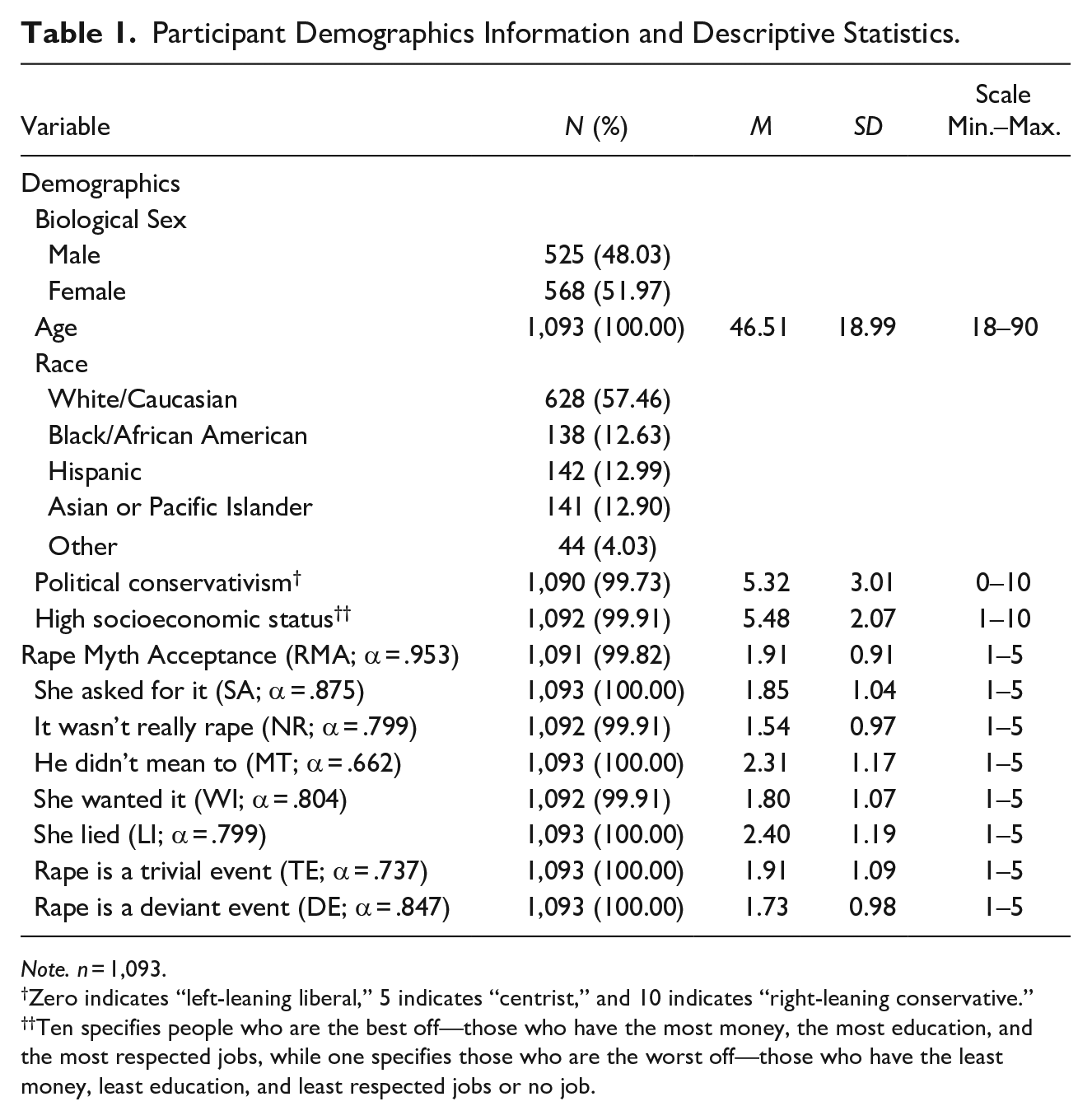
Note. n = 1,093.
Zero indicates “left-leaning liberal,” 5 indicates “centrist,” and 10 indicates “right-leaning conservative.”
Ten specifies people who are the best off—those who have the most money, the most education, and the most respected jobs, while one specifies those who are the worst off—those who have the least money, least education, and least respected jobs or no job.
Measures
Rape Myth Acceptance
The 17-item “short-form” version of the Illinois Rape Myth Acceptance (IRMA-SF) Scale (Payne et al., 1999) was used to capture RMA. The “full” IRMA is comprised of 45 items. As RMA was not the main focus of the original study, a decision was made to include the “short-form” to save respondent time and prevent survey fatigue. While the IRMA-SF was designed to evaluate general RMA, the current study also grouped the variables into the seven original IRMA subscales for analyses. These subscales include She asked for it (SA), It wasn’t really rape (NR), He didn’t mean to (MT), She wanted it (WI), She lied (LI), Rape is a trivial event (TE), and Rape is a deviant event (DE). The SA subscale contains four rape myths: (a) “A woman who dresses in skimpy clothes should not be surprised if a man tries to force her to have sex”; (b) “If a woman is raped while she is drunk, she is at least somewhat responsible for letting things get out of control”; (c) “A woman who ‘teases’ a man deserves anything that might happen”; and (d) “When women are raped, it’s often because the way they said ‘no’ was ambiguous (not clear).” The NR subscale contains two rape myths: (a) “If a woman doesn’t physically fight back, you can’t really call it rape” and (b) “If the rapist doesn’t have a weapon, you really can’t call it rape.” The MT subscale contains two rape myths: (a) “Rape happens when a man’s sex drive is out of control” and (b) “Men don't usually intend to force sex on a woman, but sometimes they get sexually carried away.” The WI subscale contains two rape myths: (a) “Although most women wouldn’t admit it, they generally find being physically forced into sex a real ‘turn-on’” and (b) “Many women secretly desire to be raped.” The LI subscale contains two rape myths: (a) “Rape accusations are often used as a way of getting back at men,” and (b) “A lot of women lead a man on and then they cry rape.” The TE subscale contains two rape myths: (a) “Women tend to exaggerate how much rape affects them,” and (b) “If a woman is willing to ‘make out’ with a guy, then it’s not a big deal if he goes a little further and has sex.” The DE subscale contains three rape myths: (a) “Men from nice middle-class homes almost never rape”; (b) “It is usually only women who dress suggestively who are raped”; and (c) “Rape is unlikely to happen in the woman’s own familiar neighborhood.” For all scales, variables were summed and averaged to create measures ranging from 1 to 5, with higher numbers indicative of greater RMA.
Independent and Control Variables
The current study utilized six variables to predict RMA. The primary independent measure of interest for RQ1 was criminal justice decision-making status. This variable was conceptualized as serving in a criminal justice-related role in which an individual held power to make decisions that could affect another involved with the criminal justice system. It was operationally captured using the following question, “Have you had any experiences with the criminal justice system as a person responsible for an outcome of another individual suspected of a crime, including investigating, arresting, prosecuting, convicting, or sentencing a person suspected of a crime (i.e., worked in the criminal justice system or served on a jury 2 )?” Possible survey responses included “no” (0) and “yes” (1), which were used to create our subsamples of criminal justice decision-makers (n = 228) and members of the general public (n = 865). Measures of age (18–90), biological sex (0 = “male,” 1 = “female”), race (0 = “White,” 1 = “Black,” 2 = “Hispanic,” 3 = “Asian or Pacific Islander,” 4 = “Other”), political conservativism (0 = “left-leaning liberal” through 10 = “right-leaning conservative”), and SES (1 = “Low SES” through 10 = “High SES”) were also included as control variables for RQ1 and as variables of interest for RQ2.
Analytic Approach
Data were analyzed utilizing R version 4.5.1, R Foundation for Statistical Computing, Vienna, Austria. The analysis consisted of five main steps. First, the data were cleaned and coded. Second, scale variables were created for RMA based on prior literature, factor analyses, and reliability estimates. Third, t-tests and Pearson correlation coefficients were used to explore the strength and direction of relationships between key measures at the bivariate level. Fourth, ordinary least squares (OLS) multiple regression was used to assess differences in RMA between criminal justice decision-makers and members of the general public at a multivariable level. Fifth, OLS multiple regression was then used with our subsample of criminal justice decision-makers to test for “predictors” of criminal justice decision-makers’ RMA.
Results
Bivariate Findings
Table 2 shows findings from bivariate correlation analyses. As shown, a statistically significant positive correlation was found between our measure of criminal justice decision-maker status and RMA (r = .134, p ≤ .001), indicating that, in our sample, criminal justice decision-makers reported higher RMA than members of the general public. Figure 1 provides a visual display of the significant difference in group mean scores between criminal justice decision-makers and members of the general public, while also displaying findings from an independent samples t-test (x− diff. = 0.30, p ≤ .001), further confirming the statistical significance of this relationship at the bivariate level. Other variables found to be statistically significantly correlated with RMA included age (r = −.092, p ≤ .01), sex (r = −.278, p ≤ .001), political conservativism (r = .280, p ≤ .001), and high SES (r = .127, p ≤ .001).
Correlation Among Variables.
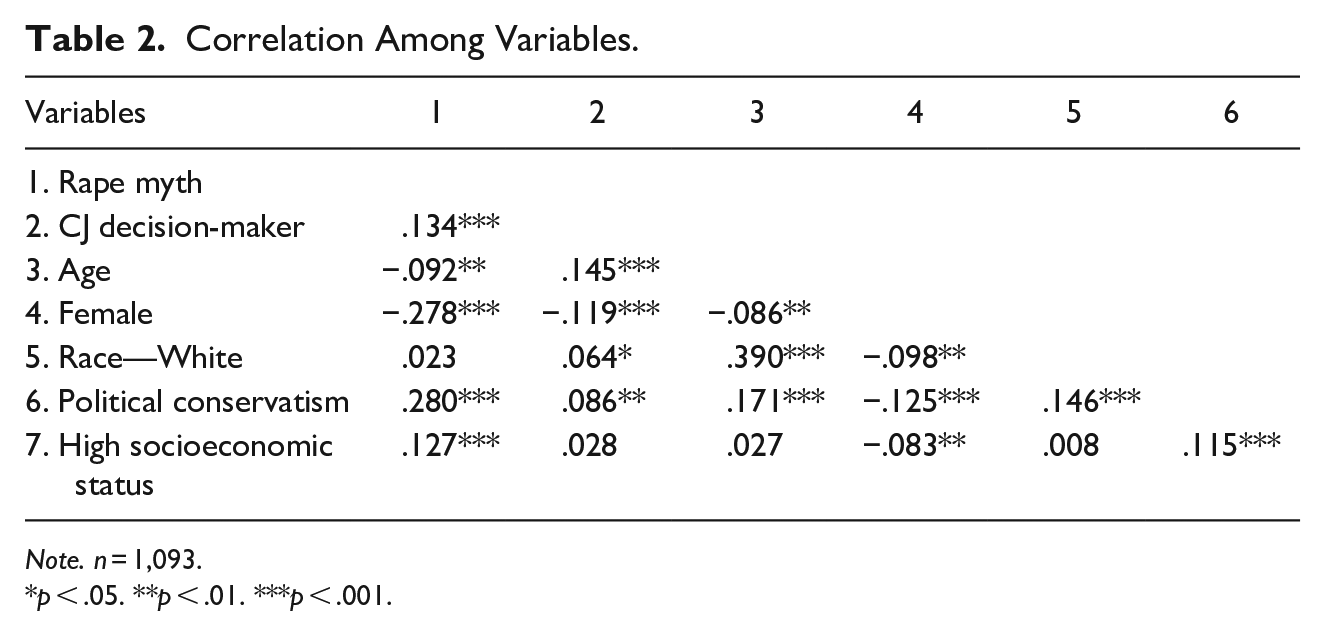
Note. n = 1,093.
p < .05. **p < .01. ***p < .001.
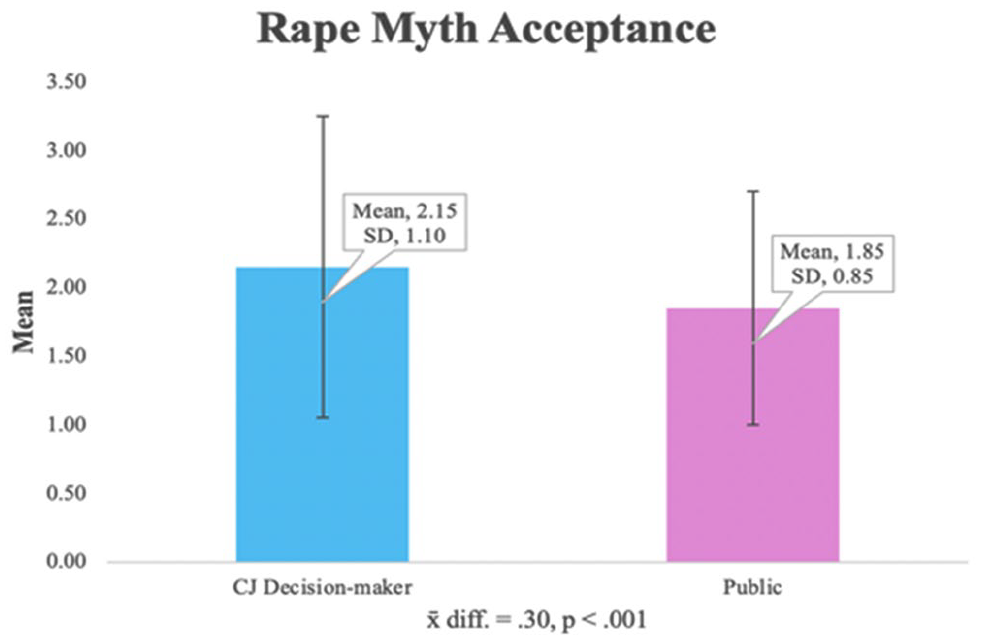
Results from t-test comparing mean RMA scores between our two subsamples.
Multivariable Findings
Table 3 shows results from OLS multiple regression modeling predicting RMA measured using the IRMA-SF composite scale (i.e., RMA) and subscales (i.e., SA, NR, MT, etc.). Overall, the models fit the data well and explained nearly 15% or more of the variance (p ≤ .001) in each measure of RMA except for the MT subscale. Furthermore, our measure of criminal justice decision-makers was found to be a statistically significant positive predictor of every measure of RMA except for the MT subscale. This shows that, generally, findings from bivariate modeling persisted at the multivariable level, showing that the criminal justice decision-makers in our sample held higher levels of RMA than did participants in our subsample, comprised members of the general public. Other statistically significant predictors of RMA across models included age (significant in 7 of 8 models), sex (significant in 8 of 8 models), political conservativism (significant in 8 of 8 models), and high SES (significant in 6 of 8 models). Findings indicated that younger participants, males, those who identified as politically conservative, and those with higher SES reported higher levels of RMA.
OLS Multiple Regression Model Predicting Rape Myth Acceptance (N = 1,093).
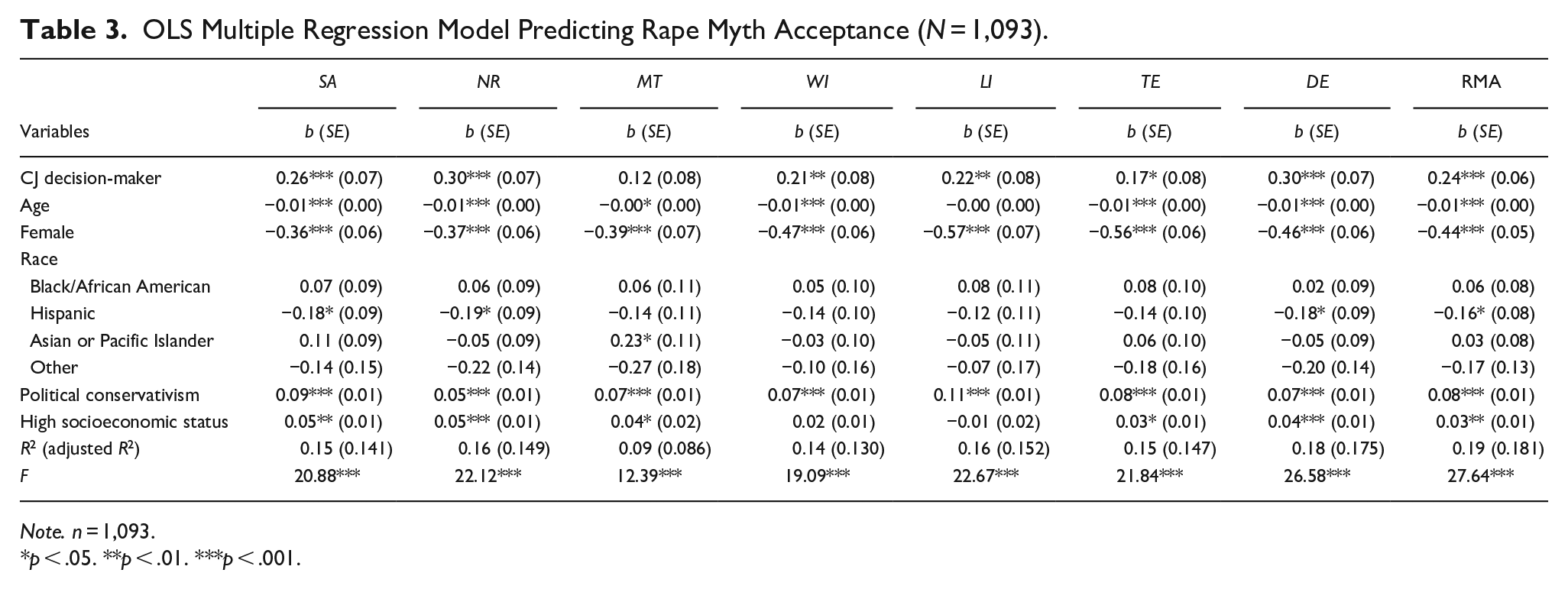
Note. n = 1,093.
p < .05. **p < .01. ***p < .001.
Table 4 shows results from OLS multiple regression modeling predicting our measures of RMA in the criminal justice decision-maker subsample. Again, the models fit the data well, were statistically significant (p ≤ .001), and explained more than 20% of the variance in every measure of RMA. Statistically significant predictors across models included age (significant in 8 of 8 models), sex (significant in 8 of 8 models), political conservativism (significant in 8 of 8 models), and high SES (significant in 5 of 8 models). Findings suggest that within criminal justice decision-makers, younger, politically conservative males with higher socioeconomic backgrounds hold higher levels of RMA than those in comparison groups.
OLS Multiple Regression Model Predicting Rape Myth Acceptance Among CJ Decision-Makers.
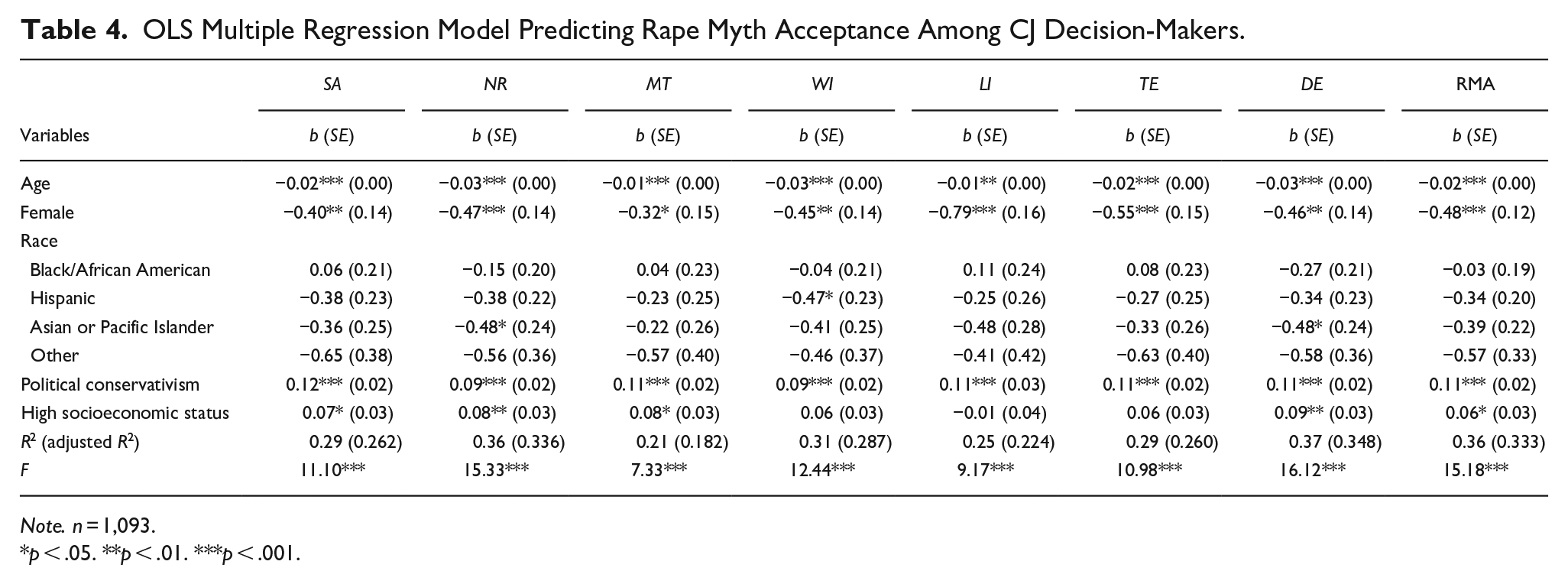
Note. n = 1,093.
p < .05. **p < .01. ***p < .001.
Discussion
The purpose of this study was to provide an empirical examination of criminal justice decision-makers’ RMA. Specifically, we were interested in (a) determining if criminal justice decision-makers were more likely to endorse RMA than members of the general public, and (b) examining unique predictors of criminal justice decision-makers’ RMA. There are several findings from analyses worthy of further discussion. First, our results indicate that the criminal justice decision-makers in our sample were more likely to endorse rape myths than participants from the general public. It is important to note, however, that although this study’s findings indicate criminal justice decision-makers held higher RMA than members of the general public, they, on average, were more likely to disagree than agree with specific rape myth questions (i.e., mean score of 2.15 on an averaged 1–5 Likert scale). That said, criminal justice decision-makers were found to hold statistically significant higher levels of RMA for nearly every measure of RMA. Upon reflection on what could account for these differences, an anonymous reviewer, who self-identified as a practitioner in the field, suggested that it could be due to past experiences with false reports—both generally and in cases involving sexual assault—handled by decision-makers and not members of the public.
We agree with the reviewer that it is plausible that some criminal justice decision-makers in our sample may have handled cases in which false accusations were made, and as such, they could be more cautious, in aggregate terms, when assessing reporter credibility than the average person who has not handled—nor been made aware of—such cases. It is even possible, albeit statistically rare, that decision-makers have encountered false report cases in which reports were determined to be made as a way to “get back” at or slander someone else, which is one element captured in the LI subscale. That said, we cannot fathom a “reasonable” explanation for why decision-makers were more likely to indicate greater agreement for other questions captured in the subscales. Collectively, we are concerned by these findings, given prior research showing that RMA can affect the treatment of survivors in the system and lead to negative case outcomes (Bachman, 1998; Dinos et al., 2015; Du Mont et al., 2003; Fisher et al., 2000; Hattem, 2000; Lathan et al., 2023; Neville & Pugh, 1997; Passmore, 2023; Stewart et al., 1996; St. George, Denne, & Stolzenberg, 2022; Temkin et al., 2018; L. E. Thompson & Pozzulo, 2024). Professionals’ beliefs about survivor credibility and perpetrator responsibility can directly lead to the nonprocessing (i.e., not investigating properly, not charging, etc.) of perpetrators of sexual assault and undermine the goals of our justice system. Thus, efforts need to be made to combat rape myths.
Second, we found that young, male, and politically conservative criminal justice decision-makers held some of the highest levels of RMA. This is generally consistent with prior research showing males hold higher RMA than females (K. B. Anderson et al., 1997; Beshers & DiVita, 2021; Currier & Carlson, 2009; Kim & Santiago, 2020; Navarro & Tewksbury, 2017; Reling et al., 2018; Rinehart et al., 2023; Suarez & Gadalla, 2010) and politically conservative-leaning individuals hold higher levels of RMA than liberal-leaning individuals (K. B. Anderson et al., 1997; Ortiz & Smith, 2022; PettyJohn et al., 2023; Rosewood & Hammond, 2023). Uniquely, past analyses showed that older criminal justice decision-makers held lower levels of RMA than younger decision-makers, as did those decision-makers from higher SES backgrounds compared to those from lower SES backgrounds. The same trends were present in our assessments of RMA correlates for the entire sample. Regarding age, we hypothesize that older criminal justice decision-makers may have more experience working with survivors of sexual assault, and thus could be more empathetic and compassionate than younger decision-makers. Related, they also may have had more time on the job to learn to dispel rape myths. While our current study found that participants with higher SES indicated higher levels of RMA, prior literature presents mixed results. Some studies have found that individuals with higher SES, particularly in terms of education level, report lower levels of RMA (Prina & Schatz-Stevens, 2019), while others suggest no significant impact (PettyJohn et al., 2023). In addition, when controlling for race, Marciniak (1998) found that adolescent males from low SES households reported higher levels of RMA. Given the inconclusive results, we encourage future researchers to explore this finding and the relationship between SES and RMA in more detail.
Policy Implications
As shown in previous research, high RMA among criminal justice personnel has a noticeably negative impact throughout the criminal justice process, especially on survivors of sexual assault and rape (Bachman, 1998; Du Mont et al., 2003; Fisher et al., 2000; Hattem, 2000; Lathan et al., 2023; Neville & Pugh, 1997; Passmore, 2023; Sleath & Bull, 2012; Stewart et al., 1996). RMA has been shown to result in lower conviction rates (Passmore, 2023) and decreased victim reporting (Bachman, 1998; Du Mont et al., 2003; Fisher et al., 2000; Hattem, 2000; Lathan et al., 2023; Neville & Pugh, 1997; Stewart et al., 1996). The under- and nonprosecution of rape cases due to high RMA can further serve as a deterrent to future reporting, thus exacerbating this cycle. Currently, rape and sexual assault are two of the most underreported crimes in the United States, with roughly 2/3 (65%) of such cases going unreported each year (RAINN, 2024; Rennison, 2002; Morgan & Thompson, 2021). RMA among criminal justice personnel could be contributing to these statistics, as an increasing number of survivors choose not to report because doing so can lead to “victim blaming,” revictimization, and retraumatization for survivors throughout the criminal-legal process (Ullman & Filipas, 2001) and a lack of punishment for perpetrators (R. Campbell et al., 2001). Indeed, prior research has demonstrated that when individuals lose faith in the criminal justice system or endorse rape myths themselves, they are less likely to report their victimization(s) (Clay-Warner & Burt, 2005; Du Mont et al., 2003; Kimble, 2018; Lathan et al., 2023; Planty et al., 2013). Thus, the presence of RMA among criminal justice decision-makers—and within society as a whole—will continue to have a significant impact on criminal justice processes and victim reporting unless it is addressed at a systemic level.
With the potential consequences rape survivors might face from reporting, and the lack of punishment for such perpetrators as a result of RMA among criminal justice personnel, it is suggested that criminal justice decision-makers at all levels receive mandatory training on rape and sexual assault, as well as education on the impact of RMA on criminal-legal outcomes. For example, Rich and Seffrin (2014) found that sexual assault-focused training decreased RMA among female police officers. Similarly, Garza and Franklin (2021) suggested that sexual assault trainings that “facilitate interactive, small group, single-sex discussions concerning attitudes surrounding gender-based violence” would be most beneficial to preparing law enforcement officers to effectively respond to sexual assault cases (p. 565). Trainings should also focus on broader attitudinal themes, including how to properly work with and talk to rape victims, and provide education on the effects of rape victimization and the difficulties survivors face throughout the process (B. A. Campbell et al., 2020; Murphy & Hine, 2019). In addition, we suggest that training on what RMA is, why it exists, and the problems associated with it would be beneficial in raising awareness of RMA and potentially decreasing RMA among criminal justice personnel (B. A. Campbell et al., 2020, 2024; Gekoski et al., 2024). Such training should be provided regularly and consistently due to reductions in training effects over time (L. A. Anderson & Whiston, 2005; Tidmarsh et al., 2020). We also believe that it would be beneficial for criminal justice educators to incorporate such training and education into their routine curriculum for students majoring in criminology and criminal justice at institutions across the United States (Currier & Carlson, 2009). Training classes are recommended to be comprehensive rather than addressing a single belief or attitude to reduce RMA at the college level and in future criminal justice personnel (Kim & Santiago, 2020; Suarez & Gadalla, 2010). Further, given the documented impact RMA can have on investigation, prosecution, and adjudication, we suggest that departments incorporate effective screening tools to capture RMA among professionals working on sex offenses (Gekoski et al., 2024). Moreover, we suggest that objective screening tools, such as the Illinois Rape Myth Assessment or other iterations, be used to help screen for potentially biased jurors during jury selection to prevent such individuals from serving on sexual assault cases (Parsons & Mojtahedi, 2022; Willmott, 2017).
Limitations and Directions for Future Research
There are two main limitations of this study. First, this study utilized cross-sectional, self-report data, meaning causal relationships between variables could not be determined. An examination of RMA over time is key to understanding its impact on victims and the criminal justice system. In addition, with self-report data, there is a possibility of inherent bias in self-assessed behaviors and ideas, as the pressure to select socially acceptable answers might be present. This needs to be taken into consideration when interpreting the findings. Second, the IRMA-SF scale used in this study does not consider male victims or female perpetrators, and it does not directly consider other demographic variables that can be related to criminal perpetration or victimization, including race. This further limits the data’s generalizability. However, based on recent data, it is important to note that the rate of rape victimizations and the overall victimization rate for females is higher than that of males (National Sexual Violence Resource Center, 2015; Tapp & Coen, 2024). Thus, it is more likely for a criminal justice decision-maker to consider a case involving a female victim rather than a male victim, and as such, it is imperative to study their attitudes toward such cases. That said, future research should also consider male victims and female perpetrators when measuring RMA.
While this study does not examine the implications of high RMA among criminal justice personnel on the criminal justice process, past research suggests that negative consequences have already occurred and will continue to do so (Bachman, 1998; Du Mont et al., 2003; Fisher et al., 2000; Hattem, 2000; Lathan et al., 2023; Neville & Pugh, 1997; Passmore, 2023; Stewart et al., 1996). As such, it is recommended that future research directly examine the impact high RMA among criminal justice personnel has on the criminal justice process in terms of treating and assisting rape victims, as well as the prosecution, conviction, and sentencing of such perpetrators.
We suggest that future researchers pay special attention to outcomes for victims from minority populations, such as those who identify as racial minorities and those with low SES who tend to have high rates of criminal victimization and have historically been underserved by the criminal justice system (Basile et al., 2016; Quandt & Jones, 2021; Tapp & Coen, 2024; N. J. Thompson et al., 2012). We believe that our research is particularly applicable to these groups, given documented disparities in victimization and treatment in the criminal justice system. Identifying potential bias through myths held by professionals who respond to reported criminal victimization is the first step needed to help reduce RMA and disparate treatment in the criminal justice system. The second step is measuring outcomes associated with myths. The third step is to implement strategies to reduce RMA. Our research helps with this first step; we encourage scholars to consider the second and third steps in subsequent work.
The impact that high RMA has on a victim’s decision to report should be examined as well. In addition, a more inclusive measure of RMA is needed to examine RMA in relation to male victims and female perpetrators. Lastly, due to the mixed results between this study and previous studies on the relationship between RMA and age, as well as RMA and SES, it is recommended that future research examine such relationships more thoroughly.
Conclusion
This study examined RMA among criminal justice decision-makers in comparison to the general public, as well as variables related to RMA in criminal justice decision-makers. It was found that criminal justice decision-makers hold higher RMA than members of the general public and that younger, more politically conservative males with an elevated SES hold the highest levels of RMA. Given these findings, it is recommended that efforts be made to increase training and education on rape, sexual assault, and rape myths among criminal justice professionals, as well as incorporate objective screening tools to prevent individuals with higher RMA from serving in decision-making roles in cases involving sexual assault and/or rape accusations. It is also recommended that additional research on RMA among criminal justice decision-makers, the impact such beliefs have on victim treatment, and the handling of rape cases be examined more thoroughly.
Footnotes
Declaration of Conflicting Interests
The author(s) declared no potential conflicts of interests with respect to the authorship and/or publication of this article.
Funding
The author(s) received no financial support for the research and/or authorship of this article.
