



Abstract
The Healing Journey longitudinal study of 665 Canadian women abused by intimate partners used the 30-item Composite Abuse Scale (CAS) to assess the severity of the intimate partner violence (IPV). Of the total, 461 women added additional details that were qualitatively analyzed to provide context to the IPV, including death threats, life-threatening physical violence, including strangulation, and serious coercive control, issues not assessed by the CAS. Further, many partners were abusive beyond the couple relationship, threatening family members, children, and pets, and also not in the CAS. We then retrospectively reviewed other IPV measures to consider whether these might have more comprehensively fit with the women’s experiences. Of these, four IPV measures more fully captured the women’s descriptions of their IPV than the CAS (three available before and one after the study was conceptualized). This retrospective analysis provides suggestions for using standardized measures to assess IPV more comprehensively.
Intimate partner violence (IPV) against women has gained acknowledgment as a critical and worldwide problem (World Health Organization, 2021). IPV is often considered to be primarily physical, and potentially life-threatening, with 13.5% of global homicides committed by current or previous partners (Dunaiski et al., 2024; Stöckl et al., 2013). The physical abuse may be serious enough to result in disabilities that interfere with women’s daily activities and employability (Breiding & Armour, 2015; Tutty & Nixon, 2024). In addition to physical violence, IPV commonly includes psychological, emotional, or verbal abuse (Ansara & Hindin, 2011), financial abuse (Krigel & Benjamin, 2021), and sexual assaults (Tutty & Nixon, 2022; Tarzia, 2021).
While psychological abuse has long been considered an important aspect of IPV, the term “coercive control,” which includes psychological abuse but is more all-encompassing, has recently been discussed as central (Sharp-Jeffs et al., 2018). Stark (2007) defines coercive control as “the use of force or threats to compel or dispel a particular response” (p. 228). Hamberger et al. (2017) describe three characteristics of coercive control: (a) the abuser acts intentionally, (b) the victim perceives the acts as negative, and (c) the abuser gains control through credible threats. As noted by Brennan et al. (2019), “coercive control includes multiple dimensions of psychological abuse, such as threats (to the victim, children, and pets), intimidation, financial abuse, and isolation” (p. 638).
Coercive control is increasingly being seen as an overarching characteristic of IPV, evident even in cases that do not include physical violence (Pitman, 2017). A recent systematic review identifies the significant impact of coercive control on mental health and trauma symptoms (Lohmann et al., 2024). It is a pattern of events rather than discrete “countable” incidents: Even one incident of serious physical violence may be used to control partners and, as such, need not be repeated. Redefining most IPV as coercive control fundamentally changes how we perceive IPV dynamics (Dutton, & Goodman, 2005; Johnson et al., 2019; Mennicke, 2019; Pitman, 2017), which has implications for what research measures best capture the complexity and the severity of IPV, the focus of the current analysis.
Measures to Assess the Severity of IPV
Measures of IPV severity fall into several categories. Some assess the possibility of reassault (Messing & Thaller, 2013), such as the B-SAFER (Storey et al., 2014) and the Ontario Domestic Assault Risk Assessment (ODARA; Hilton et al., 2004). Others assess homicide risk, such as the Danger Assessment (Campbell et al., 2001). All are typically used by criminal justice personnel such as police officers and probation staff (Graham et al., 2021).
IPV screening measures are often short, lacking details about the violence, such as the 8-item Woman Abuse Screening Test (Brown et al., 2000) or the 4-item Humiliation-Afraid-Rape-Kick (Sohal et al., 2007). Others focus on specific types of IPV, so may not be appropriate as the sole measure to assess IPV, for example a checklist of controlling behaviors (Lehmann et al., 2012) or a new measure of “social abuse” (Park et al., 2024) that examines coercive behaviors by the partner in social relationships beyond the marital dyad.
Measures that comprehensively assess the nature of the IPV, including both physical and psychological abuse, are often used in descriptive and evaluation research, include the Abusive Behavior Index (Shepard & Campbell, 1992), the CAS (Hegarty et al., 1999) and the Index of Spouse Abuse (Hudson, 1981). Commonly used IPV measures that were available both before and after the Healing Journey study were conceptualized and are presented in Table 1. While not an exhaustive list (14 measures, with an additional four revised versions), these are congruent with the recent review of IPV measures by Alexander et al. (2022; excluding those specific to dating violence such as (Murphy & Hoover, 1999), since these are seen as conceptually different by some (Brown & Bulande, 2008). Of the 10 (plus three revised measures) available when the study was developed, two were specific to psychological abuse (Porrúa-García et al., 2016; Tolman, 1989, 1999) and one to controlling behaviors (Graham-Kevan & Archer, 2003), so may have been disregarded as the research committee preferred more comprehensive IPV measures. A 92-item measure of coercive control, “Coercion in Intimate Partner Relationships” (Dutton et al., 2007), has received recent attention with respect to its psychometric properties (Mennicke, 2019; Wilson & Fritz, 2023), which support its validity and reliability. The measure consists of three subscales, “demands,” “threats,” and “surveillance” tactics used in the last 3 months of the relationship. However, as the items are not available, they were deemed inappropriate for the current analysis.
Overview of Measures to Address IPV Severity.
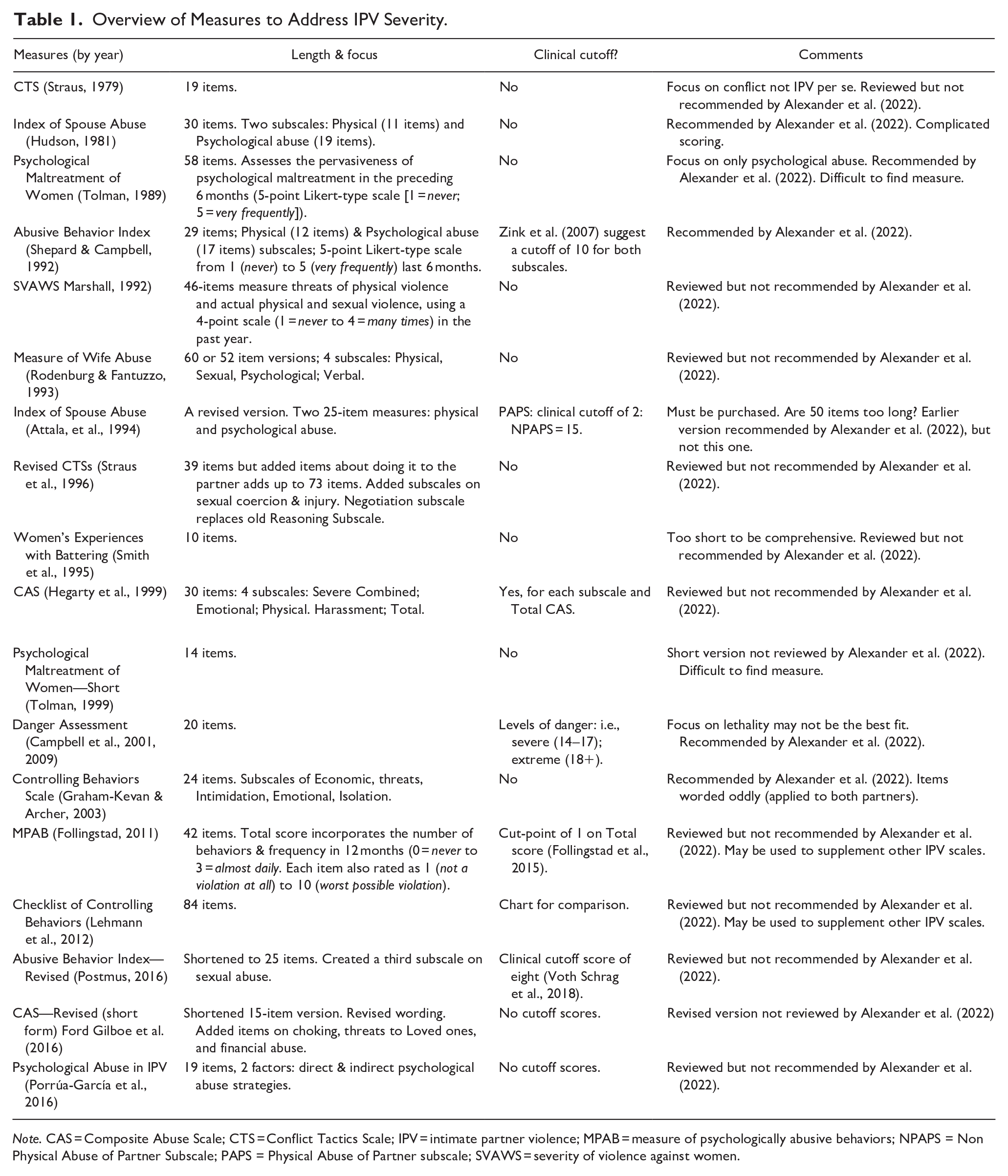
Note. CAS = Composite Abuse Scale; CTS = Conflict Tactics Scale; IPV = intimate partner violence; MPAB = measure of psychologically abusive behaviors; NPAPS = Non Physical Abuse of Partner Subscale; PAPS = Physical Abuse of Partner subscale; SVAWS = severity of violence against women.
While IPV measures are widely used in research and provide a systematic way to assess the seriousness of IPV, authors such as Smith et al. (1999) and Follingstad and Bush (2014) offer important critiques. As one example, the Conflict Tactics Scale (Straus, 1979), the oldest and arguably most used IPV measure, especially in general population studies, has been critiqued as being about marital conflict, and not capturing the distinctive features of violence against women (DeKeseredy & Schwartz, 1998). Further, Heckert et al. (2000) and Heyman et al. (2001) were concerned about the extent to which any quantitative approach can assess the complex nature of IPV. Follingstad and Roger (2013) worry that self-defensive actions can be miscontrued as IPV.
The Current Study
The current secondary qualitative analysis examines women’s comments about their partner’s abusive behavior after having been administered the CAS (Hegarty et al., 1999) for the “Healing Journey,” a Canadian study examining women’s experiences of IPV (Tutty, Radtke, Ateah, et al., 2021; Tutty, Radtke, Thurston, et al., 2021). The CAS has strong psychometric properties, is not too long, covers a range of IPV acts, and has clinical cutoff scores. Answering the CAS was the first opportunity for the women to describe their partner’s IPV.
The subsequent open-ended question asked the women, “Would you like to comment or add any information about the intimate partner violence?” It was included to identify IPV acts that the CAS may or may not have documented. This secondary analysis first examined these comments to examine their fit with CAS items, then qualitatively identified themes that were not mentioned in the CAS. As the CAS is a screening tool and, as such, could not extensively cover IPV acts, the article then retrospectively reviews other commonly used IPV measures (both available to the study and those published afterwards) to examine whether they might have better captured the nature of the IPV identified in the women’s open-ended comments.
The sample of 441 includes 43.6% Canadian women of Indigenous backgrounds and 7.5% of visible minority racial/ethnic backgrounds. While we have some information about the severity and nature of IPV in these important subpopulations (Heidinger, 2021; Hyman et al., 2009), additional descriptions from the women’s own perspectives could be valuable.
Method
This article reports on a secondary descriptive qualitative data analysis undertaken with 461 women from the “Healing Journey.” The original study assessed the characteristics of 665 Canadian women abused by intimate partners from Alberta, Saskatchewan, and Manitoba, focusing on mental health and general wellbeing (Tutty, Radtke, Ateah, et al., 2021), experiences of mothering (Ateah et al., 2019; Nixon et al., 2017), and followed the women longitudinally over 2.5 years (Tutty, Radtke, Thurston, et al., 2021). Both academics and community agency personnel were part of a large research team. Data were collected in seven waves between 2005 and 2009.
Criteria for inclusion were: (a) a minimum 18 years of age; (b) the most recent incident of IPV no sooner than 3 months and no longer than 5 years prior; (c) commitment to stay in the study for the full 4 years; and (d) no significant mental health issues (no women were excluded for this). Of the total, 461 women responded to an open-ended question about providing additional information about their IPV, immediately after answering the CAS.
Demographics of the Research Participants
The 461 women who commented about their IPV after completing the CAS were an average age of 37.1 years (SD = 10.8) with slightly older partners (39.7 years). Almost half of the 461 women were White (48.9%). Of the 199 Indigenous women (43.6%), 132 described themselves as First Nations; 66 as Métis, and one as Inuit. A much smaller proportion was of visible minority origins (34 or 7.5%).
Most women had children (90.2%), with two-thirds (68%) of the children younger than 18 years. Most of the women (87%) no longer lived with their abusive partners. In terms of education, about half (43%) had some form of post-secondary education, while 36.5% had not completed high school. About one-quarter worked full time (25.5%), 18.7% worked part-time/casual, and 55.8% were not currently employed. Almost half self-reported a disability (a chronic condition that affects daily living and employability), with the highest proportion constituting both a physical and a mental health disability.
Research Measure
The nature of the IPV was assessed using the 30-item CAS (Hegarty et al., 1999). This IPV screening measure rated items for frequency in the past 12 months on a 6-point scale from never to daily, with a possible total score of 150. The four subscales are Severe Combined Abuse (eight items, range of scores = 0–40, suggested cutoff of 1), Physical Abuse (seven items, range of scores = 0–35, cutoff of 1), Emotional Abuse (11 items, range of scores = 0–55, cutoff of 3), and Harassment (four items, range of scores = 0–20, cutoff of 2). The suggested clinical cutoff for the total CAS score is 7 to minimize false positives. The scale has demonstrated convergent and discriminant validity (Hegarty et al., 1999). Cronbach’s alpha for the CAS in the original Healing Journey study is .93. The female research assistants (mostly graduate students from the social sciences or IPV community professionals) read the CAS items and recorded the woman’s responses.
Research Procedures: Qualitative Component
After documenting responses to the CAS items, the RAs asked if there was anything else that the women would like to add about the IPV, recording their responses verbatim. The analysis used descriptive qualitative research, (Neergaard et al., 2009; Sandelowski, 2000) to examine the additional comments of 461 women about the IPV they had experienced after having been administered the CAS, the first time the women were asked specifics about IPV. Qualitative secondary analysis reuses preexisting qualitative data from previous research (Heaton, 2008), an important option since qualitative studies produce a wealth of data that is often not used in the primary analysis.
The descriptive analysis, conducted by the first author, followed established inductive content analysis processes (i.e., the meaning emerges from the quotes; Elo & Kyngäs, 2008; Sandelowski, 2000). First-level coding entails word-by-word scrutiny of the narratives to identify prominent themes and subthemes (Braun & Clarke, 2006). Second-level coding examines the themes and subthemes to identify similarities, differences, and gaps using the constant comparative method (Thorne, 2000).
Results
Responses to CAS Items
Average scores for the CAS items and totals for the subscales and total scores are presented in Table 2. Notably, the average score on all four CAS Subscales and the Total score are above the clinical cut-offs. The average score on each item demonstrates the extent to which the item was endorsed. The four most often endorsed items were all in the Emotional Abuse subscale: “Blamed me for causing their violent behavior”; “Did not want me to socialize with my female friends”; “Told me that I was crazy”; and “Told me that I wasn’t good enough.” The least commonly enforced items included: “Put foreign objects in my vagina”; “Kept me from medical care”; and “Used a knife or gun or other weapon,” all from the Severe Combined Subscale.
Scores on the CAS Items and Subscales (N = 461).
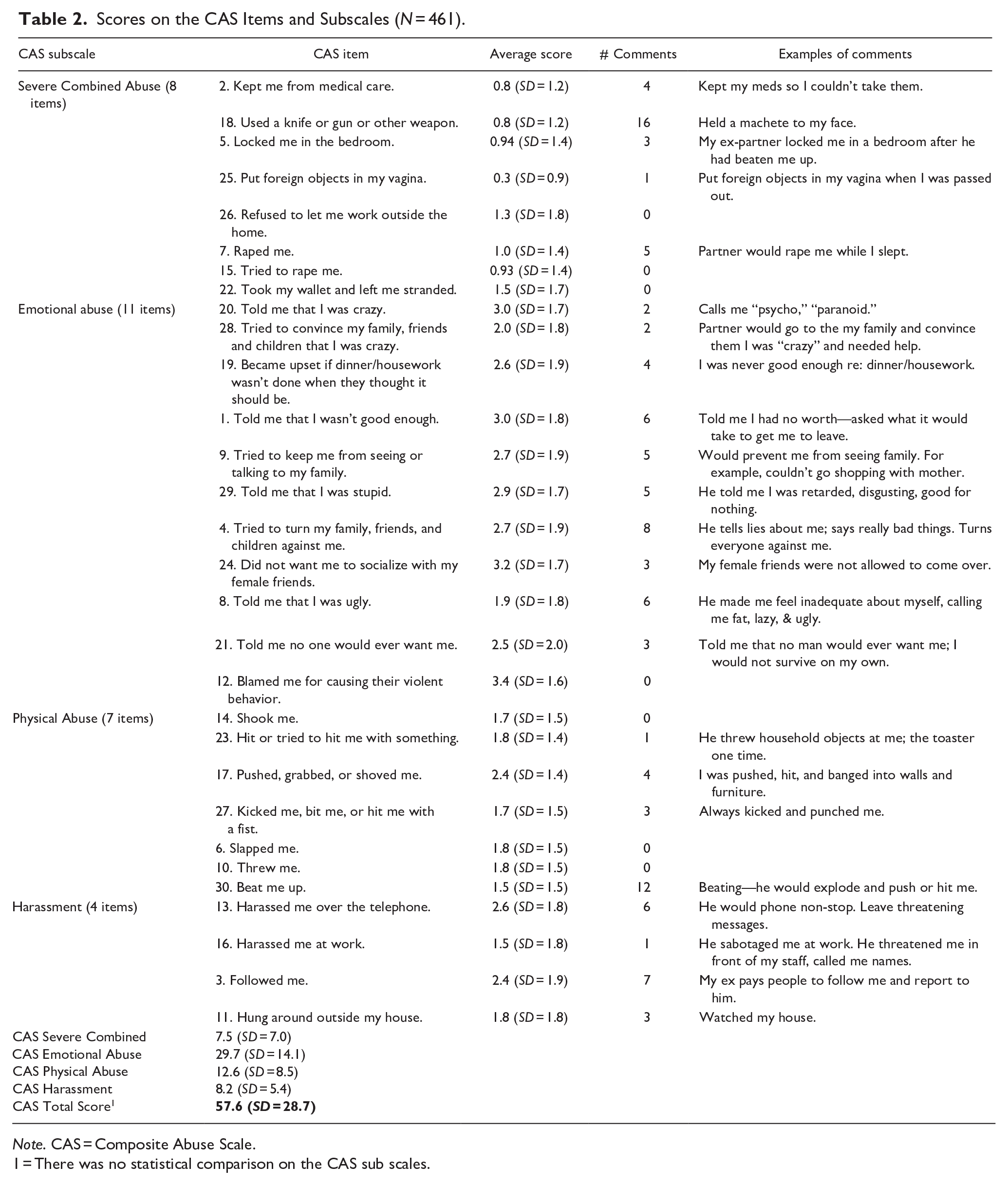
Note. CAS = Composite Abuse Scale.
1 = There was no statistical comparison on the CAS sub scales.
The “number of comments” column is a count of times when women identified issues in the follow-up question that fit with a particular CAS item. The items with the most additional comments were “Used a knife or gun or other weapon” (16 comments) and “Beat me up” (11 comments). The number of additional comments with respect to the item, “Locked me in the bedroom” is notable in that only three were specific to being locked in a bedroom, with 46 about being locked or confined elsewhere, as discussed below. The nature of the comments indicates the significant nature of the IPV with respect to these issues.
What the CAS Missed
In response to the question that the women were asked immediately after completing the CAS, one woman simply commented that it was “hard to relate to items on the scale.” While 461 women commented, some only briefly, others provided comprehensive information. The first set of issues reflected additional forms of woman abuse such as controlling behaviors (n = 143), emotional abuse (n = 130), physical abuse (n = 83), threats to kill (n = 65), sexual assaults and abuse (n = 37), damage to possessions (n = 36), partner’s threats of suicide (n = 25), jealousy (n = 22), threats to the woman’s housing (n = 21), and medical abuse (n = 17). The second set of issues constituted abusing others beyond the marital dyad, including threats or abuse of family members (n = 74); abusing the children (n = 55); threats to take children by child custody procedures (n = 14), or kidnapping children (n = 11); and pet abuse (n = 70).
Additional Partner Abuse Issues
Controlling Behavior
In addition to the 17 comments on the CAS Harassment subscale that fit best with controlling behaviors, numerous women (n = 143) described their partner’s control. Of these, more than half (n = 67) were confined by their partners: “Held me hostage in my own apartment for two days not even allowing me to use the bathroom;” and “He would sit on me to hold me down so I wouldn’t go out to see my friends.” A number (n = 35) described financial abuse: “He would control all my money. Even drained the kids’ bank accounts”; “He would leave me with no money to buy necessities for my kids, even when I was pregnant. “He used to take my bank card and steal all my money.” Eight women described extremely controlling behaviors such as: “Would put a thread down in the door when he left for work to make sure I stayed home”; “He was trying to have me committed to a mental institution”; and “He’d put flour on sidewalk to check for visitors or tire tracks.” Five women identified their partners threatening their immigration status; “He told me I had to return to [country name] if I separated from him”; and “Whenever we got into an argument my husband would threaten to call the immigration people and tell them that I am illegally living here.”
Physical Abuse
In addition to the 20 comments that fit with the CAS Physical Abuse items (beat me up: 12; pushed or shoved: 4; kicked or hit: 3; tried to hit with something), a number of women (n = 83) described other ways their partners physically abused them. Descriptions of serious abuse included 23 women who reported being choked or strangled: “Strangled me almost daily”; “He used to choke me; he threatened to choke me longer and harder the next time.” “Ripped phone from wall and wrapped cord around my neck.” Eight women spoke of being held down or tied up: “He tied me up with a rope; put soiled underwear in my mouth”; “I’ve been bound and tied up”; and “Tied me to furniture and left me for hours.” Eleven women described harrowing incidents: “He broke both my arms with a baseball bat”; “He hit me with a metal weight bar. He hit me with a hot clothes iron on my head, burning me”; and “Tried to break my back, held me by the neck and hit me against the wall.” Five women were attacked with a vehicle: “Hit me with his truck, said it was an accident”; “Once he dragged me with the car.”; and “Tried to run me over with a tractor.” Finally, while not life-threatening, 10 women described the denigrating acts of their partners, spitting on them (five specified being spit in the face), and four were bitten.
Emotional Abuse
In addition to 42 comments that fit with the 11 CAS Emotional Abuse items (i.e., 8 fit with “Tried to turn family and friends against me; 6 fit with “Told me I wasn’t good enough”), 78 women described additional emotional abuse. Some women (n = 27) described upsetting name-calling: “He called me a slut in front of neighbors”; “He would taunt me. Called me a stupid bitch.” Another 12 women described their partners repeatedly screaming at them: “Would yell for hours on end until I would break down”; “He would scream so loudly, his face right in mine, food falling from his mouth. Disgusting and degrading.” Two women noted especially denigrating abuse: “He pissed on me when I would not wake up. I wasn’t allowed to sleep because he needed attention”; and “Ex-partner was a police officer working on a murder case. He would refer to me as the murdered woman’s name.” Other women (n = 22) noted their partner’s extreme jealousy: “He would accuse her fucking the guy on the way home from the store”; “Checked my underwear”; and “He was jealous because he thought I would mess (sexually) with his brother, uncles, cousins.”
Threats to Kill the Woman
Women (n = 65) commented that their partners had threatened to kill them, including the 16 comments mentioned previously that fit with the CAS item about using a weapon. Some (n = 18) specified that their partners made threats about using a knife (one a machete). “He flipped out and came at me with a knife,” and “Put a knife to my throat. Thought I was cheating when only he went out and I stayed home.” Additional comments (n = 11) were with respect to firearms, including “The day I finally left, he took a handgun and pointed into my face,” and “He threatened me with a gun. He held it to the back of my head.” Five death threats referred to using vehicles: “Threatened me. Stated ‘hit and runs happen all the time”; and “He threatened to run over me with his truck.”
Sexual Abuse or Assaults
A number of women (n = 36) described their partner’s sexual assaults and other sexual abuse. Five were sexually assaulted (counted in the “raped me” item of the CAS), providing further details such as: “He would rape me while I slept.” “Raped me daily, gave me an STD”; and “Regular forced sodomy. I was required to say I liked it.” Others (n = 14) described unwanted sexual acts or pressure: “He would want sex when I didn’t and wouldn’t accept ‘no’ for an answer”; “Would force himself on me and get very angry if I didn’t want to.”
Nine women noted that their partners had sex with others: “He once had sex with a woman in front of me”; “Had sexual relationship with younger sister. I saw him kissing her”; and “Forced me to have sex with my ex-partner’s friends. Ex-partner had sex with my friends in front of me.” Three others described unusual sexual acts: “He would not wear condoms—anal sex, vaginal, oral, without condoms”; “I awoke to him cutting off my pubic hair.”
Damage to Possessions
A number of women (n = 36) described their partners destroying their property; in the case of others (n = 11), possessions with special meaning to them. “He threw around sacred objects, broke eagle feathers”; Ripped up all my kids’ things from when they were born (pictures, memories),” and “Destroyed things that had belonged to my mother.”
Partner’s Suicide Threats
Some women (n = 25) commented about partners threatening suicide: “My husband was capable of murder/suicide. He flipped out once and came at me with a knife but began to stab himself. He tried to hang himself in front of me”; “Threatened to kill himself—hurt my family, kill me”; and “He would threaten to kill himself if I left.”
Housing Issues
Other women (n = 21) described their partner’s actions that threatened their housing. Nine women documented threats to burn down their houses. In two cases, the partners actually did: “Threatened to burn my house down and he did!” and “Ex burnt down my house.” Six women were expelled from the family home, “He kicked me and my kids out of the house”; “He threw me out of the house when I went to get cancer tests.” Another six described their partners damaging their homes; “Has punched and kicked holes in the doors and walls.” And “He smashed my house up, kicked open the door, smashed things inside.”
Medical Abuse
A number of women (n = 17) described their partners preventing them from accessing medical assistance (four comments fit with the CAS item about this) or in other ways hampering their medical access. “Broke both hearing aids to stop me from being able to communicate with others”; “Replaced my diabetes medication with extra strength Tylenol”; and “Wouldn’t allow me to take meds for my anxiety attacks.”
Abuse Issues Beyond the Partner Relationship
Threats to Other Family Members
In a large number of cases (n = 74) women described their partner’s threats to other family members, such as parents and siblings. A number of these (n = 20) were death threats: “He threatened to kill my father, had him in his gun scope sight while they were hunting,” “He told me if I tried to leave, he would crash his car into my sister’s family,” and “He said he would kill my family if I ever took away his son.” Seven women identified actual assaults on family members: “My ex head-butted my dad, breaking his nose,” and “He punched my younger sister unconscious.” Other threats were chilling: “He threatened to hit my family with a machete if they stopped him from taking my daughter,” and “Threatened my grandma. Told her to sleep with one eye open!”
Abusing or Threats to Abuse Children
Other mothers (n = 55) described their partners abusing or threatening to abuse their children. In 23 cases, this was physical abuse. “He threw my child against the wall,” “He abused my 10-year-old—beating her with a dog chain, pointed a knife at her.” And “He hit my six-week-old child,” In five instances, these had been reported to authorities. Some mothers (n = 17) described their partners’ threats toward children; “He threatened to shoot my son.” “He threatened to harm my daughter or kill her if I left him”; “Said that he was going to put our son in the microwave.”
Other mothers (n = 13) reported severe emotional abuse. “He would be verbally abusive to the children, especially to the oldest boy. He couldn’t do anything right; he couldn’t walk right”; “One time he tried to make my oldest son eat a pack of cigarettes.” Three mothers suspected or reported sexual abuse of their children by their partners. “He sexually abused my youngest son as well as his own children, boys and girls”; and “I never left my daughter alone with my ex-husband because I feared he would sexually abuse her. There was a look in his eye that disturbed me. She was only seven.”
Threats to Take Children
Some mothers (n = 25) described their partners threatening to take the children, whether in custody battles (n = 14) or by kidnapping them (n = 11). Comments about custody included, “He threatened to take the children away from me and leave”; and “For years, threatened to take away the children if I left.” Two women referred to their partners threatening to contact the authorities if they left: “Threatened to have child welfare take my kids.” Four partners had actually abducted their offspring; “He would take them and disappear for 2–3 days at a time.” “When we first split up, he took the kids and ran.”
Pet Abuse
A number of women (n = 70) described their partners having abused their pets or farm animals. Of these, seven referred to threats to kill pets: “I euthanized my dog because I believed my husband was going to kill her”; and “He threatened to kill my cat: He took her to the Humane Society.” Sadly, 11 women described their partners killing their pets. “My partner killed my cat. He snapped his neck and threw him in the garbage”; “He purposefully ran over one of the cats while the children were in the vehicle.”
Discussion
In considering the women’s comments in light of their responses to the CAS, three issues are apparent. First, although the CAS identified some serious IPV, in other cases, the severity of was not captured by the CAS, as the women described a number of denigrating and potentially life-threatening acts by their partners. Second, the abuse was not limited to the partner relationship but extended to children, other family members, and pets. Third, the most often categorized comments were about the partners’ controlling behaviors, which were not captured by the CAS, suggesting that some partners are more broadly controlling and, perhaps, show psychopathic tendencies that fit with the concept of coercive control, and may be indicative of the most dangerous perpetrators. This provides important context for why women often do not feel safe to leave abusive relationships or do not involve authorities such as the police.
Classifying IPV acts is complicated, as there is often an overlap between categories. As one example from the current analysis, “He called me a slut in front of neighbors,” categorized under emotional abuse, also reflects social isolation and public denigration. This problem with measuring IPV acts is mentioned by Follingstad and Bush (2014).
The issues raised by the women and not captured by the CAS have previously been identified as significant IPV in other research. Serious behaviors such as threats to kill the woman and suicidal threats from the partners have been noted as risk factors for femicide (Glass et al., 2008) and captured in the Danger Assessment (Campbell et al., 2001). Strangulation can easily result in death (McKee et al., 2022; Stansfield & Williams, 2021). Nonfatal strangulation is a leading indicator of escalating violence in a relationship and an important risk factor for homicide in women (Glass et al., 2008). Confining women, either by locking them in rooms, preventing them from leaving residences, or tying them up, also constitutes serious control issues. Emotional abuse, jealousy (Pichon et al., 2020), and sexual abuse, including behaviors that extend beyond sexual assaults (Bagwell-Gray, 2021; Tutty et al., 2024) have been well researched with respect to their negative impacts, often highlighted in qualitative research, as has the destruction of possessions, particularly those that hold special meaning for the women. Being expelled from or having their homes damaged or destroyed is particularly problematic for abused women, who are at increased risk of homelessness after leaving abusive partners (Meyer, 2016; Tutty et al., 2013). Across themes, 26 comments were about vehicles used to threaten or injure women, children, or pets, an issue not documented in the literature, but potentially lethal.
As noted, a number of issues extend beyond the partner relationship, such as abusing children (Clements et al., 2022) and pets (Giesbrecht et al., 2025; Simmons & Lehmann, 2007), controlling social relationships (Park et al., 2024) and instigating custody battles (Miller & Manzer, 2021; Sullivan et al., 2022; Tutty et al., 2025b) or kidnapping children (Finkelhor et al., 2017; Tutty et al., 2025a). The serious nature of the acts and threats documented in the current study suggests the need for additional focus on this. A number of these issues are considered within the definition of coercive control (Brennan et al., 2019; Stark, 2007).
Reflecting on the CAS
Neither author was a member of the research committee that selected the measures to assess IPV. In fact, the CAS served the Healing Journey study’s purpose. It documented IPV in our population of women, with a range of moderate-to-serious abuse scores. Nevertheless, considering the women’s comments, the measure did not comprehensively capture additional issues, ones that the women added to more accurately highlight their experiences. Given the measure’s described purpose as a screening instrument, this is understandable.
However, for researchers needing a more comprehensive analysis of the serious nature of IPV, the CAS failed to identify a number of issues about which the women commented. Similar to our conclusions, Evans et al. (2016) critiqued the CAS, suggesting the need for additional qualitative questions, as well as raising some of our concerns regarding confusing items and the need to create items that cover a range of circumstances, that is, are not too specific (Follingstad, 2011; Follingstad et al., 2015). Several CAS items are limited by their specificity such as whether the partner locked the women in a bedroom, and whether the partner inserted items in her vagina.
The lack of a CAS subscale specific to sexual IPV was problematic, as an analysis of this key feature of IPV entailed a special look at the sexual assault items (Tutty & Nixon, 2022, Tutty et al., 2024), something that we only considered after reflecting on the fact that the sexual assault items were only accounted for in the Severe Combined Abuse subscale but not highlighted separately. These analyses documented the serious nature of partner assaults on the mental health of the women in our sample (Tutty, Radtke, Ateah, et al., 2021; Tutty, Radtke, Thurston, et al., 2021).
Ford-Gilboe et al. (2016) developed a revised 15-item version of the CAS, including 12 items from the original CAS (some re-worded for improved meaning, that is, “Put foreign objects in my vagina” changed to “Made me perform sex acts that I did not enjoy or like,” with an added sexual assault subscale. Expert rating of the original CAS items raised a number of concerns mentioned in this analysis, such as “Locked in the bedroom” changed to “Confined or locked me in a room or other space.” The new items included “choked me,” “threats to harm or kill someone close to me” and financial abuse (with the added item “kept me for having access to a job, money or financial resources”), each of which figured prominently in the women’s comments in our study. The revised CAS has been improved in important ways. Had it been available at the inception of the Healing Journey, it would have been a somewhat better fit with our study, but still not as strong as the measures mentioned below.
Possible Other IPV Measures
In our analysis of the nine major themes that the women identified (see Table 3), three measures captured six or more of the women’s serious IPV experiences: the Measure of Wife Abuse (Rodenburg & Fantuzzo, 1993; seven issues), the Severity of Violence Against Women (Marshall, 1992; six issues), both available when the Healing Journey study was planned, and the Measure of Psychologically Abusive Behaviors (seven issues; Follingstad, 2011), which was developed afterwards. Although a recent review by Alexander et al. (2022) reviewed all three, none was recommended, likely because their use was limited and their psychometric properties, while available, were not considered comprehensive.
Themes From Women’s Comments and Their Inclusion in IPV Measures (N = 461).
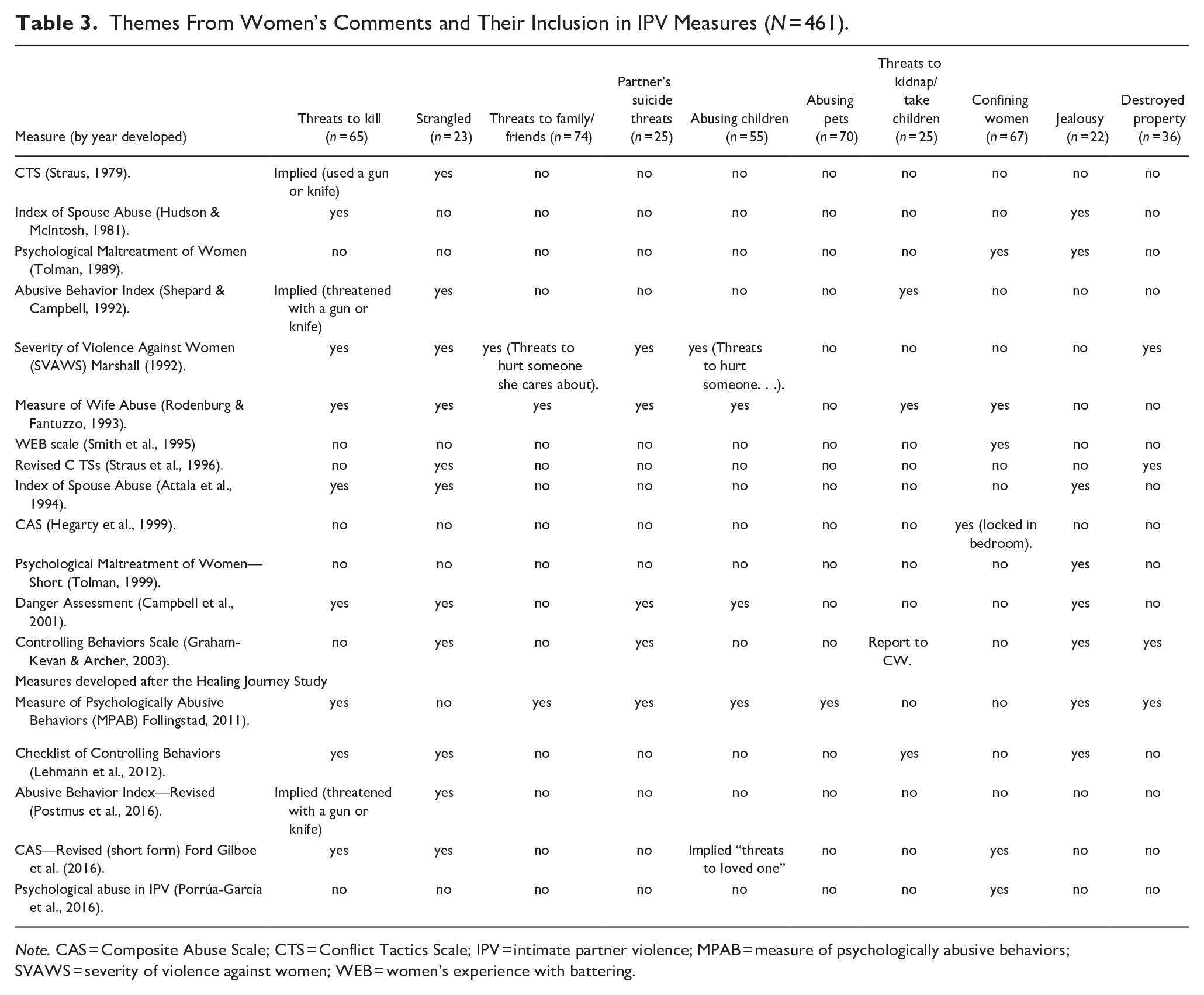
Note. CAS = Composite Abuse Scale; CTS = Conflict Tactics Scale; IPV = intimate partner violence; MPAB = measure of psychologically abusive behaviors; SVAWS = severity of violence against women; WEB = women’s experience with battering.
The academic discussion about coercive control as a central characteristic of IPV was not common until the completion of the Healing Journey study (i.e., Crossman & Hardesty, 2018). The women’s comments included many characteristics that fit the definition of coercive control. Although the Measure of Psychologically Abusive Behaviors (MPAB; Follingstad, 2011) is framed as “psychological abuse,” it is a better fit with coercive control, since many of the items include a phrase about the intentionality of the abusive act and provides the opportunity for the women to note whether the act was seen as a “violation” rated: 1 (not a violation at all) to 10 (worst possible violation). A recent study by Free and Beck (2024) supports the MPAB’s content validity. Despite these concerns, if researchers wish a comprehensive assessment of IPV, the MPAB, the Severity of Violence Against Women (Marshall, 1992), and the Measure of Wife Abuse (Rodenburg & Fantuzzo, 1993) deserve consideration.
Study Limitations and Strengths
When using secondary data sources, one is limited by the nature of the original study, which, in this case, relied on a convenience sample of women from violence against women shelters or counseling agencies, or were recruited through the media or posters. The current results are not generalizable to other women abused by intimate partners from Canada’s prairie provinces.
The item about additional IPV that the women answered after completing the 30-item CAS was general. In our view, this qualitative secondary analysis of how the women, themselves, perceived their partners’ IPV adds valuable context to their experiences. While the data set is from 2004 to 2005, secondary analysis allowed us to capture important information that was not highlighted in previous publications that examined only the CAS scores (i.e., Tutty, Radtke, Ateah, et al., 2021; Tutty, Radtke, Thurston, et al., 2021). The study was developed before coercive control became a central focus of interest, and this analysis allowed us to reexamine a large group of Canadian women who conceptualized the IPV perpetrated by their partners. Further, the study includes a large sample of Indigenous women whose experiences of coercive control have not been well researched.
Conclusion
Choosing a measure to conceptualize variables such as the severity of IPV against women is a complex process. Measures may not be easily or publicly available. But beyond this, the core is the definition of the IPV concept and the extent to which the scale items fit. Most IPV measures focus on the interactions between the couple, also true of the CAS. One would not expect a standardized measure to comprehensively describe a partner’s abusive acts. Nevertheless, the more accurately the items represent the women’s experiences, the more valuable the results. If we had used a measure that reflected major themes from the women’s comments, such as threats to kill, threats to family members, pet abuse, and confining, our analysis would have better explicated the serious nature of their partner’s IPV in these women’s lives.
Footnotes
Acknowledgements
The CURA team: Dr. E. Jane Ursel and Marlene Bertrand (Manitoba Department of Family Services and Housing, MB) are the Co-Principal Investigators; Dr. Kendra Nixon, Dr. Christine Ateah, Dr. Janice Ristock; Dr. Lori Wilkinson; Colin Bonnycastle; Dr. Jocelyn Proulx (University of Manitoba); Dr. Johanna Leseho; Dr. Roberta Graham (Brandon University); Dr. Linda DeRiviere; Dr. Michelle Owen (University of Winnipeg); Anna Pazdzierski (Nova House, Selkirk, MB); Karen Peto (YWCA Brandon); Margaret Marin & Darlene Sutherland (Osborne House, Winnipeg); Dr. Mary Rucklos Hampton, Dr. Bonnie Jeffery; Dr. Darlene Juschka; Dr. Wendee Kubik (University of Regina); Dr. Stephanie Martin (University of Saskatchewan); Carol Soles (Prince Albert Emergency Shelter for Women); Debra George (Family Services Regina); Dr. Karen Wood (Tamara’s House, Saskatoon); Maria Hendrika (Provincial Association of Transition Houses Saskatchewan); Angela Wells (Family Support Centre, Saskatchewan); Dr. H. L. Radtke; Dr. Leslie M. Tutty; Dr. Wilfreda (Billie) Thurston; Dr. Erin Gibbs Van Brunschot (University of Calgary); Dr. Caroline McDonald-Harker (University of Alberta); Dr. Ruth Grant Kalischuk (University of Lethbridge); Jan Reiner & Carolyn Goard (Alberta Council of Women’s Shelters); Brenda Brochu (Peace River Regional Women’s Shelter); Kristine Cassie (YWCA Lethbridge); Pat Garrett (WINGS of Providence, Edmonton).
Declaration of Conflicting Interests
The author(s) declared no potential conflicts of interests with respect to the authorship and/or publication of this article.
Funding
The author(s) disclosed receipt of the following financial support for the research and/or authorship of this article: Social Sciences and Humanities Research Council (SSHRC) Community University Research Alliance (CURA); Alberta Heritage Fund for Medical Research.
