




Abstract
Child maltreatment (CM) is a major global public health issue, and a strong association exists between CM and aggression. However, the underlying mechanism of this association has not been understood to date. The objective of this study was to explore the mediating role of irritability in the association between CM and aggression in Chinese early adolescents. A cross-sectional study was conducted using a self-report questionnaire to evaluate the levels of CM, aggression, and irritability in 5,724 middle school students from the Anhui Province, China. Structural equation modeling was used to test the hypothesis of the mediating effect of irritability on the relationship between CM and aggression. We further investigated gender differences in this association using multiple group analyses. CM was positively related to both irritability and aggression, and irritability was positively associated with aggression (p < .01). The mediating effects of irritability between CM and aggression were significant (β = .107, 95% confidence intervals [CI]: 0.077–0.133, p < .05). Males had a higher indirect effect size of the pathway from CM to aggression via irritability compared with females. Overall, irritability was a crucial mediator in the relationship between CM and aggression in Chinese adolescents, and males were more prone to engage in aggression compared with females through the pathway of irritability. Therefore, early irritability characteristics should be carefully monitored in adolescents, and they should be provided adequate support to acquire critical emotion regulation skills.
Introduction
Prevalence of Child Maltreatment
Child maltreatment (CM) is defined as abuse or neglect that occurs within a caregiving relationship. This complex and multidimensional social phenomenon is a major global public health issue (Marques et al., 2015). CM is categorized into physical abuse, psychological/emotional abuse, sexual abuse, and neglect (emotional and physical; Akmatov, 2011). A recent meta-analysis indicated that the global prevalence was 14% to 55% for physical abuse, 11% to 47% for emotional abuse, 6% to 22% for sexual abuse, 7% to 19% for physical neglect, and 15% to 40% for emotional neglect (Stoltenborgh et al., 2015). In China, a meta‑analysis revealed that the prevalence of physical and emotional neglects among primary and middle school students was 47% and 44%, respectively (Wang et al., 2020). The high prevalence of neglect may be attributed to social and family factors (Yu et al., 2020). Many parents in poor areas in China migrate to urban areas for financial reasons; therefore, their children become “left behind children.” These neglected children do not receive sufficient care and emotional support from their parents because of long-term separation (Li et al., 2021). Additionally, CM has adverse health consequences associated with a broad array of psychopathological and behavioral disorders, such as depression (Davies et al., 2018), suicide ideation and attempts (Bruwer et al., 2014), and violent behaviors (Li et al., 2023).
Adolescent Aggression
Aggression refers to social exclusion or harmful behavior that directly or indirectly causes harm or distress to others, and it can be manifested physically, verbally, emotionally (anger), or cognitively (hostility; Buss & Perry, 1992). Adolescence is a critical transitional period from childhood to early adulthood, and adolescents have increased self-awareness, high sensitivity, and responsiveness to external stimuli. During this transition, they tend to have unstable emotions and are prone to engage in aggressive and violent behaviors (Sawyer et al., 2012). A study of 247,909 adolescents aged 12 to 15 years in 63 low- and middle-income countries revealed that 29% of adolescents reported at least one to three counts of physical aggression on others in the past 12 months (Nivette et al., 2019). In the United States, 37% of adolescents aged 11 to 15 years reported at least one count of physical aggression on others in the past year (Pickett et al., 2005). Moreover, adolescent aggression is associated with serious and extreme violent activities in the future, such as homicide and delinquency, which have long-term negative effects on individuals and society (Bradshaw et al., 2010). Therefore, the occurrence and development of aggression need to be carefully monitored in adolescents to prevent violent crimes among them and provide early intervention. The influencing factors of adolescent aggressive behavior are complex and diverse, including age, gender, and social environment factors, and several studies have reported a positive association between alcohol use, substance abuse, and increased risk of aggression (Boles & Miotto, 2003; Cunningham et al., 2015; Mumford et al., 2019).
Relationship Between CM and Aggression
Notably, a growing body of research suggested that CM was associated with the development of aggression in adolescents (Fagan, 2020; Gauthier-Duchesne et al., 2022). For instance, a prospective longitudinal study of 574 adolescents for 17 years revealed that physically abused individuals were more likely to be arrested as juveniles for violent, nonviolent, and status offenses (Lansford et al., 2007). Fagan (2020) also reported that adolescents who had been abused at least once before the age of 10 years showed significant and frequent aggressive behavior by the age of 12 years. Similarly, a survey of 8,194 high school students in Canada suggested that those who experienced sexual abuse had an increased risk of delinquent behavior (Gauthier-Duchesne et al., 2022). Aggressive script theory points out that individuals learn aggressive scripts through direct adverse childhood experiences, such as CM, adverse life events, and domestic violence, and these individuals show a high possibility of aggressive behaviors (Huesmann, 1998). Moreover, CM has a long-term impact on the behavior, emotions, and cognition of the individual, which greatly increases the rate of criminal behaviors (Steinberg, 2008; Steketee et al., 2021). Therefore, it is necessary to explore the potential mechanisms by which CM influences aggression for preventing the development of adolescent aggression.
Mediating Role of Irritability in the Relationship Between CM and Aggression
Irritability is defined as the tendency to react impulsively and aggressively at provocation (Avenevoli et al., 2015). As a new diagnostic category listed in the fifth edition of the Diagnostic and Statistical Manual of Mental Disorders, irritability is a core symptom of oppositional defiant disorder and is the main feature of disruptive mood dysregulation disorder (Stoddard et al., 2014). Bielas et al. (2016) surveyed 130 detained male adolescent offenders and found that those who experienced adverse childhood experiences had an increased risk of irritability. CM impairs the capability of children to process emotional information, which makes it difficult for them to regulate their emotions and induces strong reactions and irritability (Allen, 2011; Dye, 2018). Biologically, traumatic stress can damage brain structure in maltreated children, leading to decreased frontal cortex inhibition and hyperreactivity in limbic areas. The damage results in emotion and affect dysregulation, which further poses a greater risk of irritability (Besteher et al., 2017; van der Kolk, 2005). Moreover, irritability may be a key manifestation of aggression. Caprara et al. (2007) found that irritable individuals have higher levels of aggression and are predisposed toward violent behavior compared with non-irritable controls. Similarly, a prospective cohort study showed that irritability predicted an increase in all subtypes of aggression (Perhamus & Ostrov, 2021). The levels of self-reported irritability are positively related to the probability of violent recidivism within a certain range (Barlett & Anderson, 2011). According to the cognitive-neoassociationistic model, irritability may activate an associationistic network relevant to aggression, thereby predisposing individuals to engage in aggressive and violent behavior (Berkowitz, 1993). Therefore, considering that the experience of CM is associated with increased irritability, and individuals with higher irritability are likely to present more aggression, we hypothesized that irritability may be a mediator between CM and increased risk of aggression.
Gender Differences
Previously, several authors have shown that the association between CM and aggression varies by gender (Björkqvist, 2018; Card et al., 2008). Maschi et al. (2008) found that maltreated young males manifested externalizing behaviors, such as aggression and delinquency, whereas females were more likely to develop internalizing symptoms, showing maladaptive psychological or emotional behaviors. Similarly, Björkqvist (2018) reported that boys were more physically aggressive, and girls were more indirectly aggressive. Compared with females, males were more sensitive to external stimuli and had a poorer ability to control impulses, often showing externalized behavior. Females had a better ability to inhibit impulsive responses (Weafer & de Wit, 2014). In neurobiology, males showed greater brain involvement than females in the right frontal area associated with inhibitory control, especially for inhibiting impulses (Weafer, 2020). Therefore, we hypothesized that the mediating effect of irritability on the association between CM and aggression may differ in males and females.
Current Study
We envisaged this study to examine the association between CM and aggression in Chinese early adolescents, explore the possible mediating role of irritability in the relationship between CM and aggression, and investigate gender differences in the mediating effect of irritability on the association between CM and aggression. An understanding of this potential mechanism could be instrumental in preventing the adverse effects of CM through positive psychological interventions at an early stage. Our hypotheses were as follows:
Hypothesis 1. CM is directly associated with aggression in Chinese adolescents.
Hypothesis 2. Irritability may be a crucial mediator of the relationship between CM and aggression in Chinese adolescents.
Hypothesis 3. The pathway from CM to aggression through irritability differs in males and females.
Methods
Participants and Procedures
The data were collected for the research project entitled “Healthy and Risky Behaviors among Middle School Students in Anhui Province, China.” Participants were recruited from Huaibei, Hefei, and Xuancheng, located in the northern, central, and southern Anhui Provinces, respectively, using a cluster random sampling approach. We randomly selected 10 target classrooms from a regular middle school located in each of the above three regions. We included 5,832 students in the study. Later, 108 students were excluded for being absent and a large number of missing values, yielding an eventual sample size of 5,724 (98.15%) for data analysis.
All the participants and their parents and school authorities were fully informed of the purpose of the survey in advance, and students were invited to voluntarily participate in this investigation. Participants were required to sign a written informed consent before completing the survey, and questionnaires were administered to the participants by trained interviewers to protect their privacy in the absence of any teacher. The participants were made to sit separately from each other in the classroom and completed an anonymous and self-report questionnaire independently within 25 min. Ethical approval was obtained from the Biomedicine Ethical Committee of Anhui Medical University (approval no. 20180083).
Measures
Child Maltreatment
CM was assessed using the Chinese version of the Childhood Trauma Questionnaire—Short Form (CTQ-SF), which has shown sound psychometric properties (He et al., 2019). The CTQ-SF is a widely used 25-item retrospective self-report inventory for CM measuring five subsets, namely emotional abuse, physical abuse, sexual abuse, and emotional and physical neglect. Each item is rated on a five-point Likert-type scale ranging from never to very often (1 = never, 2 = rarely, 3 = sometimes, 4 = often, and 5 = very often). The total score of the questionnaire ranges from 25 to 125, with a higher score indicating a greater frequency of childhood maltreatment. The Chinese version of the CTQ-SF demonstrated adequate internal consistency with Cronbach’s α ranging from .82 to .93.
Irritability
The Caprara Irritability Scale (Caprara et al., 1985) conceptualizes irritability as a stable trait. We translated the scale and included a Chinese version of the following self-rating items: “had temper tantrums/hot temper,” “reacted in an aggressive manner when teased,” “reacted in an aggressive manner when contradicted,” and “reacted in an aggressive manner when something was taken away from him/her.” The responses for all four items ranged from “never true” (score 0) to “very true” (score 10). The total score of the scale ranges from 0 to 40, and higher scores reflect a greater propensity for irritability. The mean total score for irritability in the present study was 13.90 (SD = 11.30). The kappa value was 0.85, and Cronbach’s α was .88.
Aggression
Aggression was evaluated using the Chinese version of the Buss–Perry Aggression Questionnaire (Liu et al., 2009), which comprises 29 items subdivided into four subscales: physical aggression (9 items), verbal aggression (5 items), anger (7 items), and hostility (8 items). All four dimensions are sums of scoring from “extremely uncharacteristic of me” (score 1) to “extremely characteristic of me” (score 5) using a five-point Likert scale. The total score of the 29 items ranges from 29 to 145, and higher scores indicate a higher level of aggressiveness. The average score for aggression in this study was 73.72 (SD = 21.26). The scale had good reliability and validity for data obtained from Chinese children (Cronbach’s α = .84).
Covariates
We included the covariates on several relevant sociodemographic characteristics, including gender (female or male), age, body mass index, self-perceived family economic status (low, middle, or high), relationship with mother (poor, general, or good), and relationship with father (poor, general, or good) (Li et al., 2023; Mumford et al., 2019).
Data Analysis
All missing data were checked and imputed by multiple imputations (n = 10), on account of their low proportion (<0.1%). Descriptive data, including the basic characteristics and scale values of these students, were analyzed using SPSS version 23.0. Spearman’s correlation analysis was applied to assess the correlations between the three variables (CM, irritability, and aggression). Further, an overall structural equation modeling was built using the Mplus 7.4 software to test the hypothesis of the mediating effects of irritability on the relationship between CM and aggression (Byrne, 2012). According to the dimensions of the questionnaires, CM was divided into five parcels (physical abuse, physical neglect, emotional abuse, emotional neglect, and sexual abuse), and aggression was divided into four parcels (physical aggression, verbal aggression, anger, and hostility). The structural model was further constructed based on the measurement model. Model fitting was assessed using the root mean square error of approximation (RMSEA < 0.08), comparative fit index (CFI > 0.90), Tucker–Lewis index (TLI > 0.90), and standardized root mean square residual (SRMR < 0.08) (VanderWeele, 2012). In addition, bootstrapping was used to examine the significance of the mediation effect. We obtain the 95% CI for mediation effects from 1,000 replicates of the data. The mediation effect was considered statistically significant if the 95% CI did not contain 0.
We also performed multiple group analyses to investigate the cross-gender stability of the structural model. The analyses generated two models: an unconstrained model, which allowed free estimation of the path coefficients between males and females, and a constrained model, which restricted all paths in the model to be equal across the two groups. Further, we compared the two models using chi-square statistics. If the constrained model produced significantly increased chi-square statistics, we concluded that the unconstrained model had a significantly better model-to-data fit, indicating that paths within the models differed by gender. Summed scores were used in all processes, and statistical significance was set at p < .05 (two tailed).
Results
Descriptive Analyses
Table 1 shows the demographic characteristics of the participants. A total of 5,724 students participated in the study; 3,006 (52.5%) were males and 2,718 (47.5%) were females. The mean age was 13.54 (SD = 0.96) years, and the mean CTQ score was 29.49 (SD = 8.12). The mean total score for irritability was 13.90 (SD = 11.30), and the average score for aggression was 73.72 (SD = 21.26). Spearman’s correlations of the study variables within gender strata are presented in Table 2. In both males and females, CM was positively associated with irritability and aggression, and irritability was positively associated with aggression (all p-values < .01). Moreover, the associations between CM, irritability, aggression, and demographic characteristics of the participants are shown in Supplemental Table 1.
Description of the Sample Characteristics (N = 5,724).
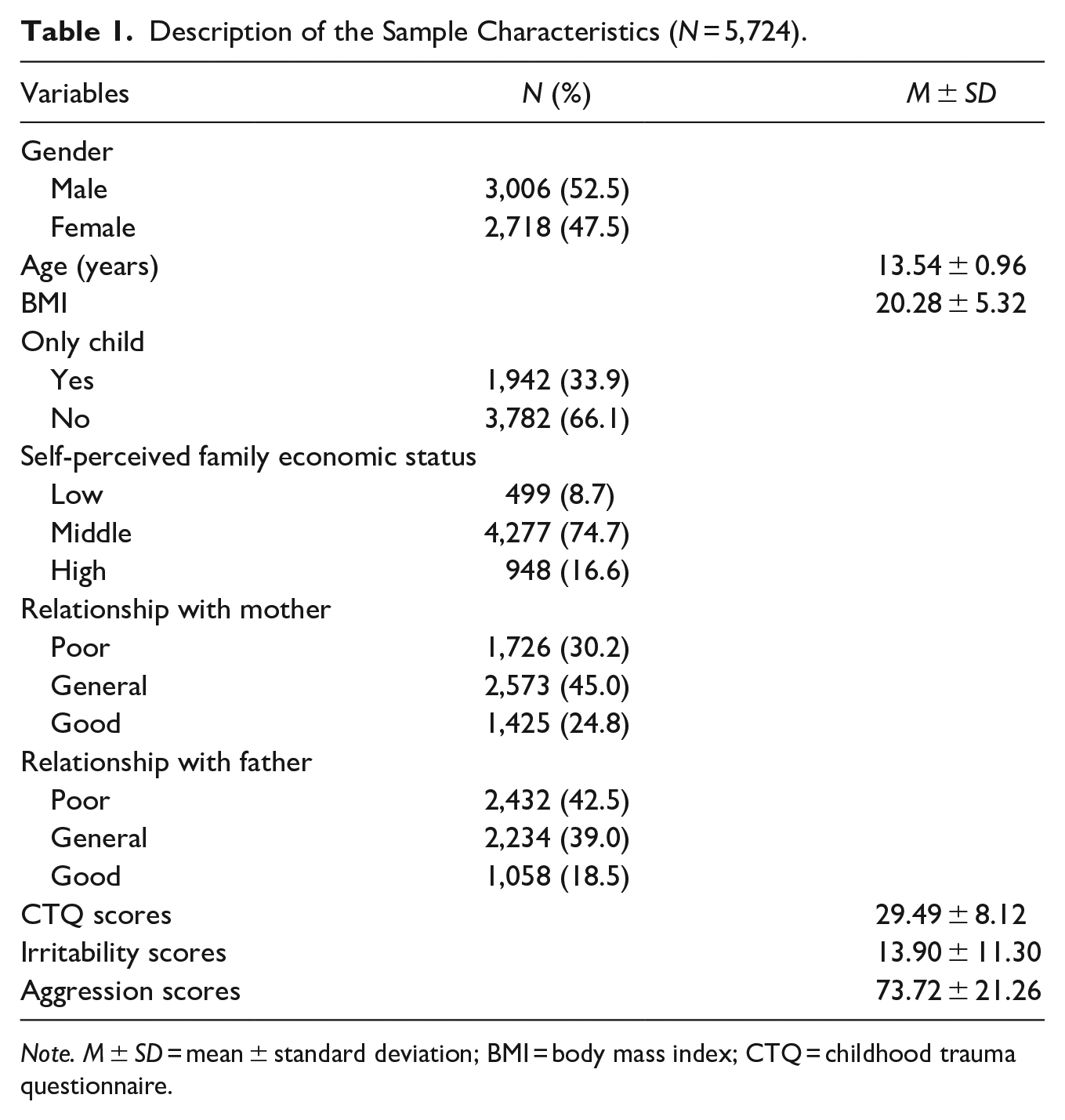
Note. M ± SD = mean ± standard deviation; BMI = body mass index; CTQ = childhood trauma questionnaire.
Spearman’s Correlations of the Study Variables Within Gender Strata.
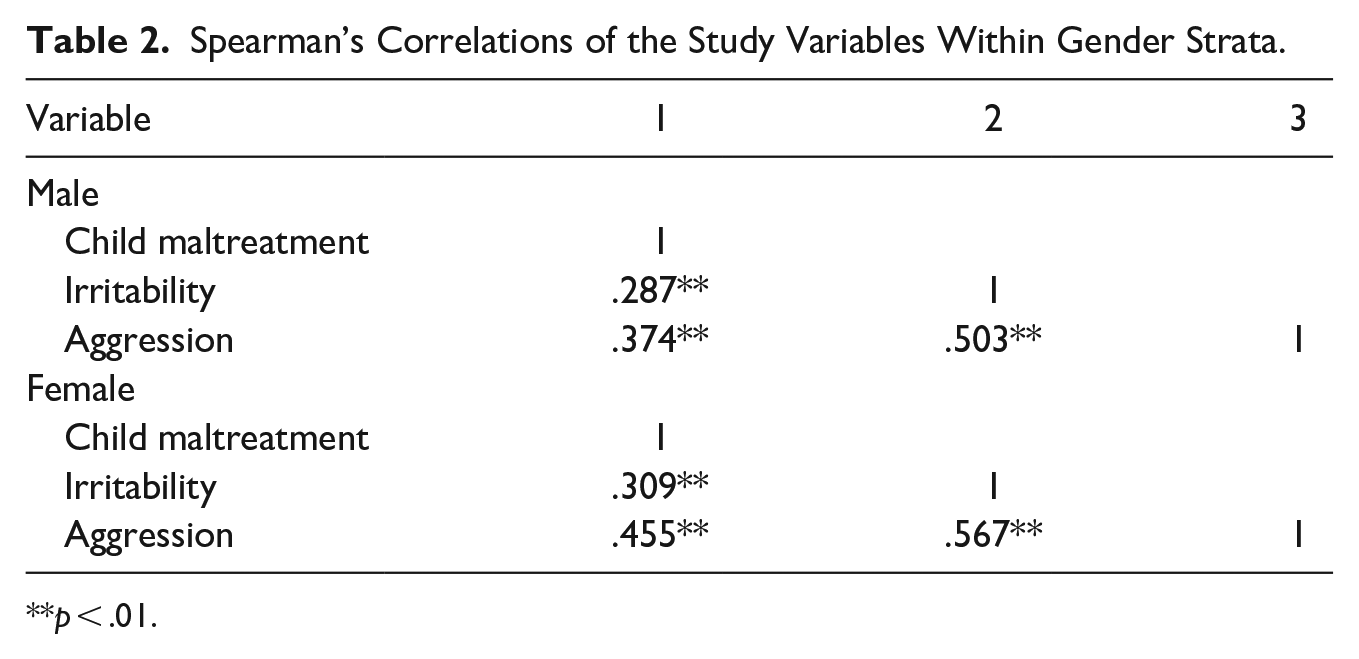
p < .01.
Measurement Model
The measurement model had three latent variables (CM, irritability, and aggression) and nine observed variables; it yielded a good fit for the data (χ2 = 5,109.068, p < .001; CFI = 0.961; RMSEA = 0.054; SRMR = 0.069). CM and aggression were dependent and independent variables, respectively, with a mediator called irritability. Moreover, the factor loadings of all latent variables were significantly correlated (all p-values < .001), indicating that the latent variables were well represented by observed variables.
Structural Model
CM positively predicted aggression (β = .36, p < .001) after the effect of the mediating variable (irritability) was partially accounted for. Figure 1 shows that participants who experienced CM were positively and significantly associated with aggression (β = .26, p < .01) after adjusting for the covariates. Moreover, CM was positively linked to irritability (β = .24, p < .01). Similarly, positive relationships were observed between irritability and aggression (β = .45, p < .01). Therefore, a structural model was constructed based on our research hypotheses, and our results showed a good fitness of this model (χ2 = 5,457.896, p < .001; CFI = 0.954; RMSEA = 0.068; SRMR = 0.079).
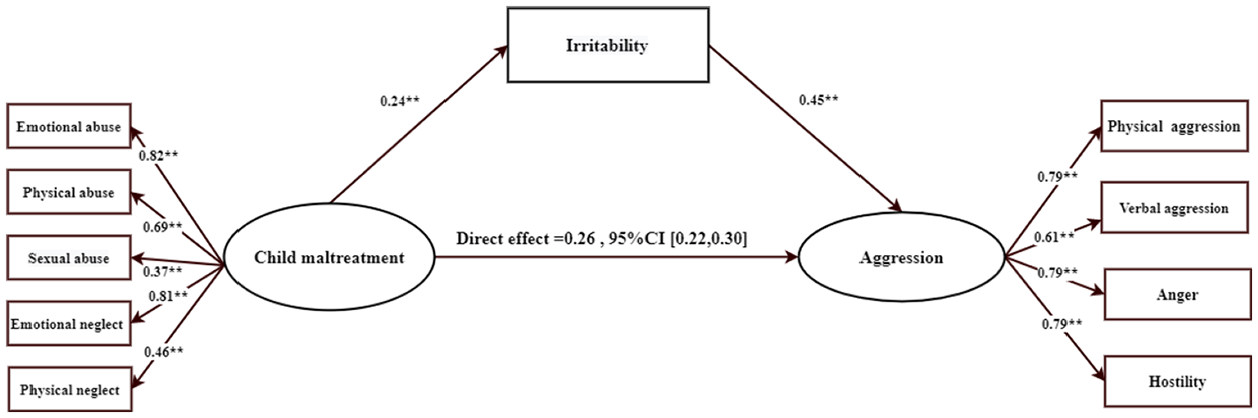
The mediation models of the association between the child maltreatment and aggression through irritability.
Testing for Mediating Variables
Structural equation modeling analysis and bootstrapping were used to test for mediation effects (Table 3). The direct effect of CM on aggression was statistically significant after adjusting for the effect of irritability (β = .264, 95% CI: 0.223–0.304). The hypothetical indirect effect of irritability on aggression was added to the direct effect of CM to examine whether irritability mediated the relationship between CM and aggression. Structural equation modeling analysis revealed that the mediating effects of irritability between CM and aggression were significant (β = .107, 95% CI: 0.077–0.133, p < .05); therefore, the path of CM → irritability → aggression was confirmed to construct the final model. The indirect effect of CM on aggression through irritability accounted for 28.84% of the total effect.
Standardized Direct, Indirect, and Total Effects of the Hypothesized Model.
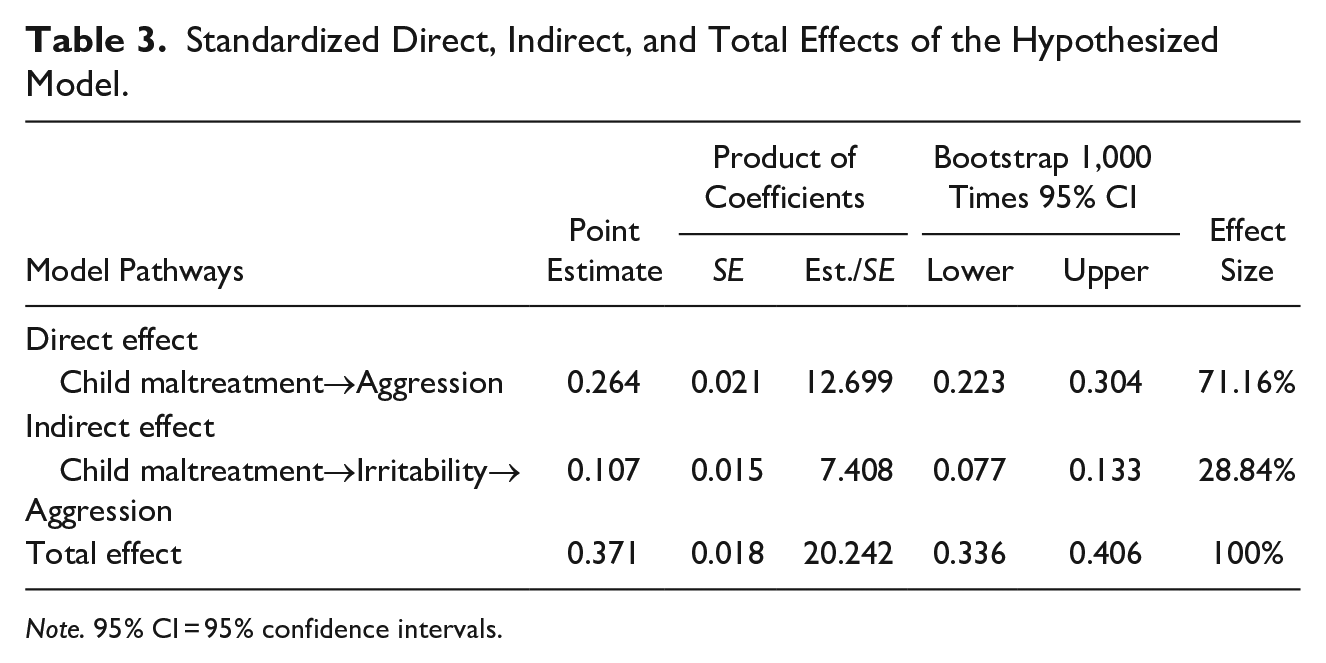
Note. 95% CI = 95% confidence intervals.
Gender Differences
We further explored the cross-gender stability of the structural model by examining the gender differences in the latent potential variables. The results revealed significant differences between males and females for CM [29.09 ± 8.11 vs. 29.93 ± 8.11; t = −3.88, p < .01], irritability [13.19 ± 11.07 vs. 14.69 ± 11.51; t = −5.03, p < .01], and aggression [72.70 ± 21.36 vs. 74.84 ± 21.09; t = −3.80, p < .01].
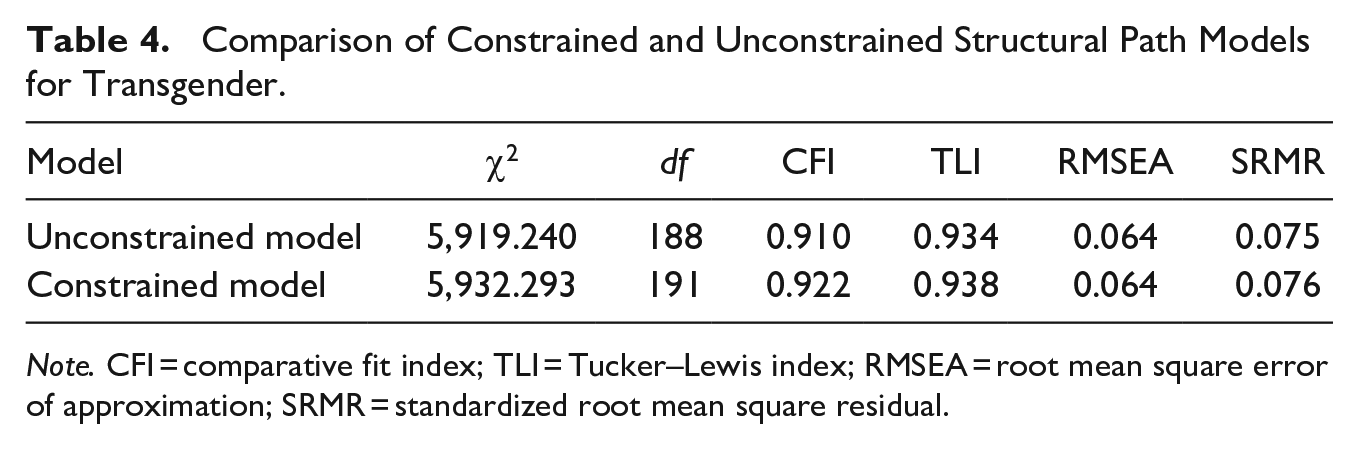
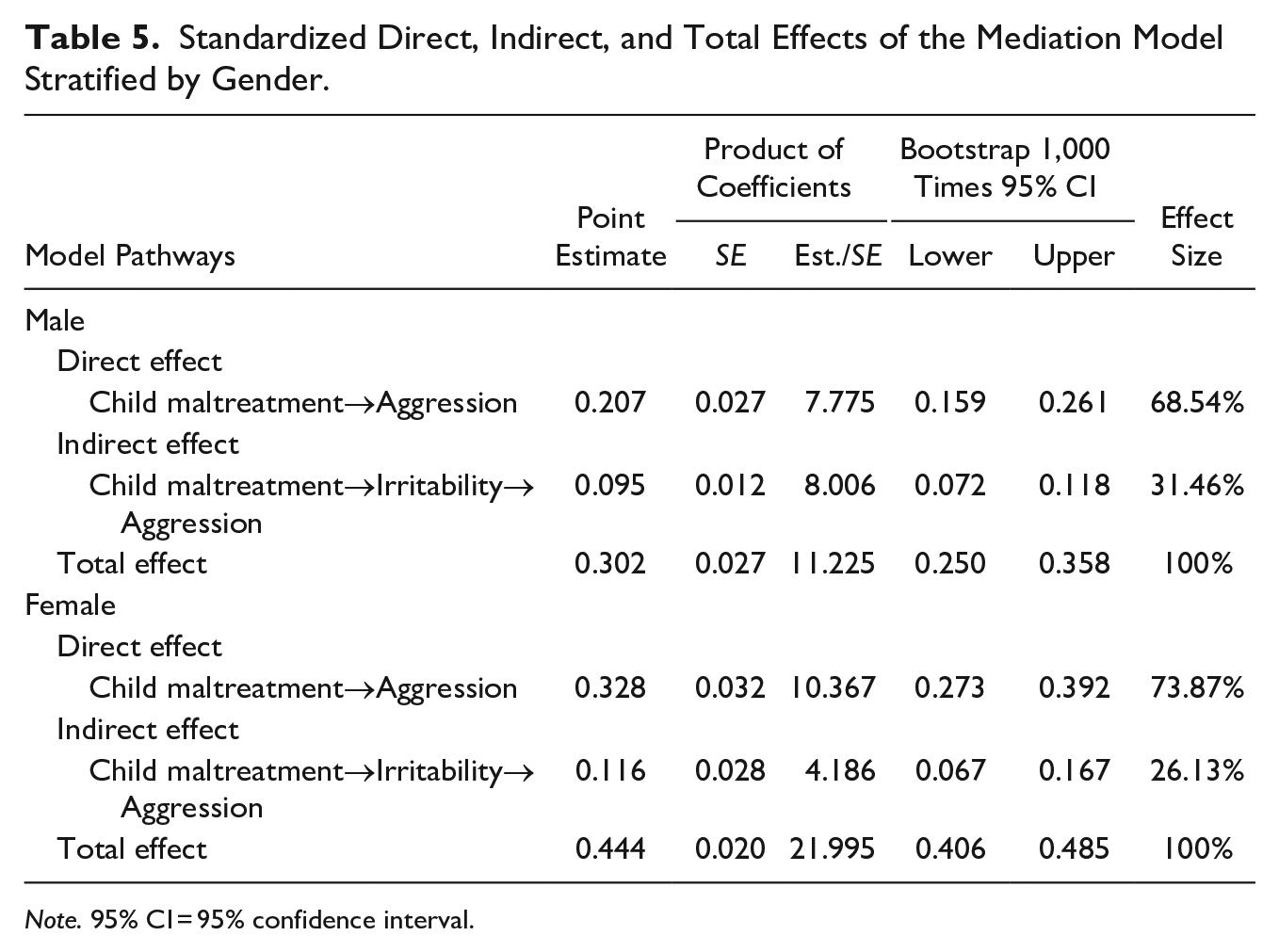
Further, the results showed significant differences between the two models (△χ2 = 13.053, △df = 3, p < .01), indicating that the structural model was unstable across different genders. However, the data indicated that both models had a good model-to-data fit (Table 4). Significant gender differences manifested in the pathway from CM to aggression (Bmale-famale = −0.113, t = −2.12, p < .05), whereas no gender differences in the developmental paths from CM to irritability and irritability to aggression (all p-values > .05). Mediation analysis suggested that the pathway from CM to aggression was mediated through irritability in both males and females. Males presented a higher indirect effect size from CM to aggression via irritability compared with females (Table 5).
Comparison of Constrained and Unconstrained Structural Path Models for Transgender.
Note. CFI = comparative fit index; TLI = Tucker–Lewis index; RMSEA = root mean square error of approximation; SRMR = standardized root mean square residual.
Standardized Direct, Indirect, and Total Effects of the Mediation Model Stratified by Gender.
Note. 95% CI = 95% confidence interval.
Discussion
We examined the underlying mechanism of the progression of CM to aggression in early adolescents by investigating the mediating role of irritability in early adolescents. Our results not only confirmed the positive association of CM with an increased risk of aggression but also suggested that individuals who experienced maltreatment in childhood were likely to express higher irritability, which was related to increased aggression. These findings are consistent with previous research, which has evidenced the relationship between CM and negative socioemotional factors such as youth irritability, and the association between CM and irritability and aggression (Bielas et al., 2016; Fagan, 2020; Perhamus & Ostrov, 2021). Additionally, this study supports these findings in a Chinese population, which may point to effects that are universal to youth development, despite occurring in a different cultural milieu to that of prior studies.
Our results showed that CM markedly increased the risk of aggression among Chinese early adolescents. Consistently, Kang et al. (2018) reported that the experience of maltreatment at an early age increased the occurrence of internalized aggression among Chinese adolescents. A meta-analysis of prospective longitudinal studies indicated that CM was associated with an increased risk of antisocial and aggressive behavior in adolescents (Braga et al., 2017). Moreover, the theories of “cycle of violence” and “intergenerational transmission of violence” suggest that the trauma of violence suffered in childhood may be implanted in the subconscious of CM victims and recreated in adolescence; therefore, such children are at an increased risk of engaging in violence during adolescence (Steketee et al., 2021; Widom & Wilson, 2015). In addition, early stress can cause the abnormal neuroendocrine function of the hypothalamic–pituitary–adrenal axis, which induces excessive production of the stress hormone cortisol, consequently leading to increased aggression, violence, and antisocial behavior (Bernard et al., 2017; Carpenter et al., 2007). Therefore, the increase in aggression because of CM should be effectively intervened at the early stages.
Further, we found that irritability played a significant mediating role between CM and aggression. Strain theory suggests that CM victimization may increase negative emotions in adolescents, resulting in emotional disorders and irrational reactions to stress, which, in turn, increase irritability (Agnew, 2006; Smith et al., 2014). Early adolescence is a critical period for brain development; CM victimization may alter brain structure and function, especially in the regions of the prefrontal cortex, and these changes further increase the risk of irritability (Besteher et al., 2017; Nemeroff, 2016). Moreover, individuals with higher levels of irritability are more likely to show greater aggression. This may happen because irritability may reduce self-control by damaging impulse control, which is a key factor in regulating aggression and mood symptoms (Malhi et al., 2021). Understanding the mediating role of irritability in the association between CM and aggression can help in providing targeted interventions to prevent the development of aggression in adolescents. It is necessary to pay special attention to maltreated adolescents exhibiting irritability and enhance their emotion regulation skills to release negative emotions and reduce irritability (Allen, 2011; Derella et al., 2019).
We found that males showed a greater tendency toward aggression through the pathway of irritability compared with females. Excessive secretion of testosterone in adolescent males may explain the higher tendency of irritability and aggression in them (Björkqvist, 2018; Book et al., 2001). Testosterone levels affect neurobehavioral responses, and high testosterone levels are associated with aggressive manifestations (Mooradian et al., 1987). Daly and Wilson (1994) found that adolescent males with inherently high levels of testosterone were more likely to exhibit irritability and aggressive behaviors. In addition, some authors reported that this phenomenon may be attributed to different psychological characteristics in males and females (Gauthier-Duchesne et al. 2022; Perhamus & Ostrov, 2021; Weafer & de Wit, 2014). Gauthier-Duchesne et al. (2022) reported that adolescent males who experienced childhood sexual abuse showed lower levels of self-esteem compared with females, which was associated with an increased risk of irritability and criminal behaviors. However, Makarios (2007) found a greater effect of CM on violence in females; females who experienced childhood abuse were more likely to be arrested for violent crimes compared with males. Similarly, analysis of data from a prospective U.K. population-based cohort study suggested that female preponderance was associated with adolescent-onset, increasing irritability (Riglin et al., 2019). Notably, some authors have also reported that gender did not have a significant influence on the association between CM and violence (Lansford et al., 2007; Mersky & Reynolds, 2007). Therefore, the potential mechanism of differences among males and females regarding the mediating effect of irritability on the progression from CM to aggression should be explored in future studies.
Implications
Our findings have important implications for prevention and intervention of aggression in adolescents. First, it is critical to carry out interventions for CM and prevent the development of aggressive behaviors at later ages. Parents, guardians, and society can be educated regarding the different forms and potentially harmful effects of CM on children. Further, we determined the role of irritability as a mediator in the association between CM and aggression. Therefore, schools and families should be vigilant regarding early irritability characteristics in adolescents. Adolescence is a critical developmental window for the emergence of aggression, providing opportunities for early intervention (Shao et al., 2018). Since cognition plays a vital role in the aggressive script, similar techniques of cognitive restructuring and problem-solving should be taught to adolescents for acquiring emotion regulation skills and lessening their chances of emerging irritable and aggressive (Huesmann, 1998). Compared with females, males who experienced childhood trauma were more likely to show aggressive behaviors via excessive irritability; consequently, targeted interventions should be designed for male adolescents based on their psychological characteristics.
Limitations
Our study has several limitations. First, we did not explain the causal relationship among CM, aggression, and irritability conclusively because of the cross-sectional nature of this study. Moreover, we did not establish the temporal precedence of the mediating variables. Therefore, future experimental or longitudinal cohort studies are warranted to verify the causal relationships between these variables. Second, all data were collected from self-report questionnaires, which are prone to information bias, such as participant response and recall biases. Despite the anonymity, the students may still conceal the truth because of some psychological reasons. Therefore, the scores of questionnaires may be underestimated. Multiple sources are needed to collect data from the surroundings of the children (e.g., parents, teachers, and peers). In addition, CM was evaluated retrospectively, which can be influenced by the current state of the participant. We recommend a prospective survey design because it is better to investigate abuse in childhood. Third, we cannot generalize our findings in the context of the general population because of the restricted sample selection. More diverse and representative samples should be chosen in future studies. Last, we only investigated the simplex effect of irritability on the association between CM and aggression; irritability was not the only mediator, and the influence of other mediating variables should be determined in future studies.
Conclusions
We found that CM was associated with an increased risk of aggression in early adolescents. Irritability significantly mediated the relationship between CM and aggression. The individuals who were exposed to maltreatment in childhood manifested higher levels of irritability, which, in turn, was associated with increased aggression. Males were more prone to engage in aggression compared with females through the pathway of irritability. Our findings suggest the need for early intervention for irritability in early adolescents maltreated during childhood for preventing the development of aggression.
Supplemental Material
sj-docx-1-jiv-10.1177_08862605231197141 – Supplemental material for Association Between Child Maltreatment and Aggression in Chinese Early Adolescents: The Mediating Role of Irritability
Supplemental material, sj-docx-1-jiv-10.1177_08862605231197141 for Association Between Child Maltreatment and Aggression in Chinese Early Adolescents: The Mediating Role of Irritability by Baoyu Xu, Yonghan Li, Yuan Li, Jinyu Xie, Han Ding, Jun Wang, Puyu Su and Gengfu Wang in Journal of Interpersonal Violence
Footnotes
Acknowledgements
We would like to express our thanks to all the researchers and participants who participated in this study for their support in data collection.
Declaration of Conflicting Interests
The author(s) declared no potential conflicts of interests with respect to the authorship and/or publication of this article.
Funding
The author(s) disclosed receipt of the following financial support for the research and/or authorship of this article: This work was supported by the grant from the National Natural Science Foundation of China (grant no. 82173539, 82204071, 81874268).

Supplemental Material
Supplemental material for this article is available online.
Author Biographies
References
Supplementary Material
Please find the following supplemental material available below.
For Open Access articles published under a Creative Commons License, all supplemental material carries the same license as the article it is associated with.
For non-Open Access articles published, all supplemental material carries a non-exclusive license, and permission requests for re-use of supplemental material or any part of supplemental material shall be sent directly to the copyright owner as specified in the copyright notice associated with the article.
