




Abstract
Rape is an underreported violent crime that frequently remains uncleared (open) in the legal system. Rape disproportionately affects women, with 91% of rape victim-survivors estimated to be female. However, law enforcement agencies, the entry point into the criminal justice system, are predominantly comprised of male officers. According to the theory of representative bureaucracy, groups with greater representation in a bureaucratic system are more likely to have their interests protected. This study aims to determine if California law enforcement agencies with a higher percentage of female officers are more likely to have higher rates of rape reporting, clearances, and arrests. No previous study has examined this relationship using statewide data. Crimes and Clearances, Monthly Arrest and Citation Register, and Uniform Crime Reporting data for California (2013–2016) were aggregated into 499 Law Enforcement Reporting Areas (LERA). Bayesian space-time Poisson regressions controlling for LERA demographics and crime produced scaled relative rates for three outcomes: (a) rape report rate: number of reports relative to population ages 18+; (b) rape clearance rate: number of clearances relative to reports; and (c) rape arrest rate: number of arrests for rape relative to reports. A 5% increase in the percentage of female officers within an agency was associated with a 6.2% increase in the rape report rate (ARR: 1.062, 95% credible interval (CI) [1.048, 1.077]), a 2.9% decrease in the clearance rate (ARR: 0.971 95% CI [0.950, 0.993]), and no change in the rape arrest rates (ARR: 1.010; 95% CI [0.981, 1.039]) across all LERA. Thus, increased female officer representation was associated with an increase in rape reporting rates but associated with a decrease in rape clearance rates. The theory of representative bureaucracy was only partially supported, and these relationships may not be causal. The quantity of rape reports received by an agency, employment and promotion practices of agencies, and victim-survivor’s attitudes toward officer’s gender should also be considered.
Introduction
Rape is a violent crime and an act of interpersonal violence that disproportionately affects women (Planty et al., 2013; Smith et al., 2018). For many victim-survivors, rape has emotional repercussions, such as an increased risk of post-traumatic stress disorder and depression (Ruggiero et al., 2004; Zinzow et al., 2012). While psychological distress can be a direct result of experiencing rape, it can also be a reaction to institutional practices surrounding rape. When law enforcement agencies do not provide adequate resources or assume that the victim had greater control over the situation than they did (e.g., victim blaming, acceptance of rape myths), this can exacerbate feelings of self-blame and trauma among victim-survivors (Campbell et al., 2009; Edwards et al., 2011). Though a rape cannot be undone once it is committed, improving the capacity of these institutions to appropriately address it may help mitigate the psychosocial stressors affecting victim-survivors (Edwards et al., 2011; Holmstrom, 2017; Ryan, 2019).
Law enforcement officers are often the first point of contact in the justice system for victim-survivors and are instrumental in the process of reporting rape and clearing (closing) reports. Given that rape is highly underreported (Kruttschnitt et al., 2014) and attrition of rape cases within the criminal justice system is common (Jurek et al., 2021; Pattavina et al., 2021), the role of law enforcement officers as gatekeepers to the criminal justice system is critical. While women comprise the majority of rape victim-survivors, female law enforcement officers are a minority in most police departments (Seklecki & Paynich, 2007; U.S. Department of Justice, 2019a). Drawing on the theory of representative bureaucracy, which states that groups with greater representation in a bureaucratic system are more likely to have their interests protected (Mosher, 1968), the present study examines the relationship between female representation in Californian law enforcement agencies (as the percentage of female officers in agencies) and rates of rape reports, clearances, and arrests within agencies.
Reporting Rape to the Police
Since 2013, rape has been defined by the FBI Uniform Crime Report (UCR) as “penetration, no matter how slight, of the vagina or anus with any body part or object, or oral penetration by a sex organ of another person, without the consent of the victim” (Frequently Asked Questions about the Change in the UCR Definition of Rape, 2014). To be recorded by the UCR, a rape must be reported to law enforcement. Nationally, from 2013 to 2016, reports of rape remained roughly constant: between 38.5 and 41.2 reports per 100,000 population (U.S. Department of Justice, 2019b).
The underreporting of rape to the criminal justice system remains a persistent challenge. In the United States, self-reporting lifetime prevalence of experiencing rape is estimated to be about 21% among women compared to 2.6% among men (Smith et al., 2018). However, the percentage of women and men who report to law enforcement is much lower. It is estimated that approximately 65% of cases are never reported to law enforcement (Kruttschnitt et al., 2014) and thus are not investigated by the legal system. The decision to report a rape is multifaceted and incorporates individual, interpersonal, and cultural influences (Brooks-Hay, 2020). Among victim-survivors, reasons for not reporting can stem from feelings of responsibility, fear of blame, or believing that if they attempted to report, the police would not or could not help (Kruttschnitt et al., 2014). Some evidence suggests that victim-survivors with a greater level of education are less likely to report rape (Allen, 2007). Poor community–police relationships are also associated with hesitancy to report sexual violence, in particular among communities who have had a legacy of racially biased policing (Decker et al., 2019; Wolf et al., 2003). Spatial mapping of rape reporting in U.S. regions indicates that age and socioeconomic status affect rape reporting at a population level (Amin et al., 2015).
Clearing Reports of Rape
In the FBI’s UCR program, crime reports are cleared (“closed”) through one of the two mechanisms (U.S. Department of Justice, 2019c): through an arrest or by “exception.” A report is considered cleared through arrest when at least one person has been arrested, charged, and turned over to the court for prosecution. A report is deemed cleared by exception when police have enough information about a suspect to make an arrest but cannot because of a situation outside of their control. Examples of such situations are when the suspect is deceased, the suspect is already being prosecuted in another jurisdiction, or the victim refuses to cooperate with the prosecution (U.S. Department of Justice, 2019c). In the UCR program, the clearance rate is the percentage of reports cleared by any means (arrest or exception). UCR arrest data provide the number of arrests for rape, rather than the number of reports cleared through arrest.
Nationally, from 2013 to 2016, rape clearance rates decreased from 40.6% to 36.5% though the rate of arrest for rape increased from 5.5 arrests to 7.3 arrests per 100,000 population (U.S. Department of Justice, 2019b). A study using disaggregated data on clearances in large police departments found that 47% of cleared rapes were cleared by exception (Walfield, 2016). Additional studies have revealed that rape is often cleared by exception when further investigation is warranted (Richards et al., 2019; Venema et al., 2021; Walfield, 2016). Clearing a rape exceptionally when it could have been cleared through arrest may deny victim-survivors justice that could have been gained if the report progressed further through the legal system (Venema et al., 2021).
Clearance rates are affected by case characteristics. Rape reports are more likely to be cleared when the victim is younger than the offender (Richards et al., 2019; Roberts, 2008), the victim and offender are acquaintances, or when genetic evidence is available (Bouffard, 2000; Kruttschnitt et al., 2014; Richards et al., 2019; Roberts, 2008; Tasca et al., 2013). Rapes are more likely to be cleared through arrest when the victim and offender are related, the rape results in physical injury, and the offender is implicated in additional crimes (Walfield, 2016). Officers’ beliefs and attitudes toward rape may affect clearance rates and types of clearance. Some evidence suggests that departments may be less likely to clear rape cases through arrest when officers do not believe that the victim is credible or do not think rape is a serious crime (Spohn & Tellis, 2010; Venema, 2016). On a departmental level, practicing community policing and having greater resources for sexual assault victims are likely to increase rape clearance rates (Schuck, 2018). The presence of victim assistance units is associated with greater odds of clearing rape through arrest (Walfield, 2016).
The Role of Gender and the Theory of Representative Bureaucracy
Women are disproportionately affected by rape, with 91% of rape victim-survivors estimated to be female (Planty et al., 2013). However, only about 12% of sworn law enforcement officers nationally are female (Seklecki & Paynich, 2007; U.S. Department of Justice, 2019a). According to the theory of representative bureaucracy, groups with greater representation in a bureaucratic system are more likely to have their beliefs and values upheld (Mosher, 1968). This theory supports the hypothesis that greater representation of women in law enforcement would be associated with improved rates of rape and sexual assault reporting and clearances. (Gunderson & Huber, 2022; Meier & Nicholson-Crotty, 2006; A. R. Miller & Segal, 2019; Schuck, 2018).
The theory of representative bureaucracy draws upon the dual identity of female law enforcement, as members of a bureaucratic system who have the capacity to advocate for public interest, and as women, whose gender increases their vulnerability to sexual violence. Female law enforcement officers may be perceived by victim-survivors to be more empathetic or responsive to reports of rape because their female gender may indicate shared beliefs or experiences surrounding sexual violence (Meier & Nicholson-Crotty, 2006). In studies about the public’s perception of police, domestic violence units with greater female officer representation received higher ratings of trustworthiness and fairness (Riccucci et al., 2014) and sexual assault units with greater female officer representation were ranked as more legitimate (Schuck et al., 2021). According to the theory of representative bureaucracy, greater female representation in law enforcement would increase the rate of reported rapes because victim-survivors feel more comfortable coming forward to law enforcement when they believe agencies employ female officers who may share their values (Meier & Nicholson-Crotty, 2006). Women may become aware of female officers in their community prior to being raped, through the experiences of friends and family, past interactions with law enforcement, by seeing female officers at work in public spaces, in local news media, or through community outreach. In a qualitative study, female officers reported being selected for outreach activities because their agency wanted to publicly highlight female officers (Archbold & Schulz, 2008).
After a rape is reported, there is potential for female law enforcement officers to advocate for victim-survivors within the justice system. In accordance with the theory of representative bureaucracy, greater female officer representation should increase rape clearance and arrest rates because clearing reports, in particular clearing reports by arrest, is most likely to be perceived as justice by victim-survivors (Andrews & Johnston Miller, 2013; Meier & Nicholson-Crotty, 2006; Walfield, 2016).
Past research has largely indicated a positive relationship between female officer representation (as the percentage of officers in a department who are female or ratio of male to female officers) and sexual violence reporting and clearance. Using a national representative sample, a study by Gunderson and Huber (2022) found that female officer representation was associated with increased rape report rates (Gunderson & Huber, 2022). A. R. Miller and Segal (2019) examined violent crimes against women in U.S. metropolitan statistical areas and found that reporting increased when female officer representation increased (A. R. Miller & Segal, 2019). Similarly, Meier and Nicholson-Crotty (2006) found that increasing percentages of female officers were associated with an increase in sexual assault reports in the largest U.S. metropolitan counties (Meier & Nicholson-Crotty, 2006). Using national cross-sectional and longitudinal samples, Schuck (2018) found that rates of rape report and clearance (by any means) were higher among police departments with higher percentages of female officers (Schuck, 2018).
Research on law enforcement agencies nationally has found that clearance through arrest is not consistently associated with female representation in law enforcement. Using a sample of national police departments, Walfield (2016) found that an increase in the percentage of female officers was associated with increased odds of clearing rape by arrest compared to exception. However, Morabito et al. (2017) found that female representation did not affect whether sexual assault reports would remain open or be cleared by exception compared to clearance by arrest, using a national sample of police organizations (Morabito et al., 2017). Though both Walfield and Morabito et al used the same data sources, their findings are likely different because different confounding variables were included (Morabito et al., 2017). Rape arrests rates show similar inconsistencies. Meier & Nicholson-Crotty (2006) found a positive association between female officer representation and population rape arrest rate whereas Gunderson & Huber (2022) found no association.
No previous study has examined the relationship between the percentage of female officers within law enforcement agencies and rape reports, clearance, and arrest rates using statewide data. Furthermore, most prior research has focused on police jurisdictions with large populations, though nationally, only about 3% of police departments serve populations of 100,000 or greater (Hyland & Davis, 2019). Additionally, nationally, the percentage of female officers in a department decreases as jurisdiction population decreases in size. For example, in 2016, jurisdictions with populations over a million had 17.6% of sworn officers who were female while jurisdictions with populations from 25,000 to 49,999 had 9.5% female officers (Hyland & Davis, 2019). The present study aims to address these gaps by analyzing all reported and cleared rapes in California from 2013 to 2016. The following hypotheses are tested: California law enforcement agencies with a higher percentage of female officers are more likely to have (a) higher rates of rape reporting (rape reports relative to the population 18 years and over), (b) higher rates of rape clearance (rape clearances relative to reports), and (c) higher rates of rape arrests (rape arrests relative to reports).
Methods
Data Sources and Aggregation
Data on rape reports and clearances were obtained from state Crimes and Clearances, collected by the California Department of Justice (Open Justice, Crimes and Clearances, n.d.). Data on rape arrests were obtained from the Monthly Arrest and Citation Register, also collected by the California Department of Justice (Open Justice, Arrests, n.d.). Rape reports, clearances, and arrests were not differentiated by victim-survivor gender. Law enforcement officer counts by gender were obtained from UCR police employee data (Open Justice, Crimes and Clearances, n.d.). UCR defines law enforcement officers as individuals who usually carry a firearm, badge, have authority to make arrests, and are paid by the government with funds reserved for sworn law enforcement (U.S. Department of Justice, 2019a). Jurisdiction-level demographic data covering the entire state of California over the years of 2013 to 2016 were computed using block-group-level Census-based estimates supplied by GeoLytics, Inc. (GeoLytics Inc., 2017).
Spanning 2013 to 2016, the number of crime reporting agencies in California varied between 731 and 732. From this, data were aggregated into 499 unique geographic areas, referred to as Law Enforcement Reporting Agencies (LERA). Among the 499 LERA, 442 LERA each represented a local police department (referred to as non-residual area LERA) while the remaining 57 LERA were defined as county residual area LERA. Reports and clearances assigned to the county residual areas include (a) county sheriff’s jurisdictions, (b) local police departments not active across the entire study period, and (c) special-purpose police forces such as agencies serving universities or transit systems that overlap multiple law enforcement agencies. The California Protected Areas Database was used to identify California protected areas (i.e., parks, empty space), and these protected areas were excluded from the LERA square millage used to calculate population density.
The same 499 LERA are used in each study year and a total of 1,996 LERA were analyzed during the study period spanning from 2013 to 2016 (499 LERA X 4 years). Data were aggregated annually for each LERA. For example, the counts of rape reports in a year represent all rape reports made to that LERA in that year and the counts of rape clearance in a year represent all rapes cleared by the LERA in that year.
Statistical Analysis
As geographic entities, LERA are subject to Tobler’s first law of geography, which states that areas near each other are more similar than areas further away from each (Tobler, 1970). These spatial relationships within the data are referred to as spatial autocorrelation. When data are spatially related but spatial autocorrelation is not controlled for in models, findings are biased (H. J. Miller, 2004). This study uses spatial analysis techniques to control for spatial autocorrelation in regression analyses.
LERA-level summary statistics were calculated for crime measures, law enforcement characteristics, and demographic covariates (Table 1). Hierarchical Bayesian Poisson space-time mixture models were used to analyze three outcomes: (a) report rate: the count of reported rapes relative to an expectation that reports are distributed in proportion to the population of 18 years and over, (b) clearance rate: the count of rapes cleared (by arrest or exception) relative to an expectation that the clearances are distributed in proportion to the total number rapes reported, and (3) arrest rate: the count of rape arrests relative to an expectation that reports are distributed in proportion to the total number of rapes reported. In each model, the percent of officers in a LERA who were female was considered the key covariate (Table 2, Table A1).
Summary of Statistics Describing LERA’s Characteristics from 2013 to 2016 (n = 1,996).
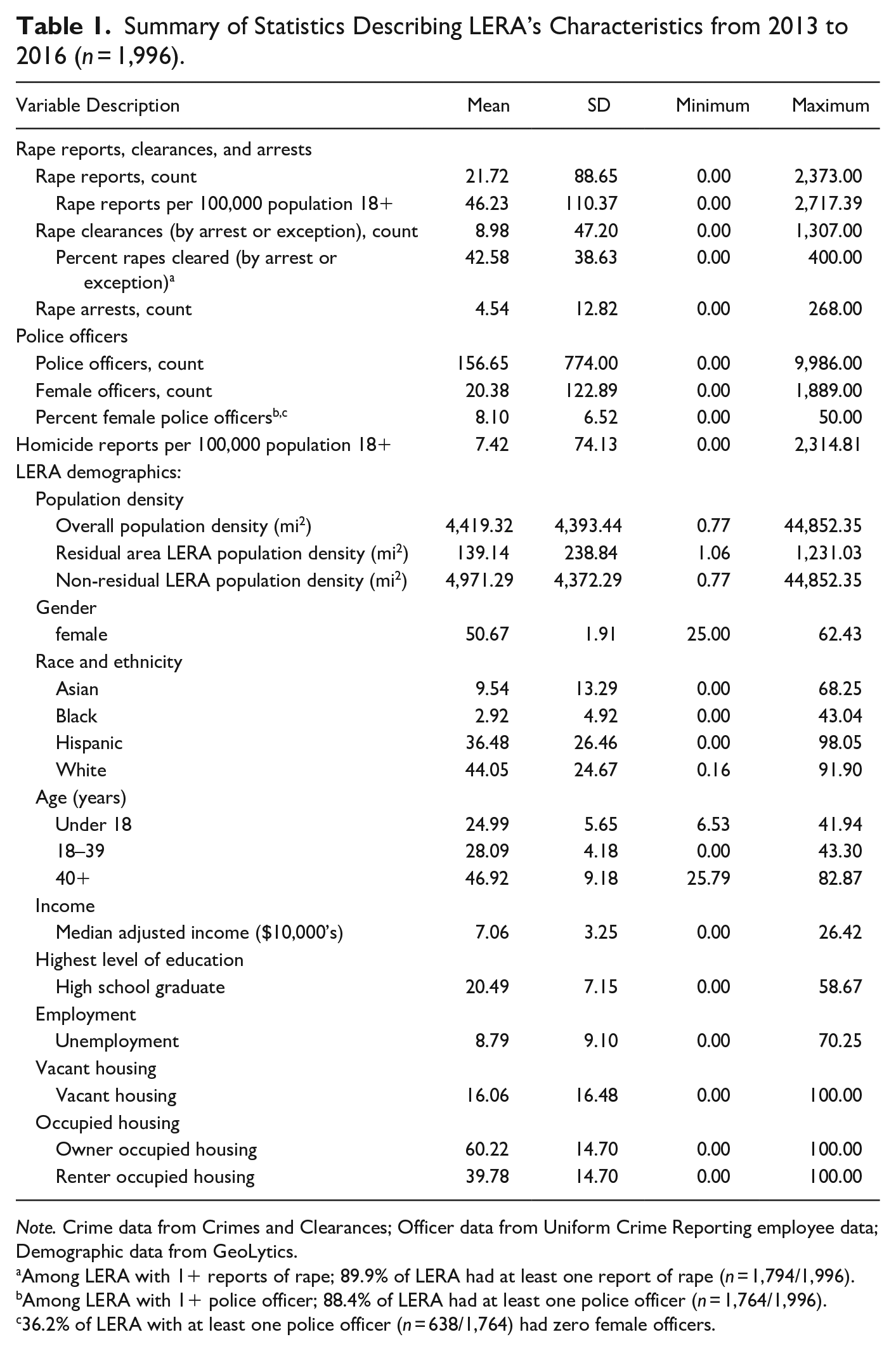
Note. Crime data from Crimes and Clearances; Officer data from Uniform Crime Reporting employee data; Demographic data from GeoLytics.
Among LERA with 1+ reports of rape; 89.9% of LERA had at least one report of rape (n = 1,794/1,996).
Among LERA with 1+ police officer; 88.4% of LERA had at least one police officer (n = 1,764/1,996).
36.2% of LERA with at least one police officer (n = 638/1,764) had zero female officers.
Relative Rates (RR) and Credible Intervals (CI) of Rape Reports, Clearances, and Arrests in California, 2013 to 2016. a
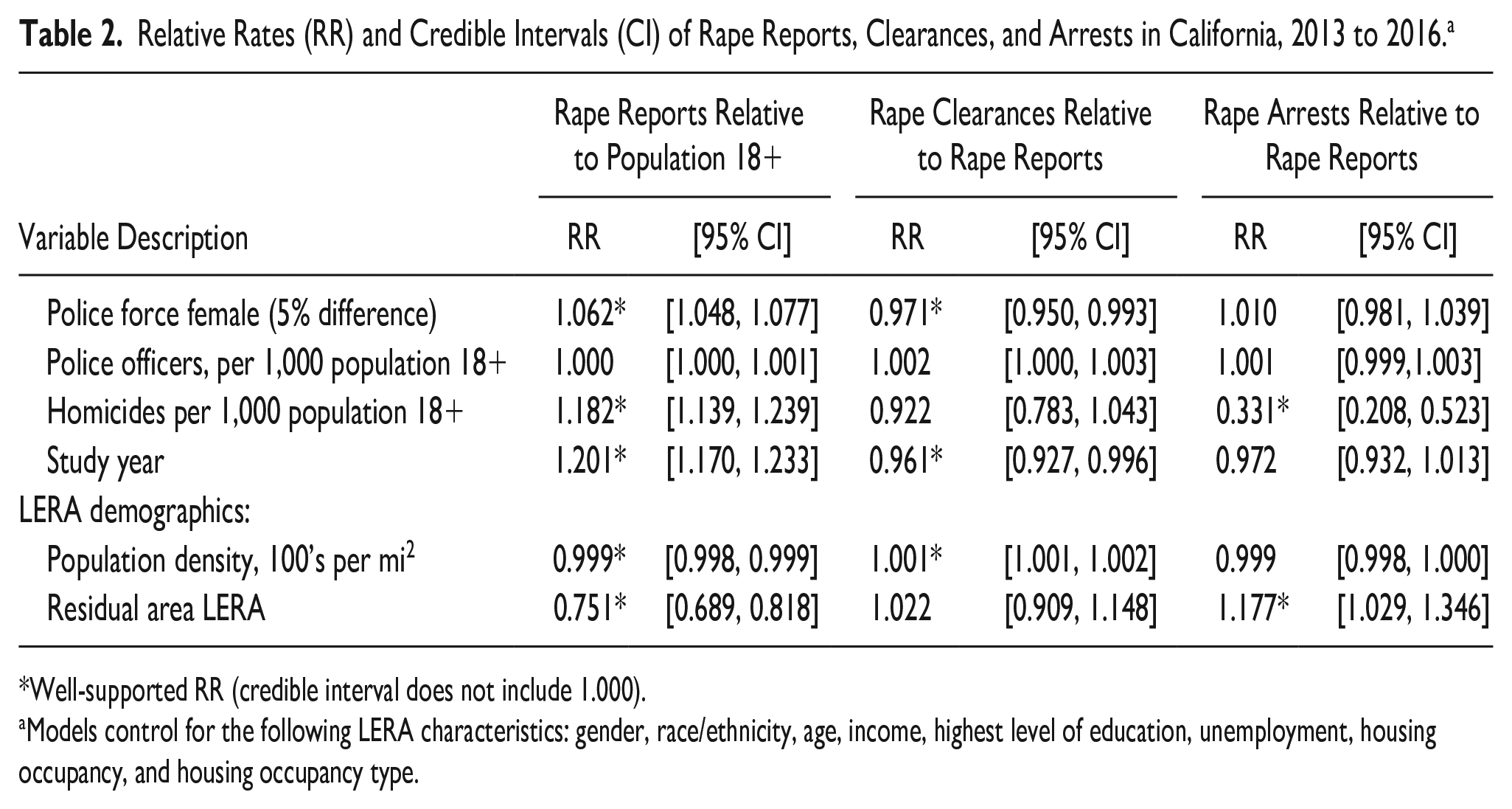
Well-supported RR (credible interval does not include 1.000).
Models control for the following LERA characteristics: gender, race/ethnicity, age, income, highest level of education, unemployment, housing occupancy, and housing occupancy type.
The model is defined as follows:

For the rape report outcome,
For each outcome, the log relative rate was modeled linearly with fixed covariate effects and random effects. Temporal changes were controlled for using a fixed-effect linear time trend for statewide change and a random effect allowing each LERA to have its own linear growth rate relative to the state as a whole. As with standard generalized linear models, the log relative rate,

Where
These types of spatial models were selected for several reasons. First, rate estimates can be inflated in low population areas. This is a concern for spatial research examining crime rates, where one additional report, clearance, or arrest can have a dramatic impact on rate estimates (Wang, 2014). The use of Bayesian Poisson space-time mixture models addresses this concern because they account for large outlying risks in low population LERAs (Bernardinelli et al., 1995; Moraga, 2019). Second, the CAR approach controls for spatial autocorrelation by addressing dependence between closely co-located LERA (Waller & Gotway, 2004). The CAR approach has also been demonstrated to account for overdispersion approximately as well as zero-inflated methods (Lord et al., 2005).
Spatial autocorrelation was assessed by calculating the percentage of the combined residual that is the CAR-spatial random effect as opposed to overall non-spatial random effect. The models were carried out using R-INLA (Integrated Nested Laplace Approximation) package (Blangiardo & Cameletti, 2015; Rue et al., 2009). All analyses were conducted within R version 3.6.1 (Team, 2019).
Variables in models were scaled to show 1% or 5% difference and results are expressed as relative rates with 95% CI (the interval which has a 95% probability of containing the true estimate). Relative rates were considered well supported when the 95% credible interval did not include 1.000.
Covariate selection was based on existing literature. Rape reporting and the percentage of female officers within law enforcement agencies are hypothesized to be associated with population-level demographic characteristics, including socioeconomic status (Amin et al., 2015; Schuck, 2018), racial/ethnic composition of the population (Klemmer et al., 2021; Zhao et al., 2001), and population size (Amin et al., 2015; Klemmer et al., 2021; Schuck, 2014). Relative rates controlled for the number of police officers per population 18 and over (a measure of total police presence), year, whether the LERA was a county residual area LERA or not, and the following LERA-level demographics: population density, sex, race and ethnicity, age, median adjusted income, education, employment, housing vacancy and occupant type. Additionally, relative rates are controlled for the reported homicide rate, a measure of violent crime that is more reliably reported compared to other types of violent crime (aggravated assault, robbery, rape; Blumstein et al., 2000). LERA demographics were reported annually. Sensitivity tests were carried out to examine (a) the violent crime rate (excluding rape) as a covariate instead of the homicide rate as a covariate (b) the rate of reported rapes among the female population of 18 years and over (c) the rate of reported rapes, clearances, and arrests in non-residual area LERA.
Results
Descriptive Results
During the 2013 to 2016 study period, 89.9% of the LERA analyzed had at least one report of rape (n = 1,794/1,996). The average number of rapes reported in LERA per year was 21.7 (range 0–2,373). The average rate of reported rapes per year in a LERA was 46.2 per 100,000 population of 18 years and over (range 0–2,717.4 per 100,000). LERA averaged approximately nine rape clearances (by arrest or exception, range 0–1,307) and made an average of 4.5 arrests for rape per year (range 0–268). Among LERA with at least one report of rape (n = 1,794), the average clearance rate (by any means) was 42.6%, with a range of 0% to 400%. (Note: 3.3% of LERA had a clearance rate of over 100% [n = 66/1,996], as a result of clearing reports from a previous year). The average LERA had a yearly homicide report rate of 7.4 per 100,000 population of 18 years and over.
From 2013 to 2016, 88.4% of the LERA analyzed had at least one police officer. (n = 1,764/1,996). The average number of police officers in a LERA was 156.7 (range 0–9,986) with an average of 20.4 female officers (range 0–1,889). Among LERAs with at least one police officer (n = 1,764), the average percent of officers who were female in a LERA was 8.1% (range 0%–50%; Table 1). 36.2% of LERA with at least one police officer had zero female officers during the 2013 to 2016 study period (n = 638/1764).
The average population density for a LERA was 4,419.3 per mi2 (range 0.8–44,852.4), with residual area LERA having lower population density than local police departments (non-residual area LERA; Table 1). 88.6% of rape reports during the study period were made to local police departments and the remaining reports were made to departments in county residual area LERA. On average, LERA were comprised of people from a variety of racial and ethnic groups, of different ages and educational background. The median adjusted household income was $70,600 and average unemployment was 8.8%. Housing in LERAs was characterized by an average of 16.1% of housing being vacant and 60.2% of occupied housing being occupied by the owner (Table 1).
Bayesian Poisson Regression Results
Rape Report Rates
Table 2 indicates that a 5% increase in the percentage of female officers within an agency was associated with a 6.2% increase in the rate of reported rapes (ARR: 1.062, 95% CI [1.048, 1.077]). This association was considered well supported by the data because the 95% CI did not include 1.000. The number of officers per 1,000 population of 18 years and over was not associated with the rape report rate. The number of homicides per 1,000 population of 18 years and over and study year were both well-supported and associated with an increase in rape report rates. Population density and residual area LERA were both associated with a well-supported decrease in rape reporting (Table 2).
Rape Clearance Rates (Rape Reports Cleared Through Arrest or Exception)
A 5% increase in the percentage of female officers within an agency was associated with a 2.9% well-supported decrease in clearance rate (ARR: 0.971; 95% CI [0.950, 0.993]; Table 2). Study year was associated with a well-supported decrease in rape clearance rates and population density was associated with a well-supported increase in rape clearance rates. The number of officers per 1,000 population of 18 years and over, the number of homicides per 1,000 population of 18 years and over, and residual area LERA were not well supported (Table 2).
Rape Arrest Rates
There was no association between a 5% increase in the percentage of female officers within an agency and the rape arrest rate (ARR: 1.010; 95% CI [0.981, 1.039]; Table 2). The number of homicides per 1,000 population of 18 years and over was associated with a well-supported decrease in rape arrest rates, and residual area LERA was associated with a well-supported increase in rape arrests rates. Study year, population density, number of officers per 1,000 population 18 years and over were not well supported (Table 2).
Sensitivity Test of Violent Crime Measures
Though homicides are more reliably reported than other types of violent crime (Blumstein et al., 2000), homicides typically only represent a small proportion of the violent crime reported (U.S. Department of Justice, 2019b). We therefore ran the rape reporting, clearances, and arrests models using the rate of reported violent crime excluding rapes (rate of aggravated assault, robbery, and homicide) as a covariate instead of the homicide rate. The models using the violent crime report rate (excluding rape) produced similar results to the models using the homicide report rate. The relative rates for percentage of female officers remained well-supported for the rate of reported rapes (ARR 1.072, 95% CI [1.057, 1.087]) and the clearance rate (ARR 0.972, 95% CI [0.950, 0.994]) regressions. There was no association between the percentage of female officers and the arrest rate when the violent crime report rate was included (ARR 1.003, 95% CI [0.974, 1.032]), which was also the case when homicide report rate was used.
Rate of Reported Rapes Among the Female Population of 18 years and Over
Most rape victim-survivors are female (Planty et al., 2013), thus the size of the female population may be a better estimate of the at-risk population compared to the combined male and female population used in the primary analysis. To examine this further, we modeled the count of reported rapes relative to an expectation that reports are distributed in proportion to the female population of 18 years and over. We continued to observe that a 5% increase in the percentage of female officers within an agency was associated with a 6.2% increase in the rape report rate (ARR, female-specific denominator: 1.062, 95% CI [1.047, 1.077]; male–female combined denominator: 1.062, 95% CI [1.048, 1.077]).
Rate of Reported and Cleared Rapes in Non-residual Areas Only
Both non-residual LERA (local police departments) and the county residual area LERA were included in the study so that all reported and cleared rapes could be analyzed. However, there could be differences in rates of rape reporting, clearances, or arrests because of the different agency types included in residual and non-residual. A sensitivity test was conducted using only the non-residual LERA and excluding any data from residual areas. The 442 non-residual LERA across four study years (n = 1,768) were included in the analysis. Compared to the models with all 499 LERA, relative rates for the 442 non-residual area LERA report and clearance models were similar, with slightly larger magnitudes of effects. Among the 442 non-residual area LERA, a 5% increase in the percentage of female officers within an agency was associated with a 9.5% increase in the rape report rate (ARR 1.095; 95% CI [1.078, 1.112]) and a 7.5% decrease in clearance rate (ARR 0.925; 95% CI [0.902, 0.948]). Among all 499 LERA, a 5% increase in the percentage of female officers within an agency was associated with a 6.2% increase in the rape report rate (ARR: 1.062, 95% CI [1.048, 1.077]) and a 2.9% decrease in the clearance rate (ARR: 0.971; 95% CI [0.950, 0.993]). The rape arrests model, which indicated a null association when all 499 LERA were included, showed a well-supported relationship when the residual areas were excluded. Among the 442 non-residual area LERA, a 5% increase in female officers within an agency was associated with a 6.6% decrease in the rape arrests rate (ARR: 0.934; 95% CI [0.904, 0.964]).
Spatial Autocorrelation
For the rape reports outcome, the spatially autocorrelated random intercept “phi” explained 95.2% (95% CI: [91.6%, 98.8%]) of the combined spatial (phi) and non-spatial (theta) error components. For the rape clearances outcome, the spatially autocorrelated random intercept explained 87.8% (95% CI [83.5%, 94.8%]) of the combined spatial and non-spatial error components. For the rape arrests outcome, the spatially autocorrelated random intercept explained 1.90% (95% CI [1.11%, 6.56%]) of the combined spatial and non-spatial error components. This demonstrates the importance of using the CAR random effects, especially for the rape report and clearance outcomes.
Discussion
There was a positive association between the percentage of female officers and rape reporting rates but a decrease in the rate of rapes cleared by any means (arrest or exception). The percentage of female officers in an agency was not associated with rape arrest rates across all LERA, but it was associated with a decrease in the rate of arrests among the non-residual area LERA only. Overall, these findings support the first hypothesis that California LERA with a higher percentage of female officers are more likely to have higher rape report rates, but do not support the second or third hypothesis that greater female officer representation would also be associated with increased rape clearance or arrest rates.
Rape Reporting Rates
These findings on rape reporting are congruent with existing research (Gunderson & Huber, 2022; Meier & Nicholson-Crotty, 2006; A. R. Miller & Segal, 2019), which found that greater female representation in law enforcement is associated with greater rates of rape reporting. Importantly, passive representation, which is achieved when the proportion of female officers in the law enforcement agency reflects the proportion of females in the community, must also be accompanied by active representation, which is attained when greater female officer representation leads to measurable improvements in rape reporting and clearances for women (Meier & Nicholson-Crotty, 2006; A. R. Miller & Segal, 2019; Schuck, 2018). In the present study, only about 8% of officers in a department were female (Table 1), which is lower than the national estimates of 12% (Seklecki & Paynich, 2007), and considerably lower than the proportion of females in the population. The relationship between increased female representation and increased rape reporting is suggestive of some level of active representation. However, this relationship may not be causal. There could be characteristics of communities that encourage both the hiring of female officers and greater rape reporting. For example, communities that believe female law enforcement officers play an important role in addressing sexual violence may be more likely to both report rape and advocate for the hiring of female officers.
Rape Clearance Rates and Arrests
While public engagement and trust can improve rape reporting rates, clearance and arrest rates are largely affected by the characteristics of the rapes reported (Bouffard, 2000; Kruttschnitt et al., 2014; Richards et al., 2019; Roberts, 2008; Tasca et al., 2013) and departmental practices and attitudes toward rape (Spohn & Tellis, 2010; Venema, 2016; Walfield, 2016). The clearance rate does not differentiate between clearances through arrest or exception, though these two types of clearances may not represent equivalent outcomes to victim-survivors. Previous research has emphasized that rapes are frequently cleared through exception, even when additional effort to make an arrest is justified (Richards et al., 2019; Venema et al., 2021; Walfield, 2016). For this reason, we examined the rape arrests rate (as the number of rape arrests relative to the number of rape reports) in addition to rape clearance rate.
Across all LERA, greater female officer representation was associated with a decrease in clearance rate by any means but not associated with rape arrest rates. Sensitivity tests revealed that greater female officer representation was associated with a decrease in rape arrests among the non-residual areas and the negative relationship between greater female officer representation and clearances were stronger among non-residual areas. Previous studies have found no association between greater female officer representation and sexual assault (Morabito et al., 2017) or rape arrests (Gunderson & Huber, 2022), but none have found a negative relationship between greater female officer representation and clearance or arrest rates.
The current findings are counter to what is predicted by the theory of representative bureaucracy, where greater female officer representation is expected to increase rape clearance rates and rates of arrests because cleared reports, and specifically those ending in arrest, are more likely to be perceived as justice to victim-survivors (Andrews & Johnston Miller, 2013; Meier & Nicholson-Crotty, 2006; Walfield, 2016). The current study suggests that there are challenges to active representation that affect clearances and arrests differently from reporting rates. These challenges could include (a) increases in the number of rape reports with more cases that are more difficult to clear and (b) systematic factors affecting employment and promotion of female officers. First, an increase in the volume of violent crime within a department has been associated with decreased clearance rates and clearance by arrest (Roberts & Roberts, 2016). If greater female officer representation encourages more women to report, it is possible that departments could struggle to clear the increased volume of reports or that these reports include a greater proportion of cases where it is more difficult to make an arrest. Second, as a gender minority within most law enforcement agencies, female officers may lack a supportive work environment in which to advocate for clearing more rape reports and clearing more reports through arrest. Female officers have token status within many agencies (usually defined as when women are less than 15% of officers in a department) and frequently report feeling greater visibility or polarization (isolation) because of their minority status (Archbold & Schulz, 2008; Stichman et al., 2010; Stroshine & Brandl, 2011). A national survey of female police officers found that 39% of respondents felt they were less welcome in their departments compared to male officers (Seklecki & Paynich, 2007). A study conducted within a single police department found that female officers were concerned they would be promoted because of their gender and not leadership ability (Archbold & Schulz, 2008). Nationally, female officers are more hesitant to seek promotion and are less likely to hold supervisory or management positions (Shjarback & Todak, 2019). These systemic factors may limit the potential of female officers to increase rape clearance rates and arrest rates by hindering their active representation but are less likely to affect rape reporting rates.
For rape arrest rates, the difference in findings across all LERA compared to across non-residual area LERA only could reflect differences between agency types. The sensitivity analysis of non-residual area LERA included only arrests made by local police departments, while the full model includes arrests made by local police departments, as well as those from the sheriff’s department, special police units, or agencies that were not active the entire study period. Nationally, local police departments are less likely to have females in mid-level supervisor positions compared to sheriff’s departments (Shjarback & Todak, 2019). Attitudes and preferences of police supervisors can influence the productivity of officers working below them (Johnson, 2011), and fewer female officers in these positions may lead to reduced prioritization of rape arrests.
Future Directions, Strengths, and Limitations
Ultimately, most research investigating the relationship between female officer representation and rape clearances aims to promote justice for victim-survivors. However, from the perspective of victim-survivors, justice is often a multifaceted and an evolving experience that goes beyond whether or how a rape is cleared or not (McGlynn & Westmarland, 2019). Female sexual assault victim-survivors have emphasized that interactions with law enforcement have contributed (positively and negatively) to their perception of justice (Brooks-Hay et al., 2019; McGlynn & Westmarland, 2019), but it is not clear how large a role officer’s gender plays in this. In interviews with female rape and sexual assault victim-survivors, some participants felt they were treated more fairly because they worked with a female officer, while others did not consider the officer’s gender to be influential (Jordan, 2002). Greater attention should be paid to how an officer’s gender relates to rape victim-survivors’ perceptions of justice and how law enforcement agencies can incorporate this information into their best practices.
Strengths of this study are that it includes all rape reports, clearances reports, and rape arrests in California for a multiyear period and it accounts for spatial autocorrelation using spatial regression models. This study also has limitations. Case level data on rape reports was not available, it was not known whether an individual report was cleared through arrest or exception. Because multiple individuals may have been arrested to clear one report, the percentage of rapes cleared through arrest was not calculated because this could result in an overestimate of clearance through arrest. However, multiple arrests for a single report does not appear to be common, another study using case level rape arrest data (NIBRS) found that the majority of arrests (88.8%) involved only one offender (Bierie, & Davis-Siegel, 2015). Also, clearances are recorded for the year that they occurred, which may not be the same year that report was made. This could affect the accuracy of clearance rates for any given year.
Officer’s gender was reported by UCR as binary, male, or female. Officers with a non-binary gender identity are not represented in this study, though it is not known how many officers in California identify as non-binary. Rape report and clearance data were not differentiated by victim-survivor gender. Nationally, most rape victim-survivors are female (Planty et al., 2013) and female victim-survivors are more likely to report sexual violence than male victim-survivors (Tewksbury, 2007; Tjaden & Thoennes, 2006). However, a small percentage of rape reports may have been made by male victim-survivors. As with female victim-survivors, interactions with police officers may also affected the likelihood of reporting among male victim-survivors (Tewksbury, 2007), though it is not known if officer’s gender affects rape reporting and clearances differently among male victims-survivors.
Departmental level factors, such as police culture, community outreach or the presence of special rape units, are not measured in this study. These could impact reporting or clearance rates and hiring of female officers. This study did not investigate how women might have become aware of female officers in their jurisdiction or possible mechanisms by which female officers could increase rape reporting. For example, victim-survivors are more likely to report rape when they feel they will be taken seriously (Belknap, 2010; Kruttschnitt et al., 2014) and future research could examine if trust based on a shared gender identity leads to increased rape reporting.
As a result of their dual identities as police officers and women, female officers are uniquely positioned to respond to rape, a crime that predominately affects women. This study found that greater female officer representation in California from 2013 to 2016 was associated with greater rape reporting rates, lower clearance rates, and lower rape arrest rates under some conditions, though these relationships may not be causal.
Footnotes
Appendix
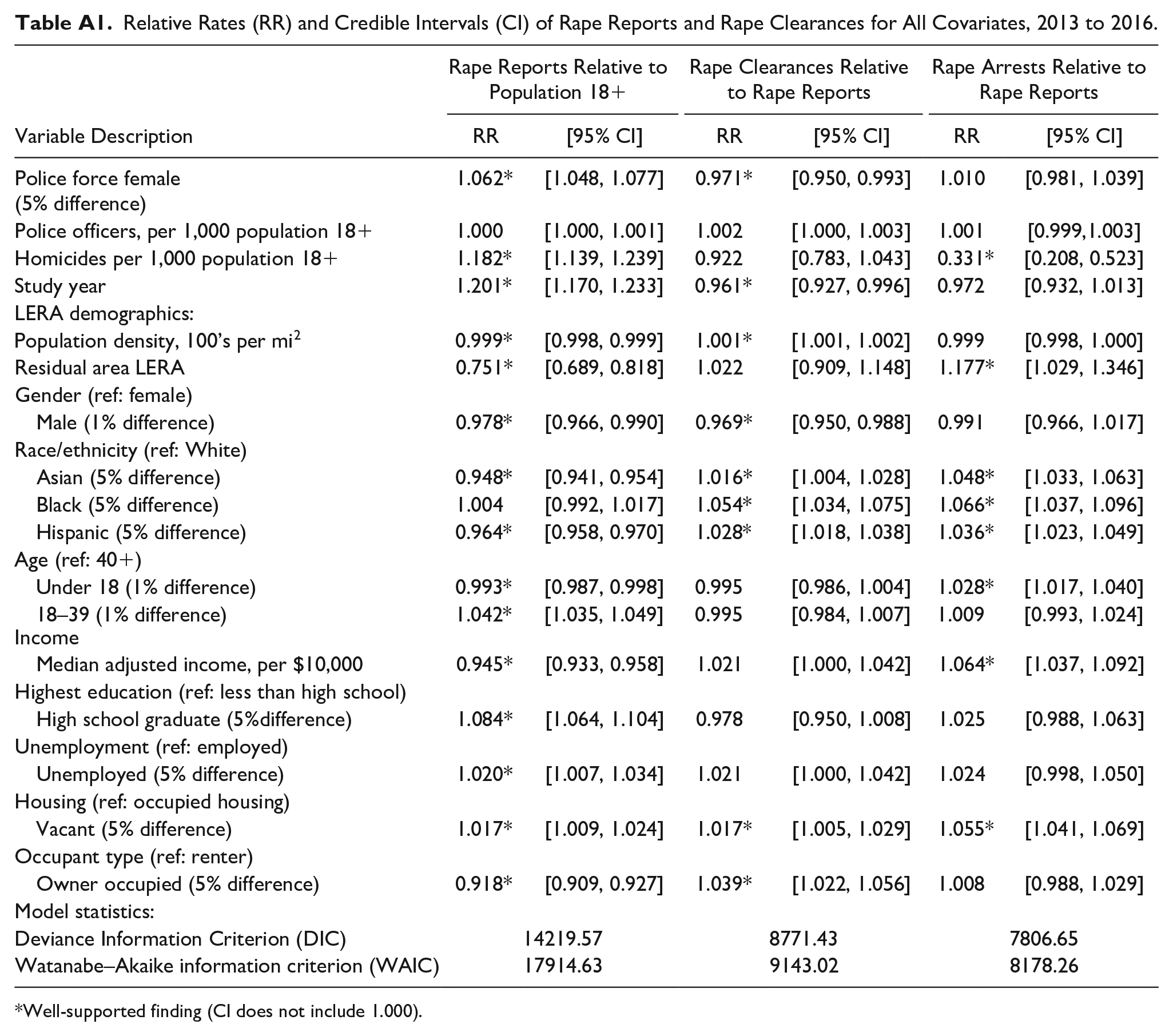
Relative Rates (RR) and Credible Intervals (CI) of Rape Reports and Rape Clearances for All Covariates, 2013 to 2016.
| Rape Reports Relative to Population 18+ |
Rape Clearances Relative to Rape Reports |
Rape Arrests Relative to Rape Reports |
||||
|---|---|---|---|---|---|---|
| Variable Description | RR | [95% CI] | RR | [95% CI] | RR | [95% CI] |
| Police force female (5% difference) |
1.062* | [1.048, 1.077] | 0.971* | [0.950, 0.993] | 1.010 | [0.981, 1.039] |
| Police officers, per 1,000 population 18+ | 1.000 | [1.000, 1.001] | 1.002 | [1.000, 1.003] | 1.001 | [0.999,1.003] |
| Homicides per 1,000 population 18+ | 1.182* | [1.139, 1.239] | 0.922 | [0.783, 1.043] | 0.331* | [0.208, 0.523] |
| Study year | 1.201* | [1.170, 1.233] | 0.961* | [0.927, 0.996] | 0.972 | [0.932, 1.013] |
| LERA demographics: | ||||||
| Population density, 100’s per mi2 | 0.999* | [0.998, 0.999] | 1.001* | [1.001, 1.002] | 0.999 | [0.998, 1.000] |
| Residual area LERA | 0.751* | [0.689, 0.818] | 1.022 | [0.909, 1.148] | 1.177* | [1.029, 1.346] |
| Gender (ref: female) | ||||||
| Male (1% difference) | 0.978* | [0.966, 0.990] | 0.969* | [0.950, 0.988] | 0.991 | [0.966, 1.017] |
| Race/ethnicity (ref: White) | ||||||
| Asian (5% difference) | 0.948* | [0.941, 0.954] | 1.016* | [1.004, 1.028] | 1.048* | [1.033, 1.063] |
| Black (5% difference) | 1.004 | [0.992, 1.017] | 1.054* | [1.034, 1.075] | 1.066* | [1.037, 1.096] |
| Hispanic (5% difference) | 0.964* | [0.958, 0.970] | 1.028* | [1.018, 1.038] | 1.036* | [1.023, 1.049] |
| Age (ref: 40+) | ||||||
| Under 18 (1% difference) | 0.993* | [0.987, 0.998] | 0.995 | [0.986, 1.004] | 1.028* | [1.017, 1.040] |
| 18–39 (1% difference) | 1.042* | [1.035, 1.049] | 0.995 | [0.984, 1.007] | 1.009 | [0.993, 1.024] |
| Income | ||||||
| Median adjusted income, per $10,000 | 0.945* | [0.933, 0.958] | 1.021 | [1.000, 1.042] | 1.064* | [1.037, 1.092] |
| Highest education (ref: less than high school) | ||||||
| High school graduate (5%difference) | 1.084* | [1.064, 1.104] | 0.978 | [0.950, 1.008] | 1.025 | [0.988, 1.063] |
| Unemployment (ref: employed) | ||||||
| Unemployed (5% difference) | 1.020* | [1.007, 1.034] | 1.021 | [1.000, 1.042] | 1.024 | [0.998, 1.050] |
| Housing (ref: occupied housing) | ||||||
| Vacant (5% difference) | 1.017* | [1.009, 1.024] | 1.017* | [1.005, 1.029] | 1.055* | [1.041, 1.069] |
| Occupant type (ref: renter) | ||||||
| Owner occupied (5% difference) | 0.918* | [0.909, 0.927] | 1.039* | [1.022, 1.056] | 1.008 | [0.988, 1.029] |
| Model statistics: | ||||||
| Deviance Information Criterion (DIC) | 14219.57 | 8771.43 | 7806.65 | |||
| Watanabe–Akaike information criterion (WAIC) | 17914.63 | 9143.02 | 8178.26 | |||
Well-supported finding (CI does not include 1.000).
Acknowledgements
None.
Declaration of Conflicting Interests
The author(s) declared no potential conflicts of interests with respect to the authorship and/or publication of this article.
Funding
The author(s) disclosed receipt of the following financial support for the research and/or authorship of this article: Research for and preparation of this article were supported by National Institute on Alcoholism and Alcohol Abuse Research Center grant P60-AA06282 to the fourth author.
