




Abstract
Economic adolescent relationship abuse (ARA) includes coercive behaviors leading to interference with education, employment, and finances. To date, no study has examined help seeking among adolescents and young adults if they were to experience economic ARA. The goals of this article include examining: (a) help-seeking intentions of adolescents regarding economic ARA; (b) help-seeking sources and reasons for not seeking help; and (c) differences in help-seeking intentions based on age, race/ethnicity, gender identity, and experiences of economic ARA. We conducted a cross-sectional survey of adolescents ages 13–19 focused on economic ARA experiences and help seeking. We performed descriptive statistics of help-seeking intentions, sources, and barriers. We utilized logistic regression, adjusted for age, race/ethnicity, and gender identity, to explore associations between economic ARA victimization and help-seeking intentions. Of 2,852 participants, 56% said they would seek help for economic ARA. Adolescents with positive help-seeking intentions shared that they would seek help from their parents (43%) or friends (35%). Those less likely to seek help were concerned about others finding out (32%), not being believed (31%), or authority figures being notified (31%). Help-seeking intentions were lower among Black/African American adolescents (aOR = 0.55, CI [0.43, 0.70]) and Multiracial adolescents (aOR = 0.26, CI [0.16, 0.42]) compared to White adolescents. Help-seeking intentions were higher among gender diverse adolescents (aOR = 5.78, CI [2.98, 11.22]) and those ages 15–17 years (aOR = 1.84, CI [1.36, 2.47]) compared to those identifying as female and ages 18–19 years. Help-seeking intentions were lower among adolescents who experienced economic ARA (aOR = 0.61, CI [0.51, 0.72]). While the majority of adolescents reported that they would seek help if they experienced economic ARA, those who had experienced economic ARA were less likely to report intentions to seek help. Supportive interventions for adolescents experiencing economic ARA are needed.
Keywords
Introduction
Adolescent relationship abuse (ARA), defined as an array of coercive and controlling behaviors within the context of an adolescent intimate relationship, is pervasive (Centers for Disease Control and Prevention, 2022). Critical to developing supportive services and resources is understanding the help-seeking process of adolescents, particularly economic ARA, an emerging form of ARA. To our knowledge, no research has examined the help-seeking intentions of adolescents regarding economic ARA. The current study seeks to fill this gap by examining the help-seeking intentions of adolescents regarding economic ARA, including sources and barriers, and whether help-seeking intention vary by race and ethnicity, age, gender identity, and experiences of economic ARA.
ARA Prevalence and Effects
ARA is pervasive with detrimental health impacts across the lifespan. The National Survey of Intimate Teen Relationships found that 69% of adolescents experience lifetime psychological ARA and 18% experience lifetime physical or sexual ARA (Taylor & Mumford, 2016). Fundamentally, ARA is rooted in power and control, with partners using a variety of behaviors and tactics to control, manipulate, or harass. Physical and psychological ARA has multiple health impacts, including suicidality, sexually transmitted infections, unintended pregnancy, substance use, lower academic achievement, and violence victimization in adult relationships (Foshee et al., 2013). Therefore, youth-serving practitioners, researchers, and policymakers have an urgent responsibility to provide ARA survivors safe and supportive services and resources to promote their health and well-being (Ragavan, Culyba et al., 2020).
Help Seeking for Young People Experiencing ARA
Understanding ARA survivors’ help-seeking intentions and experiences is critical to provide early intervention and promote long-term health and thriving. Help seeking is defined as any attempt by an adolescent to receive personal, psychological, financial, or health services from a formal (e.g., healthcare professional) or informal (e.g., friend or family member) source and is associated with improved outcomes for both survivors of ARA and adults experiencing intimate partner violence (IPV) (Wright & Johnson, 2012; Wright et al., 2022). Informal and formal help-seeking sources can connect ARA survivors to important resources like academic accommodations, financial assistance, and other supports like housing and financial empowerment classes (Foshee et al., 1996; Voth Schrag et al., 2022). Help-seeking intentions are defined as a person’s understanding of the likelihood or willingness to seek help; help-seeking behaviors are a person’s actions to reach out to formal or informal support systems for help (Bundock et al., 2020). Aligned with the Theory of Planned Behavior, exploring help-seeking intentions, including perceived barriers, is a first step in understanding help-seeking behaviors and may be useful in developing interventions to promote help seeking among adolescents (Ajzen, 1991). Perceived barriers (i.e., confidentiality concerns, uncertainty around who to seek help from, etc.) influence opinions toward help seeking (i.e., intentions), which in turn influences help-seeking behaviors (Ajzen, 2016). Developing positive help-seeking intentions is the first step in connecting survivors to formal and informal supports (Lelaurain et al., 2017). Therefore, our focus for this study is on help-seeking intentions, which are a factor underlying survivors accessing informal or formal supports.
Despite the importance of help-seeking intentions in connecting survivors with resources and supports, several well-documented barriers exist limiting help seeking in the context of ARA. Adolescents report not disclosing ARA to informal sources of help (e.g., parents, friends, etc.) because they perceive physical, sexual, and emotional ARA to be an uncomfortable and embarrassing topic and fear that their help-seeking source would tell someone (Mapes & Cavell, 2021). As an example, a qualitative study with adolescents showed that adolescents may avoid talking to parents about sexual health and relationships (Martin et al., 2012). Further, formal sources of help, including healthcare providers, are vital for delivering resources to adolescents and may be most effective in providing care for adolescents experiencing physical, sexual, and emotional ARA (Martin et al., 2012; Tiffany-Appleton et al., 2022). However, adolescents may be hesitant to seek help from these formal sources if they do not perceive them to be supportive, trustworthy, or safe (Fernet et al., 2019).
Help-Seeking Intention Differences Based on Adolescents’ Identities and Experiences
Adolescents may have different intentions and behaviors around help-seeking particularly based on their racial and ethnic background, age, and gender identity. Past work has shown that girls are more likely to seek help than boys for physical or sexual ARA (Alleyne-Green et al., 2015; Elias-Lambert et al., 2014; Fry et al., 2014). Moreover, previous work found that older adolescents are less likely to seek help for physical or sexual ARA than younger adolescents (Alleyne-Green et al., 2015). In terms of racial and ethnic identities, prior work found that youth of color (Black, Indigenous, Latine, Asian, Pacific Islander, Native Hawaiian, and Multiracial) are less likely to seek help than their White counterparts. For example, a study using data from the New York City Youth Risk Behavior Surveillance System found that Asian adolescents were the least likely to seek help for physical or sexual ARA (Alleyne-Green et al., 2015). Moreover, a study utilizing focus groups found that African American youth were unlikely to utilize existing services due to mistrust and fear of being judged (Love & Richards, 2013). Differences in help-seeking intentions should be viewed through an intersectional lens as adolescents with marginalized or multiple marginalized identities may be particularly cut off from formal help seeking due to intersections of racism, sexism, transphobia, xenophobia, and other forms of discrimination (Ragavan, Thomas, et al., 2020; Ragavan et al., 2022). For example, a study with adult IPV survivors found that differences emerged in help-seeking patterns of survivors of color due to inequitable impacts of mandated reporting laws (Lippy et al., 2020).
Adolescents may also have different help-seeking intentions based on their dating and ARA experiences. Those who have not been in a romantic relationship before may not understand the dynamics of relationships and may not know what constitutes a healthy relationship, or who to turn to if they need help (Bradford et al., 2016; Schramm & Gomez-Scott, 2012). This study is the first, to our knowledge, that explores differences in help-seeking intentions by prior dating history, which is needed to further prevention efforts. Further, limited work has examined how help-seeking intentions may change based on past experiences of ARA. One prior study with middle school youth found that youth who had more experiences of physical violence victimization were more likely to seek help from friends than those who had less experiences of physical violence (Black & Weisz, 2003).
Economic Abuse
While sexual and physical ARA help seeking has been well studied, no research has considered help-seeking intentions in the context of economic ARA. Economic abuse—a well-recognized form of control and coercion within adult intimate relationships—can include ruining a partner’s credit, controlling when and how a partner uses money, and sabotaging a partner’s employment or educational opportunities and is associated with negative health outcomes for survivors (Copp et al., 2016; Postmus et al., 2012; Voth Schrag et al., 2020). Economic abuse is common, impacting 94% of adult IPV survivors (Postmus et al., 2012). It may be particularly traumatic for survivors with marginalized or multiple marginalized identities (including people of color, gender and sexual minoritized groups, and immigrants, among others; Postmus et al., 2012). As an example, Chavis and Hill describe the ways in which specific cultures and identities may uniquely experience economic abuse including a partner preventing a survivor from buying spiritual items or threatening to report an undocumented survivor if they “work under the table” (Chavis & Hill, 2008).
Emerging research has extended our understanding of economic abuse to adolescents, where economic abuse may manifest differently due to a variety of developmental, environmental, and cultural factors specific to adolescence (e.g., school enrollment, parent influence on money) and can include coercive behaviors related to school, employment, and finances (Copp et al., 2016, 2020). Past work with the nationally representative National Survey on Teen Relationships and Intimate Violence (STRiV) survey found that 7% of participants reported that their partner told them how to spend their money (Copp et al., 2020). Findings from interviews with social service providers working with community college students reveal that school sabotage, a related form of economic ARA, includes a variety of tactics including disrupting financial aid, preventing the survivor from going to school or studying, or belittling the survivor’s academic pursuits (Voth Schrag & Edmond, 2017). School sabotage is associated with an array of detrimental health outcomes including depression, loss of self-efficacy, decreased academic achievement, economic hardship, and increased physical violence (Voth Schrag, 2019; Voth Schrag & Edmond, 2017; Voth Schrag et al., 2020). Similar to adults, adolescent economic ARA may impact adolescents with marginalized identities differently, due to intersecting racism, transphobia, xenophobia, and classism (Chavis & Hill, 2008). For example, a partner may use an adolescent’s gender identity to interfere with employment to gain power and control in the relationship (i.e., partners may attempt to “out” gender diverse adolescents at work to get them fired; Dolan & Conroy, 2021; King et al., 2021; Woulfe & Goodman, 2021).
Current Study: Help Seeking and Economic ARA
ARA is a pervasive public health epidemic; intentions to seek help is a critically modifiable driver impacting survivors’ ability to access informal and formal resources. However, there is a dearth of literature focused on help-seeking intentions in the context of economic ARA, a common but less well-studied form of control and coercion. To our knowledge, this is the first study to quantitatively examine the help-seeking intentions of adolescents if they were to experience economic ARA. Specific objectives include examining: (a) help-seeking intentions of adolescents regarding economic ARA; (b) help-seeking sources and reasons for not seeking help; and (c) differences in help-seeking intentions based on age, race and ethnicity, gender identity, and experiences of economic ARA. Understanding help-seeking intentions, including if adolescents would seek help for economic ARA, who they would turn to, or the reasons for not seeking help, is vital for developing interventions tailored to meet the specific needs of both adolescents seeking help and their sources of help. Further, understanding differences in help-seeking intentions based on adolescents’ identities and experiences is needed to create affirming and inclusive programming that account for complex, systemic barriers dissuading help seeking.
Methods
Procedures
The University of Pittsburgh and Futures Without Violence (FUTURES) distributed a cross-sectional survey examining the experiences of adolescents with economic ARA victimization and perpetration, including experiences of educational, employment, and financial ARA. Survey development was informed by listening sessions with adolescents across the country and interviews with adolescent-serving practitioners, including those who develop and disseminate healthy relationship education programming, youth leadership programs, and alternative schooling. Practitioners discussed themes of economic ARA including experiences of economic sabotage, control, and exploitation they had witnessed within adolescent relationships, and the consequences on young people’s health and academic success. Using these themes, the research team developed a discussion guide, including questions and scenarios, to facilitate listening sessions with adolescents. Several themes emerged from the listening sessions with teens, including partners monitoring spending through Venmo or other phone applications, guilting the respondent into sending them money, and that participants felt pressured to go to the same school or live in the same city post-graduation as their partner.
Survey development was also informed by a review of previously used measures of economic abuse, including from qualitative work on school sabotage among college students (Kutin, 2019; Voth Schrag, 2019; Voth Schrag & Edmond, 2017) and from four scales: the Revised Scale of Economic Abuse (Adams et al., 2020), the Scale of Economic Abuse-12 (Postmus et al., 2016), Measure of Adolescent Relationship Harassment and Abuse (MARSHA; Rothman et al., 2020, 2022), and STRiV (Taylor & Mumford, 2016). The Revised Scale of Economic Abuse contains questions on economic restriction (e.g., “Does your partner decide how you could spend money rather than letting you spend it how you saw fit?”) and economic exploitation (e.g., “Does your partner force or pressure you to give him/her your savings or other assets?”). The study team used several questions from the MARSHA which measures a variety of controlling and coercive actions within adolescent intimate relationships (e.g., “They demanded that I spend money on them even if I did not want to”). Questions were also included from the National STRiV (e.g., “Has your partner ever told you how to spend your money?”). Questions developed from experiences mentioned during interviews with the youth-serving practitioners and listening sessions with youth were added. The study team conducted cognitive interviews with six youth participants to ensure the questions were comprehensible. The survey was distributed to the FUTURES email list, among youth-serving organizations, and on the FUTURES social media pages.
Participants
Interested adolescents completed an eligibility screening survey, and if they met the eligibility criteria (ages 13–19 years, read English, and live in the United States) they were sent a personalized survey link. Data collection occurred from July to September 2021. Participants spent on average 56 minutes completing the survey, and adolescents who completed the survey received a $20 online gift card. More details about survey development and data collection are available elsewhere (Futures Without Violence et al., 2022; Futures Without Violence, n.d.). The University of Pittsburgh Human Research Protections Office approved this study.
Measures
Demographics
Participants reported their age, gender identity, race, and ethnicity, and whether they have had a dating partner. Participant age was measured by the question “How old are you?”. Participant gender identity was measured by “How do you identify yourself?” with answer choices including “Cisgender Male,” “Cisgender Female,” “Transgender Male,” “Transgender Female,” or “Non-binary/Genderqueer/Genderfluid.” Participants who selected transgender male, transgender female, non-binary, genderqueer, or genderfluid were recoded as “gender diverse.” To measure race/ethnicity, participants were asked “How do you identify your race/ethnicity?”. Answer choices included “American Indian/Alaska Native,” “Asian,” “Black or African American,” “Hispanic or Latino,” “Native Hawaiian or Other Pacific Islander,” “White or Caucasian,” “Bi- or Multi-Racial,” “I do not know,” or “Other.” Participants who selected “other,” “unknown,” and “prefer not to answer” were recoded as “other.” Participants’ dating history was measured with the question “How many dating/romantic partners have you had?”. Participants who answered that they had one or more dating partners were recoded as “1+ Previous Dating Partners” and those who selected 0 were recoded as “No Previous Dating Partners.”
Experiences of Economic ARA Victimization
If individuals reported that they have ever had one or more dating or romantic partners, they were asked 23 questions to examine the presence of economic ARA victimization within those relationships. The questions were centered on the participants’ experiences with the three domains of economic ARA: educational (e.g., “Did a past or current partner ever try to convince you to drop out of school?”), employment (e.g., “Did a past or current partner ever try to convince you to be available to them via text or cell while you were at work?”), and financial (e.g., “Did a past or current partner ever try to convince you to let them hold onto or manage your money?”). The economic ARA scale was made up of seven questions regarding educational ARA, nine regarding employment ARA, and seven regarding financial ARA.
When asked about a partner’s attempts to interfere with any aspect of their education, employment, or finances, response options were: “Yes, but I did not,” “Yes, and I did because I felt threatened, scared, or bullied,” “Yes, and I did but I did not feel threatened, scared, or bullied,” “No,” and “Prefer not to answer.” These answer choices were developed by the study team and collaborators to assess the severity of economic ARA experienced. Participants in the listening sessions felt it was important to determine whether feeling threatened led to the participant acquiescing to their partner’s demands. This approach is aligned with previous literature, which has measured ARA in terms of threatening and bullying (Fernández-González et al. 2012; Rothman et al., 2020). Participants were dichotomized into the “Experienced Economic ARA” group if they answered that they experienced at least one experience of economic ARA (educational, employment, or financial) in which they felt threatened or bullied. Participants who experienced economic ARA were coded as “1,” and participants who did not experience economic ARA were coded as “0.”
Help-Seeking Intentions Regarding Economic ARA
Participants’ help-seeking intentions were assessed by the following question “Would you seek help if a partner interfered with your ability to go to or succeed in school, have a job or interrupted you at work, or controlled your money or financial resources?”. Respondents who answered “Yes” were labeled as positive help-seeking intention, while respondents who answered “No” or “Unsure” were labeled as negative help-seeking intention. All participants were asked about their help-seeking intentions regardless of their previous dating history.
Help-Seeking Sources
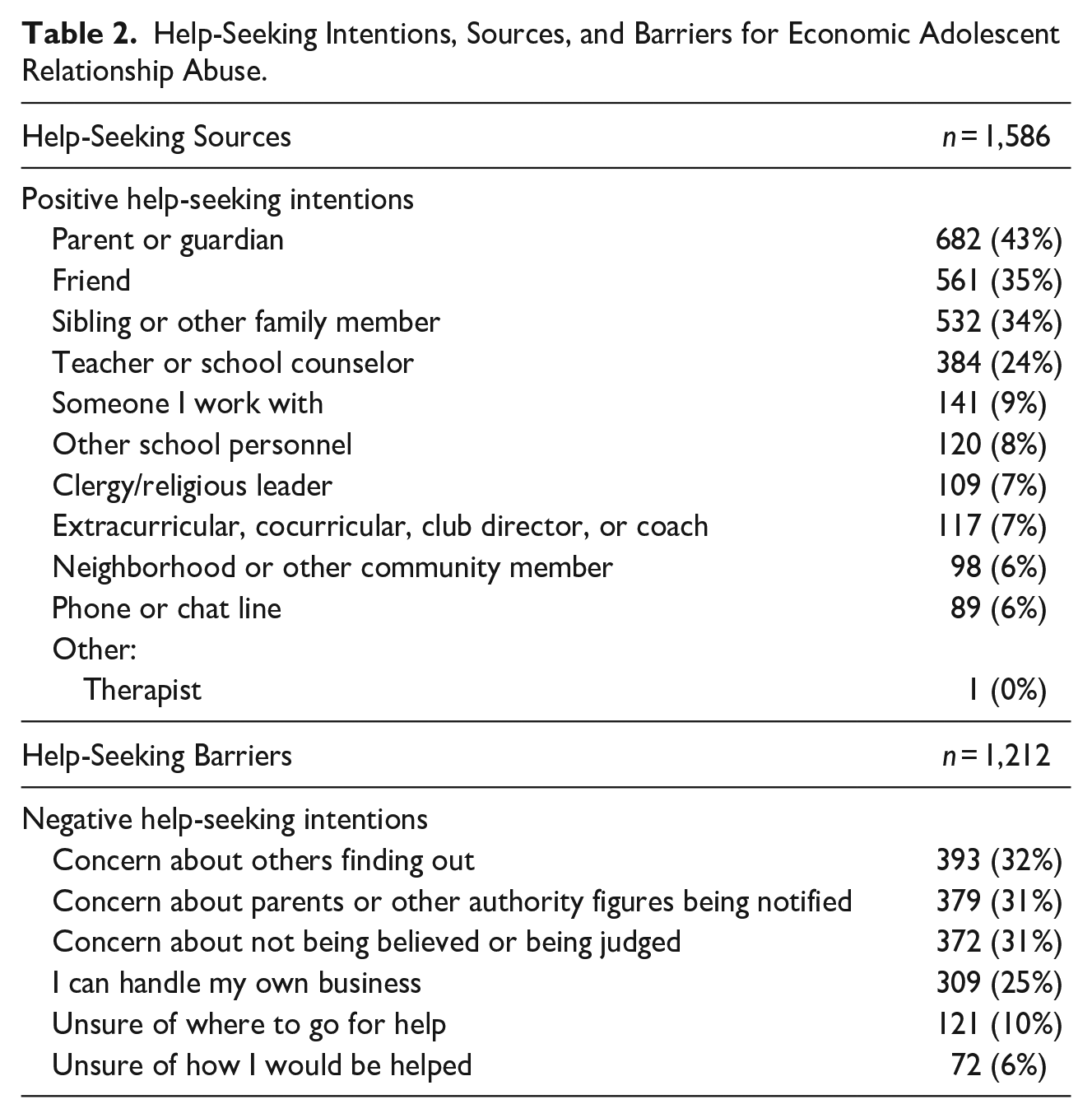
Participants with positive help-seeking intentions were asked about their help-seeking sources with the question “Who would you turn to for help?”. Answer choices included “parent or guardian,” “sibling or other family member,” “friend,” “teacher or school counselor,” “other school personal,” “extra-curricular, co-curricular, club director, or coach,” “clergy/religious leader,” “neighbor or other community member,” “someone I work with,” or “phone or helpline.” Participants were given the option to select more than one source of help.
Help-Seeking Barriers
Participants with negative help-seeking intentions were asked about the reason for their hesitation to seek help with the question “Do any of the following choices influence your hesitation or decision to not seek help?”. Answer choices included “I can handle my own business,” “concern about not being believed or judged,” “concern about others finding out,” “concern about parents or other authority figures being notified,” “unsure of where to go for help,” or “unsure of how I would be helped.” Participants were given the option to select more than one influence on their decision to not seek help.
Data Analysis
The survey was completed by 2,962 participants. Among those who completed the survey, responses that were completed in less than 2 minutes (n = 21), by a participant over the age of 19 years (n = 32) or contained the same response for over 90% of the questions were removed (n = 73). Cleaned survey responses (n = 2,852) were used to calculate descriptive statistics on demographic items, as well as help-seeking intentions, sources, and barriers. Participants who were excluded were, on average, significantly more cisgender males, 15–17-year-olds, and American Indian/Alaskan Native than participants included in the sample. “Prefer not to answer” for any question was recoded as missing. Our sample for the demographics and help-seeking intentions questions included all participants, regardless of previous dating history (n = 2,852; Tables 1–3). Missing data were removed from denominators and any statistical testing.
Participant Demographics and Experiences of Economic Adolescent Relationship Abuse.
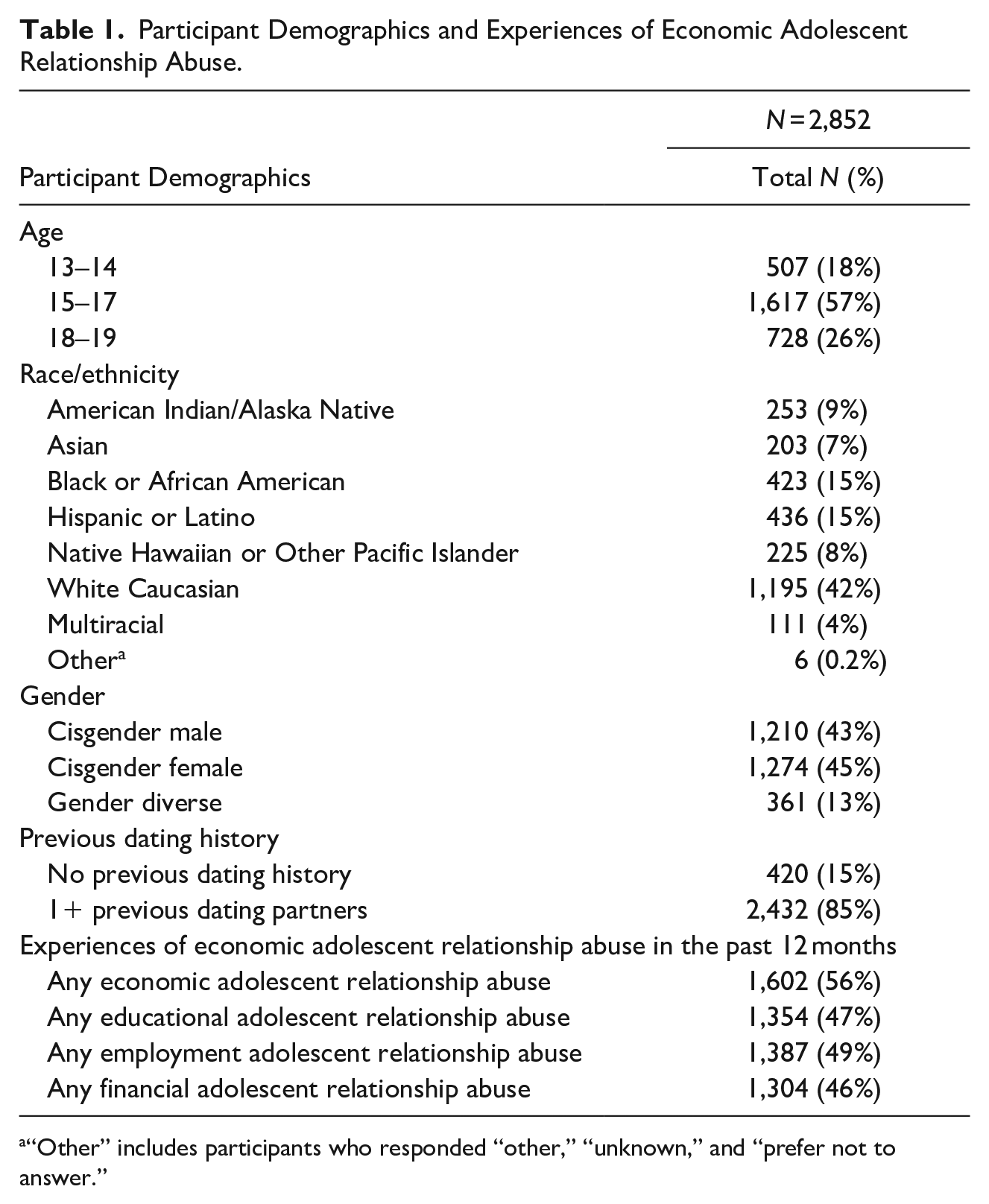
“Other” includes participants who responded “other,” “unknown,” and “prefer not to answer.”
Help-Seeking Intentions, Sources, and Barriers for Economic Adolescent Relationship Abuse.
Help-Seeking Intentions by Age, Race/Ethnicity, and Gender Identity.
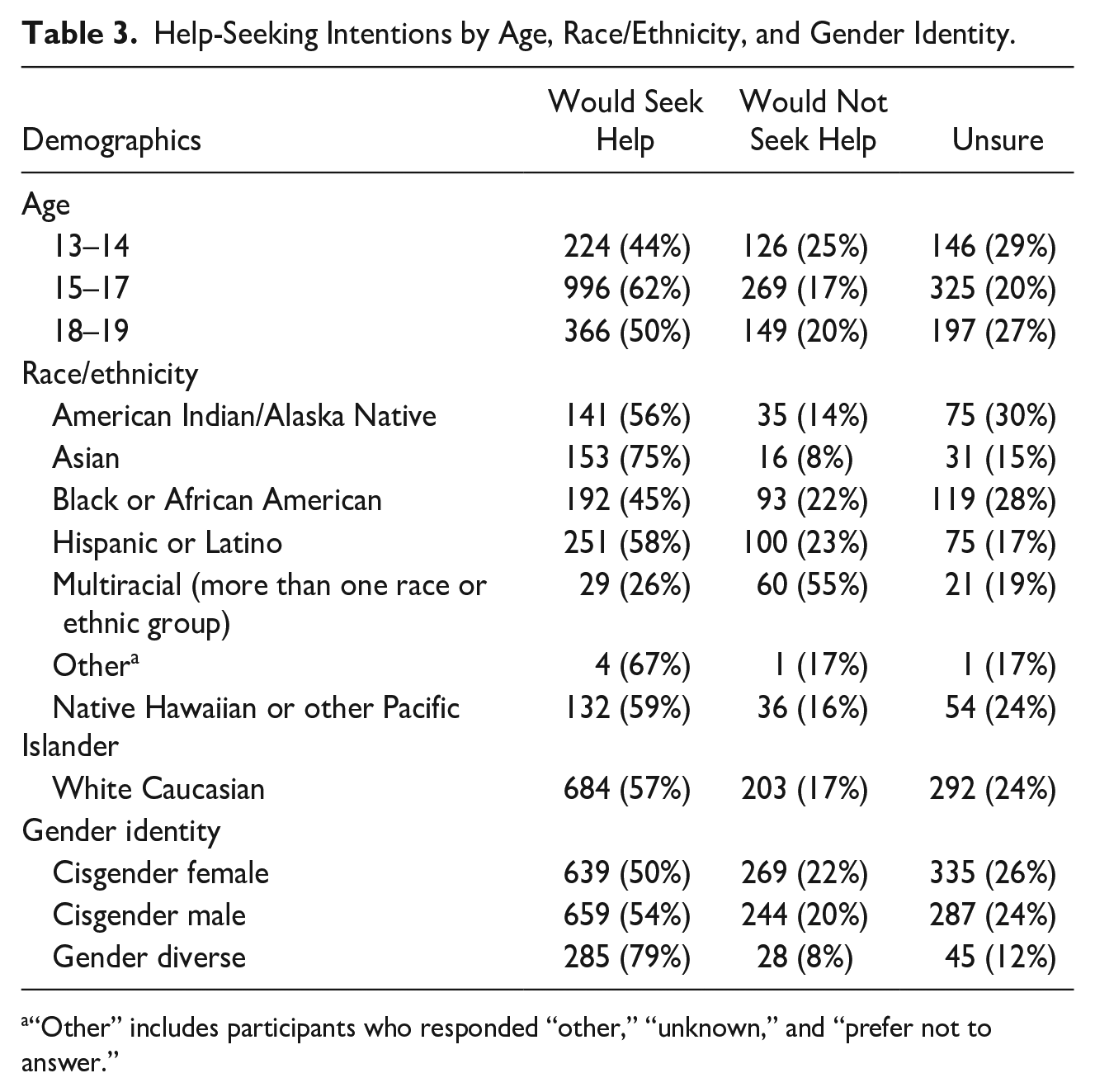
“Other” includes participants who responded “other,” “unknown,” and “prefer not to answer.”
Descriptive statistics were calculated and reported using counts and percentages to explore the help-seeking intentions of adolescents regarding economic ARA and help-seeking sources and reasons for not seeking help. We utilized logistic regression to examine differences in help-seeking intentions based on age, race and ethnicity, gender identity, and experiences of economic ARA. We calculated adjusted logistic regression models to compare help-seeking intentions among those experiencing economic ARA and those who have not experienced such behaviors. The models were fit with help-seeking intentions as the outcome. To create a binary response, those unsure about their intentions were combined with those with no intentions. This makes our two outcome categories: yes (positive help-seeking intentions) and no/unsure (negative help-seeking intentions). Economic ARA is the primary predictor and the covariates included age, race and ethnicity, and gender identity. We used “Never experienced economic ARA,” “White/Caucasian,” “Cisgender Female,” and “18–19” as the reference groups. The sample used to complete the logistic regression was restricted to those who reported a previous or current dating partner because the questions regarding experiences of economic ARA were only administered to those who reported a previous or current dating partner (n = 2,432; Table 4). We dichotomized help-seeking intentions for the logistic regression models. Bujang et al. suggest minimum sample sizes of n = 500 or greater, or 100 + 50i, where i is the number of independent variables for observational studies with large sample sizes (Bujang et al., 2018). Our logistic model has 15 independent factor levels, suggesting a minimal sample size ranging from 500 to 850. Our modeling sample contains roughly n = 2,400 participants, and so, by these benchmarks, logistic regression is appropriate to use given our sample size and number of independent variables.
Associations Between Experiences of Economic Adolescent Relationship Abuse and Help-Seeking Intentions.
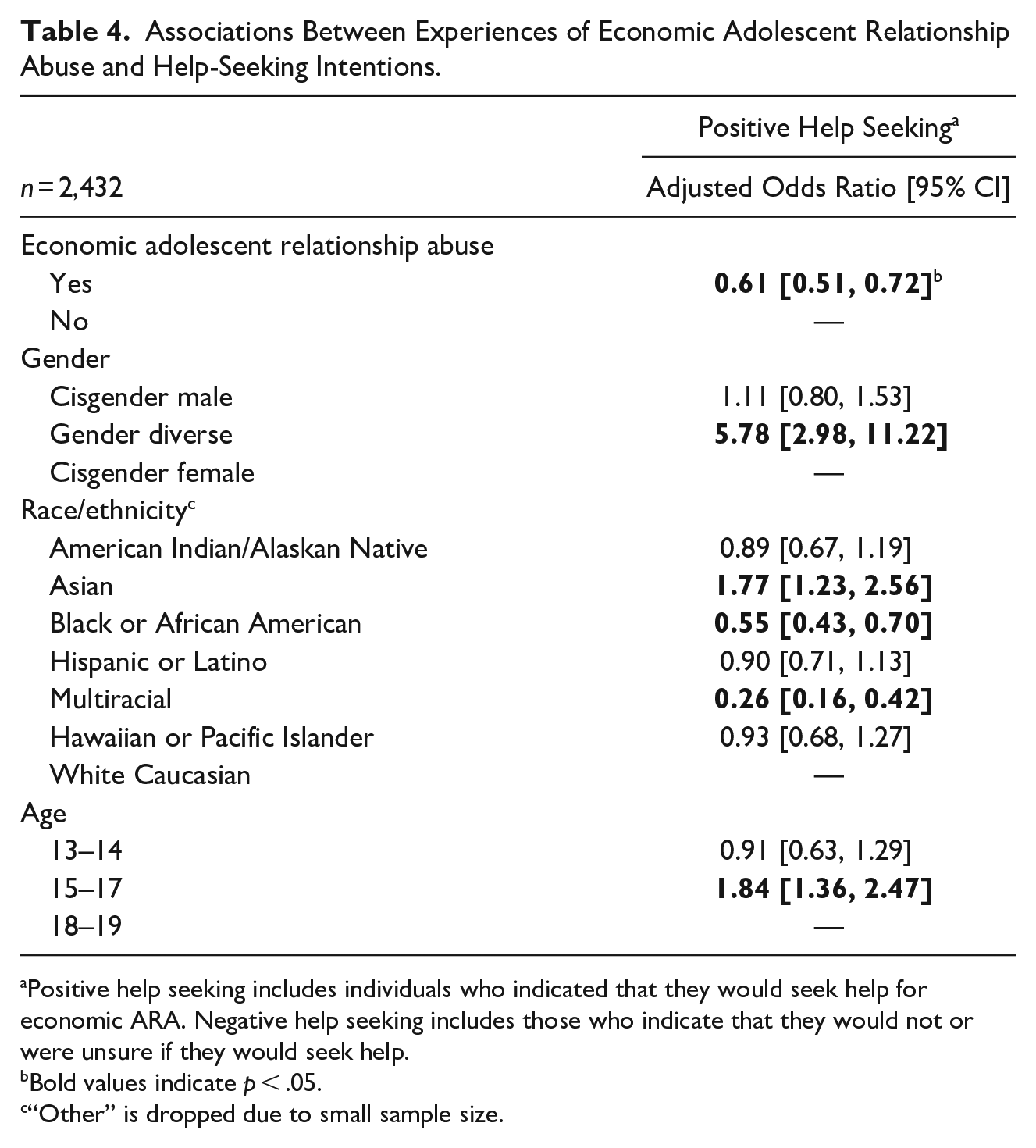
Positive help seeking includes individuals who indicated that they would seek help for economic ARA. Negative help seeking includes those who indicate that they would not or were unsure if they would seek help.
Bold values indicate p < .05.
“Other” is dropped due to small sample size.
Results
Participant Demographics and Economic ARA Experiences
Of the 2,852 respondents, 43% identified as cisgender male, 45% as cisgender female, and 13% as transgender or gender non-binary (Table 1). Respondents represented a range of ages, with the majority between ages 15 and 17 (57%). The racial and ethnic makeup of the group was also varied with 42% of respondents identifying as White Caucasian, 15% identifying as Hispanic or Latino, 15% identifying as Black or African American, 9% identifying as American Indian/Alaska Native, 8% identifying as Native Hawaiian or Other Pacific Islander, 7% identifying as Asian, and 4% identifying as Multiracial. 85% of the participants reported having ever dated; of those, 56% experienced some type of economic ARA victimization (47% educational, 49% employment, and 46% financial).
Help-Seeking Intentions, Sources, and Barriers
Over half (56%) of the 2,852 participants reported that they would seek help if they experienced economic ARA; 19% said they would not seek help; and 24% were unsure. Those who reported positive help-seeking intentions reported that they would most likely seek help from their parents or guardians (43%) or friends (35%; Table 2). Only 6% said that they would seek help from an ARA helpline or hotline. Among the 42% who reported negative help-seeking intention or were unsure, 32% of respondents reported concern about others finding out influenced their negative help-seeking intention. Respondents also reported concern about parents or other authority figures being notified (31%) and concern about not being believed or being judged (31%).
Help-Seeking Intention Differences by Participant Identities and Economic ARA Experiences
When comparing help-seeking intentions by age, participants ages 15–17 were more likely to say that they would seek help compared to their 18–19-year-old peers (aOR = 1.84, CI [1.36, 2.47], p<.001) (Table 4). Participants who identified as Asian were more likely to have positive help-seeking intentions compared with their White peers (aOR = 1.77, CI [1.23, 2.56], p = .001). Those identifying as Black or African American (aOR = 0.55, CI [0.43, 0.70], p<.001) and Multiracial (aOR = 0.26, CI [0.16, 0.42], p = .001) were less likely to say that they would seek help, when compared to their White peers. Participants identifying as gender diverse (aOR = 5.78, CI [2.98, 11.22], p<.001) were more likely to have positive help-seeking intentions than those identifying as cisgender female. Participants who experienced economic ARA would be less likely to seek help than those who did not report prior experiences of economic ARA (aOR = 0.61, CI [0.51, 0.72], p<.001; Table 4).
Discussion
To our knowledge, this exploratory study is the first to examine the perspectives of adolescents in the United States regarding their help-seeking intentions if they were to experience economic ARA. Specifically, we sought to understand help-seeking intentions, differences in help-seeking intentions by demographic characteristics, help-seeking sources, and help-seeking barriers. We found that 56% of adolescents would seek help if they experienced economic ARA. Among those who would seek help, peers and parents or guardians were most often identified as a potential source of help. Participants who would not seek help were most concerned with others finding out about the ARA. Moreover, youth who identify as Black or African American, Multiracial, and cisgender female were less likely to have help-seeking intentions than their peers. Although the majority of adolescents reported that they would seek help if they experienced economic ARA, those who had experienced economic ARA were less likely to report intentions to seek help.
Despite high rates of economic ARA in this sample, we found that only 56% of adolescents would seek help for economic ARA. Interestingly, a significant portion of the sample indicated that they were unsure if they would or definitely would not seek help if they experienced economic ARA. According to the Theory of Planned Behavior, the strengthen of intention is correlated with the likelihood of behavior, and strategies designed to promote intention would subsequently increase behaviors (Ajzen, 1991). This finding highlights the importance of developing preventative interventions designed to increase intention to seek help by educating youth on help-seeking sources (to increase perceived behavioral control) and available resources (to increase favorable attitudes about help seeking).
Consistent with previous research on ARA, adolescents who identify as Black and Multiracial were less likely to indicate that they would seek help for economic ARA (Padilla-Medina et al., 2022). Previous findings have identified structural racism and discrimination as the primary help-seeking barriers for adult Black survivors of IPV (Waller et al., 2022). Interestingly, Asian youth reported higher rates of help-seeking intention, which differed from one study’s findings which focused on help-seeking patterns of adolescents with a history of physical or sexual ARA and found that Asian youth were the least likely to seek help (Alleyne-Green et al., 2015). These findings must be considered with caution as the term “Asian” represents a large heterogeneous group whose needs and experiences must be explored through an intersectional lens based on immigration generation, language, culture, socioeconomic status, ancestry, among others (Rubin et al., 2018; Shah & Kandula, 2020). For example, a qualitative study examining the experiences of South Asian youth in the United States found that dating may be stigmatized among South Asian American communities and pose a barrier to adolescents seeking help for ARA from their parents (Ragavan et al., 2021).
In the present study, gender diverse adolescents were more likely to seek help than cisgender females which differs from previous research suggesting that females were most likely to seek help after experiencing ARA (Lachman et al., 2019). Our study is the first to examine help-seeking differences of gender diverse adolescents for economic ARA, yet these findings are surprising, given the barriers to help seeking rooted in transphobia such as fear of being “outed” to parents or guardians (Calton et al., 2016). One potential reason for differences in this study is the intentional focus on the inclusion of gender diverse participants, as our work is some of the first with a large number of gender diverse adolescents. Future work should identify factors driving increased help-seeking intention among gender diverse adolescents, which can be applied to other young people and support development of gender inclusive ARA prevention and support efforts.
Importantly, we found that adolescents who experienced economic ARA were less likely to say that they would seek help compared with those who did not experience economic ARA. While we cannot identify the specific factors driving this association, it is concerning that those who need support the most reported lower help-seeking intentions. It is possible that these adolescents tried to seek help and did not have a good experience, or, potentially, that they are concerned about their partner escalating abuse or that they may be told to leave the relationship. Barriers such as unsuccessful previous attempts at help seeking have been described in the adult IPV literature (Robinson et al., 2021). These findings indicate a need for supportive, healing-centered spaces for adolescents experiencing economic ARA that leverage their strengths and provide resources and social supports (Ginwright, 2018). They also suggest the importance of primary prevention efforts to ensure adolescents learn about (and begin to trust) resources before they experience economic ARA, when help-seeking intentions are more positive.
Among those who would seek help, parents and guardians emerged as a frequently cited source of support. Parents are an important support for ARA survivors, as multiple studies have shown significant associations between increased parental monitoring and communication and decreased ARA victimization and perpetration (Khetarpal et al., 2022; Ragavan & Miller, 2022). Interestingly, prior work focused on physical and sexual ARA had differing findings from our study, particularly that adolescents may disclose less frequently to parents compared with sharing with peers (Fry et al., 2014; Mapes & Cavell, 2021). Adolescents experiencing economic ARA, in comparison to adolescents experiencing physical and sexual ARA, may be more likely to seek parental help because of parental involvement with school, employment, and finances. As an example, parents may have access to their child’s bank account or money transfer account and if educational ARA escalates to a point of truancy, parents may be involved with school or court personnel. Educating parents on the pervasive nature of economic ARA is key to ensuring they are well equipped to support their adolescent-aged children experiencing economic ARA.
Besides parents, we also found that peers were a common source of informal support, which is aligned with previous research findings that adolescents often turn to their friends and peers for support for other types of ARA (Mapes & Cavell, 2021). Results from this analysis indicate that adolescents are also likely to seek help for economic ARA from their friends and siblings, indicating a need to include peers in economic ARA prevention and intervention efforts to provide adolescents with the tools to support their peers who may be experiencing economic ARA. Notably, only 6% of participants reported that they would use a phone or chat helpline. This finding is lower than the 12% of adolescents who sought help from a phone hotline as reported by previous work with adolescents who experienced physical ARA (Ashley & Foshee, 2005). Helplines are important sources of help for adolescents as they provide expert support across a range of services. Future studies should examine adolescents’ knowledge of and barriers to using phone or chat helplines, as well as strategies for promoting utilization.
A common reason for participants to report that they would not seek help is fear that other individuals would be notified or fear they would be judged. This aligns with previous literature specifically focused on healthcare settings, which underscores that adolescents may not disclose physical and sexual ARA to a healthcare provider due to embarrassment, fear of their partner’s response and ARA escalation, and fear that the provider would tell their parents (Miller et al., 2010). Previous research on adolescent confidentiality around ARA has indicated that adolescents are more likely to agree that healthcare providers should notify parents about adolescents’ disclosing physical ARA during confidential social histories as compared with other types of ARA (Wiebelhaus et al., 2021). Further research is needed to extend this work to economic ARA and consider barriers to help seeking in different settings and across formal and informal sources of support. These findings also highlight how using disclosure-based methods of supporting adolescents (i.e., screening or directly asking about the need for resources) may be less effective with adolescents who are hesitant to seeking help. Developing multipronged strategies to provide information universally (resources given to all adolescents, flyers and posters with helpline numbers, etc.) may be a helpful approach so adolescents can access services without needing to disclose their experiences.
There are four limitations to this present study that should be considered in interpreting these findings. First, this study examined help-seeking intentions by asking adolescents if they would seek help if they experienced economic ARA. Therefore, conclusions cannot be drawn about actual help-seeking behaviors although intentions are an important antecedent to behaviors. The cross-sectional nature of this study precludes making causal inferences from these findings; rather, these findings point to associations between demographics, experiences of economic ARA, and help-seeking intentions that merit further exploration to guide prevention interventions. Second, participants who were excluded due to unusable data (i.e., responses that were completed in less than 2 minutes, by a participant over the age of 19 years, or contained the same response for over 90% of the questions were removed) were statistically different from those included in the analysis potentially introducing bias by excluding views of some adolescents who may have experienced economic ARA. Third, the measures we used were rigorously designed through a youth-centered approach but have not yet been validated. We recognize that our measure for help-seeking contained multiple examples embedded within one question and future work should consider developing and validating a specific help-seeking intentions measure focused on economic ARA. Finally, our decision to exclude cases completed in less than 2 minutes or with over 90% of questions answered with the same response was not based on specific reasoning. We recognize that other thresholds could have been used to exclude data.
We also recognize the importance of contextualizing these findings as we recruited in collaboration with a national violence prevention organization (FUTURES); youth connected with this organization and related youth-serving organizations are possibly more likely to have experienced ARA. However, conducting this study in collaboration with many diverse youth-serving organizations (including youth who were system involved and unstably housed) allowed for inclusion of a range of experiences from adolescents across the country with diverse identities and geographic locations. These results may not be generalizable but serve as important findings for intervention development for adolescents who may have previous violence exposure and experience multiple intersecting marginalized identities. Sampling from youth-serving organizations, our study team attempted to “center the margins” and capture the experiences of youth most impacted by economic ARA.
Implications
Our exploratory work sets the stage for future research as well as practice and policy recommendations. Future research should examine the help-seeking intentions of adolescents experiencing economic ARA victimization and perpetration using community-based samples. Qualitative studies should explore how various systems of oppression (e.g., systemic racism, transphobia, homophobia) may impact help-seeking for adolescents experiencing economic ARA and should consider better understanding the factors driving the results elucidated in this study (i.e., speaking with adolescents who have experienced economic ARA about why they are less likely to seek help). Future work should examine the actual help-seeking behaviors of adolescents experiencing economic ARA, to compare them with our findings on intentions. Additional research is needed to understand the help-seeking experiences of economic ARA survivors who sought care from both informal and formal sources of help (including helplines), as well as their recommendations to improve services for adolescents experiencing economic ARA. Finally, future work is needed to examine the implications of economic ARA on adolescents’ mental, physical, and financial health.
These findings have several implications for youth-serving professionals. Due to the pervasive nature of economic abuse, as shown in this study, healing-centered universal education and resources around ARA, including economic ARA, should be provided in all pediatric healthcare, education, and other youth-serving settings. Due to adolescents’ concerns around confidentiality, alternatives to disclosure-driven practices should be implemented. Adolescents with negative help-seeking intentions cited fear of others finding out as a barrier to seeking help for economic ARA. Integrating universal education and resource provision specifically related to economic ARA may help adolescents seek care and promote positive bystander behaviors (Miller et al., 2015, 2016). A potential strategy is use of the Confidentiality, Universal Education and Empowerment, and Support approach, which provides education and resources around ARA to all adolescents rather than only to adolescents who disclose experiencing ARA (Ragavan, Garcia, et al., 2020). Support and services for adolescents experiencing economic ARA should be available universally as our study suggests that adolescents experiencing economic ARA are less likely to seek help. Academic safety planning, such as developing a safe space on campus or personalized academic plans, is another mechanism by which educational institutions can support adolescent survivors of economic ARA (Voth Schrag et al., 2022). Economic ARA education should also be included in parent- and family-based ARA interventions. Our findings indicate that parents are adolescents’ preferred source of help for economic ARA and thus, need to be engaged and educated on their role in preventing and intervening. Furthermore, due to the potentially harmful impacts of economic ARA on adolescent’s mental, physical, and social health, there is opportunity to increase education on economic ARA for pediatric healthcare providers, teachers, coaches, parents, policymakers, and other youth-serving professionals (Sauber & O’Brien, 2020). These interventions should include the dynamics of economic ARA and other forms of ARA and how to talk with teens about healthy financial relationships, as exists for adult survivors of economic abuse (The Allstate Foundation, n.d.).
Conclusion
Our study is one of the first to examine adolescents’ help-seeking intentions around economic ARA. Just over half of adolescents would seek help if they experienced economic ARA, and adolescents who have experienced economic ARA are less likely to seek help. Additional research and interventions are needed to understand the factors impacting various rates of help-seeking intentions by demographics and how best to support survivors of economic ARA.
Footnotes
Acknowledgements
These findings were presented at the University of Pittsburgh School of Public Health Dean’s Day Poster Competition.
Authors’ Note
Dani Lavage has left the Division of Adolescent and Young Adult Medicine and now works for the Department of Anesthesiology and Perioperative Medicine at University of Pittsburgh. Lauren Risser has left the University of Pittsburgh and is now employed by the Pennsylvania Department of Health Division of Immunizations.
Declaration of Conflicting Interests
The author(s) declared a potential conflict of interest (e.g., a financial relationship with the commercial organizations or products discussed in this article) as follows: E. Miller receives royalties for writing content for UptoDate, Wolter Kluwers Inc. The other authors have no conflicts of interest relevant to this article to disclose.
Funding
The author(s) disclosed receipt of the following financial support for the research and/or authorship of this article: This work was supported by The Allstate Foundation. The funding source had no involvement in publication.
