




Abstract
Student absenteeism affects students’ engagement in school and academic and professional success. While research documents a significant association between school bullying/fighting and student absenteeism due to fear of being at school or getting to school, little research has examined the association of adolescent dating violence (ADV) victimization with this type of absenteeism. This study examined the relationship between physical and/or sexual ADV victimization in the past year (dichotomized as yes or no), and number of days of student absenteeism due to feeling unsafe at school or on the way to school in the past month (dichotomized as any vs. none). We analyzed cross-sectional data from the 2019 Youth Risk Behavior Survey (YRBS), a nationally representative survey of U.S. high school students (n = 9507). We conducted crude and multivariate regression models for the total sample and stratified by sex to assess our hypothesized association of ADV victimization and absenteeism; sex, grade, race/ethnicity, and sexual identity were included as covariates in adjusted models. Findings demonstrate that students reporting past year ADV victimization had 3.69 times the odds of student absenteeism due to feeling unsafe, when compared to students who did not report ADV victimization (95% CI: 3.06–4.45, p < 0.001). Sex-stratified models reveal that this effect is significantly stronger for males than for females, as indicated by non-overlapping confidence intervals (male AOR: 5.67, 95% CI: 4.18–7.68; female AOR: 2.95, 95% CI: 2.32–3.74). The multivariate models also show that Black and Latinx compared with White students, and lesbian/gay/bisexual/unsure compared with heterosexual students, had higher odds of student absenteeism due to feeling unsafe. Findings indicate the need to address ADV victimization and student absenteeism with integrated and gender-tailored responses, and with consideration of greater vulnerabilities for queer students and students of color.
Introduction
National data indicate that one in 12 high school students has experienced sexual and/or physical dating violence in the past 12 months (Center for Disease Control and Prevention (CDC), 2019), and this adolescent dating violence (ADV) victimization has pervasive and long-lasting effects on behavioral risks and poor mental health outcomes (Baiden et al., 2019; Garthe et al., 2019; Morris et al., 2015). ADV victimization may also affect school attendance, but research has not examined this issue despite data indicating that other forms of violence (e.g., bullying, fighting at school) are associated with both absenteeism (Hughes et al., 2015) and ADV (Vivolo-Kantor et al., 2016). This study seeks to address this gap in the literature by examining the association between ADV victimization and student absenteeism due to fear among U.S. high school students. Analysis is stratified by sex, given a higher risk for ADV victimization for girls.
Methods
Bias Analyses of the Analytic Sample: Weighted Percentages of the Eligible and Excluded Samples.
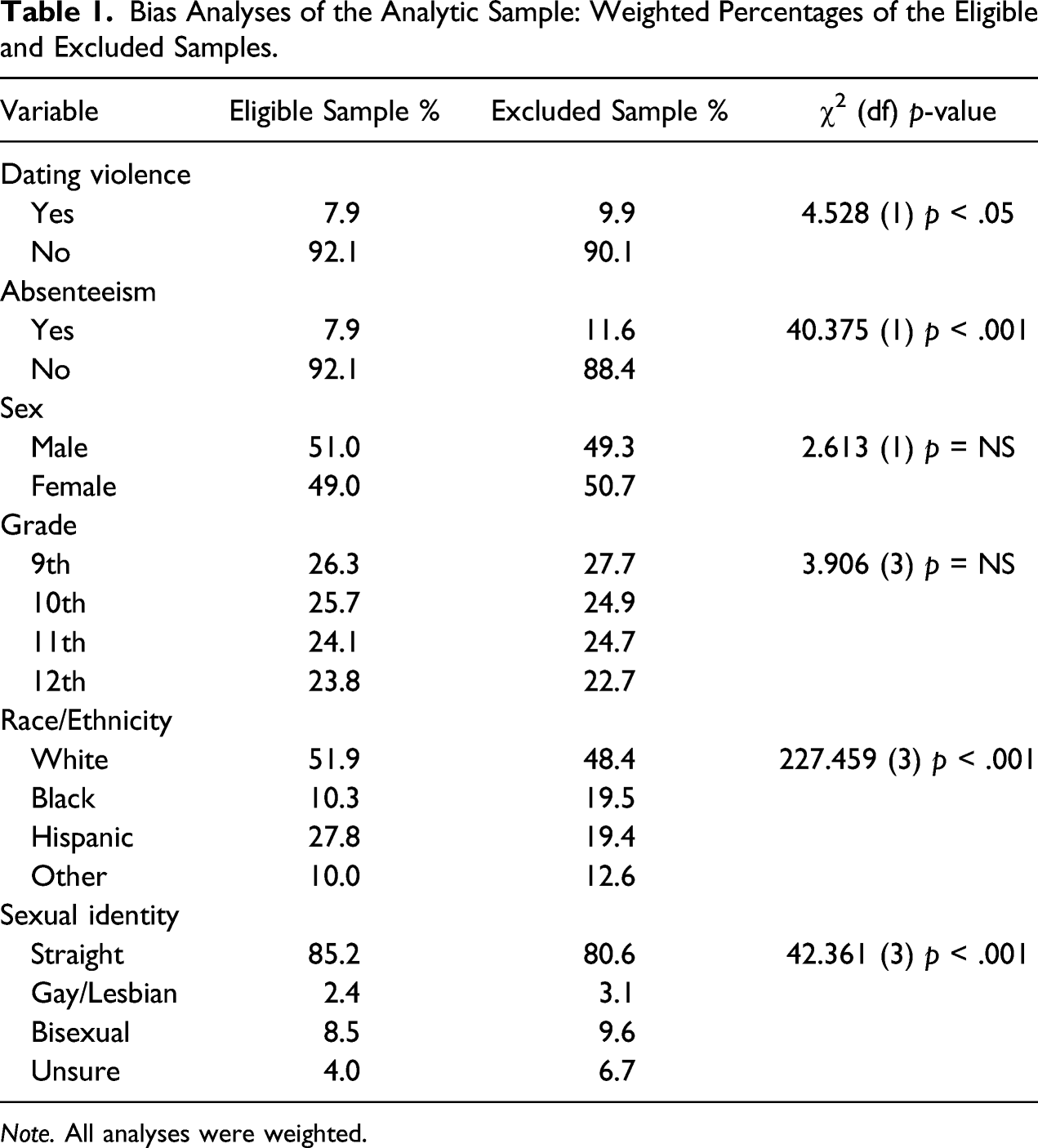
Note. All analyses were weighted.
Written informed assent was obtained from participants’ parents and guardians prior to the survey (Underwood et al., 2020). Participants provided data via a pencil-and-paper self-administered questionnaire conducted in one class period (estimated 45 min). Survey procedures to protect participant confidentiality and privacy were strictly adhered to. Details on sampling and procedures are available elsewhere (Underwood et al., 2020). The U.S. Centers for Disease Control and Prevention provided institutional review board approval for the 2019 YRBS procedures.
Measures
The independent variable, adolescent dating violence (ADV) victimization, was measured through two questionnaire items: 1) “During the past 12 months, how many times did someone you were dating or going out with physically hurt you on purpose? (Count such things as being hit, slammed into something, or injured with an object or weapon).” 2) “During the past 12 months, how many times did someone you were dating or going out with force you to do sexual things that you did not want to do? (Count such things as kissing, touching, or being physically forced to have sexual intercourse).” Response options were: “I did not date or go out with anyone during the past 12 months,” “0 times,” “1 time,” “2 or 3 times,” “4 or 5 times,” and “6 or more times.” The response options for both questions were recoded into binary variables to reflect the experience of both ADV victimization types as 1 (1 or more times) and 0 (0 times). The two questions capturing physical and sexual violence were then coded into one single variable measuring past-year physical and/or sexual ADV (1 = has experienced physical and/or sexual ADV 1 or more times, 0 = has not experienced ADV).
The dependent variable, missing school due to feeling unsafe, was measured through the following item: “During the past 30 days, on how many days did you not go to school because you felt you would be unsafe at school or on your way to or from school?” Response options to the question included: “0 days,” “1 day,” “2 or 3 days,” “4 or 5 days,” and “6 or more days.” The response options were recoded as 1 (1 or more days missed) or 0 (0 days missed).
We also included demographic variables as covariates in our multivariate regression model. Demographic variables included: a) sex, categorized as male and female in the national data as not all states included non-binary gender options, b) race/ethnicity, categorized for analysis as White, Black, Hispanic, and other, for categories to have at least 10% of the sample included, and c) grade, categorized as 9th, 10th, 11th, or 12th. Sex was a covariate in our analysis with the total sample but was also used as a stratification variable. Sexual identity was assessed through a single item, which asked, “Which of the following best describes you?” Response options included a) Heterosexual (straight), b) Gay or lesbian, c) Bisexual, and d) Not sure. We maintained these categories for analysis.
Data Analyses
We conducted frequency statistics on all variables. We conducted bivariate and multivariate logistic regression models to assess the association between the independent variable, ADV, and the dependent variable, absenteeism due to feeling unsafe, for the analytic sample and then stratified by sex. Multivariate models additionally include grade, race/ethnicity, and sexual identity as covariates. We also conducted a sensitivity analysis whereby we replicated the regression models using the subsample of adolescents who reported ever dating. We weighed all analyses to provide representative sample statistics. We set significance at p < 0.05. We conducted analyses using SPSS version 27.
Results
Characteristics of the YRBS 2019 Sample, Total Sample, and By Sex.
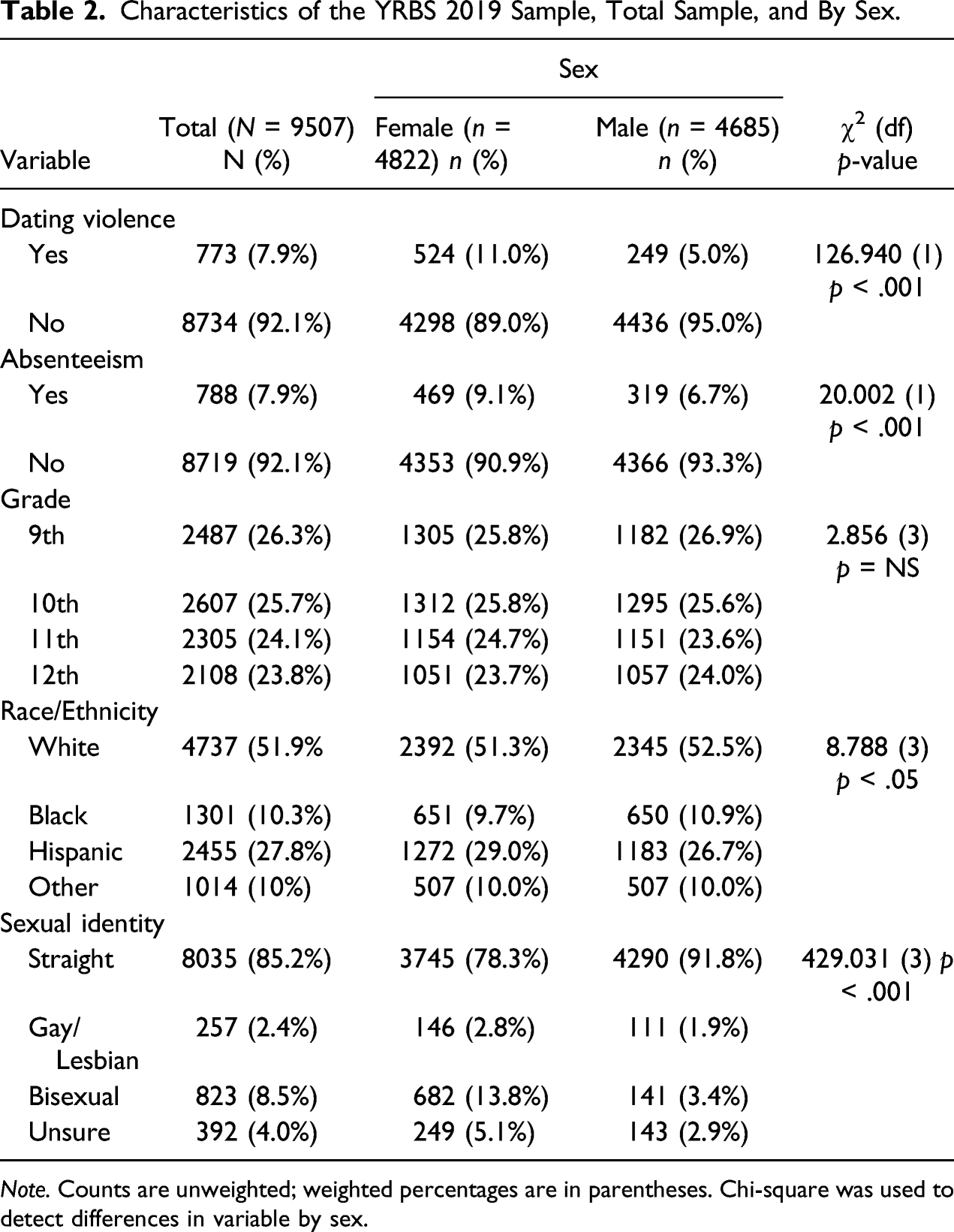
Note. Counts are unweighted; weighted percentages are in parentheses. Chi-square was used to detect differences in variable by sex.
Simple and Adjusted Logistic Regression Models to Assess the Association Between Dating Violence and School Absenteeism, Total Sample, and By Sex.
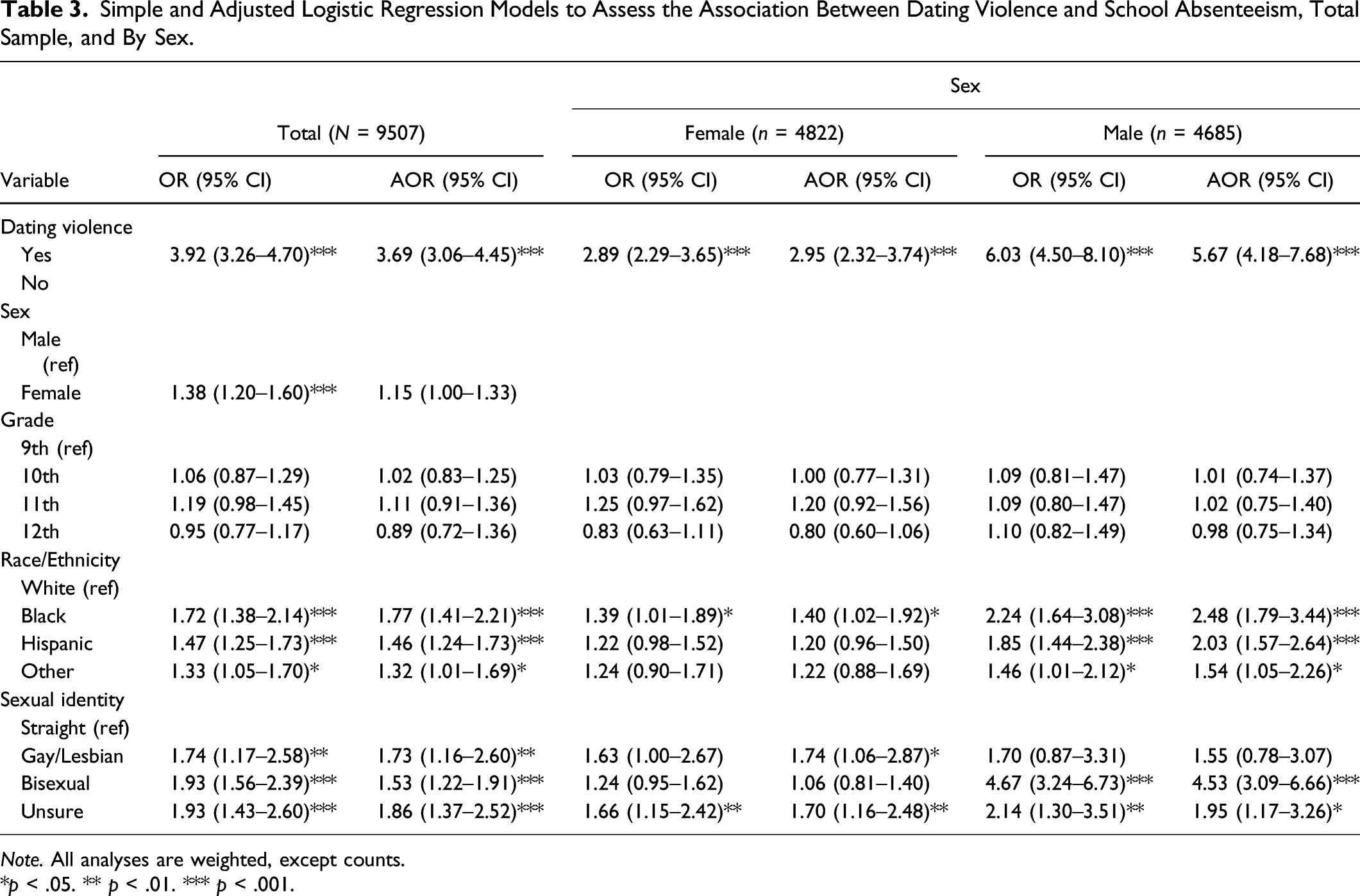
Note. All analyses are weighted, except counts.
*p < .05. ** p < .01. *** p < .001.
Significant associations between dating violence and school absenteeism were also present when stratified by the male and female subsamples, with effects significantly stronger for male compared with female students as indicated by non-overlapping confidence intervals. Male students who experienced ADV victimization were 5.67 times as likely to miss school due to fear as compared to those who had not experienced ADV (95% CI: 4.18–7.68, p < 0.001). Female students who experienced ADV victimization were 2.95 times as likely to miss school due to fear when compared to those who had not experienced ADV (95% CI: 2.32–3.74, p < 0.001; See Table 3).
Characteristics of the YRBS 2019 Sample, Sample of Students with a History of Dating, and By Sex.
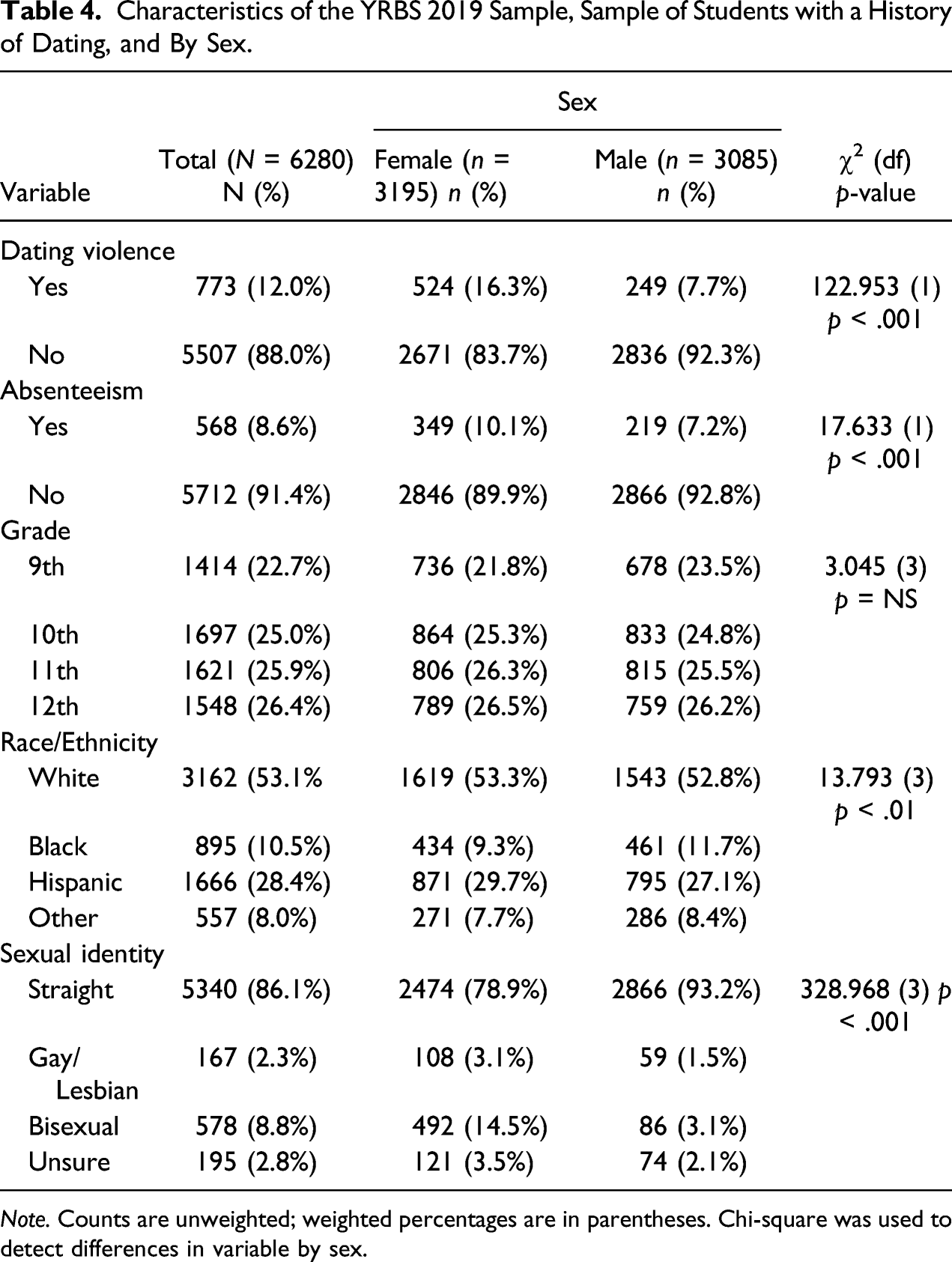
Note. Counts are unweighted; weighted percentages are in parentheses. Chi-square was used to detect differences in variable by sex.
Simple and Adjusted Logistic Regression Models to Assess the Association Between Dating Violence and School Absenteeism, Sample of Students With a History of Dating, and By Sex.
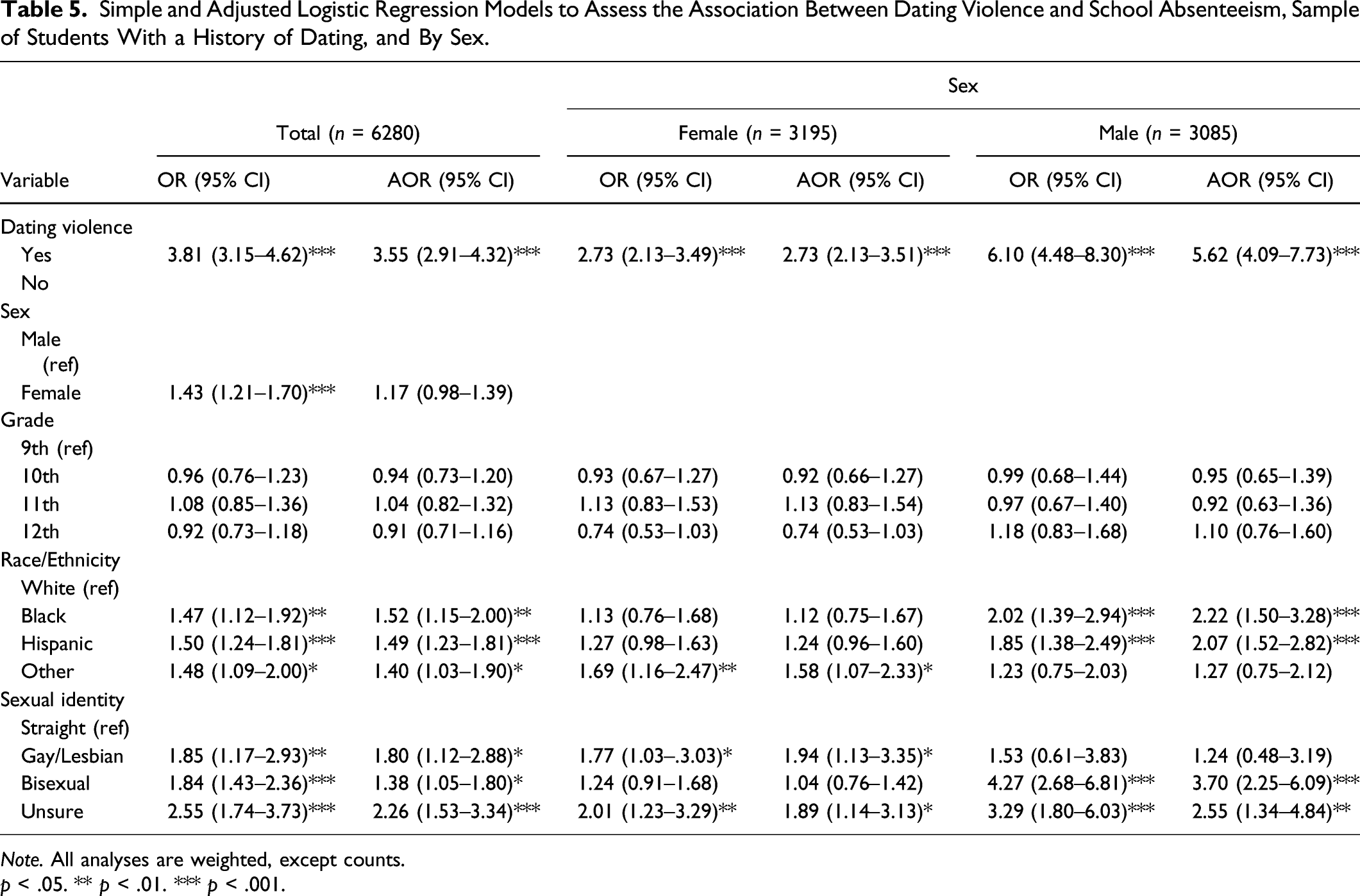
Note. All analyses are weighted, except counts.
p < .05. ** p < .01. *** p < .001.
Discussion
The findings from this study reveal that high school students who have experienced ADV in the past 12 months had significantly higher odds of school absenteeism due to fear compared with students who had not experienced ADV in the past 12 months. Further, our findings show that, while ADV victimization is more prevalent for females, the association between ADV victimization and absenteeism was significantly stronger for males compared with females. This finding aligns with the findings of a systematic review of the association between bullying victimization and adolescent dating violence victimization by Zych et al. (2021). They found that this relationship is stronger for female students than male students. Sensitivity analyses with the subsample of adolescents who have ever dated yielded similar findings.
While there are few studies documenting the relationship between ADV victimization and student absenteeism, prior literature has demonstrated that adolescent dating violence co-occurs with other forms of violence victimization, such as bullying, harassment, and school-based fighting, which have been associated with student absenteeism (Paat et al., 2019; Vivolo-Kantor et al., 2016; Yahner et al., 2014). For example, Vivolo-Kantor et al. (2016) analyzed YRBS data and showed that school-based violence victimization, such as being bullied on school property, being threatened at school, and having a physical fight at school, is more likely to be reported by students who have experienced ADV victimization, in comparison to students who have not experienced ADV victimization. Further, students who have experienced bullying and harassment victimization at school, in comparison to students who have not been victimized, are more likely to miss school due to feeling unsafe (Bauman, 2008; Grinshteyn & Tony Yang, 2017; Hughes et al., 2015). Our findings demonstrate the importance of addressing ADV in schools, given its link to absenteeism, and the role of absenteeism in poorer educational outcomes (Balfanz & Byrnes, 2012) and social alienation for adolescents. While our cross-sectional analysis does not allow us to presume that ADV is causal in its association with absenteeism, these findings do suggest an important connection for school administrators and policymakers.
In addition to our primary research findings, this study also supports previous literature providing evidence that LGBTQ students are significantly more likely to experience negative academic outcomes, such as truancy and student absenteeism, associated with violent experiences, such as bullying or dating violence victimization (Birkett et al., 2014). Our analyses provide insight into how male and female students of different sexual identities experienced the studied relationship differently. For example, bisexual male students, when compared with heterosexual male students, showed higher vulnerability to student absenteeism due to feeling unsafe at school, followed by “unsure” male students. Among female participants, lesbian and “unsure” female students reporting dating violence victimization were more at risk of missing school due to feeling unsafe, when compared to heterosexual female students.
Further, this study also demonstrates that Latinx and Black individuals relative to white individuals, and lesbian/gay/bisexual/unsure individuals relative to heterosexual individuals, have higher odds of student absenteeism due to fear. These findings correspond with higher prevalence of violence at school and school dropout rates for these same groups (Birkett et al., 2014; CDC, 2019; GLSEN, 2016; Howard et al., 2013; Lardier et al., 2019; U.S. Department of Commerce, 2018). These ongoing racial/ethnic and sexual identity disparities in both violence, fear and school absenteeism require greater focus, as the inter-relationship of these may be contributing to the loss of racial/ethnic and sexual identity minority groups from our schools and the maintenance of mistreatment of these vulnerable groups at school and in their relationships.
This study should be considered in light of certain study limitations. As noted above, the study is cross-sectional, and causality cannot be assumed from these findings. Our measure of ADV is limited to physical and sexual ADV; it does not include other forms of dating violence, such as financial and emotional. Our data rely on self-report and may be subject to social desirability bias resulting in under-reporting of both ADV victimization and absenteeism. Survey questions that ask if someone has been “hurt” may lead to underreporting among male participants due to the emphasis on the outcome, being hurt, instead of the act of being hit or physically assaulted (Fernández-González et al., 2013). Additionally, students were asked about their dating violence victimization experiences in the past year, and the number of days they missed school due to feeling unsafe in the past 30 days. The association between dating violence and days missed of school could be more comparable if the unit of time measured across the independent and dependent variables were the same.
Despite these limitations, the study documents a strong link between ADV victimization and student absenteeism due to fear, with the effects potentially being more common for girls given their higher prevalence of ADV victimization, but stronger for boys as indicated by our study findings. These findings support the need for greater focus on these issues and their association among school administrators, educational program coordinators and teachers (Wekerle & Wolfe, 1999). This study adds to a body of literature advocating for better access and implementation of gender equity and health education programs to prevent ADV. Additionally, administrators and educators should cultivate healthier school environments for students to openly communicate and discuss feelings of fear or apprehension, particularly for queer students and students of color. Efforts to eliminate ADV and school-related feelings of unsafety should be a cross-sector public health priority to ensure the health and wellbeing of all students.
Footnotes
Declaration of Conflicting Interests
The author(s) declared no potential conflicts of interest with respect to the research, authorship, and/or publication of this article.
Funding
The author(s) received no financial support for the research, authorship, and/or publication of this article.
