




Abstract
The context of suspected maltreatment cases is likely to influence the decision of whether or not to make a formal report. Across one pilot study (N = 368) and two experiments (Exp. 1 N = 444; Exp. 2 N =416), undergraduate students and online community participants reported their anticipated actions and beliefs when confronted with evidence of child maltreatment. Participants reviewed case dossiers built from real-world child neglect cases in which increasing levels of evidence were presented and the consequences of reporting, or not reporting, the maltreatment were made salient to the adult or child. The experiments revealed a clear difficulty in deciding whether or not to report suspected maltreatment. Highlighting the impact on either the child or the adult by describing potential consequences moved participants either closer to (child-salient) or farther from (adult-salient) a formal report. Participants were also sensitive to the amount of evidence to support a suspicion of abuse, which influenced the likelihood of a formal report. This work suggests that increasing the salience of maltreatment consequences to child victims may increase the likelihood that suspected maltreatment will be reported.
When a child initially discloses maltreatment, it is typically in an informal manner. Informal receivers of disclosure (laypersons: teachers, peers) are far more likely to be first to hear a child’s allegation than are formal receivers (e.g., police, child protection; Pipe et al., 2007). To whom a child discloses and what action (if any) the informal receiver takes can set the path for either intervention or future silence from the child. Researchers have investigated the frequency with which children disclose to various parties (Pipe et al., 2007), but we know little about how informal receivers decide to proceed from informal disclosures or suspicion of maltreatment to formal reports. Though there have been several studies on barriers to reporting suspected abuse in particular groups of professionals (e.g., teachers, emergency room personnel, physicians; e.g., Alvarez et al., 2004; Beck et al., 1994; Talsma et al., 2015; Tiyyagura et al., 2015), exploration of factors contributing to the decision-making processes of those who are not in a professional role when receiving disclosures is lacking (but see Calheiros et al., 2020; Dickerson et al., 2017).
Despite the limited research on laypeople’s reporting practices, it is clear that the practical problem of promoting laypeople reporting exists. For instance, in the highly publicized child sexual abuse scandal at Pennsylvania State University (USA), the head coach of the football team was reportedly told that one of his assistant coaches, Jerry Sandusky, had been seen sexually assaulting a young boy in the campus showers. Police were not informed. It later became clear that the witnessed assault was a pattern of behavior and Sandusky has since been sentenced to a lengthy prison term. A subsequent investigation raised questions about just how many people could have stopped the years of assaults.
Sandusky’s case is not unique: Initial discovery or disclosure of maltreatment often does not lead to formal investigation. Bottoms et al. (2007) found that following 16% of sexual and 40% of physical abuse initial disclosures, no formal action was taken and the abuse continued. Minto and colleagues found that 40% of professionals with a duty to report had, at some point, failed to report suspected abuse (Minto et al., 2016). These concerning numbers reflect a substantial problem with a lack of reporting in cases of child abuse in which there is clear evidence (i.e., initial disclosure) of abuse. But what about cases in which there is less evidence? What about the common, but more difficult to detect, neglect cases?
Further, if a case is officially reported and makes it to trial, judges appear to have difficulty conceiving of the possibility that an adult with knowledge of maltreatment chose not to make a formal disclosure. Connolly et al. (2010) reported that in over one-third of historic child sexual abuse complaints, judges evaluated the likelihood of abuse by considering whether or not someone would have been likely to have known about it (i.e., “someone should’ve known”). That is, judges apparently assumed that if an adult ‘should’ have known about the abuse, he or she would have acted. Accordingly, if no investigation was undertaken at the time someone ‘should’ have known, an acquittal was significantly more likely. This flawed judicial inference may be a common misconception. Thus, a clearer understanding of what makes an allegation or suspicion of all types of abuse move from informal to formal is crucial.
Reporting Decisions
There are some hints in the extant literature that can help guide hypotheses about factors influencing an informal recipient’s decision to make a formal report. Recent evidence suggests that some biases can increase the likelihood of maltreatment reports, including when the victim appears more vulnerable (e.g., young and female vs. older and male) and the likelihood of abuse is judged to be higher (e.g., families with economic difficulties; Calheiros et al., 2020). Further, Beck and colleagues (1994) found that 40% of Canadian teachers who did not report suspected child abuse or neglect failed to do so because of concerns related to potential consequences faced by the child or the family (see also Hansen et al., 1997). Other studies with teachers and other professionals have reported concerns with the consequences of making a report (e.g., Zellman, 1990b) or have discussed respondents’ ability to overcome similar concerns and ultimately make formal reports (Walsh et al., 2010; Zellman, 1990a). In many cases, a primary concern relates to damaging the relationship between the child and the reporter, an outcome that may be reparable (e.g., Steinberg et al., 1997). The precise nature of other consequences that concern potential reporters have not been clearly outlined in the prior published work, nor has systematic examination of varying potential consequences been undertaken. This may be because most of this literature has involved documentation of reporting practices or follow-up questions about barriers, but has not typically involved experimental exploration of the influence of perceived consequences on reporting behavior. Though documenting such practices is critical (see Calheiros et al., 2016), without a complementary experimental between-participants exploration, one cannot draw conclusions about the likelihood of reporting as a function of the perceptions of consequences to reporting. In the present research, we developed an experimental manipulation in which the consequences of making a formal report, or not making a report, of child neglect are depicted as more salient to the adult or the child.
There is also some evidence that an informal receiver’s confidence in his/her ability to judge whether or not abuse has occurred plays an important role in the decision of whether or not to make a formal report (Calheiros et al., 2016; Kenny, 2001). Toros and Tiirik (2016) asked 108 preschool teachers in Estonia to respond to several open-ended and vignette-style questions to explore their identification and reporting of abuse to authorities. The authors reported that confidence in ability to detect abuse was a primary factor in deciding to report. One teacher summed up much of the literature well, “I think that many of us are scared to report the child in need as we are scared to be wrong. It is hard to be sure when the problem is serious enough to intervene’’ (p. 26). A potential reporter’s confidence in ability to assess if a formal report is warranted is also likely to be influenced by judgments of the child’s credibility, particularly in cases in which the child has verbally described abuse. Credibility evaluations are pervasive in children’s process through social services and justice systems: Often, the only evidence supporting a child’s claim of abuse is their statement (e.g., Voogt et al., 2019). Children’s credibility has been conceptualized as falling along two dimensions: honesty and cognitive competence (Ross et al., 2003). Generally, when honesty is a salient consideration, children are evaluated favorably. Conversely, when accuracy (cognitive competence) is more salient, children’s credibility suffers. Recent evidence suggests there may also be a third dimension to children’s credibility (Andrews et al., 2018; Kehn et al., 2016). Kehn and colleagues developed the Child Credibility Assessment Scale (CCAS) as a general tool to determine perceptions of child witnesses. In their work, beyond the initial dimension of honesty and cognitive ability, an additional dimension of suggestibility predicted credibility assessments of child witnesses. Given the subjective nature of credibility assessments, such perceptions are particularly malleable due to contextual factors (see Danby et al., 2021; Ross et al., 2003; Voogt et al., 2021). Thus, it is important to consider both how such judgments influence decisions to report, as well as how evaluations of a child’s credibility might be affected by the presence/absence of contextual factors.
Indirect Action
If informal recipients of maltreatment information do not make formal reports, what action is taken? One of the most common observations in studies of abuse reporting by professionals (e.g., teachers, physicians) mirrors the outcomes of high-profile investigations like the Sandusky case. That is, many professionals indicate that their suspicion of abuse was not formally transmitted to investigators, but rather to another informal recipient whom they believed to be either more expert or a more authoritative recipient of the information (e.g., school principal, colleague; Kenny, 2001; Talsma et al., 2015). The potential cost of repeated transmission to yet another informal receiver is accuracy loss. If most adults experience some discomfort in formally reporting suspected maltreatment, it follows that the direction of accuracy loss will lean toward reducing the recipient’s cognitive discomfort (i.e., to reduce the cognitive state of dissonance between wanting to protect a child and the difficult process of initiating a formal allegation). The result would be a decreased likelihood of a formal report as an allegation reaches new ears that are further from direct contact with the child. The lack of any report (formal or informal) following suspicion of child maltreatment and the related tendency to shift responsibility for formal reporting clearly establish a need to understand when an initial informal disclosure recipient will make a formal report to investigators. In the present studies, we examined child maltreatment cases in which the degree of evidence for child neglect and the consequences of the reporting decision to the child and alleged adult perpetrator varied.
The Present Research
In the current experiments, participants were presented with case dossiers built from actual transcripts of allegations of child neglect made by children (from the first authors’ professional role, combined and sanitized to remove identifying information), and were asked to act as an informal receiver of maltreatment knowledge or a disclosure, a volunteer coach. Maltreatment is most likely to be reported when it is obvious and severe (e.g., observable injuries; O’Toole et al., 1999; Zellman, 1990a). Thus, child neglect was the form of maltreatment depicted because it is more ambiguous and may best allow observation of subjective influences (see Dickerson et al., 2017). Vignettes were created to vary the extent to which the perceived consequences of disclosing, or not disclosing, the maltreatment were salient to either the child (i.e., escalation in victimization) or the perpetrator (e.g., a public figure for whom embarrassment could ensue). Further, several levels of increasing evidence were created to build what we anticipated would be an incrementally stronger basis for suspicion of maltreatment (i.e., increasing confidence that the situation required intervention). With these incremental variances in maltreatment, we sought to identify a potential ‘tipping point’ at which the evidence basis was strong enough to overcome potentially biasing impacts of the consequence salience manipulation.
Given that we sought a linear increase in the manipulation of the levels of evidence, a pilot study was conducted to identify evidence conditions that increased the perception of maltreatment. Thus, participants were asked to make judgments about the likelihood that the vignette depicted maltreatment, the risk of future harm, their personal feelings of responsibility, as well as to make credibility judgments about the alleged victim. For Experiment 1, we selected the three most linearly increasing levels of evidence from the Pilot Study. Participants were also asked to judge the likelihood of their future actions in response to the scenario. In Experiment 2, we modified the depicted consequences to the child to explore a wider range of circumstances that could influence reporting. Overall, we hypothesized that evaluators’ likely action or inaction would be influenced by the perceived consequences of a formal disclosure, or of not disclosing, to the alleged perpetrator and the child. Whether the consequences for the child or the perpetrator would be most salient was an empirical question. Further, we anticipated that as additional evidence was presented, participant confidence in their ability to identify maltreatment would increase, and they would be more likely to report the suspected maltreatment to an authority.
Pilot Study
Method
Participants and design
Three-hundred sixty-eight undergraduate student participants (Mage = 20.16 years, SD = 3.28; 70.4% females) completed the study online. Most participants did not have children (97.2%), but almost all reported having experience with children of varying nature (e.g., babysitting, through work; 97.5%). Of the 368 completions, 47 participants failed to correctly answer one or both attention-check questions (child sex and age in the vignette), resulting in a sample of 321 adults. Participants were randomly assigned to a condition in a 5 (Levels of additional evidence: 1, 2, 3, 4, 5) × 3 (Consequences: to child, adult, control) between-participants design.
Materials and Procedure
After completing the online consent form, participants were presented with a vignette depicting one of 15 conditions (see Appendix for all conditions). Vignettes depicted an overheard conversation between two 8-year old boys on a soccer team in which one of the boys describes potentially neglectful behavior by his father. To manipulate levels of evidence, we presented five different levels of additional information that we anticipated would provide increasing evidence for concern across the five conditions. In all conditions, participants were asked to imagine they were coaching a soccer team and overheard one of their players, an 8-year old boy, describe going to the bar to find his father at night. The coach attempted to speak with the child and the vignettes varied in additional detail provided (Levels: the child refuses to talk about the overheard conversation, the child indicates that searching at the bar is true but not a big deal, the child doesn’t receive enough food, the father forgets to pick the child up, the child has to sleep outside on the porch as punishment). After reading the vignette, participants judged (on a scale from 0 to 10) the likelihood that the child was at risk of future harm, the likelihood that the events took place as the child described them, and how responsible they would personally feel for the child’s well-being. In addition, participants were asked if they believe the child was being abused (yes/no). Participants then completed the Child Credibility Assessment Scale (Kehn et al., 2016) in which they rated several dimensions of the child’s credibility (the 3factor CCAS consists of 15 items, four measuring perceived honesty, four measuring perceived suggestibility, and seven measuring perceived cognitive ability). Participants then completed demographic questions and finally, responded to attention-check questions (see Supplementary Materials for all questions).
Pilot Results
Participants’ ratings of risk of future harm, feeling of personal responsibility for the child’s well-being, and likelihood that the events took place as the child described were each entered into a 5 (levels of evidence) x 3 (consequence salience) analysis of variance (ANOVA). Consequence salience had a significant impact on participants’ judgments about the future risk of harm to the child, F (2, 320) = 24.36, p < .001, ηp2 = .14, judgments about the likelihood that the event took place as described, F (2, 320) = 3.30, p = .04, ηp2 = .02, and feelings of personal responsibility for the child’s well-being, F (2, 320) = 6.25, p < .01, ηp2 = .04. For all three dependent measures, post hoc LSD tests indicated that when consequences to the child were salient, participants judged children to be at higher risk of future harm, the events more likely to take place, and participants felt more responsible, compared to the adult-salient or control conditions (ps ≤ .03). There was also a significant main effect of level of additional evidence, F (4, 306) = 2.58, p = .04, ηp2 = .03, on feeling of personal responsibility for the child’s well-being, with Level 1 rated significantly lower than Levels 2 (p = .03), 4 (p = .02), and 5 (p < .01). The remaining dependent variables less clearly delineated levels of evidence. Tables with descriptive information for all other variables can be found in the Supplementary Materials, but in short, the pattern consistently demonstrates Level 1 as the least concerning, with Levels 4 and 5 most consistently rated as the highest (Levels 2 and 3 presented a much less consistent pattern).
Pilot Study Discussion
The aim of the Pilot Study was to explore the effectiveness of our experimental conditions and, in particular, our manipulation of the five levels of evidence. We anticipated that ambiguity in the scenarios (i.e., lower levels of evidence) would be manifested by lower ratings of judgments about personal responsibility, risk of future harm, and likelihood that the child’s report was accurate. The responses to the dichotomous question of belief that the child was being abused indicated a clear linear increase from Level 1 to 4 and 5. However, Levels 2 and 3 were less clear. Similarly, participants’ reports of personal responsibility for the child’s well-being were significantly lower in Level 1, relative to Levels 2, 4, and 5, which did not differ from one another. Thus, for Experiment 1, we selected the Pilot conditions in which our manipulation of increasing evidence most successfully depicted a linear increase (Levels 1, 4, and 5).
Our manipulation of consequence salience was intended to be a primary interest of the central studies in this paper, and was thus included in the Pilot to simply ensure that participants could detect the manipulation. We anticipated that participants’ perceptions could be affected by the manipulation of consequence salience and in particular that when the consequences were salient to the child, participants would be more likely to judge the same level of evidence as serious. This larger question was explored in the central experiments described in this paper.
Experiment 1
Participants and Design
Data from 505 undergraduate student participants (Mage = 19.97 years; 72.5% females) were collected at two North American universities 1 (60.8% from one university). Most participants did not have their own children (95.6%), but most reported having some experience with children of varying nature (86.8%). Participants were randomly assigned to condition in a 3 (Levels of additional evidence: low, medium, high) × 3 (consequences: to child, adult, control) between-participants design.
Materials for Experiment 1 were the same as in the Pilot Study, with two exceptions. First, only three levels of the Pilot manipulations were included (Levels, 1, 4, and 5—re-labeled as low, medium, high, respectively). Second, in addition to the questions posed in the Pilot, we added our primary questions about actions participants expected they would take. Participants were asked how likely (from 0-very unlikely to 10-highly likely) they would be to contact two formal disclosure sources (social services, police) and two informal sources (e.g., taking indirect action by contacting the child’s father, or contacting someone else—if so, who?) about the situation. As with the Pilot, participants who failed one or both manipulation checks were removed from the data set prior to analyses, resulting in a total sample of 444. In the following experiments, we focus on results from the primary dependent variables: action taken (likelihood of contacting police, social services, father) and evaluations of children’s credibility (CCAS). The three CCAS subscales had acceptable reliability (honesty: α = .79; suggestibility: α = .68, cognitive ability: α = 89). Results from analyses of the other dependent variables are presented in the Supplementary Materials.
Experiment 1 Results
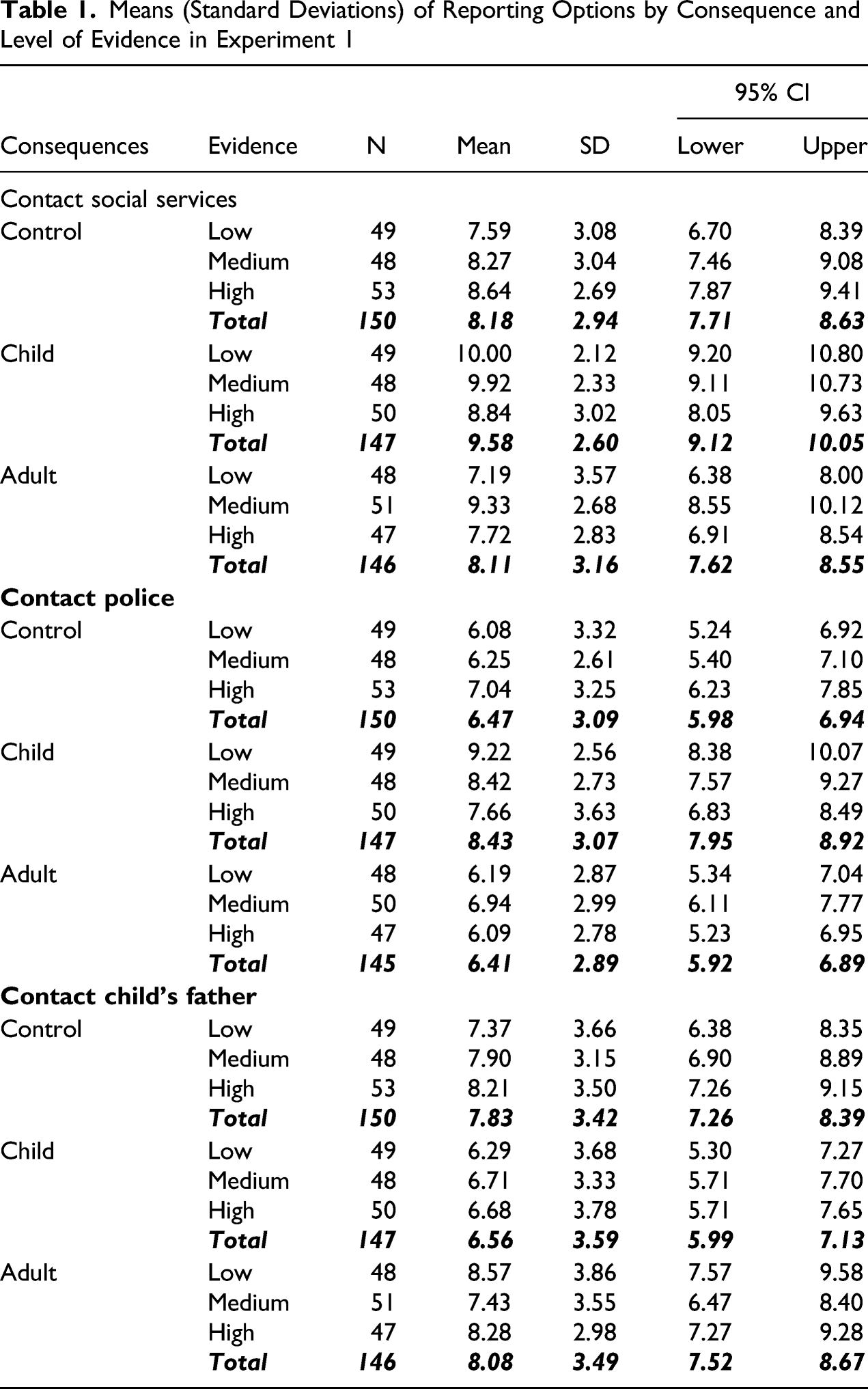
Means (Standard Deviations) of Reporting Options by Consequence and Level of Evidence in Experiment 1
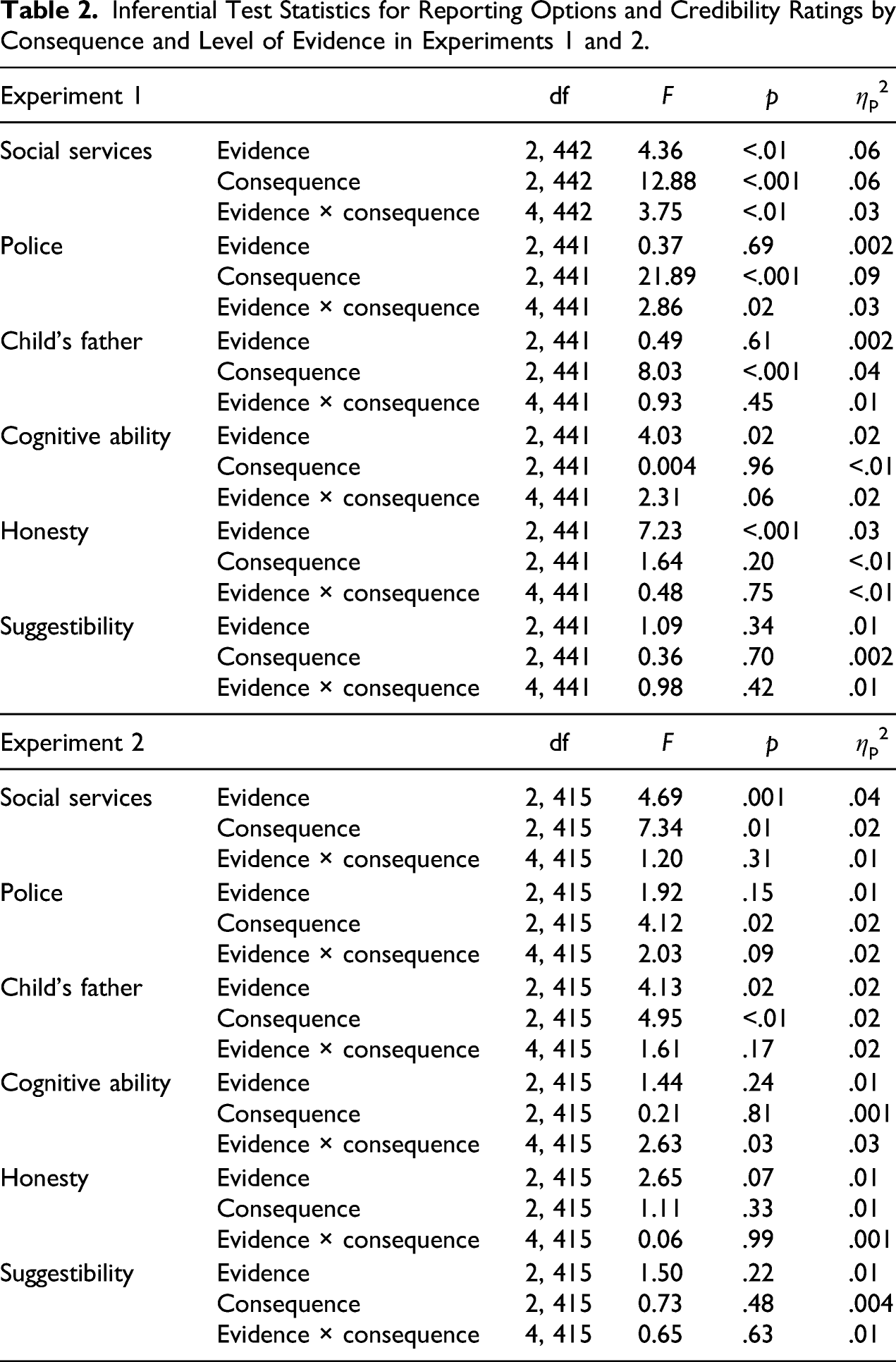
Inferential Test Statistics for Reporting Options and Credibility Ratings by Consequence and Level of Evidence in Experiments 1 and 2.
Relative Comparisons of Actions
Next, we conducted a repeated measures ANOVA to explore the relative likelihood of contacting each of the reporting options provided (social services, police, father; see Figure 1). Our interest was to evaluate perceptions of seriousness of the situation within each consequence condition. Due to the potential outcomes associated with each option, we anticipated that contacting police would reflect a perception of the most serious situation, followed by social services, and finally, the father. Relative comparison of reporting options in Experiment 1 across consequence conditions.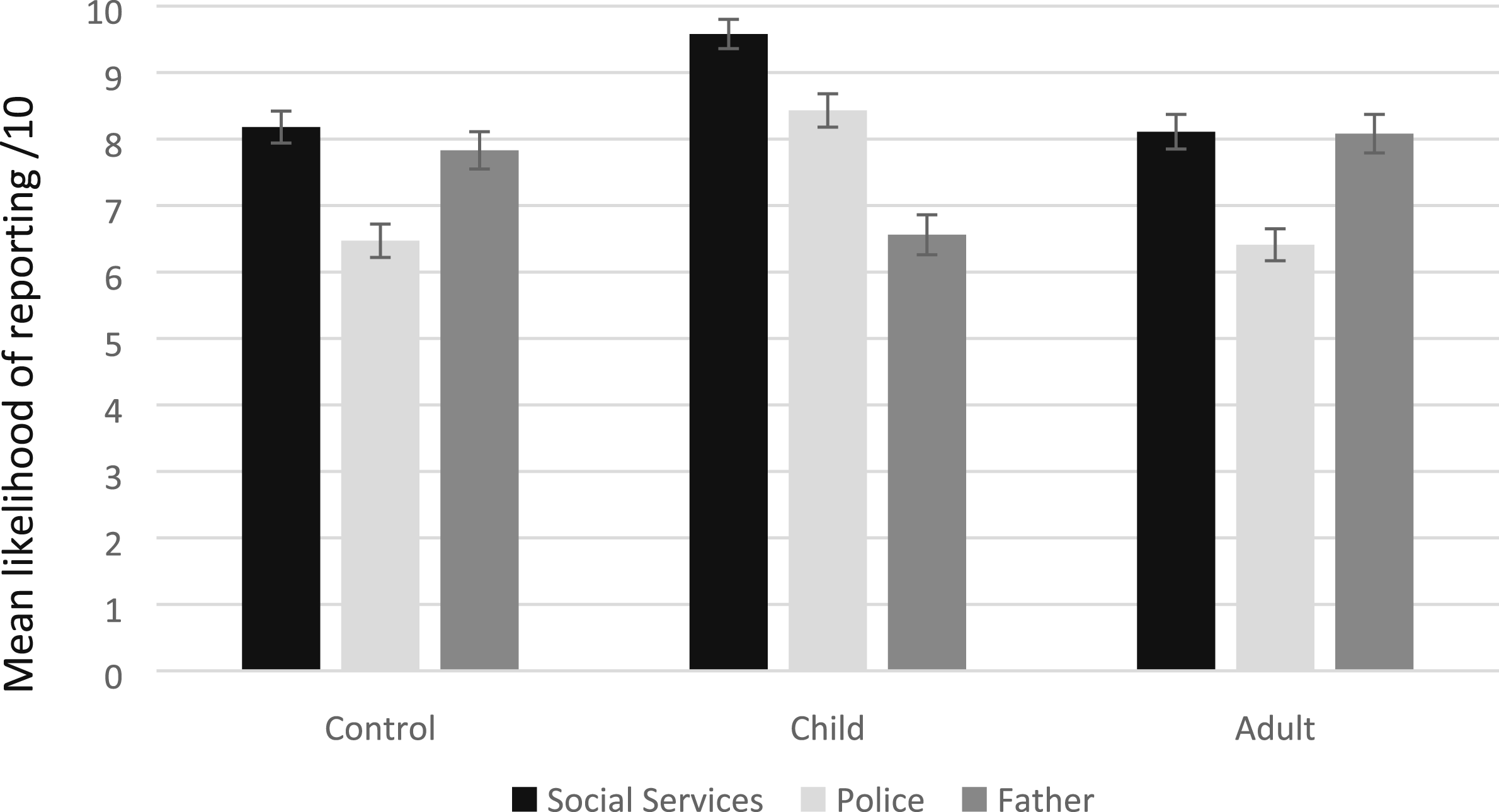
There was a main effect of consequence, F (2, 238) = 5.42, p < .01, ηp2 = .02, a main effect of contact decision, F (2, 438) = 31.88, p < .001, ηp2 = .07, and an interaction between consequence and contact decision, F (4, 438) = 18.49, p < .001, ηp2 = .08. For the adult-salient and control conditions, participants were most likely to contact social services, followed by the father, then the police. However, only the social services/police [Adult: t (144) = 8.15, p < .001; Control: t (149) = 7.53, p < .001] and the father/police [Adult: t (143) = 4.07, p < .001; Control: t (149) = 3.92, p < .001] pairs differed statistically. The social services/father pair did not differ significantly (Adult: t (144) = 0.11, p = .91; Control: t (149) = 0.99, p = .32). For the child-salient condition, participants were most likely to contact social services, followed by police, then the father. All paired comparisons differed significantly, ts (146) > 4.43, ps < .001.
Credibility
Means (Standard Deviations) of Credibility Ratings by Consequence and Level of Evidence in Experiments 1 and 2.
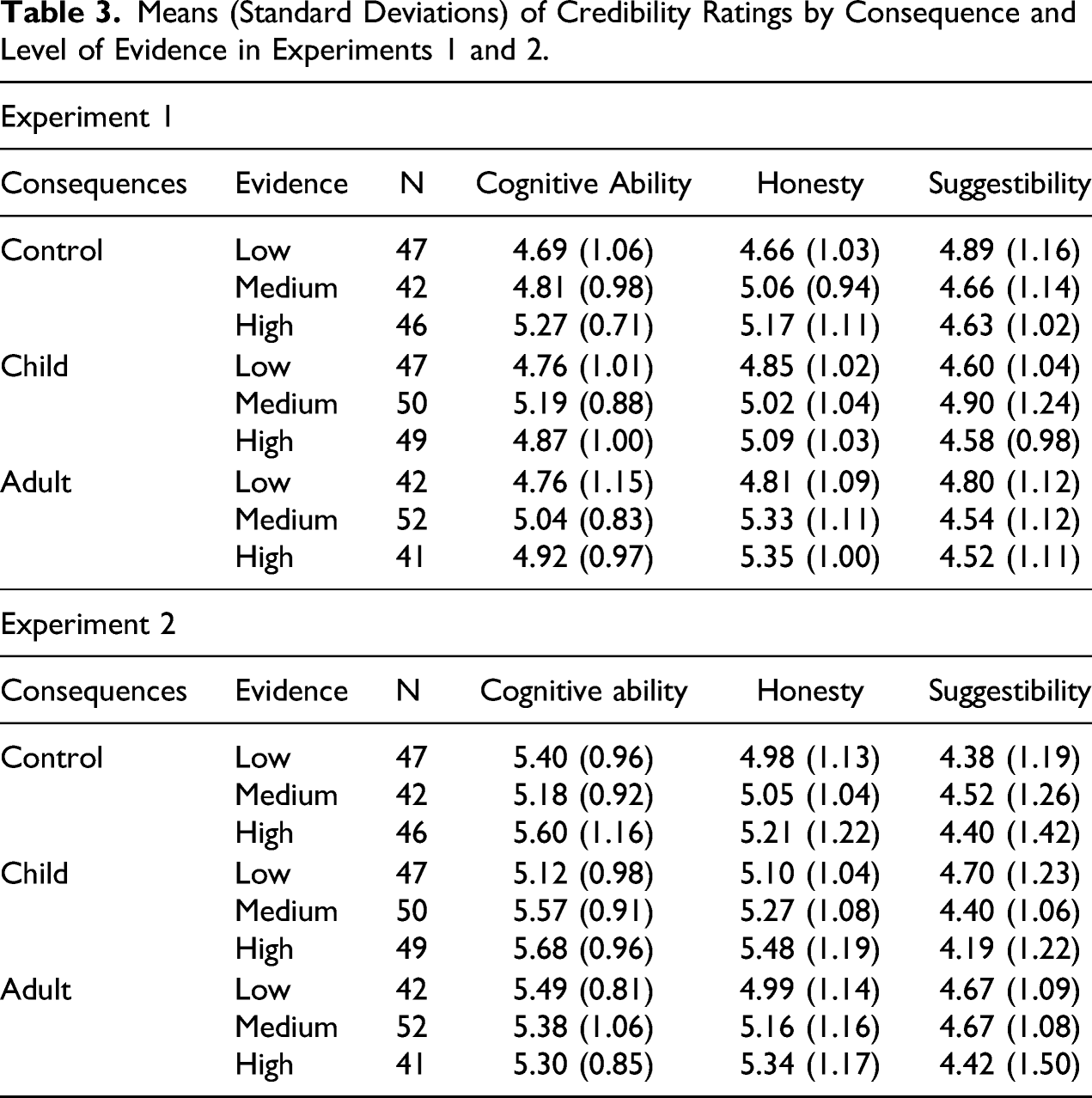
For both cognitive ability and honesty, there were main effects of evidence, but no main effects of consequences, and no significant interactions between the two variables. Post hoc LSD tests indicated that the child in the low evidence condition was rated as significantly lower in cognitive ability than the child in either the medium (p = .02) or high (p = .01) evidence conditions. The medium and high conditions did not differ (p = .91). The same pattern was found for honesty; post hoc LSD tests indicated that the child in the low evidence condition was rated as significantly less honest than the child in either the medium (p = .003) or high (p < .001) evidence condition, the latter of which did not differ from one another (p = .64). Finally, the overall pattern generally showed decreases in perceived suggestibility as level of evidence increased, but there were no significant effects of evidence or consequence and no interaction.
Experiment 1 Discussion
Reporting decisions were affected by both the salience of reporting/not reporting consequences and the degree to which participants believed they had sufficient evidence of maltreatment. Participants in Experiment 1 distinguished between different levels of evidence and adjusted their expected actions based on the evidence provided. Participants in the high level of evidence condition were uninfluenced by consequence salience and were equally likely to contact social services or police. However, at both lower levels of evidence, participants were influenced by the salience of consequences and were most likely to contact social services and police even at the lowest level of evidence when the consequences were salient to the child. This pattern indicates efforts to increase maltreatment reporting might be most effective if focused on the child’s experience.
Interestingly, participants’ decisions about whether or not to contact the child’s father were only influenced by the salience of the consequences. Regardless of the level of evidence, when the consequences to the child were not salient (i.e., control or adult-salient conditions), participants were less likely to contact the police than either of the other reporting options. There was no difference between the likelihood of contacting social services or the father. Further, in the comparison of relatively likely actions, it was notable that for the child-salient condition, participants were most likely to contact social services, followed by police, then the father. This pattern indicates a sensitivity to the child’s needs when the situational impact on the child is highlighted, and a belief that the situation was serious enough that contacting the father was no longer sufficient.
Experiment 1 was a strong manipulation in the child-salient condition which indicated a likelihood that the child would continue to sleep on the back porch (“After I got up and let him in the house, he was so mad at me that he took my room away from me and now I always have to sleep on the back porch. It’s really cold and scary”). In Experiment 2, we softened the manipulation to explore if the threat or possibility of sleeping on the back porch, rather than the certainty, would have a similar impact (“After I got up and let him in the house, he told me that if I ever locked the door again, he’d make me sleep on the back porch where it’s really cold and scary”). Further, in Experiment 2 we sought to include a more diverse population than had been included in the Pilot Study or Experiment 1. Thus, Experiment 2 was conducted with the online survey delivery platform, MTurk, which offers a sample derived from the broader community (with our restriction that participants had to be located in the United States and a previous MTurk approval HIT rate of 95%).
Experiment 2
Experiment 2 was the same as Experiment 1, with the above noted two exceptions (adjustment to the child-salient condition and different population). In Experiment 2, 472 participants completed the study, of which 416 passed the manipulation check questions (Mage = 39.19, SD = 12.84; 73.3% female). Most participants were not students (88.7%) and most had children of their own (56.5%). Participants were randomly assigned to condition in a 3 (Levels of additional evidence: low, medium, high from Exp. 1) x 3 (Consequences: to child, adult, control) between-participants design.
Experiment 2 Results
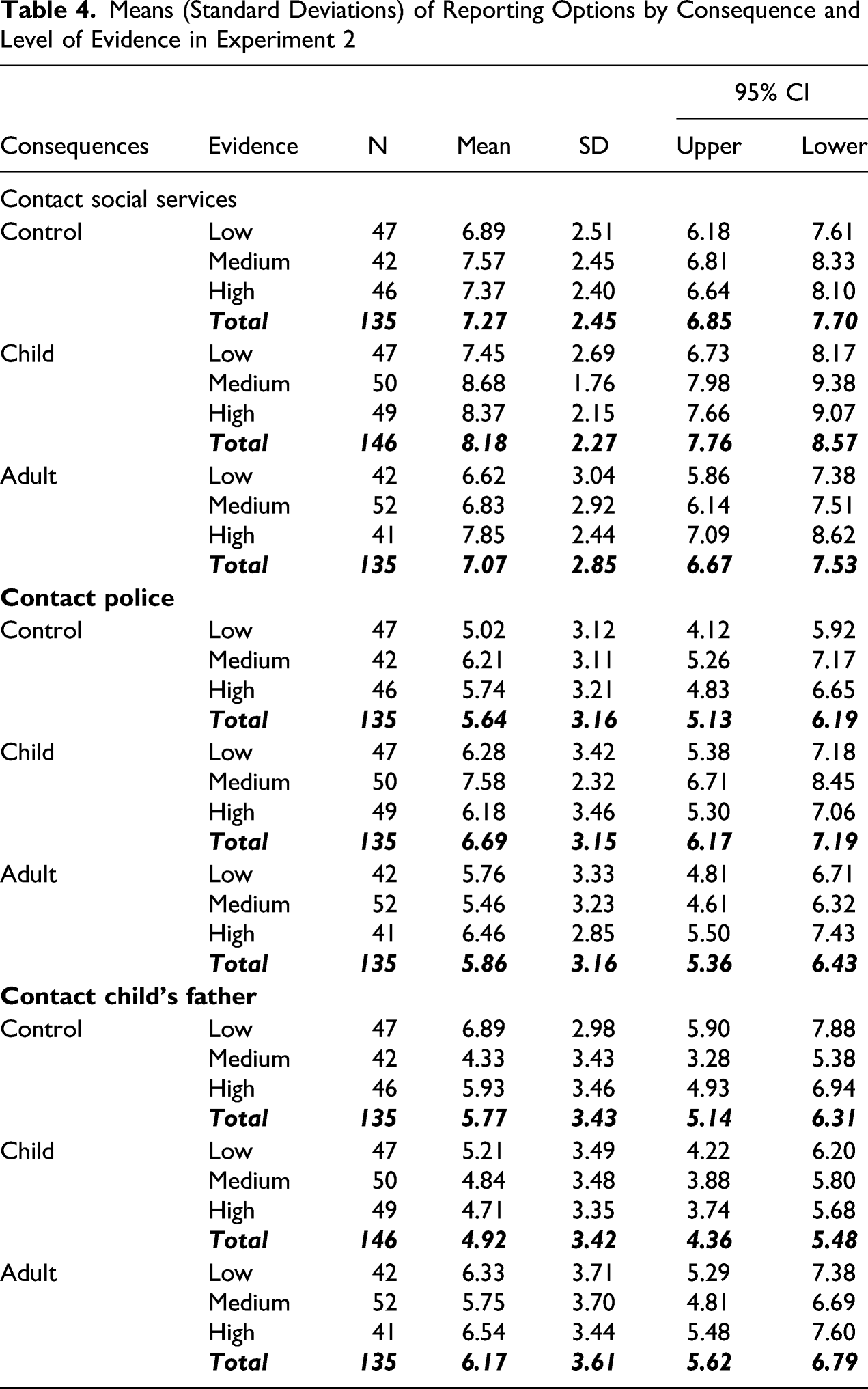
Means (Standard Deviations) of Reporting Options by Consequence and Level of Evidence in Experiment 2
Relative Comparisons of Actions
As with Experiment 1, we conducted repeated measures ANOVA to explore the relative likelihood of contacting each of the reporting options (social services, police, father; see Figure 2). There was no main effect of consequence, F (21, 413) = 1.35, p = .26, ηp2 = .01, but there was a main effect of contact decision, F (2, 413) = 46.15, p < .001, ηp2 = .10, and an interaction between consequence and contact decision, F (4, 413) = 7.78, p < .001, ηp2 = .04. For the adult and control conditions, participants were most likely to contact social services, followed by the father, then the police. However, only the social services/police (Adult: t (134) = 6.11, p < .001; Control: t (134) = 7.67, p < .001) and the social services/father (Adult: t (134) = 2.03, p = .04; Control: t (134) = 3.70, p < .001) pairs differed statistically. The police/father pair did not differ significantly (Adult: t (134) = 0.71, p = .48; Control: t (134) = 0.32, p = .75). For the child-salient condition, participants were most likely to contact social services, followed by police, then the father. All paired comparisons differed significantly, ts (145) > 4.40, ps < .001. Relative comparison of reporting options in Experiment 2 across consequence conditions.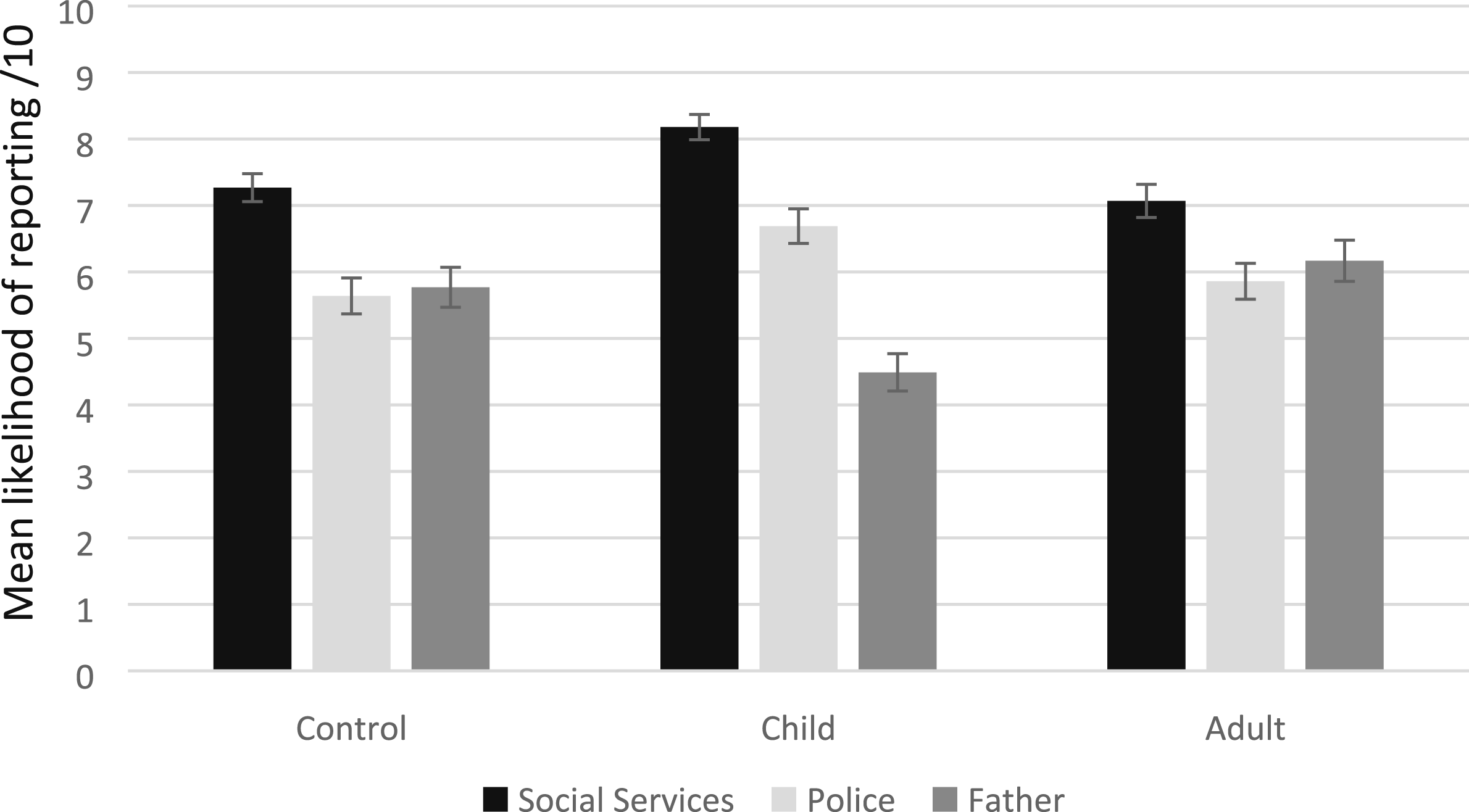
Credibility
Table 2 provides test statistics and Table 3 displays descriptive data for the child’s credibility ratings across experimental conditions. Again, the three CCAS subscales had good reliability (honesty: α = .81; suggestibility: α = .70, cognitive ability: α = 93). For ratings of cognitive ability, there was no main effect of evidence or consequences, but there was a significant interaction. To explore the interaction, we examined the impact of consequence at each level of evidence. For both the control and adult consequence salient conditions, there was no effect of level of evidence on evaluations of the child’s cognitive ability (Control: F (2, 134) = 1.88, p = .16, ηp2 = .03; Adult: F (2, 134) = 0.43, p = .66, ηp2 = .01). However, for the child salience condition, as the level of evidence increased, so did the child’s perceived cognitive ability, F (2, 145) = 4.58, p = .01, ηp2 = .06. Post hoc LSD tests indicated that the child in the low evidence condition was rated as significantly lower in cognitive ability than the child in either the medium or high evidence conditions (ps ≤ .02). The medium and high conditions did not differ (p = .56). Finally, though the overall pattern was of increases in honesty and decreases in suggestibility with additional evidence, there were no effects of level of evidence or consequence, nor an interaction for either honesty or suggestibility.
Experiment 2 Discussion
In Experiment 2, we introduced a less severe consequence in the child-salient condition, but observed similar patterns, though primarily through main effects rather than interactions. Participants clearly found the child-salient consequences condition most compelling and were more likely to report to social services and police, and less likely to report to the father, relative to the other consequence salience conditions. Generally, in Experiment 2, participants preferred to contact social services over the other reporting options. This pattern reinforces the critical finding that highlighting the impact on a child of ongoing, and potentially escalating, maltreatment increased likely reporting.
General Discussion
Adults who suspect a child may be maltreated often elect not to make a formal report of their suspicion. Though we are beginning to gain a better understanding of how professionals who have regular contact with children (e.g., teachers, physicians) make formal reporting decisions (e.g., Alvarez et al., 2004; Beck et al., 1994; Talsma et al., 2015; Tufford & Lee, 2019), we know little about how adults who may not have specific training in formal reporting policies respond (but see Calheiros et al., 2020). Further, research on professionals’ decision-making has established that concern about consequences and confidence in ability to detect abuse are both primary barriers to formal reporting. Yet, we know little of which consequences and how much confidence is required to report, and how these crucial factors may interact. In the present experiments, we began to explore laypeople’s responses to suspected child maltreatment in an experimental context in which we evaluated salience of reporting/not reporting consequences to the child and suspected adult abuser, as well as the level of evidence available (i.e., confidence that maltreatment was taking place).
A few clear patterns emerged, which were largely in line with our predictions. First, consistent with the literature suggesting that confidence in ability to detect abuse influences reporting behavior (e.g., Kenny, 2001; Toros & Tiirik, 2016), participants were relatively sensitive to the amount of evidence presented and adjusted their expected actions based on the evidence provided. For example, in the highest level of evidence in Experiment 1, the consequence salience condition did not impact participants’ likelihood of contacting social services—they were likely to contact social services regardless of consequence salience. Comparatively, participants were less likely to contact social services in the low and medium conditions, but were still likely to do so when the consequences were salient to the child. In Experiment 2, participants were more likely to take action that would result in an investigation (social services) in the medium and high, relative to the low, evidence conditions and were also less likely to take the least assertive approach (contact father) in the high evidence condition.
A second theme from these studies was the emergence of the first experimental evidence supporting some of the early work on concerns about the consequences of making a report (Beck et al., 1994; Hansen et al., 1997; Zellman, 1990a, 1990b). In highlighting the ongoing and potentially escalating nature of maltreatment through the child-salient condition, participants were consistently more likely to make a report across all response options. However, the present experiments also provide clear evidence that the child’s needs are balanced with the potential impact on the alleged abuser. In both experiments, when the consequence to the child of ongoing maltreatment was made salient, participants were more likely to take action that would result in formal investigation (social services, police) than when consequences of disclosure were made more salient to the suspected abuser, or when consequences were less clear (control). However, when consequences were salient to the adult, participants were more likely to contact the father about the situation than when consequences were salient to the child. This pattern indicates that an adult may receive the benefit of the doubt if a potential reporter is reminded of the public consequences of a formal report. Though the work presented here is not yet sufficient to justify policy recommendations, it nonetheless has potential for increasing reports of suspected child maltreatment. The consistency of the findings related to consequence salience provides a possible avenue to encourage such reports through public information campaigns and training of professionals who have regular contact with children. Continued exploration of the ways in which the consequences of abuse to children can be made salient to potential reporters is critical.
As an exploratory question, we sought to examine how participants’ perceptions of the child’s credibility were related to their reporting decisions. As the level of evidence increased, so did perceptions of the child’s cognitive ability. Similarly, but non-significantly, vignettes including more evidence were also related to higher honesty and lower suggestibility ratings. The pattern is nonetheless noteworthy because it suggests that additional detail makes the story more credible, which is a pattern observed in mock jury research for witnesses more generally (e.g., Bell & Loftus, 1988). Of course, it is also possible that participants justified their reporting decisions by over-valuing or de-valuing a child’s credibility to bring it in line with a comfortable decision process. However, there were few interactions with consequence salience, which indicates that the credibility assessments may not be particularly malleable. Further, we deliberately chose an 8-year old victim as past research suggests this age to be the most credible among child witnesses (Nunez et al., 2011), as such perceptions of credibility may have been high to begin with. However, this question was not a central focus in the present work and should be considered more thoroughly in future work.
Limitations and Future Directions
Despite the relatively clear findings, there are several important directions future work could take. Such directions could include exploring a variety of child maltreatment scenarios, the type and nature of maltreatment, the sex of the child and alleged abuser, the relationship between the child and the alleged abuser, and the age of the child and alleged abuser. Our particular methodological choices on each of these variables may have influenced the observed pattern of results. For instance, given prior observations of increased reporting of neglect when the child was a female (Calheiros et al., 2016), our depiction of a boy may have reduced overall likelihood of reporting. Systematic exploration of such variables could enhance understanding of how formal disclosure decisions are made (see Tufford & Lee, 2019). In addition to diversity in the child, adult, and abuse depicted in the vignette, a more diverse sample of participants is required. Although we were unable to collect race/ethnicity data (a further limitation of the present work), the geographical areas in which most of these data were collected were predominantly White and our participants likely reflect the larger population. Further, we used samples of convenience, which come with limitations in generalizability of the findings. This work must be conducted with more diverse populations.
It is worth noting that we explored a more subjective, and less examined, form of maltreatment, neglect. Had we depicted sexual or physical abuse, we may have found different patterns. For example, sexual abuse is the most concerning form of abuse to most people, but it is also the most harmful to an accused’s reputation. How might potential reporters balance these competing demands? The link between expressed attitudes and behavior has been established in volumes of past research (e.g., Ajzen & Fishbein, 2005), but there remains concern that participants might not act consistent with their judgments in a real situation, and with the possibility of participants responding in a socially desirable manner, which might be a particular concern in work relating to the protection of children. This crucial question should be more easily answered as we work toward development of theories of formal maltreatment reporting.
In the present scenarios, we introduced a passive form of ongoing maltreatment (sleeping on the porch) for the child-salient condition. Relative to the other levels of maltreatment depicted (lack of food, being left at activities), sleeping on the porch may have been a particularly concerning form of maltreatment. Indeed, it may represent an escalation of maltreatment. However, without depicting ongoing maltreatment that varied in nature, we could not increase the salience of the maltreatment consequences to the child. As a result, the powerful influence of consequences may have been driven, at least in part, by the nature of the way in which ongoing maltreatment was depicted. We attempted to address this by softening our child-salient condition in Experiment 2, but we were unable to fully disentangle level of evidence and consequences. Similarly, the salience of consequences to the adult was intended to reflect reputational consequences. We sought to limit the relations between reputation and socio-economic status, and thus, selected a local news anchor as the occupation for the father. However, it is possible that participants inferred a particular standard of living, despite this occupation typically falling within earnings norms. Further, focusing the consequences on something other than reputation (e.g., job loss, romantic relationship loss), may have produced other results.
There were also challenges in distinguishing different levels of abuse. Our pilot testing indicated a general progression from lower levels of abuse to higher levels, but the increase was not linear. Although we ultimately selected three levels for inclusion in the experiments, it is also clear that there is a lot of gray area in what participants viewed as an increase in abuse severity. Future research should continue to further refine our understanding of factors potential reporters consider when determining perceived abuse severity.
Participants came from regions in which mandatory reporting laws differ. For example, just over half of the university sample in Experiment 1 was obtained in Canada in which all citizens have a legal obligation to report children who may be at risk. The other half of the sample was from the United States in which there is state variability in mandatory reporting laws. In retrospect, an evaluation of each individual’s understanding of mandatory reporting responsibilities could have assisted with interpreting responses. However, given that the results did not differ between our two samples in Experiment 1, if there was an effect in the present study, we expect it to be small.
Finally, implicit in this work is the assumption that formally reporting suspected child maltreatment will benefit the child. Though intuitive, it is not always true that the benefits of involving authorities outweigh the potential consequences (see Alvarez et al., 2005).
As the field moves toward greater understanding of formal reporting decisions, it is crucial to continue to acknowledge that formal reporting of abuse by an adult is not a given. Thus, reporting protocols and public information campaigns must focus on both the scenarios that outsiders might perceive as ‘obvious’ reporting situations and on situations that are less clear. The present data suggest that the decision to report suspected abuse is a struggle that is influenced by many factors, including the anticipated impact on the accused adult. Continued research, articulation of findings, and recognition of factors that contribute to formal reporting is critical in the protection of children.
Conclusion
The present experiments revealed a clear difficulty in deciding whether or not to report suspected child maltreatment. Highlighting the impact of abuse on either the child or the adult by describing potential consequences of reporting or not reporting pushed participants either closer to (child-salient) or farther from (adult-salient) a formal report. We also found that participants were sensitive to the amount of evidence to support a suspicion of maltreatment, and that this influenced likelihood of reporting the maltreatment. Taken together, these findings can be used to develop more informed reporting protocols for people who work with children, as well as to develop public information campaigns that are aimed at identifying when a report to authorities is warranted.
Supplemental Material
sj-pdf-1-jiv-10.1177_08862605221081934 – Supplemental Material for Potential Reporters of Suspected Child Maltreatment are Sensitive to the Amount of Evidence and the Potential Consequences of Reporting
Supplemental Material, sj-pdf-1-jiv-10.1177_08862605221081934 for Potential Reporters of Suspected Child Maltreatment are Sensitive to the Amount of Evidence and the Potential Consequences of Reporting by Heather L. Price and Andre Kehn in Journal of Interpersonal Violence
Footnotes
Acknowledgments
The authors thank the following research assistants: Mariah Wichmann, Nikola Klassen, Tim Edge, Naomi Woolverton, and Rachel Cantin. Data will be available on the Open Science Framework upon manuscript publication.
Declaration of Conflicting Interests
The author(s) declared no potential conflicts of interest with respect to the research, authorship, and/or publication of this article.
Funding
The author(s) disclosed receipt of the following financial support for the research, authorship, and/or publication of this article: This research was funded by a Social Sciences and Humanities Research Council of Canada Insight Grant, a Canada Foundation for Innovation grant, and the Canada Research Chairs program to the first author.

Supplemental Material
Supplemental material for this article is available online.
Note
Appendix
Author Biographies
References
Supplementary Material
Please find the following supplemental material available below.
For Open Access articles published under a Creative Commons License, all supplemental material carries the same license as the article it is associated with.
For non-Open Access articles published, all supplemental material carries a non-exclusive license, and permission requests for re-use of supplemental material or any part of supplemental material shall be sent directly to the copyright owner as specified in the copyright notice associated with the article.
