




Abstract
Children experiencing maltreatment in the first 3 years of life are at risk for several developmental challenges throughout the lifespan. Researchers and practitioners have emphasized understanding how institutional supports implemented through state governments may support infants and toddlers’ development, but less attention has been paid to the potential effects of state policies on maltreatment specifically. We tested whether state-level policies providing economic and family planning support implemented between 2005–2019 were associated with rates of reported and substantiated abuse and neglect among children under three. Two-way fixed effects models indicate that implementing a state Child Tax Credit, expanding contraception access, raising minimum wages, and expanding eligibility for Supplemental Nutrition Assistance Programs were associated with decreased maltreatment according to various indicators among Black, White, and Hispanic children. Implications for future research and policy are discussed.
Introduction
The first 3 years of human development are critical. During this period, the brain undergoes rapid development with connections and associations being formed at a rate unmatched during later developmental stages (National Scientific Council on the Developing Child, 2020). As such, a child’s experiences and interactions in this period shape subsequent development – with adverse experiences, such as abuse and neglect by caregivers, impacting biological, neurological, and social developmental processes (Atzl et al., 2019). These events are associated with negative outcomes, including cognitive delays, emotional and behavioral challenges, and compromised health (Jones Harden et al., 2016), and have large societal costs (Peterson et al., 2018). Theories of “biological embedding” suggest that earlier experiences of maltreatment have more opportunities to undermine development (Jones Harden et al., 2016), underscoring the importance of preventing maltreatment in early life.
Unfortunately, maltreatment is more likely in the first year of life than any other time in childhood; more than 60% of fatal maltreatment incidents involve children under 3 years of age (Children’s Bureau, 2023). This relatively high risk of maltreatment results from several factors. First, very young children spend more time in home settings and with caregivers, such that there are simply more opportunities for maltreatment (Jones Harden et al., 2016). Second, infants and toddlers are more dependent on caregivers for meeting their many needs, and hence there are more opportunities for those needs to be neglected. Finally, caring for infants and young children can be demanding, and parents are prone to several stressors, particularly when they do not have adequate social or economic resources (Wimer & Wolf, 2020).
Given both the critical nature of early development and the prevalence of maltreatment among young children, researchers and practitioners in the United States (U.S.) have explored how institutional supports implemented by state governments can protect children (Jones Harden et al., 2021). Importantly, researchers are increasingly recognizing the critical role of policies and programs that look beyond child protection to address upstream family-level needs, including those related to economic well-being and family supports. For instance, researchers have recently explored: whether policies such as paid family leave can improve infant health (Bullinger, 2019); whether Child Tax Credits and minimum wage legislation can reduce child poverty, boost parents’ employment prospects, and increase birthweight (Prenatal-to-3, 2022; Prenatal-to-3, 2023); and whether childcare subsidies reduce child behavior problems and promote positive parenting (Fuller et al., 2020).
Researchers have also studied the effects of policies on preventing child maltreatment (Fortson et al., 2016) in areas such as strengthening economic supports for families (e.g., Temporary Assistance for Needy Families [TANF]), changing social norms to support parents and positive parenting (e.g., public awareness campaigns), quality early care and education (e.g., childcare subsidies), enhancing parenting skills (e.g., home visiting programs), and intervening to lessen the likelihood of maltreatment (e.g., substance abuse policies). However, many gaps remain, particularly in the areas of strengthening economic supports and policies supporting family planning. Policies such as the states’ Child Tax Credit (CTC), paid sick leave laws, or contraceptive access policies have not yet been explored in relation to maltreatment. Unlike previous studies focusing on one policy intervention, the current study addresses this critical issue by combining data from multiple sources to examine whether an array of state-level policies supporting family planning and strengthening economic supports may be associated with state-level trends in reported and confirmed maltreatment among children ages 0–2.
State-Level Social Policies and the Maltreatment of Young Children
Ambitious policies and programs aimed at improving the daily settings inhabited by infants and toddlers in the U.S. have expanded dramatically over the past half-century (Fuller et al., 2020); however, as Klevens and colleagues (2015) lament, “research on and use of public policies to prevent child maltreatment is surprisingly scant” (p. 1). This is particularly true when it comes to policies that were not initially intended to prevent child maltreatment specifically, but that may have downstream effects on child maltreatment rates by addressing parent- and family-level needs (Herrenkohl et al., 2016). At the same time, both practitioners and scholars in the realm of child welfare increasingly recognize the need for more proactive approaches to maltreatment prevention, moving away from a historically reactive model of child protection. While major debates persist as to the best path for reforming child welfare operations (e.g., Barth et al., 2022), many agree on the importance of bolstering avenues of prevention that operate outside of the formal child welfare system (Campbell, 2019).
When examining the role of policy in preventing child maltreatment, policies for which individual states lead decision-making and implementation are particularly important for several reasons. First, efforts that omit state-level analyses of maltreatment rates may miss out on key contexts, as states set their own child welfare policies and manage their own responses to maltreatment. Second, state governments administer most economic and family support programs available to U.S. families. Even programs enacted at the federal level are generally administered through state agencies, including Medicaid, TANF, and Supplemental Nutrition Assistance Programs (SNAP). In fiscal year 2020, state governments spent about $1.7 trillion on direct expenditures and transferred nearly $600 billion to local government entities administering state programs (Urban Institute, n.d.). Nearly one-quarter of these expenditures went to public welfare programs. As such, state governments play a major role in families’ access to various programs and supports. Third, because these programs are administered at the state level, and because states and their governments and infrastructures are diverse, there is a significant amount of variation across states in how and when programs are implemented. These factors culminate in a unique opportunity to examine the impact of various policies on child maltreatment. The present study explores infant and toddler maltreatment and victimization rates over time, alongside state-level changes to social policies in two key domains: economic support policies and policies supporting family planning (Desilver, 2019; Fortson et al., 2016; Grumbach, 2018).
Economic Support Policies
Several state policies aimed at providing economic support for families have come to the attention of researchers exploring strategies to prevent child abuse and neglect (Maguire-Jack et al., 2022; Puls et al., 2021). For instance, recent studies found that increases in TANF benefits and decreases in restrictions on TANF access were associated with lower rates of maltreatment for children ages 0–17 (Ginther & Johnson-Motoyama, 2022; Ha et al., 2022; Spencer et al., 2021). However, no identifiable studies have explored this association among infants and toddlers specifically. Researchers have also found that increases in states’ Earned Income Tax Credit (EITC) and minimum hourly wages were linked to reductions in child maltreatment for children ages 0–5 (Fullenkamp & Haney, 2022; Kovski, Hill, Mooney, Rivara, Morgan et al., 2022). States’ policies expanding SNAP benefits have been associated with fewer maltreatment reports and foster care placements for children 0–5 (Johnson-Motoyama et al., 2022). Also, the Affordable Care Act’s Medicaid expansions (ACA; P.L. 111–148 March 2010) have been linked with reductions in rates of neglect (but not abuse) among children 0–5 (Brown et al., 2019). Finally, a longer duration of unemployment benefits has been linked with reductions in neglect for children ages 0–17 (Brown & De Cao, 2020).
Surprisingly, researchers have not explored states’ CTC policies or paid sick leave laws in relation to young child maltreatment, although a significant number of states introduced legislation to implement these programs in recent years (National Partnership, 2023a; NCSL, 2023). Furthermore, SNAP implementation characteristics beyond generosity have not been studied, even though states have significant leeway in implementing this program. Other economic support policies that may impact maltreatment rates but have not been studied include the Child Care & Development Block Grant, the Special Supplemental Nutrition Program for Women, Infants, and Children (WIC), the Child and Dependent Care Credit, and the Child and Adult Care Food Program (Puls et al., 2022). Lack of data and differences across states and over time make empirical explorations of these policies difficult (Abdi et al., 2023).
Policies Supporting Family Planning
Various policies that support family planning may be important for preventing maltreatment among very young children. We defined policies supporting family planning as policies aimed at supporting families to care for their families and to plan for their family composition, size, and timing. These policies – including access to contraception – are critical for allowing individuals to time when they have children, control family size, and make decisions in accordance with their family’s needs and constraints. Indeed, unintended pregnancy has been identified as a potential risk factor for maltreatment of young children (Guterman, 2015). This makes sense, as unintended pregnancies may add stress to an ongoing family or result in living arrangements or relationships that are unstable (Guttmacher Institute, 2019). Programs and policies designed to support family planning can empower parents to decide their family size and timing, which may increase the likelihood that children experience safe, stable, nurturing relationships and environments. The U.S. has experienced an increase in state-level family planning legislation, both increasing and reducing access and funding in recent years (Rice et al., 2022). Research has yet to adequately investigate how these changes may affect maltreatment rates among young children. Researchers have explored the effects of Medicaid expansions on maltreatment, though without distinguishing family planning funding from other healthcare included in this program (McGinty et al., 2022).
Paid family leave policies may also be important for protecting infants and toddlers from maltreatment. One study found that California’s policy implementing partially-paid family leave was associated with decreases in infant hospitalizations for abuse-related head trauma (Klevens et al., 2016). Other authors have argued that fathers’ access to paid leave following the birth of a child may prevent infant maltreatment by promoting father-child bonding and supporting families’ economic well-being during a critical period of transition (Pace et al., 2022). Paid family leave has been linked to reduced stress and depression among new parents (Chatterji & Markowitz, 2012), which could reduce risks of maltreatment among very young children. While no identifiable efforts have explored the impacts of states’ paid sick leave policies, specifically, on maltreatment rates among infants and toddlers, the status of family policies providing supports like paid family and sick leave are posited as part of the ecology of child maltreatment (Austin et al., 2020), and the implementation of such policies has been suggested as part of a holistic, public health approach to child maltreatment prevention.
Present Study
Policy Selection Process
In the selection of policies to include in our analysis, we were guided by the Centers for Disease Control and Prevention (CDC)’s framework related to policies for preventing child maltreatment (Fortson et al., 2016), which organizes policy strategies into five areas: strengthening economic supports for families, changing social norms to support parents and positive parenting, quality early care and education, enhancing parenting skills, and intervening to lessen the likelihood of maltreatment (Appendix Table A1). We modified this framework with two additional policies that may be able to prevent child maltreatment: policies supporting family planning (as described above) and policies for children with disabilities.
We used the following criteria to create a final list of focal policies to be examined:
(1) whether the necessary state policy data was publicly available; (2) whether there was sufficient variation in state policy to complete analyses; and (3) whether we might expect a change in rates of maltreatment given the features of the policy and the size of the population served.
We excluded policies when a state-level change in maltreatment would not be expected given the scope of the policy and the population served. For instance, some state prevention policies mandate the use of public awareness campaigns, which tend to be short-term and locally targeted (e.g., at the county level). Other policies were excluded due to a lack of state-level data needed to assess implementation over time. For instance, policies relating to implementing home visiting programs were excluded – while there are a variety of programs across states, there are no publicly available data documenting implementation across states over time. More details about this selection process can be found in Abdi et al. (2023).
To plan these analyses and identify relevant policies and programs, we conducted convenings with experts in child maltreatment prevention, service systems, policy, and child welfare data. These subject matter and methodological experts provided feedback on potential policies and provided advice on our analytic approach. This process yielded a list of policies that could be examined (Table A1 in online Appendix).
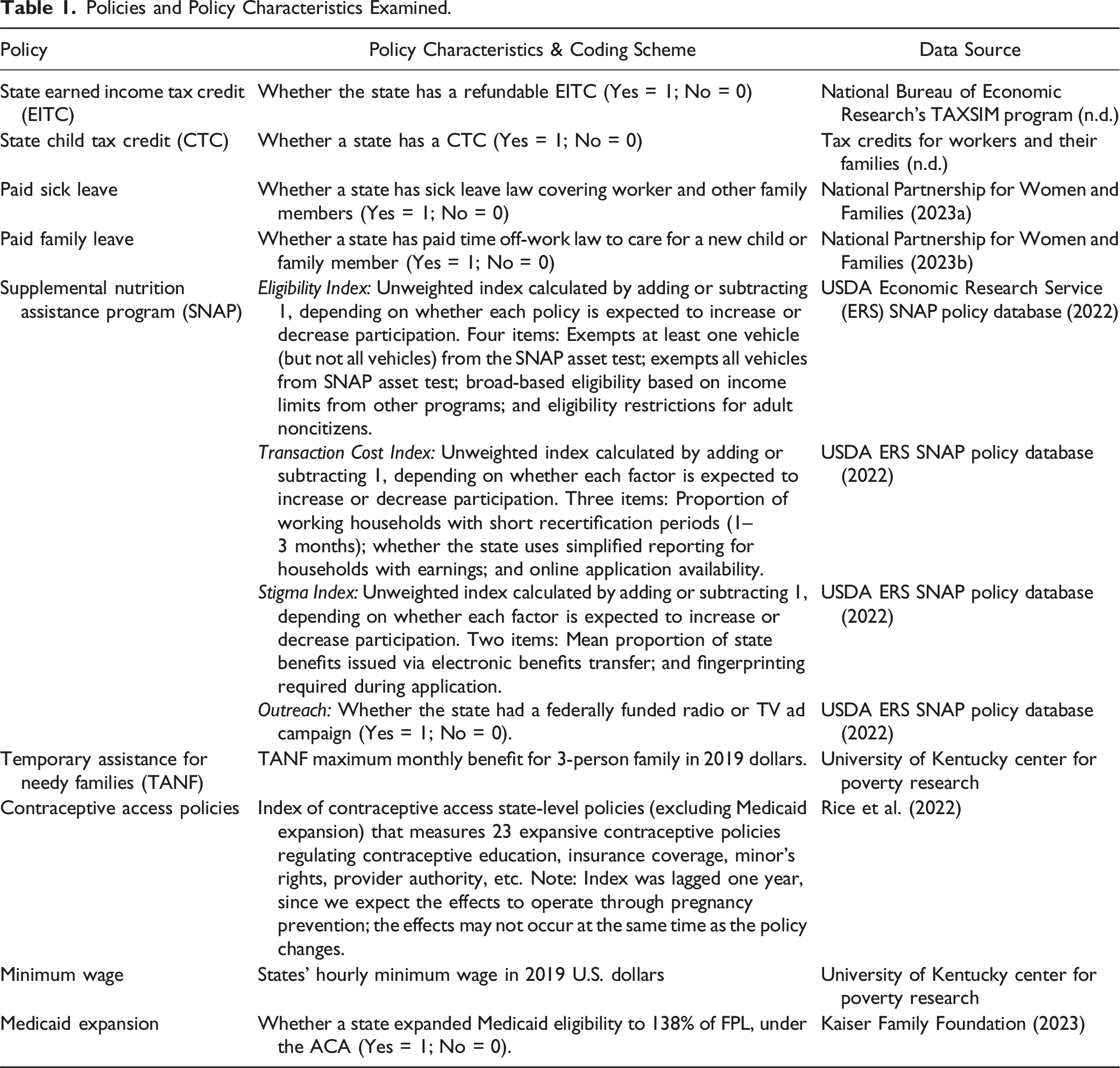
Policies and Policy Characteristics Examined.
Methods
Data
We compiled data from multiple sources to create a state-level panel dataset representing child maltreatment incidence, state-level implementation of multiple policies, and important contextual variables from a variety of sources for the years 2005–2019. We excluded the years following the onset of the COVID-19 pandemic, which introduced unique circumstances that affected maltreatment reporting, as well as unprecedented state and federal policies, and significant changes in the economic and health contexts of children (Shusterman et al., 2022).
Child Maltreatment (Reports & Substantiations)
Child maltreatment data were obtained from the National Child Abuse and Neglect Data System (NCANDS) Child File (Children’s Bureau, 2023). Compiled by the U.S. Department of Health and Human Services’ Administration for Children and Families, NCANDS includes all state-submitted data on screened-in reports of child maltreatment to state and local Child Protective Service (CPS) agencies. The NCANDS Child File contains a record for each report, detailing the state and year in which the report was made, child age, and type of maltreatment alleged (e.g., neglect, physical abuse, emotional abuse, and sexual abuse).
To construct child maltreatment rates for children under three, we calculated rates for both reports and substantiated reports, respectively, for children ages zero, one, and two years old at the time of the investigation – for each individual state and within each year in the study period. Reports including multiple alleged victims counted each individual victim separately. This process was followed to create six state-level indicators of maltreatment for each year (2005–2019) for each state: total maltreatment reports; neglect reports (when a report included neglect as a maltreatment type); physical abuse reports (when a report included physical abuse as a maltreatment type); substantiated maltreatment reports; substantiated neglect reports; and substantiated physical abuse reports. These indicators were not mutually exclusive, to account for reports containing multiple types of abuse. Using U.S. National Vital Statistics System Bridged-Race Population Estimates of each state’s population of children under three, we constructed rates per 1000 children for each of the six maltreatment indicators, per state, per year – overall, and for White, Black, and Hispanic children (of any race), separately.
State Policies
For each policy included in analyses, Table 1 provides the policy characteristics modeled, the data sources, and the coding scheme for each policy characteristic.
We coded whether each state had a refundable EITC (0, 1); we did not code non-refundable EITCs, as most families living in poverty rarely owe sufficient income tax to benefit from non-refundable tax credits (Kovski, Hill, Mooney, Rivara, & Rowhani-Rahbar, 2022). We also coded whether each state had a CTC (0, 1). We did not differentiate between states with “refundable” versus “non-refundable” CTCs, as only five states implemented CTCs in the study period. We coded whether each state had sick leave laws paying a percentage of workers’ salaries while sick (0, 1), as well as laws ensuring paid time-off work to care for a new child or family member (0, 1). We also coded whether each state expanded Medicaid eligibility to individuals with incomes up to 138% of the federal poverty level under a provision of the Affordable Care Act (0, 1). To assess TANF policies, we created a variable indicating the TANF maximum monthly benefit for a three-person family in 2019. The minimum wage was assessed with the state minimum hourly wage, in 2019 dollars. Because SNAP benefit levels are largely set by the federal government, there is no state-level variation in benefit amounts. As such, we created an index representing four SNAP characteristics over which states have control, and that have been found to increase enrollment: eligibility, transaction costs, stigma, and outreach, following research from the U.S. Department of Agriculture’s Economic Research Service (Stacy et al., 2018). Finally, we included an index of contraceptive access state-level policies that measured 23 expansive contraceptive policies regulating contraceptive education, insurance coverage, minor’s rights, provider authority, and more; the index has been used elsewhere (Rice et al., 2022). See the online appendix (Table A2) for details on other policy characteristics that were considered but ultimately not included in final models, as well as reasons for exclusion.
State-Level Contextual Variables
This study is informed by ecological systems theory (Bronfenbrenner; 1995) to recognize that the child develops within multiple contexts. To reduce the effects of confounding contextual factors, our models controlled for state-level demographic and economic characteristics that may be associated with child maltreatment rates, including unemployment rate, proportion of the population without a high school credential, poverty rate, teen birth rate, opioid-related overdose deaths per 100,000 people, single mother labor force participation, and shares of the population that were White, Black, and Hispanic (of any race). Further, recent research has highlighted the need to include state-specific child welfare policies and practices when comparing child maltreatment rates across states, given that states vary considerably in their processes to identify potential maltreatment and the mechanisms to respond to alleged maltreatment cases (Day et al., 2022). As such, we incorporated dummy variables for the years in which each state implemented: (a) data reporting changes that may influence maltreatment data over time; (b) differential or alternative response models (i.e., options for alternative family support services for low-risk families reported to CPS); (c) centralized intake systems; (d) higher standards of proof (i.e., for substantiating maltreatment reports); and (e) a broadened scope of maltreatment (e.g., adding new forms of maltreatment to their definitions – such as medical neglect). Detailed information about the years of implementation for each type of policy is described by Day and colleagues (2022).
Analytic Strategy
Given the substantial variation in maltreatment reporting policies, how maltreatment reports are captured in state administrative data systems, and how these data are submitted to the federal government for the combined NCANDS data files, we opted against making comparisons across states. Instead, we chose a within-state difference-in-difference analysis, exploring whether states’ policy changes are associated with changes in child maltreatment rates within states over a 15-year period (i.e., before vs. after policy change). We controlled for fixed effects for state (i.e., all 50 U.S. states) and for time (i.e., each year represented in the models), and controlled for various state-level covariates (contextual variables). The state fixed effect eliminates bias due to any time-invariant characteristics of a given state, such as historical conditions in the state, while the time effect controls for common events, such as a recession, experienced by all states in a given year. Together, these measures make the results equivalent to a difference-in-difference analysis, where the coefficients can be interpreted as within-state changes in the maltreatment rate. All regressions used Huber-White standard errors clustered at the state level to account for heteroskedasticity and serial correlation.
We conducted separate analyses for White, Black, and Hispanic children, respectively, as a growing body of research supports the idea that families’ experiences and outcomes related to child welfare system involvement can differ for these communities, with varying access to benefit programs (Puls et al., 2024; Rebbe et al., 2022). Sample size did not allow for analyses of other groups, such as Asian or indigenous children. While the finer points are still debated amongst child welfare scholars, data indicate that these groups enter and exit the child welfare system at different rates. As such, we may expect differential effects of the various policies on child maltreatment report rates across groups. For the separate analyses by racial group, we added a measure of the percentage of the population of that group in each state; we hypothesized that larger shares of each group may lead to lower levels of maltreatment reporting as systemic racism may be less of an influence.
Further, we conducted separate analyses when examining the impact of SNAP policies on maltreatment report rates, as SNAP-related data were only available through 2017 (i.e., vs. 2019 for other policies examined in main models). Specifically, we ran additional regressions adding SNAP for the years 2005–2017, excluding the Contraceptive Access Index (CAI). We did this to maximize the years included in the sample; including the CAI index would limit the analysis of SNAP to years 2007–2017, reducing the statistical power significantly.
Results
Descriptive Statistics.
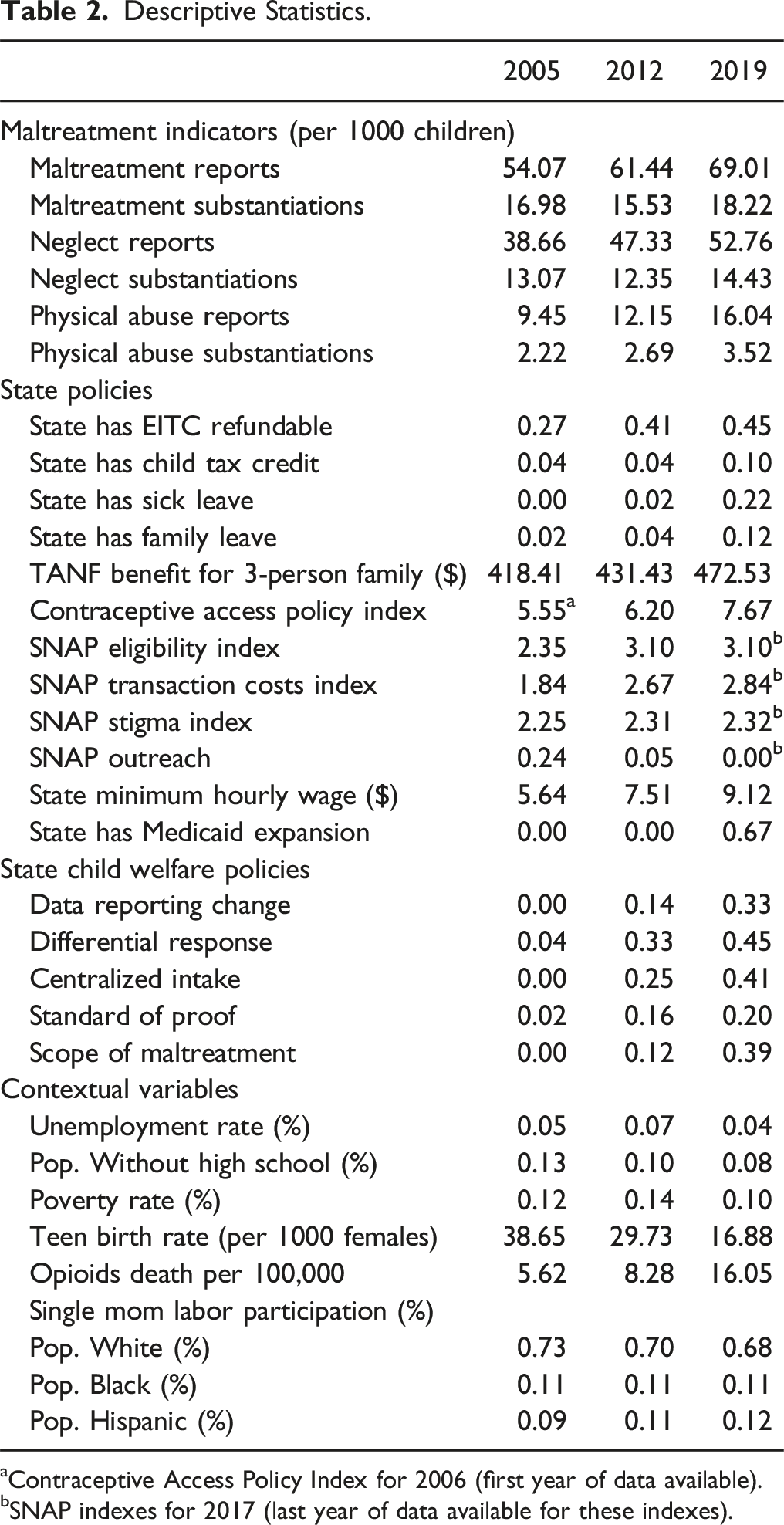
aContraceptive Access Policy Index for 2006 (first year of data available).
bSNAP indexes for 2017 (last year of data available for these indexes).
Estimates of Associations Between State Policy Changes and Child Neglect Rates (2005–2019).
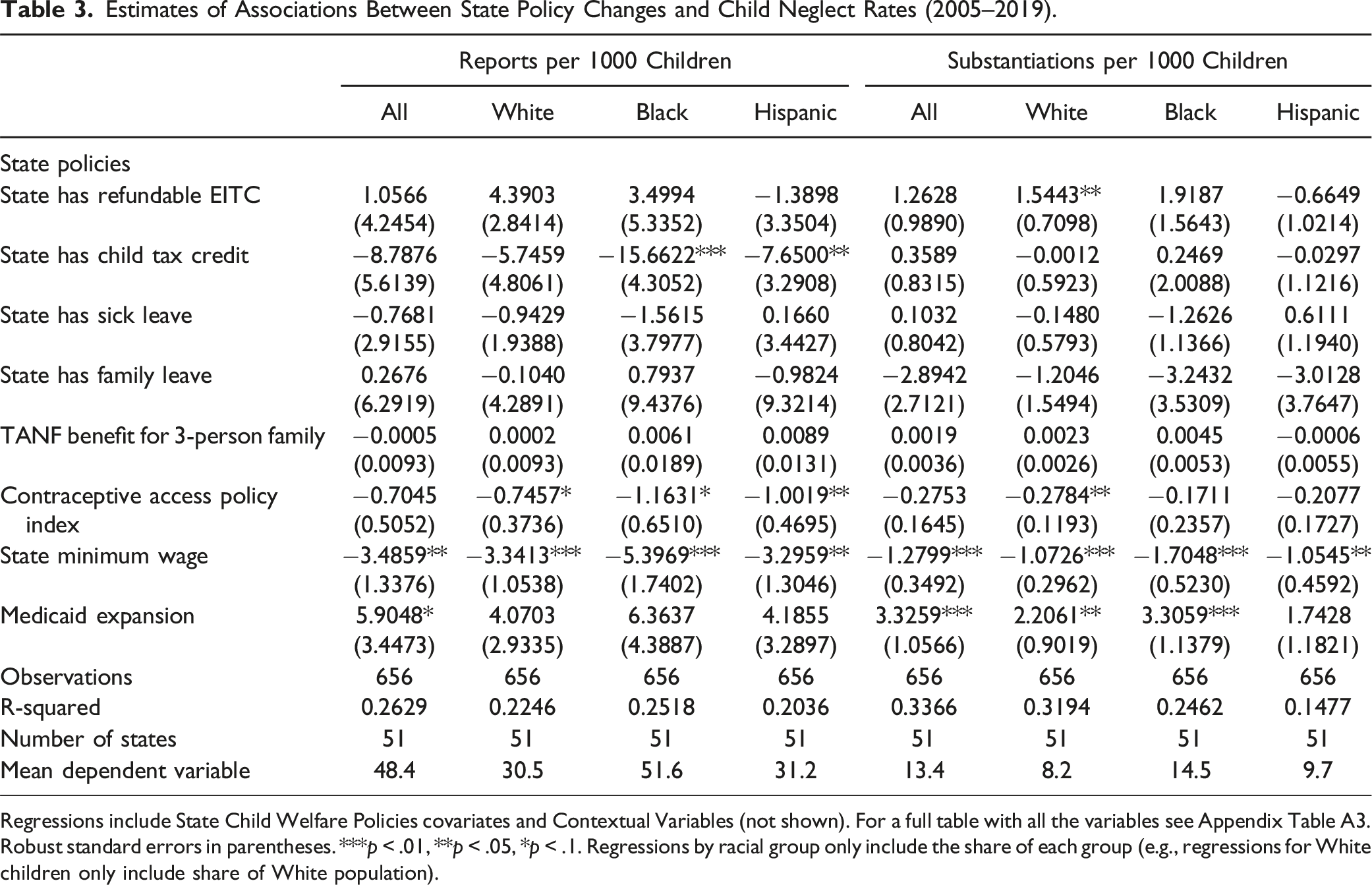
Regressions include State Child Welfare Policies covariates and Contextual Variables (not shown). For a full table with all the variables see Appendix Table A3.
Robust standard errors in parentheses. ***p < .01, **p < .05, *p < .1. Regressions by racial group only include the share of each group (e.g., regressions for White children only include share of White population).
Estimates of the Association Between State Policies Child Physical Abuse Rates (2005–2019).
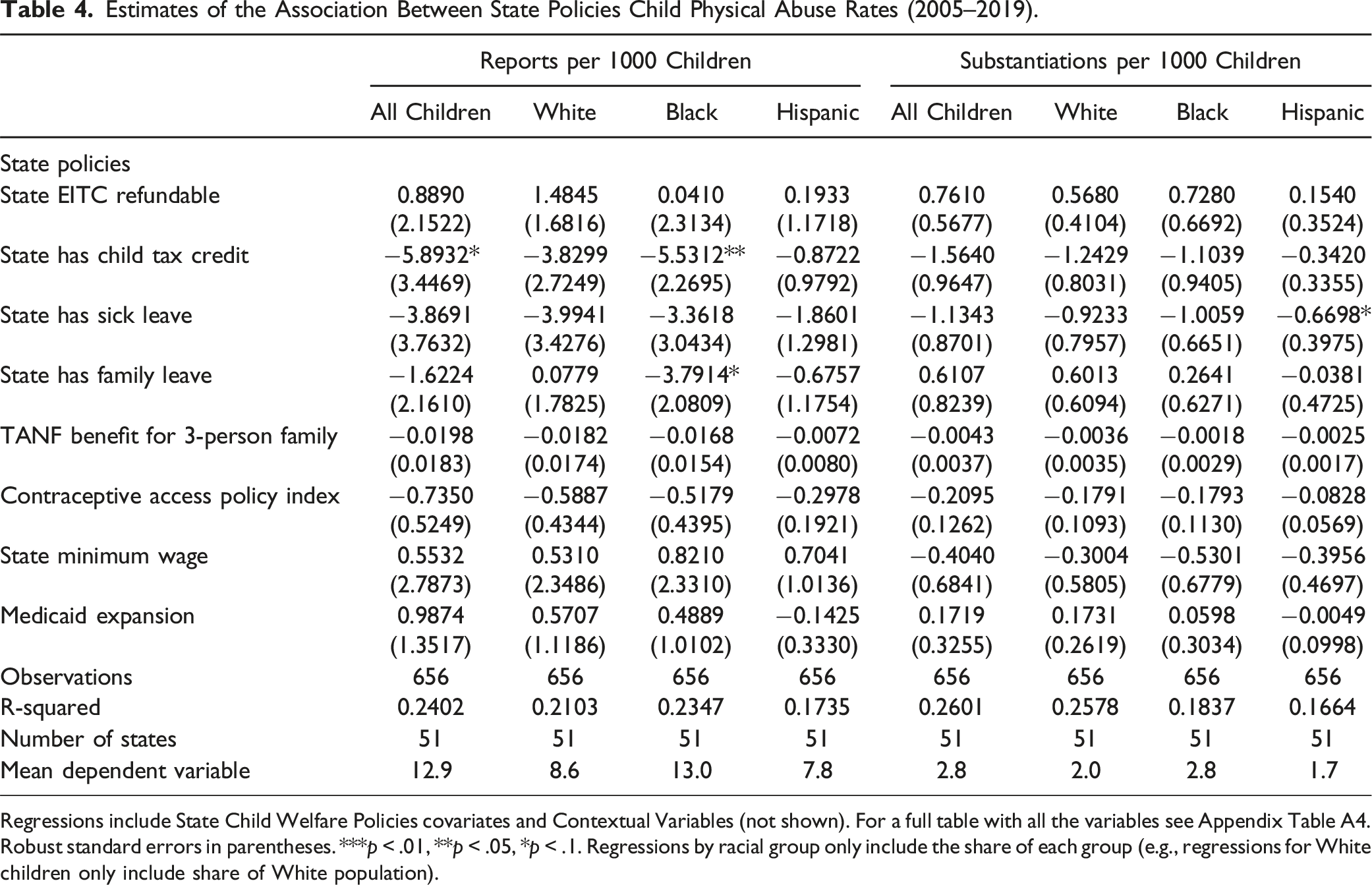
Regressions include State Child Welfare Policies covariates and Contextual Variables (not shown). For a full table with all the variables see Appendix Table A4.
Robust standard errors in parentheses. ***p < .01, **p < .05, *p < .1. Regressions by racial group only include the share of each group (e.g., regressions for White children only include share of White population).
Economic Support Policies
Child Tax Credit Policies
We found that having a state CTC policy was consistently associated with fewer maltreatment reports. These effects were concentrated in both neglect and physical abuse for Black children, and only in neglect for Hispanic children (Tables 3 and 4). State CTC implementation was associated with significantly fewer neglect reports among Black (B =
Similarly, CTC implementation was weakly associated with a significant decrease in physical abuse reports for all children (B =
Minimum Wage Policies
State policies increasing minimum hourly wages were associated with decreases in neglect reports among all children (B =
Medicaid Expansion
We found that states that expanded Medicaid eligibility saw an increase in the number of maltreatment reports and substantiations. Specifically, the Medicaid expansion was weakly associated with more neglect reports among all children (B = 5.90, p < .05), and more neglect substantiations among all children (B = 3.33, p < .01), being driven by significant increases for White (B = 2.21, p < .05) and Black children (B = 3.31, p < .01), specifically (see Table 3). Associations with physical abuse reports or substantiations were not significant (see Table 4).
Given the nature of this association, we conducted additional post hoc analyses into this finding. We hypothesized that the larger increase in reports may be related to increased screening by health care providers for families that had received Medicaid as part of the expansion. We re-ran analyses for reports made by medical and mental health personnel, and again with all reports from other sources (e.g., neighbors, education personnel). We found that the positive association between state Medicaid expansion and neglect reports was significant for reports made by medical personnel for White (B = 2.1, p < .05) and Black (B = 3.1, p < .05) children and non-significant for reports from other individuals, such as educators or family members for White children (B = 3.9, p = NS), and weakly associated for Black children (B = 7.9, p < .1).
Supplemental Nutrition Assistance Programs
In a separate analysis including data on SNAP policies for years 2005–2017, results indicated that expansions in eligibility for SNAP were associated with lower levels of maltreatment reports and substantiations for infants and toddlers (see Appendix Table A6 for complete results). Specifically, states’ implementation of one additional policy expanding SNAP eligibility was associated with a reduction of over five reports per 1000 children (B =
Changes in the SNAP Eligibility Index were also associated with lower neglect substantiations and (B =
EITC
States’ refundable EITC implementation was significantly associated with a higher rate of neglect substantiations among White children (B = 1.54, p < .05). All other associations were non-significant (Tables 3–4).
TANF
No significant associations were found between state TANF policy changes and any indicator of maltreatment among any group of children (Tables 3–4).
Sick Leave
State implementation of sick leave policies was only weakly associated with a lower rate of substantiated physical abuse for Hispanic children (B =
Policies Supporting Family Planning
Family Leave
State-level family leave policies were marginally associated with fewer physical abuse reports among Black children (B =
Contraceptive Access
Contraceptive availability in the state, as measured by the CAI, was significantly associated with reductions in maltreatment reports and substantiations (see Appendix Table A5). Each additional contraceptive access policy is associated with a reduction in maltreatment reports of about 1 in 1000 (B =
Most of these effects are explained by changes in the prevalence of neglect reports (Table 3) with varying degrees among White (B =
Contextual Variables
Consistent with previous research (Chapman, 2022), opioid-related overdose deaths were positively associated with higher levels of physical abuse, particularly for Hispanic (B = 0.26, p < .05) and Black (B = 0.50, p < .05) children (Table 4). Lower teen birth rates were associated with greater rates of maltreatment substantiations for White (B =
Discussion
This study reviewed state-level implementations of various economic and family support policies and their potential to reduce maltreatment among infants and toddlers. We identified policies that were theoretically important, policy relevant, and feasible to study. The strongest results were related to the effects of increased economic resources for parenting adults and to expansion of contraceptive access. Specifically, we found that states’ implementation of a state CTC was associated with lower levels of neglect reports among Black and Hispanic children. The expansion of contraceptive access policies was also associated with reductions in maltreatment reports for all racial groups and in substantiation rates for Hispanic and White children. Additionally, broader SNAP eligibility requirements were associated with lower maltreatment reports and victimizations for the overall population, but without significant effects when analyzed by race. We also found associations between minimum wage laws and lower rates of neglect reports and substantiations for White, Black, and Hispanic infants and toddlers, in line with previous research related to maltreatment among children more broadly (Raissian & Bullinger, 2017). We did not find associations between other policies providing economic support and maltreatment report rates among infants and toddlers; neither family leave nor sick leave laws were associated with less reported or substantiated maltreatment.
Regarding tax credits, our findings suggest that the benefits of tax credits for preventing young child maltreatment may be concentrated in CTCs, specifically, and result less so from EITCs as implemented during this time period. We found that states’ implementation of a refundable state CTC was associated with lower levels of neglect reports among Black and Hispanic children, but without a noticeable effect on substantiation rates. This finding is consistent with previous research studying the effects of the federal CTC (Kovski, Hill, Mooney, Rivara, & Rowhani-Rahbar, 2022). This suggests that CTCs may lower the odds of Black and Hispanic families being reported to the child welfare system, but not necessarily affect the odds of neglect itself. Results also suggested a lower rate of physical abuse reports among Black children only, with no observable association with substantiation rates for any group. Taken together, these findings suggest that states’ CTCs may reduce the odds of Black families encountering the child welfare system in general and reduce the odds of Hispanic families being reported for neglect. The lack of observable effects among White children suggests that Black – and to a lesser extent, Hispanic – families benefit more from CTCs, in terms of avoiding contact with the child welfare system. This may indicate that families of color may benefit from small economic supports that divert them from situations and settings that lead to maltreatment reports.
We did not find evidence that states’ EITC policy changes were linked with decreased reports of maltreatment among children ages 0–2. This finding is inconsistent with some studies finding that state EITC payments are associated with fewer maltreatment reports at the state-level (e.g., Kovski, Hill, Mooney, Rivara, & Rowhani-Rahbar, 2022). However, studies finding protective effects of EITCs for child maltreatment reports often examine rates among older children (e.g., 0–5, 6–17) and acknowledge the limitation of not having data about states’ child welfare agencies policies at that time – whereas the current study focused on children under three years of age and included several state child welfare policies.
We also found significant associations between changes in minimum wage laws and neglect reports and substantiations, but did not find a significant association between minimum wages and physical abuse reports or substantiations – indicating that increasing the income of parents working for minimum wage may protect children from neglectful situations but have little effect on risk factors for physical abuse.
Regarding social support programs for low-income families, we found that broader eligibility requirements for SNAP were associated with fewer maltreatment reports and victimizations. This finding complements prior work, which found that more generous income guidelines (i.e., for determining SNAP eligibility) were associated with sizable decreases in CPS investigations and neglect substantiations for children of all ages (Johnson-Motoyama et al., 2022). In contrast, we did not find evidence that states’ TANF-related policy changes were linked with decreased reports of maltreatment among children ages 0–2. This finding is somewhat inconsistent with prior work suggesting that increases in TANF benefit amounts were linked with reductions in self-reported physical abuse of children of all ages (Spencer et al., 2021). It may be the case that TANF benefits are insufficient to meet the needs of families on the cusp of child welfare system contact. It may also be the case that, given the size of the TANF – which serves fewer than one in five of the families in poverty who have children ages 0–2 (ZERO TO THREE, 2022) – the statistical effects of the program at the population level are hard to detect.
We also found that the states that expanded Medicaid as part of the Affordable Care Act saw an increase in maltreatment reports and substantiations, in contrast with some previous research finding decreases in maltreatment rates for children ages zero to five (McGinty et al., 2022) or six (Brown et al., 2019). This finding was partially consistent with the findings of Brown and colleagues (2019), who found decreased reports of neglect but no effect on reports of physical abuse. We completed additional analyses and found evidence that this increase in reporting and substantiation is due to increases in screening as more families with young children had contact with health care providers who may report maltreatment among children ages 0–2. This is consistent with prior work finding that increased rates of public and private health insurance among adults may be linked with increased contact with the child welfare system, due to increased contact with health care providers who report parents to CPS (Puls et al., 2020; Stritzel, 2022).
Inconsistent with prior research studying the relationship between family leave and child head trauma (Klevens et al., 2016), we did not find significant associations between the introduction of state family leave policies and changes in the rates of maltreatment among infants and toddlers. Importantly, the availability of paid family leave – the indicator assessed in the present study – does not accurately capture the use of family leave. For instance, many paid family leave policies are “partially-paid”, meaning that the individual only receives a portion of their wages while on family leave (see Pace et al., 2022). This provision often leads parents and others to opt against using family leave, fearing the loss of income. Indeed, researchers have found that, while California’s paid family leave policy increased the number of fathers taking parental leave after the birth of a child (Bartel et al., 2018), the duration of leave only increased by an average of 2–3 days (Baum & Ruhm, 2016). Similarly, we did not find significant associations between new state sick leave policies and child maltreatment rates. This may indicate that sick leave is not beneficial for eliminating situations in which maltreatment of young children occurs or in which reporting to CPS is most common. This finding may also suggest that the presence of state policies related to sick leave does not necessarily reflect parents’ access to and use of paid sick leave benefits. It may also reflect the reality that parents of very young children are less likely to be employed.
Finally, we found that expansion of contraceptive access policies was associated with reductions in maltreatment reports for all children and all subgroups, mostly because of reductions in neglect reports in the years after the policies were implemented. These policies were also associated with reductions in maltreatment substantiations at <.05 significance for White children and at <.1 significance for Hispanic children. This pattern of findings may result from a variety of factors. First, parents who are able to control family size and the timing of births may be better able to maintain resources necessary to adequately care for their children. As the costs of necessities including childcare, food, and housing continue to challenge many low-income families, parents with multiple children may struggle to maintain adequate housing or supervision, which can lead to CPS reports and be used as evidence of neglect or abuse during investigations.
Limitations
This study is not without limitations. First, our analyses were based on state-wide aggregate measures. Reports of maltreatment made to child welfare agencies reflect agency policies, budgets, and definitions of maltreatment, which vary substantially across states (Day et al., 2022). To address this, we included states and years fixed effects, and several measures of states’ maltreatment policies to control for state child welfare system differences. Relatedly, these results should not be interpreted as causal. Despite the inclusion of fixed effects and many controls, the internal validity of our results could be biased by any unmeasured state-level policy changes that occurred at the same time as the policy changes examined. As mentioned, many policies implemented during the study period were excluded due to lack of longitudinal data.
Implications & Conclusions
Despite these limitations, our findings suggest that both economic support policies and policies supporting family planning are associated with reduced maltreatment during a crucial developmental period – the first three years of life. Future work is needed to better understand the processes underlying these findings, that is, whether the enaction of these policies influences parents’ employment, parenting behaviors, maternal mental health, or access to material needs. Future work should also further investigate the reasons why some supports are more protective for certain families and identify other family-level characteristics that may shape the extent to which state-level policies and supports impact maltreatment risk.
The child welfare system has limited ability to address all the complex factors that lead to maltreatment, and the field is increasingly moving toward a greater focus on primary prevention (Molnar et al., 2021). Our study adds to a growing body of work suggesting that policies that strengthen economic supports for parenting adults may be an effective way to prevent maltreatment of infants and toddlers, and sheds some light on the potential for coordinated strengthening economic supports policies as a tool to prevent child maltreatment Further, our study is among the first to test whether changes in state contraceptive access policies are associated with reduced maltreatment among infants and toddlers. These findings suggest that state policies expanding access to contraceptive services may reduce child neglect reports as well as substantiations for White children and marginally for Hispanic children, suggesting that contraceptive access decreases births among individuals who lack the resources to support a child or another child, or those for whom the birth of a child would bring substantial stress. Future work should examine the impact of the state-level variation in access to abortion-related care on child maltreatment rates, given the 2022 Supreme Court decision in Dobbs v. Jackson Women’s Health Organization, which eliminated federal rights to abortion access in place since 1973 (Legal Information Institute, 2022). Overall, more research is needed related to the ways in which state policymaking can be leveraged to prevent the maltreatment of very young children through supporting families’ multifaceted needs.
Supplemental Material
Supplemental Material - State Policy Levers for Reducing Early Childhood Maltreatment: The Importance of Family Planning and Economic Support Policies
Supplemental Material for State Policy Levers for Reducing Early Childhood Maltreatment: The Importance of Family Planning and Economic Support Policies by Gabriel Piña, Kristin Moore, Brittany Mihalec-Adkins, Kristen Darling, Fadumo Abdi, and Alyssa Liehr in Child Maltreatment
Author’s note
Gabriel Piña is also affiliated with MEF Associates (Alexandria, VA). He was first affiliated with Child Trends, Rockville, MD, USA. The collector of the original data, the funder, NDACAN, Duke University, Cornell University, and the agents or employees of these institutions bear no responsibility for the analysis or interpretations presented here. The information and opinions expressed reflect solely the opinions of the authors.
Footnotes
Declaration of Conflicting Interests
The author(s) declared no potential conflicts of interest with respect to the research, authorship, and/or publication of this article.
Funding
The author(s) disclosed receipt of the following financial support for the research, authorship, and/or publication of this article: This work was supported by Marcus Autism Center. Funding for this work was provided by the Marcus Autism Center.

Supplemental Material
Supplemental material for this article is available online.
Data Availability Statement
These data were provided by the National Data Archive on Child Abuse and Neglect, and have been used with permission.
References
Supplementary Material
Please find the following supplemental material available below.
For Open Access articles published under a Creative Commons License, all supplemental material carries the same license as the article it is associated with.
For non-Open Access articles published, all supplemental material carries a non-exclusive license, and permission requests for re-use of supplemental material or any part of supplemental material shall be sent directly to the copyright owner as specified in the copyright notice associated with the article.
