




Abstract
This study examined the frequency of sexual assault experiences in a sample of university women to understand the conditions under which sexual assault occurs, and compare alcohol and drug consumption patterns on the likelihood of experiencing sexual victimization. While patterns of victimization have been examined in American contexts, research on contemporary Canadian contexts is scant at present. We found that roughly 58% of the 377 university women in our sample attending one of three large Western Canadian universities in British Columbia reported having been sexually assaulted. These women reported a total of 528 incidents of sexual assault, with 56% of these involving substance-related nonpenetrative sex acts; 312 incidents were substance-related and 216 involved forcible sexual assault. The likelihood of sexual assault victimization was the highest among participants who identified as a sexual minority, consumed marijuana, and reported greater severity of recent alcohol consumption. The present research aims to inform sexual assault prevention and education efforts to reduce occurrences of victimization.
Research on American university campuses indicates that approximately one in five university women report experiencing some form of sexual assault during their university careers (e.g., Krebs et al., 2007; Muehlenhard et al., 2017). Such research has also examined the situational and contextual factors surrounding victimization, contributing to this knowledge base. Research on the prevalence of, and factors surrounding, sexual assault among university women in Canada is relatively lacking, despite the comprehensive work of DeKeseredy and Kelly in 1993. Although Senn et al. (2014) offered that 59% of female first-year students across three Canadian universities had experienced some form of sexual assault victimization since the age of 14 years, these authors did not distinguish between experiences prior to and during university attendance, making the results difficult to interpret with regard to college experiences specifically. Further, although a Maclean’s magazine study (see Schwartz, 2018) of more than 23,000 university students across 81 Canadian post-secondary institutions reported that over 20% of female students, 7% of male students, and 47% of students identifying as lesbian, gay, bisexual, transgender, or queer/questioning (LGBTQ+) had been sexually assaulted at some point in their lives—with approximately half of assaults occurring during the university years—the survey failed to provide an operational definition of sexual assault alongside findings, making conclusions challenging to interpret.
Even fewer studies have explored contextual and situational factors surrounding assault while attending university in Canada, such as the role of substance use or intoxication, leaving a notable gap in the extant literature. The purpose of the current study was therefore to determine the frequency of sexual assault and consider the role of alcohol and drugs in sexual assault experiences among a sample of heterosexual and sexual minority Canadian university women.
Contextual Factors: Substance Use and Sexual Assault
Sexual assault on college campuses is often linked to alcohol use by the perpetrator and/or target (e.g., Abbey, 2002; Krebs et al., 2007; Menning & Holtzman, 2013). Binge drinking and frequent alcohol use are associated with sexual victimization among heterosexual and sexual minority college students alike (Johnson et al., 2016; Krebs et al., 2007). Two plausible hypotheses exist for the association between alcohol consumption and sexual assault (Abbey et al., 2004); these hypotheses and their underlying data are not specific to college contexts, but do draw from American college student data (e.g., Abbey et al., 2004). First, some argue that sexual assault victimization leads women to alcohol use as a strategy for managing depression or anxiety in the aftermath of assault (Abbey et al., 2004; White & Humphrey, 1998). In contrast, others have reported that alcohol consumption precedes sexual assault in many cases (Monk & Jones, 2014); it has been estimated that 50% to 70% of sexual assaults involve alcohol with either the perpetrator, the victim, or both consuming alcohol prior to the assault (Abbey et al., 1998; Monk & Jones, 2014). Though the temporality of the association between alcohol consumption and sexual assault is equivocal, the link between alcohol consumption and sexual assault is not. This link, however, is not innate and must be nuanced with an understanding of the role of the perpetrator.
Sexual assault perpetrators may target individuals they believe to be intoxicated (e.g., Johnson et al., 1998); in college samples, women’s alcohol consumption has been shown to be positively related to male perpetrator’s sexual aggression (Ullman et al., 1999a, 1999b), indicating that men may aggressively target women they perceive to be unable to resist due to intoxication. Perpetrators may also encourage women to drink to the point of intoxication (Johnson et al., 1998; Kanin, 1985) or use other substances (e.g., Banyard et al., 2007) in an effort to reduce the victim’s resistance. The extant literature often does not differentiate between sexual assaults that occur when the victim voluntarily versus involuntarily consumes substances, including alcohol (Jansen & Theron, 2006; Walsh et al., 2016). In one study which did differentiate, Lawyer et al. (2010) found that among American college women who had been sexually assaulted, approximately 85% reported voluntary consumption of alcohol and/or drugs preceding their assault, while 15% of participants reported involuntary consumption. These findings clarify that substance use and intoxication are not in and of themselves responsible for sexual assault; rather, opportunistic and coercive predators take advantage of these conditions.
Sexual Orientation and Sexual Assault
The 2018 Maclean’s study of Canadian university students found that almost half of LGBTQ+ students reported experiencing some form of sexual assault victimization across the lifespan, compared to 20% of heterosexual women. However, this survey did not differentiate LGBTQ+ participants’ victimization by gender, rendering it impossible to draw conclusions specifically on the victimization experiences of sexual minority women in Canadian college contexts. In American contexts, sexual minority college students experience sexual violence at least as often as heterosexual students (Ford & Soto-Marquez, 2016; Hines et al., 2012; Johnson et al., 2016; Martin et al., 2011). One study of 27 American universities found that, compared to 11% of heterosexual students, 14% of gay/lesbian students, 25% of bisexual students, and 19% of asexual students had experienced sexual assault victimization by force or incapacitation while in college; overall, sexual minorities—and particularly sexual minority women—had significantly higher victimization rates than heterosexual people (Cantor et al., 2015).
Sexual minority identity is not an inherent risk for sexual assault; rather, perpetrators of sexual assault may target sexual minority women specifically. Sexual minority women who were sexually assaulted while in college describe being targeted, primarily by cisgender men, due to their identities (Bedera & Nordmeyer, 2021); perpetrators construed “lesbian women…as sexual challenges…bisexual women were regarded as kinky or otherwise sexually uncontrollable women to be dominated” (Bedera & Nordmeyer, 2021, p. 6). Men thus exercised a violent masculinity by sexually assaulting these women to demonstrate power and control (Bedera & Nordmeyer, 2021). Minority stress theory (Frost et al., 2015; Meyer, 2003) posits that minority individuals’ experiences of stigma have psychological effects on their mental and physical health outcomes; Murchison et al. (2017) found that minority stress was related to unwanted sexual experiences among sexual minority college students. Low sense of belonging, in tandem with a lack of embeddedness in LGBTQ+ communities and a lack of positive relationship role models, may position sexual minority college students as vulnerable to sexual assault (e.g., Donovan et al., 2006; Murchison et al., 2017) from opportunistic predators who take advantage of these conditions. The existing literature clarifies that victim sexual orientation is in no way responsible for sexual assault; rather, opportunistic and coercive predators take advantage of sexual minority individuals, particularly women, and their potentially precarious position in the heteronormative context of college.
Purpose of the Present Study
Given the lack of current research in a Canadian context, the purpose of this investigation was to determine sexual assault frequency among Canadian university women. Drawing upon existing literature, we focused on sexual assault victimization in heterosexual and sexual minority women who were currently attending university (i.e., students). We also assessed self-reported alcohol and drug consumption patterns. We applied the definitional and methodological framework established by Lawyer et al. (2010). We also explored several situational conditions under which sexual assault occurs; that is, the victim–perpetrator relationship and where the sexual assault occurred (e.g., on or off university campus, at a bar, etc.).
We defined sexual assault as any nonconsensual sexual contact (i.e., fondling, kissing, petting, or penetrative sex acts such as vaginal, anal, or oral intercourse, as well as penetration by objects; see Koss et al., 2007; Lawyer et al., 2010) perpetrated through the use of threat, force, or the use of alcohol and/or drugs which rendered the victim incapable of providing consent. Specifically, forcible sexual assault is defined as unwanted sexual contact or intercourse occurring through force or threat of force in the absence of alcohol or drug influences on the victim. 1
Forcible sexual assault therefore does not included instances of substance-facilitated sexual assault and solely focuses on sexual assault involving physical force or overpowering the victim.
substance-related assaults would occur more frequently than forcible sexual assaults;
substance-related assaults would typically be proceeded by voluntary consumption of alcohol and/or marijuana;
victim drinking patterns increase the risk for sexual victimization;
victims would be acquainted with the perpetrator;
victims of substance-related assaults would report more drug use than nonvictims; and
substance-related assault would be frequent in the university environment. Furthermore, we expected that the likelihood of sexual assault victimization would be highest among sexual minority women.
Methods
Participants
A nonprobabilistic, self-selected sample of 377 university women was collected. 2
There are 11 public universities/colleges in the southwestern region of British Columbia. We asked for permission to post our recruitment materials (i.e., posters) at six universities. We posted at universities who granted us timely permission without requiring additional research ethics board approval beyond that already granted by our institution.
As required by our ethics board, the survey was anonymous and information regarding recruitment locations for each participant was not gathered. It is unknown where most of the successful participant acquisition took place; therefore, the composition of our sample as it relates to recruitment locale is uncertain.
The term “woman” was not defined in our recruitment adverts. Therefore, anyone who self-identified as a woman, inclusive of both cisgender and transgender women, could be included in our sample.
Procedure
Participants were directed to complete the survey through the online software Qualtrics, which included a demographic questionnaire, drug and alcohol consumption questions, and sexual assault experience measures. Survey completion took approximately 30 minutes.
Measures
Coding of the Variables and Description of the Sample of University Women.
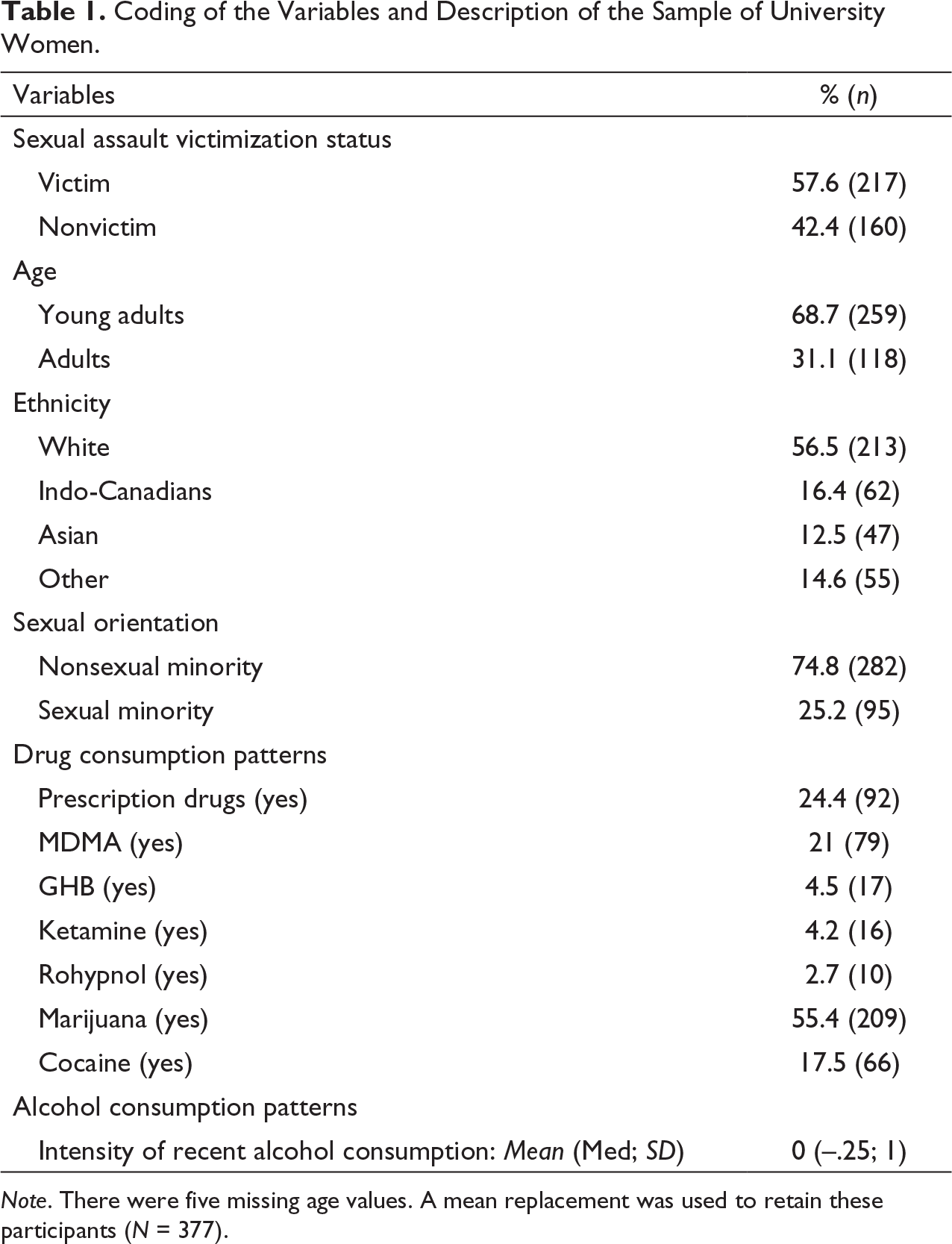
Note. There were five missing age values. A mean replacement was used to retain these participants (N = 377).
Ethnicity was originally a seven-category variable (White, Indo-Canadian, Asian, Black, Hispanic, First Nations, and other). However, Black (n = 11), Hispanic (n = 5), and First Nations (n = 4) ethnicities represented a small proportion of the sample (2.9%, 1.3%, and 1.1%). Although these proportions were anticipated given the ethnic composition where the sample was gathered (Statistics Canada, 2017b), the small sample sizes violated assumptions for Chi-square analysis (McHugh, 2013). Therefore, Black, Hispanic, and First Nations ethnicities were merged with the category designated as “other” and ethnicity was recoded accordingly (i.e., White, Indo-Canadian, Asian, and other).
Sexual orientation was originally coded as a four-category variable (straight, bisexual, lesbian, and asexual); given small sample sizes, asexual (n = 4) and lesbian (n = 9) participants were merged with bisexual participants (n = 82) and recoded as a sexual minority category. The appropriateness of this recoding is supported by literature indicating that among college students, sexual minority women experience more sexual assault victimization than nonsexual minority women (Edwards et al., 2015); thus, we maintained a sexual minority group for comparison. It is worth noting that asexuality is significantly understudied in the sexual assault literature, though Cantor et al. (2015) found comparable rates of victimization among asexual and other sexual minority college students.
The alcohol and drug consumption questionnaire (Lawyer et al., 2010). The following six questions were used to assess substance use patterns: (a) the age at which they consumed their first alcoholic drink, (b) the number of days they consumed alcohol during the past month, (c) the average number of alcoholic drinks they consumed at one time during the past month, (d) the highest number of alcoholic drinks they consumed at one time during the past month, (e) the number of times they consumed five or more alcoholic drinks during the past month, and (f) the number of times they got “drunk” from alcohol consumption during the past month.
Next, participants were asked to report whether they had ever consumed drugs in the past. For participants who responded affirmatively, subsequent questions queried the use of eight specific drug types, using the same yes/no response format: prescription medications, methylenedioxymethamphetamine (MDMA; “Molly”), gamma-hydroxybutyric acid (GHB; “G”, “Liquid Ecstasy”), Ketamine (“Special K”), Rohypnol (“Roofies”), marijuana (“Weed”), methamphetamine (“Speed”), or cocaine (“Coke”). Affirmative responses on drug types were followed by a question to gauge the frequency of use on a 3-point scale (1 = 1–3 occasions; 2 = 4–11 occasions; 3 = 12 or more). This scale revealed low overall frequencies for all drug types apart from marijuana; four of the dichotomous drug variables (GHB, Ketamine, Rohypnol, and methamphetamine) indicated low use. Because research suggests that it only takes one occasion of victim intoxication to be vulnerable to sexual assault (Abbey et al., 2004), we combined these four drugs into a category labelled “club drugs” based on a previous study by Gahlinger (2004) who identified these drugs as being widely used at nightclubs.
Drug-related and forcible sexual assault questionnaire. To evaluate the occurrences of types of drug-related sexual assaults, four questions were extrapolated from the Sexual Experiences Survey (Koss et al., 1987) in accordance with procedures adopted by Lawyer et al. (2010). Using a yes/no response format, participants reported whether the following nonconsensual sexual experiences had happened while unconscious or impaired due to alcohol or drugs: (a) has anyone ever had penetrative sex acts with you (i.e., vaginal, anal, or oral intercourse, or penetration by objects other than the penis) when you did not want to? (b) has anyone ever attempted sexual intercourse with you (i.e., attempt to insert his penis) when you did not want to? (c) has anyone ever had nonpenetrative sex acts with you (i.e., fondling, kissing, or petting) when you did not want to? and (d) has anyone had sexual intercourse with you when you did not want to? To ensure each question represented an independent incident, the phrase, “not counting any incident you have already told us about…” prefaced each additional question.
To measure incidences of different types of forcible sexual assaults, participants used a yes/no response format to indicate whether the same previously presented nonconsensual sexual experiences had happened through the perpetrator’s use of threat or force. That is, following each reported experience, participants were queried, for instance, “has anyone had sexual intercourse with you when you did not want to through the use of threat or force?” To ensure each question represented an independent incident, the phrase, “not counting any incident you have already told us about and not counting the incidents where you were passed out or incoherent from drugs or alcohol…” prefaced each additional question.
Participants who responded affirmatively to any of the drug-related or forcible sexual assault victimizations were provided follow-up questions querying the victim–perpetrator relationship (friend, stranger, acquaintance, romantic partner, someone different, prefer not to respond), where the event occurred (my apartment, the person’s apartment, a car, a house party, at a bar or restaurant, other, prefer not to respond), and whether this location was on a university campus. For drug-related assault victimizations, additional questions were provided, including which substances were ingested voluntarily (i.e., taken consensually) or involuntarily (i.e., given nonconsensually) before the incident, and whether substances were consumed consensually, nonconsensually, or both. Drug-related sexual assaults were further reclassified into either substance-facilitated sexual assault or incapacitated sexual assault. Substance-facilitated sexual assault classification included experiences when substances were consumed involuntarily or both involuntarily and voluntarily, whereas incapacitated sexual assault classification included experiences when substances were consumed voluntarily.
Analytic Strategy
First, a principal components analysis (PCA) was utilized as a data reduction technique for alcohol variables. “Age at first alcohol consumption” loaded as a single factor in the initial PCA and was removed from the analysis. The remaining five items were retained and a second PCA was conducted. 5
“Severity of recent alcohol consumption” is a variable we labelled to represent the factor we attained through the PCA of the following items: (a) the number of days they consumed alcohol during the past month, (b) the average number of alcoholic drinks they consumed at one time during the past month, (c) the highest number of alcoholic drinks they consumed at one time during the past month, (d) the number of times they consumed five or more alcoholic drinks during the past month, and (e) the number of times they got “drunk” from alcohol consumption during the past month.
Total incidents of all reported sexual assault victimization in the survey including situational (e.g., location of the assault) and behavioral factors (e.g., voluntary alcohol consumption) surrounding each incident were assessed using frequencies and percentages. Subsequently, sexual assault victimization was recoded for multivariate analyses to compare demographic variables and self-reported alcohol or drug consumption patterns on the likelihood of sexual assault victimization. Participants who experienced any type of sexual assault were classified as a sexual assault victim, while those who never experienced sexual assault were classified as a nonvictim. To evaluate demographic and self-reported alcohol and drug consumption patterns on the likelihood of sexual assault victimization, a binomial sequential logistic regression tested the odds of sexual victimization.
Results
Sexual Assault Incidents, Behavioral, and Situational Factors
Overall Frequency of Substance-related and Forcible Sexual Assault Incidents.
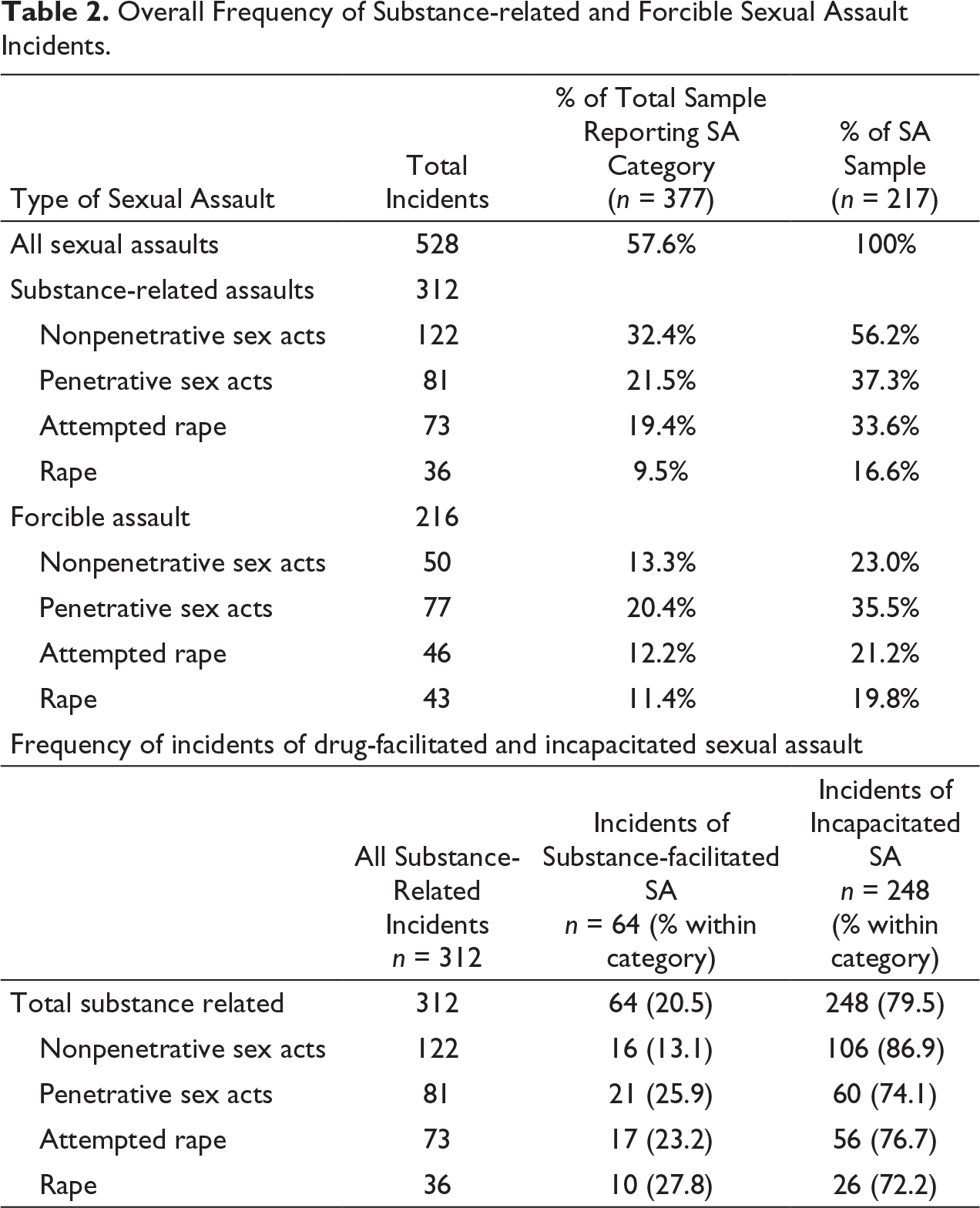
Within the substance-related sexual assault category, the 312 incidents were divided into two subtypes based on follow-up responses: (a) substance-facilitated sexual assault, where the victim involuntarily ingested drugs or alcohol and (b) incapacitated sexual assault, where the victim voluntarily consumed drugs or alcohol (see Table 2). The majority (79.5%) of incidents were incapacitated sexual assault, whereas 20.5% of incidents were substance-facilitated. Within the incapacitated sexual assault subtype, higher incidents (n = 106) of nonpenetrative sex acts were reported relative to other types of sexual assault. However, within the substance-facilitated sexual assault subtype, incidents of nonpenetrative sex acts, penetrative sex acts, and attempted rape were shown to be more evenly distributed. Among all victims of sexual assault in the sample (n = 217), 35.9% reported a single incident of sexual assault, 46.1% reported two to three incidents, and 18% reported four or more incidents.
Alcohol and Drugs Consumed or Ingested Prior to a Sexual Assault
Participants within both substance-facilitated (28.1%) and incapacitated (43.6%) sexual assault incident subtypes indicated alcohol as the most frequently ingested or consumed substance prior to the assault. Almost 20% of participants within the substance-facilitated sexual assault incident subtype reported they were unsure which drug was involuntarily ingested. No incidents of GHB ingestion were reported in the substance-facilitated sexual assault subtype. In addition, MDMA (0.4%) and GHB (0.4%) consumption were low in the incapacitated sexual assault subtype.
Victim–Perpetrator Relationship by Sexual Assault Type
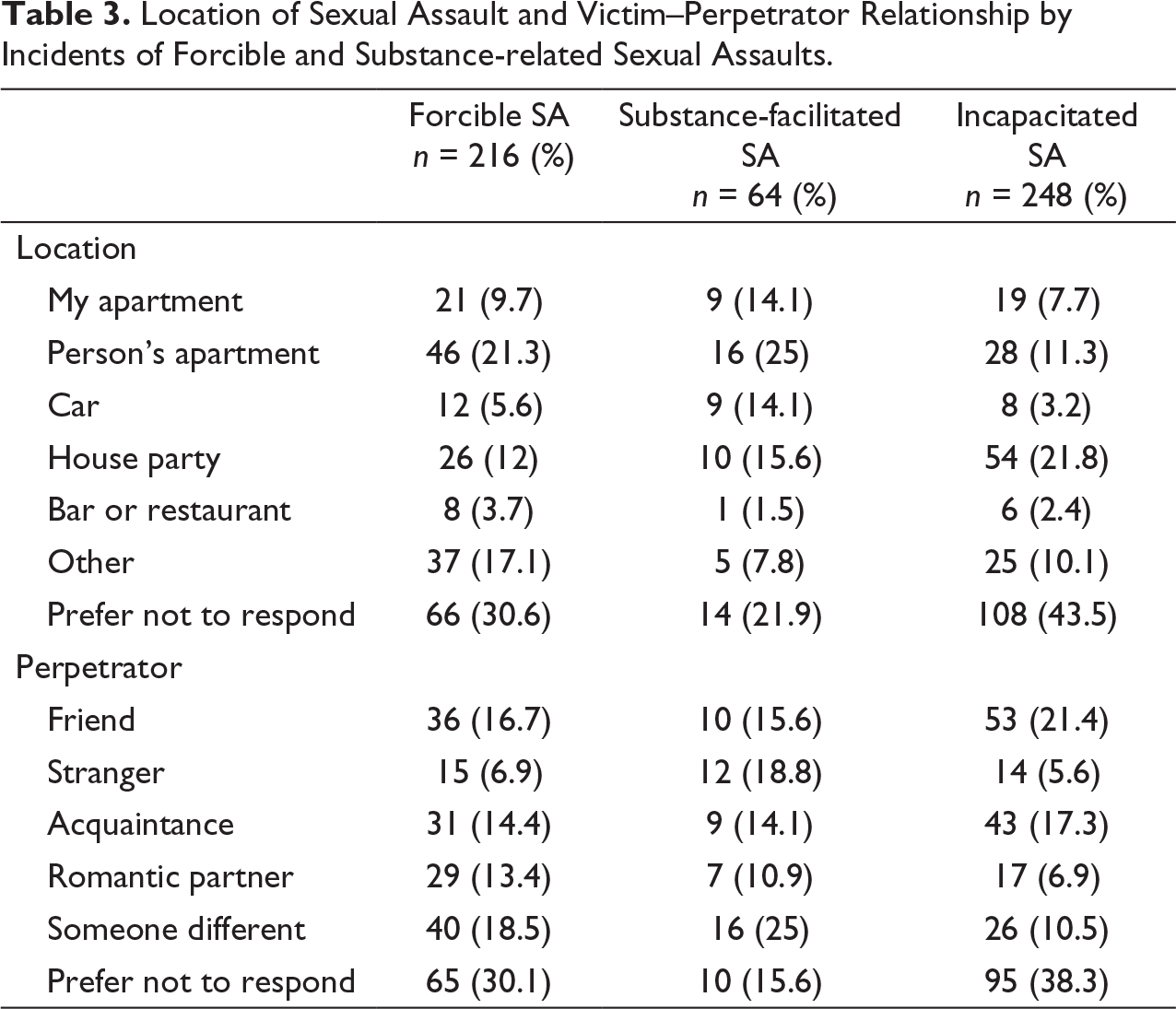
Location of Sexual Assault and Victim–Perpetrator Relationship by Incidents of Forcible and Substance-related Sexual Assaults.
Location of the Sexual Assault
Among those who experienced forcible or substance-facilitated sexual assault—22% and 25% respectively—indicated that the assault occurred at the person’s apartment/house. For victims of incapacitated sexual assault, 21.8% indicated that the sexual assault occurred at a house party. Bars and restaurants were the lowest reported location for all sexual assault types. Only 8.3% of sexual assault locations were reported to be on a university campus. It is important to note that a substantial proportion of participants elected not to respond to this question as 31% of participants who experienced forcible assault, 22% who experienced substance-facilitated assault, and 44% who experienced incapacitated assault selected the prefer not to respond option for this question (see Table 3).
Drug and Alcohol Consumption Patterns on the Likelihood of Sexual Assault Victimization
First, bivariate analyses were conducted between sexual assault victimization status on each of the independent variables. A series of Chi-square analyses were conducted between sexual assault victimization status and age, ethnicity, sexual orientation, and reported substance use. The severity of recent alcohol consumption variable was nonnormally distributed, so a Mann-Whitney U test was used for bivariate associations. All variables were statistically significant (p < .001); sexual assault victimization status was significantly associated with age, ethnicity, sexual orientation, five drug variables, and severity of recent alcohol use. Sexual assault victimization was higher among participants who were older, White, a sexual minority, and who reported using recreational prescription drugs, MDMA, marijuana, club drugs, or cocaine at least once.
Next, a sequential binomial logistic regression was performed to establish the effects of self-reported drug use for five different drug types and severity of recent alcohol consumption on the likelihood that participants have experienced sexual assault. Control variables were entered into block one, drug use variables for five drug types into block two, and severity of recent alcohol consumption was entered into block three. The full logistic regression model was statistically significant, χ2(11) =119.21, p < .001, Nagelkerke’s R2 = .36, and correctly predicted 74% of cases (Table 4). Five predictor variables were significant in the full model, including Indo-Canadian or Asian ethnicity, sexual minority status, marijuana use, and severity of recent alcohol consumption. That is, the odds of being a sexual assault victim compared to a nonvictim decreased when the individual was of Indo-Canadian or Asian ethnicity relative to White. Sexual minority women were more likely to be targeted with sexual assault. In addition, marijuana use and severity of recent alcohol consumption, increased the odds of sexual assault, though caution should be used when interpreting these findings as the temporal order of events is unclear.
Logistic Regression Models Predicting Sexual Assault Victimization.
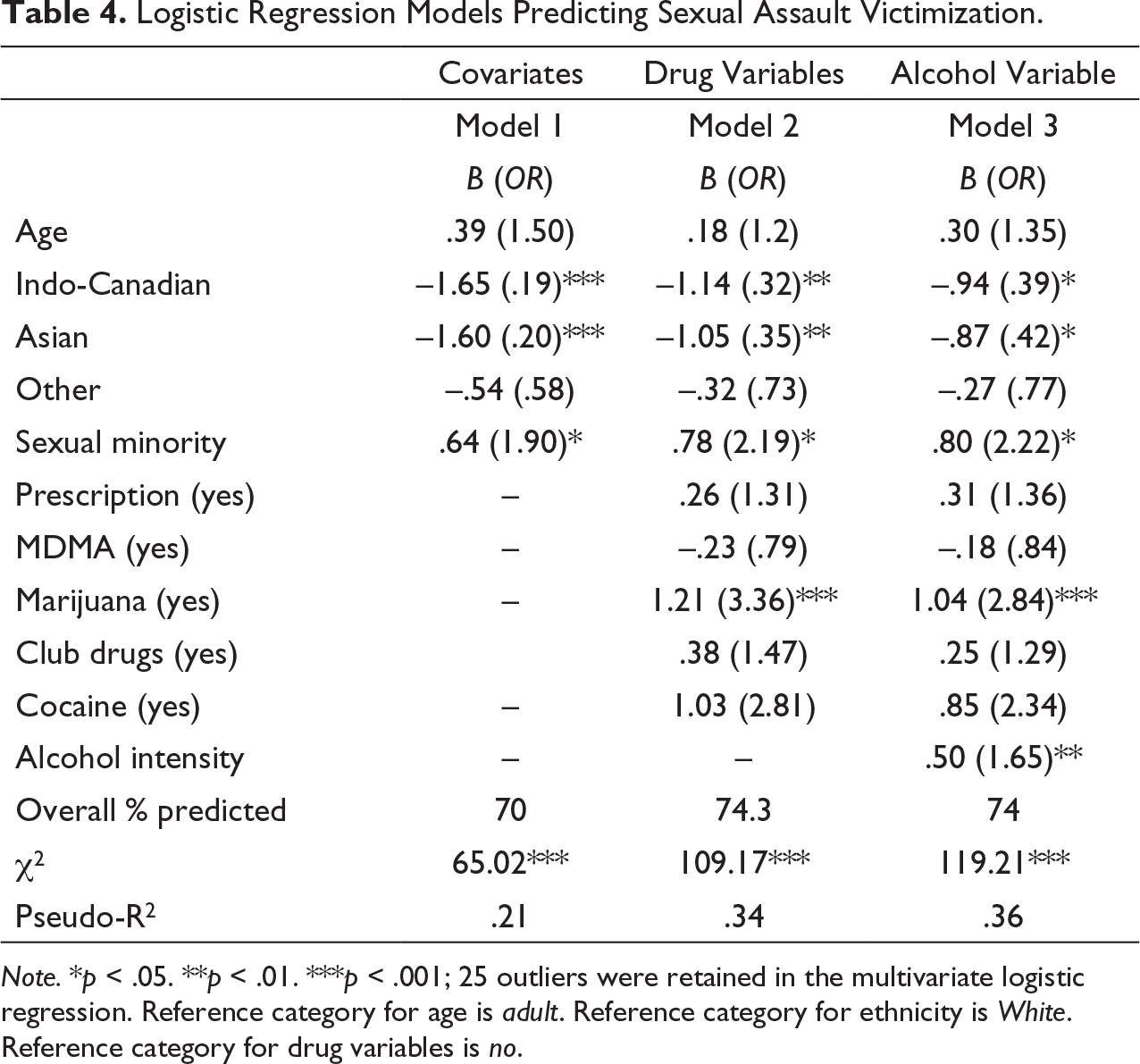
Note. *p < .05. **p < .01. ***p < .001; 25 outliers were retained in the multivariate logistic regression. Reference category for age is adult. Reference category for ethnicity is White. Reference category for drug variables is no.
Discussion
Our study focused on sexual assault in a Canadian sample of university women. We found overall high rates of sexual assault, most likely due to utilizing a broad definition of sexual assault victimization. Among victims of sexual assault in our sample, roughly 36% reported a single incident, 46% reported two or three, and 18% reported four or more; thus, 64% of victims had experienced more than one sexual assault. Most commonly reported were incidents of incapacitated sexual assault, where the victim voluntarily consumed drugs or alcohol prior to victimization (see Lawyer et al., 2010; Monk & Jones, 2014; Olszewski, 2009); the level or degree of intoxication prior to assault remains unclear from the present work. Overall, findings provide support for Hypotheses 1, substance-related assaults occurred more frequently than forcible sexual assaults; however, Lawyer et al. (2010) found a larger differential between forcible sexual assaults and substance-related assaults at roughly a 1:5 ratio, whereas we found a 2:3 ratio.
Alcohol and Drug Consumption
Individuals who reported a greater severity of recent alcohol consumption and marijuana use were more likely to be victims of a sexual assault. These results support those of others (Kilpatrick et al., 2007; Lawyer et al., 2010), suggesting that the most common sexual assault situation is one where voluntary alcohol consumption alone, or in combination with marijuana, precedes the assault. Findings support Hypothesis 2, 3, and 5 substance-related assaults were proceeded by voluntary consumption of alcohol and/or marijuana and victim drinking and/or drug use patterns increased the likelihood of sexual victimization. There is a dearth of research on marijuana use and sexual assault in general—among the few studies available, some corroborate our findings (see Lawyer et al., 2010; McCauley et al., 2010). The association between alcohol/drug consumption and sexual assault represents a complex relationship. Although longitudinal studies have established the temporal ordering between substance use and assault vulnerability (e.g., Peter-Hagene & Ullman, 2015, 2018; Testa & Livingston, 2000; White & Humphrey, 1998) and cross-sectional studies (e.g., Lawyer et al., 2010) have outlined the specific contextual factors surrounding sexual assaults among university women in the United States, there is a lack of research on sexual assault experiences among university women in Canada. Studies across different geographical areas are important to the field—especially when research results are used to guide prevention programs for certain university regions which are embedded within the macro societal and educational context.
Education and prevention efforts in Canada may benefit from emphasizing sexual assault situations that involve voluntary alcohol and/or drug consumption use. Many public information campaigns have explicitly focused on substance-facilitated sexual assault (Monk & Jones, 2014), however, these incidents are rare compared to other forms of sexual assault (Hurley et al., 2006); this misinformation parallels earlier public campaigns pertaining to child sexual abuse, which highlighted issues of “stranger danger” rather than focusing on the much more prevalent assault of children by known perpetrators (e.g., Snyder, 2000). Thus, we suggest that public information campaigns consult statistics on the prevalence of differing forms of sexual assault in order to focus on those which could lead to the highest rates of prevention.
Sexual Orientation
Our findings indicate that the likelihood of sexual assault victimization was the greatest among sexual minority women. Minority stress has been shown to be related to increased substance use, which in turn contributes to the probability of sexual assault victimization among sexual minority women (see Edwards et al., 2015; McCauley et al., 2018; Ullman & Najdowski, 2011). Rhew et al. (2017) found among their sample of sexual minority women that sexual assault victimization influenced weekly alcohol consumption patterns and alcohol-associated consequences over a four-year period; severe sexual assault victimization was related to higher weekly alcohol consumption and more alcohol-associated consequences. We did not explore the relationship between substance use, minority stress, and sexual assault victimization among sexual minority students and thus, future research should explore these variables and their temporal ordering.
Situational Factors
Only a small percentage (8.3%) of sexual assault incidents reported in the present study occurred on a university campus; this does not provide support for Hypothesis 6. Given Fedina et al.’s. (2018) findings of substantial fluctuation in the prevalence of reported forcible rape, incapacitated rape, unwanted sexual contact, and sexual coercion that occur on university campuses, more research is needed to understand the prevalence on campuses in Canada. Sexual assaults on campus may have been less common within our sample relative to U.S. schools due to contextual and cultural differences; two of the three post-secondary campuses sampled in the present work are commuter schools, where fewer students reside on campus than at traditional four-year universities. Previous work has demonstrated that Canadian students are more likely to reside off campus than American students (52% versus 15%, respectively; see Kuo et al., 2002). Campus party cultures in the United States tend to be centered around Greek life, with fraternities hosting most campus parties (Hamilton, 2007; Stombler & Martin, 1994). The fraternity scene is much more limited in Canadian contexts (Kuo et al., 2002); this difference may reduce the likelihood of victimization in on-campus locations.
Consistent with other research (see Horvath & Brown, 2007), we found that many victims of incapacitated or forcible sexual assault knew the perpetrator prior to the assault. This finding provides support for Hypothesis 4, victims were more likely to be acquainted with their perpetrator. Most alarmingly, one in five substance-facilitated victims in our study indicated that the perpetrator was a stranger, a finding three times higher than that reported by Lawyer et al. (2010). This result may be due to differences in university cultures across samples. That is, our participants may have known fewer people on campus given the commuter nature of two-thirds of the schools in our sample and may therefore have been at higher likelihood of victimization by a stranger.
Limitations and Future Directions
A key limitation in this investigation was the use of a nonprobabilistic sample of university women collected from a specific urban geographical area in southwestern Canada, limiting the generalizability of sexual assault experiences. Furthermore, our sample was drawn largely from two commuter schools, which may limit the generalizability of our findings to more traditional campus contexts. Nonetheless, comparable proportions of sexual assault subtypes and frequencies, as well as similar contextual factors, have been reported in studies utilizing more representative and generalizable samples (see Koss et al., 1987; Mohler-Kuo et al., 2004). Although most sexual assaults are perpetrated by men against women, we did not ask participants to specify the gender of the perpetrator; the dynamics of these are therefore unclear (Black et al., 2011; Tjaden & Thoennes, 2000). It is important to note that men can also be victims of sexual assault, women can be perpetrators, and sexual assaults can occur between same-gendered individuals such as sexual violence that occurs within intimate relationships for lesbian women (see Walter et al., 2013). Furthermore, future studies should further distinguish the gender identity of both sexual assault perpetrators and victims; research demonstrating that trans women and nonbinary individuals are at higher risk for sexual violence (e.g., Langenderfer-Magruder et al., 2016) necessitates careful focus of these issues.
It is also crucial to note that a substantial number of participants selected “prefer not to respond” on several items, making our data difficult to interpret and generalize on particular contextual factors, such as the sexual assault location. Nonresponse is an ongoing issue in sexual assault research (e.g., Johnson & Sacco, 1995; Simmons & Swahnberg, 2019) and although it is important to consider the potential for nonresponse bias in the present work, this bias can likely be implicated in most sexual assault survey data (e.g., Sinozich & Langton, 2014). In order to account for these findings, we propose two potential explanations. One possibility is that some participants may not have been able to recall specific details of their assault. Another potential explanation is that some participants may not have wanted to recall, or wanted to report, specific information about their assault due to feelings of emotional distress answering questions about these experiences. By opting not to respond to certain questions, some participants may have been able to avoid recalling certain details and thereby avoid distress. Furthermore, the classification of substance-facilitated sexual assault and incapacitated sexual assault may not be mutually exclusive experiences. For instance, it is equally possible for a woman to be consuming alcohol near intoxication and then have a drug slipped into her drink. These complex situations of sexual violence were not captured in the current study.
Nationally representative reports such as the 2014 General Social Survey–Victimization (GSS-V) report contradict the finding of students being more likely than nonstudents to experience sexual assault (Conroy & Cotter, 2017). The GSS-V found that students and nonstudents reported similar rates of sexual assault—137 versus 128 women per 1,000 in the population. This report suggests that age might represent a larger determining factor over and above student status. Future studies should distinguish between age and student status as the contributing factor in elevated sexual assault rates.
Conclusion
This study examined the frequency and context of different types of sexual assault using a Canadian sample of heterosexual and sexual minority women to understand the conditions under which sexual assault occurs, and compare alcohol and drug consumption patterns on the likelihood of experiencing sexual victimization. Our results indicate that the likelihood of experiencing sexual assault victimization is the highest among sexual minorities, individuals who consume marijuana, and individuals who report greater severity of recent alcohol consumption. The results outlined here should not be interpreted that victims are in any way responsible for their sexual assault as responsibility and blame lie exclusively on perpetrators. Rather, this study sought to examine the prevalence and contexts surrounding various forms of sexual assault in a Canadian university context, with an aim of informing sexual assault prevention and education efforts to reduce occurrences of victimization.
Footnotes
Acknowledgments
Special thanks to Katheryn Morrison for contributions to earlier drafts of this manuscript.
Authors’ Note
Portions of this paper were presented at the annual meeting of the Western Psychological Association, Long Beach, CA, 2016.
Declaration of Conflicting Interests
The author(s) declared no potential conflicts of interest with respect to the research, authorship and/or publication of this article.
Funding
The author(s) received no financial support for the research, authorship and/or publication of this article.
