




Abstract
This study explores the emotional experience of low-income single mothers in their interactions with social workers, a topic researched extensively in various countries. Much of the literature assumes that these emotional experiences result solely from interactions with the welfare system, primarily through frontline service providers, meaning social workers, an assumption that has largely remained unchallenged. Using institutional ethnography, we innovatively unpack this taken-for-granted assumption by revealing that emotional experiences are shaped not only by these interactions, but also by the gap between the mothers’ needs and the actual benefits, support, and interventions they receive. We also explore the institutional dynamics that influence these processes, showing that this experience varies across sub-categories of single mothers: widowed, divorced, and separated. Based on 27 in-depth interviews with low-income Arab single mothers in Israel, our study highlights that, notwithstanding substantial differences between these sub-categories, the overall emotional outcome is a shared experience of exclusion. However, this exclusion is manifested differently in each group. Our findings contribute to feminist social work by emphasizing the need to challenge the systemic barriers that marginalize these women, advocating for policies that ensure equitable access to power, knowledge, and resources, while fostering respectful and supportive client-worker relationships.
There is extensive research on the emotional experiences of low-income single mothers in their interactions with welfare services in general and social workers in particular. Across locations, time, welfare regimes, and cultures, studies have demonstrated that these interactions are generally characterized by negative emotions of various ranges (e.g., Herke & Janky, 2023; Lavee, 2017; McArthur & Winkworth, 2018; McIntyre et al., 2003; Samzelius, 2023; Säilävaara et al., 2023; Sinai-Glazer et al., 2020; Skeggs, 2005). Still, a key question related to this phenomenon has not yet been addressed: What are the factors in these interactions that lead to these pervasive negative emotions? Often, the explanation provided is both lacking and somewhat tautological, the assumption being that negative experiences in the interactions create the negative emotions. What is largely missing from this common explanation is an understanding of what exactly in these interactions is generating the negative emotions. This gap in the literature is puzzling, given the centrality of this phenomenon and the intensity of the mothers’ negative emotions. In this study we aim to fill this gap by posing the research question: What factors explain low-income single mothers’ emotional experiences in their interactions with social services?
To explore this question, we use institutional ethnography (IE), a feminist research method (Smith, 1999, 2005), as a methodological tool and an interpretational perspective. According to IE, deciphering a social phenomenon requires understanding not only people's internal world but also the broader context and interactions shaping it. Smith (1999) referred to these factors as “ruling relations,” which encompass structural and discursive processes as well as the social interactions within individuals’ environments. Building on this perspective, we argue that understanding the processes shaping single mothers’ emotional experiences requires moving beyond treating them as a homogenous category. Sub-categories of single mothers (e.g., widows, divorced, separated) differ significantly in their life contexts and consequences. These differences influence their social interactions, particularly with the welfare system and its agents.
The study focused on low-income Arab single mothers in Israel, using 27 semi-structured in-depth interviews with 9 widowed, 11 divorced, and 7 separated mothers. Guided by IE principles, we identified several specific factors that shape single mothers’ emotional experiences. First, the interactions between single mothers and social workers differ according to the mothers’ sub-category and are influenced by distinct institutional dynamics, power relations, and control. These differences result in varying emotional experiences, ranging from positive for widows to very negative for divorcees. However, further analysis also found a persistent gap between all mothers’ needs and the actual support provided by the welfare system. This combination of interactional dynamics and structural inadequacies within the welfare system ultimately created a shared emotional experience of exclusion for all mothers.
Literature Review
Felt Experience in the Interaction Between Low-Income Single Mothers and Social Services
Low-income single mothers navigate multiple life challenges in various domains (Broussard et al., 2012), such as economic hardships, difficulties balancing labor market participation and caregiving responsibilities, social stigma, and psychological stress (e.g., Bruckman, 2018; Camargo-Plazas et al., 2022; Lai, 2022; Liang et al., 2019; Munir et al., 2024; Noh et al., 2015). As such, these women are considered a primary group receiving welfare support (Stranz & Wiklund, 2015; Turgeon, 2018). Although welfare support is expected to be central for these mothers’ ability to cope with these difficulties (Lumino et al., 2016), a substantial body of literature has pointed to the conflictual relationships between single mothers and welfare services—particularly social workers, who are often the main providers of such services. One key conflict emerging from the literature is that the women experience negative emotions in their encounters with welfare service workers. Numerous studies point to a wide range of negative emotions, such as feelings of injustice and counter-productiveness (Samzelius, 2023), fear of negative perceptions and stigmatizing (Herke & Janky, 2023), devaluation and disrespect, shame, and more general negative feelings related to their class (Carey & Bell, 2020; Lavee & Benjamin, 2016; Skeggs, 2005). Moreover, for young mothers, a key factor in the negative emotional experiences is the fear of how social workers perceive their motherhood (Sinai-Glazer et al., 2020), as they are often feel stigmatized and judged (McArthur & Winkworth, 2018). The perpetuation and marginalization of their societal inferiority in these interactions (Natalier, 2017) are experienced through direct verbal interactions with social workers, the workers’ body language and other non-verbal cues, and their disparaging tone and humiliating comments (Liegghio & Caragata, 2016).
Recently, based on a study conducted 20 years prior in Canada (McIntyre et al., 2003), a group of Finnish scholars demonstrated that these negative emotions transcend time, welfare regimes, and geographical locations (Säilävaara et al., 2023). In the earlier Canadian study, the scholars identified 10 emotions that single mothers experienced during interactions with social workers: feeling deprived, righteous, a need for occupational choice, relatively better positioned than others, a need to manage the appearance of poverty, judged/degraded, guilty, isolated, dependent, and despondent. Twenty years later, replicating the study in the Finnish context, Säilävaara and colleagues found that low-income single mothers experienced similar negative emotions in a dramatically different welfare regime both in terms of ideology and practice. The main difference in the Finnish findings was an additional eleventh emotion: hope. Based on this brief review, it is evident that the literature has clearly demonstrated the prevalence of negative emotions during interactions with social service workers. However, one critical question remains unanswered, which we aim to address: What factors explain low-income single mothers’ emotional experiences in their interactions with social services? To provide a detailed explanation that untangles the social relations in which these emotional experiences are embedded, we argue that the broad category of “single mothers” must first be unpacked.
Differences Between Categories of Single Mothers
Single mothers are often defined as a singular category. For instance, the OECD (2024) defines single mothers as “those without a spouse or cohabiting partner in the same household.” Similarly, the literature often defines single mothers as “those in a household that is headed by an unmarried/unpartnered female who resides with her own children under age 18” (Brady et al., 2017, p. 748)—or variations of this definition. Based on this perspective, research in various fields, including social work, often portrays single mothers as a uniform group (Kulik, 2021), despite distinct sub-groups within this category, such as widowed, divorced, and separated women. Such homogeneous perceptions in interactions with social workers and the welfare system can have drastic ramifications for mothers’ lives (Martin-West, 2019). Specifically, different life trajectories and circumstances might lead to different needs. Therefore, social institutions such as the welfare system that treat single mothers as a homogenous group might fail to understand and address their unique needs. Such an approach may exacerbate inequalities or create greater economic and social hardships. IE is ideal for examining variations in these women's experiences.
Institutional Ethnography: A Feminist Research Method
The purpose of IE is to investigate how individuals’ experiences and knowledge are socially organized (Smith, 1999, 2005). IE moves beyond simply describing individual behaviors to understanding how their experiences are embedded in social relations (Smith, 1999). As such, IE reveals links between the local actions of everyday life and the trans-local processes of administration, governance, and control (DeVault & McCoy, 2006).
IE accommodates a variety of research methodologies, including those that extend beyond local experiences to explore broader institutional processes directly (DeVault & McCoy, 2006). Common to most IE studies is the use of interviews as a starting point for understanding the institutional processes underlying personal experiences. However, these interviews are not just a window into the participants’ internal experiences. They are tools to highlight the characteristics of the social institutions as reflected in their accounts.
In this sense, Kuronen (2019) argued that IE is a particularly suitable method for feminist social work research, as it can help decipher how social work and the entire welfare system shape the daily lives of its users in ways that may also be stigmatizing. Kuronen emphasized the need to understand structures and societal systems, including welfare services, to reveal how they create vulnerability in individuals and groups. Kuronen and her colleagues (Virokannas et al., 2020) suggested that vulnerability should not be viewed as an inherent characteristic of an individual or group, but rather as something that is produced and structured by societal systems. Kuronen et al. (2021) provided further insights into the methodological flexibility of IE and the centrality of interviews. Most studies conducted in various welfare contexts have used individual interviews to understand how welfare systems and their institutional practices shape women's daily lives. This practice underscores how IE research can use interviews effectively as a primary method for revealing the broader institutional processes organizing individuals’ experiences.
Similarly, we used IE's basic assumptions to understand the factors that shape the emotional experiences of low-income single mothers. Using interviews as our primary tool, we examined how the macro-level structures of control and institutional practices, as reflected in interactions with the welfare system, shape emotional experiences. Our emphasis is not on the participants’ internal worlds but on how their interactions with social workers and the welfare system reveal broader institutional dynamics.
Context: Low-Income Arab Single Mothers in Israel
Until recently, single motherhood within the Arab population in Israel was rare, primarily due to the traditional and patriarchal nature of Arab society. However, over the last few decades, as a result of modernization processes affecting Arab society in Israel, there has been a noticeable increase in the proportion of single mothers in the Arab community (Meler, 2015). Today, the percentage of Arab single mothers is similar to that in the general population, standing at 12% (Statistics, 2023).
Arab single mothers in Israel tend to face intersecting locations of marginalization (Sa’ar, 2016). They are women living in a relatively patriarchal society. As Arabs, they are members of a minority group in Israel, where the majority is Jewish. Socially, a single mother is viewed as an outlier in a traditional society. These intersections often place Arab single mothers in a lower socio-economic status. Therefore, they frequently find themselves compelled to engage with local social services departments in order to receive welfare assistance in various domains.
Some studies about Arab single mothers in Israel have acknowledged differences between sub-categories. Existing studies (e.g., Lavee et al., 2022; Meler, 2017) explained that Arab society imposes supervisory systems on both widows and divorced women, but in different ways. Housing arrangements often determine the level and nature of supervision. In traditional (but not only) Arab society in Israel, it is an accepted practice for the man to build a house before marriage, and therefore it is considered his or his father's property. Widows typically remain in the home they shared with their deceased husband, often residing with his parents. This arrangement subjects widows to close supervision by their late husband's family, with strong expectations to behave modestly and honor the memory of their husband, akin to a “nun-like” existence. Divorced women, on the other hand, frequently return to live with their own parents, where they are supervised by their family, particularly their parents and brothers. Unlike widows, divorced women are not expected to withdraw entirely from social life. However, their actions are closely scrutinized through the lens of family honor. Moreover, each sub-category of single mothers receives varying degrees of social support from their surroundings, including the nuclear family, extended family, and the community. Widows often receive assistance from their late husband's family and the community, which see them as victims of unavoidable circumstances. However, this support is conditional on their adherence to the prescribed norms of modesty. Divorced women, by contrast, may receive support from their natal family, but it too depends on their behavior. In some cases, divorced women may even face financial and social ostracism if their separation is seen as undermining familial or social expectations, despite continuing to live under the same roof as their family.
Therefore, we distinguish between categories of single mothers when exploring the emotional experiences of low-income single mothers in interactions with social services. This distinction, based on IE's conceptual framework, aligns with our own empirical findings, as demonstrated below.
Method
Participants
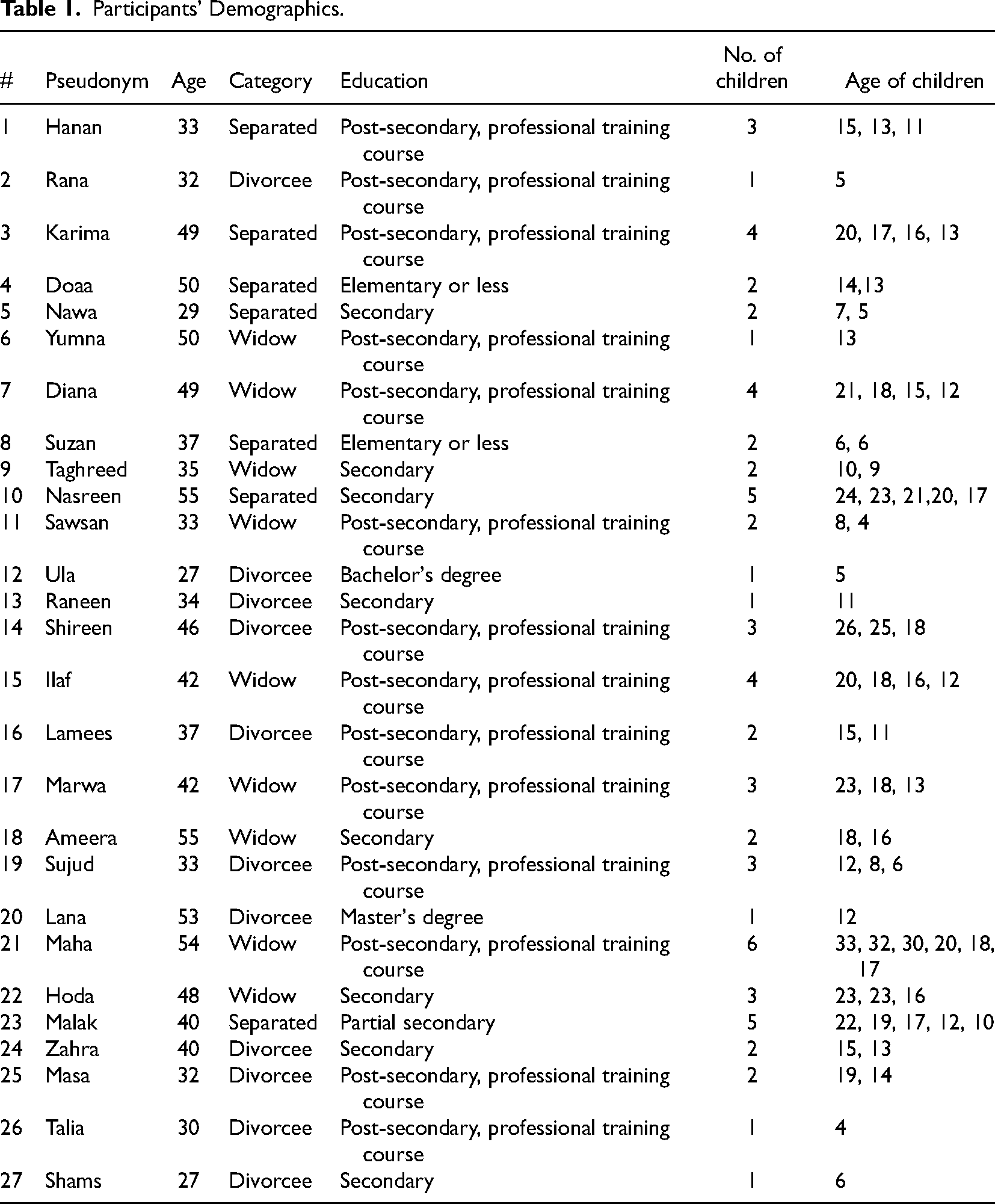
Between 2023 and 2025, we conducted 27 interviews with low-income Arab Israeli single mothers. Of the 27 participants, 9 were widows, 11 were divorcees, and 7 were separated. The inclusion criteria were adult women (aged 18 or older) who (1) lived with at least one child under the age of 18, (2) had no cohabiting partner in the same household, and (3) engaged in some form of contact with a social worker (the frontline providers of almost all services in such departments in Israel). We continued interviewing until we believed that we had reached saturation regarding the research question of this study, meaning no new data emerged. Our main recruitment strategy was the distribution of flyers to single mothers by social workers in various social services departments, who shared the flyers with clients who fit the criteria for participation. The social workers who distributed the flyers did not receive any information about the women who approached us and ultimately participated in the study. Table 1 provides further demographic details about the participants.
Participants’ Demographics.
Procedure and Interview Protocol
The research tool was a semi-structured, in-depth interview. All interviews were conducted face-to-face by the first author. They were held in Hebrew or Arabic, in keeping with each participant's preference. Interviews lasted 60–90 min, and all were recorded and transcribed verbatim. The study adhered to strict ethical guidelines, ensuring the anonymity, confidentiality, and privacy of participants. It was approved by the Ethics Committee of Haifa University. We also adhered to the protocol suggested by Lavee and Itzchakov (2023) to ensure that the study met the quality criteria. During the interview, participants were asked to describe themselves and their families in general and a typical day in their lives, including their daily routine. They were also asked to talk about their relationships with their children, their family, and the surrounding community. The main part of the interview focused on their relationship with the local social services department, particularly with social workers. We asked the participants to provide as many examples as possible of their interactions with social workers, their relationships with them, and their emotions related to these interactions.
Data Analysis
We analyzed the results through the lens of IE, focusing on identifying the leading relationships that shape the emotional experiences of single mothers in their interactions with social services (Smith, 2005). Using Atlas.ti software, we followed Charmaz (2014) grounded theory approach for analyzing the data. We began with open coding to generate initial codes from the data. We then used axial coding to organize the data into broader thematic categories. This approach allowed us to classify the codes by the different categories of single mothers (widow, divorcee, separated) and align them with the main research question. As substantial differences emerged between the categories, particularly in their emotional experiences and interactions with social workers, each interview was categorized accordingly.
The Researchers’ Positionality
The differences between the two authors proved valuable in the research. The first author, an Arab-Israeli social worker, shared cultural identities with the participants, which fostered trust and a deeper understanding of their experiences. However, as she was not part of the specific group studied, she maintained a level of analytical distance. The second author, as an outsider, contributed a different perspective, which helped broaden the interpretation of the findings. Rather than framing these positions as strictly insider or outsider, we align with the idea of a “space between” (Dwyer & Buckle, 2009). The first author's position allowed her to relate to participants while recognizing the limits of her shared experience, whereas the second author's external standpoint provided a complementary lens. This dynamic contributed to a more reflexive and nuanced analysis of the participants’ narratives.
Findings
In the first stage of the analysis, we coded the emotional aspects the interviewees described about their interactions with social workers. It was already clear at this stage that most of these experiences were negative for all of the interviewees. At the same time, the analysis revealed a distinction between the women in terms of the content of their emotional experiences, and this content varied depending on the category of single mothers to which they belonged. Thus, in the next stage of the analysis, also based on IE, we tried to trace the ruling relations that shaped these negative emotional experiences. This analysis revealed two key factors that work simultaneously to shape emotional experiences: the mothers’ interactions with social workers, which differed by sub-category of the women, and the gap between the mothers’ needs and the actual provision of social services, regardless of sub-category.
The importance of the client-worker interaction was expected in light of previous studies. A systematic analysis of the structures of power and knowledge in these interactions revealed, however, that the concept of “interaction” combined three elements: (1) who approached whom, i.e., whether the social worker initiated contact with the single mother or the mother applied to the welfare agents; (2) whether special treatment was received: did workers provide “extra service” to the woman or only formal, basic service; and (3) whether the woman requesting services generally regarded the social welfare system as open or closed. The analysis revealed major differences between the widowed and divorced participants regarding these three elements. While, in accordance with existing literature, divorcees experienced all three of these elements as negative, widows experienced all of them as positive. Moreover, separated mothers rarely referred to these three elements, which received major attention from the other two sub-categories of mothers (see Table 2).
Elements of the Interaction Between Different Categories of Single Mothers and Social Workers.
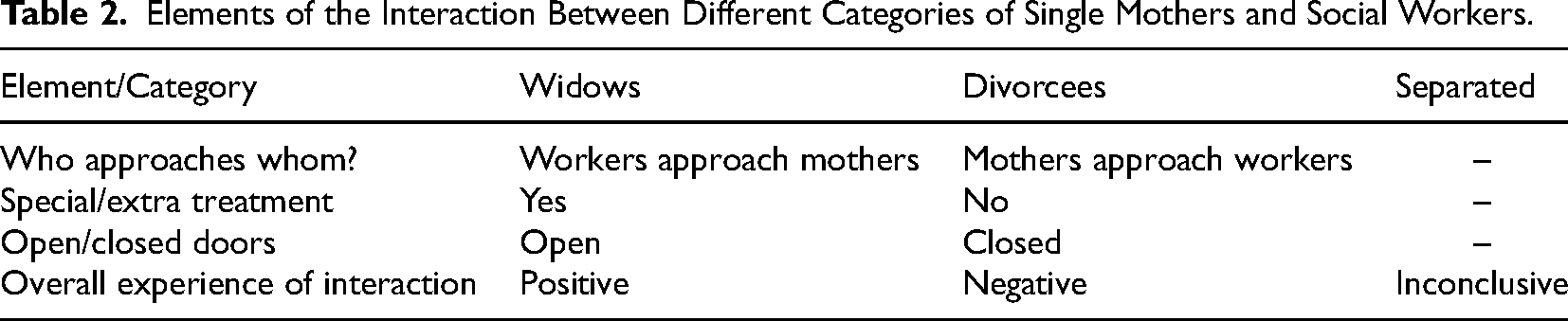
These findings are both surprising and puzzling. Drawing on the literature that assumes that single mothers’ emotional experiences stem from the interaction with welfare agents, and given the positive experiences of widows that emerged in our data, we would expect more expressions of positive emotions among single mothers. However, in both the literature and our study, the overall emotional experience of all participants—whether widowed, divorced, or separated—was negative.
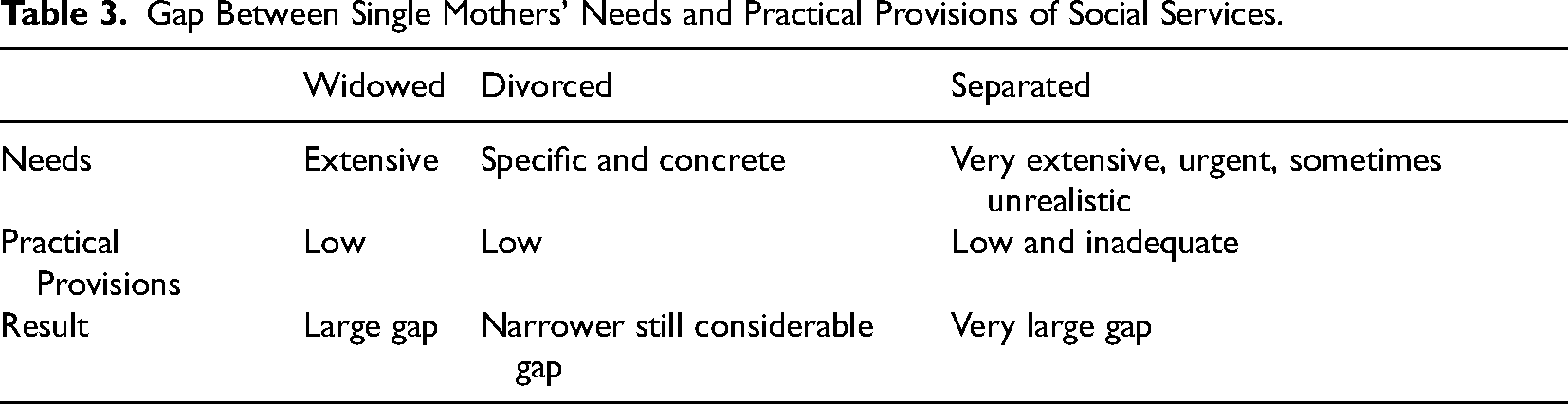
Addressing our data through the lens of IE helped us solve this puzzle by linking local actions and experiences to more macro-level institutional dynamics of power and control. This approach allowed us to understand that the emotional experience is not merely a product of the interaction between service provider and service user, but also includes a second factor: the gap between needs and actual support. Here we found much less variation between the sub-categories of single mothers, as they all experienced a gap—albeit in varying degrees—between their needs and the practical provisions received (see Table 3).
Gap Between Single Mothers’ Needs and Practical Provisions of Social Services.
We argue that the combination of the three elements of the interaction, and the gap between needs and practical provisions, is what determines the single mothers’ emotional experience. Combining these two factors also helps explain the varying content of the negative emotional experiences, although all resulted in feelings of exclusion. Figure 1 demonstrates the process revealed in the analysis of our interviewees’ stories.
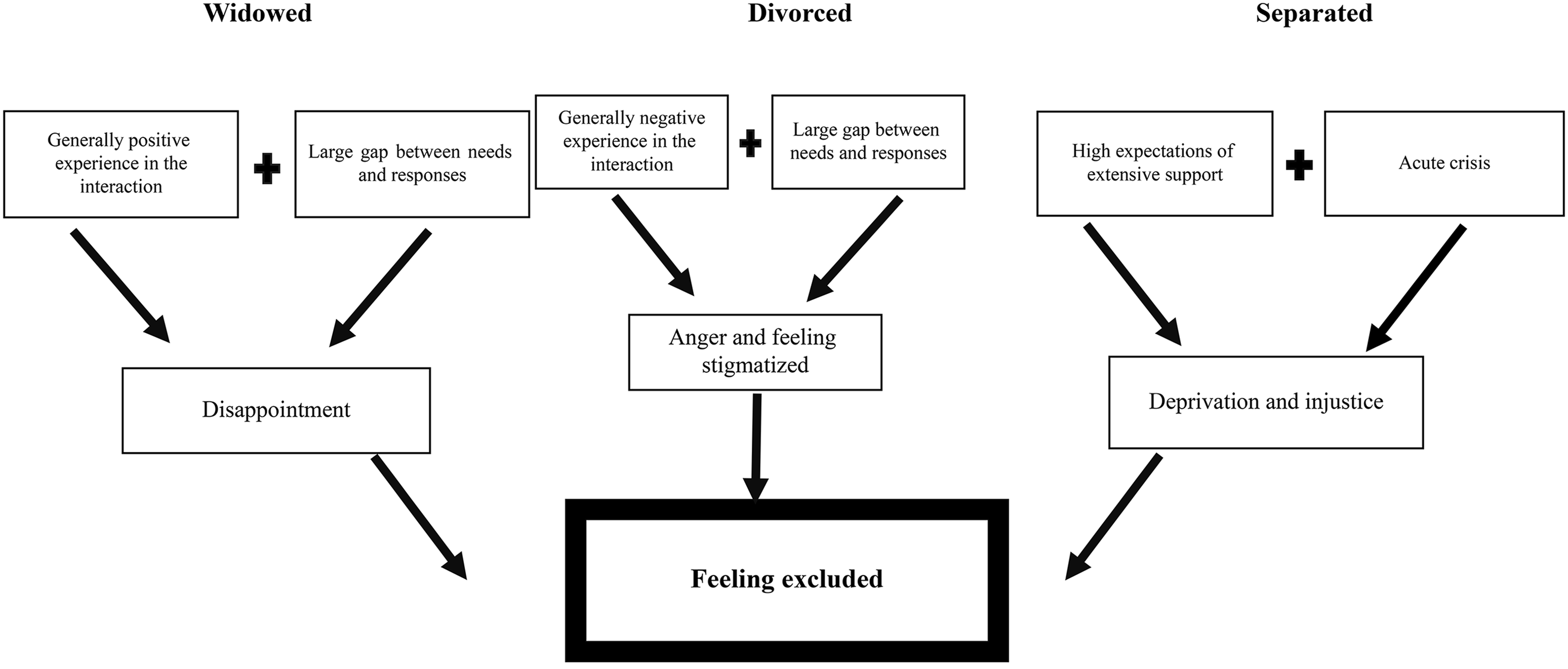
Overall process of emotional experience among different categories of single mothers.
The Interaction Between Sub-Categories of Single Mothers and Social Workers
As explained above, the interaction with service providers was the main factor shaping the single mothers’ emotions. Moreover, this interaction consisted of three distinct elements that the sub-categories of single mothers, particularly the widows and divorcees, experienced differently.
Who approaches whom
Widowed and divorced mothers differed in terms of whether it was the system, via the social workers, that contacted the women, or vice versa. Generally, the social workers made the first approach (and subsequent approaches) to the widows, as one of the latter explained: “The social workers usually are the initiators of the contact. I never applied. I don’t ask. Whatever I deserve, the social worker informs me that I deserve such and such” (Taghreed, 35, widow).
In contrast, it was the divorced mothers who contacted the social workers both initially and for follow-up requests for support: “I approached the welfare department after I got divorced, and since then I have approached them repeatedly” (Rana, 32, divorcee). Similarly, another interviewee said: “After I got divorced, no one from the welfare department turned to me; no one visited or called” (Talia, 30, divorcee).
Through these dynamics, societal discourses of entitlement and deservingness are manifested from the very first interaction: who is deemed worthy and eligible, and who is not. For widows, the proactive outreach by social workers communicates entitlement and acknowledgment. Conversely, the absence of institutional contact with divorced mothers signifies that they are regarded as less deserving.
Receipt of special treatment
A second element in the interaction that distinguished widowed and divorced mothers was whether the women felt that social workers were willing to go above and beyond for their sake, or only did the minimum in terms of their job requirements. The analysis showed that widowed mothers often reported receiving treatment they experienced as “special,” which they interpreted as a genuine willingness to provide support, often described as going beyond the formal service: The social worker always receives me very nicely. She always listens carefully to my requests, explains, and devotes much more time to me than is allocated for the meeting (Diana, 49, widow). I sometimes call her [the social worker] at night and consult with her. Interviewer (surprised): Even at night you call? Yes, yes (Sawsan, 33, widow).
The words of these interviewees reflect a discrepancy in how the system communicates different levels of care and respect. This factor might lead to differences in the emotional experiences, as one group feels cared for and meaningful, while the other is reduced to a number.
Open versus closed doors
The last distinguishing element in the client-worker interaction involves whether the single mothers perceived the social services as accessible (the doors are open) or alienating (they are closed). Reference here is to the participants’ interactions with the system as a whole, beyond specific encounters with an individual social worker. Most of the widowed mothers regarded the entire system as accessible and open to them: I experience a very good and positive relationship with the welfare department; all the workers there are good. I respect and appreciate them (Yumna, 50, widow). I go there [the social services department] many times, and the secretary always tells me that the worker is on leave, or is not there, or has left the office. And there's no answer on the phone. I always try to make contact, no answer. It's like running into closed doors. It's impossible to get a response from them (Lana, 53, divorcee).
The Gap Between Needs and the Practical Provisions from Social Services
The second key factor that emerged from our analysis as directing the emotional experience of single mothers was the gap between their needs and the practical provisions they received, i.e., the actual provision of welfare services and support offered to them by social welfare systems. This includes both tangible forms of support, such as material benefits, monetary assistance, or subsidies, and intangible forms of support, such as parental guidance, emotional support, or access to psychological services. For participants in all three sub-categories, this perceived gap was considerable. Nevertheless, the analysis also revealed differences between sub-categories of single mothers in this respect.
Needs
Widowed mothers reported many needs in a wide variety of domains, such as material support in various areas, emotional support for themselves and their children, various forms of instrumental assistance, and help with their children. These needs were mentioned in parallel when the women asked about the forms of support they requested from the social worker: Before the start of the school year, I asked for help with all the school needs of my four kids. I had so many financial obligations and many forms to fill out…. I also requested someone to listen to me, to understand how I feel… Also, I asked for beds for the children and a wardrobe (Ilaf, 42, widow).
The separated mothers were in an acute state of crisis, as reflected in their very high expectations of extensive support from the social services department. Sometimes the expectations these women had were outside the scope of the support commonly provided by the social services and thus probably unrealistic. One example is Doaa's expectation that social services would help cover her debts: I had to make a massive renovation in the house I moved into, because it was in terrible condition. I took out loans of 80,000 shekels (about $20,000), and I thought that welfare would help me with the loans, since it was for the house. They came to visit me many times and saw that I deal with this deep poverty (Doaa, 50, separated).
Practical provisions
All participants, regardless of sub-category, maintained that the practical provisions they received were limited and did not meet their needs. However, this gap varied across sub-categories of single mothers. For widowed mothers, the gap was wide due to their extensive needs. Yet, the practical provisions they received were often inadequate or nonexistent, leading to a strong sense of unmet expectations. Divorced mothers, whose needs tended to be more focused, faced a somewhat smaller gap. Although they reported that the actual support from social services was limited, their expectations were more moderate, resulting in a narrower gap. Lastly, separated mothers experienced a very large gap. Their expectations for social services were particularly high, sometimes exceeding what the system could reasonably provide. Moreover, these mothers often maintained that the solutions suggested were inadequate for their needs, and did not address their requests for support. Similar to the other two sub-categories, they felt that their needs were not met, resulting in a very large gap.
The Overall Emotional Experience: Varieties of Exclusions
While the overall emotional experience of the mothers surfaced differently in each sub-category, all of these negative emotions converged into a feeling of exclusion. As an emotional construct, this feeling of exclusion arises when people feel deliberately disregarded, rejected, or overlooked within a significant interpersonal or social context (Baumeister et al., 2007). Moreover, “feeling excluded” involves emotions such as hurt, disappointment, frustration, and numbness, often accompanied by a disruption in core psychological needs such as belonging, control, self-esteem, and meaningfulness (Blackhart et al., 2009; Pfundmair et al., 2024). The analysis revealed that manifestations of this feeling of exclusion emerged differently in each sub-category of single mothers, as they were shaped by different variations in interactions and the gap between needs and practical provisions. Through the lens of IE, we aimed to move beyond the participants’ internal emotional worlds to highlight how their interactions with the welfare system reveal broader dynamics of power and control, and to uncover how the feeling of exclusion is systematically produced and sustained through the institutional dynamics.
Widowed mothers: Exclusion related to disappointment
For widows, the analysis primarily revealed emotions of disappointment that resulted in an overall sense of exclusion. As demonstrated above, widowed mothers generally experienced their interactions with social workers as positive, which, in turn, created expectations of entitlement. Thus, widows expected that the practical provisions they would receive would align with their needs. The inadequacy of the actual support generated a deep sense of disappointment and a feeling of being deceived: I was often offered mental health support after my husband's death, but I never actually received such help. Although I was entitled to it, no one helped. It was just talking in the air. Each time I came with hope and was disappointed again (Diana, 49, widow). I was offered many things, but I’m still waiting for them. Each time [the social worker] says that this is not subsidized, or not suitable for the age of my children, or not suitable in terms of hours and activities. I feel very bad with this, like I have no one to trust (Taghreed, 35, widow).
This sense of exclusion was also manifested in the interviewees’ own behavior and led to self-exclusion: I now feel broken every time I ask for help; it makes me feel even worse. Even those who care about you don’t help. Now I just prefer not to ask for anything (Ilaf, 42, widow).
Divorcees: A wide range of negative emotions related to social stigmatization
The divorced mothers also experienced negative emotions resulting in exclusion, but their content differed from the emotions of the widowed mothers. First, unlike the dominant emotion of disappointment expressed by the widows, the divorced mothers vented their anger. For instance, referring to her social worker, Lana said: “I’m very angry with her now!” (Lana, 53, divorcee).
Moreover, the emotions that divorced mothers expressed were often tied to degrading social attitudes toward single mothers such as the feelings of deprivation, insult, shame, humiliation, and stigmatization commonly described in the literature, (Herke & Janky, 2023; Samzelius, 2023). The expression of these particular emotions suggests that, in the encounter with the social welfare system, these mothers are excluded not only from control over power and resources, but also from the ability to feel respected: It's not a good feeling at all. You feel insulted, that you’re an inferior person! They make you feel like a beggar … you’re supposed to beg them and convince them you’re really in need (Shireen, 46, divorcee).
Moreover, similar to widows, these derogatory negative emotions led to the decision to no longer interact with the social services: I knew it was something I deserved, I was 100 percent sure that [the social worker] would respond positively to my request. But she told me, “We prioritize giving support to others and not to divorced women.” After that, I decided that I don’t want to meet her again (Ula, 27, divorcee).
Separated mothers
The exclusion of separated mothers is related to their realization of new power dynamics in their lives, i.e., with the social workers. This realization reflects the understanding that the welfare system has assumed control over significant aspects of their lives. For example, as Nawa explained: “It feels like she decides my fate without even considering me” (Nawa, 29, separated).
These power relations exclude them not only from control and power over their lives, but also from the ownership of resources. Separated mothers find themselves in sudden need of a wide range of resources and support. The inadequate practical provisions they receive from social services lead to emotions of deprivation and injustice. As reflected in the quote below, the sense of injustice stems from feeling excluded from genuine participation in decisions about their lives and having unsuitable solutions imposed on them: [The social worker] didn’t offer me suitable things. He came up with one response and that's it, “Take it or leave it, that's what's available.” He didn’t offer me any more solutions, even though he knew I had so many things and I can’t deal with any of them alone. This is so unfair that I feel like I’m going to cry just from thinking about it (Nasreen, 55, separated). I now refuse to be in touch with them… The social worker insisted and tried to convince me [to accept an inadequate solution]. Why does she think she knows what's good for me better than I do? (Hanan, 33, separated)
Discussion and Conclusions
Through the lens of IE, our analysis led to our main conclusion: the emotional experience of single mothers is composed of two separate factors. The first factor is the interaction with social workers, as has been widely demonstrated in the literature (e.g., Lavee, 2017; McIntyre et al., 2003; Säilävaara et al., 2023; Sinai-Glazer et al., 2020; Sinai-Glazer & Brummans, 2022). However, our analysis illustrated that these interactions are composed of three elements. Importantly, we found substantial differences between sub-categories of single mothers in this respect. Widowed mothers regarded all three elements as positive, divorced mothers saw them all as negative, and separated mothers rarely referred to such interactions at all, probably because they were new to the system and, at this stage, lacked concrete views on these encounters.
These discrepancies between sub-categories of single mothers led us to a second factor shaping the mothers’ emotional experience: the gap between their needs and the support they actually received. Here we found fewer differences between sub-categories. While widowed and separated mothers reported wider gaps than divorcees, all participants stated that the support they received rarely constituted an adequate response to their requests. As the welfare system is the main mechanism for economic, instrumental, and emotional support for low-income single mothers of all categories (Stranz & Wiklund, 2015; Turgeon, 2018), this gap not only leaves them to struggle alone with their hardships, but also raises negative emotions. All these shapes a strong joint feeling of exclusion.
IE revealed the shared feeling of exclusion. It also showed how it is not simply an individual emotional response but one rooted in macro-level institutional control and structural inequalities. In the analysis, we treated interviews not as a window into participants’ internal experiences but as tools to expose the characteristics of social institutions through their accounts. Through the interviews, we revealed how the welfare system shapes the feeling of exclusion. For widowed mothers, exclusion emerges as deep disappointment over unfulfilled promises of support, making them feel disregarded. Divorced mothers experience exclusion in the form of societal stigmatization and lack of respect. Interactions with the welfare system evoke feelings of shame and humiliation, damaging their self-esteem and sense of worth. For separated mothers, exclusion relates to power dynamics, where the welfare system assumes control over their lives.
The study findings allow us to enrich the important literature on the emotional experience of low-income single mothers—which has mainly focused on interactions with social workers (McIntyre et al., 2003; Säilävaara et al., 2023)—by linking it to studies that emphasize the discrepancy between needs and the services offered by welfare workers (Kim et al., 2018; Noh et al., 2015). The present study has shown that non-satisfaction of needs can create a negative emotional experience even when the encounter itself is positive. Importantly, this emotional experience is a systemic issue rooted in institutional arrangements, rather than a purely individual emotional state.
Admittedly, our case study has some unique characteristics, as Arab society is considered relatively patriarchal, and Arab women in Israel belong to an ethnic minority (Meler, 2017; Sa’ar, 2016). Nonetheless, by identifying the structural and institutional processes that shape their emotional experiences, we can argue that there are some key similarities between our case and low-income single mothers from other locations. Many Western countries, like Israel, have experienced welfare reforms over the last few decades, resulting in limited resources available to adequately address the needs of single mothers (Attrash-Najjar et al., 2024; Broussard et al., 2012). Moreover, while single mothers in Arab society may suffer from stronger social stigmatization than those in more modern societies, our findings show that the dynamics in this context do not have to have negative results. For example, widowed Arab mothers did not report feeling stigmatized by social workers.
Implications for Policy, Practice, and Feminist Social Work
Our study suggests that aligning the responses of the welfare system with the needs of single mothers requires examining whether treating them as a homogenous category adequately addresses their diverse needs. A generalized approach to policies or practices may inadvertently deepen inequalities between sub-categories of single mothers. Moreover, the findings indicate that social workers should critically reflect on their assumptions and reduce judgmental attitudes about the deservingness of different sub-categories. For example, they should be wary of assuming that widowed mothers are more worthy of support than divorced or separated mothers, who may face equally complex challenges.
Using the lens of IE, which focuses on institutions rather than individuals, we do not seek to pit service users against professionals. Our IE-informed analysis highlights that both service users and social workers operate within the same institutional setting, which shapes their interactions. Accordingly, our study avoids placing blame on individual social workers and instead underscores how both professionals and service users are embedded within the same relations of ruling (Høgsbro, 2017). This perspective reveals the structural inadequacy of the welfare system, where social workers are often involuntarily co-opted into perpetuating systemic failures.
Furthermore, IE allows us to connect our findings with a broader issue in welfare services: the persistent failure of welfare regimes to meet the needs of marginalized populations, regardless of the dedication and supportiveness of frontline social workers. Based on the process we revealed, these institutions of last resort appear inherently structured not only to inadequately meet basic needs—thereby fostering feelings of exclusion—but also to rely on self-exclusion as a mechanism to manage limited resources. This dynamic relates directly to barriers to rights realization or uptake. In our study, this phenomenon is starkly evident. While participants are entitled to rights, the resources available are insufficient to meet them. Thus, our results not only emphasize the need to increase the resources available to social workers to enable them to provide more tailored support for single mothers but also underscore the broader need for systemic reform.
Limitations and Future Research
No study is without limitations. The first limitation lies in the number of participants. Although a sample size of 27 is generally adequate for qualitative research, dividing the participants into three sub-categories resulted in small groups. Nonetheless, we believe that saturation was achieved regarding the research question. Additional questions about specific sub-categories may require further data collection.
Moreover, this study focused on widowed, divorced, and separated mothers, excluding other potential sub-categories such as never-married mothers or women who left their partners due to violence or abuse. These groups, which might form a significant portion of single mothers in other contexts, warrant further research to determine whether patterns of exclusion apply to their experiences.
This study also faced limitations in its application of IE. While IE begins with interviews as an entry point, it also calls for examining institutional policies, practices, and multi-level interactions. Our study relied primarily on interviews and did not include methods such as observing provider-user interactions or document analysis. Future research could explore these institutional threads to better understand the broader structures influencing these experiences. Another limitation is the absence of member checking, which, while optional, could have provided insights by allowing participants to verify the findings. Finally, while we focused on service users, future research could examine social workers’ perspectives to identify institutional constraints. Addressing these limitations could deepen our understanding of the relationship between institutional processes, emotional experiences, and social inequality.
Footnotes
Declaration of Conflicting Interests
The authors declared no potential conflicts of interest with respect to the research, authorship, and/or publication of this article.
Funding
The authors received no financial support for the research, authorship, and/or publication of this article.
