




Abstract
In 2018, Dr. Christine Blasey-Ford's accusations of sexual assault against Supreme Court Justice Brett Kavanaugh and sexual assault convictions of Hollywood mogul Harvey Weinstein prompted questioning of why sexual assault victims do not report incidents of sexual violence to law enforcement. A hashtag movement, #whyididntreport was started wherein people began sharing their stories of sexual violence and the reasons they didn’t report. Even though research investigating barriers to reporting sexual violence exists such open, voluntary accounts have not existed before nor have been studied. This study used data from a social media website Reddit to capture barriers to reporting sexual assaults. A qualitative thematic analysis was used to identify six themes through the lens of feminist and social control theories. These findings indicate that even with more readily available knowledge about sexual assault, understanding of consent is still lacking. In addition, the current political climate is adding to fear of consequences when reporting sexual assaults. The implications of these findings for social workers indicate the necessity of social worker's role not only in reporting and clinical work, but also in advocacy and policy work relating to sexual assault.
Introduction
Sexual victimization is an umbrella term that includes all nonconsensual sexual acts including sexual coercion, unwanted sexual contact, sexual harassment, and rape (Basile et al., 2022). Incidence rates within the United States indicate that one in four women (26.8% or 33.5 million) and one in 26 men (3.8% or 4.5 million) experienced a completed or attempted rape during their lifetime (Basile et al., 2022). However, a 2021 United States Bureau of Justice Statistics report found that only 310 of every 1,000 sexual assaults are reported to law enforcement demonstrating that most survivors choose not to report their victimization to law enforcement (Morgan & Thompson, 2021). Survivors of sexual victimization weigh numerous factors when deciding to report, including how the report will impact their social relationships, employment opportunities, education, and their overall mental health and wellbeingPijlman et al., 2023; Wright et al., 2022). Survivors who chose to report the incident to law enforcement face numerous barriers in engaging with the criminal justice system, including invasive questioning, suspicion related to whether the incident occurred, and ultimately at times being discouraged to follow through with the report given the consequences they could experience personally by engaging in criminal justice processes (Murphy-Oikonen et al., 2022a). However, just experiencing sexual victimization leads to numerous physical, emotional, and social consequences, such as an increase in negative mental health symptomatology, poor educational outcomes, and upward economic mobility (Dworkin et al., 2017). Research indicates that even though the consequences of disclosing sexual victimization can be great, the act of disclosure derives positive benefits and mitigates the negative impact of experiencing sexual victimization (Kaminer, 2006; Wager, 2012). Often individuals who disclose their victimization in supportive environments experience a reduction in the shame associated with the assault, are empowered to adopt the identity of a survivor, and find community amongst others who have experienced sexual victimization (Franzway et al., 2018). Furthermore, disclosure is linked to reductions in anxiety, depression, and suicidal thoughts, and post-traumatic stress (Ahrens et al., 2010; Infusino, 2014). Beyond mental health, disclosure can benefit health and may benefit immune system function (Infusino, 2014) and allows survivors to connect with professionals who can provide emotional support, counseling, and other services to aid in their recovery (Middleton et al., 2016; Ahrens et al., 2007; Campbell et al., 2010). Conversely, those who do not disclose are at increased risk of developing PTSD, experiencing poor physical health and requiring more medical visits, experiencing increased isolation, are at an increased risk for re-victimization due to stigma, and miss opportunities for healing procedures which start with disclosure (Hakimi et al., 2018; Ullman, 2023).
This is best exemplified by the rise of Tarana Burke's ‘me too.’ Movement and the subsequent #MeToo movement. Tarana Burke, a long-time community-based sexual violence activist, began using “me too” in 2006 as a means to validate the experiences of, create collective liberation for, and provide resources to young survivors of color (Pouliot, 2019). Burke's ‘me too.’ Movement is grounded in ‘empowerment through empathy,’ and has evolved from a local grassroots effort to a global organization that centers the experiences of young, queer, trans, disabled, people and communities of color (Burke, 2020). In 2017, the actress Alyssa Mixlano published a tweet using the hashtag #MeToo to encourage survivors to share their experiences. During the initial days of the #MeToo viral storm, Tarana Burke's name was left unmentioned in a manner that replicated the marginalization and erasure of survivors of color that she has dedicated her life to centering (Gilmore, 2019). Due to the differences in mission, the two movements are often referred to as distinct from one another, and #MeToo has been the grounds for feminist debate (Wanzo & Stabile, 2022). The hashtag found new life again, a year later.
In 2018, Dr. Christine Blasey-Ford's accusations of sexual assault against Supreme Court Justice Brett Kavanaugh and sexual assault convictions of Hollywood mogul Harvey Weinstein prompted questioning of why sexual assault victims do not report incidents of sexual violence to law enforcement. The confirmation of Kavanaugh re-ignited a social movement online that leveraged the existing hashtag “#metoo” (created by Burke) wherein survivors of sexual abuse began to disclose their experiences of victimization and provide accounts for why they chose not to report the crime to law enforcement. The stories that accompanied the hashtag “#metoo” drew global attention to the plight of survivors of sexual violence, highlighted factors which influence the decision to report, and revealed the copious barriers survivors encounter while engaging with criminal justice process should they report the crime to law enforcement. This study utilized a method, while itself not innovative but has not been previously used within the context of gathering narratives about barriers to reporting sexual assault, of collecting data from a popular social media website, Reddit, to reveal barriers to disclosure and reporting for survivors of sexual victimization.
Barriers to Disclosure and Reporting
After experiencing sexual victimization survivors navigate three inflection points in their decision making, disclosure to anyone (whether informal or formal supports), report to law enforcement, and accusation with pursuit of legal punishment of the perpetrator. Survivors can experience barriers at three levels at each within those inflection points: individual, interpersonal, and community. Individual or personal barriers which prevent disclosure and reporting include shame and self-blame associated with being a victim of sexual victimization. Often survivors feel they could have prevented the assault and therefore blame themselves or feel shame associated with being unable to keep themselves safe (Brockdorf et al., 2023; Chynoweth et al., 2020). Additionally, fear of possible retaliation or repercussions prevents survivors disclosing or reporting to informal and formal supports (Kennedy & Prock, 2018; Rahmanipour et al., 2019; Wright et al., 2022).
At the interpersonal level, research indicates that survivors do not disclose or report due to concerns around how their interpersonal relationships will be impacted. This is particularly the case when the perpetrator is known to the survivor or they are within their family or friendship networks (Tummala-Narra et al., 2022). Additionally, survivors are less likely to disclose or report due to fears concerning the judgment or stigma they could face from their networks because they experienced sexual victimization (Chynoweth et al., 2020; Rahmanipour et al., 2019; Wright et al., 2022). Furthermore, a negative reaction to a survivor's disclosure may discourage future attempts to re-disclose (Reis et al., 2017; Taylor & Norma, 2013).
Lastly, survivors encounter barriers at the community and societal level which impact their decision to disclose and report. Cultural beliefs surrounding sexual victimization may inhibit survivors’ abilities to recognize their experience as sexual victimization and therefore inhibit their desire to disclose (Chynoweth et al., 2020; Lathan et al., 2023). Finally, negative reacts from formal resources may discourage help seeking or continued involvement in criminal justice process, particularly if survivors receive a negative reaction to their disclosure (Chynoweth et al., 2020) or if they are treated differently because of their gender or sexual identities (Murphy-Oikonen & Egan, 2022). These barriers factor into the decision-making process for survivors when they are considering disclosure and report.
Social Media and Sexual Victimization Disclosure
One outlet that could mitigate barriers for survivors’ disclosure is social media. Alaggia and Wang (2020) argue that disclosure using social media can ignite systemic change and can allow survivors to connect which can lead to healing. Disclosure of sexual violence within a public digital space offers the opportunity to upend traditions of victim-blaming by empowering survivors to curate the honest telling of their experiences (Loney-Howes, 2018). The peer support networks that emerge from this collective storytelling subvert traditional power dynamics whereby authority over one's own experience is inherent to each member of the group without need for outside affirmation or corroboration (Loney-Howes, 2018). In 2006, Tarana Burke created a local grassroots movement called ‘Just Be Inc.’ Part of this organization used the phrase ‘me too’ as a symbol of “empowerment through empathy” by creating a space for discussion (Ghadery, 2019). In 2017 when Alyssa Milano used the #MeToo hashtag on Twitter to mobilize against film industry sexual abuse, the words became popularized. The tweet initiated over 500,000 posts on Twitter and 4.7 million posts on Facebook using the hashtag “#metoo” to tell stories of victimization experience and barriers to reporting (Associated Press, 2017; Sayej, 2017). This type of feminist action, classified as hashtag feminism, connects individuals and broader society across digital space (Ghadery, 2019; Palmer et al., 2021).
Within Reddit, a popular social media website known for its ability to allow users to be anonymous, researchers have been able to review posts and use linguistic markers to measure proportions of positive and negative feedback to disclosures. Results reveal that comments tend to cause a positive feedback loop of support for users who recount experiences of sexual violence and the barriers they encountered in reporting the victimization (Bogen et al., 2019; Manikonda et al., 2018). Furthermore, recent studies undertaken after the rise of the #MeToo movement have found a large proportion of social media users who did not previously think their experiences qualified them for support services or legal action (Palmer et al., 2021). SMS forums such as Reddit have been described as possible pathways to resilience because they can empower individuals by offering a safe anonymous space for disclosure (Alaggia & Wang, 2020; Andalibi et al., 2018). Online peer-to-peer supportive environments open doors for those who may struggle to discuss their experiences in person or in group settings and provide the opportunity for them to derive support without the fear of stigma (Collaton et al., 2022; Naslund et al., 2016), and research shows that the more exposure to disclosures of sexual violence a person has, the more likely they are to disclose details about their own experience (Gallagher et al., 2019). Mendes et al. (2019) argue that hashtags serve an an important narrative device for discussing experiences of sexual violence not only in that they facilitate the connection of survivors across platforms but also as their use as discursive placeholders for more explicit terms that may be re-traumatizing to survivors.
Gaps in Current Research and Study Purpose
Even though research investigating barriers to reporting sexual violence exists, such open, voluntary accounts have not existed before in such large quantities. Social media has created a forum through which survivors can disclose their experiences of sexual victimization, whether anonymous or not, and receive support (Alaggia & Wang, 2020; Andalibi et al., 2018). Since the rise of the #MeToo era, researchers have attempted to capture the impact of the movement. Research has examined the impact of #MeToo on social change (Stubbs-Richardson et al., 2023) and engagement with the movement in online spaces (Armstrong & Mahone, 2023; Dey & Mendez, 2022; Hoffman, 2021). However, research situated within the specific context of the #metoo movement within online spheres is limited. Manikonda and colleagues (2018) compared disclosures on Twitter and Reddit to determine patterns of engagement. Cook & O’Halloran (2023) reviewed the use of vlogs on Youtube to disclose experiences of sexual victimization. However, no study known to the authors has focused on barriers to disclosure and reporting using anonymous postings on a website such as Reddit. Reddit is a popular online platform and social media website where registered members can submit content, such as text posts, links, images, and videos, to various user-created communities known as “subreddits.” These subreddits cover an extensive range of topics, from news, science, and technology to hobbies, entertainment, and niche interests. Users can upvote or downvote posts and comments, which influences their visibility and ranking within the community. Reddit's format encourages discussions, sharing of information, and the creation of a diverse and dynamic online community.
Additionally, social work is uniquely positioned to respond to sexual trauma given their extensive training in trauma-informed care and often frontline position when people do report sexual trauma. Indeed, since social work is the largest group of mental health service providers in the United States (SAMHSA, 2024), it is imperative that research on sexual trauma include a social work-forward analysis which relies on key tenants of the profession such as client self-determination, seeing the dignity and worth of a person, and the importance of human relationships (NASW, 2024).
Given the current (March, 2024) release of Dr. Christine Blasey-Ford's memoir, One Way Back: A Memoir, and to address this existing gap in the literature, this study was guided by the research question “what are the barriers reported anonymously to Reddit, to reporting sexual trauma?” and utilized posts on the anonymous social media website Reddit from #metoo era in 2018 to identify barriers to disclosure and reporting for survivors of sexual victimization.
Methods
As mentioned previously, Reddit is an online community of forums, called SubReddits, dedicated to a multitude of interests, politics, humor, mental health and physical health issues, academic discussions, news, and much more. Within these SubReddits exists a forum dedicated solely for asking questions of the general population of Reddit, called AskReddit. AskReddit allows the poster to post a general, open-ended question for answering. At the time of this writing, AskReddit had 19.5 million subscribers and can also be viewed by those not subscribed once posts hit the “front page” of Reddit. The “front page” is the page viewed by those who go to the Reddit website without signing in and the posts there are visible based on “upvotes” by the community. While Twitter served as the origin for hashtag disclosures, Reddit subreddits have provided a better space for more detailed, and possibly more intimate, conversations to arise (Manikonda et al., 2018).
This study followed the methodological guidelines set forth by Caplan and Purser (2019) regarding obtaining data from Reddit and extraction criteria. The institutional review board from the affiliated university was consulted, and it was communicated that no official IRB approval was needed since the data being acquired was de-identified and did not require a “log-in” to acquire.
Using this guide for executing a qualitative study using quotes from Reddit, this study began first by identifying a research question- what are the barriers reported anonymously to Reddit, to reporting sexual trauma?” The search was conducted July 7, 2018, shortly after the larger protests surrounding Brett C. Kavanaugh's appointment to the Supreme Court. Given the quantity of comments posted to Reddit every day and the confines of the research team, one day of data collection was chosen to capture the more immediate reactions to protests. Sampling for this study was conducted by identifying AskReddit threads from which to gather data to answer the research question. Keywords used to search on basic Google search for Reddit threads included “metoo,” “#metoo,” “why I didn’t report,” and “#whyididntreport” in conjunction with “ask reddit.” To retain relevant integrity of the threads, only the first 3 pages of Google search results were used to gather relevant threads. Relevant threads were defined as threads that discussed the reason for not reporting sexual violence,received at least 5 comments, and as those posted within the prior week to be included in the data collection. Following Caplan and Purser's lead, researchers sorted the comment threads into individual documents for ease of coding. This sorting resulted in the coding of seven original documents, or original posts, with 855 total unique comments. Document #1 had 277 comments, Document #2 had 126 comments, document #3 had 115 comments, document #4 had 221 comments, document #5 had 48 comments, document #6 had 44 comments, and document #7 had 24 comments. The average comment length across all 855 comments was 145 words and the range of comment length was 11–345 words. Previous studies have utilized methods to only procure “top posts” or sort by “controversial,” (Caplan & Purser, 2019), however, to enhance richness of data, all comments from within these main threads were extracted for coding in this study. In this inductive qualitative analysis (IQA), the authors analyzed 855 unique comments using atlas.ti (v.8.1) within seven r/TwoXChromosomes (a SubReddit dedicated to women) threads discussing #whyididntreport.
Protection of Human Subjects
All procedures performed in studies involving human participants were in accordance with the ethical standards of the institutional and/or national research committee and with the 1964 Helsinki declaration and its later amendments or comparable ethical standards. Informed consent was not obtained from all individual participants included in the study because the comments were anonymous, and IRB mandated it not required. That said, we did consider ethical challenges to collecting anonymous online data about sensitive topics, such as concerns about comments being taken out of context, verbatim quotes being used with identifiable information, and age of consent (Golder et al., 2017; Boddy & Dominelli, 2016). To combat some of these ethical concerns, we did not document usernames and when we provide verbatim quotes we ensured no potentially identifiable information is used. In addition, although there is concern with out of context analyses, we ensured that the comments collected directly answered the research question and discussed directly barriers to reporting sexual assault.
Data Analysis: Inductive Content Analysis
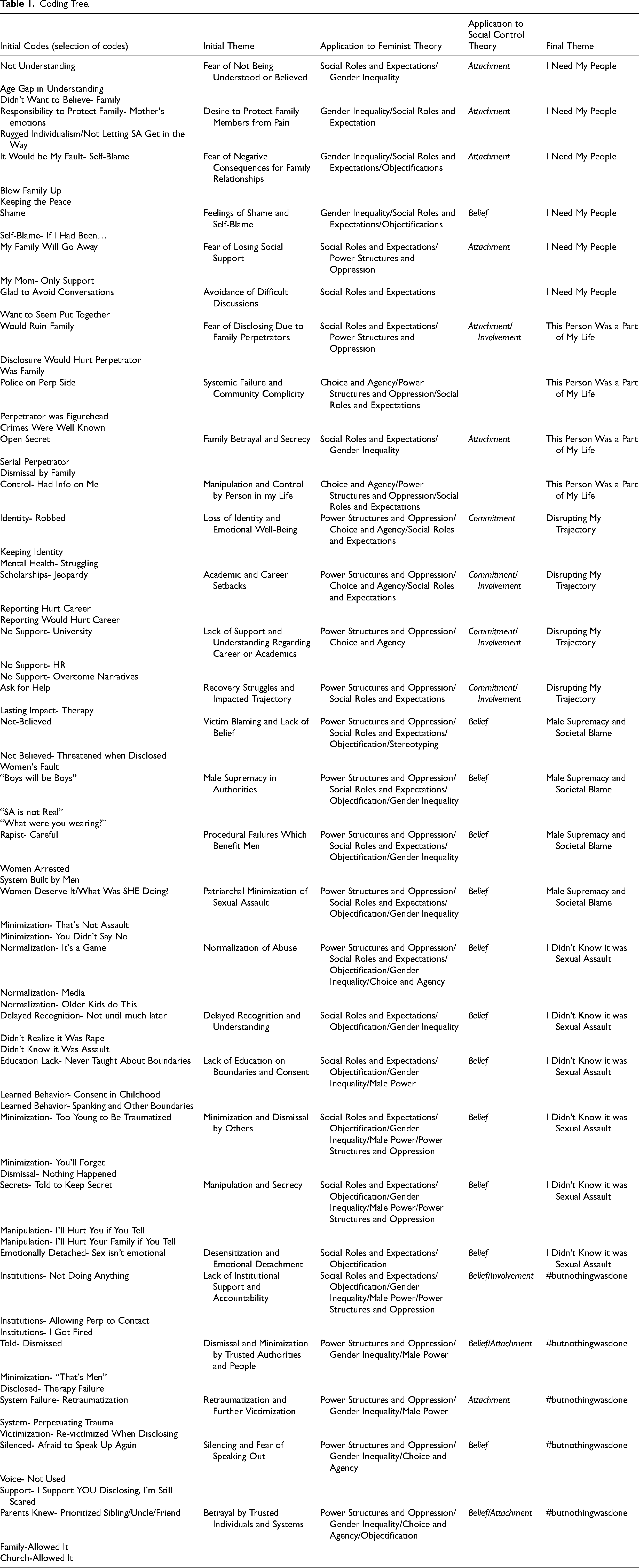
The documents were then imported into Atlas.ti (v.8.1). Following the lead of Vears and Gillam (2022), Inductive Content Analysis (ICA) started with in-depth familiarization of the data by three of the researchers wherein the four coders identified and labeled words, phrases, or sentences that were relevant to the research question. After an initial read-through, the researchers conducted a more in-depth read-through to identify “big-picture meaning units” (Vears & Gillam, 2022 p. 117) and noted these units within Atlas.ti (v.8.1). Researchers documented all interesting themes or patterns in this process which aligned with the research question and created codes with definitions to ensure consistency. An initial codebook was then developed and data was then read line-by-line by all four coders and the codebook was adjusted and refined to better represent the data and alignment with the research question. A hierarchical structure was developed with main categories and subcategories which indicated the alignment with both Feminist Theory and Social Control Theory. Following that, researchers refined the relevance of themes by comparing the themes to the entire data set as a whole, then agreed by consensus on the application of both Feminist Theory and Social Control Theory to the interpretation of the themes. Then, the team organized themes and created a conceptual framework with the connections between the original hierarchical structure and the chosen theories to apply, and then named these top categories as themes for coherent reporting of the results.
Theoretical Induction
The inductive content analysis led to the application of Feminist Theory to Social Control Theory. SCT posits that through our social relationships, we will be limited from our actions (Hirshi, 1997). In addition, SCT insists that we are less likely to engage in activity that deviates from societal norms because of pressures from our social relationships. This act of symbolic interaction, wherein our moral codes are intrinsically tied to those we care about, keeps us from engaging in criminality and therefore social control keeps a more homeostatic community. Additionally, there are four primary components of SCT. Attachment to both those within and outside of our families, including friends, keep us from engaging in certain behaviors for fear of relationship impacts. Commitment to activities in which we have invested time and energy into, such as career goals or educational attainment, also dictate how we behave and what activities we engage in. The level of involvement in activities, such as how strong a social bond we have with those engaged in the same activities, also dictates our propensity for engaging in behaviors seen as deviant. Finally, belief in larger social values (such as gender norms or sexual assault myths) influences our behavior as well (Hirshi, 1997).
Applying Feminist Theory to SCT involves integrating insights from feminist scholarship into the understanding of how social control mechanisms operate, particularly in the context of gender dynamics. SCT, traditionally, focuses on the ways in which society's institutions and relationships influence individuals to conform to norms and laws, suggesting that deviance results from weakened bonds to society (Hirshi, 1997). Feminist theory, with its emphasis on examining power relations, gender inequalities, and the social construction of gender roles (MacKinnon, 1987), provides a critical lens through which to analyze and expand upon SCT.
There are several ways we have applied feminist theory to SCT. One application highlights that since oppression of women occurs through societal power differentials (MacKinnon, 1987), social control exists on a large systemic scale that prompts women/men/survivors to not report to keep a system of male supremacy intact. Feminist theory also emphasizes agency and resistance within the context of social control and explores how individuals and groups resist gender norms and contest the mechanisms that seek to regulate their behavior (Nussbaum, 2005). This perspective enriches SCT by highlighting not only how social norms and institutions enforce conformity, but also how they are challenged and negotiated through acts of resistance. Feminist theory also provides tools for analyzing the power dynamics inherent in social control mechanisms and examines how societal norms and institutions perpetuate gender inequalities and how these inequalities influence individuals’ abilities to conform to or resist social norms (MacKinnon, 1987). For instance, examining the criminal justice system through a feminist lens reveals how power imbalances can affect the reporting, prosecution, and sentencing of crimes related to gender, such as sexual assault.
The emphasis on intersectionality within Feminist Theory expands the analysis of social control by considering how gender intersects with other identities such as race, class, sexuality, and disability (Crenshaw, 1991). This approach highlights how different forms of identity and disadvantage interact to shape unique experiences with social control mechanisms. In addition, Feminist Theory highlights how gendered socialization practices influence the ways in which social control is exerted and experienced differently by men and women (MacKinnon, 1989). This process also sets up a structure wherein male survivors are ostracized because society then purports that men can’t be raped/assaulted by a woman. Integrating feminist theory into social control theory contributes to our understanding of how social control is gendered, highlighting the complexities of power relations, intersectionality, and resistance. This approach offers a more nuanced and critical perspective on the mechanisms of social control and the role of gender in shaping individual behaviors and societal norms, particularly when applied to the narrative influx of the #MeToo movement, which combatted larger social pressures that hold up the patriarchal system and prevent reporting.
Results
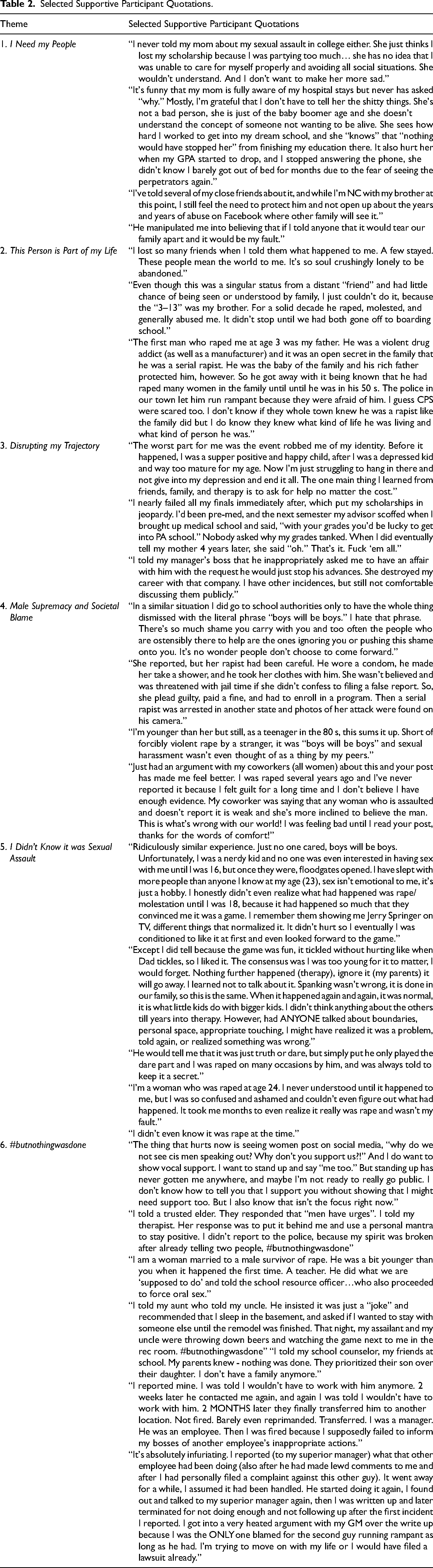
Evaluated through Feminist and Social Control theoretical lenses, there were six major themes surrounding barriers to reporting sexual assault and one additional theme that was unique to stories told after people attempted to report (Table 1). The first theme, I Need My People, was relating to attachment and described how the fear of losing close relationships limited survivor's abilities to report. The second theme, This Person is a Part of My Life, relates to involvement and explains how the perpetrator was plugged into various social systems the survivor was a part of. The third theme, Disrupting My Trajectory, aligned with commitment and acknowledged the influence of the perpetrator to disrupt activities the survivor was heavily committed to. Fourth, Male Supremacy and Societal Blame, was related to beliefs within SCT, and demonstrated the influence of societal beliefs on the propensity to report sexual assault. The fifth theme is I Didn’t Know it Was Sexual Assault and contains posts related to lack of awareness around the definition of sexual assault. Finally, the sixth theme, #butnothingwasdone, explains what did happen when survivors reported, which seeks to keep them from reporting again. Example quotations supporting the six themes can be found in Table 2.
Coding Tree.
Selected Supportive Participant Quotations.
I Need My People
The first theme, I Need My People, was relating to attachment and described how the fear of losing close relationships with people besides the perpetrator limited survivor's abilities to report. This entails the survivor's concern about how they are treated by people in their closest proximity, usually in biological kinship relationships. Many survivors expressed how they were only able to partially disclose their experience to their parents, due to their initial negative reaction, ambivalence, or concern. The code “Didn’t want to believe- family” addresses how many parents, often mothers, downplayed the severity of the violence, implicitly warning that if the youth reported a crime, it would further harm the guardian's opinion of the survivor. These fears are compounded by the potential negative consequences on family relationships, such as causing discord or being blamed for the fallout. Feelings of shame and self-blame further discourage disclosure, as survivors might internalize the trauma and avoid difficult conversations, often highlighting their roles as parental caretakers. The influence of family dynamics creates a complex environment where survivors may choose silence over the risk of additional emotional distress and family disruption, particularly over fear of losing their social support which highlights the importance of their attachment and social bonds with others. Since many of the accounts in this theme occurred when survivors were at a young age, shame about homosexuality and assault's portrayal of vulnerabilities seem to have been especially formative on young survivors’ decisions to not report. The reactions of close others also shaped how some survivors did not recognize their experiences as criminal assault.
This Person is a Part of My Life
The second theme, This Person is a Part of My Life, relates to the SCT tenant of involvement as well as attachment, and explains how the perpetrator was plugged into various social systems the survivor was a part of. This also speaks to proximity and the amount of influence the perpetrator has over the people that the survivor needs. In many accounts, the “rapist was [a] family member,” who exerted power over other members of the family or social community. The abuse can also manifest through multiple family members, as a protective network forms to support the original perpetrator. Legal ties like marriage and child custody can inhibit the survivor's power to distance themselves from the perpetrator, especially when they were abused at a young age and are necessarily reliant on their parents for resources.
This theme also captures the profound sense of loneliness and abandonment experienced by survivors, exacerbated by family betrayal and secrecy. Family members who should provide support often dismiss or minimize the trauma, contributing to a culture of silence and further isolating the survivor. Fear of disclosing due to family perpetrators adds another layer of complexity, as survivors grapple with the potential fallout of exposing a family member. Systemic failure and community complicity further entrench this isolation, with authorities and institutions often failing to take appropriate action, thus enabling the abuse to continue unchecked.
Disrupting My Trajectory
The third theme, Disrupting My Trajectory, aligned with major commitments in life and acknowledged the influence of the perpetrator to disrupt activities the survivor was heavily committed to, highlighting how patriarchal structures protect men and contribute to trajectory setbacks of victims. This is a threatening presence that can alter school, work, or other environments and capacities that the survivor wants to continue. The high volume of mentions of “fear” emphasizes the seriousness of threats to social capital, academic standing, and long-term physical and mental wellbeing. Some of these threats were actualized, and overall, there is a clear lack of trust in authority figures outside of the kinship household. Many perspectives concur that they did not report due to the high cost of prolonging an experience that they wanted to move on from. The lack of a resolution or cathartic closure to the abusive experiences, however, seems to often foster long-term emotional damage that affects survivors’ life trajectories in ways that the perpetrators may not have directly controlled.
This theme underscores the profound and multifaceted effects of sexual trauma on survivors’ lives. Trauma can lead to a significant loss of identity and emotional well-being, transforming individuals from positive and happy to depressed and struggling. This emotional turmoil often spills over into academic and career setbacks, as trauma disrupts focus and performance, jeopardizing future aspirations. The lack of support and understanding from family, friends, and institutions exacerbates these challenges, leaving survivors feeling abandoned and invalidated. Despite these adversities, many survivors continue to struggle for recovery and seek help, often encountering further obstacles but also learning the importance of reaching out.
Male Supremacy and Societal Blame
Fourth, Male Supremacy and Societal Blame, directly relates to the feminist application of SCT as it encapsulates patriarchal pressures and threats targeting survivors’ choices about reporting the violence they experienced and the societal belief system that has been upheld regarding sexual assault narratives. Specifically referencing gendered privilege, and highlighting dismissal and minimization by authorities, such as school officials or law enforcement, often invalidate the severity of the trauma, with phrases like “boys will be boys” trivializing the victim's suffering. This expression states that any part of a male perpetrator's physical conduct towards women is a natural part of being male, and such actions are biologically inevitable at any age. Thus, male assaulters are granted immunity to being guilty of having committed a crime. We also see the convergence of a perpetrator being male and being in a position of institutional power, while being supported by other male members of the network. This is compounded by victim blaming and a pervasive lack of belief, where survivors are often met with skepticism or outright disbelief, further deterring them from seeking help. Procedural failures and legal challenges add another layer of frustration, as survivors navigate complex and often ineffective systems that fail to deliver justice or protection. Despite these hurdles, the emotional impact on survivors is profound, with many feeling isolated and unsupported.
I Didn’t Know it was Sexual Assault
This theme reveals how pervasive cultural and social factors lead to the normalization and misinterpretation of abuse. SCT posits that belief in norms provided by society, in this case, definitions of sexual assault, acts as a deterrant to behavior that are seen as against roles and expectations, such as reporting sexual assault. Survivors often experienced a normalization of abuse, where repeated exposure to trauma conditions them to view their experiences as routine or acceptable. This contributed to delayed recognition and understanding of the abuse, with many survivors realizing only years later that what they endured was wrong. Either due to age, lack of education on boundaries and personal space, manipulations by the perpetrators, or being conditioned to accept submissiveness to men (especially in the case of marital rape), comments related that not fully knowing what constituted as sexual assault kept them from reporting. Many participants described how they didn’t know what happened to them “counted” as sexual assault because of the way they have been conditioned to feel about their bodies in reference to men and men's ownership over them. SCT also applies to gender norms applied to male survivors, who are expected to not show vulnerabilities or be immune to sexual assault, which is perceived to only target women. This discourse supports a hegemonic social positioning of heterosexual men and women and dissuades survivors from reporting their experiences by not recognizing it as an injustice. This is emphasized with the next theme, #butnothingwasdone, when survivors suffer more by the failure of legal and criminal justice systems to protect them or fulfill their purported purpose. Failure to uphold the social contract's promise to citizens can also be interpreted as a successful systemic feature, wherein abused citizens are overlooked to maintain bureaucratic and male authority.
A significant factor was also the lack of education on boundaries and consent, which prevented individuals from identifying inappropriate behavior and seeking help. Minimization and dismissal by others, including family and authority figures, further perpetuated the misunderstanding and acceptance of abuse, leaving survivors feeling invalidated. Over time, this led to desensitization and emotional detachment, where survivors disconnect from the emotional impact of their experiences and view sex as non-emotional or recreational.
#butnothingwasdone
Finally, the sixth theme, #butnothingwasdone, explains what did happen when survivors disclosed or reported their perpetrator's violence. This theme illuminated the power structures in place which are oppressive to survivors, and further entrenched the SCT tenets of belief in social norms and roles as well as the tenuous relationship of attachments to social networks that were threatened by oppressive systems. The negative reactions caused many survivors to lose their trust in authority figures like police and fostered a pessimistic outlook that concluded that repeated reports would be futile. There are accounts of how evidence was ignored or destroyed, intrusive procedures were useless, and legal prosecutors did not fulfill their obligations to the survivors. The lack of institutional support and accountability often left survivors without the protection and action they need, as authorities dismiss and minimize their experiences with harmful phrases like “men have urges.” This systemic inadequacy led to retraumatization and further victimization, where initial reports of abuse resulted in additional trauma, such as being assaulted by those entrusted to help. The fear of speaking out was also intensified by silencing tactics and the knowledge that previous attempts to seek help were met with inaction or punishment. Betrayal by trusted individuals and systems, including family members and workplace authorities, deepened the sense of isolation and helplessness. This theme seems to involve the most anger expressed in the rhetoric of the survivor's posts. Their exposure of the injustices throughout the reporting process seems to relate to a broader perspective on systemic failures not confined to their individual experiences, while entailing indecision about how to proceed during hostile social environments. Many of the comments include the use of the hashtag, #butnothingwasdone.
Discussion
In this study, the focus is on people disclosing about why they didn’t report sexual victimization, often giving rationale by identifying various barriers that inhibited their ability to disclose their experiences to informal and formal supports. First, findings highlight the fear of losing important relationships due to reporting was one motivator for commenters not reporting their sexual assaults. Research demonstrates part of the disclosure and reporting processes involves a retrospective contemplation by the survivor, and some might redefine their experiences of abuse considering new information or follow the behavior of role models in media coverage (Palmer et al., 2021). Some frameworks of recovery do not include the act of reporting as a prerequisite for a survivor's healing process. However, the presence of other supportive people, including health professionals, can facilitate healing. The movement from trauma to reclaiming oneself can include future-oriented action that overcomes negative emotions induced by perpetrators and reactions in one's social network (Reis et al., 2017). However, some online disclosures have conveyed that health professionals have provided the most negative responses to their attempts to disclose offline (Alaggia & Wang, 2020).
Beyond just losing social ties, survivors in this study explained that their entire social networks could be jeopardized by disclosure of sexual assault. The Social Support Behavioral Code features informational, instrumental, esteem, network, and emotional support; disappointed hope for or absence of these can sever social connections (Andalibi et al., 2018). Dynamics within a household include misplaced family loyalty when an individual aligns with the perpetrator rather than the survivor, misunderstandings about the existence of hidden information, and social death within an individual's social network (Taylor & Norma, 2013). Survivors anticipating harm from disclosure and reporting thus employ various “risk mitigation strategies” for protection, a subject of many studies (Andalibi, 2020).
The survivors concern over threats to social capital, academic standing, and long-term physical and mental wellbeing arising in the wake of reporting is indeed a barrier to reporting supported by existing research (Clark-Parsons, 2018). Even using the #MeToo hashtag to disclose can damage social networks and professional connectivity if not anonymous, as others have had to mitigate potential damage to their professional identities due to reporting on Twitter (Clark-Parsons, 2018). Professionals within academic environments are hesitant to report due to feelings of not being taken seriously and being unsure of the severity of the incident, as well as worries about retaliation against their careers (Kirkner et al., 2019).
Some survivors in this study denote past times when they have formally reported sexual assault, and nothing was done. This inaction, and sometimes structural shaming, left many survivors hesitant to repeat these experiences. Indeed, existing literature points to perceived inaction as a motivation for not disclosing or reporting (Kirkner et al., 2019). Furthermore, there has been criticism about the spotlight shining brightest on cisgendered white women (Palmer et al., 2021). The appropriation of the hashtag's symbology from Tarana Burke, a black woman, creates a different type of inclusivity, shifting environment and context. There may be certain criteria that one's experiences are not “#MeToo-worthy,” especially if they are not someone with social capital or privilege (Palmer et al., 2021). This suggests that the benefits of disclosing and reporting need to outweigh perceived risks of further violence. “Matches” and “mismatches” can happen between how a poster hopes people respond and how commenters respond (Andalibi et al., 2018).
Others in the study felt nothing was done and that state-centric approaches using orthodox social services to address sexual assault were counter to their support. A 2017 study on an r/askreddit post found that individuals describing their experiences of poverty did not consider governmental or social workers’ services valuable in their day-to-day life (Caplan et al., 2017). Since experiences of sexual abuse and poverty intersect in many communities, this may point to a lack of awareness, or distrust of formal systems’ capabilities to provide help.
Concerns about the actual effect of #MeToo have driven other scholarship on the movement and its derivatives. One worry is that “frequent repetition of these accusations and indiscriminate use of the hashtag” could produce “some kind of ‘white noise’ that could end up in nothing” (Arriaza Ibarra, 2019, p. 154). This acknowledges the differences between rhetoric and action, social disclosure and legal reporting, and short-term and long-term change. Others are studying if the wider scope of disclosure online has prompted a social backlash and higher potential for being ignored by audiences (Szekeres et al., 2020, p. 2). Surveys of university students from 2017 to 2019 suggests that #MeToo raised survivor's self-identification of their nonconsensual experiences as sexual assault but did not increase the overall frequency of disclosures (Palmer et al., 2021, pp. 90–92). Indeed, given that the larger #MeToo movement in response to Brett Kavanaugh's appointment to the Supreme Court, despite sexual violence accusations, and Harvey Weinstein's conviction for sexual assault was in 2018, the larger discussion about #MeToo has advanced challenges of rape culture through forcing a structural belief in sexual assault experiences due to en masse stories (Reyes-Menendez et al., 2020).
Limitations
The findings of this study should be received considering a few key limitations. Foremost, the age of the data. The data was extracted for this paper in the wake of the rise of #metoo and the Brett Kavanaugh hearing, so it is possible that some of the awareness has contributed to new approaches to supporting survivors in reporting. Additionally, online personas are often performative, and as such, comments made within online forums may not fully represent the complexity and full personality of the person making a comment (Moore et al., 2017). However, online sharing can also be a platform wherein people are more authentic with their feelings, particularly with highly stigmatized issues, such as sexual assault, as communal normalization may take place, and therefore it is possible that people are more likely to be honest on group platforms (Trondsen & Tjora, 2014). Additionally, there are other well-known limitations of using social media data. Reddit users are anonymous, and therefore, demographic data is limited to site-based statistics (Caplan & Purser, 2019). There are also methodological limitations, which include selection bias and emotional contagion (Janssens & Kraft, 2012).
Implications
The implications of the findings within this study are unique when situated among a Feminist and Social Control theoretical approach. Since the findings posit that social control acts as an extension of the patriarchy, the implications include dismantling of patriarchal systems which continue to create barriers to reporting. When survivors do not report, this contributes to an underestimation of the prevalence and scope of sexual violence and may limit the effectiveness of prevention and response efforts (Morgan & Thompson, 2021; Rape, Abuse and Incest National Network, 2023). Studies have consistently shown that the majority of sexual assaults are not reported to law enforcement (Murphy-Oikonen et al., 2022b), and the findings in this study indicate that when sexual assault is not reported, perpetrators may go unpunished and may continue to engage in abusive behavior. Future policies may focus on improving police training and protocols to ensure that officers respond sensitively and effectively to reports of sexual assault which could include trainings on trauma-informed approaches, cultural competency, and victim-centered investigations. Furthermore, social work advocacy towards policies which dismantle male supremacy, particularly within college and education environments could be beneficial to survivors and structures of power and could include implementation of bystander interventions and training for faculty and staff.
Of high importance are the implications relating to impacts on survivors’ mental health. Survivors may experience shame, guilt, fear, and self-blame, and may be at increased risk for mental health problems such as depression, anxiety, and post-traumatic stress disorder (Dworkin et al., 2017). Public awareness campaigns and educational programs can be implemented to challenge societal attitudes that contribute to victim blaming and stigma surrounding sexual assault. Furthermore, since the findings of this study denote survivors are sometimes unclear about victimization, public awareness campaigns centered on definitions of sexual assault and psychoeducation by social workers may both inform survivors but also promote a culture of support and understanding by social supports. To address potential re-victimization, social workers should be vigilant about the risk of re-traumatization in the reporting process and work to minimize it by advocating for survivor-centered practices in all interactions with institutions and authorities.
Given the emphasis in these findings on the disruption from reporting to life course trajectories for survivors, legislative reforms may also be necessary to strengthen legal protections for survivors, such as extending statutes of limitations for reporting sexual assault, improving access to civil remedies, and enacting measures to prevent retaliation against survivors who come forward. Additionally, given the current barriers to formal reporting to law enforcement and other institutions, social workers can be trained and equipped to utilize narrative therapies, as well as trauma-focused cognitive behavioral therapy and eye movement desensitization and reprocessing therapy (EMDR), known evidence-based approaches (Cowan et al., 2020).
Finally, findings relevant to both male supremacy and fear of losing social support during reporting illuminate that future policies should address underlying cultural and structural factors that contribute to barriers to reporting sexual assault, such as systemic inequalities, discrimination, and power imbalances. This may involve broader societal interventions aimed at promoting gender equality, addressing toxic masculinity, and challenging harmful social norms. Furthermore, social workers can work to establish and promote confidential and safe channels for survivors to report sexual assault. This can include partnerships with community organizations, hotlines, and online reporting systems that ensure privacy and reduce fear of retribution.
Conclusions
Although the findings and implications from this study are valuable for those working with sexual assault survivors, it is important to note that not all survivors of sexual assault choose or are able to report the offense, and that this decision is deeply personal and complex. It is crucial that survivors have access to a range of options for seeking help and support, and that prevention efforts focus on addressing the root causes of sexual violence and creating a culture that supports survivors and holds perpetrators accountable. In exploring the multifaceted barriers to reporting sexual assault inductively viewed through a Feminist and Social Control lens, this study uncovers not just the systemic inadequacies and societal norms that silence survivors, but also the deeply personal and varied reasons that individuals may choose not to come forward. The fear of social ostracization and not being believed, the stigma attached to survivors, the disruption to life trajectories, and the inaction by law enforcement are formidable barriers that many face. These challenges are compounded for marginalized groups, including people of color, LGBTQ + individuals, and those with disabilities, who often confront additional layers of discrimination and misunderstanding.
In conclusion, the barriers to reporting sexual assault are deeply ingrained in our societal structures and attitudes. Overcoming these obstacles necessitates a multifaceted approach that includes legal reform, policy changes, and a shift in societal attitudes towards survivors of sexual assault. By committing to these changes, we can move closer to a world where survivors feel empowered and supported to come forward, and where sexual assault is met with the seriousness and empathy it deserves.
Footnotes
Declaration of Conflicting Interests
The authors declared no potential conflicts of interest with respect to the research, authorship, and/or publication of this article.
Funding
The authors received no financial support for the research, authorship, and/or publication of this article.
