




Abstract
The outbreak of an ethnically and politically motivated armed warfare in Tigray in 2020, spread to the Amhara and Afar regions in Ethiopia, wreaking havoc on civilians. This armed conflict has had a significant impact on the lives of women who have been uprooted from their homes and are now living in internally displaced persons (IDP) camps. The purpose of this study was to examine the challenges faced by women living in two IDP camps in Dabat and Debark, Ethiopia. In-depth interviews were used to gather data from 13 participants. Challenges emerged that relate to three major themes: systemic (gender-based violence, family separation/disintegration, human trafficking, and genocide); psychological (trauma and stress; loss of home/personal belongings); and social (lack of social security and stability, reintegration and resettlement problems, unmet basic needs [physiological and physical health], and maladministration of supplies. The results of the study suggest that internally displaced women in Ethiopia are a group of targeted and victimized civilians suffering from a wide range of atrocities that are rooted in their gender identity, marginalized status, and extreme vulnerability. Lawmakers, politicians, advocacy groups, social work practitioners and women's activists must all advocate for stronger sanctions for those who perpetrate violence against women.
Armed conflicts have become a persistent part of the modern global environment with long-term consequences for one's well-being (Buvinic, Das Gupta, Casabonne & Verwimp, 2013). Women, in particular, have immensely suffered as a result of armed conflicts in Africa, including in Ethiopia where there are growing concerns about a modern-day genocide, other mass atrocities and famine taking place since November 2020 (de Waal, 2021). Widespread internal displacement is occurring in Ethiopia after a civil war broke out over the holding of elections in Tigray, Ethiopia against the country's Prime Minister's orders in late 2020 (United States Holocaust Memorial Museum [USHMM], 2021). According to several reports, the Tigrayan political party—the Tigray People's Liberation Front (TPLF) and their allies are at war with the Ethiopian government forces and their allies—which allegedly includes those coming in from Eritrea (USHMM, 2021). Reportedly, members on both sides are arresting, detaining, raping, torturing, and murdering one another throughout the Tigray, Amhara and Oromia regions (da Waal, 2021; USHMM, 2021).
The current conflict in Ethiopia has been simmering since 2018 when its current Prime Minister, Abiy Ahmed, an Oromo, came to power and its former rulers, the Tigray People's Liberation Front (TPLF) was no longer the dominant force in Ethiopia's federal government (“Ethiopia’s Tigray Crisis”, 2021; Ottaway, 2021). Abiy's arrival was met with hope and enthusiasm due to his sweeping reforms and ending of a 20-year war with Eritrea. As a result, he was nominated by a UK academic for the Nobel Peace Prize in 2019 and was awarded it (Ottaway, 2021; Walsh & Dahir, 2022). Enthusiasm for his leadership was short-lived by those in the Tigray People's Liberation Front (TPLF). Members of the TPLF were angered by the prime minister's COVID-19 delays in holding elections across the country and felt that it was a stall tactic that would extend his leadership. This order was viewed as a violation of the Ethiopian constitution (Ottaway, 2021; Walsh & Dahir, 2022). Consequently, the TPLF proceeded to hold elections in 2020. When elections were held in Tigray against Prime Minister Abiy's orders, however, he is said to have interpreted the actions as refusing to recognize his leadership and a declaration of war (Chothia, 2020; Ottaway, 2021). Tigray is a region long identified by the TPLF as their own (Chothia, 2020). The allocation of land and regions as belonging to specific ethnic groups is known as ethnic federalism and has been a fixture in Ethiopia dating back 26 years. Ethnic federalism in Ethiopia allowed the country to be divided into nine regions with each declared a self-ruling state named after the majority ethnic group (except one) in the area (Ottawy, 2021). The three most populous ethnic groups in Ethiopia include the Oromos, Amharas and Tigrayans. In addition to holding elections in defiance, the TPLF accused Abiy of targeting Tigrayans by removing them from high-level posts and arresting them with charges of corruption and security concerns (Marks & Dahir, 2020; Walsh & Dahir, 2022). After holding elections in 2020, the TPLF also allegedly attacked the Ethiopian National Defense force, which is a federal military base, in the capital city of Tigray, Mekelle. The government responded to the attacks with more attacks. These actions led to an all-out war, the Tigray War, which has been taking place since late 2020.
According to the Internal Displacement Monitoring Center (IDMC), Africa has 11.6 million internally displaced people (IDPs), while Ethiopia is said to have a total of 2 million total with 1.692 million new displacements being due to conflict and violence since 2020 (da Waal, 2021; IDMC, 2013–2021). Forced relocation inside and across borders characterize the interconnected violent conflicts (Norwegian Refugees Council/Internal Displacement Monitoring Centre [NRC/IDMC], 2010). In Ethiopia, the current displacement is the result of civilians being targeted along ethnic lines (USHMM, 2021), especially for sex abuse purposes. In this instance, gender-based violence is used as a weapon of war for the purpose of winning the armed conflict by any means necessary, even if it means abusing innocent women civilians in a sexual manner. Unfortunately, gender-based violence continues even while in IDP camps. Women who present as an internally displaced person (IDP) are three times more likely than local women who have not been displaced to experience gender-based violence (United Nations Population Fund [UNFPA], 2019). Gender-based violence includes systematic sexual violence like gang rapes, forced rape between family members, and rapes by armed militia (BBC News Africa, 2021; USHMM, 2021). These conditions result in an increased risk of unwanted pregnancy, botched abortions, STIs, and life-threatening pregnancies and childbirth (Makonnen, 2018).Given these gross realities, the researchers sought to answer the following question in this study: What challenges are women faced with as internally displaced persons (IDP) living in camps in Dabat and Debark, Ethiopia?
Literature Review
Women are often considered vulnerable populations during wars and armed conflicts. Despite not directly participating in armed conflict in general, women are directly or indirectly harmed by gender-based violence that includes sexual assaults and forced impregnation (Alditya Bunga, 2017; Herbert, 2014). This vulnerability is exacerbated when women are forced to become breadwinners as a result of the loss of their husbands on the battlefield, resulting in forced prostitution in some instances (Alditya Bunga, 2017). Internally displaced women are also susceptible to many forms of abuse and exploitation, including humiliation, intimidation, blackmail, verbal threats, physical violence, confiscation of money or property, confiscation of official documents, forced labor without pay or for a pittance, and inappropriate sexual comments (Alditya Bunga, 2017; Capasso et al., 2021; UNFPA, 2019). At times, intersecting identities influence the degree of oppression of women (i.e., gender, ethnic origin, religion, etc.) during times of targeted victimization (Shaw, Peacock, Ali, Pillai & Husain, 2019).
In Sierra Leone, women were forced to work as sex slaves for camp supervisors as well as to grow food, cook, and perform other tasks during its war. Women and children were kidnapped in the Democratic Republic of the Congo and Liberia and made to work for the various militias patrolling the diamond fields, as well as to serve the commanders (Global Protection Cluster Working Group, 2010). In Rwanda, Liberia and post Nigeria/Biafra, women were targeted for sexual violence (i.e., rape) during their wars “as one of the most extreme expressions of masculine domination over women” (Ogbonna-Nwaogu, 2008, p. 254). As seen in these cases, the wars were not fought solely on the battle fields in these countries; they were and continue to be fought in the villages and towns where women and children, as civilians, bear the brunt of the bruteness of wars as their husbands and sons go off to war (Ogbonna-Nwaogu, 2008) or are systematically killed as civilians (de Waal, 2021). This appears to be the case in Ethiopia as well (de Waal, 2021).
In Rwanda, 60–80% of women were raped during the 1994 genocide (Nduwimana, 2004). During the Uganda civil war, the Lord's Resistance Army allegedly perpetrated widespread rape of women by army forces, while rebel militias were accused of kidnapping female children and forcing females to serve as wives to commanders (Dolan, 2002). Rape in armed conflicts has long been thought to be something that “always” happens alongside the fighting; however, the subject has been glossed over and dismissed (Ylänkö, 2009). During war, women tend to be the most impacted members of the population. In Ethiopia, an ethnic and politically motivated conflict has been ongoing since November 3, 2020, and women have been disproportionately impacted. As a result, women and other civilians in this war have been relocated to safe locations in the region and are living in IDP camps as the violence has spread to several districts of the region. It is asserted that these individuals in Northern Ethiopia are living in inhumane and undignified conditions resulting in a national crisis (Sudan Tribune, 2021). Children, the elderly, and women who were displaced from the Tigray region due to their ethnicity are largely placed in IDP centers, however, the vast majority of displaced individuals are from Amhara region due to the war's extension into the region. As a result, this research explored the experiences of women living in the Dabat and Debark IDP centers during Ethiopia's armed conflict.
Feminist Perspective and Internally Displaced Persons
Feminist standpoint theory allows the researcher to understand the experiences and world views of women based on their position in society. It asserts that it is best to seek understanding of the experiences of marginalized women by talking directly to them and listening from their standpoints or positions (Huirem, Lognathan & Patowari, 2020). Rehn and Sirleaf (2002) would argue that the stratification of women before, during and after an armed conflict is deliberate and designed to maintain power and control over them. The orchestrated sexual violence perpetrated against civilian women during armed conflict, specifically, intentionally places them into extremely vulnerable positions and at the mercy of others. The gender dimensions of displacement during wars and armed conflict are overwhelmingly understated. Women in these situations face abject poverty, marginalization, exploitation, and abuse, restrictions on their freedom of movement, limited access to appropriate food and clean water, forced pregnancy, abduction, HIV/AIDS/STI infections, and loss of public services such as education and health care (GPCWG, 2006; Inter-American Commission on Human Rights (IACHR], 2005; Rehn & Sirleaf, 2002). Given the state of women during armed conflict, the authors of this study sought to understand the experiences of women in two internally displaced camps in Ethiopia using feminist standpoint theory as a framework.
Generally, internally displaced women do not have adequate access to international aid and face a ‘crisis of displacement’. Basic utilities such as water and power are often disrupted, and food is often in short supply. Women in IDP camps have lost their homes and are forced to seek shelter in overcrowded camps or settlements in appalling conditions. Additionally, armed conflict exacerbates existing gender disparities and puts women and girls at greater risk of physical and mental abuse by male family members/significant others (interpersonal violence) and men, in general (Jewkes, Jama-Shai & Sikweyiya, 2017). Specifically, the use of rape as a weapon of war continues to be prevalent all over the world (Hoglund, 2003). As Park, Wahab and Bhuyan state, “The forces of objectification and subjugation of women are alive and well” (2017, p.7). This is not by chance or a random man making a bad decision. It is a widespread phenomenon; it is intentional, pervasive, strategic and an all-too-common weapon used during wars. Hoglund observes: “Feminist scholars have pointed out how rape is part of the structures that regulates the unequal power relationships between men and women in almost every society. It serves to maintain a certain cultural order between the sexes or—when this order becomes fragile—to restore it” (2003, p. 354).
Research Methods
Study Sites
This research was carried out in the internally displaced person camps of Dabat and Debark in the North Gondar Zone within the Amhara Region of Northern Ethiopia. These two IDP camps have a combined population of approximately 10,000 people composed of thousands of families with a large number of children and women receiving resources as a first priority for IDP assistance. The situation in both camps can be best characterized as dire. They are severely overcrowded, small, cramped, and without basic essentials like clean water, adequate food, and sufficient bedding. IDPs rely on wheat and grain for survival, and wood to cook with. The Ethiopian government is responsible for the welfare of these IDP camps, with assistance from UNICEF and food suppliers. Camps are broken down by regions and staffed by service coordinators. Additionally, health care professionals from a local university and one nongovernmental organization provide healthcare services to IDPs in the two camps. These medical professionals are grossly outnumbered and therefore prioritize health care services by severity.
Research Design
This study employed an exploratory case study design. According to Creswell (2007), the case study design is a qualitative approach in which the investigator explores a bounded system or multiple bounded systems over time through a detailed and in-depth data collection involving multiple sources of information. In this study, the researchers investigated the experience of women housed in internally displaced person camps in Dabat and Debark, Ethiopia during the armed conflict of Ethiopia. This study is part of a 2-stage study that first involved clinical interventions and later, in-depth interviews. The research team received IRB approval from their local university and was given a letter to present to the camp administrators for the purpose of obtaining consent to provide clinical services during an initial 10-day stay and to conduct the current study during a second 10-day stay. Two of the authors of this study were provided comparable living conditions as IDPs during their stay and were able to develop relationships with many of the women who participated in this study.
As just stated, two of the social work researchers involved in this study first served as clinicians in the two IDP camps and provided psychosocial support for the rehabilitation and reintegration of IDPs in these two communities. They were part of a multidisciplinary team who was dispatched to the camps from a local university. Teams included social workers, psychologists, psychiatrists, and other social scientists. In addition to serving as social workers, initially, and later as researchers, two of the researchers also viewed current news and media content on the conflict on a daily basis, read IDP camp policies, and took meticulous notes on the condition of camps, the inflow of commodities, and the distribution of commodities to families.
Sampling and Data Collection
Purposive sampling was employed to select participant women who are victims of armed conflict and living in internally displaced person camps in Ethiopia. According to Walliman (2006), purposive sampling is applicable in a situation where the researcher selects what he/she thinks is a typical sample based on a specialist knowledge or selection criteria in the study sites. In this case, 13 women who were war victims during the armed conflict in Ethiopia and living in the IDP camps of Dabat and Debark participated in this study. Researchers also interviewed three key informants (2 NGO workers and 1 IDP camp coordinator) to gather contextual data and their understanding about the experiences of women in the camps.
Yin (2003) stated that the in-depth interview, document review and observations are some data collection methods used to investigate case study research. In this study, in-depth and semi-structured interviews were used with participants. Participants were all approached by researchers about the study, explained the nature of the study, gave oral consent, and then participated in the study. All interviews took place in two IDP camps in 2021 and were administered in Amharic and later transcribed and translated into English.
Positionality statement
The researchers in this study are all social scientists who identify as social workers or gender and development scholars. Three of the researchers identify as male and Ethiopian and one identifies as a woman and African American. All the researchers involved with this study center their scholarship on the lives of women and children in an effort to shed light on the challenges of being female in misogynist societies. The belief that oppression based on one's intersection of identities is real and present in many modern societies is a shared view by this group of researchers. This premise was a guiding force throughout the study's framing, execution, and write-up. As asserted by Karandikar et al., (2022), acknowledging biases, knowledge gaps, and different lived experiences from the women participating in the study, resulted in a more rigorous qualitative study process for this group of researchers.
Data Analysis
Our data analysis began on the first day of data collection, using familiarizations with the data, daily transcription, and member checking while the researchers were in the field. Creswell (2007) asserts that there are several approaches to analyzing data in a qualitative manner and many qualitative analyses fall under the general heading of a thematic method. Thematic analysis is a powerful method to utilize when seeking to understand the experiences, thoughts, or behaviors of a group of participants (Braun & Clark, 2012, as cited by Kiger & Varpio, 2020). Thus, this study employed thematic analysis. Kiger and Varpio (2020) state that the most widely accepted stepwise approach includes six stages: data familiarization, generating initial codes, searching for themes, reviewing themes, defining and naming themes, and then producing the report (Clarke & Braun, 2017). These meticulous steps were followed by this group of researchers until final themes and subthemes were mutually agreed upon. Throughout the process, a feminist approach guided this research endeavor including the development of the research question on the challenges faced by IDP women living in Dabat and Debark IDP camps in Ethiopia, and the use of Feminist Standpoint Theory, to understand the perspectives of marginalized women by investigating their experiences from their positions and realities as a starting point of knowledge building (Huirem, Lognathan, & Patowari, 2020).
Given that sexism and marginalization of women is well documented in most societies, the premise of this work is that women in IDP camps in Ethiopia are also held in marginalized spaces like most women in the world are and that their experiences are uniquely theirs based on their intersecting identities and accompanying everyday life experiences. In order to develop an understanding of these adult women who, as a group worldwide, are made invisible, silenced, and disempowered, the researchers sought to understand Ethiopian women's plight on their own terms and in their voices based on their status in society as IDPs. According to Gurung (2020), in order to accomplish this, scholars should seek to empower research participants and use multiple methods of “studying” an issue or a group of women's issues. This includes studying up (studying those with more power—in this case the literature of those with more power were closely examined); studying down (studying those with less power—research participants in this case); studying sideways (studying oneself in a reflexive manner in an intentional and methodical manner throughout the research process and while analyzing the data); and studying through as evidenced by connecting the dots between individuals, groups and processes of change in terms of actionable steps to mitigate the circumstances of IDPs. In this case, these methods helped to guide the researchers at every stage of the research process.
Due to the sensitive nature of this study and risk for re-traumatization, the researchers in this study who collected data went to great lengths to protect the human subjects. They first received training on trauma informed research that provided them an understanding of trauma triggers, how to regulate one's tone when asking questions, how to assess for distress, respond to crying, and when to pause the research. Women in the study were told beforehand that some questions may cause discomfort and that they could stop the interview process at any time. Prior to data collection, each woman was read the consent form in its entirety before oral consent was given. The consent form and entire research protocol were approved by the first three researchers’ university. Each woman was given a pseudonym and no personal identifiers were collected.
Ethical Considerations
The ethical review process was undertaken and approved through the University of X in Ethiopia. The researchers were approved to conduct a comprehensive study of the challenges of the displaced community of women in this study. The researchers also sought and received informed oral consent from the study participants before data collection. Oral consent was approved during the research review process due to the high rate of illiteracy among the participants.
Results
Demographics
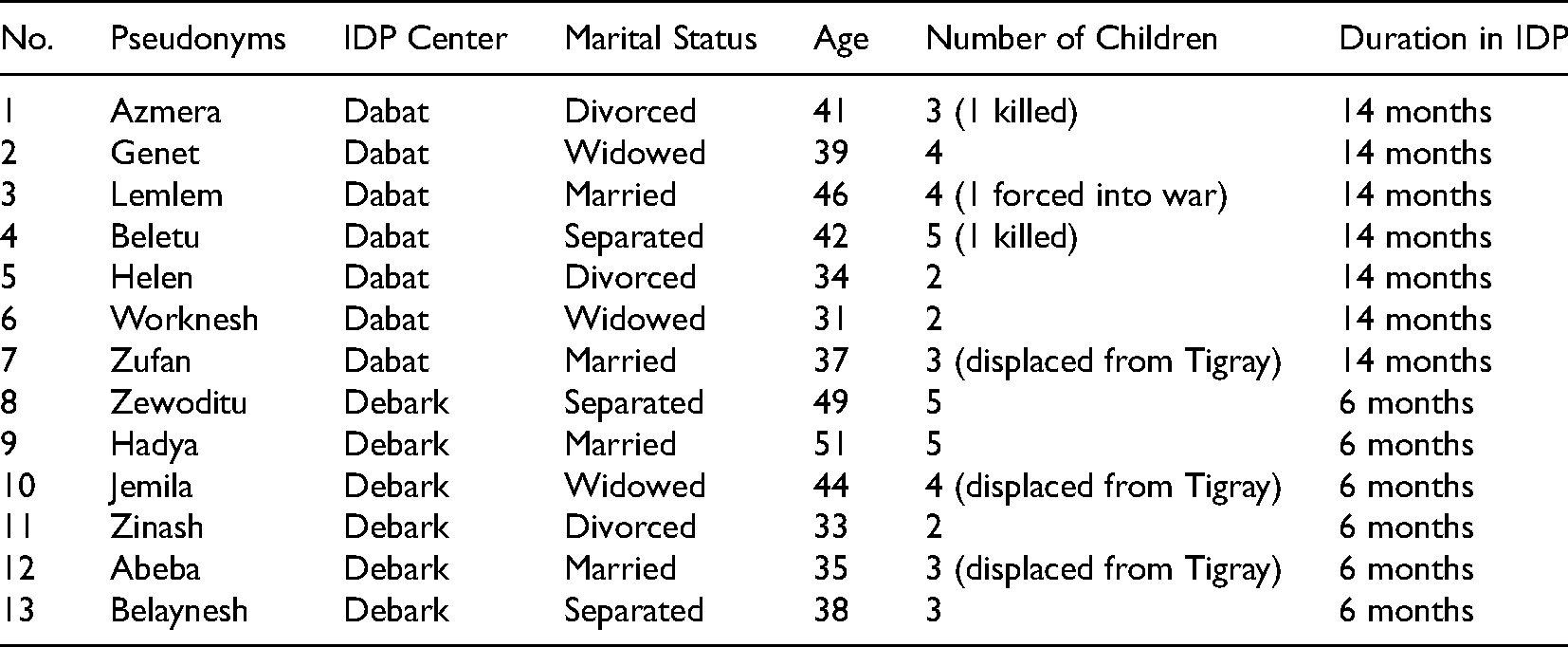
Women who were displaced in the internally displaced person camps ranged in age from 31–51 years of age. Seven were housed in Dabat, while six were housed in Debark. Length of stay ranged from 6–14 months with a mean of 10.3 months. All participants had children: one child was forced into war; two had been killed; and three had been displaced. As for marital status, three of the participants were divorced, four were married, four were a widow, and two were separated from their spouses.
Demographics of Women Participants in Internally Displaced Person Camps in Ethiopia.
Themes
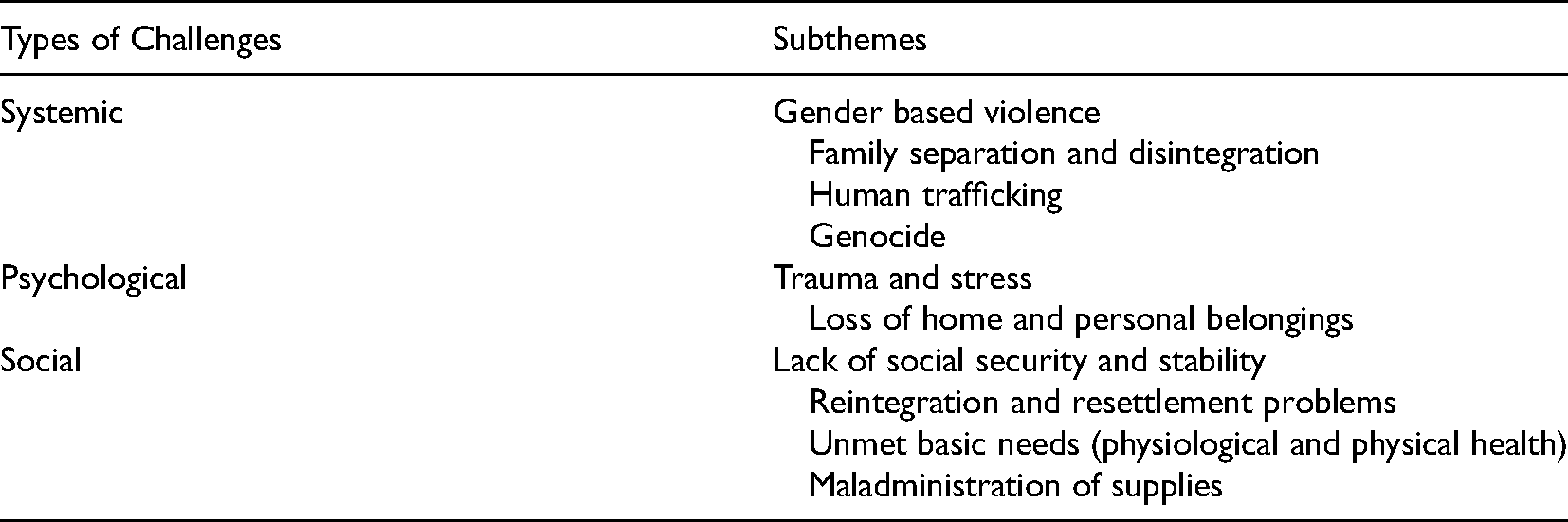
Challenges emerged that relate to three major themes: 1) systemic (gender-based violence, family separation/disintegration, human trafficking, and genocide); 2) psychological (trauma and stress; loss of home/personal belongings); and 3) social (lack of social security and stability, reintegration and resettlement problems, unmet basic needs [physiological and physical health], and maladministration of commodities. In this section, the authors discuss the emergent themes and subthemes and present data extracts that illustrate the key features of the themes.
Themes Related to Challenges.
Theme 1: systemic challenges
Data from the respondents resulted in themes that related to structural and institutionalized practices that we coded as systemic—those things that were deeply embedded into the fabric of the social environments of the women in this study. They included gender-based violence, family separation/disintegration, human trafficking, and genocide.
Gender-based violence
During Ethiopia's armed conflict, women were subjected to many forms of gender-based violence. The Tigray People Liberation Front (TPLF) has been accused of constant physical and sexual brutality against women during the armed struggle. The women in this case are said to be targeted due to their intersectional identities: ethnicity (Amhara) and gender. Some argue that the TPLF has a strong ideological aim to undervalue and humiliate the Amhara ethnic community. Women in the IDP camps of Dabat and Debark assert that they have been subjected to physical and sexual assault in order to legitimize psychological warfare, and in fact to establish the TPLF's hegemonic dominance over others during the war. For instance, all the participants mentioned the prevalence of sexual assaults as common occurrences during the armed conflict. Specifically, the brutality of the rapes were vivid reminders of the targeted violence perpetrated against civilian women. One respondent in the Debark camp, Zewoditu, stated, “They arrived in large numbers and immediately began abusing women they encountered, with many of them being brutally raped in the most cruel and atrocious manner possible… Women's were exposed to sexual violence because they are Amhara…” Zinash stated that, “They sexually abused women in front of their husbands, which is unforgettable… and many women are raped and killed in front of their parents.” Beletu added her personal experience, “I have [been] raped by seven TPLF militias; I do not have a healthy body part. Even, I can’t sit properly, and regular physical movements of the body is not as usual.”
While acknowledging how shameful, brutal and violence sexual assaults are to women, some of these very discouraged women tended to suggest that still being alive is a better alternative to death, which is the fate that many around them had suffered. Repeatedly, many women referenced their innocence and gender-based victimization in the conflict between politicians and the militant groups at war. The women expressed astonishment and horror by the audacious behaviors of men who violated, objectified and weaponized their bodies in the name of war. Despite this wartime period, it appeared that these rapes were opportunistic activities by violent men because rapes are not viewed as taboo when countries are at war.
Family separation and disintegration
Social structures, norms, and belief systems were shattered during the armed conflict in Ethiopia according to the research respondents. Families (spouses, siblings, parents, and children) and communal social bonds were all affected by the armed conflict's violence. Many children and fragile extended family members were left in war zones, and their life-or-death status was unknown to many of these exiled women. The deterioration of morality and social order manifested itself in the disintegration of families and the broader social fabric. For instance, divorce is a socially unacceptable behavior in collective and religious regions like Amhara and Tigray, and almost all community members are bound by this principle. Armed conflict, on the other hand, made divorce and separation inevitable. Due to the role of ethnic identities as the basis of the armed war, spouses from different ethnic groups are more likely to divorce and separate. This is especially tough for women from the Amhara ethnic groups who married a Tigray man but who were forced to divorce because of their different ethnicities. In the case of fathers from the Tigray ethnic group, many often had to leave their children with their wives from the Amhara ethnic group, thus forcing women to be breadwinners for their children. For example, Jemila reports that: All family members are disintegrated which affect our support system together. After I displaced from Tigray region, I got supports from extended families in Amhara region when we live together. However, now all the extended families are disintegrated because of the war and saving themselves from killing. Those who live in this IDP center weep day and night at the loss of family members, abandonment of children and significant others, and losses of property during fleeing from insurgent attacks.
Human trafficking
The Tigray People Liberation Front (TPLF) militias is reported to have kidnapped the children of IDP women and used them for military purposes. Child soldiers are considered trafficked persons. The law of the land as well as a number of international human rights laws and protocols prohibit children from serving in the military in general and in armed conflict in particular (Author, 2019). Child soldiers can take many forms, all of which have an impact on the psychosocial well-being of women and their children while fleeing and in IDP camps. For example, many women's children were forced to join the war as child soldiers. Abeba, a respondent, stated that “… my children are recruited for the labor force.” Another respondent, Zewoditu, talked in specifics about how children were being recruited to kill their own people: The rebel forces need to take Amhara young children to the war to fight the Amhara people and government forces. It is difficult to imagine to send our children to kill our people. When children taken to the war front they do not have a chance to get back because the rebel forces are ready to kill them when they back from the war front.
Genocide
In clear and present terms, many of the participants discussed how they were insulted, dehumanized, and treated violently due to their ethnic identities. Respondents likened these targeted practices to a modern-day genocide. According to Article II of the Genocide Convention, genocide includes killing members of the group; causing serious bodily or mental harm to members of the group; deliberately inflicting on the group conditions of life calculated to bring about its physical destruction in whole or in part; imposing measures intended to prevent births within the group; or forcibly transferring children of the group to another group (United Nations, 1948, Article 2 section). At this time, the United Nations (UN) has not formally recognized that a genocide has taken place in Ethiopia, but the United Nations Special Adviser on the Prevention of Genocide has expressed grave concern about credible reports of serious human rights violations and abuses that include sexual violence, child soldiers, arbitrary arrests, and ethnic-based targeted killings in many parts of Ethiopia (UN, 2021). According to Stanton (2016), as stated in Author (2020), a genocide involves 10 stages that include classification, symbolization, discrimination, dehumanization, organization, polarization, preparation, persecution, extermination, and denial. Some participants identified behaviors that aligned with the stages and indicators of genocide.
For instance, Azmera stated that: …the political wings of that region teach their kids by saying, ‘Amhara is your enemy, you should kill Amharans’; they are working for a number of years to cleanse the Tigrean ethnic group in Ethiopia and Tigray. For me it is these kind of inflammatory discourse that makes these Tigrean youngsters to engage in mass-killing and displacement of the Amharan people… I have experienced provocative insults in many versions like donkey Amhara, oppressor Amhara and snob Amhara… the Amharans killed our Tigrean people anywhere in Ethiopia.
Azmera is not alone in reporting name calling in attempt to dehumanize her. Beletu reported being called a “donkey Amhara” too before she was raped by seven men. Still others reported serious and disconcerting allegations around mass killings. Jemila reported that: There was a mass killing in our neighbor because we are Amhara; [they] are revenging the community due to the political tension between Tigray politicians and the federal forces. The other reason is the land boundaries issue between Amhara and Tigray region…that exposed the Amhara people for genocide and other war related challenges… The TPLF insurgents frightened me by making false equivalency and false allegations on us by being Amharans. They said to me that…a number of Amharans killed our brothers and sisters in the region, the country is in chaos because of you.
Last, Helen described how organized groups came to the homes of ethnic Amhara residents and marked the main gate of their homes with red so that they could be easily identified later for an attack. This type of symbolism has long been used during genocides and paints a picture of a country guilty of engaging in genocidal behaviors. The women expressed shock and horror at the reality that this type of targeting was occurring with impunity and with a lack of outrage from those around the world.
Theme 2: psychological challenges
Psychological challenges in this theme include those issues related to 1) trauma and stress and 2) the grief associated with the loss of homes and personal belongings. The loss of material things emerged in a way that conveyed a psychological death or passing rather than an absence of physical items that were abruptly taken from the women.
Trauma and stress
Trauma, stressful situations, and flashbacks of wartime experiences plague displaced people (Madoro et al., 2020). Rehearsing and replaying what happened during an armed conflict leads to a helpless pattern of physiological and behavioral disturbances. Serious injuries, deaths, rapes, and disintegration of the family during the current conflict in Ethiopia have had devastating and destabilizing impacts on women and their minds. Hadya reports that: I was forced to collect the cadaver of TPLF militia and put them in the cemetery. I have seen a number of devastating and horrific conditions of death that are really inhumane. I have seen the brutal murder of civilians and Ethiopian military forces. I saw thirty-eight cadavers collected and graved in one den. I saw a lot of bleeding. Thus, that creates nightmare problems.
Hadya is not alone, unfortunately. Azmera reports that, “Professionals told us that over 200 women are suffering from mental health burdens.” Beletu reports being so traumatized that she simply sat, “waiting for my death and the end of life in this world for the last time” due to her “psychological terror” while Belaynesh reports being “crazy” after hearing about the death of her husband at the hands of those she refers to as “the TPLF terrorist group.” The stress associated with this type of trauma is expected but it appears that no counseling nor therapy is in place to address this pressing issue at the moment given that basic food, water and housing needs are the priority in these limited resourced environments.
Loss of home and personal belongings
Before they were displaced, Tigray People's Liberation Front insurgents were viewed as having an advantage over IDP women due to their violent measures. They were said to randomly murder village youth in an effort to intimidate and induce fear in the community. As previously stated, respondents reported that they were repeatedly told that they (the Amhara) are the root of the armed conflict and were repeatedly accused of things that they were reportedly innocent of. Subsequently, many women were held as hostages in various forms, and TPLF militias used the opportunity to seize women's property and steal their permanent assets. For those who were not falsely detained, they had to abruptly flee from their homes—leaving everything behind. For instance, Azmera reported that, “When my possessions were taken, destroyed, and burned, I simply remained silent. I just left over the area without properties and assets. TPLF militias robbed my jewelry.” Belet and others report losing jewelry too. They also reported losing small businesses, homes, personal property, and appliances. Genet reports that, “Women living in this camp are crying day and night due to loss of family members…and significant others during the flee to escape from the insurgencies attack and loss of properties.” Loss of life is compounded by loss of personal belongings. Aside from the home, Lemlem lost her business as well. She reported: I was an owner of small hotel and it has been damaged. The beer baskets, fridge, chairs were broken and dismantled…Due to [loss] of properties, significant other and [loss] of permanent assets, I have experienced psychological disturbances and related health problems. Aside from taking over women’s home and small businesses, women reported that the TPLF burned, looted and damaged people’s property because they could get away with it.
Theme 3: social challenges
Social challenges that fell under this theme include a lack of social security and stability; reintegration and resettlement issues; unmet basic needs (physiological and physical health) and the maladministration of commodities. These challenges are the kinds that social workers and other social service providers often work to provide to clients in need.
Lack of social security and stability
Women living in IDP camps voiced grave concerns about the federal government's actions as well as the insurgents’ unexpected nature and attacks. Following the displacement of women in IDPs from Tigray and different districts of Amhara region, TPLF rebels launched an organized attack near the vicinities of Dabat and Debark, where women and their minors live in camps. This left women feeling very insecure and unsafe. Lemlem, who had been in the camp for 14 months at the time of this study expressed extreme fear and worry about her safety and the stability of the camp. She made a personal plea to God to protect them all when she stated, “Let God send his amnesty to our country.” She reported crying on a regular basis out of overwhelming concern for her life and the life of others in IDP camps during this persistent war. Zufan insisted that “…teenagers should…grow up in a safe sociocultural context”. Growing up in an IDP camp causes stress and tension in families because camp life is traumatic according to Azmera. Beletu describes her experiences in one of the camps in this way as she describes the terror that women and children feel on a regular basis: Once again when TPLF advances to Cheena and Debark, mortars and tanks were …around the camp we have resided with and I feel that I shouldn’t fly to anywhere else I have decided to die… some others women and their children were in psychological terror with the bombardment of the war. I was waiting for my death and the end of life in this world for the last time.
Reintegration and resettlement problems
The possession of a permanent asset such as land has a significant impact on the lives of internally displaced women and their young children. Internally displaced women in this study owned homes, hotels, buildings, social capital, economic assets, and small businesses prior to the most recent armed conflict, ensuring their welfare and survival. As IDPs who had to leave their homes and personal belongings behind, many women expressed despondency over thoughts of being forgotten people who deserved to be allowed to reintegrate and resettle in their native communities. In the case of IDPs, regional authorities are required to send messages to displaced persons directing them to their former ancestral village at the proper time. These women, however, reported strained relationships with these authorities because of their lack of leadership and repeated attempts to isolate them and their families under false pretenses claiming that they were not actually former residents in their respective villages. Worknesh underscored this problem by stating that, “Resettlement is the fundamental problem raised [by] women IDPs in the camp setting.”
Unjust treatment related to resettlement and reintegration has been detrimental to the women in this study as IDPs. For women and their families, resettlement has the potential for restoration in a psychological sense and to help them to foster community, improve social functioning, preserve one's livelihood, and allow for secure and suitable employment. Zufan illustrates her challenges around reintegration and resettlement in this way: Before the war broke out, I was leading a prosperous life in Tigray. However, displacement has resulted in the loss of many of my possessions. I have repeatedly requested land for settlement from the Amhara region government; however, I have not received what I require. I will not return to Tigray to live or take my properties because I am an Amhara ethnic group. As a result, my children and I are experiencing difficulties with resettlement in Amhara and reintegration in the Tigray region.
Unmet basic needs
Unmet basic needs were coded into two subthemes related to physiological needs and physical health needs and concerns. Physiological needs related to basic human needs for daily living while the physical health subtheme related to circumstances that compromised one's health.
Physiological
Women in IDP camps in this study faced severe and life-threatening challenges due to lack of access to basic provisions and services. Respondents reported malnutrition and starvation due to a shortage of healthy food and safe drinking water. Shelter was also described as inadequate or overcrowded, while bedding was described as not always being available. Women in this study complained of limited means to prepare food, wash clothes, and take care of themselves on a day-to-day basis. Some described themselves as scavengers of local resources (wood, water, food, etc.). Zewoditu described her situation in this way: [When] I arrived in the center, I got one mattress and one blanket for me and five of my children. We are living with eight household in a single tent which is very crowded and exposed to various health problems. My children and I are stranded here in a desperate position. I'm having difficulty acquiring clean water and adequate meals for myself and my children. I'm unable to give my youngest child breast milk due to food scarcity.
Life in the Dabat and Debark camps was difficult as a whole but life became even more difficult for women when men in the camp left to join the conflict in the six months prior to the interviews, were killed during the conflict, or when women were divorced due to ethnic differences between she and her husband. This reality proved to be extremely challenging for women who were left to care for children and extended family members with little to no resources. Women in this study expressed a significant need for a comprehensive package of social services to meet basic needs.
Physical health
IDP women and their families were exposed to major health challenges due to extremely congested camp settings. Women and their partners were susceptible to communicable diseases such as tuberculosis and airborne diseases such as the common cold. In addition, one of the displaced camps had been without a bathroom for over five months. Furthermore, due to a lack of water, women in camps expressed having difficulty washing their clothes and obtaining water for hygiene and sanitation purposes. Not being able to fully clean their bodies during their menstrual cycles, in particular, was conveyed with disgust. They attributed budgetary constraints and a lack of help from the camps and benefactors for limited access to soap and other cleaning items for their bodies. Bug infestation was also problematic in camps and as a result disease spread. These pesty infestations also led to poor sleep and deteriorating health. Hadya discussed the interactive nature of all these issues in her comments: My husband was diagnosed with tuberculosis and lived with us for months before receiving medication and being told to live in a separate room. I've had issues with my sanity and personal hygiene. I live in an incredibly crowded environment, with up to six families in a single tent, making me vulnerable to communicable disease.
Maladministration of commodities
Case management and service coordination efforts in IDP centers were said to be particularly inconsistent when it comes to addressing the needs of women. Camp administrators were said to frequently use enigmatic eligibility criteria and random service planning methods. Women in this study expressed being extremely upset with how cases were arbitrarily handled. As a result, internally displaced women in the two camps sometimes became disruptive and came into conflict with one another as well as camp employees. This conflict was further exacerbated due to the maladministration of commodities or supplies. Several respondents mentioned that governing committees and camp coordinators prioritized providing services to those who were closest to them, whether by kinship or friendship, and not by those in greatest need. Genet stated that, “I personally witnessed that families with few members get more resources while families there is with many member got little.” Lemlem took it further by accusing camp officials of even more egregious behaviors that involved disbursing commodities (supplies) to persons outside the camp, “In this camp there are some irregularities in the distribution of goods and services for IDPs. There are individuals who are actually city residents and get services with the good will of IDP coordinators and committees. There is injustice and maladministration.” Beletu confirmed this kind of maladministration of commodities and accused service coordinators of being too incompetent to serve as case managers. She stated: City residents come here in the camp setting take donated services and the camp administrators and service coordinators were irresponsibly circumventing the service provision and case management process. There are a number of cases [where] the service coordinators do not have the competency of caseload management.
Discussion
The results of this study indicate that significant challenges emerged for women who are housed in internally displaced persons (IDP) camps in Dabat and Debark, Ethiopia during its armed conflict. These challenges clustered around three major themes: 1) systemic (gender-based violence, family separation/disintegration, human trafficking, and genocide); 2) psychological (trauma and stress; loss of home/personal belongings); and 3) social (lack of social security and stability, reintegration and resettlement problems, unmet basic needs [physiological and physical health], and maladministration of commodities.
A salient theme around gender-based violence was prominent in the respondents’ interviews. One of history's great silences is brutality against women in conflict and war. According to one researcher, sexual assaults, such as rape, torture, and human trafficking was experienced by 94% of displaced households in Sierra Leone. During Rwanda's genocide in 1994, at least 250,000—possibly as many as 500,000 women were raped. Sexual violence is also being reported in continuing battles in Algeria, Myanmar, Southern Sudan, Uganda, and the Ukraine (Alditya Bunga, 2017; Mydans, 2001; UN, 2022; UN Commission on Human Rights, 2002). In the current war between the Ukraine and Russia, the United Nations report growing documented cases of sexual violence and subsequent murders of Ukrainian women by Russian Federation troops despite Russia's insistence that such reports of rapes as a weapon of war are nothing more than Western propaganda (Marlowe, 2022; UN, 2022). This dismissive stance on rapes is contrary to war-related behaviors. Worldwide, women are said to be persecuted, discriminated against, raped, tortured, murdered and oppressed during wars based on their gender (Alditya Bunga, 2017; Marlowe, 2022; Mydans, 2001; UN, 2022; UN Commission on Human Rights, 2002). Statistics on sexual and physical violence towards women during wars are alarming and must be addressed globally.
The results of this study also indicated that one of the major hurdles for IDP women survivors is the family breakdown (e.g., divorce, separation, family loss and widowhood). Unlike family loss and widowhood caused by war-related deaths, many women in this study suffered divorces and separations due to ethnic conflicts. That is, some marriages broke down due to conflicting ethnic identities (Amhara vs Tigray). This was particularly difficult for many women in this study especially when children were the products of these marriages. Many women, as a result became bereaved as single mothers and IDPs (United Nations, 2004), whereby they were forced to live in places where they are intimidated, harassed, and afraid (Hamal, 2007; Oxfam Intermón, 2019). This family breakdown exacerbated their trauma and grief on many levels. The emotional and psychological concerns women face in IDP camps include trauma, stress, flashbacks, serious injuries, illness, and even death. Similarly, internally displaced women and girls in eastern Chad reported the same challenges (Internal Displacement Monitoring Centre, 2010; NRC/IDMC, 2010). The most common stressors for women in this situation include intrusive memory (flashbacks), significant changes in sleep patterns and recurring nightmares, fear and guilt, and a lasting sensation of trauma and shame due to the armed conflict (Maina, 2012; UNFPA, 2019; United Nations, 2004). Armed conflict also increases the stigma associated with being sexually assaulted, mass displacement and women being thrust into widowhood (Boesten, 2014; Kudakwashe & Richard, 2015). As seen here, wartime violence, can significantly impact the structures of families when historical, political, and cultural forces clash along ethnic lines.
Insecurity and the lack of stability were voiced as concerns in this study too. According to researchers, displaced women and girls are at increased risk for deprivation, anxiety, abuse, neglect, and general deterioration of well-being during or even in the aftermath of conflict (Global Protection Cluster Work Group [GPCWG] (2006); Jewkes, Jama-Shai & Sikweyiya, 2017; Rehn & Sirleaf, 2002) due to a lack of protections. This “protection gap” is multilayered and urgently needs addressing. Women around the world continue to face systematic attacks on their human rights (Bigio & Vogelstein, 2017; Kadir et al., 2019; NRC/IDMC, 2010). For example, this study showed that the lack of basic necessities such as food, clothing, medicine and shelter are deep rooted problems faced by IDP women. Researchers agree that IDP residents experience many forms of deprivation as a result of being forced to leave their homes (GPCWG, 2006; IDMC, 2020; Rehn & Sirleaf, 2002). Some researchers (Kadir, Garcia & Romero, 2019; Rehn & Sirleaf, 2002) assert that essential needs such as food, water and electricity are pervasive violations of international human rights and humanitarian laws. In more than 50 countries around the world, some 26 million people have been uprooted by conflict or human rights violations and displaced in their own countries (GPCWG, 2006; Rehn & Sirleaf, 2002).
Strengths and Limitations
This study has a number of strengths that include being one of only a few studies to examine the plight of Ethiopian women in IDP camps during an armed conflict in real time. Additionally, the research was conducted in a rigorous manner by social work researchers who meticulously took the time to get to know respondents, observe them in their environments and to develop rapport with women in crisis. As a limitation, the interviews were conducted in Amharic and later translated into English. It is probable that some data or meaning was loss in that translation. Last, women who volunteered to be a part of this study may not reflect the sentiments and experiences of other women in IDP camps in Ethiopia or elsewhere.
Conclusion
There must be justice for all war affected individuals, especially women living in IDP camps. Rapes, in particular, during wars must be condemned with a sense of urgency and seriousness as other war crimes. Women supporting military leaders, lawmakers, politicians, advocacy groups, social work practitioners and women's activists and their allies must all advocate for stronger sanctions for those who perpetrate violence against women during both peacetime and wartime (Boesten, 2014). Empowerment programs for women, campaigns on reducing violence against women, and partnering with men/male groups to change the narrative around women's bodies must become a national priority in every country. Rapid and efficient responses to food insecurity crisis must be met with aggressive methods to get food into conflict areas. This includes dispatching neutral and responsible overseers and casemanagers/social workers to engage in the distribution of food, water, housing, and other commodities. Capasso et al. (2021) advocates for greater access to social services, transportation, paid work and basic goods to enable women (as primary breadwinners) and their children in IDP camps to live with dignity. Additionally, asset-based community mobilization and capacity building efforts should be employed to restore the lost capacities of those in IDP camps in order to balance and restore a sense of security, hopefulness, and justice. Finally, any semblance of ethnic cleansing and genocide must be acknowledged on the world stage at the onset, swiftly condemned, and responded to aggressively by neutral military personnel.
As social workers, it is critical to reject any temptation to be coopted “by state systems that perpetuate violence and oppression” (Park et al., 2017, p. 9) against any group of people, but especially against women who continue to be systemically targeted for victimization during wartime. The profession of social work, a predominately female discipline, prides itself on being a vessel for change and a beacon of hope. It serves to amplify the needs and issues of marginalized and minoritized consumers and clients by listening and honoring their voices. The results of this study reveal a range of concerns and travesties faced by women in two IDP camps in Ethiopia during its current conflict. It is imperative that the standpoints of these victimized women, who are survivors, be heard and responded to on many levels.
Footnotes
Acknowledgment
We would like to express our gratitude for the participants who took part in this study and shared their experiences with us.
Declaration of Conflicting Interests
The author(s) declared no potential conflicts of interest with respect to the research, authorship, and/or publication of this article.
Funding
The author(s) received no financial support for the research, authorship, and/or publication of this article.
