




Abstract
The vast range of experiences of Black mothers are not adequately captured in social work scholarship. Motivated by observations made by a 2000 article written by Greif, Hrabowski, and Maton which noted that much of social work literature on Black mothers focused on the negative, this paper describes a content analysis examining how Black mothers are represented in social work literature. The authors conducted a search in Social Work Abstracts for articles written between 2000 and 2020 that focused on Black mothers. Of the over 18,000 articles published between 2000 and 2020 in Social Work Abstracts, 32 of them met the inclusion criteria. Findings revealed that most of the social work literature on Black mothers is concentrated on some perceived form of adversity (n = 25). The remaining articles (n = 7) were not oriented around difficulty. Also of note, only a third of the articles (n = 10) spoke to issues of systemic and structural oppression that impact Black mothering. As evidenced by these findings, social work literature continues to perpetuate a system of dominance that misorients the experiences of Black mothers. Fundamentally, social work literature is in dire need of more representations of Black motherhood. This paper concludes with recommendations for research related to Black mothers.
The literature found in social work journals, as in other disciplines, reflects what is considered current and developing “knowledge” on a range of topic areas within the field. Journals serve as the profession’s “footprints,” traversing social work's advancement and documenting social work’s contribution to a wide range of social issues (Bush et al., 1997). Social work practitioners, researchers, educators, and students turn to the literature found in journals to help inform and guide their understanding of an individual and a group. Essentially, what is written in journals about an individual or group serves as a representation of them and their experiences. The concept of representation, Preston (2009) offered “is a system of communication whereby meaning is culturally constructed and received” (p. 65). How meaning is constructed in our minds, cultural theorist Stuart Hall (2013) explains, is through language. Language, understood as any system which deploys signs such as words and images, creates mental depictions that enable us to reference objects, people, or events. In this case, Hall (2013) offered, words and images “stand in the place of, and at the same time, stand for” concepts in our mind (p. 2). For social workers, the meanings that are attributed to an individual’s or group’s experiences through language organize behaviors and beliefs that, in turn, inform how social workers explore and develop interventions, research and practice strategies, and policy ideas (Sellers et al., 2004).
While journals are central to the profession’s identity and image (Brekke, 2012), also critical is the way journals shape and inform one’s understanding of and work with individuals, communities, and families. For historically oppressed groups, especially, the way they are understood and represented via social work literature has significant implications. Representations that depict the real lives of individuals or group who have been socially marginalized is both an ethical and political concern (Preston, 2009). The content in journals can either perpetuate harmful deficit mis-orientations thereby reinforcing and reinscribing white supremacy (hooks, 1992), or it can disrupt the hegemony of deficit by offering readers new angles of vision that advance a critical understanding of power and the sociopolitical contexts shaping the human experience. Given the consequential link among literature, understanding, and practice this study revisits an observation made by Grief et al. (2000) in their examination of African American mothers of academically successful sons. Their evaluation of social work professional literature on Black mothers between 1992 and 1996 found that much of the emphasis on Black mothers focused on what they describe as “the negative” (p. 242). They further noted, “Clearly, we need more information that shows different aspects of the lives of African American mothers” (p. 243).
In recent years, social work has been criticized for its lack of congruence between the profession’s stated ethics and values of social justice and equity and what is actually done in practice, research, and education (Author; Maylea, 2021; Morley & Ablett, 2016; Santiago & Ivery, 2020; Turner et al., 2018). Critical questions at the heart of this discourse are how and why social work research, practice, and education have continued to perpetuate and maintain systems of dominance and how should it be addressed. Social work undoubtedly has a troubled history with Black mothers that is fundamentally rooted in deficit (notions of lack) and deviant (departure from the traditional image of family life as established by white-centered paradigms) ideologies. A prime example of the profession’s problematic relationship with Black mothers is no more evident than within social service systems such as welfare and child welfare. Literature has shown how these systems, historically designed to devalue and pathologize Black families, have been ineffective and abusive to Black mothers (Brooks, 2015; Murphy et al., 2009; National Association of Black Social Workers [NABSW], 1991; Roberts, 2014). Dorothy Roberts, a prominent scholar in race, gender, and law, has written extensively on the exploitative regulation of Black mothers’ bodies in prison, foster care, and workfare systems. Roberts (1999, 2012, 2014) maintains that welfare systems in the U.S. depend on stereotypes of Black women, like the notorious indolent “welfare queen,” such that rather than addressing the race, class, and gendered systemic oppression faced by Black families their hardships are attributed to the perceived deficits of Black mothers.
Dominant white-centered conceptions of motherhood, rooted in the ideological cult of true womanhood, emphasize motherhood as a woman’s highest calling (Collins, 1987). Society's constructions of mothers, who gets to be a mother, and the image of what constitutes a good and a bad mother, Story (2014) argues, remain locked within a “reductive and imaginary prism” (p. 1) of white supremacy, patriarchy, heteronormativity, and capitalism. From this perspective, “good mothers” are those who provide unlimited time and attention to their children, their spouse, and the maintenance of the home (Greene, 1990; Nichols et al., 2015). Women who fail to meet these ideals of motherhood such as unwed mothers and low-income mothers are stigmatized and penalized for violating these norms (Roberts, 1993).
The experiences of Black women are often not recognized within white, middle-class, Western standards of motherhood. Black mothers contend simultaneously with overlapping forms of oppression and exploitation that play out through a complex matrix of race, gender, and class (Collins, 2009; Roberts, 1993; Taylor, 2017). Since Black women’s experiences with motherhood differ from those of white women, their experiences continue to be marred by a host of dehumanizing stereotypes and controlling images (e.g., mammy, jezebel, welfare queen, baby mama; Collins, 2009). Even tropes that seem to acknowledge Black mothers for their contributions to the family and community (e.g., super woman and matriarch), on the contrary, position them as scapegoats (Collins, 2009; Elliott & Reid, 2016; hooks, 1989). Essentially, these images as Patricia Hill Collins argues, are used to maintain Black women’s subordination within the consciousness of white America (Collins, 1987, 2009).
Despite the centrality of Black mothers within their homes, in their communities, nationally, and globally, social science research continues to focus on perceived areas of deficit and struggle, such as being “single,” poor, and undereducated. Even though more Black women intellectuals, artists, scholars, and activists are challenging and disrupting the deficit discourse associated with Black women and Black mothers (see Brooks, 2015; Collins, 2009; Dillard, 2000; Evans-Winters, 2019; Gumbs et al., 2016; Hayes & Casstevens, 2017; McClain, 2019), studies of Black motherhood that highlight their intellect, endurance, and creativity within socially distressing systems remain rare in social science research.
The social work profession has undoubtedly contributed to the stereotypical mis-representations and punishment of Black mothers. This updated exploration into social work’s professional literature on Black mothers provides insight into whether or how social work literature has progressed since Grief et al. (2000) study. The purpose of this study is to examine if social work literature continues to cast Black motherhood as pathological and inferior or has it offered more angles of vision that captures the capaciousness, creativity, dynamism, and power of Black mothers (Nash, 2018). The study’s guiding question: How have Black mothers been represented in social work literature over the past twenty years?
Black Feminist Consciousness
To answer the above question authors engaged in a content analysis of social work literature focused on Black mothers and published between 2000 and 2020. We approached this content analysis guided by a Black Feminist lens to not only inform our analysis processes, but to also emphasize that any investigation into the experiences of Black women must use culturally relevant frameworks that take into consideration the contextual and interlocking effects of history, culture, race, class, gender, and other forms of oppression (Thomas, 2004). Black feminist consciousness continues to expand society’s understanding of motherhood, critically investigating what motherhood looks like within a lived context. For example, Nash (2018) describes how “black feminist theory has become squarely invested in reimagining and amplifying the potential, power, and possibility of black motherhood” (p. 702).
A Black feminist stance affirms that Black motherhood is an institution that “is both dynamic and dialectical” (Collins, 2009, p. 190). As an institution, the experiences of Black mothers are constantly renegotiated by the social systems they navigate. Black motherhood is also a site of resistance whereby Black mothers contest hegemonic mainstream narratives about them (Collins, 2009). By centering the lives, experiences, and identities of Black mothers, Black feminism highlights that Black women and mothers have a particular standpoint by which they view the world (Collins, 2009). A standpoint that exemplifies “self-reliant strategies that emphasize resiliency, innovation, and survival” (Dickerson, 1995, p. 8). Additionally, this perspective recognizes that a Black women’s standpoints, rich in Black maternal epistemologies, is situated within the context of race, gender, and class oppression, intersecting forces that affect the everyday lives of Black mothers (Story, 2014).
In research, Black feminism questions and critiques science and knowledge claims related to Black women and mothers. Mainstream knowledge has traditionally excluded Black women from participating in knowledge production, or has constructed narrow images of their experiences (Evans-Winters, 2019). A Black feminist perspective in research, Evans-Winters (2019) posits, shifts the conversations related to Black women away from “victiminzation and powerless to piecing together the representations of our lives as a mosaic of intellectual creativity and a praxis of resistance” (p. 19).
I Saw Me: Situating Researcher as Subject
For this content analysis, engaging a Black feminist lens had strong implications in how the literature was reviewed and interpreted. Beginning this process, I, the first author, reflected on my own lived experiences as a Black mother and researcher. As a Black feminist social work researcher, I am what Collins (1998 ) refers to as an "outsider within," someone who borders spaces of unequal power. On the one hand, as a researcher, I have the privilege of operating within academic spaces and acquiring the benefits and status these spaces afford (Collins). Yet, on the other hand, I am a Black mother within the academy, a space fraught in institutionalized racism, gender oppression, and other forms of ruling (Collins). Essentially, I am not afforded the full set of rights and privileges controlled by the insider group.
Exploring the landscape of Black motherhood always entails an excavation of who I am and what I bring to the research process. It is often an agitating position, filled with uncertainty about my “right” as both an academic and mother to embark on research that centers on the experiences of Black mothers. I also recognize that part of the function of white supremacy is to have me question, doubt, and minimize my value and contributions as either. Alternatively, through the works and audacity of Black woman scholars I also find resolve in the fact that I cannot and do not want to separate my “academic” work from my everyday lived experiences as a Black woman and mother (Dillard, 2000). Embracing research as “motherwork” (Collins, 1994), authorizes my observations of the social world as essential to the research process (Evans-Winters, 2019).
Motherwork as Collins (1994) described focuses on race, class, gender, and other intersectional identities to challenge Western-dominant ideologies of motherhood and family. According to Collins (1994), motherwork loosens theoretical boundaries that create rigid dichotomies between family and work, private and public, and individual and the collective. For women of color, work and motherhood are intertwining acts that support family and community. Essentially, motherwork is what Black mothers do all day, whether for their own children, someone else’s, or the work done to preserve the community and earth.
Being all too familiar with the harm that social work has caused Black communities and Black families and after sitting with the observations made by Grief et al. (2000), I embarked on this content analysis with a sense of moral imperative guided by the Black feminist values of an ethic of care and an ethic of personal responsibility (Collins, 2009). For me, questioning the representation of Black mothers in social work literature and critiquing its knowledge claims was a form of collective resistance, joining alongside other Black feminist intellectuals and Black mothers who are challenging injustices. Central to this process was invoking my authority of experience to recover and reclaim the histories, experiences, and knowledge(s) of Black women, thereby giving new meaning to our experiences. At every step of the analysis, I along with other members of the research team (second author, Black biracial woman and doctoral student; and third author, white woman and MSW student) reflected on our own subjectivities related to Black motherhood and the meaning we were inferring from the analyzed articles. What is presented in this paper is a critical review of social work literature on Black mothers informed by both a rigorous content analysis and by our observations and insights.
Methods
Building on statements made by Grief et al. (2000) in their study of African American mothers of academically successful sons, the authors conducted a content analysis of social work literature to explore how Black mothers are represented. Content analysis is a systematic, objective, and quantitative process for analyzing and drawing valid inferences from communication content, such as books and articles (Neuendorf, 2002). It is a research technique especially useful for examining trends or patterns in communication materials (Allen-Meares, 1984; Bush et al., 1997). In social work, content analysis has been used to examine the literature related to lesbians and gay men (Pelts et al., 2014), racism (Author; McMahon & Allen-Meares, 1992), the prominence of race and ethnicity in social work scholarship (Woo et al., 2018), social work’s interest in prevention (Marshall et al., 2011), as well as content on spirituality and religion (Hodge et al., 2021).
Consistent with Greif and colleagues, the authors performed a search in Social Work Abstracts using the key terms “Black mother*” OR “African American mother*” between 2000 and 2020. Social Work Abstracts is a database of over 500 social work and human services journals maintained by the National Association of Social Workers (NASW). Although not all of the journals found in Social Work Abstracts are listed in the 2019 Journal Citation Reports® Social Science Edition (Leung & Cheung, 2019) within the category of “Social Work,” the authors did not exclude those journals (e.g., Journal of Family Issues) from the review since the database and all of the journals within it are widely used by social work researchers, students, and practitioners (Sellers et al., 2004). Interestingly, when the researchers checked the option to include only “peer-review” journals, ten articles that were included in the result list when “peer-review” was unchecked did not populate in the results. After reviewing the ten articles and their respective journals, the researchers included them in the analysis because the journals (e.g., American Journal of Orthopsychiatry and Health and Social Work) are peer-reviewed.
The authors selected articles for inclusion in the analysis if they met all of the following criteria: 1) the article was listed under “Black mothers or African American mothers” in the search index, 2) the article’s abstract indicated the article’s focus to be on Black mothers or include Black mothers, and 3) the content of the article (e.g., participants in a study) contained a clearly identifiable discussion of Black mothers, and 4) the article was empirical. Publications such as book reviews, editorials, conceptual pieces, and letters were not included. Studies that involved Black mothers and mothers of different racial and ethnic backgrounds were included if they captured concepts relevant to the study. Articles meeting these criteria (n = 32) were examined closely to determine how Black mothers were represented in social work literature.
Coding
The research team thought carefully about the names of categories to which the articles would be assigned, and what those names would mean not only for the literature being examined but also what implications these coded categories would have on the population discussed in the surveyed literature–Black mothers. Since the original study conducted by Greif, Hrabowski, and Maton used the term “negative” to describe their observations of Black mothers’ experiences in social work professional literature, the team pondered if “negative” and its converse “positive” would be appropriate names for the categories. Language is subjective and political, and inscribes meaning. Therefore, we wanted to be mindful of the potential impact the terms we used to name categories would have on who is being researched. Would a Black mother necessarily describe being low-income as “negative?” The research team considered how the naming of these experiences into categories might further pathologize and mis-orient their lives.
After careful deliberation, we settled on using “problem-oriented” and “not problem-oriented” as names of the larger categories that articles would be assigned. “Problem-oriented” refers to studies that recruited mothers who were seemingly experiencing some form of hardship, such as living in poverty, experience with substance use, and/or involvement in public social service systems such as TANF (Temporary Assistance for Needy Families) and child welfare. Articles coded “not problem-oriented” were those that did not recruit mothers based on hardship or system involvement but rather to gain knowledge from Black mothers on a particular experience. We recognize that for some our coding might be semantical and that, yes, even these terms can be scrutinized. However, we hope that by highlighting the careful attention we brought to this coding process we encourage other researchers to take account of the power of language and the power to name, and to think more deliberately about how language constructs and reconstructs our research, namely whom and what is being researched.
After deciding on the name of the codes, each article was assessed regarding the descriptions, attributes, and experiences of the Black mothers under study. This included any descriptions of income level, neighborhood characteristics, drug use, and mental health. A spreadsheet was created listing all of the articles with checkboxes for each attribute. If, for example, an article investigated mothers who were low-income, then a checkbox was placed under low-income for that article, and subsequently assigned to the “problem-oriented” category. Of note, the designation of articles into attribute categories was not mutually exclusive. That is, an article could have checkboxes for different attributes. While descriptions such as low-income, substance use, child welfare involved were coded as “problem-oriented,” the authors are not suggesting that the difficulty is oriented within the mothers—that they themselves are a problem—but rather that the focus of the article is on mothers who are experiencing these difficulties. Articles coded “not problem-oriented” were studies that did not recruit Black mothers experiencing some form of hardship.
Second, we examined whether the study was qualitative, quantitative, or mixed methods. Taking note of the research methods used to study Black mothers was important for this content analysis because it helped the authors determine if the focus of the article was to gain more insight and understanding from mothers on their experiences. Scholars (e.g., Evans-Winters, 2019; Few et al., 2003; Garner, 2004) who explore Black women and girls urge researchers to use methods that place their lived experiences, knowledge, and expressions at the center of analysis so that they can name and define their own realities. Coding articles as qualitative, quantitative, or mixed methods entailed looking at the data collection and analysis procedures outlined in both the abstract and methods section of the paper. Articles that described, solely, the use of measurements and scales were coded quantitative. If the article specified using a case study, in-depth interviews, or some other qualitative methodology, it was labeled qualitative. Lastly, if the article referenced collecting and analyzing both quantitative and qualitative data, it was coded as mixed methods.
Third, we assessed whether the article included a discussion of systemic and structural oppression (e.g., racism, classism, sexism). We were curious to see if the authors clearly articulated the role of forms of oppression as contextual factors shaping and impacting Black mothers’ experiences. Articles that explicitly spoke to the role of systemic oppression and/or the inappropriate application of Eurocentric standards to the understanding of Black mothers and families were coded as “yes.” Articles that did not cover any discussion of systemic or structural oppression criteria were coded as “no.”
Identifying the method of the study and whether or not there was a discussion of systemic oppression was also done so that the researchers could understand and discuss the study more holistically. For instance, while articles labeled “problem-oriented” focused on Black mothers experiencing some form of hardship, we wanted to be careful that the “problem-oriented” designation did not suggest that authors did not discuss mothers in a holistic and humanistic manner.
Review Process
All three of the authors participated in coding. The categories “problem-oriented” and “not problem-oriented” were used as the first inter-rater reliability test. All three authors coded independently and achieved inter-rater agreement on 93.75% of the articles. For the second (methods) and third (systemic oppression) categories, the initial review of articles yielded, respectively, 100% and 93.75% agreement. For articles that lacked consensus in coding, all coders decided on the final code together.
Findings
Out of the over 18,000 articles published between 2000 and 2020 in Social Work Abstracts, 32 of them met the inclusion criteria outlined above compared to the 13 articles found by Grief et al. (2000) between 1992 and 1996. The following sections describe the trends we found among the articles analyzed.
Patterns in Content
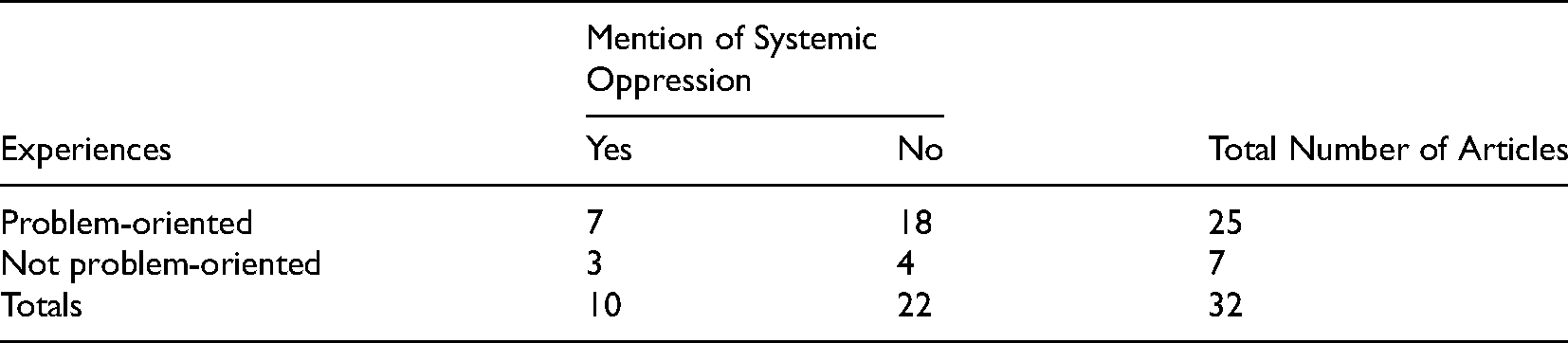
As reflected in Table 1, consistent with Grief et al. (2000) the majority of articles (78%; n = 25) on Black mothers were on mothers experiencing some perceived form of adversity such as being low-income (e.g., Wood, 2014), child welfare involved (e.g., Blakey & Hatcher, 2013), receiving public assistance (e.g., Gyamfi et al., 2005), and/or experiencing substance use (Blakey, 2012). The other seven (22%) articles evaluated, with the exception of Holland (2009), did not frame the study around a particular attribute of Black mothers (e.g., income level, marital status). These articles were oriented around gaining knowledge from Black mothers on a particular experience (Evans et al., 2016; Hall et al., 2019), used culturally relevant theoretical frameworks (Borum, 2007), and affirmed Black mothers’ contributions to the family (Cain & Combs-Orme, 2005; Grief et al., 2000). What follows is a discussion of the patterns identified among the articles.
Articles Written on Black Mothers in Social Work Literature, 2000–2020.

Problem-Oriented
The majority of articles (n = 20/32; 62.5%) written about Black mothers focused on those who were low income. Articles were designated low-income if the article focused on low-income mothers as indicated by the article’s title (e.g., Siefert et al., 2007; Bower et al., 2020), if the sample criteria specified including mothers who were low-income according to federal poverty guidelines (e.g., Woody & Woody, 2007), the sample description included mothers identified as living in poverty (e.g., Horton, 2006), or if the paper mentioned mothers receive/d public assistance (i.e. welfare), namely TANF (Jackson, 2000; Jackson & Huang, 2000).
Eight of the 20 articles labeled low-income specifically indicated that mothers were formally or currently on public assistance. Out of those eight articles, only one study (i.e., Gyamfi et al., 2005) listed being on welfare as a specific requirement to participate in the study. Other studies (e.g., Jackson & Scheines, 2005; Marcenko et al., 2000) that included Black mothers who recieve/d welfare did not indicate if receiving welfare was a criterion to participate, they typically just indicated that mothers in the sample were receiving some form of public assistance.
Black mothers with experiences of substance use made up 15.6% (n = 5) of evaluated articles. Substance use was the focus of four out of the five articles and therefore was a criterion for those studies. One study, however (i.e., Smith-McKeever et al., 2012) used substance use as a dichotomous variable to indicate whether a mother had ever reported using a substance. Three of the five articles that included mothers with a history of substance use also had involvement in child welfare, which included placement in kinship care (e.g., Harris, 2007). There was a total of four (12.5%) articles written about Black mothers with experiences of their children being removed from their care.
Other attributes associated with Black mothers in the assessed articles included three written about mothers with depression, two written about mothers living in violent neighborhoods, two focused on parental stress, and one about mothers with an HIV diagnosis.
Not Problem-Oriented
Aside from Holland (2009), who specified that participants must be in their senior year of college or have completed a 4-year college degree, never have been married, and have at least one biological child; seven out of the 32 (22%) articles evaluated did not focus on a particular characteristic of the mothers. For instance, Evans et al., 2016 examined the perceptions of 10 African American parents (nine Black mothers) about their child’s disability and early intervention services. Families were chosen if they were a) African American families and b) had a preschool-aged child with a diagnosable disability. Borum (2007) explored the experiences of 12 nondeaf African American female caretakers of deaf children. The author was intentional to recruit African American mothers from diverse socioeconomic backgrounds to “avoid confounding class and ethnicity” (p. 598). In Hall et al. (2019) examination of self-esteem effects among Black mothers and daughters, recruitment criteria specified that participants had to be Black mothers and daughters. Their sample, like Borum’s, included a diverse range of backgrounds (e.g., relational status, employment, and education).
Methods—Qualitative or Quantitative?
Table 1 also captures the number of articles that used qualitative or quantitative methods. Interestingly, no article used mixed methods. The majority of articles (n = 22, 69%) used quantitative measures to investigate the experiences of Black mothers, 19 of which were articles labeled “problem-oriented” and three “not problem-oriented.”
Most of the articles labeled “problem-oriented” that used qualitative methods discussed the importance of using qualitative methodologies because there is little known about those particular experiences. Blakey (2012) and Blakey and Hatcher (2013) were labeled “problem-oriented” because the mothers in their study had histories of addiction and involvement in the child welfare system. These authors used a multiple embedded case study approach to better understand the experiences and feelings of mothers struggling to overcome addiction and to illuminate how their histories of trauma impacted their ability to navigate the child protection system, respectively. Bower et al. (2020) conducted an exploratory qualitative study of how individual, familial, and societal factors contributed to the intersectional complexities of caregiving among low-income African American mothers and their caregiving daughters. Jarrett and Coba-Rodriguez (2019) used an interpretive qualitative approach to better understand how low-income African American mothers of Head Start preschoolers navigated their children’s transition from preschool to kindergarten. Their study aimed to counter research suggesting that African American children from urban, low-income communities lack school readiness skills and will experience problems transitioning to kindergarten.
Similarly, of the four articles labeled “not problem-oriented” that used qualitative methods, three of them (Borum, 2007; Evans et al., 2016; Holland, 2009) specifically mentioned using qualitative methods because of the dearth of social science literature and understanding related to their respective topics.
Mention of Systemic and Structural Oppression
The final area assessed in the literature was to determine if the articles discussed the role of systemic oppression in shaping the lived experiences of Black mothers (see Table 2). This was accomplished by noting the theoretical framework guiding the study and reviewing the article for discussions of discrimination, oppression, racism, sexism, classism, and all matter of ideas and terms related to structural inequities. The majority of articles evaluated (n = 22; 69%) did not have any discussion of how interacting forms of oppression impact Black mothers. The other ten articles (seven labeled “problem-oriented,” three labeled “not problem-oriented”) that did mention systemic oppression did so in varying degrees from more detailed and explicit discussions of oppression to more vague. For example, among those articles labeled “problem-oriented” with more robust discussions, Blakely and Hatcher (2013) in both the literature review and discussion sections offered considerable attention to the exacerbating role of historical and intergenerational racism among Black mothers with histories of trauma and substance use. Smith-McKeever et al. (2012) also provided a thorough acknowledgment of racism and structural injustice in their investigation of psychosocial factors found to influence depression among Black and white mothers. Guided by a gerontological feminist lens, Bower et al. (2020) noted how caring commitments are informed by race, gender, and class. Their discussion section underscored the sociohistorical significance of gender roles among African American women. Woody and Woody (2007) investigation of social support among African American single mothers explicitly details the structural injustices Black mothers face and the role of social support in surviving those injustices.
Articles Written on Black Mothers in Social Work Literature From 2000–2020 That Includes Mention of Systemic Oppression.
Toward the other end of the spectrum with less discussion of systemic inequities, Harris’ (2007) study on the experiences of African American mothers with children in kinship care, noted the overrepresentation of Black children in the child welfare system: “it is very easy for African American children to enter the foster care system” (p. 46) but does not delve into the causes of this overrepresentation. Harris offers no discussion on the role of racism and deeply embedded stereotypes within the child welfare system that contribute to disproportionality. Similarly, Woody’s and Woody’s (2003) study on parent effectiveness among 135 single, low-income Black mothers offers no discussion of systemic oppression but does mention how methodological problems often misrepresent Black single, low-income mothers. Interestingly, their article also highlights how much of the social work professional literature on single, low-income Black mothers is negative. Siefert et al. (2007) discussed the role of poverty and discrimination on Black mothers’ mental health, yet, doesn’t explicitly link the overrepresentation of Black mothers “among the poor” (p. 114) to structural oppression (i.e., racism and sexism).
Among articles designated “not problem-oriented” with more explicit discussions of oppressions, Borum (2007) used a womanist framework to better understand the experience of African American mothers of deaf children and details the sociocultural contexts framing their experiences. Cain and Combs-Orme (2005) make clear the role of racism and economic deprivation among Black families. These authors provided a critique of the current research (at the time) on African American families and used Allen’s (1978) cultural-variant framework—viewing African American families as a distinctive cultural form—to examine parenting practices among Black mothers. At the other end, Evans et al. (2016) examination of the attitudes African American parents have about child disability and early intervention services makes note of racial disparities in healthcare but does not explicitly mention racism as the key driver of those disparities.
How Are Black Mothers Represented? A Discussion
This content analysis focused on themes related to Black mothers in social work literature. The primary question guiding this content analysis was: How are Black mothers represented in social work literature? The sub-question: What would a researcher, practitioner, educator, and student learn about Black mothers and their experiences from social work literature? Unfortunately, consistent with observations made by Grief et al. (2000), the majority of articles (78%) on Black mothers were “problem-oriented,” focusing primarily on issues related to child welfare involvement, being low-income, substance use, stress, and/or violence. These numbers demonstrate that the profession’s “knowledge” and understanding of Black motherhood is severely limited and misoriented. The vast experiences of Black mothers are grossly understudied in social work literature. Such narrow representations of Black mothers in social work professional literature is dangerous; it perpetuates stereotypes and contributes to distorted images and deficit misorientations of Black mothers and Black motherhood. Simply put, it is m/otherizing. The relative failure of social work research to capture a wider range of Black mothers’ experiences is not surprising as St. Jean and Feagin (1998) noted, [C]ontemporary black women are often misrepresented, mischaracterized, and misrecognized in public and private discourse. Indeed, they are burdened with a negative reputation shaped in part by social science publications since at least the early nineteenth century. (p. 5)
Of the methodologies used, six (60%) of the 10 qualitative articles and 19 (86%) of the 22 quantitative articles were problem-oriented. While the majority of qualitative articles did involve mothers who were experiencing some form of adversity (e.g., history of addiction and low-income), using a qualitative methodology did allow researchers to privilege Black mothers’ knowledge and gain a deeper understanding of their experiences and the meanings mothers made of their experiences. Regarding the quantitative articles, it is well known that quantitative research grounded in positivist values rely on statistical methodologies and anchors on notions of a singular objective reality and generalizability (Arendell, 2000). While qualitative methods could also succumb to the pitfalls of a positivist orientation (Dillard, 2000), historically it has been the sole use of quantitative research that has pathologized and silenced Black women (Arendell, 2000; Evans-Winters, 2019; Few et al., 2003; Lindsay-Dennis, 2015). Quantitative methods offer numbers and findings intended to be verifiable, reliable, and generalizable, but lacks dynamic insight and depth. Used alone, quantitative research lacks the philosophical and methodological “space” for Black mothers to self-define and name their own reality, making it ineffective in capturing the complexity of their experiences. Black woman and girlhood scholars emphasize the importance of bridging quantitative and qualitative methods to enrich and more fully represent their lives (Arendell, 2000; Lindsey-Dennis). Black mothers interpret their experiences remarkably different than what is presented in prevailing social science research and mainstream discourse (Collins, 2009); therefore, it is important that research be responsible as Dillard (2000) insists, “answerable and obligated to the very persons and communities being engaged in the inquiry” (p. 663). Accordingly, social work research on Black mothers must use methodological procedures that place Black mothers’ narratives at the center of their research endeavors.
As highlighted in Table 2, we also found that the majority of articles (n = 22; 69%) failed to critically examine the historical-socio-cultural-economic-political context framing the experiences of Black mothers. That is, the majority of articles made no mention of the interactive systems of oppression that impact Black mothers’ lives and those that did discuss the role of oppression, did so in varying degrees from more detailed discussions to less. In order to understand why Black women are more likely to be in poverty and are disproportionately represented in systems such as welfare, racism and sexism, and their interactive impact, must be implicated. Furthermore, a historical analysis is crucial to understanding how the exploitation and devaluation of Black mothers’ bodies and labor experienced today originated in slavery (Gilkes, 1983). The racist and patriarchal systems of control established during slavery laid the foundation for a complex system of degrading myths and stereotypes that have punished Black mothers while maximizing their economic return (Floyd et al., 2021). The economic position of Black mothers’ is the compounding result of government policies and employer practices (Banks, 2019). Racist and sexist divisions of labor continue to confine Black women in low-wage and less secure jobs.
The history of cash assistance programs, otherwise known as “welfare,” provides one of the clearest examples of the economic precarity of Black women. A recent report by the Center on Budget and Policy Priorities (Floyd et al., 2021) provides a historical review of how cash assistance programs (e.g., Mothers’ Pensions, Aid to Families with Dependent Children [AFDC], TANF) have repeatedly excluded Black women. The report details how the design of TANF was based on racist ideas about Black mothers and Black families. Racist and patriarchal ideals found in TANF’s rules (e.g., strict work requirements and arbitrary time limits) continue to “question Black women’s reproductive choices, coerce Black women to work in exploitative conditions, and control, deride, and punish Black women who receive cash assistance” (Floyd et al., p. 3).
Without a critical holistic analysis and framing, social work literature continues to otherize Black mothers, perpetuating controlling images (i.e., welfare queen, “bad” mother) designed to keep them in an intentional, subordinate position. The propagation of controlling images like the welfare mother and vilifying her as the cause of her own poverty Collins (2009) argues “shifts the angle of vision away from structural sources of poverty and blames the victims themselves” (p. 87).
It can be argued that in both public and academic discourse low-income and “single” are often used synonymously, seemingly operating as codewords for Black mothers. The association between being unmarried and living in poverty has particular implications for Black mothers that it doesn’t have for mothers of other races/ethnicities. Despite the growing number of all children being raised in “single”-mother homes (United States Census, 2020), it is Black “single”-mother households, specifically, that have long been framed within a cultural deviant paradigm that casts them as inferior, dysfunctional, and a moral dilemma (Collins, 2009; Dickerson, 1995). Lacking socio-political considerations, Black (“single”) mothers who are disenfranchised by systemic conditions become hyper-visible as disparaged objects and invisible as credible subjects (Phillips & Griffin, 2015).
The research team also found that nine (28%) of the 32 articles surveyed had titles with no indication of the race/ethnicity of the sample participants; rather, they used more general terms such as “women” or “mothers.” Upon reading the article further, it was found that the sample of participants were Black mothers; yet, there was no rationale provided as to why only Black mothers were used. The title is arguably what a reader encounters first in an article. If the title includes descriptions such as “teen mother” (Eshbaugh, 2008), “parenting stress among non-married mothers” (Greenfield, 2011), “single mothers’ self-efficacy” (Jackson and Scheines (2005), or “welfare dependent women and children” (Gyamfi et al., 2005) with no mention of who the sample is until the abstract or methods section, and offers no clear rationale as to why only Black mothers were sampled can create associations that reinforce problematic beliefs regarding Black mothers. A reader might come to expect or make an immediate association that articles discussing some form of hardship related to women and/or mothers is going to primarily involve those that are Black.
Also of interest were the recommendations and implications that the articles suggested at the individual, research, and institutional levels. Three articles focused exclusively on the ways that public policy impacts Black families (Gyamfi et al., 2005; Jackson & Huang, 2000; Wood, 2014). These articles discussed the need for developing policy around job availability, increasing minimum wage, restructuring welfare and cash assistance, and restructuring the public housing voucher system, clearly indicating how Black motherhood is impacted by systemic structures. Some of the articles, however, focused on individual or family level interventions and recommendations without addressing systemic barriers. Again, the lack of attention to institutional and systemic oppression assumes that challenges faced by Black mothers are pathological and situated within the Black family itself. This reinforces normative expectations of mothering and deficit-based assumptions about Black mothering.
Several others gave recommendations for social workers and other stakeholders who work with families, often critiquing the use of Eurocentric norms in the assessment of Black families and urging efforts toward cultural competence for those who work with them (Cain & Combs-Orme, 2005; Evans et al., 2016; Harris, 2007; O’Neil et al., 2009; Smith-McKeever et al., 2012). It should be noted that several articles provided implications in more than one of these areas. For example, in their study about single mothers’ self-efficacy, Jackson and Scheines (2005) advocated for policies that increased family economic well-being such as increasing education and employment opportunities and increasing the minimum wage. They also suggested a need for micro-level interventions such as psychoeducational programs for low-income single mothers that teach self-efficacy, problem-solving, and relationship skills. Likewise, Horton's (2006 ) article on Black teenage parenting advocates for social workers to address poverty through policy. Though recognizing the need for system-level change, Horton also argues that “We do the poor no favor by pretending that they cannot do more to help themselves” (p. 28).
Recommendations for Social Work Researchers
The meaning of motherhood and experiences with mothering varies for Black women, they are not a monolithic nor static group. Black motherhood is dynamic, every evolving. The glaring lack of literature that captures the multiplicity of experiences of Black mothers is not only detrimental to Black mothers and their families, but it also maintains and creates terrible misorientations in the belief systems of social work students, practitioners, researchers, educators, and the institution of social work overall. By assessing social work literature related to Black mothers, this content analysis aimed to serve as a site of oppositional knowledge that resists the oppressive beliefs, practices, and systems Black mothers face. Our goal is to defend the beauty and complexity of Black motherhood and disrupt how Black mothers are often misunderstood and mispresented.
Considering both the effect and affect research has on who is being researched, the researcher, and the consumer of the research we propose the following for social work research involving Black mothers. First, social work researchers must emphasize and include discussions on systemic oppression and addressing the conditions which cause marginalization rather than focus on changing Black mothers and their families. Social work professionals have an ethical mandate that emphasizes “attending to the environmental forces that create, contribute to, and address problems in living” (NASW, 2021). The profession of social work is woefully complicit in deficit ideology and the mistreatment of Black mothers if it remains focused on interventions designed to change individuals and families and fails to address changing systems that create vulnerabilities. Even well-intended “strength-based” thinking and practice approaches may function within a deficit framework (Auerbach, 1995). In our analysis, even those articles that leaned toward strength-based perspectives still reinforced mainstream tropes about Black mothers because the studies focused on adverse experiences and lacked social-political considerations. Auerbach argued that the “individual intervention prevention paradigm rests on a deficit perspective both in terms of its analysis of 'the problem’ and in terms of its proposed ‘solutions’” (p 645). As found in our assessment, the “problems” often discussed in the literature on Black mothers were with experiences related to poverty, child welfare involvement, and substance use. Consequently, the solution to these problems is to develop micro/individual level interventions aimed at changing individuals and families and not on developing strategies to change the institutional and structural forces that create oppressive conditions.
Importantly, the charges that we are putting forth are not intended to discount or ignore the social workers who are working diligently in the areas of policy and system changes. We know that there are social workers with boots on the ground who are working alongside communities, organizing movements, and actively engaged in abolishing systems like the family policing system (i.e., child welfare). We see you; we appreciate you and have deep gratitude for the work you are doing.
Shifting attention toward a critical analysis of the social and economic factors impacting Black mothers and developing empirical research and “interventions” that address systems-level change, leads to our next point—using culturally appropriate theories that center the unique position and insights of Black mothers. Only a few of the surveyed studies used theories that were culturally grounded. Frameworks such as Black feminism (Collins, 2009; Guy-Sheftall, 1995; Nash, 2018; Story, 2014), intersectionality (Combahee River Collective, 1977; Collins, 2019; Cooper, 1969; Crenshaw, 1991), and womanism (Craddock, 2015; Phillips, 2006; Walker, 1983) critique power relations and draw attention to the conditions and interlockings systems of domination (i.e., race, class, gender, and others) that Black mothers confront. These theoretical orientations urge researchers to center Black women’s knowledge and to provide the space for them to articulate their own experiences. Black women centered frameworks also realize that research on Black women as being for Black women not simply about them (Few et al., 2013). As Evans-Winters (2019) points out, recognizing and understanding contemporary (and historical) representations and theorizations of Black women, mothers, and girls necessitates cultural frameworks that are imagined and produced by Black women for Black women.
Centering the distinctive vantage point of Black mothers also calls for researchers to embrace methodologies and design strategies that can capture the fullness of Black mothers’ experiences. Qualitative approaches offer the opportunity to disrupt dominant research paradigms; allowing Black mothers to share, interpret, and define their own realities, and enable researchers to gain a deeper understanding of their experiences. Focusing on Black mothers’ experiences as revealed by Black mothers provides the researcher with knowledge and affords mothers the opportunity to reflect on and bear witness to their own lives. Investigating the subjugated knowledge of Black women (Collins, 2009) offered requires more methodological ingenuity than needed to examine the standpoint of dominant groups. Qualitative inquiry includes a range of methods that include interviews, documents, artifacts, and art-based methods. Further, Evans-Winters (2019) maintains that Black feminist thought in qualitative analysis: “(1) proffers a social critique of traditional research paradigms and tralatitious interpretations of social relationships; (2) fosters dialogue for understanding unmitigated power and privilege; and (3) strategically agitates the status quo” (p. 19).
Fundamentally, research on Black mothers requires a commitment to a genuine connection with them. Social work researchers who investigate the lives of Black mothers must embrace and embody a different relationship between the researcher and researched and use methods that foster dialogue and reflexivity, elevate Black maternal epistemology, and critique and shift institutional and research power relations (Dillard, 2000). Black mothers must be understood and respected as valid producers of knowledge. They (we) occupy a multitude of spaces, have varied experiences, and different ways in which to understand the world. The range of Black mothers’ experiences and their experiential knowledge have to be better reflected in literature. It is critical that researchers take great care and are diligent to contextualize their research thoughtfully and to critically monitor their own subject positions (Few et al., 2013).
Limitations
This content analysis must be interpreted in consideration of its limitations. As other content analyses (Author; Pelts et al., 2014) have indicated the content or focus of literature cannot be explained by the results of this content analysis nor can it explain “why” it is there. As Sellers et al. (2004) pointed out, as a multidisciplinary profession, social work professionals face the additional challenge of reading, evaluating, and writing for journals across diverse fields. Therefore, it is probable that other papers written by social work researchers on the varied experiences of Black mothers can be found in other journals not maintained by Social Work Abstracts. It is also possible that other articles related to Black mothers did not populate during our search in Social Work Abstracts.
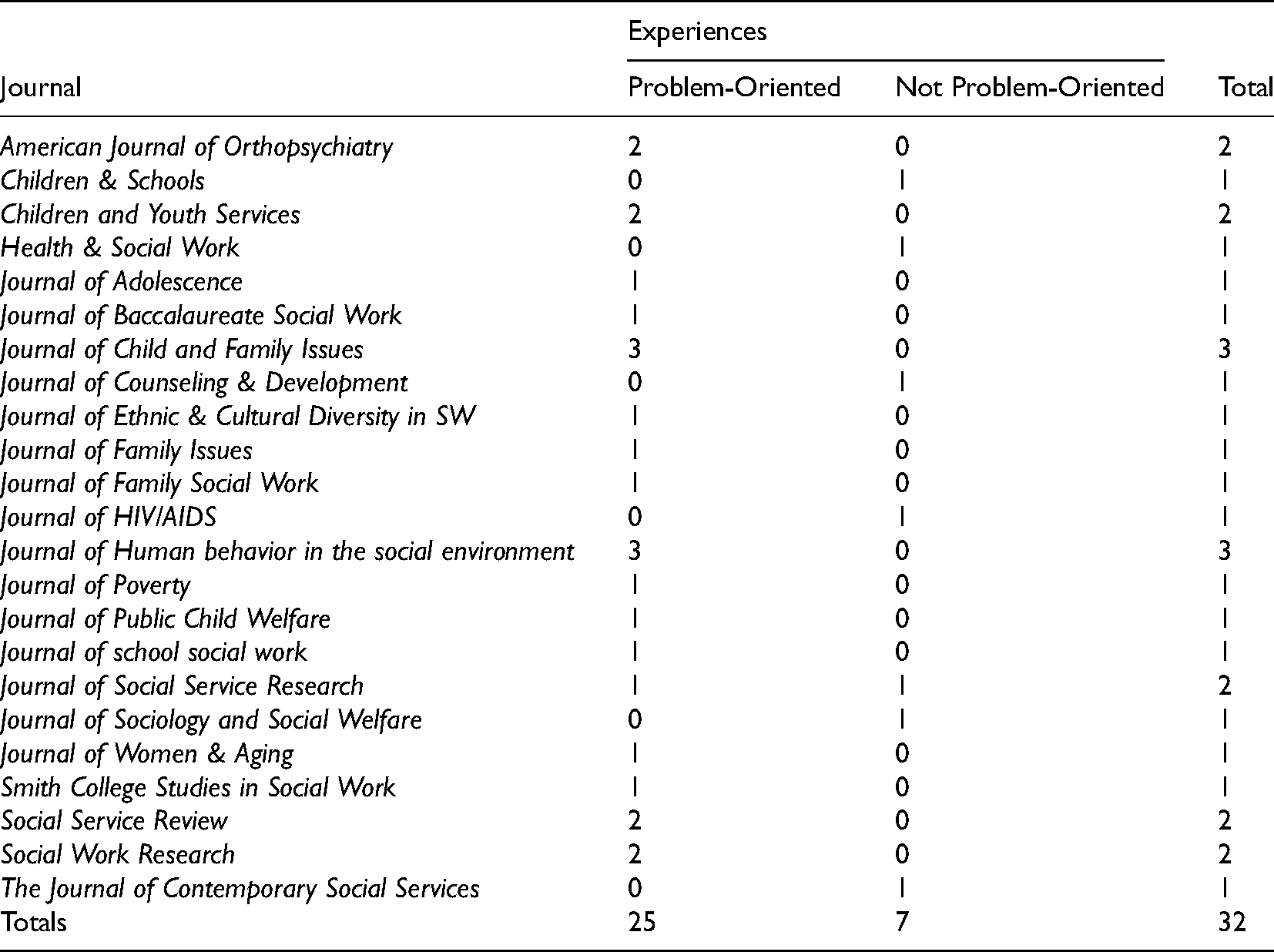
This content analysis’ reliance on Social Work Abstracts database to capture literature written by social workers and for social workers also poses limitations. Holden et al. (2008, 2009) found that Social Work Abstracts provided less than optimal coverage of social work journals. In fact, these authors noted that the database provided better coverage of National Association of Social Workers Press journals than non–NASW Press journals. They contend that if not properly addressed, Social Work Abstracts will cause a long-term negative impact on scholarship. Table 3. offers a list of the journals where articles on Black mothers were found.
Articles Written on Black Mothers in Social Work Literature, 2000–2020.
Future research in this area should have an expanded analysis by consulting with the institution's social science librarian and explore other social science databases largely used by social workers or by selecting social work journals as indicated and maintained by Leung and Cheung’s (2019) Journals in social work and related disciplines list.
Conclusion
This paper analyzed the content related to Black mothers found in Social Work Abstracts between 2000 and 2020. Of the 32 articles written on Black others, 25 (78%) of them were on mothers who were experiencing some form of hardship such as living in poverty, child welfare involved, substance abuse, and/or stress. Mothering for Black women is both personal and political work. The mere existence of Black mothers and the assertion of Black mothering are a subversive act (Ross, 2016) as the ideological conception of motherhood was never extended to Black women (Davis, 1981). Yet and still, Black mothers are a centralizing force in the Black community. They are breadwinners (DuMonthier et al., 2017), racial socializers (Turner, 2020), community caregivers, healthcare providers (McLane-Davison, 2013; Nichols et al., 2015), and social justice activists (Sakho, 2017). Despite their resilience, resistance, and resourcefulness Black mothers are often discussed in the literature in terms of deficit. The focus on unfavorable conditions in the research of Black mothers such as low socioeconomic status, welfare involvement, substance use, and poor mental health, perpetuate narratives of Black mothering as deficit mothering. There is a range of mothering experiences among Black women and it is important that social work literature reflects the multiplicity of Black mothers’ realities from their own unique standpoint.
Footnotes
Declaration of Conflicting Interests
The author(s) declared no potential conflicts of interest with respect to the research, authorship, and/or publication of this article.
Funding
The author(s) received no financial support for the research, authorship, and/or publication of this article.
