




Abstract
Economic abuse as a form of men’s violence against women has only been recently recognized as a form of violence in its own right. It is known to further exacerbate the detrimental long-term impacts of domestic and family violence on women and children. There is evidence to suggest the effectiveness of financial literacy programs in mitigating some of these impacts and improving women’s financial well-being in the longer term; however, there are very few domestic violence–informed, empirically evaluated programs internationally. This article reports the findings of a specialist domestic violence financial literacy curriculum, which was developed and piloted in Western Australia using pre–post measures and focus groups. These findings suggest that such financial literacy programs delivered in refuge settings have effective short-term outcomes among women. Lessons learned from the pilot and the implications for future implementation and scaling up of programs and research are also discussed.
Economic abuse is increasingly recognized as having a significant effect on women while living with a violent partner and after separation. Perpetrators use economic abuse to maintain power and control over women, impacting on their ability to leave and their experience of poverty once they have left. The importance of economic well-being to the capacity of women and children to rebuild their lives following violence has been recognized in Australian literature and social policy (Cortis & Bullen, 2016; Kutin, Russell, & Reid, 2017; The National Council to Reduce Violence Against Women and their Children [NCRVWC], 2009).
Although it is known that domestic and family violence (DFV) may be experienced by both women and men, this project focused on women in recognition of the fact that they are not only more likely to experience violence (Australian Institute of Health and Welfare [AIHW], 2018) but that the impacts of that violence are likely to be more severe and, in the case of economic abuse, far-reaching. This article reports the findings of the pilot of a Western Australian (WA) financial literacy and confidence-building program for women who have experienced DFV. The term “domestic and family violence” has been chosen over the term “intimate partner violence,” as DFV also includes acts of violence and coercion within the extended family, which in the Australian context is a more accurate reflection of Aboriginal women’s experiences (Morgan & Chadwick, 2009; NCRVWC, 2009). This is important in this research as Aboriginal and Torres Strait Islander practitioners and women participated in the study.
Literature Review
Economic abuse is defined as “behaviours that control a woman’s ability to acquire, use and maintain economic resources, thus threatening her economic security and potential for self-sufficiency” (Adams, Sullivan, Bybee, & Greeson, 2008, p. 564). There are four types of economically abusive behaviors: preventing acquisition of economic resources, preventing use of or controlling access to economic resources, refusal to contribute, and exploitation of women’s resources (Macdonald, 2012). Economic abuse was previously considered to be a form of psychological abuse (Stylianou, Postmus, & McMahon, 2013), and as such, it has been a less well-understood form of DFV (Russell, Kutin, Green, Banks, & Di Iorio, 2016).
All forms of DFV have been found to lead to long-term financial hardship (Cortis & Bullen, 2016; Morgan & Chadwick, 2009; NCRVWC, 2009); however, economic abuse is known to further exacerbate women’s financial insecurity (Adams et al., 2008; Camilleri, Corrie, & Moore, 2015; Corrie & McGuire, 2013; Russell, Kutin, et al., 2016). Economic abuse has been linked to economic dependency (Adams et al., 2008), which is known to prevent women from leaving abusive partners (Corrie & McGuire, 2013; Cortis & Bullen, 2015; Sanders, Weaver, & Schnabel, 2007). For women who are able to separate, experiences of economic abuse are likely to have impacted their finances, employment, and accommodation (Braaf & Barrett Meyering, as cited in Macdonald, 2012, p. 3), and further economic abuse is often perpetrated post-separation (Camilleri et al., 2015; Corrie & McGuire, 2013; Sharp-Jeffs, 2015). When women leave, they often have no choice but to rely on government income support (Adams et al., 2008), which is usually inadequate for the level of assistance required to recover from violence and achieve financial independence (Cortis & Bullen, 2015). Economic abuse, and also DFV more broadly, is therefore associated with poverty and homelessness and is known to have significant impacts on women’s physical and mental health (Adams & Beeble, 2018; Adams et al., 2008; Corrie & McGuire, 2013; Braaf & Barrett Meyering, as cited in Macdonald, 2012, p. 3).
A literature review conducted by Hahn and Postmus (2014) found that there are two common approaches to working with women who have experienced economic abuse: financial literacy and asset-building programs. Asset-building has been suggested as potentially effective in building economic security and safety for women who experience abuse (Shobe & Dienemann, as cited in Hahn & Postmus, 2014, p. 88); however, there has been some criticism of this approach as potentially encouraging relocation rather than an increase of assets (Richards & Thyer, as cited in Hetling & Postmus, 2014, p. 135). Asset-building programs, such as microloans and Individual Development Accounts, are utilized in the United States but are yet to be implemented in Australia (Cortis & Bullen, 2015).
Financial literacy programs have been identified as having the potential to increase the financial security of women who have experienced DFV (Postmus, 2010; Sanders et al., 2007). These programs are known to help women gain and regain confidence in their capacity to make informed and responsible financial decisions that promote their financial well-being (Postmus, 2010; Sanders et al., 2007). Financial literacy, or the knowledge and skills needed to discuss and make financial decisions and plan for the future (Postmus, Plummer, McMahon, & Zurlo, 2013), has also been suggested as a potential tool for the prevention of economic abuse, by informing women of the importance of having their own finances while in a relationship (Russell, Stewart, Kutin, & Rankin, 2016). Several financial literacy measures have been developed, such as the 13-item scale developed by Postmus, Hetling, and Hoge (2013).
Evidence points to the importance of designing specific programs for women who have experienced DFV, as generic financial literacy programs are unlikely to account for the effects of violence on women’s financial confidence, specific safety concerns, or longer-term abuse women may experience (Hahn & Postmus, 2014; Hetling, Postmus, & Kaltz, 2016; Russell, Stewart, et al., 2016; Sanders et al., 2007). Programs should consider the lived experiences of women, including their experiences of trauma and journey toward recovery, highlighting economic abuse, so that women are able to recognize the signs of an economically abusive relationship and begin to think about how they may try to safeguard themselves in future relationships, as well as understand the detrimental effect past abuse has had on their well-being (Hetling et al., 2016; Russell, Stewart, et al., 2016; Sanders et al., 2007). Research about specialist programs also indicates the value in discussing societal attitudes toward money and expectations about how money would be managed in a relationship compared with what had transpired (Postmus, 2010).
A primary aim of financial literacy curricula for women who have experienced DFV is confidence rather than skill-building (Postmus, 2010; Sanders et al., 2007). Women who have been subjected to a combination of coercive control, psychological abuse, and economic abuse are likely to have had their confidence eroded and view themselves as poor financial managers due to the abuse they have experienced and resultant financial hardship (Adams & Beeble, 2018). Many of these women already have money management skills and have become adept at this through managing what little money and other resources have been available to them.
A review of the literature found only one randomized control trial of a financial literacy program for women who have experienced economic abuse. This program, Moving Ahead Through Financial Management (MATFM), was funded and developed by the Allstate Foundation and the National Network to End Domestic Violence in the United States and piloted with 457 women with 300 completers (Postmus, 2010). The findings indicated that participation in the program improved women’s financial knowledge, literacy, and behaviors in both the short and long term (Hetling et al., 2016; Postmus, Hetling, & Hoge, 2015). Two other US programs were also reported in the literature. The first program, REAP (Redevelopment Opportunities for Women’s Economic Action Program), was piloted using a quasi-experimental design with 64 women with 32 completers (VonDeLinde & Correia, 2005). Although the program was found to have no significant impact on women’s financial literacy levels, it was associated with an increase in participants’ confidence managing money, which was considered a meaningful improvement in financial well-being (Sanders et al., 2007). The other program, the Personal Economic Planning curriculum, was noted by VonDeLinde and Correia (2005), though no evaluation data for this program could be found.
Within Australia, three financial literacy programs have been delivered and evaluated to women who have experienced DFV in Victoria. The Purse Project was developed by the Women’s Information and Referral Exchange (WIRE) and delivered to 79 women, 75 of whom provided feedback (Makepeace, 2016). Most participants (79%) reported improvements in their confidence managing money. At 3-month follow-up, most participants reported that the workshop had been useful; however, 11% reported not finding the workshop useful at the time due to excessive debt or other significant crises.
The second program, Firmer Foundations, was delivered by Good Shepherd to 110 women. In recognition that women experiencing DFV may not be ready to engage with financial literacy, the program targeted women with financial issues more broadly, though it still used a “family violence informed approach” (Panigale, Clapp, & Rosauer, 2016). More than 80% of participants reported improvements in their financial knowledge and confidence managing money, and staff reported positive outcomes in terms of participants’ housing, social connection, family relationships, and emotional well-being (Panigale et al., 2016).
The third program, MoneyMinded, is a financial literacy curriculum created by the Australia and New Zealand Banking Group, which was recently expanded to include a module for women who have experienced DFV. It was intended that this module would be piloted with clients from Berry Street, a DFV organization in Victoria, though reduced staff capacity delayed this (Russell, Stewart, et al., 2016). However, an evaluation of the generic MoneyMinded curriculum found that 75% of respondents had experience using the materials with clients who had experienced some form of DFV, with many reporting positive outcomes (Russell, Stewart, et al., 2016).
Aboriginal Women and Economic Abuse
Australian statistics indicate that women from Aboriginal and Torres Strait Islander communities are more likely to experience DFV and that the severity of that violence is likely to be greater, with higher levels of injury and hospitalization compared with non-Indigenous communities (AIHW, 2016, 2018; NCRVWC, 2009). This is commonly understood to be the result of several systemic issues, including dispossession from land and traditional culture, economic exclusion and entrenched poverty, and inherited grief and trauma (Hovane, 2015; NCRVWC, 2009; Wilson et al., 2017). These are thought to contribute to higher rates of substance misuse, stressors within families, and living in remote communities, all of which heighten risk to DFV (Bryant & Willis, 2008).
Aboriginal and Torres Strait Islander women are also likely to experience pressure from family members, intimate partners, or other kinship relations to share their money, even at the expense of their own economic well-being. Australian Indigenous cultures tend to be more “collectivist” than non-Indigenous cultures, with money seen as something that is to be shared among the extended family and community (Demothenous, Robertson, Cabraal, & Singh, 2006; Godinho, 2014; Meston & Dreise, 2017; Wagland & Taylor, 2015). This involves an obligation to share resources for the good of the entire family. Research has found that saving money can then be viewed as “selfish” or “stingy” within this context (Demothenous et al., 2006). Furthermore, when money is shared, it is often done so without the expectation that it will be repaid, with participants in one study talking about “giving” rather than “lending” money to relatives (Demothenous et al., 2006).
For Aboriginal or Torres Strait Islander women who have experienced DFV, such collectivist ideals can exacerbate any financial hardship they are already experiencing. Regardless of whether they can afford to, women are often still expected to contribute financially to the extended family. As noted by workers from the Aboriginal DFV service in this study, in some families, failure to contribute financially may result in a loss of entitlement to invaluable informal supports, such as care for children, and/or being ostracized from the rest of the family.
Aboriginal and Torres Strait Islander people also tend to be more transient and mobile than non-Indigenous Australians (Charles-Edwards, Bell, Cooper, & Bernard, 2018). This may, in part, be attributable to higher rates of homelessness among the Indigenous population, one of the main reasons for which is DFV (AIHW, 2016). This may also be attributed to Aboriginal and Torres Strait Islander people going to live with other family members and/or going back to country.
Culturally and Linguistically Diverse (CALD) Women and Economic Abuse
There are mixed findings in regard to the prevalence rates of DFV among women from CALD backgrounds (Morgan & Chadwick, 2009). In Australia, the term “CALD” refers to people from communities in which English is not the primary language, where cultural norms and values may differ from that of the mainstream community (Sawrikar & Katz, 2008). Women from CALD backgrounds are less likely to report their experiences of abuse to the police and may also experience difficulties accessing mainstream DFV services due to concerns about the ability of these services to understand their circumstances and respond appropriately (El-Murr, 2018; Morgan & Chadwick, 2009). Language and citizenship barriers may also impact the accessibility of services for these women, and low levels of English proficiency may be exploited by perpetrators of DFV to maintain power and control (NCRVWC, 2009). In trying to determine prevalence rates, CALD women may also be less likely to participate in population surveys due to limitations with language and/or may not wish to provide information to a government authority (Mitra-Kahn, Newbigin, & Hardefeldt, 2016).
Women from CALD backgrounds may have had limited access to and authority over family money and less decision-making power with regard to budgets, family bank accounts, and spending decisions (El-Murr, 2018; Women’s Health in the North, 2012). This is thought to be due to the traditional patriarchal cultural practices and gender roles that may exist in particular cultures and subcultures. For example, in many CALD families, the male partner or spouse is the head of the family and makes all financial decisions without necessarily consulting or even informing the female partner. Maher and Segrave (2018) argue that CALD women’s perspectives highlight that it is not their status as CALD women making them vulnerable to abuse but rather it is the mechanisms of the state, particularly the service response systems and migration policies and legislation, which create these vulnerabilities. This can be seen in cases of economic abuse, where women may not have the right to paid employment or access to services and information, maintaining and exacerbating the perpetrator’s abuse of power.
Refuge staff have reported that women from CALD backgrounds are increasingly escaping DFV using Australian refuges, where they typically stay for longer lengths of time (Beryl Women Inc., 2014). It is unknown what has contributed to this increase in CALD women entering refuges. Many of these women are residing in Australia on partner visas, which become indeterminate after they leave their partner, limiting their ability to work and access income support, and preventing them from moving into independent, safe, and stable accommodation and ultimately achieving economic independence (Segrave, 2017; Women’s Legal Services Australia as cited by, The Senate Finance and Public Administration References Committee, 2016, p. 11).
The Intervention
The intervention consisted of a financial literacy curriculum, intended to be delivered by two refuge workers in a group format, and a Financial First Aid document to aid refuge staff in identifying and responding to economic abuse. Each of these is described in detail below.
The Curriculum
The Economic Empowerment for Women Experiencing Domestic and Family Violence curriculum consisted of three modules developed in conjunction with the Women's Council for Domestic and Family Violence Services (WA). Module 1 introduced the concept of economic abuse and began to explore participants’ relationship with and feelings toward money, drawing on materials from the Australian Human Rights Commission, Good Shepherd, MATFM, and WIRE. Modules 2 and 3 focused more on developing participants’ skills and knowledge around financial management and literacy. These modules drew primarily on MoneyMinded materials and were supplemented with materials developed by the Australian Securities and Investment Commission and other relevant local organizations.
In developing the program, we considered key findings from other evaluations and research (Hetling et al., 2016; Makepeace, 2016; Panigale et al., 2016; Postmus, 2010; Postmus et al., 2015; Russell, Stewart, et al., 2016; Sanders et al., 2007). MATFM found training refuge/shelter staff as facilitators valuable as it meant the knowledge remained within the centre and could be further developed in the future. We adopted a similar approach, using a train-the-trainer model to embed knowledge about economic abuse into local women’s refuges. We also drew on the experience of existing programs by including in the curriculum the specific ways in which economic abuse impacted on women’s financial security during and after the relationship. Evidence from existing evaluations was valuable in shepherding the development of our program.
The importance of incorporating confidence-building in financial literacy programs for women who have experienced DFV was highlighted in the literature. In recognition of this, the Economic Empowerment curriculum included both education around financial literacy and management, as well as the provision of spaces and opportunities for women to share their own experiences and strategies. These experiences and strategies could then be validated by other participants and the two group facilitators. It was for this reason that the evaluation measured improvements in financial strain rather than financial literacy.
Considering Aboriginal and CALD women
Given the inclusion of an Aboriginal women’s refuge in the pilot, and the high proportions of CALD women in refuges, it was important that the needs of Aboriginal and CALD women were considered in the curriculum. Cultural differences in how money is thought about and managed were addressed through activities in Module 1, which allowed women to consider their own relationships with money, as well as the behaviors that they would define as being financially abusive. There were no right or wrong answers, instead women were given time to reflect and explore why a behavior may or may not be financially abusive. It was also important that the mobility of Aboriginal communities was considered in the development and delivery of the curriculum. This was addressed through flexibility in when and how the program was delivered. For example, the length and frequency of sessions was able to be determined by each site, so as to be suited to their women, and the program was open to women outside of the refuge, which also allowed for women who transitioned out during the program to continue participating.
Given the high proportions of CALD women in refuges, it was likely that a substantial number of participants would be women who spoke English as a second or even third language and were unlikely to have much, if any, access to money. The curriculum was written with this in mind and pitched at a relatively low literacy level, so that it would be accessible to these women. The flexibility of the curriculum addressed the likelihood that women from CALD backgrounds would have limited access to money, in that activities could be approached from a more future-oriented perspective (i.e., “what will you do once you have access to money?”).
Financial First Aid
Alongside the curriculum, we also developed a “Financial First Aid” document to aid refuge staff in identifying and responding to economic abuse during intake, assessment, and case management. This document included the Scale of Economic Abuse (SEA-12; Postmus, Plummer, & Stylianou, 2016) and some of the steps a woman may need to take to separate her finances and other resources from her partner. The aim of Financial First Aid is to begin to address some of the financial effects of abuse, bridging any gaps between referral and meeting with a financial counselor, and to prevent any further economic abuse from being perpetrated post-separation. Some of the content developed for the Financial First Aid document was included in Module 1 of the curriculum, in recognition that the women who participated in the pilot may not yet have gone through this in case management when they first arrived at the refuge.
Pilot Implementation
The curriculum was piloted in three women’s DFV services in metropolitan Perth from November 2017 to April 2018. Each of these services provides crisis accommodation (refuge/shelter), Safe at Home programs where women remain in the home with case management, and outreach programs for longer term support. Four staff members from each of the services were trained in delivering the curriculum, using a train-the-trainer format. Clients from each service were then invited to participate in the program. Each site had a combination of refuge, Safe at Home, and outreach clients to participate.
Method
This project utilized a mixed-methods approach, underpinned by an action research evaluation methodology, as this was thought to be most appropriate for a pilot project of this scale. Consistent with this methodology, feedback was sought from both staff involved in delivery and women who participated in the program. Staff feedback was sought through one pre- and one postdelivery focus group, which focused on their experiences of delivering the program, the effect of the program on their own practice and on the women who participated, and any feedback on the content or delivery that may be useful for future iterations. Participant feedback was sought through paper-based pre- and postprogram questionnaires. The prequestionnaires asked only closed-ended questions, while the postquestionnaires included open-ended questions regarding the content of the curriculum, which is intended to inform future iterations of the curriculum. Prequestionnaires were administered at the beginning of the first module, and postquestionnaires were administered immediately after finishing the third module. Some participants, particularly those who did not speak English as a first language, required assistance from refuge staff to complete the surveys. Participants did not receive any incentives for participating. Ethical approval was obtained from both Curtin University and the WA Aboriginal Health Ethics Committee.
Given the similarities with the evaluation of MATFM (Postmus et al., 2015), a number of instruments used in that research were identified and modified for use in this project. Modifications included those required to make the instruments more appropriate for use in the Australian cultural context as well as those required to suit the scale of the pilot. The focus group schedule for staff feedback had minimal modifications, while the pre- and postintervention questionnaires for women were reviewed and the elements of most relevance for the project were identified and adapted. These included demographic information, the SEA, and instruments related to women’s experiences of other forms of DFV, and any changes in financial strain.
Sample
Refuge staff
Twelve refuge workers (four from each service) were trained in delivering the curriculum. These staff members worked across the three programs offered by their service (refuge, Safe at Home, and outreach). Six of the twelve staff members trained in the curriculum provided feedback in the postdelivery focus group.
Program participants
Eleven women participated across the three services (refuge, Safe at Home, and outreach). A 12th woman began the curriculum at one site but, having just entered the refuge and still dealing with the immediate crisis of leaving her abusive partner, chose to withdraw partway through. This woman’s preintervention data have been excluded from analysis.
Measures
The SEA-12
The SEA-12 was used in this study to measure the frequency of economic abuse in participants’ most recent intimate relationship. The original scale was developed by Adams, Sullivan, Bybee, and Greeson (2008) and consists of 28 items. The scale was later revised by Postmus and colleagues (2016) to consist of 12 items on three subscales (SEA-12). These subscales measure three of the four known types of economic abuse: Economic Control, Employment Sabotage, and Economic Exploitation. Refusal to contribute is not specifically measured on the scale, though some of this may be picked up through the Economic Exploitation subscale. In addition, the SEA-12 does not consider economic abuse perpetrated post-separation (e.g., withholding of child support payments). If participants answered rarely or more frequently to any one of the items in the SEA-12, they have been included as having experienced some form of economic abuse.
Measuring experiences of DFV
Women were also asked to provide some information on their experiences of other forms of DFV in their most recent abusive relationship. Within this relationship, they were asked how often they experienced physical, sexual, verbal, emotional or psychological, social, and spiritual abuse. Each form of abuse was presented in a separate question with a definition and examples of such behaviors, to ensure that participants understood the different categories. Participants were asked to rank their experiences of each form of abuse in their most recent abusive relationship using a 5-point Likert-type scale of “never” to “always.” If participants answered rarely or more frequently to any of the questions about the forms of DFV, they have been included as having experienced that type of abuse.
Measuring financial strain
Two items were included in both the pre- and postintervention questionnaires to measure participants’ levels of financial strain (Hetling, Stylianou, & Postmus, 2015). Both were measured on a 5-point Likert-type scale of “never” to “always.” The first asked how often participants felt worried or stressed about money; the second asked how often they experienced symptoms of ill health as a result of worries about money. These items were used to compare levels of financial strain before and after completing the program.
Data Analysis
The postdelivery staff focus group was audio-recorded and transcribed. This transcript, along with notes from the predelivery focus group, was analyzed thematically by one of the researchers, while pre- and postintervention data were analyzed using Excel and SPSS. To test the mean difference in financial strain at pre and post, assumptions for a paired samples t-test were tested. Inspections of the normality plots indicated the distribution in the sample violated the assumption for the normality of this test, and so the nonparametric Wilcoxon signed rank test was used instead. This test is robust against small sample sizes and skewed distribution.
Results
Program Participant Questionnaires
Pre- and postintervention data were collected for the 11 women who completed the curriculum. Preintervention data were also collected for the 12th woman who started the curriculum but later withdrew. These data have been excluded from the findings. Demographic information for the women who completed the program is presented in Table 1.
Participant Demographics.
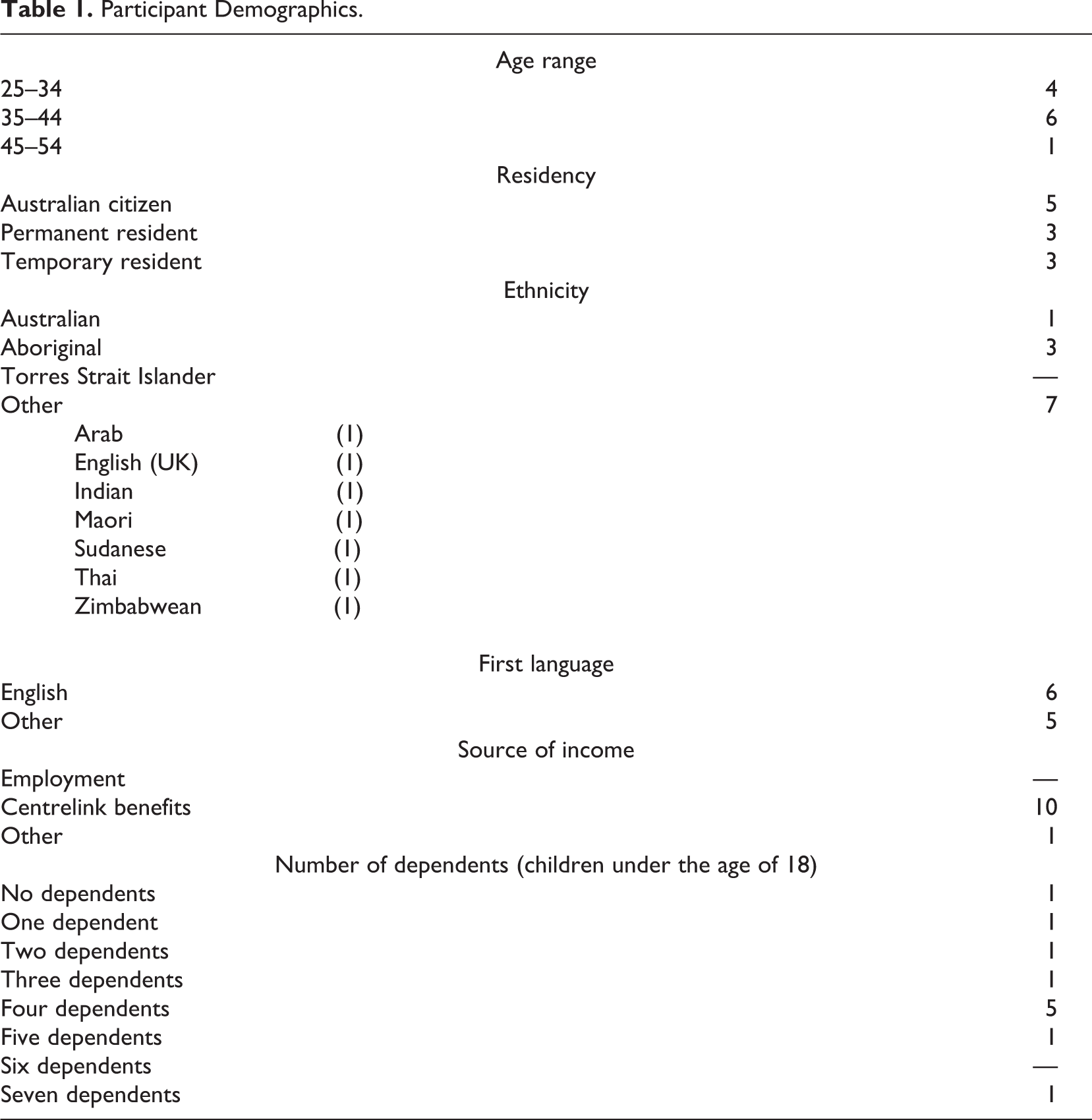
As shown in Table 1, almost half of the participants were from CALD backgrounds and spoke English as a second language, while three women identified as Aboriginal. Only three participants had received qualifications after high school: two held trade certificates or had completed apprenticeships and the other had a postgraduate degree. Four participants did not complete high school. All of the participants were unemployed, with 10 of 11 receiving their main source of income from welfare payments. The remaining participant was not eligible to receive any welfare at the time of evaluation due to her immigration status and, as such, was being supported entirely by humanitarian funding. Participants’ income ranged from nil to $999 per week, with most earning less than $499 per week.
More than half of the participants had four or more dependents (children under the age of 18). Some had other children, including two women who each had eight children, but only their dependent children have been included, as it is likely that any adult children no longer reside with their mother or would be considered as a client in their own right. Participants’ children, both dependent and independent, ranged in ages from 8 months through to 21 years old. The number and age range of the children presenting represents a significant barrier for the majority of the women attending workshops in the first instance, but also attempting to address their financial insecurity by entering or reentering the workforce in the longer term, after what may have been many years out of the workforce due to full-time parenting responsibilities.
Experiences of economic and other forms of abuse
All of the women who participated in the study reported experiencing some form of economic abuse (see Table 2). More than three quarters of women reported experiencing economic control and/or economic exploitation, while less than a quarter reported experiencing employment sabotage. Unsurprisingly, all participants also reported experiencing verbal, emotional or psychological, and social abuse. This is consistent with existing research, which has found a high correlation between experiences of economic, psychological, and social abuse (Adams et al., 2008; Postmus et al., 2015; Sharp-Jeffs, 2015). Eight women also reported experiencing physical and spiritual abuse, while six reported experiencing sexual abuse.
Types of Abuse Experienced by Participants.
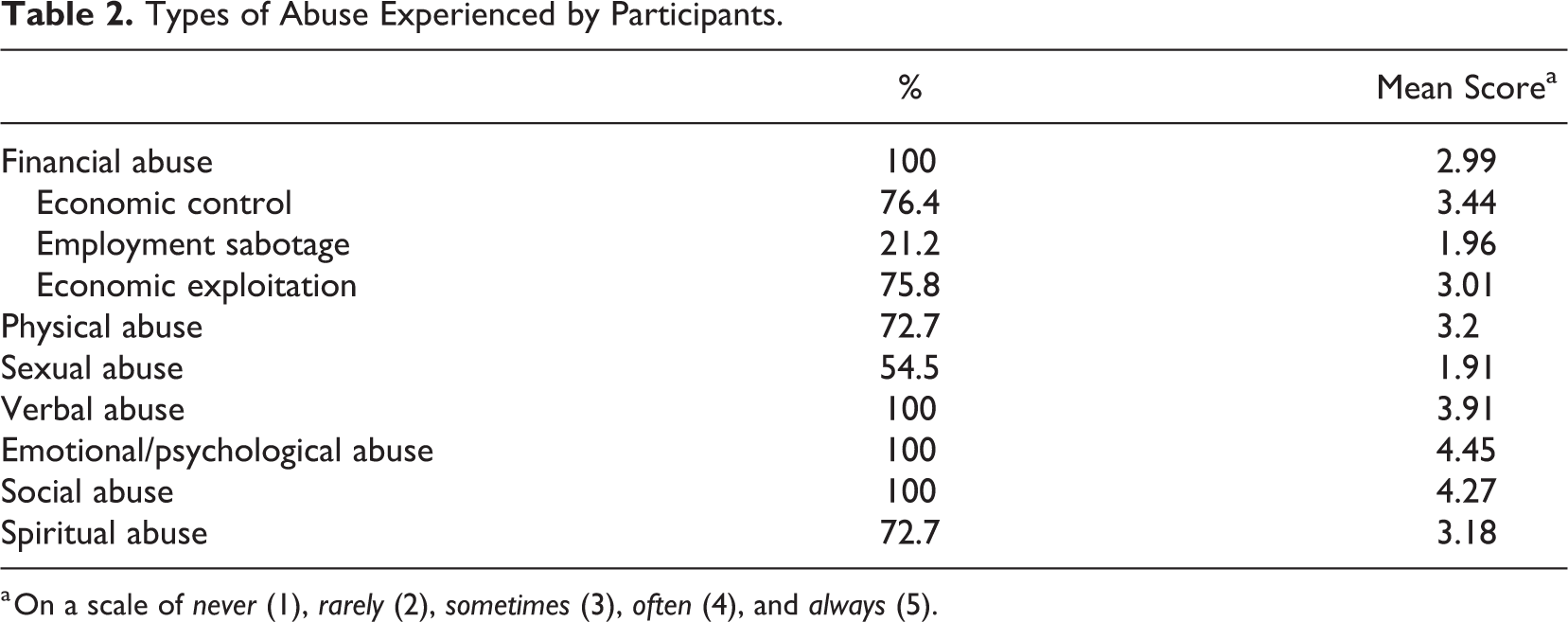
a On a scale of never (1), rarely (2), sometimes (3), often (4), and always (5).
Changes in financial strain
The impact of the intervention was determined by measuring changes in women’s levels of financial strain from pre to post. Financial strain was measured by asking women about their money worries and the effect these worries had on their physical health. Before completing the curriculum, women reported a mean score of 3.82 (SD = 0.82) for money worries, which remained the same at post (M = 3.82, SD = 0.87). In relation to physical health symptoms related to stress, women reported a mean score of 3.27 (SD = 0.9) at pre, which decreased post-program (M = 3, SD = .63). Preprogram results show that participants’ scores on these measures were already high, with all women reporting experiencing money worries and physical ill health as a result of this at a frequency of sometimes or higher.
Results showed that seven of the participants’ money worries decreased, one increased, and three remained the same from pre to post (as shown in Table 3). This difference was not significant (p = .124). Importantly, results indicated that the curriculum had a significant effect on participants’ health as a result of money worries, T = 36, z = −2.714, p = .007. Relative to their preprogram rankings, eight participants’ self-reported symptoms of ill health related to money worries decreased and three remained the same, resulting in a large effect size of r = −.96.
Changes in Financial Strain.
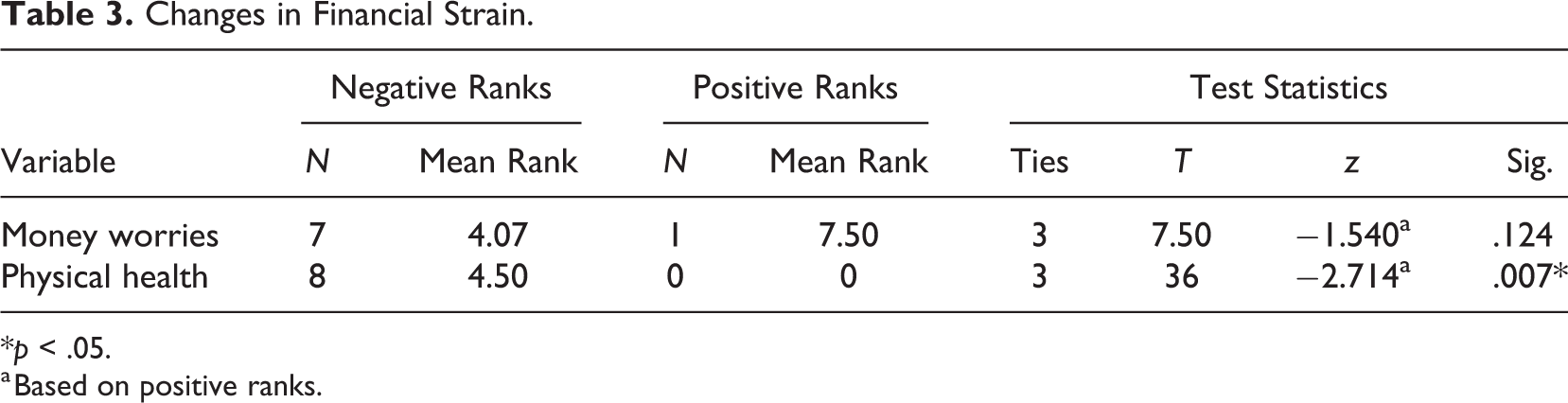
*p < .05.
a Based on positive ranks.
When asked in the postprogram questionnaire if the curriculum had helped participants with any previous anxiety about money, 10 of the women answered yes. The 11th woman declined to answer, though her answers to the financial strain measures indicate that these improved as a result of her participation in the curriculum.
Aboriginal and Torres Strait Islander participants
Three of the pilot participants identified as Aboriginal. Encouragingly, all of these women rated the curriculum highly, reporting that they had learned a lot from participating. Two women reported improvements in financial strain after participating in the curriculum, while the third reported that her financial strain had remained the same, but noted that the program had helped with her anxiety about money. Refuge staff reported that they were comfortable managing the specific cultural and emotional needs of Aboriginal women during delivery, including being able to adapt the content and delivery as necessary. Though ideally, future iterations of the curriculum will include Indigenous-specific modules and/or material, it is encouraging to note that the pilot curriculum was helpful from the perspective of Aboriginal women and staff.
CALD participants
Emerging evidence in Australia indicates a growing proportion of CALD women residing in women’s refuges, largely due to immigration restrictions that prevent access to money. Given this, it is unsurprising that almost half (n = 5) of the pilot participants came from CALD backgrounds and spoke English as a second language. From the outset, the curriculum was designed to be accessible to these women, taking into account their English proficiency and financial literacy levels, which was done in consultation with the three refuges, as we did not have specific knowledge about this prior to the pilot. Participant feedback was positive; three of the five CALD women reported improvements in financial strain after participating in the curriculum. The other two CALD women reported that their financial strain remained the same or increased, though both noted that participating in the curriculum had helped with anxiety about money. As with Aboriginal and Torres Strait Islander women, it would be ideal if future iterations of the curriculum included material specific to CALD women, though it is encouraging that the pilot curriculum also seems to be appropriate for this population.
Refuge Staff Focus Group
Six of the original 12 refuge staff trained in delivering the curriculum participated in the postdelivery focus group. All refuge staff reported that the content of the curriculum was “really, really good” and that all women benefited from participating. They noted that it was invaluable in introducing women to practical options for managing their finances and planning for future financial independence in a way that some had not previously thought possible. During the first module, refuge staff reported that many of the women struggled to articulate long-term financial goals that they would like to work toward. Staff attributed this to a number of reasons, such as being too consumed with more immediate, or in some cases, more important financial and nonfinancial issues (such as child protection involvement or health concerns). It was also noted by staff that some women who had been receiving welfare payments for extended periods of time “couldn’t see past Centrelink [government income support payments],” which prevented them from being able to articulate long-term goals or engage with the more future-oriented curriculum content around home ownership and superannuation. However, toward the end of the curriculum, staff could see that many of the women were starting to think about what they would like for their future and the steps needed to achieve this, with many identifying the need for additional training and education, in order to be able to enter or reenter the workforce, start accumulating superannuation for their retirement, and be able to put aside money for emergencies and other future expenses.
The curriculum included information on DFV as well as more generic financial education materials. Staff feedback indicated that these materials were well received, though it was noted that the economic abuse material would be more effective if it was incorporated throughout the curriculum rather than presented entirely in Module 1. As one staff member noted, “It depends on the group you’ve got. [Talking about economic abuse and DFV in the first session] can sometimes be a little confronting.” Another worker explained, “…they sort of signed on for financial literacy…and then all of a sudden, we’re talking about how do you feel about money and domestic violence.”
A number of challenges to delivery were noted by staff. These have been discussed in more detail below. Feedback in the staff focus group also highlighted some important lessons that can be learned from this pilot.
Challenges to delivery
Staff identified a range of challenges in the delivery of the curriculum. In the predelivery workshop, many staff members expressed concerns about their ability to deliver the curriculum in a group. There were a few reasons given for this; firstly, refuge staff tend to have heavy workloads that do not always allow them to take on additional work, such as curriculum delivery. Some staff also noted difficulties with recruiting and retaining women for other programs they have run in the past. This is thought to be due to the volatility in women’s lives as a result of their experience of DFV and the crisis in their accommodation and personal lives. As such, it was thought that perhaps the curriculum would be easier to deliver during regular case management sessions. However, ultimately, all three refuges decided to deliver the curriculum in a group setting, as was originally intended.
In the postdelivery focus group, some staff noted concerns about groups that included women who did not know one another beforehand. Staff from one refuge noted that all but one of their participants came from the refuge and so, they knew each other and were comfortable. And I think that was so important, that they were comfortable with each other…I don’t know that would go in a situation [with] people from very diverse sort of backgrounds or [who] just don’t know each other.
It was also identified that staff turnover and shortages were a problem for the refuges, with at least 3 of the 12 staff trained in the curriculum known to have since left their organization, and another 4 being unavailable to assist with delivery of the curriculum. Furthermore, some staff experienced anxiety around delivery, having little experience in facilitating groups themselves. Both posed barriers to delivery, though some of this was resolved by having a dedicated project officer available to codeliver with staff. This meant that only one worker was required for delivery rather than two, which decreased the burden on the organization as a whole. Having assistance from someone experienced in group facilitation and well versed in the curriculum also decreased feelings of anxiety among staff.
Lessons learned from the pilot
Many refuge workers emphasized the importance of women feeling in control of the learning process and remaining “the experts in what their experience has been.” They explained that their work with women is about “helping [them] to validate their experiences and understand their experiences” and therefore explained that it was less important to teach women about economic abuse than to open up a conversation about their experiences. However, the importance of naming domestic violence and economic abuse was also emphasized, as some women had not yet recognized what they had experienced as abuse and lacked other ways of describing these experiences. Most workers also noted that unless women could really relate to the content, they would not be able to incorporate and integrate the information into their experience. In this sense, staff were considered facilitators rather than didactic classroom teachers, leading women in the discussion of the curriculum concepts, and providing them with the words and tools to understand their experiences of economic abuse and build upon the strategies they were already using to address these.
All staff recognized the importance of having two group facilitators, with one stating, “You’re better off running groups with two cofacilitators, because if anything goes badly wrong, which it does, and a person needs support, you need someone else to be there to take them out.” The expertise of refuge staff in supporting women who have experienced DFV was noted as an essential skill in delivering the curriculum, and they were seen as a crucial part of the facilitator team for such programs.
It was widely agreed among staff that there were several difficulties presented by women’s fluctuating availability and attendance, which they suggested could be addressed by flexible arrangements, such as running the program at regular intervals during the year so that if women needed to miss modules, they would be able to pick them up later in the year. A regular schedule would also enable refuge and other women’s services to prepare and refer women in advance as the program became more established.
Discussion
Although only a small pilot, this study indicates the potential effectiveness of a specific, DFV-informed financial literacy curriculum delivered by staff in a refuge setting in economically empowering women who have experienced DFV in WA. Feedback from both participants and refuge staff on the content and delivery of the curriculum, as well as its short-term impact on women’s lives, was overwhelmingly positive. The implications of these and important considerations for future programs and research are discussed in further detail below.
The Effect of the Curriculum on Women’s Lives
The results of this pilot indicate that the Economic Empowerment curriculum had a meaningful effect on participants’ lives. Although the curriculum did not have any significant effect on participants’ money worries, it did significantly decrease their physical health symptoms related to these worries, increasing their overall well-being and thus constituting a meaningful effect. It is possible that the curriculum may have more significant longer term effects, though unfortunately we could not measure these in this study. Furthermore, money worries may also be impacted by external factors that cannot be immediately addressed through the curriculum, such as the financial burden of having to source alternative accommodation and managing existing debts and unemployment.
As noted previously, this curriculum, like others for women who have experienced DFV, focused on building confidence (Postmus, 2010; Sanders et al., 2007) rather than building skill. This was something that developed organically as a result of the program facilitators recognizing that the women the program was targeting have often developed strong money management skills from surviving with little to no access to money. Confidence was built by providing spaces and opportunities for women to share their own experiences, knowledge and strategies, and allowing these to be validated by other members of the group. Although confidence was not measured in this study, decreases in financial strain may be indicative of increased confidence; women may have experienced less stress as their confidence managing money grew. This may warrant further exploration in future research.
Future orientation has been noted in the literature as critical to gaining financial independence and stability (Hahn & Postmus, 2014; Russell, Stewart, et al., 2016). Refuge staff feedback indicated that participation in the curriculum facilitated many of the women to plan for their futures in ways they had not previously thought possible. Women were particularly focused on accessing training or education, in order to obtain future employment. This indicates that the program increased participants’ future orientation and is consistent with previous research, which found that MoneyMinded encouraged future orientation among women who had experienced DFV (Russell, Stewart, et al., 2016).
The Refuge Setting
As noted by study participants, refuge staff are already significantly burdened by heavy workloads. This is due to the complex nature of DFV, the intensive long-term support needs of women and their children, and staff shortages due to high turnover and funding constraints and fluctuation as a result of competitive tendering for service contracts. Adding the delivery of the Economic Empowerment curriculum to their workload placed even more burden on staff. This was compounded by the delivery model, which required two staff members serve as cofacilitators of the curriculum and posed difficulties to implementation during the pilot period. Berry Street in Victoria had a similar experience when piloting the DFV-specific MoneyMinded materials, with staff movements and funding constraints delaying implementation significantly (Russell, Stewart, et al., 2016). In our study, this challenge was partly mitigated through having a project officer available to act as one of the cofacilitators at a particularly short-staffed site. This meant only one refuge staff member was required for delivery, easing some of the burden on the whole organization. As such, this delivery model may be better suited to the DFV sector than one that relies solely on refuge staff, although this may vary over time. Regardless of the difficulties they experienced, refuge staff reported that their involvement in the delivery of the curriculum was worthwhile. They noted that their expertise and experience in working with and supporting women was essential in how they approached the curriculum material with the women. Having two cofacilitators to deliver the program was also noted by participants as critical, as this allowed one facilitator to step outside of the group and provide support to any participants who experienced distress. Despite the significant burden delivery posed, staff were overwhelmingly supportive of the program in the refuge setting and were hesitant to recommend any changes to delivery that did not include at least one refuge staff member as a cofacilitator. This is an important consideration for future programs.
Staff members also reported a much stronger awareness of economic abuse patterns and effects and an increased importance in discussing this with all women accessing the refuge during regularly scheduled case management sessions.
Considerations for Future Programs and Research
The importance of using specially designed, DFV-informed financial literacy curriculums with this population has been highlighted in the literature previously (Hahn & Postmus, 2014; Hetling et al., 2016; Russell, Stewart, et al., 2016; Sanders et al., 2007). In this study, the curriculum included both DFV-specific and more generic financial education materials. Results from the pilot indicated that these materials were well received, though it was noted that the economic abuse material would be more effective if it was incorporated throughout the curriculum rather than presented entirely in Module 1. As such, it is recommended that future programs integrate information on DFV and economic abuse with financial education content rather than presenting these separately.
Unfortunately, despite plans for the curriculum to be delivered twice at each site to a total of 48 women, only 11 completed the curriculum. There were a range of factors that contributed to this, including the unavailability of refuge staff and difficulties with recruiting women. Staff explained that the difficulties recruiting participants were due to the trauma and upheaval associated with escaping violence. The practical and emotional demands placed on women during this time may include recovering from physical and sexual violence, finding stable accommodation and sourcing adequate furniture and household effects, attending to children’s physical and emotional needs, managing any involvement with child protection, legal matters (e.g., domestic violence orders), seeking counseling or some other forms of mental health support, and for women from CALD backgrounds, dealing with immigration issues. Although women are likely to be worried about money during this time, as reflected in this study’s preintervention data, these other issues may be prioritized over dealing with longer term financial problems. Given these competing demands, it may be unrealistic to expect women to commit to 15 hrs’ worth of financial education within a short period of time. Other delivery models, such as a rolling intake into programs or delivering modules over a longer period of time, may be more accessible to these women.
It is important to note that a 12th woman entered the program but chose to withdraw partway through. Staff from that site noted that this woman had only recently entered the refuge and ultimately found it impossible to deal with the immediate crisis of leaving a domestic violence situation and plan for her financial future at the same time. This is consistent with results of the evaluation of the Purse Project, where 11% of participants reported that program had not been useful to them at the time due to the personal crises they were experiencing (Makepeace, 2016). This indicates the need to incorporate some screening into the referral process for programs such as this to ensure women are not referred until they are ready and able to engage with the program. Immediately after leaving an abusive relationship does not appear to be the most appropriate time; rather, women should be referred once they are further along in the recovery journey and are not attending to crises associated with leaving. Further research may be necessary to determine when in the recovery journey is the best time for women to participate in financial literacy interventions. Such research could then inform the development of screening tools, or the redevelopment of existing tools, such as the Financial First Aid tool, to be used as a screening tool.
As shown in Table 2, only 21.2% of participants reported experiencing employment sabotage. Several women declined to answer the questions related to this subscale, as they did not work during their abusive relationship and therefore thought the questions did not apply to them. This does not mean that these women did not experience employment sabotage. Rather, if there was any employment sabotage, it was not recognized by participants. This may warrant some additional exploration in future research projects. It is also important to note that the SEA-12, which was used to measure economic abuse, has not yet been validated in the Australian context, and as such, the notion of employment sabotage may not translate culturally.
Implications for Social Work
As feminist social workers, we are aware that the majority of women we work with experience poverty and significant disadvantage as a result of existing sociopolitical structures. This project is an important part of feminist social work practice that involved looking directly at women’s experiences with money and security. The sociopolitical structures that disproportionately disadvantage women, particularly those who have experienced DFV, were acknowledged, but not condoned, in the curriculum, so that women did not feel they were being blamed for their financial position. The benefits of this project also extend to the refuge workers who were trained as facilitators. Refuge workers in Australia are predominantly female and often low paid, due to funding constraints of DFV services, and most importantly, these workers are disadvantaged by the same structures as all women. The train-the-trainer model meant that workers also got to participate in the program during the facilitation training, which has the potential to empower them in the same way women were empowered.
Conclusion
There is a great deal that can be taken away from the findings of this pilot study. Despite the significant challenges posed to both refuge staff and women’s participation in the project, those who were able to participate could see the value of the program and were enthusiastic about its use in the future. These challenges, and the other data collected through this project, have raised questions about the best method of delivering financial literacy education to women who have experienced DFV in WA, including who should be responsible for delivering the program and in what setting, as well as women’s readiness and availability for the program. Although some of these findings may be applicable in other contexts, it is important that future programs consider their own local conditions, including the DFV sector, workforce, and women who are accessing these services. It is also important to note that this study only measured short-term effects of the curriculum on financial strain; changes in financial literacy, confidence managing money, and longer-term effects were not measured in this pilot and as such may warrant exploration in future research. Nonetheless, this study is further evidence of the benefits of financial literacy education as a means of economic empowerment, the importance to address economic abuse alongside other aspects of DFV, and the contribution of such interventions in women’s recovery from violence.
Footnotes
Acknowledgments
We gratefully acknowledge the contribution of Therese Smith (Project Officer, Women’s Council of Domestic and Family Violence Services, Western Australia) in developing the Economic Empowerment curriculum as well as the project reference group for providing guidance and feedback during this process. We also acknowledge the refuge staff members and women who gave their valuable time to participate in this study and contribute to the future economic empowerment of women who have experienced domestic and family violence. Finally, we would like to acknowledge Natasha Mahoney (Research Assistant, School of Occupational Therapy, Social Work and Speech Pathology, Curtin University) for her assistance with the analysis of pre- and postintervention data.
Declaration of Conflicting Interests
The author(s) declared no potential conflicts of interest with respect to the research, authorship, and/or publication of this article.
Funding
The author(s) disclosed receipt of the following financial support for the research, authorship, and/or publication of this article: This project was funded by the Western Australian Department of Local Government & Communities (Women’s Interests portfolio) (104612).
