




Abstract
In 2015, marriage equality in the United States was a big win for the gay and lesbian movement. Marriage equality as a primary focus of the movement, however, was not without its critiques, particularly as an issue affecting mostly white, gay, economically secure individuals. Given the history of the movement, it is essential to ask what is next. Young queer and trans people represent the next generation of potential activists and advocates for queer and trans liberation, yet little empirical attention has been paid to their goals for the movement and motivations to be actively involved, particularly among young adults in rural, conservative states. Therefore, this study sought to understand the social, economic, and environmental issues deemed important by queer and trans young adults (aged 18–29), as well as their motivations to get involved in activism efforts. Data came from a mixed-methods program evaluation, which presents a picture of the issues and motivations that led study participants (n = 65) toward activism in one conservative, highly rural, Southwestern state in the United States. The findings of this study are discussed in light of theoretical and empirical literature and then implications for the queer and trans movement, activists, and organizers are offered.
Keywords
In 2015, a U. S. Supreme Court ruled marriage was a fundamental right, thus legalizing marriage for same-sex couples in all 50 states and U. S. territories. While this represented a significant achievement in the gay and lesbian rights movement, much work remains undone and significant critiques of the movement exist (Balken, 2016; DeFilippis, 2018a). Historically, the gay and lesbian movement has focused largely on issues impacting white, gay, economically secure individuals (DeFilippis, 2018a, 2018b; DeFilippis, Anderson-Nathe, & Panichelli, 2015; Helm-Hernandez & DeFilippis, 2018; Hutchinson, 2001). Moving forward, it is essential that queer and trans movements be informed by feminist intersectionality (DeFilippis et al., 2015). Intersectionality is a framework that can enable a queer and trans rights movement to shift away from a single-focus issue of equality toward issues affecting the more marginalized individuals within the queer and trans community with a focus on liberation (DeFilippis, 2018b; Helm-Hernandez & DeFilippis, 2018). It is important to note that we use the phrases “gay and lesbian” and “queer and trans” intentionally to represent the state of the movement. A mainstream “gay and lesbian” movement has historically focused on mainstream issues affecting gay and lesbian individuals only. Alternatively, a queer and trans movement attends to the most marginalized in the queer community, recognizes intersectionality, and embraces all diverse gender and sexual identities rather than just gay and lesbian.
In addition to utilizing a critical feminist, intersectional lens within the queer and trans movement, it is important to understand the contrast between lived equality and legal equality (Ball, 2016), particularly as they impact the critiques of the marriage equality movement. The mainstream gay and lesbian movement has primarily focused on obtaining legal equality. Legal equality is the result of legal battles aimed at specific issues such as the legal right to marry. However, one can have legal equality without having lived equality (Teal & Conover-Williams, 2016). For example, a person can be legally wed to their same-sex spouse but remain “in the closet” due to potential discrimination at work or in housing (Rosky, 2016). Thus, the marriage equality movement provided only a form of legal equality to same-sex couples. Without lived equality, legal equality is only a bandage. Lived equality is when queer and trans people have the access to maintaining employment, housing, medical treatment, and other societal institutions without discrimination on the basis of sexual orientation or gender identity (Balken, 2016).
To move beyond marriage equality and embrace an intersectional movement focused on queer liberation, queer and trans organizations must better understand how to engage with young activists and advocates within the queer community. Although scholars and activists have critiqued marriage equality and called for a more intersectional movement, we lack knowledge about how an intersectional movement might center the issues, concerns, and motivations of queer and trans youth (primarily adolescents) and young adults (aged 18–29), particularly in areas of the United States with more conservative social contexts. Existing queer and trans organizations, both small, local grassroots organizations and large state and national organizations, have little information to guide their work on engaging with the next generation of activists and organizers. Scholarship in this area has yet to attend to the motivations of queer and trans young adults to join with advocacy groups or grassroots campaigns, the issues young adults feel are important, and the ways in which intersectionality is viewed within the context of a queer and trans movement. This study aimed to address these gaps in the literature by conducting a program evaluation for a lesbian, gay, bisexual, transgender, and queer (LGBTQ) advocacy organization in a largely Republican, Southwestern, highly rural state in the United States. This organization was not actively engaging queer and trans young adults at the forefront of the liberation movement and sought local, context-specific research to improve their efforts. These findings are shared with a broader audience to promote a greater understanding of the ways in which critical feminist social workers and others engaged in activism and organizing efforts in conservative and/or rural geographic areas can engage with queer and trans young adults to support an intersectional liberation movement. We center our work within a critical feminist and intersectional social work lens given social work’s ethical obligation to act to promote equity and reduce marginalization (DeFillipis et al., 2015).
Intersectionality
Intersectionality has been considered a theory, paradigm, methodology, or lens (Mehrotra, 2010; Murphy, Hunt, Zajicek, Norris, & Hamilton, 2009) illustrating how multiple facets of one’s identity (e.g., race, ethnicity, gender, sexuality, ability) are situated in privilege or oppression and, thus, cannot be separated when analyzing one’s experiences with marginalization (Crenshaw, 1991; Murphy et al., 2009). The Combahee River Collective (1977), a group of black lesbian feminist women, originally discussed the ways in which the varying aspects of their identity (gender, race, class, sexuality) could not be separated. Crenshaw (1991) coined the term and wrote extensively about the interlocking nature of race and gender. More recently, theorists and scholars have included class (Brah & Phoenix, 2004) and sexuality (Williams, 2009) in their analyses and discussions of intersectionality. Within social work, scholars have called for greater utilization of intersectionality as a paradigm or theory to critically analyze our work with diverse groups across the world, particularly given social work’s commitment to social justice (Mehrotra, 2010). Murphy, Hunt, Zajicek, Norris, and Hamilton (2009) discuss its use as a social change mechanism that “stresses the notion of human agency and emphasizes an empowerment perspective” (p. 14). Mehrotra (2010) and Hulko (2009) have also called for a greater inclusion of a range of identities experiencing marginalization, including identities affected by colonialism and situated within marginalized nationalities, sexualities, religion, class, age, and ability, when using intersectionality as a theoretical lens in social work research or practice.
It is important to note the positivist discourse sometimes present in discussions of intersectionality in which privilege and oppression are conceptualized as measurable aspects of identity (e.g., referring to a group having “more privilege” or “greater oppression”). Conceptualizing intersectionality in this way allows us to consider the ways in which queer and trans people experience privilege and oppression in different ways based on their own unique intersections. For example, a queer white cisgender woman will experience privilege due to her whiteness and cisgender identity while also experiencing oppression based on sexuality. However, a queer black trans woman will likely face oppression based on race, sexuality, and gender identity. Although our language throughout this article reflects this positivist discourse, we recognize the limitations to discussing privilege and oppression in this way, specifically that these are concepts that cannot truly be measured and individual experiences may vary.
Within the context of social movements, Crenshaw (1991) discussed how identity politics ignored differences within groups and argued for a greater focus on intersectionality when engaging in large social change efforts. For example, the fight for gender equality often centered on white cisgender women while the Civil Rights Movement tended to neglect the needs and experiences of black women. These movements, therefore, further marginalized black women whose experiences as both black and woman were not advocated for or recognized within either movement. These identity politics can be seen today in the fight for marriage equality and related single-focus issues within the gay and lesbian movement (DeFilippis, 2018b; Hutchinson, 2001; Leachman, 2016).
Gay and Lesbian Movement and Queer Liberation
Critics of the mainstream gay and lesbian movement have argued against the domination of the movement with “essentialist and single issue commitments” for more than a decade prior to the legalization of same-sex marriage (Hutchinson, 2001, p. 287; see also Nair, 2015) suggesting that single-issue causes such as marriage equality favor members of the community with relative privilege while ignoring those with intersecting levels of oppression. In recent years, critics illustrate how the methods and discourse used to gain marriage equality resulted in further marginalization and exclusion of the most marginalized queer and trans people (DeFilippis, 2018b; Leachman, 2016). In a volume dedicated to exploring activism after marriage equality (DeFilippis, Yarbrough, & Jones, 2018), queer and trans activists discussed the marriage equality movement and future activism (DeFilippis, 2018a). They shared how the marriage equality movement focused on making gay and lesbian people more palatable to heterosexual audiences, using marriage as an institution they could understand and support. The goal of the gay and lesbian movement, including the fight for marriage equality, has been obtaining legal equality rather than transforming systems (DeFilippis, 2018b). Critics suggest that focusing on marriage has slowed down our progress in other areas affecting queer and trans people such as poverty, violence against transgender people, classism, and so on (DeFilippis, 2018a). In this way, although panelists recognized the important access marriage equality brought to same-sex couples, they also critiqued how it diverted the movement to a more mainstream concept.
Academics and activists have suggested that within the movement, the LGBTQ identity has been constructed as predominantly white, affluent, and gay or lesbian (DeFilippis, 2016) and have called for greater intersectional analysis and organizing (Cohen, 1997; DeFilippis, 2018a, 2018b; Helm-Hernandez & DeFilippis, 2018). Cohen (1997) argued against “the limits of a lesbian and gay political agenda based on a civil rights strategy, where assimilation into, and replication of, dominant institutions are the goal” (p. 437). Nearly a decade later, Mulé (2006) argued that a focus on marriage as a form of equality merely promotes inclusion of LGBTQ people in the same systems in which heterosexual and cisgender individuals have access to, without critiquing or changing problematic systems such as marriage. Further, Mulé (2010) questioned the institution of marriage as a desirable outcome for queer people given that the definition of marriage remains restrictive and requires government involvement and oversight. Mulé (2006), DeFilippis (2018b), and other scholars have called for political and social organizing to shift from identity-based politics to queer politics, such as a queer liberation movement, which resists the status quo and attempts of “normalizing” queer identities and focus instead on “representation and inclusion of all queer people, and the restructuring and redefining of social institutions, as opposed to the incorporation of queer people within existing structures” (Harr & Kane, 2008, p. 4, see also DeFilippis, 2018b; Helm-Hernandez & DeFilippis, 2018). A queer liberation movement requires attending to intersecting and overlapping systems of oppression rather than just heterosexism (Helm-Hernandez & DeFilippies, 2018; Hutchinson, 2001; Mulé, 2006, 2010).
Moving beyond heterosexism and attending to intersectionality within queer and trans identities is essential as we strategize beyond marriage equality and other single-focus equality issues. Continuing to privilege those who are white, cisgender, and middle/upper class will further marginalize subgroups who have been historically oppressed within the queer and trans community (DeFilippis, 2018a, 2018b; Helm-Hernandez & De-Filippis, 2018); this is a clear contradiction with the social work code of ethics which calls on social workers to focus social change efforts on a variety of intersections of oppression (DeFilippis et al., 2015). For example, transgender people, specifically transgender women and people of color, are at risk of physical and sexual violence (Testa et al., 2012), bullying (Reisner, Greytak, Parsons, & Ybarra, 2015), and even murder (Reisner, Bailey, & Sevelius, 2014) at rates greater than that of cisgender sexual minorities. Transgender individuals face discrimination via oppressive bathroom policies (Seelman, 2016) and health-care discrimination (Safter et al., 2016). It is no surprise that transgender youths have increased mental and behavioral health issues including drug abuse (Reisner et al., 2015), post-traumatic stress disorder (D’Augelli, Grossman, & Starks, 2006), and suicidality (Ioerger, Henry, Chen, Cigularoy, & Tomazic, 2015). They face large amounts of discrimination and victimization and yet lack access to caring adults and mental and physical health services to address these disparities (Grossman & D’Augelli, 2006; Klein, Mountz, & Bartle, 2018). One study found that, although LGBTQ community programs existed in some communities, transgender youths often felt they were more focused on sexual minority youth and, therefore, did not meet their needs (Paceley, Okrey-Andereson, & Heumann, 2017).
Queer and trans people of color, immigrants, and individuals from lower socioeconomic statuses also face disparities when compared with white, middle-upper class queer people (Helm-Hernandez & DeFilippis, 2018). One intersectional study found that queer and trans people of color, and those of lower socioeconomic status, experienced more physical violence than white, middle-upper class queer and trans people, although they tended to perceive this victimization as not as bad as did white queer and trans individuals (Meyer, 2016). Meyer indicated that this might be related to their reference group: Because of rampant discrimination and victimization, queer and trans people of color from lower socioeconomic statuses knew more people who had been victimized from whom they could compare their own experience. Another study examined the intersectional differences among same-sex couples (Kastanis & Wilson, 2014). They found that although same-sex couples were less likely to have health insurance than different-sex couples, same-sex couples who were American Indian, Alaska Native, or Latino/a were the least likely to have health insurance. Despite the myth of the affluent gay, queer individuals are actually at increased risk of economic disparities because of discriminatory laws and policies (DeFilippis, 2016). At the time of this writing, in over half of the states in the United States, a person can be legally fired for their sexual orientation or gender identity, placing them at risk of poverty. Queer immigrants, particularly those who are undocumented, face threats of deportation, lack of health care, homelessness, and denial of asylum based on queer stereotypes (Englert, 2014).
This brief discussion of disparities within the queer and trans community barely scratches the surface of the inequalities and marginalization faced by those with multiple intersecting identities; however, it illustrates the need to examine the marriage equality movement, and any queer and trans rights movement moving forward, from a critical feminist intersectional lens. Indeed, DeFilippis, Anderson-Nathe, and Panichelli (2015) call for feminist social workers to “prioritize the issues facing the most marginalized, rather than the most privileged, of the LGBT(Q) community and not allow the achievement of the mainstream’s goals to overshadow the urgent needs of the most marginal” (p. 470). They address the important issues pertaining to poverty, immigration, and racism that were (and are) ignored by a singular focus on marriage and tie social worker’s ethics and values to promoting movements that decrease marginalization against queer and trans people with intersecting identities situated in oppression.
Queer and Trans Activism and Young Adults
In order to further explore the ways in which to move beyond marriage equality and incorporate intersectionality more strategically into the queer and trans rights movement, we must first understand the motives and desires of those who will be (and often are) leading the movement. Research on activism suggests that adults who are engaged in activism efforts often become engaged as young adults, around aged 18–22, due to a turning point in their lives or major social or political event (Forenza & Germak, 2015). Additionally, some research indicates engagement in activism may begin even earlier and that youth activism is associated with ongoing activism as an adult (Terriquez, 2015). Indeed, many queer and trans youths are actively engaged in efforts to improve their schools (Blackburn & McCready, 2009; McGlashan & Fitzpatrick, 2017). Given this important relationship between youth and adult activism, it is critical to better understand activism among queer and trans people in their young adulthood years (aged 18–29).
A few studies have examined the correlates of social and political involvement within the queer and trans community. Although some research suggests that individuals with multiple marginalized identities are less likely to be politically involved, including voting (Brader, Tucker, & Therriault, 2013), other research specifically on queer and trans involvement suggests otherwise. Battle and Harris (2013) found that among lesbian and bisexual Latina women, feeling a sense of connection with the queer community was predictive of being sociopolitically involved. Harris, Battle, Pastrana, and Daniels (2013) found that among black, Latino, and Asian/Pacific Islander gay and bisexual men over 18, feeling connected to the queer community and their racial/ethnic community was associated with greater sociopolitical involvement among queer communities of color.
A small amount of research has explored social and political involvement among queer and trans people living in small towns and rural areas in the Midwest. Paceley, Oswald, and Hardesty (2014) examined the factors that predicted various types of queer and trans community involvement in small towns and rural areas. They found that queer and trans individuals of varying ages were more likely to be involved in a queer or trans political group or organization if they identified as open to religious questioning, felt attached to their residential community, felt attached to the queer and trans community, had ever been victimized by a friend based on their sexual orientation or gender identity, or identified as lesbian. Queer and trans adults were more likely to be involved in an LGBTQ community center or nonprofit organization if they felt attached to their residential communities, felt attached to the queer and trans community, or had been victimized by a stranger based on their sexual orientation or gender identity. A qualitative study examined the motivations to LGBTQ community center involvement in a small town (Paceley, Keene, & Lough, 2015). They found that queer and trans individuals were motivated to be involved in the local queer and trans community to access support, establish a local LGBTQ community, to give back to their community, to affirm their own queer or trans identity, to support an LGBTQ organization, and/or to be involved in a way that connected their professional and private lives.
Finally, a few studies have attended to activism among queer and trans young adults, specifically. Harr and Kane (2008) surveyed queer college students at 50 liberal arts colleges (n = 175) across the United States to better understand queer student support for queer politics and coalition building between sociopolitical issues. They found that although three quarters of queer students surveyed expressed support for their campus organizations attending to issues of racial or economic justice, less than half supported this inclusivity in society more broadly. Additionally, they examined these results by the level of privilege of the individuals intersecting identities and found that individuals with less privilege across identities of gender, sexuality, race, and class were more supportive of a queer politics approach than individuals with greater amounts of privilege. Blackburn and McCready (2009) and McGlashan and Fitzpatrick (2017) discussed school-based activism in which queer and trans youths are engaged indicating that youths younger than 18 are already becoming leaders in the queer and trans movement, engaging in activities such as advocating for better training around gender and sexuality for their school staff and teachers, promoting more inclusive curriculum around LGBTQ issues and topics, and starting gender and sexuality alliances to promote greater support for and advocacy with queer and trans students.
Although there is limited academic work pertaining to queer and trans youth and young adult activism, there is important activist literature on queer liberatory work being done in major urban areas in the United States. For example, FIERCE is a New York City–based organization focused on building capacity and leadership of young queer and trans people of color. The strategies and efforts of FIERCE center the voice of young queer and trans people most affected by marginalization and stigma. They seek to not just change policies but shift the culture to end violence against and oppression toward queer and trans people (see FIERCE, 2013 for more information). This work provides an important guide for other organizations seeking to engage with an intersectional queer liberation movement with young adults; however, the geographic context is critical to consider (Hulko & Hovanes, 2018; Paceley, Goffnett, & Gandy-Guedes, 2017). Attending to the intersectionality of geographic location with sexuality and gender is critical as we move forward and away from an equality focus on marriage. For example, youths with marginalized sexual and gender identities in the Midwest and South are more likely than youth in other regions to experience discrimination, harassment, and assault; yet, these youths are also much less likely to have resources and support (Kosciw, Greytak, Giga, Villenas, & Danichewski, 2016).
Youths in rural areas tend to report greater stigma, victimization (Poon & Saewyc, 2009), and distress (Cohn & Leake, 2012) than rural cisgender youth. Given that queer and trans people situated in less densely populated areas and regions of the country characterized by hostility toward sexual and gender minorities, it is essential to situate queer and trans young adult activism research within these contexts, as well as major metropolitan areas. As Rosky (2016) argues, the next step for queer and trans rights is to focus on “red states” – those that are dominated in politics and everyday life by socially conservative and/or anti-queer/anti-trans ideologies.
The current state of queer and trans young adult activism literature provides a glimpse into the reasons why queer and trans people may choose to engage in activism efforts; however, they are limited in several ways. Only one specifically attended to the ideas of queer young adults and none addressed the motivations to engage in activism or advocacy among young adults. Fewer still are studies that involve queer and trans young adults from rural, conservative, and/or Southwestern parts of the United States. Additionally, many of these studies focused on community involvement broadly rather than specifically on activism efforts. For example, political involvement may be measured in a variety of ways and look different from community involvement (e.g., advocating for policy change vs. attending a community event). This presents challenges in creating a significant base of knowledge to better understand activism and community advocacy among queer and trans young adults. Finally, we need studies explicitly attending to the intersectionality of participants and their perspective on intersectionality in a queer and trans liberation movement.
Thus, the present study fills a gap in the empirical literature on the queer and trans rights movement broadly and the engagement of the movement’s next generation of leaders in “red states” more specifically. The thesis guiding this work is that queer and trans young adults are concerned about more than just issues relevant to their sexual or gender identities and instead are interested in an intersectional array of issues that relate to their multiplicative identities.
Method
The research questions in this study were as follows: (1) What social, economic, and environmental injustices are of concern to queer and trans young adults in the context of a conservative, rural Southwestern state in the United States? (2) What are queer and trans young adults’ motivations for engaging in activism in the context of a Southwestern state in the United States? (3) How does intersectionality frame an understanding of these data? The specific Southwestern state will not be disclosed in order to protect the identities of the participants. This state is highly rural, politically conservative, and ranks very poorly in terms of queer and trans rights and protections (Movement Advancement Project, 2018).
The data were collected during a mixed-methods program evaluation survey of a symposium for queer and trans college students in one Southwestern state in the United States in October 2016. The symposium focused on building leadership skills and community for queer and trans college-aged students across the state. Students at the symposium were invited to participate in the survey, which was voluntary and no incentive was provided. The survey was completed in-person during their time at the symposium. Inclusion criteria for this analysis were (a) be between 18 and 29 years of age and (b) self-identify as queer or trans. Use of de-identified data for secondary data analysis was approved by the first author’s institutional review board.
Measures
The survey included questions about the following: demographics, volunteerism and motivation for joining a cause, injustice issues of concern, and areas of need both personally and in their communities. For demographics, participants were provided a standard list of items for gender, sexual orientation, and race/ethnicity and asked to mark all that apply (see Table 1). Under volunteering and motivation, questions were asked to both ascertain participants’ previous level of involvement with volunteering activities and to determine what motivates them to get involved with activism activities. Examples of questions included “What types of organizations have you volunteered with in the past?” and “What motivated you to get involved?” Answers to these questions were in a “choose all that apply” format, with categories preselected for participants to choose from plus a write-in option. Then, two open-ended questions allowed participants to describe in their own words “What motivates you to get involved in queer-specific causes?” and “What characterizes how you feel about your position in society?” which provided the qualitative data for this study.
Demographics of the Study Participants.
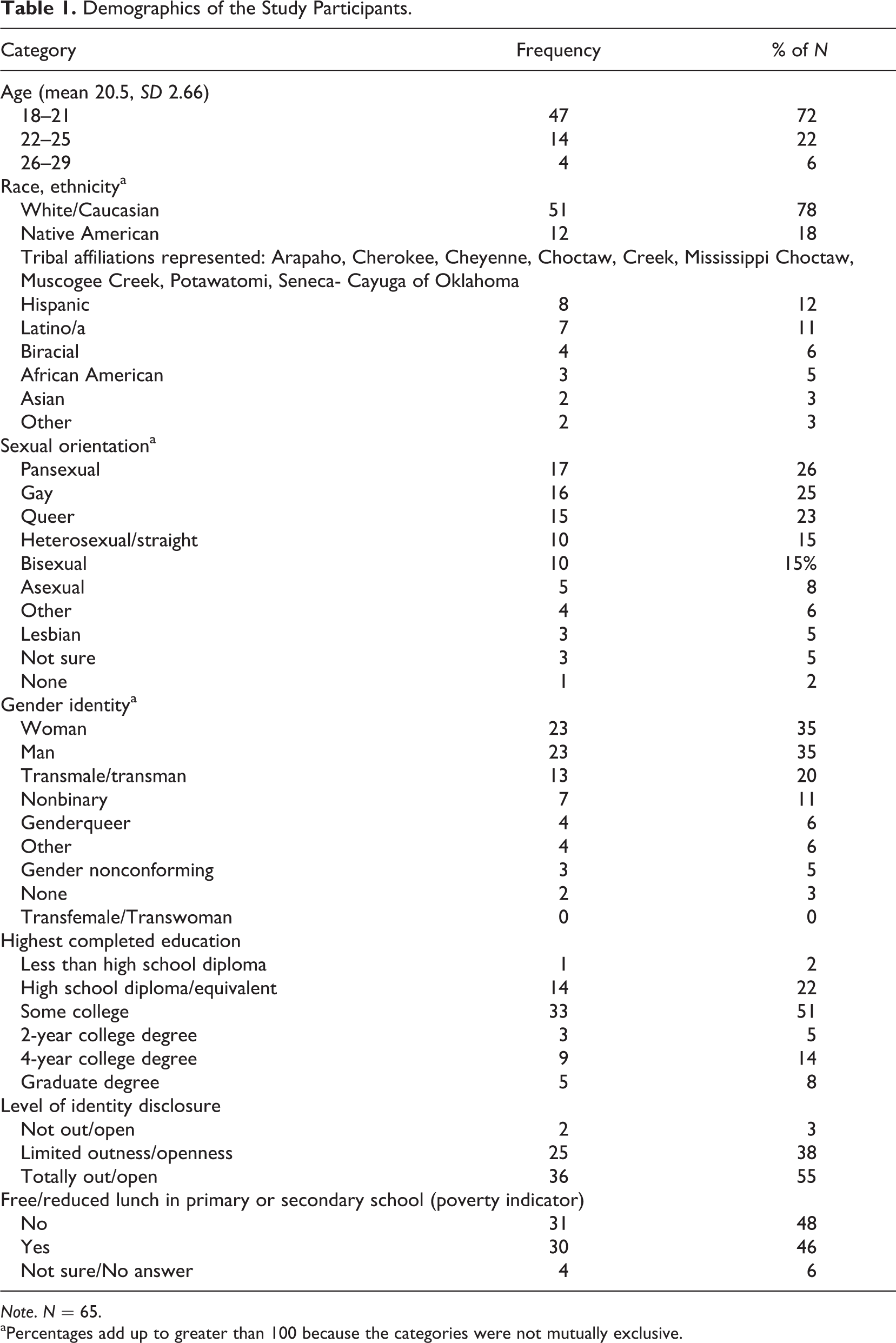
Note. N = 65.
aPercentages add up to greater than 100 because the categories were not mutually exclusive.
Questions about social, economic, and environmental justice issues of concern included asking participants to identify out of a list of 18 issues which ones were concerning to them at that time, with a write-in option. These answers were then compared by ranking the top three selected issues versus the bottom three selected issues (see Table 2). Anticipated activism behavior was assessed using questions about what types of activism actions the respondent would be willing to engage in on behalf of the issue(s) they indicated as concerning. Actions were ranked in order from low-risk/exposure to high-risk/exposure. For instance, the low-risk items were “share about (the issue) on social media” or “attend an informational session on my campus or in my community.” The high-risk items were “attend a rally or march” or “get arrested for civil disobedience.” We based these ratings on the context of the political climate at the time of our analysis (most notably, the 2016 national election and the Dakota Access Pipeline protests [Whyte, 2017]). The level of risk for these ratings was selected by determining which actions would more likely lead to inadvertent outing for those who had not disclosed their queer or trans identity to others but also considered threats to physical safety to be equally as risky. We considered inadvertent coming out risky because of the harm done to those who subsequently experience rejection by family, forced to leave their homes with family support withdrawn, possibly facing discrimination at work and school, and the psychological harm done as a result of those rejections/discriminatory practices. Posting on social media was considered low risk since social media users can control who sees their posts. Although attending an informational session could out someone, a person in that situation could fairly easily explain away why they were in attendance. However, attending a rally sends more of a message to the observer that the individual is in agreement with the topic of the rally. For instance, the participants of the Dakota Access Pipeline protests not only faced physical safety threats (Whyte, 2017), they also outed themselves as being supportive of the land rights of the Indigenous people in that case. Answers to these questions were then scored according to the level of risk associated with low-level items receiving 1 point, medium level items receiving 2 points, and high-level items receiving 3 points. The scores for each item were then summed to create the final activism score for each participant for each of the 18 issues.
Social, Economic, and Environmental Justice Issues Ranked in Order of Frequency Selected and Activism Behavior as Measured by Anticipated Behavior With Level of Risk.
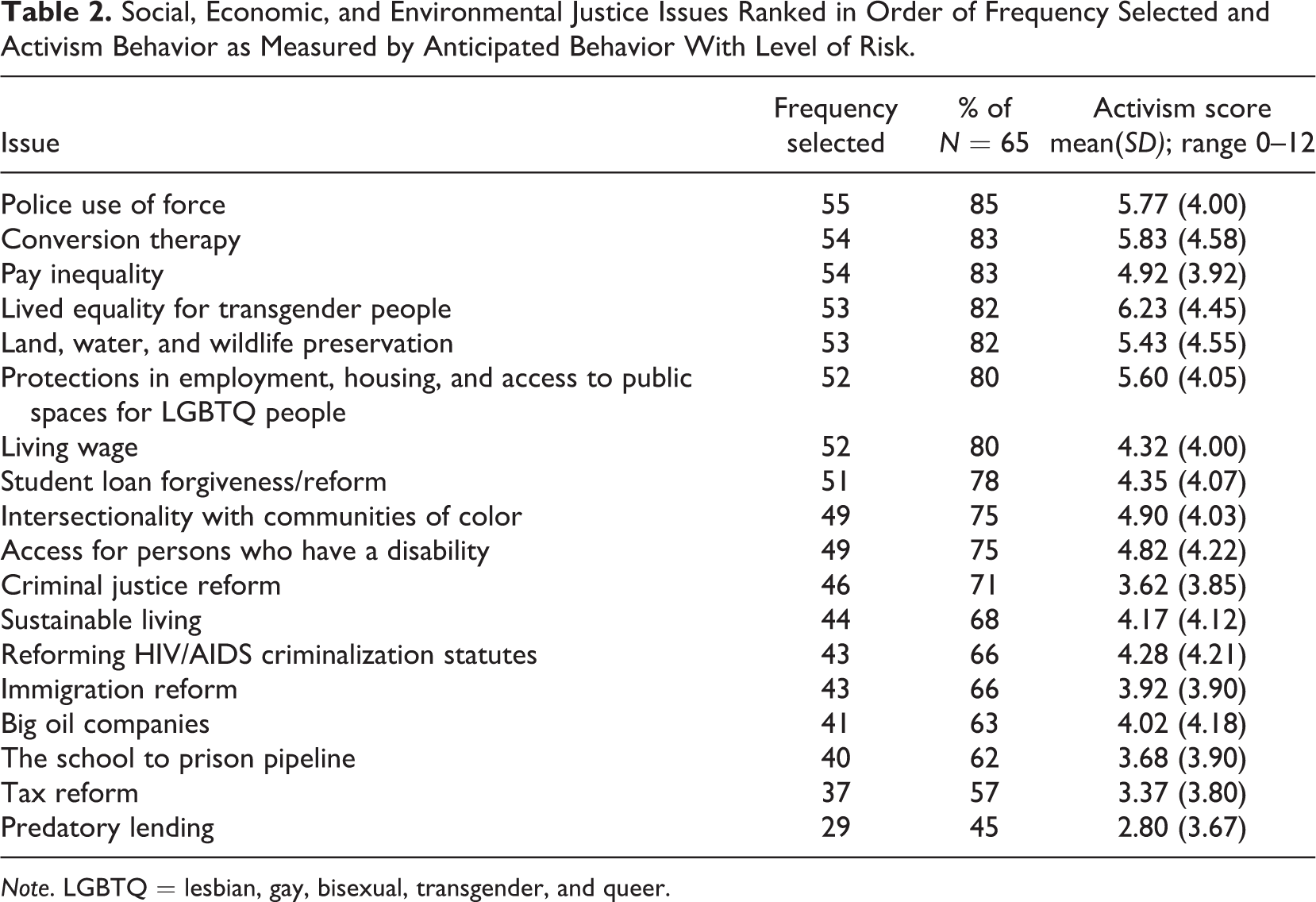
Note. LGBTQ = lesbian, gay, bisexual, transgender, and queer.
Participants
A total of 65 young adults (aged 18–29) responded to the survey. Participants identified their racial identities as follows: 78% white, 18% Native American, 11% Latinx, 6% multiracial, 5% black/African American, 3% Asian, and 3% other. The gender identities of participants were 35% woman, 35% man, 20% transgender man, 11% nonbinary, 6% genderqueer, 6% other, 5% gender nonconforming, and 3% no gender. The sexual orientation identities were 26% pansexual, 25% gay, 23% queer, 15% heterosexual, 15% bisexual, 8% asexual, 6% other, 5% lesbian, 5% questioning, and 2% none. Additionally, 51% had some college education, 55% were completely “out” about their queer or trans identity, and 48% had never received free or reduced lunch in their primary or secondary education (an indicator of poverty). See Table 1 for full demographic information. The diversity of this sample is notable related to the broader literature involving queer and trans youth and young adults, although the low number of African American and Asian participants and no transgender women in the sample is important to note. In spite of this, however, few studies of queer and trans youth and young adults have had such high relative proportions of underrepresented groups such as people who do not identify as cisgender, Native Americans, a diversity of sexual orientations, and a high rate of lifetime poverty, particularly within a rural Southwestern state.
Data Analysis
SPSS version 24 was used for statistical analysis of quantitative data. Missing data were prescreened and found to be missing at random (MAR), indicating no significant bias in the missing data. Descriptive statistics are reported along with bivariate analyses. A series of t tests were used to compare anticipated activism behavior (activism score) by their particular identities or social positions. T tests were used to compare groups by racial identity, gender identity, and the poverty indicator (free/reduced lunch). This bivariate analysis informed the understanding of the intersecting identities and anticipated behavior of the participants. Atlas-ti was used for thematic analysis of qualitative data (Creswell, 2013). Data were analyzed by two researchers to determine the common or notable themes in the data. Separately, researchers used in vivo coding to identify key words or phrases in the data. Then, these codes were shared and compared for commonality and difference between the researchers, and the researchers reached a consensus on which codes to collapse into themes. The codes were then used to describe common themes across participants, and pertinent passages in the qualitative data were identified to illustrate those themes. These themes are presented with supporting quotations below.
Epistemological Framework
The epistemological assumptions made by the authors of this article are important to clarify. The interpretivist paradigm as it applies to social scientists can be understood to mean that generalizable cause–effect analysis is rejected in favor of the goal to “understand the fundamental, emergent nature of the social world at the subjective, experiential level” (Rodwell, 1998, p. 17). It is true that our data are not generalizable to other individuals because we did not collect data from a random sample of queer and trans young adult activists. The data were collected only from participants of one symposium. Therefore, we can only generalize our data to the participants in that symposium; yet even that is not true because of our convenience sampling method. However, we believe that the data gathered could be transferrable and relatable to another similar context. Thus, the goal is not to generalize to those contexts but to inform and reveal insights for those who are doing this type of activism work in the context of other Southwestern, highly rural, and/or conservative states in the United States. It is this goal that suggests that this research has an interpretivist paradigmatic lens.
An important part of conducting a rigorous interpretivist analysis is to identify the positionalities of the researchers. Both authors are tenure-track assistant professors of social work at research intensive universities in the Southwest and Midwest United States They have a combined total of 20 years experience in activism and advocacy with queer and trans issues in the South, Midwest, and Southwest United States The first author is a volunteer and former member of the board of directors of the advocacy organization that organized the symposium from which these data came. She identifies as white, cisgender, and lesbian. The second author has had 5 years of experience in working with queer and trans youth in a community-based organization in the Midwest. She identifies as white, cisgender, and queer.
The interpretivist paradigm also encourages the use of reflexivity by the researchers to examine how their positionalities may have impacted the analysis, both by problematizing it and by enhancing it. We believe that our positionalities may have been problematic given our white cisgender lens through which we conducted the study. Although we made efforts to be intersectional and aware of our lens throughout data analysis, we cannot fully reduce their impact on the meanings we identified in the data. As a result, the analyses were biased due to the impact of our own experiences, and this impact is intermingled throughout the analysis rather than set aside for easy identification. However, our positionalities may have also enhanced the analyses. We consider our experiences to be both mainstream and radical. We have mainstream experiences in our work with organizations that aim to help queer and trans people fit into the status quo or likewise to move the status quo closer to the needs of queer and trans people. However, we also have radical experiences as we both have engaged in grassroots and collective action groups whose aims are to disrupt the status quo for the sake of queer and trans people. Therefore, we believe our positionalities add to both the complication of these analyses and the enhancement of them. We believe we are uniquely positioned to analyze these data for the intended purpose, which was to connect a mainstream organization to the needs of a more radicalized generation of young adults.
Results
Social, Economic, and Environmental Justice
The first research question addressed what social, economic, and environmental injustices queer and trans young adults are most concerned about. The top issue of concern was selected by 85% of participants: police use of force. The second issue of concern was tied between two issues (each selected by 83% of participants): conversion therapy and pay inequality. The third most selected issues of concern were also tied (selected by 82% of participants): lived equality for people who identify as transgender and preservation of land, water, and wildlife. The issues least selected were the school to prison pipeline (62%), tax reform (57%), and predatory lending (45%). See Table 2 for a listing of all 18 issues. Overall, the top justice issues of concern for queer and trans young adults in this study were lived equality for transgender people; conversion therapy; police use of force; protection for housing, employment, and access to public spaces; preservation of land, water, and wildlife; pay inequality; and attending to the intersections of identity for queer and trans people of color.
The activism score measured the type of action a participant would be willing to engage in related to each of the 18 listed social, economic, and environmental justice issues. Scores were calculated by assigning points to actions relative to the amount of risk or exposure associated with the action. For instance, sharing about the issue on social media was given 1 point. Writing a letter to a government official or newspaper editor was given 2 points. Getting arrested for civil disobedience was given 3 points. For each action that a participant selected, they were given points associated with those actions, which were then summed to create the participant’s activism score. Scores ranged from 0 to 12. The issue of lived equality for transgender people had the highest mean score (6.23, SD = 4.45), suggesting participants were more willing to take risks to achieve this goal. The issue of predatory lending had the lowest mean score (2.80, SD = 3.67), suggesting less risk or exposure would be taken to advocate for this change. See Table 2 for more details on these scores.
t tests were used to compare activism scores (as described in the previous paragraph) on the 18 social justice issues (from Research Question 1), grouped by social identities of race, gender, and poverty. In the first series of t tests comparing 18 activism scores between white and nonwhite, the only significant difference between groups was in “protections in job, housing, public spaces,” t(58) = 2.501, p < .05, and “pay inequality,” t(58)=2.119, p < .05, meaning that nonwhite participants scored higher in “protections…” and “pay inequality” than did white participants. In the second series of t tests comparing 18 activism scores between cisgender and trans/nonbinary groups, the only significant differences were in “police use of force,” t(58) = −1.997, p < .05; “trans equality,” t(58) = −3.653, p < .001; and “school to prison pipeline,” t(58) = −3.169, p < .01 meaning that trans/nonbinary participants scored higher on these areas than did cisgender participants. In the third series of t tests comparing 18 activism scores between those who received free/reduced lunch in primary or secondary school and those who did not, there were no significant differences between groups, meaning that the groups of nonpoverty and poverty scored no differently in any of the areas. See Table 3 for a full list of results. These results indicate that there are statistically significant differences between binary social identity groups on their anticipated activism behavior (activism score) in only 9% of the social justice issues studied.
t Tests Comparing Activism Scores Based on Groups of Race, Gender, and Poverty.
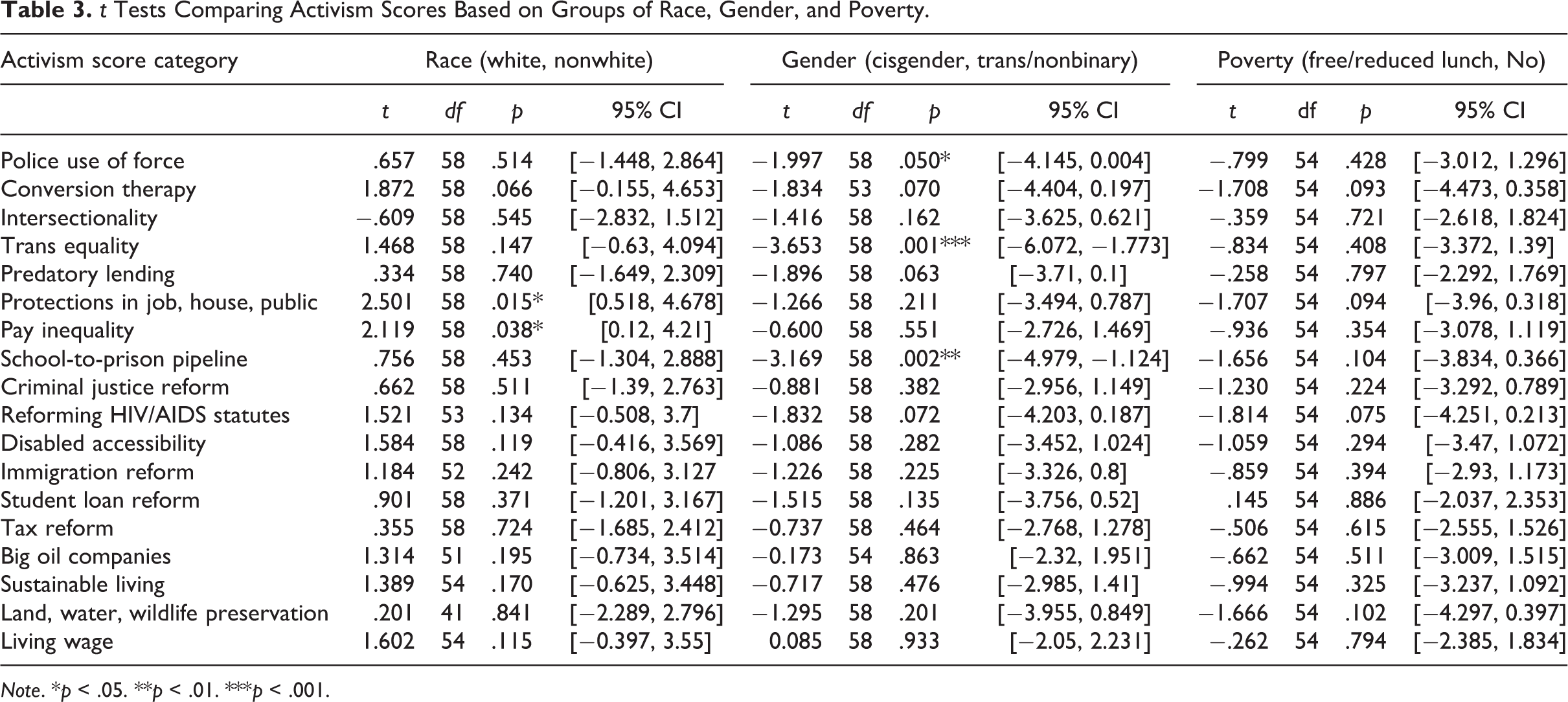
Note. *p < .05. **p < .01. ***p < .001.
Activism and Motivation
The second research question addressed what motivates queer and trans young adults to engage in volunteerism and activism. Almost all participants volunteered for some amount of time (93%). In terms of the types of activities participants have volunteered for, the most frequently selected types were helping with an event (25%) and attending an event (22%), followed by participating in a social media campaign (16%), passing out fliers/emails/newsletters (15%), and asking people to sign a petition (11%). The least selected type was going door-to-door to speak with community members (6%). When asked to select what motivated them to volunteer, participants most often selected that the cause was important to them (23%) or they felt it was the right thing to do (20%). Some indicated that they were motivated because the cause had an impact on them personally (16%) or they knew someone else who was impacted by the cause (15%). Less frequently, participants selected that someone else required them to participate (13%) or they wanted to meet other people who share similar interests (10%).
The qualitative data include themes related to motivations to join queer- and trans-related activist causes. Themes included (1) wanting to help other queer people, (2) generativity, (3) experience or fear of isolation and victimization, and (4) societal influence. The first theme of wanting to help others became apparent when participants indicated that they were motivated to engage in queer and trans activism in order to support or provide assistance for other queer and trans people. One participant indicated: “I know struggles had by the LGBTQ [community] because of my own experiences and I want to make life easier for others.” Another participant said: “I want to protect people in this community and make them feel wanted and welcome.” In this theme, participants were motivated to be involved in activism out of a desire to make their community safe and supportive for other queer and trans people.
In the second theme, generativity, participants described wanting to make things better for other queer and trans people since they themselves went through difficult times. A participant said they wanted “the opportunity to make things better for future generations.” Within the concept of generativity was a distinct focus on the local context. Participants wanted to improve their local community rather than just leaving it and its problems behind. A participant wrote “I want to spend my time making [state of residence] a better place.” This generativity also manifested as a sense of duty, where some participants stated that if they did not help, who would? One individual said they “gotta look out for the family. We need change and if we don’t work towards it, how will change happen?”
In the third theme of isolation and victimization, it became apparent in the data that participants’ motivation to engage in activism was impacted by their fears and experiences of victimization. This participant described their fear and how it related to their motivation: “the isolation is unbearable, and the fear of violence and humiliation is unacceptable.” Another participant said it was a hindrance to their motivation, explaining that, “sometimes I’m scared to leave the house.” Isolation became an issue even within traditional LGBTQ spaces, as illustrated by this participant, “as a trans man member, or gender queer member of the community I often feel myself looking for a place where I fit.” Others voiced motivations to find people with whom they could relate, such as this person, saying, “I recently ‘came out’ and I wanted to learn more about the community and make friends.” This quote illustrates the way that some queer and trans young adults seek out friends and become involved in activism by the nature of looking for others like themselves.
The fourth theme described how participants felt about themselves as a queer or trans member of society; this conceptualization helps us understand their motivations on another level. Participants felt both empowered and discriminated against as queer and trans individuals living in a conservative Southwestern state. Sometimes those forces worked against each other but sometimes they worked together to make the person stronger. An individual explained: “I feel both empowered and discriminated. The progress I have made makes me feel empowered.” The experience of intersectional discrimination in the queer community was evident, both for racial or ethnic minority members and for nonbinary or nonmainstream sexual identities. One participant explained how, saying, “I often feel forgotten and pushed to the side due to being nonbinary.” Another young person stated: “I feel privileged by being a person who can pass as a white female but discriminated against because I am Native American, pansexual, demi-girl, and demi-romantic.” Even with the emboldened and empowered statements, there was still an underlying concern for safety. One person explained: “I am empowered as I live my true story. I am humbled by the support of those around me, and I am frightened by the unknown and the obvious hatred by others. Will today be the day I’m attacked?” Together, these examples portray the polarized forces motivating these participants to get involved in activism activities.
Discussion
This study utilized a critical feminist intersectional framework to identify the social, economic, and environmental justice issues with which queer and trans young adults living in a conservative Southwestern state are most concerned and understand the motivations for them to engage in activism. The data present a picture of the issues and motivations that led study participants toward activism. The findings of this study are discussed in light of intersectionality and existing empirical and activist literature; following, implications for the queer and trans movement, activists, and organizations are offered.
Connections to the Literature
Issues pertaining to intersectionality and the intersections of multiple marginalized identities were identified as both key motivators and issues with which participants sought to be involved, aligning with the calls by DeFilippis (2018b) and Helm-Hernandez and DeFilippis (2018) to do so, as described previously. The social, economic, and environmental issues that rose to the top of a list of 18 potential issues related to intersectional issues faced among people across social identities. For example, participants identified police use of force as a key social justice issue, which disproportionately affects people of color and people who are transgender or nonbinary. Additionally, issues such as intersectionality for people of color, immigration reform, and criminal justice reform all require an intersectional lens to adequately address within the queer and trans rights movement (Hutchinson, 2001; Nair, 2015). These findings suggest that moving forward, activist efforts must attend to diversity within the queer and trans community rather than focus specifically on white middle–upper class members (Hulko, 2009; Mehrotra, 2010). This is consistent with calls to action from other researchers and activists focused on intersecting queer and trans identities (Cisneros, 2018; DeFilippis, 2018a, 2018b; Harr & Kane, 2008; Helm-Hernandez & DeFilippis, 2018).
The results of the t tests show that there is more unity in this sample than there is divisiveness. This is an important finding because of the previous assumption made in the marriage equality era that there must be a singular unifying issue that is crosscutting across identity groups. Instead, these results indicate that this group of young adults have a diverse interest in multiple issues. Rather than singling out one issue, activism efforts may be more fruitful to identify a diversity of issues that affect multiple social identities in different ways rather than one singular issue that is assumed to cross all social identities in the same way. Our findings suggest this was true regardless of poverty status, which further supports our assertion of unification rather than separation across diverse social identities and aligns this finding with intersectionality as discussed earlier (Crenshaw, 1991). This also suggests that queer and trans movements must attend to intersectional forms of oppression, such as white supremacy, poverty, xenophobia, and so on rather than focusing solely on heterosexism and homophobia (Helm-Hernandez & DeFilippis, 2018b). There were still a few (5 of 54) statistically significant results in the t tests such as the finding that trans/nonbinary participants scored higher than cisgender participants on the activism score for police use of force, which aligns with other studies showing excessive police use of force or disparate treatment by police toward trans and nonbinary people compared to cisgender people (Serpe & Nadal, 2017; Stozer, 2014). However, many differences that existing literature supports were not statistically significant, such as how the police use of force activism score t test was no different between nonwhite and white participants despite the literature that shows excessive police use of force and disparate treatment by police toward people of color (Ritchie & Mogul, 2007). Despite these differences, the findings echo that of earlier studies (premarriage equality) illustrating the dive rsity of challenges and concerns that queer and trans people of color, from lower socioeconomic status, and occupying other diverse intersections of identify have indicated as more important than a mainstream focus on marriage (DeFilippis et al., 2015). Furthermore, these findings align with the empowerment perspective and show a commitment to social justice, which are two important components of social work ethics and values (Mehrotra, 2010; Murphy et al., 2009)
In addition to activism interests, the findings from this study highlighted some motivations for activism among young queer and trans people in the Southwest. These motivations were somewhat contrary to the common narrative about young adults. Rather than a focus on self-centeredness, which millennials and younger generations are often accused of having (Twenge, Campbell, & Freeman, 2012), they focused primarily on helping others. Participants reported being motivated to help younger generations avoid the unfair challenges they faced as a result of discrimination and prejudice and described a desire to help others in ways that they themselves were helped during difficult times. This highlights that queer and trans young adults may have generative motivations for engaging in activism in the postmarriage equality era.
Generativity is the goal of creating communities and institutions that support current and future generations (McAdams & St. Aubin, 1998) and has been linked to queer and trans community involvement among adults (Oswald & Masciadrelli, 2008; Paceley et al., 2014). One key component of generativity is having an emotional attachment to a place or a group in which one is a member. Participants in this study specifically identified wanting to make their state or community safer and more accepting, not abandoning it for more queer/trans-friendly locations. Thus, appealing to generative motivations may be one key way of engaging queer and trans young adults in activism efforts in the postmarriage equality era. This may be particularly important in regions of the country and communities characterized by hostility toward queer and trans people (Kosciw et al., 2016; Poon & Saewyc, 2009). These findings are also key when considering the need to critically analyze our work with diverse groups (Mehrotra, 2010).
In addition to what motivates queer and trans young adults, this study relates to what hinders participants’ motivations for activism. Queer and trans participants in this study were clearly bold and ready for action but also fearful at times. Sometimes fear propelled them into being further emboldened, but sometimes it muddied the waters of their motivation for change. Fear seems understandable given the participants’ vulnerable position in society, particularly within a predominantly rural, politically conservative state. Furthermore, the least popular method of activism behavior was going door to door, which may relate to the theme of isolation and victimization. If young adults in this study felt isolated and feared victimization, it would make sense that they are less likely to want to encounter strangers in door-to-door activism activities. These findings represent an important contribution to the literature on what hinders involvement in activism (Battle & Harris, 2013; Harris, Battle, Pastrana, & Daniels, 2013; Paceley et al., 2014).
Limitations and Strengths
These results should be understood within the context of the study. Limitations include the inability of the researchers to verify the findings with participants because they engaged in analysis with de-identified secondary data, the use of face validity for operationalization of variables, very few black and Asian participants, and no transgender women participants. Furthermore, the population from which this sample was derived was of queer and trans young adults who were interested in a symposium on leadership issues; this had influence on who we included in our study. Despite these limitations, this study is strong in several ways. Although there are a few limitations, the sample is quite diverse compared with many queer and trans studies of youth and young adults, and this study addresses an area important for scholars and activists to understand. The mixed-methods research design allowed for both a broad view of the quantitative data and an in-depth understanding of participants’ open-ended responses in the qualitative data.
Implications
This study has important implications for research, theory, and practice. In terms of research, social work and scholars from related disciplines should engage in research that can support a queer liberation movement. It may be essential to utilize community-based and participatory methods to incorporate and lift up the voices, ideas, and experiences of queer and trans people with multiple marginalized identities. Scholars should engage with activists to set a research agenda that furthers a queer liberation movement. Additionally, research must attend the motivations and barriers to queer and trans young adults getting involved in activism and organizing. This research should attend to methodological concerns such as how involvement and engagement are defined, what “counts” as involvement, and the limitations or strengths of different types of involvement.
This study also provides interesting implications for the use of intersectionality as a theory and/or a method of inquiry or practice. This study promotes attending to geographic location and space as an important component of intersectionality, echoing the call of other scholars (Hulko & Hovanes, 2018; Paceley et al., 2014). Attending to rurality and region as components of queer and trans people’s intersecting identities is essential in fully recognizing the heterogeneity of lived experience. Additionally, this study supports the foundations of intersectionality as a theory to be used within organizing and activism. The participants in this study indicated attending to the intersections of identity was key in activism efforts regardless of their own personal identifications.
The findings from this study also have implications for community organizers, social workers, program directors, and others interested in activism for queer and trans rights in the postmarriage equality era. A call to activists, particularly one focused on young adults, must address the social, economic, and environmental justice issues they deem relevant as well as meet their motivational needs to participate. Macrolevel organizers such as social workers, community organizers, and program directors can help advocate for further queer and trans legal and lived equality, as well as queer and trans liberation, by first addressing the needs of transgender individuals, queer and trans people of color, immigrants, and other groups with intersectional identities. DeFilippis (2018b) discussed this approach as “trickle-up social justice” wherein the movement attends to the needs of the most marginalized with the understanding that as their needs are met, the social justice effects will reach those with more privilege; this is the opposite of how the mainstream gay and lesbian rights movement has operated in a more “trickle-down” fashion. Additionally, educators must teach beyond marriage equality as the queer social justice issue and attend to the ways in which future activists can address ongoing inequality of queer and trans populations.
With this in mind, organizers and others interested in engaging with young adults in activism activities should consider ways in which to highlight what other people are going through. There should be a focus on helping others, not just helping themselves. For example, organizers may need to highlight who and how activism efforts will help and tailor these messages to the audience with whom they are attempting to engage. Also, there is a sense of community in the motivation of helping others. Young adults may want to take their experiences of discrimination and turn them around to help others in the queer and trans community avoid discrimination or better cope with it when it occurs. Organizers and activists seeking to expand their efforts to young adults may want to focus on building community via their efforts. This may simultaneously help motivate as well as sustain activist efforts.
These findings suggest that moving away from a mainstream gay and lesbian movement toward a focus on queer politics (Harr & Kane, 2008) may be a way of both engaging those with multiple marginalized identities in the movement and affecting change for queer and trans people with greater oppression and marginalization. Harr and Kane (2008) suggest that “without the active recognition of intersectionality facilitated by queer politics” an LGBTQ agenda will be “limited and exclusive” (p. 9). A queer liberation movement focuses on intersectionality and centering the most marginalized in the community and recognizes that “homophobia alone is an incomplete explanation for the multiple marginalizations experienced by queer (people of color), poor queer people, queer people who are immigrants or incarcerated, trans people, and more” (DeFilippis, 2018b, p. 67). The participants in this study identified multiple issues affecting queer and trans people across a spectrum of identities and were motivated to intervene and act based on their own experiences and desire to create safer, more accepting communities. Queer and trans politics and liberation offer the opportunity to move the queer and trans movement forward in a way that fully represents the diversity of the queer and trans community, actively engages with the ideas and values of intersectionality, and motivates young adults to become and stay involved. One way of furthering a queer liberation movement that attends to multiply marginalized populations is to engage in intersectional organizing and movement building with activist groups and movements focused on people of color, immigrants, people with disabilities, and so on. By combining efforts to engage in intersectional organizing, the intersecting identities of individuals within individual movements may be more likely to be considered.
Finally, an important implication of this study is that organizers and activists must address the potential safety hazards during activism activities as well as pointing efforts toward decreasing violence and harassment experienced by queer and trans people. In using an intersectional lens, it may be critical for those with increased privilege in the queer and trans community to act as protectors or buffers for those with increased risk, such as transgender women and people of color, queer immigrants, and youth. Organizers should examine the safety needs of these groups by asking them about their concerns and then acting on ways to help them stay safer. For example, some queer and trans people of color may feel unsafe with police presence at an event even if organizers engage police in order to enhance safety (Taylor & Sermin, 2015). In order to promote safety for those with multiple marginalized identities, organizers and activists must listen and act accordingly. This study of 65 queer and trans young adults in a rural, conservative, “red” Southwestern state provides an important contribution to the literature. The insights of those surveyed and related literature provide important implications for next steps in achieving both legal and lived equality for queer and trans people.
Footnotes
Acknowledgments
We would like to thank our community partners for their ongoing service to the community and Paula Sophia Schonauer, graduate research assistant at the Anne and Henry Zarrow School of Social Work, University of Oklahoma, for her contributions to this work.
Declaration of Conflicting Interests
The author(s) declared no potential conflicts of interest with respect to the research, authorship, and/or publication of this article.
Funding
The author(s) received no financial support for the research, authorship, and/or publication of this article.
