




Abstract
Adolescent mothers, queer, and foster youth are all groups at heightened vulnerability for teen dating violence victimization. It is unknown how mothers in residential foster care perceive and experience violence within same-sex relationships. Literature suggests, however, that violence within these contexts may be met by minimization and even denial on behalf of practitioners (e.g., social workers) who may not have a comprehensive understanding of how to best serve queer clients, especially clients who may not be automatically perceived as queer (e.g., adolescent mothers). The present study utilized a mixed qualitative methodological approach to triangulate the perspectives of program staff (n = 12) who worked at a residential foster care facility through individual interviews with the views and experiences of adolescent mother residents (n = 13) through two focus groups. By taking a queer theoretical perspective, this study interpreted the fluid sexual performativity and viewpoints concerning violence victimization among foster care mothers within the context of a heteronormative service provision model. Specifically, we found that the meaning of relationships between mothers was minimized and violence between same-sex dating partners was interpreted as normative peer conflict. Such findings run contrary to youths’ experiences and perspectives, which holds important ramifications for practitioner–client interaction and service delivery.
Compared to their heterosexual peers, sexually fluid youth, defined as those who have romantic and sexual relationships with partners of multiple genders, are more likely to experience teen dating violence (TDV; Kann et al., 2011). Further, queer youth, defined as those who deviate from heteronormativity, are also vulnerable to pregnancy (Tornello, Riskind, & Patterson, 2014) and to be in foster care (Wilson, Cooper, Kastanis, & Nezhad, 2014). Moreover, adolescent mothers (Toews & Yazedjian, 2014) and foster youth (Werkele et al., 2009) are especially vulnerable to TDV. Despite increased rates, no study to date has examined the experiences of queer adolescent mothers in foster care. This is an important population to consider because TDV between same-sex partners is often perceived as less detrimental than male to female perpetrated violence (Gillum & DiFulvio, 2012; Hardesty, Oswald, Khaw, & Fonsesa, 2011). To the contrary, research finds that youth who deviate from heteronormativity experience heightened rates of multiple types of TDV, including more serious forms (i.e., sexual and physical), and that bisexual youth (here, we otherwise define as sexually fluid) are at particularly high risk (e.g., Dank, Lachman, Zweig, & Yahner, 2014; Luo, Stone, & Tharp, 2014; Reuter, Sharp, & Temple, 2015). Moreover, queer youth also experience negative mental health outcomes (e.g., depression, post-traumatic stress disorder) as a result of TDV (Dank et al., 2014; Reuter, Newcomb, Whitton, & Mustanski, 2017). Practitioners with queer clients might not fully recognize their diverse sexual experiences, making the provision of appropriate services difficult (Ohnstad, 2009; Van Den Berg & Crisp, 2004). The present study begins to fill this gap by utilizing a mixed qualitative method approach (QUAL + qual; Morse & Niehaus, 2009) to examine how program staff from a residential foster care facility for adolescent mothers viewed residents’ sexual performativity and experiences with TDV as well as how their viewpoints aligned with the mothers’ own views and experiences.
Literature Review
Queer Theory
The queer theory asserts that gender and sexuality are socially constructed (Butler, 1990). Labeling sexuality establishes a binary in which queerness is understood in relation to heterosexuality (Butler, 1990). Queer theory challenges the idea that heterosexuality is ideal (i.e., heteronormativity) and criticizes it as a point of comparison for other groups (Chevrette, 2013). Sexual discourses have, as such, been dichotomized into normative (i.e., monogamous relationships exclusively with other sex individuals) and deviant (e.g., sexual fluidity, nonmonogamy; Butler, 1990; Halberstam, 2012). As a result, deviations from heteronormativity might be met with confusion to the point of hostility, discrimination, or the denial of a queer existence (Butler, 2004). These false dichotomies cause those with fluid experiences, for example, those who have sexual and romantic relationships with multiple genders to struggle in determining their own positionality (Ohnstad, 2009). Queer theory understands that individuals live outside a binary (Chevrette, 2013; Halberstam, 2012) and views gender and, subsequently, sexuality, as performed in ways that are not necessarily static or fixed, thus contributing to fluid, rather than fixed, identities (Butler, 1990).
TDV and Vulnerable Youth
Behaviorally bisexual girls, meaning youth who have engaged in relationships with more than one gender without necessarily identifying as queer, are more vulnerable to TDV than lesbian or heterosexual peers (Kann et al., 2011). However, much of the research on TDV among queer adolescents focuses on risk based on identity. The queer theory argues for a movement from fixed identities toward fluid actions (Halberstam, 2012). In other words, how an individual behaves is what constitutes queerness, as opposed to how they identify. A distinction is critical as emergent research indicates behaviorally queer adolescent girls are more likely to experience TDV than those who reported identifying as such (Kann et al., 2016; Luo et al., 2014). However, research using labels to identify queerness has found they are at an increased risk to become pregnant compared to their heterosexual peers (Tornello et al., 2014) and to be in foster care (Wilson et al., 2014). This further compounds vulnerabilities to TDV as both pregnant and parenting adolescents (Toews & Yazedjian, 2014) and foster youth (Werkele et al., 2009) are more likely to experience it. As such, maternity homes for adolescent mothers are a valuable resource (Family and Youth Services Bureau, 2016). However, if caseworkers assume the adolescents in their care are heterosexual due to their parental status, queer youth might not receive appropriate services (Ohnstad, 2009).
Practitioners and Queer Adolescents’ TDV Experiences
Practitioners often hold misunderstandings around deviations from heteronormativity (De Jong, 2014; Kitzinger, 2005). A study of late night emergency room calls found practitioners were likely to presuppose heterosexuality if the client was a mother (Kitzinger, 2005). Such instances may be heightened within a structure designed specifically for adolescent mothers. However, queer theory disregards filial normality and legitimizes families in many contexts (Halberstam, 2012). As such, it becomes critical to recognize how others assume normality, or deviancy, in the context of interactions with their clients. Although such assumptions may be unconscious (Kitzinger, 2005; Van Den Berg & Crisp, 2004), De Jong (2014) found that some social workers were explicitly discomforted at meeting the needs of queer clients.
This is problematic because disclosure is less likely if the survivor perceives supports to be unfriendly to same-sex couples (Gillum & DiFulvio, 2012). The National Association of Social Workers (NASW, 2015) lists an ability to work with diverse populations as a tenet of its professional values. Meeting youth with services that are inclusive of diverse sexual experiences aids in developing positive practitioner–client relationships (Ohnstad, 2009), which facilitates a more open discussion of TDV. To do so, social workers must strive for cultural competence, which includes an awareness of one’s biases, a valuing of the client’s worldview, and the administration of interventions that are tailored to each client’s experiences (NASW, 2015).
An exploration of social workers’ meaning-making and interpretations of their clients’ queer experiences allows for insights concerning service provision, including TDV intervention. Unfortunately, as there is little understanding in the way of practitioner responses to TDV among sexually fluid adolescent mothers, including those in foster care, developing informed interventions to meet this population’s needs may be difficult. As such, it is critical to gain an increased understanding of both practitioner and youth perspectives. Therefore, the following research questions, as guided through a queer lens, were examined: (1) How does sexual fluidity manifest within a residential foster care facility for adolescent mothers? (2) How are mothers positioned by program staff based on their sexually fluid experiences? (3) In what ways does heteronormativity impact program staff’s understanding of same-sex TDV? (4) How does the meaning made by program staff align with the mothers’ own experiences and perspectives?
Method
Participants and Procedures
This project stemmed from a community-based participatory research collaboration between a local university and a religiously affiliated residential foster home for pregnant and parenting adolescent girls. The majority of residents were placed as a result of child maltreatment following abuse and/or neglect in their families of origin. The broad aim of the collaboration was to better understand and address TDV on campus. This study received approval from the university’s institutional review board.
A purposive sample of program staff, the representative of various roles within the home, was sought for interviews. As part of the collaborative nature of the project, the clinical director provided a potential list of program staff that she felt had relevant experiences pertaining to the research questions. A total of 12 invitations were extended, and all were interested and scheduled during the fall of 2014. Most interviews (n = 11) took place in staff’s offices, with one that took place in a private corner of a coffee shop. Participants were female and diverse in ethnicity (N = 6, Hispanic; M = 38 years; Table 1). All provided written consent. Interviews lasted approximately 1 hr and were conducted by a female qualitative researcher (n = 11) or by a male research assistant (n = 1). We found no qualitative differences in the content of the interviews led by the man versus woman. Staff received a US$15 gift card in appreciation of their time. Key questions included how staff viewed residents’ intimate partnerships (What types of romantic dating or intimate relationships do the girls [here] have?), how relationship conflicts were resolved (Can you provide specific examples pertaining to how conflict with a dating partner might be handled by the girls?), and staff experiences in serving the girls with issues regarding TDV (What do you believe are the most pressing needs pertaining to the dating and intimate relationships of these girls?). Data were transcribed from audio recordings. Initial themes were presented at a member checking focus group during which same-sex relationship violence was reiterated as a prominent concern.
Participant Demographics.
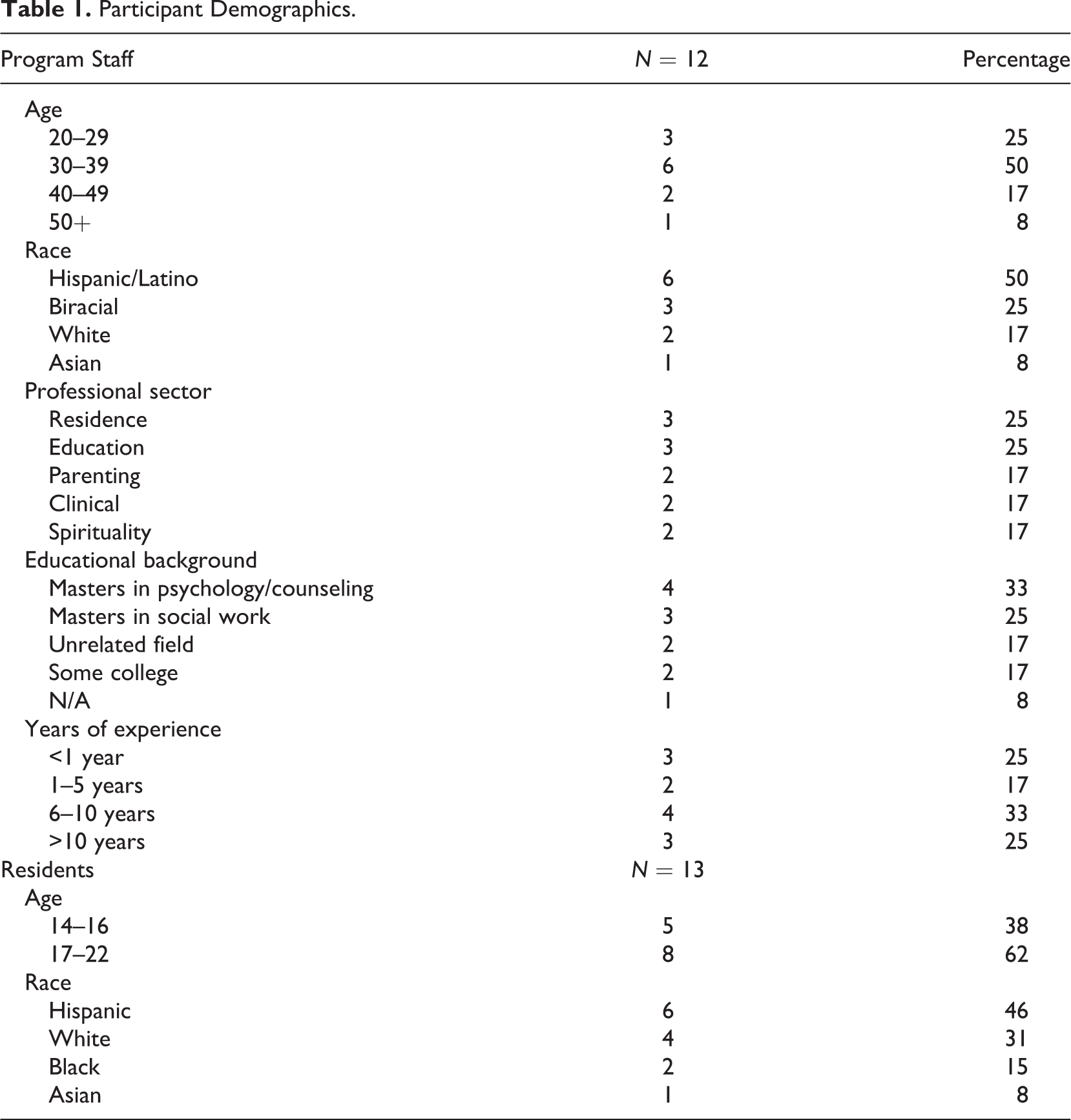
Two focus groups, divided by age (five youths between ages 14 and 16 years; eight youths between 17 and 22 years), were then held among the 13 adolescent mothers in the spring of 2015 (Table 1). Many (n = 6) of the mothers identified as Hispanic. Guardian consent was given for the girls under the custody of the state to participate in the study and adolescents also voluntarily provided written assent to the researcher. A female qualitative researcher led groups and a female note taker attended one; both were recorded and transcribed verbatim. The average length of the focus groups was approximately 1 hr and 15 min. Questions asked in the focus groups mirrored those asked of staff. Focus groups were conducted at the facility, and mothers received a US$10 gift card, snacks, and a handout containing information on healthy relationships and TDV resources. We use pseudonyms reflective of popular names to omit identifying characteristics of both staff and residents. In line with queer theory, we did not directly ask mothers’ sexual identity; rather, queerness was interpreted using a queer theoretical lens through staff and resident discussion of sexual performativity. This approach mirrors research suggesting behaviorally bisexual youths are more vulnerable to TDV than those who directly identified as such (Kann et al., 2016; Luo et al., 2014).
Analysis
To explore and compare the perceptions of staff and mothers, we utilized a mixed qualitative (QUAL + qual; Morse & Niehaus, 2009) methodological approach. This follows Chevrette’s (2013) recommendation that qualitative research is preferable in investigating queerness as it allows for a nuanced examination of experiences over an emphasis on normality. This approach allowed for two separate data sets to inform one another, thus developing a more comprehensive understanding (Morse & Niehaus, 2009). Specifically, it allowed for the triangulation of program staff’s views of residents’ sexual performativity and TDV experiences with how residents thought about and performed sexuality in the context of TDV. We analyzed these data simultaneously using distinct, yet complementary, qualitative methods. Staff interviews served as the core component, meaning that these data alone were strong enough for an independent and publishable study; however, with supplemental focus group data from youth, a more in-depth story could be told (Morse & Niehaus, 2009). We utilized emergent themes from staff interviews to form a flexible template through which to also explore data from youth focus groups (Crabtree & Miller, 1999; Morse & Niehaus, 2009).
A phenomenological approach was used to analyze core data collected from program staff allowing for an interpretation of the meaning these staff gave to their residents’ relationship experiences (Padgett, 2008). First, we open-coded staff interviews for discussions of same-sex relationships among residents. Open-coding yielded initial conceptual units (i.e., codes) concerning same-sex relationships among residents on and off the campus, how they viewed these relationships, how the conflict was handled within them, and residents’ experiences with TDV. Then discussions of same-sex relationships were organized into preliminary themes based on how program staff made meaning of these relationships as well as within the context of conflict and TDV within the facility. The first author inductively coded all data to form the initial codebook. The codebook was examined by the other authors alongside the data to determine fit. All authors have experience in the field of TDV, one with extensive experience working with adolescent parents. Reiterations were made, including the solidification of three global themes, which were reviewed and approved by all members of the research team at each stage. Full consensus was reached between all members for the final codebook.
Findings from the core component guided the analysis for the complementary data set via a flexible template approach (Crabtree & Miller, 1999; Morse & Niehaus, 2009). A flexible template is an organizing codebook through which codes may be open to change as they are explored from another vantage point (Crabtree & Miller, 1999). The codebook developed during the analysis of the interviews was applied to the analysis of the complementary data set. Discrepancies in practitioners’ views and residents’ performativity were organized into new codes and subsequently added to the codebook (Morse & Niehaus, 2009). All members of the coding team reviewed the codebook through multiple iterations until consensus was reached.
Finally, we compared what was unique to the practitioners’ perspectives and the residents’ perspectives and experiences as well as where there was overlap (Crabtree & Miller, 1999). The alignment served as the point of interface (i.e., where two datasets share agreement; Morse & Niehaus, 2009). Such a comparison identifies where codes fell outside the point of interface, thus highlighting the discrepancy between residents’ and practitioners’ discussions. Lastly, during analysis, we followed Krueger and Casey’s (2000) recommendations, which have been used in similar QUAL + qual research (e.g., Rueda, Lindsay, & Williams, 2014), and prioritized not only frequency but also emotionality, examples offered, specificity, and extensiveness.
To ensure the trustworthiness of the analyses, Lincoln and Guba’s (1985) four criteria were followed: credibility, confirmability, transferability, and dependability. Credibility was established through extensive memoing during all phases of analyses in order to document interpretation of data and engage in reflexivity (Creswell & Miller, 2000). As part of reflexivity, we documented in memos and disclosed our assumptions about the populations (e.g., adolescent mothers), the context (e.g., foster homes), and the phenomena in question (e.g., TDV; Creswell & Miller, 2000). We also documented potential conflicting biases through personal positionalities (e.g., social worker; Creswell & Miller, 2000). Further, we held multiple meetings in person and electronically to discuss data interpretation and ensure consensus (Creswell & Miller, 2000). Credibility was also established through peer debriefing by consulting an external expert on queer theory from a colleague (see acknowledgments) who “challenges researchers’ assumptions, pushes researchers to the next step methodologically, and asks hard questions about methods and interpretations” (Creswell & Miller, 2000, p. 129). Second, confirmability was established through negative case analysis, which represents multiple interpretations outside the overarching patterns uncovered (Creswell & Miller, 2000). All members of the coding team also have experience working with adolescent survivors of TDV, two of whom had specific experience working in relationship education for pregnant and parenting adolescents (Creswell & Miller, 2000). Transferability was established through our provision of an exhaustive description of the steps we undertook for replication in the subsequent inquiry (Creswell & Miller, 2000). We kept an in-depth audit trail in order to ensure dependability. Lastly, we engaged in data (i.e., data from multiple sources; Creswell & Miller, 2000) and observer (i.e., multiple researchers analyzing the data; Padgett, 2008) triangulation.
Findings
Program staff described an increase in same-sex relationships on the campus, including sexual fluidity (i.e., residents had been, or were currently in, both same and other sex relationships). Staff described the reasons they attributed to their residents’ sexually fluidity, which they viewed being the result of being “lured” in by one resident, sexual confusion, seeking attention, experimentation, and a way to push the limits imposed by dating outside the home. None of the staff viewed residents’ relationships as being romantically driven. Their perceptions were rooted in ideas problematizing the residents’ relationships. As a result, although some discussed conflict to include TDV in the residents’ same-sex relationships, they did not describe it as such, which was in stark contrast to the residents’ own discussions of TDV in same-sex relationships. Residents described how TDV between girls was often worse than between other sex partners. However, they also described healthy same-sex relationships. In sum, across results, the only points of interface were the recognition of same-sex relationships on campus as well as that conflict, including violence, was sometimes present within them. However, the mothers did not discuss the staffs’ perceptions of their relationships. These findings are explicated below.
Theme 1: Presence and Legitimacy of Sexual Fluidity
All staff described how they had perceived a presence of same-sex relationships on the campus, as Jennifer stated, “[we] do see some same sex relationships.” Many, such as Gloria, described these as new or on the rise, “Another thing that is new within the year is the dating within the cottage.” Daya noticed how “within the last year [there have been] same-sex relationships amongst each other. Not necessarily with other peers at their schools, but just amongst each other [here].” Staff described how residents also engaged in relationships with other sex partners (often the father of their child or children), which indicated fluidity in their performativity. To illustrate, Daya recalled, We’ve had a relationship where it was two of the same sex couples who were together here, but…she would also date other males.…Or even if she goes on pass, let’s say, to go visit her family, then she would hook up with her baby’s father while she’s on pass and then come back and try to be with this girl.
Their discussions were supported by the residents, except that they did not describe confusion around sexual fluidity. To illustrate, Esperanza mentioned how, in addition to being in a relationship with her child’s father, she had, “been a relationship with a girl too.” Riley’s description of cheating reflects sexual performativity as irrespective of partner gender, Girls say it’s okay if a girl gives them head [i.e., oral sex; when they are in a separate dating relationship with a boy], because it’s not cheating. It’s still cheating, ‘cause you’re still with somebody else and you’re still letting them touch you.
Theme 2: Etiology of Residents’ Same-Sex Relationships
In order to understand these relationships, program staff offered possible explanations to residents’ sexual fluidity. Primarily, staff had not legitimized same-sex performativity among the residents as they did not fit into a fixed heteronormative narrative. As such, their understanding of the etiology of these relationships was often problematic. For instance, some expressed a contagion and a predatory narrative, feeling that “it seems to stem from one person and then that person goes to the next person. It’s just—it all circles around one of them.” Bianca shared, There’s one girl who’s a leader and to me, it’s more of an emotional—she’ll get with one girl, it’ll be a bad breakup. Get with another one, and they’re all residents here…she chooses, actually, to try to date residents and kinda create unhealthy boundaries.
Another explanation centered on a circumstantial perspective. They felt that a same-sex partner met a variety of needs, none of which were romantic. Staff interpreted same-sex couples’ performativity as illegitimate and viewed it through other lenses. A common thread was that, as foster youth, they lacked social support. Nicole expressed, “I think they cling to those relationships, partially because that’s all they have.” Staff perceived residents as using same-sex partnerships because time with partners outside the facility was limited. Elisa shared, “I don’t know if it’s because they are always here and they can’t leave.” Lupe felt how, as the residents, “have always been in care…they don’t have an outside opportunity to socialize or even know what dating means or have a boyfriend. That sort of thing.”
Other staff offered a confusion narrative and felt these relationships were “experimental” and that residents were unsure of their sexual identity. For instance, Carla offered: I think the girls in this cottage are so confused at this point. Not knowing whether it’s that person that they need to go to and have that emotional stability, sexual stability, supportive stability to that person, or what. It’s a very confusing time in their life. I don’t think they’re rationalizing.
Staff explanations ran counter to the residents’ discussions of their own same-sex relationships. The mothers described having healthy relationships based on mutual romantic interest. Renata related her experiences, “I’m bi…. To me, and what I would do, I hold the same standards for a guy that I would for a girl. If you’re loyal to me, I can trust you.” Maddie described her current relationship, “Me and my girlfriend, we’ve never argued. I respect her, and she respects me.” She also shared how she felt in same-sex relationships that “you ain’t gotta worry about girl drama. There’s a lot of things you don’t have to worry about.” Yazmin described her girlfriend as “the one and only.” When asked if arguments ever escalated into violence she explained, “I don’t do that with my girl.” Renata shared her experiences in same-sex relationships, “just ‘cause it’s same-sex doesn’t mean there’s anything different from it.…Who you love is who you love.”
Theme 3: Conflict and TDV in Same-Sex Relationships
As the staff delegitimized same-sex relationships between the residents, they tended to understate violent or manipulative incidents that may have otherwise been viewed as physical or emotional violence between dating partners. For instance, Daya expressed she had, “seen a lot more violence” in same-sex couples on campus but described this violence only as being “a little more physical.” Similarly, Elisa experienced “a two or three week issue of arguments every day because it was a relationship between them and…we kept on being aware of it because the direct staff had to report and make incident reports.” Despite being made aware of violence and having to document it, program staff who discussed the conflict between dating residents characterized it as normative adolescent peer conflict, “[It is like] ping-pong. It goes back and forth. One day, I’m friends with you. One day, I’m not.” However, half of the staff interviewed did not discuss conflict same-sex couples. This was in contrast to discussions of other sex couples, as all staff discussed their concern around the topic of “physical abuse or heightened incidences of domestic violence.” Despite all noting the prevalence of same-sex relationships, only two described acknowledging TDV similarly to other-sex couples. Jennifer felt, “the same-sex thing needs to be a little bit more, maybe, discussed in open.” Bianca expressed the need for inclusive relationship education, “havin’ cultural diversity [has] gotta to be so key, even with sexual orientation, that it’s not geared just towards male [and] female relationships.”
In contrast to program staff who understated confrontation, the mothers, such as Raquel, expressed that “girls can be pretty violent.” When asked if violence between female partners was more acceptable than between other sex partners, Esperanza responded, “They think it is. I don’t think it’s any better.” Renata felt, “the outcome [of TDV] can actually be pretty worse.” Raquel further elaborated in the context of discussion on physical violence perpetration,
Girls play dirty. That’s all I have to say.
My [girlfriend’s] ex-girlfriend stabbed her in the back…. I don’t know why. They had their problems, their relationship problems.
Some major ones at that.
Yeah, wow. Those are the stories you don’t hear about as much, right?
Guys killing their wives.
Mothers described the potential for violence escalation between partners on campus. Trinity reported that “they fist fight.” Renata reflected, “[A] female [can] hurt another female more than a guy could hurt a female. ‘Cause girls, they’re gruesome.” Other mothers also shared patterns they had noticed in their experiences:
Girls [in a relationship], they fight over dumb stuff or for a reason…
How do they fight when you say that?
Fist fighting…
[A resident] and the other neighbor. [She] beat this one girl up. It was hell that day.
(clarifying background crosstalk) You guys think that two girls that are together are more physical when they fight?
Yeah, especially me. ‘Cause I bring out a shotgun, you hear me?
Contrary to the program staff’s descriptions, Renata summed up the residents’ experiences, sharing, “Relationship abuse has no, what’s the word?…Doesn’t discriminate.”
Discussion
Although both staff and residents recognized the presence of same-sex relationships and conflict between partners on campus, we utilized queer theory to interpret differences in the ways that these relationships were understood. Staff struggled to understand the etiology of same-sex relationships, in part because residents had involvement with other sex partners as evidenced by their children (Tasker & Delvoye, 2015). Program staff minimized same-sex relationships such that TDV was viewed as peer violence. Our study is unique in that although some research has documented practitioners’ struggles to understand queer performativity (e.g., De Jong, 2014) as well as queer youths’ accounts of discrimination and same-sex violence (e.g., Gillum & DiFulvo, 2012), we triangulated how practitioner constructions of queer performativity and TDV differed from youths’. Differences in the ways that same-sex relationships and TDV are viewed may hold ramifications for the ways services are delivered.
Both program staff and residents acknowledged sexual fluidity among many of the mothers. Staff discussed the relationships on campus, however, propagated negative stereotypes about same-sex relationships such as that queerness is pathological, predatory, or circumstantial. Differences were apparent in that although mothers viewed these relationships as meaningful, many staff viewed them as problematic. Although this may be similar to peers not in foster care (e.g., through parents), program staff are responsible for resources specific to the needs of youth as a central component to prioritize the importance of trust-based relationships (Purvis, Cross, & Pennings, 2009; Van Den Berg & Crisp, 2004).
Some of the staff were social workers and abide by the National Association for Social Workers Standards and Indicators for Cultural Competence (NASW, 2015), which outlines the importance of exploring personal values that may affect a practitioner’s worldview and contribute to labeling behaviors as non-normative. All helping professionals should collaborate with clients to develop an understanding of their sexual performativity (Ohnstad, 2009). Further, some of the staff at the residence were neither counselors nor social workers. Social workers, who are obligated to abide by the NASW (2015), should also work with staff who may not have had training in cultural competencies to develop a more inclusive and safe environment for mothers. As part of their professional development, continued education in working with diverse populations is obligatory, as is keeping up-to-date and communicating the needs of these populations (Frederickson-Goldsen, Hoy-Ellis, Goldsen, Elmet, & Hooymen, 2014). To the contrary, staffs’ descriptions of same-sex relationships as pathological, predatory, or circumstantial are representative of beliefs that have been formally disavowed by the American Psychological Association (APA, 2012).
Given the difficulties the staff had in legitimizing fluidity, cultural competence training should not only include fixed identities (e.g., Lesbian, gay, bisexual, transgender, and queer), it should also target fluid performativity. This is critical since staff invoked peer conflict narratives to describe was what actually TDV. Training including fluidity would help staff to recognize partner violence and to intervene, treating it as such. Rather, their reactions reflect extant findings viewing violence between same-sex partners as innocuous (Hardesty et al., 2011). Some queer theorists have argued heteronormative institutions have minimized violence to the point of invisibility that has rendered it nonexistent (Butler, 2004). In doing so, it has also made it difficult for queers to make sense of victimization. In a study on help seeking among women leaving a same-sex abuser, Hardesty, Oswald, Khaw, and Fonsesa (2011) found some women minimized victimization, citing discourses downplaying the impact of same-sex violence. The mothers in our study countered this narrative, emphasizing the danger of TDV. This may be due to age cohort. Youth in Gillum and DiFulvio’s (2012) study also emphasized the danger of TDV between same-sex couples. Given the age differences between staff and the mothers, our findings may indicate a generational shift in constructions of TDV among same-sex couples. However, further research is necessitated.
According to queer theory, intact, heterosexual families with children are regarded as performing closer to heteronormative ideals (e.g., Tasker & Delvoye, 2015). Practitioners may be more focused on maintaining relationships between coparents than fostering relationships between same-sex partners. However, TDV victimization has negative effects which have consequences for both mother and child (Gibson, Callands, Magriples, Divney, & Kershaw, 2015). Professionals must intervene to maintain the safety of both (APA, 2012).
Limitations and Implications
Although this study provides insight regarding TDV among an understudied population, there are limitations. Positions outside queerness influence perceptions of deviancy; despite the recognition of mothers’ marginalized social locations, this study did not account for other positions (e.g., racial identity; Butler, 1990). The religious affiliation of the facility may have influenced staff’s reactions to youths’ performativity. It may have also impacted how mothers engaged in their own relationships and understood others’ relationships. However, as they did not speak to this end, and we did not ask, we were unable to determine its applicability within this context. Finally, not all youth necessarily engaged in queer relationships, rather we communicated the voiced experiences and viewpoints of these discussions. Although this validated all youths’ perspectives, it may be viewed as a limitation to the study’s design.
Conclusion
The present study provides insight into staff’s viewpoints of same-sex relationships among adolescent mothers in residential foster care and offers a comparison with youth’s perspectives. Research on TDV among adolescent parents has, to our knowledge, heretofore focused mainly on violence between other sex partners (e.g., Toews & Yazedjian, 2014). Although this provides an understanding of an understudied population, future research should explore queerness within pregnant and parenting adolescents, including more nuanced questions regarding conflict and coparenting. Findings suggest practitioners should explore biases that may hinder the provision of all youth, including those who are sexually fluid, with appropriate TDV resources and services.
Footnotes
Acknowledgment
We would like to acknowledge Dr. Brad van Eeden-Moorefield at Montclair State University who served as a critical reader and aided in our understanding of, and fidelity to, queer theory.
Declaration of Conflicting Interests
The author(s) declared no potential conflicts of interest with respect to the research, authorship, and/or publication of this article.
Funding
The author(s) received no financial support for the research, authorship, and/or publication of this article.