



Abstract
Sound and noise play a critical role in the experience of urban environments. We review the literature on sound environments in Montreal and their effects on city users, including public sector reports from the City of Montreal and Montreal’s public health agency in addition to academic research, published between 2010 and 2020. 73 studies were analyzed according to scale, methodologies, methods, settings, sound sources covered, and domains of findings. This review summarizes the main findings at city level, paving the way for more integrated urban sound and noise policies tailored to local realities while staying informed of international best practices.
Keywords
Introduction
Sound in urban environments has both immediate and lasting effects on individuals and populations. Extensive attention has been paid to lasting detrimental health effects, focusing on unwanted sound, or noise, as a nuisance. The traditional noise control approach has perpetuated a reductive dichotomy of “loud” v. “quiet,” while the relationship with sound environments is more nuanced for space users: sound can also be considered as a resource, supportive of urban activities and contributing to urban culture and vitality, especially in the more immediate, experiential, sense by fostering recreation or relaxation. A growing sound awareness in public discourse is going hand in hand with an increased focus on practical implications in research but has led to only a slow change in the actual approaches of sound-related practice; the inextricable ties to urban policy, planning and design are becoming increasingly clear and documented in different cities around the world, highlighting the limitations of reactive noise mitigation to address the increasing pressures of, for example, urban densification or navigating the delicate balance between vitality and livability.
Sound is both generated at and has implications for a wide range of urban scales, from individual dwellings to entire regions, necessitating the incorporation of both planning (large-scale) and design (small-scale) considerations (Bild et al. 2016). Proactive sound management—that can influence planning, design and policy before decisions have literally been built into concrete (Steele, Bild, and Guastavino 2023) can shape our cities for the better and can only be achieved by acknowledging the complex role of sound (as more than just noise) in the system of urban factors that shape urban life. To progress toward novel, integrated approaches, we first review the status quo using a geographic scope rather than exclusively a thematic one of the literature to identify potential strategies for a twenty-first century noise control and sound planning focused on the scale that has the greatest likely impact: the city.
In this spirit, we begin our inquiry with the case of Montreal—a city consistently ranked highly in lists of top cities to live worldwide (Osborne 2022). The City of Montreal is known for its efforts to balance vitality and livability—a balance important in debates on urban sound and noise because it challenges the current approach arguing that “quiet is good” and “noise is bad,” with very little left for the complexity of urban sound life in between. Montreal is a particularly interesting setting for the “living lab” conversation, i.e., the city as a laboratory, due to its forward-thinking, diverse urban environment, governance and civil society where various stakeholders work together to address various societal issues and promote innovation (Hossain, Leminen, and Westerlund 2019). It has become the focus and the real-life setting for “living labs” run by a number of research initiatives and partnerships, like the currently paused “Living Lab of Montreal” center for innovation (https://www.livinglabmontreal.org/accueil/%C3%A0-propos) and, more importantly for this review, the very active Sounds in the City partnership, that approaches Montreal as a living lab on sound environments (https://www.sounds-in-the-city.org/en/overview/ and (Kerrigan 2018)).
Using a systematic literature review approach, we perform a comprehensive collection, documentation and analysis of the body of knowledge on Montreal's sound environments and supporting governance. In this paper, we both expand and contextualize a conventional thematic literature review to cover not only peer-reviewed articles, but also other relevant literature in the public and private sector, all within the geographical confines of the City of Montreal. This expanded review aims to set the stage on how sound is addressed in Montreal across different stakeholders (including practitioners, researchers and others that might be involved in the management of sound) to suggest an integrated approach that can foster cross-sector collaboration and ensure knowledge mobilization—understood as the effort to open a two-way communication between academic knowledge and its implementation in practice by stakeholders and decision-makers for the latter to make informed and science-driven decisions (for a comprehensive description of the term as understood in the Canadian context, please see: https://www.sshrc-crsh.gc.ca/funding-financement/policies-politiques/knowledge_mobilisation-mobilisation_des_connaissances-eng.aspx).
We thus take a focused, local approach and set out the following goals:
Perform a review of how sound is addressed in Montreal at the city level from both the academic and public sector perspectives; Propose a replicable methodology for conducting a city-level review of sound in both research and practice to address the often-discussed challenges of bringing policy, urban practice, and public discourse up-to-speed with academic debates and knowledge on sound; More broadly, identify short, medium and long-term strategies for moving forward.
Finally, we acknowledge inspiration from the a field known as soundscape research, which defines soundscape as “the acoustic environment as perceived or experienced and/or understood by a person or people, in context” (International Standardization organization 2014). We link the focus on the word “context” to our interest in the local (rather than global) to situate and explicate sound experiences, hence narrowing our literature review within a geographic area. Building on these findings, we can afterwards re-position Montreal in an international context of cities grappling with sound concerns and opportunities and work toward developing more global approaches and methodologies that respond to local needs.
Context
The present review casts a wide net by broadly defining the literature on Montreal’s urban sound environments. Most current noise policies still rely almost exclusively on measuring sound levels (in decibels), considering sound as an afterthought to be controlled and mitigated—and this is particularly true in the North American context, where noise is often addressed through noise control at a city level. An idea that has been gaining traction in academia as well as in practice is that urban sound should be understood as more than just noise. This approach, focusing on sound awareness (Maag, Bosshard, and Anderson 2021) and sound as a resource, is building on decades of evidence stemming from the soundscape field (Axelsson, Guastavino, and Payne 2019; Kang and Schulte-Fortkamp 2016). Indeed, recent work has encouraged “moving beyond the sound-noise dichotomy” and focusing on more useful distinctions on the effects of urban sounds on people and populations (Steele, Bild, and Guastavino 2023). Those authors summarized the gamut of approaches that professionals of the built environment use when considering sound in Europe and in North America, outlining three (sometimes overlapping) approaches: policy, public health, and city user experience. The review described in this paper broadly refers to these three major areas, as follows: policy included documentation focused on addressing compliance with existing regulations using predominantly acoustic measurement-focused approaches; public health included documentation centered on noise pollution and population health; city user experience focused on sound environments as experienced, often in context.
On top of its a reputation for livability, Montreal is an interesting case study due to its many universities with experts in domains ranging from hearing sciences to urban planning and music research, as well as a hub in the growing field of soundscape studies (through research groups like the Centre for Interdisciplinary Research in Music Media and Technology or the aforementioned Sounds in the City that uses Montreal as a “living laboratory for soundscape research”), besides its participation in various international policy networks like Global Network for Age-Friendly Cities, Resilient Cities network or C40 cities (on climate). This diversity of academic and societal work is supported by the manifested interest of local authorities in integrating sound considerations in local policies (particularly in relation to recreational noise and other night noise activities), shown through communication efforts like the recurrent Night Summit/Sommet de la nuit (https://www.mtl2424.ca/events/montreal-au-sommet-de-la-nuit-2022/) or collaborations with universities (like projects on various boroughs in Montreal (Fraisse et al. 2020) or the federal government sponsored MITACS projects). These activities take place in the context of international urban efforts for more holistic noise and sound management, materialized increasingly through noise and soundscape action plans (like the Noise Strategy of the City of London) or noise and sound observatories, such as those in Lyon and Paris (Acoucité—Observatoire de l’environnement sonore de la Métropole de Lyon, and Bruitparif—Centre d’évaluation technique de l’environnement sonore en Île-de-France, respectively).
We perform this review to have a better understanding of how sound is addressed in Montreal at the city level and inform research and contribute to practice, building on the existing momentum to review public policies at local and provincial level.
Methods
The sources of the literature review included research published on Montreal sound environments and other documentation made available from public sector collaborators (Montreal Public Health Agency, City of Montréal) on noise exposure or environmental assessments in Montreal. Our review focused on empirical research about Montreal, including both analyses of different types of data—both new and previously collected data, as well as models developed. Literature on hearing health or laboratory studies that took place IN Montreal but was not ABOUT Montreal was excluded. Focusing at a city level is particularly relevant considering the aforementioned governance challenges in managing sound in Canada as well as in the context of efforts in various countries in the European Union as part of the implementation of the European Noise Directive 2002/49/EC (Pardo, Garcia, and Rajé 2022). Part of this implementation, member states were required to put together various strategic documents like noise maps and noise action plans that set out an individual country's measures for reducing and managing environmental noise; over time, these documents offer a tangible record of progress and can help offer data-informed insights into existing gaps of future strategies. Similar efforts have yet to be conducted in North America, and this manuscript aims to thus set a baseline of insights that help portray an (albeit partial) sonic portrait of Montreal.
In the following section, we detail the literature search process as well as the strategy for structuring the findings.
Literature Search Process
The literature review was based on three distinct sources: (1) a systematic keyword search in five academic databases and relevant records identified independently by expert team members outside of those databases, (2) a similar keyword search combined with other relevant records in the internal database of projects commissioned or requested by the City of Montreal (hereinafter referred to as “the City”), and (3) records identified by our partners at the Montreal Public Health Agency (Direction régionale de la santé publique—DRSP). The keyword list for the search was developed by the expert research team, belonging to the semantic fields of “sound” and “noise” (both in English and in French); the outputs of the search are detailed below in Table 1.
Results of the Review of Available Documentation.
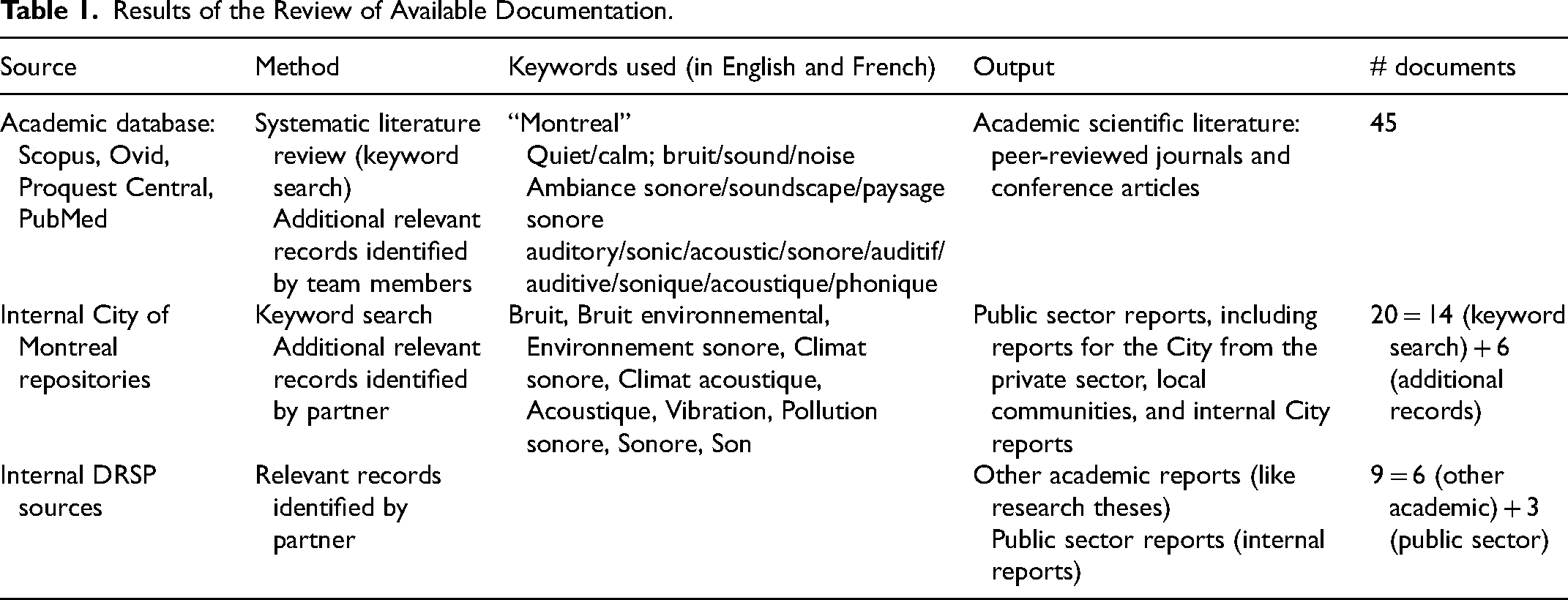
There were additional inclusion criteria to narrow the search: the documentation needed to be published between 2010 and 2021, in English or French (the two languages used in Montreal), that focused on Montreal and/or its inhabitants and that reported empirical data—either collected specifically for that document or reporting on previously collected data (including, in one case, an autoethnography). We focused exclusively on empirical studies as an evidence-based approach seems most relevant to pinpoint different public and academic stakeholders’ understanding of sound-related realities specific to Montreal and highlight opportunities for proactive policies, planning or design initiatives. We selected the 2020–2021 period based on the rule of thumb to consult documentation published in the 10 years before the start of the review, especially considering the speed at which both soundscape research and practice has been evolving. It should be noted that we filtered papers published in 2020 and 2021 to only include manuscripts focused on pre-pandemic conditions, as the changing landscape of sound realities and research on cities because of the COVID-19 pandemic is a complex topic to be addressed in a subsequent manuscript. We report on the process and overall results of the systematic literature review process using a version of the PRISMA flow diagram (https://estech.shinyapps.io/prisma_flowdiagram/)—developed for medical research and adapted for our broader urban sound documentation needs (Figure 1).
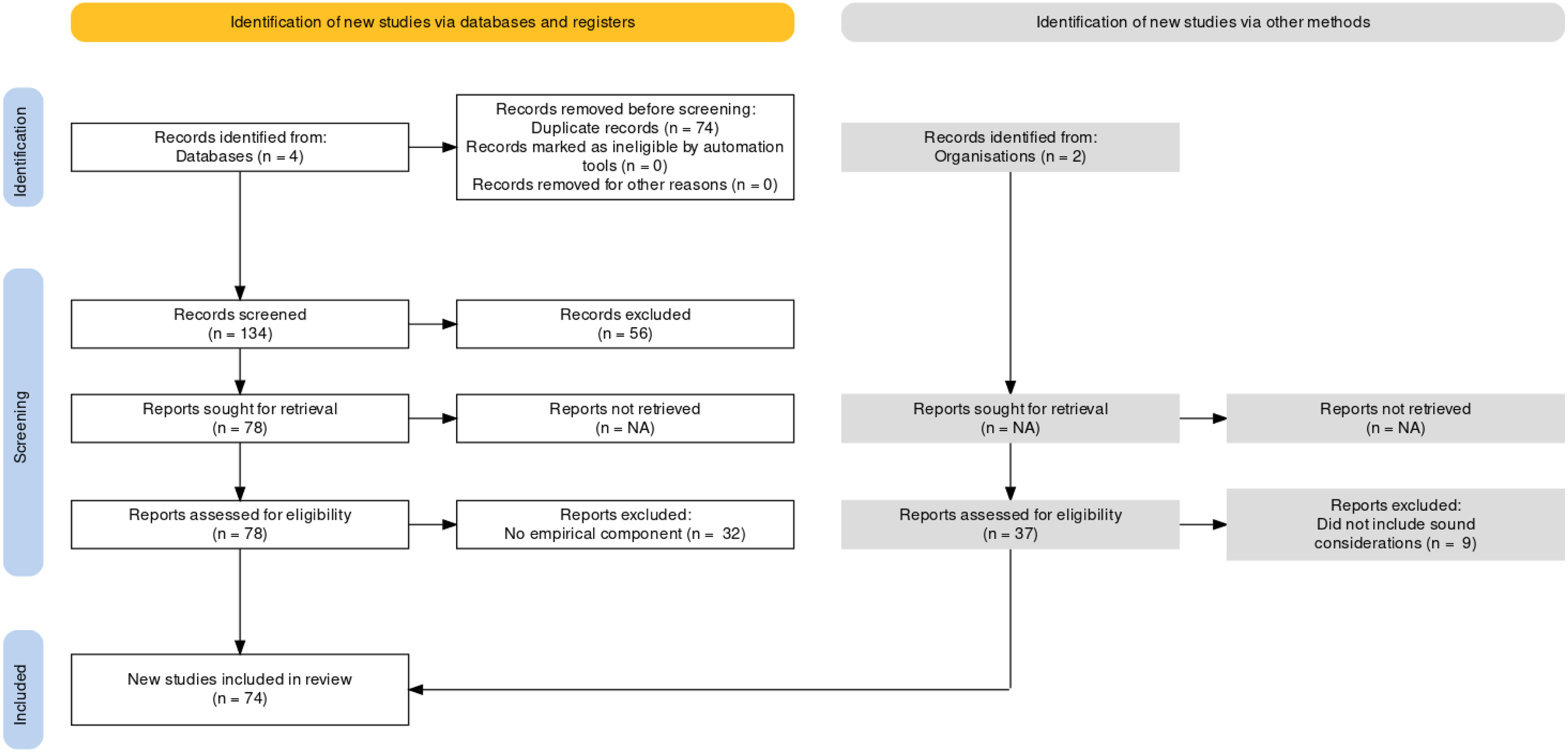
PRISMA flow diagram. The databases of two organizations (City of Montreal and DRSP) were searched by our collaborators; an initial number of reports sought for retrieval was not disclosed.
Analysis
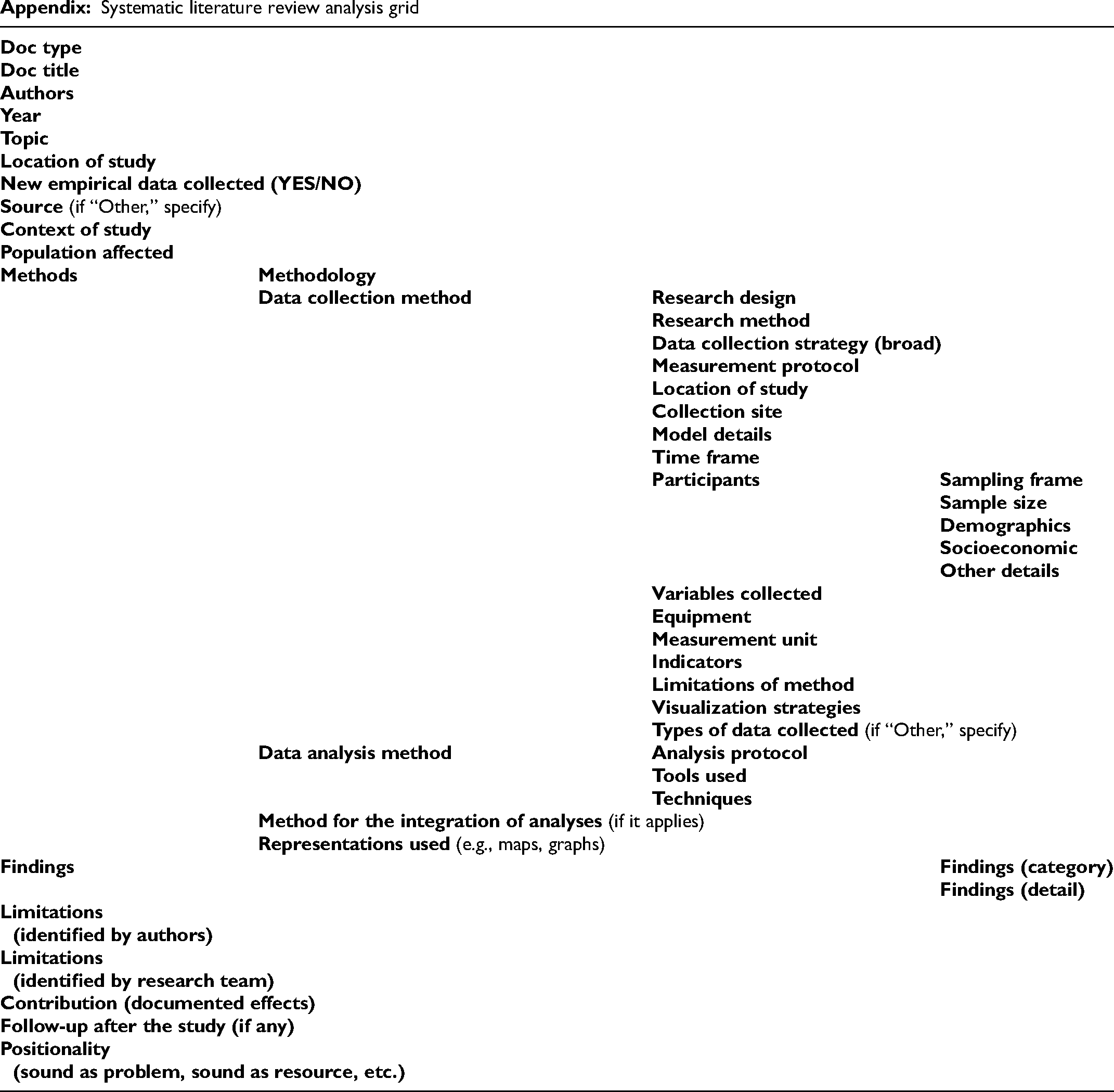
The final corpus was analyzed by two bilingual researchers (the first two authors), with the support of two additional research assistants, using a complex analysis grid with over 50 fields, detailed in the Appendix. In the interest of describing the breadth of established knowledge about the sound environment of Montreal, we distinguish between three different kinds of literature used: (1) peer-reviewed articles—largely conducted at or in collaboration with universities or research centers; (2) other academic reports—including conference papers and theses completed in collaboration with municipalities or government agencies, and (3) public sector reports—typically governmental or government-adjacent reports, either conducted or commissioned by the City or the DRSP. For the sake of brevity, in this article, we report on an aggregated analysis, structured along the following broader axes:
Type of
For each axis, the categories described above were not intended to be mutually exclusive and the same document could be coded under multiple categories. We also offer an overview of the common thematic areas covered by the reviewed literature and discuss the main implications for addressing noise and sound concerns in the Montreal context, as well as the gaps identified (ranging from methods to research focus).
Limitations
There are several limitations that should be outlined. One focuses on the choices that were made in terms of the information reported in our manuscript; while, in our review, we noted, for example, the temporal dimension of the documentation reviewed (like longitudinal study, cross-sectional) among other factors, we decided not to report it as it did not fit the final direction of our analysis. Perhaps unsurprisingly, we did observe that mostly studies in health sciences focused on longitudinal/cohort approaches, while other academic work and reports for the City from the private sector focused on cross-sectional approaches; we propose addressing this temporal dimension of studies in a future review. Additionally, note that the studies we had access to from our public sector partners likely do not cover all sound-related concerns, but we did our best to select a wide range of sound sources. Additional documentation might be available from other governmental agencies at different administrative levels that include Montreal to some extent (e.g., regional, provincial), so our conclusions apply to the work conducted by or for the City of Montreal and Montreal's public health agency.
Main Findings
The documentation included in this review described came from three major areas: academic journal articles, other peer-reviewed articles and nonpeer-reviewed articles. We put these three types of sources in direct contrast with one another to show the different interests, methodologies and general approaches taken by different stakeholders and to foreground the level of knowledge mobilization (if any) across urban sectors. We reviewed a total of 74 studies, reported below along the aforementioned axes of analysis (see section “Analysis”).
Scale: Distribution of Scales Across Reviewed Documentation
The map in Figure 2 visualizes the spread of areas investigated in our corpus. The largest proportion of reviewed documents focuses on Montreal at a city level (N = 32), reporting on studies with a health-oriented or larger environmental scope. Most studies at a city level are peer-reviewed articles. Often, the city-level studies report associations between exposure to different types of noise and the incidence of health outcomes, like the association between long-term residential exposure to environmental noise and the incidence of myocardial infarction (Yankoty et al. 2021). Within this category, some studies also take a broader concern for equity and inequality in exposure to noise, like (Carrier, Apparicio, and Séguin 2016b) documenting the status of vulnerable groups exposed to road traffic noise. Some of studies at the city-level category exclude a small number of neighborhoods for which information was unavailable or, conversely, focus on multiple locations spread throughout the city. Due to their large geographical scope, we have still categorized and visualized them as city-wide documents.
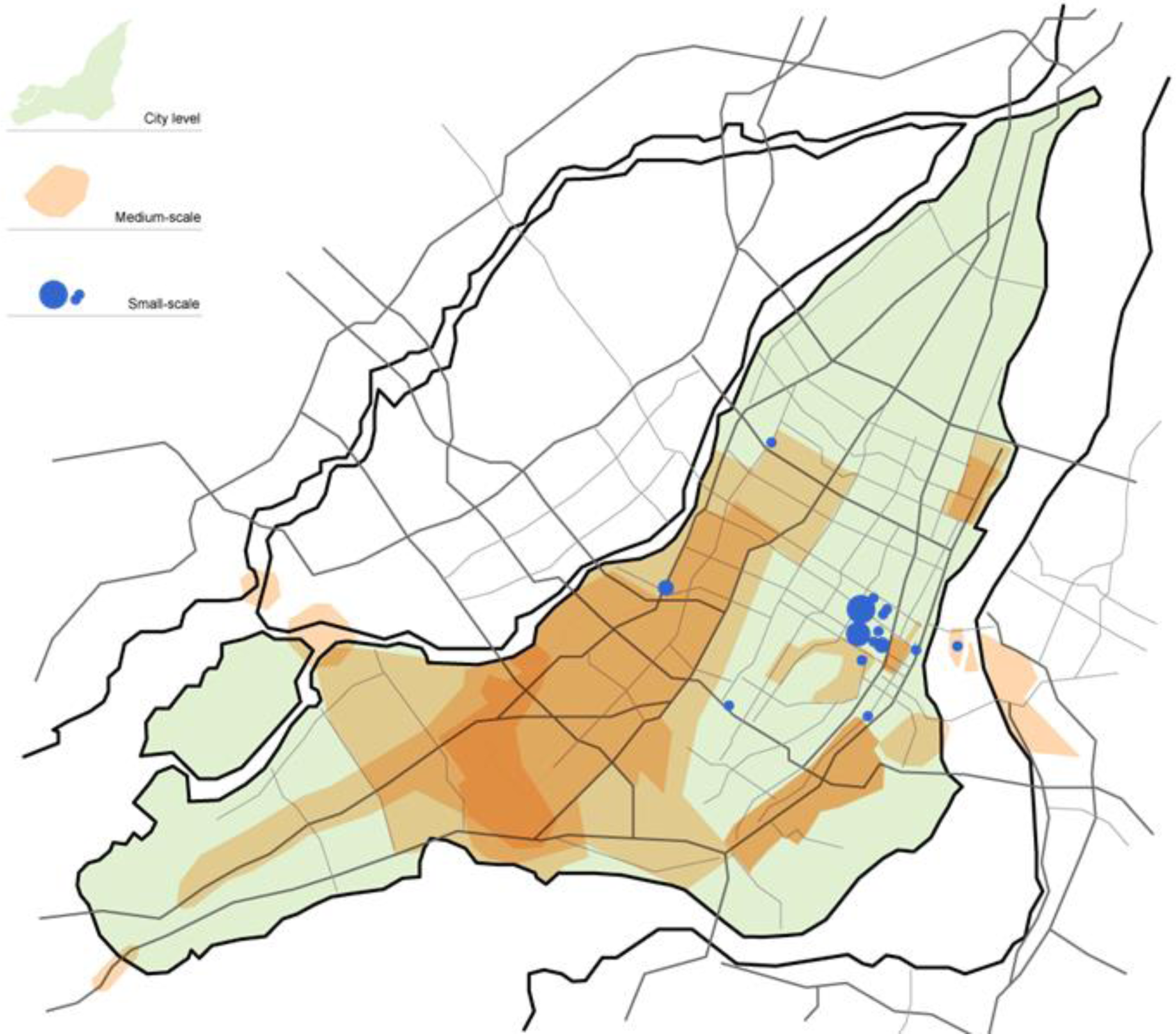
Distribution of reviewed documents, across scales. City level (N = 32); medium scale (N = 16); small-scale (N = 26). The darker the area, the more medium-scale studies were conducted in the same area; the larger the dots, the more small-scale studies were conducted at the same location.
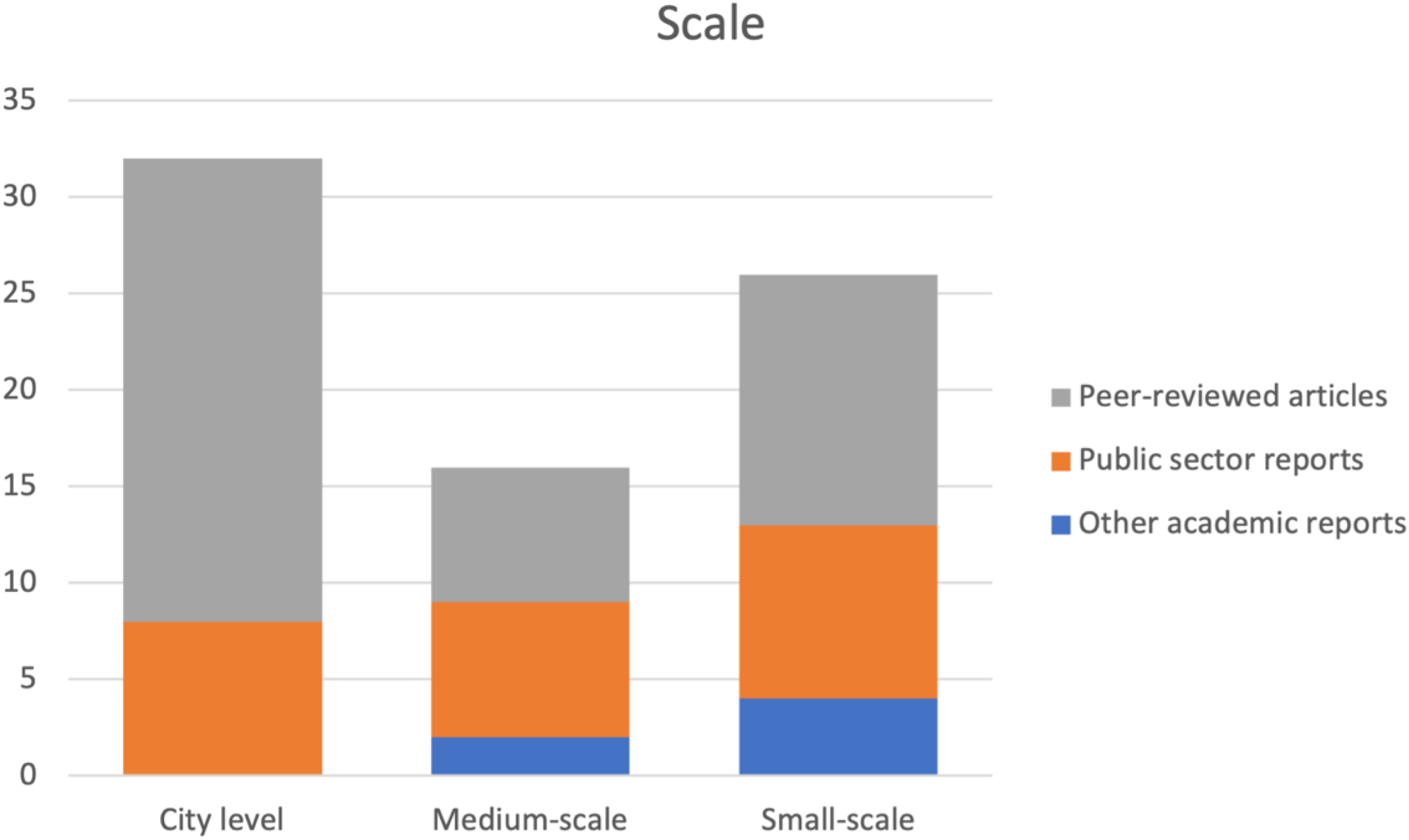
Distribution of documentation according to scale.
Medium-scale studies (N = 16) display more variations in scales across studies, ranging from a single borough (Atelier 7hz 2019—Assumption Sud-Longue Pointe) to an axis of morphologies of interest, in particular along traffic arteries, be they road, air, or train (e.g., WSP Canada 2021—a new connection to Avenue Souligny, close to the Port of Montreal). Medium-scale studies are equally distributed between public sector reports and peer-reviewed articles (N = 7 each), representing the smallest portion of both public sector reports and peer-reviewed articles.
Small-scale documentation focuses on a particular site (N = 26) and studies are concentrated around downtown Montreal (facing unique sound-related challenges due to the presence of festivals; Bild, Steele, and Guastavino 2021) and the vibrant Plateau Mont-Royal borough (where, e.g., a soundscape intervention was installed in a public space (Steele et al. 2021), while starkly missing in other, less popular, boroughs of the city. Thus, note that these neighborhoods are relatively wealthy, safe and face a limited array of noise issues when compared to other locations in the city, which influence the type of questions addressed in the respective documentation.
Furthermore, Figure 3 shows that half of documents at this scale were addressed in peer-reviewed articles (N = 13), with the other half split between other academic and public sector reports. Interestingly, while most peer-reviewed articles are at a city level (N = 24 out of a total of 44), most other academic reports focus on those small-scale studies (N = 4 out of 6 total), as well as most public sector reports (N = 9 out of 24 total), showing different priorities among stakeholders.
Methodologies Employed
This section describes the decade of studies in terms of methodologies, including the types of data and methods used. The methodologies employed in the reviewed documents included quantitative-only (59), qualitative-only (5), and mixed-methods (10) studies—combining quantitative and qualitative methods (Figure 4). Reviewed documents overwhelmingly employed a quantitative methodology across types of documentation, 32 of which were academic, 21 from the public sector, and 6 from other academic. Documents taking a mixed-methods approach trailed behind the large number of quantitative-only studies. The largest proportion of mixed-method study came from the group of peer-reviewed articles with nine such studies, and only one such document from the public sector group (a study on the status of “alternative” venues in Montreal, combining surveys and interviews with various stakeholders; DAIGLE/SAIRE 2019). Montreal-centered qualitative approaches to sound-related questions are far less common; while three academic studies report on qualitative approaches employed in a wide-ranging array of topics: policy and regulation analyses—(Trudeau et al. 2018), reporting on in-depth interviews on sound experiences—for example—Bild et al. (2016) or an ethnography of sound (Boucher and Fletcher 2019), two public sector documents also employed a qualitative angle to report on grievances of a community affected by aircraft noise (AEROplainte 2019, 2020) and to develop policy recommendations for a Montreal-based sound observatory (Allali et al. 2020).
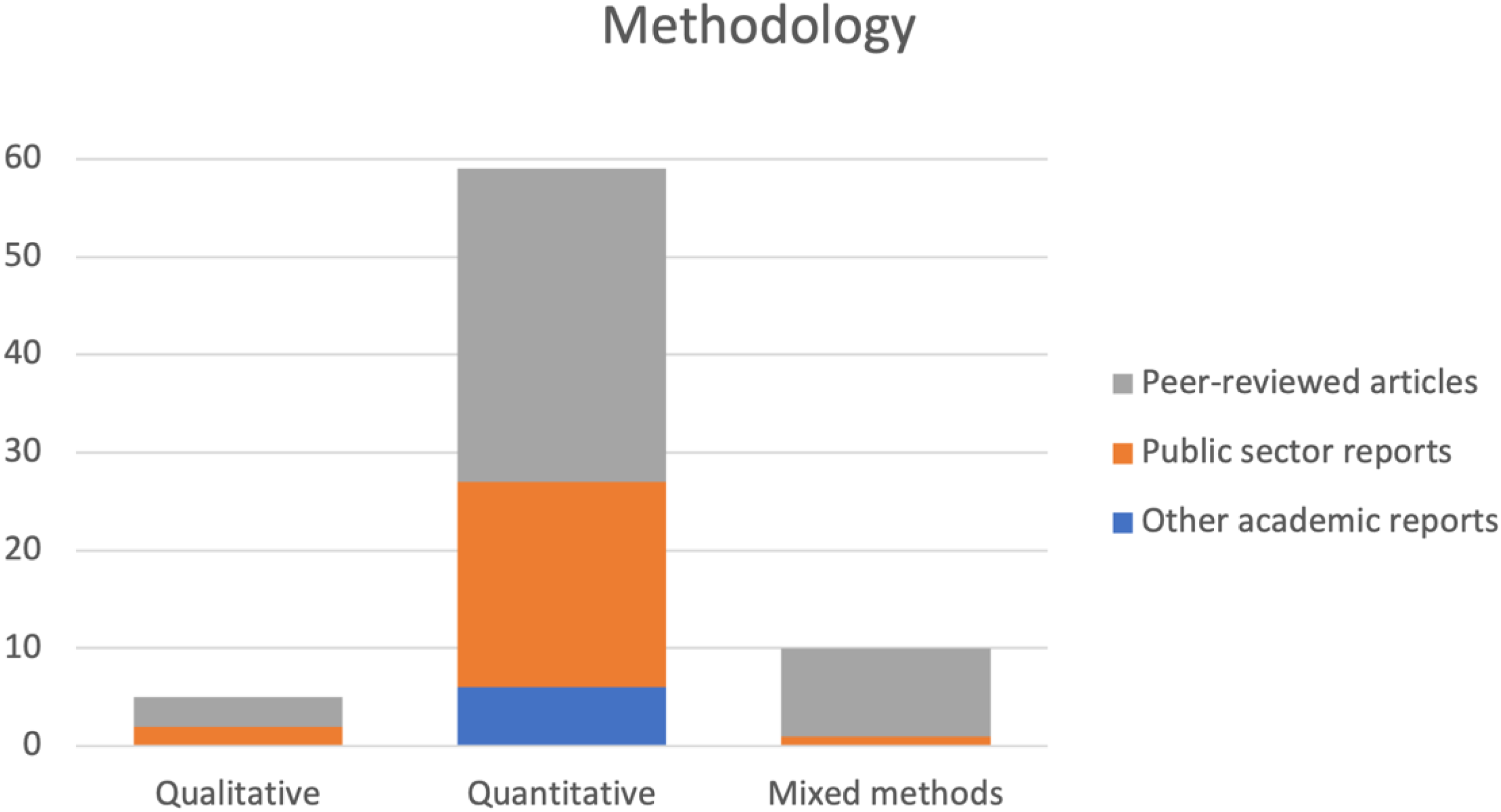
Distribution of documentation according to methodologies employed.
It is also worth noting that these methodologies were employed to make sense not only of novel data collected (N = 48), but also to reanalyze pre-existing data with different questions in mind or conduct reviews of other existing documents (like policies), in 29 documents. Over half of academic documentation relied on newly collected data (N = 22), compared to all six documents pertaining to other academic sources and ¾ of public sector reports (N = 19), that often include studies on the current or potential environmental impacts of various sources/projects.
The predominant use of quantitative methodologies (alone or in mixed-methods studies) throughout different documentation explains the preponderance of three quantitative methods illustrated below in Figure 5 (acoustic measurements, modeling and surveys). The peer-reviewed articles had the highest variety of methods employed, followed by public sector reports, where experimentation allowed for the use of “other” methods, like the development and testing of a noise complaint app (AEROplainte 2019) or a first-person account of sound sources present in the context of a noise complaint filed (Lavoie 2018b). Note also the distinction between acoustic measurements and acoustic models often relying largely on sound measurements or estimates in the absence of humans, while survey data relied primarily on self-reports by human participants on their perceptions.
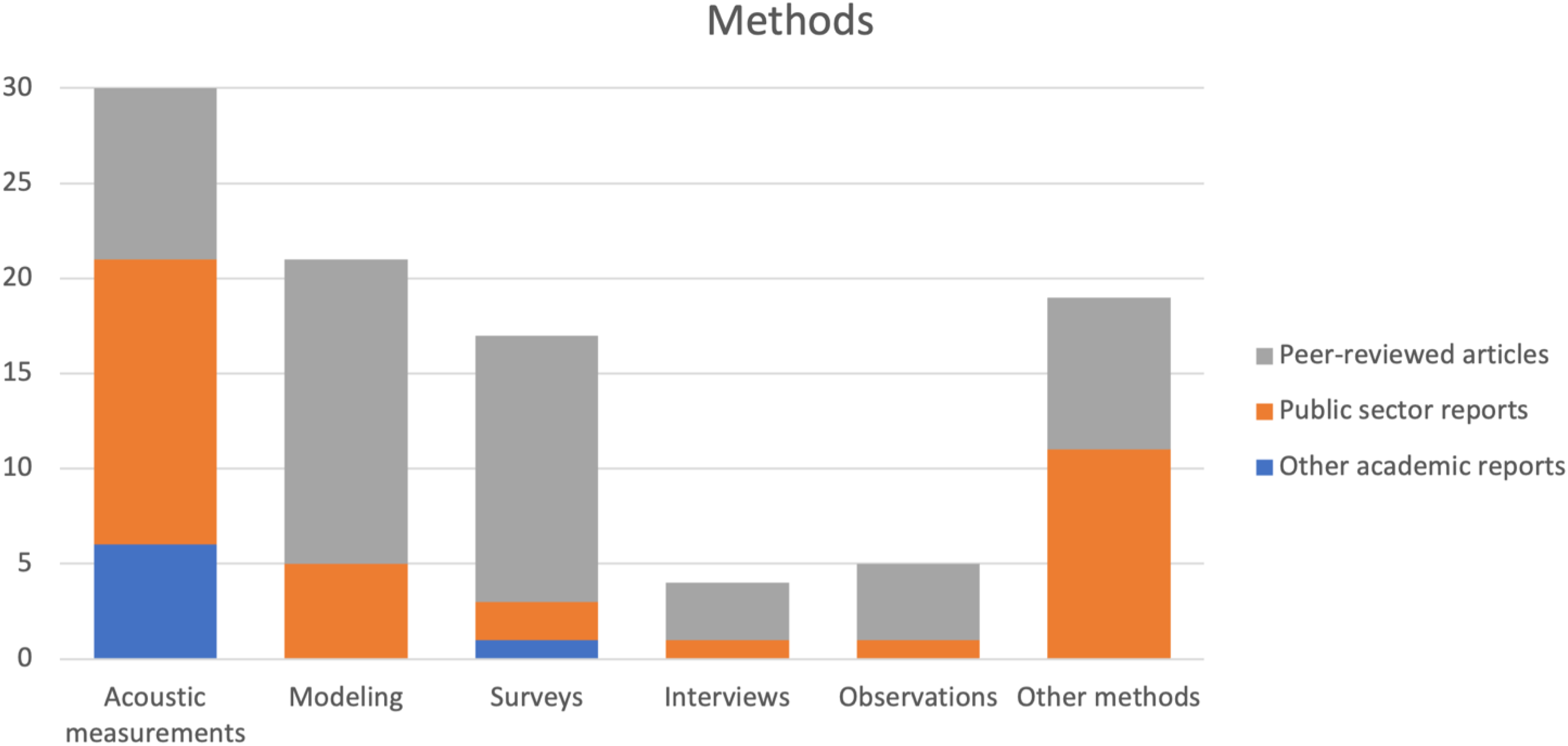
Distribution of documentation according to specific methods employed.
The approaches employing acoustic measurements vary; for example, a series of peer-reviewed studies relied on mobile sound level measurements (e.g., Apparicio et al. 2018, where participants in a study took trips using the same mode of transportation throughout a study period and had portable measurement devices), whereas other documentation tended to rely on static, longer term measurements. The static measurements are more common across types of documentation and cover a wider array of questions and needs, ranging from mandatory measurements for environmental impact studies of private projects, for example (MJM conseillers en Acoustique 2016), on characterizing the acoustic environment around a real estate project, to responding to noise complaints, for example (Bouchard, Vaucher De La Croix, and Gagné 2012), on typical situations for noise control in the Ville Marie borough or reports on noise inspections in the Plateau Mont-Royal Borough (Lavoie 2018b, 2018a). Finally, static measurements are also used as part of larger scale studies that either aim to document problematic noise levels (see the section “Sounds and Sound Sources” for details) (e.g., Tejada Garcia 2016 for exposure levels in residential areas near the airport), or aiming to contribute to more general models of urban noise levels (Goudreau et al. 2014).
Modeling was used mostly in relation to large-scale studies addressing specific health-related issues, like risk of preeclampsia due to environmental noise exposure (Auger et al. 2018) or awakenings due to aircraft noise (Tétreault et al. 2012), and were either built on previously collected data or relied on new acoustic measurement collected (Yankoty et al. 2021). The acoustic data/models were often integrated with land-use regression models and other factors (usually related to the built environment) and that allowed for the development of more complex noise or pollution exposure models (Carrier et al. 2019).
The documentation using surveys also differs in terms of methodological approaches, influenced by the research question they address. Health-oriented studies tend to rely on cohort studies when researching the effect of sound/noise on different demographic groups based on age, gender, socioeconomic status (e.g., (Auger et al. 2018) for environmental noise pollution and risk of preeclampsia during pregnancy) or on other large-scale survey data (e.g., phone survey) to study the effect of particular types of noise on the population. For example (Pinsonnault-Skvarenina et al. 2019), measured annoyance related to road infrastructure construction noise or (Perron et al. 2016) for the impact of transportation-related noise and total environmental noise on sleep disturbance for the residents of Montreal. Finally, another approach relying on surveys collected on site was used in smaller-scale studies to help focus on one location and understand the experience of randomly selected users of that space (Steele et al. 2016; Trudeau, Steele, and Guastavino 2020). While the health-inspired studies focused on noise annoyance, the smaller-scale studies focused instead on user experience of spaces, including, for example, the pleasantness of a space. The dominance of this method comes as no surprise as surveys established themselves as the go-to method also in the newer field of soundscape research, as per the methods outlined in the ISO standard on soundscape (International Standardization organization 2014; Aletta et al. 2019).
An interesting distinction refers to where the geographical focus of the documentation lies, i.e., indoors or outdoors (Figure 6). The reviewed work is often deliberate about the populations (negatively) affected by sounds, ranging from cohort studies on, for example, post-pregnancy recovery (He et al. 2019) to addressing the effects of sounds on various activities—like residential uses, including sleep (Perron et al. 2016) or educational activities (Carrier et al. 2019). Nonetheless, the same type of documentation is more nondescript about the public space population and the different profiles of users covered (Apparicio et al. 2018). The overarching approach, influenced by public health considerations, is on protecting indoor activities from sounds coming from outdoors, with comparatively less focus on outdoor activities—like the effects of an amphitheater in a park (Société du Parc Jean Drapeau, L‘arrondissement de Ville-Marie and Ville de Saint-Lambert 2018); or the need to access (public) quiet spaces (Delaunay et al. 2019). In this sense, the graph below shows where the sounds that the documents address (either through empirical research or through models) originate from, rather where they are audible or where the populations affected are.
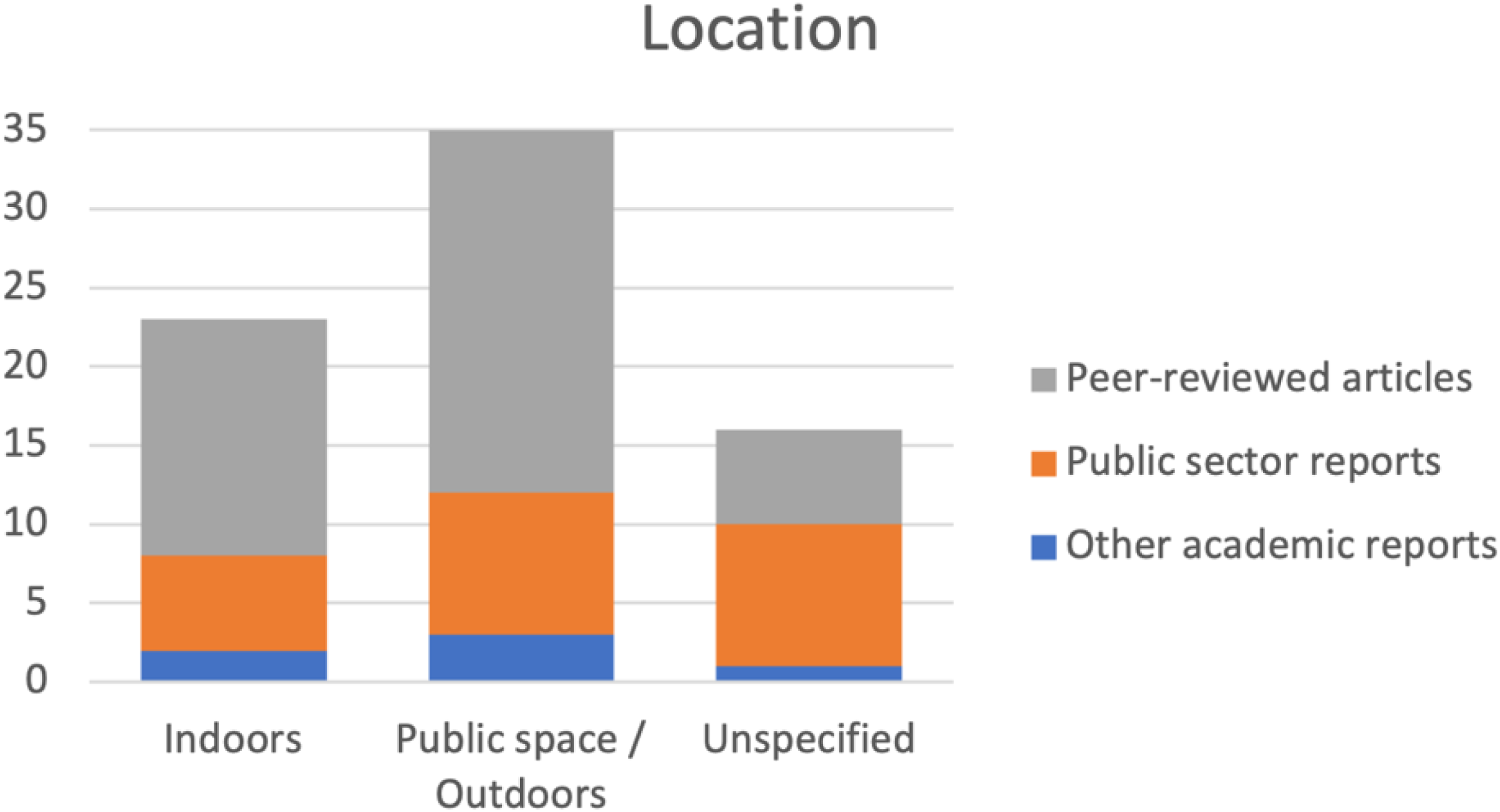
Distribution of documentation according to the location covered.
We also noticed that Montreal-based academic studies that set themselves in the soundscape tradition address the experience in outdoor public spaces and furthermore how such spaces can support users’ activities, rather than focusing on how activities are disrupted.
Sounds and Sound Sources
Considering the complexity of the sonic experience and informed by decades of insight on the effects of particular sound sources (like traffic or industry) on urban health, the reviewed documentation had different foci of interest (Figure 7). Namely, we observe a distinction between two broader approaches: (1) considering the sound environment as a whole and its effects (usually on health) or (2) focusing on distinct sound sources and identifying their specific consequences. These two approaches map over a distinction used previously in academic literature to highlight the different ways in which people describe their sonic environments and experiences (Dubois, Guastavino, and Raimbault 2006): the former refers to a “holistic” angle and the latter to an “analytical” angle; the two ways often interact for “mixed” descriptions.
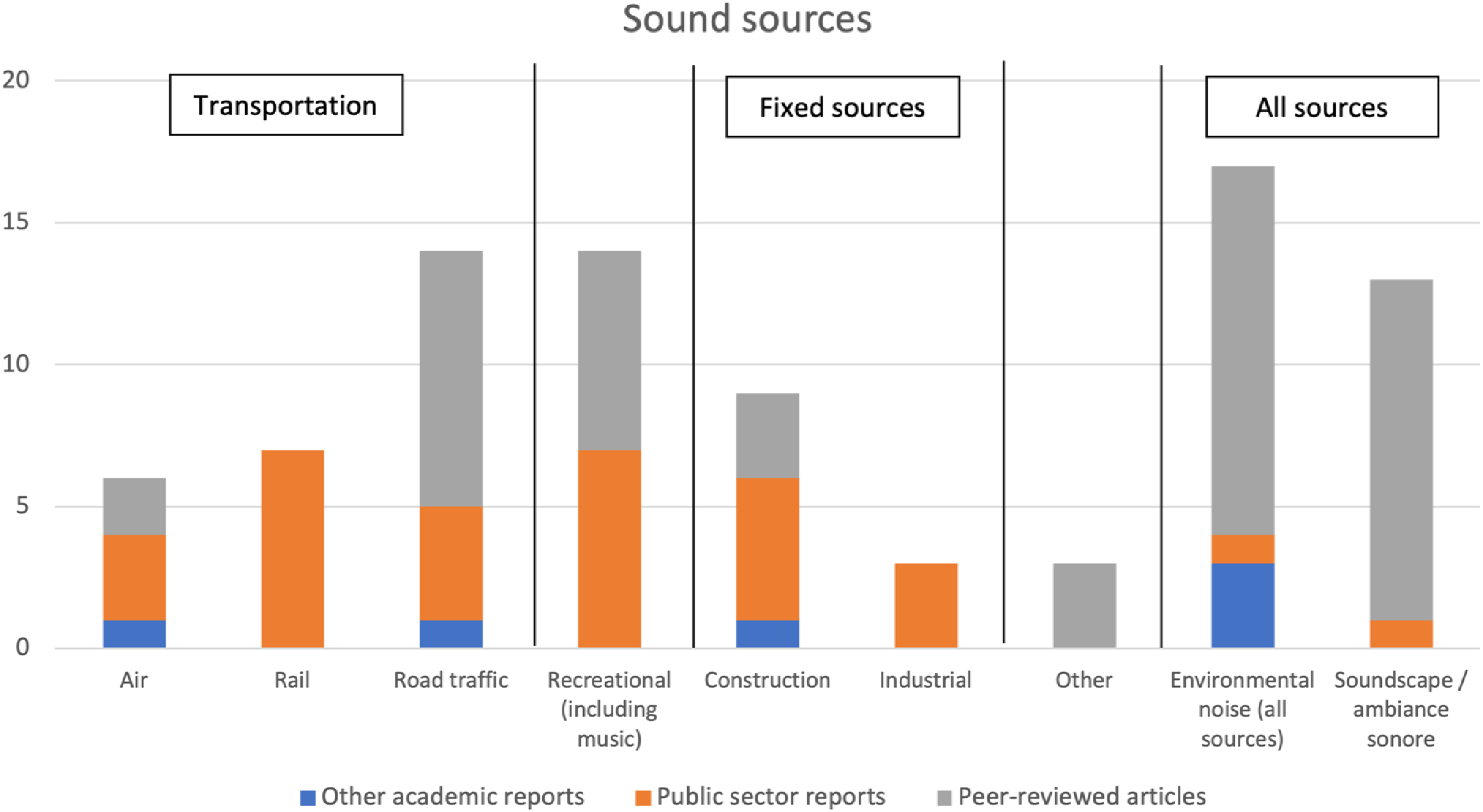
Distribution of documentation according to sound sources covered.
When it comes to the holistic approach, we observe something akin to the different ends of the continuum. On the one hand, there is the focus on the sound environment as a pollutant, i.e., as a damaging “problem” that needs to be managed, referred to as “environmental noise” from all sources (except for occupational noise), with documented adverse health effects. This is the most common object of study across types of reviewed documents. This is likely a consequence the identification of noise as an environmental pollutant in the provincial Environment Quality Act (Gouvernement du Québec 1972), which justifies it being the focus of the bulk of other academic reports, put together by the local health agency. While peer-reviewed articles take on different approaches to documenting environmental noise, fewer public sector reports tackle this topic, rather focusing on the current or potential effects of specific sources (see below). Using the term “environmental noise,” authors from the reviewed documentation acknowledge the diversity of sources that contribute to it (most often singling out all forms of traffic or industrial activity—as problems making matters worse), but ultimately focus on the deleterious effects of exposure to all noise and how they affect humans both indoors (Perron et al. 2016) and outdoors (Apparicio et al. 2016).
On the other hand, there is the focus on sound as experienced—so not inherently bad or good, but as experienced in its complexity. This work is informed by the soundscape tradition (Bild et al. 2016), was mostly employed in peer-reviewed articles and often approaches the sound environment in relation to the use of spaces beyond just annoyance (Trudeau, Steele, and Guastavino 2020; Bild et al. 2016), including artistic initiatives (Guastavino et al. 2022; Steele et al. 2019). In this context, certain sound sources can also be singled out as influencing the experience in a negative or positive way, to enhance or deter a particular goal, but the focus remains on the holistic experience.
Meanwhile, other work singled out sources that are known to be particularly problematic or of interest (again informed by the public health perspective). Common sources are road
Findings
We structure the findings of the reviewed documentation around five main categories centered on issues related to “health,” “public policy,” “planning/design,” “experience of spaces,” and “acoustic measurements” (Figure 8). Considering that sound is addressed as an environmental pollutant, documentation across types centered on health implications of noise exposure and, subsequently, for some, on providing insights outputs that could be eventually mobilized in public policy and, to a slightly lesser extent, in planning or design efforts. For the latter, other academic reports offered no insights in that sense; it was a marginally larger number of peer-reviewed articles aiming to bridge the often referred to gap between academia and practice (Bild et al. 2016) by discussing, for example, how to identify quiet zones in Montreal (Delaunay et al. 2019) or showing borough-level differences between school locations when considering road transportation nuisances (Carrier et al. 2019), while public sector reports tended to focus on concrete interventions on, for example, the transformation of urban rail terrain (Service de la mise en valeur du territoire 2017) or the potential impact of a real estate project (MJM conseillers en Acoustique 2016).
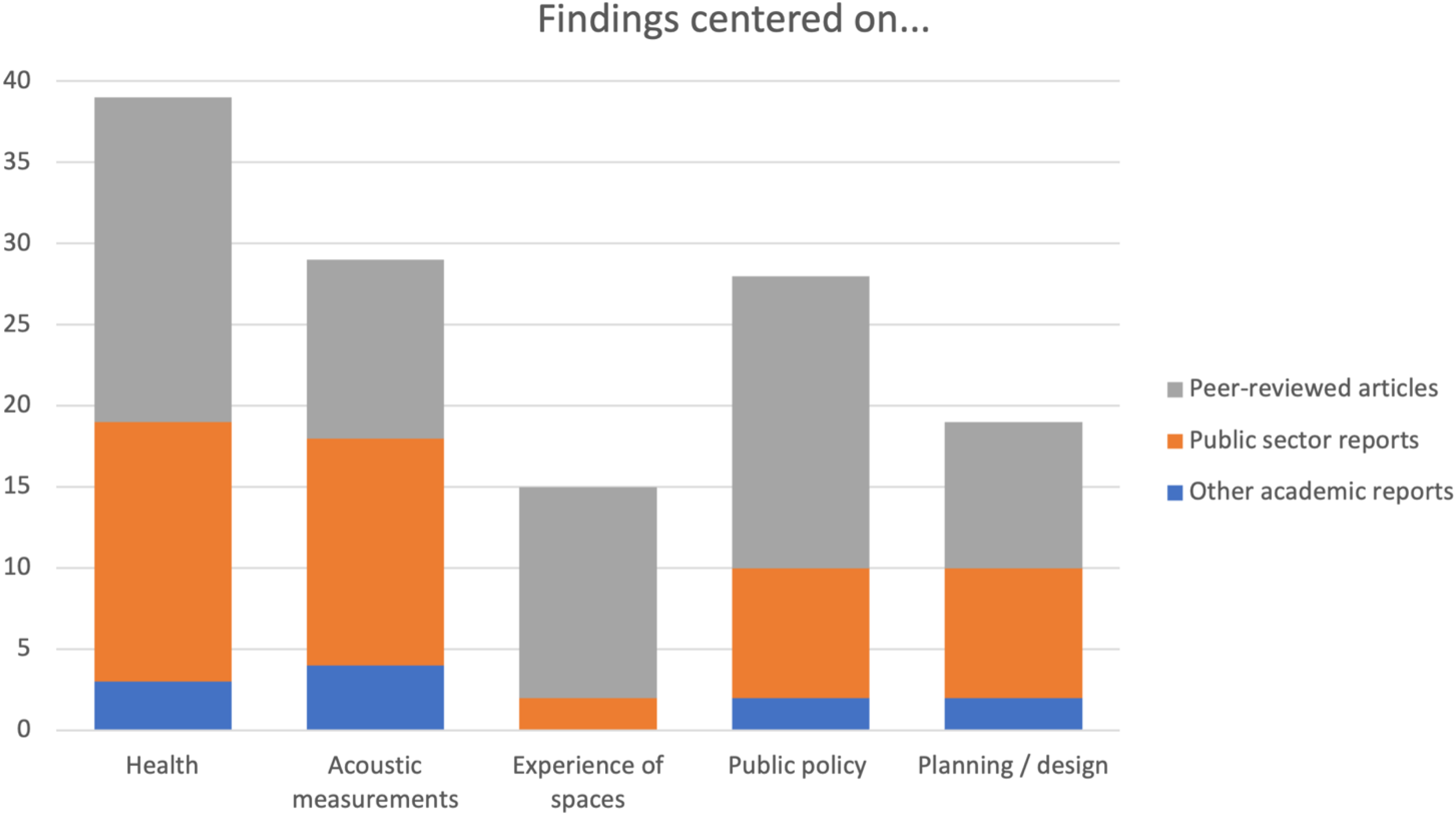
Distribution of documentation according to what findings centered on.
Given the common use of acoustic measurements as a research method, a large number of documents across types also reported on specific insights that pertained to acoustic aspects, for example, conclusions related to model feasibility (Liu et al. 2020) or diagnoses of situations (Bouchard, Vaucher De La Croix, and Gagné 2012). Peer-reviewed articles offered insights pertaining to the overall experience of spaces on, for example, the effects of a soundscape installation on a small public space on the experience of users (Steele et al. 2021) or on living in the vibrant Quartier des Spectacles and its busy festival season (Bild, Steele, and Guastavino 2021).
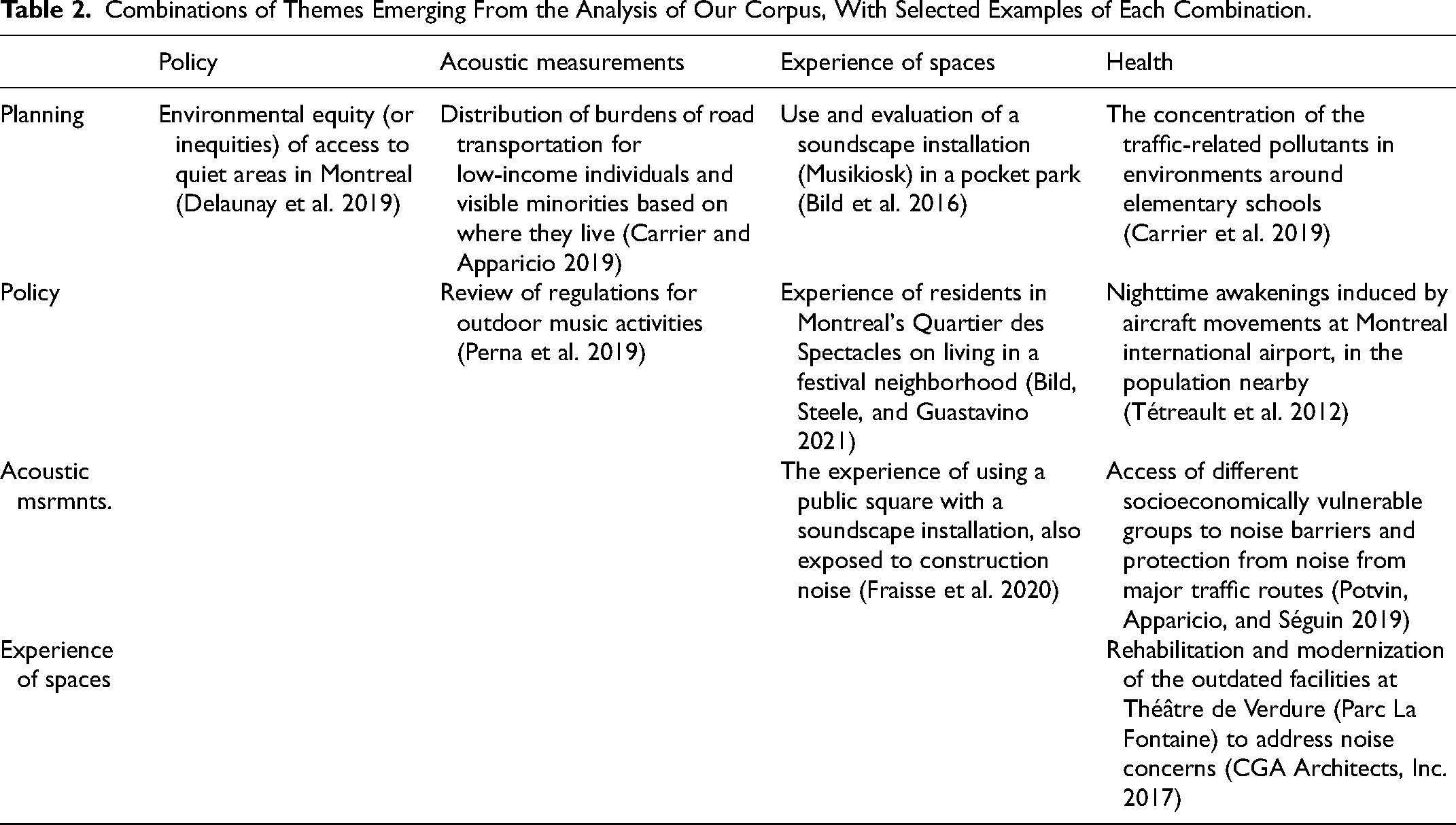
Note that these findings do not appear as isolated themes but rather often appear in combination with each other. Table 2 illustrates how different themes interact through examples from all categories of the reviewed documentation. It is important to highlight these interactions to show the underlying complexity of sound-related work, due to factors including : (1) the teams of researchers and thus the approach can be interdisciplinary, (2) sonic documentation approaches are often multifaceted (e.g.,, experience and health can be two sides of the same coin, e.g., via stress), and (3) there is a natural progression toward this city-focused research having coherent themes that can ultimately support the creation of a shared vision on urban sound concerns (see below). Various combinations are more or less likely to appear, particularly due to how common a particular finding is and the overarching goal of the document: findings centered on acoustic measurements are likely to appear in combination with policy or health, as the latter two usually justify the interest in sound considerations in most of the reviewed documentation (academic or public reports). Conversely, as the experience of space is not a very common theme, it appears less often in combinations with others, and usually in academic work conducted by the same groups of researchers.
Combinations of Themes Emerging From the Analysis of Our Corpus, With Selected Examples of Each Combination.
Additionally, despite the high number of documents discussing how the results have public policy implications, we observed a lack of comprehensive policy analyses or any studies on actual policy implementation. One partial exception in this sense is a report on policy recommendations for a Montreal-based noise observatory (Allali et al. 2020), which we also describe below as future work.
The reviewed documentation offers an overview of how sound considerations have been addressed in both academia and practice in Montreal in the last decade. The literature can be described as broad in scope, touching upon a wide range of topics, but overall, not cohesive in terms of scale, methods of documentation, sound sources of interest, and implications of findings, particularly across academic documentation and public sector reports. Nevertheless, some common threads across the documentation support a more proactive consideration of sound at the Montreal-city level.
These insights also allow us to set Montreal in a larger international context, based on which we can articulate several recommendations that can help align research and practice, discussed below.
Discussion and Conclusion
This article set out to address three goals: (1) perform a review of how sound is addressed in Montreal at the city level from both the academic and public sector perspectives, (2) propose a replicable expanded literature review methodology, and (3) identify and detail various strategies for moving forward on sound governance in Montreal.
First, our review showed that, generally, (sonic) co-habitation is the main issue at the core of Montreal-centered work on sound; although not explicitly used as a keyword, the question of how to live together in sound is addressed mostly from a “sound as problem” perspective that mostly stems from public health concerns. Most documentation is thus focused on providing health-centered insights (that can afterwards be integrated in public policy) and are centered on environmental noise, i.e., the sound environment as a whole as a pollutant negatively affecting the life and health of everyday people. Along the same lines, even when focused on specific sound sources, the interest remains on the indoor sonic experience as directly related to noise exposure, particularly that of residents in their own homes (especially at a city-wide scale) and, to a lesser extent, on a more complex understanding of the sound experience (at smaller scales, including outdoor public spaces).
Comparatively, the counterpart of environmental noise, soundscape (defined as the sound environment as experienced by city users) is of particular interest to academics discussing the possibilities of exploring sound as a resource, proposing various (often proactive) design actions and their potential implications for practice. Montreal is however situated at the intersection of these two conflicting “sound as problem” and “sound as resource” approaches, returning to questions of sonic co-habitation: considering its vibrant downtown that hosts an almost year-long festival season, a substantial part of the documentation focuses on recreational sound and festivals, followed closely by exposure to transportation noise, with public sector reports addressing not just the usual suspect—road traffic noise—but also rail and port traffic, consistent with the city's history as a transportation hub of both people and goods.
For the ways in which the sonic status quo was documented in the Montreal academic community and the public sector, quantitative methodologies and associated quantitative methods are dominant; the preference for acoustic measurements and modeling often goes hand in hand for a large scale of city-wide studies in research with a focus on sound/noise itself and its physical properties. This is consistent with the findings of recent work on the predominance of “object-centered” methods in sound-related research and practice (Bild et al. 2016; Steele, Bild, and Guastavino 2023), focusing on sound as “something” to be measured, modeled, and mitigated divorces sound from its perceptual aspects. Partially in response to that latter point, surveys aiming to document Montrealers’ psycho-social evaluations of sonic experiences are the other, more human-centered method dominant across types of documentation, both in large-scale studies, like health-related research conducted city-wide or in more soundscape studies focused on the small-scale experience of urban pocket parks. Along the same lines, public sector reports (from the City and its consultants) are overwhelmingly focused on sound levels and “sound as problem,” with the notable exception of the study on a sound environment observatory (Allali et al. 2020). The prevalence of this approach is consistent with the historical mandate of the city (politicians and planners), understood as a need to respond to “citizen” complaints and concerns, framing sound as a nuisance.
Comparatively, qualitative methodologies (and methods) were less used in the Montreal context and almost exclusively in peer-review articles, showing a disconnect between research and practice when it comes to more comprehensive—or time consuming—strategies of documenting the urban sonic experience in the public sector. However, this does not really come as a surprise, considering that interviews and observations are often labor-intensive and narrower in focus (e.g., specific communities) and scope (e.g., smaller sample sizes) and scale, and thus perhaps more difficult to formalize in a policy or regulation; they however remain crucial as they often are also very solutions-oriented. While qualitative studies often focused on documenting experiences in wealthy neighborhoods, additional efforts are needed to better understand the experience of more vulnerable communities facing noise concerns in disadvantaged neighborhoods. Conversely, city-wide studies may gloss over more local particularities, but report on an averaged experience of urbanites, often considered as passive noise receivers.
Given the complexity of sonic co-habitation, our review makes it clear that siloed approaches embedded only in qualitative or quantitative approaches or focusing only at one scale—without being part of a larger, more cohesive and responsive effort to address urban sound from an integrated, multiscale approach, are insufficient. This is particularly true when considering how sound has been addressed in urban planning and design, as mixed methods approaches combining physical measurements of sounds with the experiential component are only recently gaining traction in practice, among cities that have traditionally been sonic “champions” (see, for example, the “Noise and Soundscape Plan for Wales 2023–2028,” available online at: https://www.gov.wales/noise-and-soundscape-plan-wales-2023-2028-html). These are part of a larger international momentum at municipal, national and supranational levels to develop integrated approaches of sound management by bridging academia and practice.
Nonetheless, European cities like the ones cited (Paris, London, Lyon) have a longer history of being subject to intentional sound-oriented policies (like the European Noise Directive (European Commission 2002)) and progress is often easier when a strong baseline of local, situated sonic knowledge is already documented; Montreal has so far not been the subject to such a systematic documentation. This article thus makes a methodological contribution that can help paint a picture of the sonic status quo. Outlining an expanded literature review approach building on aforementioned cross-sector collaborations, the multistep review described here can allow us to reconcile what is often scattered information on sonic environments in different settings and allow us to get a broader picture over time; this a challenge that the soundscape research community as a whole is grappling with (Axelsson, Guastavino, and Payne 2019), often limiting its implementation in urban practice, making many cities—particularly in North America—sonically lacking. The documented connections between sound and other broader factors like public space planning, environment, transportation in Montreal, are, we argue, equally scattered and siloed and fail to adequately address the purpose of urban planning, which is to integrate many factors into a coherent plan.
The literature review, particularly considering the topics, methods, and recommendations covered by public sector reports, also outlines the aforementioned limitations of current approaches to sound within local governance. It shows the need for a stronger commitment from municipalities (given the governance structures in place) to modernize the ways in which they approach sound internally in terms of resources (human, material, financial, trainings, etc.), practice (e.g., developing new bylaws or integrating sound as a structuring component in a coherent urban planning vision). Sustained cross-sector collaborations could further lead to paradigm shifts in sound management practices. Considering however that Montreal decision-makers have shown increasing interest in addressing sound at the intersection of questions on urban inequality, inequity and health as well as the night economy in recent initiatives, and, moving forward, we propose furthering and investing more in the idea of Montreal as a sound-oriented urban living lab.
Tangibly, we suggest for Montreal to host an independent “sound observatory” that would function with support from, but outside of academic and public sector actors, working in tandem to collect and compile data over time and scale, test and evaluate policies. This body of experts that could act as a resource for urban professionals (including but not limited to urban planners, designers, and policy makers) on all things sound-related bridges the gap between addressing sound as simply “checking a box” that some noise limit has been met and doing real, “live” urban sound planning that makes trade-offs with other parts of planning and policy to achieve better, fairer, and purposeful results for city users. Such a laboratory on the quality of the sound environment can allow for longitudinal studies at the city scale to identify hot spots, prioritize interventions and inform longer-term planning and policymaking. This would help facilitate interactions between different municipal and provincial stakeholders around considerations of sustainable development, quality of life, mobility, and economic development, that can support a proactive and truly integrated approach to sound management—which some European cities have already been working toward. Our extended literature review on the state of the art on sound-related knowledge in Montreal has proven the need for such approaches. Even in the context of having a mature research community, there is a need to better understand the local idiosyncrasies and sonic experiences and to eventually set the bases of a city-wide database that can help in conducting longitudinal analyses leading to tangible, context-based policy recommendations and transformations—initiatives that can more actively involve Montreal in current international conversations on sound governance.
Footnotes
Declaration of Conflicting Interests
The authors declared no potential conflicts of interest with respect to the research, authorship, and/or publication of this article.
Funding
The authors disclosed receipt of the following financial support for the research, authorship, and/or publication of this article: This work was supported by the Mitacs (grant number IT23347).

Author Biographies
Systematic literature review analysis grid
|
|
|||
|
|
|||
|
|
|||
|
|
|||
|
|
|||
|
|
|||
|
|
|||
|
|
|||
|
|
|||
|
|
|
||
|
|
|
||
|
|
|||
|
|
|||
|
|
|||
|
|
|||
|
|
|||
|
|
|||
|
|
|||
|
|
|
||
|
|
|||
|
|
|||
|
|
|||
|
|
|||
|
|
|||
|
|
|||
|
|
|||
|
|
|||
|
|
|||
|
|
|||
|
|
|
||
|
|
|||
|
|
|||
|
|
|
||
|
|
|||
|
|
|||
|
|
|||
|
|
|||
|
|
|||
|
|
|||